Tag: Infringement

  • Economics Expert Partly Allowed to Opine on Corrective Advertising Damages

    Economics Expert Partly Allowed to Opine on Corrective Advertising Damages

    This is a trademark infringement and unfair competition action arising from the parties’ respective uses of the word “IMPOSSIBLE.” Impossible Foods is the widely known creator of the Impossible Burger and other plant-based meat products. Defendants/Counter-Plaintiffs Joel Runyon and Impossible X LLC (collectively, “Impossible LLC”) are an individual and his corporate entity who, over the past decade, have been involved in a variety of ventures—including search engine optimization, social media influencing, and fitness and dieting advice—all loosely affiliated with the word Impossible.

    Impossible Foods filed two motions in limine to exclude the testimony of Dr. Jennifer Vanderhart and Dr. Robert Palmatier, while Impossible LLC sought to exclude portions of John Plumpe’s rebuttal testimony.

    Economics Expert Witness

    Dr. Jennifer Vanderhart is an economist and the managing director of a consulting firm providing services in connection with litigation, regulatory proceedings, and valuation analyses. She holds a Ph.D. in economics from Texas A&M University, where she previously taught in the Department of Economics and the Department of Management in industrial organization, public economics, and econometrics.

    Get the full story on challenges to Jennifer Vanderhart’s expert opinions and testimony with an in-depth Challenge Study.

    Marketing Expert Witness

    Dr. Robert W. Palmatier is a Professor of Marketing at the University of Washington’s Foster School of Business, where he has taught since 2007. He holds a Ph.D. in marketing from the University of Missouri and has held a variety of academic and industrial positions, with a focus on marketing strategy, consumer loyalty and decisionmaking., and methodological approaches for analyzing marketing data.

    Want to know more about the challenges Robert Palmatier has faced? Get the full details with our Challenge Study report.

    Valuation Expert Witness

    John G. Plumpe is the managing director of an economic consulting firm and holds a Master of Science in Mechanical Engineering from the University of Illinois and an M.B.A. from the University of Chicago Booth School of Business. Plumpe’s practice focuses on the analysis of damages, monetary relief, and valuation issues in intellectual property litigation.

    Discover more cases with John Plumpe as an expert witness by ordering his comprehensive Expert Witness Profile report.

    Discussion by the Court

    Jennifer Vanderhart

    Vanderhart is Impossible LLC’s damages expert and has prepared a report in which she opined that Impossible LLC is entitled to corrective advertising damages for Impossible Foods’ use of its IMPOSSIBLE-formative marks in connection with its swag and cookbook.

    In her report, Vanderhart opined that corrective advertising damages may be calculated by multiplying Impossible Foods’ swag and cookbook-related expenses by three to five, based on Palmatier’s opinion that “Impossible LLC would likely have to spend 3 to 5 times as much to correct false or unwanted brand associations as was originally spent by Impossible Foods to create these associations.”

    During the relevant time period, she calculated that “Impossible Foods has spent an estimated $623,280 in ‘swag’-related expenses” and “has spent an estimated $194,722 in cookbook-related expenses,” opining that “total corrective advertising damages are in the range of $2,454,006 to $4,090,010.”

    Impossible Foods filed a motion to exclude Vanderhart’s opinions on three grounds. To begin with, Impossible Foods argued that she failed to assess any actual harm to the value of Impossible LLC’s asserted marks and has “made no attempt to calculate lost sales caused by the alleged infringement.” Second, Impossible Foods argued that she did not properly measure advertising costs because her calculations are based on production costs rather than advertising expenditures and include the cost of producing items that are not accused of infringing Impossible LLC’s marks. Finally, Impossible Foods argued that Vanderhart improperly relied on Palmatier’s three-to-five multiplier, which itself is “derived from a single, irrelevant study.”

    Analysis

    The Court agreed with Impossible Foods that Vanderhart neglects to quantify the harm to Impossible LLC’s asserted trademarks by Impossible Foods’ alleged infringement or to even estimate their value in the first instance. However, this does not require that her testimony be excluded at theDaubert stage, where the focus is on her qualifications and the reliability of her methodology.

    Impossible Foods also argued that Vanderhart’s testimony is unreliable because her calculations include expenses by Impossible Foods that are unrelated to advertising expenditures for allegedly infringing products. 

    The Court explained that the touchstone of corrective advertising damages is to restore the harm to the value of the asserted trademark which includes, among other things, marketing and advertising costs.

    As to Impossible Foods’ swag-related costs, Vanderhart was not required to separate marketing and advertising expenses from production costs because she explained that the swag items were themselves the advertising. Because the swag items were not offered for sale and were produced solely for promotional purposes, it would be reasonable to infer that the items themselves were the advertisements. That said, because Impossible LLC has not accused all swag items (e.g., water bottles, stickers, etc.) of infringement—and does not and cannot contend that the asserted trademarks even include those items—the Court agreed with Impossible Foods that her calculations are overinclusive. 

    While the Court will not exclude Vanderhart’s testimony in this respect, Impossible Foods will be permitted to impeach the correctness of her valuations through cross-examination and other evidence.

    As to Impossible Foods’ cookbook-related costs, Vanderhart’s testimony is excluded, since she relies exclusively on the cost of producing the cookbooks and does not include any expenses at all for marketing and advertising.

    Robert Palmatier

    Impossible Foods sought to only preclude Palmatier from testifying that corrective advertising damages may be calculated by applying a three-to-five multiplier to Impossible Foods’ marketing expenditures on the ground that this opinion is based “on a single academic paper,” namely, “a decades old study involving college students and radio advertising for mouthwash finding that three corrective impressions were required to correct one misimpression.”

    According to Impossible Foods, there is just “too great an analytical gap” between Palmatier’s multiplier opinion and the data upon which he relies.

    The Court did not read Palmatier’s multiplier opinion as narrowly as Impossible Foods did. Far from relying on a single outdated study, Palmatier explained why any harms to Impossible LLC’s brand equity caused by Impossible Foods’ alleged infringement would be “magnified” due to the “similarity of wordmarks due to other points of similarity,” “high level of marketing spend,” and “increased use of broadly-focused marketing.”

    Palmatier explained that linkages to unwanted and negative associations are more impactful and difficult to eliminate than positive associations and that these negative associations are particularly strong “due to the synergistic interaction” of multiple “magnifying factors” identifying industry practices of responding to such associations with targeted rehabilitative advertising.

    In articulating his reasoning, Palmatier relied on a variety of case studies and analyses and particularly pointed out how his multiplier opinion is based on the application of fundamental, well-accepted marketing principles.
    The Court accordingly agreed with Impossible LLC that Palmatier’s multiplier opinion is sufficiently supported to survive Impossible Foods’ Daubert challenge.

    John Plumpe

    Plumpe is Impossible Foods’ damages expert and has prepared a rebuttal report in which he argued that Vanderhart’s calculations are not a reliable estimate of corrective advertising damages.

    Plumpe asserted that Vanderhart’s damages calculation is speculative, unsupported, and would result in a windfall to Impossible LLC due to her failure to analyze the value of Impossible LLC’s marks, failure to account for Impossible LLC’s low revenues and marketing expenses, and “the lack of evidence of actual financial harm to [Impossible LLC] in the range contemplated by the prospective correcting advertising damages award.”

    Impossible LLC challenged Plumpe’s testimony on two primary grounds. First, Impossible LLC argued that several of his opinions (specifically, as to consumer confusion, corrective advertising, and search rankings) fell outside of the scope of his expertise as an economist and professional damages expert and are either irrelevant or unhelpful to the jury. Second, Impossible LLC argued that portions of Plumpe’s expert report included improper legal opinions that are not proper subjects of expert testimony.

    Despite Impossible LLC’s attempts to cast Plumpe’s testimony as venturing outside of his area of expertise (e.g., by improperly opining on “causation” and other “noneconomic” issues), the Court found that his opinions are properly limited to evaluating whether the damages claimed by Impossible LLC can be economically attributed to Impossible Foods’ alleged infringement. Specifically, Plumpe’s rebuttal report sets forth his economic reasoning and analysis for his conclusion that Vanderhart’s opinions failed to capture injuries plausibly attributable to Impossible Foods’ swag and cookbook by failing to account for external market forces.

    Regarding Impossible LLC’s argument that Plumpe improperly offered legal conclusions, the Court disagreed. It is permissible for Plumpe to explain the framework and underlying principles to orient the jury.

    Held

    • The Court granted in part and denied in part Impossible Foods’ motion in limine to exclude the testimony of Dr. Jennifer Vanderhart.
    • The Court denied Impossible Foods’ motion in limine to exclude the testimony of Dr. Robert Palmatier.
    • The Court denied Impossible LLC’s motion in limine to exclude the testimony of John Plumpe.

    Key Takeaway

    While it is true that Impossible LLC will not be able to recover corrective advertising damages without showing harm to its allegedly infringed marks, the Court is not aware of any authority suggesting that a damages expert must provide all the evidence required to support a damages award for their testimony to be admissible.

    Nor is the Court persuaded by Impossible Foods’ suggestion that Vanderhart’s testimony is “unreliable and unhelpful” absent a valuation of Impossible LLC’s asserted marks, since the jury is permitted to consider her testimony together with any other evidence presented at trial in considering the ultimate issue whether Impossible LLC’s marks have been harmed by Impossible Foods’ alleged infringement.

    Case Details:

    Case Caption: Impossible Foods Inc. V. Impossible X LLC
    Docket Number: 5:21cv2419
    Court Name: United States District Court, California Northern
    Order Date: February 26, 2026
  • Mechanical Engineering Expert Was Allowed to Opine on Slide Design

    Mechanical Engineering Expert Was Allowed to Opine on Slide Design

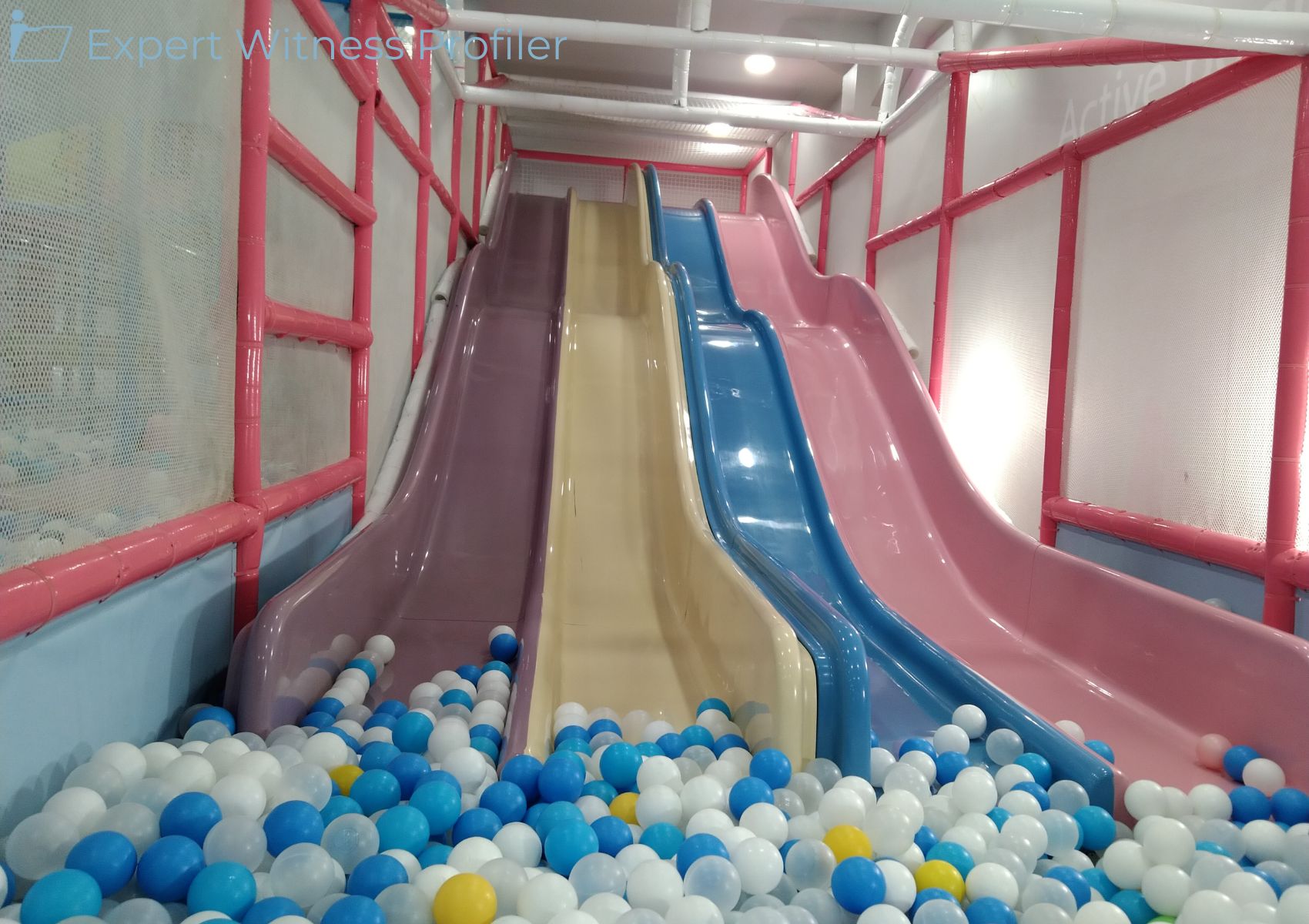
    Plaintiff Slick Slide LLC (“Plaintiff” or “Slick Slide”) brought claims of direct and indirect patent infringement, as well as copyright infringement against the Defendants Edwin L. Reed, Trampoline Park Gurus, LLC, and Adventure Park Contractors, LLC (collectively, the “Reed Defendants”).

    Slick Slide filed a motion to exclude the testimony of Defendants’ expert Nathan J. Macdonald.

    Mechanical Engineering Expert Witness

    Nathan James Macdonald is a registered Professional Engineer in the State of Utah. He is also a Certified Safety Professional in comprehensive practice. MacDonald is also a certified commercial building inspector. He received his Bachelor of Science degree in Mechanical Engineering from Brigham Young University in 2014. He has worked as a mechanical engineering consultant for Alpine Engineering & Design, Inc. for over 12 years.

    Want to know more about the challenges Nathan Macdonald has faced? Get the full details with our Challenge Study report.

    Discussion by the Court

    Slick Slide challenged only Mcdonald’s qualifications, arguing that MacDonald is unqualified to serve as an expert.

    Basically, Slick Slide argued that “Macdonald is not qualified to offer an opinion regarding obviousness” because he “has never designed a slide, the subject matter of the ‘821 patent, as well as the subject matter of both references that he suggests could be combined.” Slick Slide further argued that MacDonald is only a “general engineering consultant,” with limited engineering experience that fundamentally—and, from Slick Slide’s perspective, fatally—lacks slide design.

    The Court agreed with Defendants that the record made it clear that MacDonald has the “necessary qualifications to testify as an ‘ordinary designer’” in this case. MacDonald is a registered Professional Engineer, with over twelve years of mechanical engineering consultant experience, and who has numerous relevant certifications and licenses. His professional experience includes “taking part in the design, manufacture, and review of numerous products, including ziplines, drop rides, slingshot rides, alpine slides, alpine coasters, roller coasters, water slides, rope swing slides, pendulum swing rides, and more.” He has served as the lead engineer on numerous projects, including “ziplines, exercise equipment . . . aerial lifts, and other hydraulic pneumatic, and electronic equipment,” and has extensive experience with amusement rides and devices.

    Finally, to the extent that the exclusion motion challenged MacDonald’s specialized knowledge “with respect to the subject matter of this particular case—slides,” or the obviousness of the ‘821 patent, the Court held that questions regarding the extent of an expert’s specialized knowledge in a field go to the weight of the expert’s testimony, not to its admissibility.

    Held

    The Court denied Slick Slide’s motion to exclude the testimony of Defendants’ expert Nathan J. MacDonald.

    Key Takeaway

    As long as an expert stays within the reasonable confines of his subject area, a lack of specialization does not affect the admissibility of the expert opinion, but only its weight.

    Case Details:

    Case Caption: Slick Slide Llc V. Reed
    Docket Number: 1:23cv1649
    Court Name: United States District Court, Colorado
    Order Date: December 17, 2025
  • Relying on Personal Intuition Is Not a Valid Methodology for an Entertainment Industry Expert

    Relying on Personal Intuition Is Not a Valid Methodology for an Entertainment Industry Expert

    This copyright infringement action concerns two musical works: Plaintiff, Rene Lorente Garcia’s 1998 song Algo Diferente (“AD”), and the 2021 track Don’t Be Shy (“DBS”), performed by Tijs Michiel Verwest (“Tiësto”) and Carolina Giraldo-Navarro (“Karol G”). 

    Plaintiff brought two claims: direct infringement against Karol G and Tiësto (“Count I”); and contributory and vicarious infringement against Atlantic Recording Corporation (“Atlantic”), Kobalt Music Publishing America, Inc. (“Kobalt”), Sony Music Publishing (US) LLC (“Sony”), and Warner Records Inc. (“Warner”). 

    Plaintiff, a professional flutist and Latin music composer, has featured AD on several albums and made it available on digital platforms like Spotify and YouTube. DBS was created collaboratively over Zoom on May 29, 2020, by writers located in the Netherlands and Finland; Tiësto and others later completed the production, and Karol G added her vocals in the final stages.

    Each side offered a purported music expert to address whether DBS copies protectable elements of AD. Plaintiff relied on Richie Viera, a Latin music producer and former Vice President of Artists and Repertoire (“A&R”) at Capitol Records, who contended that the two songs share original melodic, harmonic, and rhythmic features. 

    Defendants requested that the Court exclude the Viera Report under Rule 702 and Daubert.

    Entertainment Industry Expert Witness

    Richard A. Viera-Cintrón is a former Vice President of A&R at Capitol Records, with decades of experience managing and producing Latin artists. Beyond that, he has taught music business and copyright at the Liceo de Arte y Tecnología in Puerto Rico, led seminars across Latin America, and appeared as a television commentator on music industry issues in Puerto Rico. 

    Viera is also a voting member of the Latin Academy of Recording Arts and Sciences and the National Academy of Recording Arts and Sciences.

    His expertise encompasses copyright infringement, moral rights, authorial rights, and trademark registration, making him a highly sought-after expert witness in legal disputes within the entertainment sector. As a musicologist, historian, and producer, he has worked with major labels and artists, curating historical compilations and reediting classic vinyl and CD recordings. 

    Want to know more about the challenges Richie Viera has faced? Get the full details with our Challenge Study report.

    Discussion by the Court

    Qualifications

    While Plaintiff touts Viera’s decades in the music industry, the Court held that experience alone does not open the gate to expert testimony.

    To begin with, the list of cases that appears in Viera’s CV is long, but not illuminating. He cited 22 matters where he allegedly served as an expert, consultant, or musicologist — but nearly all involve the same cluster of parties in the Puerto Rico music industry, with one Plaintiff, Joel Bosh, recurring across five suits filed within three years. 

    Plaintiff highlighted Viera’s role as an author and educator, pointing to three published books and a forthcoming volume titled Stolen Music – The Fraud of Prior Art and Musical Building Blocks. But Plaintiff supplied no academic reviews, peer validation, or usage data to show these works carry weight in the forensic or legal musicology community.

    More generally, the nature of Viera’s professional background does not qualify him to engage in the comparative analysis his report purports to offer. While his curriculum vitae (“CV”) highlights substantial experience in the business side of the Latin music industry — including artist management, record production, television commentary, and music business education — none of these roles involves the core competencies of forensic musicology: transcribing compositions, analyzing protectable expression, or applying comparative methodologies to determine similarities.

    Moreover, Viera did not hold a degree in musicology, music theory, composition, or any closely related field. Nor did Viera’s deposition testimony bridge the gap. He declined to define standard musicological terms, such as “tonic” and “diatonic” despite using them in his analysis.

    Reliability

    Even if Viera’s experience qualified him to testify, that experience would not render his opinions reliable.

    Defendants explained in detail why Viera’s methodology failed every aspect of Daubert‘s reliability framework. His analysis — which relied largely on listening rather than transcription or notation — is neither testable nor replicable, lacks peer review or validation, and departs from accepted musicological methods by failing to conduct a prior art review or isolate protectable elements. 

    That concern is heightened by Viera’s admission that he did not prepare the transcriptions in his own report; Plaintiff supplied them — leaving the foundation of Viera’s analysis not just unverifiable, but secondhand.

    Plaintiff asserted that Viera’s “aural comparisons” supported by “visual representations” are grounded in industry experience and accessible to a jury. Yet Plaintiff identified no recognized methodology underlying this framework, nor did he explain how Viera’s conclusions can be tested or reviewed.

    Asked at his deposition about how he determines originality without evaluating prior art, he replied: “I use my instinct.I am able to detect when a word is copied, when there is any sort of copy.”

    He added, “I have a unique perception, something that perhaps very few people in the music industry have.” The Court held that it is not a methodology; it is, at best, Viera’s personal intuition offered up as professional expertise — untestable, unverifiable, and precisely the sort of expert say-so that Daubert excludes.

    Helpfulness

    The Viera Report did not engage in the type of analysis a jury could not undertake on its own. To the contrary, the Court held that Viera’s assertions rely on intuition and unexplained impressions — the kind of subjective judgments a jury is just as equipped to make as Viera; particularly in the absence of self-generated transcriptions, any review of prior art, or analytical tools to distinguish protectable expression from unprotectable elements

    Because Viera’s testimony is not the kind that Rule 702 envisions — evidence that informs, rather than supplants, the jury’s judgment — it is properly excluded.

    Held

    The Court granted the Defendants’ motion to exclude the Plaintiff’s proposed expert, Richie Viera.

    Key Takeaway:

    The unremarkable observation that an expert may be qualified by experience does not mean that experience, standing alone, is a sufficient foundation rendering reliable any conceivable opinion the expert may express.

    An expert who is relying solely or primarily on experience must explain how that experience leads to the conclusion reached, why that experience is a sufficient basis for the opinion, and how that experience is reliably applied to the facts.

    Case Details:

    Case Caption: Lorente-Garcia V. Giraldo-Navarro
    Docket Number: 1:24cv23066
    Court Name: United States District Court, Washington Western
    Order Date: July 09, 2025
  • Digital Forensics Expert’s Analysis of Website Activity Considered Relevant

    Digital Forensics Expert’s Analysis of Website Activity Considered Relevant

    This is a copyright infringement action filed by CoStar Group, Inc. and CoStar Realty Information, Inc. (collectively, “CoStar”) in September 2020 against Commercial Real Estate Exchange Inc (“CREXi”).

    CoStar is a company that provides commercial real estate (“CRE”) information, analytics, and online property listing marketplaces. It owns and operates LoopNet.com, a digital marketplace platform for CRE listings. CoStar contended that CREXi has engaged in “mass infringement” of CoStar’s photographs. Apparently, CREXi and its BPOs copied listing information, including images, from LoopNet when a listing could only be found on LoopNet, and that CREXi would take screenshots of photos or otherwise crop out CoStar’s watermarks from photos to build out listings on its website.

    CREXi filed a Daubert Motion to exclude the opinions of CoStar’s expert, Mr. Daniel Roffman. CoStar retained Roffman to opine on CREXi’s access to the LoopNet website.

    Digital Forensics Expert Witness

    Daniel E. Roffman is Vice President in the Forensic Services Practice. He has over 20 years of digital forensics and information security consulting experience, helping clients protect their most valuable information, and investigating allegations of trade secret theft and cyber incidents.

    He has extensive testimony experience working on behalf of both plaintiffs and defendants and has served as a court-appointed neutral expert on theft of trade secret cases. Roffman has also testified on a range of other digital forensic subjects including software piracy, cyber investigations, and electronic document authenticity issues.

    Want to know more about the challenges Daniel Roffman has faced? Get the full details with our Challenge Study report

    Discussion by the Court

    Roffman was supposed to analyze LoopNet logs and identify what activity in those logs can be attributable to CREXi and its representatives (including CREXi employees and third-party vendors CREXi retained to complete certain work).

    To begin with, Roffman explained how IP addresses can be used to identify users and track their activity on a website, LoopNet’s tools for logging activity (referred to as “hits”) on its website during a “session,” and how users “anonymous online campaigns” attempt to mask user activity through virtual private networks (“VPNs”), outsourcing tasks to third-party business process outsourcing companies (“BPOs”), and rotating through multiple IP addresses in a single session.

    Rule 403

    Basically, CoStar’s theory of copyright infringement is that CREXi copied its images from LoopNet “on a massive scale,” including by having BPOs copy images from CoStar, crop out CoStar’s watermark logo, and upload them onto CREXi’s website, and that this activity was a company policy at CREXi.

    Given that CoStar’s theory of the case is “mass infringement” by CREXi, the Court found that Roffman’s opinions are not substantially more prejudicial than probative. 

    Accordingly, Roffman’s analysis of the volume of activity on LoopNet’s website attributable to CREXi is relevant to and probative of whether CREXi employees and BPOs copied images off of LoopNet.

    Rule 702

    CREXi contended that Roffman’s opinions are unreliable because IP addresses identify a computer network, not an individual user. But if an IP address is identified as a computer network associated with CREXi, including activity from users on that computer network would likely show activity by users associated with CREXi. Roffman’s testimony attempts to identify LoopNet activity by CREXi and its BPOs. To the extent CREXi contended that this does not accurately capture activity attributable to CREXi, the Court held that it is free to challenge Roffman’s approach on cross-examination.

    Next, CREXi argued that Roffman’s opinions unreasonably assumed that activity from certain IP addresses containing no indicators, which appeared in the same sessions as IP addresses with an indicator, is also attributable to CREXi. Roffman explained why he “swept in” activity from IP addresses with no indicator of CREXi—if a user accessed LoopNet from a “CREXi Referring Website” once, only the activity from that particular session would appear as associated with CREXi. Other activity from that IP address where a user did not access LoopNet through a CREXi Referring Website would be left off of the activity log results. Thus, Roffman included activity from these IP addresses to capture potential CREXi activity where a VPN or rotating IP addresses were employed.

    Roffman relied on both IP addresses and sessions, which capture multiple IP addresses associated with one user in a session. He acknowledged that his approach to this analysis “may still be over inclusive,” despite taking measures to remove some data that appeared associated with CoStar’s clients, CoStar, and private IP addresses. 

    Held

    The Court denied the Defendant’s Daubert motion to exclude the opinions of Daniel E. Roffman.

    Key Takeaway:

    Roffman sufficiently explained his methodology, which is sound and based on his expertise in digital forensics. Again, to the extent CREXi disagreed with Roffman’s methodology because the results may be overinclusive, it is free to challenge his opinions on cross-examination. But questions that go to weight, not admissibility, are for the jury to decide—not the Court.

    Case Details:

    Case Caption: Costar Group, Inc. Et Al V. Commercial Real Estate Exchange Inc.
    Docket Number: 2:20cv8819
    Court Name: United States District Court, California Central
    Order Date: June 26, 2025
  • Economics Expert’s Revenue-Per-Minute Analysis Rejected under Daubert

    Economics Expert’s Revenue-Per-Minute Analysis Rejected under Daubert

    The copyright infringement case between Buck Goodday Woodall (“Bucky”) and The Walt Disney Company over the film “Moana” has highlighted the critical role of expert testimony in legal disputes, particularly when dealing with complex financial analyses.

    Plaintiff Woodall sought to demonstrate financial damages by presenting expert testimony from Stan Smith, who proposed a “revenue-per-minute” analysis to allocate Disney+’s revenues to “Moana.” Smith’s methodology aimed to estimate the portion of Disney+’s revenue attributable to “Moana” based on viewing time.

    However, Disney challenged the reliability of this analysis, arguing it failed to meet the standards set by Federal Rule of Evidence 702 and the Daubert ruling.

    The Court separately excluded Plaintiff’s expert Smith from opining regarding “Disney+’s revenues” that “can be proportionally allocated to Moana based on an analysis of revenue-per-minute of home viewing” on the ground “Smith’s revenue-per-minute analysis fails to satisfy Rule 702’s reliability requirement.”

    Plaintiff filed a motion for reconsideration of the Court’s order excluding Smith’s revenue-per-minute analysis.

    Economics Expert Witness

    Stan Vladimir Smith, Ph.D. is a nationally renowned economist who received his Ph.D. from the University of Chicago. He is President of Smith Economics Group, Ltd., headquartered in Chicago, IL, which provides economic and financial consulting nationwide. He has worked as an economic and financial consultant since 1974, after completing a Research Internship at the Federal Reserve, Board of Governors, in Washington, D.C.

    Get the full story on challenges to Stan Vladimir Smith’s expert opinions and testimony with an in-depth Challenge Study. 

    Discussion by the Court

    Disney’s objections centered on the lack of sufficient data, the absence of general acceptance within the relevant community, the lack of testing and peer review, and the unknown rate of error in Smith’s methodology. They essentially argued that the method itself was unsound. Woodall countered by claiming the analysis was “reasonable under the circumstances” due to Disney’s alleged withholding of revenue data and later attempted to introduce a “material difference in law” argument based on a recent Supreme Court decision, Warner Chappell Music, Inc. v. Nealy, 601 U.S. 366 (2024), which was an attempt to get the Court to reconsider the ruling.

    The Court, however, sided with Disney, emphasizing the importance of reliability and adherence to the Daubert factors. The Court found that Woodall failed to demonstrate that Smith’s analysis was based on adequate data, was generally accepted, had been tested, or had a known rate of error. The “reasonable under the circumstances” argument was dismissed, as was the “material difference in law” claim, which was deemed unrelated to the exclusion of Smith’s testimony.

    Held

    Plaintiff failed to demonstrate a material difference in fact or law or any other basis for reconsideration of the Court’s order granting Defendant BVHE’s motion to preclude Plaintiff’s retained expert Stan Smith from opining at trial about Disney+. Accordingly, the Court denied the Plaintiff’s motion for reconsideration.

    Key Takeaway:

    The Court’s decision highlighted the stringent standards expert testimony must meet, particularly in complex financial matters, and underscored the importance of rigorous methodology and empirical support.

    Case Details:

    Case Caption: Buck G. Woodall V. The Walt Disney Company
    Docket Number: 2:20cv3772
    Court:  United States District Court, California Central
    Order Date: February 24, 2025
  • Opinions of the Geology Expert Witness Regarding Copying of the Patented Technology Excluded

    Opinions of the Geology Expert Witness Regarding Copying of the Patented Technology Excluded

    This case involves an alleged breach of a non-disclosure agreement (the NDA) and patent infringement stemming from the management, construction, and operation of a large lagoon in St. George, Utah (the Lagoon) by Defendants, Desert Color Manager, LLC, Desert Color St. George, LLC, and Pacific Aquascape International, Inc.

    Specifically, Plaintiffs Crystal Lagoons U.S. Corp. and Crystal Lagoons Technologies Inc. (collectively, “Crystal Lagoons”) alleged that, after agreeing to the terms of the NDA, the Desert Color Defendants breached the NDA by disclosing designs, plans, technical information, and other confidential information to Defendant Pacific.

    Plaintiffs then alleged that all Defendants infringed on U.S. Patent No. 8,062,514 (the ‘514 Patent) due to their management and construction of the Lagoon, which allegedly employs Crystal Lagoons’ patented technology. In its most basic sense, the ‘514 Patent is a patented structure to contain a large body of water for recreational use.

     The ‘514 Patent involves, among other things, the design and construction of a structure to contain a water body larger than 15,000 m³, the use of a plastic liner to cover the bottom and walls of the structure, the use of a recycling system that uses pipes with injectors that also allow the application of chemicals, the use of a water inlet line and inlet chambers through which water is extracted to feed the fresh water feeding pipe system of the structure, and the use of a system of skimmers positioned along the border of the structure.

    Plaintiffs retained Christopher D. Lidstone as an expert to opine on the infringement and validity of the ‘514 Patent, and they retained Richard F. Bero as an expert to opine on the issue of damages. Defendant filed motions to exclude the opinions offered by Lidstone and Bero.

    Accounting Expert Witness

    Richard F. Bero is the executive vice president of The BERO Group’s Economic Damages division. He is a certified public accountant (CPA) and a certified valuation analyst (CVA). Bero received his BBA in Accounting and Finance from the University of Wisconsin-Madison.

    Bero provides accounting and financial consulting services and expert testimony pertaining to economic damages and valuation issues in a wide range of litigation matters with an emphasis on commercial litigation and intellectual property matters.

    Get the full story on challenges to Richard Bero’s expert opinions and testimony with an in-depth Challenge Study. 

    Geology Expert Witness

    Christopher D. Lidstone is principal of CDLidstone, LLC, Fort Collins Colorado. He was formerly president and founder of Lidstone and Associates and managed that firm for 29 years until July, 2015. He sold Lidstone and Associates to Wenck Associates and served as a Principal and Regional Manager for that firm until January of 2021. In his current position as owner of CDLidstone LLC he continues his water resources engineering and geological career throughout the United States and internationally. He serves as a consultant to not only the mining but environmental industry as well as several municipalities, state and federal government. He has completed geological exploration and due diligence services in the US, Canada and Mexico and has completed work in Indonesia, Australia and Papua New Guinea.

    His work expertise addresses both ground water and surface water studies including water supply, water development, erosion and sedimentation, flood control, geomorphic stability, geochemistry and water quality studies.

    Want to know more about the challenges Christopher Lidstone has faced? Get the full details with our Challenge Study report. 

    Discussion by the Court

    Christopher D. Lidstone’s Expert Opinions Regarding the Absence of Non-Infringing Alternatives, Long-Felt Need, and Copying Are Inadmissible

    Lidstone is a water geologist, not a recreational water structure designer

    First, Defendants argued Lidstone is a water geologist, not a recreational water structure designer. As such, he cannot be considered a person of “ordinary skill in the art,” which is necessary to opine on the infringement and validity of the ‘514 Patent.

    Plaintiffs responded by pointing to, among other things, Lidstone’s 42 years of experience in the field of hydrology; his degrees in Geological Sciences and Geomorphology; his work experience with the design and construction of water supply, water treatment, and storage projects for public water supplies; his experience previously serving as a technical expert in other patent cases related to groundwater storage; his experience teaching courses on the building blocks for pools, like the use of liners, flocculation, disbursement, cation exchange, water, and concrete; and more.

    The Court agreed with Plaintiffs that Lidstone has specific, relevant experience related to the ‘514 Patent to qualify him as a person of ordinary skill in the art with respect to water structure design generally, and there is no requirement that Lidstone have specific design experience with recreational water structures to opine on the validity and potential infringement of the Patent. After all, the potential  for recreational use of these structures is only a small part of the invention.

    Lidstone lacks a factual basis for his opinion that the ‘514 Patent is a “foundational” patent

    Second, Defendants argued that Lidstone lacked a factual basis for his opinion that the ‘514 Patent is a “foundational” patent.

    Defendants added that Lidstone never defined what the term “foundational” means, and they emphasized the potential lack of relevance of Lidstone’s testimony regarding the nature of the ‘514 Patent.

    However, the Court held that Lidstone defined “foundational” as being the original, or foundational, patent filed by an applicant directed to a particular subject matter. Indeed, Lidstone identified the ‘514 Patent family as the first family of patents filed in the United States by Crystal Lagoons related to this technology, and he acknowledged the fact that other patents issued from the same initial application.

    Lidstone relied on no data or facts whatsoever to support his opinion that there are no non-infringing alternatives to the technology of the ‘514 Patent

    To prove the absence of acceptable, non-infringing alternatives, the patentee may prove either that the potential alternative was not acceptable to potential customers or was not available at the time of infringement.

    Plaintiffs pointed to Lidstone’s opinions on the “foundational” nature of the ‘514 Patent as the basis for this opinion.

    It was unclear to the Court how this opinion independently constituted a sufficiently reliable basis for an “absence of non-infringing alternatives” opinion. The most relevant expert testimony the Court could identify potentially relating to this issue is when Lidstone testified how “the technology covered by the ‘514 Patent constituted a significant departure from the technologies for building and maintaining large bodies of water for recreational purposes available at the time” as it allowed for “the design, construction, and operation of sustainable, clear lagoons of virtually unlimited sizes.”

    Critically missing from Lidstone’s report and testimony, however, are any facts or analysis suggesting how at the time of Defendants’ alleged infringement there was an absence of acceptable, non-infringing alternatives.

     At best, Lidstone provides an opinion on the novelty of the invention but cabins it to the exact moment Crystal Lagoons first patented its lagoon technology in the United States (in 2007)—he did not opine on the existence of non-infringing alternatives when Defendants allegedly infringed on the Patent by designing and building the accused Lagoon (between 2019 and 2020).This did not reliably demonstrate how in 2019, at the time of the alleged infringement, there was an absence of acceptable, non-infringing alternatives. Twelve or more years of technological advancements may have altered the lagoon technology landscape significantly, and it is a crucial consideration for any expert opinion regarding whether non-infringing alternatives existed at the time of infringement. The Court held that the expert testimony is unreliable and inadmissible.

    Defendants argued that Lidstone has no factual basis for his opinion that the ‘514 Patent fulfilled a “long-felt need”

    Plaintiffs contended that Lidstone’s factual basis for this opinion permissibly rests on (1) his opinion that the ‘514 Patent is a foundational patent, and (2) the increase in demands for lagoons after the ‘514 Patent was issued.

    Lidstone’s rebuttal expert report consisted of only two, conclusory sentences that the ‘514 Patent “fulfilled a long felt need to develop and treat large bodies of water such as lakes and ponds.”

    He later testified he based his long-felt-need conclusion on the nature of the patent, the history that predated the patent, and what happened after the patent came into play.

    Specifically, Lidstone indicated how, based on his understanding of the relevant pool-related technology, “prior to this patent, there were no large lagoons that had been developed, and subsequent to the patent, lagoons were built,” but he admittedly could not identify any statements or other evidence prior to 2006 indicating a long-felt need.

    The Court is unpersuaded that merely pointing to some level of eventual demand for a patented product renders reliable expert testimony regarding long-felt but unresolved need. If this were the case, all patented products that happen to generate sales over the life of the patent would essentially enjoy a presumption of satisfying a long-felt need. While a rapid increase in demand for the patented product may be suggestive of long-felt need, Lidstone did not analyze the rate of increase of demand for lagoons. He only analyzed and described Crystal Lagoons’ current success in the lagoon industry.

    Defendants argued that Lidstone lacked sufficient facts and data supporting his opinion that the ‘514 Patent has been commercially successful

    Defendants admitted Lidstone takes about a page of his report discussing various indicators of Plaintiffs’ commercial success, but they insisted Lidstone never analyzed data to reach his opinion that the commercial success resulted from the ‘514 Patent.

    The Court held that Lidstone’s opinions on this subject are reliable and relevant as they adequately demonstrate and describe how the ‘514 Patent is advantageous to Crystal Lagoons’ commercial success. Lidstone described various indicators of Crystal Lagoons’ ongoing commercial success in his rebuttal report, and he linked the success to the ‘514 Patent by relying on his previous opinion that the technology of the ‘514 Patent provides the foundation for Crystal Lagoons’ technology to create large bodies of water for swimming and recreational use.

    As discussed above, the Court held that his opinion on this subject is also reliable and admissible. Moreover, a correct understanding of Crystal Lagoons’ business model, which Lidstone understood, also supported his commercial success opinion. Crystal Lagoons generates revenue by issuing a collective license of all its intellectual property—which necessarily includes the’514 Patent—to lagoon builders for the design, construction, and operation of its lagoon technology. Notably, Crystal Lagoons did not design, build, and operate artificial water lagoons, nor did it license its Patents and other intellectual property on a patent-by-patent basis; instead, it licenses all of its technology only when it has ongoing involvement in a project such as providing (and getting paid for) its ongoing systems fees services.

    Defendants argued that Lidstone failed to link any “industry praise” to the actual inventions of the ‘514 Patent

    Lidstone’s explained how “based on the invention of the technology of the ‘514 Patent,” Fischmann (the inventor of the ‘514 Patent), has been honored many times with prestigious international awards, including Entrepreneur of the Year, Innovator of the Year, Businessman of the Year, the Innovation Stevie Award, the Real Innovator Award, the Green Apple Award, and two Guinness World Record Awards related to lagoons built and operated using Crystal Lagoons’ technology.

    He also explained how hundreds of lagoon projects around the world currently use Crystal Lagoons’ technology.

    As explained above, these awards presented to Fischmann for his lagoon-related inventions necessarily relate, at least in part, to the ‘514 Patent because this Patent is included in each sale of Crystal Lagoons’ collective license, and the technology likely forms a part of each resulting lagoon. Lidstone’s analysis and opinions on this subject are reliable and admissible.

    Defendants argued that Lidstone failed to provide any factual basis to support his conclusion that Defendants “copied” the ‘514 Patent

    Plaintiffs did not direct the Court to any reliable support for Lidstone’s opinions regarding copying of ‘514 Patent technology; they only argued that Lidstone’s opinions regarding Defendants’ infringement were sufficient to support his copying opinion. But precedent forecloses this argument. A review of Lidstone’s expert reports and deposition testimony reveals he similarly conflated the terms “copying” and “infringement.” Tellingly, the only explicit support for his copying opinion is his analysis of another lagoon’s infringement of the ‘514 Patent in a related case.

    And when pressed about the basis for his copying opinion, Lidstone testified how “[he] look[ed] at similarities in designs and so forth,” but he admitted, “[w]hat Pacific Aquascape did to get there, I don’t know.” A reliable copying opinion would have focused on what Defendants “did to get there,” i.e., their efforts to replicate a specific product, not on the mere similarities between the accused device and the patent claims. The Court therefore concluded that Lidstone’s opinions and testimony on this subject are unreliable and inadmissible.

    Richard F. Bero’s Expert Testimony Regarding Infringement Damages is Unreliable and Inadmissible

    Defendants dedicated a few sentences of their Motion to argue Bero’s opinions regarding commercial success, breach of contract damages, and unjust enrichment damages are unreliable. But the Court found that this testimony was sufficiently supported and reliable to be admissible.

    Patent infringement damages are customarily computed by calculating lost profits or a reasonable royalty, and Defendants challenged the admissibility of Bero’s testimony with respect to each calculation.

    The Federal Circuit is clear that “apportionment is an important component of damages law generally, and . . . it is necessary in both reasonable royalty and lost profits analysis.”

    Under the entire market value rule—which has been described as a “narrow exception” to the apportionment requirement and potentially applies regardless of whether the patentee relies on a reasonable royalty or lost profits calculation—the patentee may rely on the entire market value of the accused product if the patentee demonstrates that “the feature patented constitutes the basis for customer demand.”

    Here, Plaintiffs do not sell products. Instead, as explained above, Crystal Lagoons primarily generates revenue by issuing a collective license of all its intellectual property to lagoon developers, which includes the ‘514 Patent, for the design, construction, and operation of its lagoon technology.

    The Court held that Bero “never conducted any market studies or consumer surveys to ascertain whether the demand for [the collective license] is driven by the [‘514 Patent]” in dispute. Ultimately missing from Bero’s opinions are any sufficiently reliable facts or data suggesting the ‘514 Patent is what motivates consumers to purchase the Crystal Lagoons’ portfolio of property.

    Movant’s Ignorance of the Law is Insufficient to Demonstrate Excusable Neglect 

    Plaintiffs made an oral motion seeking to allow Bero additional time to submit a supplemental expert opinion, which would address some of the deficiencies with his expert report. Federal courts are clear that a movant’s ignorance of the law is insufficient to demonstrate excusable neglect; accordingly, Plaintiffs have not satisfied their burden under Rules 6(b)(1)(B) and 16(b)(4) to modify the already expired expert discovery deadline.

    Held

    The Court granted in part both motions to exclude Plaintiffs’ experts Christopher D. Lidstone and Richard F. Bero.

    Key Takeaways:

    • Even though Lidstone may lack experience with designing water structures primarily used for recreation, Lidstone’s experience with designing other water structures qualifies him to opine on key issues relevant to the structure-related claims of the ‘514 Patent.
    • Evidence of long-felt need is closely related to the failure of others, though they are distinct considerations. This evidence is particularly probative of obviousness when it demonstrates both that a demand existed for the patented invention, and that others tried but failed to satisfy that demand.
    • When the patented invention is a component of a commercially successful machine or process, the patentee need only “come forward with evidence sufficient to constitute a prima facie case of the requisite nexus,” and show “a legally sufficient relationship between that which is patented and that which is sold.” In this case, the ‘514 Patent necessarily forms a part of each sale of the collective license, and likely plays a part in the development of each resulting lagoon.
    • Plaintiffs and Bero rely solely on the “foundational” and “core” nature of the ‘514 Patent, the fact that the ‘514 Patent is included in every purchase of Crystal Lagoons’ collective licenses, and the lack of viable lagoons in the marketplace to make an impermissible inference that the Patent drives consumer demand for all of Crystal Lagoons’ intellectual property. None of these are adequate bases to justify Bero’s reliance on the entire market value rule. 

    Case Details:

    Case Caption: Crystal Lagoons Us Corp Et Al V. Desert Color Manager Et Al
    Docket Number: 2:20cv851
    Court: United States District Court, Utah
    Order Date: February 4, 2025
  • Accounting Expert Witness Barred from Testifying because He Used Simple Addition to Derive Infringing Sales

    Accounting Expert Witness Barred from Testifying because He Used Simple Addition to Derive Infringing Sales

    Plaintiff, a prominent telecommunications service provider, has established the well-known marks “LIGHTSPEED” and “LIGHTSPEED VOICE” in connection with its telecommunications services. When Defendant opened a business called LIGHTSPEED CONSTRUCTION GROUP, Plaintiff alleged that the mark was nearly identical to its marks in connection with the offering of confusingly similar telecommunications services.

    Plaintiff added that such use creates a likelihood of confusion with Plaintiff’s customers.

    In this trademark infringement case, Plaintiff sought, among other things, disgorgement of Defendant’s profits during the period of alleged infringement.

    Plaintiff obtained an expert report from accountant Kevin Kwan. Defendant claimed that the report simply added two numbers together and filed a motion to exclude his testimony. 

    Accounting Expert Witness

    Kevin Kwan has over 23 years of experience providing consulting and expert witness services in various business disputes, complex commercial litigation matters, and financial investigations. Kevin’s experience includes development of complex financial models, as well as compilation, organization, and analysis of large volumes of historical data through the development of databases. 

    Want to know more about the challenges Kevin Kwan has faced? Get the full details with our Challenge Study report. 

    Discussion by the Court

    Defendant did not contest Kwan’s qualifications or reliability, but argued that his testimony would not be helpful to the factfinder.

    The Court found that Kwan’s relevant testimony is limited to calculating Defendant’s sales. He also opined that “disgorgement of Defendant’s profits appear[s] to be a reasonable measure of monetary relief in this matter.” But the appropriate form of relief in this case is a legal conclusion, and expert witnesses “may not offer legal conclusions” outside of exceptional circumstances.

    Since the Court has already determined that actual damages for injuries like lost profits are inappropriate, Kwan’s support for a disgorgement remedy was—at best—an unnecessary restatement. Besides, Kwan offered that conclusion because he “did not see any particular lost profits that could be claimed” by Plaintiff.

    In trademark cases, profits subject to disgorgement are calculated as the infringing sales less the incremental costs associated with those sales. Yet Kwan “did not perform an analysis of Defendant’s incremental costs associated with generating the infringing sales.” He also admitted that he has no opinion on Defendant’s costs. Kwan’s testimony is, therefore, limited to the amount of Defendant’s sales during the alleged infringement.

    Kwan’s estimate of Defendant’s infringing sales is the sum of two numbers. The numbers originated from two documents that Defendant produced to show their sales in 2022 and 2023. Kwan added these numbers together to derive Defendant’s total infringing sales. The Court held that simple addition is within the bailiwick of the average lay person and can be presented in closing arguments. Therefore, Kwan’s testimony does not merit admission.

    Held

    The Court granted Defendant’s motion to exclude the testimony of Kevin Kwan and excluded Kwan from testifying at trial.

    Key Takeaways:

    • The appropriate form of relief in this case is a legal conclusion, and expert witnesses “may not offer legal conclusions” outside of exceptional circumstances.
    • Simple addition is within the bailiwick of the average lay person and can be presented in closing arguments. Expert testimony generally will not help the trier of fact if it “offers nothing more than what lawyers for the parties can argue in closing arguments.”

    Case Details:

    Case Caption: Lightspeed Clec, Inc. V. Lightspeed Construction Group Llc
    Docket Number: 8:23cv97
    Court: United States District Court, Florida Middle
    Order Date: July 18, 2024