Tag: Injuries

  • Pathology Expert Allowed to Opine on Pain and Suffering

    Pathology Expert Allowed to Opine on Pain and Suffering

    Plaintiff Tabria Montgomery’s father, Michael Montgomery sustained fatal injuries while operating a Bobst Mastercut 145 PER 2.0 Die-Cutter machine. She asserted claims individually on behalf of herself and her father’s estate against Defendant Bobst Group North America, Inc. (“Bobst NA”) for strict products liability, negligence, wrongful death, and survival.

    Bobst NA filed a motion to exclude the testimony of Plaintiff’s expert Wayne Ross, M.D., P.C.
    Pathology Expert Witness

    Wayne Kenneth Ross, M.D., P.C. is board-certified by both the National Board of Medical Examiners and the American Board of Pathology in Anatomic and Forensic Pathology. He maintains current medical licensure in
    Pennsylvania and has practiced continuously as a forensic pathologist for over three decades.

    Throughout his career, he has conducted thousands of autopsies and
    death investigations involving traumatic injuries, gunshot wounds, blunt force trauma, and other violent deaths where assessing consciousness and pain perception at the time of injury is critical.

    Want to know more about the challenges Wayne Ross has faced? Get the full details with our Challenge Study report.

    Discussion by the Court

    A. Reliability

    Bobst NA maintained that Ross used unreliable methods to reach his conclusion that Montgomery experienced sixty to ninety seconds of pain and suffering. The Court disagreed.

    Bobst NA sought to exclude Ross’ opinion based on its argument that Ross did not examine scientific literature as required, and instead cherry-picked studies to support his causal connections. It focuses its criticism of Ross’ report on its references to “studies pertaining to strangulation and suffocation events in children, examinations of hangings, and studies detailing the areas of the brain associated with fear response.” Bobst NA explained that Ross did not address “either in his report or his deposition . . . why he believed that studies focusing on children and strangulation were more appropriate in his analysis than studies of adults and traumatic compression asphyxia injuries.”

    While it is a close call, upon review, Ross’ opinion is not based only on “subjective belief or unsupported speculation.” While Bobst NA may disagree with the methods he used to reach his conclusions—formulating a hypothesis, analyzing available evidence and literature, and applying the principles of neuropathology—the methods used are enough to provide “good grounds” for his opinions under Rule 702.

    B. Fit

    Bobst NA also contended that Ross’ opinions did not “fit” the facts of this case, arguing that they “will not assist a jury” and “would only serve to cause confusion and misunderstanding.”

    Plaintiff has shown that Ross’ opinions fit the case because they have a nexus to and will assist the jury with the questions that jurors will be required to consider when determining whether Plaintiff can recover for survival.

    Held

    The Court denied Bobst NA’s motion to exclude the testimony of Plaintiff’s expert Wayne Ross, M.D., P.C.

    Key Takeaway

    When determining whether to admit expert testimony or not, the test “is not whether a particular scientific opinion has the best foundation or whether it is demonstrably correct.” Any gap between Ross’ opinion and the information underlying it must be “extreme” and “clear” for it to be excluded as unreliable.

    Please refer to the blog previously published about this case:

    Biomechanics Expert Allowed to Opine on the Cause of Death

    Case Details:

    Case Caption: Montgomery V. Bobst Mex SA
    Docket Number: 2:24cv367
    Court Name: United States District Court, Pennsylvania Eastern
    Order Date: April 30, 2026
  • Law Enforcement Expert Was Allowed to Opine on Chemical Munitions

    Law Enforcement Expert Was Allowed to Opine on Chemical Munitions

    Wesley Cotton alleged that on March 19, 2022, an incident occurred on Yard 3C at California State Prison, Corcoran (“CSP-Corcoran”), in which officers deployed multiple chemical agents, including oleoresin capsicum (“OC”), chloroacetophenone (“CN”), chlorobenzalmalononitrile (“CS”) grenades (collectively, “chemical agents”) to stop a fight between third party prisoners.

    At the time the chemical agents were deployed, Cotton was located on an adjacent yard, 3B. Cotton alleged that Defendant Medina failed to protect him from exposure to the chemical agents which travelled from Yard 3C into Yard 3B, where he was locked in a caged enclosure. The alleged exposure caused Cotton to choke and injured his eyes, lungs, and body.

    Cotton challenged the testimony of Defendant’s expert witness, Sgt. M. Contreras, an armory sergeant at CSP-Corcoran, on multiple grounds.

    Law Enforcement Expert Witness

    M. Contreras is a veteran law enforcement officer with nearly twenty-five years of experience and has worked as an armory sergeant at CSP-Corcoran since 2017 where he became familiar with the facilities and layout of Yards 3B and 3C. 

    Over the course of his career, Contreras developed extensive and specialized knowledge regarding the maintenance, handling, and use of chemical agents and use-of-force munitions including OC, CN, and CS gas grenades.

    Get the full story on challenges to M. Contreras’ expert opinions and testimony with an in-depth Challenge Study.

    Discussion by the Court

    a. Objection to Defendant’s Rule 26 Disclosures 

    Cotton moved to exclude the testimony of M. Contreras under FRCP 26(a)(2) and 37(c)(1), alleging that Defendant is trying to “sneak in” M. Contreras as a new witness outside of the discovery timeline and without proper notice.

    To begin with, Cotton claimed that Defendant failed to disclose Contreras in the initial or final witness lists (May 11, 2023), the non-expert deadline (January 19, 2024), or the expert deadline (February 23, 2024) and that Defendant failed to show substantial justification or lack of harmlessness for the late disclosure or harmlessness.

    The Court noted multiple deficiencies in Cotton’s argument, mainly that according to the “Second Scheduling Order” in this case, the deadline for all parties to serve their expert disclosures was August 15, 2025.

    Defendant provided evidence that she did in fact timely disclose and serve on Cotton the Rule 26 expert report for M. Contreras on August 15, 2025, more than 90 days before the January 27, 2026 scheduled trial date.

    b. Motion to Strike

    i. Daubert Admissibility

    Contreras relied on “his experience and training on the nature, use, and effective range of the specific chemical munitions deployed in the underlying incident” in formulating his opinion that an individual located on CSP-Corcoran’s 3B Yard – located approximately 750 feet south of where chemical agents were deployed on CSP-Corcoran’s 3C Yard during the March 19, 2022 incident and separated by multiple buildings – would not have been affected by the chemical agents. Furthermore, in reaching his opinion, Contreras reviewed reports from the March 19, 2022 incident, surveillance-camera and body-worn camera footage of the incident and conducted a physical inspection and measured the incident location.

    In a motion related to Contreras’ testimony, Cotton claimed that “as only an armory officer/sergeant, Contreras presents no accredited training in CN chemical composition, gas dispersion or meteorology – yet seeks to offer scientific-type opinions.” However, Cotton does not elaborate on Contreras’ alleged lack of qualifications, lack of personal knowledge, or his accusation that allowing M. Contreras to testify would constitute “unfair prejudice/confusion/waste given CCPOA allegiance and armory-only role.”

    As a result, the Court is satisfied that Contreras’ “specialized knowledge and experience can serve as the requisite ‘facts or data’ on which [he may] render an opinion.” Contreras has provided the “how and why” underlying his conclusions and opinion in this case, which appears to be, at least in part, his knowledge and expertise with the CSP Corcoran premises and the nature, use, and effective range of the specific chemical munitions at issue in this caser to arrive at his conclusion. The Court also found that there is no evidence of Contreras showing improper “allegiance” to either Defendant or CSP-Corcoran.

    ii. Exclusion under Rules of Evidence 602802701(c), and 403

    Cotton complained that Contreras’ testimony and expert report failed to satisfy the criteria of the various Federal Rules of Evidence.

    As a threshold matter, because Defendant intended to have Contreras testify as an expert witness, Cotton’s invocation of Federal Rules of Evidence 602 and 701(c) as grounds for exclusion are unavailing.

    Cotton’s invocation of Rule 802 and 403 was similarly unpersuasive. Out-of-court statements are inadmissible hearsay when they are offered to prove the truth of the matter asserted.

    Cotton did not explain how Contreras’ testimony or expert report constitutes inadmissible hearsay, as Contreras’ opinion appeared to be based on non-hearsay evidence, including his professional training, operational experience, physical inspection and measurement of the incident locations, and review of surveillance and body-warn-camera footage of the incident.

    Held

    The Court denied Cotton’s motions to strike the testimony of Defendant’s expert witness, M. Contreras.

    Key Takeaway

    An expert need not rule out every potential cause in order to satisfy Daubert, as long as the expert’s testimony addresses obvious alternative causes and provides a reasonable explanation for dismissing specific alternate factors identified by the defendant.

    Case Details:

    Case Caption: Cotton V. Medina
    Docket Number: United States District Court for the Eastern District of California
    Court Name: 1:22cv568
    Order Date: January 19, 2026
  • Physical Medicine And Rehabilitation Expert Was Allowed to Opine on Future Medical Expenses

    Physical Medicine And Rehabilitation Expert Was Allowed to Opine on Future Medical Expenses

    This case arises out of injuries sustained by Brandon Jensen on his bicycle when he collided with a semi-truck who made a left turn through his lane of travel. The semi-truck was driven by Defendant Michael Beale. Beale was working for Crete Carrier at the time of the accident.

    The Plaintiffs planned to introduce the testimony of Dr. Zachary L. McCormick, their medical expert, who will opine that Jensen’s future medical expenses will cost approximately $777,955.

    McCormick bases his estimates on the “historical cost of care available to me from the University of Utah.” The Defendants argued that the Court should exclude McCormick’s report. 

    Physical Medicine And Rehabilitation Expert Witness

    Dr. Zachary Lennon McCormick, MD is a board-certified specialist in both Pain Medicine and Physical Medicine & Rehabilitation (PM&R).

    He received his MD at the University of Pennsylvania, completed a PM&R residency and fellowship at Northwestern University (The Rehabilitation Institute of Chicago). Following training, he served as a faculty member at the University of California San Francisco. McCormick currently serves as a Professor and Vice Chair of PM&R, Ambulatory Chief Value Officer, Chief of the Division of Spine and Musculoskeletal Medicine, Co-Director of the Endoscopic and Percutaneous Spine (EPS) Destination Care Program, and the Founding Director of the Interventional Spine and Musculoskeletal Research (INSPIRE) program. He founded the Interventional Spine and Musculoskeletal Medicine (ISMM) Fellowship Program at the University of Utah and previously directed this program for 6 years.

    Want to know more about the challenges Zachary McCormick has faced? Get the full details with our Challenge Study report.

    Discussion by the Court

    Just over a week ago, the Utah Supreme Court issued a decision holding that special damages for past medical expenses should be measured by the negotiated—not the gross—charge for services. The Defendants argued that the Court should exclude McCormick’s report for failure to comply with the Utah Supreme Court’s opinion.

    Although McCormick’s report focused on future, not past, medical expenses, the Defendants argued that the same logic applies and that any estimates for future services based on gross charges are inadmissible. The Defendants also maintained that McCormick’s report lacks foundation due to his failure to explain whether his estimates are based on gross charges or other rates.

    The Court held that the Plaintiffs may introduce the expert testimony of McCormick to the extent that his report presents evidence of gross charges for future medical expenses. But the Defendants may present evidence of the standard discount available to self-pay patients for those charges. In addition, the Defendants may raise questions about the foundation for McCormick’s testimony to the extent that his report is based on other measures of future medical expenses. 

    Held

    The Court declines to exclude the expert testimony of Dr. Zachary McCormick but clarified that the Defendants may introduce evidence concerning typical medical billing discounts for self-pay or uninsured individuals.

    Key Takeaway:

    The Court assumes that McCormick’s expert report is based on gross charges. The Court denied without prejudice the Defendants’ challenge to his report to the extent that their challenge is based on the lack of foundation about whether the figures represent gross charges or payer-negotiated charges. The Court will question McCormick about the source of his figures before determining the admissibility of his testimony.

    Case Details:

    Case Caption: Jensen V. Crete Carrier Corporation
    Docket Number: 1:23cv105
    Court Name: United States District Court for the District of Utah, Northern Division
    Order Date: November 10, 2025

    Please refer to the blog previously published about this case:

    Transportation Engineering Expert’s Testimony on Accident Reconstruction Admitted

    Transportation Expert’s Testimony About Safety Considerations Admitted

  • Biomaterials Expert Barred from Testifying About Corporate Knowledge and Intent

    Biomaterials Expert Barred from Testifying About Corporate Knowledge and Intent

    Connie Thacker is one of tens of thousands of individuals who have filed suit against Ethicon for injuries after treatment with Ethicon’s pelvic mesh devices.

    Plaintiff Connie Thacker filed a motion asking the Court to preclude defense expert Dr. Uwe Klinge from offering testimony on certain subjects.

    Biomaterial Expert Witness

    Dr. Uwe Klinge is a former abdominal surgeon with specialized expertise in biomaterial science and surgical mesh design. His research has focused on mesh-tissue interactions, complications, and material performance.

    He previously served as a consultant to Ethicon, advising on mesh development, including pore size, weight, and composition. Klinge is widely recognized for his contributions to improving the safety and design of implantable mesh devices.

    Get the full story on challenges to Uwe Klinge’s expert opinions and testimony with an in-depth Challenge Study.

    Discussion by the Court

    Klinge’s testimony on PVDF mesh as an alternative design

    Thacker offered Klinge’s opinion that PVDF mesh was a safer alternative design. The Court excluded this testimony as irrelevant. Since Klinge is a general expert, his opinion needed support from a case-specific expert showing PVDF mesh would have prevented Thacker’s injuries. No such testimony was offered. Without that link, the Court held the opinion did not “fit” the facts of the case under Rule 702.

    Klinge’s testimony on Ultrapro mesh as an alternative design

    Klinge also opined that Ultrapro mesh was a safer alternative for the TVT-S device. The Court found the opinion relevant—since Dr. Rosenzweig, a case-specific expert, supported the feasibility of Ultrapro mesh. However, the Court excluded Klinge’s opinion as unreliable under Daubert. He cited no testing, peer-reviewed studies, or scientific basis. Ethicon’s internal documents and a Turkish study (not disclosed in his report) were deemed insufficient.

    Klinge’s testimony on fraying and particle loss in Prolene Soft mesh

    Defendants challenged Klinge’s opinion that Prolene Soft mesh frays and sheds particles, arguing it was based on data from a different mesh type (Prolene). The Court allowed the testimony. It found insufficient evidence to determine if the distinction between Prolene and Prolene Soft rendered his opinion unreliable. Defendants may revisit the issue at trial.

    Klinge’s testimony on Ethicon’s state of mind and corporate conduct

    Defendants sought to bar Klinge from testifying about Ethicon’s knowledge or corporate behavior. Thacker did not oppose the motion. The Court granted it, precluding Klinge from offering such testimony.

    Held

    The Court granted in part and denied in part the Plaintiff’s motion to exclude the testimony of the defense expert Uwe Klinge.

    Key Takeaways:

    The Court partially excluded Dr. Uwe Klinge’s expert testimony, barring his opinions on PVDF and Ultrapro mesh as safer alternative designs due to lack of case-specific support and scientific reliability. However, it allowed his testimony on Prolene Soft mesh fraying and particle loss. The Court also prohibited him from discussing Ethicon’s corporate intent or state of mind.

    Please refer to the blogs previously published about this case:

    Urogynecology Expert Witness Testimony about inadequate risk disclosure admitted in medical device product liability action

    Obstetrics and Gynecology Expert’s Testimony on Mesh Porosity and Stiffness Admitted

    Urogynecology Expert’s Opinion on Continuum of Care Admitted

    Obstetrics and Gynecology Expert’s Opinion Regarding the Common Knowledge of Pelvic Surgeons Admitted

    Biomedical Engineering Expert’s Testimony on Product Warnings Admitted

    Case Details:

    Case Caption: Thacker V. Ethicon Inc.
    Docket Number: 5:20cv50
    Court Name: United States District Court, Kentucky Eastern
    Order Date: July 08, 2025
  • Biomechanics Expert’s Opinions on Medical Causation are Excluded

    Biomechanics Expert’s Opinions on Medical Causation are Excluded

    This case arises from a January 2023 automobile accident. On April 16, 2023, Plaintiff Gina Martin was driving eastbound on Interstate I-10, nearing the Chef Menteur exit in New Orleans, Louisiana, when Defendant Micah Cunningham crashed his truck into the rear of Martin’s vehicle. Martin alleged that she suffered various severe injuries as a result of this collision.

    Plaintiff retained Dr. David J. Barczyk, D.C as an expert witness in the field of biomechanics in order to opine about the causation of Martin’s injuries.

    Defendants filed a motion in limine to exclude the testimony of Barczyk arguing that Barczyk lacked the qualifications and expertise to render opinions regarding medical causation.

    Biomechanics Expert Witness

    David Barczyk is licensed in Louisiana as a chiropractor and
    continues to practice as a chiropractor in the office that he established. Barczyk has postdoctoral training in neurology and training in crash biomechanics.

    He has received over 350 hours of neurological training and is a diplomate of the American Chiropractic Neurology Board. He has several certifications in biomechanics and has attended over a dozen trainings. Barczyk has given a number of lectures on topics in biomechanics.

    Get the full story on challenges to David Barczyk’s expert opinions and testimony with an in-depth Challenge Study. 

    Discussion by the Court

    Barczyk produced two expert reports regarding Plaintiff’s injuries. The
    first report, dated December 3, 2024, sets out Plaintiff’s treatment history since the accident.

    The report concluded with a summary, in which Barczyk stated that Plaintiff’s injuries to her cervical and lumbar spines, her shoulder, and foot are causally related to the accident. In addition, Barczyk stated that the accident produced an injury mechanism for Plaintiff’s brain.

    The second report, dated March 18, 2025, is identical to the first report with respect to its discussion of the biomechanics of Plaintiff’s accident and its conclusions on medical causation.

    Barczyk’s Qualifications

    Plaintiff proffered Barczyk as a qualified expert in chiropractic medicine and biomechanics. It should be noted that Barczyk has a doctoral degree in chiropractic medicine, is a board-licensed chiropractor, and has practiced chiropractic medicine since 1994.

    Although Barczyk does not have a formal degree in biomechanics, he has extensive training. His CV attests that he has attended over a dozen trainings in biomechanics and has attained several certifications.

    It should be noted that the Plaintiff did not cite any case holding that a chiropractor could testify to medical causation.

    Medical Cause of Plaintiff’s Alleged Brain Injury

    While the Court found that Barczyk was qualified to opine on the medical causation with respect to Plaintiff’s musculoskeletal injuries on the basis of his chiropractic expertise, it is not satisfied that Barczyk is qualified on the basis of his chiropractic expertise to testify as to the medical cause of Plaintiff’s alleged brain injury.

    After all, Barczyk’s training and diploma do not amount to a medical degree.

    Moreover, Plaintiff cited no evidence that Barczyk has conducted research with respect to the brain injury that Plaintiff allegedly suffered or that, as part of his chiropractic practice, Barczyk diagnoses or treats brain injuries or orders diagnostic tests in connection with brain injuries.

    With respect to Barczyk’s expertise in biomechanics, the Court likewise found that Barczyk was not qualified to opine on the medical cause of any of Plaintiff’s injuries on that basis.

    In sum, on account of his chiropractic expertise, the Court found that Barczyk is qualified to opine on the cause of Plaintiff’s musculoskeletal injuries. However, he is not qualified to opine on the cause of Plaintiff’s brain injury.

    On account of his expertise in biomechanics, Barczyk is qualified to opine on the effects of the force that the accident generated on the hypothetical human body but is not qualified to opine on the medical causes of Plaintiff’s injuries.

    The Reliability of Barczyk’s Opinions

    As for Barczyk’s opinions as to the medical causes of Plaintiff’s musculoskeletal injuries, Barczyk’s analysis initially describes the mechanism of injury as the result of “impact in a rear end crash.” But there are no additional facts regarding the specifics of the accident in this case.

    The Court found that Barczyk’s analysis is generalized and
    therefore any conclusion applying his analysis to the facts of this case is unreliable.

    The Court also noted that, in the “Occupant Risk Factor” section of his report, Barczyk identified certain risk factors particular to Plaintiff. He cited several sources for the risk factors that he identified. However, his discussion in that section is terse, cursory, and conclusory.

    Barczyk does not explain how Plaintiff’s characteristics serve as risk factors in this case or the role they played in causing her injuries. Again, the Court is left with nothing but Barczyk’s own assurances that he has reliably analyzed the risk factors.

    Whether Barczyk’s Testimony Would Be Cumulative

    Federal Rule of Evidence 403 provides that a district court “may exclude relevant evidence if its probative value is substantially outweighed by a danger of . . . needlessly presenting cumulative evidence.”

    Without the benefit of hearing the evidence that Plaintiff will have introduced at trial, the Court finds that it would be premature to exclude Barczyk’s testimony as cumulative at this juncture.

    Held

    The Court granted in part and denied in part the Defendants’ motion in limine to exclude the testimony of David J. Barczyk.

    Key Takeaway:

    While the Court has focused on the reliability of Barczyk’s opinions with respect to the medical causes of Plaintiff’s musculoskeletal injuries, the defect in Barczyk’s analysis which renders these opinions unreliable equally characterizes his opinion as to the cause of Plaintiff’s alleged brain injury. Accordingly, that opinion is also excludable as unreliable pursuant to Rule 702. However, the Court will not exclude Barczyk’s general discussion on the mechanisms of injury typically associated with rear-end collisions.

    Case Details:

    Case Caption: Martin V. National Interstate Insurance Company Et Al
    Docket Number: 2:24cv1645
    Court Name: United States District Court, Louisiana Eastern
    Order Date: May 20, 2025
  • OSHA Expert Barred From Testifying About Causation

    OSHA Expert Barred From Testifying About Causation

    David Badagliacco, a Skokie, Illinois police officer, sued Safariland, LLC, alleging his exposure to pepper spray during their training course was the reason he suffered from an eye infection necessitating cornea replacement surgery. Badagliacco contended that the negligent, willful and wanton operation of the training course caused his injuries.

    Plaintiff David Badagliacco retained expert witness Patrick Schuerman, an inspector for the Illinois Occupational Safety and Health Administration to testify regarding the standard of care for provision of a decontamination station when training for use of a substance like pepper spray. 

    Badagliacco’s treating physician, Ali Djalilian, an ophthalmologist and corneal specialist, offered an opinion about whether pepper spray can cause the injury Badagliacco suffered. 

    Safariland argued that there is insufficient evidence for a reasonable jury to find that any breach of Safariland’s duty with respect to provision of a decontamination station caused Badagliacco’s injuries. Specifically, Safariland argued that neither: (1) the OSHA inspector, Patrick Schuerman; nor (2) Badagliacco’s treating physician, Ali Djalilian, are qualified to offer an opinion regarding the causation of the injuries to Badagliacco’s eyes.

    Occupational Safety and Health Administration Expert Witness

    Patrick Schuerman is a member of Midwest Safety Consultants LLC. He has
    expertise in workplace safety, accident investigations, and State and Federal
    Standards as it relates to Occupational Health and Safety. He has had 30 years of Safety and Risk Management Experience. In addition, he has been an instructor at Illinois Valley Community College, teaching industrial safety since 2012.

    Want to know more about the challenges Patrick Schuerman has faced? Get the full details with our Challenge Study report.  

    Ophthalmology Expert Witness

    Ali R. Djalilian is a recognized authority on immunologic issues in corneal/limbal stem cell transplantation and the surgical management of severe ocular surface disease. He has developed innovations in surgical techniques that substantially improve the surgical efficiency and the patient outcomes. Djalilian bridges his clinical experience with his basic science and translational research projects, which have been funded in part by the National Eye Institute/NIH and Research to Prevent Blindness. He joined the department in 2005. He is board certified in ophthalmology.

    Discover more cases with Ali R. Djalilian as an expert witness by ordering his comprehensive Expert Witness Profile report. 

    Discussion by the Court

    The Court agreed that Schuerman lacked the necessary expertise to testify about the cause of an eye injury. However, Schuerman’s testimony is intended to address the standard of care for provision of a decontamination station, not causation of Badagliacco’s eye injury. The Court does not understand Badagliacco to be offering Schuerman’s testimony to prove causation. Safariland had not challenged his qualification on the standard of care issue, and the Court found him qualified for that limited purpose. The causation of Badagliacco’s eye injury, however, implicates the physiology of the human eye, and Badagliacco has not argued that Schuerman has any expertise in that subject area, so the Court barred him from testifying about it.

    Djalilian has treated Badagliacco’s eye injuries, and therefore was qualified to offer an opinion about whether pepper spray can cause the injury Badagliacco suffered. 

    The Court rejected Safariland’s argument that Djalilian was not qualified to opine on whether the “pepper spray could injure the eye such that an infection could develop” because he is not a toxicologist or epidemiologist.  Toxicologists or epidemiologists are generally not experts in the physiology of the eye.

    The Court held that this argument concerned the weight of Djalilian’s testimony, not its admissibility.

    Held

    While there is nothing about Patrick Schuerman’s expertise that would qualify him to offer an opinion about the cause of an eye injury, the Court found him qualified to testify about the standard of care for provision of a decontamination station.

    As for Ali Djalilian, the Court held that he is an expert in the functioning of the human eye, and thus qualified to offer an opinion about whether pepper spray can cause the injury Badagliacco suffered. 

    Key Takeaway:

    A treating physician’s opinion about causation is admissible without disclosure as opinion evidence pursuant to Federal Rule of Civil Procedure 26(a)(2), as long as the physician made the determination about the cause of the injury “in the course of providing treatment.”

    Djalilian testified that in the course of his treatment of Badagliacco’s injuries he determined that they were caused by the pepper spray.

    Case Details:

    Case Caption: Badagliacco v. Safariland, LLC
    Docket Number: 1:21cv2424
    Court Name: United States District Court for the Northern District of Illinois, Eastern Division
    Order Date: May 9, 2025
  • Engineering Expert Qualified to Opine on Crossbow Malfunction

    Engineering Expert Qualified to Opine on Crossbow Malfunction

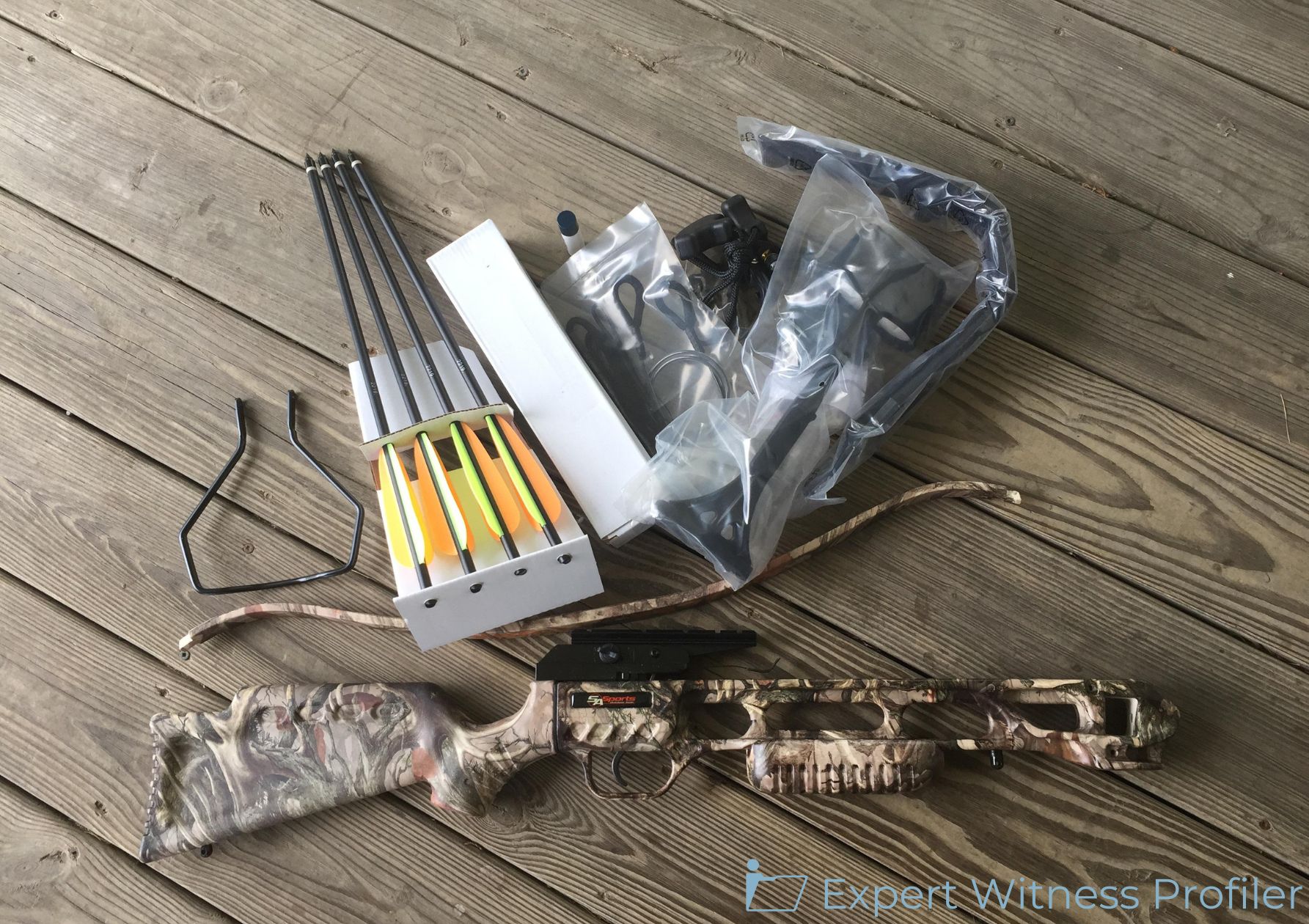
    Scott and Melanie Campbell (“Plaintiffs”) brought this case against Ravin Crossbows, LLC and Velocity Outdoor Inc. (collectively, “Defendants”). This case arises from personal injuries sustained by Plaintiff Scott Campbell (“Scott”), an experienced hunter.

    On November 9, 2022, Scott was hunting from a ladder stand using a Ravin 10 Crossbow, manufactured by Ravin Crossbows. He attempted to shoot a deer, but the arrow fell a few feet away, and he fell from the stand, sustaining injuries. Scott had successfully used this crossbow multiple times before and understood its instructions and warnings.

    Scott’s injuries included a displaced intraarticular fracture of the distal radius with significant comminution of the dorsal and volar cortex. He also had signs of post-traumatic acute carpal tunnel syndrome.

    Plaintiffs’ expert, Craig Clauser, an engineering expert, opined that the incident was a result of a derailment of a bowstring on the crossbow. In other words, Clauser believed that the accident happened because the bowstring came out of the groove at the end of the cam. Plaintiffs’ theory of liability hinges upon Clauser’s expert testimony.

    Defendants filed a motion to exclude the testimony of Craig Clauser under Daubert, challenging his qualifications and the reliability of his opinions.

    Engineering Expert Witness

    Craig David Clauser is a metallurgist and materials engineer by training. As part of his work experience, Clauser was responsible for employee safety and training and failure analysis investigation which is relevant to the instant matter. Clauser is also a member of various professional societies and has contributed to the ASM Handbook on Failure Analysis and Prevention.

    Want to know more about the challenges Craig Clauser has faced? Get the full details with our Challenge Study report.  

    Discussion by the Court

    A. Qualifications

    Defendants argued that Clauser should be excluded because he lacks the practical experience within the hunting industry necessary to make a reliable opinion about liability and causation. The Court disagreed.

    Clauser, after all, possesses skill or knowledge greater than the average layman in determining engineering issues. He need not have academic training in hunting to have an expert opinion on matters related to engineering.

    Defendants may prefer Clauser to be an expert in hunting and crossbows, but the law does not require that.

    B. Reasoning and Methodology

    1. Causation and Liability

    Defendants argued that Craig Clauser’s opinions lacked sound methodology, were speculative, and failed to meet reliability requirements, specifically pointing to his lack of mathematical calculations, drawings, or diagrams to test the reliability of his reasonable alternative designs.

    The Court found that Clauser’s opinions on causation and liability were reliable. His conclusions were based on a detailed, independent review of the physical crossbow and evidence like the broken arrow shaft as well as the “witness marks” left on the shaft of the crossbow as the arrow traveled up the crossbow, which the Court deemed a generally accepted and reliable method in engineering analysis, supported by “good grounds” and not mere speculation.

    2. Proposed Alternative Designs

    Defendants contended that Craig Clauser’s proposed alternative designs were speculative and unreliable because he did not conduct testing, calculations, or provide a concrete design for them, arguing this lack of rigorous methodology made his opinions inadmissible.

    The Court evaluated the reliability of each proposed design separately. Regarding the cam with increased groove depth, the Court held that this opinion was reliable. The Court determined it was based on Clauser’s engineering expertise and detailed analysis of the physical crossbow involved in the incident, including microscopic examination and analysis of witness marks, which provided “sound reasoning and good faith grounds” despite the absence of testing on a modified component.

    In contrast, the Court held that the opinion regarding cam shields or removable guards was unreliable. This proposal was deemed speculative by the Court, lacking any basis in testing, analysis of feasibility or potential dangers or evidence of existing designs on the market. A cam shield might have helped reduce the risk of injury but there is nothing to show that it would be a reasonable alternative design to the Ravin 10.

    C. Assistance to the Trier of Fact

    Defendants argued that Craig Clauser’s testimony should be excluded because he performed no testing or analysis to determine the root cause of the incident and failed to test his alternative designs, contending that this lack of empirical work meant his testimony would not provide relevant information to assist the jury.

    The Court found that Clauser’s opinions will assist the trier of fact.

    The Court’s reasoning was that Clauser’s testimony pertains directly to the alleged injuries Scott Campbell suffered, the potential causation, and the issue of liability. His specialized knowledge is relevant to determining the nature and extent of Scott’s alleged injuries in relation to the crossbow incident.

    Held

    The Court granted in part and denied in part Defendants’ motion to limit the testimony of expert Craig Clauser.

    Key Takeaway:

    A cam shield might have helped reduce the risk of injury but there is nothing to show that it would be a reasonable alternative design to the Ravin 10. Additionally, there is no evidence that a cam shield exists on any current or past crossbow on the market, and Clauser did not prepare or present an actual design with a cam shield.

    Thus, it is apparent to the Court that Clauser’s opinion that a cam shield or removable guard is a reasonable alternative design lacks the requisite reliability for it to be admissible under Daubert.

    Case Details

    Case Caption: Campbell v. Ravin Crossbows, LLC
    Docket Number: 3:23cv1862 
    Court Name: United States District Court for the District of New Jersey
    Order Date: April 29, 2025
  • Life Care Planning Expert’s Testimony on Future Medical Care Needs Admitted

    Life Care Planning Expert’s Testimony on Future Medical Care Needs Admitted

    A July 2022 vehicle collision in Gallup, New Mexico, triggered a lawsuit claiming severe injuries. Plaintiff Jimmy Woodall claimed that Defendant
    Curt Moeller made an “unsafe lane change,” forcing his tractor-trailer into a guardrail.

    Woodall alleged that the crash caused him “severe and disabling injuries.” Woodall sued the Defendants, demanding  medical expenses along with damages for physical and mental pain and suffering, physical impairment, loss of enjoyment of life, and lost wages. 

    To support his claim for these future medical care needs as related to the injury that he sustained, Woodall hired life care planner Todd Capielano. Capielano relied on the opinions of Woodall’s treating physicians to form his own assessment of the costs Woodall was likely to face. However, Defendants filed a motion under Daubert, challenging Capielano’s qualifications, reasoning, and methodology, as well as his reliance on the opinions of Woodall’s treating physicians.

    Life Care Planning Expert Witness

    Todd Capielano has a bachelor’s degree in rehabilitation counseling, which he obtained from Louisiana State University Medical Center, School of Allied Health Professions. He also has a master’s degree in human services counseling from the University of New Orleans.
    In 2015, Capielano obtained a certification for life care planning from the University of Florida.

    Discover more cases with Todd Capielano as an expert witness by ordering his comprehensive Expert Witness Profile report. 

    Discussions by The Court

    A. Qualifications

    Defendants contended that Capielano relied on the opinions of Woodall’s treating physicians to fill in the gaps in his expertise. Because Capielano is not a physician and is not qualified to diagnose Woodall’s conditions, the Defendants argued that he cannot form a life care plan. 

    However, the Court held that a life care planner’s reliance on the medical reports of other experts, even when the life planner does not have the same medical qualifications, does not make the life care planner unqualified.

    Given that Defendants raised no other challenges to Capielano’s qualifications as a life care planner, the Court finds him qualified to testify as an expert regarding Woodall’s future medical expenses.

    B. Reasoning and Methodology

    Because Woodall’s treating physicians couldn’t quantify the extent of the aggravation to Woodall’s preexisting injuries, Defendants argued that Capielano’s life plan must be questionable. Additionally, they argued that this flaw in the life care plan “would mislead the jury and prejudice Defendants.” 

    According to the Defendants, the life care plan incorrectly includes all of Woodall’s future medical expenses, while they should only be liable for the portion caused by the vehicle collision.

    However, Woodall responded that the alleged shortcomings in the underlying medical opinions used to create the life care plan are properly addressed on cross-examination, not by excluding the life care plan entirely. The Court agreed.

    Given that the jury already will be tasked with determining the extent to which Defendants’ conduct exacerbated Plaintiff’s condition, the Court added that it will not unfairly prejudice the Defendants or mislead the jury to have the jury conduct the same inquiry with regard to what portion of future expenses is attributable to Defendants’ conduct.

    Held

    The Court denied Defendants’ motion to exclude the opinions of Plaintiff’s expert Todd Capielano.

    Key Takeaways:

    • Defendants made no argument that Capielano’s qualifications are insufficient within the field of life care planning; rather, they appeared to argue that life care planning performed by a non-physician cannot support expert designation as a categorical matter.
    • The trial will almost certainly involve discussions and inquiries about the preexisting injuries Woodall had and the extent to which they may have been aggravated by the collision in question. That is, the jury will determine the extent to which Woodall’s injuries and present condition are attributable to Defendants’ conduct, if any.

    Case Details:

    Case Caption: Woodall v. W. Express, Inc.
    Doket Number: 1:23cv862
    Court: United States District Court for the District of New Mexico
    Order Date: April 24, 2025
  • Safety Engineering Expert  Allowed to Opine on Codes and Industry Standards

    Safety Engineering Expert Allowed to Opine on Codes and Industry Standards

    On January 22, 2022, Sharon Marshall was dining at an Outback Steakhouse in Fort Smith, Arkansas, when she slipped, fell, and received serious injuries. She alleged that she slipped on soup that had spilled in the floor which Outback had negligently failed to clean up.

    Outback has filed motions to exclude or limit the testimony of two of Marshall’s expert witnesses: Dr. Brian Goodman, who is one of her treating physicians, and Jason English, who is an industrial and safety engineer.

    Pain Medicine Expert Witness

    Brian Goodman, M.D. is a board-certified physician in pain medicine and
    anesthesiology. He completed a fellowship in pain medicine. He frequently treats patients suffering from pain caused by slip-and-falls.

    Get the full story on challenges to Brian Goodman’s expert opinions and testimony with an in-depth Challenge Study.

    Safety Engineering Expert Witness

    Jason English is a safety engineer who has two and a half decades of experience as a consultant who performs accident cause analysis, including fall protection and prevention from elevation as well as from the same level.

    Want to know more about the challenges Jason English has faced? Get the full details with our Challenge Study report.

    Discussion by the Court

    A. Motion to Limit Testimony of Plaintiff’s Treating Physician Brian Goodman, M.D.

    Goodman is a physician who has been providing Marshall with pain management treatment for spinal injuries which she alleges were caused by her fall at Outback. Furthermore, Goodman has also been retained to offer opinion testimony as an expert witness in this case. Specifically, those opinions include the opinion that the spinal injuries and associated pain that he has been treating were caused or worsened by Marshall’s fall at Outback.

    However, Outback argued that Goodman should not be allowed to offer these opinions, for two reasons. Firstly, Outback contended that Goodman is not qualified to opine on what caused the injuries that are the subject of this case because he is not a spinal specialist, did not perform surgery in this case, and is not an orthopedic surgeon, neurologist, diagnostic radiologist, or biomechanical engineer. Secondly, Outback maintained that Goodman’s causation opinions are speculative and unreliable because they are based only on Marshall’s statements to him and not on “any sort of scientific analysis” nor on the review of “any additional medical records, depositions, photographs, or otherwise.”

    Analysis

    The Court found that Goodman was qualified to offer his opinions in this case. Specifically, he has been treating Marshall for pain that he believes was caused by the injuries that are the subject of this lawsuit.

    As for Outback’s second argument regarding the reliability of Goodman’s methodology: the Court believed his methods were sufficiently reliable to satisfy the requirements of Rule 702. Outback fixates on the relatively small number of materials Goodman reviewed during the first period when he was treating Marshall, during which time it seems he was relying primarily on her reports to him of her pain to inform his decisions and was unaware of significant parts of her medical history including possibly even the fact of her fall at Outback. However, the critical question for the admissibility of Goodman’s opinions in this case is not what he knew or didn’t know at the time he began treating Marshall, but rather what informed his opinions at the time that he offered them for purposes of this litigation.

    And Goodman has testified that before offering his most recent expert report in this case he reviewed many binders of materials containing Marshall’s medical history, both pre-fall and post-fall, and that his opinions in this case were informed by his review of those materials as well as his personal experience treating Marshall and her reports to him of her pain, and his experience treating patients with injuries from slip-and-falls more generally.

    Motion to Exclude Plaintiff’s Expert Jason English

    Marshall retained English to offer expert opinions about whether the spill caused her fall (he opines it did), and about whether Outback’s response to the alleged spill hazard and training of its employees to deal with such hazards was consistent with industry standards (he opines it wasn’t). Outback offered two arguments for excluding English’s opinions. First, they contended his opinions were not reliable. Second, they said his opinions were not specialized.

    Analysis

    Regarding reliability, Outback argued that English “is not a hospitality or restaurant expert,” and that his opinions are not based on any examination or testing of the specific floor and restaurant at issue in this case. On the first point, however, English holds a certification in the measurement and evaluation of pedestrian traction on walking surfaces, and is a member of the “ASTM International F13 Committee on Pedestrian/Walkway Safety and Footwear.” The Court determined that clearly has expertise in the topics on which he is opining.

    As for testing on the specific floor where Marshall fell, English testified that
    he saw no point in testing that floor. Instead, English based his analysis on the deposition testimony, photographs, and document discovery that were produced in this case.

    According to English, “the floor in this particular case is just a common commercial flooring found not only in restaurants but other types
    of commercial facilities as well.”

    Regarding whether English’s opinions are specialized: Outback insisted that “[t]here is nothing specialized, scientific, or particularly technical about his opinion. He has simply looked at all the evidence of record and come to a conclusion. The jury can do the same.”

    The Court disagreed. English’s report extensively discussed codes and industry standards around, for example, slip resistance, spills,
    warning signs, and cleaning methods, and opined that Outback failed to meet them. He also discussed the “authoritative literature” on “ordinary human
    factors” that can influence patrons’ awareness of hazards.

    Held

    The Court denied the Defendant Outback Steakhouse of Florida, LLC’s motion to limit testimony of Plaintiff’s treating physician Brian Goodman, M.D and motion to exclude Plaintiff’s expert Jason English.

    Key Takeaway:

    • Goodman took care to emphasize the difference between what information he relied on in forming his opinion of how to treat Marshall and what information he relied on in forming his opinions that were offered for purposes of this litigation.
    • English’s report extensively discusses codes and industry standards around, for example, slip resistance, spills, warning signs, and cleaning methods.

    Case Details:

    Case Caption: Marshall V. Outback Steakhouse Of Florida, LLC
    Docket Number: 2:23cv2119
    Court Name: United States District Court, Arkansas Western
    Order Date: April 11, 2025
  • Orthopedic Surgery Expert’s Testimony will Assist the Court in Determining Questions of Causation

    Orthopedic Surgery Expert’s Testimony will Assist the Court in Determining Questions of Causation

    Following the May 3, 2017 motor vehicle accident that is the basis of this legal action, the Plaintiff presented to the emergency department of Robert Wood Johnson University Hospital with complaints of neck, back, shoulder, and left knee pain.

    He was then referred to orthopedist Dr. Steven L. Nehmer for evaluation and treatment of his shoulder and knee injuries, and Nehmer saw him four times.

    Nehmer prepared two reports concerning the injuries claimed by Plaintiff in this action. His April 8, 2018 report noted Plaintiff presented with “complaints of pains at his neck, both shoulders, low back, and left knee.” According to the report, Nehmer conducted a physical examination of Plaintiff’s shoulders and knee during his first visit to the office on September 28, 2017, and thereafter saw Plaintiff twice more.

    The report also stated that Nehmer reviewed MRI studies of Plaintiff’s shoulder, left knee, and cervical and lumbar spine, from imaging performed by Ironbound MRI on August 3, 2017. Based on the foregoing, Nehmer determined Plaintiff suffered from cervical disc herniations with multiple bulges, a lumbar disc herniation with bulges, a right shoulder partial rotator cuff and posttraumatic impingement syndrome, and left knee medial meniscal tear. He concluded, based on his overall evaluation, that these injuries “are causally related to the motor vehicle accident of May 3, 2017.” Later, after Plaintiff returned to see Nehmer in 2019 for continuing pain, Nehmer issued his May 30, 2019 report, which stated, in relevant part, that the opinions expressed in the April 8, 2018 report have not changed.

    Late Designation

    Nehmer, though providing reports as the Plaintiff’s treating physician outlining his findings and conclusions, was not identified as an expert witness in this action until 2024, just before the Final Pretrial Order before trial. This belated designation stemmed from the procedural circumstances of the case, where the Plaintiff proceeded pro se for the majority of the pretrial period, including the resolution of summary judgment motions. Pro bono counsel was appointed by the Court to represent the Plaintiff only when the case was ready for trial, at which point expert discovery had already concluded. However, newly appointed counsel determined that expert testimony was necessary to establish the extent and nature of the injuries the Plaintiff allegedly sustained in the accident.

    The Defendant consented to the Plaintiff’s designation of Nehmer as an expert, recognizing his prior involvement and the fact that his records had already been produced during discovery. In preparation for the damages phase of trial, Nehmer participated in a de bene esse deposition on July 25, 2024. During this deposition, the Defendants cross-examined him regarding his opinions, specifically the causal relationship between the accident and the Plaintiff’s injuries. In the current motion, the Defendants seek to exclude any portion of Nehmer’s expert opinion concerning the diagnosis, prognosis, and causation of the Plaintiff’s injuries to his cervical spine and lumbar spine.

    Orthopedic Surgery Expert Witness

    Steven L. Nehmer is a board-certified orthopedic surgeon licensed to practice in New Jersey. He has over 35 years of experience.

    Get the full story on challenges to Steven Nehmer’s expert opinions and testimony with an in-depth Challenge Study. 

    Discussion by the Court

    Rule 702

    The Defendants argued that Nehmer’s opinion regarding the Plaintiff’s spinal injuries should be excluded because it relied solely on MRI reviews, without his own physical examination of the Plaintiff’s cervical and lumbar spine in the course of treatment. They contended this lack of direct examination made his spinal injury opinions inadmissible. The Plaintiff countered that under Rule 702 and Third Circuit precedent, medical experts can base opinions on medical records, making Nehmer’s testimony, including his opinion about Plaintiff’s neck and back injuries, admissible.

    The Defendants challenged Nehmer’s expert testimony on the Plaintiff’s cervical and lumbar spine injuries, arguing it lacked reliability and fit under Rule 702. They asserted his opinion was unreliable as it was based on the doctor’s review of Plaintiff’s medical records, not his own examination or treatment of those areas. Furthermore, they claimed these records were inadmissible hearsay, further undermining the opinion’s reliability and justifying the exclusion of Nehmer’s causation testimony regarding the Plaintiff’s back and neck injuries.

    The Court found that Nehmer’s opinion, as presented in his April 8, 2018 report, met the minimal reliability standard of Rule 702. His conclusions were based on the Plaintiff’s reported symptoms and the accident, along with Nehmer’s review of medical records, including imaging of the Plaintiff’s cervical and lumbar spines taken shortly after the accident. Additionally, Nehmer evaluated the Plaintiff’s shoulder and left knee injuries, performing an examination of those areas. While a physical examination of the Plaintiff’s neck and back would have strengthened his opinion on those injuries, its absence affects the weight, not the admissibility, of his expert testimony under the totality of the circumstances and Rule 702.

    Rule 703

    The Defendants also argued against Nehmer’s opinion as to Plaintiff’s cervical and lumbar spine injuries, claiming it improperly relied on hearsay evidence – the studies of MRI films performed by a radiologist. They asserted the Plaintiff couldn’t introduce the non-testifying radiologist’s inadmissible hearsay statements through Nehmer’s testimony. The Court rejected this argument, citing Federal Rule of Evidence 703, which allows experts to rely on facts or data reasonably relied upon experts in the particular field, even if the facts or data are not admissible in evidence. In this case,  hearsay consists of medical records and films are the type of data doctors typically use for diagnosis and treatment.

    The Court concluded that Nehmer’s opinion relates to the Plaintiff’s alleged injuries from the May 3 accident and will help the Court determine causation, the nature of the injuries, and their extent.

    Held

    The Court denied the Defendants’ motion to strike a portion of the testimony of Plaintiff’s orthopedic expert Dr. Steven Nehmer.

    Key Takeaway:

    • Nehmer’s testimony is relevant for the purposes of the case because his opinion pertains to the injuries Plaintiff allegedly suffered as a result of the May 3 accident and will assist the Court in determining questions of causation, the nature of the injuries, and the extent to which Plaintiff was allegedly injured.
    • While a physical examination of Plaintiff’s neck and back would have strengthened Nehmer’s opinion as to those alleged injuries, the absence of such a diagnostic tool goes to the weight of the expert testimony. In view of the totality of the circumstances, it does not render his opinion unreliable under Rule 702.

    Case Details:

    Case Caption: Lorenzo-Noda V. Kazak Et Al
    Docket Number: 2:18cv13414
    Court Name: United States District Court, New Jersey
    Order Date: March 24, 2025