Tag: Inspect

  • Engineering Expert Allowed to Opine on Fenestrations

    Engineering Expert Allowed to Opine on Fenestrations

    This case arises from an insurance policy and its alleged breach. Riva’s luxury high-rise condominium development sustained damage from Hurricane Ian.

    The issue Steadfast raised with the Court now is how Riva’s expert arrived at his estimate. Riva hired Dr. Anurag Jain, an engineer, to inspect the property. Dr. Jain and his team investigated the property over the course of multiple days, focusing on the roofs, windows, door systems, interiors, and exteriors of the building. But they didn’t knock on every door. Instead, Jain focused on the interiors and fenestrations (windows and glass doors) in 43 of 161 condominium units, capturing 27% of the total. The units he inspected were selected in accordance with the “qualitative” sampling methods outlined in the American Society of Civil Engineers’ (“ASCE”) guidelines. In his report, Jain explains that this choice was meant “to cover a sufficiently large sample of units and windows and doors across the buildings and various exposures with multiple units on each floor and each stack of the buildings.”

    At bottom, rather than inspect every unit—a time-consuming and expensive process—Jain determined the level of damage in the building by analyzing the losses observed in the sample. Since he suggested replacing or repairing a specific percentage of windows and sliding glass doors in the sample, he applied the same percentage to all windows and glass doors across the building. Put simply, he extrapolated.

    Motion to Exclude

    Steadfast looked at Jain’s report and saw a house of cards. In its view, his opinions are unreliable for two main reasons. First, the damage could have been caused by Hurricane Irma in 2017, which Jain did not sufficiently rule out. Second, Steadfast claimed that the math is broken—arguing that extrapolation is a clumsy shortcut that will force it to pay for repairing perfectly good windows. To keep the jury from hearing a word of it, Steadfast sought to exclude Jain’s testimony.
    Engineering Expert Witness

    Dr. Anurag Jain has investigated more than 3,000 hurricane-damaged buildings, including losses from Hurricane Ian, and has testified in depositions and trials involving wind-related structural damage.

    He holds a Ph.D. in structural engineering (wind engineering emphasis) and a master’s degree in structural engineering from Johns Hopkins University, as well as a Bachelor of Technology in civil engineering from Banaras Hindu University.

    Get the full story on challenges to Anurag Jain’s expert opinions and testimony with an in-depth Challenge Study.

    Discussion by the Court

    A. Hurricane Irma

    Steadfast’s argument that Jain did not rule out alternative causes of the property damage is this: because he opined that the “duration” of Hurricane Ian’s high winds caused the damage, he should have also calculated whether the duration of Hurricane Irma, from 2017, could have caused the same damage.

    The problem with this argument is straightforward—Jain did consider Irma. He testified that Riva’s property was designed to withstand Hurricane Ian, but the duration of the strong winds caused the building to succumb to its pressure.

    But Jain didn’t just throw up his hands because the data was sparse. He checked the available pre-Ian documents—including a 2021 Condition Survey Report, which was entirely silent on any window or door damage. To an engineer, that silence made perfect sense: Irma simply lacked the muscle to inflict similar destruction.

    Analysis

    Steadfast protests that Jain did not see any reported damage to the windows and doors because that is not what the 2021 Condition Survey was looking for. According to Steadfast, the survey only inspected the exterior of the property, and since the interior was never examined, the report could not have identified any fenestration damage. Apparently, this was corroborated by the survey company, who testified that the 2021 assessment did not include an inspection of the buildings’ interiors. While that may certainly weaken Jain’s opinions, it did not change the reliability analysis here.

    The narrow question at this stage is simply whether Jain adequately grappled with obvious alternative explanations. He did. In his professional judgment, if Hurricane Irma had actually caused building-wide damage, the inspecting engineers would have written it down. Steadfast insists this is a total misreading of the 2021 Condition Survey. But that kind of disagreement goes to the credibility of his conclusion, not the reliability of his threshold method. If Steadfast wants to convince a jury that the report’s silence means something else entirely, it is welcome to try. That is exactly what cross-examination is for.

    B. Extrapolation

    Next up, Steadfast challenged Jain’s reliance on statistics instead of personally inspecting each unit to determine the percentage of damaged fenestrations. Basically, Steadfast argued that “extrapolating findings from only 27% of units to the entire 161-unit complex is not scientifically valid under accepted engineering Daubert principles.”

    Look at how Jain actually did the math. He didn’t invent a number out of whole cloth; he recorded the exact percentage of damage he saw in his sample and let those real-world findings dictate the building-wide projections. For example, he found that 24% of the sliding glass doors observed in the North Building had panel framing joint rotation, a bent or impacted frame, or water penetration through the joints.

    Because those specific flaws signal broken internal sealants and compromised framing, he concluded that 24% of the sliding glass doors in the North Building need to be replaced. The math is not a black box—it is the product of simple statistics. And Jain’s sampling focus is identical to his extrapolation subject: sliding glass doors, single-hung windows, and fixed windows divided by building and categorized by the type of damage each sustained. A reasonable jury does not have to accept Jain’s conclusions as true, but his math is not unreliable.

    Jain staggered the units he inspected across 19 stories, based on each unit’s location within each building. He did this “to cover a sufficiently large sample of units and windows and doors across the buildings and various exposures with multiple units on each floor and each stack of the buildings.” The ASCE guidelines support precisely this type of extrapolation. 

    Held

    In conclusion, the Court denied Steadfast Insurance Company’s motion in limine to exclude the testimony of Dr. Anurag Jain.

    Key Takeaway

    The Court’s job under Daubert is to screen an expert’s methodology, not to decide which side has the more persuasive argument or to declare who is ultimately correct.

    Case Details:

    Case Caption: Riva Del Lago Condominium Association, Inc. V. Steadfast Insurance Company
    Docket Number: 2:24cv1056
    Court Name: United States District Court, Florida Middle
    Order Date: June 14, 2026
  • Railroad Expert Was Not Allowed to Opine on Hand Brake

    Railroad Expert Was Not Allowed to Opine on Hand Brake

    Plaintiff Justin W. Hedden brought suit against Toledo Peoria & Western Railway, Corp. and its corporate parent Genessee & Wyoming Railroad Services, Inc. for injuries he sustained while working on the railroad.

    Defendants sought an order excluding the opinions of Hedden’s expert, John David Engle.

    Railroad Expert Witness

    John David Engle worked in the railroad industry for decades. Engle has a long history of working in the railroad industry and testifying as an expert witness in FELA matters. He has worked as a carman, technical instructor, training officer, and air brakes superintendent for Norfolk Southern.

    Get the full story on challenges to John David Engle’s expert opinions and testimony with an in-depth Challenge Study.

    Discussion by the Court

    1. Opinion 1: The Hand Brake was Inefficient

    Engle’s first opinion relates to whether the hand brake was “efficient.” The Court found that Engle’s expert report is devoid of any explanation of the methodology he used in reaching his opinion that the hand brake was inefficient. Engle did not inspect the hand brake at issue in this case. Moreover, he did not have a clear theory as to what made the hand brake fail to release when Hedden pulled on it with the brake stick.

    Not only did he lack a sufficiently reliable methodology for this opinion, but what methodology he did have reveals that his testimony would not be helpful to the jury. Engle admitted that his opinion as to the “condition of the hand brake at the time of the incident” relies “solely on Hedden’s description of the hand brake.”

    With no analysis of the hand brake, nor a clear theory as to why it was defective and thus inefficient, Engle’s opinion here boils down to “his belief that Plaintiff’s account of the incident is true.”

    2. Opinion 2: TPW Failed to Inspect and Maintain the Railcars

    In his second opinion, Engle asserted that TPW failed to inspect and maintain the railcars “because the freight car hand brake did not function as intended.”

    First, there is literally no explanation or analysis in Engle’s report as to how he arrived at that opinion. In other words, it is entirely conclusory. He simply stated that, because the hand brake did not function as intended, TPW must have been failing to inspect and maintain the railcars. There is no discussion, for example, of what would constitute proper and regular inspections or an analysis of TPW’s maintenance protocol.

    Second, like the previous opinion, this opinion appears to be wholly based on Hedden’s account of the Incident. It includes no mention or citation to any further investigation by Engle of additional sources, such as TPW’s regular inspection or maintenance practices for railcars. Since his opinion here rests “solely on his acceptance of Plaintiff’s account, the testimony amounted to nothing more than an invitation to the jury to believe his assessment of Plaintiff’s truthfulness” and is thus inadmissible. Third, since the Court has already found that he cannot testify as to whether the brake was efficient or had a defect, and this opinion builds directly on that premise, this opinion now has no admissible support and is thus itself inadmissible.

    3. Opinion 3: The Railcar Involved in the Incident Was Not Properly Identified and Therefore Not Properly Inspected

    Engle’s third opinion is that the freight car involved in the Incident was not properly identified and therefore could not have been properly inspected.

    Engle primarily relied on two key data points in arriving at this opinion. The first is that Hedden and Cardine were told to move the train to the lift, which required them to finish building the train after the Incident and then moved it to its next destination, which made it difficult to figure out which railcar was involved in the Incident. Indeed, he cited to Meyer’s deposition where Meyer admitted that, because he was uncertain as to which railcar was involved, he had to narrow it down to five cars and inspect all of them. The second was that the railcar involved in the Incident was a lighter color than any of the ones Meyer inspected.

    Starting with his methodology, Engle’s reasoning relies on a few different sources, as well as his experience in railyard operations. Engle has experience in building and moving trains in railyards and can testify as to how this can make identifying a particular railcar difficult. While he partially walked back his second reason for this opinion, the opinion still finds support in his first reason: that the continued building and movement of the train made Meyer’s identification of the correct railcar questionable.

    A railcar could match the description and still be the wrong car, and Engle is qualified to explain why. A railyard is a complicated and complex environment. It will be helpful to jurors to have testimony about that environment so the jury can assess whether Defendants did in fact inspect the wrong railcar.

    4. Opinion 4: The Inspection of the Hand Brake was Deficient because Meyer did not use a Brake Stick on It

    Engle’s fourth opinion is that the inspection of the railcar was deficient because Meyer did not use the brake stick Hedden was using, or indeed, any brake stick, on the hand brake as part of the inspection.

    Defendants alleged that Engle lacked sufficient expertise specifically about brake sticks to make this opinion that a proper inspection would have used one.

    Engle’s opinion relates primarily to what constitutes a proper inspection. Engle asserts that a proper inspection would have recreated the conditions of the Incident, which, in this case, would have meant using a brake stick on the hand brake. Even if Defendants are right that Engle is not sufficiently experienced with brake stick usage specifically, that does not mean his opinion that a proper inspection would have used one to recreate the conditions of the Incident is invalid. He has sufficient expertise in railyard operations to testify as to what he believes would have constituted a proper inspection and has provided sufficiently reliable reasoning for this opinion.

    5. Opinion 5: TPW failed to Properly Train Its Employees

    Engle’s last opinion is that TPW failed to properly train certain employees, including Hedden, on how to perform interchange inspections, including specifically on the hand brake and air brake systems and the associated riggings.

    Defendants asserted that Engle’s opinion here is essentially insisting that transportation employees like Hedden be trained on brake systems like mechanical employees and that, in any event, Hedden was not following the safety rules in the events leading up to the Incident.

    Unlike Engle’s opinion regarding the hand brake, his opinion on training “does not require Engle’s physical examination of the hand brake” and Defendants’ arguments do not suggest that his “methodology is unreliable.” Instead, they focus more on his outcome, asserting that the high level of training Engle asserts is necessary is “a nonsensical proposition.” But the Court, as gatekeeper, is “primarily concerned with methodology, not conclusions.”

    Held

    The Court granted in part and denied in part Defendants’ motion to exclude the testimony of John David Engle.

    Key Takeaway

    The Court focuses on principles and methodology, not on the conclusions they generate. The goal of the Rule 702 inquiry “is to assure that experts employ the same ‘intellectual rigor’ in their courtroom testimony as would be employed by an expert in the relevant field.”

    Case Details:

    Case Caption: Hedden V. Toledo Peoria & Western Railway Corp.
    Docket Number: 4:22cv24
    Court Name: United States District Court, Indiana Northern
    Order Date: April 10, 2026
  • Forensic Engineering Expert Allowed to Opine on Tree Impact Damage

    Forensic Engineering Expert Allowed to Opine on Tree Impact Damage

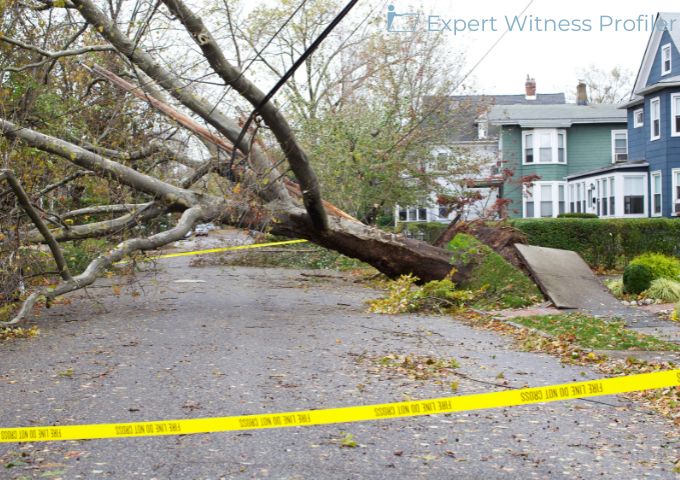
    This matter arises out of an insurance claim filed by Plaintiffs, Grayson Smith
    and Savannah Smith, related to a tree impact that caused damage to their property located at 2811 Pebblewood Drive, Valdosta, Georgia 31602 on August 30, 2023.

    Auto-Owners retained expert Brent Boyd, a forensic engineer, to analyze the damage to the property. Plaintiffs’ arguments largely center on reliability. They argued that Boyd spent too little time conducting his inspection, employed a flawed and haphazard methodology, and did not adequately consider the findings of other engineers.

    Forensic Engineering Expert Witness

    Brent A. Boyd is a licensed engineer who received his engineering degree from the University of Alabama in 2010. He has inspected numerous properties affected by tree impacts and conducted evaluations of the damage thereto, including whether the structure had laterally shifted.

    Want to know more about the challenges Brent Boyd has faced? Get the full details with our Challenge Study report.

    Discussion by the Court

    Boyd determined that there was tree impact damage to the rear and left elevations of the property, specifically the rear sunroom and adjacent living room, which included shifting isolated portions of framing elements in that area.

    i. Experience and Qualifications

    Plaintiffs took issue with the fact Boyd had been licensed for less than four years at the time of the inspection at issue. They also stated that nearly all of his professional time is spent “looking at damaged roofs for insurance companies” and he was retained by Defendant 918 times.

    The Plaintiffs argued that Boyd lacked the necessary qualifications, noting that he did not hold a graduate degree, has never presented outside his own company, and has not published any work in the field of engineering.

    Firstly, the Court was unpersuaded that four years is too short a time to be qualified. Boyd’s degree and licensure indicated sufficient qualifications. If, as Plaintiffs maintained, their experts are better experienced than Boyd, that information is properly put before the jury at trial, not the Court in a motion to exclude. Secondly, Boyd has experience conducting evaluations of properties affected by tree impacts, like the instant case, including assessing whether the structure had laterally shifted, meaning a foundational issue related to racking. Third, and finally, the fact Boyd has worked for Defendant 918 times cuts against Plaintiffs’ arguments. 918 claim evaluations are a significant amount of experience. If even a minority of those claims considered the issue of racking, Boyd would still be qualified to testify.

    ii. Reliability

    Plaintiffs stated that Boyd was present at their property for about ninety minutes and never agreed to return for a more detailed inspection. Defendant noted that Boyd’s time spent at Plaintiffs’ property allowed him to inspect “all walls under the main area of impact” and publish a 73-page, peer-reviewed engineering report.

    Plaintiffs also argued that choosing which studs to measure by conducting a visual inspection is a “haphazard sampling” and “not a thorough, scientific approach,” which left “the vast majority of walls unmeasured and uninspected in any meaningful way.” This argument goes to the comprehensiveness of Boyd’s inspection, not its reliability.

    Plaintiffs’ critique of Boyd’s methodology focuses on his use of his bubble level. They argued that using a one-foot bubble level on a nine-foot wall, not insisting the bubble be centered between the level’s marked lines to declare a stud to be plumb, and his own data rendered his expert opinion unreliable.

    Defendants responded that it is not about the length of the level, but rather ensuring “the engineer uses it in accordance with proper scientific procedures.” The Court declared that Boyd’s choice of level is not disqualifying, particularly given his assertion he used it in compliance with proper scientific procedures.

    Plaintiffs argued that Boyd did not adequately consider the findings of other engineers because his findings disagreed with the reports of Plaintiffs’ experts and he did not re-evaluate Plaintiffs’ property after reading the disagreeing reports.

    At trial over a contested matter such as this one, experts are bound to disagree. Existence of disagreement neither disqualifies an expert nor renders him unreliable. And a refusal to change his findings or return to the property following the receipt of a disagreeing report did not render Boyd’s original findings unreliable.

    Held

    The Court denied Plaintiffs’ motion to exclude the testimony of Brent A. Boyd. 

    Key Takeaway

    An expert’s method need not be perfect, nor must he apply it perfectly. That is, a minor flaw in an expert’s reasoning or slight modification of an otherwise reliable method will not render an expert’s opinion per se inadmissible.

    Case Details:

    Case Caption: Smith V. Auto-Owners Insurance Company
    Docket Number: 7:24cv83
    Court Name: United States District Court, Georgia Middle
    Order Date: February 13, 2026
  • Engineering Expert Allowed to Opine on Property Damage

    Engineering Expert Allowed to Opine on Property Damage

    Plaintiff R&J Components filed this action for negligence, alleging damage to inventory during roof renovations. Centimark Corporation and SIU Professional Roofing LLC (“Defendants”) sought to exclude Plaintiff’s damages expert, Mikey Minor, under Rule 702 of the Federal Rules of Evidence.

    Engineering Expert Witness

    Mikey Minor is a director of consulting and lead consulting engineer with twenty years experience with an industry-leading engineering firm servicing the insurance and legal industries on losses involving electronics,
    electrical infrastructure, and electro-mechanical equipment. He supervises the entire division of engineers in multiple locations and provides support for data, salvage, and restoration divisions.

    In addition to consulting on high-profile and large losses, he oversees assigning and reviewing all projects with engineering staff, developing ongoing test procedures and research protocol, and performing peer review and quality control of engineers’ work product.

    Get the full story on challenges to Mikey Minor’s expert opinions and testimony with an in-depth Challenge Study.

    Discussion by the Court

    Plaintiff designated Mikey Minor to testify as an expert witness on (1) the extent of the property damage and (2) the value of the loss.

    I. Qualification: Specialized Knowledge

    Defendants asserted that Minor “has no particular knowledge, training, skill, or experience that would assist the jury as to determining [the] value of the allegedly damaged inventory.”

    Plaintiff argued, “Minor has specialized knowledge in industry sources to obtain pricing and evaluat[e] unique components to develop comparison pricing where exact ‘apples to apples’ components may not exist in the market.”

    Plaintiff has demonstrated by a preponderance of the evidence that Minor’s valuations and consideration of factors including the identification of each component, its footprint, operation, and more, is beyond the knowledge of a layperson. As such, the Court held that Minor is qualified to testify to these matters.

    II. Reliability

    A. Items 1 & 7: Failure to Determine the Extent of the Damage & Subjective Evaluations of Contamination

    Defendants argued that Minor’s testimony and opinions are not reliable because he failed to determine the extent of the damage, did not identify the source of contamination in his evaluation, and made subjective evaluations of the level of contamination observed on the inventory.

    Plaintiff emphasized that Minor inspected the subject inventory on two separate visits: in May and June of 2022. In the second visit, which took place over the course of three days in June, Minor and his team visually inspected, photographed, and noted the contamination and number of parts in total inventory of approximately seventy skids containing over 500 different part numbers and parts exceeding fifteen million pieces of inventory.

    Minor has previously served as an expert and has worked on multiple high profile insurance claims to document damages and identify costs. His determination of the extent of the damage is supported by photo evidence that could be used to replicate his findings. He also created various categories of contamination to classify and evaluate the levels of damaged inventory.

    This type of visual assessment, inspection, and valuation falls squarely within Minor’s field of practical expertise. Minor sufficiently explained his methodology and bases for his determinations in categorizing and classifying the damaged inventory. The Court is satisfied that this methodology is reasonably reliable under Rule 702(c) and has been reliably applied to the facts under Rule 702(d).

    B. Item 8: Failure to Determine Fair Market Value

    Defendants argued that Minor was initially retained to determine the replacement value of the inventory, not the fair market value, and that his valuation of the goods erroneously includes only the replacement value.

    Plaintiff has explained that its water damaged products have a resale value of zero. Minor’s reliance on Plaintiff’s statements that the products are a complete loss after being damaged by water is not a basis for the exclusion of his testimony.

    Further, using this resale value, Minor’s description in his deposition of the method he used to obtain the values of the inventory describes an amount matching the description of fair market value.

    Though Defendants may raise concerns over a jury being confused or misled, the Court disagreed. Ultimately, Defendants took issue with how Minor defines his data, but such a dispute did not go to the reliability of Minor’s testimony, at least for Rule 702 purposes.

    C. Item 9: Acceptance of Plaintiff’s Allegations

    Defendants argued that Plaintiff’s expert “is unreliable because he simply accepts Plaintiff’s allegations.” As an example, Defendants highlighted that Minor accepted Plaintiff’s assertion that all skids claimed as damaged did, in fact, sustain damage.

    Minor’s reliance on Plaintiff’s list of damaged skids months after the water intrusion, as well as checking Plaintiff’s valuations on items for values—especially at the quantity Plaintiff held—that were not readily available, is reasonable and likely necessary given the circumstances. Though Defendants asserted that “Minor’s methodology was patently unreliable because he ignored market data in favor of appeasing . . . Plaintiff,” Minor’s deposition and report indicated that he used reasonable diligence to reach opinions regarding the value of Plaintiff’s damaged inventory, checking numerous websites, confirming with outside sources, and drawing on personal experience to determine values.

    Plaintiff has shown by a preponderance of the evidence that the methodology used to confirm the values for available quantities of the claimed inventory is consistent with Minor’s expertise and has been explained clearly enough to withstand judicial scrutiny.

    D. Item 10: Assignment of Value to Items Lacking Evidence of Contamination

    Defendants also asserted that Minor’s methodology and opinions are unreliable because he assigned value to items that his own investigation concluded did not show any evidence of damage or contamination.

    Plaintiff responded that Minor created various categories of contamination to provide a more thorough analysis, and that inventory subject to water and debris could not be sold by Plaintiff such that Defendants’ focus on functionality misses the mark.

    Defendants construe Plaintiff’s response as a concession that inventory with no visible contamination is still marketable. It is unclear whether Plaintiff does, in fact, concede this point given Plaintiff’s evidence indicating that any exposure to the moisture whatsoever makes the products unmarketable because a willing buyer would not be interested in buying materials that had the risk of contamination.

    In any event, this argument again goes to the weight, rather than the admissibility, of Minor’s testimony. A jury can determine whether it is reasonable for Plaintiff to be compensated, should it find liability, for products containing no visible evidence of contamination.

    E. Items 2-6: Failure to Consider Prior Sales Data or Analyze Costs of Acquisition, Potential Resale Value, Salvage Value, & Whether Inventory Was Obsolete

    Defendants list these “failures” with little, if any, explanation or reasoning provided to explain why they warrant exclusion of Minor’s testimony. The Court is not persuaded that any of these independent bases for purported unreliability are cause for the exclusion of Minor as an expert; nor would their collective effect change this determination.

    Ultimately, these independent “holes” Defendants are attempting to “poke” are all factors that appear to suggest a lack of credibility, as opposed to reliability, on the part of Plaintiff’s expert. A matter affecting the weight and credibility of the testimony is a question to be resolved by the jury.

    The Court found that Plaintiff has met its burden of showing by a preponderance of the evidence that Minor’s methods and opinions were reliable and will help a jury’s understanding or determination as to the extent of the damage and the value of the loss.

    Held

    The Court denied Defendants’ joint motion to exclude the testimony of Mikey Minor.

    Key Takeaway

    The Court need not determine that the expert testimony a litigant seeks to offer into evidence is irrefutable or certainly correct. As with all other admissible evidence, expert testimony is subject to being tested by “vigorous cross-examination, presentation of contrary evidence, and careful instruction on the burden of proof.”

    Case Details:

    Case Caption: R&J Components Corporation V. Centimark Corporation
    Docket Number: 2:23cv358
    Court Name: United States District Court, South Carolina
    Order Date: November 18, 2025