Tag: Installed

  • Elevator and Escalator Expert Witness’ Testimony on Elevator Malfunction Admitted

    Elevator and Escalator Expert Witness’ Testimony on Elevator Malfunction Admitted

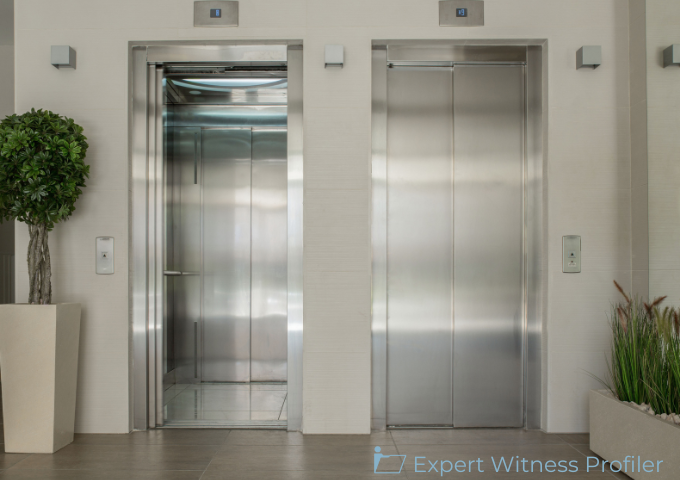
    In September 2019, Plaintiff Nathan White, a security guard at the Cosmopolitan Hotel in Las Vegas, inhaled fumes from a malfunctioning elevator while responding to a smoke alarm in the elevator’s brake room. Days later, Defendant TKE’s (formerly known as Thyssenkrupp Elevator) employees recklessly destroyed the relevant elevator parts. Plaintiff sued Defendant TKE under strict products liability and negligence theories.

    It has been 10 years since TKE designed, manufactured, assembled, sold, and installed the TAC 50-04 elevator. The company also exclusively maintained the elevator. In 2019, TKE complied with Nevada’s annual inspection by hiring a third-party company to inspect the elevator, including the brakes. Limited records indicated that the exterior parts of the elevator brake apparatus had been inspected during a June 2019 service call. However, it should be noted that TKE did not perform its annual “brake teardown” maintenance that year, which its own internal procedures required.

    Both parties hired elevator experts to explain why the elevator brake malfunctioned. TKE’s expert, John Halpern, concluded that TKE had taken reasonable care to maintain the elevator. However, an unpredictable malfunction in the bushing of the brake arm allowed the brake pad to rub on the brake drum, leading to smoke in the brake room.

    Plaintiff’s elevator and escalator expert witness, John Koshak, disagreed, concluding that the elevator brake failed as TKE had failed to undertake adequate preventative maintenance. TKE moved to exclude Koshak’s testimony.
    Elevator and Escalator Expert Witness

    Elevator and Escalator Expert Witness

    John Winfield Koshak has worked in the elevator industry for the last several decades. He belongs to the American Society of Mechanical Engineers (ASME) and the American National Standards Institute (ANSI), he is a certified elevator inspector, and he has earned various other accolades and accomplishments in the world of elevators.

    Want to know more about the challenges John Koshak has faced? Get the full details with our Challenge Study report.  

    Discussion by the Court

    1. Qualified by Knowledge, Skill, Experience, or Training

    According to the Fed. R. Evid. 702, the Court was required to consider whether Koshak was qualified by knowledge, skill, experience, and training to opine on this case.

    Plaintiff hired Koshak to testify about faults in the Defendant’s maintenance of the elevator.

    At the hearing, Defendant argued that while Koshak may be qualified as an expert on elevators generally, he is not an expert on the model of the elevator that malfunctioned. To survive Defendant’s motion to exclude Koshak, it would be enough to show that Koshak was qualified to speak about elevator maintenance generally. It should be noted that Koshak worked in elevator design at TKE’s predecessor company while the relevant elevator was being developed. Moreover, he has also been found qualified to speak as an expert by other courts.

    The Court held that Koshak’s qualifications from professional societies, his experience working in elevator design at Defendant’s predecessor company while the relevant elevator was being developed, and his qualification as an expert by other courts qualified Koshak to opine about elevator maintenance and mechanics in this case.

    2. Helpfulness to the Jury

    Under Fed. R. Evid. 702(a), the Court must consider whether Plaintiff has shown that Koshak’s technical knowledge about elevator maintenance and analysis of the incident at the Cosmopolitan will help the jury understand the evidence.

    The Court found that Koshak is more than familiar with industry standards for elevator maintenance, understands how to interpret elevator fault codes and maintenance logs, and has demonstrated that he could answer questions about how elevators work.

    It was noted that the element of breach in the Plaintiff’s negligence case would require the jury to assess the standard of care for maintaining elevators and interpret circumstantial evidence. It may also require a high-level understanding of how elevators work.

    In conclusion, the Court found that Koshak’s specialized knowledge would be useful to the jury, and held that Plaintiff has met his burden to show as much.

    3. Sufficient Facts or Data

    According to Fed. R. Evid. 702(b), the Court was required to consider whether Koshak’s testimony was based on sufficient facts or data.

    The Court found that Koshak has used sufficient data to reach at least some of the conclusions in his report. He used relevant ASME standards in assessing elevator maintenance; and he reviewed and interpreted the fault logs, error codes, and available maintenance records from the subject elevator.

    Defendant argued that specific paragraphs in Koshak’s report and statements from his deposition revealed that Koshak did not sufficiently consult the record for his testimony and that he lacked knowledge of important facts of the case, like which elevator arm malfunctioned.

    However, Plaintiff contested the salience of these errors. The Court found that Plaintiff had shown that Koshak used sufficient data and facts to survive a motion to exclude his testimony entirely. While Defendant may later seek to exclude specific sections of Koshak’s report or limit the scope of Koshak’s testimony, it has failed to show that any alleged errors justify excluding Koshak’s entire report.

    4. Reliable Principles and Methods

    Under the Fed. R. Evid. 702(c)., the Court had to consider whether Plaintiff had shown that Koshak’s testimony was the product of reliable principles and methods.
    The Court observed that Koshak’s testimony relied on translating and interpreting elevator fault codes, maintenance standards, maintenance logs, and the function of elevator components like the bushing (the component that seemed to have failed). It was held that Koshak’s interpretation of these codes, standards, and maintenance logs, as well as his explanation of how components function, could be replicated and challenged in an objective sense by reference to authoritative sources.

    Additionally, Defendant challenged Koshak’s “deductive” method as unreliable. Koshak’s deductive method involves considering several possibilities of what caused the elevator malfunction, eliminating the ones that seem unlikely, and positing that the remaining causes are likely. The Court found that Koshak’s testimony used reliable methods and principles.

    5. Reliable Methods Applied to Relevant Facts

    Under Fed. R. Evid. 702(d)., the Court held that Plaintiff had shown that Koshak’s opinion reflects an application of reliable principles and methods to the facts of the case.
    To sum up, Koshak applied his knowledge of maintenance standards and methods of translation and interpretation of technical codes to the maintenance records, fault logs, opposing expert report, and deposition testimony relevant to the case.

    Conclusion

    The Court held that Koshak was qualified as an expert under FRE 702. At the November 15 hearing, the parties requested an evidentiary hearing regarding both experts. To the extent the parties wish to challenge the scope of expert testimony, the Court will entertain motions in limine identified in the proposed joint pretrial order and consider at that point the need for an evidentiary hearing.

    Held

    The Court denied Defendant’s motion to exclude Plaintiff’s elevator and escalator expert witness John Koshak.

    Key Takeaway:

    Koshak’s expert testimony satisfied all four requirements under Federal Rule of Evidence 702.

    1. Despite lacking a college degree, the Court found that Koshak’s extensive industry experience, professional certifications, and previous work with TKE’s predecessor company qualified him to testify about elevator maintenance. The Court rejected TKE’s argument that Koshak needed specific expertise with regard to the exact elevator model in question.
    2. The Court recognized that Koshak’s technical knowledge would be invaluable in helping the jury understand complex elevator maintenance standards and fault codes, which were crucial for determining if TK Elevator breached its duty of care.
    3. The Court found that Koshak based his conclusions on sufficient data, including ASME standards, fault logs, and maintenance records, even though there were some minor factual discrepancies.
    4. The Court deemed his methodology reliable, particularly his systematic approach to analyzing fault codes and his “deductive method” of eliminating unlikely causes of malfunction.

    Case Details:

    Case caption: White V. Tk Elevator Corporation
    Docket Number: 2:21cv1696
    Court: United States District Court for the District of Nevada
    Dated: January 29, 2025
  • Fire Investigation Expert Witness’ Testimony Regarding Improperly Installed Outlet Cover Admitted

    Fire Investigation Expert Witness’ Testimony Regarding Improperly Installed Outlet Cover Admitted

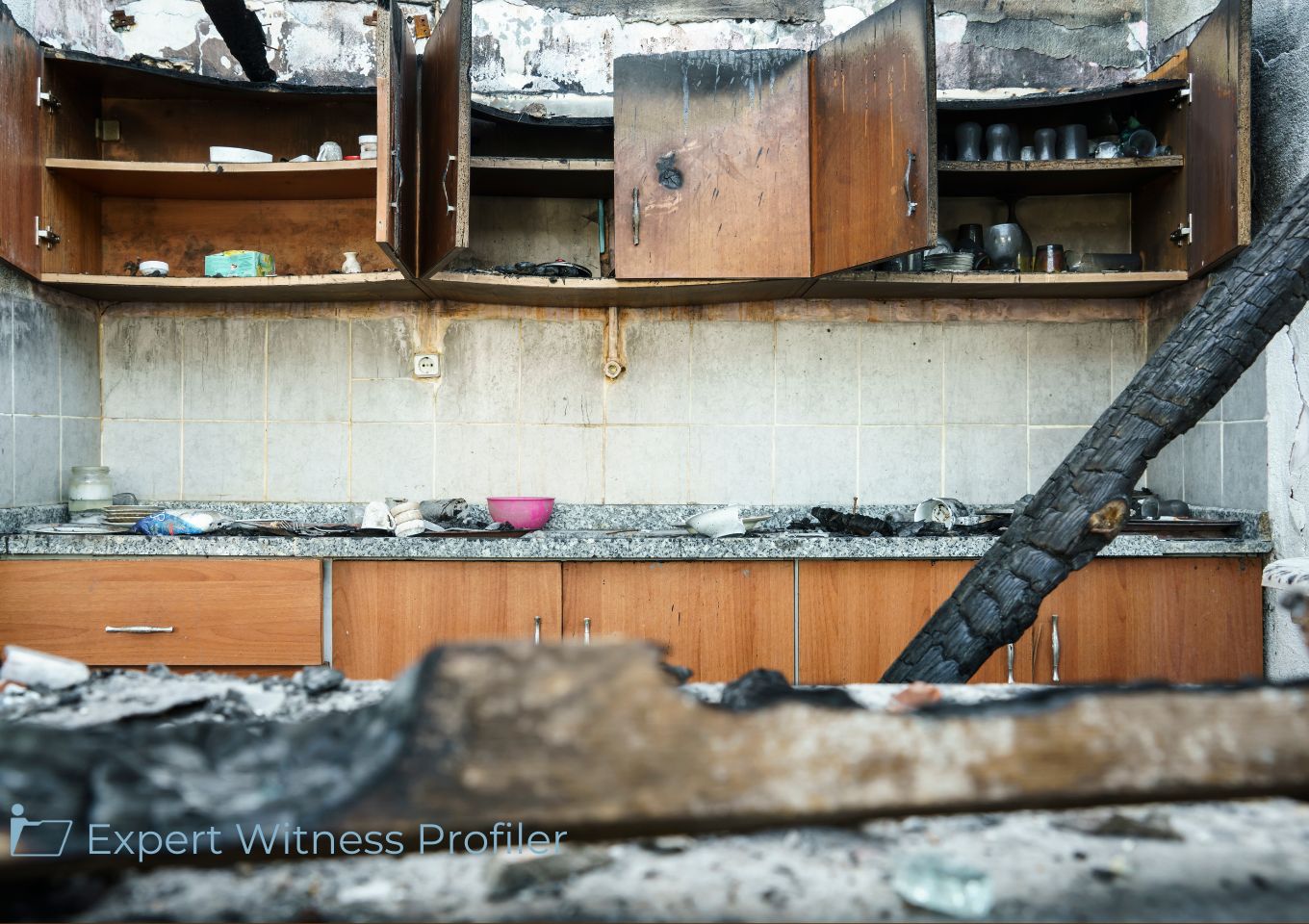
    On June 21, 2022, a fire occurred at a residence in Perry Hall, Baltimore County, Maryland owned by Betina Fletcher (“the subject property”). Fletcher had a home insurance policy with USAA, which had been insuring the subject property for “about [seventeen] years.”

    In 2019, Chase Remodeling, then known as Insulators Home Exteriors, installed new exterior ground fault circuit interrupter (“GFCI”) outlets on the subject property.  Robert Chase, the company’s owner, testified that while his team changed the outlet receptable, they did not install new wiring. Chase also admitted that no electrician was present when installing the GFCI outlet.

    The morning of the fire, Fletcher hired Jordan Kunkel, the owner and sole employee of Pro Rinse, to power wash the exterior of the subject property. Kunkel testified that he did not take any precautions before power washing the subject property, and despite knowing that most homes have exterior electrical outlets, he did not check whether the subject property had any exterior electrical outlets.

    John Tobias, an electrical engineer hired by Defendant, concluded that the GFCI outlet had been incorrectly installed at the time of the fire, making it susceptible to the elements. Although the chlorine solution that Kunkel sprayed onto the subject property likely contributed to the ignition, Tobias opined that the fire would not have occurred had the outlet been properly installed, that the outlet had likely already been “subject to years of moisture intrusion” since its 2019 installation, and that it likely would have eventually caught fire on its own.

    Plaintiff filed a motion to preclude the testimony of John Tobias.

    Fire Investigation Expert Witness

    John Tobias received his Ph.D. in Electrical Engineering from the New Jersey Institute of Technology in 2002, his M.Sc. in Electrical Engineering from the University of Maryland in 1992, and his B.Sc. in Physics from Seton Hall University in 1987. He is a Licensed Professional Engineer in the State of New Jersey, a Certified Designer/Inspector and executive board member with the Lightning Protection Institute, and a Certified Fire and Explosion Investigator with the National Association of Fire Investigators.

    Get the full story on challenges to John Tobias’ expert opinions and testimony with an in-depth Challenge Study. 

    Discussion by the Court

    Tobias made the following four conclusions in his report:

     a. The subject exterior receptacle cannot be ruled out as the point of origin of the fire at the loss location.

     b. The subject exterior receptacle was incorrectly installed, defeating the weatherproof properties of its cover and enclosure.

    c. Correct installation of the exterior receptacle would prevented [sic] the fire.

    d. Incorrect installation of the subject exterior receptacle defeated the fire/heat containment properties of it’s [sic] cover and electrical box assemblies.

    Plaintiff argued that Tobias’ opinions should be excluded from trial because (1) his theories are based on the use of an incorrect exemplar outlet and (2) his opinions that the outlet cover was improperly installed and the outlet box was not installed at all are based on unreliable methods. Plaintiff further argued that Tobias’ opinion regarding whether the GFCI outlet failed to “trip” should not be admitted both because Defendant failed to disclose it in an expert report, as required by Fed. R. Civ. P. 26(a), and because it does not pass muster under Daubert. Finally, Plaintiff asserted that Tobias’ opinions, even if reliable, should not be admitted because they would confuse the jury.

    Tobias’ Opinion Regarding Improperly Installed Outlet Cover

      Tobias stated in his report that, after examining the burned remnants, he determined the GFCI outlet receptable to be a Hubbell TAYMAC cover. For purposes of testing, Tobias used a Hubbell TAYMAC MR420C model.

      The Court held that there is no indication in the record that Tobias’ use of the MR420C rendered his methodology, based on established National Electrical Manufacturers Association (“NEMA”) standards, was unreliable. To the extent Tobias’ conclusions are less credible for having used a different model as an exemplar, the mismatch more properly goes to the weight of the evidence, and not whether it is admissible.

      According to Tobias, a properly installed Hubbell TAYMAC cover is rated a “NEMA 3R enclosure ” and is thus “waterproof.” Tobias testified that his use of the term “waterproof” in his report should be more properly understood as “watertight.” Any bearing Tobias’ use of the term “waterproof” instead of “watertight” has on the validity of his conclusions is a matter for the trier of fact to decide; it is not grounds for exclusion.

      The Court found Tobias’ opinion that the outlet cover was improperly installed to be based on reliable methods and principles. Also, the probative value of the challenged opinions is significant in that it tends to make it more probable that the proximate cause of the fire was not Pro Rinse’s power washing but rather faulty installation of the exterior outlet.

      Tobias’ Opinion Regarding Absence of Electrical Box

      In his report, Tobias determined that the at-issue GFCI outlet was not properly installed in an electrical box that would have contained a fire ignited within it. Plaintiff argues that Tobias should be precluded from testifying at trial that an electrical box was not installed because it is based on speculation and use of an incorrect exemplar. Plaintiff also contends that Tobias failed to test his theory that the fire would have been contained had there been an electrical box.

      Tobias concluded that no electrical box was present because (1) there was no electrical box recovered from the fire and (2) an electrical box could not attach to the exemplar Hubbell TAYMAC MR420C cover using the type of long wood screws recovered from the fire. The Court finds that Tobias’ opinions adequately and reliably rule out the possibility that that any remains of an electronical box were either consumed by the fire or washed away in fire suppression efforts.

      Finally, Plaintiff took issue with Tobias basing his opinions on testing of “an incorrectly identified exemplar receptacle.” But, as explained supra, Tobias nonetheless asserts that testing an exemplar of the same model as the at-issue GFCI outlet would not have changed his conclusions given the similarities between the two models. Tobias’ use of a different model goes to the weight of his testimony, not its admissibility.

      Tobias’ GFCI Tripping Opinion

      Defendant stated in its opposition brief that the GFCI outlet at issue in this case failed to “trip”—that is, cut power when moisture is detected and causes a short circuit. Plaintiff casts these statements as new opinions not previously disclosed in Tobias’s report or reflected in his deposition testimony and, on this basis, asks that they be excluded.

      Upon review of Tobias’s new affidavit and his prior report and deposition testimony, the Court finds that his new statements regarding the GFCI outlet’s failure to trip to be related, to some extent, to opinions detailed in his report and discussed at his deposition. At the same time, references in Tobias’s affidavit to GFCI’s failure to trip and cut power upon detection of moisture or a short circuit do not appear in Tobias’s report. Although the Court agrees with Plaintiff that the disclosure of new expert opinions at this late stage would provide ample grounds for exclusion under Rule 37(c)(1), the question of whether and extent to which Tobias’s affidavit presents new opinions is not adequately briefed for this Court to grant relief.

      The Court will deny Plaintiff’s pending motion but provide an opportunity for Plaintiff to file a separate motion under Fed. R. Civ. P. 37(c)(1) seeking exclusion of any opinions offered in Tobias’s affidavit that it contends were not timely disclosed.

      Held

      The Court denied Plaintiff’s motion to preclude the testimony of John Tobias.

      Key Takeaway:

      Even where an expert opinion or expert testimony is premised on sound methodology, the district court retains discretion to exclude it where its probative value is substantially outweighed by the risk of misleading or confusing the jury. Here, the probative value of the challenged opinions is significant in that it tends to make it more probable that the proximate cause of the fire was not Pro Rinse’s power washing but rather faulty installation of the exterior outlet. The Court does not find the probative value of Tobias’ testimony to be substantially outweighed by any risk of confusing or misleading the jury. Further, the Court does not find, under Fed. R. Evid. 403, that the probative value of Tobias’s opinions regarding the absence of an electrical box to be substantially outweighed by any risk of misleading or confusing the jury.

      Case Details:

      Case Caption: USAA Casualty Insurance Company V. Pro Rinse Power Wash, Llc
      Docket Number: 1:23cv291
      Court: United States District Court, Maryland
      Order Date: September 16, 2024