Plaintiffs Lazendra Collins, Lawrence Teague, and Willie Teague alleged that various officers of the Chicago Police Department (“CPD”) violated the U.S. Constitution and Illinois state law during a confrontation in May 2020.
The City identified Paul Amelio as a proposed expert witness on police practices. Amelio, an active-duty CPD officer, serves as “Team Leader” and “lead trainer” for the CPD SWAT Team. Plaintiffs filed a motion to exclude Amelio’s testimony. They contended that admitting Amelio’s opinions would improperly intrude on the fact-finding role of the jury.
Plaintiffs have filed a motion to exclude Amelio’s testimony. They contended that admitting Amelio’s opinions would improperly intrude on the fact-finding role of the jury.
Police Practices Expert Witness
Paul Amelio as an active-duty CPD officer, serves as “Team Leader” and “lead trainer” for the CPD SWAT Team. In this position, Officer Amelio “develops curricula and provides training for SWAT Team members” for multiple law enforcement agencies across several jurisdictions.
Officer Amelio is an expert on police practices who planned to testify about the proper use of force, particularly the use of a baton, by police officers.
Plaintiffs argued that Amelio’s testimony is inadmissible because it (1) invades the province of the jury and (2) renders an improper legal conclusion.
In their words, “Amelio’s testimony is not proffered to aid the jury in determining the facts, but to add the ‘gloss of an expert opinion’ to the Defendants’ disputed version of events.” The Court largely agreed that Amelio’s testimony is not necessary and will not be of assistance to the jury in determining the reasonableness in general of actions by the CPD officers, relevant legal standards, or CPD policy governing the use of force.
Analysis
In this case, the core conclusion that Amelio offered is that the CPD officers’ use of force was “reasonable” and “in line with nationally recognized and generally accepted police practices.” In the Court’s view, this is a case involving straightforward facts: because blunt contact is the “most primitive form of force,” the reasonableness of using the baton, given the context, is likely within the everyday experience and understanding of lay jurors.
To the extent Amelio proposed to offer an opinion on the policies or training practices of the Chicago Police Department, the Court has a further concern: As courts in this circuit have repeatedly explained, excessive force is a question of constitutional law, not department policy.
If the City contends that a police expert is required to explain how a “reasonable officer” would conduct himself, the Court disagrees. Expert testimony on complex police practice or other forms of “specialized knowledge” may be helpful to the jury in some contexts, but the legal standard in this case is governed not by a police officer‘s understanding of what a reasonable police officer would do, but instead by a juror‘s understanding of the actions of a reasonable police officer.
The Court is thus inclined to grant Plaintiff’s motion to exclude this testimony, with one potential limited exception: Amelio’s testimony about baton technique might be helpful to the jury. In his report, he claimed that the video shows officers waving their batons in an “Xpattern,” noting that “officers are trained that swinging the baton in an ‘X’ motion in circumstances such as these helps them create a ‘zone of safety’ for everyone involved.” To the untrained eye, the officers’ use of the baton might come across as random, disorganized swings designed to strike a suspect.
Held
The Court granted in part the motion to exclude Paul Amelio’s testimony and strike his expert report.
Key Takeaway:
A lay witness (or, indeed, the officers themselves) would be in a position to competently testify to CPD policy and training practices, and there is no indication that these policies and practices are complex enough to necessitate an explanation or independent application by an expert witness.
Case Details:
Case Caption:
Collins V. City Of Chicago
Docket Number:
1:21cv2913
Court Name:
United States District Court for the Northern District of Illinois, Eastern Division
Delilah Diaz was stopped at the U.S.-Mexico border with over 54 pounds of methamphetamine hidden in her vehicle. She was charged with importing methamphetamine and she claimed not to know that the drugs were hidden in the car. To rebut Diaz’s claim, the Government planned to call Homeland Security Investigations Special Agent Andrew Flood as an expert witness to testify that drug traffickers generally do not entrust large quantities of drugs to people who are unaware they are transporting them.
Rule 704(b) provides that “in a criminal case, an expert witness must not state an opinion about whether the Defendant did or did not have a mental state or condition that constitutes an element of the crime charged or of a defense.”
Discussion by the Court
Federal Rule of Evidence 704(a) sets out a general rule that “an opinion is not objectionable just because it embraces an ultimate issue.”
Rule 704(b) in criminal trials aims to prevent expert witnesses from directly stating their opinions about a Defendant’s mental state. This rule is crucial because it ensures that the jury independently evaluates and decides on the Defendant’s mental state, a central issue in the trial. By maintaining this separation, the rule upholds the jury’s primary responsibility to assess evidence and make determinations regarding the Defendant’s state of mind.
The Court held that Agent Flood’s testimony did not violate Rule 704(b) because Agent Flood did not express an opinion about whether Diaz herself knowingly transported methamphetamine. Instead, he testified about the knowledge of most drug couriers. That opinion does not necessarily describe Diaz’s mental state.
Diaz argued that Agent Flood functionally stated an opinion about whether she knowingly transported drugs when he opined that most couriers know that they are transporting drugs. The Court stated that an opinion about most couriers is not an opinion about all couriers.
Agent Flood asserted that Diaz was part of a group of persons that may or may not have a particular mental state. The ultimate issue of Diaz’s mental state was thus left to the jury’s judgment.
The Court agreed with Diaz that Agent Flood could not testify in absolute terms about whether all couriers knowingly transported drugs. But, insofar as Agent Flood planned to testify only that most couriers know they are transporting drugs, the Court concluded that his testimony was admissible.
Held
Agent Flood’s opinion that “most people” in a group have a particular mental state is not an opinion about “the Defendant” and thus did not violate Rule 704(b). Because Agent Flood did not opine about whether Diaz knowingly transported methamphetamine, the Court concluded that the testimony did not violate Rule 704(b).
Key Takeaway:
Rule 704(b) applies only to opinions about the Defendant. Because Agent Flood did not express an opinion about whether Diaz herself knowingly transported methamphetamine, his testimony did not violate Rule 704(b). Agent Flood instead testified about the knowledge of most drug couriers.
In March 2023, Manhattan District Attorney Alvin Bragg, a Democrat, indicted Donald Trump on 34 charges tied to the hush money payments, accusing him of “falsifying New York business records to conceal damaging information and unlawful activity from American voters before and after the 2016 election.”
It all started when the Wall Street Journal reported on certain payments Michael Cohen, former Trump attorney and a key witness in Trump’s hush money trial made to adult film star Stormy Daniels before the 2016 presidential election.
Daniels and Karen McDougal, a Playboy model, came forward with unflattering stories about alleged affairs with Trump during the 2016 election. Cohen admitted that he obtained a line of credit on his home to make a payment of $130,000 to Daniels for a nondisclosure agreement about her encounters with Trump while National Enquirer’s parent company, American Media Inc., paid McDougal $150,000 for the rights to her story. Trump denied both affairs. He initially denied any knowledge of the payments, but he later admitted in a carefully worded tweet that he made them to Cohen. Cohen and AMI have both admitted they broke laws by making these payments.
Defendant introduced Bradley Smith to opine on the interpretation and application of federal campaign finance laws during the proceedings.
Elections Expert Witness
Bradley Alan Smith teaches Election Law at the Capital University Law School in Columbus, Ohio. He previously served as commissioner, vice chairman, and chairman of the Federal Election Commission (FEC) between 2000 and 2005. He has held prior visiting appointments at Princeton University and West Virginia University.
Smith’s writings on campaign finance and other election issues have appeared in the Yale Law Journal, the University of Pennsylvania Law Review, the Georgetown Law Journal, the Harvard Journal of Legislation, the Cornell Journal of Law & Public Policy, and other academic journals.
Prosecutors showed checks and ledgers demonstrating payments from Trump’s company to his former attorney, including a handwritten note outlining a payment plan for Cohen. David Pecker, the former publisher of the National Enquirer, admitted to working with Cohen in order to hide unflattering information. The witness list for this hush money casealso included former White House counsellor Hope Hicks. The government wanted Hicks to testify because she’d had conversations with both Trump and Michael Cohen, Trump’s former attorney, about Karen McDougal and Stormy Daniels.
When Cohen testified about his involvement in the hush money case, the judge explicitly told jurors that Trump could not be convicted based solely on Cohen’s testimony. Trump did not testify. The judge instructed the jury that Trump’s decision must not be used as a factor in their deliberations.
The judge overseeing the case, Juan Merchan, expanded a gag order on Trump after the former president attacked Merchan’s daughter on social media. He fined the Defendant a total of $10,000 for various violations.
Bradley A. Smith
Defendant disclosed Bradley Smith to opine on whether the Stormy Daniels (“Daniels”) payoff violated campaign finance law. Prosecution insisted that his proposed testimony be treated as expert testimony and not lay testimony. The Court agreed considering Smith did not possess personal knowledge regarding the underlying facts of the instant matter.
Defendant sought to elicit from Smith, among other things, that at the time Cohen paid Daniels, there had never been a case in which anyone had been convicted of a federal campaign finance law violation for the making of “hush money payments;” the facts surrounding the trial of former U.S. Senator and presidential candidate, John Edwards, his subsequent acquittal, and that the case was heavily criticized.
The Court permitted Smith to testify generally as to the following: general background as to what the Federal Campaign Commission (“FEC”) is, background as to who makes up the FEC, what the FEC’s function is, what laws, if any, the FEC is responsible for enforcing, and general definitions and terms that relate directly to this case, such as for example “campaign contribution” but barred him from opining on the interpretation and application of federal campaign finance laws and whether the alleged conduct in this case did or did not constitute a violation of the Federal Election Campaign Act (“FECA”).
Held
On March 18, 2024, the Court granted in part and denied in part the motion to exclude the testimony of Bradley Smith.
Two months later, a Manhattan jury found Donald Trump guilty of all 34 charges of falsifying business records, making Trump the first former president in American history to be convicted of a felony.
The 34 charges against the former president are Class E felonies, the lowest level in New York law. Trump, however, has said he will appeal.
Key Takeaway:
Federal investigators went after Cohen instead of Trump. The Manhattan DA took years to finally present the case to a grand jury. Now it could end up being the only one of the four criminal cases against Trump to go to trial before the November election but the guilty verdict, while a major political moment, does not prevent Trump from continuing his presidential campaign nor from serving should he win the White House.
The Court permitted Smith to provide background on what the Federal Campaign Commission (“FEC”) is but barred him from offering opinion testimony on the interpretation and application of federal campaign finance laws.
Case Details:
Case Caption:
People of the State of New York V. Donald J. Trump
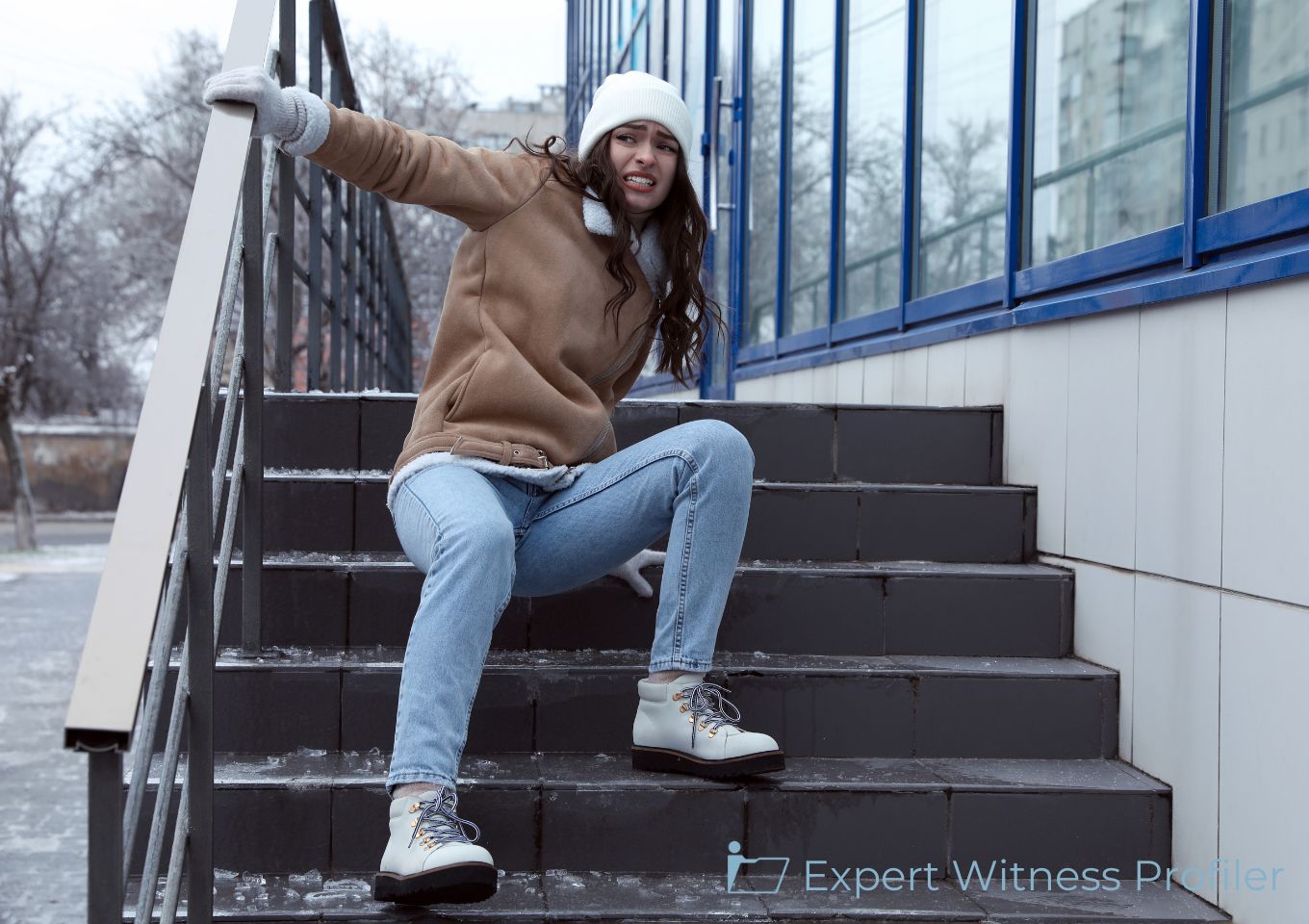
This case involved a lawsuit filed by the Plaintiff Daniel G. Mann against Defendant Quiktrip Corporation for negligence related to a slip and fall incident. On July 20, 2022, the Plaintiff initiated legal proceedings by filing a Petition in the Circuit Court of St. Louis County. The complaint alleged common law negligence against Quiktrip in connection to an incident on February 17, 2021, when Mann fell on a Quiktrip property in Maryland Heights, Missouri. Subsequently, on October 4, 2022, Quiktrip exercised its right to remove the case to the federal Court, citing diversity jurisdiction under 28 U.S.C. § 1441. Following this, on December 14, 2022, the Plaintiff filed a Consent Motion for Leave to File a First Amended Complaint, which was granted by the Court. In accordance with the granted motion, Plaintiff’s First Amended Complaint focused on a single cause of action, asserting negligence against Quiktrip. The basis for this claim was rooted in premises liability, specifically related to the Plaintiff’s fall on February 17, 2021.
Quiktrip initiated a motion to exclude the expert report, testimony, and opinions of the Plaintiff’s designated expert, Christopher E. Janson, a Certified Safety Professional with over thirty years of experience in safety, intended to provide a safety analysis to determine if there were conditions deemed defective or unreasonably dangerous.
In his report, Janson outlined several general opinions:
1. On the morning of February 17, 2021, QuikTrip employee Tommy Burrow attempted to clear snow and ice from the exterior steps and sidewalk and put down ice melt on the morning of the incident before 8:15 am.
2. QuikTrip had established policies and procedures for maintaining outdoor areas, including inspecting them for snow and ice conditions.
3. QuikTrip’s policies and procedures seemed to align with recognized standards for identifying and controlling slip and fall hazards.
4. Surveillance video footage for the relevant day did not show a QuikTrip employee inspecting the steps in question for at least one hour before Mann’s fall, despite documentation suggesting otherwise.
5. QuikTrip allegedly failed to adhere to its policies and procedures by not ensuring the inspection of the steps and associated landings.
6. If QuikTrip had performed the required upkeep walks as per its policies and procedures, Mann’s fall could have been prevented.
7. Mann’s fall was attributed to the unreasonably dangerous condition of the steps as maintained by QuikTrip.
Quiktrip presented two main arguments for the exclusion of Janson’s report, testimony, and opinions. Firstly, Quiktrip contended that Janson’s opinions lacked reliability in their principles and methods. Quiktrip asserted that the initial four opinions are factual statements, while the remaining three opinions did not possess a scientific or technical basis and would not provide the jury with insights beyond their own evaluation of the evidence. Quiktrip supported this argument by referencing the case Hall v. Target Corp., 8:22-cv-0914-KKM-AAS (M.D. Fla. July 21, 2023) where the Court excluded a majority of Janson’s opinions, deeming them speculative, not grounded in proper methodology, and surpassing industry standards. Secondly, Quiktrip argued for the exclusion of Janson’s opinions on the basis that they encroach upon the jury’s role and are generally speculative. Quiktrip maintained that the opinions in question are inadmissible as the jury can adequately weigh the evidence without the assistance of an expert.
The Plaintiff contended that Quiktrip’s motion to exclude expert testimony under Federal Rule of Evidence 702 should be denied, emphasizing that the admission of such testimony is permissive. In response to Quiktrip’s assertion that Janson’s opinions lacked reliable scientific principles and methods, the Plaintiff argued that the first four opinions were based on Janson’s knowledge, information, and experience applied to the case’s evidence, without directly addressing the reliability issue. Additionally, the Plaintiff argued that Janson’s remaining opinions were appropriate as they would assist the jury in understanding Quiktrip’s policies and procedures, particularly the alleged violations. The Plaintiff pointed to conflicting testimony from Quiktrip’s employees, suggesting confusion about the policies, and asserts that experts are permitted to testify on policy violations. Finally, the Plaintiff contended that Janson’s testimony, even if addressing the ultimate issue in the case, should be allowed as it aids the jury in its deliberations. The Plaintiff also contended that rules, standards, or training materials of a Corporate Defendant were invariably admissible. However, the Court emphasized that the admissibility of Janson’s testimony concerning those procedures was not necessarily influenced by the admissibility of such corporate documents.
Safety Expert Witness
Christopher E. Janson has over 30 years of experience as a safety professional. He holds a Bachelor of Science degree in Industrial Science from Truman State University and a Master of Science degree in Industrial Safety Management from the University of Central Missouri. Janson is a Certified Safety Professional (CSP). He is currently the Principal of Haines, Janson & Associates, LLC, which provides forensic and safety consulting services to attorneys, industry and insurance companies.
Discussions by the Court
The Court determines that the Plaintiff has not successfully demonstrated, by a preponderance of the evidence, the admissibility of Janson’s expert opinions. The Court’s assessment is that Janson’s opinions either consist of straightforward statements of fact, speculative conclusions lacking proper methodological support, or are otherwise deemed irrelevant and, consequently, not beneficial to the jury.
The Court deemed Janson’s opinions 1, 2, and 4 as mere statements of fact, making them impermissible as expert opinions. The determination of whether Burrow cleared the steps and applied snow melt, as well as Quiktrip’s policies and procedures for upkeep walks, could be established through other admissible evidence or by the policies and procedures themselves. The surveillance video itself provided insights into whether a Quiktrip employee inspected the area before the Plaintiff’s fall. The Court noted that the facts in question, including Burrow’s actions, Quiktrip’s policies, and the content of surveillance video footage, did not require expert testimony to be established. Drawing a parallel to the Hall case, the Court asserted that, akin to that precedent, Janson’s opinions concerning these factual matters should be excluded.
The Court found that the Plaintiff’s attempt to draw parallels between Janson’s opinions and those permitted in the Hall case was not persuasive. In Hall, Janson’s testimony was limited to statements such as “wet floors can be a slip and fall hazard” and “while walking, pedestrians look towards their objective, not directly in front of their feet, unless something draws their attention to that area.” These opinions were deemed acceptable as they pertained to industry standards of care. However, the Court noted that Janson’s report in the present case lacked similar opinions, and the Plaintiff did not successfully demonstrated how the opinions in Hall were comparable to those in question. As the Plaintiff has not established, by a preponderance of evidence, that these opinions did indeed necessitate Janson’s expert testimony, Opinions 1, 2, and 4 were deemed to be excluded.
The Court acknowledges that Opinion 3, though potentially an opinion, lacked demonstrated relevance to the issues in the case. While it is considered appropriate for a safety expert to testify on recognized standards for identifying and controlling slip and fall hazards, the Court concluded that whether Quiktrip’s policies and procedures met such standards did not have a bearing on the company’s potential liability in this negligence action. Consequently, the Court deemed the opinion inadmissible, subject to reconsideration.
The Court determined that Opinion 5 was not the type of opinion necessitating expert testimony. The jury was deemed capable of evaluating the presented evidence and deciding whether Quiktrip adhered to its own policies and procedures regarding the inspection of the steps. The Plaintiff’s argument suggesting the need for an expert due to alleged confusion in Quiktrip’s policies was deemed unconvincing. The Court asserted that the conflicting deposition testimony cited by the Plaintiff was evidence that could be presented directly to the jury, requiring no expert assistance for evaluation, as it did not involve scientific or technical knowledge. Similar to the discussion on Opinion 3, the Court was not persuaded that the issue of whether Quiktrip violated its upkeep walk procedures was relevant to the ultimate issue in the case. Consequently, Janson’s Opinion 5 was also excluded.
The Court concluded that Opinions 6 and 7 were speculative, lacking an explanation of the principles or methodology used by Janson to formulate them. Janson’s report failed to elucidate any scientific or technical basis for his opinion that a proper upkeep walk would have prevented the Plaintiff’s fall, as well as the assertion that the fall was caused by an unreasonably dangerous condition of the steps. The Plaintiff had not presented evidence demonstrating that Janson employed recognized principles or methodologies to derive these speculative conclusions. Consequently, as the Plaintiff had not established by a preponderance of evidence that Janson’s opinions relied on reliable principles and methods, Opinions 6 and 7 were also excluded.
Held
The Court granted Quiktrip Corporation’s Motion to Exclude the Expert Report, Testimony, and Opinions of Christopher E. Janson. The Court has not arrived on an outcome for this case since the remaining issues involved in this case still await resolution.
Key Takeaways
The Court found that Janson’s opinions lacked reliability, with some being considered as simple statements of fact that did not require expert testimony. Additionally, opinions deemed speculative and lacking a clear scientific or technical basis were excluded. The Court emphasized that Janson’s opinions failed to provide insights beyond what the jury could determine through available evidence, and some were deemed irrelevant to the issues in the case. Ultimately, the Court ruled that Janson’s entire report, testimony, and opinions would be excluded, granting Quiktrip’s motion in this regard. This decision underscores the importance of establishing the relevance, reliability, and necessity of expert opinions in legal proceedings to ensure their admissibility.