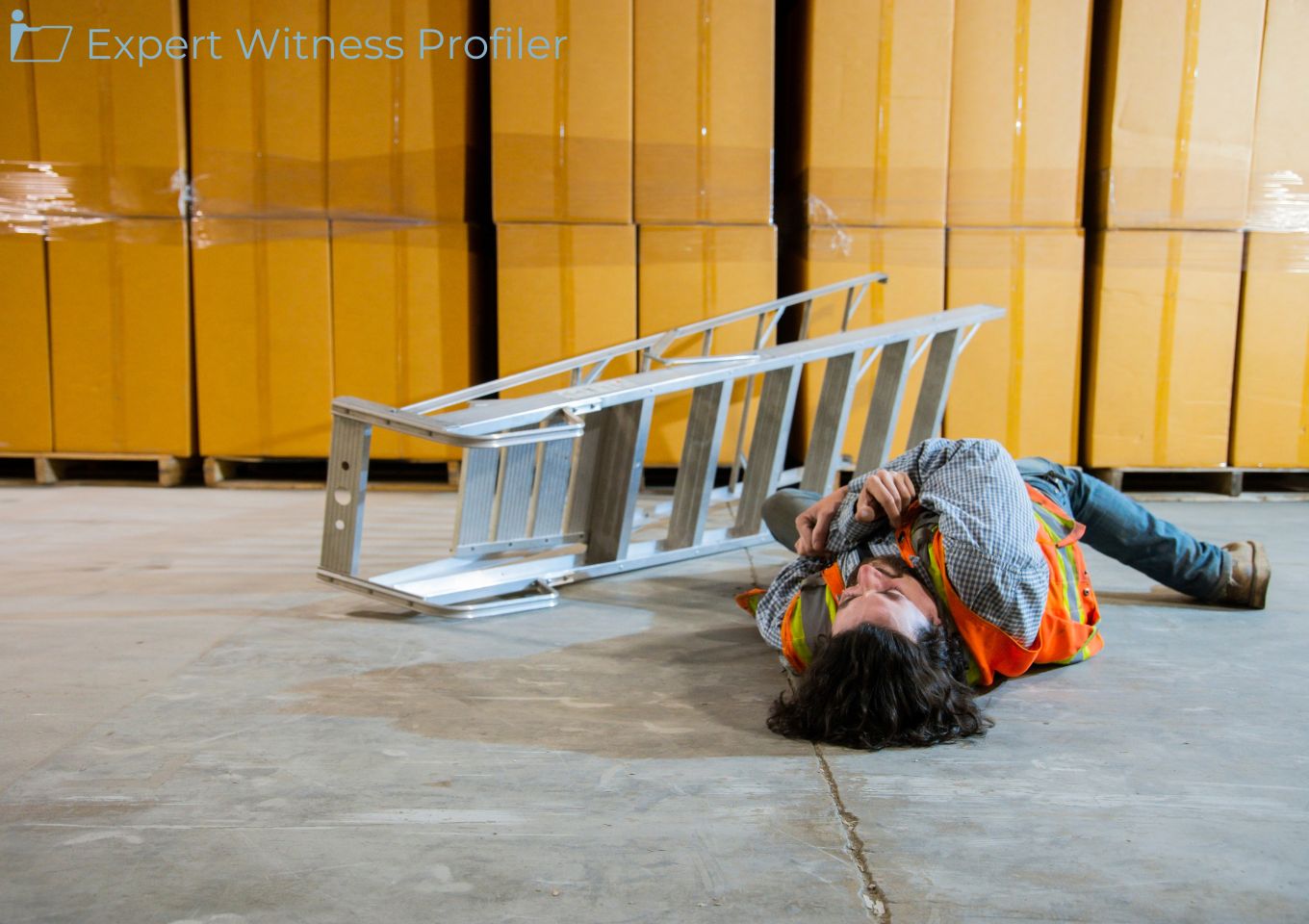
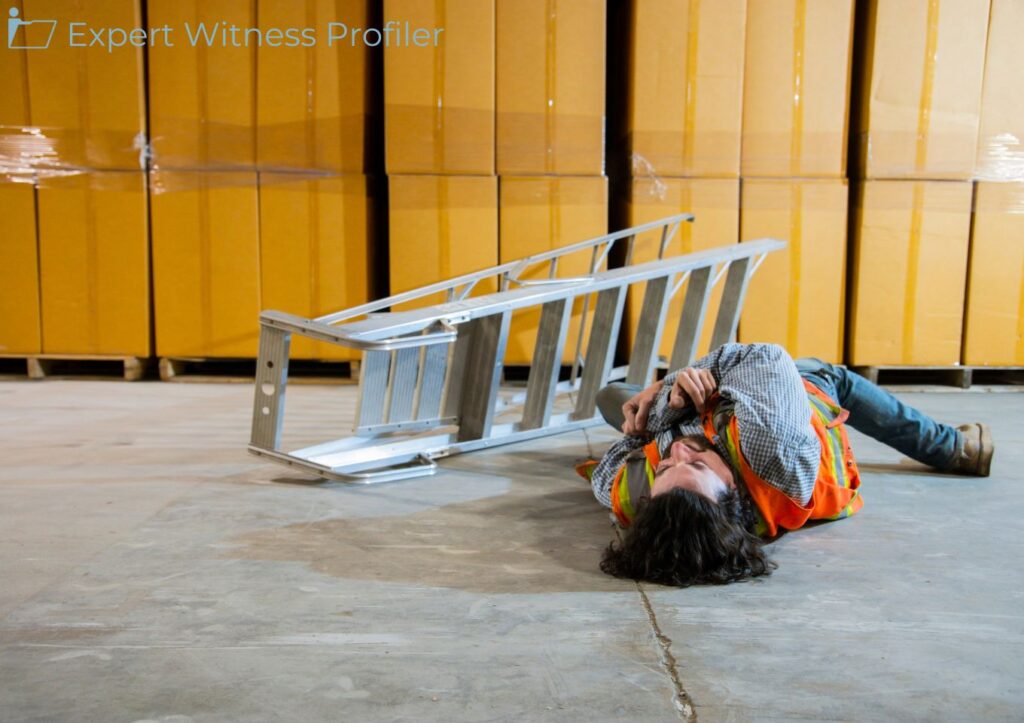
On August 20, 2019, Plaintiff Martin J. Benzing visited a construction site on the Bruckner Expressway. During the visit, he climbed down a ladder and suffered a head injury. This case concerns the cause of Benzing’s injury and which entities bear responsibility for any damages Benzing suffered. Benzing and his wife, Annastacia Benzing, alleged that Defendants and Third-Party Plaintiffs Tully-Posillico JV, Tully Construction Co., Inc., and Posillico Civil, Inc. (together the “JV Defendants”) violated three provisions of the New York Labor Law (“NYLL”) as the contractors, the owners, or their agents, of the construction site where the incident took place.
Jason Randle is a civil engineer who specializes in technical investigations and analysis for commercial claims and litigation involving construction site safety practice, including how industry standards apply to a particular incident.
He also has professional experience in construction site safety, construction industry regulations, and ladder accidents.
William J. Meyer holds a Bachelor of Science degree in Mechanical Engineering from Rutgers University, the College of Engineering, New Brunswick, NJ and a Master of Science in Engineering Science from New Jersey Institute of Technology, Newark, New Jersey. He is a licensed Professional Engineer in New Jersey and New York.
Meyer is a member of the American Society of Mechanical Engineers (ASME), the Society of Automotive Engineers (SAE), New Jersey Association of Accident Reconstructionist (NJAAR) and National Association of Fire Investigators (NAFI).
Robert S. Cargill II is a bioengineer who specializes in biomechanical engineering. His formal education includes a Bachelor of Science in biomedical engineering from Rensselaer Polytechnic Institute (1989) with minor in biology, and a Master of Science (1991) and Ph.D. (1994) in bioengineering from the University of Pennsylvania.
The JV Defendants sought to preclude Randle’s testimony on three grounds: (1) he is unqualified, (2) his conclusions relied upon evidence that is inadmissible or lacks probative value, and (3) he impermissibly offered legal conclusions.
First, while Randle is qualified to offer opinions on safety issues concerning the ladder and construction site, his opinions on the cause of Benzing’s fall exceed the bounds of his expertise. Courts have found biomechanical engineers “qualified to offer testimony regarding the forces generated by certain accidents and the likely effects of such forces on the human body.”
However, Randle does not purport to have training or expertise in the field of biomechanics and Plaintiffs described his testimony concerning causation as “only incidental to his report.”
Second, portions of Randle’s testimony impermissibly offered legal conclusions. For example, Randle provided opinions on Tully’s duties. These opinions offer legal conclusions because “the existence and scope of an alleged tortfeasor’s duty is, in the first instance, a legal question for determination by the court.”
The JV Defendants’ other contentions concerning Randle’s testimony are either unavailing or go to the weight rather than admissibility of his testimony. First, Randle’s reliance on evidence that the JV Defendants allege is inadmissible did not preclude his opinion. An expert may rely on inadmissible facts or data in reaching his opinion but may disclose them to the jury only if their probative value in helping the jury evaluate the opinion substantially outweighs their prejudicial effect.
His opinions, as set forth in the report, address central issues in this case, based on the evidence in the record and his expertise as a civil engineer. The proposed testimony is sufficiently reliable and relevant.
B. William J. Meyer
Meyer provided testimony concerning the safety of the ladder and the causes of Benzing’s fall. Plaintiffs sought to preclude his testimony on largely the same grounds as the JV Defendants sought to preclude Randle’s testimony. First, like Randle, Meyer did not purport to be a biomechanical engineer or medical expert and is thus not qualified to offer testimony concerning the causes of Benzing’s fall or injury.
Accordingly, the sections of his report and proposed testimony addressing the cause of Benzing’s fall and injury are impermissible. Second, Meyer also offered impermissible legal conclusions that must be excluded. Plaintiffs’ remaining contentions concerning Meyer’s testimony go to the weight not admissibility of his testimony and can be addressed “through vigorous cross-examination and presentation of contrary evidence.”
C. Robert S. Cargill II
The JV Defendants proffered Cargill’s testimony as a biomechanical perspective on the causes of Benzing’s accident. Plaintiffs sought to preclude his opinions on the grounds that they are “not grounded on sufficient facts or data, are speculative, and/or are not the product of reliable principles and methods.”
The Court disagreed. As laid out in the report, Cargill reviewed evidence in the record and set forth his perspective on the incident based on his expertise as a biomechanical engineer. These opinions are within the scope of his expertise and are permissible.
Held
The Court granted in part and denied in part Plaintiffs’ motion to preclude the testimony of William J. Meyer.
The Court denied Plaintiffs’ motion to preclude the testimony of Robert S. Cargill II.
The Court granted in part and denied in part Defendants’ motion to preclude the testimony of Jason Randle.
Key Takeaway
In the context of litigation, biomechanical engineers typically are found to be qualified to render an opinion as to the forces generated in a particular accident and the general types of injuries those forces may generate.
Plaintiff Andrew Christensen alleged that he was injured while working at Plaintiff Jessica Lawrence’s home, using an aluminum stepladder, Model W-2112-065, which was manufactured by Defendant Louisville Ladder, Inc. Plaintiff Lawrence had purchased the Ladder from Walmart, Inc.
Christensen asserted products liability claims against Louisville Ladder based on the alleged injury.
Louisville Ladder filed a motion to exclude the testimony of Plaintiff Christensen’s expert, Frank L. Burg.
Safety Engineering Expert Witness
Frank Lewis Burg is an expert in various domains, particularly general industry and construction safety and health, alongside expertise in ergonomics. His investigative experience spans injuries related to cranes, rigging, road construction accidents, falls, railroad incidents, electrical mishaps, machine guarding, gas and oil well incidents, hazardous chemicals, and cases involving human factors engineering and FELA (Federal Employees Liability Act). Beyond investigations, Burg conducts training seminars, OSHA-style audits, and offers expert testimony in his field of expertise.
Defendant argued, among other things, that Burg should be excluded because he is not qualified to render an opinion on a manufacturing defect. Defendant also argued that his opinions have insufficient factual foundation, are not founded in proper methodology, and only provide bottom-line conclusions without sufficient support. Finally, Defendant argued that his testimony should be excluded because he has disclosed a preliminary report only.
Burg, a registered professional safety engineer with Accident Prevention Corporation concluded his report by writing that Christensen’s injuries were “caused by a structural failure of the Louisville Ladder. There is no indication that Christensen did anything that would cause the catastrophic failure seen in the photographs.”
Burg characterized his report as preliminary, and at his deposition, he testified that his opinions were not final. He further admitted during his deposition that he added a statement to the report that he normally does not, reserving the right to have the Ladder examined further and potentially change his opinions because he “wrote [the] report with very limited information.” He also stated that should this case go to trial, he would want to have the Ladder tested and obtain testimony from a metallurgist or structural engineer.
Analysis
Burg is a qualified expert in safety practices and hazard prevention, but he is not a design expert or metallurgist. He lacked the education, training, and experience to offer an opinion that there was a construction defect in the Ladder that caused the accident.
Moreover, Burg did not visit the scene of the accident. He did not perform any testing or complete his own investigation. In fact, he did not even inspect the Ladder. Instead, he talked to Plaintiff Christensen and relied on materials provided to him. In other words, Burg’s opinions that the Ladder had a construction defect and the defect caused Plaintiff Christensen’s injuries are based on photographs and interviews
The Court found that in forming his opinions, Burg did not employ a proper methodology, and the opinions lacked sufficient support.
Held
The Court granted Defendant Louisville Ladder, Inc.’s motion to exclude the testimony of Frank Burg.
Key Takeaway:
Burg did not apply a methodology, and he failed to provide any explanation of the analysis he used in forming his opinions that the Ladder had a construction defect, and the defect caused the Ladder to collapse, other than to state that there is no other possible cause.
In short, there is nothing within his report that relies upon any specific method or scientific principles that would be otherwise unavailable to the trier of fact. Burg is being offered to give the opinions that the damage to the Ladder was not merely from a fall, but rather that the Ladder collapsed, and the collapse was caused by a construction defect.
Case Details:
Case Caption:
Christensen Et Al V. Louisville Ladder, Inc. Et Al
In this products liability action, Plaintiff Joshua Cleaveland sued Defendants Tricam Industries, Inc. and Home Depot USA Inc. after he fell from a Tricam model GLX-5B ladder on August 26, 2021. The ladder was manufactured by Tricam and purchased from Home Depot. According to Plaintiff, he was injured because the ladder was defective.
Defendants filed a motion to exclude the testimony of Plaintiff’s expert, Dr. Jonathan Slocum.
Mechanical Engineering Expert Witness
Jonathan Slocum is a mechanical engineer who earned his bachelor’s degree in 2014, master’s degree in 2015, and doctorate in 2018 in mechanical engineering from the Massachusetts Institute of Technology.
He worked at Materials and Engineering Group LLC from 2017 to 2022 as a senior consultant, where he provided forensic and design consulting and failure analysis. Since 2020, his company LTAG Systems, LLC has been developing technology and devices for the United States Department of Defense.
Defendants filed a motion to exclude Slocum’s expert testimony on the grounds that Slocum is not qualified to opine on ladder defects and design and causation, and his expert testimony is unreliable and speculative.
Initial Matters
The Court first addressed whether Plaintiff may rely on the First Slocum Affidavit to respond to Defendants’ motion to exclude.
The Court concluded that Plaintiff may offer the First Slocum Affidavit to defend the principles and methodology used by Slocum in his initial report.
To the extent that the Plaintiff attempted to use the First Slocum Affidavit to further explain Slocum’s qualifications as an expert in this case, the disclosure was untimely. Under Rule 26(a)(2)(B)(iv), Slocum was required to include all relevant qualifications in his initial expert report. As a result, the Court excluded certain parts of the First Slocum Affidavit.
Slocum’s Qualifications
The Court rejected Defendants’ argument that Slocum is unqualified to render an opinion in this case because he has never provided testimony specific to ladder design or accidents, has never designed a ladder or worked in the ladder industry, has no experience researching or addressing the causes of ladder-related accidents, and has never participated in any relevant committees that address ladder safety issues. While it is true that Slocum’s curriculum vitae indicated that he had little to no experience specific to ladder design and ladder-related accidents, his extensive education and professional background in mechanical engineering and metallurgy demonstrated that he is qualified to opine on whether the aluminum ladder in this case was defectively designed and manufactured.
Reliability of Slocum’s Testimony
First, the Plaintiff has failed to show that a simple visual inspection is a reliable methodology from which to draw conclusions about whether the ladder suffered from a manufacturing or design defect. While Slocum himself claimed, without proof, that his methodology is generally accepted in the “scientific community,” the Court cannot conclude that Slocum’s methodology is reliable because the Plaintiff has not put forth any evidence or argument that visual inspection alone is a reliable methodology for assessing the causes of ladder-related accidents.
Based on a visual examination of the accident ladder and the exemplar ladder and calculating the height/wall thickness ratio of the accident ladder’s rear rail, Slocum found “evidence of buckling at the pin joint” and “deformation of the aluminum tubing,” which he concluded to be a manufacturing defect that contributed to Plaintiff’s accident. However, Slocum provided no explanation or testing to demonstrate why the deformity at the “rear-left rail extrusion that the spreader-link pin-joint passes through” could be problematic.
Slocum concluded that the ladder was defective in design because he found that a “side load” is applied to the ladder’s front and rear rails when a user’s weight is on one of the top two steps of the ladder, leading to deformation of the ladder’s rails and spreader links. However, Slocum did not perform any tests to determine whether Plaintiff’s position on the top step of the ladder would lead to the buckling observed on the accident ladder or to prove that the spreader link of the ladder applied both an “eccentric load” and “torsion to the tube, which would add to the overall stress it experiences when loaded.” He also did not explain how much torsion or eccentric load is acceptable.
Held
The Court granted Defendants’ motion to exclude Dr. Jonathan Slocum’s opinion.
Key Takeaway:
Rule 702 does not require expertise to be so exacting. Although Slocum’s curriculum vitae shows minimal, if any, direct experience with ladder design or ladder-related accidents, his extensive education and professional background in mechanical engineering and metallurgy support his qualification to offer an opinion on whether the aluminum ladder in question was defectively designed or manufactured.
On October 1, 2021, Tate Parker purchased a Tricam Industries, Inc. Gorilla articulated extension ladder (Model GLMPXA-14) from Home Depot in Opelika, Alabama. On February 14, 2022, Parker was injured while using his Tricam ladder to access a residential roof for an insurance-related inspection. At the time of the accident at issue, his job duties included inspecting residential roofs that had endured storm damage.
Parker filed suit against Tricam on January 22, 2024, claiming the ladder was defectively manufactured and designed.
Parker identified an expert witness, Barton C. Prorok, Ph.D., to speak to the issue of the cause of the ladder collapse. Prorok opined that the ladder collapsed because one of the upper side rails was twisted, which allowed a rail lock rod to slip out of the locking hole and the ladder to retract with Parker on it.
Tricam filed a motion to exclude the expert testimony of Prorok, attacking his qualifications given his lack of experience in the ladder industry and attacking his methodology which Tricam argued was unreliable, unscientific, and unhelpful.
Materials Science Expert Witness
Barton C. Prorok, Ph.D., is a materials engineer, metallurgist, and chair of the materials science and engineering department at Auburn University.
He holds a Ph.D. in Materials Science and Engineering from the University of Illinois at Chicago. At Auburn University, he also serves as Director of the Analytical Microscopy Cost Center.
Prorok’s opinions stem, first, from his observation that one of the rails on the subject ladder was twisted upon post-accident inspection. From there, he posits there was a defect in the manufacturing process that caused an upper rail to twist and become distorted. He also believes there is a design defect in the length of the rail lock rods that allowed the rail lock rods to disengage because of the single twisted rail. The combination of the two defects, according to Prorok, caused both upper rails to slip, the upper ladder portion to retract, and the ladder to collapse and fall to the ground.
To begin with, Prorok visually inspected the subject ladder, took measurements, purchased an exemplar ladder for comparison, inspected the site of the accident, and considered eye-witness accounts from Parker and the son of the homeowner.
Analysis
The Court held that Prorok provided no evidence that ladder manufacturers rely on visual inspections or caliper measurements to assess ladder defects. He did not explain how his measurements led to a scientifically reliable methodology. He never conducted tests to determine whether those measurements constituted a defect or unreasonable danger, or caused the ladder collapse. Further, Prorok provided no insight or information supporting his opinion that there was a manufacturing defect that caused the collapse.
Moreocer, he provided no information or opinions about why that twisting could not have occurred for other common sense reasons such as during the ladder’s transit from China to the United States before sale, or during Parker’s storage, and use of the ladder for months on over 100 occasions, or because of the accident itself.
And as to the design defect, Prorok opined that the length of the rail lock rods “is a design flaw that reduces load-carrying capacity, especially when manufacturing variations or normal wear and tear occur.” However, he did not explain what those “manufacturing variations” may be, or what impacts to the ladder there may be from “normal wear and tear.”
As for Prorok’s opinions that the twisting was caused during the metal deformation stage of the manufacturing process, the Court found no evidence about the metal deformation process.
Nor is there any evidence explaining how the upper part of the ladder, post-accident, was observed to be in the fully extended position while the bottom portion was fully retracted if the accident occurred in the manner that Prorok claims it did.
Held
The Court granted Tricam’s motion to exclude the expert testimony of Barton Prorok.
Key Takeaway:
Prorok did not produce any literature, reports, or other documentation to support his contention that the accident occurred in the manner that he claims it did. And he tested none of his opinions. Indeed, he performed no testing to duplicate the conditions or manner in which he claims the collapse occurred.
This is a products liability case involving an articulating (i.e., multi-position) ladder manufactured by Little Giant Ladder Systems, LLC. On November 10, 2021, Jason Adams fell from a Little Giant ladder and suffered injuries. Adams asserted that he was using the ladder in the usual and ordinary manner when the rung on which he stood separated from the rest of the ladder. He testified that he inspects all ladders, he never dropped the subject ladder, and the subject ladder never fell from anything.
Defendant moved to exclude the testimony of Plaintiffs’ expert, David Kassekert, P.E., on the grounds that he is unqualified and his opinions are unreliable. Kassekert intended to testify that a rung on the Plaintiff’s ladder failed when it separated from the side of the ladder because the welded connection did not penetrate the metal of the rung to which it was being welded, which resulted in a fatigue crack in the rung material.
Plaintiffs moved to exclude the testimony of the Defendant’s expert, Dr. Ellen Wright, P.E., because her testimony does not comport with the facts of this case. Wright examined the subject ladder and performed destructive testing. Plaintiffs did not contest that she is a qualified expert who used reliable scientific methods. Instead, they challenge how she applied her analysis to the facts of the case. Wright intended to testify that the failure of the ladder at issue in this case was the result of a high loading event which overstressed the ladder aluminum, resulting in the detachment of the rung from the side of the ladder.
Mechanical Engineering Expert Witness
David Kassekert specializes in automotive and transportation accident reconstruction and product liability issues, including accidents involving various types of industrial equipment. He has provided technical consultations, investigations, research, analysis, reports and testimony in nearly 1000 cases in more than 18 years of forensic engineering work. Kassekert has been admitted as an expert in courts in seven states, six Federal Districts, 18 Pennsylvania Counties, and the OSHA Administrative Court system. He has testified for both the Plaintiff and Defense over 250 times.
Ellen Wright is a Senior Consultant with ESi and a licensed professional engineer in Metallurgical and Materials Engineering. Wright specializes in failure analysis and prevention, fractography, and characterization of materials. Wright has experience with many modes of failure and forms of material degradation, such as fatigue, fracture, corrosion, wear, creep, distortion, and weld failures. She has conducted investigations involving a diverse array of products across many industries, such as manufacturing, transportation (aviation and aerospace, rail, maritime, and automotive), power generation, chemical processing, medical device, and construction.
The Court held that Kassekert’s opinion in this case is based entirely on “visual examination and photography.” Physical testing is not always required. Basically, Kassekert is not qualified to offer an opinion based on a visual inspection of the ladder because Kassekert has not offered any prior experience in comparing welds, failed or not, and much of his experience with welds is in an amateur context.
Kassekert’s mechanical engineering education and work experience as a professional engineer do not qualify him to comment on every kind of engineering. In his deposition, Kassekert acknowledged that metallurgical engineering was a distinct discipline from his own. Although Kassekert has specialized experience in mechanical engineering, particularly in the automotive industry, he does not have experience in metallurgical science sufficient to assist jurors in deciding whether the ladder collapsed due to an insufficient weld. The Court need not reach the reliability of Kassekert’s methods because he is not qualified based on knowledge, skill, experience, training, or education.
Ellen Wright
The parties agreed that Wright is a qualified expert in the area of metallurgical engineering who used reliable scientific methods. Plaintiffs sought to exclude her testimony because her opinion—that there was a sudden high loading event which overstressed the ladder aluminum—was not supported by the factual record. They emphasized that Adams testified he used the ladder in an ordinary manner.
Plaintiffs focused on the final prong of Rule 702 of the Federal Rules of Evidence: “(d) the expert’s opinion reflects a reliable application of the principles and methods to the facts of the case.” Plaintiffs point to other courts’ descriptions of 702(d) as requiring the opinion “fit” the facts of the case.”
Adams pointed to other courts’ descriptions of 702(d) as requiring the opinion “fit” the facts of the case. The Court held that Plaintiffs misunderstand this case. The issue of “fit” concerns whether the expert opinion as applied to the facts of the case is scientifically valid. Put differently, Wright’s analysis of failure in aluminum material would not fit the facts of this case if the subject ladder was made of plastic. Plaintiffs’ 702(d) argument misses the mark.
Adams also argued that they are not required to exclude alternative causes for the malfunction of the ladder. Indeed, West Virginia law “does not require a Plaintiff, to succeed at the summary judgment stage, to conclusively eliminate all possible contributing causes other than a defect for an accident. This does not mean that the Court must exclude evidence of another possible cause for an accident because it conflicts with Plaintiffs’ theory of the case.
Held
The Court granted Defendants’ motion to exclude the testimony of the Plaintiff’s expert,David Kassekert.
The Court denied Plaintiffs’ motion to exclude the testimony of the Defendant’s expert, Dr. Ellen Wright.
Key Takeaways:
Kassekert does not have experience in metallurgical science sufficient to assist jurors in deciding whether the ladder collapsed due to an insufficient weld.
Wright’s analysis of failure in aluminum material was supported by the factual record.
Case Details:
Case Caption:
Adams Et Al V. Little Giant Ladder Systems, Llc
Docket Number:
3:22cv460
Court:
United States District Court, West Virginia Southern
Plaintiff Patricia Medellin filed a lawsuit to recover damages for severe injuries she suffered when she fell while using Defendant’s Little Giant Velocity Ladder, a multi-use ladder with adjustable features. The ladder could be configured into various climbing systems, including an extension ladder. Medellin asserted that the “Rock Locks” (version 2.1), which were the locking mechanisms on either side of the ladder used to secure the extension sections at the user’s chosen height, failed to function properly. This alleged failure resulted in the Rock Locks not securing the ladder in its extended position, leading to Medellin’s fall from height.
On November 29, 2019, Patricia Medellin and her fifteen-year-old grandson, Benjamin Jones, were hanging Christmas lights along the roof of Medellin’s home. They unfolded the ladder and extended it until hearing the Rock Locks “click” into place, indicating proper security. At some point after Medellin climbed the ladder, she heard clicking sounds as the top of the ladder retracted downward, and the bottom of the ladder slid away from the house. Benjamin Jones also heard clicking sounds and observed the ladder telescoping down. Medellin fell with the ladder, landing face-down on it. As a result, Medellin alleged she sustained multiple bodily injuries.
Medellin alleged that the Defendant had “defectively designed and manufactured” her ladder and “provided improper warnings and instructions.” According to Medellin’s expert witness, Stanley A. Kiska, the Rock Locks could be inadvertently set in a “false lock” condition, where “the extended section of the ladder is able to remain in place and may appear to be locked to the user, but, in fact, it is not properly and completely secured.” When in this false lock condition, the ladder gives the illusion of being securely locked, though it is not. The ladder, when in a false-locked condition, would retract (i.e. shorten) under the user’s weight during a climb, resulting in both the ladder and the user falling.
The Defendant moved to exclude Stanley Kiska’s testimony and sought summary judgment. The case had been referred to the Magistrate Judge Peter Bray in accordance with 28 U.S.C. § 636(b)(1). The Judge Peter Bray gave his recommendation after reviewing the motions, the responses, and relevant legal provisions.
Mechanical Engineering Expert Witness
Stanley A. Kiska, a licensed professional engineer holding a Bachelor of Science degree in Mechanical Engineering, has a comprehensive background in ladder-related matters. With a 16-year tenure as a Product Engineer/Senior Product Engineer at the Werner Ladder Company, he garnered extensive expertise in ladder design, development, testing, manufacturing, and quality control. Currently, Kiska serves as an independent engineering consultant for Integra Engineering, PC, specializing in forensic engineering and investigating hundreds of ladder and scaffolding accidents. He has applied forensic engineering principles to develop opinions, write reports, and provide expert witness testimony in depositions and trials, representing both Defendants and Plaintiffs. With over 35 years of experience, his qualifications underscore his proficiency and authority in the field.
Discussion by the Court
Stanley Kiska’s opinion was that Medellin’s ladder could be placed in a false locked condition on the ground, set into position for use, and partially climbed without revealing the false locked condition to the user. He reached this opinion after reviewing deposition testimony from Medellin and Jones, examining photographs and videos of Medellin’s ladder, and inspecting both the ladder itself and the site of Medellin’s accident. Additionally, Kiska studied reports and video demonstrations of testing conducted by another of Medellin’s experts, Peter J. Poczynok, P.E., in a separate federal case (Davis v. Little Giant Ladder Sys., LLC, 2:19-cv-00780-SPC-NPM (M.D. Fla.)). Kiska also consulted with Poczynok during the process.
The Davis lawsuit involved the identical ladder model, the same version of Rock Locks, and the same false lock claim as the present case. Poczynok’s testing and reports in Davis, which were attached to Poczynok’s declaration in this case demonstrated that ladders with Rock Locks version 2.1 could be set in the false lock condition and positioned for use while still falsely locked. Additionally, Poczynok illustrated that the false lock could disengage after a user’s weight was applied to the ladder’s rungs. In his declaration for this case, Poczynok stated that, during his work on the Davis case, he “was able to place the locks in a false lock condition when he set up the ladder on the ground, then raised it into position.” He further mentioned that he had “on numerous occasions placed the locks in a false lock condition, on the ground, on the same model ladder that was involved in Medellin’s incident, including Medellin’s ladder, and had been able to set the ladders into a raised and upright position with the false lock intact.” Kiska reviewed and incorporated Poczynok’s testing and opinions into his analysis of Medellin’s accident.
While the Defendant raised multiple complaints about how Kiska relied on Poczynok’s testing, it’s noteworthy that the Defendant did not move to exclude Poczynok’s opinions. Poczynok had been designated as an expert witness in the case and was permitted to testify at trial, specifically about his opinion that the ladder could be placed into a false lock condition on the ground and then raised into position without disturbing that condition. The Defendant clarified that it strategically chose to “utilize Poczynok’s testing videos to highlight elements absent from Medellin’s accident”. Additionally, the Defendant did not object to Kiska relying on Poczynok’s testing. The objection was solely directed at Kiska’s opinions that Medellin was able to (1) set her ladder into a ‘false lock’ condition on the ground and (2) raise it into position without disturbing the condition.
Kiska based the objected-to opinion on various sources of information and his extensive professional engineering experience in the field. He drew upon Poczynok’s testing, conducted his own inspection of the ladder, and considered the eyewitness testimony of both Medellin and her grandson. The Defendant failed to present any valid reason for asserting that Kiska’s reliance on these information sources was improper. It was entirely appropriate for Kiska to rely on Poczynok’s opinions, as the Federal Rules of Evidence allow experts to base their opinions on the opinions of other experts, according to the Advisory Committee’s Notes to the 2000 Amendments of Fed. R. Evid. 702.
The Defendant heavily criticized Poczynok’s testing methodology and opinions but framed these complaints as arguments against Kiska’s reliance on Poczynok’s opinions, rather than directly moving to exclude Poczynek as an expert. The Defendant argued, in the context of seeking to exclude Kiska’s opinions, that Kiska could not rely on Poczynok’s opinions because there was “no established protocol or general acceptance of such testing.” However, the Defendant made a strategic choice not to challenge Poczynok as an expert and expressed the intention to cross-examine Poczynok at trial as part of its defense. Therefore, any attempt by the Defendant to challenge Poczynok’s opinions under the guise of objecting to Kiska’s reliance on those opinions was not presented before the Court at this juncture.
The Defendant contended that Kiska was obligated to validate or replicate Poczynok’s testing before relying on it, a requirement the Court found no awareness of. Contrary to the argument, as discussed in the preceding paragraph, Kiska was only required to ensure that the other experts he relied on were reliable. Poczynok’s reports were deemed to meet this standard, being detailed, inclusive of photos, describing his testing, and outlining his methodology. Kiska thoroughly reviewed these materials and integrated them into his analysis.
The Defendant argued that Poczynok’s testing could not be reliably applied to the context of Medellin’s accident due to several reasons: (1) the pitch of Medellin’s roof was more distinct than the roof on which Poczynok conducted his testing; (2) in four of Poczynok’s ten tests, the ladder was extended well beyond the roofline, making those tests inapplicable to Medellin’s accident, a point conceded by Kiska; (3) of the remaining six applicable tests, only two showed the ladder contracting and losing contact with the roof, resulting in the climber falling; (4) in the two tests where the climber fell, the ladder did not slide straight back, as in Medellin’s case, but instead rotated out from under the climber due to the roof’s pitch; and (5) none of the ten tests replicated the “clicking” sound described by Medellin and Jones.
The Court was not convinced that the distinctions between Poczynok’s tests and Medellin’s accident rendered the tests inadmissible. Even if Poczynok’s tests were not intended to precisely recreate Medellin’s accident, the Court emphasized that recreations must only be “substantially similar” to provide a fair comparison, as outlined in United States v. Norris, 217 F.3d 262, 270 (5th Cir. 2000). The Court found that the conditions of Poczynok’s testing were substantially similar to those of Medellin’s fall. Poczynok used the same model ladder as Medellin (equipped with Rock Locks 2.1), configured it as an extension ladder, and positioned it against a pitched roof above the driveway. The Court also highlighted that Kiska critically evaluated Poczynok’s tests and disregarded those he deemed inapplicable to Medellin’s accident. The distinctions raised by the Defendant were not significant enough to render Poczynok’s tests an unfair comparison to Medellin’s accident. The Court noted that any disparities between Medellin’s accident and Poczynok’s testing could be demonstrated through cross-examination.
The Defendant argued that Kiska’s opinions on design defect should be excluded, contending they were unreliable and irrelevant. Specifically, the Defendant asserted that Kiska failed to provide evidence or testing to demonstrate that his alternative design would have prevented Medellin’s accident.
In design defect claims, the Plaintiff is required to present a safer alternative design that “would have prevented or significantly reduced the risk of the Plaintiff’s personal injury without substantially impairing the product’s utility”. While the alternative design must be tested before a jury can conclude it would prevent or reduce the risk of injury, it’s not mandatory for the Plaintiff to build and test a prototype. Testing “can be as simple as applying math and physics to establish the viability of a design,” as clarified in Sims v. Kia Motors of Am., Inc., 839 F.3d 393, 407 (5th Cir. 2016).
Kiska provided the opinion that the Rock Locks 2.1 were defective in design due to the aluminum barrel pins pivoting into place and the locks lacking contrasting color to signal incomplete insertion of the barrel pins. His alternative design suggested the use of steel barrel pins that move linearly/perpendicularly into place and are colored red. The Defendant contended that Kiska had not tested the proposed design, thus lacking evidence that it would have prevented or significantly reduced the risk of Medellin’s injury.
Kiska tested the alternative design by applying engineering principles and analyzing the functionality of the current and proposed designs as a professional engineer. In support of the steel barrel pin with perpendicular movement, Kiska compared the coefficient of friction between an aluminum barrel pin and a steel barrel pin. He pointed out that “aluminum barrel pins are undesirable because of the higher coefficient of friction that exists between sliding parts (aluminum on aluminum vs. aluminum on steel), which can adversely affect proper locking”. Kiska determined that the friction coefficient of the aluminum-to-aluminum interface would be approximately twice as great as aluminum-to-steel, making it more difficult for the locking pins to engage properly and, therefore, more likely to ‘falsely lock.’
Kiska had also proposed using barrel pins that approach the rung holes perpendicularly, similar to those utilized in version 3.0 of Defendant’s Rock Locks. Although Kiska did not take measurements of a ladder equipped with Rock Locks 3.0, he testified that the perpendicular design is “more forgiving all things being equal” and “more favorable in terms of properly engaging and not hanging up on the inner section swage and false locking”. Kiska explained that, based on the design’s operation, the angled or arcing approach of the ladder’s barrel pins necessitates a “more exacting alignment between the sections” to get the barrel pins to properly engage beyond a false lock. The Court concluded that Kiska should be permitted to testify about his proposed alternative design, and any weaknesses in his analysis could be addressed through cross-examination.
Regarding the red coloring on the barrel pin, the Defendant argued that Kiska did not test the proposed design, wasn’t a human factors expert, and did not cite any study, testing, or modeling to demonstrate that a colored barrel pin would reduce the risk of injury. However, Kiska, being an expert in the field, was familiar with the use of coloration for safety purposes. He expressed the opinion that “many manufacturers use creative coloring (particularly the color red) as a means to draw attention to locking components as a means to communicate to users that a safety problem may exist”. Kiska’s report included side-by-side photographs illustrating the visual differences in the ladder’s design and the alternative design. He noted that when the colored pin is completely inserted, the red color would not be visible to the user, indicating that the lock is properly engaged. Kiska also referred to one of Defendant’s prior ladder designs that used colored locks to signal improper engagement of the locking mechanism. The Court acknowledged the weaknesses pointed out by the Defendant but deemed the arguments insufficient to completely exclude Kiska as an expert. Any weaknesses could be addressed by the Defendant through cross-examination to present them to the jury.
The Defendant argued that Kiska’s opinions on manufacturing defects were irrelevant because Kiska had not demonstrated that: (1) the identified manufacturing defects existed when Medellin’s ladder left the manufacturer; and (2) the manufacturing defects caused Medellin’s accident.
In a manufacturing defect claim, the Plaintiff was required to prove, among other things, that a product was defective when it left the manufacturer and that the defect was a producing cause of the Plaintiff’s injuries.
Kiska’s report had identified two manufacturing defects: (1) the hardness of the ladder’s feet exceeded the product specification’s upper tolerance limit; and (2) the width of the ladder’s outer section assembly exceeded the product specification’s upper tolerance limit. The Defendant argued that Kiska had not demonstrated that Medellin’s ladder was defective when it left the manufacturer.
Kiska’s report stated that “Inspection of the subject ladder shows that it was not manufactured to specification”, and Medellin’s deposition testimony, which Kiska reviewed, tended to demonstrate that the ladder’s condition remained unchanged between its manufacturing and Medellin’s accident. For instance, Medellin mentioned purchasing her ladder in November 2017 and using it only twice before her accident occurred: once in 2017 and once in 2018. She stored the ladder in her garage in its most compact configuration—fully retracted on both sides and folded in half. No one else used the ladder, and it had not been used after Medellin’s accident. Kiska inspected Medellin’s ladder and found it to be in generally good condition. The Defendant did not challenge Medellin’s testimony regarding her storage or use of the ladder or provide evidence that the ladder’s condition changed between its manufacture and Medellin’s accident or between Medellin’s accident and Kiska’s inspection. Whether the identified manufacturing defects existed when the ladder left the factory was deemed a question for the jury.
Regarding the causal connection between the manufacturing defects and Medellin’s accident, Kiska explained that the hardness of the ladder’s feet exceeded the product specifications, and harder material provides less slip resistance. He opined that “The likelihood of bottom slip out of a ladder is greater when its feet are composed of a harder material. This was the case with Medellin’s ladder”. Kiska reviewed the ladder’s specifications, which required slip-resistant feet “with a ‘Shore A durometer of 80+1-2.’” Thus, the maximum durometer reading would be 82 Shore A, but Medellin’s ladder’s left foot measured 91-92 Shore A, while the right foot measured 92-93 Shore A. Kiska stated that the feet on Medellin’s ladder would not be expected to provide as much resistance to slipping out as feet within the proper specifications. Thus, Kiska tied the out-of-specification hardness of the ladder’s feet to its propensity to slide out from under the user.
Kiska had also determined that the outer assembly of Medellin’s ladder exceeded the product specification’s upper tolerance limit. He explained that the specification drawing set the ladder’s outer assembly width at 15.00 inches, +0.00/-0.06, meaning the width should not exceed 15.00 inches under any circumstances. Kiska measured Medellin’s ladder at various points and found that both extension sections exhibited widths greater than allowed by the manufacturing drawings. This increased clearance could allow for greater misalignment of the two sections and their mating parts. Kiska explained that while some clearance is necessary for sections to slide freely, excessive clearance increases the inner section’s ability to shift relative to the outer section, adversely affecting the alignment of the locking pins and exacerbating the ability of the pins to be directed into their respective rung holes.
Kiska had connected his measurements indicating the ladder was out of specification to the ladder’s tendency to become falsely locked. Consequently, Defendant’s motion to exclude Kiska as an expert was denied.
Defendant sought summary judgment, reiterating the same arguments presented in the motion to exclude Kiska’s opinions. Defendant contended that Medellin did not establish causation, failed to propose a safer alternative design, and could not link the manufacturing defects to her accident. The Court, having found Kiska’s opinions admissible, suggested that if Defendant contested the degree of slip resistance in Medellin’s ladder, it could address that issue during Kiska’s cross-examination. The Court recommended that the Defendant’s Motion for Summary Judgment be denied.
Therefore, Judge Peter Bray denied Defendant’s Motion to Exclude the Opinions of Stanley Kiska and also recommended the denial of Defendant’s Motion for Summary Judgment. The parties were granted fourteen days from the service of the Memorandum and Recommendation to submit written objections. Failure to file timely objections would result in the preclusion of appellate review for factual findings or legal conclusions, except for plain error.
On January 2, 2024, the Defendant filed four objections. Initially, the Defendant contested Judge Bray’s denial of their challenge to Kiska’s opinions regarding the “false lock” condition of the Plaintiff’s ladder. Subsequently, the Defendant objected to Judge Bray’s determination that Kiska’s opinions on design defects should be allowed as evidence. Additionally, the Defendant raised an objection to Judge Bray’s conclusion that Kiska’s opinions on manufacturing defects should be admitted. Finally, the Defendant opposed Judge Bray’s recommendation to deny their Motion for Summary Judgment.
Upon thorough de novo consideration of the objected portions of the Magistrate Judge’s Report and Recommendation (M&R) and a review of the remaining proposed findings, conclusions, and recommendations for plain error, the Court found no errors. Consequently, the Court accepted the M&R and adopted it as the opinion of the Court. The Defendant’s arguments were deemed insufficient to warrant reversal, as they were fully examined and failed to demonstrate a compelling reason for a different outcome.
Held
The Court rendered the following decisions:
Judge Bray’s Magistrate Judge’s Report and Recommendation (M&R) was fully accepted and adopted as the holding of the Court.
The Defendant’s Motion to Exclude the Opinions of Stanley Kiska is denied.
The Defendants’ Motion for Summary Judgment is also denied.
The Court has not arrived on an outcome for this case since the remaining issues involved in this case still await resolution.
Key Takeaways:
Stanley Kiska’s expert opinion regarding the “false lock” condition of Medellin’s ladder was accepted by the Court, asserting that the ladder could be falsely locked on the ground, raised into position for use, and partially climbed without the user detecting the false lock. Kiska based this conclusion on a comprehensive review of deposition testimonies, photographs, videos, ladder inspections, and testing conducted by another expert, Peter J. Poczynok, in a related case. Despite the Defendant’s objections to Kiska relying on Poczynok’s testing methodology, the Court noted that the Defendant strategically chose not to challenge Poczynok as an expert witness during the case and did not object to Kiska’s reliance on Poczynok’s testing.
Furthermore, the Defendant’s objections to the validity of Poczynok’s testing for comparison purposes were overruled by the Court, which deemed Poczynok’s testing substantially similar, with any disparities to be addressed during cross-examination. The Court also allowed Kiska to testify about design defects and propose an alternative design, emphasizing that testing could be as simple as applying math and physics. The Defendant’s objections to Kiska’s reliance on Poczynok’s testing for design defects were considered insufficient, and the Court permitted Kiska to present his expert opinions.
In addition, the Court addressed the Defendant’s objections to Kiska’s opinions on manufacturing defects, specifically challenging the lack of evidence demonstrating that the defects existed when Medellin’s ladder left the manufacturer and that they caused the accident. The Court found Kiska’s measurements and analysis adequate to present a question for the jury on these issues.
Overall, the Court deemed Kiska’s expert opinions admissible, rejecting the Defendant’s objections as lacking merit and providing a comprehensive analysis of the expert’s methodologies and conclusions in the case.
Case Caption: Medellin v. Wing Enters., Inc.
Docket Number: 4:21cv3582
Court: United States District Court, Texas Southern