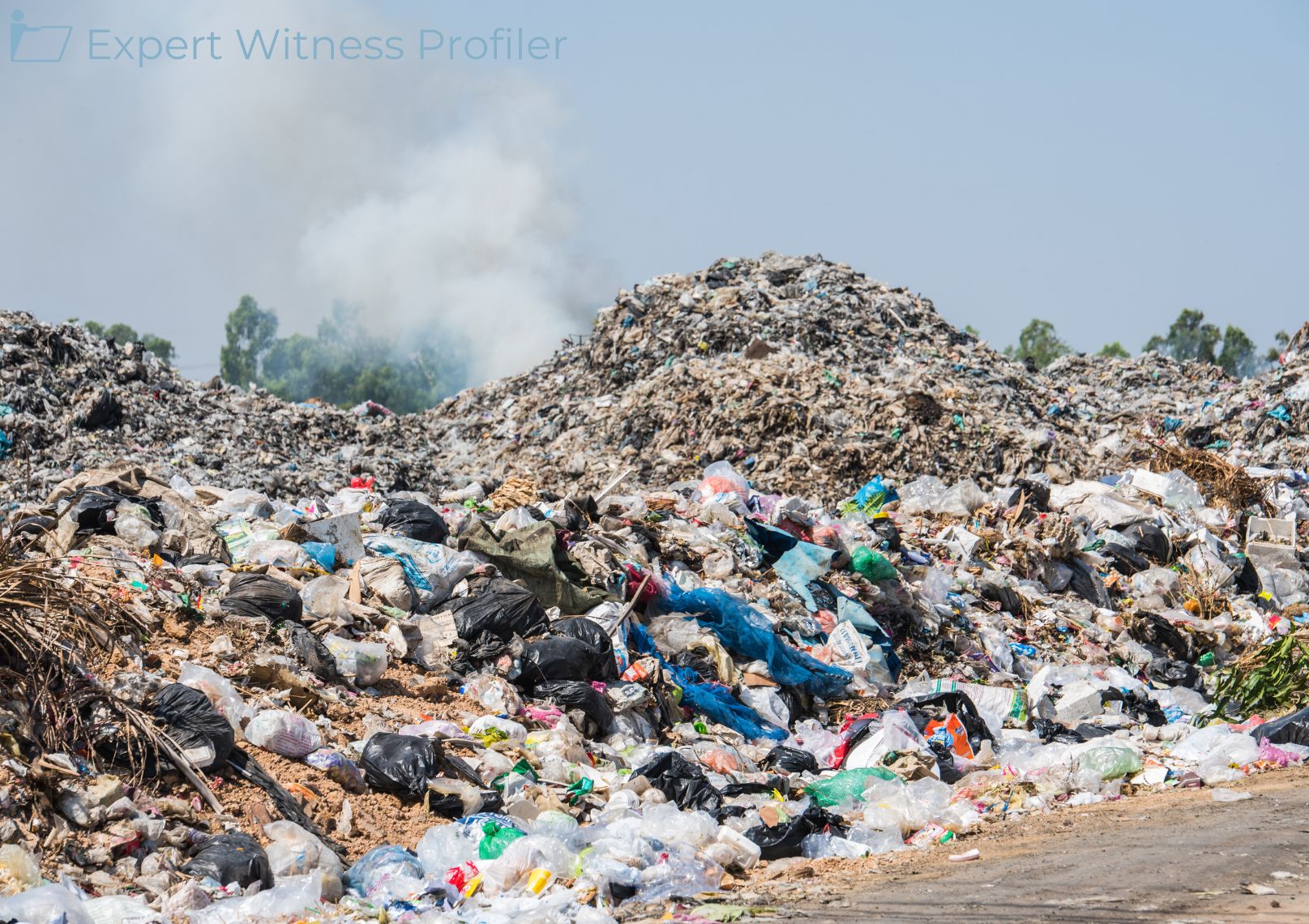
This case concerns the operation of the Jefferson Parish Landfill in Waggaman, Louisiana (the “JPLF”), and the resulting odors emitted from the JPLF between July 1, 2017, and December 31, 2019 (the “relevant time period”). Plaintiffs, who are Jefferson Parish residents, filed several individual lawsuits that were consolidated into a mass action, Addison v. Louisiana Regional Landfill Co., which contains over 500 individual Plaintiffs.
The Defendants asserted several “alternative source arguments,” including that: (1) Plaintiffs’ alleged damages were sustained in whole or in part as a result of intervening or superseding causes, including noxious odors originating from sources other than the JPLF; and (2) Plaintiffs’ claims are barred or diminished to the extent their injuries were caused by their own comparative fault or the comparative fault of third parties or sources of odors for which the Defendants are not responsible.
The Defendants offered Michael Corn, P.E., as an expert in emissions rates, fate and effect analysis, and non-landfill odors and emissions sources.
The Plaintiffs sought to exclude Corn’s testimony under Rules 401, 403, and 702, insofar as Corn’s testimony is not relevant, is unreliable, and will not assist the trier of fact, and has the potential to confuse the issues and mislead the jury.

Environmental Engineering Expert Witness
Michael Corn has over 50 years of experience as an environmental and water resources engineer and environmental consultant, working in industrial and government-operated facilities, like the non-landfill emissions sources.
Corn has conducted or supervised other engineers and scientists in developing air emissions estimates, air permitting, air modeling, and Toxics Release Inventory reporting.
Discussion by the Court
The subject of Corn’s testimony may be relevant under Rule 401
The Defendants contended that Corn’s testimony supports their alternative source arguments and is directly relevant to the causation element of Plaintiffs’ claims.
On July 17, 2024, the Court issued its Order and Reasons determining, in relevant part, that “evidence related to Defendants’ alternative source arguments is relevant under Rule 401, as ‘any potential alternative theories of causation go directly toward a key underlying issue’ in this case.” Because Corn’s proposed testimony is relevant to the Defendants’ alternative source arguments, the Court will not exclude Corn’s testimony under Rule 401.
Corn’s testimony will be excluded under Rules 702 and 403
Corn expressed four distinct opinions based on his findings:
- First, given that the weather data collected do not show a preferential wind direction, it is my opinion that no one source (i.e., the Landfill) could have impacted all [Trial Plaintiffs] at all times.
- Second, emissions from the alternative odor sources, permitted or not, resulted in odors in areas that the [Trial Plaintiffs] lived and traveled through.
- Third, the proximity of the receptor to sources released at or near ground level is more likely to impact a receptor.
- Fourth, given the variable wind direction in the area and the plaintiffs’ close proximity to many known odor sources, he opined that the [Trial Plaintiffs] are more likely than not subjected to multiple different pollutants released from the industrial facilities
Plaintiffs argued Corn’s testimony should be excluded under Rule 702 because his opinions are “matters of common knowledge,” which “ordinary jurors” can ascertain from their own experience without “special expertise or training,” and thus will not assist the trier of fact.
A. Non-Facility Emissions Sources
Corn supports Opinion No. 2 in part by his finding that localized emissions from the Sewer System generated odors that likely impacted the Trial Plaintiffs “resid[ing] nearby.” The Court held that Corn provides no analysis of the extent of the impact of this one event or how long the impact would have lasted. Corn’s documentation of this one incident report does not support his finding that localized emissions from the Sewer System generated odors that likely impacted the Trial Plaintiffs.
Corn supports Opinion No. 2 by pointing to the “the large expanse of wetlands and forested wetlands that surround the local areas,” which he says “presents a significant likely alternative emissions source to the [Trial Plaintiffs] at their residences and the areas [through which] they travel.” The Court held that Corn’s finding, which is based purely on his speculation with no data relevant to the specific wetlands at issue, does not provide sufficient support for Opinion No. 2. His speculation does not support his finding that localized emissions from the Wetlands generated odors that likely impacted the Trial Plaintiffs.
B. Facility Emissions Sources
Corn based Opinion No. 2 in part by his finding that several “industrial and municipal facilities . . . more likely than not” emitted odiferous pollutants in quantities sufficient to “impact[] the individual [Trial Plaintiffs] at their residence[s].”
The Court held that to the extent Corn relies on LDEQ Incident Reports of emissions events outside the 30-month relevant time period (i.e., July 1, 2017, through December 31, 2019), his findings on those facilities are excludable under Rule 401 because they are irrelevant to the issue of whether an alternative source of odors impacted the Trial Plaintiffs during the relevant time period.
1. Cornerstone Chemical Complex
Corn supported Opinion No. 2 in part by his finding that several operating facilities within the Cornerstone Complex generated emissions that likely impacted the Trial Plaintiffs.
The Court held that Corn does not explain the significance of the emissions rates reported therein of other pollutants or explain how the data is relevant to his finding that operating facilities in the Cornerstone Complex generated odors that could have been detected by the Trial Plaintiffs, effectively nullifying any probative value they may have.
a. The Acrylonitrile Plant
Corn based Opinion No. 2 in part by his finding that the Acrylonitrile Facility is a potential alternative source of odors that may have impacted the Trial Plaintiffs.
The Court held that assumptions based on emissions events that occurred outside the relevant time period are irrelevant to the issue of whether the Acrylonitrile Plant impacted the Trial Plaintiffs during the relevant time period. Because the basis of Corn’s finding on the Acrylonitrile Plant is unreliable and irrelevant, it does not support Opinion No. 2.
b. The Urea and Melamine Plant
Corn supports Opinion No. 2 in part by his finding that the Urea and Melamine Plant is an alternative source of odors that “might have” impacted the Trial Plaintiffs.
The Court held that Corn’s documentation of the facility’s air permit, the two incident reports during the relevant time period, the several incident reports that occurred outside the relevant time period, and the Facebook video does not support his finding that emissions from the Urea and Melamine Plant generated odors that likely impacted the Trial Plaintiffs.
c. The Sulfuric Acid Regeneration Plant
Corn supports Opinion No. 2 in part by his finding that the Sulfuric Acid Regeneration Plant (the “Regeneration Plant”) is an alternative source of “regularly occurring” emissions that “likely” impacted nearby Trial Plaintiffs.
Summarizing Corn’s evidence to support his finding that the Regeneration Plant “likely” impacted the Trial Plaintiffs during the relevant period, the Court found there was one odor complaint during the 30-month relevant time period, documented in the LDEQ Incident Report dated December 13, 2018. The other two LDEQ Incident Reports and the two Cornerstone Letters cited in the Corn Report concern releases from the facility for which there were no related odor complaints. Corn failed to provide evidence or opinion supporting his finding that the isolated incident, which was the subject of the odor complaint “likely” affected the Trial Plaintiffs.
d. The Utilities Plant/Site Services
Corn based Opinion No. 2 in part by his finding that the Utilities Plant “was a source of likely odors in Jefferson Parish.”
The Court held that the finding was unreliable because it was based on the unfounded and speculative extrapolation of three isolated incidents of de minimis releases during the 30-month relevant time period.
e. The Dyno Nobel Ammonia Plant
Corn bases Opinion No. 2 in part by his finding that the Dyno Nobel Ammonia Plant is an alternative source of odors that “likely” impacted some of the Trial Plaintiffs.
The Court held that Corn’s documentation of the facility’s air permit, TRI Reports, two incident reports from the relevant time period, and the Facebook video does not support his finding that emissions from the Dyno Nobel Ammonia Plant generated odors that likely impacted the Trial Plaintiffs.
f. The Roehm America Plant
Corn based Opinion No. 2 in part by his finding that the Roehm America Plant is an alternative source of odors that may have impacted the Trial Plaintiffs.
The Court held that Corn’s documentation of the facility’s air permit, TRI Reports, and the one incident report during the relevant time period does not support his finding that emissions from the Roehm America Plant generated odors that likely impacted the Trial Plaintiffs.
g. The Kemira Chemicals Plant
With respect to the Kemira Chemicals Plant located within the Cornerstone Complex, Corn represents the Kemira Chemicals Plant has a Title V Permit and presents information related to the facility’s Title V Permit for the relevant time period in Table 19 of the Corn Report.
The Court held that inferring the types and quantities of pollutants emitted by a facility from the facility’s air permit is unreliable. Accordingly, the basis of any purported finding of Corn on the Kemira Chemicals Plant is unreliable and does not support Opinion No. 2. Corn’s documentation of the facility’s air permit does not support his finding emissions from the Kemira Chemicals Plant generated odors that likely impacted the Trial Plaintiffs.
2. The ARTCO Facility
Corn supported Opinion No. 2 in part by his finding that the ARTCO Facility is an alternative source of odors that “likely impacted nearby [Trial Plaintiffs].”
The Court held that Corn does not describe the duration of this event nor how the odor travelled. To the extent that Corn’s finding on the ARTCO Facility is based on the unfounded and speculative extrapolation of one isolated incident of a de minimis release during the 30-month relevant time period, the finding is unreliable.
3. The IMTT Facility
Corn supported Opinion No. 2 in part by his finding that the IMTT Facility is an alternative source of odors that “might have” had an impact on the Trial Plaintiffs.
The Court held that Corn’s documentation of the facility’s air permit and one incident report from outside the relevant time period does not support his finding that emissions from the IMTT Facility generated odors that might have impacted the Trial Plaintiffs.
4. The Harahan Waste Treatment Plant
Corn based Opinion No. 2 in part by his finding that the Harahan WTP is an alternative source of odors that “likely” had an impact on the Trial Plaintiffs.
The Court held that Corn bases his vague conclusion on two isolated complaints of sewage intrusion onto individuals’ properties during the relevant time period, rather than any widespread complaint of noxious odors in the air.
5. The ADM Grain Facility
Corn supported Opinion No. 2 in part by his finding that the ADM Grain Facility is an alternative source of odors that “might have” had an impact on the Trial Plaintiffs.
The Court held that Corn’s documentation of the facility’s air permit and incident reports from outside the relevant period does not support his finding that the ADM Grain Facility generated odors that might have impacted on the Trial Plaintiffs.
6. The Cargill Westwego Marine Terminal
Corn supports Opinion No. 2 in part by his finding that Cargill is an alternative source of odors that “might have” had an impact on the Trial Plaintiffs.
The Court held that Corn’s documentation of the facility’s air permit and four incident reports during the relevant time period does not support his finding that emissions from Cargill generated odors that might have impacted the Trial Plaintiffs.
7. Kirby Inland Marine
Corn supported Opinion No. 2 in part by his finding that Kirby Inland Marine is an alternative source of odors that “likely” impacted Trial Plaintiffs.
The Court held that assumptions based on emissions events that occurred outside the relevant time period are irrelevant to the issue of whether emissions from Kirby Inland Marine impacted the Trial Plaintiffs during the relevant time period. Further, to the extent that Corn’s finding on Kirby Inland Marine is based on the unfounded and speculative extrapolation of one isolated incident of a de minimis release during the 30-month relevant time period, the finding is unreliable.
8. The Composing Facility
Corn supported Opinion No. 2 in part by his finding that “odor emissions (ammonia, hydrogen sulfide, etc.) during composting are practically unavoidable,” thus “numerous unpermitted air emissions events” associated with the Composting Facility that occurred “before the relevant time period . . . illustrate the impacts the facility might have [had] on [the Trial Plaintiffs] during the relevant time period.”
The Court held that Corn’s documentation of the facility’s incident reports from outside the relevant time period does not support his finding that emissions from the Composting Facility generated odors that might have impacted the Trial Plaintiffs.
9. Non-landfill operations at the River Birch Landfill
Corn supported Opinion No. 2 in part by his finding that non-landfill operations at the River Birch Landfill constituted alternative sources of odors that might have impacted the Trial Plaintiffs.
The Court held that Corn’s documentation of the facility’s air permit and one incident report during the relevant time period does not support his finding that emissions from River Birch generated odors that might have impacted the Trial Plaintiffs.
Held
The Court granted Plaintiffs’ motion in limine to exclude the testimony of Michael Corn.
Key Takeaway:
Rule 702 charges the Court as “gate-keeper” with the responsibility of conducting a preliminary assessment into whether the reasoning and methodology underlying expert testimony is scientifically valid and reliable. As set forth above, the proponent of expert testimony must prove by a preponderance of the evidence that the testimony is reliable. Having conducted a comprehensive review of Opinion No. 2 and the relevant reliance documents, the Court finds that the Defendants have not satisfied their burden of proving Corn’s testimony is reliable by a preponderance of the evidence. Corn’s opinion is peppered with his statements that the emissions sources “may have” or “might have” impacted the Trial Plaintiffs, or at the very best “likely” did so.
Please refer to the blog previously published about this case: Environmental Engineering Expert Witness’ Testimony About the Source of H2S is Not Fully Admissible
Case Details:
| Case Caption: | Addison, Et Al. V. Louisiana Regional Landfill Company |
| Docket Number: | 2:19cv11133 |
| Court: | United States District Court for the Eastern District of Louisiana |
| Order Date: | July 30, 2024 |