Tag: Lawnmower

  • Mechanical Engineering Expert’s Testimony about the Defective Lawnmower Excluded

    Mechanical Engineering Expert’s Testimony about the Defective Lawnmower Excluded

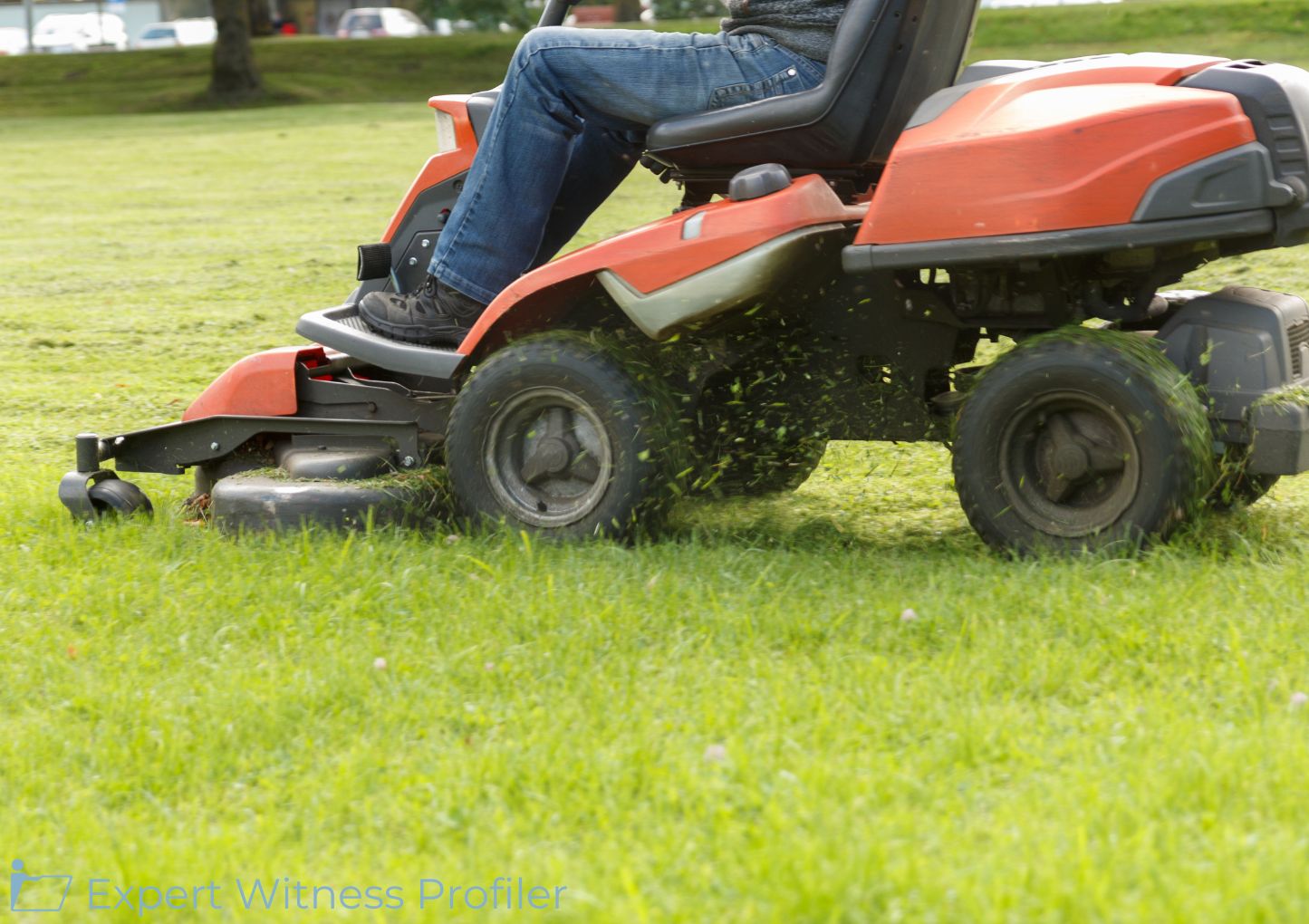
    Plaintiffs Jaron and Rachel George (“Plaintiffs”) brought this subrogation action against Defendants Stanley Black & Decker, Inc. (“SBD”) and MTD Products, Inc. (“MTD”) for strict liability, negligence, and breach of warranty claims based on a riding lawnmower fire resulting in substantial damage to Plaintiffs’ home.

    Defendants filed a motion in limine to exclude one of Plaintiff’s experts, Mr. Michael Zazula.

    Zazula opined during discovery that Plaintiffs’ lawnmower was in a defective condition because it incorporated a muffler cannister that had become distended and bowed over the years, and a gap had been created between the muffler and deflector, raising temperatures in the engine that resulted in the fire.

    Zazula did not point to any additional evidence of a defect at the time the lawnmower left the hands of Defendants but seems to suggest the distended muffler cannister itself was sufficient to prove a defect.
    Mechanical Engineering Expert Witness

    Michael J. Zazula specializes in applicable codes and standards for mechanical system components and the installation and maintenance of fire suppression systems, gas storage and delivery systems, boilers, HVAC equipment, and other fuel fired appliances.

    With over 20 years of forensic experience, he has conducted over 2,000 investigations.

    Want to know more about the challenges Michael Zazula has faced? Get the full details with our Challenge Study report.

    Discussion by the Court

    Zazula’s testing regarding fire causation is not reliable

    The basic premise of Zazula’s opinion is that the distention of the lawnmower’s muffler cannister was deformed, creating a 1/4 inch gap between it and the deflector, and this allowed hot exhaust gases to escape and caused higher temperatures and the ignition of combustible materials in the engine area.

    He proffers that this condition was a design or manufacturing defect of the lawnmower. Defendants argued that the expert testimony Zazula offered to support this premise is not admissible pursuant to Daubert. This Court agreed that Zazula’s report and opinion should not be considered.

    The methodology Zazula used for investigation and testing is Chapter 4 of the National Fire Protection Association (“NFPA”) 921, Guide for Fire and Explosion Investigations. The purpose of NFPA 921 “is to establish guidelines and recommendations for the safe and systemic investigation or analysis of fire and explosion incidents.”

    Zazula’s report explained that he performed his testing on a “used” Cub Cadet LTX 1040 lawnmower like the subject 1045 tractor lawnmower, and both contained the same parts. The temperature testing, which used thermal probes, at various parts of the used lawnmower on or near the muffler indicated temperatures ranging anywhere from approximately 400 degrees to the high of 726 degrees. Significantly, however, Zazula admitted that he did not conduct any testing on a lawnmower without a “distended muffler” and a 1/4 inch gap to try to prove or disprove whether the gap did, in fact, increase the temperatures in the engine area.

    Zazula could have fully tested his hypothesis, but he chose not to. Because he failed to conduct testing based on “the methods and procedures of science,” rather than mere “subjective belief,” the Court found that his opinion—that the muffler and the 1/4-inch gap (as a purported defect) caused the fire—was unreliable and inadmissible.

    Zazula’s expert testimony regarding fire causation does not “fit” the case or assist the trier of fact

    For similar reasons why Zazula’s opinion regarding the cause of the fire is not reliable, the Court held that Zazula’s opinion does not “fit” the case or assist the trier of fact. As explained before, it is not based on valid reasoning and reliable methodology. In addition, Zazula’s conclusion that the 1/4 inch gap caused the rise in temperatures is too speculative and subjective, considering he never conducted testing and compared temperatures in the engine of a lawnmower with a distended muffler and 1/4 inch gap and one without. This is especially so when two other experts who conducted the testing found no difference in the engine temperatures between the two.

    Even assuming Zazula is qualified to opine about the cause of the fire in the lawnmower, for the reasons explained above, his opinion is unreliable and unhelpful to the jury and is therefore precluded based on Daubert.

    Zazula is also not qualified as an expert to provide testimony regarding the alleged defective condition of the lawnmower, and the Court will exclude his opinion on that issue

    Zazula proffered that the lawnmower at issue was defective because the distended muffler and the 1/4 inch gap suggested a manufacturing defect or design defect. When asked what evidence supported the existence of a manufacturing defect, Zazula pointed solely to the distended muffler and gap, stating if he took the muffler into MTD, MTD would say “that’s not right.”

    Preliminarily, despite arguably being a fire causation expert, Zazula admitted he is not a design engineer regarding mufflers and exhaust systems, nor is he a warnings expert. Therefore, any of Zazula’s testimony regarding the lawnmower’s purported defects should not be considered. This includes his opinion without more that the distended muffler and 1/4 inch gap somehow was the result of the lawnmower’s defective condition, including a design defect, manufacturing defect, or failure to warn.

    Even if Zazula was qualified to testify about the “defective condition” of the lawnmower, the Court held that his testimony is not reliable. While his report stated, in part, the muffler deformation and gap between the muffler and deflector “exacerbates the ignition of foreseeable combustible material . . . . when the hot exhaust are not properly vented out the side of the deflector as designed [and] intended,” during his deposition he gave no evidence to support or further explain any design defect theory.

    The Court agreed that Zazula applied no methodology or procedures of science to support his opinion of a defect in the Cub Cabet at issue, and his opinion on any defect constitutes unreliable “subjective belief or unsupported speculation.”

    Finally, and for similar reasons, the testimony is not helpful to the jury. Here, the testimony is not sufficiently tied to any of the facts to aid the jury in resolving whether MTD’s lawnmower, in fact, suffered from a defective condition.

    Held

    The Court granted Defendants’ motion in limine to exclude the testimony of Plaintiffs’ expert Michael Zazula.

    Key Takeaway

    Zazula speculates what possibly caused the fire (in a case where there are several possible fire causes), without providing any specific evidence or testimony to support his opinion that the lawnmower was defective. As a result, the Court determined that any of Zazula’s testimony about any defective condition of the lawnmower should be excluded.

    Case Details:

    Case Caption: George V. Stanley Black & Decker, Inc.
    Docket Number: 2:24cv2035
    Court Name: United States District Court, Pennsylvania Eastern
    Order Date: January 26, 2026
  • Design Engineering Expert Witness’ Product Defect Theory held to be Reliable

    Design Engineering Expert Witness’ Product Defect Theory held to be Reliable

    A district judge in New Jersey decided that a design engineering expert witness could testify about the alleged design defects of the model in question and the risks and possible outcomes of such design defects.

    On August 19, 2016, William Visakay (“Visakay”) was riding his 2007 Craftsman Lawn Tractor in his backyard when it overturned and rolled, causing fuel to spill out and the lawnmower to catch on fire. After the accident, Visakay died from burn injuries. Plaintiff and her expert, Christopher Ryan, argued that there was a design defect in the lawnmower, which caused the fuel tank to become damaged when the lawnmower rolled over. Defendant and their experts claimed that Visakay had failed to properly secure the lawnmower’s gas cap, which caused the fuel to pour out of it and become ignited by a spark from an undetermined source.

    The only remaining Defendant, Husqvarna Consumer Outdoor Products N.A., Inc. challenged each of the three criteria required for Ryan’s testimony to be admissible. First, HCOP contended that Ryan was not qualified to opine on the cause and origin of the fire. Second, HCOP argued that Ryan’s methodology was not sufficiently reliable to be admissible. Third, HCOP claimed that Ryan’s opinions did not fit the facts of the case.

    Design Engineering Expert Witness

    Christopher Ryan received his Bachelor of Science Degree in Mechanical
    Engineering, with an emphasis on product design, from Iowa State University. He has over 25 years of experience working with manufacturing companies, including managing prototype testing and ensuring products, including lawnmowers, meet industry safety standards. He also worked at John Deere for 19 years, where he oversaw the testing of new mowers and small tractors.

    Get the full story on challenges to Christopher Ryan’s expert opinions and testimony with an in-depth Challenge Study.

    Discussion by the Court

    Qualifications

    HCOP asserted that Ryan was not qualified to opine on the cause and origin of the fire because of his lack of experience with fire investigation. The Court held that HCOP’s argument, asserting that Ryan was not qualified, was unavailing. Ryan possessed the “specialized expertise” necessary to opine on the issues in this case with 20 years of experience designing products and rejecting/approving designs, including specifically with lawnmowers.

    He was employed for 19 years with John Deere, where he managed the labs responsible for testing all new John Deere mowers and small tractors. Notably, Ryan worked with other manufacturers to help develop an industry testing standard to validate new plastic fuel tank designs.

    Defendant’s other challenges rebuffing Ryan’s qualifications, such as its argument that other witnesses with experience in fire investigation were unable to form a reliable conclusion about the cause of the fire, were unpersuasive. The Court was satisfied that with Ryan’s extensive background and experience with lawnmowers, Ryan was qualified to provide expert testimony in this case as to the alleged defect of the lawnmower and, relatedly, the cause of the fire. 

    Henceforth, Ryan is qualified to opine about the alleged design defects of the lawnmower and the risks and possible outcomes of such design defects, including the flammability and explosive nature of the products. 

    Reliability

    HCOP contended that Ryan’s methodology was not sufficiently reliable. Specifically, HCOP argued that (i) Ryan lacked sufficient facts and data to form his opinions; (ii) Ryan evaluated his product defect theory using scientifically unreliable testing; and (iii) Ryan’s theory that the fire was caused by a product defect relied on no methodology.

    Ryan relied on sufficient facts and data to form his opinions

    First, as described in his expert report, Ryan relied on sufficient facts and data to form his opinions: he reviewed photos from the scene, police reports, medical reports, sources with information about the mower at issue (such as the Craftsman Model Operator’s Manual) and other documents from the case. He also inspected the burned mower and summarized his findings, performed tests with exemplar mowers, and conducted a three-dimensional virtual analysis.

    Ryan’s employed methodology is sufficiently reliable so that it will aid the jury in reaching accurate results

    Second, Ryan’s employed methodology is “sufficiently reliable so that it will aid the jury in reaching accurate results.” After inspecting the burned mower, Ryan hypothesized that the fuel tank “would have been crushed” and that “pressurized fuel would pour out uncontrollably” due to the observed damage to the crossmember. Then, to prove his theory, he purchased and examined exemplar mowers and performed tests including a static side roll over test, a mild dynamic side roll over test, and a rearward/right side roll over test. These tests are summarized in Ryan’s expert report, and yielded results that were allegedly consistent with his inspection of the burned mower. Ryan also conducted an “engineering analysis,” which included investigation of a three-dimensional model. 

    HCOP also contended that Ryan’s testing did not yield the damage that he expected.  Ryan’s conclusion from his engineering analysis, however, stated the opposite: “The crossmember can crush the fuel tank during impact with the ground.” This was consistent with the hypothesis he formed after his examination of the burned mower. HCOP’s arguments concerned the validity of Ryan’s conclusions—which is a determination for the jury to make after the benefit of cross-examination.

    Ryan’s fire causation opinions result primarily from the same methodology detailed above

    Ryan’s sufficiently reliable methodology of determining the defect in turn led to his conclusions about the fire. Notably, the Operator’s Manual explicitly stated: “Gasoline is extremely flammable and the vapors are explosive,” which reinforced Ryan’s conclusions that fuel contacting the hot engine could result in a fire. The Court found Defendant’s argument, that Ryan did not follow the National Fire Protection Association (“NFPA”) fire investigation standard, unpersuasive; NFPA standards are “merely a guide to assist fire investigators, and their provisions are nonmandatory.”

    Fit

    HCOP challenged the fit between Ryan’s proffered testimony and the facts of the case. Specifically, it asserted that Ryan’s opinions were not applicable to the facts of the case and did not analyze “what damage a fuel tank could experience in an overturn.”

    Plaintiff has demonstrated multiple ways in which Ryan’s opinions will assist the jury. Ryan’s opinions speak to the purported design defects of the Craftsman model, which Plaintiff directly relies on for her claims. Ryan opines on the risks related to certain design choices of the lawnmower, and whether there were reasonable alternative designs that could have reduced those risks. Therefore, Ryan’s “specialized knowledge will help the trier of fact to understand the evidence or to determine a fact in issue,” thus allowing for that testimony’s admissibility.

    HCOP filed a motion for summary judgment concurrently with its motion to exclude Ryan’s testimony. The Court noted that genuine issues of material fact existed that precluded summary judgment considering Ryan and Defendant’s experts will present competing theories of the accident in this case.

    Held

    The Court denied HCOP’s motion to exclude Christopher Ryan and HCOP’s motion for summary judgment.

    Key Takeaways:

    • The Third Circuit reads the qualification requirement broadly and interprets it liberally—a “broad range of knowledge, skills, and training qualify” as specialized expertise. Ryan has over 20 years of experience designing products and rejecting/approving designs, including specifically with lawnmowers.
    • Ryan’s employed methodology was “sufficiently reliable so that it will aid the jury in reaching accurate results.” His tests yielded results that were allegedly consistent with his inspection of the burned mower. Ryan also conducted an “engineering analysis,” which included investigation of a three-dimensional model.
    • With respect to fit, the expert’s testimony must be relevant for the purposes of the case and must assist the trier of fact by establishing a valid scientific connection to the pertinent inquiry. Plaintiff has demonstrated multiple ways in which Ryan’s opinions will assist the jury.

    Case Details:

    Case Caption: Visakay V. Sears Roebuck And Co. Et Al
    Docket Number: 2:17cv11570
    Court: United States District Court, New Jersey
    Order Date: April 29, 2024