Tag: License

  • Accounting Expert was Allowed to Opine on the Fair Market Value

    Accounting Expert was Allowed to Opine on the Fair Market Value

    Upper Deck claimed that Pixels has marketed and sold wall décor featuring images that infringe upon Upper Deck’s trademarks and Michael Jordan’s name, image, likeness, and publicity rights. Basically, Upper Deck brought this action pursuant to an exclusive agreement with Jordan (the “Jordan Agreement”) for the use of his name, image, likeness, and other publicity rights. Upper Deck asserted that the agreement also gives Upper Deck the right to commence actions on behalf of Jordan for infringement of the rights assigned in the Jordan Agreement.

    Amongst other things, Upper Deck alleged violation and deprivation of the right of publicity, violations of the Lanham Act, registered trademark infringement, violation of California’s Unfair Competition Law, and California common law unfair competition. 

    Christian Tregillis was retained as a damages expert by Upper Deck to opine on the fair market value of Pixels’ alleged unauthorized use of Jordan’s rights. Pixels filed a motion to exclude Tregillis’ testimony, contending that his methodology is unreliable and based upon insufficient facts and data.

    Pixels also contended that the premium multiplier Tregillis uses in his fair market value calculation is unreliable and that Tregillis’s two “Evidence Indicates” opinions are irrelevant.

    Accounting Expert Witness

    Christian Dale Tregillis holds an M.B.A. in Finance and Accounting. He has more than thirty years of experience analyzing financial, accounting, economic, statistical, and market issues, primarily relating to disputes, valuations, and license agreements covering intellectual property rights.

    Tregillis has held leadership positions with many public accounting and licensing professional groups. He is also accredited in Business Valuation and certified in Financial Forensics, Public Accounting, and Licensing.

    Want to know more about the challenges Christian Tregillis has faced? Get the full details with our Challenge Study report.

    Discussion by the Court

    A. Methodology

    Tregillis calculated the fair market value of Pixels’ use of Jordan’s rights by analyzing comparable licenses for rights similar to those used by Pixels as a starting point to construct a hypothetical license.

    Tregillis then adjusted the value of the benchmark comparable license to account for the other athletes included in the benchmark license, the length of time of Pixels’ use, and the fact that Pixels’ use of Jordan’s rights was not subject to any quality assurance or approval clauses. Pixels argued that the benchmark agreement chosen by Tregillis is insufficiently comparable and that Tregillis made improper assumptions to inflate the value of the benchmark license.

    1. Underlying Facts and Data

    Tregillis determined the Trends Agreement to be the most comparable to the facts at issue here and uses this agreement as the benchmark for his hypothetical license analysis. The Trends Agreement was a licensing agreement between Brevettar, described as “the exclusive licensing agent for Upper Deck,” and Trends International, LLC. The Trends Agreement granted Trends a license to manufacture, distribute, and sell collector’s edition posters and calendars featuring the name, image, likeness, signature, and statistical data of Michael Jordan, Wayne Gretzky, and Tiger Woods. A later amendment to the Trends Agreement also allowed Trends to sell canvas wall décor.

    Pixels argued that the Trends Agreement is an improper comparable because Upper Deck was not a party to it, Upper Deck did not receive royalty payments from the agreement, and the Trends Agreement was not effective until two and a half years after Pixels alleged unauthorized sales began.

    Here, the Trends Agreement concerned the same rights at issue in this case, Jordan’s name, image, likeness, and publicity rights. Further, the Trends Agreement covered the same types of products as those at issue here—posters, calendars, and wall décor. The Trends Agreement also covered products similarly priced to those sold by Pixels. Consequently, the Court found the Trends Agreement sufficiently comparable to serve as a reliable basis for the hypothetical license analysis Tregillis conducts.

    2. The Premium Multiplier

    After identifying the Trends Agreement as the best benchmark for his hypothetical license analysis, Tregillis used a premium multiplier to adjust for the fact that Pixels’ use of Jordan’s rights was not authorized and not subject to the quality assurance and approval clauses typically included in Jordan’s licensing agreements.

    Tregillis calculated this multiplier by comparing two similar situations where Jordan’s rights were used, one of which was authorized (the “Hanes Transaction”) and one of which was unauthorized (the “Panini Settlement”). ) Tregillis compared the values of those transactions to calculate the percentage premium for unauthorized uses of Jordan’s rights.

    Pixels argued that the application of this premium multiplier is unreliable and that the Hanes Transaction and Panini Settlement are not reliably comparable to the conduct at issue here.

    Tregillis demonstrated the necessity of this premium adjustment by discussing Jordan’s carefully tailored brand and restrictive approach to licensing agreements.

    Then, Tregillis conducted a comparative analysis using otherwise analogous transactions to calculate the value of unauthorized uses of Jordan’s rights. This analysis is grounded in evidence, and Tregillis’s application of his analysis logically follows. Therefore, the premium multiplier calculation and its application to the hypothetical license are sufficiently reliable to present to a jury. 

    Tregillis spent paragraphs of his report, supported by citations to the record, discussing the Hanes Transaction and Panini Settlement as well as how he used them in his analysis.

    Tregillis did not use the Hanes Transaction and Panini Settlement as comparable to this case for the purpose of hypothetical license analysis; rather, he uses them in a comparative analysis to determine the value of Jordan’s rights when their use is not subject to any quality assurance or approval clauses.

    B. The “Evidence Indicates” Opinions

    Tregillis offered two “Evidence Indicates” opinions. First, “Evidence indicates that, as Upper Deck values its relationship with Jordan, one of the world’s most iconic athletes and personalities, Upper Deck protects both its rights and Jordan’s rights, while also ensuring it only produces and/or approves high-quality products that feature appropriate and value-enhancing uses of Jordan’s rights of publicity and trademarks.” And second, “Evidence indicates that the use made by Pixels is unauthorized and would not have been authorized by Jordan and/or Upper Deck.” Pixels argued that these opinions are irrelevant and should be excluded.

    The Court found that the two “Evidence Indicates” opinions will aid the jury in understanding Tregillis’ hypothetical license analysis. The “Evidence Indicates” opinions shed light on the fair market value of Jordan’s rights as Pixels used them and demonstrate the necessity of the premium multiplier. More specifically, the opinions will help the jury to understand how Upper Deck and Jordan value Jordan’s rights and typically license them.

    Pixels argued that the second “Evidence Indicates” opinion “is a naked attempt to elevate Upper Deck’s allegations of unauthorized use by Pixels into a liability opinion against Pixels.”

    The Court agreed that Tregillis’ second “Evidence Indicates” opinion goes to brand standards and addresses how the fair market value of Jordan’s rights is impacted when subject to quality assurance and approval clauses.

    However, grounding the second “Evidence Indicates” opinion in language about “authorization” toes the line of embodying a legal conclusion. Accordingly, while the Court found that Tregillis is not offering a legal conclusion, his testimony at trial should make clear that Tregillis is merely assuming Pixels’ liability for the purposes of his analysis and is offering opinions about authorization solely to support his damages analysis, not to offer a legal conclusion. 

      Held

      The Court denied Defendant Pixels.com’s motion to exclude the testimony of Plaintiff The Upper Deck Company’s expert witness, Christian Tregillis.

      Key Takeaway:

      Any lingering doubts as to the negative impact of Tregillis’s testimony can be managed by instructing the jury to follow only the judge’s instructions as to what the law is and to disregard any testimony that is inconsistent with those instructions.

      Case Details:

      Case Caption: The Upper Deck Company V. Pixels.Com, LLC
      Docket Number: 3:24cv923
      Court Name: United States District Court, California Southern
      Order Date: December 09, 2025
    1. Licensing Expert’s Experience-Based Opinion Admitted 

      Licensing Expert’s Experience-Based Opinion Admitted 

      The fiery dispute in this case comes on the wings of a disagreement about dragon-themed boot buttons. In April 2021, Plaintiff, Edward Beard Jr. (“Beard”), filed a complaint against Defendants Arik Helman (“Helman”)1Link to the text of the note; Son of Sandlar, LLC; Son of Sandlar, Inc., Sandlar Manufacturing, LLC; and Twisted World, LLC (“Defendants”) for direct copyright infringement, contributory copyright infringement, vicarious infringement, and breach of contract.

      Defendants filed a motion to exclude the testimony of Dr. Wesley Austin while Plaintiff Edward P. Beard Jr. filed a motion to exclude the testimony of Cari Freno and Julie Newman.

      Economics Expert Witness

      Dr. Wesley Austin is an Associate Professor of Economics at University of Louisiana at Lafayette and has been in that position for eleven years.  He also has worked as an expert witness in various litigation since 2009.

      Austin holds a Bachelor of Arts in Finance and a Master of Arts in Economics—both from the University of South Florida. He received a Ph.D. in Economics from the University of South Florida, as well. His Ph.D. studies focused on health economics and public sector and labor economics and statistics.

      Get the full story on challenges to Wesley Austin’s expert opinions and testimony with an in-depth Challenge Study.

      Art History Expert Witness

      Cari Freno is the chair of the art and art history department at Ursinus College. She has twenty-five years of experience “working with art materials and processes including drawing, carving, and casting” and has served as an art teacher since 2010.

      Freno has a Bachelor of Fine Arts from the University of the Arts and a Master of Fine Arts from Virginia Commonwealth University.

      Want to know more about the challenges Cari Freno has faced? Get the full details with our Challenge Study report.  

      Licensing Expert Witness

      Julie R. Newman is the Founder and CEO of Jewel Branding & Licensing, Inc. She has been a licensing agent for the past twenty-two years and represents artists whose artwork is used in manufacturers’ products. According to Newman, she “has developed licensing programs around the globe in categories such as health & beauty, stationery, apparel, gift, and home decor.” She holds a Bachelor of Arts in Finance from the University of Akron.

      Want to know more about the challenges Julie Newman has faced? Get the full details with our Challenge Study report.

      Discussion by the Court

      Wesley Austin

      The purpose of Austin’s “report is to estimate [Beard’s] economic damages/losses” from the alleged copyright infringement.

      Challenges to Austin’s Qualifications

      While Defendants did not explicitly question the qualifications of Austin, their entire argument is premised on their belief that he “lacks experience or expertise in negotiating or structuring licensing deals, which is critical for providing a reliable opinion on reasonable royalties in the context of copyright infringement.”

      While Austin has an impressive background in economics, he has no experience, knowledge, or training relating to licensing agreements of the kind at issue in this case.

      So, while he may be qualified to testify regarding general economic matters, he lacked the requisite qualifications to be admitted as an expert on economic damages of the more specific area of art licensing agreements.

      Challenges to Austin’s Reliability

      Much of the Defendants’ challenge to Austin’s proposed expert testimony focused on his alleged unreliability. They noted that the focus of Austin’s analysis is improperly focused on what Plaintiff would have demanded, not what the parties would have negotiated.

      The Court agreed. Austin’s analysis is entirely focused on what Beard would have wanted, not what Helman would have offered.

      Be that as it may, the Defendants’ concerns are chiefly with Austin’s methodology and lack of an independent investigation. 

      The lack of investigation is shown by the fact that there is no evidence in the information provided to Austin that Beard ever received an advance against royalties (AAR) on a per year or per product basis, nor that an upcharge for color variants using his products was ever given. While Plaintiff is correct in noting that there is a basis for determining that an AAR is possible, Defendants contention is that the type of AAR which forms the basis of both of Austin’s scenarios (one granted for that high an amount on a per year, per product, and per color variant basis) has no basis in the record provided to Austin. That, specifically, is what the Court sees as having no evidence in the record to support a basis for an economic analysis and one of the things Austin should have conducted an independent investigation into.

      Relevance/Fit of Austin’s Analysis of Loss related to the Boot Buttons

      As a final note on Austin, the Defendants pointed out that he included lost future income for the Dragon Boot Buttons in his report.

      On March 06, 2024, the Court stated that “Helman is a joint author of the dragon buttons, and he cannot be sued for copyright infringement.”

      Since that opinion was released, more than one and half years have passed and Plaintiff has not amended its complaint to include a claim for accounting for profits from the boot buttons—a remedy that remains as viable as it was when it was mentioned in that opinion.

      Unless and until that motion and amended pleading are filed, Austin’s proposed analysis relating to the boot buttons is irrelevant to the claims currently within this case. 

      The Court viewed Austin’s potential testimony, and will view any testimony proffered on this topic, irrelevant until the amended complaint is filed.

      Cari Freno

      The purpose of Freno’s report is to “provide an opinion of the visual qualities appertaining to the items related to this case.”

      1. Challenges to Freno’s Qualifications

      Defendants’ chief issue with Freno’s report is that she “references no scholarly sources, industry standards, or error-rate analyses to validate her approach.” That is, their main concern is that her expertise is not scientific, and therefore not reliable.

      Freno has established that she has experience working within the art field and that is a sufficient basis for her expert opinion.

      Defendants did raise the valid point that while Freno has established an extensive background in the field of art, she provided no evidence that she has experience in the fields of leatherwork or metalwork. Further, she provided no mention that she has ever had experience turning a drawing or model into a physical product like an applique or a metal button. Nevertheless, this experience could be inferred from her previous work, and excluding the testimony of Freno based on her qualifications is not warranted.

      2. Challenges to Freno’s Lack of Investigation

      Freno’s report made it clear that she relied extensively on conversations with Helman. Freno provided no indication that she ever independently verified what Helman told her and she told the Court, explicitly, at the Daubert hearing that she did not conduct an investigation into what Helman told her.

      Freno’s visual analysis concluded by describing the differences between the various designs. It was only based on her extensive conversations with Helman that she ultimately concluded which design was based on the other.

      The obvious reliance on Helman’s opinions cannot be ignored by the Court—especially when it is admitted that nothing was done to verify the information. Ultimately, Freno’s lack of an independent investigation into what was told to her ultimately renders her testimony as an expert unreliable.

      Julie Newman

      Newman stated that the “primary purpose of [her] report is to summarize a licensing arrangement that would be typical for Helman and Beard to enter into.”

      Newman spent around half of her report arguing that many of the points made in the information given to Austin’s were “misleading and not based in real world licensing agreements.”

      Challenges to the Reliability of Newman’s Opinion

      Plaintiff’s chief concern with Newman’s report is its reliability. He first pointed to the fact that she did not rely on “any peer-reviewed or scientific model” and only relied on her extensive experience in the licensing field to come to her conclusions.

      The Court disagreed. Plaintiff seemed to want a peer reviewed paper or universally accepted formula to provide the basis for an expert report, but that was not required. Far from pulling figures out of thin air, she based her opinion on more than two decades of experience working to create licensing agreements like the one that could have been made in this case.

      She concisely explained in her report how and why she reached the conclusion that a 10% royalty rate was likely and that this would lead to royalties owed in the amount of $400.

      Challenges to the Fit of Newman’s Opinion

      According to the Plaintiff, because the “report fails to explain how her licensing experience anecdotes align with the specific market for this particular Dragon Design, or the specific infringement scenario before the Court – her report thus failed the “fit” test.”

      Despite Plaintiff’s implication that there is a lack of fit due to the lack of science used in the report, all that must be done for the fit element is for the trial judge to determine whether the testimony has “a reliable basis in the knowledge and experience of [the relevant] discipline.”

      Here, Newman’s report has more than a sufficient reliable basis for her opinions—she has worked within the relevant field on the exact documents at issue for over two decades. The fact it is an experience-based opinion rather than a scientific based one, did not affect the ability of the expert to provide her report or testimony in this case.

      Finally, when Newman stated that she has worked with artists as “a licensing agent” for twenty-two years, she also explicitly stated that she has worked on several art licensing agreements. She set forth these anecdotes almost immediately prior to laying out her conclusion and explained how her conclusion is based on her prior experiences.

      Held

      • The Court granted Defendants’ motion to exclude the opinions and testimony of Dr. Wesley Austin.
      • The Court granted in part and denied in part Beard’s motion to exclude the expert testimony of Cari Freno and Julie Newman- the motion to exclude was granted as to Cari Freno but denied as to Julie Newman.

      Key Takeaway:

      Experience is a valid basis to provide an expert opinion. The scientific factors simply are not applicable, when the reliability of testimony from a practical expert depends heavily on the knowledge and experience of the expert, rather than the methodology or theory behind it.

      When an expert relies solely or primarily on experience, they must explain how that experience leads to the conclusion reached, why that experience is a sufficient basis for the opinion, and how that experience is reliably applied to the facts.

      Case Details:

      Case Caption: Beard V. Helman
      Docket Number: United States District Court, Pennsylvania Middle
      Court Name: 4:21cv680
      Order Date: November 12, 2025
    2. Transportation Safety Expert Barred from Offering Opinions on Kent & Smith’s Safety Culture

      Transportation Safety Expert Barred from Offering Opinions on Kent & Smith’s Safety Culture

      This suit arises from a motor vehicle accident that occurred on September 7, 2018, in Vinton, Louisiana. Plaintiffs alleged that Billy Smith was operating a 2016 Kenworth T880 while traveling westbound on Interstate 10 on that date.

      The vehicle was outfitted with Chinese-manufactured steel belt radial truck tires, distributed by CMA under the trade name “Double Coin tires.” The accident occurred when Smith’s tires suffered a catastrophic tread/belt separation, overturning the vehicle and severely injuring Smith. Smith passed away on September 4, 2021, and his surviving spouse and four adult children were substituted as Plaintiffs.

      Defendants sought to introduce testimony from Dr. Richard W. Carr as an expert in the fields of trucking industry maintenance practices and trucking fleet and driver management standards. Carr offered opinions regarding alleged deficiencies in Smith’s licensure and driving conduct as well as in the maintenance of the vehicle and other practices by his employer, Kent & Smith Holdings, LLC.

      Plaintiffs filed a motion to exclude Carr’s testimony under the standards set forth in Rule 702 and Daubert.

      Transportation Safety Expert Witness

      Richard W. Carr Ph.D., CDS is the principal of R W Carr, Inc., a Risk Management & Safety Consulting corporation based in Jacksonville, Florida, which primarily serves the transportation industry, construction industry, insurance industry, the legal profession, and the U.S. Government.

      He has also worked as a Special Investigator and Accident Investigation Specialist for the Federal Motor Carrier Safety Administration. He has specialized training from the Federal Motor Carrier Safety Administration, Environmental Protection Agency, Penn State University, Northwestern University, Kennedy Western University, Georgia Tech, the National Nuclear Security Administration, and others.

      Carr holds a Ph.D in Safety Engineering and has served as an expert witness in several cases over the last four years.

      Get the full story on challenges to Richard Carr’s expert opinions and testimony with an in-depth Challenge Study

      Discussion by the Court

      Richard Carr

      Plaintiffs did not challenge Carr’s qualifications but instead maintained that he lacked an adequate basis for the following opinions: (1) Billy Smith was not properly licensed at the time of the incident and failed to report vibrations in the steering wheel; (2) Kent & Smith lacked an adequate preventative maintenance program given their operational conditions; (3) Kent & Smith improperly allowed a plugged tire to remain in use; (4) Kent & Smith failed to retain and secure documentation post-accident relating to the subject vehicle and Smith; and (5) Kent & Smith’s alleged carrier violations four years after the accident are evidence of a culture of committing carrier violations around the time of the accident.

      Smith’s Licensure and Failure to Report Steering Wheel Vibrations

      In his deposition Carr opined that he “did not believe Smith had a valid CDL driver’s license at the time of this accident” because the copy contained in his Kent & Smith driver record had an expiration date of September 5, 2018, with no indication of renewal. Carr admitted, however, that he could not say one way or another whether the license had been renewed and that he had made no independent attempt to verify renewal. In response, Plaintiffs showed that a Class A CDL was issued to Smith on June 18, 2018, with expiration date of September 05, 2024.

      Defendants maintained that Carr nonetheless had an adequate basis to reach his conclusion on Smith’s license status, based on the contents of his Kent & Smith driver’s record. Even if Smith was properly licensed at the time of the accident, the fact that his employer’s records indicated he was not may fall short of the standard of care. Further, they complained that the valid driver’s license is not Bates-stamped and was never produced in discovery.

      The Court agreed that the record provided an adequate basis for Carr to opine that there was no evidence in Kent & Smith’s files at the time of the accident that Billy Smith was properly licensed.

      Plaintiffs argued that Carr assumed based on defense expert Michael Grima’s report that the steering wheel was vibrating and then further assumed from the lack of documentation that Smith felt these vibrations and failed to report them.

      The Court found that Carr is adequately qualified to opine on not just if but how Smith should have reported this effect—by formally recording it in his inspection reports. As he noted, the purpose of the reports was to identify issues so that they could be repaired.

      Inadequate Preventative Maintenance Program

      Carr also criticized Kent & Smith for failing to maintain an adequate preventative maintenance program. He based his assumptions about the lack of adequate maintenance on the extent of wear and tear visible on the tires in photographs. He could not cite an industry standard or state specifically how often Kent & Smith should have been inspecting the tires of its fleet, noting that he did not have a copy of the company’s maintenance schedule. Instead, he described his own experience operating a truck over gravel and how it necessitated replacement of the tires after only 50,000 miles. 

      While Plaintiffs write this off as anecdotal, the Court held that Carr’s experience is highly relevant to the tires at issue and their working conditions, and he applied this lens when reviewing the photographs and maintenance records. 

      Allowing a Plugged Tire to Remain in Use

      Carr noted that the right front steering tire had been plugged at least three times. Plaintiffs challenged this opinion because Carr never conducted a firsthand examination of the subject tire. But Carr reviewed photographs as well as the report of Grima, who found evidence of prior punctures.

      As Defendants noted, “[e]very expert who has reviewed the tire has noted the numerous punctures on the tire, the stone drilling in the tire, and the wear of the tire. These facts are not in dispute.” In other words, Carr’s extrapolation, based on testimony that Plaintiffs failed to refute, that leaving such a tire on the steering axle violated Kent & Smith policy appeared to be on solid footing.

      Failure to Retain and Secure Documentation

      In his deposition Carr pointed to deficiencies in Kent & Smith’s record retention. Plaintiffs then pressed him as to whether any such failures contributed to the accident. Carr responded: “By them not providing documents, it did not contribute to the cause of the accident, but it might have inhibited or changed opinions, or aided in the scope and process of the ongoing litigation related and caused by the accident.” 

      Plaintiffs objected that this opinion was irrelevant because, as Carr admitted, any record retention deficiencies did not cause the accident. But, as he explained, the absence of records could have inhibited investigation of the accident and a discovery of its contributing factors. Additionally, the Court held that Carr is adequately qualified through his industry experience, including a stint as an investigator for the Federal Motor Carrier Safety Administration (“FMCSA”), to reach this opinion.

      Kent & Smith’s Culture

      Finally, Carr asserted in his deposition that Kent & Smith had a “culture” of violating safety regulations based on its record from August 2022 to August 2024. Plaintiffs thus moved to exclude this opinion, arguing that testimony regarding Kent & Smith’s subsequent violations is prohibited under Federal Rule of Evidence 404(b).

      Defendants made no argument in support of the relevance of the subsequent violations. The Court agreed that, even if they were offered for some purpose under Rule 404(b) other than showing Kent & Smith’s bad character, they have no probative value because they occurred four to six years subsequent to the subject accident. The motion is therefore granted to the extent that Carr is prohibited from referencing these violations or opining on Kent & Smith’s safety culture at the time of the accident based on its 2022-2024 record. This limitation, however, did not prevent Carr from opining on Kent & Smith’s compliance with DOT and FMCSA practices at the time of the accident based on other, more contemporaneous records.

      Held

      The Court granted in part and denied in part the Plaintiffs’ Daubert motion to exclude the testimony of Defendants’ expert Richard W. Carr.

      Key Takeaways:

      • Experts are permitted to rely on their own relevant experience—including anecdotal cases. It is the responsibility of opposing counsel to explore the factual basis for the opinion and thus, determine its reliability.
      • An expert may rely on hearsay, including other expert reports, in forming his opinions. Although the Court found that Grima lacked an adequate basis for his main conclusions and that his testimony would not be helpful for the jury, there is no basis to doubt his findings as to the effects that the tire’s condition would have on the vehicle’s operations. Likewise, Carr was adequately qualified to opine on not just if but how Smith should have reported this effect—by formally recording it in his inspection reports.

      Please refer to the blog previously published about this case:

      Tire Expert’s Impact Damage Theory Admitted

      Forensic Pathology Expert’s Conclusions About the Cause of Death Admitted

      Case Details:

      Case Caption: Smith V. China Manufacturers Alliance LLC Et Al
      Docket Number: 2:19cv1111
      Court Name: United States District Court, Louisiana Western
      Order Date: July 16, 2025
    3. Fire Investigation Expert’s Testimony is Crucial to Establishing the Defendants’ Alleged Negligence

      Fire Investigation Expert’s Testimony is Crucial to Establishing the Defendants’ Alleged Negligence

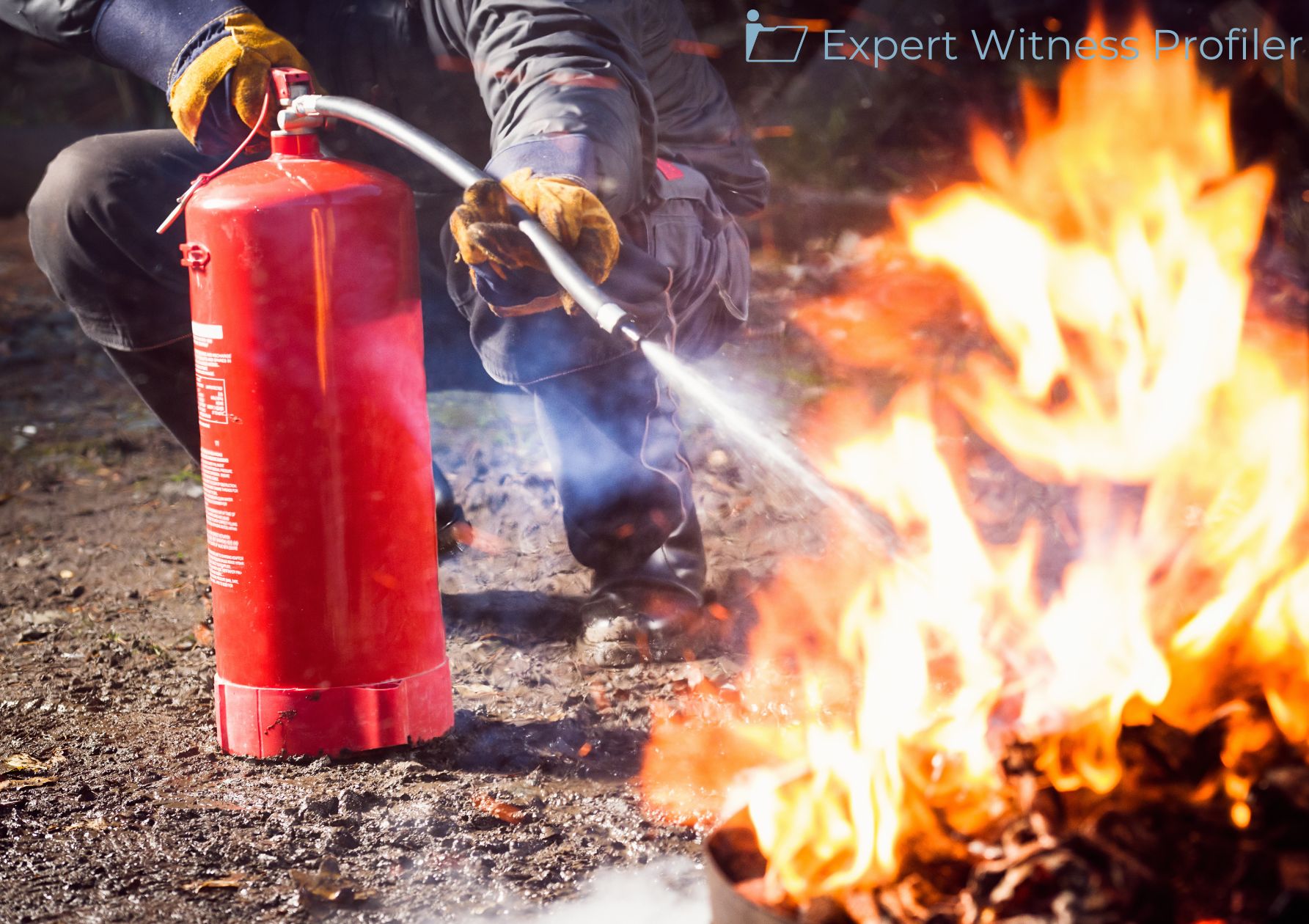
      Cindy Jostworth’s insurance carrier, American Strategic Insurance Corp. (ASIC), has filed a negligence claim against Craig and Elizabeth Meyer. ASIC, acting under its right of subrogation, asserted that the Meyers’ negligent burning of yard waste and debris resulted in a fire that spread and destroyed Jostworth’s residential property at 5558 Silverpoint Drive, Cincinnati, Ohio. Plaintiff’s forensic engineer and fire investigator Kevin Cronan, P.E. concluded that the Meyers’ actions caused the fire.

      Arguing that Ohio law requires a private investigator license, the Defendants claimed that Cronan’s testimony is inadmissible because neither he nor U.S. Forensic possesses such a license.

      Fire Investigation Expert Witness

      Kevin Cronan holds a bachelor’s degree in mechanical engineering and is a licensed professional engineer in 27 states, including Ohio. He also possesses numerous fire certifications, has extensive experience in fire investigations, and volunteers with the fire department.

      Get the full story on challenges to Kevin Cronan’s expert opinions and testimony with an in-depth Challenge Study. 

      Discussion by the Court

      In light of Cronan’s demonstrated expertise and qualifications, the Court deemed him capable of providing expert testimony on the matter.

      National Fire Protection Association 921: Guide for Fire and Explosion Investigations (“NFPA 921”) recommends that fire investigators follow a six-step method: “(1) identify the problem, (2) define the problem, (3) collect data, (4) analyze the data, (5) develop a hypothesis using inductive reasoning, and (6) test the hypothesis using deductive reasoning.”

      The Court ruled that Cronan’s fire investigation, conducted in accordance with the NFPA 921, provided a reliable basis for his expert opinions. Moreover, the Defendants’ attempt to block Cronan’s testimony on the fire’s origin and cause is misplaced. This testimony is crucial to establishing the Defendants’ alleged negligence and, therefore, is clearly relevant.

      Held

      The Court denied the Defendants’ motion to exclude the testimony of Kevin Cronan.

      Key Takeaway:

      Court upheld the admissibility and reliability of expert fire investigation testimony, even in the face of challenges regarding licensing, by confirming that the expert’s qualifications and adherence to established industry standards (NFPA 921) were sufficient.

      Case Details:

      Case Caption: American Strategic Insurance Corp. V. Meyer Et Al
      Docket Number: 1:23cv119
      Court Name: United States District Court, Ohio Southern
      Order Date: March 18, 2025
    4. Adjuster Expert Witness’ Licensure Qualifies Him to Testify About Damage Causation

      Adjuster Expert Witness’ Licensure Qualifies Him to Testify About Damage Causation

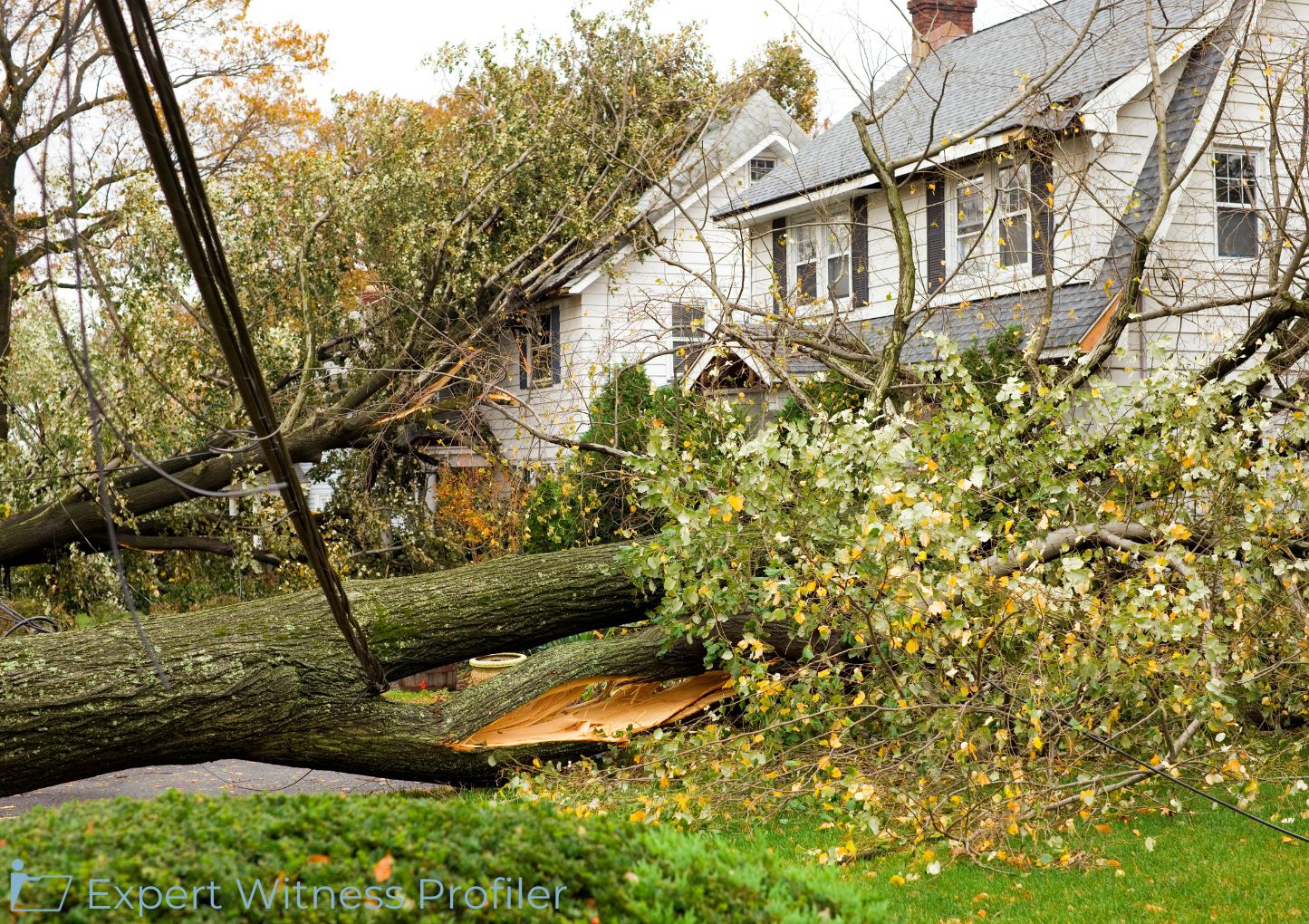
      This case involves a Hurricane Laura claim by Plaintiff Rapides Station Land Company, LLC (“Plaintiff”), the owner of the property known as “Cowboy Town” located in Boyce, Louisiana, near Interstate 49, for alleged property damage attributable to the Hurricane. Markel American Insurance Company (“MAIC”) issued a builders risk policy of insurance to Plaintiff which provided coverage for an alleged “rehabilitation or renovation project” for the policy period of October 17, 2019, to September 1, 2020.

      According to the scheduling order, the final date for exchanging expert reports was April 24, 2023, the deadline for completion of discovery was May 31, 2023, and the deadline for taking the depositions of experts was June 2, 2023.

      RSLC designated Jeffery S. Major as an expert on public adjusting and estimating.

      Major’s expert report was produced to Markel on April 24, 2023. The report and supporting documentation were presented across two emails.

      The first email contained a folder labelled “Skyline Estimate” with three documents attached: a document showing the calculation of depreciation for the main building and the annex building, a second containing over 1,000 photos of the property purporting to show damage, and a third containing a 56-page estimate prepared using the industry standard Xactimate program. The second email contained an .esx file, which contained the underlying data used to prepare the Xactimate estimate. Markel was also provided with a 23-page written report, although it is unclear when this report was furnished, it too is dated April 24, 2023. 

      Motion to Exclude Major

      Markel asserted multiple issues with RSLC’s expert production and qualifications:

      (1) The production of Major’s report and the underlying .esx  file in multiple files caused confusion;

      (2) Major is unqualified to offer his opinion regarding the causation of damages because he is not licensed as an engineer, architect, or contractor;

      (3) Major’s opinions regarding causation of damages are unreliable and untested;

      (4) Major is unqualified to offer his opinion concerning best practices in the insurance industry because he has never worked on behalf of insurance companies;

      (5) Major offers opinions regarding Markel’s intent or motives without a proper foundation; and

      (6) Major offers legal opinions.

      Adjuster Expert Witness

      Jeffery S. Major is an expert on public adjusting and estimating. Major has been engaged in the practice of public adjusting in various capacities since at least 1990. Prior to that, Major was a builder and general contractor from 1983-1990. 

      Major has purportedly estimated, consulted, or adjusted over 600 commercial and 1,000 residential claims, many of which were hurricane related. He is apparently licensed as a public adjuster in 44 states and territories. Also, he lists twenty engagements as an insurance industry continuing education presenter or instructor. Major has recently been allowed to testify as an expert in the Western District of Louisiana regarding similar matters.

      Get the full story on challenges to Jeffery Major’s expert opinions and testimony with an in-depth Challenge Study. 

      Discussion by the Court

      Major is qualified to testify on issues of damage causation, repair costs, insurance industry customs, standards, and practices, and Markel’s conduct

      To begin with, Markel complained that Major is not licensed as an engineer, architect, or general contractor, that he is not a college graduate, and he has not worked for insurance companies. Markel contended that without these specific qualifications, Major is unqualified to offer his expert opinion on damage causation, repair costs, insurance industry customs, standards, and practices, or Markel’s conduct in adjusting the claim.

      However, Major has been engaged in the practice of public adjusting for over thirty years and worked in construction for nearly a decade. He is licensed as a public adjuster in 44 states and territories, has taught numerous continuing education courses in various aspects of public adjusting and insurance claim handling, and adjusted over 1,600 claims. The Court held that Major’s experience qualifies him to testify as to these issues commonly within a public adjuster’s purview, including damage causation, repair costs, industry customs, standards, and practices, and insurer conduct.

      Moreover, Markel’s contention that a person must hold a license as an architect, engineer, or contractor to testify regarding these issues have recently been rejected by this district. Major was recently qualified in this district to testify regarding “industry standards, customs, and practices applicable to handling insurance claims.” To the extent that Markel believes Major’s experience and licensure are inadequate to support his conclusions, it is entitled to subject his testimony to vigorous cross-examination and present contrary evidence in their defense.

      Major is not qualified to testify regarding Markel’s intent or motives or to offer legal opinions

      Markel complained that Major’s expert report impermissibly offers legal opinions and testimony on Markel’s intent or motives. Although Federal Rule of Evidence 704 permits an expert witness to give testimony that embraces an ultimate issue to be decided by the trier of fact, experts remain prohibited from rendering a legal opinion because there can only be a single arbiter of the law, the Court, and allowing parties to offer competing legal opinions would only serve to confuse juries. Further, Louisiana public adjusters are expressly prohibited from providing legal advice to an insured or otherwise engaging in the unauthorized practice of law.

      The Court held that Major will not be allowed to offer testimony on Markel’s intentions or motivations. Further, Major will not be permitted to offer his legal opinions, this includes assertions regarding Markel’s conduct specifically satisfying the elements of the Louisiana bad faith claim handling statutes. Such statements include assertions that Markel’s conduct was “arbitrary, capricious, and without probable cause”, “vexatious”, or performed in “bad faith.”

      RSLC satisfactorily complied with Rule 26

      RSLC provided Major’s expert report and underlying data to Markel within the deadlines set for expert disclosures. Markel apparently takes issue with the production being contained in multiple e-mails without clarification from RSLC’s counsel regarding the contents of each e-mail. Markel was afforded the opportunity to depose Major regarding the expert production and, as best as this Court can tell, RSLC does not intend to offer any expert materials that were not timely disclosed to Markel prior to Major’s deposition.

      The Fifth Circuit has established four factors to consider when deciding whether to exclude expert testimony, (1) the explanation for the failure to [submit a complete report on time]; (2) the importance of the testimony; (3) potential prejudice in allowing the testimony; and (4) the availability of a continuance to cure such prejudice. These factors do not inure to the benefit of Markel. The full report was timely submitted, albeit in separate communications. Markel recognized that it had the full report in a timely fashion. Markel has suffered no genuine surprise. Though the testimony is likely important, Markel will not be prejudiced by allowing it. In other words, there is no cause to exclude the report pursuant to Rule 26(a)(2).

      Held

      The Court granted in part and denied in part Markel’s motion in limine to exclude the testimony of Jeffrey Major.

      Key Takeaway:

      While the Court admitted Major’s testimony regarding damage causation, cost of repairs, the facts of Markel’s adjustment of the claim, and industry standards, customs, and practices applicable to handling insurance claims, Major was not allowed to offer testimony on Markel’s intentions or motivations. Further, Major was not permitted to offer his legal opinions, which includes assertions regarding Markel’s conduct specifically satisfying the elements of the Louisiana bad faith claim handling statutes.

      In conclusion, there can only be a single arbiter of the law, the Court, and allowing parties to offer competing legal opinions would only serve to confuse juries.

      Case Details:

      Case Caption: Rapides Station Land Co L L C V. Markel American Insurance Co
      Docket Number: 1:21cv3716
      Court: United States District Court, Louisiana Western
      Order Date: December 2, 2024
    5. Construction Expert Witness Testimony Admitted Despite Conducting Inspection Three Years Post Hurricanes

      Construction Expert Witness Testimony Admitted Despite Conducting Inspection Three Years Post Hurricanes

      This dispute stems from damages caused by Hurricane Laura and Hurricane Delta to a residence at 3321 Landfair Street, Lake Charles, Louisiana. The property, owned by the estate of Bobby Shelton, was insured by State Farm Fire & Casualty Company . Cynthia Frisbie, the executor of the estate, filed a lawsuit on October 16, 2021, in the Louisiana Western District Court, alleging that  State Farm did not promptly or adequately compensate for covered losses under the insurance policy.

      While the Frisbie suit was still ongoing on August 16, 2022, Cat 5 Pro LLC (“Cat 5”) initiated a separate lawsuit against State Farm in the same court. Cat 5 claimed that Frisbie had assigned her rights under the policy to Cat 5, asserting that State Farm owed them $69,625.27 (factoring in a $16,657.42 payment) for mitigation work carried out at the Shelton residence. Cat 5 raised claims of breach of contract and bad faith under Louisiana law in connection with the unpaid invoices for their completed work.

      The two suits proceeded through the Case Management Order for first-party hurricane claims but did not resolve. They were consolidated at State Farm’s motion and have been set for jury trial on January 29, 2024. On September 26, 2023, Cat 5’s bad faith claims were dismissed on the grounds that these had not been validly assigned by Frisbie. On November 17, 2023, Cat 5 filed suit against State Farm in the Fourteenth Judicial District Court, Calcasieu Parish, Louisiana. There it raised breach of good faith and fair dealing, breach of contract, detrimental reliance, and fraud claims under Louisiana law against the insurer based on the $69,625.27 in unpaid invoices for its work on the property at 3321 Landfair Street. It also asserted that the amount in controversy “does not exceed $75,000.”

      State Farm removed the suit to the Western District Court of Louisiana on the basis of diversity jurisdiction. Plaintiff filed a Motion to Remand, which this Court denied. State Farm then filed a Motion to Dismiss the state filed removed suit, which this Court granted.

      Plaintiff Cat 5 Pro filed a Daubert motion to exclude the reports and
      testimony of State Farm’s expert Jonathan Palmer as well as a motion to strike the expert report of Jonathan Palmer.

      Construction Expert Witness

      Jonathan Palmer, licensed as a building and residential contractor since 2017, boasts over 17 years of construction experience. He earned a postbaccalaureate certification in Construction Management from Louisiana State University. Palmer has overseen a diverse range of construction projects, including small complex residential ventures to large commercial projects. Since 2019, he has served as a Managing Building Consultant at Keystone Experts and Engineers.

      Discussion by the Court

      Under Federal Rule of Evidence 702, “A witness who is qualified as an expert by knowledge, skill, experience, training, or education may testify in the form of an opinion or otherwise if: (a) the expert’s scientific, technical, or other specialized knowledge will help the trier of fact to understand the evidence or to determine a fact in issue; (b) the testimony is based on sufficient facts or data; (c) the testimony is the product of reliable principles and methods; and (d) the expert has reliably applied the principles and methods to the facts of the case.” When expert testimony is challenged under Daubert, the burden of proof rests with the party seeking to present the testimony.

      Palmer had been retained by State Farm to provide insights into the disputed invoice under scrutiny in this litigation. Cat 5 contested Palmer’s qualifications, asserting an alleged deficiency in certifications and licensure. They also claimed he failed to articulate his expert designation during deposition. Additionally, Cat 5 argued that Palmer’s report and opinions lacked reliability due to his inspection occurring three years after the hurricanes.

      Cat 5 contended that Palmer lacked qualifications because he acquired his residential construction license post-Hurricanes Laura and Delta and lacked official certifications in related areas. They argued that expertise is determined by “knowledge, skill, experience, training, or education,” as per Federal Rule of Evidence 702. The Court noted that the absence of certain certifications, including a residential construction license obtained after the hurricanes, might not automatically disqualify an individual from providing expert testimony.

      State Farm countered, asserting that Palmer was qualified as an expert general contractor. They refuted Cat 5’s claim that Palmer obtained his residential construction license in 2021, presenting evidence that he held it since 2018. State Farm highlighted Cat 5’s lack of construction and mold remediation licenses, emphasizing that Cat 5 only acquired a home improvement license in 2021 after performing mitigation work on the Frisbie property post-hurricanes.

      Regarding Palmer’s testimony on his area of expertise, State Farm contested Cat 5’s representation, asserting misrepresentation. Cat 5 claimed Palmer couldn’t specify State Farm’s designation of him as an expert witness during his deposition. However, Palmer clarified that while he didn’t know the specific terminology, his expertise lay in being a general contractor. State Farm argued that Palmer’s qualification stemmed from his knowledge, education, experience, and expertise in general contracting.

      On the matter of reliability, State Farm maintained that Palmer’s 14-page report, based on Cat 5’s estimate, photographs, drying logs, State Farm’s photographs, and his own inspection (albeit conducted three years post-hurricane), demonstrated the credibility of his findings.

      The Court determined that an expert’s opinions remain reliable even if they rely on evidence gathered by others rather than the expert’s direct inspection of the residence. State Farm emphasized that such arguments challenge credibility and are suitable for cross-examination, but they do not constitute a basis for deeming the expert’s testimony inherently unreliable.

      State Farm contended that the case’s nature was inherently spoliative, given that the disputed invoice originated after the completion of mitigation work, making it impossible to inspect the property before that work was done. After reviewing the memoranda from both parties, the Court found no grounds to exclude Palmer’s report and testimony.

      Henceforth, when Cat 5 argued that Palmer’s expert report should be stricken because he inspected the Frisbie property three years after Hurricanes Laura and Delta damaged the property, and because there was some confusion as to the bates numbers on certain photographs, the Court found no basis to grant the relief sought by Cat 5.

      Held

      The Court denied the Daubert motion to exclude the reports and
      testimony of Jonathan Palmer as well as the motion to strike the expert report of Jonathan Palmer.

      The Court has not arrived on an outcome for this case since the remaining issues involved in this case still await resolution.

      Key Takeaways:

      The admissibility of expert testimony in this case hinged on Federal Rule of Evidence 702, which outlines the qualifications and criteria for expert witnesses. The Court emphasized that lacking specific certifications or licenses, especially when related to post-disaster scenarios, does not automatically disqualify an expert under Rule 702. State Farm successfully argued that Palmer’s expertise as a general contractor, supported by knowledge, education, and experience, qualified him to provide insights into the disputed invoice. The Court highlighted that challenges to expert testimony, such as those raised by Cat 5, should be addressed through cross-examination rather than outright exclusion. Additionally, the Court rejected the argument that the nature of the case, involving post-mitigation inspection, rendered expert testimony inherently unreliable. This case underscores the importance of adherence to Rule 702’s criteria and the recognition that challenges to expert testimony primarily serve as fodder for cross-examination rather than grounds for exclusion.

      Case Details

      Case Caption Frisbie V. State Farm Fire
      Docket Number 2:21cv3658
      Court United States District Court, Louisiana Western
      Citation 2024 U.S. Dist. LEXIS 8907
      Order Date January 17, 2024
    6. Royalty Analysis Conducted by Finance Expert Witness Deemed Reasonable

      Royalty Analysis Conducted by Finance Expert Witness Deemed Reasonable

      On June 11, 2021, Utherverse filed a patent infringement complaint against Epic, alleging that four Fortnite events (the “Accused Events”) violated the ‘071 Patent and the ‘605 Patent, collectively known as the “Asserted Patents.” These patents relate to enabling numerous participants to connect in a virtual computer-generated environment for shared virtual experiences. The current issue before the Court involves Epic’s Daubert motion to exclude Utherverse’s damages expert, Michele Riley. Judge Theresa L. Fricke, United States Magistrate Judge, issued a Report and Recommendation, which pushed for denying the motion to exclude the testimony of Michele Riley.

      Finance Expert Witness

      Michele Riley is a Managing Director at Stout, specializing in complex litigation consulting for breach of contract, unfair competition, investigations, and compliance. She holds certifications as a Certified Public Accountant, Certified Fraud Examiner, and is Certified in Financial Forensics.
      Riley specializes in assessing intellectual property damages and valuation. She has testified in cases involving patent, trademark, and copyright infringement, as well as trade secret misappropriation.

      Discussion by the Court

      According to the Court’s decision in Exmark Mfg. Co. v. Briggs & Stratton Power Prods. Grp., LLC, 879 F.3d 1332, 1347 (Fed. Cir. 2018), it was established that when reviewing damages in patent cases, the Federal Circuit applies regional circuit law to procedural issues and Federal Circuit law to substantive and procedural issues related to patent law. In reviewing motions to exclude expert testimony related to patent royalties, the Federal Circuit has applied its own law.

      Judge Fricke, citing Lucent Techs., Inc. v. Gateway, Inc., 580 F.3d 1301, 1324 (Fed.Cir.2009), observed that two alternative methods exist for calculating damages in a patent case; they “are the patentee’s lost profits and the reasonable royalty he would have received through arms-length bargaining.” To calculate the reasonable royalty, patentees generally consider a hypothetical negotiation, in which the asserted patent claims are assumed valid, enforceable, and infringed, and attempt “to ascertain the royalty upon which the parties would have agreed had they successfully negotiated an agreement just before infringement began.” This hypothetical negotiation “necessarily involves an element of approximation and uncertainty.” In determining the reasonable royalty that would have been agreed to at the hypothetical negotiation, parties in patent cases frequently utilize the fifteen factors enunciated in Georgia-Pacific Corp. v. U.S. Plywood Corp., 318 F.Supp. 1116, 1120 (S.D.N.Y.1970).

      In Lucent Technologies Inc. v. Microsoft Corporation, 580 F.3d at 1326, it was established that a hypothetical negotiation can result in either a lump-sum license or a running royalty license. A lump-sum license is an up-front payment in full for the invention that involves uncertainty about “whether the technology is commercially successful or even used.” In contrast, a running royalty license is directly tied to how often the invention is incorporated into products by the licensee and is calculated by multiplying the proposed royalty rate by the proposed royalty base. The burden of proving damages falls on the patentee.” To properly carry this burden, the patentee must sufficiently tie the expert testimony on damages to the facts of the case. 

      Judge Fricke stated that Riley’s analysis began with a general overview of the parties’ industries, the parties themselves, and the Accused Events. She explained that, based on her discussions with Craig Rosenberg, Utherverse’s technical expert, she understood that the Asserted Patents involved enabling a large number of participants to connect in a virtual computer-generated environment for shared virtual experiences. She calculated the royalty base by determining the revenue attributable to the Accused Events, including microtransaction purchases made by Fortnite users through the in-game currency. This encompassed items specifically available for the Accused Events in the Fortnite Item Shop, incremental revenue from microtransaction purchases related to the Accused Events, and the value to Epic of new and returning users due to the Accused Events.

      For determining the royalty rate, Riley analyzed Utherverse Digital agreements, explaining their relevance in a hypothetical negotiation. After reviewing various data points and assessing their significance in a hypothetical negotiation, Riley made her conclusions about the royalty rate range known. She partially relied on the 2020 Royalty Rate Industry Summary from IPSCIO Reports.

      Georgia-Pacific factor 1 considers: “The royalties received by the patentee for the licensing of the patent in suit, proving or tending to prove an established royalty.” Judge Fricke citing Wordtech Sys. v. Integrated Networks Solutions, Inc., 609 F.3d 1308, 1320 (Fed.Cir. 2010), held that a patentee may not rely on license agreements that are ” ‘radically different from the hypothetical agreement under consideration’ to determine a reasonable royalty.” Further, “comparisons of past patent licenses to the infringement must account for ‘the technological and economic differences’ between them.”

      Ephere was engaged in computer graphics and software development, specializing in designing and implementing software solutions for computer graphics, film, and games, extending existing software for new functions, and providing consulting and support in the film and games industry. Epic argued that Riley inappropriately used the Ephere license as a substitute for apportionment, as she did not demonstrate sufficient comparability. Specifically, Epic contended that Riley failed to analyze the technological comparability between the ‘962 Patent from the Ephere license and the Asserted Patents. The Court was urged to conclude that Riley had not established a baseline comparability between the technology in the Ephere License and the Asserted Patents.

      But Judge Fricke observed that in addition to providing a summary of the ‘962 Patent and the background of the invention itself, Riley also discussed the relationship between the patent from the Ephere license and the Asserted Patents. Judge Fricke determined that, according to Federal Circuit precedent, Riley needed to demonstrate baseline comparability between the ‘962 Patent and the Asserted Patents. It was noted that she had fulfilled this requirement in her report. Any further examination of the similarities and differences between the two was considered a factual matter rather than a methodological one and could be addressed during cross-examination.

      Epic asserted that Riley couldn’t rely on Epic’s internal document about payment to an artist of one of the Accused Events, Epic’s merchandise agreements, a published industry report, and a Utherverse Digital license agreement to establish her royalty base. Judge Fricke, referencing Microsoft Corp. v. Motorola, 904 F.Supp.2d 1109, 1118 (W.D. Wash. 2012), found that these documents provided some indication of the appropriate initial royalty rate, making Riley’s testimony admissible. For instance, the merchandise agreements involved Epic and certain artists linked to the Accused Events, while the Utherverse Digital agreement supported Riley’s opinion on a suitable royalty rate.

      Regarding Epic’s internal document and the IPSCIO industry report, these were among various data points Riley used in her royalty rate analysis. Judge Fricke asserted that she clarified the relevance of these documents and their connection to her analysis, leaving the degree of comparability for cross-examination rather than a Daubert motion.

      Defendant Epic Games, Inc. (“Epic”) respectfully objected to the Report and
      Recommendation concerning the motion to exclude the testimony of Riley on the following grounds:

      1. The R&R had erroneously recommended that the Court find Riley demonstrated the required baseline technological comparability between the license agreement she relied on and the technology at issue in this case. The record did not support such a finding, and holding otherwise on this record would have been contrary to binding Federal Circuit precedent.
      2. The R&R had not addressed Epic’s motion to exclude Riley’s royalty rate opinion for failing to apportion damages. Adopting the R&R and allowing Riley to present a damages theory that failed to apportion damages would have been contrary to established Federal Circuit law.
      3. The R&R’s finding that certain “comparable transactions” would inform the starting point of a royalty rate was clearly erroneous because those transactions were not patent licenses and were in no way economically or technologically comparable to the facts of this case.

      After reviewing the Report and Recommendation of Judge Fricke as well as the objections to the Report and Recommendation, the Court adopted the Report and Recommendation.

      Held

      The Court denied Epic Games, Inc.’s motion to exclude Utherverse Gaming, LLC’s damages expert, Michele Riley. The Court has not arrived on an outcome for this case since the remaining issues involved in this case still await resolution.

      Key Takeaways:

      The Court scrutinized Riley’s analysis, noting her thorough examination of industry, parties, and events involved. The analysis included determining the royalty base and rate, involving a hypothetical negotiation and reliance on Utherverse Digital agreements. The Court acknowledged the inherent approximation and uncertainty in such assessments but deemed Riley’s methodology admissible. This demonstrates the Court’s consideration of the application of established principles in patent cases.

      Concerns were raised by Epic regarding Riley’s use of the Ephere license and other documents for establishing the royalty base. The Court, citing Federal Circuit precedent, required Riley to demonstrate baseline technological comparability, which was found to be fulfilled in her report. The Court acknowledged that further exploration of similarities and differences could be addressed during cross-examination, highlighting the importance of factual matters in such evaluations.

      Epic’s objection to the use of certain documents, including an internal document, merchandise agreements, and industry reports, was addressed by the Court. The Court, referencing relevant legal precedent, found these documents provided indications of an appropriate initial royalty rate, supporting the admissibility of Riley’s testimony. The Court emphasized the role of cross-examination in assessing the degree of comparability, showcasing a balanced approach to the admissibility of evidence.

      In summary, the Court’s decision underscores the importance of adherence to established legal principles in patent cases, including the use of regional circuit law and Federal Circuit law, the consideration of two primary methods for calculating damages, and the scrutiny of expert testimony methodologies. The decision reflects a nuanced approach, allowing for cross-examination to address factual matters while ensuring the admissibility of expert opinions based on sound methodology.

      Case Details:

      Case Caption: Utherverse Gaming Llc V. Epic Games Inc
      Docket Number: 2:21cv799
      Court: United States District Court, Washington Western
      Citation: 2023 U.S. Dist. LEXIS 232999
      Order Date: January 12, 2024