Tag: Manufacturer

  • Fire Investigation Expert Was Not Allowed to Opine on the Grill Installation

    Fire Investigation Expert Was Not Allowed to Opine on the Grill Installation

    This case arises from a fire that occurred on April 13, 2020 at the Nashville home of Ethan and Ashley Colclasure. The Colclasures’ home, at the time, was insured by a policy (“Policy”) issued by Plaintiff Central Mutual Insurance Company (“CMIC”). Pursuant to the terms of the Policy, CMIC paid a substantial sum to the Colclasures to reimburse them for the costs incurred in repairing the damage caused by the fire. CMIC brought this action as subrogee of the Colclasures against Defendants Ferguson Enterprises, LLC, Ferguson U.S. Holdings, Inc., Ferguson-Showroom No. 907, and Ferguson Enterprises, LLC No. 20 (referred to collectively herein, in the singular, as “Ferguson” or “the Defendant”), to recover the sums it paid to its insureds.

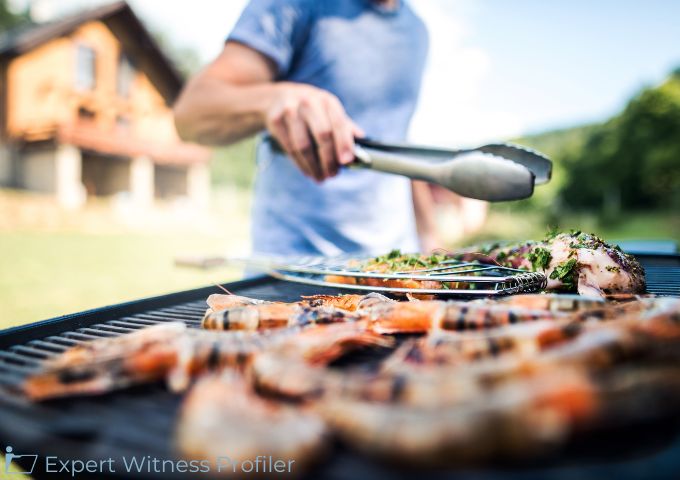
    Ferguson supplied and installed an outdoor gas grill, the Superior Equipment Solutions d/b/a Artisan Grills Model No. ARTP-36 (the “grill”), in the outdoor patio/lanai area of the house.

    In April 2020, Ethan Colclasure used the grill to sear steaks. Basically, there is no dispute that Ethan Colclasure neglected to turn the grill off, causing the fire that led to catastrophic damage to the home.

    The Plaintiff identified as retained experts both Jerry R. Carter, a fire scene origin and cause investigator, and Randy M. Grundy, an executive general adjuster and claims management professional and expert in evaluating catastrophic residential property damage claims. Defendants, however, filed a motion to exclude the testimony of Plaintiff’s retained experts.
    Fire Investigation Expert Witness

    Jerry R. Carter is an International Association of Arson Investigators Certified Fire Investigator, IAAI Evidence Collection Technician, IAAI Certified Instructor, National Fire Protection Association Certified Fire Protection Specialist, National Association of Fire Investigators Certified Fire and Explosion Investigator, and NAFI Certified Fire Investigator Instructor who performs origin and cause investigations of residential, commercial, and industrial properties.

    Want to know more about the challenges Jerry Carter has faced? Get the full details with our Challenge Study report.

    Claims Handling Expert Witness

    Randy Mark Grundy is a highly experienced Executive General Adjuster and claims management professional with expertise in employee dishonesty, extra expense claims, heavy equipment, commercial property, and inland marine transportation.

    Get the full story on challenges to Randy Grundy’s expert opinions and testimony with an in-depth Challenge Study.

    Discussion by the Court

    A. Exclusion of Carter’s Testimony

    Ferguson argued, first, that Carter’s testimony must be excluded because it is neither relevant nor reliable, insofar as his opinions are not based on sufficient facts or data, are not the product of reliable principles and methods, and rely entirely on “anecdotal evidence and improper extrapolation.”

    Alternatively, the Defendant contended that Carter’s testimony should be excluded under Rule 37(c), based on the Plaintiff’s failure to comply with Rule 26(a)(2)(B), because the opinions in his expert report are not accompanied by the basis and reasons for each opinion or the facts and data considered in forming each opinion.

    Regarding the latter argument, the Court observed that Carter’s expert report was clearly deficient, insofar as it merely pronounced Carter’s conclusions without providing any indication of how he reached them. That failure was harmless, however, because the Defendant deposed Carter at length regarding the bases for his opinions.

    Carter’s opinions are that (1) “the Artisan grill and insulated jacket were not installed in accordance with manufacturer’s instructions as the assembly was positioned only 2.5 inches from the combustible wall assembly and is required to be installed 5.75 from combustible components”; (2) “had the grill and jacket assembly been properly installed, with the required 5.75″ clearance to combustible components, the fire would not have occurred”; and (3) “even with the grill operating for more than 20 hours, had it been properly installed, the fire would not have occurred.”

    Here, although Carter claimed that he employed the “scientific method” every time he analyzes a fire and that the scientific method requires him to collect data, formulate hypotheses, and test those hypotheses , the record established that he did not test his governing hypothesis.

    The Court held that Carter’s opinions amount to no more than unsupported speculation and, as such, are inadmissible. 

    B. Exclusion of Grundy’s Testimony

    Ferguson asserted that the Plaintiff’s disclosure of Grundy as a retained expert did not comply with Rule 26(a) and that the failure is neither harmless nor substantially justified. The Defendant pointed out that, although Grundy was disclosed in the September 19, 2025 disclosure, that disclosure was not accompanied by an expert report, much less an expert report that included all of the items listed in Rule 26(a). In fact, the only document pertaining to Grundy that accompanied the disclosure was his CV.

    The Plaintiff had not shown that it complied with Rule 26(a)(2)(B) or that its failure to do so is substantially justified or harmless. This case is now scheduled for trial in less than 90 days. As a result, Ferguson’s motion to exclude the testimony of the Plaintiff’s retained expert, Randy Grundy, was granted by the Court under Rule 37(c), based on the Plaintiff’s complete failure to comply with Rule 26 and failure to show that the failure was harmless or substantially justified.

    Held

    The Court granted the Defendants’ motion to exclude the testimony of Plaintiff’s retained experts, Jerry R. Carter and Randy M. Grundy.

    Key Takeaway

    No matter how qualified Carter may be, his subjective belief—supported by nothing more than the grill’s setback requirements and his conjecture that the manufacturer must have done some testing to support those requirements—is not sufficiently reliable to be admitted.

    Case Details:

    Case Caption: Central Mutual Insurance Company V. Ferguson Enterprises, LLC
    Docket Number: 3:23cv661
    Court Name: United States District Court, Tennessee Middle
    Order Date: May 04, 2026
  • Compliance Expert’s Testimony on the Marketability of the Olivetol Excluded

    Compliance Expert’s Testimony on the Marketability of the Olivetol Excluded

    Noramco and Dishman entered into a contract (“the Supply Agreement”) under which Dishman agreed to provide Noramco with a large amount of olivetol, an ingredient used in the manufacture of pharmaceutical products. 

    The Supply Agreement required Dishman to supply Noramco with olivetol manufactured at Dishman’s facilities in India. The Agreement represented that those facilities were “c-GMP compliant,” i.e., compliant with the current Good Manufacturing Practice standards set by the U.S. Food and Drug Administration.

    In February 2020, the European Directorate for the Quality of Medicines & HealthCare (“EQDM”) inspected Dishman’s facility in India where the olivetol was manufactured. The EQDM subsequently informed Dishman on March 19, 2020, that the facility had failed the inspection and was not compliant with cGMP. 

    The batches of olivetol at issue in this case were manufactured by Dishman after the failed inspection. The were shipped by Dishman on March 26, 2020, and received by Noramco on April 2, 2020. After an exchange of emails between the parties regarding the effect of the failed inspection, Noramco rejected the olivetol and sought a refund of the amount Noramco had paid for the product. When Dishman refused to accept the return of the olivetol and to return the funds Noramco had paid for the olivetol, Noramco brought this action seeking damages for breach of contract.

    The Plaintiff, Noramco LLC (“Noramco”), has filed a motion to exclude the opinion testimony of Dr. Rino C. Coladangelo, an expert witness for the Defendant, Dishman USA, Inc. (“Dishman”).

    Compliance Expert Witness

    Dr. Rino Casmira Coladangelo MB BS MRCP is a medical doctor with experience in the field of pharmaceutical compliance.

    He led the global consultancy company Rephine which provided a world class compliance and regulatory service to pharmaceutical companies. His expertise includes regulatory and quality aspects of pharmaceutical manufacture and covers all major global markets.

    Want to know more about the challenges Rino Casmira Coladangelo has faced? Get the full details with our Challenge Study report.

    Discussion by the Court

    To begin with, Noramco challenged Coladangelo’s qualifications as an expert and argued that his reports “lack reliable methodology, are based on unsupported speculation, offer legal conclusions, opine on Plaintiff’s state of mind, and do not establish the expert’s qualifications in the relevant subject matter.” 

    The Limits of Coladangelo’s Qualifications

    From April 2009 until October 2021, Coladangelo served as Chief Executive Officer of Rephine Ltd., a global pharmaceutical consultancy specializing in quality compliance in manufacturing, and regulatory affairs.In that capacity, Coladangelo “led the training and development of the staff and consultants, as well as accreditation of specialty staff.”

    Based on Coladangelo’s experience at Raphine Ltd., the Court found that Coladangelo was qualified to testify as an expert on matters of quality compliance and regulatory affairs in the pharmaceutical industry. However, Coladangelo’s expertise in the field of pharmaceutical quality compliance and regulatory affairs did not qualify him to testify on legal issues or the state of mind of representatives of the opposing party, which are the subjects of much of his expert report.

    In his report, Coladangelo stated that “[t]he supply agreement makes clear that any rejection of material must be made within 30 working days of receipt” and that the actions taken by Noramco “contravene the terms of the agreement.” According to the Court, Coladangelo lacked the qualifications to provide an opinion interpreting the contract in this case, and even if he were qualified to give such an opinion, it would be improper for him to express a legal opinion as to whether Noramco failed to comply with the terms of the Supply Agreement, which is an ultimate issue in this case.

    To the extent Coladangelo purports to offer legal opinions or speculate as to the Noramco representatives’ state of mind, his testimony will be excluded.

    The Reliability of Coladangelo’s Testimony

    First, Coladangelo’s report contains a list of 24 manufacturers of medicinal THC and asserted that “[s]ome of these might have been interested in acquiring the Olivetol batches.” However, aside from the list of THC manufacturers, the report contained no other facts, data, or methodology supporting Coladangelo’s conclusion that all or some number of the listed manufacturers might have been willing to purchase the non-compliant olivetol.

    Second, Coladangelo’s report points to Noramco’s failure to promptly reject the olivetol and its act of sampling the product as causing a reduction in the shelf life and marketability of the olivetol. According to Coladangelo, “[n]on-conformity with the proper protocol would make the material unusable by others.” However, the Court concluded Coladangelo’s naked assertion that non-conformity would make the olivetol unusable by others lacked sufficient support in facts, data, or methodology.

    Third, Coladangelo asserted in his report that the non-cGMP compliant olivetol “could still be used if a Risk Assessment Analysis (RAA) is undertaken.” In support of that assertion, Coladangelo cited certain guidelines from the EQDM and noted that certain other pharmaceutical products have been accepted by Belgian, German, and Brazilian manufacturers following an RAA. 

    Without some reasoning or methodology to connect the use of an RAA to the olivetol at issue beyond an “implication” or speculation, the Court held that Coladangelo’s conclusion regarding olivetol’s potential use after an RAA lacked the scientific support that Daubert demands.

    The Fit of Coladangelo’s Testimony

    Coladangelo’s expert testimony must help the trier of fact decide (1) the timeliness of Noramco’s rejection and (2) the mitigation of Dishman’s damages.

    On the issue of timely rejection, the Court held that Coladangelo’s opinions, as expressed in his report, are of limited value to the trier of fact. Specifically, the timely rejection issue is primarily a question of contract interpretation as applied to the series of events and correspondence that unfolded between Noramco and Dishman. Moreover, the testimony that Coladangelo is qualified to give on pharmaceutical compliance and regulatory affairs did little to help resolve whether Noramco timely rejected the olivetol at issue.

    On the issue of mitigation of damages, however, the opinions offered by Coladangelo may offer some assistance to the finder of fact in determining whether Noramco’s actions constituted reasonable steps to mitigate Dishman’s damages under the circumstances. In other words, Coladangelo may be able to help the finder of fact understand industry customs and practices for regulatory compliance testing and for opening and resealing tested materials.

    Held

    The Court granted in part and denied in part Noramco’s motion to exclude opinions and testimony of Dr. Rino Casmira Coladangelo.

    Key Takeaway:

    While there are portions of Coladangelo’s report (and, thus, his proposed testimony) that are legitimately within his expertise, much of his report reads like the first closing argument for the Defendant. It appears to be an example of the increasingly common practice of allowing the presentations of expert witnesses to bleed over from expert testimony on discrete factual issues into legal argument on the merits of their proponent’s case. That is decidedly not the role of expert witnesses.

    Case Details:

    Case Caption: Noramco LLC V. Dishman USA, Inc.
    Docket Number: 1:21cv1696
    Court Name: United States District Court, Delaware
    Order Date: October 16, 2025
  • Mechanical Engineering Expert’s Testimony on the Mechanical Interlock Design Admitted

    Mechanical Engineering Expert’s Testimony on the Mechanical Interlock Design Admitted

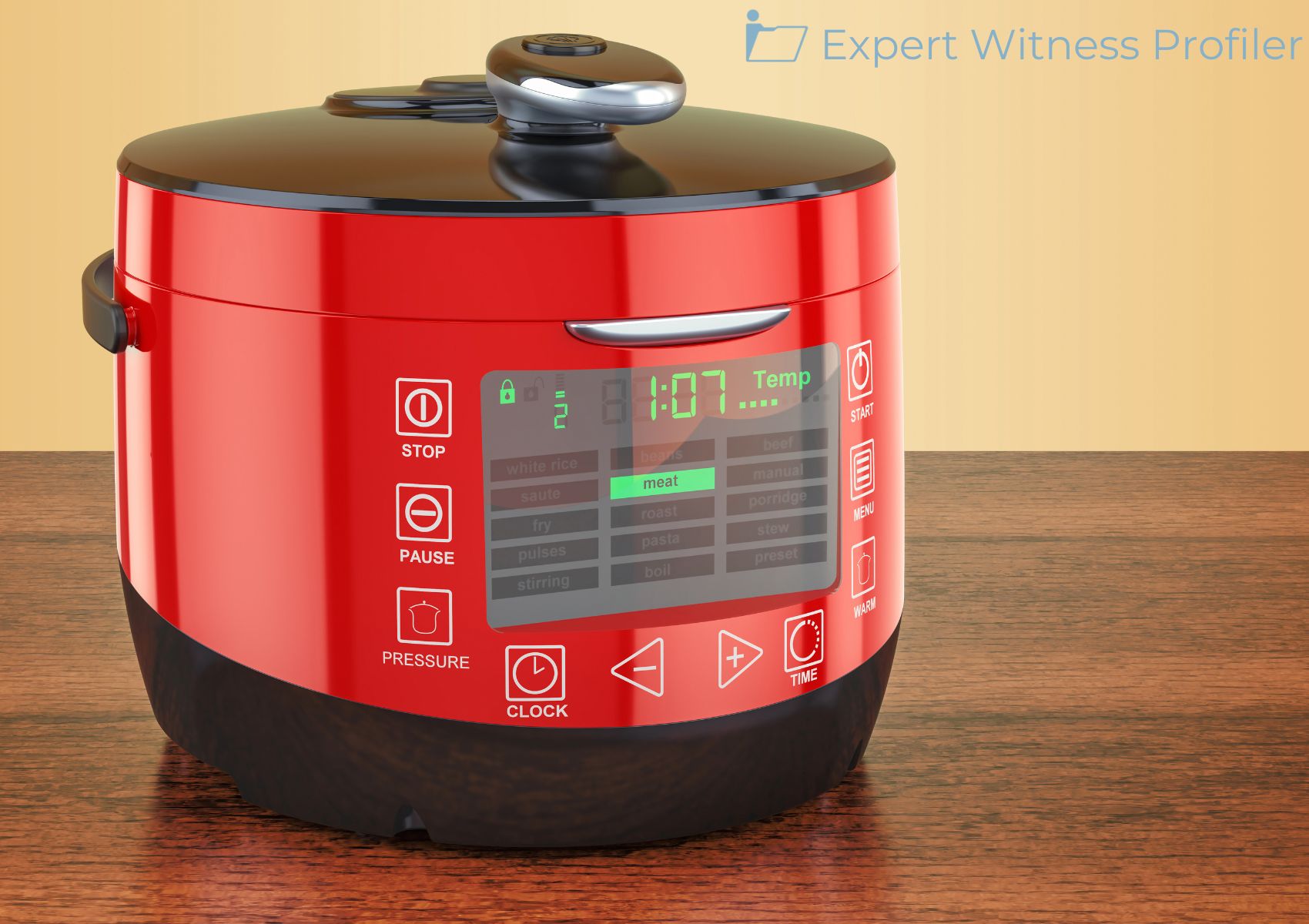
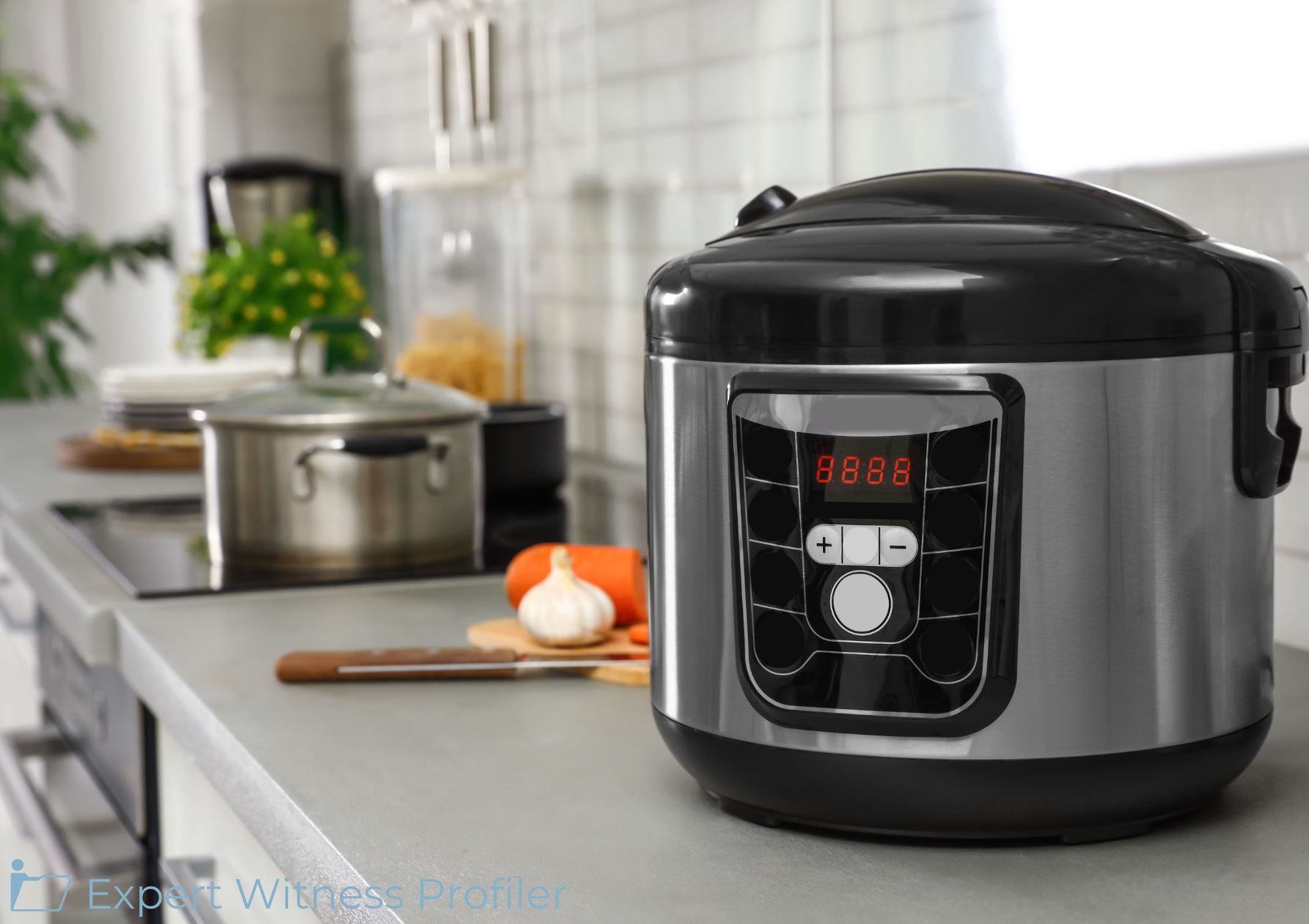
    While preparing a roast in her Magic Chef 7-in-1 Multicooker, Tarsha Allgood was injured when the device’s lid opened causing its “scalding hot contents to be forcefully ejected from the pressure cooker.”

    Allgood filed this lawsuit against CNA International, Inc. d/b/a MC Appliance Corporation raising claims under North Carolina law for inadequate warning, inadequate design, common law negligence, breach of express warranty, and breach of implied warranty.

    CNA filed a motion to exclude the testimony of Allgood’s expert witness, David M. Rondinone, an engineer with Berkeley Engineering and Research, Inc.

    Rondinone examined exemplars and other documents and materials, and concluded, among other things, that: (a) the mechanical interlock design intended to lock the lid is defective in that it fails to perform its function. This conclusion is based on, among other things, the geometric dimensions of the pin, lid, and cooker, which results in the interlock “providing very little resistance to the user;” and (b) “the presence of a defective pressure interlock increases the likelihood of the lid being opened and the cooker contents being expelled under pressure.” The touchstone of CNA’s argument is that Allgood threw away the device’s lid, so Rondinone could not test the actual multicooker Allgood used.

    Mechanical Engineering Expert Witness

    David Michael Rondinone has over 20 years of experience in mechanical engineering including design and failure analysis, fire suppression, explosions, flammability, flame arrestors, ignition, finite element analysis, accident reconstruction and crashworthiness, mechanical testing, failure of mechanical connections, dynamic stability of equipment and structures, pressure vessels and pipelines, medical implants and equipment, automotive component analysis and design.

    Rondinone has a Masters and Ph.D in Mechanical Engineering from the University of California, Berkeley, where he previously received his B.S. in Engineering Physics and B.A. in Astrophysics.

    Want to know more about the challenges David Rondinone has faced? Get the full details with our Challenge Study report.  

    Discussion by the Court

    The exemplar multicooker that Rondinone examined was used when it was purchased such that its prior history is unknown. CNA noted that the exemplar’s lid had a pre-existing scratch that Rondinone concluded means the lid was “force[d] open while under pressure by a prior user (an interlock override event).” CNA challenged the reliability of Rondinone’s opinion that the device was defectively designed because the mechanical interlock system could not meet the Underwriters Laboratories Cover Opening Standard.

    According to CNA, Rondinone’s methodology relied on broad generalizations and failed to account for whether the exemplar met relevant Underwriters Laboratories’ standards before the exemplar was damaged. 

    Allgood countered that Rondinone set forth his methodology in his report. He explained how he examined and measured the exemplar, including its interlock features, and considered relevant Underwriters Laboratories standards. He then concluded that the mechanical interlock design that is intended to lock the lid of the device is defective in that it fails to perform its intended function.

    The Court agreed with Allgood that Rondinone’s conclusions are sufficiently reliable. Among other things, he explained how the exemplar he examined showed “linear defects in the coating which are consistent with wear from the lid locking pin sliding over the tab,” and that the pre-existing scratch on the lid he examined could be the result of the lid being opened under pressure despite the sliding pin lock being held in place by the float valve.

    CNA’s remaining arguments failed to persuade the Court. That Rondinone did not take measurements that CNA deems critical, failed to perform a statistical or comparative analysis, or reached his conclusions based on a “single nonrepresentative data point,” are fair points for cross-examination.

    Held

    The Court denied the Defendant’s motion to exclude the testimony of David Rondinone.

    Key Takeaway:

    The Court held that Rondinone’s opinions are appropriately based on sufficient data, an examination of an exemplar, and a reliable application to the facts of this case. His testimony would also assist the fact finder with determining whether a defect existed at the relevant time, and the methodology underlying his conclusions is sound and sufficiently reliable for trial.

    To the extent CNA wishes to challenge the facts forming the basis of Rondinone’s opinions, including the impact, if any, that examining an exemplar had on his conclusions, it may do so on cross-examination. Although the facts on which an expert bases his opinion must have some basis in the record, there is no requirement that the basis must consist of undisputed evidence.

    Case Details:

    Case Caption: Allgood V. CNA International, Inc.
    Docket Number: 1:23cv462
    Court Name: United States District Court, Illinois Northern
    Order Date: September 3, 2025
  • Mechanical Engineering Expert Barred From Testifying for Not Testing Alternative Design

    Mechanical Engineering Expert Barred From Testifying for Not Testing Alternative Design

    Plaintiff Paul Johnson sustained severe injuries while operating a RIDGID K-6200 drain cleaning machine (“subject machine”) at his workplace. He sued the machine manufacturer, Defendant Ridge Tool Company (incorrectly identified as Ridge Tool Manufacturing Company, Inc.), asserting claims for negligence, product liability, and failure to warn.

    Plaintiff brought this lawsuit contending that Defendant manufactured an unreasonably dangerous and defective machine without an appropriate fixed guard that would have prevented Plaintiff from having to hold a rotating cable in his hand that could suddenly twist and kink and pull him. Plaintiff also challenged the adequacy of Defendant’s warnings and argued that personal protective equipment (PPE) was insufficient to protect users from the known hazards associated with this type of drain cleaning machine.

    In support of his claims, Plaintiff relied on two experts, Chad E. Jones, a mechanical engineer, and Cynthia M. Rando, a certified human factors professional. Following the completion of discovery, Defendant filed motions to exclude the testimony of both experts.

    Mechanical Engineering Expert Witness

    Chad E. Jones is a certified machine safety expert who is licensed in seven states and has worked as an engineer since 1996. He has a Bachelor of Science in Mechanical Engineering from Clemson University. Jones has participated in and led industrial accident investigations and participated in in-depth process safety audits. This work has included equipment design, machine safeguarding, cost estimating and safety compliance. He has designed HVAC and plumbing systems for commercial, industrial, and private clients.

    Want to know more about the challenges Chad Jones has faced? Get the full details with our Challenge Study report

    Human Factors Expert Witness 

    Cynthia M. Rando is a certified human factors professional who has worked in the human factors field for approximately twenty years. She is Vice President of the Board of Certification in Professional Ergonomics (Human Factors). Rando received her B.S. and M.S. in Human Factors Engineering from Clemson University and an MBA from Northeastern University. She has also served as an associate professor at University of Houston Clearlake providing instruction in Human Factors, Safety and Ergonomics course material.

    Fortify your strategy by reviewing a Challenge Study detailing grounds for excluding Cynthia Rando’s expert testimony

    Discussion by the Court

    Chad Jones

    i. Qualifications

    Defendant argued that Jones was not qualified because, despite being a mechanical engineer, he did not have any experience with the machine at issue or with drum-style drain cleaning machines generally. Defendant also contended that Jones’ purported experience with guarding mechanisms as they relate to industrial machine presses bore no relation to this case, as a machine press was entirely different from a drum-style cleaning machine.

    While Jones’ personal experience with drain cleaners is limited, and he is not familiar with the subject machine, the Court held that his professional experiences qualify him to opine here. Jones is certified as a machinery safety expert and has worked in the area of machine safeguarding since March 2019. True, he may not have actual experience with the particular machine in this case, but he need not be the best expert in the field in order to be qualified.

    ii. Reliability

    Defendant argued that even if Jones’ qualifications pass muster, his opinions are nonetheless unreliable because he failed to perform any testing of his purported reasonable alternative design. Jones opined that Defendant was required to include a fixed guard over the rotating cable to prevent injury. It is undisputed that Jones did not engage in any physical testing of the proposed alternative nor did he conduct any mathematical calculations or models.

    Indeed, Jones conceded that he has not spoken to any users of the equipment or industry professionals nor did he design or test his own fixed guard or physical prototype, use a computer program to design or simulate a fixed guard, perform calculations or drawings to demonstrate how an alternative guard would fit onto the machine, take an exemplar guard and try to apply it to the machine, or perform calculations, modeling, or other analysis to assess if an alternative guard would impact the speed or ability of the cable’s rotation. 

    Plaintiff’s contention that Jones need not test his alternative design is premised upon his assumption that the fixed guard is an “industry standard.” On this point, Plaintiff claimed that three of Defendant’s competitors use a fixed guard and thus the Court should presume this is what the industry requires. But that is too great of a leap in logic.

    Jones did not conduct any type of analysis that would make up for his lack of testing of the proposed alternative design. While Plaintiff contended that Jones included detailed designs, an economic study, preliminary drawings, and his own risk-utility testing, the Court does not find that information on the cited references or anywhere else in the report.

    Cynthia Rando

    After reviewing certain materials and taking Plaintiff’s hand measurements, Rando opined as follows:

    ➢ The primary root cause of the incident involving Plaintiff and the K-6200 Drain Cleaning machine was failure to effectively address hazards created by the design and operation of the K-6200 Drain Cleaning machine through standard design controls.

    ➢ Defendant demonstrated negligence through their failure to effectively assess and control risk and the violation of accepted standards of practice pertaining to risk management and the design for human safety.

    ➢ Additionally, the failure to provide the correct personal protective equipment (PPE), including unsafe recommendations made by Defendant to utilize a “one size” glove that allowed for a loose fit for individuals representing a smaller anthropometric hand size range, introduced unacceptable added risk and significant potential for injury.

    ➢ The reliance on the user manual to provide the necessary information regarding safe operation of the device by Defendant and the expectation that the manual was the hazard control method was negligent. This approach passed the responsibility of safety to the end user despite the awareness of the potential for significant injury based on the design of the equipment and recommended method of operation.

    ➢ The user manual was not written in an easy-to-understand manner, including conflicting safety instructions and recommendations for postures that would create increased risk of injury to the operators.

    ➢ The manual violated ANSI Z535 standards and recommended unsafe operations to the end users but advertised them to be “safe.”

    ➢ These issues represent the root cause and contributing factors to the injury incurred by Plaintiff on August 17, 2019.

    i. Reliability

    Defendant argued that Rando’s opinions on the user manual are irrelevant to the causation analysis and unreliable because she failed to either offer or test any reasonable alternative warnings.

    After reviewing Rando’s expert report, the Court concluded that Rando did not offer a specific opinion about the adequacy of the warning label. Indeed, her opinions as to “Caution and Warnings” are couched in the context of analyzing the user manual which, as noted, Plaintiff did not read.

    Rando never addressed whether the warning label affixed to the machine was inadequate or failed to capture Plaintiff’s attention. Because her opinion focused solely on the user manual Plaintiff never read, the Court held that it is not relevant.

    Even if the Court did interpret Rando’s opinion as encompassing the warning label, her failure to draft or test any proposed alternative warnings still rendered any such opinion unreliable.

    Last, Plaintiff pointed to Rando’s opinion on personal protective equipment (PPE) that Defendant’s standard one size fits all glove—which Plaintiff admittedly did not use here—was unsafe, but that has no bearing on his failure to warn claim. In the end, these “unsafe recommendations” were included in the user manual, which, as already discussed, Plaintiff never read. Therefore, the Court held that her opinion on PPE is similarly irrelevant.

    Held

    The Court granted the  Defendant’s motions to bar the testimony of Plaintiff’s expert witnesses, Chad Jones and Cynthia Rando.

    Key Takeaway:

    An expert can overcome the lack of testing by adhering to the standards of intellectual rigor demanded in their professional work. However, Jones did not conduct any type of analysis that would make up for his lack of testing of the proposed alternative design. 

    Case Details:

    Case Caption: Johnson V. Ridge Tool Manufacturing Company, Inc.
    Docket Number: 1:21cv1939
    Court Name: United States District Court, Illinois Northern
    Order Date: August 22, 2025
  • Accident Reconstruction Expert’s Testimony About the Lid Locking Mechanism Admitted

    Accident Reconstruction Expert’s Testimony About the Lid Locking Mechanism Admitted

    This is a product liability case involving a Breville BPR600XL pressure cooker (the “Pressure Cooker”). Plaintiff, Hannah Frazier, claimed that suffered permanent injuries to her abdomen when the Pressure Cooker exploded, spraying super-heated liquid and steam across her body.

    The Plaintiff retained Jeffrey D. Hyatt of Specialized Testing & Forensic Laboratory to inspect and test the Pressure Cooker and provide an expert report (“Hyatt Report” or “Report”). Hyatt inspected and tested the Pressure Cooker using the UL (for “Underwriters Laboratory”) 136 “Standard for Pressure Cookers.” The Defendant, Breville USA, Inc., filed a motion to exclude Hyatt’s testimony under Rule 702 and Daubert.

    Accident Reconstruction Expert Witness

    Jeffrey D. Hyatt specializes in conducting mechanical component and system testing engineering, mechanical system failure analysis, identification of materials failure mechanisms and scientific accident reconstruction.

    Want to know more about the challenges Jeffrey Hyatt has faced? Get the full details with our Challenge Study report

    Discussion by the Court

    Breville did not challenge Hyatt’s qualifications as an expert; instead, it challenged the reliability of his principles and methodology.

    UL 136

    Breville contended that Hyatt’s testimony must be excluded in its entirety because Hyatt failed to establish that UL 136 applies or should apply to electrical pressure cookers, as opposed to stovetop pressure cookers.

    However, the Court held that Hyatt’s testimony is sufficient to create, at a minimum, a question of fact as to whether it is appropriate to apply UL 136 standards to electric pressure cookers.

    The Prescribed Testing Methodology

    Breville next argued that, even assuming UL 136 applies, Hyatt did not utilize the prescribed testing methodology set out in UL 136. Hyatt, however, acknowledged as much during his deposition and explained why he intentionally chose not to follow precisely some of the procedures recommended in UL 136. It is clear that this was no oversight on his part.

    Torque vs. Pounds Force

    Breville contended that, “even using the wrong standard and applying that standard’s principles and methodology incorrectly, Hyatt demonstrated that the Pressure Cooker required more force to open than can be exerted by an average male or female.” According to Breville’s expert, the 26.3 pounds of force measured by Hyatt is equivalent to 131.5 “inch-pounds of torque, which is well in excess of what an average [person] has been observed to exert.” However, UL 136 prescribed the method for testing the force necessary to open a pressurized lid, and it speaks in terms of pounds of force, not torque.

    The Measurement of the Locking Pin

    Breville took issue with Hyatt’s purported failure to measure the lid locking pin while it was under pressure. Breville also contended that “Hyatt does not provide any support for his claim that Breville intended to use all .291 [inches] of the lid locking pin while under pressure” or “include any facts or data to support his conclusion that the Pressure Cooker was designed to use the entire .291 [inches] of the lid locking pin.”

    Hyatt, however, explained that he made that assumption because he was not in possession of actual design documents from Breville to show what its intended design was, and he reserved the right to change his opinion if documents produced by Breville showed that, in fact, the manufacturer intended for the compressed pin to extend only .168 inches. In that event, Hyatt would modify his opinion to state that the compressed length of the locking pin was a design defect rather than a manufacturing defect that affected only the plaintiff’s Pressure Cooker.

    Hyatt’s opinion, in any event, is that the length of the pin in the case of this particular pot was insufficient to prevent it from opening under pressure. The Court held that Breville’s objections did not make his opinion unreliable or inadmissible.

    The Reliability of the Data in Figure 13

    Breville pointed out an error on a data chart in Hyatt’s Report purporting to show that the internal pressure of the Pressure Cooker was negative for the majority of the test. It asserted that Hyatt “fails to account for any condition that would make the internal pressure of the cooker less than zero for the majority of the test,” thus making the “data he offers in the chart . . . unreliable and insufficient.” As set forth above, Hyatt did explain this discrepancy in his deposition and accounted for it. It appeared that the only difference this error would have made would be to shift the maximum internal pressure of the Pressure Cooker by .5 psig, but it did not appear to have had any effect on Hyatt’s other calculations.

    Although this error might detract from Hyatt’s credibility before the jury, the Court held that it does not render his opinions unreliable or inadmissible.

    Breville’s Intentions

    Finally, Breville took issue with Hyatt’s finding that Breville intended for the Pressure Cooker to “meet the automatic locking requirements of UL 136” on the basis that this finding is not supported by sufficient evidence, given that the Pressure Cooker itself states that it was intended to comply with US 1026 and UL 1083.

    Hyatt made it clear in his deposition that UL 136 is the locking mechanism standard and that the “industry requires” any pressure cooker lid to remain locked while the contents are under sufficient pressure that liquid could be ejected if it were opened.

    The fact that the Pressure Cooker here has a locking mechanism that engaged below 0.25 psig of pressure indicated to him that Breville intended to comply with industry safety standards, irrespective of whether it identified UL 136 on the Pressure Cooker’s label. In other words, according to Hyatt, the design of Breville’s locking mechanism itself demonstrated Breville’s intent that its pressure cookers be safe and in compliance with industry standard.

    Whether Hyatt’s Testimony Will Assist the Jury

    Breville asserted that, for all of the reasons addressed above, Hyatt’s testimony would not assist the jury in understanding the evidence or determining a fact at issue in this case. The Court finds, as set forth above, that Breville’s arguments are more properly directed to the weight to be accorded Hyatt’s testimony by the jury rather than to its admissibility.

    Breville contended that Hyatt’s hypothesis—that the lid opened without resistance—contradicted his finding that it took 26.3 pounds of force to open while under pressure and that Hyatt “fails to explain how his conclusion that the Pressure Cooker required 26.3 pounds of force to open while under pressure has any bearing on whether a defect caused Plaintiff to be able to open the Pressure Cooker lid ‘easily’ and ‘with no resistance’ as she has testified to.

    But Hyatt addressed this purported inconsistency in his deposition as well. He testified that consumers whose pressure cookers he has tested frequently describe the lid as opening “with “no resistance” or as being “easy to open,” and he did not understand Frazier to mean literally that the lid had no resistance when she opened it.

    Held

    The Court denied Breville’s motion to exclude the testimony of Jeffrey D. Hyatt.

    Key Takeaway:

    Hyatt’s opinions are based on sufficient facts and data, are the product of reliable principles and methods, and reflect a reliable application of the principles and methods to the facts of this case.

    The Court denied Breville’s motion, insofar as it sought the exclusion of Hyatt’s testimony.

    Case Details:

    Case Caption: Frazier V. Breville USA, Inc.
    Docket Number: 3:23cv563
    Court Name: United States District Court, Tennessee Middle
    Order Date: July 24, 2025
  • Maritime Expert’s Opinion on the Preferred Engine Manufacturer is Based on Hearsay Statements

    Maritime Expert’s Opinion on the Preferred Engine Manufacturer is Based on Hearsay Statements

    This case concerns naval architecture, marine engineering, and a motor vessel called the “Pickle” or the “Pickle Rick.” Plaintiffs Intrepid Oceans Marine, LLC (“IOM”), Intracoastal Marine Fuel, LLC (“IMF”), and Intrepid Tankers, LLC (“IT”) (collectively, “Plaintiffs”) are retailers of marine petroleum in Palm Beach County, Florida. Defendant JMS Naval Architects, LLC (“Defendant”) is a licensed naval architect and marine engineering firm.

    Plaintiffs planned to own and operate a tank barge in furtherance of IOM’s marine petroleum business. On March 27, 2019, IOM contracted with Defendant to design and construct a 10,000 Gallon Double Hull Tank Barge (the “Pickle”). On June 18, 2020, IMF contracted with St. John’s Ship Building, Inc. (“SJSB”) to construct the Pickle. The Pickle was completed on or about February 21, 2022. 

    Plaintiffs alleged that after they took possession of the Pickle, they discovered significant problems with the performance of the propulsion system. 

    The Plaintiffs sued the Defendant for breach of contract and professional negligence, claiming the Defendant’s errors and omissions in naval design, engineering, and owner’s representation caused them significant financial losses.

    Defendant sought to introduce the opinions of its two experts, Captain Christopher Karentz, a senior maritime consultant, and Bryan E. Strawbridge, P.E., CFEI, CVFI, a senior mechanical engineer. Plaintiffs have moved to exclude portions of both experts’ testimony.

    Maritime Expert Witness

    Captain Christopher Karentz has over forty (40) years of experience within the marine industry, including evaluation of collisions, allisions, ship, yacht, and small vessel systems failures, human factors related to losses, and incidents involving proper or improper observance of best marine practices.

    Karentz has been qualified in both State and Federal courts to testify in areas of expertise including but not limited to marine navigation, vessel operations, crewing, management, vessel cargo, and charter operations.

    Get the full story on challenges to Captain Christopher Karentz’s expert opinions and testimony with an in-depth Challenge Study.

    Mechanical Engineering Expert Witness

    Bryan E. Strawbridge, P.E. is a senior mechanical engineer whose experience covers mechanical system failures, including marine engines and vessels; marine propulsion and auxiliary power; marine diesel engines; and more.

    Want to know more about the challenges Bryan Strawbridge has faced? Get the full details with our Challenge Study report.

    Discussion by the Court

    A. Captain Christopher Karentz

    Whether IOM selected the engines under the advice of Cox and Peterson

    Plaintiffs first moved to preclude Captain Karentz from offering his opinion that IOM selected the engines under the advice of Cox (the engine manufacturer), and Peterson Fuels.

    Captain Karentz formed this opinion from his review of email communications between the parties and from his discussions with Defendant.

    According to the Court, whether Plaintiffs selected the engines under the advice of Cox and Peterson Fuels is an issue of fact for the jury to determine after considering the evidence presented. This evidence includes the emails between Plaintiffs and Defendant. Karentz was not a party to these communications. And deciding whether these emails show that Plaintiffs selected the engines under the advice of third parties does not require specialized knowledge. 

    For these reasons, the Court held that Defendant has not met its burden to establish that allowing Captain Karentz to opine on this disputed fact would be helpful to the jury.

    Whether IOM communicated with Cox and presented Cox to JMS as its preferred engine manufacturer

    Plaintiffs moved to exclude Captain Karentz from offering his opinion that IOM communicated with Cox and presented Cox to Defendant as Plaintiffs’ preferred engine manufacturer.

    Again, however, the Court held that these statements are not expert opinions. These are findings of fact that invade the province of the jury. Captain Karentz stated at his deposition that he formed his opinion based on his impression from his discussions with Defendant. Captain Karentz’s proffered expert testimony is not based on specialized knowledge; it is based on hearsay statements from Defendant.

    The jury can weigh the trial evidence, including any admissible testimony from Defendant, to determine whether Plaintiffs communicated with Cox and whether Plaintiffs presented Cox to Defendant as the preferred engine manufacturer. 

    Whether Cox and/or SJSB had any responsibility to determine the suitability of the engines for application on the propulsion system of the Pickle

    Plaintiffs next sought to exclude Captain Karentz from opining that Cox or SJSB had any responsibility to determine the suitability of the engines for the Pickle’s propulsion system.

    In the expert report, Captain Karentz opined that “[a]s the designer and manufacturer of the subject motors, COX is the most knowledgeable entity to know if their motors were suitable.”

    Plaintiff argued that Captain Karentz’s opinion should be excluded because Captain Karentz “is not a naval architect or marine engineer” and because his opinion “is pure speculation that is contradicted by the record evidence.”

    During his testimony, Captain Karentz demonstrated his extensive expertise operating marine vessels and managing fleets; retaining and interacting with naval architects and shipbuilders; and helping to draft specifications for building and refitting vessels, as well as overseeing the related contracts.

    The Court held that Captain Karentz’s testimony on this topic is neither speculative nor unreliable because his testimony is grounded in his relevant technical and specialized experience. His testimony assisted the jury in understanding the evidence to determine a fact in issue: who—Defendant, engine manufacturer, or vessel builder—bore responsibility to ensure that the engine would work as applied on the Pickle Rick.

    The Standard of Care of JMS as a Naval Architect and Marine Engineering Firm

    Plaintiffs next sought to exclude Captain Karentz from testifying as to Defendant’s standard of care as a naval architect and marine engineering firm, and to preclude Captain Karentz from rebutting Plaintiffs’ expert’s opinion that Defendant breached the applicable standard of care in this matter.

    Plaintiff argued that Captain Karentz is unqualified to testify on this issue because he is not a naval architect or marine engineer. Plaintiff also argued that Captain Karentz did not apply “any reasonably accepted standard of care in the naval architect and marine engineering industries.”

    Based on Captain Karentz’s testimony at the hearing on this motion, the Court held that his opinions on this issue are primarily about industry norms, contractual duties, and business obligations. Captain Karentz’s testimony concerned the typical role and behavior of a naval architect and marine engineering firm in the process of designing, building, and testing a vessel—that is, whether Defendant, as the naval architect and marine engineer, bore any responsibility to ensure the engines were suitable for the Pickle Rick.

    The Court found Captain Karentz qualified to testify about Defendant’s responsibility on this issue.

    Regarding whether either party can offer expert testimony as to the legal standard of care in this matter, the Court reserved its ruling.

    Bryan E. Strawbridge, P.E., CFEI, CVFI

    Plaintiffs moved to exclude Strawbridge from offering opinions about the Cox CXO300 engines themselves, including Strawbridge’s opinion that it should have been possible to tune the engines to operate on a displacement hull such as the Pickle Rick. Plaintiffs argued that Strawbridge is not qualified to opine on these particular engines, and that Strawbridge’s opinion on the “tunability” of the engines is purely speculative.

    The Court found Strawbridge qualified when he testified at the hearing about the different ways that engines can be tuned or fitted to a vessel, such as through the engine’s software or making certain physical adjustments. Furthermore, Strawbridge spoke at length about the scientific methodology he applied—explaining, for example, how conducting sea trials results in a wealth of data for experts to review.

    That said, Strawbridge himself stated during the hearing that he did not have access to enough data to support the conclusion that it should have been possible to tune the Cox engines to operate on a displacement hull such as the Pickle Rick. Strawbridge stated that although he applied the scientific method to analyze the situation, he did not personally have prior experience assessing dual diesel outboard engines, he was not permitted to join in troubleshooting the engines, and he did not have access to data from the vessel’s sea trials.

    Without sufficient data, the conclusion that it should have been possible to tune the CXO300 engines is speculative. Because this lack of information has resulted in an unreliable methodology, the Court held that the Defendant has not met its burden of proof to establish the reliability of this expert opinion.

    Held

    The Court granted in part, denied in part and reserved in part Plaintiffs’ motion in limine to exclude certain opinions of Defendant’s experts, Captain Christopher Karentz and Bryan E. Strawbridge, P.E.

    Key Takeaway:

    While Strawbridge spoke at length about the scientific methodology he applies, he did not personally have prior experience assessing dual diesel outboard engines, he was not permitted to join in troubleshooting the engines, and he did not have access to data from the vessel’s sea trials.

    Case Details:

    Case Caption: Intrepid Oceans Marine, LLC V. JMS Naval Architects, LLC
    Docket Number: 9:22cv81964
    Court: United States District Court, Florida Southern
    Order Date: February 24, 2025
  • Automotive Engineering Expert Witness’ Testimony Regarding the Latent Defect in Airbag Inflators Admitted

    Automotive Engineering Expert Witness’ Testimony Regarding the Latent Defect in Airbag Inflators Admitted

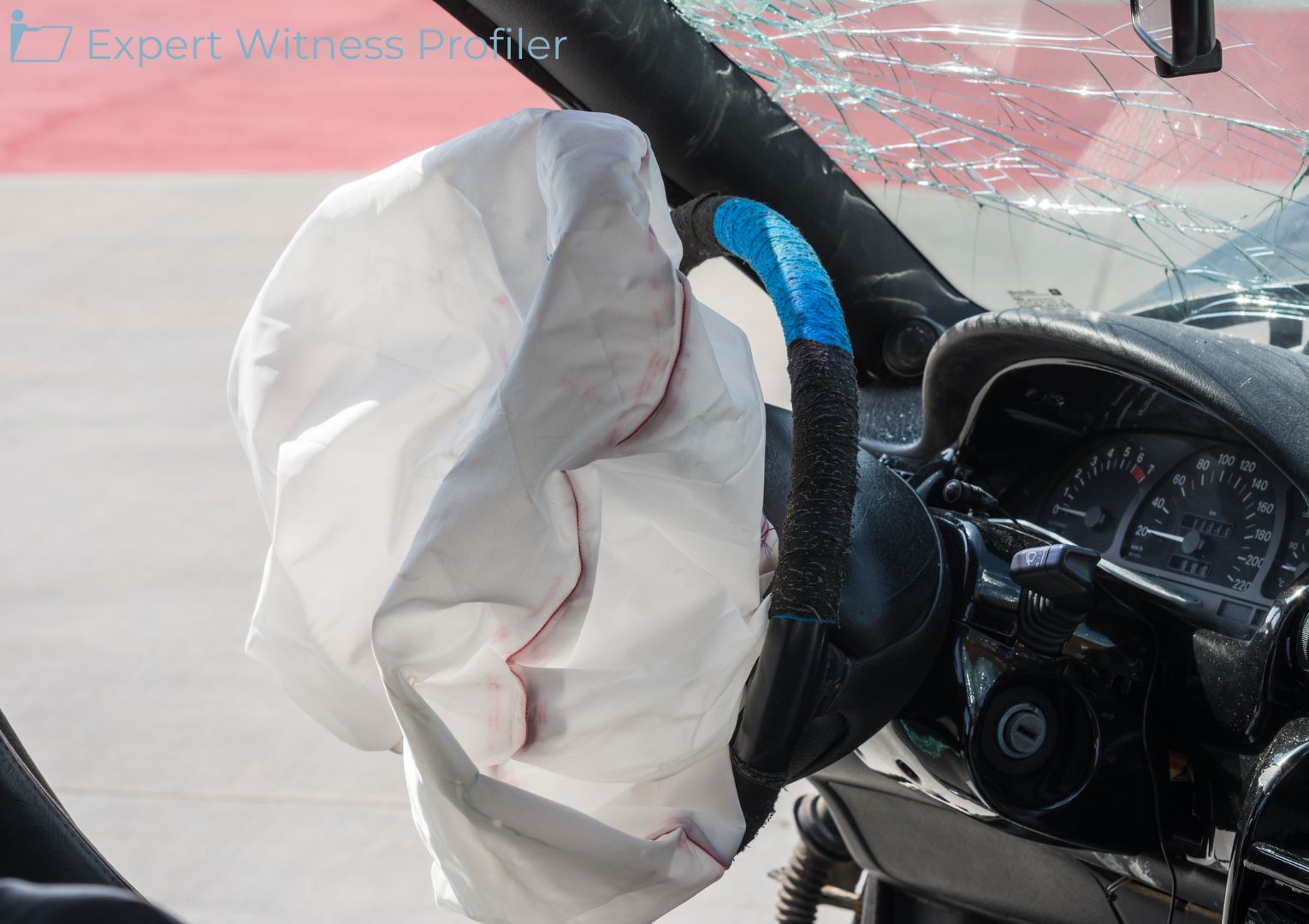
    Plaintiff, William Harrison Sims’ claims arise out of an October 24, 2019, two-vehicle collision involving Plaintiff, who was operating the 2004 BMW (“Subject BMW”). Tameca Harris-Jackson (“Harris-Jackson”) was operating the Hyundai that collided with the Subject BMW. Plaintiff alleges he sustained “severe, permanent, and life-altering injuries” due to the driver-side Takata airbag unexpectedly rupturing and shooting “metal shrapnel into his face and body.”

     Defendants procured and installed the airbag inflator during the process of “designing, manufacturing, assembling, and producing” the vehicle. Plaintiff brought this action for damages against both Defendants BMW of North America (“BMW NA”) and Bayerische Motoren Werke AG (“BMW AG”), alleging strict liability and negligence from procuring and installing the airbag.

    Plaintiff submitted that Mr. Robert C. Lange, BMW’s mechanical engineer, is prepared to opine that he is unaware of any evidence showing the Defendants “could have been aware air bag systems supplied by Takata to BMW AG were defectively designed prior to Takata’s announcement of defect findings beginning in 2014.” 

    Lange will also opine that when the subject 2004 BMW was distributed by BMW NA, “no motor vehicle manufacturer or distributor could have known of the technical research findings regarding the latent defect in Takata air bag inflators because the science was not settled until 2015-2016.”

    He also contended that Takata falsified data provided to vehicle manufacturers through 2015 and failed to correct the false data once the defect was discovered. Plaintiff argued that Lange’s opinions were unsupported and unreliable. 

    Automotive Engineering Expert Witness

    Robert Lange has over 50 years of experience in automotive engineering. He specializes in motor vehicle systems architectures, structures, safety, and public health.  

    Lange has experience in statistical analysis of motor vehicle service performance databases, statistical forecasting and reliability analysis, FMEA and failure mode avoidance methods, collision-related data acquisition and analysis, safety rulemaking, strategy, and the like. 

    Get the full story on challenges to Robert Lange’s expert opinions and testimony with an in-depth Challenge Study. 

    Discussion by the Court

    The issue is whether Lange’s opinions are based on sufficiently reliable methods and principles. If they are, then Lange’s opinions are undoubtedly helpful to the jury. If his opinions are unsupported ipse dixit, they must be excluded. 

    Lange’s Methodology and Opinions

    Plaintiff contended that BMW knew that the subject vehicle was defective because the airbag inflator used phase-stabilized ammonium nitrate (“PSAN”) as the airbag’s propellant, causing the inflator to rupture when the airbag deployed during the accident. 

    Lange discussed his investigation into the Takata air bag failures. He noted that Honda conducted the first recall of Takata air bag systems for inflator failure in a letter dated November 11, 2008. 

    National Highway Traffic Safety Administration (“NHTSA”) hired Dr. Harold Blomquist to assist in its Takata defect investigation and issued his report in 2015. 

    Documents from the Recall Query revealed that Takata represented to Honda that the ruptures were caused by a “Stokes press” that forms propellant into a wafer, causing the propellant to burn too quickly and rupture the inflator. Accordingly, in 2010, Honda expanded the recall to include the new basis. Between 2010 and 2013, Honda and Takata continued to receive reports of inflator ruptures, and Takata retained consultants to conduct a root cause analysis. 

    Takata’s root cause analysis continued, and in 2014, research pointed to moisture and temperature in high absolute humidity regions as causing an increased propellant burn rate. Lange, however, concluded that “during the inflator development phases, Takata falsified data provided to vehicle manufacturers. When the false data was discovered, Takata failed to correct the false data by informing the manufacturer and correcting the record.”

    Plaintiff’s Objections

    Plaintiff challenged the admissibility of the following opinions offered by Lange:

    75. I am unaware of any evidence showing BMW AG and BMW NA could have been aware air bag systems supplied by Takata to BMW AG were defectively designed prior to Takata’s announcement of defect findings beginning in 2014.

    76. As of the date of distribution of the Subject 2004 BMW 330Ci, by BMW NA, no motor vehicle manufacturer or distributor could have known of the technical research findings regarding the latent defect in Takata air bag inflators. The science was not settled until 2015-2016.

    Plaintiff also challenges the following statement made by Lange:

    “During the inflator development phases, Takata falsified data provided to vehicle manufacturers. When the false data was discovered, Takata failed to correct the false data by informing the manufacturer and correcting the record. Takata’s false dealings with vehicle manufacturers evidently extended into 2015.”

    Plaintiff contended that Lange will confuse the jury if permitted to offer evidence that Takata lied to other vehicle manufacturers without having proof Takata lied to BMW. Moreover, Lange “knows little about the relationship between BMW and the supplier of the defective airbag inflator at issue in this case, Takata.”

    Plaintiff also argued that Lange’s opinion that he is “unaware of any evidence” showing BMW’s knowledge of the defect is not helpful to the jury. Plaintiff asserted that Lange failed to inform himself on the subject matter sufficiently, and his lack of evidence that BMW was aware of the risks attendant to using PSAN does not equate with BMW’s lack of knowledge.

    Ruling

    Lange has extensive experience working at Ford Motor Company, Failure Analysis Associates, and the General Motors Corporation. During his work with Ford, Lange was responsible for vehicle design and remedying safety defects serviced as recall actions. As the Safety Executive with General Motors, Lange oversaw research projects involving air bags, occupant restraint systems, driver assist technology, and other vehicle systems. He also supervised the “Product Investigations” Department and was responsible for identifying potential safety defects and initiating investigations. In other words, the Court held that  Lange possesses the requisite experience to review the data, investigative reports, and shifting root-cause analysis discussed in his report.

    On balance, the Court did not find that Lange’s opinions rest on mere ipse dixit and instead are based on his review of relevant documents showing Takata’s shifting root cause analysis. Takata initially focused on a manufacturing defect before conceding that the defect had broader implications, which was consistent with Takata hiding the ball from BMW. Basing one’s opinions on the Honda recall and subsequent NHTSA investigations to conclude that the science was not settled until the mid-2000s is a sufficiently reliable methodology. Lange’s opinion that BMW NA was not responsible for the defective design of the subject inflator and that BMW was not on notice until around 2015 was supported by these evolving investigations. 

    Held

    The Court denied Plaintiff’s motion to exclude certain opinions of Robert C. Lange.

    Key Takeaway:

    Lange reviewed the data, investigative reports, and shifting root-cause analysis to conclude that Takata falsified data provided to vehicle manufacturers through 2015 and failed to correct the false data once the defect was discovered.

    Case Details:

    Case Caption: Sims V. Bmw Of North America LLC
    Docket Number: 6:22cv1685
    Court: United States District Court, Florida Middle
    Order Date: February 20, 2025

    Please refer to the blogs previously published about this case:

    Accident Reconstruction Expert Witness’ Testimony Admitted Despite His Failure to Calculate G-Force 

    Neurology Expert Witness’ Injury Causation Testimony Admitted

    Accident Reconstruction Expert Witness’ Opinion Regarding Plaintiff’s Lane of Travel Ignored Physical Evidence

  • Product Safety Expert Witness’ Testimony Admitted Despite Alleged Lack of Familiarity with Tree Stands

    Product Safety Expert Witness’ Testimony Admitted Despite Alleged Lack of Familiarity with Tree Stands

    Plaintiff, James Rowedder alleged a Field & Stream Stealth Climber Tree stand HEH01293 (“tree stand”) manufactured by Defendant Primal Vantage Company, Inc. (“Primal”) and sold by Defendant Dick’s Sporting Goods, Inc. d/b/a Field & Stream failed while Rowedder was using it and that he sustained injuries as a result. Plaintiff brought claims for (1) Negligence—Product Defect; (2) Breach of Warranty; and (3) Strict Liability.

    Plaintiff’s proffered expert Rick Brenner was retained to testify about the standard of care and best practices for consumer products manufacturers, and, specifically, how Primal failed to meet these standards.

    Defendants filed a motion to exclude opinions offered by Plaintiff’s proffered expert Rick Brenner.

    Product Safety Expert Witness

    Robert (Rick) Brenner is a recognized expert in consumer product safety, regulatory compliance, and quality management programs. He is president of Product Safety Advisors, a consulting firm that advises clients in the development and implementation of product safety and regulatory compliance programs including best practices in product design, risk assessment and failure mode analysis, performance and compliance testing protocols, supply chain risk, production oversight, quality management strategies, and related employee training programs.

    His experience includes being president and CEO of Prime Resources Corporation for 12 years, an “importer, manufacturer, and distributor of consumer products sourced from multiple overseas factories” where Brenner had “direct oversight responsibility for Prime’s overseas sourcing business including the development of our standard operating procedures for product safety, risk assessment, compliance management, selection and vetting of vendors, factory oversight, correction actions, factory auditing . . . and product safety testing.” 

    Fortify your strategy by reviewing a Challenge Study detailing grounds for excluding Rick Brenner’s expert testimony. 

    Discussion by the Court

    Brenner Did Not Lack the Requisite Qualifications

    Defendants argued Brenner was not qualified to offer such opinions because, despite his extensive experience with product safety and quality management practices, Brenner was not an engineer, not familiar with tree stands, and, inter alia, had not physically examined the evidence in this case.

    The Court denied Defendants’ motion on this point and found Brenner qualified to offer opinions on the standard of care and best practices for consumer products manufacturers or importers considering his extensive experience as a “manufacturer, importer, and product safety professional” in his report.

    Brenner’s Opinions are Based on his Relevant Knowledge and Experience

    Last, Defendants argued Brenner’s opinions must be excluded because they are speculative, unreliable, and legal in nature. Namely, Defendants argued that Brenner’s testimony that Primal “did not conduct specific risk assessments under CPSC [Consumer Product Safety Commission] and ISO [International Organization for Standardization 10377:2013 Consumer Product Safety Guidelines for Suppliers] standards” should be excluded because he admitted “that those are not mandatory standards for manufacturers of consumer products.”

    The Court found that Brenner based his opinions regarding Primal’s alleged disregard for the safety of consumers on evidence—namely deposition testimony—adduced in this case.

    Brenner did not purport to be a design or engineering expert and could not opine on whether the products or component parts of those products at issue here were defective. Nor could Brenner opine that any alleged failure on Primal’s part to meet the standards of care Brenner articulates rendered the products at issue defective. However, the Court held that Brenner will be able to testify, generally, as to what he believes constitute best practices for a manufacturer or importer of products such as Primal and how Primal did not live up to those standards considering the evidence adduced in this case and cited in his report.

    Held

    The Court denied Defendants’ motion to exclude the testimony of Rick Brenner. 

    Key Takeaway:

    • The Court, citing Brenner’s extensive experience with product safety and quality management practices, decided he is more than qualified to testify about the standard of care and best practices for consumer products manufacturers, and, specifically, how Primal failed to meet these standards.
    • Brenner based his opinions regarding Primal’s alleged disregard for the safety of consumers on evidence—namely deposition testimony—adduced in this case. The Court concluded that Brenner’s opinions are based on his relevant knowledge and experience.

    Case Details:

    Case Caption: Rowedder V. Primal Vantage Company Inc Et Al
    Docket Number: 2:22cv2371
    Court: United States District Court, South Carolina
    Order Date: July 15, 2024
  • Slip Resistance Testing Conducted by Biomechanical Engineering Expert Witness Deemed Reliable

    Slip Resistance Testing Conducted by Biomechanical Engineering Expert Witness Deemed Reliable

    The Plaintiffs alleged that on December 24, 2020, Dr. Bruce Bunting slipped and fell outside the automatic exit doors at the CVS Store. Bunting claimed that he slipped on “slick and wet concrete that resulted from a mixture of salt and water.” The Plaintiffs alleged that CVS Pharmacy, LLC created the slick surface by “spreading the salt on a wet and warm day, which caused it to make the ground unsafe and slippery.” According to the Plaintiffs, the CVS Store was “negligently kept, maintained, and operated, creating an unreasonable risk of injury to invitees,” including Bunting. As a result of the fall, Bunting allegedly suffered a “closed fracture dislocation of his right ankle” that required surgery. The Plaintiffs further alleged that CVS’ negligence caused Bunting to suffer “serious bodily and emotional injuries and damages, including physical pain, suffering, emotional distress, inconvenience, loss of the enjoyment of life, and medical expenses.”

    One of CVS’ designated expert witnesses was Alexandra Maddox, a mechanical engineer and biomedical engineer. Maddox’s expert report detailed her investigation, including slip resistance testing she conducted on January 19, 2023, on the incident walkway surface at the CVS Store, and provided her opinions regarding the slip resistance of the walkway surface. According to Maddox, the salt and water solution that Bunting described slipping on “was less lubricating than water on a walking surface, and created greater slip resistance than water alone.” She stated that the incident walking surface was reasonably safe for pedestrian traffic and concluded that there was lack of sufficient evidence to support the claim that the incident walkaway caused Bunting’s fall.

    As part of her slip resistance testing, Maddox used an English XL Variable Incident Tribometer (“VIT”), a device used for slip resistance testing in different environments. A VIT is designed to yield coefficient of friction (“COF”) measurements that correlate to the likelihood of slip incidents occurring on a given surface. Maddox used a VIT that Excel Tribometers, the manufacturer of the English XL VIT, calibrated three days before her field test. Maddox then field calibrated the VIT the day before her field test. According to CVS, Maddox’s VIT was validated and calibrated in accordance with American Society for Testing and Materials (“ASTM”) standard F2508. Maddox also applied American National Standards Institute (“ANSI”) standard A1264.2, which recommends a COF of 0.5 or greater for walking surfaces in the workplace under dry or wet conditions. CVS asserts that Maddox “obtained slip resistance measurements under both wet and dry scenarios” pursuant to ANSI A1264.2. Consistent with the VIT device manual, Maddox used only water for the wet testing. Maddox concluded that the walkway surface had a COF of 0.64 ± .03 when dry and 0.51 ± .03 when wet.

    Plaintiffs’ filed a motion to strike all opinion testimony of Defendant’s Expert Witness Alexandra Maddox.

    Biomechanical Engineering Expert Witness

    Alexandra Maddox holds a Bachelor’s degree in Biomedical Engineering and is in the process of completing her Doctorate in Aerospace Engineering at the University of Cincinnati. During her tenure at Boston Scientific as a Biomedical Engineer, she gained comprehensive experience in medical device production, covering development, design, manufacturing, and production phases. In her undergraduate research, Maddox specialized in tissue biomechanics related to airway collapse during sleep apnea, earning recognition with the University of Cincinnati’s Biomedical Engineering Student Award for exceptional research. Additionally, she provided technical expertise to the U.S. Government as a Post-Doctoral Researcher at the University of Maryland Applied Research Lab for Intelligence and Security, focusing on testing and evaluating voice analytic tools and other biometric devices for personal vetting purposes. She works as a Biomechanical Engineer for CED Technologies, Inc.

    Discussion by the Court

    The Plaintiffs argued that Maddox was not qualified under Rule 702 to provide expert testimony regarding the slip resistance of the walkway surface at the CVS Store citing his lack of qualifications as a licensed professional engineer, a certified safety specialist, a certified Variable Incidence Tribometrist, or even a human factors expert, besides being inexperienced in testing
    or evaluating walking surfaces for slipperiness. Plaintiffs added that neither Maddox’s ongoing work as a PhD. student pertained to walkway surfaces or testing of materials nor did her Occupational Safety and Health Administration (“OSHA”) accreditations in general industry standards reflect an expertise
    in walkway safety because they were minimally focused on walkway safety and fall protection.

    CVS argued that Maddox was qualified under Rule 702 to offer expert opinions on the slip resistance and reasonable safety of the walkway surface because he did qualify as a Certified English XL Tribometrist (“CXLT”) besides possessing a valid CXLT Certificate. CVS added that it was illogical for the Court to deem Maddox unqualified to perform slip resistance testing using a VIT when the company that manufactures the very device that she used has certified that she is qualified to do so.

    It was worth noting that Maddox had a bachelor’s degree in biomedical engineering, had nearly completed her Ph.D., and has completed two accredited courses in OSHA general industry standards, including walkway safety leading the Court to conclude that Maddox was qualified under Rule 702 to offer opinion testimony regarding the slip resistance of the walkway surface at the CVS Store. Maddox obtained her CXLT certification “following
    classroom and field training provided by” the manufacturer of the VIT that Maddox later used to perform a field test of the walkway surface at the CVS Store. The Court held that Maddox’s status as a CXLT rendered her able to help the jury determine the slip resistance of the walkway surface at the CVS Store and, in turn, whether CVS was negligent in its treatment of the walkway surface.

    Plaintiff called Maddox’s VIT testing methodology “unreliable flawed science”. Plaintiff argued that ASTM F2508 failed to establish a safe threshold value for a walkway surface because it was based on VIT measurements from young adults walking in a straight path on a level surface,whereas the incident involved Bunting who was 73 years old at the time of the incident and was stepping over a door onto a slanted surface; its test subjects walked in shoes that were not representative of all shoes; its use fell short of implying proper validation and calibration under all combinations of test materials and walkway surfaces; and it failed to purport to address all safety concerns associated with its use. In addition to citing recent studies and publications, the Plaintiffs also pointed that ASTM withdrew ASTM F1679—a VIT testing standard that ASTM originally published in 2004—because it lacked precision and bias testing back in 2006. Plaintiff added that Maddox did not demonstrate that she complied with ASTM’s calibration requirements to use a VIT. CVS rejected the Plaintiff’s suggestion that ASTM F2508 cannot be used to determine the reasonable safety of a walking surface, considering ASTM F2508 did not purport to establish what did and what did not constitute a safe walking surface.

    CVS also argued that the studies relied upon by the Plaintiffs to assert the unreliability of VIT testing merely recommended accounting for variability in slip resistance measurements, as Maddox’s measurements did. As for the Plaintiffs’ argument about the withdrawal of ASTM F1679, CVS noted that Maddox did not depend on this standard, and a federal court had previously rejected this argument, affirming the reliability of VIT testing. CVS further asserted, contrary to the Plaintiffs’ suggestion, that the manufacturer of Maddox’s VIT had calibrated the device three days before her field test, and Maddox herself had field-calibrated the same device the day before the test. Moreover, CVS argued that Maddox had conducted her testing in accordance with the VIT manual and her training, producing “reliable” and “reproducible” results. CVS concluded that the Plaintiffs’ challenge to Maddox’s conclusions was more appropriately characterized as cross-examination material and not a valid basis for seeking to exclude her opinions under Rule 702 and/or Daubert.

    The Court noted that the Plaintiff could not successfully identify any such instance where the federal court found VIT testing to be an unreliable methodology. The Court found that various arguments made by the Plaintiffs regarding VIT testing went to the weight of the evidence instead of its admissibility. For example, Maddox’s reliance on ASTM F2508 did not render her methodology unreliable considering ASTM F2508 is an international standard that is intended to establish the procedures for validation,
    calibration, and certification of VITs or the studies and publications cited by the Plaintiffs to raise concerns about VIT testing did not establish her testimony to be excludable. These sources discussed the need to
    consider measurement uncertainty when interpreting VIT testing results which Maddox accounted for by testing the surface at different locations and presenting the slip index values as “mean ± standard deviation.”

    Held

    The Court denied the Plaintiff’s motion to strike all opinion testimony of Defendant’s Expert Witness Alexandra Maddox.

    The Court has not arrived on an outcome for this case since the remaining issues involved in this case still await resolution.

    Key Takeaways:

    The Court closely examined Alexandra Maddox’s qualifications under Rule 702 to provide expert testimony, recognizing her background in biomedical and aerospace engineering, ongoing pursuit of a PhD, and completion of accredited courses in OSHA standards as sufficient qualifications despite lacking specific certifications like a licensed professional engineer or certified safety specialist. Maddox’s certification as a Certified English XL Tribometrist (CXLT) was deemed significant, bolstering her credibility in slip resistance testing, especially given the manufacturer’s training and certification process. While Plaintiffs critiqued Maddox’s methodology, particularly regarding calibration and adherence to standards such as ASTM F2508, CVS defended her approach, highlighting compliance with manufacturer guidelines and industry standards. The Court distinguished between challenges to the admissibility of Maddox’s testimony and arguments regarding the weight of the evidence, considering concerns about reliability and adherence to standards as affecting the latter. Maddox’s reliance on ASTM F2508, despite its limitations, was deemed acceptable as it aimed to establish procedures for validation and calibration of Variable Incidence Tribometers (VITs), which Maddox followed in her testing methodology. Moreover, the Court noted Maddox’s efforts to address measurement uncertainty by testing surfaces at different locations and presenting slip index values with statistical measures like mean and standard deviation, demonstrating awareness of and mitigation against potential sources of error in her testing. Overall, the Court’s ruling underscores the importance of evaluating expert testimony based on qualifications, methodology, adherence to standards, and consideration of measurement uncertainties while recognizing the distinction between challenges to admissibility and weight of evidence.

    Case Details

    Case Caption: Bunting Et Al V. District Of Columbia Cvs Pharmacy, LLC
    Docket Number: 1:22cv766
    Court: United States District Court, District of Columbia
    Citation: 2024 U.S. Dist. LEXIS 21129
    Order Date: February 7, 2024