Plaintiff, Prunella Banks filed this medical negligence action against Lakeland Nursing and Rehabilitation Center, LLC (“Lakeland”) and one of its nurses, Morgan McGuire, for injuries allegedly suffered by her late mother, Queen Banks during her short residency at the nursing home from April 21, 2021, to May 3, 2021.
According to the Complaint, Nurse McGuire applied “Biofreeze gel” to Banks’ shoulders on April 30, 2021, left the gel in the room, and thereafter, a personal care assistant entered the room and “began rubbing the gel all over Queen Banks’ body including her inner thighs and private part areas.” Banks alleged her mother suffered extreme pain and irritation as a result of this event, necessitating medical treatment.
Plaintiff’s version of events has changed since filing the Complaint, and Plaintiff now claims that McGuire herself misapplied Elidel 1% Cream (not Biofreeze gel) on Banks’ vagina and rectum, resulting in damages.
Plaintiff retained a nursing expert, Lotashia Patrick, to offer opinions such as Lakeland’s staff misapplied the medication to Banks’ “private areas,” causing her “burning, itching, and irritation of her vaginal area.”
At her deposition, Patrick also testified that the medication was misapplied to Banks’ “groin and buttocks” so as to cause her “second-degree burns” and associated pain. Lakeland argued that Patrick cannot offer opinions about Lakeland’s standard of care, any breach of it, or medical causation.
Nurse Patrick received both a Bachelor of Science and Master of Science in Nursing at the University of Mississippi Medical Center in Jackson, Mississippi. Nurse Patrick is a member of the American Nurses Association and the Mississippi Nurses Association & Eliza Pillars Registered Nurses of Mississippi. She has over fifteen (15) years of practice experience in the field of nursing.
According to Lakeland, Patrick can’t testify about its standard of care because she lacks sufficient experience working at a nursing home, evaluating chemical burns, assessing skin breakdown, or applying the medication at issue in this case (Elidel). Banks counters that Patrick worked two months as a supervisor over the RNs at a nursing home and that her credentials qualify her to testify to the standard of care.
Banks offered Patrick for the opinion that applying Elidel in a manner contrary to its manufacturer’s recommendations would violate the standard of care. According to the Court, this is not an opinion that requires the level of particularized expertise Lakeland suggests. Whether a medication is correctly administered lies within the area of nursing practice. And Patrick’s education and experience in various nursing jobs qualifies her to offer this opinion.
Moreover, none of the cases Lakeland cited said that the relevant nursing standard changed from one type of facility to the other, and Lakeland did not show that Patrick was unqualified to supervise nurses at a nursing home.
Breach of the Standard of Care
Although Patrick can testify about the standard of care, Lakeland has shown that she lacks sufficient facts to testify about whether Lakeland’s staff did breach that standard by misapplying the Elidel.
Patrick looked at various records and one deposition to render her opinions. But as to her breach opinion, Patrick testified that she relied on the allegations in the complaint.
The Court granted Lakeland’s motion to exclude Patrick’s opinion that the facility incorrectly administered the medication to Banks. Patrick can opine that if the medication was applied other than as directed by the manufacturer, then a breach of the standard of care occurred.
Medical Causation
To the extent that Patrick in her deposition said or implied that the Elidel caused second-degree burns or other severe injuries to body parts for which Elidel is not contraindicated, the Court held that those opinions went beyond the scope of a nursing expert and are thus inadmissible.
Held
The Court denied in part Lakeland’s motion, insofar as Patrick may offer opinions at trial about what standard of care applied to Lakeland’s administration of topical medication to Banks and whether any application to areas contraindicated for that medication would violate the standard of care. Any other opinions from Patrick, including those alleging breach or addressing medical causation, are excluded.
Key Takeaway:
Rule 702 does not mandate that an expert be highly qualified in order to testify about a given issue. Differences in expertise bear chiefly on the weight to be assigned to the testimony by the trier of fact, not its admissibility.
Under Rule 702(b), experts must base opinions “on sufficient facts or data.” Allegations in a complaint fail that test.
Case Details:
Case Caption:
Banks V. Lakeland Nursing And Rehabilitation Center, Llc Et Al
Docket Number:
3:22cv433
Court:
United States District Court, Mississippi Southern
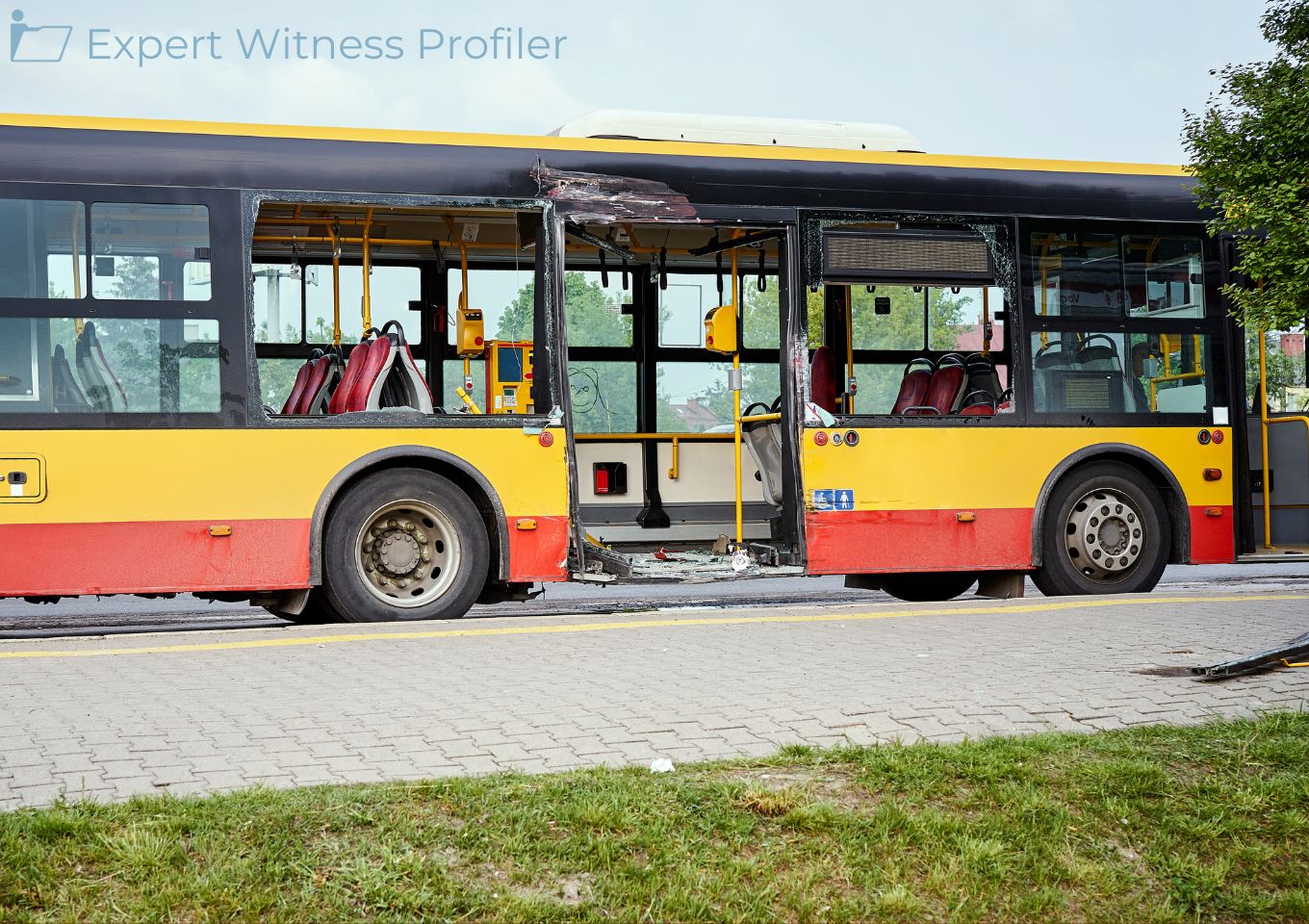
This case involved a lawsuit filed by Sharon B. Ikerd against Bobby Dillon, L Dillon Tree Harvesting, LLC, and Berkshire Hathaway Homestate Insurance Company after being involved in an automobile collision with Dillon. At the time, Ikerd was driving a school bus and had stopped to let children exit. Dillon, who was driving a tractor trailer carrying logs, collided with Ikerd’s parked school bus.
In her complaint, Ikerd alleged that she suffered severe, painful, permanently disabling injuries as well as mental anguish due to Dillon’s gross negligence. She sought damages for past, present and future pain, mental anguish, medical expenses, loss of enjoyment of life, lost wages, permanent disability, property damage and other damages.
The Defendants filed a motion to exclude the expert opinion of Jonathan Thompson, Ikerd’s pain management doctor. Thompson had opined that the “large gap” in Ikerd’s 4/5 facet joints was likely caused by instability from the impact. The Defendants made three arguments for why Thompson’s opinion should be excluded:
1) Thompson based his opinion on concepts like accident mechanics and impact forces which are outside his expertise as a pain specialist.
2) Thompson did not employ reliable methodology and instead just relied on his general experience. He did not review any records concerning the accident or cite facts/data supporting his opinion.
3) Thompson’s opinion lacks foundational support and would not assist the jury. He did not clarify how his expertise in pain intervention justified his assertion regarding the “large gap in the 4/5 facets, likely from instability from the impact.”
In response, Ikerd argued that Thompson was qualified to testify to medical causation as her treating physician. She stated that the differential diagnosis method he used is reliable. She also argued that any deficiencies in Thompson’s opinions go to the weight of the evidence, not its admissibility.
Pain Management Expert Witness
Dr. Jonathan Dean Thompson, M.D., served as an Interventional Spine/ Pain Management Physician at Cypress Pointe Pain Management. He obtained his medical degree from Louisiana State University Health Sciences Center in New Orleans before completing a physical medicine and rehabilitation residency at LSU Health Sciences Center. Thompson furthered his medical training with a spine fellowship in Interventional Pain Medicine at LSU School of Medicine. He is certified by the American Board of Physical Medicine and Rehabilitation.
Discussions by the Court
The motion to strike the Plaintiff’s response was based on the evaluation of late oppositions under Federal Rule of Civil Procedure 6(b)’s “excusable neglect” standard. This standard involves considering factors such as the potential prejudice to the non-movant, the length of the delay and its impact on judicial proceedings, the reasons for the delay (including whether it was within the reasonable control of the movant), and whether the movant acted in good faith. The Court referred to relevant precedents, including Vasudevan v. Adm’rs ofTulane Educ. Fund, 706 F. App’x 147, 151 (5th Cir. 2017) and Adams v. Travelers Indem. Co. of Conn., 465 F.3d 156, 161 (5th Cir. 2006).
The Court addressed the Defendants’ motion to strike the Plaintiff’s response, which was filed one day late. The Court noted that the Defendants had not been prejudiced as they timely filed their reply and did not request a deadline extension. Despite the Plaintiff’s lack of explanation for the delay, the Court found no evidence of bad faith and determined that the untimely response did not impede the proceedings. Consequently, the Court denied the Defendants’ motion to strike the Plaintiff’s response.
The Court considered the motion to exclude Thompson’s causation opinion, citing Federal Rule of Evidence 702 and the Daubert framework to determine the admissibility of expert testimony. The Court emphasized the need for the expert’s testimony to be reliable and relevant, with factors such as testing, peer review, error rate, standards, and acceptance in the scientific community influencing the reliability assessment. The Court highlighted that questions about the bases and sources of expert opinions are typically left for the jury, and the burden of proof for admitting expert testimony rests with the party presenting it. The Court acknowledged the importance of relevance in assisting the trier of fact and emphasized the need for proper deference to the jury’s role in resolving disputes between conflicting expert opinions.
Defendants raised three objections to the admissibility of Thompson’s opinion testimony regarding causation, and the Court addressed each objection individually. The first objection argued that Thompson’s theory of causation relied on concepts like the severity of forces and mechanics of impact, which were beyond his expertise as he was not a biomechanical engineer. Defendants contended that Thompson could not testify to such concepts. In response, the Plaintiff argued that Thompson was offering testimony on medical causation, an area within his expertise as the treating physician.
The Court noted that while biomechanical engineers could testify about the forces generated in a collision and their impact on the human body, medical doctors, including treating physicians like Thompson, were uniquely qualified to opine on medical causation. Defendants claimed that Thompson’s statements about the impact and jarring forces should be excluded due to the need for biomechanical engineering expertise, but the Court highlighted the lack of evidence indicating Thompson intended to testify about biomechanics. The Court emphasized that Thompson’s statement regarding the large gap in the Plaintiff’s 4/5 facets was related to medical causation rather than mechanics and severity of force in a collision. As the treating physician, Thompson had the right to testify about the injury and its alleged cause based on his medical experience. The Court concluded that Defendants could cross-examine Thompson about the basis of his opinion, leaving the jury to assess its probative value.
The second objection raised by the Defendants was that Thompson did not rely on generally accepted or reliable methodology, citing his failure to review any records related to the vehicular accident and the absence of cited facts or data supporting his opinion. In response, the Plaintiff argued that Thompson’s use of a differential diagnosis is a reliable method for a medical doctor to determine causation. The Defendants initially sought to entirely exclude Thompson’s causation opinion. However, in their reply, they clarified that they only aimed to prevent Thompson from speculating about the type of impact and jarring forces produced. There was no indication that Thompson intended to testify about biomechanics. The Court noted that if Thompson’s testimony surpassed his medical expertise, objections would be raised appropriately during the trial.
The Court considered the Fifth Circuit’s explanation of a reliable differential diagnosis, which involves physical examinations, medical histories, and the review of clinical tests. Plaintiff contended that Thompson followed these steps in reaching his conclusion, and Defendants failed to provide evidence contradicting this assertion.
The Court reiterated the principle that questions about the bases and sources of an expert’s opinions, affecting their weight rather than admissibility, should be left for the jury’s consideration. It noted that a doctor’s expert testimony should not be excluded solely because the causation diagnosis relies on the patient’s self-reported history. The Court concluded that concerns about the reliability of Thompson’s testimony could be addressed through cross-examination and the presentation of contrary evidence, following the Daubert framework.
The Defendants’ third objection contends that Thompson’s opinion lacks fundamental support and is therefore unhelpful to the jury. They further argue that Thompson’s opinion is contradicted by lumbar X-rays he ordered. In response, the Plaintiff asserts that Thompson’s use of a physical examination, patient history, and review of diagnostic imaging provides a sufficient foundation for his opinion on medical causation.
The Court considers this objection as related to the bases and sources of Thompson’s opinion. The Court advises that such concerns should be addressed through cross-examination and the presentation of contrary evidence during the trial, in accordance with the principles outlined in Daubert.
Held
The Court denied the Defendants’ motion to exclude the causation opinion of Thompson, and also denied the Defendants’ motion to strike the Plaintiff’s response to their motion. The Court found Thompson was qualified to present his opinions and that any deficiencies identified by the Defendants could be addressed through traditional trial procedures rather than exclusion of testimony. The Court has not arrived on an outcome for this case since the remaining issues involved in this case still await resolution.
Key Takeaways
This case demonstrates several important principles regarding the admissibility of expert witness opinions under Daubert standards. First, treating physicians may testify as to medical causation related to a patient’s injuries and condition based on their experience, even if they did not conduct an independent investigation of the underlying incident. Any deficiencies in the factual bases for their opinions typically go to weight rather than outright exclusion.
Second, differential diagnosis is widely accepted as a reliable methodology for doctors to determine medical causation. Unless the diagnosis method is completely unsupported or contradictory, concerns about its application normally should be addressed through cross-examination rather than exclusion under Daubert.
Third, experts are generally permitted to testify within the reasonable bounds of their expertise. Here, a pain specialist could present opinions on medical injuries and causation, but likely could not speculate as to biomechanical issues like accident forces and body movements unless properly qualified. Questions about whether opinions fall inside or outside an expert’s domain can often be resolved through objections at trial.
In sum, this case reflects the fairly permissive thresholds for admitting expert opinions under federal evidence rules and the preference for addressing problematic expert testimony through traditional litigation procedures as opposed to outright exclusion.