Tag: Mitigation

  • Flood Expert Was Not Allowed to Opine on the Foreseeability of the Flood

    Flood Expert Was Not Allowed to Opine on the Foreseeability of the Flood

    Defendants—Sanford, Sanford Health, and the Evangelical Lutheran Good Samaritan Society—allegedly owned or operated the Good Samaritan Kissimmee Village (Good Samaritan), a senior-living complex located near Kissimmee, Florida.

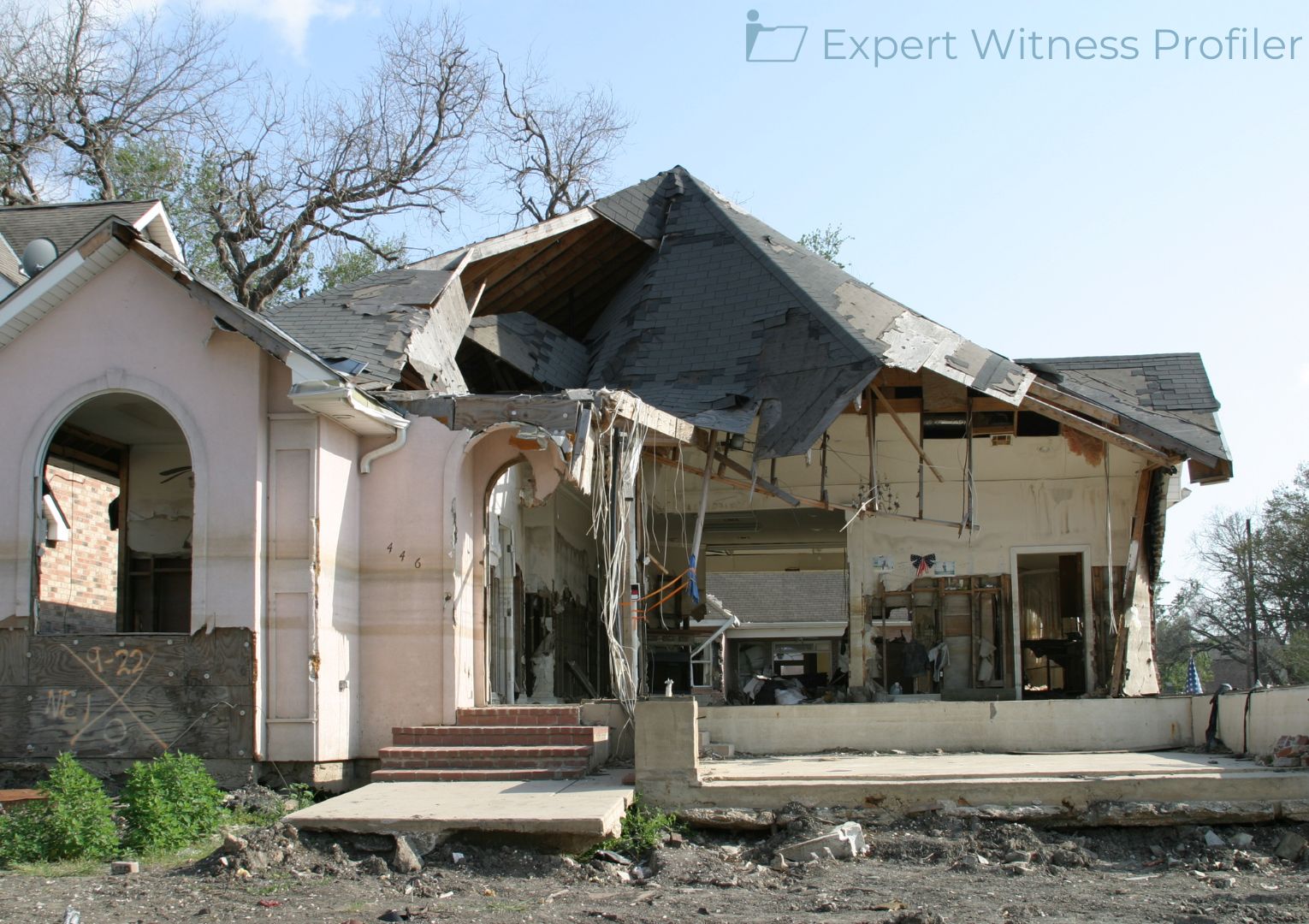
    In 2017, Good Samaritan sustained then-unprecedented flood damage from Hurricane Irma that was purportedly exacerbated by a critical failure of the property’s waste-water treatment facility, resulting in contamination of the floodwater with biological toxins. Good Samaritan is accused of failing to implement any significant flood-mitigation measures in the immediate years after Irma.

    Plaintiffs, unaware of this history, signed a lease agreement at Good Samaritan in 2021, intending to live out the remainder of their lives at the facility. Their plans changed in 2022 when Hurricane Ian struck the property, inundating Plaintiffs’ unit with toxic floodwater, and destroying most of their possessions. Plaintiffs alleged that Defendants’ failure to make necessary repairs after Irma and to provide adequate warnings to new tenants about the recent history of flooding at Good Samaritan allowed for the destruction of their property.

    The parties retained experts to advance their respective theories of the case. Plaintiffs offered the testimony of Richard A. Halquist, an emergency-management specialist who opined that Good Samaritan faced an “extreme” risk of flooding before Hurricane Ian struck the property. Defendants offered the opinions of (1) forensic meteorologist Megan D. Walker, and (2) stormwater engineer David Hamstra. Walker analyzed a litany of official data sources relating to rainfall totals during Hurricanes Irma and Ian and opined that while Irma was a significant storm event, Ian was an exceptionally powerful and rare storm that produced unprecedented quantities of rainfall at Good Samaritan. Hamstra opined that adequate mitigation measures were not timely available to Good Samaritan. Both parties moved to exclude the opposing expert opinions under Daubert and Federal Rules of Evidence 702 and 403.

    Flood Expert Witness

    Richard A. Halquist is a Certified Floodplain Manager and possesses extensive experience modeling flood risk in Osceola County.

    Get the full story on challenges to Richard Halquist’s expert opinions and testimony with an in-depth Challenge Study.

    Meteorology Expert Witness

    Megan D. Walker, CCM is AMS certified consulting meteorologist and educator with exceptional research and communication skills and diverse experience spanning the disciplines of atmospheric science, forensic and operational meteorology, natural hazard mitigation, and higher education.

    Want to know more about the challenges Megan Walker has faced? Get the full details with our Challenge Study report.

    Stormwater Expert Witness

    David Hamstra, P.E., CFM specializes in the development of stormwater management master plans for public and private projects. Since 1987, he has completed and/or managed over 1,350 projects ranging in scale from designing stormwater management facilities for large-scale residential developments to developing stormwater master plans and Capital Improvement Programs for a great number of cities and counties.

    Discover more cases with David Hamstra as an expert witness by ordering his comprehensive Expert Witness Profile report.

    Discussion by the Court

    A. Richard A. Halquist

    Halquist, relying on his experience as an Osceola County Emergency Operations Manager and his training as a Certified Floodplain Manager, undertook a “comprehensive evaluation of hydrological, topographic, and regulatory factors.” He opined that “an extreme degree of flood risk to the Good Samaritan campus” existed at the time Hurricane Ian struck the property.

    Defendants argued that Halquist’s assessment lacked a reliable methodology, that he is unqualified to offer his opinions, and that he offered impermissible legal conclusions.

    a. Qualifications

    Defendants argued that Halquist is not qualified because his report stated that he evaluated the “hydrological, topographic, and regulatory factors” pertaining to Good Samaritan, but he lacked any degree or specialization in those areas.

    Halquist is a Certified Floodplain Manager and possesses extensive experience modeling flood risk in Osceola County. The subject matter of his report—the relative risk of flooding at Good Samaritan—is sufficiently within his expertise. Defendants insist that Halquist has no technical scientific expertise in hydrology and associated fields and thus has no basis to opine as to the likelihood of flooding at Good Samaritan, but that objection does not call into question his qualification to assess flood risk. It is plain from his report that he is not offering a specialized opinion in those fields; instead, his report is firmly grounded in the data sets that he has been shown to be familiar with and his experience in emergency management. Accordingly, the Court rejected Defendants’ argument.

    b. Sufficient Facts or Data

    Defendants also argued that Halquist’s analysis is not sufficiently granular in that he failed to analyze flood risk caused by a rainfall event as enormous as Hurricane Ian, instead analyzing only a generalized flood risk. But the significance of the quantity of the rainfall brought on by Ian is disputed, and Halquist was not obligated to assume Defendants’ interpretation of the evidence.

    Next, Defendants sought to exclude Halquist because his report erroneously cited the NAVD88 vertical datum when the levels from the relevant gauges were actually recorded in a different vertical control datum, NGVD29. Halquist acknowledged the mistake at his deposition but insisted that his analysis of the flooding effects at different gauge heights still holds under NGVD29.

    Halquist’s mistake did not require his exclusion under Daubert. It is “error to conflate admissibility with credibility,” and “errors in an expert’s application of a reliable method generally implicate credibility rather than reliability.”

    c. Reliable Principles and Methods

    Defendants sought to exclude the assessment scoring table in Halquist’s report because it is “untested, unpublished, and not generally accepted” in his field.

    Halquist created the scoring table using six of the fourteen factors analyzed in the 2020 Osceola County HIRA for county-wide risks. For his part, Halquist admitted that he has never prepared a flood-risk scoring table in this manner before and he is not aware of any other source that has applied his chosen methodology.

    Plaintiffs have not shown that Halquist’s selection of six of the fourteen factors from a holistic assessment designed to assess general risk on a county-wide basis and application of those factors to a specific risk to a specific property is a generally accepted method of appraising risk. This is an instance where an otherwise valid scientific methodology has been misappropriated and contrived to reach a particular result in the guise of an expert opinion.

    The factors and scores Halquist selected amount to “personal intuition offered up as professional expertise—untestable, unverifiable, and precisely the sort of expert say-so that Daubert excludes.” Accordingly, the Court excluded the scoring table.

    Because Plaintiffs admitted that certain pages of Halquist’s report contain impermissible legal conclusions as to the foreseeability of the flood, those opinions must also be excluded.

    d. Unfair Prejudice

    Defendants also claimed that allowing Halquist to testify that Good Samaritan faced “extreme” flood risk would be unfairly prejudicial because his opinion improperly conflates an “extreme” risk of even a minor flood with the risk of the unprecedented flooding that occurred in this case.

    The Court interpreted this as an argument pursuant to Rule 403 and disagreed.

    Defendants also sought to exclude Halquist’s “backwater” and “rebuttal” opinions that were offered for the first time at Halquist’s deposition. In response, Plaintiffs insisted that Halquist was not offering these opinions and was merely responding to questioning. Because Plaintiffs stated that Halquist will not be offering an opinion on these matters, they will be excluded by the Court.

    B. Megan D. Walker

    Megan Walker was retained to investigate rainfall patterns during Hurricanes Irma and Ian. In her report, she explained that although both storms caused “historically heavy rainfall” in the Orlando area, “Hurricane Ian was a significantly more extreme and rare rainfall event than Hurricane Irma.”

    a. Helpfulness to the Trier of Fact

    Plaintiffs claimed that Walker’s testimony would not be helpful to the trier of fact because: (1) her opinions are not relevant to the issue of foreseeability of flooding; (2) she ignored other factors relevant to the foreseeability of flooding; and (3) rainfall totals are a matter of public record, rendering her testimony redundant.

    Defendants contended that the rainfall totals have a high degree of explanatory power over the ultimate issues in this case. Thus, expert testimony regarding the “climatological context” of rainfall data at Good Samaritan is potentially helpful to the trier of fact in evaluating Defendants’ theory of the case. Defendants are free to argue the inference that the high rainfall totals and rare rainfall recurrence rates described in Walker’s report render the at-issue flooding unforeseeable. That Plaintiffs interpret the significance of the evidence differently is not a valid basis for exclusion under Daubert.

    Finally, Plaintiffs’ objection that the Court could simply judicially notice publicly recorded rainfall calculations is unpersuasive. Walker’s report stated that the publicly available rainfall data is inaccurate, and she provided a detailed methodology in which she purported to combine complementary data sets and implements a mean-field bias-correction protocol to improve accuracy. The calculation of rainfall totals and rainfall recurrence intervals using several discrete data sets for each storm is not an exercise in common sense or simple logic that jurors should be expected to perform on their own.

    b. Sufficient Facts or Data

    Next, Plaintiffs contended that Walker’s report is not based on sufficient facts or data.

    Walker relied on data collected by NOAA, the NWS, and the NHC. Her selection of databases is grounded in academic literature and appears to be the kind of data that an expert meteorologist would reasonably rely on. In her report, Walker adequately explained the data sets she used and notified Plaintiffs of all materials that she considered in formulating her opinions.

    Plaintiffs argued that Walker improperly relied on “limited rain gauge data, selective radar stations, a case-specific mean-field bias I] correction that she created for this matter, and unexplained presentation of extraordinary rarity estimates.” Plaintiffs pointed out that no rain-gauge stations were located in close proximity to Good Samaritan at the time of Hurricane Irma, and they characterized the available rain-gauge stations during Ian as only “slightly” better.

    While Plaintiffs’ critiques might have a certain degree of statistical or epistemic merit, they did not provide a basis for exclusion under Daubert. Walker reviewed meteorological data from multiple sources, compared Good Samaritan’s location to the source of the data, generated a bias-correction procedure based on the data she reviewed, and formed an opinion about the extent of the rainfall that occurred at Good Samaritan. Other courts have not found fault with the sufficiency of data in similar circumstances and have often approved of meteorology experts who survey and synthesize discrete weather databases.

    c. Unfair Prejudice

    Plaintiffs argued the jury will be unfairly misled by Walker’s testimony because under the guise of rainfall analysis, her report implied that the at-issue flood was unforeseeable. But the Court is not in a position to determine whether the historic nature of the rainfall from Ian was necessary to cause Plaintiffs’ damages or if Plaintiffs would have been similarly damaged during a more typical storm. Accordingly, expert testimony is permissible on the subject of rainfall analysis.

    C. David Hamstra

    Hamstra assessed the circumstances surrounding the at-issue flood, detailed Good Samaritan’s attempts at obtaining funding to implement mitigation measures following Irma. Having done so, he opined that Good Samaritan, through no fault of its own, could not have secured mitigation that would have prevented the damage in this case.

    a. Reliable Principles and Methods

    Plaintiffs asserted that Hamstra’s lengthy narration of Good Samaritan’s unsuccessful efforts to procure mitigation funding is simply “a justification of Defendants’ policy choices rather than an independent expert assessment grounded in engineering methodology.”

    Through his education, training, and experience, Hamstra has obtained expertise in the specialized process of mitigation grant funding. Moreover, his report details how he is aware through his role with Pegasus of the different mitigation options that were available to Good Samaritan, the mitigation plans that Good Samaritan considered, and the grant funding sources that Good Samaritan sought out. His experience provided an adequate basis for his opinions, and that experience appears to be reliably applied to the facts of this case.

    Plaintiffs also sought to exclude Hamstra’s opinion that Hurricane Ian was a 200- to 500-year storm event on the grounds that his opinion is unsupported by reliable engineering principles.

    Here, Hamstra properly relied on Walker’s report and supplied his own analysis, including his own study of the property’s topography, rain-gauge flood elevation readings, and historical rainfall data—all of which are within his competency to evaluate as a stormwater engineer.

    b. Helpfulness to the Trier of Fact

    Plaintiffs also argued that Hamstra’s report would not be helpful to the trier of fact because it merely functions as a self-interested “advocacy piece” for the work that he performed for Good Samaritan in his capacity with Pegasus before this case began.

    However, the existence of bias in an expert witness’ testimony is usually a credibility issue for the jury.

    c. Impermissible Legal Conclusions

    Plaintiffs contended that Hamstra offers impermissible legal conclusions when he opined that “the allegations made by Plaintiffs and their legal counsel are unfounded and without merit”; that Good Samaritan “acted responsibly”; “took reasonable steps”; “appropriately pursued mitigation”; and “fulfilled its responsibilities.”

    In opining about the nature of the mitigation process and the possible grant sources Good Samaritan explored, Hamstra’s report embraced the ultimate issue of Good Samaritan’s alleged negligence in this case while remaining within the bounds of permissible expert testimony. However, the Court agreed with Plaintiffs that Hamstra’s report crosses the line when he asserts that Plaintiffs’ claims are meritless and that Good Samaritan acted reasonably and responsibly under the circumstances. Although, as Defendants claim, one can use the terms “reasonable” and “responsible” in a colloquial sense, the terms as used in Hamstra’s report appear tinged with legal meaning and must be excluded. Whether Good Samaritan “acted responsibly,” “took reasonable steps,” “appropriately pursued mitigation,” or “fulfilled its responsibilities” are legal questions for the trier of fact.

    Held

    The Court granted in part and denied in part Defendants’ Daubert motion and Plaintiffs’ Daubert motion. The Court excluded the following expert testimony:

    1. Halquist’s flood risk scoring chart;
    2. Halquist’s legal conclusions as to the foreseeability of the flood;
    3. Halquist’s “backwater” and “rebuttal” opinions;
    4. Hamstra’s legal conclusions that Plaintiffs claims are “unfounded and without merit”; that Good Samaritan “acted responsibly”; “took reasonable steps”; “appropriately pursued mitigation”; and that it “fulfilled its responsibilities.”

    In all other respects, the Court denied the motions.

    Key Takeaway

    Although expert reports often require rigorous scientific or statistical analysis, Daubert also allows for admitting experts whose methods are less formal, such as when an expert testifies primarily based on experience.

    The proponent of the testimony in such a case must explain how that experience led to the conclusion he reached, why that experience was a sufficient basis for the opinion, and just how that experience was reliably applied to the facts of the case.

    Case Details:

    Case Caption: Matthews V. Sanford
    Docket Number: 6:25cv143
    Court Name: United States District Court, Florida Middle
    Order Date: May 07, 2026
  • Accounting Expert’s Financial Testimony on Mitigation Admitted

    Accounting Expert’s Financial Testimony on Mitigation Admitted

    Plaintiffs sought to develop affordable housing in Brevard County. The Venue at Heritage Oaks Partners, Ltd. was the contract purchaser of the property. They, along with Atlantic Housing Partners L.L.L.P., intended to develop as “The Venue at Heritage Oaks,” a development comprised of multi-family dwelling units.

    Canton Construction, LLC was to construct the development, and once completed, Concord Management, Ltd. was to manage it. The project did not come to fruition, however, because in December 2023, Defendant’s board of commissioners rejected Plaintiffs’ bond financing application. 

    Plaintiffs brought this action against Defendant for damages under the Fair Housing Act and the Florida Fair Housing Act, alleging that Defendant’s rejection discriminated against racial minorities.

    Defendant affirmatively alleged that Plaintiffs must mitigate their damages and have failed to do so,” and as such, argues that “Plaintiffs’ claims should either be barred, or in the alternative, comparatively reduced in accordance with Plaintiffs’ failure to mitigate damages.

    Defendant retained Patrick Kelleher as an expert to demonstrate that “Plaintiffs’ damages model does not consider mitigation and that reasonable possibilities likely existed with respect to mitigation.”

    Plaintiffs filed a motion to exclude Kelleher’s opinions pursuant to Daubert v. Merrell Dow Pharms., Inc., 509 U.S. 579, 113 S. Ct. 2786, 125 L. Ed. 2d 469 (1993).

    Accounting Expert Witness

    Patrick F. Kelleher is a Certified Public Accountant (CPA) and Certified in Financial Forensics (CFF) with both a Bachelor of Science in accounting and a Master of Business Administration focused on finance, and he has more than twenty years of experience in forensic and investigative accounting. Kelleher submitted a twenty-page report that stated his opinions, included the documents he considered, and explained the analysis he performed, among other things.

    Get the full story on challenges to Patrick Kelleher’s expert opinions and testimony with an in-depth Challenge Study.

    Discussion by the Court

    Kelleher opined that “Plaintiffs have not demonstrated any economic damages with reasonable certainty, but rather have provided a model that does not reflect the timing and accuracy of the cash flows associated with the housing] project.” Kelleher also identified alleged errors and deficiencies with Plaintiffs’ model and with testimony from two of Plaintiffs’ witnesses. With respect to his methodology, Kelleher reviewed Plaintiffs’ documents and used them to render accounting and financial testimony related to mitigation. In doing so, he used calculations and analysis in accordance with the American Institute of Certified Public Accountants (AICPA) Statement on Standards for Forensic Services. He also used AICPA prescribed methods for calculating damages.

    Analysis

    Plaintiffs stated, without citations to the record or supporting caselaw, that Kelleher’s opinion was unreliable as it was not based in accounting—Kelleher’s area of expertise—but is based on a qualitative analysis. Plaintiffs also asserted that Kelleher’s opinion cannot be tested and did not use a generally accepted methodology. However, Kelleher noted that he performed his analysis in accordance with AICPA standards and followed AICPA prescribed methods for calculating damages. Courts have consistently found that such methodologies are generally accepted and thus reliable.

    Plaintiffs further challenged Kelleher’s opinions as unhelpful because they are “not beyond the understanding of the average lay person.” Plaintiffs also contended that Kelleher’s opinions offered just what Defendant’s attorney could argue in closing arguments. However, Kelleher’s testimony can assist the jury with financial and accounting principles.

    Even if Kelleher’s opinion “boils down to at its essence,” something a layperson may understand, the purpose of an expert is to help simplify complex concepts, boiling them down—as Plaintiffs point out—so that laypersons can comprehend them. 

    Although Kelleher’s conclusions may be simple, the mathematical calculations leading to such conclusions are beyond the understanding of the average layperson, so his opinions would help the jury.

    Kelleher can explain field-specific information that the average layperson does not know, including, but not limited to, the capital forces specific to Plaintiffs’ business model, the ownership structure of the entities at issue, and how these topics affect the ability to redeploy capital.

     Given the “liberal standard for relevance to whether expert testimony will aid the jury in resolving the facts,” the Court declined to exclude Kelleher’s testimony under Daubert. 

    Held

    The Court denied the Plaintiffs’ motion to exclude the opinions offered by Patrick Kelleher.

    Key Takeaway:

    If Plaintiffs wish to undermine Kelleher’s opinions, “vigorous cross-examination, presentation of contrary evidence, and careful instruction on the burden of proof are the traditional and appropriate means of attacking shaky but admissible evidence.”

    Case Details:

    Case Caption: Atlantic Housing Partners L.L.L.P. Et Al V. Brevard County
    Docket Number: 6:23cv2473
    Court Name: United States District Court, Florida Middle
    Order Date: November 07, 2025
  • Accounting Expert Witness’ Approach to Calculating Lost Profits is Accepted in the Relevant Field

    Accounting Expert Witness’ Approach to Calculating Lost Profits is Accepted in the Relevant Field


    Plaintiff Dick’s Sporting Goods, Inc. (“DSG”) filed a lawsuit against Defendants Forbes/Cohen Florida Properties, L.P. (“Forbes”) and The Gardens Venture LLC (“Gardens Venture”) (collectively “Defendants”). 

    DSG claimed that Forbes tortiously interfered with its business and contractual relationships, which involved Sears, Roebuck, and Co. (“Sears”) and Transform Operating Stores LLC (“Transform”), specifically regarding the sublease of the second floor of the Sears store at the Gardens Mall (the “Palm Beach Gardens location”). Forbes allegedly refused to sign necessary forms for development applications submitted to the City of Palm Beach Gardens. DSG filed a lawsuit seeking compensatory and punitive damages, including out-of-pocket costs and net cash flows from operations. 

    To support its claim for damages, DSG presented the opinion and reports of accounting expert witness Louis G. Dudney. In response, Forbes retained accounting expert witness James S. Feltman to counter Dudney’s assertions. 

    Defendants filed a Daubert motion to exclude Dudney’s testimony. Meanwhile, DSG filed a motion to exclude specific parts of Feltman’s testimony. 

    Accounting Expert Witnesses 

    Louis G. Dudney, CPA, CFF, has extensive experience across various areas, including operational, financial, valuation, litigation, bankruptcy, and management consulting. His work encompasses financing, mergers and acquisitions, damages analysis, lost profit assessments, business valuations, solvency evaluations, debtor and credit advisory services, as well as corporate investigations. 

    He serves on the Management Committee at AlixPartners and is the Global Leader of the Investigations, Disputes, and Risk practice. Before joining AlixPartners, Dudney was a partner in the Financial Advisory Services Group at PricewaterhouseCoopers. He earned a Bachelor of Business Administration in accounting from The College of William & Mary and is a Certified Public Accountant. Additionally, he holds a certification in Financial Forensics from the American Institute of Certified Public Accountants. 

    Want to know more about the challenges Louis Dudney has faced? Get the full details with our Challenge Study report.   

    James S. Feltman is a Managing Director in the Global Restructuring practice at Kroll, LLC. Kroll operates as a global advisor in valuation, corporate finance, investigations, disputes, cybersecurity, compliance, regulatory matters, and other governance-related issues. The firm employs nearly 3,500 professionals across 28 countries. 

    Feltman has qualified and testified as an expert witness in various federal and state courts. He focuses on forensic accounting and fraud investigations, bankruptcy, and solvency. Additionally, he provides expertise in commercial damages, business valuations, investment theory, and federal and state income taxation. He also addresses issues related to abusive tax shelters, accounting ethics and standards, and accounting malpractice. Furthermore, he deals with investment advisory matters and a range of other accounting, financial, and tax-related topics. 

    Get the full story on challenges to James S. Feltman’s expert opinions and testimony with an in-depth Challenge Study.   

    Discussion by the Court 

    A. Defendants’ Motion to Exclude DSG’s Expert, Louis G. Dudney 

    DSG identified Louis G. Dudney as an expert witness on causation. He assessed the damages reasonably attributed to the Defendants’ tortious interference. Dudney submitted an initial expert report in 2021 and a supplemental report in 2024. 

    1. Defendants’ Arguments 

    Defendants contended that Dudney should not testify due to unreliable methodology. They cited several reasons: 

    1. He relied on outdated data. 
    1. He altered the corporate allocation rate in his 2024 report. 
    1. He failed to consider the proper cannibalization rate. 
    1. He used “skewed or ‘cherry-picked’ ex-post data.” 

    Dudney reduced the projected corporate allocation expenses in the damages analysis.  Dudney says this was done in “accordance with DSG’s updated corporate practice for cost allocation in its pro formas.” Dudney also adopted the cannibalization rate that DSG calculated in his damages model. In his deposition testimony Dudney says he “[used the cannibalization rate] as one of the inputs to evaluate what is the impact and what the best estimate of the impact to Dick’s as a result of [Defendants’] behavior.” 

    Defendants argued the reduction in allocation expenses inflated DSG’s alleged damages. They claimed Dudney improperly relied on information from DSG, making the damages calculation unreliable. 

    2. Plaintiff’s Counter-Argument 

    DSG countered that Defendants had not adequately challenged Dudney’s methodology. Instead, they only criticized certain inputs in his calculations. The Court agreed, noting that the Defendants’ arguments questioned the weight of Dudney’s testimony rather than its admissibility. 

    3. Analysis 

    The Court reviewed Dudney’s deposition and expert reports and determined that he met the Daubert standard. 

    Defendants did not sufficiently challenge the reliability factors required for evaluation. For instance, they argued that he relied on a construction budget from 2015 and that his damages calculation assumed DSG would generate revenue during the COVID-19 pandemic. However, Defendants did not dispute the general acceptance of Dudney’s methodology within the scientific community. 

    Defendants argued that the reduction in allocation expenses “artificially inflates DSG’s alleged damages…and the damages calculation is unreliable because Dudney improperly relied on information provided to him by DSG.” The Court held that Defendants did not challenge the principles and methodologies Dudney applied to get to his conclusions. And it is not improper for an expert to rely on information given to him or made available to him “if experts in the particular field would reasonably rely on those kinds of fact or data.” 

    Also, the Court held that Dudney’s approach to calculating lost profits is accepted in the relevant scientific field. 

    Defendants did not otherwise challenge whether other experts in the field would not have reasonably relied on the facts and or data Dudney relied on. Their remaining objections primarily targeted his conclusions, alleging bias. The Court emphasized that perceived weaknesses in expert testimony should be addressed through vigorous cross-examination, not exclusion. 

    B. DSG’s Motion to Exclude Certain Opinions Offered by Defendants’ Expert, James S. Feltman 

    Defendants identified James S. Feltman as a rebuttal expert. He provided an initial report in 2022 and a supplement in 2024. DSG moved to exclude Feltman’s opinions on mitigating damages. Additionally, DSG sought to preclude Feltman from testifying about third-party demographic data or offering any undisclosed opinions under the Federal Rule of Civil Procedure 26. 

    1. The Third-Party Demographic Data 

    Feltman’s 2024 report included a section on “Target Market Data.” This discussion consisted of data collected from two third-party software systems. DSG argued that Feltman did not analyze the data to establish a cannibalization rate. They pointed out that he admitted he was not an expert in demographic analysis and lacked formal training. DSG asserted that Feltman possessed no specialized knowledge to apply the demographic data in a way that would assist the trier of fact. 

    Defendants countered that Feltman did not need to be a demographer to serve as a rebuttal expert on damages. The Court partially agreed. 

    Feltman was a global advisor in areas such as valuation and corporate finance. He had previously been qualified and testified as an expert in commercial damages. He stated that he had training in analyzing databases and applying them to specific cases. Feltman used resources from two databases, ArcGis and Placer.ai, and applied that information to the facts of this case to reach a conclusion on mitigation of damages. 

    It was acceptable for Feltman to rely on otherwise inadmissible hearsay when forming his opinion, according to Rule 703. However, he could not serve as a conduit for hearsay. Rule 703 specified that if the facts or data were inadmissible, the proponent of the opinion could only disclose them to the jury if their probative value significantly outweighed their prejudicial effect. Defendants did not sufficiently demonstrate how the third-party demographic data met this requirement. 

    Therefore, DSG’s motion regarding the third-party demographic data was granted in part and denied in part. Feltman would be allowed to testify about the conclusions he reached using the data, but the data itself was deemed inadmissible hearsay. 

    2. Feltman’s Opinions on the Mitigation of Damages 

    DSG claimed that Feltman’s opinions on mitigation were based on unreliable methods. Defendants responded that Feltman was a rebuttal expert who relied on publicly available facts and conducted a comparative analysis. The Court agreed with Defendants. DSG did not challenge the methodology used by Feltman; instead, it suggested additional analyses that could have been performed. 

    The Court held that DSG’s objections focused on the weight of the evidence rather than its admissibility. 

    3. Feltman’s Opinions Related to the Sears Bankruptcy and New Opinions at Trial 

    Given the Court’s Supplemental Order on the bankruptcy issue, DSG’s motion regarding Feltman’s opinions on the bankruptcy was denied as moot. The Court resolved the legal implications of the Sears bankruptcy, and no evidence to the contrary would be allowed. 

    DSG’s motion to exclude any new or additional opinions was granted. Defendants were prohibited from presenting new opinions through Feltman’s testimony that DSG had not previously been informed of under Federal Rule of Civil Procedure 26. 

    Held 

    The Court denied the Defendants’ motion to exclude Plaintiff’s accounting expert witness, Louis Dudney’s testimony. 

    The Court granted in part and denied in part the Plaintiff’s motion to exclude certain opinions from Defendants’ accounting expert witness, James Feltman. 

    1. Feltman was prohibited from discussing the legal implications of the bankruptcy as it had already been resolved. 

    2. Feltman was barred from presenting any new opinions that had not been previously disclosed under Rule 26. 

    3. Feltman could provide opinions on the mitigation of damages, but he could not testify to otherwise inadmissible hearsay that he relied  

    Key Takeaway: 

    Plaintiff did not challenge the methodology that Feltman used; instead, it pointed to additional analyses that could have been done. A methodology is not rendered excludable under Daubert if it fails to include every possible test that could have been conducted. 

    Moreover, Rule 702 and Daubert are instructive that the Court’s analysis on a Daubert motion is not of the conclusions, rather the principles and methodologies applied to get to those conclusions. Defendants did not challenge the principles and methodologies Dudney applied to get to his conclusions. And it is not improper for an expert to rely on information given to him or made available to him “if experts in the particular field would reasonably rely on those kinds of fact or data.” 

    Case Details:

    Case caption: Dick’s Sporting Goods, Inc. V. Forbes/Cohen Florida Properties, L.P. Et Al
    Docket Number: 9:20cv80157
    Court: United States District Court for the Southern District of Florida
    Dated: September 9, 2024
  • Industrial Hygiene Expert Witness’ Testimony Regarding the Mitigation Performed Admitted

    Industrial Hygiene Expert Witness’ Testimony Regarding the Mitigation Performed Admitted

    Plaintiff, MacNair, owned the immovable property located at 526-528 Belleville Street, New Orleans, Louisiana 70114 which she insured through Chubb. MacNair lived on one side of her home and rented out the other side. On August 29, 2021, Hurricane Ida caused severe damage to MacNair’s property including the roof, all elevations and all rooms in the interior. MacNair immediately reported the claim to Chubb.

    Chubb, through its agents, sent adjuster, Mike Weaver (hereinafter referred to as “Weaver”), to the property to inspect the home for damages. Weaver took photos of MacNair’s property during his inspection. Despite the open and obvious damages, Weaver’s estimate totaled $13,988.97 (RCV) and $13,048.27 (ACV). After the $5,820.00 deductible, the amount for repairs totaled $7,228.27. As part of his adjustment of MacNair’s claim, Weaver eventually issued a report and estimate. Nonetheless, Chubb refused to reinspect the property, despite MacNair’s numerous requests.

    Plaintiff alleged she continued to contact Chubb and Minuteman; eventually, she and the tenant moved out. She retained an attorney in November 2021 and sought a reinspection, among other things. Believing her home to be quickly deteriorating, despite a tarp on the roof, Plaintiff hired 911 Restoration to perform gutting and water mitigation services at the home. 911 Restoration took some 116 photographs of the damages before commencing work. Between December 22, 2021, and March 9, 2022, 911 Restoration performed mitigation and gutting services.

    MacNair invoked appraisal. Chubb responded through its attorney that it would participate in appraisal, but after the appraisers conducted a joint inspection in May 2022, Chubb withdrew from the appraisal process and requested MacNair’s examination under oath. MacNair filed her petition for damages against Chubb on January 9, 2023.

    Both parties later filed motions to exclude each other’s expert testimony.

    Industrial Hygiene Expert Witness 

    George F. Coto is a Senior Industrial Hygienist at EFI Global, Inc. Coto’s expertise is water and mold damage assessment, asbestos investigation and management, environmental site assessments, and industrial hygiene assessments.

    He holds a Bachelor of Science in Environmental Science with a Minor in Chemistry from McNeese State University. Coto has worked as an environmental consultant for the past twenty-two (22) years, conducting environmental and personnel exposure assessments for state governments, insurance carriers, and private industry.

    Get the full story on challenges to George Coto’s expert opinions and testimony with an in-depth Challenge Study.   

    Appraisal and Valuation Expert Witness 

    Jeremy Belk has been a Louisiana-licensed adjuster since 2005. He has completed adjustments and appraisals for carriers, clients, and attorneys since 2005 in the state of Louisiana as well as other states. Since 2017 Belk has worked daily claims for various carriers, both residential and commercial. He is I.I.C.R.C. WTR certified (#70143683). He has also completed adjustments for various third-party administrators and carriers during this period in the states of Arkansas, Colorado, Georgia, Florida, Illinois, Indiana, Minnesota, Mississippi, Nebraska, North Carolina, South Carolina, Tennessee, Texas, and Utah. These included fires, floods, hail, tornadoes, and hurricanes claims.

    Want to know more about the challenges Jeremy Belk has faced? Get the full details with our Challenge Study report.   

    Discussion by the Court

    Plaintiff filed a motion to exclude the testimony of George Coto, an expert witness to be called by Defendant Chubb European Group, SE. In response, Defendant submitted a motion to exclude the testimony of Jeremy Belk, an expert witness to be called by Plaintiff. Both parties subsequently filed responses opposing each other’s motions.  

    A. Plaintiff’s Motion to Exclude George Coto 

    The purpose of Coto’s Report, produced in January 2024, is “to determine if the assessment and remediation conducted [by 911 Restoration] was reasonable and appropriate according to industry guidelines and standards and would support the work performed by 911 Restoration at the residence.”

    Plaintiff contended Coto’s testimony should be excluded as unreliable. She asserted Chubb limited Coto’s access to relevant information to obtain a skewed report by not providing him with their own independent adjuster’s report and the 132 photographs he had produced, as well as other information Coto admitted would have been relevant, such as interviews with witnesses who had first-hand knowledge of the damages.

    Plaintiff also asserted Chubb was given information that 911 Restoration had performed its mitigation work based solely on the inspection and the photographs of Glenn Willis, which she asserted was not true. Plaintiff next asserted that Coto had omitted a reference to wind-driven rain resulting from hurricane and tropical storms in his definition of Category 3 water infiltration. Thus, she contended that Coto’s report makes it appear that such infiltration can occur only from flooding due to rising water from rivers and streams and seawater or groundwater, when it can also arise from wind-driven rain.

    The Court held that Plaintiff’s challenge to the admissibility of Coto’s report and testimony is based on her belief that Coto should have considered other evidence and failed to do so, suggesting he may have been restricted intentionally by Chubb. The Court believed that her concerns regarding the evidence upon which Coto’s opinions are based can be addressed through cross-examination and the presentation of countervailing expert testimony.

    B. Defendant’s Motion to Exclude Jeremy Belk 

    According to Defendant, one year after Hurricane Ida had struck New Orleans, after Plaintiff had devised architectural plans to convert her double to a single, and after she had gutted the property, Plaintiff’s attorney contacted Jeremy Belk, a claims adjuster, to inspect the property and “to review the documents they sent [him] and give an assessment on the damages and write an estimate to go back as a single and a double.”

    Belk’s inspection occurred in November of 2022, according to Defendant, and his report, dated December 18, 2023, provides an estimate to convert the property to a single, which had already commenced, and an estimate to return it to a double. Belk’s report necessarily included total interior renovations of the property because it had already been gutted to the studs. Both estimates were of replacement costs rather than actual cash value, as required under the policy. Nothing in Belk’s report, Chubb asserted, attempted to connect the rebuild to damage from the hurricane.

    Defendant asserted that Belk’s opinions are unreliable, not based on a reliable methodology, and will not assist the jury. Defendant argued that the estimates are only of replacement value and do not account for depreciation and that Belk’s opinions as to converting the property to a single are based on what others told him, mainly Plaintiff. 

    The Court held that Defendant’s assertions of unreliability in Belk’s methodology are more properly attacks on the weight to give his opinions, based as they are on evidence and materials provided by others. The Court also held that Belk’s testimony as an adjuster is not scientific in nature. In other words, Belk’s testimony is related to his area of expertise.

    Held 

    • The Court denied Plaintiff’s motion to exclude Defendant’s industrial hygiene expert witness George Coto.
    • The Court also denied Defendant’s motion to exclude Plaintiff’s appraisal and valuation expert witness, Jeremy Belk. 

    Key Takeaway: 

    •  So long as the expert’s testimony is restricted to his area of expertise, “questions relating to the bases and sources of an expert’s opinion affect the weight to be assigned to that opinion rather than its admissibility and should be left for the jury’s consideration.” 
    • Plaintiff’s concerns regarding the evidence upon which Coto’s opinions are based can be addressed through cross-examination and the presentation of countervailing expert testimony.

    Case Details:

    Case Caption: Macnair V. Chubb European Group Se
    Docket Number: 2:23cv761 
    Court: United States District Court for the Eastern District of Louisiana 
    Order Date: September 27, 2024
  • Vocational Rehabilitation Expert Witness’ Testimony about Reasonableness of Employment Termination  Excluded

    Vocational Rehabilitation Expert Witness’ Testimony about Reasonableness of Employment Termination Excluded

    Plaintiff, the Equal Employment Opportunity Commission (“EEOC”), filed suit against Defendant, the Defender Association of Philadelphia, alleging that the Defender Association failed to provide “M.P.” with a reasonable accommodation for her disability and terminated her employment in violation of the Americans with Disabilities Act (“ADA”). EEOC filed a motion to exclude the Defender Association’s expert, Irene Mendelsohn.

    In July 2017, Megan Perez, after holding various attorney positions with Defendant for over a decade, began a medical leave of absence from her position as Supervisor of the Juvenile Special Cases Section, which required her to work on cases involving sex crimes. The leave was necessary due to Perez being diagnosed with Post-Traumatic Stress Disorder and Major Depression Disorder and requiring intensive treatment. On September 13, 2017, Perez, on the recommendation of her therapist, Laurie Patterson, requested two reasonable accommodations: (i) to remain on medical leave until January 2018, and, (ii) upon her return, to be transferred to a position that did not require her to work on cases involving sex crimes.

    While Perez was on leave, Patterson submitted a report (the “October 2017 Medical Memorandum”) to Lincoln Financial (“Lincoln”), Defendant’s short-term disability (“STD”) and long-term disability (“LTD”) insurance carrier. Despite the stated plan for Perez to return in January 2018, Defendant terminated her based entirely on Lincoln approving her for LTD benefits.

    Vocational Rehabilitation Expert Witness

    Irene Mendelsohn provides vocational assessments and vocational counseling including interviewing, transferable skills analysis, vocational testing, and labor market and vocational research.

    Get the full story on challenges to Irene Mendelsohn’s expert opinions and testimony with an in-depth Challenge Study

    Discussion by the Court

    The Defender Association has produced the five-page expert report of Irene Mendelsohn, a vocational counselor, and sought to offer her expert testimony at trial. Although the Defender Association originally stated that this report would opine on whether M.P. could perform the essential functions of her job, the report instead discussed the reasonableness of Defendant’s decision to terminate M.P. (“the Termination Opinion”) and M.P.’s mitigation efforts after her termination (“the Mitigation Opinion”).

    A. The Termination Opinion

    Mendelsohn opined that the Defender Association’s decision to terminate M.P. was “reasonable” because “[M.P.’s] diagnoses amounted to a disability that made her unable to work as an attorney.”

    Mendelsohn provided four reasons to undergird her opinion that the termination of M.P. was “reasonable”: (1) In late November 2017 when the termination was decided, M.P. was not able to work due to her disability; (2) M.P. or her therapist, Laurie Patterson, could have objected to the termination prior to its actual occurrence, but neither did; (3) M.P. had been approved for STD and LTD benefits, which meant that she could not work as an attorney when she was terminated; and (4) M.P. continued to receive LTD benefits until the fall of 2018 and that “while it was obviously unknown by [Defendant] at the time of termination how long [M.P.] would remain disabled from working as an attorney, the length of time now known that she was disabled from engaging in that work lends strong support to the appropriateness of the decision.”

    The Court believed that the fact that M.P. received disability benefits does not in itself establish that she could not perform the essential functions of a job with reasonable accommodation after a certain time. Moreover, relying on the LTD benefits M.P. received after her termination is improper because it depends on information unknown to the Defendant at the time of M.P.’s termination and discounts potentially new reasons for her continuation of LTD benefits.

    The Court held that Mendelsohn relied on largely irrelevant facts, did not state a methodology, and reached a conclusion that would be unhelpful to a jury.

    The Mitigation Opinion

    Mendelsohn concluded that M.P.’s mitigation efforts were below appropriate job search efforts. Mendelsohn stated that her opinion is based on “multiple factors including the very low unemployment rate (particularly for individuals with higher levels of education), and that according to data provided by both the U.S. Department of Labor, the Office of Occupational Statistics and Employment Projects, and Chron., employment opportunities for attorneys were projected to grow at a high-very high rate.” Mendelsohn opined that M.P. should have obtained full-time employment within three to six months after she stopped receiving LTD benefits in November 2018. Mendelsohn did not clarify whether the “multiple factors” that she relied on were solely the data from the mentioned sources or whether she used additional factors. Nor did Mendelsohn attach the specific rates and data that she relies upon, leaving the Court in the dark as to how she employed the data in her analysis.

    Held

    The Court granted Plaintiff’s motion to exclude the report and recommendation of Irene Mendelsohn.

    Key Takeaways:

    • Since Mendelsohn relies on largely irrelevant facts, does not state a methodology, and reaches a conclusion that would be unhelpful to a jury, her opinion on the reasonableness of the Defender Association’s termination decision will be excluded.
    • Mendelsohn did not articulate any methodology for reaching her conclusion. Instead, the Court must guess how “multiple factors” led her to conclude that M.P. should have been employed within three to six months after she stopped receiving benefits. Because the mitigation opinion is conclusory and will not assist the trier of fact, it will be excluded.

    Case Details:

    Case Caption: Equal Employment Opportunity Commission V. Defender Association Of Philadelphia
    Docket Number: 2:19cv1803
    Court: United States District Court, Pennsylvania Eastern
    Order Date: August 29, 2024