Tag: Opine

  • Polymers Expert Not Allowed to Opine on Content of Internal Documents

    Polymers Expert Not Allowed to Opine on Content of Internal Documents

    In December 2020, Diana Dyer “was surgically implanted with an Aris™ Trans-Obturator Sling System (hereinafter the ‘Aris’), a pelvic mesh product and medical device designed, manufactured, and marketed by Defendants,” which “was intended to treat pelvic organ prolapse and stress urinary incontinence.”

    Dyer claimed that she “has suffered, and continues to suffer, debilitating injuries” “as a result of being surgically implanted with Defendants’ unreasonably dangerous defective pelvic mesh device.”

    Dyer retained as an expert Dr. Jimmy W. Mays, a “Professor Emeritus in the Department of Chemistry at the University of Tennessee.” Mays opined that the Aris is not suitable to serve as a permanent implant.

    Coloplast sought to exclude the opinions of Mays.

    Polymers Expert Witness

    Jimmy Wayne Mays has a Ph.D. in polymer science and has worked extensively in the area of polymeric biomaterials.

    Want to know more about the challenges Jimmy Mays has faced? Get the full details with our Challenge Study report.

    Discussion by the Court

    A. Oxidative Degradation Opinions

    Mays opined that polypropylene mesh undergoes oxidative degradation in the human body, which causes the mechanical properties of the mesh to break down.

    1. Relevance and Helpfulness to Jury

    Coloplast argued that Mays’ opinions are “irrelevant and unhelpful because there is no evidence that [Dyer’s] Aris implant degraded or that any purported degradation caused her alleged injuries.”

    Dyer asserted that there is evidence in the record that the Aris’ mesh “was defective and that safer alternatives would have mitigated the complications of the ‘excessive and unpredictable’ foreign body response experienced by Dyer.” The Court agreed with Dyer and found Mays’ testimony relevant and helpful to the jury.

    2. Reliability

    Coloplast argued that Mays lacked a reliable basis to opine that Coloplast’s polypropylene mesh implants degrade in the body. Mays cited many scientific studies to support his opinion that the addition of antioxidants may delay but cannot prevent the oxidative degradation of polypropylene mesh.

    Coloplast has not demonstrated that there is too great an analytical gap between the studies Mays cited and his opinion regarding the Aris’ polypropylene mesh.

    B. Clinical Complications

    Coloplast argued that Mays “lacks the necessary qualifications to offer opinions concerning potential clinical complications resulting from the purported degradation because he is not a medical doctor and has no medical training.” In response, Dyer represented that Mays will not opine on the medical complications associated with polypropylene mesh.

    C. Reduction of Mechanical Properties

    Mays stated that the degradation of polypropylene in vivo is “accompanied by a decrease in mechanical properties (embrittlement, loss of mass, decreased melting temperature, reduced compliance) of the polypropylene.”

    Coloplast noted that Mays admittedly “is not qualified to quantify the degree of stiffness purportedly resulting from oxidative degradation in vivo or the degree of stiffness necessary to produce clinical symptoms in a patient, and he is unaware of any scientific literature attempting to do so.”

    Dyer represented that Mays will not offer opinions regarding clinical complications associated with polypropylene mesh. However, Mays, an expert in polymer science and biomaterials, cited multiple scientific articles in support of his opinions regarding the reduction of the mesh’s mechanical properties. The Court found that Mays’ opinions on this issue are reliable.

    D. Toxicology Opinions

    Coloplast argued that Mays “is unqualified to opine on the alleged toxicity or irritability of polypropylene resin or antioxidants.”

    In response, Dyer represented that “Mays will not opine as to the toxicity of polypropylene resin or antioxidants.” Accordingly, the issues of whether Mays is qualified to offer opinions on toxicity and whether his opinions are reliable and helpful to the jury are moot.

    However, Dyer did not address the issue of whether Mays is qualified to testify as to the alleged irritability of polypropylene resin or antioxidants. Accordingly, the Court treats this portion of the motion as unopposed.

    E. Safer Alternatives

    Coloplast argued that Mays “lacks both the qualifications and the necessary data to opine that polyethylene, poly(vinylidene fluoride) (PVDF), and P4HB meshes” are safer alternatives to polypropylene mesh.

    In response, Dyer represented that Mays will not opine as to whether PVDF or P4HB is “safer” than polypropylene mesh.

    Accordingly, Coloplast’s argument regarding PVDF and P4HB mesh is moot. As Dyer did not address Coloplast’s contention that Mays is not qualified to opine that polyethylene mesh is a safer alternative to polypropylene mesh, the Court treated this portion of the motion as unopposed.

    The Court granted the motion to the extent of excluding Mays’ opinion that polyethylene mesh is a safer alternative to polypropylene mesh.

    F. Legal Conclusions, Contents of Internal Documents, and Opinions on Coloplast’s State of Mind and Conduct

    Finally, Coloplast asked the Court to exclude Mays’ legal conclusions, summaries of internal documents, and opinions on Coloplast’s state of mind or corporate conduct.

    The Court denied the motion as moot to the extent Coloplast sought to preclude Mays from offering legal conclusions or opining on Coloplast’s state of mind or corporate conduct. Mays is not precluded from offering testimony that uses terms that do not have a separate, distinct, and specialized meaning in the law.

    The Court granted the motion to the extent Coloplast asked the Court to “preclude Mays from testifying as to the content of Coloplast’s internal documents.” However, Mays “may testify as to a review of internal corporate documents solely for the purpose of explaining the basis for his or her opinions — assuming the opinions are otherwise admissible.”

    Held

    The Court granted in part and denied in part Defendant Coloplast Corp.’s motion to exclude the testimony of Jimmy Mays, Ph.D.

    Key Takeaway

    Simply parroting documents or other testimony does nothing to assist the trier of fact. Mays also may not summarize Coloplast’s internal documents.

    Please refer to the blog previously published about this case:

    Gynecology Expert Not Allowed to Opine on Corporate Intent

    Case Details:

    Case Caption: Dyer V. Coloplast Corp.
    Docket Number: 8:24cv2867
    Court Name: United States District Court, Florida Middle
    Order Date: July 02, 2026
  • Environmental Expert Was Allowed to Opine on the Impact of PCBs

    Environmental Expert Was Allowed to Opine on the Impact of PCBs

    The Burlington School District (“BSD” or “Plaintiff”) commenced this action after discovering polychlorinated biphenyls (“PCBs”) at Burlington High School (“BHS”). Defendants Monsanto Co., Solutia, Inc., and Pharmacia LLC (collectively “Monsanto” or “Defendants”) are allegedly successors to the old Monsanto company, which was the primary manufacturer of PCBs in the United States for several decades. BHS was constructed in the 1960s, and testing recently revealed the presence of PCBs in its buildings. The BSD concluded that because of PCB contamination, BHS had to be demolished.

    Defendants filed a motion to exclude all testimony of Plaintiff’s experts Wendy Pearson and Robert A. Wanat.

    Environmental Expert Witness

    Wendy N. Pearson is a licensed engineer who has worked at Matson & Associates for over 25 years.

    Pearson has bachelor’s and master’s degrees in civil engineering and environmental science and engineering. She has also conducted peer-reviewed research relating to environmental contamination, chemical manufacturing industry standards and practices, and chemical releases from manufacturing and industrial facilities.

    Discover more cases with Wendy Pearson as an expert witness by ordering her comprehensive Expert Witness Profile report.

    Chemistry Expert Witness

    Dr. Robert Adam Wanat holds an M.S. and a Ph.D. in chemistry from Cornell University. He has more than 30 years’ experience working for major chemical companies overseeing research and development of various chemical products. Since 2018, he has owned his own consulting company which specializes in the development, manufacture, and application of polymers, plastics, materials, and adhesives.

    Want to know more about the challenges Robert Wanat has faced? Get the full details with our Challenge Study report.

    Discussion by the Court

    I. Monsanto’s Knowledge

    Defendants first argued that opinions about what Monsanto should have known should be excluded. Their contention is that these witnesses’ testimonies about the environmental impacts of PCBs — based in part on information from Monsanto’s own archives — are “mere pronouncements” based on “subjective or speculative opinions” and would constitute a subjective interpretation “based on nothing more than a review of decades-old documents.”

    Pearson reviewed the state of the science related to PCBs over several decades, beginning in the 1930s. Pearson also explained the chemical nature of PCBs and what was known about their dangers. She did offer opinions about what Monsanto could have done to expand its knowledge. Those opinions are based on studies that were known in the scientific community and, in certain instances, by Monsanto itself.

    As a result, the Court found that Pearson’s testimony is not based on speculation. Nor did it constitute merely subjective narrations. Instead, they appeared to be supported by a substantial documentary record that provided a foundation for their opinions. 

    Wanat’s report is similarly supported. He will testify about chemical evaporation generally, and with respect to PCBs specifically. He will also reference Monsanto’s documents, including patents and technical bulletins.

    II. Standard of Care

    Defendants next argued that Pearson’s and Wanat’s opinions regarding industry standards cannot be admitted because they are not supported by sufficient facts, are not based on any methodology, and constitute improper legal conclusions.

    Pearson intended to testify that Monsanto defined its own standard of care and failed to live up to that standard. Wanat’s report is more limited, citing Monsanto’s adherence to American Conference of Government Hygienists thresholds.

    The Court questioned whether the materials in question establish a standard of care, or whether they instead constitute general statements of corporate responsibility. Regardless of the distinction, the Court found no reason to exclude the testimony of either Pearson or Wanat, insofar as their testimony is based on Monsanto’s own statements about its responsibilities.

    Defendants’ final argument is that testimony about the standard of care consisted of improper legal conclusions and stood in the shoes of the jury.

    Here, Plaintiff submitted that Wanat will use the term “reasonable” in its “ordinary, non-legal sense.” Defendants have not identified an element of a pending cause of action that would render the term “reasonable” an impermissible legal conclusion. Consequently, the Court declined to bar such testimony.

    Held

    The Court denied Defendants’ motion to exclude the expert testimony of Wendy Pearson and Robert Wanat.

    Key Takeaway

    To determine when a question posed to an expert witness calls for an improper legal conclusion, the district court should consider first whether the question tracks the language of the legal principle at issue or of the applicable statute, and second, whether any terms employed have specialized legal meaning.

    Case Details:

    Case Caption: Burlington School District V. Monsanto Co.
    Docket Number: 2:22cv215
    Court Name: United States District Court, Vermont
    Order Date: April 07, 2026
  • Insurance Expert Allowed to Opine on Diagnostic Methods

    Insurance Expert Allowed to Opine on Diagnostic Methods

    This first-party property damage case arises from a dispute to insurance benefits related to a July 15, 2019 hailstorm. AMCO issued a policy of insurance (the “Policy”) to PTT Properties, Inc. for property located at 411 Sable Boulevard, 525 Sable Boulevard, 501 Sable Boulevard, and 14410 E. 6th Avenue, Aurora, Colorado 80111 (collectively, “the Property”). Plaintiff inspected the Property and advised it sustained hail damage. On January 17, 2020, AMCO advised PTT that the estimate for each location was below the wind/hail deductible, so no payment was owed.

    PTT assigned its claim with AMCO to Plaintiff. Following additional review, AMCO amended its repair estimate and issued payment of $421,980.86 for the Actual Cash Value associated with 411 Sable and $154,992.60 for the ACV associated with 501 Sable after applying the respective deductibles. On May 27, 2020, Plaintiff’s counsel provided PTT’s invocation of appraisal. The parties proceeded to appraisal which became binding on September 14, 2021. The award was for $40,113.83 in Replacement Cost Value and ACV without consideration of any deductible or prior payments. Plaintiff asserted claims for breach of contract, and declaratory judgment vacating the appraisal.

    Plaintiff disclosed David Herring a building consultant, estimator, umpire, appraiser, and self-described expert in the field of first-party property damage claims.

    Defendant filed a motion to strike Herring as an expert because he is generally unqualified to opine on the matters addressed in his report, because he is “not a lawyer and has never adjusted insurance claims before.”

    Insurance Expert Witness

    David Herring has decades of experience working on insurance claims, including cost estimation, appraisal, umpiring, and testifying as an expert witness.

    Get the full story on challenges to David Herring’s expert opinions and testimony with an in-depth Challenge Study.

    Discussion by the Court

    A. Legal Conclusions

    AMCO argued that several of the opinions expressed in Herring’s report involve improper legal conclusions as well as opinions that improperly invade the province of the jury.

    While Herring may offer testimony articulating what he believes to be the relevant industry standards, and explaining—factually—how Defendant’s conduct did or did not comport with those standards, the Court excluded Herring’s opinions that Defendant’s conduct was unreasonable or insufficient as a matter of law, or was in violation of any statute. In other words, he is unqualified to offer such opinions as a matter of legal expertise and such ultimate conclusions would not be helpful to the jury and would improperly intrude on its fact-finding function.

    B. Reliability

    Next, Defendant sought to exclude the “entirety of Herrings’ opinions” “because they are not based on sufficient facts and are not the product of reliable principles and methods” and are “the type of ipse dixit that courts refuse to accept.”

    However, the record reflects Herring has experience as a claims adjuster, providing estimating services for property damage, and investigating insurance claims. Herring is qualified to opine on hail damage to roof systems and the cost to repair such damage. He also appeared qualified to provide opinions regarding the cause of damage and the diagnostic methods used in the industry to detect water damage.

    Defendant also argued that Herring’s report is not reliable because he opined that the engineering report from January 20, 2020, did not address the ongoing leaks and water intrusion issues when the Defendant argues it did. The Defendant is free to point out inconsistencies in Herring’s report or that his opinions should be afforded less weight than the expert opinions proffered by its expert. It will be up to the jury to determine which expert to believe.

    Held

    The Court granted in part and denied in part Defendant’s motion to exclude the testimony of Plaintiff’s expert, David Herring.

    Key Takeaway

    An insurance industry expert’s methodology has been deemed reliable when the expert “explains what he knew of insurance industry standards and practices based on his experience, explains the facts and evidence he reviewed in the case,” and opines on how the insurer’s handling of the Plaintiff’s claim “fell short of the relevant industry standards or differed from handling of similar claims in his experience.”

    Case Details:

    Case Caption: Hettick Contractors LLC V. Amco Insurance Company
    Docket Number: 1:20cv412
    Court Name: United States District Court, Colorado
    Order Date: March 30, 2026
  • Marketing Expert’s Testimony on Patent-Related Barriers Admitted

    Marketing Expert’s Testimony on Patent-Related Barriers Admitted

    This is an antitrust action filed by Plaintiffs CareFirst of Maryland, Inc., Group Hospitalization and Medical Services Inc., and CareFirst Bluechoice Inc. (collectively, “CareFirst”) alleging that Defendants Johnson & Johnson and Janssen Biotech, Inc. (collectively, “J&J”) used monopoly power to unlawfully delay the introduction of biosimilar competitors for their drug ustekinumab (sold under the brand name “Stelara”).

    CareFirst proffered Todd Clark as a pharmaceutical business expert. However, J&J filed a motion to exclude the testimony of Clark.

    Marketing Expert Witness

    Todd D. Clark has over thirty years of experience in the pharmaceutical industry. Before founding his own advisory firm, Clark served as Vice President of Business Development and Director of Media Services for Medicus NY, then the world’s largest pharmaceutical marketing firm.

    Want to know more about the challenges Todd Clark has faced? Get the full details with our Challenge Study report.

    Discussion by the Court

    Clark’s expert report provided four opinions related to causation, all of which are premised on the assumption that the jury finds J&J’s challenged conduct was unlawful under antitrust law.

    A. Clark’s “Reasonable Company” Framework

    To begin with, J&J’s first objection applies to all four of Clark’s opinions. J&J argued that Clark’s opinions should be excluded on the ground that they are all predicated on an unreliable framework that Clark utilized in his opinions: what a “reasonable” pharmaceutical company could have done.

    However, the Court rejected J&J’s overarching argument that Clark’s “reasonable” pharmaceutical company is unreliable. Basically, Clark’s focus on the conduct of a “reasonable” company reflects a well-established approach in the antitrust context for evaluating corporate decision making.

    Clark drew on his more than thirty years of experience to offer a range of business options through the lens of industry practice. This approach falls within the province of acceptable testimony from an experiential expert, and it provides a reliable framework for assisting the jury in understanding the options available to companies in J&J’s position.

    That Clark applied this framework to the facts of this case did not render it unreliable, especially since Clark did not purport to give an opinion on what J&J actually knew or would have actually done absent the challenged misconduct.

    B. Clark’s First Opinion

    Clark’s first opinion is that “[a] reasonable company in J&J’s position had options other than asserting the biosimilar manufacturing patents” that “therefore would have avoided the allegedly anticompetitive actions associated with the Momenta biosimilar patents.”

    In his first opinion, Clark offers five alternative options “available to J&J or a reasonable company in the same position that would not have involved asserting the biosimilar manufacturing patents against biosimilar manufacturers and therefore would have avoided the allegedly anticompetitive actions associated with the Momenta biosimilar patents.” The five options that Clark offers are:

    1) “a reasonable company in J&J’s position could have chosen not to take possession of the biosimilar manufacturing patents at the time of the Momenta acquisition or to divest them upon completing the acquisition”;

    2) “a reasonable company in J&J’s position could have chosen not to maintain rights to the biosimilar manufacturing patents”;

    3) “a reasonable company in J&J’s position could have chosen not to assert the biosimilar manufacturing patents”;

    4) “a reasonable company in J&J’s position could have licensed the biosimilar manufacturing patents to ustekinumab biosimilar makers without also negotiating delayed market entry”; and

    5) “J&J could have chosen to license or divest the biosimilar manufacturing patents to another party.”

    J&J argued that each option provided by Clark should be excluded because, generally, they “amount to nothing more than conclusory assertions,” are “unsupported by any methodology,” and would not help the jury because Clark provided options other than “asserting” the Momenta patents yet Plaintiffs have expressly disavowed any challenge to J&J’s assertion of these patents.

    The Court is unpersuaded by J&J’s arguments for excluding Clark’s first opinion and the five options he provides therein. Clark is an experiential expert, so his over thirty years of experience provides a foundation for understanding the business incentives around patent ownership and divestiture.

    C. Clark’s Second Opinion

    As for his second opinion, Clark opined that “biosimilar manufacturers could have obtained FDA approval and launched with labels that carved out ulcerative colitis treatment as covered by the ‘307 patent.”

    J&J challenges Clark’s second opinion on the following two grounds: (1) because Clark is not a lawyer, he is unqualified to opine the legal risks of using a labeling carve-out, thereby making his opinion mere speculation; and (2) Clark utilized no specific methodology to conclude that skinny labels could avoid infringement, instead basing his opinion on the fact that the FDA has approved biosimilars with labeling carve-outs in the past.

    According to the Court, Clark applied a reasoned, experience-based methodology to answer a business and regulatory question, not a legal one. Any concern that J&J has with his conclusions goes to weight, not admissibility.

    J&J’s arguments for the exclusion of Clark’s second opinion mischaracterize the nature of the opinion as well as the methodology applied. First, Clark did not purport to offer a legal opinion about patent infringement or to assess the ultimate “legal risks” of labeling carve-outs, an issue he appropriately acknowledged during his deposition would be addressed by patent counsel.

    Here, Clark offers an opinion squarely within his expertise: whether, as a matter of regulatory practice and business risk, reasonable biosimilar manufacturers would have viewed a launch under a labeling carve-out as a viable strategy notwithstanding the ‘307 patent.

    Second, Clark’s opinion rests on a sufficiently reliable methodology. His report devotes substantial analysis to the history and mechanics of labeling carve-outs, the FDA’s guidance encouraging such practices, and the real-world experience of biosimilar and generic manufacturers launching under a labeling carve-out.

    D. Clark’s Third Opinion

    As for his third opinion, Clark opined that “absent the allegedly anticompetitive behavior, there would have been no patent-related barrier to earlier availability of ustekinumab biosimilars.”

    J&J challenged Clark’s third opinion as conclusory, arguing that it should be excluded because (1) Clark is not an expert in the pertinent art of biosimilar manufacturing and thus is unqualified, and (2) Clark did not conduct any analysis that would allow him to conclude whether biosimilar manufacturers faced patent-related barriers to entry.

    The Court held that Clark’s third opinion concerning patent-related barriers to biosimilar entry is appropriate expert testimony because it does not purport to resolve questions of patent infringement but instead offers an industry-based assessment of the patent landscape absent the alleged misconduct. First, Clark does not opine whether any biosimilar would infringe particular patent claims or analyze biosimilar manufacturing methods—tasks that would require the legal or technical expertise he does not claim to possess. Rather, his opinion is limited to whether, during the relevant period, any patents other than those challenged here would have presented a practical barrier to biosimilar entry once FDA licensure was obtained. Where the record shows that no other unexpired Stelara patents could have delayed competition, Clark’s expertise in pharmaceutical markets is sufficient to support that conclusion.

    Second, Clark’s opinion is reliable and is not, contrary to J&J’s argument, unsupported ipse dixit. He grounds his analysis in contemporaneous evidence, including J&J’s own statements, litigation positions, and employee testimony describing the scope and significance of the relevant patents.

    E. Clark’s Fourth Opinion

    As for his fourth opinion, Clark opined that a “reasonable company in J&J’s position would have launched an ‘authorized biologic’ if only one biosimilar had entered the market following expiration of the ‘734 patent.”

    J&J argued Clark’s fourth opinion is (1) not reliable because Clark merely recites record evidence in concluding that J&J would have launched an authorized biologic version of Stelara, and (2) not helpful for the jury because reciting the facts of a case without any analysis does nothing to assist the jury.

    Regarding reliability, Clark does not merely summarize J&J’s internal materials. Rather, he synthesizes those materials with his extensive experience in pharmaceutical markets and his review of industry literature to explain why, under well-understood competitive dynamics, a reasonable company in J&J’s position would have had strong incentives to launch an authorized biologic if only a single biosimilar entered the market in September 2023.

    Accordingly, because Clark explained the rationale behind his conclusions and applied his specialized knowledge to interpret complex business records and competitive incentives, the Court held that his testimony will help the jury understand when and why companies launch authorized biologics.

    F. Due Diligence Process

    Finally, the parties disagree over whether the opinions Clark offers in his rebuttal expert report concerning the Momenta acquisition due diligence process are supported. In his rebuttal report, Clark opined that, through its pre-acquisition diligence process, “J&J could draw a connection between [the Momenta manufacturing patents] and the potential to delay follow-on versions of Stelara from reaching the market” at the time it acquired Momenta.

    J&J challenged Clark’s opinions about the Momenta acquisition due diligence process as speculative and unsupported.

    In response, CareFirst argued that Clark’s opinions on the Momenta acquisition due diligence process are admissible because they are grounded in extensive contemporaneous evidence showing that a reasonable company in J&J’s position could have been prompted to investigate these patents during due diligence.

    The Court agreed with CareFirst: J&J’s objections to Clark’s opinions regarding the Momenta acquisition due diligence process go to weight, not admissibility, and are therefore appropriate for cross-examination rather than exclusion. Clark’s rebuttal opinions are grounded in record evidence, and they address what a reasonable company in J&J’s position could have discerned or investigated during the pre-acquisition due diligence process.

    Held

    The Court denied J&J’s motion to exclude the testimony of Todd Clark.

    Key Takeaway:

    By explaining what a reasonable company could have done instead of the challenged conduct, Clark’s testimony helps the jury understand the competitive landscape and the range of options available to companies in J&J’s position. As CareFirst notes, Clark does not opine whether a reasonable company in J&J’s position “would choose a particular option, but rather that there were multiple rational business options available” and that “none of those options would unlawfully delay biosimilar entry.”

    Thus, Clark’s testimony provided helpful context for the jury to evaluate whether the challenged conduct was exclusionary, and any risk of confusion can be addressed through cross-examination rather than exclusion.

    Case Details:

    Case Caption: Carefirst Of Maryland, Inc., Et Al. V. Johnson & Johnson, Et Al
    Docket Number: 2:23cv629
    Court Name: United States District Court, Virginia Eastern
    Order Date: December 23, 2025
  • Piloting Expert Was Allowed to Opine on Spatial Disorientation

    Piloting Expert Was Allowed to Opine on Spatial Disorientation

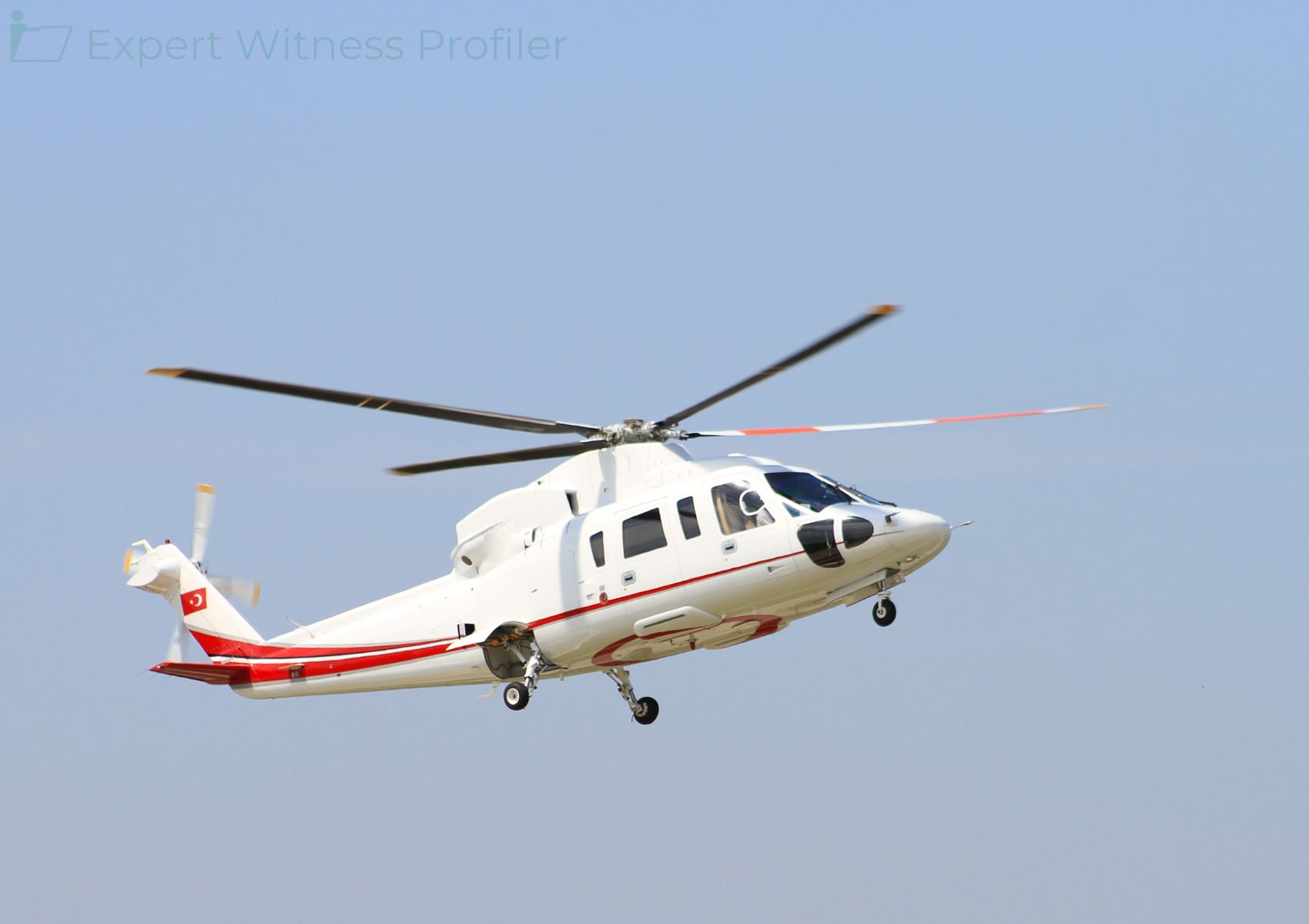
    This case arises from an accident involving a Robinson R44 II helicopter, registration N442VB (“Helicopter”), that occurred on the evening of December 30, 2021, in Levy County, Florida. The Helicopter was being flown at night by the owner-pilot, Ronald Hicks (“Pilot Hicks”), from a local friend’s residence to his private property. At the time of the accident, Pilot Hicks had less than ten hours of night flight experience in helicopters and was not certified under Instrument Flight Rules (“IFR”). Mr. Hicks, Shelly Kate Hicks, and their two children sustained fatal injuries.

    Plaintiffs filed a Daubert motion to exclude and/or limit the testimony of Defendant’s piloting expert Timothy Tucker.

    Piloting Expert Witness

    Timothy C. Tucker has 55 years’ experience as a military and civilian helicopter pilot, instructor and evaluator in both visual and instrument flight
    techniques.

    Get the full story on challenges to Timothy Tucker’s expert opinions and testimony with an in-depth Challenge Study.

    Discussion by the Court

    Qualification

    Plaintiffs argud that Tucker opined regarding “meteorology, engine failure, accident reconstruction, and human factors issues” despite being unqualified to do so.

    The Court has reviewed Tucker’s expert report and found that he is qualified as a “piloting” expert and may opine from the piloting perspective. However, Tucker was not qualified as a metallurgist or accident reconstructionist, and his report did not indicate that he relied upon Defendant’s metallurgy or accident reconstruction experts when forming his conclusions.

    While Tucker may offer his “piloting” opinions, he may neither (1) repeat the conclusions of Defendant’s metallurgy and accident reconstruction experts, nor (2) say they are consistent with his opinions. Moreover, Tucker is strictly limited to offering only the “piloting” opinions outlined in his report. Defendant represented that Tucker will testify to two main opinions, that Hicks “experienced spatial disorientation and lost control” of the helicopter, and that the evidence in this case is inconsistent with an attempted autorotation.

    Methodology

    Second, Plaintiffs argued that Tucker’s methodology was unreliable. Plaintiffs took issue with Tucker’s reliance on flight path ADS-B data for his analysis and the fact that his opinion purportedly conflicts with other witness testimony regarding the crash.

    While Plaintiffs are free to cross-examine Tucker regarding perceived deficiencies in his data or conclusions, they have not demonstrated exclusion is warranted.

    Third, Plaintiffs argued that Tucker’s opinion will be cumulative. As explained above, the Court found that Tucker is a qualified “piloting” expert and may opine from that unique perspective. To the extent Tucker is offering the “piloting” opinions in his report, his testimony is not cumulative. However, the Court reiterates that it will not tolerate Tucker offering other experts’ testimony or saying it comports with his own. This will be strictly enforced.

    Finally, Plaintiffs requested that Tucker be bound to the opinions contained within his expert report. The Court absolutely agreed that no expert may offer opinions not within their expert report.

    Held

    The Court denied the Plaintiffs’ Daubert motion to exclude and/or limit the testimony of Defendant’s expert Timothy Tucker.

    Key Takeaway

    Whether an expert selected the best data set to use is a question for the jury, not the judge. Vigorous cross-examination, presentation of contrary evidence, and careful instruction on the burden of proof are the traditional and appropriate means of attacking shaky but admissible evidence.

    Please refer to the blogs previously published about this case:

    Accident Reconstruction Expert’s Meteorological Opinions Excluded

    Avionics Expert Allowed to Opine on Engine Failure

    Case Details:

    Case Caption: Law V. Avco Corporation
    Docket Number: 1:24cv3
    Court Name: United States District Court for the Northern District of Florida, Gainesville Division
    Order Date: November 05, 2025
  • Accident Reconstruction Expert’s Meteorological Opinions Excluded

    Accident Reconstruction Expert’s Meteorological Opinions Excluded

    This case arises from an accident involving a Robinson R44 II helicopter, registration N442VB (“Helicopter”), that occurred on the evening of December 30, 2021, in Levy County, Florida. The Helicopter was being flown at night by the owner-pilot, Ronald Hicks (“Pilot Hicks”), from a local friend’s residence to his private property. At the time of the accident, Pilot Hicks had less than ten hours of night flight experience in helicopters and was not certified under Instrument Flight Rules (“IFR”). Mr. Hicks, Shelly Kate Hicks, and their two children sustained fatal injuries.

    Plaintiffs filed a Daubert motion to exclude and/or limit the testimony of Defendant’s accident reconstruction expert Douglas Stimpson.

    Accident Reconstruction Expert Witness

    Douglas Earl Stimpson has been continually employed in the aviation industry for over 54 years and has participated in over 3,500 aviation accident reconstructions.

    He has been a Commercial Pilot and Flight Instructor for over five decades and currently holds FAA certifications as a Commercial Pilot Rotorcraft Helicopter, Certified Flight Instructor Helicopter, Certified Flight Instructor Instruments, and Advanced Ground Instructor.

    Get the full story on challenges to Douglas Stimpson’s expert opinions and testimony with an in-depth Challenge Study.

    Discussion by the Court

    First, Plaintiffs argued that Stimpson opined regarding “meteorology, metallurgy, and human factors issues” despite being unqualified to do so.

    This Court has reviewed Stimpson’s expert report and found that he is qualified as an accident reconstruction expert and may opine from that perspective. He may also rely upon the opinions of Defendant’s other experts when forming his own accident reconstruction opinions, provided he explains he is doing so. However, Stimpson is not qualified as a piloting or meteorological expert. Therefore, he may not offer new piloting or meteorological opinions or offer Defendant’s other experts’ opinions as his own. If Stimpson’s testimony begins to venture beyond these boundaries, this Court is prepared to rein it in immediately.

    Second, the Plaintiffs argued that Stimpson’s methodology was unreliable. Plaintiffs take issue with Stimpson’s reliance on flight path ADS-B data for his analysis and the fact that his opinion purportedly conflicts with at least one eyewitness’ testimony regarding the crash. Therefore, while Plaintiffs are free to cross-examine Stimpson regarding perceived deficiencies in his data or conclusions, they have not demonstrated exclusion is warranted.

    Third, Plaintiffs argued that Stimpson’s opinions are cumulative because they overlap with Defendant’s other experts. As explained above, the Court found that Stimpson is a qualified accident reconstruction expert and may opine from that unique perspective. To the extent Stimpson is offering the accident reconstruction opinions in his report, his opinions are not cumulative.

    Finally, Plaintiffs requested that Stimpson be bound to the opinions contained within his expert report. This Court absolutely agreed that no expert may offer opinions not within their expert report.

    Held

    The Court granted in part Plaintiffs’ Daubert motion to exclude and/or limit the testimony of Douglas Stimpson.

    Key Takeaway

    Whether an expert selected the best data set to use is a question for the jury, not the judge. Vigorous cross-examination, presentation of contrary evidence, and careful instruction on the burden of proof are the traditional and appropriate means of attacking shaky but admissible evidence.

    Case Details:

    Case Caption: Law V. Avco Corporation
    Docket Number: 1:24cv3
    Court Name: United States District Court for the Northern District of Florida, Gainesville Division
    Order Date: November 6, 2025
  • Biomechanics Expert Was Allowed to Opine on the Source of Bullet Wounds

    Biomechanics Expert Was Allowed to Opine on the Source of Bullet Wounds

    This suit involves the unnecessary use of excessive force by police officers against a black man suffering from a mental health crisis.

    On November 21, 2021, during a mental health crisis, Jabari Asante-Chioke encountered Louisiana State Police (“LSP”) Officer Nicholas Dowdle and East Jefferson Levee District (“EJLD”) Officers Jonathon Downing and Gerard Duplessis (collectively referred to herein as “Officer Defendants”

    Plaintiff, Malikah Asante-Chioke, individually, and on behalf of her father, Jabari Asante-Chioke, herein filed this action against the Defendants, accusing them of failure to use less-than-lethal methods in accordance with training and state and federal law, to subdue Mr. Asante-Chioke.

    LSP Defendants argued that the Court should exclude Plaintiff’s expert John C. Gardiner, along with his testimony and opinions, because he is unqualified, his methodology is unreliable, and his testimony is irrelevant.

    EJLD Defendants made similar arguments, but they also argued that Gardiner’s testimony will not help the factfinder.

    Biomechanics Expert Witness

    Dr. John Carter Gardiner, PhD PE holds a Bachelor of Science in Mechanical Engineering and a Doctor of Philosophy in Bioengineering. He is a Senior Biomechanical Engineer who conducts biomechanical analysis of a variety of events including shootings.

    Gardiner is a principal and senior biomechanical engineer at MEA Forensic. He joined the firm in 2002 and leads the Biomechanics Group in the Los Angeles office.

    Get the full story on challenges to John Gardiner’s expert opinions and testimony with an in-depth Challenge Study.

    Discussion by the Court

    I. Gardiner’s Qualifications

    LSP Defendants argued that Gardiner is unqualified to opine on the likely source of the shots fired because, apart from his expert reviews, he lacked specific training, education, or experience analyzing bullet trajectory “based on gunshot wounds.”

    Gardiner estimates that he has performed biomechanical analyses in “50 different cases involving” gunshot wounds.

    LSP Defendants offered no authority which requires Senior Biomechanical Engineers to have specific training, experience, or education in bullet trajectory analysis to opine on the source of each bullet wound. Further, courts have allowed biomechanical engineers, including Gardiner, to opine on the source of wounds in a shooting.

    Accordingly, the Court found that Gardiner is qualified to opine on the likely source of Mr. Asante-Chioke’s gunshot wounds.

    II. Reliability of Gardiner’s Methodology

    LSP Defendants also argued that Gardiner’s methodology is unreliable because he did not calculate or quantify the officers’ exact shooting angles.

    Plaintiff contended that Gardiner did not merely “eyeball” the footage and instead considered “the relative positions of each of the three officers to Asante-Chioke, the gunshot wound entrances and exits, the gunshot wound trajectories, and the anatomical postures and positions of Asante-Chioke during the shooting incident.”

    This Court agreed with Plaintiff. LSP Defendants offered no authority which requires an expert to quantify or calculate exact shooting angles to opine on shooting source and position.

    LSP Defendants also argued that Gardiner’s methodology is unreliable due to alleged inconsistencies and contradictions concerning the timing of certain wound in his report termed as Gunshot Wounds #14 and #15 and his conclusions concerning how many gunshot wounds were consistent with coming from Dowdle during the final 1.1 seconds of the shooting. However, as Plaintiff correctly pointed out, LSP Defendants primarily disputed Gardiner’s conclusions, not his methodology.

    III. Relevance of Gardiner’s Opinions

    Defendants argued that Gardiner’s opinions are irrelevant to the issue of qualified immunity at this stage of the litigation. LSP Defendants also suggested that Gardiner opined on ultimate causation and damage issues regarding Gunshot Wound #15.

    This Court found that most of Gardiner’s opinion is relevant. In his report, Gardiner opines on the likely source of Asante-Chioke’s bullet wounds and when the shooting officers, including Dowdle, likely fired them. Such opinions are relevant to the pertinent qualified immunity issues of “whether Dowdle fired any shots; how many if so; and when, in relation to Asante-Chioke’s actions and death.”

    Still, in his report Gardiner also references Chief Forensic Pathologist Dr. Dana Troxclair’s conclusion that the “bullet causing Wound #15 killed Mr. Asante-Chioke.” Opinions and references thereto concerning which bullet killed Asante-Chioke are irrelevant to the limited issue of whether the shooting officers are entitled to qualified immunity when they continued to fire upon him. Accordingly, the Court excluded such opinions and references from Gardiner’s report.

    IV. Helpfulness of Gardiner’s Opinions

    EJLD Defendants also argued that Gardiner’s testimony will not assist the factfinder because video captures the incident.

    Plaintiff argued that neither of EJLD Defendants’ cited cases mention the use of experts or hold that experts cannot assist the factfinder in interpreting facts depicted on video. The Court agreed with Plaintiff.

    By opining on the likely source and timing of each gunshot wound, Gardiner will help the factfinder determine whether each of the shooting officers acted unreasonably when they continued to fire upon Asante-Chioke.

    Held

    • The Court granted in part and denied in part the LSP Defendants’ motion to exclude the testimony and opinions of John Gardiner.
    • The Court denied the EJLD Defendants’ motion to exclude the testimony of Plaintiff’s expert John C. Gardiner.

    Key Takeaway:

    While  Gardiner will be allowed to testify as an expert in this case, but he will not be able to opine or reference opinions on which wound likely killed Asante-Chioke.

    Opinions and references thereto concerning which bullet killed Asante-Chioke are irrelevant to the limited issue of whether the shooting officers are entitled to qualified immunity when they continued to fire upon him.

    Case Details:

    Case Caption: Asante-Chioke V. Dowdle Et Al
    Docket Number: 2:22cv4587
    Court Name: United States District Court, Louisiana Eastern
    Order Date: November 12, 2025
  • Marketing Expert’s Testimony on Review Hijacking Limited

    Marketing Expert’s Testimony on Review Hijacking Limited

    The present action stems from Plaintiff ML Products, Inc. (“ML Products”) and Defendants BillionTree Technology USA, Inc. (“BillionTree”) and Mountain Peak, Inc. (“Mountain Peak,” collectively, “Defendants”) competing for sales on Amazon.com where Defendants allegedly employed fraudulent tactics. Specifically, ML Products asserted claims of violations of the Lanham Act, false advertising, and unfair competition against Defendants.

    On April 12, 2024, Professor Brett Hollenbeck, ML Products’ affirmative technical expert, produced an expert report on his analysis of “the tactics related to online reviews used by certain competitors of ML Products, including BillionTree and its [alleged] affiliates.”

    Broadly, Hollenbeck opined that 22 of the 29 products sold by BillionTree and its alleged affiliates engaged in review hijacking—inappropriately linking a different product’s reviews to the given product on Amazon and misrepresenting the product as having more positive reviews; reviewers of nine of the products complained that the seller sent them emails requesting them to change negative reviews into positive ones in exchange for payment; and by manipulating and falsifying product ratings, BillionTree increased its visibility and sales on Amazon, misled customers, and lowered the visibility of its competitors, thereby harming ML Products.

    Defendants filed a motion to exclude the testimony of Hollenbeck.

    Marketing Expert Witness

    Prof. Brett Hollenbeck is an Associate Professor of Marketing at the UCLA Anderson School of Management in Los Angeles, California. His educational background includes a Bachelor of Science in Economics and a Bachelor of Arts in Political Science, both from the George Washington University, a Masters in Economics from the University of Texas at Austin and a Ph.D. in
    Economics from the University of Texas at Austin.

    Want to know more about the challenges Brett Hollenbeck has faced? Get the full details with our Challenge Study report.

    Discussion by the Court

    1. The Expert Report is Compliant with Rule 26(a)

    Defendants argued that ML Products failed to disclose the facts and data—specifically, the Amazon information—considered by Hollenbeck in forming his opinion. Defendants further argued that ML Products’ failure to disclose warrants sanctions under Rule 37.

    The Court did not find that ML Products failed to disclose the facts and data considered by Hollenbeck in forming his opinion. Although Defendants are correct that the Hollenbeck Report must lay out the factual bases for his opinions, the Hollenbeck Report provided the factual bases upon which he formed his opinions as he explored whether BillionTree and its alleged affiliates engaged in product rating manipulation to increase its sales and harm competitors like ML Products.

    For instance, Hollenbeck opined that 22 of the 29 products sold by BillionTree and its alleged affiliates engaged in review hijacking; 9 of the products had reviews where customers were offered gift cards to change negative reviews into positive ones; and BillionTree and its alleged affiliates’ conduct increased their products ratings and hurt the sales of its competitors, including ML Products.

    The Court is not convinced that ML Products’ disclosure prevented Defendants from conducting a meaningful deposition of Hollenbeck, as Defendants have had until August 20, 2025, to submit a rebuttal report and until September 3, 2025, to complete discovery, which is more than sufficient time.

    The Court found that sanctions under Rule 37 is not warranted, as ML Products did not fail to disclose Hollenbeck as an expert witness nor the facts and data supporting his opinions in the Hollenbeck Report.

    2. The Expert Report is Not Improper under FRE 703

    Defendants argued that the Hollenbeck Report should be excluded because it relies on inadmissible hearsay and improperly attempts to establish the truth of its content.

    However, the Court held that Hollenbeck may rely on hearsay as it is reasonably relied upon in the field of marketing academia. Typically, an academic expert in online marketplaces will review comment entries on marketplaces to identify how the products function.  Further, Hollenbeck used the marketplace reviews and applied his expertise to form an independent judgment that BillionTree and its alleged affiliates were engaging in review hijacking, bribing customers to turn negative reviews into positive ones, and manipulating Amazon ratings to boost its sales and diminish competitors’ sales.

    Moreover, the probative value of Hollenbeck’s opinion outweighs its prejudicial effect because it could help a juror to determine certain facts like whether review hijacking, bribing customers for better reviews, and manipulating ratings constitutes an unlawful, unfair, or fraudulent business act or practice. 

    3. The Expert Report Applies Reliable Methods

    Defendants argued that the Hollenbeck Report should be excluded because it lacked analytical rigor, relied on incomplete data, and failed to account for alternative explanations.

    Defendants asserted that, for example, the report did not account for other variables impacting a products’ ranking on Amazon, and that the Hollenbeck Report did not provide evidence supporting its assertion that repurposed reviews misled consumers and caused harm.

    Hollenbeck reviewed product pages and analyzed 29 products. He further declared that he performed an analysis of the reviews and product pages downloaded by applying his skills and expertise from marketing academia.

    The Court found that his understanding and expertise in the area coupled with the general accepted principle that alternative explanations involve weight, not admissibility, are sufficient to assuage Defendants’ concerns of unreliable methodology.

    4. The Expert Report Attempts to Introduce Legal Opinions

    Defendants argued that the Hollenbeck Report repeatedly referred to Defendants’ alleged conduct as illegal according to the Federal Trade Commission, which is an impermissible legal opinion.

    The Court found that some of Hollenbeck’s opinions constituted improper expert opinions.

    In paragraph 9 of his report, Hollenbeck described BillionTree and its alleged affiliates as partaking in review hijacking and opines that “this type of review hijacking is considered illegal by the Federal Trade Commission.” In paragraph 99 of his report, Hollenbeck opined that BillionTree and its alleged affiliates engaged in “harassment and paying for positive reviews which are considered illegal by the Federal Trade Commission.” Interpreting whether conduct constitutes a violation of law regulated by the Federal Trade Commission falls squarely within the Court’s province, as it involves conclusion of law.

      Held

      The Court granted in part and denied in part the Defendant’s motion to exclude the testimony of Brett Hollenbeck.

      Key Takeaway:

      Expert witnesses may rely on inadmissible hearsay in forming their opinions, so long as it is of a type reasonably relied upon by experts in their field. Typically, an academic expert in online marketplaces will review comment entries on marketplaces to identify how the products function. In this case, Hollenbeck used the marketplace reviews and applied his expertise to form an independent judgment that BillionTree and its alleged affiliates were engaging in review hijacking.

      Case Details:

      Case Caption: ML Products Inc. V. Billiontree Technology USA, Inc.
      Docket Number: 2:23cv8626
      Court Name: United States District Court for the Central District of California
      Order Date: August 26, 2025
    1. Internal Medicine Expert’s Testimony Limited Despite His Physician Behavior Experience

      Internal Medicine Expert’s Testimony Limited Despite His Physician Behavior Experience

      Plaintiff State of Washington alleged that Novo Nordisk Inc. (“NNI”) caused physicians to prescribe its drug, NovoSeven®, to Washington hemophilia patients by: (1) promoting it “off-label” for prophylaxis and “high dose” use; (2) paying kickbacks to physicians; and (3) paying bribes to patients, all of which rendered claims to Medicare and Washington Medicaid false.

      The State of Washington has been investigating this case for almost fifteen years, hoping to find evidence of unlawful conduct that allowed its Medicaid program to recoup money it paid for a medically necessary, life-saving drug.

      Novo Nordisk’s expert, Dr. Anupam B. Jena, a medical doctor who also has a Ph.D. in economics opined that NNI’s “alleged publication strategy” did not cause the submission of false claims for NovoSeven.

      Washington did not challenge Jena’s credentials or expertise, but it did argue that his “causation” opinions were not admissible because (1) they were based on insufficient or mis-stated facts; (2) his methodology was unreliable because though he is not an expert on the independence of medical publications, he makes “assumptions” about the integrity of the publications at issue, while ignoring other evidence particular to the publications and strategies at issue; (3) he opined about areas of medicine and reimbursement that are outside his expertise; and (4) he opined about the law of causation, a matter better left for jury instructions.

      Internal Medicine Expert Witness

      Dr. Anupam B. Jena, MD, PhD, is the Joseph P. Newhouse Professor of Health Care Policy at Harvard Medical School and a physician in the Department of Medicine at Massachusetts General Hospital. He is also a faculty research associate at the National Bureau of Economic Research. As an economist and physician, Jena’s research involves several areas of health economics and policy including the use of natural experiments in health care, the economics of physician behavior and the physician workforce, medical malpractice, the economics of health care productivity, and the economics of medical innovation. 

      Jena graduated Phi Beta Kappa from the Massachusetts Institute of Technology. He received his MD and PhD in Economics from the University of Chicago and completed his residency in internal medicine at Massachusetts General Hospital. He is the host of the Freakonomics, MD podcast, which explores the “hidden side of health care.”

      Want to know more about the challenges Anupam Jena has faced? Get the full details with our Challenge Study report

      Discussion by the Court

      The Court concluded that Jena is qualified to opine on the bulk of topics in his Report, including the reliability of peer-reviewed publications. He has sufficient expertise and experience in the field of physician behavior in connection with writing prescriptions to set out the many factors that can influence treating physicians in their selection of pharmaceuticals to prescribe for their patients.

      While Jena’s testimony was largely permitted because he is a qualified expert in the fields of medicine and economics and his report is based on sufficient facts or data, Jena was barred from opining on the ultimate legal conclusion that the physicians who prescribed NovoSeven did not do so because of the inducements and benefits NNI extended to them or their patients.

      Held

      The Court granted in part and denied in part the Plaintiffs Siegel and Washington’s motion to exclude the testimony of Defendant Novo Nordisk’s expert witness, Dr. Anupam Jena.

      Key Takeaway:

      As a general rule, an expert opinion is not objectionable simply because it embraces an ultimate issue to be decided by the trier of fact. However, an expert cannot opine as to a legal conclusion, or to the ultimate issue of law; instructing the jury on the applicable law is the Court’s distinct and exclusive province.

      Please refer to the blogs previously published about this case:

      Law & Legal Expert Helps Jury Understand Medicaid’s Complex Regulatory Framework

      Hematology Expert’s Opinion on NovoSeven’s Medical Appropriateness Admitted

      Pharmacology Expert’s Testimony About the Purpose and Effect of Illegal Marketing Tactics Excluded

      Case Details:

      Case Caption: United States ex rel. Siegel V. Novo Nordisk Inc.
      Docket Number: 3:23cv5459
      Court Name: United States District Court, Washington Western
      Order Date: July 2, 2025
    2. Pharmacology Expert’s Testimony About the Purpose and Effect of Illegal Marketing Tactics Excluded

      Pharmacology Expert’s Testimony About the Purpose and Effect of Illegal Marketing Tactics Excluded

      Plaintiff State of Washington alleged that Novo Nordisk Inc. (“NNI”) caused physicians to prescribe its drug, NovoSeven®, to Washington hemophilia patients by: (1) promoting it “off-label” for prophylaxis and “high dose” use; (2) paying kickbacks to physicians; and (3) paying bribes to patients, all of which rendered claims to Medicare and Washington Medicaid false.

      The State of Washington has been investigating this case for almost fifteen years, hoping to find evidence of unlawful conduct that allowed its Medicaid program to recoup money it paid for a medically necessary, life-saving drug.

      Jamie Siegel and Washington State’s expert witness, Dr. Adriane J. Fugh-Berman, opined broadly that NNI’s promotional methods and practices caused physicians and patients to use more NovoSeven, including off-label. NNI filed a Daubert motion to exclude the testimony of Fugh-Berman.

      Pharmacology Expert Witness

      Dr. Adriane J. Fugh-Berman, MD is a Professor of Pharmacology and Physiology with a joint appointment in the Department of Family Medicine at Georgetown University Medical Center.

      She has spent her 35-year academic career researching how pharmaceutical companies market to the medical community, and how that marketing affects the prescription practices of that community.

      Get the full story on challenges to Adriane Fugh-Berman’s expert opinions and testimony with an in-depth Challenge Study

      Discussion by the Court

      To begin with, NNI did not directly challenge Fugh-Berman’s credentials, and it did not argue that she is not an expert in her field. It did emphasize that she self-identifies as an “activist” advocating for “rational prescribing and promoting public health,” and that her opinions have been excluded as irrelevant in other cases.

      NNI sought to exclude Fugh-Berman’s opinions, arguing that she failed to set out sufficient facts and data to support her unreliable analytical methodologies, and failed to reliably apply her principles and methods.

      Discourse Analysis

      NNI specifically challenged Fugh-Berman’s reliance on “discourse analysis” to support her conclusion that NNI’s promotional activities improperly affected prescribing physicians’ judgment when selecting a pharmaceutical to treat a hemophilia patient. Moreover, NNI argued persuasively that discourse analysis was not even mentioned in her Report. The Court therefore precluded any opinion testimony about applying “discourse analysis” unless raised by the defense.

      Patient A’s Use of NovoSeven

      Fugh-Berman has general knowledge from experience and known studies and is qualified to testify generally about physician behavior in prescribing pharmaceuticals, and what can influence that behavior. However, she will not be permitted to testify that NNI’s promotional methods were responsible for “specific increases in the prescribing behavior” of Patient A’s primary physician, Dr. Ronald Louie, or about the effects of the promotions on Patient A. NNI persuasively argued that Fugh-Berman did not review specific “claims data” and “medical records” associated with Patient A’s use of NovoSeven. Fugh-Berman may summarize what benefits the record demonstrates were provided to Louie and Patient A that may have influenced Louie in the way that studies have shown that these types of benefits influence prescription choices. She will not be permitted to testify that these benefits caused Louie to use NovoSeven. This is an ultimate legal conclusion for the jury.

      NNI also objected to Fugh-Berman’s proposed “factual narrative” testimony. It argued that it would be improper for her to offer a speculative editorial about the alleged nefarious global effects of [NNI’s] marketing practices” and its “sway over the medical community” because it is “neither relevant nor reliable.” The Court agreed.

      Fugh-Berman’s report concluded with two paragraphs opining about the purpose and effect of NNI’s allegedly illegal marketing tactics, and specifically about the consequences of the benefits it provided to Louie, Patient A, and his mother. These ultimate conclusions of law are for the jury, and she will not be permitted to so opine. In other words, she cannot characterize the high dosage or prophylaxis use of NovoSeven as “unproven.” She can testify that, generally, based on her experience, scholarship, and training, promotional campaigns have been shown to affect such behavior.

      Held

      The Court granted in part and denied in part NNI’s Daubert motion to exclude Adriane Fugh-Berman’s testimony.

      Key Takeaway:

      No expert shall testify in a form of an advocate editorializing, or present a conclusory narrative akin to attorney argument, rather than as an expert witness.

      Please refer to the blogs previously published about this case:

      Law & Legal Expert Helps Jury Understand Medicaid’s Complex Regulatory Framework

      Hematology Expert’s Opinion on NovoSeven’s Medical Appropriateness Admitted

      Case Details:

      Case Caption: United States ex rel. Siegel V. Novo Nordisk Inc.
      Docket Number: 3:23cv5459
      Court Name: United States District Court, Washington Western
      Order Date: July 16, 2025