Tag: Photograph

  • Intellectual Property Expert’s Fair Use Opinion Admitted

    Intellectual Property Expert’s Fair Use Opinion Admitted

    The Volga German people are individuals of German origin who moved to the Volga region of Russia in the eighteenth century. Many of the descendants of the Volga German people have moved to other parts of the world after persecution of Germans in Russia. There is a sizable Volga German diaspora
    in the American Midwest. Plaintiff Margreatha Hein and Defendant Dr. Brent Mai are both genealogy researchers on the Volga German people. Their research is the subject of this lawsuit.

    This case centers on whether Mai committed copyright infringement on Hein’s alleged work and whether there are damages due to the alleged infringement.

    Defendant filed a motion to exclude the testimony of Plaintiffs’ expert, Dr. Kenneth D. Crews.

    Intellectual Property Expert Witness

    Kenneth Donald Crews is a law professor with substantial professional expertise in copyright law. Crews has been a scholar of intellectual property law since at least 2000. He possesses a PhD in Library and Information Science; he published his dissertation on copyright law and policy.

    He has published five books on copyright and a great number of other publications.

    Discover more cases with Kenneth Crews as an expert witness by ordering his comprehensive Expert Witness Profile report.

    Discussion by the Court

    Crews’ report contended that Hein’s photographs and textual compilations are the proper subject of copyright and have been infringed upon by Mai. His report compared Mai’s reproductions of Hein’s textual compilations to the originals. Crews also opined that Plaintiffs have had their Lanham Act and unfair competition rights violated by Mai’s listing of Hein as a “researcher” or “contributor.” Crews also provided background on the Copyright Act, the process of registering copyrights, and the remedies that are available to injured holders of copyrighted material. Finally, Crews provided a supplemental declaration expressing his opinion that none of Mai’s usage of Hein’s work is protected by the defense of “fair use.”

    Mai sought to exclude Crews’ testimony for several reasons including: (1) that Crews did not have the necessary genealogy experience to qualify as an expert; (2) that Crews’ testimony failed all of the Daubert factors; (3) Crews’ testimony offers improper legal conclusions and legal interpretations and thus intrudes on the province of the Court and the jury; and (4) that part of Crews’ testimony was not timely disclosed.

    Analysis

    Defendant first argued that Crews is not trained as a genealogist and therefore lacked the expertise necessary for him to testify in this matter. However, copyright law is what Crews sought to testify about, not the specifics of genealogy research, which are not at issue in this case.

    At the very beginning of the report Crews informed the reader that his work will “follow the basic structure of a copyright infringement case.” His report’s methodology is apparently just the three elements of copyright infringement. It is hard to see how this is not “discoursing broadly over the entire range of applicable law.”

    While the Court does not doubt Crews’ familiarity with copyright law, ultimate issues of law are for the judge to instruct on and the jury to decide upon. An expert witness, even a law professor, cannot be a substitute teacher for the Court.

    Crews did not aid the Court in understanding a disputed question of fact but instead his report indicates he “states legal conclusions drawn by applying the law to the facts.” That said, some of Crews’ report is helpful background on the process of obtaining and defending a copyright.

    Finally, Defendant contended that Crews’ opinion on “fair use,” added through his supplemental declaration, was not timely disclosed. The prejudice was largely self-curing as Defendant has been in possession of Crews’ fair use opinion several months before trial and there was no evidence the delayed disclosure will disrupt the trial. As a result, the Court found it unlikely that Defendant was prejudiced by the late disclosure of Crews’ fair use opinion.

    Held

    The Court granted in part and denied in part the Defendant’s motion
    to exclude the testimony of Kenneth Crews.

    Key Takeaway

    The Court will permit Crews to testify at trial but noted that he will not be allowed to testify on matters relating to ultimate legal issues in the case. Defendant may raise objections at trial to testimony he believes strays into legal conclusions. This balance cautiously tracks the line of Rule 702(a), that expert testimony is primarily intended to “help the trier of fact to understand the evidence or to determine a fact in issue.”

    Case Details:

    Case Caption: Hein V. Brent Mai
    Docket Number: 6:24cv1126
    Court Name: United States District Court, Kansas
    Order Date: January 07, 2026
  • Engineering Expert Was Not Allowed to Opine on the Condition of the Wooden Panel

    Engineering Expert Was Not Allowed to Opine on the Condition of the Wooden Panel

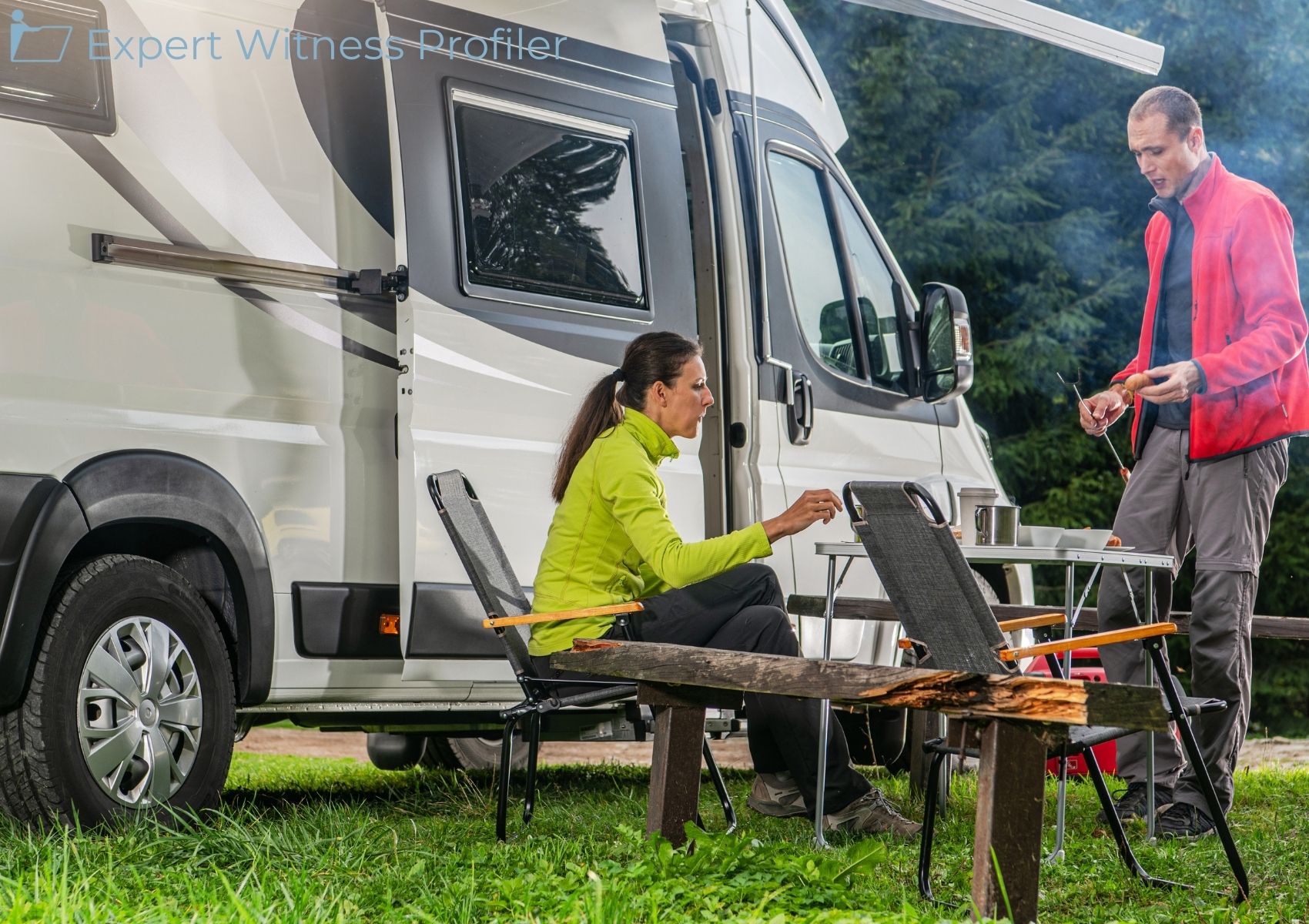
    This is a personal injury case. Plaintiff Amy Manzanares was allegedly injured by a wooden panel in Defendant El Monte Rents, Inc.’s recreational vehicle (“RV”) in November 2023.

    Defendant filed a motion to exclude Plaintiffs’ expert, Mark Goodson, P.E.

    Engineering Expert Witness

    Mark E. Goodson, P.E. is a consulting engineer licensed in electrical and mechanical engineering. He holds a Bachelor of Science in Electrical Engineering from Texas A&M University. He studied forensics at UT Southwestern for three years and has formal training in fire investigation and fire protection. Goodson has several publications in the field of forensic science. In 1984, he opened his consulting practice.

    Fortify your strategy by reviewing a Challenge Study detailing grounds for excluding Mark Goodson’s expert testimony.

    Discussion by the Court

    Plaintiffs included Goodson in their expert disclosures. His expert designation lists three general areas of testimony. First, Plaintiffs sought to have Goodson testify about the “appearance of the lumber that was in place in the RV . . . at the time the accident occurred and whether or not the lumber was original to the RV or changed out from what was originally in the RV.” Second, Plaintiffs sought to offer testimony about “inspections [Goodson] performed on the actual RV involved in the accident and similar modeled RV inspected and the appearance and status of their paneling.” Third, Goodson’s designation provided that he will testify about the quality of the repairs performed on Defendant’s RV and whether the repairs were appropriate and safe. That includes repairs “that were in place in the most recent inspection in 2025”—after the accident occurred.

    Defendant did not question Goodson’s qualifications but challenged his testimony on other grounds. In Defendant’s view, Goodson’s testimony is irrelevant, unreliable, and unhelpful to the jury.

    Defendant argued that, despite the list of topics in Plaintiffs’ expert designations, Goodson only has one conclusion: that the wooden panel was not installed or attached properly. That conclusion, according to Defendant, is based solely on the fact that the wooden panel fell.

    Analysis

    Plaintiffs did not identify a methodology for the Court to evaluate

    Plaintiffs contended that Goodson’s opinions are based on his inspection of the RV, photographs, and his expertise in failure analysis. But Goodson testified that he did not employ a failure analysis, and Plaintiffs did not identify any expert materials showing otherwise.

    The sufficiency of the materials Goodson relied on is a different question from reliability, so the inspection and photographs did not address the question at hand.

    The only evidence Plaintiffs cited in their entire response is the following deposition excerpt:
    Q. Do you have — well, I’ll circle back to that here in a second. You are not offering any opinions about the condition of the fascia board immediately before the incident occurred, correct?
    A. Well, except for the fact that it was improperly attached; that is correct.

    Plaintiffs used this excerpt to argue that Defendant incorrectly states that Goodson offers no opinion about the status of the wooden panel prior to the accident. But the Court is not so concerned with whether Goodson testified that the panel was improperly attached. Rather, the Court is concerned that it lacks the information required to perform its gatekeeping function under Rule 702(c) to evaluate the reliability of the method underlying this opinion.

    The quoted excerpt alone does not assist the Court in performing this function, and Plaintiffs did not attach or cite any other evidence. Goodson himself answered “No” when asked if he used any “technique or underlying theory that [he] relied upon in arriving at [his] opinions.” While the Court did not give conclusive weight to that answer because it does not have the entire deposition transcript and it is up to the Court to determine if a reliable method exists, it was Plaintiffs burden to otherwise demonstrate his “testimony is the product of reliable principles and methods.”

    Plaintiffs did not demonstrate that any potential method is reliable by a preponderance of the evidence

    The Findings section of Goodson’s report begins by explaining that the “actual piece of lumber has not been examined,” but that a photograph was examined. The wooden panel that struck Amy Manzanares was apparently attached to the lumber depicted in the photograph.

    Below the photograph, Goodson explained that the lumber appeared to have been ripped as opposed to cut with a cross cut technique. When Goodson was asked about this portion of the paragraph during his deposition, his testimony left the Court unable to analyze reliability. Defense counsel stated that she wanted “to understand the significance of the findings here regarding the lumber being ripped versus crosscut.” Goodson responded that “There’s no significance in this case.”

    In the next sentence under the Findings section, Goodson stated that “the lumber appears to be actual lumber, as opposed to an engineered wood product (such as MDF, Medium Density Fiberboard).” According to Goodson’s report, these “observations have more to do with fit and finish of the product; the lumber does not appear to aesthetically match what was found to be used in other similarly outfitted vehicles.”

    Neither the report or the deposition excerpts provided by both parties explain how these observations about the type of wood at issue inform Goodson’s opinions. Given no other materials, the Court cannot conclude that it is more likely than not this potential method is reliable.

    Next, Goodson’s report provided close-up photographs of the lumber to which the wooden panel that injured Amy Manzanares was attached. According to him, there is “no apparent evidence of any type of adhesive having been used.”

    While the analysis of the lack of evidence of an adhesive and screw type could be a method, the Court cannot conclude it is reliable under the circumstances.

    Potential spoliation of evidence does not bear on the Rule 702 analysis

    It may well be that it was not possible for Goodson to have a reliable method in a case where the wooden panel at issue was repaired before he could ever inspect it. The facts may ultimately show that Defendant spoliated evidence by repairing the panel after a duty to preserve arose. That is not the question before the Court here. Admission of expert testimony as a spoliation sanction is a “wholly inappropriate” remedy. Such a remedy would have this Court “flatly ignore its responsibilities” as a gatekeeper of inadmissible expert testimony under the Federal Rules of Evidence. As a result, the Court cannot rely on what method Goodson might have been able to employ without the alleged spoliation as a basis to admit his testimony.

    Held

    The Court granted the Defendant’s motion to exclude the testimony of Plaintiffs’ expert Mark Goodson, P.E.

    Key Takeaway

    The Court is unconvinced that Plaintiffs carried their burden to show it is more likely than not that Goodson’s opinions are the product of reliable principles and methods. The Court reached this conclusion for three main reasons. First, the evidence did not identify a methodology for the Court to evaluate. Second, even if Plaintiffs identified a methodology, the evidence did not show its reliability by a preponderance of the evidence. Third, whether Defendant spoliated evidence has no bearing on the admissibility of Goodson’s testimony.

    Case Details:

    Case Caption: Manzanares V. El Monte Rents, Inc.
    Docket Number: 4:24cv191
    Court Name: United States District Court for the Eastern District of Texas, Sherman Division
    Order Date: January 05, 2026
  • Mechanical Engineering Expert Witness’ Product Identification Opinion Excluded

    Mechanical Engineering Expert Witness’ Product Identification Opinion Excluded

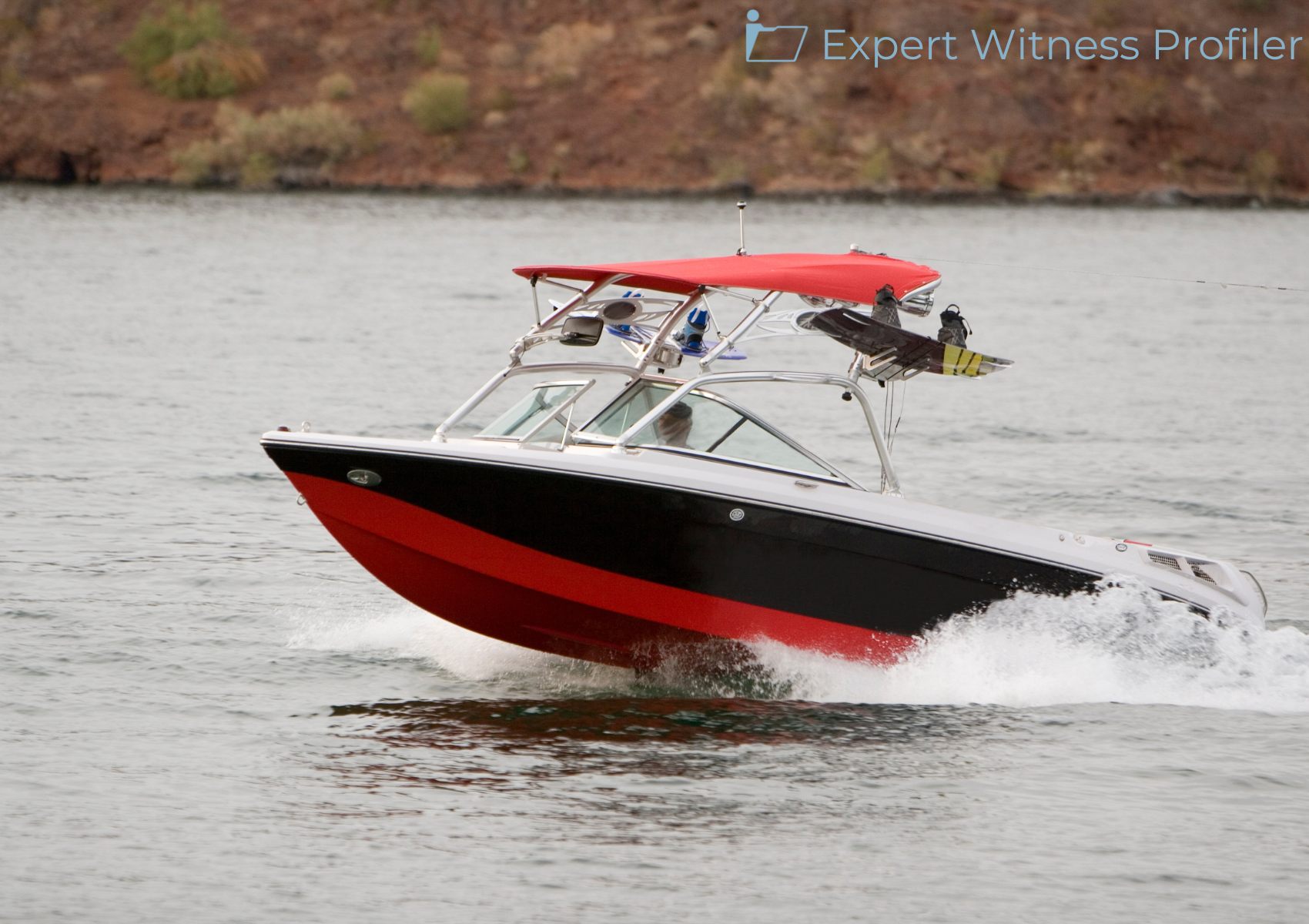
    This case arises from a boating accident at Lake Powell on July 29, 2018. Plaintiff, while aboard a Moomba Mondo ski boat purchased from Rocky Mountain Boat Company (ROMOBOCO), was injured when a carabiner (the Subject Carabiner) suddenly failed and struck her in the head. Plaintiff survived, but she allegedly suffers from permanent disabilities due to the accident. Unfortunately for all parties, shortly after the accident, the rope and carabiner at issue were disposed of by another passenger on the boat.

    On July 20, 2020, Plaintiff filed suit against ROMOBOCO, the seller of the Moomba, and later amended the complaint to add two companies believed to be involved in the manufacturing and/or distribution of the Subject Carabiner, Attwood Corporation and Land ‘N’ Sea Distributing, Inc.

    Attwood and LNS filed a motion to strike Plaintiff’s expert, Dr. Adam Aleksander, contending his product identification opinion is unreliable.

    Aleksander concluded that the carabiner clip that struck Plaintiff (the “Subject Carabiner Clip”) is “one and the same product” as an anchor line and rope product sold by Defendant Attwood Corporation (the “Attwood 11723-7”) and that “there are no significant differences between” the Attwood 11723-7 product and the “device in the incident injury.”

    Mechanical Engineering Expert Witness

    Adam Aleksander holds Mechanical Engineering degrees from San Jose State University (B.S.) and the University of Colorado (M.E), and an Industrial Engineering degree from Texas A&M University (Ph.D.).

    He is experienced in investigation techniques, reconstruction, photogrammetry, and reconstruction of incidents that involve property loss, injuries and fatalities. Aleksander’s PhD training is in Human Factors Engineering and Safety Engineering.

    Get the full story on challenges to Adam Aleksander’s expert opinions and testimony with an in-depth Challenge Study. 

    Discussion by the Court

    Aleksander was not in a Position to Differentiate between the Defendant’s Product and its Competitors

    Aleksander came to his product identification opinion based on a comparison of a photograph of the Attwood 11723-7 and a photograph taken by the National Park Service (“NPS”) of the the Subject Carabiner Clip. However, he also identified key differences between the Subject Carabiner and the Attwood 11723-7.

    His opinion is not that he thinks the Subject Carabiner is the Attwood product to the exclusion of other products. Similar products made by other manufacturers constitutes an obvious alternative explanation. While it is not necessary to rule out every possible alternative, it is necessary to account for obvious alternatives. In his deposition, Aleksander testified that he did not compare any other product with the NPS photographs.

    The Court, therefore, finds that Aleksander’s opinion is not based on sufficient facts, because he failed to consider any alternative product that could have been the Subject Carabiner.

    Aleksander did not use a Physical Exemplar of the Attwood 11723-7 to Reach his Conclusions

    Attwood and LNS argued that Aleksander’s opinions are not based on a reliable application of his methodology to the facts, because he did not use a physical exemplar of the Attwood 11723-7 to reach his conclusions. Instead, he digitally inverted the photograph of the Attwood 11723-7 to match the orientation of NPS photograph.

    The reliability of the application of this methodology is questionable; however, the Court need not address it because, as explained above, the failure to compare the photograph to other potential products makes the product identification opinion unreliable.

    Finally, all disclosures under Rule 26 have to be in writing, signed, and served. However, the Court did not consider the supplemental report because it is not related to Aleksander’s product identification opinion.

    Held

    The Court granted Attwood and LNS’ motion to strike Plaintiff’s expert, Dr. Adam Aleksander.

    Key Takeaway:

    Aleksander failed to consider any alternative product that could have been the Subject Carabiner. Similar products made by other manufacturers constitutes an obvious alternative explanation. While it is not necessary to rule out every possible alternative, it is necessary to account for obvious alternatives. In his deposition, Aleksander testified that he did not compare any other product with the NPS photographs.

    Case Details:

    Case Caption: Marandola V. Pueblo Suzuki, Inc. Et Al
    Docket Number: 1:20cv2113
    Court: United States District Court, Colorado
    Order Date: September 26, 2024