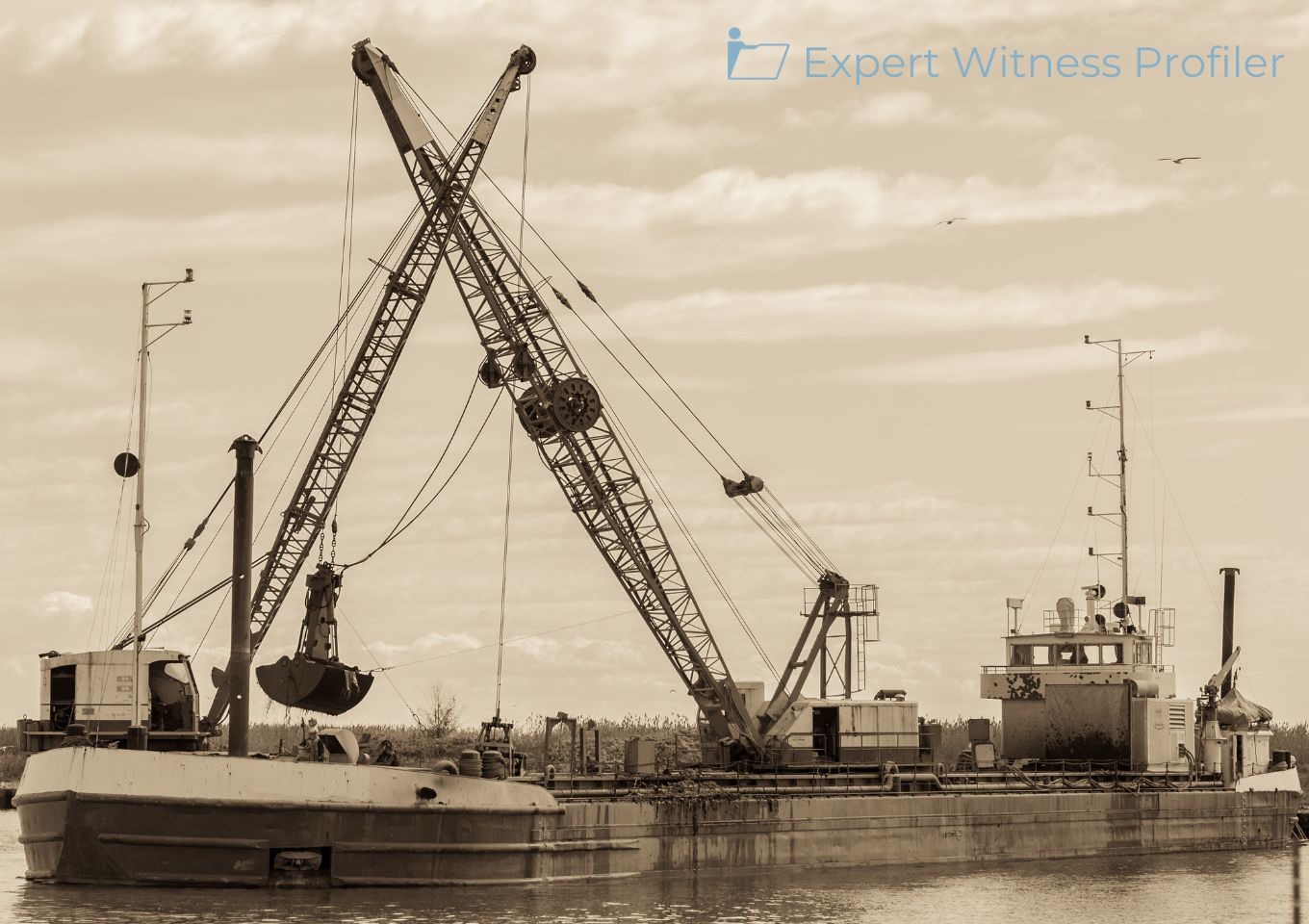
The Plaintiff, William Austin, III, sustained injuries while disembarking from the dredging vessel W308 RS WEEKS (the “vessel”). The Plaintiff alleged that, during his course of employment with Sontheimer Offshore/Catering Co. and Weeks (collectively, the Defendants), he suffered severe and permanently disabling injuries. The Plaintiff contends that the Defendants were negligent in various aspects, including failure to properly supervise, direct, and control operations, provide or utilize safe equipment, offer adequate assistance, ensure safe egress from the vessel, give adequate warning of known dangers, and provide a safe working environment. Under the Jones Act, the Plaintiff claims that Weeks had a duty to furnish a safe workplace, a competent and adequate crew, safe gear, equipment, and a seaworthy vessel. The Plaintiff argues that Weeks’ alleged failures, coupled with the unseaworthiness of the vessel, were the proximate causes of his injuries.
On December 19, 2023, Weeks filed a Daubert motion seeking to exclude testimony from the Plaintiff’s maritime safety expert, Robert E. Borison. Weeks asserted that Borison’s testimony was unhelpful, conclusory, and usurped the role of the factfinder. On December 26, 2023, the Plaintiff provided Weeks with a supplemental report from Borison. In response, Weeks filed another motion aiming to exclude Borison’s supplementary report. Weeks contended that the Plaintiff submitted the supplemental report because they acknowledged that Borison’s initial report contained opinions that did not meet the requirements of Federal Rule of Evidence 702. Weeks argued that the information in the supplemental report was available to Borison when the original report was prepared, and it would be impermissible to use this information to undermine Weeks’s Daubert motion. Additionally, Weeks contended that the report should be excluded as it allegedly violated the Court’s scheduling order.
In response, the Plaintiff argued that Borison was qualified to testify and would offer testimony that is both helpful and non-conclusory regarding safety policies. The Plaintiff also contended that Borison’s supplemental report should not be excluded despite its untimeliness. The Plaintiff explained that the delay was a result of the Defendants’ procrastination in producing the vessel’s captain for a deposition and the Plaintiff’s difficulties in locating specific photographs. Furthermore, the Plaintiff asserted that none of the “new” information in the supplemental report was unknown to Weeks, thereby causing no prejudice to them.
On December 27, 2023, Weeks requested an extension of its expert report deadline until January 8, 2024, to allow time for supplementing its expert report if deemed necessary after reviewing Borison’s supplemental report. The Plaintiff did not oppose this extension request, and the Court granted Weeks’ motion for an extension.

Safety Expert Witness
Robert E. Borison possesses over 50 years of safety experience in industries related to the exploration, production, and transport of oil and gas, as well as the marine, general, and commercial sectors. His expertise encompasses safety issues across various settings, including production platforms, barges, structural and fabrication yards, as well as vessels/boats, commercial and industrial buildings, and building projects. Borison obtained his degree in Business Administration from Louisiana State University. He currently serves as the President of Total Safety Services, Inc.
Discussion by the Court
Weeks contested the relevance of Borison’s proposed testimony under Rule 702, asserting that his opinions pertained to common-sense matters unrelated to his expertise. Weeks argued that Borison’s opinions encroached upon the factfinder’s role and included impermissible conclusions of law.
Weeks contended that Borison’s testimony was unnecessary and unhelpful, asserting that it delved into common-sense matters that did not necessitate expert testimony and usurped the factfinder’s role. In response, the Plaintiff argued that Borison’s extensive experience, with testimony in over eighty-five cases related to maritime safety, qualified him to educate the jury on relevant rules, regulations, and acceptable practices pertinent to the case.
The U.S. Fifth Circuit Court of Appeals has outlined that expert testimony ought to be excluded when the jury can effectively assess a situation through common experience and knowledge, as stated in Peters v. Five Star Marine Serv., 898 F.2d 448, 450 (5th Cir.1990). The primary consideration for the Court is whether the expert testimony consists of conclusions derived from common sense or serves to explain technical issues that aid the jury in understanding the relevant facts of the case.
Weeks relied on a precedent where another section of the Court concluded that Borison could not testify because his opinion didn’t require or utilize any expertise, and it wouldn’t assist the jury in resolving any case issues. However, in the current case, Borison’s opinion, as outlined in his report, asserted that Weeks breached health and safety requirements by failing to provide a “safe means of access.” His opinion clarified that a ladder should have been supplied as a secure method of disembarking the vessel. Defining what constitutes a “safe means of access” in accordance with maritime safety standards and the maritime industry is not a matter of common sense the Court was readily familiar with. Borison’s specialized knowledge and experience in marine safety were asserted to be crucial in illuminating this specific issue.
Subsequently, Weeks contended that Borison’s report lacked thorough analysis as it did not consider whether the water taxi captain should have assigned a deckhand to assist the Plaintiff during the transfer and did not assess the feasibility and safety of repositioning the tug closest to the vessel’s bow ladders. The Court observed that this challenge pertained to the foundation and source of Borison’s opinion, suggesting that it should be addressed through cross-examination rather than exclusion.
Weeks additionally asserted that Borison’s opinions went beyond factual analysis and ventured into offering legal conclusions, thereby impinging on the factfinder’s ability to draw its own conclusions. Weeks referenced Rule 704(a), which stipulates that testimony in the form of an opinion or inference, otherwise admissible, is not objectionable because it addresses an ultimate issue for the trier of fact. However, Weeks argued that Fifth Circuit case law makes it clear that Rule 704(a) does not permit a witness to provide legal conclusions, citing Shawler v. Big Valley, L.L.C., 728 F. App’x 391 (5th Cir. 2018).
Weeks argued that Borison’s statements, asserting that supervisors “failed to install, or request to install, a gangway” and that captains should have provided specific instructions, were improper conclusions. However, these statements did not constitute legal conclusions regarding Weeks’ negligence. The Court found that that Borison’s testimony was permissible as he did not offer opinions on unseaworthiness, negligence, or causation.
The Court was not persuaded that Borison had crossed the line by providing legal conclusions. The Court held that Borison offered expert opinion testimony that could potentially assist the jury in determining the ultimate legal question, specifically, legal fault. The Court acknowledged that the admissibility of such testimony depended on how the actual questions and answers were framed during the trial, as it could be either objectionable or not in specific circumstances. The Court indicated that it would be better positioned during the trial to assess whether Borison genuinely reached legal conclusions that fall within the jury’s purview or if he instead presented admissible opinions intended to suggest a particular legal conclusion.
As previously mentioned, Weeks sought to strike Borison’s supplemental report. Weeks argued that the supplemental report should be stricken due to procedural violations, untimeliness, and the perceived unnecessary nature of the additional opinions.
Weeks contended that it was procedurally impermissible for the Plaintiff to attempt to address the issues raised in Weeks’ Daubert motion through a supplemental report. Since the Court had previously addressed Weeks’ motion to exclude and deemed Borison’s original conclusions admissible, the Court did not have to consider this argument as the supplemental report does not remedy the alleged defects in the original report.
Weeks argued that the supplemental report introduced new opinions based on evidence previously available to Borison, characterizing it as an impermissible attempt for a “second bite at the apple” to offer opinions complying with Federal Rule of Evidence 702. Weeks contended that the supplemental report violated the case management order and should be excluded. In response, the Plaintiff argued that the delay in the supplemental report was due to defense counsel’s tardiness in producing Captain Isaac Martinez (“Captain Martinez”) for a deposition and the Plaintiff’s difficulty in locating photographs that he took of the scene. The Plaintiff further asserted that there was no prejudice or unfair surprise to Weeks regarding the information presented in the supplemental report.
Contrary to Weeks’ claim that exclusion is mandatory, the decision to admit or exclude evidence produced in violation of the Court’s scheduling order is within the Court’s broad discretion. In exercising this discretion, the Court takes into account several factors, including the importance of the evidence, the prejudice to the opposing party of including the evidence, the potential for curing such prejudice through a continuance, and the explanation provided for the party’s failure to disclose.
Concerning the first factor, the Plaintiff clarified that the supplemental report incorporated photographs taken by the Plaintiff at the scene and details obtained during Captain Martinez’s depositions regarding responsibility for methods of transferring personnel on and off the dredge. The Plaintiff asserted that Borison’s testimony would significantly assist in explaining safety statutes, industry guidelines, and Weeks’s safety rules to the jury. However, the Plaintiff did not explicitly elaborate on how the information in the supplemental report was crucial to the case. As a result, this factor did not weigh in either direction.
Regarding the second and third factors, Weeks argued that the supplementation of the report would cause prejudice, but failed to specify any particular harm beyond the timing issue of its expert report being due one day after receiving the supplemental report. However, Weeks later requested a ten-day extension to produce a supplemental expert report if deemed necessary after reviewing Borison’s supplemental report. The Court granted this extension, thereby remedying any identified prejudice, and no further continuance was sought or deemed necessary.
Regarding the fourth factor, the Plaintiff clarified that the delayed disclosure was attributed to the postponed deposition of Captain Martinez and the Plaintiff’s challenges in locating photographs of the accident scene. While Plaintiff did not take Captain Martinez’s deposition until after the original report, the Plaintiff had possession of the accident photographs throughout the entire period as they were found on an old mobile phone that proved challenging to locate. The Plaintiff explained that some of the information was available at the time of the initial report, while some was not. Consequently, this factor did not strongly favor either direction.
Upon evaluating the four factors discussed earlier, the Court concluded that excluding the supplemental report was inappropriate. This decision was based on the limited prejudice to Weeks and the possibility of remedying any identified prejudice by allowing Weeks to submit its own supplemental report.
Held
The Court denied Weeks’ Daubert motion to exclude Borison’s testimony. Additionally, the Court also denied Weeks’ motion to strike Borison’s supplemental report. The Court has not arrived on an outcome for this case since the remaining issues involved in this case still await resolution.
Key Takeaways
In the legal proceedings involving the injuries sustained by the Plaintiff while disembarking from the dredging vessel, the Court addressed Weeks’ motions to exclude testimony from the Plaintiff’s maritime safety expert, Robert E. Borison, and to strike Borison’s supplemental report. Weeks argued that Borison’s testimony was unhelpful and conclusory, and the supplemental report was procedurally flawed, untimely, and contained unnecessary opinions. However, the Court denied both motions, ruling that exclusion was inappropriate. The Court emphasized the importance of its discretion in such matters and considered factors such as the importance of the evidence, prejudice to the opposing party, the possibility of curing such prejudice, and the explanation for the delayed disclosure. While Weeks claimed potential prejudice, the Court found it to be limited, and any identified issues were remedied by granting Weeks an extension to submit its own supplemental report. Overall, the Court determined that excluding Borison’s testimony and the supplemental report was not warranted, allowing for a comprehensive presentation of expert evidence during the trial.
Case Details
| Case Caption | Austin v. Sontheimer Offshore/Catering Co. |
| Docket Number | 2:23cv1602 |
| Court | United States District Court, Louisiana Eastern |
| Citation | 2024 U.S. Dist. LEXIS 9764 |
| Order Date | January 19, 2024 |