This case stems from a dispute over the production (or lack thereof) of meatless meatballs, which Plaintiff Ascot Valley Foods, Ltd. (“Plaintiff,” “Ascot,” or “Ascot Valley”) agreed to manufacture, package, and ship to Defendant ADF Foods (USA), Ltd. (“Defendant” or “ADF”). Ascot Valley brought claims under New York law for breach of contract, promissory estoppel, and account stated. ADF brought several counterclaims, alleging damages from unfulfilled purchase orders and misappropriation of trade secrets stemming from Ascot Valley’s production of similar meatless meatballs for other customers.
ADF called Mahabir Singh to testify as an expert in food science and technology. Ascot asked the Court to bar the testimony of defense expert Singh.
Food Science Expert Witness
Mahabir Singh has a master’s degree in food technology and is pursuing a Ph.D. in food science and technology.
He has more than two decades of directly relevant experience, having worked for over 25 years in the development and production of food products, while currently running a consultancy for new product development and plant design in India and abroad.
Singh used his experience and training in product development to determine the procedures he used to evaluate and compare the meatless meatballs in this case. Those procedures are widely used by food scientists in the industry in developing new products.
For each product, Singh compared the ingredients used in the recipe and the cooking means and methods employed in the manufacturing of the items.
Based upon these repeated observations and using the same methodology across each of the seven products he analyzed, Singh concluded “that the original recipes were ADF’s recipes, Ascot Valley tweaked a little bit the seasoning part or some of the ingredients and they tried to name it as a new recipe” and that “[Ascot Valley] took the ADF recipes, tweaked them to some extent, and followed the same process, same time to process, and processing conditions to produce nearly identical or similar products.”
The Court found that Singh was qualified to testify as an expert in food science and technology and concluded that his opinion testimony and report were admissible.
The Court, however, declined to credit the testimony of Ascot’s expert, Marc A. Meyers. Meyers used the same methodology that Singh used to compare the recipes for ADF products against the recipes Ascot used to make meatless meatballs for Lidl, Creative Fine Foods and Topco.
Meyers’s testimony made it clear that Ascot selectively provided him information to skew his opinions. Moreover, Meyers also acknowledged that Ascot made mistakes in calculating the percentage differences that it alleges show the products are different.
Held
The Court denied Ascot’s motions to exclude the testimony of Mahabir Singh.
Key Takeaway
Even with respect to the most well-qualified of experts, a district court must also be satisfied that the expert employed a reliable methodology in reaching her conclusions.
The Boppy Newborn Lounger (“BNL”) was on the market for nearly sixteen years, and during that time, Boppy sold over 3.3 million BNLs. Boppy’s warnings and marketing made clear that the BNL was intended to give caregivers a place to lay infants down for supervised awake time only, but never for sleeping. As with any product, there were risks associated with improper use, against which Boppy warned and for which Boppy provided instructions concerning safe use.
On October 2, 2020, Plaintiff Danielle Clark swaddled her infant daughter (“D.B.”) in a blanket that was loosely wrapped around D.B.’s head, but not covering her face. D.B. was then placed “mainly on her side” and in the center of the BNL, which was sitting on the couch. Around 10:30 or 11:00 p.m., Clark fell asleep with her head on the side of the Boppy pillow. When Clark awoke approximately three to four hours later, she found her daughter unresponsive. The decedent was proclaimed dead, and according to the coroner, the cause was “probable asphyxia in the setting of co-sleeping and soft bedding.”
Plaintiffs alleged that the tragic death of their infant was caused by the BNL. Plaintiffs’ purported expert witness, Dr. Erin Mannen opined that “the design of the Boppy Newborn Lounger resulted in a dangerous biomechanical position that explains the death of [D.B.].” Dr. Ian Noy, also retained by the Plaintiffs, opined that the BNL’s warnings were inadequate.
Boppy filed motions to exclude the opinions provided by Erin Mannen and Ian Noy.
Human Factors Expert Witness
Ian Noy has a Ph.D. and M.S. in industrial engineering from the University of Toronto. He is a distinguished human factors and ergonomics consultant and forensic expert with extensive background in innovative and applied safety research, industrial engineering, behavioral sciences, and science management.
Erin M. Mannen earned a Ph.D. in Mechanical Engineering from the University of Kansas in 2014, completed a Postdoctoral Fellowship in the Center for Orthopaedic Biomechanics within the Department of Mechanical and Materials Engineering at the University of Denver in 2017, and has been researching biomechanics for over 14 years.
She is currently employed full-time as an assistant professor in the Mechanical and Biomedical Engineering Department at Boise State University in Boise, Idaho.
Boppy has moved to exclude the report of Plaintiffs’ expert witness, Ian Noy. Most of Boppy’s challenges do not relate to Noy’s qualifications or the relevance of his opinions, but rather, the reliability of his methodology. Specifically, Boppy takes issue with the following: (1) his failure to supply an alternative warning; (2) his reliance on the American National Standard Institute’s (“ANSI”) safety standards; (3) his failure to consider evidence regarding Clark’s refusal to follow the BNL’s warnings; and (4) his opinions about the design of the BNL.
His failure to supply an alternative warning
Boppy argued that an expert testifying on the inadequacy of a product’s warning is required to draft an adequate alternative warning. In the absence of a proposed alternative, Boppy argued, Noy’s opinions are unreliable.
Here, Noy was made personally aware of the label’s content through examining the BNL at issue. After examining the BNL and consulting a myriad of other materials, Noy highlighted alleged design deficiencies in the BNL’s safety alert signs on the product and its carrying case.
Noy appeared to suggest that, for example, the alternative proposed warning would include a safety label with no busy background, the font would be larger, there would be a distinction made between suffocation hazard and positional asphyxia hazard, there would be a description provided as to the nature and severity of hazards, and there would be a more effective message prohibiting “chin-on-chest” and providing contrasting symbols for “chin-on-chest” and “chin-off-chest” positions.
The Court found that “it would be simplistic to view [Noy’s] failure to ‘draft’ an alternative warning as being fatal to his opinion,” in light of the reasoning gleaned from his report and his expertise in human factors engineering.
His reliance on the American National Standard Institute’s (“ANSI”) safety standards
Boppy also challenged Noy’s reliance on standards from the American National Standards Institute (“ANSI”). According to Boppy, there is no ANSI standard that applies to the BNL or any baby lounging products.
It is noteworthy that Noy’s report summarizes ANSI Z535’s key requirements, and uses those requirements to outline the deficiencies in BNL’s warning label. According to the Court, this is not a situation where an expert is attempting to substitute scientific methodology for their personal observations.
Boppy also challenged Noy’s reliance on ANSI standards as a substitute for user testing.
The Court held that Noy’s opinions are not unreliable just because his report offered a comparative analysis based on ANSI standards, rather than results from user testing on the BNL’s warnings. While having expert testimony on this point would certainly aid Plaintiffs in proving causation, it is not essential for Daubert purposes.
His failure to consider evidence regarding Clark’s refusal to follow the BNL’s warnings
Boppy argued that Noy’s opinion is unreliable because he failed to consider evidence regarding Clark’s failure to follow the BNL’s warnings. The Court is unconvinced. In his deposition, Noy stated that Clark’s deposition was made available to him when he generated his expert report. Additionally, Noy confirmed that he knew Clark did not read the BNL’s labels.
His opinions about the design of the BNL
Boppy contended that Noy’s “report is littered with statements” that offer opinions about the BNL’s design, a topic which Noy is not qualified to speak on.
Boppy specifically takes issue with Noy’s statements about the hazard control hierarchy. According to Noy, the hazard control hierarchy is “a widely accepted process for eliminating or mitigating hazards through prioritized intervention strategies.”
As a human factors expert, the Court held that Noy can incorporate the hazard control hierarchy, a theory “[d]eveloped within the fields of safety and human factors,” into his expert report. Moreover, Noy can acknowledge that, for example, Boppy did not explore design alternatives and that Boppy did not conduct studies to inform safe product design, without opining on the biomechanical or related mechanism design defects in the BNL.
Mannen’s Report
Boppy filed a motion to exclude Erin Mannen’s expert report, which relates to the alleged design defects of the BNL. Boppy argued that Mannen (1) failed to consider the material facts of this case, (2) her opinions violate Rule 26, (3) she is not qualified to opine on cause of death, and (4) her opinion fails to account for alternative causes.
She failed to consider the material facts of this case
According to Boppy, Mannen failed to consider the facts and circumstances surrounding D.B.’s death. It is true that Mannen did not review Clark’s deposition before writing her report. Mannen did, however, consider Plaintiff’s Complaint, the autopsy report, photos of the reenactment of the incident, and the coroners file which contained the Howard County Police report.
Mannen explained that even taking into consideration the unsafe sleeping practices exercised by Clark, the BNL’s defective design was a substantial factor in D.B.’s death.
Boppy also takes issue with Mannen’s report being premised on an infant’s “ideal body position” in the product, when here, D.B. was placed on her side. When confronted with this discrepancy, Mannen explained that she “understand[s] that there was a blanket, and . . . that the baby was partially on her side, but that [did not] change the fact that even in an ideal body position, [she had] identified all these hazards in the [BNL].”
Mannen believes that there are inherent hazards in the BNL’s design, even if there is no misuse of the product or unsafe sleeping practices employed. The Court held that Mannen’s opinions are not deprived of a sound factual basis just because her opinion hones the BNL’s alleged inherent design flaws.
Her Opinions Violate Rule 26
According to Boppy, Mannen’s report should be excluded under Rule 26 because she has not shared information about the underlying incidents, products, and manufacturers included in the 2019 and 2022 U.S. Consumer Product Safety Commission (“CPSC”) studies her report relies on. In her report, Mannen concluded that, “[b]ecause of the similarities in the designs of inclined sleep products and the Boppy Newborn Lounger Pillow products . . . the concepts from our published in vivo biomechanics studies can be applied to the Boppy Newborn Lounger Pillow.” This is problematic, Boppy argued, because Mannen has refused to disclose the products involved in the studies. With the products left unidentified, Boppy states that it is “left to simply take her word for it,” that the unidentified products are similar to the BNL.
While Mannen cannot disclose the “incidents, products, and manufacturers” in her previous studies, the 2022 CPSC study provides photos of the sample pillows that were studied, and descriptions of the sample pillows, including their shape, mass, overall diameter or height and length, tube circumference or width, and thickness, as well as their cover and filler material. Albeit the 2019 CPSC study does not similarly provide photos of the fourteen inclined sleep products that were evaluated. However, Mannen’s report summarizes the sample measurements and characteristics of the products.
Thus, Boppy is not simply left to take Mannen’s word for it—Boppy has within its possession sufficient information to challenge Mannen’s assertion that the sample products are functionally similar to the BNL. The Court held that Boppy can surely critique Mannen’s opinions and attempt to distinguish the sample products tested in the 2019 and 2022 studies from the BNL on cross-examination. But exclusion of her testimony under Rule 26(a) is not appropriate in this case.
She is not qualified to opine on cause of death
Boppy also contended that Mannen’s report offers an opinion on D.B.’s cause of death.
Boppy asserts that by stating that “the design of the Newborn Lounger Pillow resulted in a dangerous biomechanical position that is capable of causing suffocation and/or positional asphyxia, like in the death of [D.B.],” Mannen impliedly offered a medical causation opinion.
As a biomechanical expert, the Court held that Mannen can attest to the design deficiencies in the BNL she believes contributed to D.B. rolling and suffocating.
Her opinion fails to account for alternative causes
Boppy expressed its dissatisfaction with Mannen’s failure to consider alternative causes—namely, the blanket, the side-lying, co-sleeping, and misuse of the BNL on the couch. In her rebuttal report, Mannen addressed the foregoing biomechanical problems that Boppy’s expert states played a role in D.B.’s death and offers her dissent.
These alleged contributors to D.B.’s ultimate suffocation certainly may prove problematic for Plaintiffs. That said, the Court held that Boppy can press Mannen on the extent to which these alleged biomechanical problems contributed to D.B.’s movement and ultimate suffocation at trial.
Held
The Court denied Plaintiffs’ motion to exclude the opinions provided by Dr. Ian Noy.
The Court denied Plaintiffs’ motion to exclude the opinions provided by Dr. Erin Mannen.
Key Takeaway:
The Daubert inquiry is a flexible one. Where, as here, an expert’s qualifications are clear and their methodology is sound, “helpful, legitimate expert testimony reaches the jury.”
Boppy’s qualms with Noy and Mannen’s opinion will no doubt be addressed on cross-examination.
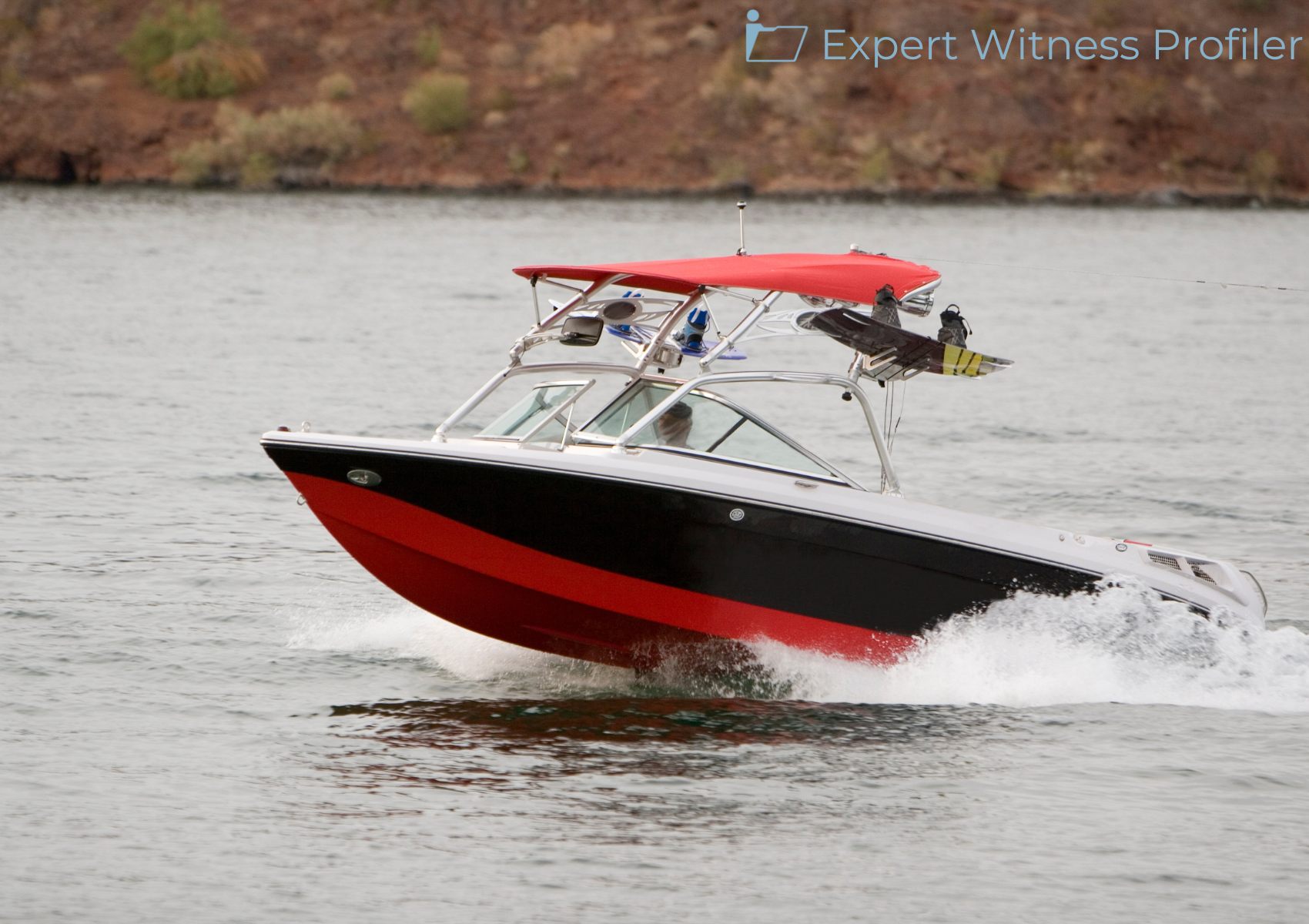
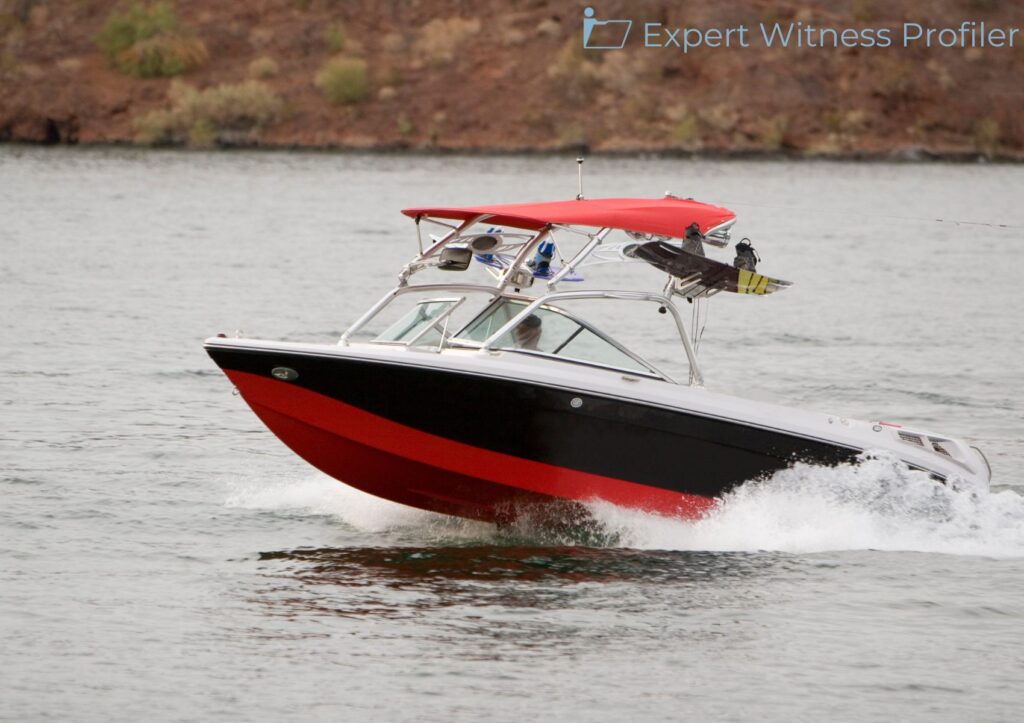
This case arises from a boating accident at Lake Powell on July 29, 2018. Plaintiff, while aboard a Moomba Mondo ski boat purchased from Rocky Mountain Boat Company (ROMOBOCO), was injured when a carabiner (the Subject Carabiner) suddenly failed and struck her in the head. Plaintiff survived, but she allegedly suffers from permanent disabilities due to the accident. Unfortunately for all parties, shortly after the accident, the rope and carabiner at issue were disposed of by another passenger on the boat.
On July 20, 2020, Plaintiff filed suit against ROMOBOCO, the seller of the Moomba, and later amended the complaint to add two companies believed to be involved in the manufacturing and/or distribution of the Subject Carabiner, Attwood Corporation and Land ‘N’ Sea Distributing, Inc.
Attwood and LNS filed a motion to strike Plaintiff’s expert, Dr. Adam Aleksander, contending his product identification opinion is unreliable.
Aleksander concluded that the carabiner clip that struck Plaintiff (the “Subject Carabiner Clip”) is “one and the same product” as an anchor line and rope product sold by Defendant Attwood Corporation (the “Attwood 11723-7”) and that “there are no significant differences between” the Attwood 11723-7 product and the “device in the incident injury.”
Mechanical Engineering Expert Witness
Adam Aleksander holds Mechanical Engineering degrees from San Jose State University (B.S.) and the University of Colorado (M.E), and an Industrial Engineering degree from Texas A&M University (Ph.D.).
He is experienced in investigation techniques, reconstruction, photogrammetry, and reconstruction of incidents that involve property loss, injuries and fatalities. Aleksander’s PhD training is in Human Factors Engineering and Safety Engineering.
Aleksander was not in a Position to Differentiate between the Defendant’s Product and its Competitors
Aleksander came to his product identification opinion based on a comparison of a photograph of the Attwood 11723-7 and a photograph taken by the National Park Service (“NPS”) of the the Subject Carabiner Clip. However, he also identified key differences between the Subject Carabiner and the Attwood 11723-7.
His opinion is not that he thinks the Subject Carabiner is the Attwood product to the exclusion of other products. Similar products made by other manufacturers constitutes an obvious alternative explanation. While it is not necessary to rule out every possible alternative, it is necessary to account for obvious alternatives. In his deposition, Aleksander testified that he did not compare any other product with the NPS photographs.
The Court, therefore, finds that Aleksander’s opinion is not based on sufficient facts, because he failed to consider any alternative product that could have been the Subject Carabiner.
Aleksander did not use a Physical Exemplar of the Attwood 11723-7 to Reach his Conclusions
Attwood and LNS argued that Aleksander’s opinions are not based on a reliable application of his methodology to the facts, because he did not use a physical exemplar of the Attwood 11723-7 to reach his conclusions. Instead, he digitally inverted the photograph of the Attwood 11723-7 to match the orientation of NPS photograph.
The reliability of the application of this methodology is questionable; however, the Court need not address it because, as explained above, the failure to compare the photograph to other potential products makes the product identification opinion unreliable.
Finally, all disclosures under Rule 26 have to be in writing, signed, and served. However, the Court did not consider the supplemental report because it is not related to Aleksander’s product identification opinion.
Held
The Court granted Attwood and LNS’ motion to strike Plaintiff’s expert, Dr. Adam Aleksander.
Key Takeaway:
Aleksander failed to consider any alternative product that could have been the Subject Carabiner. Similar products made by other manufacturers constitutes an obvious alternative explanation. While it is not necessary to rule out every possible alternative, it is necessary to account for obvious alternatives. In his deposition, Aleksander testified that he did not compare any other product with the NPS photographs.
Plaintiff, James Rowedder alleged a Field & Stream Stealth Climber Tree stand HEH01293 (“tree stand”) manufactured by Defendant Primal Vantage Company, Inc. (“Primal”) and sold by Defendant Dick’s Sporting Goods, Inc. d/b/a Field & Stream failed while Rowedder was using it and that he sustained injuries as a result. Plaintiff brought claims for (1) Negligence—Product Defect; (2) Breach of Warranty; and (3) Strict Liability.
Plaintiff’s proffered expert Rick Brenner was retained to testify about the standard of care and best practices for consumer products manufacturers, and, specifically, how Primal failed to meet these standards.
Defendants filed a motion to exclude opinions offered by Plaintiff’s proffered expert Rick Brenner.
Product Safety Expert Witness
Robert (Rick) Brenner is a recognized expert in consumer product safety, regulatory compliance, and quality management programs. He is president of Product Safety Advisors, a consulting firm that advises clients in the development and implementation of product safety and regulatory compliance programs including best practices in product design, risk assessment and failure mode analysis, performance and compliance testing protocols, supply chain risk, production oversight, quality management strategies, and related employee training programs.
His experience includes being president and CEO of Prime Resources Corporation for 12 years, an “importer, manufacturer, and distributor of consumer products sourced from multiple overseas factories” where Brenner had “direct oversight responsibility for Prime’s overseas sourcing business including the development of our standard operating procedures for product safety, risk assessment, compliance management, selection and vetting of vendors, factory oversight, correction actions, factory auditing . . . and product safety testing.”
Defendants argued Brenner was not qualified to offer such opinions because, despite his extensive experience with product safety and quality management practices, Brenner was not an engineer, not familiar with tree stands, and, inter alia, had not physically examined the evidence in this case.
The Court denied Defendants’ motion on this point and found Brenner qualified to offer opinions on the standard of care and best practices for consumer products manufacturers or importers considering his extensive experience as a “manufacturer, importer, and product safety professional” in his report.
Brenner’s Opinions are Based on his Relevant Knowledge and Experience
Last, Defendants argued Brenner’s opinions must be excluded because they are speculative, unreliable, and legal in nature. Namely, Defendants argued that Brenner’s testimony that Primal “did not conduct specific risk assessments under CPSC [Consumer Product Safety Commission] and ISO [International Organization for Standardization 10377:2013 Consumer Product Safety Guidelines for Suppliers] standards” should be excluded because he admitted “that those are not mandatory standards for manufacturers of consumer products.”
The Court found that Brenner based his opinions regarding Primal’s alleged disregard for the safety of consumers on evidence—namely deposition testimony—adduced in this case.
Brenner did not purport to be a design or engineering expert and could not opine on whether the products or component parts of those products at issue here were defective. Nor could Brenner opine that any alleged failure on Primal’s part to meet the standards of care Brenner articulates rendered the products at issue defective. However, the Court held that Brenner will be able to testify, generally, as to what he believes constitute best practices for a manufacturer or importer of products such as Primal and how Primal did not live up to those standards considering the evidence adduced in this case and cited in his report.
Held
The Court denied Defendants’ motion to exclude the testimony of Rick Brenner.
Key Takeaway:
The Court, citing Brenner’s extensive experience with product safety and quality management practices, decided he is more than qualified to testify about the standard of care and best practices for consumer products manufacturers, and, specifically, how Primal failed to meet these standards.
Brenner based his opinions regarding Primal’s alleged disregard for the safety of consumers on evidence—namely deposition testimony—adduced in this case. The Court concluded that Brenner’s opinions are based on his relevant knowledge and experience.