Tag: Property

  • Economic Expert’s Opinions on Property Valuation Admitted in Cook County Tax Sale Case

    Economic Expert’s Opinions on Property Valuation Admitted in Cook County Tax Sale Case

    Cook County ran an annual property tax sale targeting homeowners behind on property taxes. When taxes went unpaid, the County obtained court orders to sell tax liens on delinquent properties. Private tax buyers then paid the outstanding taxes in exchange for collecting repayment, plus interest, from property owners. If the owners didn’t repay within about 30 months, buyers could petition for a tax deed and take ownership.

    Michelle Kidd and Goyce H. Rates, two homeowners who lost their properties through this system, sued alongside two advocacy groups, Southwest Organizing Project (SWOP) and Palenque LSNA. They alleged the County’s tax sale process amounted to unconstitutional takings, excessive fines, and due process violations. Their homes, lost for debts under $10,000, were valued by the County between $166,000 and $389,000. Yet neither homeowner received compensation for the equity lost.

    As part of the litigation, the Plaintiffs introduced Dr. William G. Hamm, an economist who supported the reliability of Cook County’s mass appraisal system to estimate market values. The Defendants countered with Ron DeVries, a real estate expert who challenged that approach. Both sides moved to exclude the other’s expert.

    Economic Valuation Expert Witness

    William G. Hamm is a professional economist and a Managing Director of Berkeley Research Group, LLC (“BRG”), an expert services and economics consulting firm headquartered in Emeryville, California.

    Hamm has a BA from Dartmouth College and a PhD in economics from the University of Michigan.

    Get the full story on challenges to William G. Hamm’s expert opinions and testimony with an in-depth Challenge Study.  

    Real Estate Valuation Expert Witness

    Ron DeVries‘ valuation experience includes industrial, retail, office, hotel, multi-family (including FNMA/Freddie, HUD as well as LIHTC deals), and residential subdivisions for uses ranging from due diligence and financing to review appraisal.

    DeVries is a frequent speaker at the Chicago Real Estate Council, the Chicagoland Apartment Association as well as private events for clients. He has testified as an expert witness in a variety of matters. DeVries is past national Chair of Education for the Appraisal Institute and previously served on the Appraisal Institute’s Board of Directors, and numerous committees.  

    Want to know more about the challenges Ron DeVries has faced? Get the full details with our Challenge Study report.  

    Discussion by the Court

    William G. Hamm (Plaintiffs’ Expert)

    Qualifications

    The Court found William G. Hamm qualified to testify. He is a professional economist and Managing Director at Berkeley Research Group with a PhD in economics. His experience includes building models to assess the market value of mortgage-related assets. Though not a licensed appraiser, the Court ruled that this does not disqualify him from evaluating Cook County’s mass appraisal system. His qualifications allow him to speak on complex modeling used to estimate real estate value.

    Reliability

    Hamm’s methodology involved analyzing how Cook County assesses property values using its Computer Assisted Mass Appraisal (CAMA) system. He reviewed public data, used certified Board of Review assessments, and calculated lost equity across a sample of properties. He acknowledged imperfections in the data and proposed interpolation to improve accuracy. The Court concluded that his methods were sound, especially given the lack of alternative sale data, and ruled that criticisms of his data sources go to weight, not admissibility.

    Ron DeVries (Defendants’ Expert)

    Qualifications

    The Court found DeVries qualified as an expert. He is a licensed real estate appraiser with decades of experience in property valuation. While he lacks experience in mass appraisal modeling, he is qualified to critique how accurately Cook County’s assessments reflect market value based on his appraisal experience.

    Reliability

    DeVries relied largely on his own professional knowledge to evaluate weaknesses in the County’s system, such as infrequent assessments and a lack of individualized property inspections. Although his report lacked citations to specific county documents, the Court found this appropriate for the nature of his testimony. The Court held that any gaps in his review go to credibility, not admissibility.

    Held

    The Court denied the Defendants’ motion to exclude William G. Hamm, finding his economic expertise and valuation methods reliable and admissible.

    The Court also denied the Plaintiffs’ motion to exclude Ron DeVries, holding his appraisal-based critique of Cook County’s assessments was qualified and relevant under Rule 702.

    Key Takeaway:

    The Court admitted both expert witnesses, ruling that Dr. William G. Hamm’s economic modeling and Ron DeVries’s appraisal-based critique were sufficiently qualified and reliable. Their testimony will play a central role in evaluating the constitutionality of Cook County’s tax sale system.

    Case Details

    Case Caption: Kidd v. Pappas
    Docket Number: 1:22cv7061
    Court Name: United States District Court for the Northern District of Illinois, Eastern Division
    Order Date: July 07, 2025
  • Testimony of Geology Expert Witnesses about the Environmental Remediation of the Property Admitted

    Testimony of Geology Expert Witnesses about the Environmental Remediation of the Property Admitted

    This breach of contract action arises from a series of agreements relating to real property located at 2497 Adam Clayton Powell Jr. Boulevard in Manhattan (the “Property”) that was contaminated by an oil spill (the “Spill”) originating from non-party ExxonMobil’s adjacent gas station.

    In February 2010, the Plaintiff, 2497 Realty Corp., executed the Contract of Sale of Membership Interests in 2497 Holding LLC, the no-party entity that owns the property, the buyer being Defendant, 2497 Partner LLC (the “Contract”).The parties thereafter amended the Contract to give Defendants sole control over remediation of the Property and settlement negotiations with ExxonMobil. The amendments also created a distribution plan (the “Waterfall”) for any proceeds received from a settlement agreement with ExxonMobil. In June 2011, ExxonMobil settled with 2497 Holding LLC for $1,500,000 (the “Settlement Agreement”).

    In the instant action, commenced in 2014, the Plaintiff alleged that the Defendants breached the Contract by failing to make distributions pursuant to the Waterfall. The key issue in dispute is whether, per the Contract, the Property has been remediated to “its highest and best use under applicable zoning laws, as the Purchaser shall determine in its sole and absolute discretion.” Both parties have commissioned expert reports that document the remediation of the Property.

    The Defendants filed a motion to preclude environmental experts, Andrew Lockwood and Derek Ersbak from testifying at trial. The Defendants argued that (i) the subject reports contain impermissible legal conclusions that reach the ultimate issue in the case; (ii) the Plaintiff’s experts are not qualified to opine on the “highest and best use” of the Property; and (iii) the subject reports fail to satisfy the disclosure requirements of Commercial Division Rule 13(c). 

    Geology Expert Witnesses

    Andrew Lockwood is a graduate of SUNY Potsdam, where he studied geology. He is a licensed Professional Geologist in New York and a licensed Environmental Professional in Connecticut. Moreover, he has over thirty (30) years of experience managing environmental remediation, including the investigation and remediation of land contaminated by gasoline, radiation, and poly fluoroalkyl substances (PFAS).

    Get the full story on challenges to Andrew Lockwood’s expert opinions and testimony with an in-depth Challenge Study

    Derek Ersbak is a graduate of SUNY Binghamton, where he studied biology. He is a licensed Professional Geologist in New York with twenty (20) years of experience in environmental due diligence, environmental compliance and state and federal remedial programs, including the federal Superfund cleanup law, New York’s Brownfield Cleanup Program, and regulations promulgated by New York City’s Office of Environmental Remediation.

    Want to know more about the challenges Derek Ersbak has faced? Get the full details with our Challenge Study report 

    Discussion by the Court

    The necessity of expert testimony in this case is beyond dispute as the subject matter—involving a technical analysis of environmental remediation efforts—is clearly beyond the ken of the typical juror. Moreover, the Court found unavailing the Defendants’ arguments that the Plaintiff’s expert geologists are not qualified to opine on the real estate development concept of “highest and best use,” and that the Contract grants the Defendants sole discretion to determine the highest and best use of the Property.

    The Defendants accurately observed, however, that the Plaintiff’s Reports also includes opinions that veer into contract interpretation and other legal conclusions. Since no expert witness is permitted to testify on matters of contract interpretation or other purely legal issues, the Court held that questions put to Lockwood and Ersbak at trial should be limited to the environmental condition of the Property without requesting opinions on particular legal obligations of the parties under the Contract.

    The Defendants further contended that the Plaintiff’s Reports and the testimony of Lockwood and Ersbak should be precluded because the expert disclosure provided by the Plaintiff did not comply with Commercial Division Rule 13(c) in that the Plaintiff’s Reports fail to list Ersbak and Lockwood’s recent publications and experience as expert witnesses. Moreover, the Defendants also took issue with Ersbak and Lockwood’s joint authorship of the Reply Report. The Court held that these arguments are without merit because there is no bar to jointly authored reports and preclusion of expert testimony based on noncompliance with Commercial Division Rule 13(c) is a question of judicial discretion.

    Held

    The Court denied Defendants’ motion to preclude the testimony and reports of the Plaintiff’s environmental experts, Andrew Lockwood and Derek Ersbak.

    Key Takeaway:

    The Plaintiff’s experts’ opinions are in keeping with the First Department’s reading of the contract language. They do not opine on the issue of what is or is not the theoretical highest and best use of the Property. Rather, they opine on the environmental remediation of the Property—an appropriate issue for expert testimony that is within their area of expertise—taking as their starting point the First Department’s aforementioned analysis of the Contract’s terms, the Property’s current zoning for commercial use, and the Defendants’ current use of the land for commercial purposes.

    Case Details:

    Case Caption: 2497 Realty Corp. V. Fuertes
    Docket Number: 151947/2014
    Court: Supreme Court of New York, New York County
    Order Date: August 21, 2024
  • Insurance Expert Witness’ Testimony Admitted Despite Not Being Tied to  Covered Loss

    Insurance Expert Witness’ Testimony Admitted Despite Not Being Tied to Covered Loss

    A district judge in Texas admitted the insurance expert’s testimony about the cost to repair or replace the damaged areas.

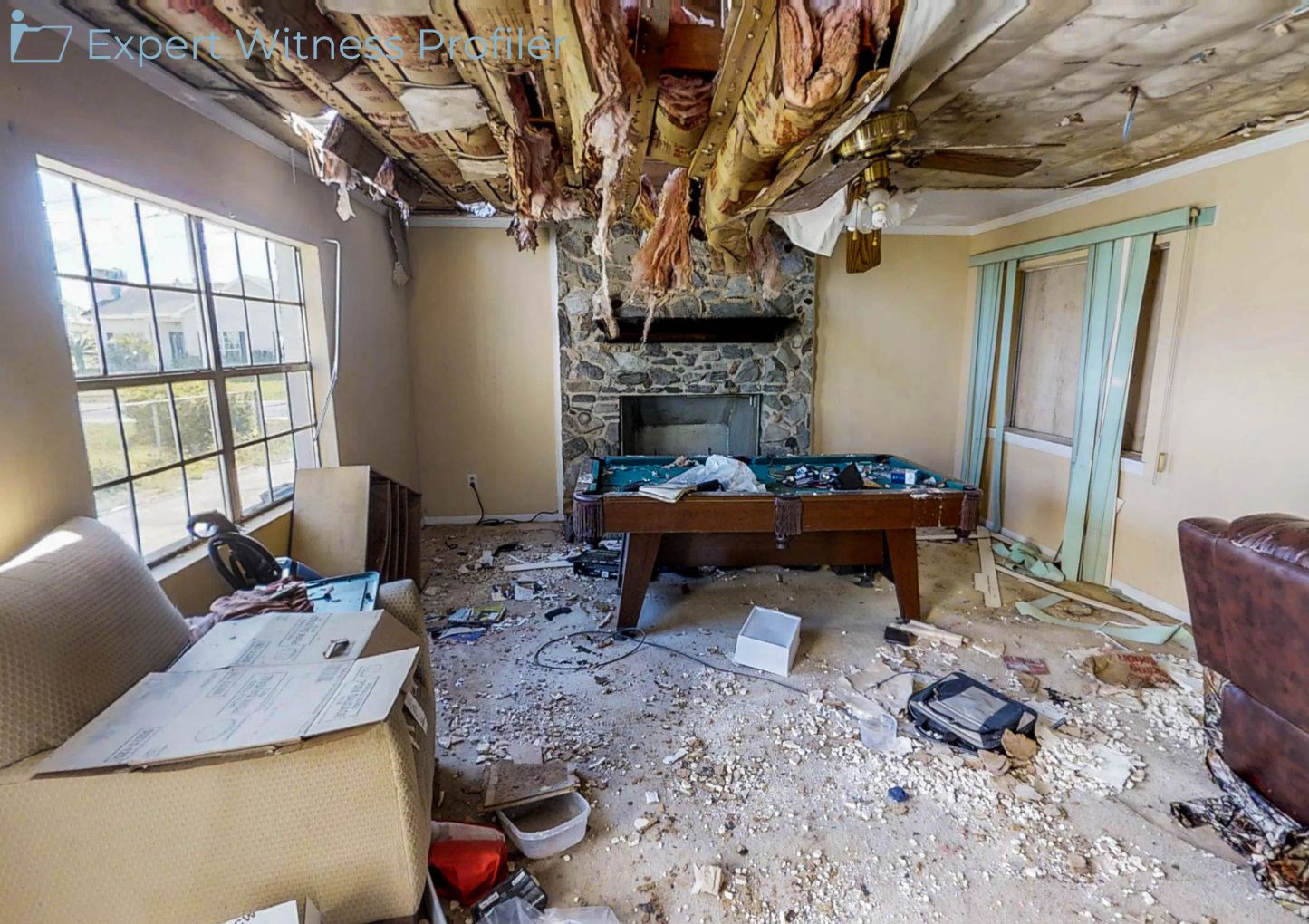
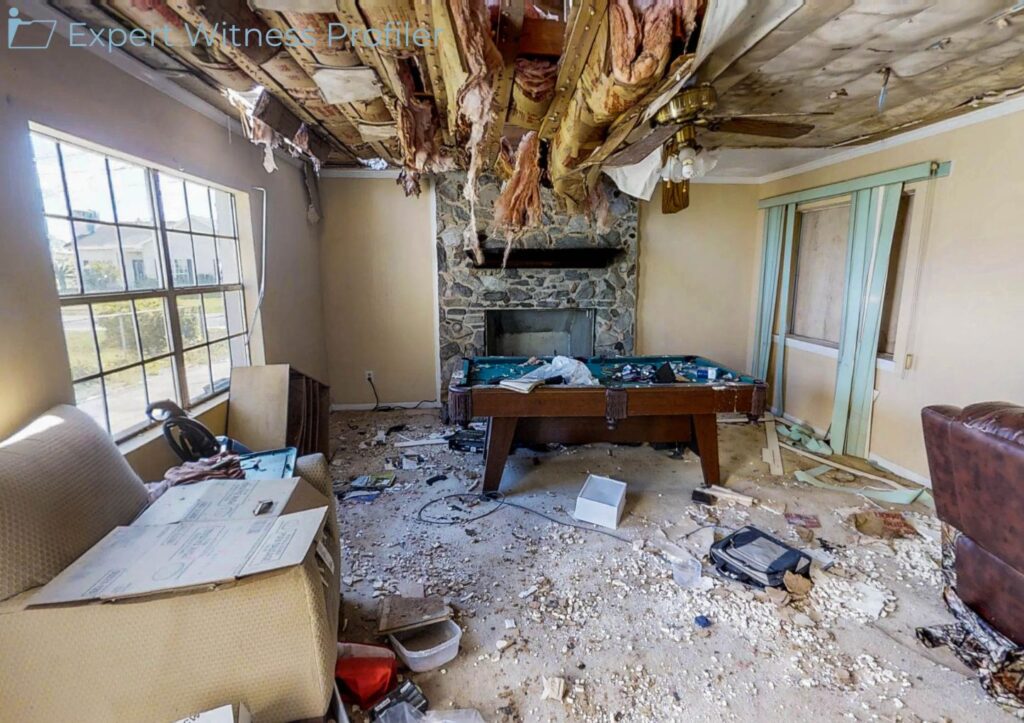
    This is a commercial property insurance coverage dispute arising from hail and wind damage to Plaintiff’s property located at Midland, Texas. Landmark insured the Property under a commercial policy. Landmark received notice that the Property had sustained storm damage with the date of loss claimed as June 19, 2020.

    On March 28, 2022, Landmark sent Plaintiff a letter explaining that investigation revealed that the roof was exposed to multiple hail events on April 16, 2017; on May 16, 2017; and/or on April 23, 2019, but did not support that a hail event occurred at the Property on or about June 19, 2020. Plaintiff subsequently filed suit against Landmark for alleged property damages with a date of loss of June 19, 2020.

    Plaintiff designated Kevin Funsch, “a licensed public adjuster and owner of US Insurance Adjusters, LLC.” On March 22, 2024, Landmark filed a motion requesting that the Court exclude Plaintiff’s expert witness, Funsch’s testimony and strike his expert report.

    Insurance Expert Witness

    Kevin Funsch is a public adjuster and the owner of an insurance adjusting firm with a solid background in claims handling and estimating. He is experienced in adjusting property losses and performing appraisals.

    Get the full story on challenges to Kevin Funsch’s expert opinions and testimony with an in-depth Challenge Study. 

    Discussion by the Court

    Landmark sought for Funsch’s report to be struck and his testimony excluded because: (1) Plaintiff’s expert designation and Funsch’s report did not comport with Federal Rule of Civil Procedure 26(a)(2); (2) Funsch’s report and opinions were unreliable; and (3) Funsch’s report and opinions were irrelevant.

    Funch’s Compliance with Rule 26 and Rule 702

    Defendant asserted that Funsch’s expert report is deficient for multiple reasons: (1) it “did not contain a complete statement of the basis and reasons for Funsch’s opinions as to the damages sustained to the property and the cost of repairs”; (2) Funsch did not “explain in his report how his experience as an insurance adjuster led him to reach his conclusions”; (3) the report “did not include any explanation as to the basis or reliability of the estimate”; (4) it “failed to demonstrate that Funsch’s opinions on the damages and necessary repairs are based on sufficient facts or data”; and (5) “that Funsch reliably applied those principles and methods in forming his estimate as required by Rule 702”.

    After thoroughly scrutinizing Funsch’s report, the Court found it satisfied both Rule 26 and Rule 702. It added that Landmark’s reliance on its cited Rule 702’s advisory committee note was inapplicable to Funsch’s expert report in this case, as he stated that he relied on multiple other documents and conversations with Neil Hall in forming his opinions, rather than relying solely on experience as the advisory committee note contemplated.

    The Court addressed Landmark’s arguments that Funsch failed to demonstrate his opinions on the damages and necessary repairs are based on sufficient facts or data, the product of reliable principles and methods; and that he reliably applied those principles and methods in forming his estimate as required. The Court noted that Plaintiff designated Funsch as his damages expert. Funsch is offered as an expert to provide opinion testimony only on the cost to repair or replace the damaged areas identified in the Hall Report.

    Reliability of Kevin Funsch’s Opinions

    Next, Landmark asserted Funsch’s “opinions regarding the costs of repairs are unreliable because he relied on unexplained assumptions about the Property that have no factual basis.” Landmark’s argument is premised on Funsch’s deposition testimony. In his deposition, Funsch stated most of the quantities and measurements in his estimate were copied over from the Berkley estimate. Then, because Hall’s report “only called for replacing some sections of the roof and the Berkeley estimate called for replacing all of them, Hall told Funsch to just use ‘about half’ of some of the Berkeley quantities.” Funsch admitted he “wasn’t able to verify every single one of the quantities.” Funsch concluded ‘these quantities, the number of items seems reasonable’ which Landmark asserted were “assumptions” by Funsch instead of “actual quantities” actually rendered the entirety of Funsch’s opinions unreliable.

    The Court, citing Rule 703, found Funsch’s testimony and report reliable.

    Relevancy of Kevin Funsch’s Opinions

    Landmark argued Funsch’s opinions were irrelevant because: (1) his repair estimate was based on prices as of April 2023, when the Policy required valuation based on the date of loss; (2) his repair estimate was a replacement cost estimate, not an actual cash value estimate; and (3) his opinions were not tied to “covered causes of loss.”

    His repair estimate was based on prices as of April 2023, when the Policy required valuation based on the date of loss

    Defendant first asserted Funsch’s opinions were irrelevant and/or not helpful to the jury because his report contained prices from April 2023 instead of 2019, and the Policy’s valuation provision mandated the cost of repairs be in 2019 (the alleged date of loss).

    The Court found that the date of Funsch’s damage estimate did not render it
    completely irrelevant and unhelpful; rather the exact weight to be given to Funsch’s testimony and expert report was for the fact finder to determine.

    His repair estimate was a replacement cost estimate, not an actual cash value estimate

    Landmark argued Funsch’s opinions were irrelevant and/or not helpful to the jury because his report contained only a replacement cost estimate, and “[i]n order to receive Replacement Cost coverage, the Policy stated that Plaintiff must first ‘actually’ repair or replace the property.” However, “it was undisputed that Plaintiff did not make the necessary repairs and the very minor repairs Plaintiff did make were not made until over two and a half years later.”

    The Court noted that whether Plaintiff could recover replacement cost value or actual cash value damages was a point of contention currently being litigated. Thus, without an order barring Plaintiff from recovering replacement cost damages, the Court found Funsch’s opinion as to replacement cost damages was relevant.

    Funsch’s opinions are irrelevant and/or not helpful because his opinions are not tied to a covered loss

    Landmark argued Funsch’s opinions are irrelevant and/or not helpful because his opinions are not tied to a covered loss. The Court emphasized that Plaintiff designated Funsch as his damages expert. Funsch is offered as an expert to provide opinion testimony only on the cost to repair or replace the damaged areas identified in the Hall Report.

    Held

    The Court denied Landmark’s motion to strike and exclude the testimony of Kevin Funsch.

    Key Takeaways:

    • It is not unusual in insurance coverage cases to have separate causation and damages experts, and to have the damages expert rely on causation opinions from the separate expert.
    • Simply because Funsch relied on Hall’s opinion and his own analysis of photographs, does not render Funsch’s reliability below Rule 702’s threshold, as this is exactly the kind of facts and data experts in Funsch’s field reasonably rely on in forming their opinions.

    Case Details:

    Case Caption: William Douglas C/O The Havens Group, Inc. V. Landmark American Insurance Company
    Docket Number: 7:22cv167
    Court: United States District Court, Texas Western
    Order Date: May 28, 2024