Tag: Pump

  • Chemical Engineering Expert’s Testimony on Catalyst Damage Excluded

    Chemical Engineering Expert’s Testimony on Catalyst Damage Excluded

    Plaintiff, a manufacturer of materials (e.g., nylon), contracted with Defendant to provide railcar switching services at Plaintiff’s Pensacola plant. On November 24, 2023, Defendant misidentified a railcar containing resin and delivered it to the phenol unloading area at Plaintiff’s plant.

    The resin railcar was unloaded into Plaintiff’s phenol holding tank, and Plaintiff alleged that the resin then contaminated the reactor unit that normally draws phenol from the tank. Plaintiff further claimed that contamination permanently damaged the reactor’s catalyst and resulted in an extended shutdown of certain plant operations.

    Defendant designated expert Bruce Williams to opine on the procedures that resulted in the phenol contamination and the subsequent damage to the reactor’s catalyst.

    As to the contamination, Williams concluded it was caused by Plaintiff’s employees falsely claiming the resin railcar contained phenol and that it was on the approved unloading list. He also noted that Plaintiff should have been aware that resin had been unloaded into the tank based on the tank’s level data. Williams concluded that the damage to the catalyst was caused by Plaintiff overfeeding liquid into the reactor, not the resin contamination.

    Plaintiff sought to exclude portions of Williams’ testimony as premised on unsupported statements and unreliable inputs.

    Chemical Engineering Expert Witness

    Bruce C. Williams has over 46 years of experience working for Dow Chemical, Novus International, and Covestro AG where he has designed, constructed, and operated chemical plants across a variety of technologies and countries.

    Get the full story on challenges to Bruce Williams’ expert opinions and testimony with an in-depth Challenge Study.

    Discussion by the Court

    A. Williams’ opinion on the length of time the pump operated should not be excluded

    A key part of the Parties’ dispute involves whether Plaintiff should have been aware that resin had been unloaded into the phenol tank. Plaintiff contended that its operators “experienced unloading issues,” and required additional confirmation that resin was unloaded.

    Williams opined that the Plaintiff should have realized resin had been unloaded from the railcar into the phenol tank because, he claimed, the unloading pump ran for over an hour, moving at least some resin into the phenol tank.

    As demonstrated in his report and discussed during his deposition, Williams arrived at the conclusion that the pump operated for this amount of time by considering the operators’ statements in light of the pump’s technical features. He explained that although the meter indicating whether material was flowing through the pump may have shown there was no flow, the fact the pump continued to operate without triggering the automatic shutoff—which occurs when there is no flow, low flow, or high flow—demonstrated flow and that resin was being unloaded from the railcar. He further argued that no indicators of no flow, low flow, or high flow were present, and a reasonable operator would have recognized that material was flowing.

    Analysis

    Plaintiff made two arguments for exclusion of Williams’ opinion that the pump ran for over an hour. First, Plaintiff argued that the expert opinion should be excluded as not helpful to the jury because the jury can apply common sense and simple logic to determine whether the pump ran for an hour. Second, Plaintiff contended that any opinions based on the pump running for an hour must be excluded as not based on sufficient facts or data or as otherwise unreliable.

    The Court found that the opinion is helpful to the jury because the Parties dispute how long the pump ran and Williams, who has technical knowledge of the pumps and unloading process, bases his opinion on statements by the witnesses. Technical knowledge of the pumps and how they operate is outside the realm of experience of a common juror and Williams’ technical explanation regarding the pump operation could assist the jury in determining whose version of events is correct.

    Application of his technical knowledge to the operators’ statements is a reliable approach, particularly considering Plaintiff did not challenge Williams’ knowledge itself.

    B. Williams’ opinion on the phenol tank levels should not be excluded

    Williams also opined that Plaintiff should have been aware resin had been unloaded into the phenol tank based on the tank’s level data. The phenol tank is an active tank, meaning phenol is often being simultaneously added to the tank from railcars and removed from it into the reactor.

    Using the level data itself, as well as the rates of change in the data occurring during the unloading of the railcar, Williams purports to have calculated accurate estimates of the amount of unloaded resin. According to Williams, if the Plaintiff had done the same, it would have noticed that during the unloading attempts, the rate at which the tank level dropped decreased, indicating that material was being pumped into the tank from the railcar, rather than solely being pulled from the tank into the reactor. Williams based his calculations on historical data provided by the Plaintiff and the one hour unloading period he previously determined.

    Analysis

    Plaintiff made three arguments for why Williams’ calculations are unreliable. First, the calculations assumed pump ran for one hour, as discussed above. Second, Williams used an estimated phenol flow rate (that is, how fast the phenol is being pumped into or out of the tank). Third, Williams did not account for the range of error, which Plaintiff claims is between plus/minus 0.5 to 1.0 percent, of the instrument that measures the level of the tank.

    The Court will allow Williams to opine on how long the pump ran. Plaintiff has not explained why Williams’ use of an estimated flow rate, based on the historical data provided by Plaintiff, is unreliable.

    Similarly, Williams’ claims failed to account for the tank level instrument’s tolerance because he did not know “the manufacturer and the model number.” Plaintiff failed to explain how this lack of information would make the calculations unreliable as opposed to inaccurate, particularly because the point of Williams’ opinion is not that he has precisely calculated the amount of resin, but that Ascend failed to “use readily available phenol storage tank level data to evaluate whether material had been off-load.”

    C. Williams’ opinion on the cause of the catalyst damage based on his misreading of Plaintiff’s chart should be excluded

    Williams offered the opinion that the damage to the catalyst was not caused by contamination from the resin, but rather from overfeeding phenol from the saturator into the reactor. His opinion was based on his reading of a graph displaying the saturator levels.

    Plaintiff argued that Williams’ interpretation of the graph was facially incorrect. Specifically, Plaintiff claimed that Williams confused the “saturator level” and “output for feed control valve” trend lines, when forming the opinion that the saturator level was over 100 percent at certain times. In short, Williams was looking at and commenting on the wrong line in the graph.

    Williams admitted his mistake during his deposition. Defendant did not deny that Williams erred in reading the graph but argued that corroborating evidence supported the causation opinion regarding the carryover theory of catalyst damage.

    The Court can confirm Williams’ mistake by examining his report. Any opinion based on his reading of the graph must be excluded as unreliable and potentially confusing to the jury. Williams’ opinion derived from the incorrect reading of the graph are excluded, but those opinions that have some other basis of support are not.

    D. Williams’ opinion on how the resin would have reacted in the phenol tank should not be excluded

    Williams opined that the resin would have been soluble in the phenol which was already inside Plaintiff’s storage tank, and that it would have reacted in the storage tank rather than causing the damage to the catalyst.

    He bases his opinion on an email from the resin manufacturer discussing the resin’s reactivity. The email purports to contain an opinion from the resin manufacturer’s Quality Manager, that based on the tank temperature, the resin would have reacted with the phenol in the tank and produced water.

    There is no evidence that a statement from a chemical’s manufacturer about its properties is not the sort of information on which a chemical engineer would rely in these circumstances. Williams, an experienced chemical engineer, incorporated the information from the resin manufacture in his discussion.

    Held

    The Court granted in part and denied in part Plaintiff’s motion to exclude certain testimony of Bruce C. Williams.

    Key Takeaways:

    • Reliable expert testimony often involves estimation and reasonable inferences from a sometimes incomplete record. Further, a few scattered errors in an expert report are not necessarily grounds for exclusion.
    • A lack of particularization or reliance on estimates goes to weight of the conclusion, not reliability of the methodology.

    Please refer to the blog previously published about this case:

    https://expertwitnessprofiler.com/chemical-engineering-expert-allowed-to-opine-on-railcar-switching

    Case Details:

    Case Caption: Ascend Performance Materials Operations LLC V. Rescar Companies
    Docket Number: 4:24cv582
    Court Name: United States District Court, Texas Southern
    Order Date: March 31, 2026
  • Marketing Expert’s Post-Sale Confusion Survey is Admissible 

    Marketing Expert’s Post-Sale Confusion Survey is Admissible 

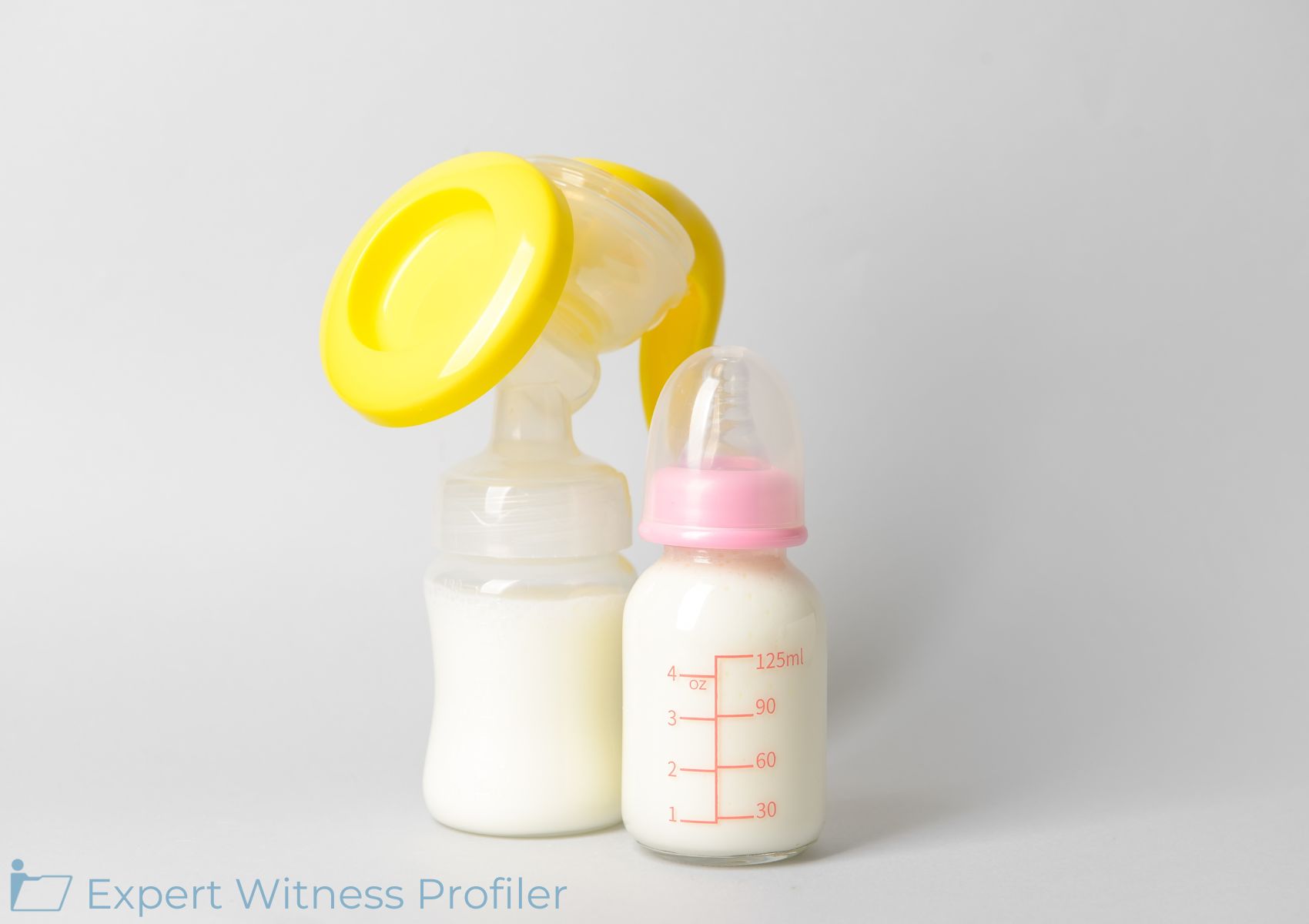
    Think Green Limited (“Think Green”) has taken Medela AG and Medela LLC (“Medela”) to Court, accusing them of infringing on the trade dress rights it holds in its breast pump and misleading consumers through false advertising.

    Rhonda J. Harper, a Think Green expert witness in areas involving marketing, branding, and consumer research, used various analytical methods to conclude that (1) among the relevant universe of consumers, there is a likelihood of confusion that Medela’s pump is sponsored or approved by Think Green due to the allegedly infringing trade dress; and (2) the relevant universe of consumers would likely ascribe secondary meaning to Think Green’s trade dress. Medela filed a motion to exclude Harper’s expert opinions and underlying survey results pursuant to Rule 702 and the Daubert Standard. Medela also sought to strike Harper’s rebuttal declaration. 

    Cynthia Cohen, who Medela proffered as an expert in areas related to psychology and consumer research, reached the following conclusion based on her analytical work: “offering the Medela breast milk collector on the Amazon platform does NOT cause consumer confusion.” Think Green filed a motion to strike this conclusion and the entirety of Cohen’s expert report.

    Think Green also filed a motion to strike portions of the expert report prepared by Medela expert Carsten Faltum

    Marketing Expert Witness

    Rhonda Jane Harper has over 30 years of experience at the highest levels of marketing, research, and branding. She has been the top marketing executive for several Fortune 100 corporations, served as an adjunct marketing professor at two universities, held national and international board positions in leading brand and marketing associations, led a leading global agency division, and founded an organic growth strategic consultancy. Harper has also provided and rebutted hundreds of trademark and trade dress infringement surveys for litigation purposes.

    Want to know more about the challenges Rhonda Harper has faced? Get the full details with our Challenge Study report. 

    Psychology Expert Witness

    Cynthia R. Cohen, Ph.D. is an expert in survey methods. She designed consumer studies for Lanham Act cases and change of venue surveys for trials. Cohen’s education includes psychology degrees at UCLA and USC. Her firm, Verdict Success LLC, specializes in in jury research, trial strategies, and settlement decision-making.

    Want to know more about the challenges Cynthia R. Cohen has faced? Get the full details with our Challenge Study report.

    Life Science Expert Witness

    Carsten Faltum has extensive experience in the life sciences industry, particularly in R&D coupled with several years as an investment manager in venture capital and corporate venture. 

    Discover more cases with Carsten Faltum as an expert witness by ordering his comprehensive Expert Witness Profile report.

    Discussion by the Court

    Rhonda Harper

    Admissibility of Survey Evidence, Generally

    With regard to Harper’s surveys, Medela argued that the data was not analyzed in accordance with accepted statistical principles, nor was the objectivity of the entire process assured.

    Courts generally find consumer survey evidence admissible if a qualified expert testifies that the survey was conducted according to generally accepted principles of survey research. Moreover, survey evidence need not be perfect to be admissible. 

    The Court held that Harper’s surveys did not constitute one of those “rare” situations where fundamental flaws rendered them “completely unhelpful to the trier of fact and therefore inadmissible.”

    Admissibility of Harper’s Survey Evidence

    Control Stimuli in Secondary Meaning and Point-of-Sale Confusion Surveys

    Medela took issue with the control stimuli Harper used in her secondary meaning and point-of-sale confusion surveys. Medela also objected to the pump images that members of both control groups were shown—in other words, the control stimuli. 

    The survey ultimately asked respondents whether or not “the manufacturer or brand of the breast milk pump/collector [they] just reviewed … is sponsored or approved by another manufacturer or brand.” If a respondent answered yes to the “sponsored or approved” inquiry, the respondent was then asked what other manufacturer or brand had sponsored or approved the pump or collector the respondent had just viewed and why the respondent thought so. 

    Medela argued that the control stimuli are “so wildly different” than the test stimuli that Harper’s surveys are unreliable.

    But as Think Green pointed out, it is not imperative that secondary meaning surveys include a control group at all to be considered reliable.  As at least one district court has observed, secondary meaning surveys measure the extent to which consumers associate a particular trade dress with a particular source, and a control group would not necessarily aid in that analysis. Nor is it clear that including a weak control stimulus (even assuming that is a fair characterization of the control stimuli used here) renders a survey “so flawed as to be completely unhelpful to the trier of fact” and therefore inadmissible.

    According to the Court, Medela’s bones of contention provides no basis to strike Harper’s testimony altogether.

    Point-of-Sale Confusion Survey and Marketplace Reflection

    Medela separately complained that Harper’s point-of-sale confusion survey did not reflect how consumers encountered the depicted pumps in the real-world marketplace.

    It argued that the pictures Harper used did not “present[] the full scope of information available to a prospective online purchaser” and were “devoid of a host of further identifying information that consumers would typically encounter by viewing the actual product listing page for these products.”

    A survey need “not replicate the exact purchasing experience of every consumer confronting the pertinent product in the marketplace”; it requires only “reasonable choices based on the expert’s experience and training and on accepted survey techniques.”

    In this Court’s estimation, Medela’s criticisms did not bear on the survey’s admissibility, but on the “evidentiary weight of the survey results”—a question for the jury.

    Control Stimulus in Post-Sale Confusion Survey

    Through a different survey, Harper sought to “determine whether Medela’s breast milk pump/collector is likely to cause post-sale confusion.” Post-sale confusion occurs when a potential customer sees a product bearing the Plaintiff’s trade dress and mistakenly attributes the product to the Plaintiff, thereby influencing his or her buying decision, either positively or negatively.

    To assess the likelihood of post-sale confusion, Harper’s online survey first screened for respondents who purchased a pump in the last year or who would consider purchasing one in the next year. The test group was presented with four images of Medela’s pump, collected from Medela’s online retail product pages, less Medela’s name, design elements, and measurements.

    Medela objected to the images Harper presented to the test group of its pump as well as the control stimuli images.

    The Court held that a survey need not be excluded simply because it failed to use the best available control stimuli.

    Test Stimuli in Post-Sale Confusion Survey

    Medela next criticized the post-sale confusion survey’s test stimuli as failing to “reflect real-world conditions in which consumers are likely to encounter the products.”

    What images Harper should have presented to better depict the “obvious intimate and exposed” nature of using a breast pump, Medela did not say. In any event, whatever Medela’s argument, the Court held that it affected the weight of the evidence—not its admissibility.

    Test Stimulus in Secondary Meaning Survey

    Medela argued that the test stimulus Harper used in her secondary meaning survey was “fundamentally flawed” because it failed to isolate the trade dress.

    To support its assertion that “a secondary meaning test stimulus must isolate the trade dress at issue,” Medela cited Handelman’s Guide to TTAB Practice, Second Edition, § 18.15. However, the quoted portion of Handelman’s Guide specifically directs that “[i]f the image used in the stimulus differs from the mark shown in the application or registration drawing”—as Medela alleges here—”the difference will weigh against the probative value, if any, to be accorded to the survey.” In other words, the Court held that Medela’s own source instructed that the weight to be assigned to the secondary meaning survey is a question for the jury—not one of admissibility.

    Use of Functional Stimuli To Assess Non-Functional Trade Dress

    Medela next argued that Harper’s surveys did not test the asserted trade dress, because the “shield-bulb-base” arrangement featured in the stimuli is functional.

    Because this argument mirrors a central theory of Medela’s summary judgment motion: that Think Green’s asserted trade dress is functional and therefore cannot be protected, the Court will address this argument when it resolves Medela’s motion for summary judgment.

    Net Secondary Meaning Calculation

    Medela argued that Harper’s secondary meaning calculation is “fundamentally flawed” because, in calculating net secondary meaning, she failed to subtract a particular number from the results.

    Harper, however, has laid out her reasons for employing the methodology that she did and, in so doing, amply conveyed that her calculations were a considered choice, not the result of a fatal error or oversight.

    At the end of the day, the two experts analyzed the same data, but came to different conclusions about its meaning. That leaves the Court with a “battle of the experts” situation that is inappropriate for dispensation in a Daubert motion and must be left for the factfinder to resolve.

    Data Supporting Secondary Meaning Opinion

    Medela argued that Harper’s report “fails to substantiate the connection between these data points with its conclusions that these were purportedly successful in connecting Think Green as the source of the trade dress in the minds of relevant consumers.” By “these data points,” Medela appeared to be referencing the entire universe of “sales data, advertising expenditures, awards, social media followers etc. ” in Harper’s report. But Medela did not actually cite to “these data points” or describe them with any degree of specificity. The Court will not guess at them, nor will it develop Medela’s argument for it.

    Admissibility of Harper’s Rebuttal Declaration

    Think Green attached a rebuttal declaration from Harper to its response to Medela’s motion for summary judgment in which Harper responded to Medela’s criticism of her net secondary meaning calculation. Medela filed a motion under Rule 37 to strike this declaration.

    In her short rebuttal declaration, Harper responded to what she described as “mischaracterization” and criticism Medela offered in its summary judgment briefing. More specifically: Harper explained that there are multiple ways of calculating net secondary meaning and why she chose her particular method of calculation. At the conclusion of her rebuttal, Harper performed an alternate method of calculation that “[s]ome sources indicate [is] also appropriate,” which she claims—consistent with her previously expressed opinion—”shows that the trade dress is strong.”

    The Court denied Medela’s motion to strike Harper’s rebuttal declaration because it remained “firmly grounded” in the opinions she expressed in her original expert report. Basically, Harper’s rebuttal declaration is the type of responsive report that is permitted under Rules 26 and 37.

    Cynthia Cohen

    Qualifications

    Medela contended that Cohen’s experience conducting consumer surveys related to trademark disputes is relevant to trade dress disputes, as the methodology between the two topics is largely interchangeable. Medela also cited her publications, speeches, and court appearances as an expert witness concerning consumer surveys.

    According to Think Green, Cohen’s limited prior experience as an expert or witness rendered her unqualified.

    Despite criticizing Cohen for not having “essential” experience, education, or training in marketing, Think Green did not draw any link between “a professional marketing background” and trade dress likelihood of confusion surveys. The Court is not persuaded that an expert who lacks a marketing degree or marketing experience should be automatically precluded from opining on matters of trade dress.

    Methodology

    Think Green argued that Cohen’s likelihood of confusion survey relied on improper methodology. In Cohen’s survey, respondents were shown the stimulus image of Medela’s pump “as it had been displayed on the Amazon platform.”

    With the stimulus picture still available on the screen, respondents were asked open-ended questions meant to assess whether confusion was likely. For example, respondents were asked “if you have an opinion, what company or organization makes or puts out this breast milk collector” and if the respondent had an opinion, whether the respondent “believed that this breast milk collector is affiliated with or sponsored by any other company.”

    Think Green objected to Cohen’s methodology of showing respondents the stimulus picture while the respondents answered the survey questions. According to Think Green, this is “a major flaw” that “departs from typical marketplace conditions.”

    As the Court already explained when denying Medela’s motion to exclude Harper’s expert report, no survey is “foolproof,” and perfection is not required to clear the Daubert bar. Think Green has presented no argument that any flaws in Cohen’s survey create one of the “rare” situations where a survey is so fundamentally flawed “as to be completely unhelpful to the trier of fact and therefor inadmissible.”

    Relevance

    Like Harper’s testimony, the Court held that Cohen’s survey evidence concerning likelihood of confusion will assist the jury in evaluating Think Green’s claim of trade dress infringement.

    Carsten Faltum

    As for Think Green’s motion to strike portions of the expert report prepared by expert Faltum, the Court denied Think Green’s motion to partially strike without prejudice to renewal after Think Green hinted that it may file a more robust motion to strike Faltum’s report before trial.

    Held

    The Court denied Medela’s motion to exclude Rhonda Harper’s expert opinions and underlying survey results as well as Harper’s rebuttal declaration. Think Green’s motion to strike Cynthia Cohen’s report was also denied by the Court.

    Additionally, the Court denied Think Green’s motion to partially strike portions of Carsten Faltum’s report without prejudice to renewal.

    Key Takeaways:

    • A survey need “not replicate the exact purchasing experience of every consumer confronting the pertinent product in the marketplace”; it requires only “reasonable choices based on the expert’s experience and training and on accepted survey techniques.”
    • Courts generally find consumer survey evidence admissible if a qualified expert testifies that the survey was conducted according to generally accepted principles of survey research. Moreover, survey evidence need not be perfect to be admissible. 
    • The notion that Daubert requires particular credentials for an expert witness is radically unsound. Anyone with relevant expertise enabling them to offer responsible opinion testimony helpful to judge or jury may qualify as an expert witness.
    • In a case of dueling experts, it is left to the trier of fact—not the reviewing Court—to decide how to weigh the competing expert testimony.

    Case Details:

    Case Caption: Think Green Limited V. Medela AG Et Al
    Docket Number: 1:21cv5445
    Court Name: United States District Court, Illinois Northern
    Order Date: July 02, 2025
  • Human Factors Expert Witness’ Opinions About Tripping on the Raised Fuel Pump Excluded

    Human Factors Expert Witness’ Opinions About Tripping on the Raised Fuel Pump Excluded

    On November 30, 2022, Plaintiff, Cynthia Burgett, was at the Hy-Vee Fast & Fresh convenience store in Prairie Village, Kansas, to purchase gas. The gas station’s fuel pump islands are shaped like an “H” and also referred to by the parties as a “dog bone” shape. The fuel pump islands are elevated above the parking lot pavement. While at Defendant’s gas station, Plaintiff tripped over a fuel pump island and suffered serious injuries. Plaintiff’s alleged injuries are extensive and she asserts that she will need lifetime medical care as a result.

    Plaintiff asserted a claim of negligence against Defendant. Plaintiff contended that the fuel pump island was an unreasonably dangerous tripping hazard, that Defendant had knowledge or should have known that it was dangerous, that the design was not in accordance with industry standards, and it lacked safety features of Defendant’s standard pump and the industry standards. Both parties will present expert testimony at trial. Plaintiff has identified two experts that will testify as to the dangerousness of the fuel pump island: Lila Laux, a human factors expert, and Albert Kerelis, a licensed architect. Defendant has identified Richard Serignese as a non-retained expert to testify about the design and maintenance of fuel pumps. The parties have filed motions to exclude the opinions of these experts.

    Human Factors Expert Witness 

    Lila Laux has a doctorate in Industrial/Organizational Psychology with a specialization in Human Factors Engineering from Rice University. She has worked as a human factors engineer for more than 30 years. She now works as a Principal Human Engineer for a firm that provides human factors research and consultative services to the military, NASA, the Nuclear Regulatory Commission, public service organizations, and private businesses.

    Get the full story on challenges to Lila Laux’s expert opinions and testimony with an in-depth Challenge Study. 

    Architecture Expert Witness

    Albert Kerelis has a master’s degree in architecture and is licensed in several jurisdictions, including Kansas. He has over 27 years’ experience in architecture. For the past five years, Kerelis has worked for Robson Forensic providing expert analysis. He also continues to work as an architect for Facilities Design Group and has done so for twenty years by providing architectural services for residential, commercial, and industrial projects. This includes site analysis, code review, code compliance, schematic design, structural design, mechanical, electrical and fire suppression design.

    Want to know more about the challenges Albert Kerelis has faced? Get the full details with our Challenge Study report. 

    Discussion by the Court

    Lila Laux

    Laux’s opinions include the following: Plaintiff behaved how most people would behave at a gas station; the fuel pump created a hazard because Plaintiff’s attention was not attracted to the “extended lobe in her path” and she was unlikely to see it; the extended lobe of the fuel pump created an unexpected trip hazard that caused Plaintiff to trip; it is unreasonable to expect that people walking between the store and the fuel pump would expect or detect the unmarked and undifferentiated pump pedestal protruding into their path; and it was foreseeable that customers could fail to detect the raised pedestal and trip as they walked to their vehicle.

    Qualifications

    Defendant made a cursory attempt to exclude Lila Laux’s testimony on the basis that she is not qualified.

     A review of Laux’s resume shows that she has decades of experience on human factors and her opinions largely relate to how individuals and Plaintiff would navigate the obstacle of the fuel pump and whether they would be aware of the elevated fuel pump in their path based on her experience. The Court finds that she is qualified to offer such opinions based on her education and experience.

    Helpfulness

    Defendant argued that Laux’s opinions would not assist the jury in understanding the evidence or facts in this case because what ordinary people see in situations and how they understand their surroundings are within the common understating of a juror. 

    Here, the Court found that Laux’s opinions and testimony would not be helpful to the jury. Laux offers opinions regarding the types of customers that would go to a gas station, how customers would walk from the fuel pump to the convenience store, whether customers would expect to see or detect the raised fuel pump, and whether it was foreseeable that someone would trip on the raised fuel pump. Such opinions are not helpful here because the average juror has experience getting gas at a gas station. An average juror also has experience walking from a fuel pump to the convenience store to either pay for the gas or to go inside and purchase additional items.

    Albert Kerelis

    Kerelis is a licensed architect and will provide the following opinions at trial: 1) the edge of the fuel pump island was dangerous and caused Plaintiff to fall; 2) the edge of the fuel pump island was a low obstruction in a foreseeable pedestrian path that violated the standard of care for safe walkways; 3) the property owners should have known it was dangerous and provided warnings to pedestrians; 4) the failure to eliminate the hazardous condition or provide warnings was a violation of the standard of care for safe walkways and created the hazardous condition that caused Plaintiff’s injury; and 5) the owner violated nationally recognized standards of care and the city’s codes and ordinances.

    Qualifications

    Defendant asserted that Kerelis is not qualified to provide expert testimony on the fuel pump island because he has not prepared design drawings in the past five years, has not designed any projects in Kansas, and has not prepared a design with a fuel pump island in at least 15 years. Kerelis is a licensed architect with decades of experience who has designed hundreds of sites. He testified extensively regarding his experiences in site design and the related considerations of safety for pedestrians and users of sites when designing sites. The Court held that Defendant’s arguments called into question the weight of his testimony rather than his qualifications.

    Reliability

    Essentially, Defendant argued that the expert’s opinions are not reliable because he fails to cite any publications regarding the design and maintenance of fuel pump islands. Defendant took issue with Kerelis’ reliance on several national publications which he has identified as standards of care in the industry because they are not publications regarding the design and maintenance of fuel pump islands. Kerelis’ opinions, however, clearly stated that Defendant violated the standards of care regarding safe walkways and warnings regarding obstructions. His expert report cites to various publications, including a publication by ASTM International, formerly the American Society for Testing and Materials (ASTM), which is a “globally recognized leader in the development and delivery of professional consensus standards.”

    In the report, Kerelis states that ASTM’s publication, “Standard Practice for Safe Walking Surfaces, is a nationally recognized standard of care for the safe construction and maintenance of walkways to prevent pedestrian falls.” That publication states that “in situations where a short flight stair or single step transition exists or cannot be avoided, obvious visual cues shall be provided to facilitate step identification.”

    The Court held that Defendant’s arguments claiming Kerelis failed to cite publications on fuel pump islands are unpersuasive. The standards cited by Kerelis relate to obstructions in a walkway and based on the facts in this case and the expert opinions, a jury could conclude that the fuel pump island extended into the walkway. 

    Richard Serignese

    Defendant identified Richard Serignese as a non-retained expert that will “testify that the shape, size, color, and condition of the fuel pump island is within industry standards and that Hy-Vee did not violate any standard of care in regard to the maintenance of the fuel pump islands.”

    Serignese is the Vice Presicent and General Manager of Simon Surfaces and will testify based on his “knowledge, education, training, and experience in the fuel island industry.” 

    With respect to his opinions, Serignese testified that he actually doesn’t “know the exact industry standard” for fuel pump island designs and that his “understanding has always been people pick what they want to pick. It’s a matter of preference. I don’t know that — I don’t know what the — anybody could tell you what the exact industry standard is.” He then reiterated that he did not know the industry standard for fuel islands and admitted that he could not say that this particular design is or is not industry standard.

    Defendant argued that Serignese’s inability to articulate an industry standard should not preclude him from testifying because his testimony is that he doesn’t think there is an industry standard. Defendant, however, offered Serignese as an expert who will testify as to the industry standard and that Defendant’s fuel pump island is within that standard. The Court held that Serignese is not qualified to opine as to these issues and his deposition makes clear that he has no opinion on these issues.

    Defendant designated Serignese as an expert who will testify that Defendant met the standard of care for maintaining the fuel pump island. The Court held that his deposition testimony, however, made it clear that he has no expertise in that area.

    Held

    1. The Court granted the Defendant’s motion to exclude the testimony of Lila Laux.

    2. The Court denied the Defendant’s motion to exclude the testimony of Albert Kerelis.

    3. The Court granted the Plaintiff’s motion to exclude the testimony of Richard Serignese.

    Key Takeaways:

    • Laux offers opinions regarding the types of customers that would go to a gas station, how customers would walk from the fuel pump to the convenience store, whether customers would expect to see or detect the raised fuel pump, and whether it was foreseeable that someone would trip on the raised fuel pump. Such opinions are not helpful here because the average juror has experience getting gas at a gas station.
    • Kerelis’ opinions, however, clearly stated that Defendant violated the standards of care regarding safe walkways and warnings regarding obstructions. His expert report cites to various publications, including a publication by ASTM International, formerly the American Society for Testing and Materials (ASTM), which is a “globally recognized leader in the development and delivery of professional consensus standards.” The Court held that Defendant’s arguments claiming Kerelis failed to cite publications on fuel pump islands are unpersuasive.

    Case Details:

    Case Caption: Burgett V. Hy-Vee, Inc. Et Al
    Docket Number: 2:23cv2173
    Court: United States District Court for the District of Kansas
    Order Date: November 1, 2024