This matter concerns a maritime personal injury. On May 19, 2023, Bunting filed this case against Odyssea, alleging claims for Jones Act negligence, unseaworthiness, and negligence under general maritime law and state law, and seeking damages for injuries to his back, legs, knees, and feet.
Facts
In March 2018, Odyssea hired Bunting to work as a vessel captain. Bunting worked on vessels for 30 years and was a licensed captain for 20 of those years. In May 2021, Odyssea assigned Bunting to the M/V Odyssea Titan (“Odyssea Titan”), a 225-foot offshore supply vessel that is inspected and properly documented by the United States Coast Guard.
On April 20, 2022, the Odyssea Titan departed from Fourchon, Louisiana, to conduct cargo operations at drilling platforms in the Gulf of Mexico. During the voyage, Bunting and the first mate, Robert Weiss, alternated 12-hour watches, with Bunting being on duty from noon to midnight. Around 9:00 a.m., on May 25, 2022, Bunting was off duty and sleeping when he was awakened upon being bounced up and down in his bunk as the vessel was conducting cargo operations. Bunting went to the bridge to investigate why the vessel was “slamming” so heavily. He discovered that Weiss, at the direction of the platform’s crane operator, had positioned the vessel so that its stern was facing directly into the waves.
Bunting retained G. Fred Liebkemann, IV as his liability expert. Liebkemann, a licensed mechanical engineer, holds a bachelor’s of science degree in mechanical engineering from the University of Miami (1986), and completed one-and-a-half years of post-graduate study in mechanical engineering at Louisiana State University.
Odyssea filed a motion to exclude or limit Liebkemann’s proposed testimony from trial because his opinions did not relate to his area of expertise – mechanical engineering – but rather addressed vessel design and operations, topics about which he is unqualified to render expert opinions.
Mechanical Engineering Expert Witness
G. Fred Liebkemann, IV, a licensed mechanical engineer, holds a bachelor’s of science degree in mechanical engineering from the University of Miami (1986), and completed one-anda-half years of post-graduate study in mechanical engineering at Louisiana State University. He also has a certificate of achievement in automobile accident reconstruction.
He has designed several pieces of equipment, including cranes and other material handling equipment, oilfield equipment and structures, and certain kinds of vessels and marine components.
In his April 8, 2024 report, Liebkemann discussed the facts of the incident that he gleaned from Bunting’s deposition, specifically, that Bunting was thrown into the air while he slept because the vessel was slamming when floating high in the water with its stern facing the waves. Then, citing a study from 1970, Liebkemann explained the concept of vessel slamming, stating that it occurs when a vessel is lightly loaded and positioned with its stern facing rough waves.
Liebkemann ends his report by stating six opinions:
On account of its design, the Odyssea Titan experiences slamming when lightly loaded while station keeping in moderate following seas.
The role of the vessel when attending the customer’s platform involves station keeping per the customer’s requirements. These requirements often place constraints on both the position and the heading of the vessel.
The ability of the vessel’s master to correct the slamming issue by adding seawater ballast aft of the vessel’s center of gravity is curtailed by the reservation of all suitably sized and located tanks for cargo. Unwritten rules enforced by the owner’s office staff effectively prevent the use of cargo tanks for seawater ballast.
The conflict between the role of the vessel and the capabilities of the vessel is not addressed [in] the portions of the SMS document shared to date. The Operations Manual for the Odyssea Titan has not been provided to date.
Standing instructions to avoid headings that induce severe slamming of the stern while station keeping would have prevented the incident.
Captain Bunting was off duty and asleep in his bunk when he was injured. No action of his contributed to his injury.
Liebkemann is not a naval architect or marine engineer
Odyssea also contended that Liebkemann is unqualified to render the opinions set forth in his report because he is not a naval architect or marine engineer and the Court has never accepted him as an expert in either of those fields. With respect to Liebkemann’s specific opinions, Odyssea argued that Liebkemann parroted Bunting’s testimony; Liebkemann’s commentary on bottom slamming and his opinion regarding the vessel’s design fell within the expertise of a naval architect, not a mechanical engineer; and Liebkemann improperly relied on an outdated and inapposite study to support his statements. Also, Odyssea urged the Court to exclude Liebkemann’s calculations on draft and weight because they are incomplete and, thus, misleading and confusing. As to Liebkemann’s remining five opinions, Odyseea argued that they relate to vessel operations, a topic on which Liebkemann is unqualified to render opinions as he has no experience in that area.
Bunting indicated that, at a client’s request, Liebkemann once took over a project for a certified marine architect. As to Liebkemann’s remaining five opinions, Bunting argued that Liebkemann’s experience as a crane operator qualified him to opine on vessel operations.
The Court held that Liebkemann cannot offer any of his proposed opinions regarding the cause or effect of vessel slamming or any potential remedy. The Court considered his opinions as untethered from his actual area of expertise, mechanical engineering. He has no education or experience in overall vessel design, nor did he perform any calculations demonstrating the forces at work on the Odyssea Titan at the time of the incident.
Although he may have some experience in crane operations, this case is about the operation and handling of a vessel, not a crane.
Liebkemann’s last opinion is a legal conclusion
Liebkemann’s last opinion – viz., that Bunting did not contribute to his injury – is a legal conclusion and did not fall within the province of an expert. As a whole, the Court concluded that Liebkemann will bring no more to the jury than will be available through Bunting’s testimony and lawyer argument.
Held
The Court granted Odyssea’s motion to exclude or limit Liebkemann’s proposed testimony from trial because his opinions failed to satisfy the requirements of Rule 702.
Key Takeaway:
Rule 702 also requires that an expert be properly qualified. Generally, if there is some reasonable indication of qualifications, the district court may admit the expert’s testimony, and then the expert’s qualifications become an issue for the trier of fact. A witness qualified as an expert is not strictly confined to his area or practice but may testify regarding related applications; a lack of specialization goes to the weight, not the admissibility of the opinion. While nobody challenged Liebkemann’s qualifications as a mechanical engineer, his report and deposition demonstrate that he is not qualified to render his proposed expert opinions because those opinions concern principles of naval architecture, marine engineering, and vessel operations or, more precisely, ship handling or vessel maneuvering.
The Court excluded Liebkemann’s testimony from trial due to his lack of qualifications in the fields of naval architecture, marine engineering, and vessel operations, and because it is not more likely than not that his specialized knowledge will assist the trier of fact.
A district judge in New Jersey decided that a design engineering expert witness could testify about the alleged design defects of the model in question and the risks and possible outcomes of such design defects.
On August 19, 2016, William Visakay (“Visakay”) was riding his 2007 Craftsman Lawn Tractor in his backyard when it overturned and rolled, causing fuel to spill out and the lawnmower to catch on fire. After the accident, Visakay died from burn injuries. Plaintiff and her expert, Christopher Ryan, argued that there was a design defect in the lawnmower, which caused the fuel tank to become damaged when the lawnmower rolled over. Defendant and their experts claimed that Visakay had failed to properly secure the lawnmower’s gas cap, which caused the fuel to pour out of it and become ignited by a spark from an undetermined source.
The only remaining Defendant, Husqvarna Consumer Outdoor Products N.A., Inc. challenged each of the three criteria required for Ryan’s testimony to be admissible. First, HCOP contended that Ryan was not qualified to opine on the cause and origin of the fire. Second, HCOP argued that Ryan’s methodology was not sufficiently reliable to be admissible. Third, HCOP claimed that Ryan’s opinions did not fit the facts of the case.
Design Engineering Expert Witness
Christopher Ryan received his Bachelor of Science Degree in Mechanical Engineering, with an emphasis on product design, from Iowa State University. He has over 25 years of experience working with manufacturing companies, including managing prototype testing and ensuring products, including lawnmowers, meet industry safety standards. He also worked at John Deere for 19 years, where he oversaw the testing of new mowers and small tractors.
HCOP asserted that Ryan was not qualified to opine on the cause and origin of the fire because of his lack of experience with fire investigation. The Court held that HCOP’s argument, asserting that Ryan was not qualified, was unavailing. Ryan possessed the “specialized expertise” necessary to opine on the issues in this case with 20 years of experience designing products and rejecting/approving designs, including specifically with lawnmowers.
He was employed for 19 years with John Deere, where he managed the labs responsible for testing all new John Deere mowers and small tractors. Notably, Ryan worked with other manufacturers to help develop an industry testing standard to validate new plastic fuel tank designs.
Defendant’s other challenges rebuffing Ryan’s qualifications, such as its argument that other witnesses with experience in fire investigation were unable to form a reliable conclusion about the cause of the fire, were unpersuasive. The Court was satisfied that with Ryan’s extensive background and experience with lawnmowers, Ryan was qualified to provide expert testimony in this case as to the alleged defect of the lawnmower and, relatedly, the cause of the fire.
Henceforth, Ryan is qualified to opine about the alleged design defects of the lawnmower and the risks and possible outcomes of such design defects, including the flammability and explosive nature of the products.
Reliability
HCOP contended that Ryan’s methodology was not sufficiently reliable. Specifically, HCOP argued that (i) Ryan lacked sufficient facts and data to form his opinions; (ii) Ryan evaluated his product defect theory using scientifically unreliable testing; and (iii) Ryan’s theory that the fire was caused by a product defect relied on no methodology.
Ryan relied on sufficient facts and data to form his opinions
First, as described in his expert report, Ryan relied on sufficient facts and data to form his opinions: he reviewed photos from the scene, police reports, medical reports, sources with information about the mower at issue (such as the Craftsman Model Operator’s Manual) and other documents from the case. He also inspected the burned mower and summarized his findings, performed tests with exemplar mowers, and conducted a three-dimensional virtual analysis.
Ryan’s employed methodology is sufficiently reliable so that it will aid the jury in reaching accurate results
Second, Ryan’s employed methodology is “sufficiently reliable so that it will aid the jury in reaching accurate results.” After inspecting the burned mower, Ryan hypothesized that the fuel tank “would have been crushed” and that “pressurized fuel would pour out uncontrollably” due to the observed damage to the crossmember. Then, to prove his theory, he purchased and examined exemplar mowers and performed tests including a static side roll over test, a mild dynamic side roll over test, and a rearward/right side roll over test. These tests are summarized in Ryan’s expert report, and yielded results that were allegedly consistent with his inspection of the burned mower. Ryan also conducted an “engineering analysis,” which included investigation of a three-dimensional model.
HCOP also contended that Ryan’s testing did not yield the damage that he expected. Ryan’s conclusion from his engineering analysis, however, stated the opposite: “The crossmember can crush the fuel tank during impact with the ground.” This was consistent with the hypothesis he formed after his examination of the burned mower. HCOP’s arguments concerned the validity of Ryan’s conclusions—which is a determination for the jury to make after the benefit of cross-examination.
Ryan’s fire causation opinions result primarily from the same methodology detailed above
Ryan’s sufficiently reliable methodology of determining the defect in turn led to his conclusions about the fire. Notably, the Operator’s Manual explicitly stated: “Gasoline is extremely flammable and the vapors are explosive,” which reinforced Ryan’s conclusions that fuel contacting the hot engine could result in a fire. The Court found Defendant’s argument, that Ryan did not follow the National Fire Protection Association (“NFPA”) fire investigation standard, unpersuasive; NFPA standards are “merely a guide to assist fire investigators, and their provisions are nonmandatory.”
Fit
HCOP challenged the fit between Ryan’s proffered testimony and the facts of the case. Specifically, it asserted that Ryan’s opinions were not applicable to the facts of the case and did not analyze “what damage a fuel tank could experience in an overturn.”
Plaintiff has demonstrated multiple ways in which Ryan’s opinions will assist the jury. Ryan’s opinions speak to the purported design defects of the Craftsman model, which Plaintiff directly relies on for her claims. Ryan opines on the risks related to certain design choices of the lawnmower, and whether there were reasonable alternative designs that could have reduced those risks. Therefore, Ryan’s “specialized knowledge will help the trier of fact to understand the evidence or to determine a fact in issue,” thus allowing for that testimony’s admissibility.
HCOP filed a motion for summary judgment concurrently with its motion to exclude Ryan’s testimony. The Court noted that genuine issues of material fact existed that precluded summary judgment considering Ryan and Defendant’s experts will present competing theories of the accident in this case.
Held
The Court denied HCOP’s motion to exclude Christopher Ryan and HCOP’s motion for summary judgment.
Key Takeaways:
The Third Circuit reads the qualification requirement broadly and interprets it liberally—a “broad range of knowledge, skills, and training qualify” as specialized expertise. Ryan has over 20 years of experience designing products and rejecting/approving designs, including specifically with lawnmowers.
Ryan’s employed methodology was “sufficiently reliable so that it will aid the jury in reaching accurate results.” His tests yielded results that were allegedly consistent with his inspection of the burned mower. Ryan also conducted an “engineering analysis,” which included investigation of a three-dimensional model.
With respect to fit, the expert’s testimony must be relevant for the purposes of the case and must assist the trier of fact by establishing a valid scientific connection to the pertinent inquiry. Plaintiff has demonstrated multiple ways in which Ryan’s opinions will assist the jury.
This case arises out of a dispute over three separate, consecutive, nonrenewable Short Term Medical (“STM”) insurance plans underwritten by Defendant American Financial Security Life Insurance Company (“AFSLIC” or “American”). The type of STM insurance (also referred to as “short term limited duration insurance” or “STLDI”) at issue here is relatively new, first being authorized by changes to federal regulations in 2018 that expanded access to STM plans.
The insurance contracts at issue consist of a Group Short Term Medical Insurance Policy and three Certificates of Insurance issued thereunder to Susan Hanlon as insured and Nile Hanlon as an eligible covered dependent.
Plaintiffs asserted AFSLIC acted in bad faith because its third-party administrator: (a) closed several medical providers’ claims related to the treatment of Hanlon’s diverticulitis due to the providers’ failure to respond to multiple written requests for medical records; and (b) denied other providers’ claims based upon the Certificates’ preexisting condition exclusion. To support their position, Plaintiffs retained Susie Sullivan as a purported “bad faith” insurance claims handling expert.
Defendant filed a motion to exclude the testimony of Plaintiffs’ proposed expert, Susie Sullivan citing the Rule 702 standards.
Insurance Expert Witness
Susie Sullivan worked for the Oklahoma Department of Insurance from 1965 to 1995. From 1982 until 1995, she served as Assistant Insurance Commissioner in charge of Claims and Consumer Protection. Her duties consisted of reviewing disputed claims and evaluating claims handling practices of insurance companies licensed to transact business in the State of Oklahoma, scheduling market conduct examinations on insurance companies when she saw a pattern and practice of wrongful claims handling and conducting claims hearings to resolve coverage and liability issues through alternative dispute resolution and negotiated compliance problems.
Discussion by the Court
First, the Defendant challenged Sullivan’s qualifications. It contended that her qualifications did not encompass short-term medical insurance, short-term medical insurance claims handling, or industry standards relating to the same.
Defendant also argued that her “proffered opinion testimony was inadmissible because it was replete with thinly veiled legal conclusions and improper attempts to usurp the role of the Court.”
Qualifications
The Court held that this matter undoubtedly involved insurance claims submitted under a short-term medical insurance plan. Despite Sullivan lacking deep expertise on short-term medical insurance, it was not clear why such expertise was necessary here.
Defendant did not purport that investigation and claims handling for short-term insurance differed materially from investigation and claims handling in other insurance contexts. Nor did it allege that distinctive industry standards applied for investigating and handling claims under a short-term insurance plan.
Legal Conclusions
It is clear that while an expert may opine on the ultimate issue of fact, she may not give testimony stating ultimate legal conclusions based on those facts.
With these principles in mind, the Court excluded: (1) expert testimony on the legal parameters for bad faith under Oklahoma law, and (2) expert testimony artfully characterizing Defendant’s conduct with terms of legal significance. More specifically, Sullivan was not permitted “to opine regarding the duties an insurer owes to an insured, what conduct is reasonable by an insurer, whether Defendant’s actions were taken in good faith or in bad faith, whether Defendant’s investigation of Plaintiffs’ insurance claims was adequately thorough, whether Defendant’s conduct was reasonable, what courts have held regarding the duty of good faith and fair dealing, or what she otherwise believes the law to be.”
The Court barred Sullivan from discussing the Oklahoma Unfair Claims Settlement Practices Act (OUCSPA) or whether Defendant violated it.
The Court held that the OUCSPA did not establish standards of care or standards of conduct for measuring whether an insurer violated its duty of good faith and fair dealing. Nor did it function as an appropriate guide for a jury to determine bad faith.
The Court, however, permitted Sullivan to testify as to “the custom and practice of the industry in investigating and handling of claims” and “the considerations involved in evaluating an insured’s claim, based on industry custom and practice and/or her own experience.”
Held
The Court granted in part and denied in part the Defendant’s Motion to Exclude the Testimony of the Plaintiffs’ Proposed Expert Susie Sullivan.
The Court administratively terminated this action on March 18, 2024 without prejudice to the rights of the parties.
Key Takeaways:
Qualifications: Despite Insurance Expert Witness Sullivan’s lack of deep expertise on short-term medical insurance, Defendant did not purport that investigation and claims handling for short-term insurance differed materially from investigation and claims handling in other insurance contexts.
Legal Conclusions: It is clear that while an expert may opine on the ultimate issue of fact, they may not give testimony stating ultimate legal conclusions based on those facts.
Case Details:
Case Caption:
Hanlon Et Al V. American Financial Security Life Insurance Company Et Al
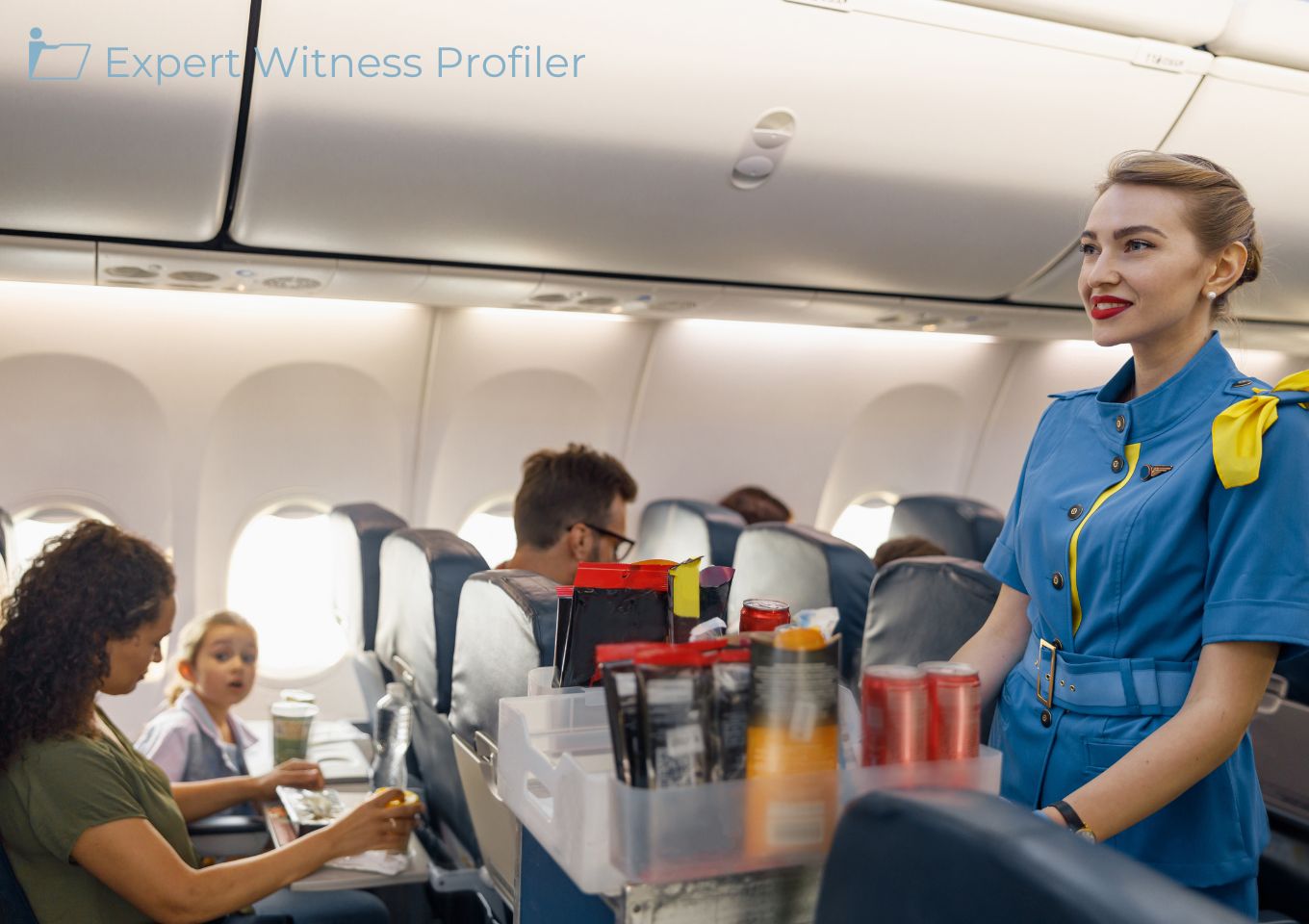
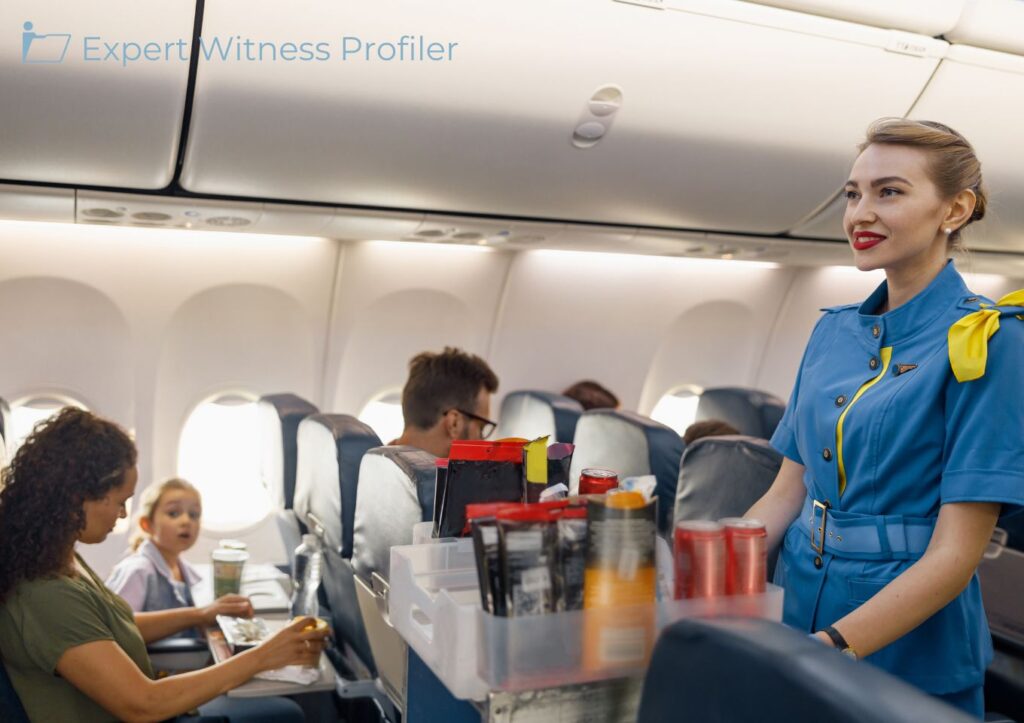
This is a claim for damages under Article 17 and Article 21 of the Montreal Convention concerning an incident that occurred on February 11, 2022, during a JetBlue international flight from Orlando, Florida, to Montego Bay, Jamaica. The Plaintiff Julian Buonomo (“Buonomo”) sustained serious injuries when hot water spilled on his right arm and flank. He filed a suit against Defendant JetBlue Airways Corporation (“JetBlue”) under the Montreal Convention, alleging the incident resulted in first and second-degree burns, scarring, and other permanent injuries.
Two expert witnesses were challenged in the case. JetBlue moved to strike Plaintiff’s expert Kathleen Lord-Jones, while Buonomo moved to strike Defendant’s expert Nicholas Namias.
The Defendant’s Motion aims to exclude three opinions presented by Plaintiff’s expert, Lord-Jones:
1. The assertion that Flight Attendant Cruz did not adequately secure and lock the lid in the “closed” position on the hot beverage server while it was positioned on the beverage cart next to Buonomo’s seat. Alternatively, it was suggested that she failed to place the lid on the server altogether. According to Lord-Jones, these actions were deemed unreasonable in light of industry-wide safety practices, resulting in the creation of a hazardous condition and compromising the health and safety of Buonomo.
2. According to Lord-Jones, JetBlue failed to adopt, implement, and train its flight attendants on Best Practices and Adopted Industry Standards related to the placement of unsecured items on top of a beverage cart during a turbulence event. It was asserted that this failure created a dangerous condition deviating from the standard of care, posing a risk to Buonomo’s personal safety.
3. Lord-Jones contended that Flight Attendant Cruz failed to adhere to her First Aid safety procedures for burn treatment during the flight. Specifically, she provided ice to Buonomo to apply on his burns after the hot water incident, a deviation from the standard of care. This failure was argued to have compromised Buonomo’s health, wellbeing, and overall care.
The Defendant’s expert witness, Namias, provided an opinion on the reasonableness and appropriateness of the care given to the Plaintiff after the incident, including JetBlue’s initial provision of ice for the burn. The Plaintiff filed a Motion seeking to exclude Namias’ opinion, citing three grounds: (1) his testimony lacked a sufficient basis in facts or data; (2) he failed to employ a reliable methodology and did not apply methods reliably to the case’s facts; and (3) the opinion would have had a prejudicial effect on the jury, with reference to Federal Rule of Evidence 403.
Flight Attendant Expert Witness
Kathleen Lord-Jones has over 24 years of experience as a certified flight attendant and is known as an expert in aviation cabin safety and survivability. She obtained her Bachelor of Science degree in Kinesiology from the University of Colorado. Lord-Jones was trained and worked as a flight attendant at American Airlines for 24 years, starting in 1987. She graduated from the American Airlines Flight Attendant Academy that same year. Additionally, she served as the National Safety Coordinator for the Association of Professional Flight Attendants for 10 years, providing recommendations to the National Transportation Safety Board and the Federal Aviation Administration during formal accident investigations. She specializes in aircraft accident investigation, cabin safety, survivability, and security. Currently, Lord-Jones works as an Associate for Robson Forensic, Inc.
Surgery Expert Witness
Dr. Nicholas Namias obtained his medical degree at the University of Medicine and Dentistry, Rutgers Medical School. He finished his general surgery residency program at Jackson Memorial Hospital associated with the University of Miami. After that, Namias remained at Jackson Memorial to complete fellowships focused on surgical critical care and trauma, based out of the hospital’s Ryder Trauma Center. He then completed his M.B.A. from the University of Miami, School of Business. His areas of expertise include trauma, surgical critical care, and burn treatment. Presently, he holds the Robert Zeppa Chair in Surgery at the University of Miami. He is also the Director of the Ryder Trauma Center and also serves as a Professor of Anesthesiology at the University of Miami, Miller School of Medicine.
Discussions by the Court
The Court first addressed Lord-Jones’s qualifications and then evaluated the reliability and helpfulness of the three opinions presented.
According to Plaintiff, Lord-Jones had “impeccable” qualifications, having obtained her college degree from the University of Colorado and receiving training as a flight attendant from American Airlines, where she worked for 24 years. The Court agreed with Plaintiff, stating that Lord-Jones was sufficiently qualified to offer the three challenged opinions, which involved an analysis of the carafe in question, flight attendant training policies, and in-flight first aid safety procedures. The Court noted that the qualifications standard is not overly stringent, and objections to the level of expertise pertain to credibility and weight rather than admissibility.
The Defendant raised objections to Lord-Jones’s demonstration, which aimed to simulate the accident involving a hot beverage server on February 11, 2022. Plaintiff responded by explaining that Lord-Jones considered various factors in the demonstration, such as the height of an average beverage cart, the server, and the estimated impact of turbulence based on Flight Attendant Neida Cruz’s testimony. Lord-Jones conducted the demonstration by dropping the beverage server three times in the on/off position and three times in the closed position. The findings indicated that the lid came off when dropped in the on/off position, while it remained secure when dropped in the closed position.
The Court had previously determined that Lord-Jones was adequately qualified to conduct the demonstration. Contrary to the Defendant’s suggestion, it was not necessary for Lord-Jones to possess expertise in product defect testing. Her industry experience, coupled with her role in offering expertise to the National Transportation Safety Board and the Federal Aviation Administration, was deemed sufficient. The Court emphasized that her experience did not need to precisely align with the specific matter at hand.
JetBlue raised objections to Lord-Jones’s methodology, characterizing the experiment as resembling a fourth-grade science project. The Defendant argued that Lord-Jones lacked a technical or scientific background in the relevant area. Additionally, the Defendant contended that her experiment was not reproducible or retestable, making it impossible to recreate. The Defendant expressed concerns about the absence of recorded data, loose and imprecise measurements, and Lord-Jones’s failure to accurately replicate the accident, criticizing her for haphazardly tossing the carafe around her lawn during the experiment.
In contrast, the Plaintiff asserted that Lord-Jones’s opinion was reliable, being grounded in “an abundance of evidence in this case that she reviewed, cites in her expert report, and relied upon in forming this opinion”. The Plaintiff contended that Lord-Jones examined the exemplar carafe, photos of the carafe, and the care and handling instructions detailing the various positions of the carafe top. Furthermore, Lord-Jones, having worked with similar hot beverage servers as a flight attendant, brought her experience into the analysis. According to the Plaintiff, the demonstration conducted by Lord-Jones served to affirm what the evidence and her experience had already established: that the carafe’s top would have remained secure if properly fastened when falling from the beverage cart.
The Court concurred that Lord-Jones’s methodology was reliable, emphasizing that this was not a case where the experiment deviated significantly from real-world conditions. The nature of the experiment did not involve “hard science” but instead constituted an expert offering non-scientific, experience-based testimony. The Court assessed whether her preparation aligned with what others in the field would recognize as acceptable, considering Lord-Jones’s substantial practical experience. Notably, the Defendant’s expert agreed with certain aspects of Lord-Jones’s findings.
Lord-Jones’s report indicated that the results were consistent with her past experience and training with hot beverage servers, as well as with the manufacturer’s literature and JetBlue Corporate Representative Melendez’s testimony. The Court acknowledged that objections to the study’s inadequacies were more appropriately seen as challenges to the evidence’s weight rather than its admissibility.
JetBlue argued that Lord-Jones’s second opinion was unreliable and took issue with Lord-Jones’s statement regarding the best practices of the International Transport Association, asserting that Flight Attendant Cruz had adhered to JetBlue’s policy, which did not mandate placing anything on the floor. However, the Plaintiff countered that Lord-Jones’s observation did not pertain to Flight Attendant Cruz’s failure to comply with company policies; rather, her opinion focused on JetBlue lacking proper policies. Lord-Jones’s recommendations were rooted in industry best practices, not solely JetBlue’s internal policies. The Court acknowledged that this testimony would be valuable to the fact finder in understanding industry policies concerning the placement of unsecured items on beverage carts during turbulence. Citing Webb, the Court also noted that this information was beyond the understanding of the average layperson.
The expert in this case, Lord-Jones, cited both the International Transport Association guidelines on catering and equipment checks during turbulence and JetBlue’s Flight Attendant Manual. Lord-Jones applied these guidelines to Flight Attendant Cruz’s statements, concluding that, based on her knowledge, training, and experience, the safest practice was to remove items, particularly those with hot liquids, from the top of the cart during turbulence. Lord-Jones further stated that relocating these items to a safer place, either inside the cart or on the aircraft floor if possible, would eliminate or reduce the chances of spills or impacts on passengers. Failure to take these precautions created a “dangerous condition” for Buonomo. The Court noted that Lord-Jones’s opinions did not rely on a “trust-me-I’m-a-flight-attendant methodology,” as argued by the Defendant.
Finally, JetBlue contended that Lord-Jones’s opinion on the use of ice for burns was unnecessary for an expert witness. However, the Court disagreed, stating that Lord-Jones’s testimony, drawn from her over two decades of experience as a flight attendant, provided insights into Flight Attendant Cruz’s alleged failure to follow training or consult the in-flight manual, which explicitly advises against using ice for certain burns. The Court emphasized that the opinion did not need to be strictly “scientific,” as Daubert and Rule 702 allow for the application of scientific, technical, or specialized expertise to aid the trier of fact in understanding evidence and determining fact issues. While acknowledging the need for reliability in evidence, the Court highlighted that for nonscientific expert testimony, the trial judge must have considerable leeway in deciding in a particular case how to go about determining whether particular expert testimony is reliable. Lord-Jones’s conclusion that the flight attendants were not properly trained, based on their actions following the burn, was rooted in her consideration of the accident and the relevant section of the JetBlue’s Flight Attendant Manual. The Court found this testimony helpful and met the Daubert reliability requirement.
Nicholas Namias expressed the opinion that the medical care provided to the Plaintiff, including the initial use of ice to cool the burn, was reasonable and appropriate. In his assessment, based on a review of medical records and photographs of Buonomo, he indicated that concerns regarding cooling applied primarily to large burns where there might be a risk of inducing hypothermia. Namias concluded that in this case, cooling served to slow the burning process without causing harm. Additionally, he stated that Plaintiff’s wounds had progressed as expected, offering opinions on potential future medical care. The Court addressed Namias’ opinion concerning the qualifications, reliability, and helpfulness criteria as outlined in the Daubert standard.
As an initial point, the Defendant highlighted the qualifications and experience of its expert, Nicholas Namias, in treating burn patients. According to information from Namias’ report, he outlined his extensive training and experience, including four years of medical school, five years of surgical residency, a two-year trauma and critical care fellowship, and over 20 years of practice specializing in burns, spanning from 1996 to 2016.
The Plaintiff appears to question Namias’ qualifications only in relation to his lack of experience treating burn patients with ice and his absence of firsthand application of ice to burns in non-medical situations. In the Reply, the Plaintiff cites excerpts from Namias’ deposition where he acknowledges that there is no point in applying ice to burns once the patient arrives at the hospital because the burning process is already completed. Despite providing this testimony, the Plaintiff’s argument is countered by Namias’ own statement that there would be no planned treatment involving repetitive applications of ice every several hours over a course of days. The conclusion is drawn that a doctor would generally lack experience applying ice to burn victims at the hospital due to the completed nature of the burning process. The Court emphasized that Namias is more than minimally qualified to provide opinions on the appropriate care for treating burns, given his 20 years of experience in the field. It noted that objections to the level of his expertise would pertain to credibility and weight rather than admissibility.
The core of the Plaintiff’s argument revolves around the reliability of Namias’ testimony. The Plaintiff contested Namias’ opinion, citing the absence of references to treatises or other supporting materials and his lack of knowledge concerning the care provided by JetBlue to the Plaintiff. Buonomo asserted that the expert failed to provide a methodology for arriving at the conclusion that JetBlue’s care was appropriate, characterizing it as speculative. The Plaintiff contended that if a witness relies primarily on experience, they must explain how that experience leads to the conclusion, justify why it is a sufficient basis for the opinion, and demonstrate how that experience is reliably applied to the facts, quoting Fed. R. Evid. 702, advisory committee’s notes to 2000 amendment.
In this case, although Namias’ report did not explicitly detail his methodology, it is reasonable to infer that his approach involved applying his knowledge and experience in treating burn patients to the case documents he reviewed. The Court noted that the lack of specific methodology details was overcome by analyzing the expert’s experience and training. Similarly, Adams v. Lab. Corp. of Am., 760 F.3d 1322, 1330 (11th Cir. 2014) , emphasized that a physician’s extensive and relevant experience contributes to the reliability of their methodology. Namias, described as an experienced-based expert medical professional with two decades of practice treating burn patients, was deemed to have a reliable methodology. The argument that Namias failed to evaluate the facts or data before forming his opinion was countered by the assertion that he reviewed the medical records and photographs of the Plaintiff’s injuries, discussed the lingering effects of the burn in detail, and applied his medical knowledge to the presented facts.
The Plaintiff raised concerns about Namias not relying on studies in his report and the books mentioned in his deposition covering burns generally, not specifically the treatment of burns with ice. In response, Namias testified that there are limited textbooks specifically on burns, mentioning one authoritative textbook on burns and another on trauma that discusses burns. The Plaintiff did not provide authoritative texts on the precise area of study—treating burns with ice—to support its argument. Namias supported his position by stating that there would be no big randomized control trial of treating a burn with ice, and his report emphasized that concerns in the burn literature over cooling burns primarily applied to large burns. The Court noted that Plaintiff’s argument failed, and it highlighted that there is no inherent requirement for a medical expert to reference independent studies supporting their conclusion.
The Plaintiff argued that Namias’ report and deposition lacked an explanation for why his experience as a doctor led to his conclusion or why it was a sufficient basis for his opinion. The Plaintiff emphasized a particular statement made by the expert, highlighting the expert’s assertion that their conclusion was reached “anecdotally.” The statement in question by the expert was: “If you have a small burn and can get immediate cooling to stop the burn, anecdotally that would be helpful”.
Upon reviewing the expert’s report and deposition transcript, the Court found that it was evident that Namias’ ultimate conclusion was not solely or predominantly derived from anecdotal experience. Instead, his extensive experience with burn victims served as a foundation from which he reasonably formed an opinion on the initial use of ice to cool the Plaintiff’s burn. The Court noted that Namias was not obligated to personally examine the Plaintiff for his expert opinion to be considered reliable.
While the Plaintiff briefly challenged the helpfulness of the expert’s testimony in its Reply, the Court addressed the issue. Rule 702(a) of the Federal Rules of Evidence mandates that an expert’s opinion must assist the trier of fact in making a factual determination to be admissible. The Court cited Daubert, stating that expert testimony not related to any issue in the case is not relevant and, therefore, not helpful. The Court emphasized that for expert testimony to be considered helpful, it must go beyond the lay jurors’ common knowledge. In its Reply, the Plaintiff argued that “Namias’ purported opinion is unsubstantiated and unspecific,” rendering it unhelpful to the trier of fact. However, the Court concluded that Namias’ opinion would, at a minimum, assist the jury in evaluating the flight attendant’s treatment of the burn and the resulting scarring, as the treatment of burns falls outside the realm of lay jurors’ common knowledge.
Buonomo asserted that the “incompleteness” of the expert’s analysis posed a risk of misleading the jury and prejudicing the Plaintiff. The argument contended that Namias’ analysis lacked a reliable foundation and was not based on the facts of the case. In response, the Defendant characterized this argument as “boilerplate” and a mere “repackaging” of the Plaintiff’s objections to the expert’s methodology.
A district Court had the authority to exclude relevant evidence under Rule 403 if its probative value was significantly outweighed by the risk of unfair prejudice, confusion of the issues, or misleading the jury. The Court was advised to exercise this authority cautiously, sparingly invoking Rule 403 as an extraordinary remedy. The general guideline was to favor admissibility, as Rule 403’s primary purpose was to exclude evidence with minimal or cumulative probative force, introduced solely for its prejudicial impact. Buonomo did not succeed in demonstrating how the probative value of Namias’ analysis was significantly outweighed by the danger of unfair prejudice or confusion of the issues. The Court had previously determined that the expert was experienced, reliable, and grounded his analysis in the facts of the case. As a result, Rule 403’s designation as an “extraordinary remedy” was deemed inapplicable in this instance.
Held
The Court denied both parties’ Daubert motions to strike expert testimony. The Court found Plaintiff’s expert Kathleen Lord-Jones and Defendant’s expert Nicholas Namias were qualified to give opinions based on their respective experience. Their methodologies were sufficiently reliable and their testimony would assist the jury. The Court has not arrived on an outcome for this case since the remaining issues involved in this case still await resolution.
Key Takeaways
The Court evaluated challenges to expert testimony in a case involving a spill incident on a JetBlue flight, resulting in the Plaintiff sustaining burns. The Plaintiff’s expert, Kathleen Lord-Jones, faced objections from JetBlue, while the Defendant’s expert, Nicholas Namias, was contested by the Plaintiff. Lord-Jones offered opinions on the flight attendant’s actions, adherence to safety practices, and burn treatment protocols. The Court affirmed Lord-Jones’s qualifications, acknowledging her extensive experience, and deemed her simulation experiment reliable, emphasizing her practical expertise. Namias, an expert in burn treatment, faced challenges related to his qualifications and methodology. The Court upheld Namias’ qualifications, noting his significant experience. Despite the lack of detailed methodology in his report, the Court inferred a reliable approach based on his extensive experience. Namias’ opinion on the reasonableness of medical care was considered admissible, and objections were viewed as matters of weight, not admissibility. Overall, the Court highlighted the importance of experience in assessing expert testimony and emphasized the admissibility of nonscientific expert opinions that assist the trier of fact.