Tag: Reconsideration Motion

  • Biomechanics Expert’s Subjective Assurances do not Establish Admissibility

    Biomechanics Expert’s Subjective Assurances do not Establish Admissibility

    This case arises from a January 2023 automobile accident. On April 16, 2023, Plaintiff Gina Martin was driving eastbound on Interstate I-10, nearing the Chef Menteur exit in New Orleans, Louisiana, when Defendant Micah Cunningham crashed his truck into the rear of Martin’s vehicle. Martin alleged that she suffered various severe injuries as a result of this collision.

    Plaintiff retained Dr. David J. Barczyk, D.C as an expert witness in the field of biomechanics in order to opine about the causation of Martin’s injuries.

    Defendants filed a motion in limine to exclude the testimony of Barczyk arguing that Barczyk lacked the qualifications and expertise to render opinions regarding medical causation. The Court granted in part and denied in part the Defendants’ motion in limine to exclude the testimony of David J. Barczyk.

    Even though the Court found that Barczyk is qualified to opine on the medical causation of Plaintiff’s musculoskeletal injuries, the Court nonetheless excluded his testimony as to the same. The Court found that Barczyk’s testimony with respect to medical causation would be inadmissible because it would not reflect a reliable application of methodology to the facts of this case.

    Martin requested that this Court reconsider its prior ruling which precludes Barczyk from testifying as to the medical causation of Plaintiff’s alleged injuries. 

    Biomechanics Expert Witness

    David Barczyk is licensed in Louisiana as a chiropractor and
    continues to practice as a chiropractor in the office that he established. Barczyk has postdoctoral training in neurology and training in crash biomechanics.

    He has received over 350 hours of neurological training and is a diplomate of the American Chiropractic Neurology Board. He has several certifications in biomechanics and has attended over a dozen trainings. Barczyk has given a number of lectures on topics in biomechanics.

    Get the full story on challenges to David Barczyk’s expert opinions and testimony with an in-depth Challenge Study. 

    Discussion by the Court

    With respect to whether Barczyk reliably applied his methodology, the Court held that Plaintiff has still failed to establish that Barczyk has done so. Plaintiff explained that “following the completion of the physical examination and examination of the medical history of Plaintiff, Barczyk was in position to render a reliable opinion regarding causation.” Plaintiff then stated that “Barczyk was able to eliminate previous and alternative causes of Plaintiff’s condition.”

    However, Plaintiff’s argument missed the point. Whether Barczyk was in a position to offer reliable testimony does not establish that he reliably applied his methodology to the facts of this case. And, even if he had done so, the Court held that his report fails to demonstrate as much. For example, Barczyk failed to demonstrate how or why he was able to eliminate alternative causes for the Plaintiff’s condition. The Court is thus left with the Plaintiff’s and Barczyk’s own assurances that Barczyk reliably applied his methodology. These subjective assurances do not establish admissibility.

    With respect to Barczyk’s qualifications to opine on the medical causation of Plaintiff’s alleged traumatic brain injury, Plaintiff’s arguments for reconsideration are likewise unavailing. Plaintiff restated Barczyk’s qualifications, which the Court has already found to be insufficient. Plaintiff further stated that Barczyk has performed research, testing, and clinical practice with respect to brain injuries. But she cited no examples of Barczyk’s publications, research, or clinical experience.

    However, the Court did clarify that, given Barczyk’s expertise in biomechanics, Barczyk is qualified to “testify as to the amount of force he believes was generated by the subject collision and the observed effect of such force on a hypothetical human body in a comparable accident.”

    Held

    The Court denied the Plaintiff’s motion for reconsideration of the Court’s ruling limiting Dr. David Barczyk’s testimony regarding medical causation.

    Key Takeaway:

    Whether Barczyk was in a position to offer reliable testimony does not establish that he reliably applied his methodology to the facts of this case. The Court is thus left with the Plaintiff’s and Barczyk’s own assurances that Barczyk reliably applied his methodology. These subjective assurances do not establish admissibility.

    Please refer to the blog previously published about this case:

    Biomechanics Expert’s Opinions on Medical Causation are Excluded

    Case Details:

    Case Caption: Martin V. National Interstate Insurance Company Et Al
    Docket Number: 2:24cv1645
    Court Name: United States District Court, Louisiana Eastern
    Order Date: June 11, 2025
  • Ski Safety Expert Fails to Employ Experienced-Based Methodology Properly

    Ski Safety Expert Fails to Employ Experienced-Based Methodology Properly

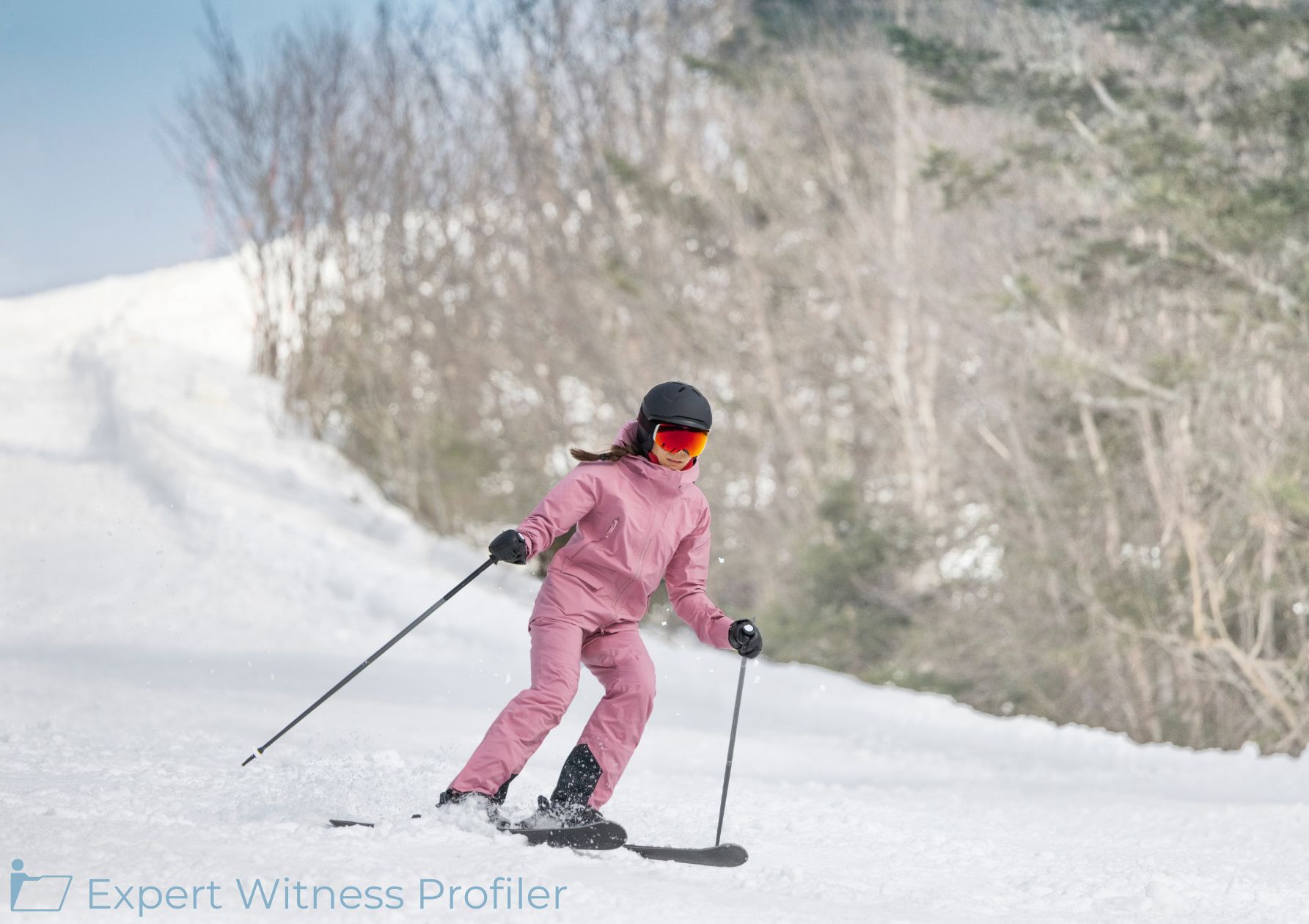
    On March 19, 2023, a ski collision at Aspen Highlands Ski Resort between Tasha Barber (Plaintiff) and Christine Mack (Defendant) led to a lawsuit. Barber claims Mack, skiing uphill, had the responsibility to avoid the collision and is seeking damages for her resulting injuries. Mack denies these claims and has engaged Jonathan Delk as an expert witness. Delk’s expert report includes a section titled “Conclusion and Opinions” where he presents factual conclusions and his professional opinions. At the end of that section, Delk offered three opinions:

    1. Barber was responsible for avoiding the collision based on her being the uphill skier.

    2. Barber was neither prepared nor aware enough to begin skiing, nor does she acknowledge that her being in motion (“coasting”) as skiing, which it is. These real facts and perspectives shared by Tasha Barber prove that Tasha was not sufficiently in control or aware of her surroundings to have avoided a collision.

    3. Barber’s choice of actions to avoid the collision (shouting, leaning back, twisting) were ultimately the cause of her skis coming into contact with Christine Mack’s. Tasha Barber’s movements were the ultimate mechanism of her injury.

    The Plaintiff contested the admissibility of these opinions, asserting that they constituted paid advocacy rather than genuine expert testimony. Due to the absence of a reliable methodology supporting them, the Court deemed the opinions inadmissible. This motion, requesting the Court to reconsider its decision, was submitted approximately two weeks thereafter.

    Ski Safety Expert Witness

    Jonathan Delk is an experienced trainer and risk manager with 15 years of ski, snowboard, and cycling coaching and training experience. From 2004 – 2019 he was employed in various roles in the ski industry including instructor,
    guide, coach, trainer, manager, and director of snowsports.

    During his tenure in the ski industry, he created and administered safety trainings for instructors and resort staff related to the Skier’s Responsibility Code and the Colorado Skier’s Safety Act. While his primary work has shifted fields, he remains active in the ski industry both as an instructor and member of PSIA-AASI, the governing body of instructor certifications in the United States for which he was also employed during his career as an examiner.

    Get the full story on challenges to Jonathan Delk’s expert opinions and testimony with an in-depth Challenge Study. 

    Discussion by the Court

    The Federal Rules of Civil Procedure do not expressly provide for a motion for reconsideration on non-dispositive issues. But district courts have plenary power to revisit and amend interlocutory orders as justice requires. When asked to amend such an order, “courts consider whether new evidence or legal authority has emerged or whether the prior ruling was clearly in error.”

    The Court determined that the Defendant misunderstood the applicable standard, instead arguing for the application of state reconsideration rules. Consequently, because the Defendant relied on the incorrect standard, she failed to address the proper one. Furthermore, she criticized Magistrate Judge Chung’s analysis of Delk’s opinions, thereby attempting to reargue her previous points. Ultimately, however, the Tenth Circuit had clearly stated that a motion for reconsideration was not meant for relitigating previously decided issues by the losing party.

    To illustrate, the Defendant made two additional attempts to justify Delk’s first opinion.

    First Opinion

    Firstly, she tried to strengthen the opinion by claiming personal experience with the crash site supported it. However, as the Court previously noted, this justification originated solely from the arguments of her counsel and was absent from Delk’s report.

    If the Defendant wished to leverage Delk’s specific expertise regarding fall lines, she could have obtained a narrower opinion concerning how the various slopes and paths would generally impact a skier’s acceleration. She did not do so. Instead, she presented an opinion that relied on assumptions and presumptions to reach a broader conclusion on liability. This opinion exceeded the bounds of expertise by selecting facts for the jury and was therefore inadmissible.

    The previous ruling specifically noted that the problem with the opinion is that it did not “explain how [his] experience leads to the conclusion reached, why that experience is a sufficient basis for the opinion, and how that experience is reliably applied to the facts.”

    Second Opinion

    The Court also found a similar flaw in the second opinion. The Defendant argued that Delk’s knowledge of ski equipment and its effect on reaction time would be helpful to a jury. While this might be accurate, it wasn’t the content of Delk’s report. Instead, the opinion merely criticized the Plaintiff’s preparedness by noting she was “possibly buckling her boots while in motion.” Thus, the core of the opinion didn’t rely on Delk’s expertise in ski equipment. Rather, it stemmed from Delk’s interpretation of the Plaintiff’s deposition testimony as to whether her conduct constitutes “paying attention to her direction of travel.” Jurors don’t need expert assistance to understand the meaning of paying attention.

    Third Opinion

    Lastly, the Defendant tried to justify Delk’s third opinion, arguing that his expertise in ski control supported his conclusions that the Plaintiff was (1) not buckling her boots, (2) looking down, (3) following the cues of another, and (4) not paying attention to her surroundings. However, the report lacked any explanation of a reliable methodology, based on training and experience, used to reach these conclusions. Furthermore, it’s unlikely a jury needs expert help to determine if the Plaintiff was buckling her boots in motion, looking down, or not just paying attention to her surroundings– or if such inattentive actions could cause an ensuing collision. The Court found that Delk’s opinion here didn’t help the jury understand the facts but rather directed them to choose a specific narrative, offering only an obvious consequence of that narrative as expertise.

    Furthermore, the Defendant did not address Delk’s lack of qualifications to state that “Tasha Barber’s movements were the ultimate mechanism of her injury,” a “medical conclusion” for which “Delk has” no “medical training, education, or experience that would allow him to render an expert opinion on injury causation.” In essence, the Court did not disregard Delk’s experience or demand a scientific basis, but rather emphasized that “[e]xpert testimony based on experience alone must reveal how the experience led to the expert’s conclusion, why the experience is a ‘sufficient basis for the opinion,’ and how the experience was reliably applied.” Applying this standard, Delk’s report was deficient. The Defendant’s motion provides no evidence that striking Delk’s report was a clear error.

    To the extent the Defendant desires to offer information about the Skier’s Responsibility Code, the Colorado Skier’s Safety Act, or other general skiing information to the jury, the previous order did not foreclose those possibilities.

    Held

    The Court denied the Defendant Christine Mack’s motion to
    reconsider pursuant to C.R.C.P. 121 § 1-15(11) regarding Plaintiff’s 702 motion to strike Jonathan Delk’s opinions.

    Key Takeaway:

    While the Defendant correctly points out that excluding expert testimony should be the unusual case, a district court bears the responsibility of ensuring that such testimony is reliable, relevant, and helpful to the jury. Although Delk possesses knowledge regarding skiers’ responsibilities, the opinions the Defendant intends to present through him are not aimed at informing the jury about these duties. Rather, they seek to convince the jury, faced with different accounts of events, to adopt the version where the Plaintiff failed to meet those responsibilities.

    Please refer to the blog previously published about this case:

    Ski Safety Expert Witness is Not Qualified to Opine on the Ultimate Mechanism of Injury

    Case Details:

    Case Caption: Barber V. Mack
    Docket Number: 1:24cv260
    Court: United States District Court for the District of Colorado
    Order Date: March 24, 2025
  • Accident Reconstruction Expert Disregards Physical Evidence

    Accident Reconstruction Expert Disregards Physical Evidence

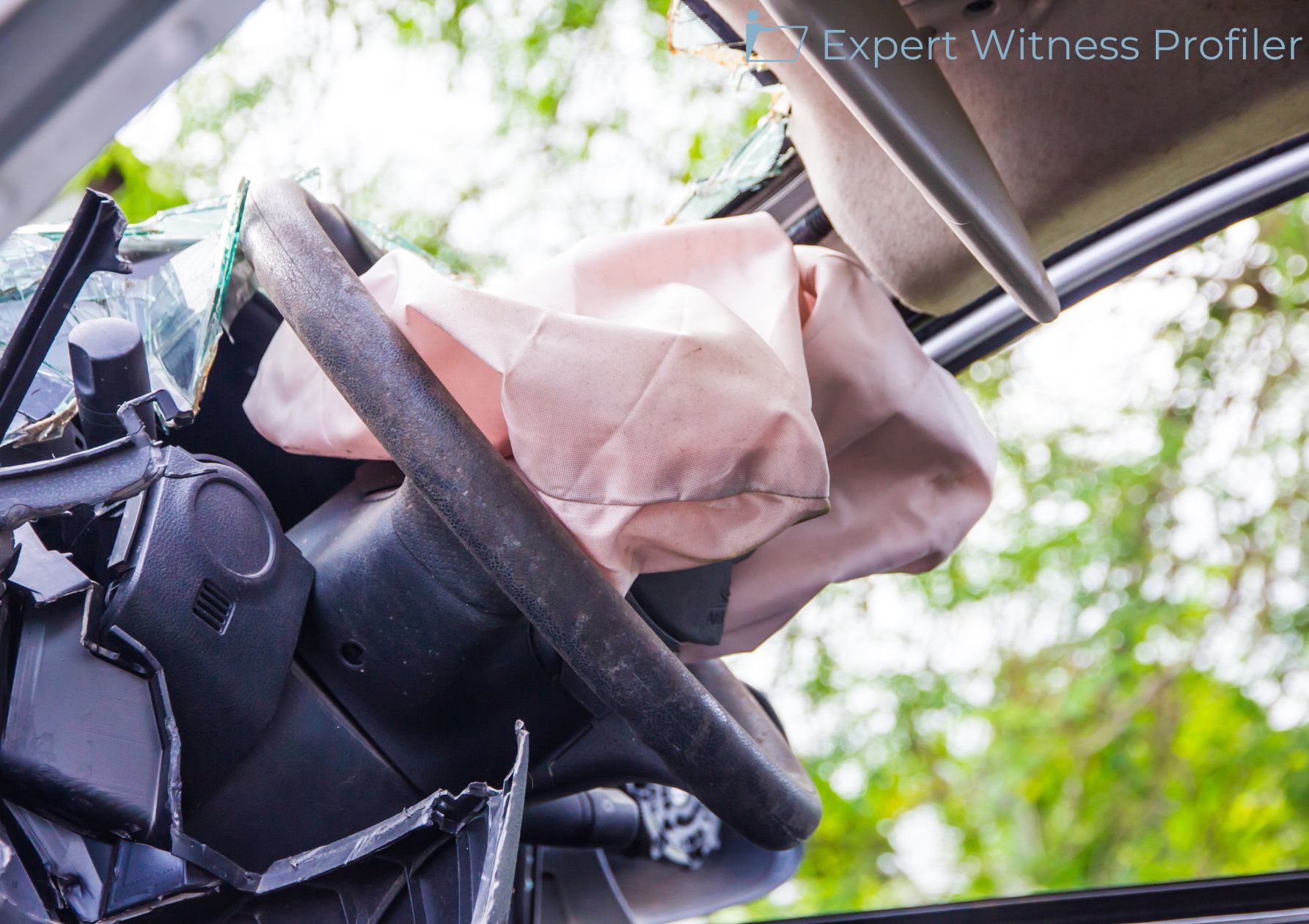
    William Harrison Sims sustained facial injuries from shrapnel when his BMW’s airbag malfunctioned. He subsequently filed a lawsuit against BMW, claiming negligence and strict product liability.

    In the legal proceedings, BMW’s accident reconstruction expert, Amanda Duran, P.E., was accused by the Plaintiff of selectively endorsing a defense-favorable theory of the accident without sufficient justification.

    Defendants filed a motion requesting reconsideration of its February 13, 2025 order granting in part and denying in part Plaintiff’s motion to exclude the testimony of Duran.

    Accident Reconstruction Expert Witness

    Amanda Duran, P.E. is an automotive engineer specializing in motor vehicle crash investigation and reconstruction. Since 2003, she has worked at Carr Engineering, Inc.  To date, she has been involved in analyzing over 600 crashes, including more than 500 vehicle inspections and 400 scene inspections.

    Get the full story on challenges to Amanda Duran’s expert opinions and testimony with an in-depth Challenge Study. 

    Discussion by the Court

    Amanda Duran, P.E., was presented as the defense’s accident reconstruction expert. The Court partially granted the Plaintiff’s Daubert challenge, excluding Duran’s opinion on who failed to yield the right of way. The Court found this opinion unhelpful, as Duran couldn’t identify the responsible party, and the basic fact that someone failed to yield the right of way was deemed common knowledge.

    The defense’s motion for reconsideration, which simply reiterated prior arguments, was denied. The Court emphasized that reconsideration is not a platform for disputing rulings. Furthermore, the Court rejected the defense’s argument that because their challenge to the Plaintiff’s expert was denied, Duran should be allowed to offer unhelpful opinions.

    The Court also struck Duran’s opinion regarding the BMW’s lane of travel, again rejecting the defense’s rehashed arguments. The Court found Duran’s methodology flawed, as she disregarded physical evidence and relied excessively on Harris-Jackson’s testimony. The defense’s disagreement with this ruling was deemed insufficient for reconsideration.

    Finally, the defense argued that it was unfair for the Plaintiff’s expert, Perry Ponder, to testify when his conclusions differed from the crash report prepared by the Trooper. It should be noted that the Court refused to admit Duran’s testimony about the Plaintiff’s lane of travel because she prioritized Harris-Jackson’s account over concrete physical evidence. The Court rejected this argument, highlighting the difference in methodology: Ponder considered the Trooper’s crash report but reached a different, reasoned conclusion, while Duran disregarded physical evidence. The Court concluded that the experts’ approaches were not comparable and denied the motion for reconsideration.

    Held

    The Court denied the Defendants’ motion for reconsideration of the Court’s order to exclude the testimony of Amanda Duran, P.E.

    Key Takeaway:

    The Court emphasized the importance of sound methodology and reliance on evidence in expert testimony. After all, a motion for reconsideration is not a platform to reargue previous arguments.

    Please refer to the blogs previously published about this case:

    Accident Reconstruction Expert Witness’ Testimony Admitted Despite His Failure to Calculate G-Force 

    Neurology Expert Witness’ Injury Causation Testimony Admitted

    Accident Reconstruction Expert Witness’ Opinion Regarding Plaintiff’s Lane of Travel Ignored Physical Evidence

    Automotive Engineering Expert Witness’ Testimony Regarding the Latent Defect in Airbag Inflators Admitted

    Neuropsychology Expert Witness is Qualified to Offer Opinions on Causation

    Expert Witness Reliability: Sims v. BMW Case Examines “Parroting” Claims

    Case Details:

    Case Caption: Sims V. BMW Of North America LLC
    Docket Number: 6:22cv1685
    Court: United States District Court, Florida Middle
    Order Date: March 18, 2025