Tag: Repair

  • Law And Legal Expert Not Allowed to Opine on the Remodeling Project

    Law And Legal Expert Not Allowed to Opine on the Remodeling Project

    This matter arises from damage to Plaintiffs Jacob and Suzanne Kuehn’s home caused by a water loss in December 2023.

    The Kuehns sued Safeco Insurance Company of America (“Safeco”) alleging breach of contract, violation of the Consumer Protection Act (“CPA”), bad faith, and violation of the Insurance Fair Conduct Act (“IFCA”).

    In advance of trial, Plaintiffs identified construction expert David Zaborowski while Defendant disclosed two rebuttal expert witnesses: construction rebuttal witness Nathan George and claims-handling rebuttal witness Joseph Hampton

    Plaintiffs filed a motion to exclude the testimony of both George and Hampton while Defendant sought to exclude the testimony of Zaborowski.
    Construction Expert Witnesses

    David Zaborowski has 23 years of experience in the insurance restoration industry as a general contractor. He specializes in property insurance estimating and appraisal work.

    Want to know more about the challenges David Zaborowski has faced? Get the full details with our Challenge Study report.

    Nathan T. George is an active contractor with 25 years of continuous hands-on experience gained through both his carpentry work in the field and his involvement in running a successful restoration construction company.

    Get the full story on challenges to Nathan George’s expert opinions and testimony with an in-depth Challenge Study.

    Law And Legal Expert Witness

    Joseph D. Hampton is a retired attorney with 40 years of experience in insurance law, representing both insurers and insureds and provides expert testimony on insurance law, including contractual and extracontractual liability and claim handling.

    Discover more cases with Joseph Hampton as an expert witness by ordering his comprehensive Expert Witness Profile report.

    Discussion by the Court

    a. Joseph Hampton

    (1) Hampton’s Testimony About the Remodeling Project

    Plaintiffs argued that Hampton’s assertions that their remodeling project would have occurred even absent the December 18, 2023, water damage are not based on sufficient facts and rely on speculation.

    Defendant and Hampton pointed to a series of Plaintiffs’ email correspondence to support the assertion that the remodel was planned before the water damages, but all of the referenced communications occurred after the date of water damage. The Court agreed with Plaintiffs that communications with potential vendors starting in 2024 (ranging from approximately one to over eight months after the loss date) are not a basis to opine that Plaintiffs intended to remodel their kitchen in 2023.

    (2) Hampton’s Testimony About the Cabinets

    Plaintiffs argued that Hampton’s testimony that Plaintiff Jacob Kuehn “did an honorable thing” by removing cabinet costs and must have concluded the policy did not cover them, must be excluded because it is unsupported speculation.

    Defendant did not assert that Hampton offered rebuttal when he opined that Plaintiff Jacob Kuehn’s actions were “honorable,” and that he must have concluded the cabinets were not covered by the insurance policy. Moreover, Plaintiffs are correct that Hampton conceded that he does not know why Plaintiff Jacob Kuehn removed the cabinet estimate. Therefore, the Court agreed that Hampton is offering speculative testimony, which must be excluded.

    (3) Hampton’s Testimony About Xactimate Pricing

    Plaintiffs asserted that Hampton’s testimony about Plaintiffs’ use of Xactimate pricing from September 2025 is unreliable because Hampton “admitted that he does not have the qualifications to go ‘line by line through an Xactimate estimate, deconstruct it, analyze it, and come up with his own opinions,’” and that “such work falls ‘within someone else’s expertise and purview.’”

    However, Hampton critiqued the use of Xactimate from September 2025, because the insurance policy requires repair costs to be determined “shortly following the loss,” which, in this case, was in December 2023. The Court held that Hampton’s opinion is reliable because he bases it off the insurance policy and Zaborowski’s report. Any critique of Hampton’s inability to go line by line through the estimate goes to the weight of the evidence he presents and is for the jury to decide.

    (4) Hampton’s Testimony About the Insurance Fair Conduct Act (“IFCA”) Letter

    Plaintiffs argued that the Court should exclude Hampton’s testimony about the IFCA notice because it offered improper rebuttal, improper legal conclusions, and is barred by Federal Rule of Evidence 408.

    First, Plaintiffs asserted that “Hampton opined that Plaintiffs’ IFCA notice letter was sent ‘simply to enable an IFCA suit.’” While Hampton will not be allowed to speculate as to Plaintiff’s motivation for sending the letter, the Court held that Hampton’s opinion on this subject constitutes proper rebuttal.

    Second, the Court found that Hampton’s testimony about the IFCA is almost entirely devoid of legal conclusions, with the exception of one opinion that must be excluded. Hampton asserted that Plaintiffs were not inviting negotiation because “the sole purpose of an IFCA notice letter is to enable a later suit pursuant to the IFCA,” rather than offering an opinion that, based on his experience handling claims, letters of this nature are not used to invite negotiations.

    In his rationale for his opinion that the opposing expert is wrong that Defendant did not negotiate in good faith, Hampton is essentially concluding that the law rebuts opposing testimony.

    (5) The Scope of Hampton’s Testimony

    Plaintiffs sought to exclude testimony from Hampton that they argued “exceeded permissible expert boundaries” because they offered opinions on the reasonableness of conduct and legal conclusions. The Court partly agreed.

    (a) Reasonableness and Case Law Conclusions

    Regarding coverage for the kitchen cabinets, Hampton opined, “That part of the damaged building was the lower cabinets, not the entire set. It is a reasonable claim handling practice, and permitted in Washington, to determine the extent of damage to property, and only pay for repair or replacement of the actually damaged portion where the policy language permits such allocation.”

    There are two issues with the proffered opinion. First, it deems the claim-handling practice “reasonable,” which opined on the ultimate issue of the reasonableness of Defendant’s conduct and is not allowed. Second, the statement offered a legal conclusion—namely, that Washington law permits Defendants to only pay for the damaged cabinets, but not the upper, undamaged cabinets—which is also not allowed.

    However, Hampton can still testify as to generally accepted claims-handling practices in relation to the cabinets.

    Hampton opined that “it is not unreasonable for a field adjuster to schedule an inspection a mere five days after initial contact” and later stated that “it is common for an insured’s contractor’s estimate to lack the details necessary for a reasonable ‘apples to apples’ comparative analysis of the competing estimates.”

    Hampton can testify about what the common practice is or about typical scheduling timelines, but he cannot offer an opinion as to the reasonableness of such acts.

    Regarding the IFCA letter that Plaintiffs sent, Hampton’s opinions that “no reasonable person” would accept the terms in the letter, and that the letter was not an attempt to “open a reasonable settlement discussion” offer conclusory opinions on the ultimate issue as to whether Defendant acted in bad faith. As such, they are not allowed.

    The remainder of Hampton’s opinions are allowed, as they are based on his experience in legal practice and handling claims.

    (b) Legal Landscape in Washington

    Plaintiffs argued that Hampton’s statements referring to the legal landscape in Washington should be excluded.

    Although Hampton goes on to cite the Revised Code of Washington, the Washington Administrative Code, and a Washington Supreme Court case, this testimony is based on his experience handling insurance claims.

    (c) Statutory Law

    Similarly, Plaintiffs argued that certain assertions Hampton made should be excluded because they make legal conclusions based on “statutory law.” The Court disagreed.

    Although Hampton mentioned the Revised Code of Washington, but this is in reference to the basis of Hampton’s opinion that “the sole purpose of an IFCA notice letter is to enable a later suit pursuant to the IFCA,” meaning that Plaintiffs were not “inviting a discussion to amicably resolve a dispute.” 

    (d) Breach of Contract

    Hampton stated, “the opposing expert says that industry standards require an insurer as part of paying to replace damaged property with like kind and quality to replace undamaged property if necessary to achieve a uniform appearance when replacing damaged property, unless there is clear policy language to the contrary.”

    The report goes on to rebut the opposing expert’s assertions by stating that “Here, there is policy language to the contrary, and the allocation is allowed.” Accordingly, this testimony does not offer a legal conclusion.

    (e) Catchall

    Finally, Plaintiffs sought to exclude all remaining testimony from Hampton. Plaintiffs base this request on the assertion that “because so much of his testimony is excluded under the rules, Hampton’s remaining opinions are unhelpful and inadmissible.”

    Because the Court denied many of Plaintiffs’ requests and found that Hampton’s testimony would still be helpful, the request to exclude the remainder of Hampton’s testimony was denied.

    b. Nathan George

    Plaintiffs argued that George’s opinions are not grounded in sufficient facts, reflect unsupported assumptions, lack reliable application, and exceed the permissible scope of rebuttal testimony.

    (a) George never visited Plaintiffs’ property and instead relied on photos

    First, Plaintiffs argued that because George never visited Plaintiffs’ property and instead relied on photos taken after the mitigation work, his opinions are not grounded in sufficient facts or data. However, an expert may base an opinion on facts or data in the case that the expert has been made aware of or personally observed.

    (b) George’s conclusions regarding damage to the subfloor are unsupported assumptions, not reliable analysis

    Next, Plaintiffs argued that George’s conclusions regarding damage to the subfloor are unsupported assumptions, not reliable analysis. George made it clear that his opinion regarding mold on the floors and treatment are based off his years’ long knowledge, as well as his annual re-review, of the Environmental Protection Agency (“EPA”) Guidelines.

    Additionally, Plaintiffs argued that because George did not review Defendant’s estimate and instead relied on Plaintiffs’ expert’s description, George did not reliably apply any methodology to facts. But, George offered the opinion that, despite Zaborowski’s issue with the method, Defendant’s decision to combine the sketch of the kitchen and dining room, label it all as “kitchen,” and aggregate the square footage is proper and does not change the result. This opinion is developed from his extensive experience writing estimates based off square footage for flooring. It is standard rebuttal testimony because he responds directly to an opinion that Plaintiffs’ expert provided.

    (c) George’s opinion as to what would have caused damaged subfloor should be excluded

    Plaintiffs argued that George’s opinion as to what would have caused damaged subfloor, and how he evaluated whether the subfloors were damaged, should be excluded. However, Zaborowski’s opinion was that it was necessary to remove the subfloor. As part of George’s rebuttal testimony, it is only logical for him to explain why he believes it is not necessary, which includes an explanation as to why, in his professional experience, he did not believe the subfloor was damaged.

    (d) George’s reliance on EPA standards for mold remediation is not rebuttal testimony

    Lastly, Plaintiffs argued that George’s reliance on EPA standards for mold remediation is not rebuttal testimony. But, again, in order to explain why he disagrees with Zaborowski’s conclusion, George has to be able to explain why. And the basis for his opinion as to mold on floors is based off his years’ long knowledge, as well as his annual re-review of the EPA guidelines.

    c. David Zaborowski

    Defendant argued that Zaborowski’s testimony is not reliable because it is not based on sufficient facts or data. In support, Defendant points to the following: the insurance policy agreement, Plaintiff Jacob Kuehn’s repair cost range, the fact that Zaborowski gave his estimate roughly a year after the house was repaired and did not consider the actual costs paid, and the fact that he included costs that were not ultimately in the final repair cost. But Zaborowski made it clear that he is “tasked to consider what [Plaintiffs] should have been paid on the claim, not what they paid to have the repairs done.”

    And a central issue in this case is whether Defendant acted reasonably and in good faith when asked to pay for the repairs to Plaintiffs’ home. Those questions must be viewed through the lens of what was reasonably owed at the time of denial.

    Moreover, what Defendant omits in its brief, and does not respond to in its reply, is that Zaborowski used the Xactimate software to calculate repair costs—software that George uses “all the time,” and which Hampton states estimators “typically” use.

    Zaborowski’s methodology is sound, and the Court is more concerned with that than with the correctness of his conclusion.

    Given that the Court found Zaborowski’s methods reliable, any questions as to his total estimate and reasons for arriving at the final number go to the weight of his credibility. They can be tested through cross-examination and are for the jury to decide.

    Rule 403 Challenge

    Defendant argued that Zaborowski’s testimony is prejudicial and will confuse the jury. Defendant may disagree that some of the line items in Zaborowski’s estimate should not have been included, but Zaborowski was tasked with determining what Defendant should have paid Plaintiffs, not what they did pay them. Ultimately, this is a dispute that should be decided by the jury.

    Moreover, this testimony will not mislead the jury, as Defendant will have the opportunity to point out any line items that were not in the actual repair cost, and Zaborowski will be able to explain why he believes they should have been—a concept that is not overly complicated for a jury to decipher.

    Held

    • The Court granted in part and denied in part Plaintiffs’ motion to exclude Joseph Hampton’s and Nathan George’s testimony.
    • The Court denied Defendant’s motion to exclude David Zaborowski’s testimony.

    Key Takeaway

    Reliability requires the court to assess whether an expert’s testimony has a reliable basis in the knowledge and experience of the relevant discipline. In making its reliability determination, a court is concerned with the soundness of the methodology, not with the correctness of the expert’s conclusions.

    Case Details:

    Case Caption: Kuehn V. Safeco Insurance Company Of America
    Docket Number: 2:24cv1785
    Court Name: United States District Court for the Western District of Washington
    Order Date: May 08, 2026
  • Aviation Expert Was Allowed to Opine on Wing Repairs

    Aviation Expert Was Allowed to Opine on Wing Repairs

    The claims in this action for negligence, gross negligence, and vicarious liability arise out of damage caused to The Jones Company’s (“TJC”) 2024 Embraer Phenom 300E aircraft (“the aircraft”). On December 30, 2024, the aircraft was flown to New Orleans Lakefront Airport, where Signature Flight Support, LLC was providing fixed-base operator services, including ground handling operations.

    According to TJC, on that same day, while Defendant Phillip Everett was towing the unpowered aircraft, the leading edge of the aircraft’s left wing struck a fire hydrant, damaging the underside of the wing.

    TJC retained Keith M. Bransky as an aircraft appraisal expert to provide an opinion with respect to the aircraft’s “pre-damage market value and post-repair diminution in value.”

    Signature sought to exclude Bransky as an expert witness on three grounds: (1) that Bransky is not qualified as an expert to opine on the aircraft’s diminution in value, (2) that his opinions are “neither reliable nor relevant,” and (3) that his “testimony will not aid the trier of fact.

    Aviation Expert Witness

    Keith M. Bransky has thirty-four years of aircraft appraisal experience, including experience “working as a licensed aircraft mechanic, professional pilot, and aircraft broker.”

    Bransky is certified as an “Accredited Senior Appraiser with the American Society of Appraisers” (“ASA”), has authored and published articles and textbook chapters on the topic of diminution of value for damaged aircraft, and is currently authorized as a Federal Aviation Administration (“FAA”) inspector.

    He obtained a bachelor’s degree in aviation management from Southern Illinois University in 1980 and an associate of applied science degree, also from Southern Illinois University in 1980.

    Get the full story on challenges to Keith Bransky ’s expert opinions and testimony with an in-depth Challenge Study.

    Discussion by the Court

    A. Bransky is Qualified

    Signature contended that Bransky is not qualified to testify as an expert in this matter because he “lacks ‘specialized knowledge’ of the type of aircraft at issue.”

    With more than three decades of experience in aircraft maintenance
    and appraisals, the Court found that Bransky is suitably qualified to advance an expert opinion on the aircraft’s pre-damage market value and post-repair diminution in value.

    B. Bransky’s Opinion is Reliable

    Signature challenged the reliability of Bransky’s opinion on two grounds: his general methodology, and his consideration of information concerning the potential impact of corrosion on the aircraft’s value.

    First, Signature argued that Bransky’s opinions are unreliable because they
    are subjective and lack a validated methodology. As TJC correctly noted, Signature’s own expert utilized a nearly identical test for assessing diminution in value.

    The Daubert inquiry is “flexible,” particularly where the expert relies on
    professional experience rather than strictly scientific analysis. Considering the near identical methodologies that the Signature and TJC experts advance, the Court can hardly conclude that Bransky’s methodology is wholly unreliable.

    Moreover, Signature’s only challenge to the factual information upon which Bransky relies concerned the impact of corrosion in his diminution of value analysis.

    Signature’s core complaint with Bransky’s opinion is the uncertainty surrounding whether there is an increased risk of corrosion that will negatively impact a buyer’s perception of the aircraft’s value. Whether future damage to property is certain to result is not determinative of an expert opinion’s admissibility.

    To the extent Signature disagreed with Bransky’s methodology or consideration of potential corrosion in rending his opinion, such issues go to the weight of his testimony.

    C. Bransky’s Testimony is Relevant and Will Assist the Trier of Fact

    Signature asserted that Bransky’s testimony is irrelevant or “its probative value is substantially outweighed by risks of prejudice, confusion of the issues, or waste of time,” on two specific grounds. To begin with, Signature challenged Bransky’s classification of the damage to the aircraft as “moderate” because FAA regulations only define “major” and “minor” repairs and thus his “subjective” use of “moderate” is confusing. Also, Signature argued that any testimony from Bransky with respect to whether the wing repairs were “permanent” or “temporary” are outside his expertise and risk “confusing the trier of fact.”

    The Court found that there is a low, and easily remedied, risk of confusion should Bransky describe the damage as “moderate” in the context of his appraisal. Regardless, describing the damage history of an aircraft is obviously relevant for appraising its value and Bransky’s testimony will “provide insight on a topic which the jury could not itself assess with common knowledge and experience.”

    Second, Bransky’s report indicated that he was not offering his own opinion
    that the repair was permanent, rather that the repair itself would impact the value of the aircraft.

    Signature has not specifically identified in what respect it would object to the relevance of Bransky’s testimony regarding the permanence of repairs—i.e., whether it takes issue with a particular use of the words “temporary” and “permanent” or with respect to his analysis of the potential future need for additional repairs. The Court has already concluded that Bransky may testify to the market perception that the repaired wing is more susceptible to future damage and that his testimony must be limited to the analysis in his report.

    Held

    The Court denied Signature’s motion to exclude testimony from TJC’s expert witness, Keith M. Bransky.

    Key Takeaway

    Perceived flaws in an expert’s valuation methodology are matters properly to be tested in the crucible of adversarial proceedings; they are not the basis for truncating that process.

    Case Details:

    Case Caption: Jones Company V. Signature Flight Support, LLC
    Docket Number: 2:25cv1645
    Court Name: United States District Court, Louisiana Eastern
    Order Date: June 15, 2026
  • Maritime Expert Allowed to Opine on the Barge’s Condition

    Maritime Expert Allowed to Opine on the Barge’s Condition

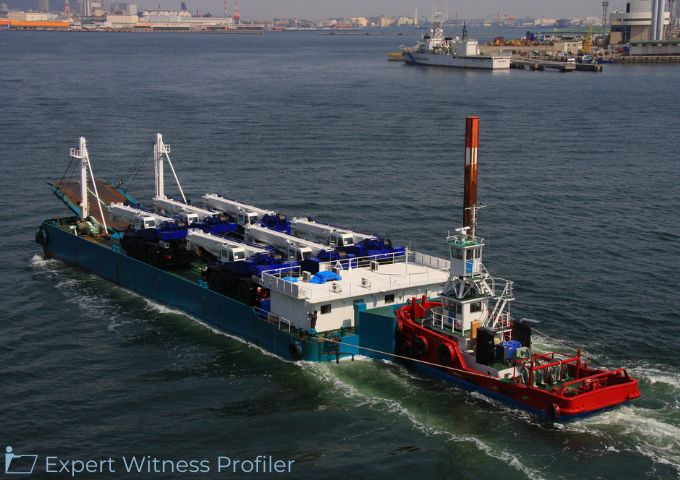
    On September 28, 2020, HC&D and Cashman Equipment entered into a purchase and sale agreement for the offshore deck barge JMC 254, a 250-foot by 72-foot by 16-foot welded steel offshore deck barge.

    HC&D alleged that it was induced to purchase the barge and sustained damages as a result of Cashman Equipment’s fraudulent misrepresentations.

    Defendant filed a motion to exclude or limit the expert testimony of one of Plaintiff’s experts, Fred Rodolf.

    Maritime Expert Witness

    Fred Rodolf Jr. has worked in the commercial maritime industry since 1990. He holds a United States Coast Guard 500-Ton Master’s License and a 4,000 Horsepower Engineer’s License.

    His professional experience includes vessel acquisition, brokerage, structural evaluation, interpretation of ultrasonic thickness surveys, coordination with classification societies, and oversight of structural steel renewal projects.

    Get the full story on challenges to Fred Rodolf ’s expert opinions and testimony with an in-depth Challenge Study.

    Discussion by the Court

    Rodolf relied on a repair quote from a Mexican shipyard, ISP, referred to as the “ISP Quote,” which was a prominent and sometimes exclusive source for formulating his opinions on the condition, value, utility, and repair costs of the barge. Defendant sought to exclude Rodolf’s anticipated testimony to the extent that it relied on the third-party repair quote.

    However, the Court was satisfied that the ISP Quote possessed at least the minimal reliability required to form the basis of Rodolf’s expert opinion.

    Held

    The Court denied Defendant’s motion to exclude or limit the expert testimony of Fred Rodolf.

    Key Takeaway

    Experts do not need to independently validate data upon which they rely if reliance on its accuracy is reasonable for experts in that field. Any expert retained to determine the condition and value of a vessel would certainly reasonably rely on a repair quote in forming an opinion on those topics.

    Case Details:

    Case Caption: Hc&D V. Cashman Equipment Corp.
    Docket Number: 1:22cv10224
    Court Name: United States District Court for the District of Massachusetts
    Order Date: May 08, 2026
  • Construction Expert’s Testimony on Insurance Policy Application Excluded

    Construction Expert’s Testimony on Insurance Policy Application Excluded

    This case arises from an insurance coverage dispute regarding damage to Plaintiff O’Reilly Hotel Partners–Champions Circle, LLC’s (“Plaintiff”) hotel complex in Fort Worth, Texas (the “Property”). The Property consists of various buildings, including a hotel tower, a conference center, and a golf clubhouse. The case involves multiple insurance policies and multiple insurance claims stemming from events that occurred on different dates.

    Defendant Continental Casualty Insurance Company challenged the testimony of Plaintiff’s retained expert witnesses, Mike Krismer and Michael Barclay.

    Construction Expert Witnesses

    Mike Thomas Krismer, CIEC, has over 45 years of experience in structural repair and building renovation of residential, commercial, and public buildings. His primary focus has been water damage as it relates to the building envelope and structure.

    Get the full story on challenges to Mike Krismer’s expert opinions and testimony with an in-depth Challenge Study.

    Michael C. Barclay is a general contractor and cost estimator. Barclay has knowledge of the condition of the Project. He has experience and expertise in construction, bidding, and construction scheduling and sequencing issues associated with the Project, as well as cost estimating for the repair of this and similar buildings and sites.

    Fortify your strategy by reviewing a Challenge Study detailing grounds for excluding Michael Barclay’s expert testimony.

    Discussion by the Court

    Mike Krismer

    Plaintiff designated Krismer as an expert on water mitigation and water damage, stating that he is expected to testify “regarding the industry standard for inspecting, documenting, moisture mapping, and scoping remediation and repair of water-damaged materials.” He was also designated as an expert regarding the “reasonable and necessary scope of repairs required by the losses in question.”

    Analysis

    First, Defendant argued that under Federal Rule of Evidence 702, Krismer is not qualified as an expert on insurance contract interpretation. Second, Defendant argued that Krismer did not support his opinions regarding the amount and cost of repairs with the necessary underlying facts, data, and verifiable methodology.

    Krismer’s CV lists his qualifications regarding water mitigation and water damage, and Plaintiff proffered Krismer as an expert for that purpose. Despite this, Krismer’s expert report contains opinions about what Defendant should pay under the insurance policy based on his interpretation of the policy’s terms and coverage. Because Krismer is not qualified as an expert on insurance policy application or interpretation, the Court determined that his testimony on that subject is inadmissible.

    Krismer’s report included a publication on how to evaluate electrical equipment exposed to water damage, images that appear to identify roof leaks with labels such as “identified as new” or “identified as old,” and a final report concluding that Cavalry Construction’s work was defective because a list of repairs needs to be completed.

    The report did not explain what methodology, if any, was used in generating these images. It also did not explain what “identified as new” and “identified as old” mean, or what they are new or old in reference to. Specifically, it was unclear whether the reference point for the new/old distinction was a storm that Plaintiff claimed caused the damage or Cavalry Construction’s allegedly defective construction.

    The Court held that Krismer’s testimony is inadmissible because it is vague and not supported by adequate underlying facts, data, or methodology.

    Michael Barclay

    Defendant argued that Barclay’s opinions are supported solely with an estimate of purported repair costs and a repair estimate, which, standing alone, failed to satisfy the requirements of an expert report under Federal Rule of Civil Procedure 26(a)(2)(B).

    Barclay’s report consisted of two-page repair cost estimate, a table of permit fees, and a chart adding contingency fees. However, there was no narrative as to the methodology utilized by Barclay in preparing the estimate and no basis for the total included in the estimates—just various unit prices and line items included in the estimate. Because Barclay’s report did not include the basis for his opinions or the facts and data that were considered, it did not comply with Rule 26(a)(2)(B)(i) and Rule 26(a)(2)(B)(ii).

    Having concluded that Plaintiff did not comply with Rule 26(a)(2)(B) the Court now determines in its discretion whether to strike Barclay’s report and opinions or to impose some lesser sanction, like leave to amend. Here, trial is in less than four weeks, discovery has closed, and Plaintiff has failed to respond to Defendant’s expert challenges after the Court required expedited briefing. As a result, the Court determined that Barclay’s expert testimony is inadmissible and Barclay is precluded from testifying as an expert witness in this matter.

    Held

    The Court granted Defendant’s motions to strike or limit the opinions and testimony of Mike Krismer and Michael Barclay.

    Key Takeaway

    Defendants are correct that Krismer’s report failed to indicate what facts and what methodology or approach underlies the opinions. Reliability considerations such as these are particularly important in a case like this where part of the dispute depends upon whether Defendant used the right methodology to evaluate water damage.

    Case Details:

    Case Caption: O’Reilly Hotel Partners-Champions Circle, LLC V. Allied Property And Casualty Insurance Company
    Docket Number: 4:25cv165
    Court Name: United States District Court, Texas Northern
    Order Date: December 18, 2025
  • Construction Expert Barred from Testifying on Established Damages

    Construction Expert Barred from Testifying on Established Damages

    The case arises from Belmere, L.P.’s claim that Steadfast Insurance Company failed to timely and adequately pay it proceeds due under its commercial lines policy after Belmere invested $26 million of its own funds to repair a 249-unit apartment complex in Houma, Louisiana that it alleged suffered “catastrophic damage” during Hurricane Ida.

    Through its lawsuit, Belmere sought (i) additional coverage under its policy with Steadfast, and (ii) penalties, attorneys’ fees, and interest for Steadfast’s alleged bad faith. 

    Steadfast filed a motion in limine to exclude the opinions of experts Mr. Byron Earls and Mr. Christopher Lipp.

    Belmere retained Earls to (i) “investigate the scope of completed repairs based on information provided”; (ii) “generate comparative estimates for typical building types”; and (iii) “generate a report providing an opinion on the projected measurement of loss based on extenuating circumstance[s] after the event.”

    Lipp, on the other hand, was retained to provide a “technical assessment of the exterior building envelope components inclusive of the roof, exterior walls and windows” with a focus “on the severity of the impacts of water intrusion sustained at Belmere, and its need to replace building materials that were ruined after becoming wet.”

    Construction Expert Witness

    Byron Earls has over 20 years of experience in building construction, both commercial and residential. He also has over 7 years of experience as a catastrophic adjuster handling catastrophic claims nationwide including large fire and water losses.

    Get the full story on challenges to Byron Earls’ expert opinions and testimony with an in-depth Challenge Study

    Engineering Expert Witness

    Christopher Lipp has performed numerous envelope assessments, and investigations and has prepared construction documents based on those investigations. Lipp is experienced in the evaluation of distressed facade elements, including windows, doors, curtain walls, storefront systems, stucco, brick and fiber cement panels on both historic and new construction.

    Want to know more about the challenges Christopher Lipp has faced? Get the full details with our Challenge Study report

    Discussion by the Court

    Byron Earls

    Steadfast made the following contentions: (i) Earls’ methodology is insufficient to meet Daubert standards for reliability and will otherwise result in jury confusion; (ii) his expert report fails to address causation; and (iii) his testimony is irrelevant to determining the alleged cost of repairs, which will result in jury confusion.

    Since Belmere conceded that Earls’ testimony will not be used to establish the measure of its damages—”which are established by its own out-of-pocket costs”; accordingly, the Court granted Steadfast’s motion to the extent that it sought to exclude testimony or any part of the Earls’ report that estimated damages that have already been established by Belmere’s “repair bill.”

    While Earls’ testimony may be relevant for the purpose of rebutting an assertion by Steadfast that specific repair costs were excessive or that the property was not restored using like-kind and like-quality materials, but, the Court held that in its current form, the “proposed opinion [did not] assist the trier of fact to understand or determine a fact in issue.”

    The Court declined to admit any testimony or portion of the Earls report that estimated damages that have already been established by actual costs. If Steadfast presented an argument that the costs incurred by Belmere are somehow excessive or relate to betterments, the Court will allow Earls to opine in general terms (i) as to the reasonable nature of the actual costs or (ii) for the purpose of rebutting the contention that the costs amounted to betterments. As to the reasonable nature of the amount paid by Plaintiff, in no event will the expert state the specific amount of his estimate; merely that he estimated the amount of damages to be greater than the amount paid by Plaintiff. 

    Christopher Lipp

    Steadfast contended in brief fashion that Lipp’s testimony should be excluded for the following three reasons: (i) he did not inspect the property; (ii) he did not provide any opinion on the issue of causation of the alleged damages or the sufficiency of the repairs; and (iii) his “expert report and associated opinions rely heavily on the flawed, irrelevant, and unreliable opinions included in Earls’ report.”

    As a threshold matter, the Court denied Steadfast’s motion to the extent it sought to exclude Lipp’s testimony because (i) Lipp was qualified to render an opinion on his respective subject matter, and (ii) Steadfast has otherwise failed to provide the Court with enough analysis on the issue to make a ruling.

    However, the motion against Lipp’s report was granted to the extent that it relied on the Earls report.

    Held

    The Court granted in part and denied in part Steadfast’s motion in limine to exclude experts Byron Earls and Christopher Lipp.

    Key Takeaway:

    According to Rule 402, expert testimony must be relevant—not merely in the general sense that all testimony must be relevant, but specifically in the sense that the expert’s proposed opinion would assist the trier of fact in understanding or determining a fact in issue.

    Case Details:

    Case Caption: Belmere, L.P. V. Steadfast Insurance Company
    Docket Number: 2:22cv2689
    Court Name: United States District Court, Louisiana Eastern
    Order Date: June 30, 2025
  • Forensic Engineering Expert Witness’ Testimony Admitted Despite His Reliance on Virtual Evidence

    Forensic Engineering Expert Witness’ Testimony Admitted Despite His Reliance on Virtual Evidence

    SFR Services, LLC (“SFR”) sued American Coastal Insurance Company (“ACIC”) for breach of an insurance policy (the “Policy”) based on ACIC’s failure to provide coverage and remit payment for damage sustained by Steamboat Bend Condominium Association, Inc. (“Steamboat Bend”) during Hurricane Irma. SFR is the assignee of Steamboat Bend’s rights under the Policy. 

    Plaintiff’s expert Grant Renne conducted a virtual inspection assisted by Durant Saint-Hilaire, a certified roofing inspector who was on-site during the inspection. Renne’s methodology complied with standard practices and used data from the National Oceanic and Atmospheric Administration (NOAA) and the National Weather Service (NWS). Renne’s report stated that his methodology was “based on ASTM E2713-18 (Standard Guide to Forensic Engineering), ASTM E1188-11 (Standard Practice for the Collection and Preservation of Information and Physical Items by a Technical Investigator), and E620-18 (Standard Practice for Reporting Opinions of Scientific or Technical Experts).” Renne prepared his report through “visual inspection of readily observable surfaces, collection of digital evidence, and rotation of roof tiles to determine attachment integrity.”

    Renne testified that he excluded from his analysis areas of prior repairs and areas of prior destructive testing. Renne’s report ultimately concluded that Hurricane Irma caused the damage. 

    ACIC argued that the report should be excluded because Renne’s inspection was done virtually and that Saint-Hilaire, the certified roofing inspector who was on-site during the inspection, did not possess the necessary qualifications. ACIC also argued that Renne’s report was based on insufficient facts and data because he did not interview unit owners and residents or review repair records related to the property, in contravention of the ASCE, ASTM, and his own report. ACIC’s final argument in favor of exclusion is that, because destructive testing was already done prior to Renne’s inspection, Renne’s conclusions were unreliable.

    Forensic Engineering Expert Witness

    Grant Renne has been a Registered Professional Engineer since 1990, completed over 6,000 property damage investigations throughout his career, and participated in over 400 cases. 

    Get the full story on challenges to Grant Renne’s expert opinions and testimony with an in-depth Challenge Study. 

    Discussion by the Court

    Renne’s conclusion that Hurricane Irma caused the damage is based on his review of the buildings, velocity pressure calculations based on the American Society of Civil Engineers (ASCE) 7-10 formula, and historic NOAA weather data. 

    Renne’s Reliance on Virtual Evidence Does not Inherently Bar his Testimony

    At the onset, the Court rejected ACIC’s arguments regarding the virtual nature of the inspection and the destructive testing. An expert’s reliance on virtual evidence does not inherently bar his testimony. 

    Also, Saint-Hilaire possessed the technical qualifications required to participate in the on-site investigation. Renne testified that he never performed destructive testing, as the ASTM does not allow for destructive testing because the investigation cannot be repeated, tested, or verified. The fact that destructive testing was performed prior to Renne’s investigation did not render his investigation unreliable.

    Renne’s Failure to Interview Involved Parties did not make his Report Unreliable

    The Court rejected ACIC’s argument that Renne’s failure to interview these involved parties made his report unreliable. ASCE 30-14 stated that it only needs to be done “whenever possible,” not in all circumstances. However, the Court recognizes that Renne’s report is somewhat confusing, as he stated “[t]he following list of standard practices [were] performed” and then lists that “an interview with the property owner may be conducted either on site or via telephone.” Thus, the Court held that any discrepancies between Renne’s report and testimony should be addressed on cross-examination at trial. It goes to his credibility, not the admissibility of his testimony.

    Although Renne’s Review of the Repairs was Less than Thorough, that Alone does not Garner Exclusion of his Report

    At the crux of ACIC’s issue with Renne’s report is his failure to review repair records from repairs made by Steamboat Bend, despite his review of repair documents related to repairs made by SFR.

    ACIC also argued that Renne should not have excluded the areas of repair and deemed it contaminated evidence “unworthy of consideration in the formulation of his opinion.” 

    Renne testified that he relied on ASCE 30-14. ASCE 30-14 requires inspectors to “obtain and analyze any written documentation for alterations and repairs.” Renne’s report details that “areas of pre-loss repairs and/or post-loss mitigation [were] reviewed.”

    Indeed, Renne testified that he reviewed SFR’s repair records and visually reviewed repairs during his investigation. The Court concluded that, although Renne’s review of the repairs was less than thorough, that alone does not garner exclusion of his report as there was “adequate evidence that had not been repaired for him to formulate his opinion.”

    Held

    The Court denied the Daubert motion to exclude the testimony of Grant Renne without prejudice. ACIC may renew the motion as a motion in limine closer to trial.

    Key Takeaway:

    Renne’s report is not the model for clarity, yet “experts and their opinions need not be perfect to be admissible.” Renne’s application of his methodology is not so unreliable that the Court should exclude it out of hand. ACIC’s issues with Renne’s report can be used during cross-examination to potentially decrease the weight and credibility the jury gives to his opinion.

    Case Details:

    Case Caption: SFR Services, Llc V. American Coastal Insurance Company
    Docket Number: 2:22cv505
    Court: United States District Court, Florida Middle
    Order Date: February 7, 2025
  • Insurance Adjuster Expert Witness Properly Justified the Inclusion of OSHA Compliance Costs 

    Insurance Adjuster Expert Witness Properly Justified the Inclusion of OSHA Compliance Costs 

    The present case involves an insurance coverage dispute between an East Texas church, Plaintiff Christian Heritage School c/o Youth With a Mission, and its insurance company, Central Mutual Insurance Company. Between  May 1, 2020, to May 1, 2022, Defendant insured Plaintiff’s property, which consisted of a twenty-one building campus in Tyler, Texas. The dispute arises from alleged storm-related damage with a date of loss on April 5, 2022.

    Pursuant to Federal Rule of Civil Procedure 26(a)(2), Plaintiff retained insurance adjuster expert witness, Duane Smith. Smith was supposed to testify about his inspection, investigation, and observations of the property damaged by a hail and wind event on April 5, 2022. His designation also indicated that he would testify to the reasonable costs to repair and/or replace the property that was damaged by the hail and wind event reported to have occurred on April 5, 2022. 

    Smith’s report included a discussion of his qualifications and experience, the materials he reviewed, his findings, and relevant weather information. Based on this information, he included line items for the property with the estimated costs to repair and/or replace the property.

    Defendant moved to exclude Smith from offering opinion testimony on the timing and cause of the claimed damages to the campus, the necessity of replacing roofs rather than repair, and the cost of Occupational Safety and Health Administration (‘OSHA’) compliance and upcharges in his estimate. 

    Insurance Adjuster Expert Witness

    Insurance Adjuster Expert Witness

    Darrell Duane Smith has been a licensed public insurance adjuster since 2016. With approximately 19 years of experience as an independent insurance adjuster, he has managed numerous commercial and residential insurance claims.

    Through these experiences, Smith has adjusted hundreds of wind and hail events, water damage, and fire damage claims during his career, including both commercial and residential claims.

    Want to know more about the challenges Duane Smith has faced? Get the full details with our Challenge Study report.  

    Discussion by the Court

    I. Methodology Regarding Causation and Replacement

    Defendant’s Arguments

    Defendant argued that Smith’s own weather data showed no hailfall at the campus and that he conducted no testing. Defendant claimed that Smith provided no weather data indicating that wind or hailfall occurred on the campus on April 5, 2022 and that he failed to consider all information to exclude other potential causes of damage to the campus, such as pre-existing damage or post date of loss damages.

    Plaintiff’s Counter-Argument

    Plaintiff pointed out that Smith examined storm data from May 3, 2017, to April 5, 2022, to assess other potential storms but concluded that “the distinctive size, shape, and pattern of the hail damage conclusively established the April 5, 2022 hailstorm as the cause of damage.” Plaintiff also cited to Smith’s report where he concluded this same fact and explained, based upon coloration of old hail damage (discolored, grey, or whited out), versus the characteristics of hail damage that appeared to be “fresh” and consistent in size and shape with the April 5, 2022 storm. Smith also assessed the storm created openings for the roof and water damage, which was consistent with the April 5, 2022 storm due to lack of “long-term” aging.” 

    Plaintiff argues that Defendant’s arguments went to the weight of Smith’s opinions, not the admissibility of them.

    Causation

    Smith reviewed weather information from the National Oceanic Atmospheric Administration (“NOAA”) in order to determine which storms, if any, other than April 5, 2022 storm, affected the property. His search covered the period from May 3, 2017, to April 5, 2022, which he provided rules out any other possible date of loss.

    Moreover, Smith testified that when he inspected the property in 2023, he was able to distinguish between old and new damage based upon the repairs that already took place and the fact that the marks seemed to be “fresh” because they were not discolored, old, grey, or turning white like might be expected with aging. 

    Similarly, Smith opined that water damage observed at the property did not exhibit signs of long-term aging, or indicate a long-term ongoing issue nor are there signs of historical repairs at the affected locations. He stated that he considered alternative causes of loss, including foot traffic, wear and tear, and deterioration and concluded that no evidence consistent with these causes of damage was found.

    Replacement Versus Repair

    As to the necessity of replacement versus repair, Smith explained how he based his conclusions on his own inspection and experience. Smith line itemed the inspection damage in his expert report. He explained how upon inspection, he observed a significant number of unsealed tabs consistent with high wind, as well as hail damage to shingles and metal roofing. He stated that, based upon the damage he observed, it wouldn’t have been feasible to try to conduct repairs because the damage to the roofs was too widespread.  This is the basis of his opinion recommending replacement.

    The Court found that Smith’s report and testimony explained how he determined, based upon his experience, inspection, and review of the weather data, that the April 5, 2022 storm caused the damage. This included observations regarding prior storms from the weather data, the condition of the damage upon inspection as it relates to characteristics of time and wear, and the possibility of damage from post-date storms which he found occurred not in the relevant area and were several miles away. It was held that this evidence demonstrated that Smith examined other potential causes, thereby rendering his methodology and opinions reliable for purposes of determining admissibility under Daubert and Rule 702.

    The Court held that the Defendant may have identified weaknesses in Smith’s opinions, but it does not render them ipse dixit merely because Defendant disagrees with his conclusion. The credibility of Smith’s opinions remained a matter for the jury to consider.

    II. OSHA Compliance

    Defendant argued that Smith included Kevin Dandridge’s incomplete estimate for OSHA safety protocols and procedures in his estimate, making it unreliable. Dandridge was retained to testify about to the proper OSHA safety protocol and procedures.

    The Court held that Smith’s reliance on Dandridge’s OSHA compliance costs was not atypical. The Court, in a separate order, held that Dandridge’s testimony in this regard is permissible. As Dandridge himself explained, these opinions can be reconciled. To the extent the reliance is flawed, or Dandridge’s opinions are based upon a weak foundation, then, again, that remains a matter for cross examination.

    III. 20% Inflation Adjustment

    Lastly, Defendant argued that Smith included a 20% blanket inflation adjustment without providing a sufficient methodology.

    According to the Court, had Smith simply added a blanket 20% inflation adjustment without explanation, then such a methodology would be unreliable. However, Smith has explained his reasoning for this adjustment. As he testified to this point, “because all the major suppliers are sending out demand surge notices and informing all the contractors that due to the supply and demand, that all the materials have went up at least 20 percent, if not more.” 

    Smith further explained his experience with typical surge pricing due to storm demand having been involved with hurricanes. 

    Held

    The Court denied the Defendant’s motion to strike the expert testimony of Plaintiff’s insurance adjuster expert witness, Duane Smith.

    Key Takeaways:

    • According to Rule 703, an expert may also rely upon the opinion of another expert, as long as the other expert opinion upon which the expert bases an opinion or inference are of a type reasonably relied upon by experts in the particular field in forming opinions or inferences upon the subject. In conclusion, Smith’s reliance on Dandridge’s OSHA compliance costs was not atypical.
    • Defendant may have pointed out weaknesses in Smith’s opinions, but it does not render them ipse dixit merely because Defendant disagrees with his conclusion. This is simply a matter of credibility of the expert, which the jury can properly consider. 
    • Smith’s testimony explained how he determined, based upon his experience, inspection, and review of the weather data, that the April 5, 2022 storm caused damage to the property. This included observations regarding prior storms from the weather data, the condition of the damage upon inspection as it relates to characteristics of time and wear, and the possibility of damage from post-date storms which he found occurred not in the relevant area and were several miles away. This evidence demonstrates that Smith examined other potential causes, thereby rendering his methodology and opinions reliable.

    Case Details:

    Case caption: Christian Heritage School c/o Youth With A Mission v. Central Mutual Insurance Company
    Docket Number: 6:24cv45
    Court: United States District Court for the Eastern District of Texas, Tyler Division
    Date: February 6, 2025
  • Construction Expert Witness Allowed to Opine on the Reasonableness of the Use of Xactimate

    Construction Expert Witness Allowed to Opine on the Reasonableness of the Use of Xactimate

    In November 2021, a fire caused severe damage to the home of Michael and Alexis Wright, located in Goldendale, Washington, a rural area about 70 miles from Yakima, Washington. The Wrights filed a claim with their insurer, State Farm, which immediately confirmed coverage. 

    In January 2022, the adjuster assigned to the Wrights’ file, Timothy Treat, finalized his initial estimate for the structural repair of the Wrights’ home. He used a software called Xactimate, which used data on labor and material costs to estimate total repair costs. Xactimate yielded an estimate for the Wrights’ home repair in the amount of $181,277.82.

    According to the Wrights, because they lived in Goldendale, a rural location, it took them several months to find a contractor willing to perform the repair.  By June 2022, they found a company willing to do the work for an estimated total cost of $259,244.61—nearly $80,000 above State Farm’s Xactimate estimate. 

    In November 2022, after extensive back-and-forth, the Wrights brought contractual and extracontractual claims against State Farm, alleging that State Farm failed to properly investigate and cover their losses.

    Among other arguments, the Wrights asserted that State Farm uses Xactimate, which “is designed with input and pricing data primarily sourced from the insurance industry,” to intentionally achieve “cost containment.”

    State Farm intended to offer opinion testimony from construction and repair expert Eugene Peterson “regarding [among other topics] the reasonableness of State Farm’s use of Xactimate to create repair estimates in this matter.”

    Wrights argued that Peterson’s opinion testimony was unsubstantiated, speculative, lacked foundation, amounted to legal opinions, and otherwise did not comport with Fed. R. Evid. 702 and 703.

    Construction Expert Witness

    Eugene Peterson is a Past President of both the Utah Home Builders Association and the Greater Salt Lake Home Builders Association. He is the CEO of Advise And Consult, Inc., expert witnesses & consultants for restoration, personal property & construction related matters in both the United States and Canada. He has facilitated peer group meetings for Business Networks, Inc., and for several years was an advisor, consultant & certified trainer for Xactware, Inc. (construction estimating software). Peterson has worked with the Xactimate since 1991, including beta testing new iterations of the program, training contractors on how to use the software, and creating the first online Xactimate training syllabus. 

    He also actively participates in the insurance appraisal process as either an umpire or appraiser.

    Want to know more about the challenges Eugene Peterson has faced? Get the full details with our Challenge Study report. 

    Discussion by the Court

    While Peterson admitted that State Farm estimates are written using the price lists from Yakima, Washington, which is over 70 miles from the loss location in Goldendale, he stated that the adjuster chose and applied an option found in the Xactimate estimating software for rural settings to account for the rural location. He explained, “when this option is applied, the software automatically factors and applies additional dollars to each line item to account for the increased labor and materials costs and the difficulty of working in a rural setting.” Likewise, Peterson added that this “‘rural/remote’ setting factors in some of the difficulties of material accusation, by bumping pricing of materials so that purchase can be made locally.”

    However, when Treat was asked during his deposition whether he was familiar with the “site access” drop-down feature, he testified, “I have not seen this.” Likewise, when Peterson was deposed in October 2024, he admitted that he “cannot say for certainty that Treat did use the “rural/remote” feature.”

    State Farm has shown, by a preponderance of evidence, that Peterson’s opinions are relevant and reliable

    The crux of the Wrights’ motion to exclude is that Peterson’s testimony was unreliable because he “based his opinion on a false premise, the premise that Treat knew of and used a critical feature of the software program which adjusts for remote sites such as the Wrights’ home.”

    In their reply brief, the Wrights provided other, additional grounds on which to question the reliability and relevance of Peterson’s opinions. For example, they pointed to Peterson’s allegedly false assertion that “Plaintiff Michael Wright completed the painting of their home.”  And they disputed the relevance and reliability of Peterson’s opinion “as to the value of Plaintiffs’ home.”

    Because these later arguments were improperly raised in a reply brief, the Court declines to consider them.

    The Court is not persuaded that his potential factual error about State Farm’s use of the “rural/remote” feature renders his entire opinion testimony unreliable

    The core issue in this case is whether Peterson’s statements about State Farm’s use of the ‘rural/remote’ feature in the Xactimate software render his entire opinion testimony unreliable.

    The Court held that Peterson easily clears the expertise threshold set by Daubert and Rule 702 because he has been working with Xactimate for over thirty years. Most of the opinions expressed in Peterson’s report are in fact unrelated to the “rural/remote” feature. To exclude such expert testimony would hinder objective factfinding and unduly prejudice State Farm.

    The Court cannot conclude that Peterson’s assertion about Treat’s use of the “rural/remote” feature was indeed false. The Wrights cited Treat’s deposition, in which he allegedly stated that he had never seen the “rural/remote” feature. But the portion of the deposition transcript they cited was missing from their evidentiary filing.

    Even assuming that Treat did express unfamiliarity with the “rural/remote” feature in his deposition—meaning Peterson was likely incorrect about its use here—the Court held that this error concerned the weight, not admissibility, of Peterson’s testimony.

    In summation, the Wrights are free on cross-examination to ask Peterson, for example, whether he knows for certain that Treat used the “rural/remote” feature when estimating the Wrights’ home repair costs. And they are also free to ask him whether, hypothetically, failure to use this feature would lead to an underestimate of rural home repair costs. Such testimony might aid their case. But they have not presented grounds to exclude his testimony entirely.

    Held

    The Court found that State Farm has met its burden of proving by a preponderance of the evidence that the opinion testimony of its construction and repair expert, Eugene Peterson, is relevant and reliable. The Court denied the Wrights’ motion to exclude Peterson’s expert testimony.

    Key Takeaway:

    When the baseline requirement of reliability is met, the factual basis of an expert opinion goes to the credibility of the testimony, not the admissibility, and it is up to the opposing party to examine the factual basis for the opinion in cross-examination.

    Peterson is well-versed with Xactimate and is clearly qualified to opine on State Farm’s use of the ‘rural/remote’ feature in the Xactimate software. Besides, most of the opinions expressed in Peterson’s report were in fact unrelated to the “rural/remote” feature. The Wrights are free to address their doubts during cross-examination.

    Case Details:

    Case Caption: Wright Et Al V. State Farm Fire & Casualty Company
    Docket Number: 2:23cv179
    Court: United States District Court, Washington Western
    Order Date: January 21, 2025