Tag: Shield

  • Fire Investigation Expert’s Testimony About a Missing Orifice Admitted

    Fire Investigation Expert’s Testimony About a Missing Orifice Admitted

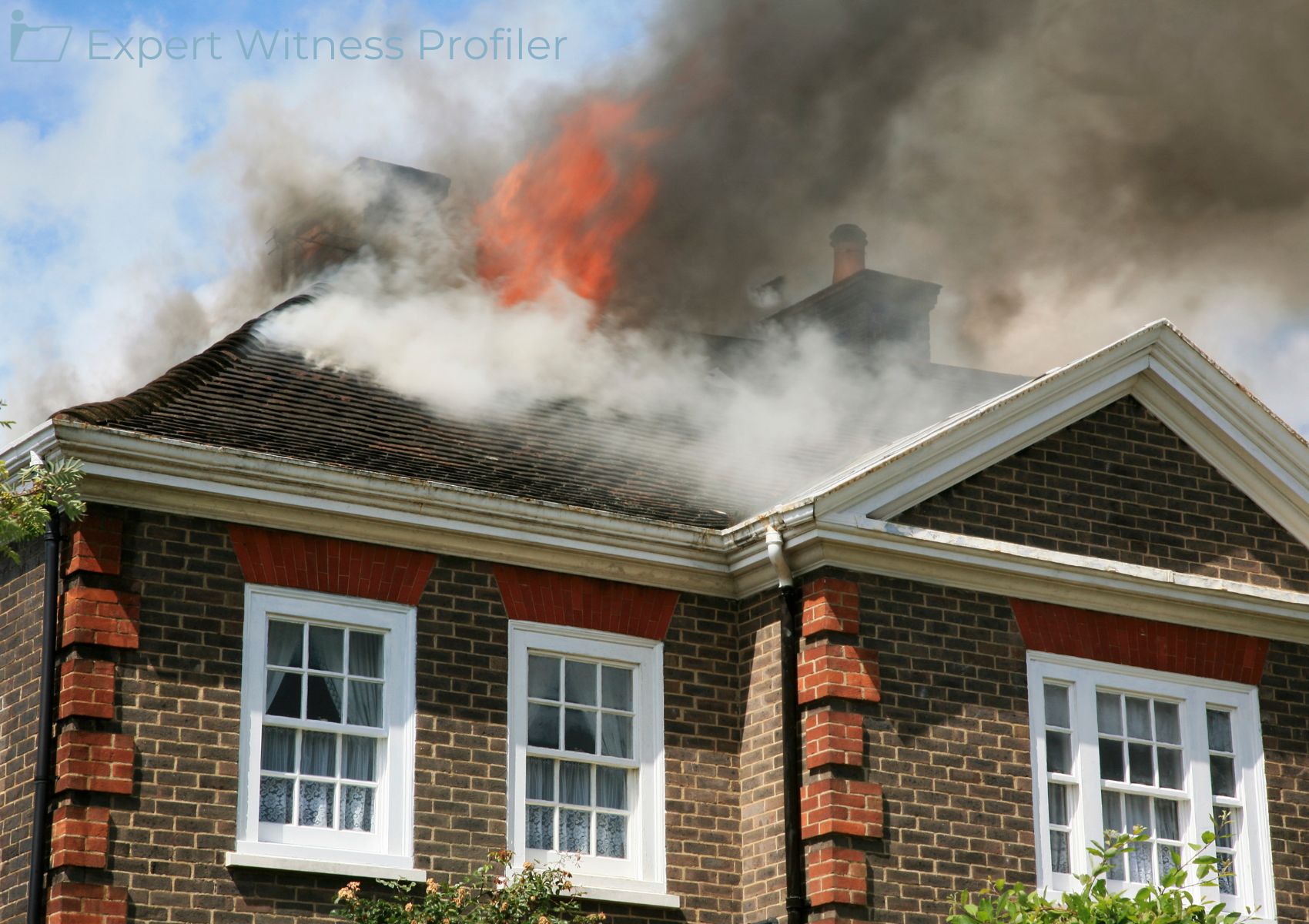
    On January 21, 2021, a fire destroyed Jacqueline Flynn’s home located at 7618 Craig Court in Orlando, Florida. The Plaintiff purchased a Thermacell Patio Shield on the day of the fire. Since the Patio Shield was the only energized device in use on the balcony at the time of the fire, the Plaintiff filed her complaint alleging negligence and strict products liability against the Defendants as a result of the Fire.

    The Defendants filed a Daubert motion to exclude the opinions of Plaintiff’s expert John J. Lentini.

    Fire Investigation Expert Witness

    John Joseph Lentini served as a principal member of the NFPA 921 Technical Committee for 20 years and routinely reviews other investigators’ reports to evaluate their compliance with NFPA 921 and other standards. He is the president and principal investigator at his consulting firm.

    Since 1975, he has given expert testimony in over two hundred cases in civil and criminal court in several states and in the Federal Courts.

    Want to know more about the challenges John J. Lentini has faced? Get the full details with our Challenge Study report

    Discussion by the Court

    Defendants’ Objections

    The Defendants sought to exclude Lentini’s opinion that the Thermacell Patio Shield experienced a manufacturing defect causing the fire. 

    Lentini presented four opinions in his expert report. First, he stated that the fire started on the second-floor balcony where the Thermacell Patio Shield was located. Second, he explained that if the Thermacell unit catches fire, its components will burn vigorously and act as a capable ignition source for nearby combustibles. Third, he suggested that the most probable cause of the fire is a malfunction of the Thermacell unit due to a manufacturing defect. Fourth, he indicated that the most likely manufacturing defect is the absence of an orifice. Lentini supported each of these opinions with their respective bases.

    Lentini’s Opinions

    Methodology

    To begin with, Lentini conducted experiments to demonstrate that if the orifice was omitted from the Thermacell Patio Shield during manufacturing, a flame would appear near the intake and contact the bottom of the combustible heat box. 

    Once Lentini’s experimentation established that the Patio Shield was a competent ignition source, Lentini ruled out other possible causes for the fire. Lentini opined that the Thermacell Patio Shield was the only thing on the second-floor balcony that could have caused the fire.

    Lentini observed that common sense also suggests the Thermacell Patio Shield caused the fire. He stated, “[i]f there was an electrical failure, it is a major coincidence. . . . Almost astronomically impossible coincidence that a latent [electrical] defect decided to manifest itself during that short period of time that the Thermacell unit was burning for the first time.”

    In summary, Lentini tested the Thermacell unit to see if it could serve as a competent fire source. He found that tipping the unit on its side or dropping it from a patio table height did not produce a reliable fire, ruling out the chance of an accidental fire caused by a gust of wind. Lentini also eliminated the possibility of an electrical fire originating from an outlet, overhead lights, or the television on the patio. He then concluded that a manufacturing defect, such as a missing orifice, allowed enough butane to be released to ignite the device, which broke the glass tabletop and set fire to other combustible materials, including the lounge chairs and cushions. The Court therefore found that Lentini’s methodology is sufficiently reliable to meet Daubert standards.

    Lentini’s Opinions on Origin

    They Defendants sought to exclude Lentini’s opinion that the fire originated on the balcony where the Thermacell unit was located.

    Lentini ruled out electrical causes for the fire, leaving the Patio Shield as the source. Since Lentini’s methodology is sound, the Court held that his conclusion—that the fire started on the balcony at the Thermacell unit—remains valid.

    The Defendants also sought to exclude Lentini’s opinion that Garrett Wienckowski of Orange County Fire Rescue and Patrick Dugan of NEFCO Fire Investigations used generally accepted methods to conclude that the fire started at the location of the Thermacell unit.

    Lentini can rely on Dugan’s report, and in doing so, may explain why these facts and data are the types typically relied upon by experts in his field when forming an opinion, including the reliability of Dugan’s methodology. As for Chief Wienckowski, the Defendants argued that Lentini cannot offer an opinion on his conclusions because the Chief’s opinions are inadmissible.

    The Court previously found that his opinion that the fire started on the second-floor balcony, that it was accidental, and that there is no information suggesting this was an electrical fire, are admissible as lay witness opinions. Lentini may testify on how these lay witness opinions are used in forming his own opinions.

    The Defendants’ next objection is to Lentini’s opinion that credible eyewitnesses placed the origin of the fire on the second-floor balcony. However, the Court denied the Defendants’ motion to exclude an opinion on a point they admitted. 

    Defendants also sought to exclude Lentini’s opinion that there were no other potential sources of ignition on the balcony as unsupported by Dugan’s investigation. The Court overruled the Defendants’ Daubert Motion to exclude the testimony of Dugan, finding his methodology sound.

    Held

    The Court denied the Defendants’ Daubert motion to exclude the opinions of Plaintiff’s expert John J. Lentini.

    Key Takeaway:

    The Defendants seemed to argue that neither Lentini’s opinions nor their supporting bases can be stated with certainty. It is important to note that “certainty is not required to provide expert testimony.”

    Because the Court found Lentini’s opinions on the cause of the fire to be sufficiently reliable and helpful, the Defendants’ request to exclude his opinion that the Thermacell unit will burn vigorously and provide a competent ignition source, and that the likely cause of the fire is a manufacturing defect, is denied.

    Please refer to the blog previously posted about this case:

    Fire Investigation Expert’s Opinion on Damage to the Residence Admitted

    Case Details:

    Case Caption: Flynn V. Thermacell Repellents, Inc. Et Al
    Docket Number: 6:23cv1890
    Court Name: United States District Court, Florida Middle
    Order Date: August 01, 2025
  • Fire Investigation Expert’s Opinion on Damage to the Residence Admitted

    Fire Investigation Expert’s Opinion on Damage to the Residence Admitted

    On January 21, 2021, a fire destroyed Jacqueline Flynn’s home located at 7618 Craig Court in Orlando, Florida. The Plaintiff purchased a Thermacell Patio Shield on the day of the fire. Since the Patio Shield was the only energized device in use on the balcony at the time of the fire, the Plaintiff filed her complaint alleging negligence and strict products liability against the Defendants as a result of the Fire.

    The Defendants, Thermacell Repellants, Inc. and Lowe’s Home Centers, LLC filed a Daubert motion to exclude the opinions of Plaintiff’s fire cause and origin expert, Patrick B. Dugan, under Rule 702.

    Fire Investigation Expert Witness

    Patrick B. Dugan, CFI  is a Certified Fire Investigator through the International Association of Arson Investigators and the National Board on Fire Service Professional Qualifications. He is also a Certified Fire and Explosion Investigator and Certified Vehicle Fire Investigator through the National Association of Fire Investigators. In addition, Dugan holds an HVAC Technician certification through the United States Environmental Protection Agency.

    Dugan retired as Deputy Chief and Platoon Commander of the Schenectady Fire Department in 2002 after a 33-year career. Prior to that, he served as deputy chief of training, fire captain, paramedic lieutenant, and fire lieutenant of the same department.

    Want to know more about the challenges Patrick Dugan has faced? Get the full details with our Challenge Study report

    Discussion by the Court

    Dugan offered several opinions regarding the cause and origin of the
    fire. The site inspection was followed by a laboratory examination of fire debris in July 2021 and January 2024. While Dugan did not find remnants of the Patio Shield, he explained that its components are plastic, metal, and butane, which is highly flammable, and that there could be microscopic ceramic components. Dugan also factored weather conditions into his analysis and determined that an eight-mile-per-hour wind was present and sufficient to spread the fire. He also testified that he found no evidence of an electrical source starting the fire.

    Dugan ruled out arson, noting that the Flynn’s owned the home for 18 years before the fire, there was no mortgage on the residence, they had good credit, and the home had never been on the market for sale. He further noted that all indications were that the fire was accidental and was caused by the Patio Shield. Consequently, he testified that a “heavy fire load” was present in proximity to the Patio Shield, consisting of wicker on the table, cushions on the chairs, and plastic coverings. Dugan did not identify any other ignition source aside from the Patio Shield, causing him to identify the product as the fire source.

    Dugan testified that the burn patterns supported his opinion that the Patio Shield caused the fire. Moreover, he concluded that the fire started at the table area, and debris from the table started to burn and dropped down, catching the floor and chairs on fire. He noted that Chapter 19.4.4.3 of NFPA 921 provides that there are circumstances where the ignition source cannot be identified, but the ignition sequence can be logically inferred.

    Analysis

    The Defendants argued that Dugan did not find remnants of the Patio Shield or PIC Coil. However, this criticism ignored Dugan’s explanation that the components of the Patio Shield are combustible and were easily dispersed by the water suppression efforts. As for the PIC Coil, Flynn testified she did not ignite the PIC Coil, and the Defendants offered no competent evidence to the contrary.

    The Defendants further argued that Dugan’s opinions regarding the cause of the fire should be excluded because he did not remove the outlet to examine it before ruling it out. However, Dugan testified that the outlet was destroyed in the fire.

    The Defendants also sought to exclude Dugan’s statement that the “observations of the witnesses and responding firefighters were also consistent with a fire that began in the area of the product” on the balcony.
    Lieutenant Lizbeth Desio, the first firefighter on the scene, testified that based upon her observations at the scene, there is no indication that the fire began anywhere other than the second-floor patio. Neither party identified the statement of any other witness who observed the location of the fire. LT Desio’s statement that fire was observed emitting from the rear, second-floor, balcony of the home, was consistent with Dugan’s opinion that the first responder concluded the fire began in the area of the product on the balcony. The Court denied the motion to exclude Dugan’s opinion that witnesses and first responders concur with his conclusion.

    Because Dugan inspected the scene and provided a detailed description of the damage caused by the fire, the Court denied the Defendants’ request to exclude Dugan’s opinion that the fire caused extensive smoke, fire, and thermal damage to the interior and exterior of the residence.

    Held

    The Court denied the Defendants’ motion to exclude the testimony of Plaintiff’s fire cause and origin expert, Patrick B. Dugan.

    Key Takeaway:

    Dugan’s investigation and analysis easily satisfied Daubert’s mandate that an expert employ a “sufficiently reliable” methodology. His opinions are based on sufficient facts and data; he did not unjustifiably extrapolate his research to reach an unfounded conclusion; he considered—and ruled out—contradictory data (other known ignition sources); his analysis was based on objective data including burn patterns, weather, timing, and available ignition sources, and Dugan is as careful as an expert would be in conducting professional work outside the context of paid litigation. Basically, the Defendants’ criticism of Dugan’s methodology and resulting opinions goes to the weight that the jury may give such testimony—not its admissibility.

    Case Details:

    Case Caption: Flynn V. Thermacell Repellents, Inc. Et Al
    Docket Number: 6:23cv1890
    Court Name: United States District Court, Florida Middle
    Order Date: July 28, 2025