Tag: Shoot

  • Law Enforcement Expert Allowed to Opine on the Reactionary Gap 

    Law Enforcement Expert Allowed to Opine on the Reactionary Gap 

    This suit involves the unnecessary use of excessive force by police officers against a black man suffering from a mental health crisis.

    On November 21, 2021, during a mental health crisis, Jabari Asante-Chioke encountered Louisiana State Police (“LSP”) Officer Nicholas Dowdle and East Jefferson Levee District (“EJLD”) Officers Jonathon Downing and Gerard Duplessis (collectively referred to herein as “Officer Defendants”

    Plaintiff, Malikah Asante-Chioke, individually, and on behalf of her father, Jabari Asante-Chioke, herein filed this action against the Defendants, accusing them of failure to use less-than-lethal methods in accordance with training and state and federal law, to subdue Mr. Asante-Chioke.

    Malikah Asante-Chioke filed a motion to exclude the testimony of John J. Ryan.
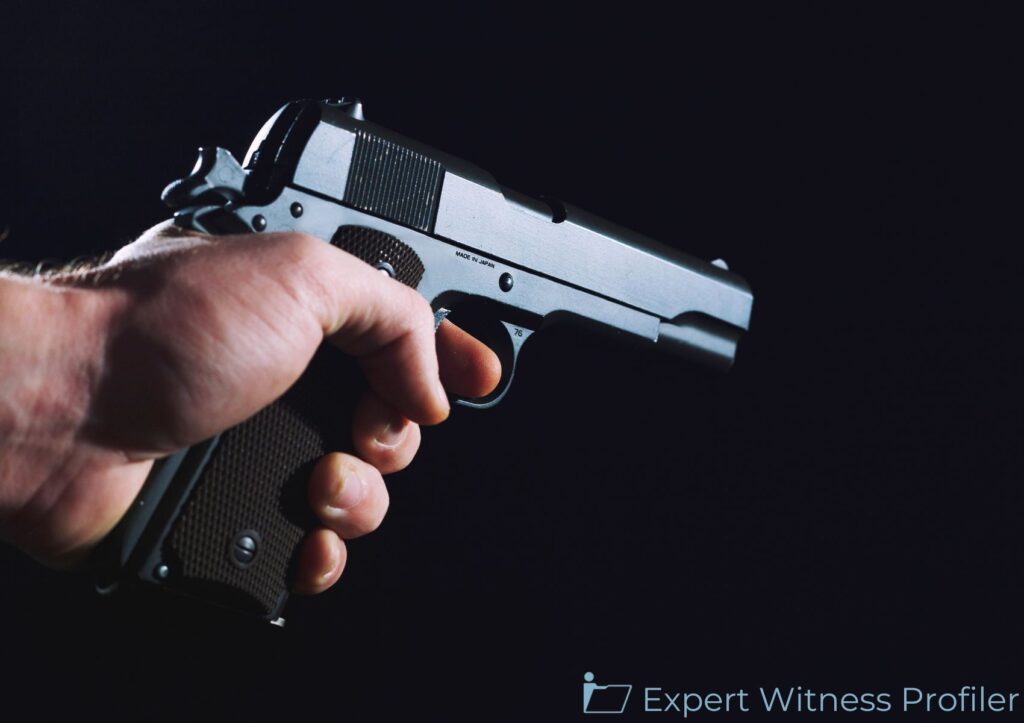
    Law Enforcement Expert Witness

    John J. Ryan has been actively involved in police practices and law enforcement since 1981.

    He was an active police officer for twenty years in Providence, Rhode Island. In the final year of his active career and since his retirement in June of 2002 from police services, he has been involved in police and law enforcement practices as a private consultant regarding law enforcement issues.

    Want to know more about the challenges John Ryan has faced? Get the full details with our Challenge Study report.

    Discussion by the Court

    I. Legal Conclusions

    Plaintiff sought to exclude Ryan’s statement in his report which provides, “It is well known that [if] [sic] an officer reasonably perceives an immediate threat of serious bodily harm or death against themselves, another officer, or any third party, the officer may respond with deadly force.”

    EJLD Defendants argued that a full reading of Ryan’s opinion will explain how this statement is based on Ryan’s “expertise in generally accepted [police] policies, practices, training, and industry standards.”

    While that may be the case, the Court held that Ryan’s statement is not couched in the appropriate terms.

    The Court will not exclude Ryan’s statements of applicable police standards and practices, nor his conclusion that Officers Downing and Duplessis complied with those standards. As the Court has explained, an expert may opine on whether officers complied with applicable police policies and procedures.

    EJLD Defendants argued that Ryan did not need to discuss relevant East Jefferson Levee District policies and procedures and the Court agreed.

    Lastly, Plaintiff argued that Ryan offered impermissible legal opinions because he opined that the EJLD Defendants acted reasonably. While reasonableness is an inadmissible legal conclusion, Plaintiff failed to offer specific examples from Ryan’s report where he opined on the reasonableness of the EJLD Defendants’ actions.

    II. The “Reactionary Gap”

    Plaintiff also argued that Ryan is unqualified to opine on the “reactionary gap” between when an officer receives a stimulus to stop or start firing and when an officer responds to said stimulus.

    EJLD Defendants argued that Ryan is qualified to opine on reaction time because he has spent numerous hours training officers in shooting scenarios, including conducting stimulus drills on a shooting range. The Court agreed with EJLD Defendants.

    Plaintiff also argued that, even if Ryan were qualified, his opinions on the reactionary gap will not help the factfinder because perception reaction times are common sense. However, the Court disagreed. In this case, Ryan may help the factfinder determine whether the Defendants officers’ actions to continue shooting Asante-Chioke were reasonable. Consequently, the Court refused to exclude Ryan’s testimony as unhelpful.

    III. Ryan’s Factual Interpretations

    Plaintiff also argued that the Court should exclude “Ryan’s opinions that merely recite defense counsel’s factual and legal narratives.”

    EJLD Defendants argued that Ryan’s opinions are not based on defense counsel’s factual and legal narratives, but instead are based on his view of the body cam, dash cam, and bystander video evidence. This Court agreed with EJLD Defendants. Throughout his report, Ryan utilized the available video evidence and deposition testimony to formulate his opinions. 

    Held

    The Court granted in part and denied in part Malikah Asante-Chioke’s motion to exclude the testimony of John J. Ryan.

    Key Takeaway:

    While a lay person may have a general understanding of perception reaction times, “a lay person typically would not have experience or knowledge about the time it takes an officer to react to a perceived threat or the absence of a perceived threat.”

    By opining that shooting officers take time to react to a stimulus to stop shooting, Ryan may help the factfinder determine whether the Defendants officers’ actions to continue shooting Asante-Chioke were reasonable.

    Please refer to the blog previously published about this case:

    Biomechanics Expert Was Allowed to Opine on the Source of Bullet Wounds

    Case Details:

    Case Caption: Asante-Chioke V. Dowdle Et Al
    Docket Number: 2:22cv4587
    Court Name: United States District Court, Louisiana Eastern
    Order Date: November 21, 2025
  • Biomechanics Expert Was Allowed to Opine on the Source of Bullet Wounds

    Biomechanics Expert Was Allowed to Opine on the Source of Bullet Wounds

    This suit involves the unnecessary use of excessive force by police officers against a black man suffering from a mental health crisis.

    On November 21, 2021, during a mental health crisis, Jabari Asante-Chioke encountered Louisiana State Police (“LSP”) Officer Nicholas Dowdle and East Jefferson Levee District (“EJLD”) Officers Jonathon Downing and Gerard Duplessis (collectively referred to herein as “Officer Defendants”

    Plaintiff, Malikah Asante-Chioke, individually, and on behalf of her father, Jabari Asante-Chioke, herein filed this action against the Defendants, accusing them of failure to use less-than-lethal methods in accordance with training and state and federal law, to subdue Mr. Asante-Chioke.

    LSP Defendants argued that the Court should exclude Plaintiff’s expert John C. Gardiner, along with his testimony and opinions, because he is unqualified, his methodology is unreliable, and his testimony is irrelevant.

    EJLD Defendants made similar arguments, but they also argued that Gardiner’s testimony will not help the factfinder.

    Biomechanics Expert Witness

    Dr. John Carter Gardiner, PhD PE holds a Bachelor of Science in Mechanical Engineering and a Doctor of Philosophy in Bioengineering. He is a Senior Biomechanical Engineer who conducts biomechanical analysis of a variety of events including shootings.

    Gardiner is a principal and senior biomechanical engineer at MEA Forensic. He joined the firm in 2002 and leads the Biomechanics Group in the Los Angeles office.

    Get the full story on challenges to John Gardiner’s expert opinions and testimony with an in-depth Challenge Study.

    Discussion by the Court

    I. Gardiner’s Qualifications

    LSP Defendants argued that Gardiner is unqualified to opine on the likely source of the shots fired because, apart from his expert reviews, he lacked specific training, education, or experience analyzing bullet trajectory “based on gunshot wounds.”

    Gardiner estimates that he has performed biomechanical analyses in “50 different cases involving” gunshot wounds.

    LSP Defendants offered no authority which requires Senior Biomechanical Engineers to have specific training, experience, or education in bullet trajectory analysis to opine on the source of each bullet wound. Further, courts have allowed biomechanical engineers, including Gardiner, to opine on the source of wounds in a shooting.

    Accordingly, the Court found that Gardiner is qualified to opine on the likely source of Mr. Asante-Chioke’s gunshot wounds.

    II. Reliability of Gardiner’s Methodology

    LSP Defendants also argued that Gardiner’s methodology is unreliable because he did not calculate or quantify the officers’ exact shooting angles.

    Plaintiff contended that Gardiner did not merely “eyeball” the footage and instead considered “the relative positions of each of the three officers to Asante-Chioke, the gunshot wound entrances and exits, the gunshot wound trajectories, and the anatomical postures and positions of Asante-Chioke during the shooting incident.”

    This Court agreed with Plaintiff. LSP Defendants offered no authority which requires an expert to quantify or calculate exact shooting angles to opine on shooting source and position.

    LSP Defendants also argued that Gardiner’s methodology is unreliable due to alleged inconsistencies and contradictions concerning the timing of certain wound in his report termed as Gunshot Wounds #14 and #15 and his conclusions concerning how many gunshot wounds were consistent with coming from Dowdle during the final 1.1 seconds of the shooting. However, as Plaintiff correctly pointed out, LSP Defendants primarily disputed Gardiner’s conclusions, not his methodology.

    III. Relevance of Gardiner’s Opinions

    Defendants argued that Gardiner’s opinions are irrelevant to the issue of qualified immunity at this stage of the litigation. LSP Defendants also suggested that Gardiner opined on ultimate causation and damage issues regarding Gunshot Wound #15.

    This Court found that most of Gardiner’s opinion is relevant. In his report, Gardiner opines on the likely source of Asante-Chioke’s bullet wounds and when the shooting officers, including Dowdle, likely fired them. Such opinions are relevant to the pertinent qualified immunity issues of “whether Dowdle fired any shots; how many if so; and when, in relation to Asante-Chioke’s actions and death.”

    Still, in his report Gardiner also references Chief Forensic Pathologist Dr. Dana Troxclair’s conclusion that the “bullet causing Wound #15 killed Mr. Asante-Chioke.” Opinions and references thereto concerning which bullet killed Asante-Chioke are irrelevant to the limited issue of whether the shooting officers are entitled to qualified immunity when they continued to fire upon him. Accordingly, the Court excluded such opinions and references from Gardiner’s report.

    IV. Helpfulness of Gardiner’s Opinions

    EJLD Defendants also argued that Gardiner’s testimony will not assist the factfinder because video captures the incident.

    Plaintiff argued that neither of EJLD Defendants’ cited cases mention the use of experts or hold that experts cannot assist the factfinder in interpreting facts depicted on video. The Court agreed with Plaintiff.

    By opining on the likely source and timing of each gunshot wound, Gardiner will help the factfinder determine whether each of the shooting officers acted unreasonably when they continued to fire upon Asante-Chioke.

    Held

    • The Court granted in part and denied in part the LSP Defendants’ motion to exclude the testimony and opinions of John Gardiner.
    • The Court denied the EJLD Defendants’ motion to exclude the testimony of Plaintiff’s expert John C. Gardiner.

    Key Takeaway:

    While  Gardiner will be allowed to testify as an expert in this case, but he will not be able to opine or reference opinions on which wound likely killed Asante-Chioke.

    Opinions and references thereto concerning which bullet killed Asante-Chioke are irrelevant to the limited issue of whether the shooting officers are entitled to qualified immunity when they continued to fire upon him.

    Case Details:

    Case Caption: Asante-Chioke V. Dowdle Et Al
    Docket Number: 2:22cv4587
    Court Name: United States District Court, Louisiana Eastern
    Order Date: November 12, 2025
  • Mechanical Engineering Expert’s Testimony on Shooting Reconstruction Admitted

    Mechanical Engineering Expert’s Testimony on Shooting Reconstruction Admitted

    Plaintiff Edgar T. Rodriguez filed this civil rights lawsuit against Defendants, including the City of Eugene as well as individuals Timothy Hunt, Mark Hubbard, and Faith McCready. 

    This case arises out of a police response to a disturbance at Plaintiff’s apartment on September 10, 2016, during which Plaintiff was shot by Defendants Hubbard and Hunt with the Eugene Police Department.

    Plaintiff filed a Daubert motion to exclude the testimony of Defendants’ expert Wilson C. “Toby” Hayes.

    Mechanical Engineering Expert Witness

    Wilson Carlyle “Toby” Hayes has a B.S. in Mechanical Engineering from Stanford University, 1964, a M.S. in Mechanical Engineering from Stanford University, 1966, and a Ph.D in Theoretical and Applied Mechanics from Northwestern University, 1970. 

    From 1969 to 1970, Hayes was a Research Fellow at the Laboratory for Experimental Surgery in Davos, Switzerland, and from 1970 to 1971 he was a Special Research Fellow at the Department of Orthopaedic Surgery at the Karolinska Institute in Stockholm, Sweden.

    Hayes served as an Assistant Professor of Mechanical Engineering and Orthopaedic Surgery at Stanford University from 1971-1976; an Associate Professor of Orthopaedic Surgery at the University of Pennsylvania from 1976-1979; and a Professor of Orthopaedic Surgery and later of Biomechanics at Harvard University from 1979-1998.

    After leaving Harvard University, Hayes was Vice Provost for Research at Oregon State University between 1998 and 2001 and Professor of Orthopaedics and Rehabilitation and Vice Chair for Research at Oregon Health Sciences University from 1998-2004.

    Want to know more about the challenges Wilson Hayes has faced? Get the full details with our Challenge Study report

    Discussion by the Court

    Hayes is Qualified to Testify on Questions of Biomechanical Engineering

    Hayes’ report covered a reconstruction of the shooting based on a FARO scan, photographs, post-shooting medical imaging, police reports, deposition testimony, and declarations.

    Hayes’ report used biomechanical and anatomical principles and shooting reconstruction techniques, including modeling and the application of specialized software, to opine on the relative positions and physical orientation of Plaintiff and the Defendant officers during the shooting.

    Moreover, the Court concluded that Hayes is qualified to testify on questions of biomechanical engineering, including shooting reconstructions; anatomy; the analysis of injuries; and the assessment of medical reports and imaging. The Court concluded that Hayes’ opinions concerning the shooting reconstruction are relevant and sufficiently reliable to meet the Daubert standard. 

    Hayes is not Qualified to Testify as an Expert on Perception–Response Time

    Hayes’ report also consisted of opinions based on perception response time. However, Plaintiff filed a motion to exclude testimony concerning perception response time on the grounds that Hayes is not an expert in the subject. At the hearing, Hayes testified that he took courses on ergonomics while studying for his master’s degree between 1964 and 1966 which included the study of perception response time. The Court concluded that this training and experience is not sufficient to qualify Hayes as an expert on perception response time and so Hayes may not offer testimony on that subject.

    The Court added that (1) Hayes may not testify as to the intentions, thoughts, or perceptions of any party or witness in this case; (2) Hayes may not vouch for the testimony of any party or witness in his testimony; (3) Hayes may not testify on the time it took for the Defendant officers to call for an ambulance, both because that opinion falls outside of his area of expertise as a biomechanical engineer and because, by Hayes’ own admission, his opinion is not supported by any data; (4) Hayes may not testify concerning police policy, use-of-force, or deadly force as those topics fall outside of his expertise as a biomechanical engineer; and (5) Hayes may not testify as to ultimate questions of law, such as whether a party acted “reasonably.”

    Held

    The Court granted in part and denied in part the Plaintiff’s Daubert motion to exclude the testimony of Defendants’ expert Wilson C. “Toby” Hayes.

    Key Takeaway:

    Hayes took courses on ergonomics while studying for his master’s degree between 1964 and 1966 which included the study of perception response time. The Court, however, concluded that this training and experience is not sufficient to qualify Hayes as an expert on perception response time.

    Case Details:

    Case Caption: Rodriguez V. Hunt Et Al
    Docket Number: 6:18cv1640
    Court Name: United States District Court, Oregon
    Order Date: September 16, 2025