Tag: Storm

  • Roofing Expert Witness Allowed to Opine on the Specialty Tile

    Roofing Expert Witness Allowed to Opine on the Specialty Tile

    This is a hail damage case. The Plaintiff, First Evangelical Lutheran Church of Lincoln, Nebraska, alleged that its roof was damaged in a hailstorm. Allegedly, the Defendant, Brotherhood Mutual Insurance Company, wrongfully delayed or denied certain benefits under its insurance policy.

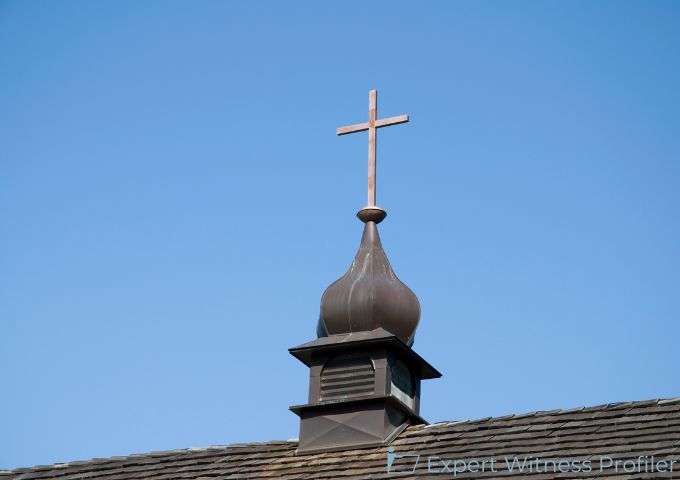
    Basically, the Plaintiff alleged that its clay tiles, aluminum gutters, copper flashing, and other metal components suffered extensive damage, some of which allegedly caused interior leaks.

    The Plaintiff has designated two experts: Toby Duncan, a roofing consultant, and Matthew Y. Merrell, a licensed professional civil engineer. Specifically, the Defendant sought to exclude any opinions from these experts that a hailstorm occurred on the property, that a storm caused the damage, any “site-specific” storm conditions, such as wind speed or hail size, or that the damage is attributable to a specific weather event.

    The Plaintiff, on the other hand, sought to exclude the opinions of Vincent Hobson, the Defendant’s expert witness.
    Roofing Expert Witnesses

    Toby Duncan is a commercial and residential roofing consultant and project manager specializing in clay tile, slate, and copper roofs.

    Discover more cases with Toby Duncan as an expert witness by ordering his comprehensive Expert Witness Profile report.

    Vincent H. Hobson has over fifty years of experience in roofing and tiles. He also provides extensive consulting services to homeowners, architects, roofing contractors, historians and even other consultants in the tile roofing arena. 

    Get the full story on challenges to Vincent Hobson’s expert opinions and testimony with an in-depth Challenge Study.

    Civil Engineering Expert Witness

    Matthew Yates Merrell has developed a diverse engineering background focused on new construction and resolving difficult construction issues.

    Want to know more about the challenges Matthew Merrell has faced? Get the full details with our Challenge Study report.

    Discussion by the Court

    Merrell

    To begin with, Merrell relied on industry-standard impact tests to determine that the damage he observed on the church’s roof was consistent with damage caused by hail measuring 1.5 inches in diameter. He considered a consulting meteorologist’s report that a hailstorm on April 12 passed over the subject property, and that storm produced hail measuring a maximum of 1.5 inches in diameter. He relied on an interview with the church property committee indicating that the church’s roof had been repaired in 2018, and there were no “cracked, chipped, or fractured tiles” following those repairs.

    His expert report concluded that “impact damage consistent with hail strikes was widespread at the church.” It also concluded, “within a reasonable degree of engineering certainty, that the storm on April 12, 2020 damaged the subject property.”

    The Defendant argued that Merrell had no basis to opine about storm conditions on April 12, including whether a hailstorm occurred or the size of the hail. According to the Defendant, engineers may not give opinions about these kinds of “site-specific storm conditions.”

    However, Merrell attested that he regularly relied on data from meteorologists to form opinions about the cause of damage, and such reliance is an industry standard. Merrell’s report considered other causes of damages, and specifically excluded “damage that appeared unrelated to high winds and hail.” Merrell used the data from the meteorologist to support his findings about the damage to the roof, and that such damage is consistent with 1.5-inch hail; based on the record before the Court, that meteorological data is being used to support his conclusions based on his expertise, not supplant them. The Defendant challenged the factual basis and foundation of Merrell’s conclusions, but in this Court’s view, those arguments go to weight and not admissibility.

    Duncan

    The Defendant also sought to exclude Duncan’s opinions involving assumptions that hail of a particular size struck the property. While Duncan cannot give expert testimony that a hailstorm on April 12 caused the damage, he is not precluded from giving lay testimony regarding the same. Duncan was in Lincoln the day of the alleged hailstorm, and he visited the Plaintiff’s church property.

    He may give expert testimony that, through his professional experience, what he saw appeared to be consistent with hail damage. And, based on his personal knowledge of the weather conditions on April 12, he may testify as to his observations of the size or other characteristics of the hail.

    The Court made it clear that neither Merrell nor Duncan may provide expert opinions that hail of a particular size struck the church on April 12, 2020. However, both may provide the reason they believe hail of a certain size struck the building. Merrell relied on a meteorological consultant to confirm his measurements and the physical indication of certain-sized hail. Duncan relied on his measurements and personal experience with the hail to draw similar conclusions.

    Hobson

    Hobson inspected the church roof at the Defendant’s request, and issued a report in August 2022. The Plaintiff argued that Hobson’s opinions are “unsupported conjecture” and should be excluded.

    It’s clear from Hobson’s deposition testimony that he based his opinions on his fifty years of experience in roofing and tiles. That experience is an appropriate foundation upon which to base expert testimony, including the testimony that an HVAC installation process damaged the tile, that the specialty tile may have manufacturing defects, or that the damage was not widespread enough to have been caused by hail. As a result, the Plaintiff’s arguments all go to weight, not admissibility, and the motion to exclude will be denied by the Court.

    Held

    • The Court granted in part the Defendant’s motion to exclude or limit the testimony of Plaintiff’s experts, Toby Duncan and Matthew Merrell.
    • The Court denied the Plaintiff’s motion to exclude the testimony of the Defendant’s expert, Vincent Hobson.

    Key Takeaway

    In exercising its gatekeeping function, the Court must make a preliminary assessment of whether the reasoning or methodology underlying the proposed expert testimony is valid and of whether that reasoning or methodology properly can be applied to the facts in issue, focusing specifically on the methodology and not the conclusions. To that end, expert testimony that is speculative, unsupported by sufficient facts, or contrary to the facts of the case, is inadmissible.

    Case Details:

    Case Caption: First Evangelical Lutheran Church Of Lincoln, Nebraska V. Brotherhood Mutual Insurance Company
    Docket Number: 4:23cv3180
    Court Name: United States District Court, Nebraska
    Order Date: May 15, 2026
  • Structural Engineering Expert Witness’ Testimony on the Age and Cause of the Damage to the Roof Admitted 

    Structural Engineering Expert Witness’ Testimony on the Age and Cause of the Damage to the Roof Admitted 

    This is a removed action by Plaintiff Wings Platinum LLC , an insured, against its insurer, Defendant Westchester Surplus Lines Insurance Company, arising from the denial of Wings’ claim for coverage following a wind and hail storm. Wings asserted claims for breach of contract; unfair settlement practices, and breach of the duty of good faith and fair dealing.

    Wings alleged that, on April 9, 2021, a severe wind and hail storm caused significant damage to the Property’s roof and exterior. Plaintiff submitted a claim under the Policy for wind and hail damage to the Property that it maintained was caused by the storm, seeking the cost to repair the roof. Westchester retained Robert J. Herrera, an engineer at Stephens Engineering, to investigate Wings’ claim. Herrera first inspected the property on September 9, 2021, and he authored three reports. However, Wings filed a motion to strike Herrera’s testimony and opinions. 

    After Westchester denied Wings’ claim on or about April 21, 2022, Wings sued Westchester in State Court, and Westchester removed the lawsuit to this Court.

    Structural Engineering Expert Witness

    Robert Herrera was hired by Stephens Engineering Consultants, Inc. in 2020
    where he uses his years of design engineering experience in the field of forensic investigations. Herrera has performed forensic investigations for a wide variety of residential and commercial structures to determine cause and/or extent of stormrelated damage to roofing and exterior claddings of buildings, water intrusion, structural damage and collapse, differential foundation movement, vehicle impacts, and construction defects.

    Herrera is currently a senior forensic engineer, the team leader for Texas, and an integral part of the training of new forensic engineers for Stephens.

    Get the full story on challenges to Robert Herrera’s expert opinions and testimony with an in-depth Challenge Study. 

    Discussion by the Court

    Herrera’s first report, dated September 30, 2021 (the “First Report”), concluded that identified fractures in the thermoplastic membrane of the roof were not caused by wind or hail. The second report, a supplement produced after a follow-up investigation of the building on February 28, 2022 and dated March 22, 2022 (the “Second Report”), identified fractures in the membrane consistent with impact, but it maintained that those fractures were not caused by a weather event in 2021 and were instead caused by a storm in April 2017. The third report, a second supplement dated June 23, 2022 (the “Third Report”), responded to additional materials that Wings had provided and maintained the conclusions reached in the Second Report.

    Plaintiff’s Argument in Support of the Motion

    Wings sought to exclude Herrera’s testimony on the basis that he is not qualified to opine as an expert on the age of the damage to the roof and that his opinions regarding the age of the hail damage on the roof are not reliable because they lack any reasonable basis and are not the result of sound scientific principles and methods.

    Wings posited that Herrera had insufficient training to be qualified as an expert for purposes of determining the time when the roof was damaged by hail. 

    It contended that Herrera’s prior engineering experience is not relevant to the issue on which he opines—the age of the hail strike damage—and that Herrera’s mere one year and one month of experience at the time of his First Report is insufficient to qualify him as an expert.

    Wings also contended that Herrera’s opinions regarding the age of the hail strikes are not reliable because they are entirely subjective and lack “any sort of basis, rubric, metric, or standard” by which to judge them, and because Herrera could not explain how his determination of the age of the damage could be duplicated or tested. 

    Analysis

    Qualification

    Neither Westchester nor Herrera articulates how Herrera’s specific experience designing commercial and residential structures as a project engineer qualifies him to opine on the age of the hail damage. The Court held that Herrera’s training and experience at Stephens, however, qualify him to offer these opinions as an expert.

    In his affidavit, Herrera avers that he received on-the-job training when he began working at Stephens in 2020 that was “specific to identifying and assessing wind- and hail-related damage to roofs, including the type of roof at issue in this lawsuit.” 

    He shadowed senior engineers for 3 to 4 months before beginning to inspect buildings independently, and, at the time he inspected the roof at 3950 Platinum Way, he had inspected approximately 200 buildings for storm damage.

    At the time of his affidavit, he had inspected approximately 750 properties for storm damage. The Court finds this experience and training sufficient to qualify Herrera to offer his expert opinion on the age and cause of the damage to the roof at 3950 Platinum Way under Rule 702.

    Reliability

    Herrera testified in his deposition that he was able to examine fractures in the roof and determine, “to a reasonable degree of engineering certainty,” that the fractures were more than one year old and thus were not due to a recent hail event. This observation and judgment, in connection with his review of weather research and Roof Technical Services, Inc.’s (“RTS’s”) report from its analysis of the roof samples, formed the basis for Herrera’s opinion.

    The Second Report explained that the fractures on the roof attributed to hail damage were consistent with hailfall on or about April 25, 2017 because the damage was consistent with hail larger than that reported at the property in the April 2021 storm. The Court was satisfied with Westchester’s showing of reliability in this instance. 

    In other words, Wings’ deep reservations about Herrera’s opinions concerned the weight of his testimony, not its admissibility, and will be better addressed through vigorous cross-examination and the presentation of contrary evidence. 

    Held

    The Court denied Plaintiff’s motion to strike the testimony and opinions of Defendant’s expert Robert J. Herrera.

    Key Takeaway:

    Herrera received on-the-job training when he began working at Stephens in 2020 that was “specific to identifying and assessing wind- and hail-related damage to roofs, including the type of roof at issue in this lawsuit.”

    He reviewed weather research and Roof Technical Services, Inc.’s (“RTS’s”) report from its analysis of the roof samples to conclude that the damage to the roof was not caused by a recent hail event.

    Case Details:

    Case Caption: Wings Platinum Llc V. Westchester Surplus Lines Insurance Company
    Docket Number: 3:23cv2145
    Court: United States District Court, Texas Northern
    Order Date: February 4, 2025
  • Engineering Expert Witness’ testimony on roof damage cause and extent deemed inadmissible

    Engineering Expert Witness’ testimony on roof damage cause and extent deemed inadmissible

    This is an insurance case arising out of a storm occurring on or about April 28, 2021, which allegedly caused damage to the roof of Plaintiff’s hotel located in San Antonio, Texas at 4 Piano Place, 78228. Plaintiff Nehal LLC d/b/a Quality Inn filed a claim to Defendant, Accelerant Specialty Insurance Company (“ASIC”) on or about March 20, 2022, after which the Plaintiff alleged the Defendant underpaid the claim. Nehal LLC then filed this action in state court alleging causes of action for breach of contract, violations of Section 542 of the Texas Insurance Code, unfair insurance practices in violation of Section 541 of the Texas Insurance Code, violations of the Texas Deceptive Trade Practice Act, and breach of the duty of good faith and fair dealing.

    Plaintiff designated W. Tom Witherspoon, a licensed engineer in the State of Texas, to testify “regarding the condition of Plaintiff’s roof, the cause and extent of damage to Plaintiff’s roof, the proper method of restoring Plaintiff’s roof to its pre-loss condition, and any other matters within his expertise related to the wind and hail damage to Plaintiff’s roof.”

    Witherspoon pointed to evidence of hail impact damage to the roof and recommended that the roof be replaced in his expert report.

    So, ASIC filed a motion to exclude Witherspoon from testifying as an expert for Plaintiff on the basis that his report was unreliable and not relevant, and his conclusions were unreliable and not supported by any methodology.

    Engineering Expert Witness

    W. Tom Witherspoon is a Navy veteran and a licensed professional engineer in the State of Texas. He has been doing forensic analyses of hail damaged roofs for more than 25 years. He is also a certified Structural Repair Specialist. During his career, Witherspoon has done forensic evaluations of various buildings, homes and other structures affected by wind or hail more than 500 times.

    Discussion by the Court

    ASIC insisted on the inadmissibility of Witherspoon’s opinions due to certain inconsistencies.  First, the date Witherspoon marked as the storm date was different from the date Plaintiff alleged as the storm date. Second, Witherspoon failed to explicitly say that the storms he referred to caused the damage at issue. ASIC further contended that Witherspoon’s conclusions were unreliable and not supported by any methodology because the data he relied on was insufficient.

    At the hearing, ASIC also further clarified that Plaintiff has admitted it did not replace the roof after obtaining funds to do so from a settlement from a prior insurance claim for roof damage. At the hearing, Plaintiff did not dispute that Plaintiff did not make any repairs to the roof despite receiving funds to do so from a prior claim.

    Witherspoon’s testimony is not reliable

    Witherspoon’s unreliable methodology and conclusions were objected to by ASIC. They argued that he failed to differentiate between prior damage—since the roof was not replaced or repaired after prior damage for which Plaintiff received a settlement—and the damage Plaintiff alleged occurred due to the 2021 storm. Given this clarification, the Court held that Plaintiff did not meet its burden to show that Witherspoon’s testimony was reliable.

    Plaintiff designated Witherspoon as an expert who might testify as to the cause of damage to the Plaintiff’s roof. The Plaintiff previously settled a claim with a reported loss date of April 12, 2016, with another insurer for damage to the property’s roof.  The evidence also established that Plaintiff did not replace the roof after it settled that claim.

    The Court noted that Witherspoon’s report and affidavit failed to address prior storms and did not attempt to differentiate damage caused by previous storms from that of the 2021 storm. Additionally, Witherspoon had not been deposed, and there is no recorded testimony from him specifically addressing the cause of the roof damage. Plaintiff submitted a sworn affidavit with its response, but the affidavit did not address whether Witherspoon analyzed or attempted to analyze what damage was attributable to prior storms versus the one at issue in this case. 

    The Court held that there was no proof of Witherspoon incorporating consideration of prior damage, or even that Witherspoon was aware that Plaintiff had received a settlement for a prior storm yet not replaced the roof.

    Held

    The Court granted Defendant’s motion to strike report and testimony of Engineering Expert Witness W. Tom Witherspoon.

    The Court has not arrived on an outcome for this case since the remaining issues involved in this case still await resolution.

    Key Takeaways:

    1. ASIC Objected to Witherspoon’s Methodology: ASIC raised objections to the reliability of Witherspoon’s methodology and conclusions regarding the cause of damage to the Plaintiff’s roof. They argued that Witherspoon failed to differentiate between prior damage and damage allegedly caused by the 2021 storm.
    2. Court’s Decision Based on Burden of Proof: The Court determined that Plaintiff failed to meet its burden to demonstrate the reliability of Witherspoon’s testimony. This determination stemmed primarily from Witherspoon’s analysis not accounting for prior damage and its potential impact on the current case.
    3. Plaintiff’s Settlement and Roof Damage History: Plaintiff had settled a previous claim with another insurer for damage to the roof, dated April 12, 2016. Despite this settlement, the roof was not replaced, indicating a history of prior damage.
    4. Witherspoon’s Report Limitations: Witherspoon’s report and affidavit did not address prior storms, and there was no attempt to differentiate damage caused by previous storms versus the 2021 storm. Additionally, Witherspoon had not been deposed, and there was no record of his specific testimony regarding the cause of roof damage.
    5. Lack of Consideration for Prior Damage: The Court found no evidence that Witherspoon considered prior damage, nor was there evidence that he was aware of the Plaintiff’s settlement for a previous storm and the subsequent lack of roof replacement.

    Case Details:

    Case Caption: Nehal Llc V. Accelerant Specialty Insurance Company
    Docket Number: 5:23cv747
    Court: United States District Court, Texas Western
    Citation: 2024 U.S. Dist. LEXIS 47407
    Order Date: February 29, 2024