Tag: substantial justification

  • Social Work Expert’s Litigation-Driven Opinions Excluded

    Social Work Expert’s Litigation-Driven Opinions Excluded

    Plaintiff Mary Spates (“Plaintiff”) as parent and natural guardian of her minor son, C.M., filed a suit against Defendant Horry County School District (“Defendant” or “School District”), alleging violations of C.M.’s Fourteenth Amendment due process rights.

    Defendant Horry County School District filed a motion in limine seeking to exclude or limit the testimony of Plaintiff’s treating mental health providers, Jessica Greene, LPC, and Jameion Blanton Fowler, MSW, LISW-CP, as well as a written report authored by Fowler.

    Psychology Expert Witness

    Jessica Greene, LPC holds a PhD in General Psychology from Northcentral University (2020), a master’s degree in Counseling with an emphasis in clinical mental health counseling (2006), and a Bachelor of Arts degree in Sociology from Coastal Carolina University (2003).

    She is known for her passion in advocating for her clients and fighting to educate about trauma-informed and cognitive behavioral therapy treatment.

    Want to know more about the challenges Jessica Greene has faced? Get the full details with our Challenge Study report

    Social Work Expert Witness

    Jameion Blanton Fowler, MSW, LISW-CP (SC), LCSW (NC) is currently working as an Independently Licensed Social Work Clinician with A Place To Start Counseling. He is also the founder of Blanton Clinical Consulting Group (BCCG).

    He has worked with a variety of different populations throughout his career. These include Mental Health, Substance Abuse and work with Children and families.

    Fortify your strategy by reviewing a Challenge Study detailing grounds for excluding Jameion Fowler’s expert testimony.

    Discussion by the Court

    Defendant argued that Plaintiff failed to designate these witnesses as experts under Rule 26(a)(2), failed to provide the required disclosures under the Court’s scheduling orders, and now seeks to introduce opinions on diagnosis and causation that qualify as expert testimony.

    The Court recognized that Rule 26 distinguishes between retained experts, who must provide a written report under Rule 26(a)(2)(B), and treating providers, who may testify as hybrid fact/expert witnesses without such a report. 

    Motion to Exclude or Limit

    Here, Plaintiff did not timely disclose Greene or Fowler under Rule 26(a)(2). Her initial interrogatory responses confirmed no experts would be offered, and only on the final day of discovery in April 2024 did Plaintiff identify these providers and produce Fowler’s report. Such a late disclosure deprived Defendant of the opportunity to depose the providers or prepare rebuttal expert testimony before the close of discovery. The absence of a Rule 26(a)(2)(C) summary compounds this deficiency.

    Allowing the evidence would disrupt the trial, requiring the Court to reopen discovery and delay a consolidated trial already scheduled. While the Court acknowledges the importance of treating providers’ testimony to Plaintiff’s claims, Rule 26 and Rule 37 require balancing that importance against fairness to the opposing party. Finally, Plaintiff offered no persuasive explanation for her failure to comply with the disclosure deadlines. On balance, these factors show that exclusion is warranted under Rule 37(c)(1).

    At the same time, it is undisputed that Greene and Fowler are treating providers. Courts have permitted treating providers to testify about observations and diagnoses made during treatment, even absent a Rule 26(a)(2)(B) report. But they may not provide litigation-driven causation opinions prepared for trial. Fowler’s December 2023 report does just that-it expressly attributed C.M.’s depression to his “current legal situation and the family’s case against his former school district.” That opinion fell within Rule 702 and requires proper disclosure.

    Plaintiff’s non-disclosure also meant that Greene’s and Fowler’s proposed opinions have never been scrutinized under the Court’s gatekeeping function pursuant to Federal Rule of Evidence 702 and the Daubert standard.

    Held

    The Court granted in part and denied in part the Defendant Horry County School District’s motion in limine to exclude or limit the testimony of Plaintiff’s treating mental health providers, Jessica Greene, LPC, and Jameion Blanton Fowler, MSW, LISW-CP.

    Plaintiff’s treating providers, Jessica Greene, LPC, and Jameion Fowler, MSW, LISW-CP, may testify as fact witnesses regarding their treatment of C.M., including observations and diagnoses formed in the ordinary course of care. However, because Plaintiff failed to comply with Rule 26(a)(2) and has not shown substantial justification or harmlessness under Rule 37(c)(1), the providers may not offer undisclosed expert opinions on the causation of C.M.’s conditions or on the adequacy of the School District’s conduct. For the same reasons, Plaintiff may not introduce the December 16, 2023, written report by Fowler, which constitutes litigation-driven expert opinion.

    The Court also noted that Plaintiff’s proffered opinions have not undergone the reliability screening required by Federal Rule of Evidence 702 and Daubert, further supporting their exclusion.

    Key Takeaway:

    Treating providers are often assumed to fall outside Rule 26’s disclosure requirements because they are not retained experts. But Rule 26(a)(2)(C) expressly requires a summary disclosure when a treating provider’s testimony implicates Rules 702-705. Counsel who conflate treatment testimony with litigation-driven expert opinions risk exclusion under Rule 37(c)(1).

    Case Details:

    Case Caption: Spates V. Horry County School District
    Docket Number: 4:21cv3634
    Court Name: United States District Court, South Carolina
    Order Date: September 22, 2025
  • Education & Schools Expert Witness’ Testimony Excluded Because of its Untimeliness and Insufficiency

    Education & Schools Expert Witness’ Testimony Excluded Because of its Untimeliness and Insufficiency

    In October 2023, Plaintiff Leslie Baldwin sued Kalispell School District #5 and Glacier High School (collectively “the District”) on behalf of her minor son, K.B., alleging that K.B. was sexually assaulted in February 2022 on a bus returning from a school-sanctioned wrestling event.

    The District sought to exclude the testimony of Baldwin’s retained expert, Thom Luedemann, arguing its untimeliness and insufficiency. 

    Education & Schools Expert Witness 

    Thom Luedemann is experienced administrator who has spent many years working in the education management industry. He received his masters in education from the Northern Arizona University.

    Get the full story on challenges to Thom Luedemann’s expert opinions and testimony with an in-depth Challenge Study. 

    Discussion by the Court

    The District pointed out several inadequacies in Baldwin’s expert disclosures, highlighting her counsel’s explicit noncompliance with Rule 26(a)(2)(B).

    The Scheduling Order stated Baldwin’s liability expert disclosures were due by September 13, 2024. On September 12, Baldwin provided the District with her “Notice of Expert Witnesses’ Designation,” noticing an intent to use unidentified treating “Medical and Mental Health Experts” and a single retained expert, Luedemann. Attached to that Designation was Luedemann’s CV. It was not until the District reached out to Baldwin’s counsel about the present motion that, on September 27, Baldwin provided Luedemann’s signed expert report, the contents of which are almost identical to the attorney-prepared Designation.

    The District accurately argued that Luedemann’s disclosure is insufficient because a signed report was not originally provided and neither the Designation nor Luedemann’s CV included the necessary information under Rule 26(a)(2)(B)(i), (ii), (iii), (v), and (vi). The District further claims that any attempt to supplement that disclosure now would be untimely. Baldwin’s response is limited to a single page stating that: (1) she provided the signed report as soon as the failure was noted and (2) she intends to supplement her disclosures following depositions of key witnesses despite the passage of the expert disclosure deadline.

    Failure to Provide a Timely, Signed Report

    Here, there is no dispute that Baldwin’s counsel failed to disclose a signed expert report by the deadline. There are also no facts upon which to find substantial justification. Thus, Baldwin’s only safe harbor is harmlessness. Weighing in Baldwin’s favor is the fact that counsel provided an expert report to the District three weeks later. And the District itself notes that the content of that report was consistent with that included in the attorney-prepared Designation.

    However, the fact that Baldwin’s counsel tried to fix this particular insufficiency is undermined by the fact that counsel knew at the time of the expert disclosure deadline that the expert would need to rely on the depositions of school officials that counsel failed to schedule prior to the deadline. As a result, Baldwin’s counsel knew the initial report was insufficient and supplementation of that report is not necessarily appropriate under Rules 26(e)(2).

    Insufficiency of the September 12 Designation

    Setting aside the absence of a separate report, neither the September 12 Designation nor Luedemann’s CV included the necessary information under Rule 26(a)(2)(B)(i), (ii), (iii), (v), and (vi). Indeed, Baldwin herself conceded that the Designation fails to provide “a complete statement of all opinions” Luedemann intends to give.

    She argued he needed to review the subsequent depositions, her counsel failed to take. Additionally, other than broad statements regarding “review of case notes,” the Designation does not identify “the facts or data considered by” Luedemann in forming his opinions.

    Nor does it identify the relevant exhibits as required by Rule 26(a)(2)(B)(iii). Luedemann’s CV does not list other cases he has been involved with, or state his compensation. Accordingly, the Court held that the September 12 disclosure failed to meet the requirements of Rule 26(a).

    Insufficiency of Luedemann’s Untimely Signed Report

    Finally, the District argued that Luedemann’s September 30 signed report is also deficient under Rule 26(a)(2)(B)(i), (ii), and (iii), and that he is not qualified to opine on K.B.’s emotional harm. 

    All Opinions

    Baldwin herself has stated that supplementation of the expert report is required in light of the September 2024 depositions. And apparently such supplementation has already occurred. The Court held that there is no real dispute that Luedemann’s September 30 report did not fully state his opinions and the basis for them.

    Facts of Data Considered

    In his signed report, Luedemann identifies the information he reviewed in preparing his opinion. Specifically, he stated that he reviewed the pleadings, “school policies on Title IX compliance and student supervision,” “statements from school officials involved,” “relevant federal and state guidelines on student safety and harassment prevention,” and “case notes and personal statements from Leslie Baldwin regarding her son’s experience with Kalispell School District, CPS, and other authorities, providing additional context to systemic issues.”

    The District argued that list is fatally deficient in that it does not include the Title IX investigation report or indicate that Luedemann has reviewed any other Title IX complaints so as to have a basis of comparison. The District is also concerned that Luedemann does not identify any of the underlying documents that would support his conclusions of, inter alia, a “documented hazing culture,” a “broader pattern of mishandling Title IX-related complaints,” and “numerous warning signs” of a “well-known hazing culture.”

    Ultimately, while Luedemann’s failure to consider the Title IX investigation report is fodder for a challenge under the Federal Rules of Evidence or for cross-examination, the Court held that it is not a clear Rule 26 disclosure problem. This may be a serious trial challenge for Baldwin as Luedemann’s failure to consider this central document is likely to fatally undermine his credibility. Although a closer question, the District’s other concerns fall in this same category. The vagueness of Luedemann’s references makes it difficult to determine what specific information he relied on in formulating his opinions.

    Exhibits

    Luedemann does not identify any exhibits he intends to use.

    Emotional Harm

    The District argued that Luedemann is not qualified or at least has not demonstrated his qualification to assess K.B.’s alleged emotional harm. Recognizing his extensive experience as a teacher and with school administration, the Court held that nothing in Luedemann’s CV or report indicated that he has specialized knowledge in juvenile mental health.

    Ultimately, the cumulative inadequacies in Baldwin’s disclosure regarding Luedemann are simply too many. Counsel’s failure to provide a timely and sufficient expert report under Rule 26(a)(2)(B) is therefore neither substantially justified nor harmless. The District’s request to exclude Luedemann as an expert is granted.

    Hybrid Expert Disclosures

    Although not raised by the District, Baldwin also has a serious problem as it relates to her disclosure of the treating physicians in the case. Her Rule 26(a)(2)(C) disclosure merely states:

    “Plaintiff reserved the right to elicit testimony from any and all of Plaintiff’s medical providers as “hybrid” fact/expert witnesses, to testify regarding any and all impressions, opinions and observations developed in the court and scope of their treatment of Plaintiff, as well as the information contained in their records, which have been previously provided to counsel, or which have been requested and will be provided. Plaintiff further reserves the right to elicit testimony of these witnesses for future treatment opinions to which they have already opined or to which they opine in the future in either their medical records and/or deposition testimony.”

    While this disclosure may be benevolently read to state the subject matter of the anticipated testimony, the Court held that it fails to provide a summary of the facts and opinions at issue. More fundamentally, it does not even identify the medical personnel at issue.

    Prior to exclusion, however, the Court will give Baldwin an opportunity to show that her failure was either substantially justified or harmless.

    Held

    The Court granted the District’s motion to exclude Thom Luedemann from testifying based on his inadequate disclosure.

    Key Takeaway:

    Neither the September 12 Designation nor Luedemann’s CV included the necessary information under Rule 26(a)(2)(B)(i), (ii), (iii), (v), and (vi). Indeed, Baldwin herself conceded that the Designation failed to provide “a complete statement of all opinions” Luedemann intended to give.

    Despite his extensive experience as a teacher and with school administration, nothing in Luedemann’s CV or report indicated that he has specialized knowledge in juvenile mental health.

    Case Details:

    Case Caption: Baldwin V. Kalispell School District #5 Et Al
    Docket Number: 9:23cv127
    Court: United States District Court, Montana
    Order Date: December 2, 2024
  • Court Strikes Structural Engineering Expert Witness’ Testimony on Hurricane Damage Citing Month-Long Disclosure Delay

    Court Strikes Structural Engineering Expert Witness’ Testimony on Hurricane Damage Citing Month-Long Disclosure Delay

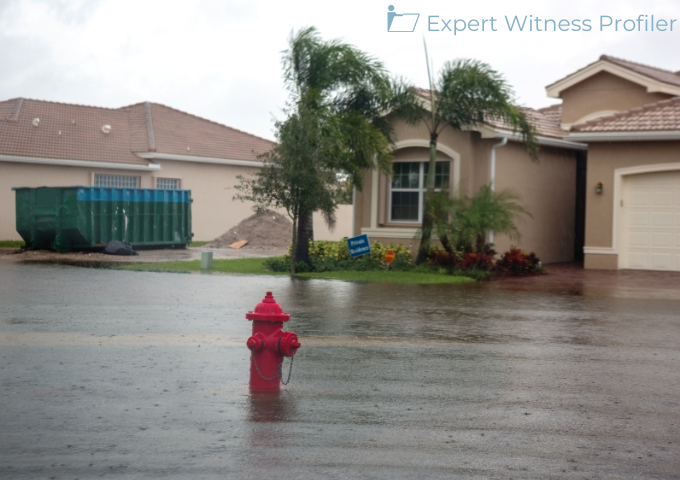
    Philip and Nancy Fairman’s home sustained severe flooding during Hurricane Ian. After the storm, they filed a damage claim with their insurer, Defendant American Strategic Insurance Corp (“ASI”), to seek compensation for the losses. ASI acknowledged coverage but disputed the extent of the damage. When the Fairmans and ASI could not reach a settlement, the Fairmans initiated a lawsuit to pursue their claim further.

    To facilitate discovery, the Court conducted a status conference and issued a scheduling order, requiring both parties to submit their Rule 26 expert disclosures by August 30, 2024. However, ASI failed to disclose its structural engineering expert witness, Brian Lindsey and did not provide the Fairmans with his report until nearly a month later, on September 26, 2024. ASI attributed this delay to an “oversight.”

    In response, the Fairmans filed a motion to strike ASI’s delayed expert disclosure. They also asked the Court to bar ASI from using Lindsey’s report or testimony in dispositive motions. Additionally, they asked that Lindsey be barred from testifying at trial, asserting that ASI’s failure to meet the deadline could adversely affect their case.

    Structural Engineering Expert Witness

    Structural Engineering Expert Witness

    Brian Lindsey, P.E., has over 20 years of forensic experience in cases involving damage assessments of design/construction defects, collapse of structures, vehicle impacts, structural fire damage, water intrusion, foundation movement, snow load failures, site drainage, wind damage, hail damage, exterior wall cladding damage and roofing systems damage.

    Want to know more about the challenges Brian Lindsey has faced? Get the full details with our Challenge Study report.

    Discussion by the Court

    Federal Rule of Civil Procedure 26 governs expert witness disclosures, aiming to prevent surprises in litigation and ensure parties can adequately prepare their cases. The rule mandates that parties disclose the basis of their expert opinions on time. Compliance with Rule 26 is not aspirational; it is mandatory. When a party fails to meet these obligations, Rule 37(c) grants the court discretion to exclude the expert unless the violation was substantially justified or harmless.

    ASI, having violated Rule 26, bore the burden of proving that its noncompliance was either justified or harmless. Substantial justification exists when reasonable minds could differ on the need to comply. Harmlessness, however, involves considering factors such as the element of surprise, the opposing party’s ability to address it, potential disruption to the trial, the evidence’s significance, and the reason for the failure to disclose.

    ASI did not argue that its conduct was substantially justified, nor did it address the factors necessary to establish harmlessness. Instead, ASI attributed the delay in disclosing its expert to an “oversight” and sought leniency, claiming no intentional violation or prejudice to the Fairmans. However, these explanations do not meet the required standard. Courts have consistently held that excuses such as oversight or clerical errors are insufficient to justify noncompliance with Rule 26.

    Consequently, ASI failed to satisfy its burden. The Court held that ASI cannot call Brian Lindsey as a witness or use his report as evidence in motions, hearings, or trial proceedings.

    Held

    The Court granted the Plaintiffs’ motion to strike Defendant American Strategic Insurance Corp.’s Rule 26 expert disclosure as untimely. Further, structural engineering expert witness Brian Lindsey’s report and expert testimony were stricken and excluded from further consideration in the lawsuit.

    Key Takeaways:

    The Court excluded ASI’s structural engineering expert witness, Brian Lindsey, and his report due to ASI’s failure to comply with Federal Rule of Civil Procedure 26, which mandates timely disclosure of expert witnesses to prevent trial surprises and ensure adequate case preparation.

    ASI did not provide substantial justification for its month-long delay nor argued that the delay was harmless. Instead, ASI claimed the missed deadline resulted from an “oversight.” The Court found this explanation insufficient, emphasizing that clerical errors and oversight do not excuse Rule 26 violations. In conclusion, the Court granted the Fairmans’ motion to strike Lindsey’s testimony, barring ASI from using his evidence at any stage of the litigation.

    Case Details:

    Case caption: Fairman v. Am. Strategic Ins. Corp.
    Docket Number: 2:23cv788
    Court: United States District Court for the Middle District of Florida, Fort Myers Division
    Dated: November 13, 2024