Plaintiff Leflore County Board of Supervisors filed suit against Meritor over a state-approved waste disposal that occurred almost two decades ago.
In 2006, Meritor’s predecessor, ArvinMeritor, sent some waste to Plaintiff’s landfill (the “Landfill”) as part of a state-approved cleanup of the Moose Lodge Road Disposal Area (“MLRDA”). And now, almost two decades later, Plaintiff claimed that the MLDRA waste it received as part of that state-approved cleanup was wrongfully characterized as non-hazardous.
Plaintiff held Meritor responsible for all costs necessitated by the waste disposal at the landfill.
Defendant Meritor, Inc. filed a motion to strike the second supplemental report of Plaintiff’s expert D. Scott Simonton.
Engineering Expert Witness
David Scott Simonton is a Registered Professional Engineer with over thirty (30) years of professional experience in State environmental and public health protection regulatory agencies, private consulting and academia.
The Plaintiff initially submitted Simonton’s expert report on November 25, 2024, which was the deadline for the Plaintiff’s expert designation imposed by the original Case Management Order. Notably, this initial report consisted of a cost estimate of $170,382.50 for “waste characterization,” based on the Plaintiff’s belief that Meritor had disposed of hazardous wastes in a certain limited area of the Leflore County municipal landfill.
Subsequently, on January 29, 2025, after Simonton’s initial expert report was produced, the parties deposed Leflore County’s landfill operator, Waste Connections, whose representative testified that it had no way to determine where the allegedly hazardous waste had been disposed of within the landfill. This testimony, in turn, formed the alleged basis for the opinion offered in Simonton’s second supplemental report.
Following the Waste Connections deposition, Simonton submitted his first supplemental report on April 15, 2025, and later, his rebuttal report on June 5, 2025. However, neither report included a new or revised cost estimate that accounted for Waste Connections’ position that the location of the contaminated soils could not be determined. Thereafter, Meritor deposed Simonton on June 30, 2025, and the discovery period closed on August 8, 2025.
Finally, on August 29, 2025, the Plaintiff submitted Simonton’s second supplemental report—the subject of the present motion—which included a “Remedial Investigation cost estimate” totaling $3,163,902.50. This report sought to address the alleged uncertainty regarding the location of the contaminated soil within the Leflore County municipal landfill and justified the need for an expanded investigation involving increased sampling.
Analysis
The Plaintiff’s expert designation deadline was November 25, 2024, and any supplement to Simonton’s expert report was due no later than the discovery deadline of August 08, 2025.
I. Whether the second supplemental report contains new opinions
The Plaintiff argued that the estimate in the second supplemental report “was merely a recalculation of [Simonton’s] mathematical formulas based on new information, i.e., Meritor’s lack of knowledge of where it caused the hazardous wastes to be dumped.” However, Meritor contended that the supplemental report introduced “an entirely new theory of damages” that had not been previously disclosed and lacked good cause. The Court agreed.
Simonton’s second supplemental report presented a Remedial Investigation (“RI”) cost estimate based on entirely new criteria and considerations—all known to the Plaintiff as early as January 2025 but not included in the initial or previously supplemented reports.
Regardless of whether the earlier reports contained opinions about the need for an RI (a point the parties dispute), the second supplemental report offered an entirely new cost estimate based on Waste Connections’ opinion that the location of the contaminated soils at the municipal landfill could not be determined. This stood in contrast to the prior assumption that Meritor had disposed of hazardous wastes only in a certain limited area. As a result, the Plaintiff’s attempt to introduce new opinions through an untimely supplement was deemed improper.
II. Whether the new opinions are substantially justified or harmless
The Plaintiff offered no explanation for the failure to supplement Simonton’s opinion at any point during the seven-month period after Waste Connections’ deposition and before the expiration of the discovery deadline. This delay certainly mitigates against the alleged importance of the opinion. Despite the Plaintiff’s arguments to the contrary, the prejudice to Meritor is clear: the second supplemental opinion is neither a minor amendment nor a recalculation. The discovery period is closed, and the motions deadline has passed. Meritor has had no opportunity to seek discovery regarding this opinion or have its own expert review and respond in their report. Finally, to continue the trial setting and reopen discovery to mitigate the prejudice to Meritor would require the Court to ignore the Plaintiff’s failure to establish the first three factors.
The Court concluded the untimely disclosure of Simonton’s second supplemental report was not substantially justified or harmless.
Held
The Court granted Meritor’s motion to strike the second supplemental report of Plaintiff’s expert D. Scott Simonton.
Key Takeaway:
The second supplemental report of Simonton contained opinions markedly different from those set forth in the original, first supplemental, and rebuttal reports and was made beyond the permissible deadline for supplementing expert disclosures under Rule 26.
Case Details:
Case Caption:
Leflore County Board Of Supervisors V. Meritor, Inc. Et Al
Docket Number:
4:24cv33
Court Name:
United States District Court, Mississippi Northern
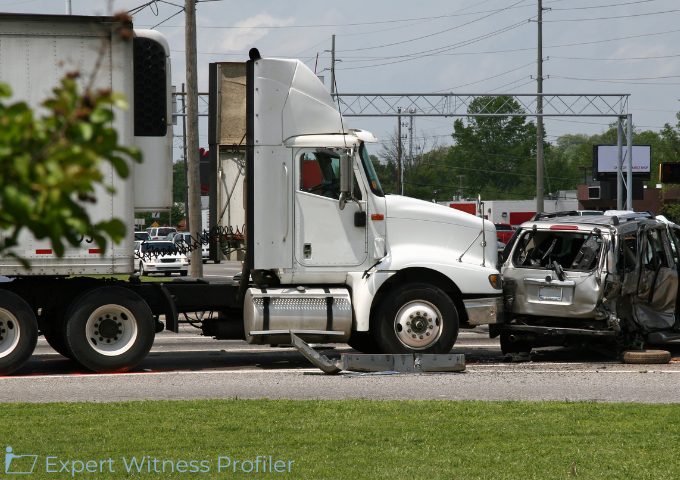
This case arises from a fatal automobile accident that occurred on September 22, 2017. Blake Haddox was traveling southbound on a motorcycle as Defendant Nicholas Roshon Moore drove a semi-truck in a northbound lane and turned left across traffic. The two collided, and Haddox died as a result.
Defendants Central Freightlines, Inc. and Nicholas Roshon Moore (collectively, “Defendants”) filed a motion to strike Plaintiffs’ expert Lewis J. Grill, a motion in limine with respect to anticipated testimony by Grill and a motion to strike his supplemental expert report.
Defendants argued that Grill is not qualified to provide expert testimony in this case, and that his opinions are neither relevant nor reliable.
His proffered testimony relates to “four overarching areas” that include: (1) “general trucking industry customs, practices, and standards”; (2) the “operating performance” of Moore; (3) CFL’s “management practices”; and (4) “accident preventability from a commercial trucking industry standpoint.”
Trucking Expert Witness
Lewis Joseph Grill has extensive experience as a commercial truck driver, training instructor, training program director, safety director, and trucking consultant.
He is licensed as a commercial driver and has logged approximately 2 million miles driving tractor-trailers in the United States, Canada, Mexico, and Central America. Grill has published books and articles and spoken on the subject of commercial trucking, in general, and driver standards, in particular.
Plaintiffs provided Defendants with Grill’s original expert report by the applicable deadline. In accordance with an Amended Scheduling Order, Defendants timely filed a Daubert motion, requesting the Court strike Grill’s expert testimony. Over two months later, on December 4, 2020—well after the deadline to exchange expert reports had passed—Plaintiffs provided Defendants with a supplemental report prepared by Grill. Defendants filed a motion to strike Grill’s supplemental report as untimely.
The Court understood Defendants’ position. However, a review of the supplemental report indicated that the main change is the addition of two new opinions. These new opinions are apparently offered as a result of information gleaned from the deposition of Defendant Central Freightlines, Inc.’s Corporate Representative Thomas Weeks, taken September 16, 2020. Plaintiffs provided notice in their October 2020 response to Defendants’ motion to strike that Grill had “not had a reasonable opportunity to review the transcript and update his opinions accordingly.”
Grill also does not appear to have substantively changed his opinions in any meaningful way. At the time Defendants received the supplemental report, trial was scheduled for April 19, 2021. Defendants still had over four months to review the supplemental report and prepare for trial. Further, on March 9, 2021, the Court struck the scheduling order due to the Covid pandemic and the Court’s excess criminal case load. The Court acknowledged the importance of scheduling order deadlines and complying with the Court’s orders and procedures. However, the Court cannot ascertain any prejudice Defendants suffered as a result of the delayed supplemental report. Defendants have not requested leave to take Grill’s deposition out of time; nor have they filed a rebuttal report.
B. Motion to Strike Grill’s Testimony
I. Grill is qualified to testify about general trucking industry customs, practices and standards
Defendants argued that Grill is unqualified because “none of Grill’s background and experience concerns issues to be determined in this matter.” Defendants asserted that Grill is not an expert in matters of “accident reconstruction, traffic signals or human factors.” However, Defendants never contended that Grill is unqualified as an expert in the areas of general trucking industry customs, practices, and standards.
Plaintiffs responded that Grill is qualified as an expert in the field of commercial trucking based on his experience as a commercial truck driver, training instructor, training program director, safety director, and trucking consultant. Plaintiffs also contended that Grill has been qualified in numerous cases as an expert. The Court found that Grill has decades of experience and involvement in the trucking industry. Therefore, he possessed the necessary training, experience, knowledge and skill to testify in the areas of general trucking industry customs, practices and standards.
II. Some of Grill’s proffered testimony is relevant and reliable
Defendants contended that Grill’s testimony will not aid the jury because the jury can make a liability determination in this case without the aid of an expert witness.
As an initial matter, although not specifically raised by Defendants, the Court had concerns about representations in Grill’s report. It appeared Grill held opinions that elevated the standard of care applicable to commercial truck drivers. For example, Grill states, “in my opinion, the performance standards to accomplish this standard of care are much different for truck drivers than operators of smaller vehicles.” The Court will instruct the jury as to the proper standard of care. Therefore, Grill is prohibited from testifying about any opinion he holds concerning the standard of care applicable to commercial truck drivers.
Further, Plaintiffs proposed Grill will provide opinions “regarding the hiring, retention and safety management of Central.” However, the Court already granted Defendant CFL summary judgment as to Plaintiffs’ negligent hiring, retention, supervision and training claims.
Moreover, the Court found Grill’s proffered testimony about the accident and Moore’s actions leading up to the accident conclusory without underlying factual support.
Defendants specifically challenged Grill’s opinion that the accident was avoidable or preventable. The Court similarly found this opinion an impermissible conclusion. Any testimony that Moore violated law, regulations, procedures, or policies are likewise impermissible legal conclusions.
Grill’s report provided that “Moore, because of failing to perceive a hazard in time, and failing to make proper safety decisions when he ultimately chose risk over safety by intruding into the approaching traffic stream, caused this collision.” However, causation is an issue of fact for the jury.
Held
The Court denied the Defendants’ motion to strike Plaintiffs’ expert Lew Grill.
The Court granted in part and denied in part the Defendants’ motion in limine with respect to anticipated testimony by Plaintiffs’ expert Lew Grill. Grill is prohibited from testifying about the topics identified by the Court in this order. Any other concerns possessed by Defendants may be addressed by a contemporaneous objection at trial or through cross-examination.
The Court denied the Defendants’ motion to strike Lew Grill’s supplemental report.
Key Takeaway:
Grill’s knowledge, skill and experience in the trucking industry will help the jury understand the evidence and determine the factual issues of this case.
However, much of Grill’s proffered testimony was excluded because it reached unsupported conclusions and invaded the province of the jury. The jury is more than capable of reaching their own conclusions as to the ultimate issues in this case.
Plaintiff Aaron Edwards filed this lawsuit against his former employer, Defendant First Trust, alleging that he was terminated in retaliation for engaging in purported whistleblowing activities. He asserted claims under the anti-retaliation and whistleblower protection provisions provide under the Sarbanes-Oxley Act (“SOX”), the Dodd-Frank Wall Street Reform and Consumer Protection Act (“Dodd-Frank”), and the Consumer Financial Protection Act (“CFPA”).
Michael Spindler is Plaintiff Aaron Edwards’ retained damages expert. He was designated on August 22, 2024, and produced his expert report on October 3, 2024 (the “Original Report”), which was the deadline for Edwards to serve his expert reports.
The Court set a November 14, 2024, deadline for the parties to complete discovery. And this case is set for trial on February 24, 2025.
In his original report, Spindler opined that Edwards was entitled to $5,920,897 in lost earnings (after subtracting the value of his mitigating earnings). Spindler forecasted the value of Edwards’ lost earnings through his projected retirement at age 67 using a “conservative” compound annual growth rate (“CAGR”) of one percent.
Edwards provided First Trust with an addendum to Spindler’s original report for mediation purposes on October 25, 2024 (the “Mediation Report”). In his Mediation Report, Spindler opined that Edwards was entitled to $15,133,349 using a 7.6 percent CAGR.
First Trust timely served its rebuttal expert report on November 13, 2024.
On February 11, 2025, Edwards produced Spindler’s supplemental report. The supplemental report provided an “alternative damages calculation,” which opined that Edwards is entitled to $11,052,917 using a 5.4 percent CAGR.
Michael Spindler is a CPA and Certified Fraud Examiner who brings over 40 years of experience to complex disputes including matters related to forensic accounting and business fraud investigations across a wide range of industries. He has provided expert testimony on dozens of occasions in bench trials, jury trials and arbitration proceedings. He has provided Foreign Corrupt Practices Act investigations and training services in various countries around the world, including China, Russia, India and Saudi Arabia.
Specifically, First Trust objected to Spindler’s opinion regarding Edwards’ alleged entitlement to monies from First Trust’s discretionary bonus program known as the “Jerries Bonus,” which served as a basis for applying a 5.4 percent CAGR to calculate Edwards’ lost earnings of $11,052,917 (after subtracting the value of his mitigating earnings).
Spindler’s original report opined that Edwards was entitled to $5,920,897 using a CAGR of one percent. Edwards contended that the methodology applied in the original report and supplemental report was the same. And, Edwards said, “for all practical purposes, the only difference in the damages calculation set forth in the original report and the alternative damages calculation set forth in the supplemental report is changing one number (i.e., the CAGR percentage) in the same equation.”
However, the Court disagreed with this characterization of Spindler’s supplemental report. Moreover, Edwards’ distinction between a “methodology” and “calculation” in attempting to justify the contents of his supplemental report was not persuasive.
The result is materially different, regardless of how CAGR is classified, considering that the increase in CAGR from one to 5.4 percent almost doubles Spindler’s damages approximation in his original report. And Edwards did not point to any newly produced information that Spindler relied on to develop his supplemental report calculation. And, so, Spindler’s supplemental report consisted of an untimely expert opinion that is based on information available before the deadline for expert disclosures and that departs from his original report in material respects.
Basically, Edwards offers no explanation regarding the timing of his supplemental disclosure – less than two weeks before the start of trial. But he contended that First Trust is not prejudiced by the supplemental report.
Mediation Report
Edwards asserts that any alleged surprise or prejudice was belied by Spindler’s mediation report, which was provided to First Trust on October 24, 2024, before First Trust’s rebuttal expert disclosed his report.
In his mediation report, Spindler opined that Edwards was entitled to $15,133,349 using a 7.6 percent CAGR. And, so, Edwards asserted that “First Trust and its rebuttal expert knew Spindler developed an alternative damages calculation using a higher CAGR percentage months ago.”
The mediation report may have provided First Trust with notice of Edwards’ intent to use a greater CAGR percentage to calculate damages. But, when Edwards did not timely supplement Spindler’s expert report for Rule 26 purposes, First Trust had reason to believe that Edwards would not rely on this “alternative damages calculation” for trial. Also, Edwards himself characterized the mediation report as “for mediation purposes only.”
And he further admitted that the CAGR used in the supplemental report (5.4%) lies between the original report (1%) and the mediation report (7.6%).
Therefore, the Court is not persuaded by Edwards’ argument that the “alternative damages calculation” disclosed in the mediation report – prepared only for mediation – absolves him of his failure to timely disclose the Supplemental Report.
And, even insofar as First Trust provided the mediation report to its rebuttal expert, it would still be prejudicial to allow a new damages calculation two weeks before the start of trial.
As noted above, the Court is not persuaded by Edwards’ argument that the supplemental report uses the same “methodology” generally – especially because the “methodology” involving a higher CAGR is based on the mediation-only report of several months ago. Edwards could have disclosed the supplemental expert report for purposes of trial at that time but did not.
Held
In conclusion, the Court granted Defendant First Trust’s motion to strike the supplemental report of Plaintiff’s retained expert Michael Spindler.
Key Takeaway:
Even if an allegedly supplemental report is untimely, to assess whether to permit testimony based on an untimely supplemental expert report, the Court, in exercising its discretion, considers (1) the explanation for making the supplemental disclosure at the time it is made; (2) the importance of the supplemental information to the proposed testimony of the expert, and the expert’s importance to the litigation; (3) potential prejudice to an opposing party; and (4) the availability of a continuance to mitigate any prejudice.
However, Edwards offers no explanation regarding the timing of his supplemental disclosure – less than two weeks before the start of trial.
This lawsuit stems from a motor vehicle accident. The two-vehicle collision occurred around 12:12 P.M. on January 4, 2023 in the left northbound lane of U.S. Highway 45, a divided four lane highway.
On the date and time in question, Plaintiff Kimberly Allcorn was driving a 2019 Kia Forte in the right lane of northbound traffic. She had been in Tupelo, Mississippi to pick up her car from a repair shop, and she intended to return to her residence in Corinth, Mississippi. Defendant Pamela Kay Beach was operating a 2023 Kenworth tractor-trailer truck that was owned by Western Express. Allcorn was traveling ahead of Beach on the roadway, both heading in the same direction.
After her vehicle began to exhibit additional problems, Allcorn decided to return to Tupelo. She switched from the right to the left lane of northbound traffic in an effort to proceed into a turn lane so that she could turn around and drive south back to Tupelo. Prior to the collision, Beach was traveling in the left lane at a higher rate of speed than Allcorn. When Allcorn switched into the left lane, Beach applied her brakes but a collision between the vehicles nonetheless occurred with the front of Beach’s tractor impacting the back of Allcorn’s car.
The posted speed limit in the area was 65 mph. The dash cam footage indicated that Beach was traveling 71 mph before she applied her brakes.
Allcorn filed suit against Beach and Western Express. She brought claims for negligence and negligence per se. On June 10, 2024, Allcorn designated Soan Chau as her expert in accident reconstruction. Chau prepared two reports summarizing his conclusions about the case. Defendants contended that the Court should prevent Chau from testifying because his opinions fell below the requisite threshold for expert testimony.
Accident Reconstruction Expert Witness
Soan Chau is a transportation consultant specializing in vehicular accidents with over twenty years of experience in analyzing cases involving passenger cars, tractor-trailers, motorcyclists, bicyclists, and pedestrians. He has analyzed over a thousand cases and has been intimately involved in scene preservation and documentation, surveying, reconstruction, simulation, animation, human factors and other transportation related matters.
Chau is also a certified Event Data Recorder (commonly known as “black box”) analyst and retriever, for both commercial vehicles and passenger cars.
In his initial report dated June 7, 2024, Chau opined that based on his calculations involving time, speed, and distance, Beachcould have avoided the collision if she had been traveling 65 mph when Allcorn initiated her lane change from the right lane to the left lane.
On July 8, 2024, the Defendants’ accident reconstruction expert witness, Benjamin Smith, prepared his written report. Smith identified errors in Chau’s calculations—namely, Smith opined that the calculations contained in Chau’s report equated to Beach’s speed being 76 mph, which is demonstrably false based on the dash cam footage indicating that she was traveling 71 mph. Smith ultimately concluded that based on his own calculations, even if Beach had been traveling at the posted speed limit of 65 mph, she could not have avoided the collision.
After Smith pointed out the errors in Chau’s calculations, Chau prepared a supplemental report. In that report, Chau corrected the mathematical errors that Smith identified. After doing so, Chau again concluded that if Beach had been traveling at 65 mph instead of 71 mph, she could have avoided the collision.
In the supplemental report, Chau reached the following conclusions:
1. Based on the materials that are available at the time of this report, it is safe to conclude that, had the tractor trailer been traveling at the speed limit of 65 mph:
a. There would have been approximately 84 feet between the tractor trailer and the Kia, when the lead vehicle (Kia) arrive [sic] at the same collision point
b. At an 84 feet distance between the vehicles, the tractor-trailer driver would have more time to slow down, make lane change, release accelerator, or brake
c. Kimberly Allcorn would also have entered the left turn lane by the time the tractor trailer arrive [sic] at point of collision
2. Because the tractor trailer was over the speed limit the entire 10 seconds (1.1 second braking) leading up to the collision, the Kia was not able to clear the left travel lane
Defendant’s Arguments
The Defendants emphasized three distinct arguments that they contended constituted bases for the exclusion of Chau’s testimony:
(1) that his opinions were not relevant and did not assist the trier of fact;
(2) that his opinions had “no methodology or principles”; and
(3) that his prior opinions in another case contradicted his opinions here.
Analysis
Relevance
Defendants argued that “Chau’s opinion is that Beach would not have been at the accident scene at the same time as Plaintiff if Beach had not been traveling 70 to 71 miles per hour. Because such an opinion is not valid under Mississippi law, the opinion is irrelevant and must be excluded.” The Defendants contended that multiple Mississippi federal and state court cases supported their contention that Beach’s speed is irrelevant.
The Court found that the Defendants mischaracterized Chau’s conclusions. The Court noted that Chau did not offer any opinion about Beach’s speed earlier in the trip. Instead, he reached conclusions as to whether Beach traveling the speed limit at the time of the collision and the seconds leading up to the collision would have enabled her to avoid the collision.
The Court found it difficult to see how the driver’s speed at the time of the collision, along with a concomitant conclusion that a slower speed would have enabled the Defendant to avoid the accident, lacked significant relevance in a case of this nature. The argument that speed was entirely irrelevant missed the mark. The Court rejected the Defendants’ argument.
Methodology
Initial Report
In his initial report, Chau provided the following information in a section described as “Video Analysis”:
a. currently only 10 seconds of footage before the collision was available
b. 8 seconds after collision
c. Impact occurred at +1.00
d. The 18 second Video Footage does not have evenly spaced time
e. At T= -1.80 seconds, Kia encroached into the left travel lane; the tractor-trailer was traveling at 71 mph
f. At IMPACT T= +1.00, Kia was approximately from auxiliary lane for median break; tractor trailer V=57 mph
g. The total distance traveled by the tractor trailer during 11 seconds (of video footage) prior to collision is approximately 1237 feet
h. Travel distance at 65 mph for 11 seconds is 1049 feet
Based on that information, Chau concluded that, if the tractor trailer had been traveling at the speed of 65 mph, “there would have been approximately 188 feet between the tractor trailer and the Kia, when the lead vehicle (Kia) arrive [sic] at the same collision point.” He additionally concluded that Allcorn “would also have entered the left turn lane by the time the tractor trailer arrived at point of collision.”
Supplemental Report
As noted above, the Defendants’ expert witness, Benjamin Smith, prepared a report that identified errors in Chau’s calculations.
Chau then prepared a supplemental report. In that report, the “Video Analysis” section contains much of the same information listed above but sub-sections (d), (f), and (g) were slightly different and provided as follows:
d. The 18-second video footage appeared to be at approximately 10 Hertz
f. At IMPACT T= +1.00, Kia was approximately 50 feet from beginning of auxiliary lane for median break; tractor trailer V=57 mph
g. The total distance traveled by the tractor trailer during 11 seconds (of video footage) prior to collision is approximately 1133 feet
The supplemental report then goes on to provide the following additional information:
11. Had the tractor trailer was traveling [sic] 65 mph for 11 seconds, there would be approximately 84 feet between the tractor trailer and the Kia Forte when Allcorn arrives that [sic] the same collision point (POC)
12. As seen in the video, this tractor trailer can decelerate from 70-57=13 mph in 1.1 second [sic], traveling a distance of approximately 102 feet
13. At 65mph [sic], the same decelerate [sic] from 65-52=13 mph in 1.1 second [sic], tractor trailer would travel a shorter distance of 94 feet
16. At collision, the Kia Forte’s front bumper appears to be within 20 to 30 feet of the beginning of the auxiliary lane
17. There was approximately 40 to 50 percent overlap between the tractor trailer and the Forte at impact
19. For every incremental seconds [sic] Beach was traveling at 65 mph beyond the 10 seconds (before braking), the incremental increase in distance would be (71-65)1.47=8.8 feet.
He ultimately reaches the same conclusion—that Allcorn would have been able to reach the left turn lane before the collision if Beach had been traveling at 65 mph prior to the collision..
Defendant’s Argument
The Defendants poked numerous holes in Chau’s conclusions. For instance, they noted that he provided no explanation for the change in his calculations from the initial report to the supplemental report. They also emphasized that in the initial report, Chau did not include a specific distance that Allcorn’s vehicle was from the turn lane at the time of the collision but that in page 3 of his supplemental report, he indicated a distance of 50 feet and then later referenced a distance of 20-30 feet. The Defendants ultimately contended that Chau was “simply putting numbers in his report to make it seem scientific.”
While the Court was cognizant of the Defendants’ concerns, it was noted that they concerned the weight of Chau’s testimony, not its admissibility. In his report, Chau included the formula that he used to reach his ultimate conclusion that Allcorn would have been able to reach the left turn lane ahead of Beach (and avoid the collision) if Beach had been traveling at a speed of 65 mph. The Defendants may disagree with those calculations, believe that they contain errors, and/or that they do not take into account all relevant information—the Court held that they will certainly be given an opportunity to cross-examine Chau on those topics at trial.
But to altogether exclude Chau at this stage of the proceedings would go too far, in this Court’s view. The Defendants have not shown that Chau failed to engage in reliable methodology in reaching his conclusions—just that they disagree with those conclusions.
Prior Testimony
Lastly, the Defendants pointed to testimony that Chau provided in a previous case and contended that his testimony here is contradictory to his conclusion in that case. This Court is concerned, however, with the methodology that Chau has employed in this case and whether his methodology is sufficiently relevant and reliable to be admitted into evidence. In other words, the Defendants will be given latitude to cross-examine Chau about his prior testimony; however, this is again an insufficient basis to completely exclude his testimony.
Held
The Court denied the Defendants’ motion to exclude the testimony of Plaintiff’s accident reconstruction expert witness, Soan Chau.
Key Takeaway:
The Court concluded that Chau’s testimony was admissible, primarily because his methodology met the basic threshold for admissibility, even though there were some inconsistencies in his calculations. The Court emphasized three key points in its reasoning:
Relevance: The Court rejected the Defendants’ argument that speed was irrelevant, noting that Chau’s analysis of how the speed limit would have affected the collision outcome was highly relevant to the case.
Methodology: While acknowledging the Defendants’ concerns about calculation changes and inconsistencies in Chau’s reports, the Court determined these were issues of weight rather than admissibility. The Court noted that Chau had included his formula and analytical process in his reports, providing a sufficient methodological foundation.
Prior Testimony: The Court found that potential contradictions between Chau’s current testimony and his testimony in a previous case were matters for cross-examination rather than grounds for exclusion.
Please refer to the blog previously published about this case:
Plaintiff Arthur Williams (“Plaintiff”) filed this action against Defendants East Meadow Union Free School District, Matthew Melnick, Scott Eckers, Alisa Baroukh, Eileen Napolitano, Joseph Parisi, Marcee Rubenstein, Melissa Tell, Dr. Kenneth Card, and Dr. Patrick Pizzo (collectively, “Defendants”), alleging discrimination based on race, color, and age, as well as a hostile work environment and retaliatory actions.
The Plaintiff, a former employee of East Meadow Union Free School District, alleged that the Defendants discriminated against him based on his race and age and created a hostile work environment during his employment. In 2016 Defendant Patrick Pizzo, District Assistant Superintendent for Business and Finance, encouraged Plaintiff to apply for a position as Assistant to the Superintendent for Administration and Special Projects, for which he was subsequently hired. Despite his superior performance in that role, Plaintiff claimed that he was treated differently than his white counterparts and was subjected to excessive scrutiny and performance evaluations.
Following the Superintendent’s retirement, Pizzo made discriminatory comments on account of Plaintiff’s age and race and such conduct worsened upon Plaintiff attempting to report the conduct. Pizzo placed Plaintiff on a performance improvement plan, and ultimately Pizzo terminated Plaintiff from his position.
Discovery deadlines were extended numerous times for a host of reasons throughout the protracted history of this case. Following a status conference on July 10, 2024, the dates were extended so that expert in chief reports were due no later than July 15, 2024, rebuttal reports were due no later than September 11, 2024, and the end date of all expert discovery was October 2, 2024. The parties were forewarned that “[t]his will be the final extension of discovery dates and deadlines.”
Final Discovery Deadline Violation
Dr. Michael J. Vernarelli, Plaintiff’s forensic economist expert submitted his initial report on August 16, 2022, and, following his deposition, produced his supplemental report on October 14, 2024. Similarly, Dr. Darlene Powell Garlington , a clinical psychologist, submitted her initial report on July 12, 2024, was deposed by Defendants on October 2, 2024, and then submitted a supplemental report on November 6, 2024. It should be noted that both expert reports were served after the final discovery deadline.
Defendants filed a motion to strike both supplemental reports under Federal Rule of Civil Procedure 37, claiming they were not only untimely but also went beyond the permissible scope of supplemental reports. Plaintiff filed timely opposition to the motion on December 23, 2024.
Economics Expert Witness
Michael J. Vernarelli is a forensic economist and a noted academic. He has significant experience consulting with Plaintiff and Defense attorneys, performing appraisals of loss of lifetime earnings and economic value in cases of wrongful death, personal injury, age discrimination, and equitable distribution in addition to providing expert testimony.
Darlene Garlington is a nationally-recognized, licensed clinical psychologist, certified school psychologist, and media psychologist. She is a renowned author of eleven books which focus primarily on building resilience, parenting, family dynamics, spirituality, multiculturalism, co-parenting, male-female relationships and diversity.
Vernarelli’s initial and supplemental reports were prepared to calculate the lost back pay and front pay for Plaintiff as a result of his allegedly wrongful termination.
On October 14, 2024, Vernarelli amended his initial report, which he had submitted on August 16, 2022. In his amended expert disclosure, Vernarelli explained that during his deposition, he realized that he needed to deduct Plaintiff’s Social Security benefits as mitigating income for both lost back pay and lost front pay through Plaintiff’s projected retirement date. He admitted to making a “big oversight” and discovered “an error” in not taking into account these benefits in calculating either back pay or front pay. Vernarelli acknowledged that his calculation method was flawed because he did not account for the fact that this is a civil rights/discrimination case and not a personal injury case where social security benefits ordinarily are not an offset until post-verdict.
Moreover, Vernarelli failed to, but now admits he needed to, account for the higher Social Security benefits Plaintiff would receive upon turning 70—his projected age of retirement. As Vernarelli stated, this meant Plaintiff’s pre-retirement damages should be lower while his post-retirement damages should be higher. Indeed, Vernarelli initially concluded Plaintiff was entitled to lost earnings (back and front pay) of $892,308 and lost pension benefits (front pay) of $296,475. Conversely, in his amended report, after taking into account the Social Security benefits, Vernarelli determined Plaintiff’s lost earnings (back and front pay) should be $702,848 while his lost pension benefits (front pay) should be $545,192, thereby increasing the total damage assessment by $59,257.00.
The Garlington Reports:
Garlington’s initial report, submitted on July 12, 2024, was based on a psychological assessment of Plaintiff’s mental and emotional well-being. In this report, Garlington concluded that Plaintiff suffered from Post-Traumatic Stress Disorder (PTSD) with co-occurring depression and anxiety, referencing bouts of low confidence and cognitive difficulties like inability to focus or recall events. Garlington added that PTSD is a “disease of non-recovery,” and concluded that symptoms “do not dissipate or become manageable to be able to function as the individual did prior to the trauma.”
On November 6, 2024, Garlington submitted an amended report after reviewing additional medical records provided by Plaintiff. These records included findings from Dr. Abraham Glasman, a neurologist who began treating Plaintiff in 2022, and Dr. Christine Weber, who conducted a neuropsychological consultation with Plaintiff in August 2022. Glasman diagnosed Plaintiff with “mild cognitive impairment,” and eventually updated it to “dementia with unspecified severity without behavioral disturbance, psychotic disturbance, mood disturbance and anxiety.” Weber diagnosed Plaintiff with “unspecified dementia with behavioral disturbance” after noting a slow and continuous progression of cognitive decline and corresponding symptoms.
Garlington concluded that Plaintiff had developed Complex PTSD (CPTSD), which she attributed to the ongoing nature of his traumatic experiences.
The Parties’ Arguments
Argument by Defendant
Defendants argued that both the supplemental reports should be struck due to their untimeliness. This case is in the Daubert and summary judgment briefing stage, thus reopening discovery on these experts’ new information would prejudice Defendants through increased costs and delays. Moreover, Vernarelli had ample opportunity to “update and revise” his initial findings as he had access to Plaintiff’s financial information for calculating damages, specifically Social Security damages, yet has failed to indicate why he did not revise his initial report sooner. Furthermore, Defendants posited that Vernarelli “significantly altered his prior damages assessment” by lowering Plaintiff’s pre-retirement damages while increasing post-retirement damages.
With respect to Garlington, Defendants argued that she “drastically revised” her conclusions after reviewing Plaintiff’s prior medical and psychological treatment records. In other words, her supplemental report introduced entirely new theories on which Defendants have had no discovery at all. With the new diagnosis, Defendants claimed that the scope of the first report expanded and is now inconsistent with the initial report.
Argument by Plaintiff
Plaintiff contended that the supplemental reports were a direct result of information raised at the experts’ respective depositions, ones scheduled for the last and second to last day of expert discovery.
Plaintiff specifically argued that Vernarelli’s supplemental report was in direct response to his realization during his deposition that his Social Security calculation was “not fully accurate.” Moreover, as alleged, his initial report did not account for the higher Social Security benefits Plaintiff would have received upon retirement at 70 years old. Such a drastic change in damages, as Plaintiff contends, “is a reflection of the accurate calculations.” Similarly, as argued, Garlington amended her report to provide a “fair and accurate depiction of Plaintiff’s psychological state” after learning, during her deposition, of prior medical reports diagnosing Plaintiff with dementia.
Analysis
Courts “will not admit supplemental expert evidence following the close of discovery when it expounds a wholly new and complex approach designed to fill a significant and logical gap in the first report.” To allow such new evidence to be presented would undermine the purpose of the discovery rules, circumvent the discovery schedule that was ordered by the Court, and prejudice a Plaintiff.
a. Vernarelli’s Report
Vernarelli, though his amended report sought to clarify an “inaccurate” calculation, nothing in the record indicates that the Social Security damages were “unknown or unavailable” to him. In fact, Vernarelli had access to all of Plaintiff’s financial information, including Social Security damages, when he formed his initial report. Additionally, Plaintiff sought to submit Vernarelli’s supplemental report in order to correct his flawed approach to his damages calculation. At bottom, the Court held that Vernarelli’s inaccurate damages calculation resulted from his utilization of a damages calculation tailored towards personal injury cases, not civil rights or discrimination cases. Having chosen to utilize an incorrect methodology in calculating damages, as Vernarelli has done here, does not warrant admitting a supplemental report aimed at correcting that flawed method.
b. Garlington’s Report
Garlington offered several new diagnoses in her amended report, like CPTSD and dementia, that stretched far beyond the scope of her conclusions enunciated in her initial report. The Court held that Garlington’s supplemental report offers new medical opinions and conclusions, rather than clarifying or elucidating the conclusions in her original report.
In considering whether to preclude supplemental experts reports under Federal Rule 37(c)(1), courts, in exercising their discretion, usually consider the following four factors:
The Party’s Explanation for the Delay in Advancing the New Evidence
Importance of the Precluded Evidence
Prejudice Suffered by the Opposing Party
Possibility of a Continuance
i. The Party’s Explanation for the Delay in Advancing the New Evidence
In conclusory fashion, Plaintiff stated that Vernarelli realized the Social Security benefits needed to be deducted and that he did not take them into account despite the fact that Vernarelli had access to this financial information when he formed his initial report. As to Garlington, it is argued that she did not know about the other expert’s reports before she was deposed, namely because Plaintiff allegedly withheld medical information from her. The Court noted that Garlington had numerous opportunities to ascertain this information as the discovery schedule was extended at several different points during this almost four-year litigation.
Plaintiff offered nothing to the Court explaining why Garlington could not obtain this new evidence before examining Plaintiff herself, or why Vernarelli did not account for Social Security damages in his initial report before discovery closed.
ii. Importance of the Precluded Evidence
The reports were important as each were crucial to different elements of Plaintiff’s damages. The Court recognized that evidence affecting even a relatively small portion of total damages could be sufficiently important to weigh against preclusion which is why this factor favors admitting Vernarelli’s report. Moreover, relevant to Garlington, previously conducted medical examinations and subsequent findings were important because they formed the basis for a change in diagnosis.
iii. Prejudice Suffered by the Opposing Party
The case was approaching four years since its commencement on June 11, 2021. Allowing these supplemental reports would necessitate reopening expert discovery, potentially leading to further depositions, reports, and motion practice, thereby resulting in increased time and resources to an already lengthy litigation nearing its end. The Court found this factor heavily favored preclusion keeping in mind the purported prejudice Defendants stood to suffer.
iv. Possibility of a Continuance
The Court held that a continuance was not appropriate as the case has been ongoing for almost four years, other discovery motions have been filed in addition to the current motion to strike, and discovery deadlines, particularly as to experts, have been continuously extended.
In sum, the Court excluded the supplemental reports offered by Vernarelli and Garlington.
Held
The Court granted Defendants’ motion to strike the supplemental expert reports of Michael J. Vernarelli and Darlene Powell Garlington.
Key Takeaway:
Vernarelli noted that his calculation method was wrong because he did not account for the fact that this is a civil rights/discrimination case and not a personal injury case where social security benefits ordinarily are not an offset until post-verdict. Similarly, Garlington’s revised report, which introduced new diagnoses of CPTSD and dementia, was deemed improper because it went beyond her initial psychological findings. The Court applied a four-factor test, considering the delay in submitting the reports, their importance to Plaintiff’s damages, the prejudice to Defendants, and the unavailability of a continuance. Ultimately, the Court ruled that allowing the reports would unfairly extend the litigation, increase costs, and introduce new, unvetted theories, thereby prejudicing the Defendants.
Case Details:
Case Caption:
Williams vs. East Meadow Union Free School District Et Al
Docket Number:
2:21cv3310
Court:
United States District Court for the Eastern District of New York
Plaintiff Kimberly Allcorn filed a lawsuit to recover damages for injuries from a collision with a tractor-trailer. Defendant Kay Beach, driving the tractor-trailer, worked for Western Flyer Express, LLC at the time.
Both vehicles traveled northbound on a four-lane highway with a 65-mph speed limit. Allcorn was in the right lane ahead of Beach, who was in the left lane at 71 mph. As Allcorn changed lanes, moving slower than Beach, the tractor-trailer struck the rear of Allcorn’s vehicle despite applying the brakes.
There was a fact dispute as to whether Beach, had she been driving the speed limit, could have avoided the collision. On June 10, 2024, Allcorn designated Soan Chau as an accident reconstruction expert witness. Chau’s report concluded that if Beach had driven 65 mph, she could have avoided the crash.
On July 9, 2024, the Defendants provided the testimony of their own accident reconstruction expert witness, who found errors in Chau’s calculations. It was alleged that Chau’s report misrepresented Beach’s speed as 76 mph instead of 71 mph and claimed that even at 65 mph, the crash would have been unavoidable.
On August 7, 2024, the Plaintiff submitted a corrected report from Chau. Chau maintained that Beach could have avoided the crash at 65 mph.
The Defendants requested the Court strike the report, arguing it was untimely and exceeded the scope for revisions. The Plaintiff claimed the report was both proper and timely.
Accident Reconstruction Expert Witness
Soan Chau is a transportation consultant specializing in vehicular accident analysis, with over 30 years of experience in cases involving passenger vehicles, tractor-trailers, motorcycles, bicycles, and pedestrians. Throughout his career, Chau has analyzed over a thousand cases, contributing expertise in scene preservation, documentation, surveying, reconstruction, simulation, animation, and other transportation-related matters.
Soan Chau earned a Bachelor of Science in Civil Engineering from the University of Florida in 1993. He further pursued advanced studies at the University of Florida, completing all required coursework for a Master of Science in Traffic Engineering between 1997 and 1999.
He is also a certified Event Data Recorder (EDR or “black box”) analyst and retriever for both commercial vehicles and passenger cars.
Federal Rule of Civil Procedure 26(e) requires timely supplementation if a prior disclosure is materially incomplete or incorrect, and the information has not otherwise been provided during discovery. Additionally, under the present Court’s Local Uniform Civil Rule 26(a)(5), such supplementations must be made at appropriate intervals “and in no event later than the discovery deadline established by the case management order.”
The Court found no merit in the Defendants’ argument that supplementation is only required when based on new information unavailable at the time of the initial disclosure. Instead, Rule 26(e) clearly requires supplementation when a party learns of an error or omission, as occurred here.
The Defendants also argued that Chau’s supplemental report was unnecessary because their expert had already identified the errors. The Court held that this argument undermined the Defendants’ request for relief. If the corrections were already known, Chau had no obligation to provide them, and his supplemental report would have been gratuitous. However, the Plaintiff did not advance this position.
The Court concluded that once Chau learned of the errors in his calculations, he had a duty to correct them promptly. Chau complied with this duty by submitting a supplemental report within 30 days, well before the discovery deadline. The Court emphasized that Chau did not offer a new opinion disguised as a supplement. Instead, he corrected mathematical errors in his calculations without altering his opinion.
The Court found nothing improper in Chau’s actions, as his supplemental report adhered to both the letter and spirit of Rule 26(e).
Held
The Court denied the Defendants’ motion to strike the supplemental report of Plaintiff’s accident reconstruction expert witness Soan Chau.
Key Takeaway:
The Court admitted Soan Chau’s supplemental report, emphasizing the importance of timely corrections when an expert discovers errors in their calculations. Under Federal Rule of Civil Procedure 26(e), experts are required to correct any material inaccuracies in their disclosures, even if no new information is introduced.
The Court found that Chau’s corrected report, submitted within the required timeframe, was a necessary and appropriate response to the identified errors. Importantly, the Court noted that Chau’s supplemental report did not offer any new opinions but merely corrected mathematical errors without altering his original conclusions. In conclusion, the Court held that Chau’s actions complied with the letter and spirit of the Rule, denying the Defendants’ motion to strike the report.
Please refer to the blog previously published about this case:
Plaintiff sued Berry Petroleum Company for injuries incurred while pumping oil for transport as a crude oil truck driver for Savage Industries Inc. In both the initial disclosure and the supplemental disclosure at issue here, Plaintiff designated Edward R. Ziegler as an “oil field, oil tank and oil tank’s ‘thief hatch’ safety expert as to all relevant safety issues involved in this injury incident.”
Berry agreed that Plaintiff complied with the deadlines concerning Ziegler’s initial disclosures and report. Ziegler’s deposition was taken December 16, 2022. Per the fifth amended scheduling order, expert discovery closed January 29, 2024. On April 12, 2024, Plaintiff filed his Second Supplemental Expert Reports containing an updated expert report from Ziegler. Berry moved the Court to exclude this updated report on the grounds that it is untimely and that the delay was not substantially justified or harmless.
Petroleum Engineering Expert Witness
Edward R. Ziegler is a petroleum and natural gas engineer with a law degree. He is also a registered Professional Engineer (Texas and Wyoming), a Certified Safety Professional (C.S.P.), and has been trained several times as an OSHA 500-series instructor. Currently, Ziegler is the American Society of Safety Engineers’ appointee to the ANSI Z49.1 welding and cutting safety committee, and he has served on other industry safety committees.
Besides, his diverse, international background includes oilfield, safety, pipeline, and construction employment. Particularly, he has extensive oilfield experience in drilling, completion, production, reservoir, and construction engineering—both onshore and offshore.
Under Fed. R. Civ. P. 37(c)(1), “if a party fails to provide information . . . as required by Rule 26(a) or (e), the party is not allowed to use that information . . . unless the failure was substantially justified or is harmless.”
Berry argued that “it will undoubtedly be prejudiced” if the report is not excluded and that this prejudice cannot be cured. Berry claimed that it will be prejudiced by increased costs, arguing that it will have to conduct a second Ziegler deposition, pay for its own experts to review the supplemental report, and the amount of prejudgment interest will be increased by delaying trial. The Court did not find this persuasive. Berry conceded that the supplemental report does not rely on new information, and further, there is no trial date set.
Next, Berry argued that the supplemental report will disrupt the trial because it will further delay the trial. As there is not yet a trial date set, the inclusion of the supplemental report does not disrupt the trial setting. Accordingly, the Court found that this factor did not weigh in favor of exclusion.
Finally, Berry argued that the untimely disclosure was willful because Plaintiff had waited so long to produce it. Berry also asserted that Plaintiff was using this supplemental report to add additional opinions or reinforce opinions already presented in the original report. They did not cite any part of the report to support this assertion. Berry also objected to Plaintiff’s explanation as to why he had filed the supplemental report. The Court did not need to consider Plaintiff’s explanation in finding that this factor did not weigh in favor of exclusion. Berry did not present evidence that suggested bad faith or willfulness by Plaintiff.
Held
The Court denied Defendant Berry Petroleum Company, LLC’s motion to exclude Plaintiff’s second supplemental expert reports containing an updated expert report from Edward Ziegler.
Key Takeaway:
Berry conceded that the supplemental report does not rely on new information, and further, there is no trial date set. As there is not yet a trial date set, the inclusion of the supplemental report does not disrupt the trial setting. In conclusion, the Court found that Berry did not present evidence that suggested bad faith or willfulness by Plaintiff.
Case Details:
Case Caption:
Skinner V. Berry Petroleum Company Et Al
Docket Number:
1:19cv124
Court:
United States District Court for the District of Utah, Central Division
A district judge in Texas admitted the testimony of a trade secrets expert witness, taking into consideration his extensive and specialized experience.
Plaintiff BHI, a leader in the energy industry providing project management and staffing support to the nuclear, fossil, wind, hydro, and government energy markets accused the Defendants KVP Energy Services, Dustin Coble, Welborn “Ross” Glover, Roy Glover, and Shelby Walker of misappropriating BHI’s trade secrets by using the trade secrets in conjunction with their work at KV during their BHI employment. In other words, they allegedly committed corporate espionage, stole confidential information, trade secrets, and equipment from BHI, and wrongfully interfered with BHI’s customers and contractual relations.
On August 3, 2023, the Defendants designated James Pooley as an expert witness to offer opinions concerning whether BHI took reasonable measures to protect its alleged trade secrets. Pooley’s initial report did not include any opinions as BHI was yet to identify the purported trade secrets that it alleged were misappropriated by any Defendant(s). Pooley supplemented his report on September 18, 2023 and explained that despite BHI not identifying with particularity the purported trade secrets that it alleged were misappropriated by any Defendant(s), it had provided some limited discovery comprising information relevant to his assessment of whether BHI had implemented reasonable measures to protect those alleged trade secrets.
Although discovery closed on November 2, 2023, the parties stipulated to extend the deposition deadline beyond the close of discovery.
Pooley was deposed on November 13, 2023.
Trade Secrets Expert Witness
James Pooley has devoted the majority of his career to trade secret protection and management. Over the decades, he has gained extensive experience in designing and managing systems for trade secret protection. He has published numerous books regarding trade secrets, including his 800-page treatise “Trade Secrets,” which he has continuously updated since its publication in 1997.
In 2015, Pooley published a business book, Secrets: Managing Information Assets in the Age of Cyberespionage, which focuses on managing information asset security—the same topic he has been asked to opine on here. On the same subject, he has also written the introductory chapter (“Information Security in the Modern Enterprise”) for the Computer and Information Security Handbook Third Ed. (Morgan Kaufmann, 2017). He has published numerous articles and regular newsletters regarding trade secrets. He has taught trade secret law and litigation at law schools, including several years at Santa Clara University in the 1980s and 14 years at the University of California at Berkeley.
Pooley has also taught trade secret and patent law and procedure to state and federal judges. He was the founding Chair, and is now Chair Emeritus, of the Sedona Conference Working Group on Trade Secrets. He also co-chairs the International Chamber of Commerce’s Trade Secret Task Force; in this role, he oversaw the publication of a 2019 report, Protecting Trade Secrets, which provides guidance to businesses on what measures they should take to benefit from the protections afforded to them under US and EU law. Pooley has previously served as President of the American Intellectual Property Association and as Chairman of the National Inventors Hall of Fame.
Plaintiff BHI Energy I Power Services LLC filed a motion to strike the expert report and exclude the testimony of James Pooley.
BHI argued that (1) Pooley’s opinions invaded the province of the fact finder, (2) Pooley had failed to demonstrate that his opinions and testimony were based on reliable methods, (3) Pooley’s opinions were based on insufficient facts, and (4) Pooley had failed to provide all materials and facts that he considered in forming his opinion.
On December 5, 2023, Pooley supplemented his report a second time. Specifically, he supplemented his report to incorporate additional information not available until after his first supplemental report.
Pooley’s second supplement report is his first proper expert designation
BHI added a new argument: it contended Defendants had not properly designated Pooley until December 5, 2023, when Defendants disclosed Pooley’s second supplemental report. The Court agreed and, in a separate Memorandum Opinion and Order entered that day, granted BHI’s motion to designate an expert to rebut Pooley’s second supplemental expert report and testimony. BHI further contended that this second supplemental report had been disclosed well past the August 3, 2023 deadline and suffered from the same flaws as the tentative, first supplemental report that had been BHI’s focus in the opening motion to strike.
A court generally will not consider arguments raised for the first time in a reply brief.
But the Court will exercise its discretion and consider the new arguments here because Pooley’s expert report has been a moving target. Because of the parties’ discovery disputes, Pooley has offered no opinions to tentative opinions to complete opinions. And the Defendants designated the second supplemental report with Pooley’s complete opinions while the motion to strike was pending.
According to Rule 26, the tentative, first supplemental report is not a proper expert report because it is not a “complete” statement of Pooley’s opinions. Were that all that Defendants had produced for Pooley, his reports and testimony would be subject to being stricken.
But Pooley’s second supplemental report is complete, and BHI does not challenge it as untimely – at least not beyond noting that his proper designation was first made months after the Court’s deadline.
Pooley’s opinions do not invade the province of the finder of fact
BHI contended that Pooley can testify as an expert to the measures one may take to protect trade secrets but cannot reach a conclusion as to whether BHI’s measures were reasonable because this is left for the finder of fact to determine.
The Court could not agree. BHI explained that “a determination of whether or not a party’s measures to protect its trade secrets were reasonable to guard its secrecy is a fact question.” Were it a question of law, BHI might have a winning argument.
Since experts can give their opinions on ultimate issues, the Court found that Pooley may permissibly do so here to assist the trier of fact in understanding the evidence or determining a factual issue.
Defendants have shown that Pooley’s methods are reliable
BHI asserted that Defendants provided no support as to the reliability of the methods which Pooley utilized in forming his opinions.
And, Defendants argued, “BHI did not deny the reliability of the publications Pooley authored or co-authored that contributed to the lens of expertise through which he viewed the case materials” and “did not cite any authority in support of its dubious notion that an accomplished and widely sought-out expert in the field was not entitled to rely upon his own scholarly or professional publications in rendering an opinion.”
Rule 702 did not prohibit an expert from reaching an opinion based on the expert’s experience. A witness’ experience, studies and education, combined with a review of the relevant materials can provide a reliable basis for expert testimony.
The Court found that Defendants had met their burden to show that Pooley’s expert opinion, based on his experience, training, research, scholarship, and actual practice in the field of trade secret protection, reflected a reliable application of the principles and methods that he explained he had applied to the facts of the case.
Pooley’s opinions are based on sufficient facts
BHI argued Defendants had not shown that Pooley’s testimony was based on sufficient facts or data because Pooley had not spoken with any representative of BHI regarding the measures taken by BHI to protect its trade secrets and had only interviewed two former BHI employees. In doing so, he had not discussed the actual measures that BHI was taking to protect its trade secrets.
For the reasons that Defendants persuasively explain, Pooley considered sufficient facts and data through, among other sources, deposition testimony.
Pooley sufficiently disclosed facts and data considered in forming his opinions
When Pooley supplemented his report a second time, he incorporated additional information that was not available until after his first supplemental report, including the transcripts of nineteen depositions, BHI’s supplemental interrogatory responses, and supplemental document production.
BHI describes these as only “generic statements,” complaining that “Pooley’s report did not disclose exactly what Pooley looked at and considered” to enable BHI to know “what exactly he considered in forming his opinions,” and asserted that “BHI cannot know what exactly Pooley considered without access to his file.” But BHI complained, at bottom, not of deficiencies in listing the sources on which Pooley relied but in Defendant’s failing to produce all documents and facts that Pooley considered in forming his expert opinions. The Court held that it was grounds for a motion to compel, not a motion to strike an expert’s opinion or testimony.
Held
The Court denied the Plaintiff BHI Energy I Power Services LLC’s motion to strike the expert report and exclude the testimony of James Pooley.
Key Takeaways:
For expert testimony on topics that lack “the exactness of hard science methodologies,” courts should consider factors such as the expert’s “professional experience, education, training, and observations.”
Experts can give their opinions on ultimate issues. Pooley may permissibly do so here to assist the trier of fact in understanding the evidence or determining a factual issue.
Case Details:
Case Caption:
Bhi Energy I Power Services Llc V. Kvp Holdings Llc Et Al
The Plaintiff, William Austin, III, sustained injuries while disembarking from the dredging vessel W308 RS WEEKS (the “vessel”). The Plaintiff alleged that, during his course of employment with Sontheimer Offshore/Catering Co. and Weeks (collectively, the Defendants), he suffered severe and permanently disabling injuries. The Plaintiff contends that the Defendants were negligent in various aspects, including failure to properly supervise, direct, and control operations, provide or utilize safe equipment, offer adequate assistance, ensure safe egress from the vessel, give adequate warning of known dangers, and provide a safe working environment. Under the Jones Act, the Plaintiff claims that Weeks had a duty to furnish a safe workplace, a competent and adequate crew, safe gear, equipment, and a seaworthy vessel. The Plaintiff argues that Weeks’ alleged failures, coupled with the unseaworthiness of the vessel, were the proximate causes of his injuries.
On December 19, 2023, Weeks filed a Daubert motion seeking to exclude testimony from the Plaintiff’s maritime safety expert, Robert E. Borison. Weeks asserted that Borison’s testimony was unhelpful, conclusory, and usurped the role of the factfinder. On December 26, 2023, the Plaintiff provided Weeks with a supplemental report from Borison. In response, Weeks filed another motion aiming to exclude Borison’s supplementary report. Weeks contended that the Plaintiff submitted the supplemental report because they acknowledged that Borison’s initial report contained opinions that did not meet the requirements of Federal Rule of Evidence 702. Weeks argued that the information in the supplemental report was available to Borison when the original report was prepared, and it would be impermissible to use this information to undermine Weeks’s Daubert motion. Additionally, Weeks contended that the report should be excluded as it allegedly violated the Court’s scheduling order.
In response, the Plaintiff argued that Borison was qualified to testify and would offer testimony that is both helpful and non-conclusory regarding safety policies. The Plaintiff also contended that Borison’s supplemental report should not be excluded despite its untimeliness. The Plaintiff explained that the delay was a result of the Defendants’ procrastination in producing the vessel’s captain for a deposition and the Plaintiff’s difficulties in locating specific photographs. Furthermore, the Plaintiff asserted that none of the “new” information in the supplemental report was unknown to Weeks, thereby causing no prejudice to them.
On December 27, 2023, Weeks requested an extension of its expert report deadline until January 8, 2024, to allow time for supplementing its expert report if deemed necessary after reviewing Borison’s supplemental report. The Plaintiff did not oppose this extension request, and the Court granted Weeks’ motion for an extension.
Safety Expert Witness
Robert E. Borison possesses over 50 years of safety experience in industries related to the exploration, production, and transport of oil and gas, as well as the marine, general, and commercial sectors. His expertise encompasses safety issues across various settings, including production platforms, barges, structural and fabrication yards, as well as vessels/boats, commercial and industrial buildings, and building projects. Borison obtained his degree in Business Administration from Louisiana State University. He currently serves as the President of Total Safety Services, Inc.
Discussion by the Court
Weeks contested the relevance of Borison’s proposed testimony under Rule 702, asserting that his opinions pertained to common-sense matters unrelated to his expertise. Weeks argued that Borison’s opinions encroached upon the factfinder’s role and included impermissible conclusions of law.
Weeks contended that Borison’s testimony was unnecessary and unhelpful, asserting that it delved into common-sense matters that did not necessitate expert testimony and usurped the factfinder’s role. In response, the Plaintiff argued that Borison’s extensive experience, with testimony in over eighty-five cases related to maritime safety, qualified him to educate the jury on relevant rules, regulations, and acceptable practices pertinent to the case.
The U.S. Fifth Circuit Court of Appeals has outlined that expert testimony ought to be excluded when the jury can effectively assess a situation through common experience and knowledge, as stated in Peters v. Five Star Marine Serv., 898 F.2d 448, 450 (5th Cir.1990). The primary consideration for the Court is whether the expert testimony consists of conclusions derived from common sense or serves to explain technical issues that aid the jury in understanding the relevant facts of the case.
Weeks relied on a precedent where another section of the Court concluded that Borison could not testify because his opinion didn’t require or utilize any expertise, and it wouldn’t assist the jury in resolving any case issues. However, in the current case, Borison’s opinion, as outlined in his report, asserted that Weeks breached health and safety requirements by failing to provide a “safe means of access.” His opinion clarified that a ladder should have been supplied as a secure method of disembarking the vessel. Defining what constitutes a “safe means of access” in accordance with maritime safety standards and the maritime industry is not a matter of common sense the Court was readily familiar with. Borison’s specialized knowledge and experience in marine safety were asserted to be crucial in illuminating this specific issue.
Subsequently, Weeks contended that Borison’s report lacked thorough analysis as it did not consider whether the water taxi captain should have assigned a deckhand to assist the Plaintiff during the transfer and did not assess the feasibility and safety of repositioning the tug closest to the vessel’s bow ladders. The Court observed that this challenge pertained to the foundation and source of Borison’s opinion, suggesting that it should be addressed through cross-examination rather than exclusion.
Weeks additionally asserted that Borison’s opinions went beyond factual analysis and ventured into offering legal conclusions, thereby impinging on the factfinder’s ability to draw its own conclusions. Weeks referenced Rule 704(a), which stipulates that testimony in the form of an opinion or inference, otherwise admissible, is not objectionable because it addresses an ultimate issue for the trier of fact. However, Weeks argued that Fifth Circuit case law makes it clear that Rule 704(a) does not permit a witness to provide legal conclusions, citing Shawler v. Big Valley, L.L.C., 728 F. App’x 391 (5th Cir. 2018).
Weeks argued that Borison’s statements, asserting that supervisors “failed to install, or request to install, a gangway” and that captains should have provided specific instructions, were improper conclusions. However, these statements did not constitute legal conclusions regarding Weeks’ negligence. The Court found that that Borison’s testimony was permissible as he did not offer opinions on unseaworthiness, negligence, or causation.
The Court was not persuaded that Borison had crossed the line by providing legal conclusions. The Court held that Borison offered expert opinion testimony that could potentially assist the jury in determining the ultimate legal question, specifically, legal fault. The Court acknowledged that the admissibility of such testimony depended on how the actual questions and answers were framed during the trial, as it could be either objectionable or not in specific circumstances. The Court indicated that it would be better positioned during the trial to assess whether Borison genuinely reached legal conclusions that fall within the jury’s purview or if he instead presented admissible opinions intended to suggest a particular legal conclusion.
As previously mentioned, Weeks sought to strike Borison’s supplemental report. Weeks argued that the supplemental report should be stricken due to procedural violations, untimeliness, and the perceived unnecessary nature of the additional opinions.
Weeks contended that it was procedurally impermissible for the Plaintiff to attempt to address the issues raised in Weeks’ Daubert motion through a supplemental report. Since the Court had previously addressed Weeks’ motion to exclude and deemed Borison’s original conclusions admissible, the Court did not have to consider this argument as the supplemental report does not remedy the alleged defects in the original report.
Weeks argued that the supplemental report introduced new opinions based on evidence previously available to Borison, characterizing it as an impermissible attempt for a “second bite at the apple” to offer opinions complying with Federal Rule of Evidence 702. Weeks contended that the supplemental report violated the case management order and should be excluded. In response, the Plaintiff argued that the delay in the supplemental report was due to defense counsel’s tardiness in producing Captain Isaac Martinez (“Captain Martinez”) for a deposition and the Plaintiff’s difficulty in locating photographs that he took of the scene. The Plaintiff further asserted that there was no prejudice or unfair surprise to Weeks regarding the information presented in the supplemental report.
Contrary to Weeks’ claim that exclusion is mandatory, the decision to admit or exclude evidence produced in violation of the Court’s scheduling order is within the Court’s broad discretion. In exercising this discretion, the Court takes into account several factors, including the importance of the evidence, the prejudice to the opposing party of including the evidence, the potential for curing such prejudice through a continuance, and the explanation provided for the party’s failure to disclose.
Concerning the first factor, the Plaintiff clarified that the supplemental report incorporated photographs taken by the Plaintiff at the scene and details obtained during Captain Martinez’s depositions regarding responsibility for methods of transferring personnel on and off the dredge. The Plaintiff asserted that Borison’s testimony would significantly assist in explaining safety statutes, industry guidelines, and Weeks’s safety rules to the jury. However, the Plaintiff did not explicitly elaborate on how the information in the supplemental report was crucial to the case. As a result, this factor did not weigh in either direction.
Regarding the second and third factors, Weeks argued that the supplementation of the report would cause prejudice, but failed to specify any particular harm beyond the timing issue of its expert report being due one day after receiving the supplemental report. However, Weeks later requested a ten-day extension to produce a supplemental expert report if deemed necessary after reviewing Borison’s supplemental report. The Court granted this extension, thereby remedying any identified prejudice, and no further continuance was sought or deemed necessary.
Regarding the fourth factor, the Plaintiff clarified that the delayed disclosure was attributed to the postponed deposition of Captain Martinez and the Plaintiff’s challenges in locating photographs of the accident scene. While Plaintiff did not take Captain Martinez’s deposition until after the original report, the Plaintiff had possession of the accident photographs throughout the entire period as they were found on an old mobile phone that proved challenging to locate. The Plaintiff explained that some of the information was available at the time of the initial report, while some was not. Consequently, this factor did not strongly favor either direction.
Upon evaluating the four factors discussed earlier, the Court concluded that excluding the supplemental report was inappropriate. This decision was based on the limited prejudice to Weeks and the possibility of remedying any identified prejudice by allowing Weeks to submit its own supplemental report.
Held
The Court denied Weeks’ Daubert motion to exclude Borison’s testimony. Additionally, the Court also denied Weeks’ motion to strike Borison’s supplemental report. The Court has not arrived on an outcome for this case since the remaining issues involved in this case still await resolution.
Key Takeaways
In the legal proceedings involving the injuries sustained by the Plaintiff while disembarking from the dredging vessel, the Court addressed Weeks’ motions to exclude testimony from the Plaintiff’s maritime safety expert, Robert E. Borison, and to strike Borison’s supplemental report. Weeks argued that Borison’s testimony was unhelpful and conclusory, and the supplemental report was procedurally flawed, untimely, and contained unnecessary opinions. However, the Court denied both motions, ruling that exclusion was inappropriate. The Court emphasized the importance of its discretion in such matters and considered factors such as the importance of the evidence, prejudice to the opposing party, the possibility of curing such prejudice, and the explanation for the delayed disclosure. While Weeks claimed potential prejudice, the Court found it to be limited, and any identified issues were remedied by granting Weeks an extension to submit its own supplemental report. Overall, the Court determined that excluding Borison’s testimony and the supplemental report was not warranted, allowing for a comprehensive presentation of expert evidence during the trial.