Tag: Switch

  • Chemical Engineering Expert Allowed to Opine on Railcar Switching

    Chemical Engineering Expert Allowed to Opine on Railcar Switching

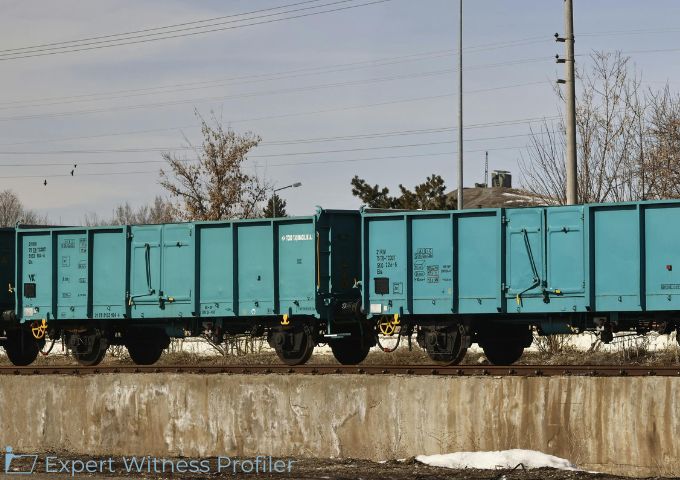
    Ascend’s claims arise from Rescar’s misidentification and delivery of a railcar containing resin to Ascend’s phenol unloading area at Ascend’s manufacturing facility located near Pensacola, Florida.

    Ascend Performance Materials Operations LLC  designated Aaron Imrie as a retained expert to opine on the misdelivery of the railcar and the impact of the mistake on Plaintiff’s equipment and plant operation. However, Defendant Rescar Companies filed a motion to strike Imrie from testifying.
    Chemical Engineering Expert Witness

    Aaron Imrie is a chemical engineer with over 30 years of technical and commercial experience working or consulting for petroleum and chemical processing businesses.

    Get the full story on challenges to Aaron Imrie’s expert opinions and testimony with an in-depth Challenge Study.

    Discussion by the Court

    A. Imrie is qualified to opine on railcar switching or unloading

    Defendant argued that Imrie’s testimony on railcar switching and unloading must be limited because, although otherwise credentialed, his “oral deposition testimony confirms he is unqualified to opine on railcar switching or unloading.”

    Imrie has extensive experience designing and maintaining operating procedures and systems for chemical plants that utilize railcars to deliver raw materials, like the facility and system at issue in this case. Imrie’s knowledge and general experience working in this industry, specifically assisting with operating procedures and production flow at similar plants, qualifies him to testify as an expert, even though he has not unloaded or switched a railcar himself.

    B. Imrie is qualified to give the limited opinions regarding YardMaster contained in his report

    Defendant makes the same argument with respect to Imrie’s testimony regarding YardMaster, a computer program—that Imrie is unqualified because he has never personally used YardMaster. However, the Court rejected this argument for the same reasons identified above. Imrie’s discussion of YardMaster in his report is limited to (1) a belief that the Parties previously agreed to implement it at the railyard in question and (2) the intent behind the agreement to implement the electronic system was to improve on the existing handwritten method of tracking railcars.

    Imrie has not offered any opinions regarding how YardMaster functions within the computer program itself. Moreover, Imrie’s experience qualifies him to testify about the opinions regarding YardMaster that are identified in his report.

    Held

    The Court denied Defendant’s motion to strike the testimony of Aaron Imrie.

    Key Takeaway

    An expert’s qualifications do not need to be as granularly specific as Defendant proposes. Rule 702 allows an expert to be qualified by means of knowledge, skill, experience, training or education. A lack of personal experience does not disqualify expert so long as there is another basis for his qualification.

    Case Details:

    Case Caption: Ascend Performance Materials Operations LLC V. Rescar Companies
    Docket Number: 4:24cv582
    Court Name: United States District Court, Texas Southern
    Order Date: March 16, 2026
  • Elevator Expert’s Twice-a-Year Inspection-Frequency Opinion Admitted

    Elevator Expert’s Twice-a-Year Inspection-Frequency Opinion Admitted

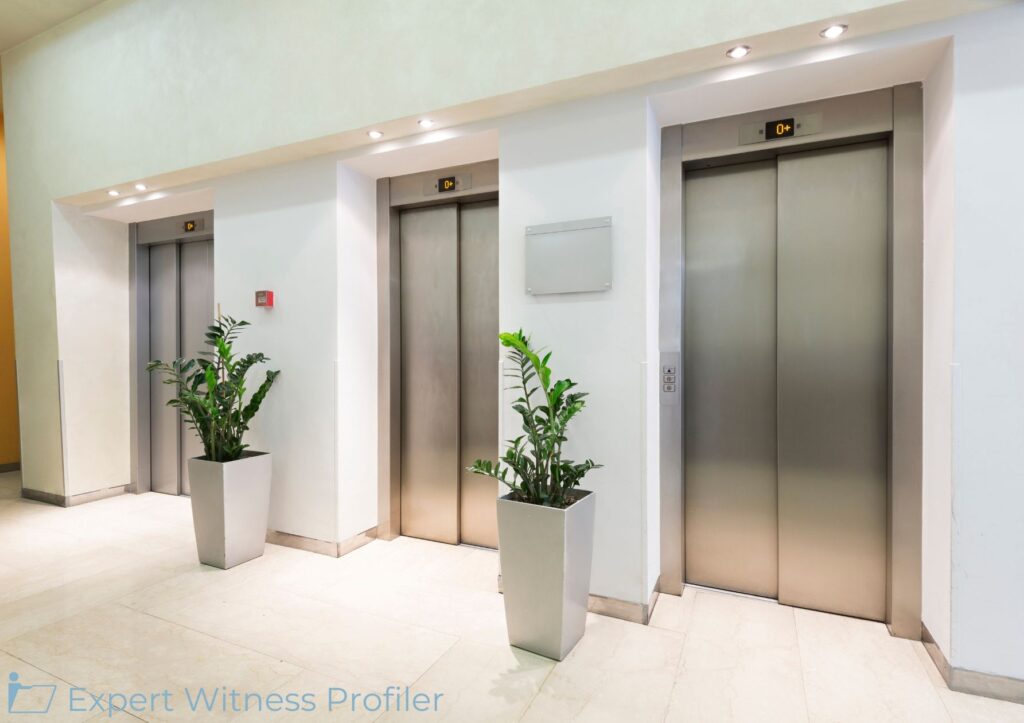
    Sebastian Symeonides got stuck in a malfunctioning elevator at the Trump International Hotel in Las Vegas for 20 minutes on Valentine’s Day 2022, which also happened to be his wedding day. So he sued Trump Ruffin Commercial LLC and its affiliated entities, along with Otis Elevator Corporation for negligence and products liability. His claims are based primarily on the opinions of his retained elevator-maintenance expert, John Koshak.

    John Koshak opined that PE3 malfunctioned because the hoistway ropes stretched, resulting in the lowering of the compensation sheave to the point where the switch tripped, which stopped the elevator.

    Koshak further concluded that Otis’ maintenance of PE3 was negligent for this incident to occur, as Otis employees must have failed to notice and fix the stretched ropes or the lowering of the compensation sheave before the incident occurred.

    Otis filed a motion to exclude Koshak’s report and testimony, arguing that it is not based in the scientific method, plus it’s speculative and irrelevant.

    Elevator and Escalator Expert Witness

    John Winfield Koshak has worked in the elevator industry for the last several decades. He belongs to the American Society of Mechanical Engineers (ASME) and the American National Standards Institute (ANSI), he is a certified elevator inspector, and he has earned various other accolades and accomplishments in the world of elevators.

    Want to know more about the challenges John Koshak has faced? Get the full details with our Challenge Study report.  

    Discussion by the Court

    A. Koshak’s opinion is not excludable for his failure to use the scientific method

    Otis contended that Koshak’s opinions must be excluded because they are not based on “good science” like “testable” conclusions or “peer-reviewed or published literature.”

    The Court held that Koshak’s opinions are not based on scientific experiments or published studies, but rather founded upon his more than four decades of specialized knowledge, training, and experiential practice in the elevator industry—primarily as an elevator adjuster, serviceman, consultant, and research engineer.

    B. Koshak’s Causation Opinion is not Based on Cherry-Picked Evidence

    Otis’ second criticism is that Koshak’s opinion that the compensation sheave caused Symeonides’s wedding-day incident is excludable because it is “founded on cherry-picked evidence that feeds into Koshak’s result-driven litigation opinion.”

    However, Koshak’s deposition testimony confirmed that they are also based on a review of Otis’ business records; attorney discussions, reports from emergency personnel, and building engineering incident reports.

    Therefore, the Court cannot conclude that Koshak’s opinions are based on cherry-picked evidence.

    C. Koshak’s Opinion that the Compensation Sheave Should have been Examined Twice a Year is based on Specialized Knowledge and Experience

    A key opinion of Koshak is that the defect in the compensation sheave would have been apparent to Otis had it sent in a competent, qualified mechanic in to perform a proper inspection of the elevator pit twice yearly.

    Otis contended that “[t]here is no foundation for” this opinion, which “is based only on his self-serving interpretation of the Code, maintenance records, and selected witness testimony,” making it neither relevant nor reliable.

    However, Koshak’s deposition testimony demonstrated that his twice-a-year inspection-frequency opinion is based on his extensive experience in elevator maintenance and specialized knowledge, not mere speculation.

    D. Koshak’s opinion that Otis did not Sufficiently Examine the Elevator is Based on Specialized Knowledge and Experience and is Relevant and Helpful

    Otis offered the same criticism of Koshak’s opinion that Otis’ preventative maintenance was insufficient: it’s pure speculation. Otis also attacked Koshak’s negligent-maintenance opinion as irrelevant and unhelpful.

    A review of Koshak’s deposition testimony revealed that this opinion was based on the conditions of the elevator and pit, which revealed extensive neglect; Koshak’s experienced belief that the inspections performed were too short to complete all required tasks; plus the absence of maintenance records that reflected that key tasks were performed.

    Moreover, the messy condition of the pit was just part of the foundation for Koshak’s opinion that insufficient maintenance had been performed.

    Koshak May not Offer Legal Opinions Unrelated to Negligence

    Otis argued that Koshak should not be permitted to offer opinions that “Otis was contractually obligated to inspect the pit at least twice a year” or that Otis’ maintenance records were “fraudulent.” The Court held that the Plaintiff has not established that Koshak is qualified to offer such legal opinions.

    Held

    The Court granted in part and denied in part Otis’ motion to exclude John Koshak’s testimony.

    Key Takeaway:

    Koshak will not be permitted to offer the legal conclusions that Otis’ actions constituted a breach of contract or fraud. The contract-breach and fraud opinions are irrelevant in this negligence case, and expert testimony that does not relate to any issue in the case is not relevant and, ergo, nonhelpful.

    Case Details:

    Case Caption: Symeonides V. Trump Ruffin Commercial LLC Et Al
    Docket Number: 2:23cv854
    Court Name: United States District Court, Nevada
    Order Date: May 28, 2025