Tag: Testimony

  • Expert Testimony Survives Daubert Challenge in Surgical Mesh Injury Case

    Expert Testimony Survives Daubert Challenge in Surgical Mesh Injury Case

    Connie Thacker (Plaintiff) received two surgical mesh devices, Prolift and TVT-Secur, as implants on May 8, 2009. Both devices were manufactured by Ethicon, Inc. and were designed to treat pelvic organ prolapse and stress urinary incontinence in women. Later, Thacker sued, alleging damages resulting from the use of these devices and identified Elizabeth Laposata as her “Case-Specific expert.”

    The Defendants moved to exclude Laposata’s testimony regarding general principles of tissue reactions to mesh, changes in the mesh after implantation, pain and suffering, and her opinion that Thacker experienced certain complications.

    Pathology Expert Witness

    Elizabeth Ann Laposata, M.D., F.C.A.P., F.A.S.C.P., is an expert in Anatomic and Clinical Pathology who has served as an expert witness in matters involving negligence, criminal law, and products liability. She has testified in cases before courts including the U.S. District Court for the Northern District of Georgia, the Southern District of West Virginia, and the Supreme Court of Rhode Island, with judges such as Joseph R. Goodwin, William S. Duffey Jr., and others presiding.

    Get the full story on challenges to Elizabeth Ann Laposata’s expert opinions and testimony with an in-depth Challenge Study.  

    Discussion by the Court

    Impermissible General Testimony

    The Defendants argued that Laposata’s general opinions exceeded her designation as a case-specific expert and included irrelevant discussion of mesh changes and symptoms not experienced by Thacker. The Court adopted the reasoning in Meade v. Ethicon, Inc., which held that such general background is permissible when used to explain the pathology underlying the Plaintiff’s symptoms and to support case-specific opinions. The Court found her opinions consistent with her role and admissible under Rule 702.

    Qualification to Opine on Mesh Changes

    Defendants claimed Laposata was unqualified to testify about mesh degradation, citing a 2014 deposition where she allegedly admitted she was not a mesh degradation expert. The Court again relied on Meade, finding that her training, work, and literature review qualified her to opine on degraded mesh in human tissue. It emphasized that an expert’s self-description in a prior case is not dispositive and noted her continued education since 2014.

    Qualification to Opine on Pain and Suffering

    Defendants argued she lacked qualifications to opine on Thacker’s pain and suffering because she does not treat live patients for pain. The Court disagreed, citing Meade, and held that a pathologist’s expertise includes determining causes of injuries and diseases, which encompasses opinions on pain arising from pathological findings.

    Reliability of Testimony Without a Control

    Defendants contended her testimony on Thacker’s complications was unreliable because she did not compare the Plaintiff’s tissue slides with control slides from asymptomatic patients. They relied on MDL precedent that found such methodology insufficient. The Court declined to follow that reasoning, holding that her direct examination of Thacker’s explanted mesh provided adequate validation under Daubert. The absence of a control went to the weight of her testimony, not its admissibility.

    Held

    Defendants’ motion  to exclude testimony from Plaintiff’s expert Elizabeth Laposata was denied.

    Key Takeaway

    The Court upheld Laposata’s case-specific testimony, finding her qualified to opine on mesh changes, pain, and complications, and ruling her methods reliable despite the lack of control slides.

    Please refer to the blogs previously published about this case:

    Urogynecology Expert Witness Testimony about inadequate risk disclosure admitted in medical device product liability action

    Obstetrics and Gynecology Expert’s Testimony on Mesh Porosity and Stiffness Admitted

    Urogynecology Expert’s Opinion on Continuum of Care Admitted

    Obstetrics and Gynecology Expert’s Opinion Regarding the Common Knowledge of Pelvic Surgeons Admitted

    Biomedical Engineering Expert’s Testimony on Product Warnings Admitted

    Biomaterials Expert Barred from Testifying About Corporate Knowledge and Intent

    Case Details

    Case Caption: Thacker v. Ethicon Inc.
    Docket Number: 5:20cv50
    Court Name: United States District Court for the Eastern District of Kentucky, Central Division
    Order Date August 11, 2025
  • Court Limits Testimony of Non-Retained Expert in BNSF Workplace Injury Case

    Court Limits Testimony of Non-Retained Expert in BNSF Workplace Injury Case

    In November 2022, while working as a BNSF intermodal equipment operator, Taylor A. Campbell fell several feet from a railcar ledge while attempting to lock a stuck inter-box connector (IBC). No one witnessed the incident. Campbell blamed the fall on BNSF’s failure to ensure a safe working environment.

    Fred Reinke, a BNSF manager, had developed and taught the training program Campbell allegedly underwent, but he did not personally train him. That role fell to BNSF employee Mark Knepel.

    In April 2025, BNSF disclosed Fred Reinke as a non-retained expert under Rule 26(a)(2)(C). He was expected to testify about Campbell’s training, adherence to safety rules, actions during the incident, and the condition of his equipment. BNSF based his testimony on his industry experience, supervisory role, and inspection of the equipment.

    Campbell moved to exclude the testimony, arguing that Fred Reinke relied on hearsay and lacked personal knowledge. BNSF maintained that Reinke’s testimony was admissible based on his expertise.

    Automotive Rail Operations Expert Witness

    Fred Reinke was a manager at BNSF. Reinke has experience developing and teaching the training program that Campbell purportedly participated in when he began his employment at BNSF. Reinke has also previously surveyed various BNSF intermodal employees over time to verify they have received consistent training.

    Want to know more about the challenges Fred Reinke has faced? Get the full details with our Challenge Study report.

    Discussion by the Court

    The Court applied Federal Rule of Evidence 702, which permits expert testimony if the witness is qualified and the testimony is relevant, reliable, and based on sufficient facts and methods. Quoting Daubert, the Court emphasized its gatekeeping role to ensure that expert opinions are not speculative and are grounded in sound methodology. The Court clarified that while cross-examination is the proper tool for challenging shaky but admissible testimony, it may exclude opinions based solely on the expert’s say-so or hearsay.

    Reinke’s Qualifications and Permissible Testimony

    The Court acknowledged that Campbell did not dispute Reinke’s qualifications to testify about the general structure and content of BNSF’s standardized training program. It found Reinke competent to describe how BNSF typically trained intermodal equipment operators and what the program expected trainers to convey. This fell within his specialized knowledge and direct experience.

    Objections to Reinke’s Testimony

    Campbell moved to exclude Reinke’s opinions on four specific points: (1) whether Knepel properly trained him, (2) what he was actually told or instructed to do, (3) whether he used excessive force that led to his fall, and (4) whether he violated BNSF safety rules. The Court found that Reinke had no personal knowledge of these matters and had formed his opinions based on case materials and a post-incident conversation with Knepel. Because Reinke was not present during the training or the fall, his testimony on these issues lacked a sufficient factual basis.

    Limits on Non-Retained Expert Testimony

    The Court emphasized that as a non-retained expert under Rule 26(a)(2)(C), Reinke could not offer opinions based on information obtained solely in anticipation of litigation. While experts may sometimes rely on hearsay if it is customary in their field, they must apply their expertise to form an independent judgment. The Court concluded that Reinke acted more as a conduit for testimonial hearsay than as an expert applying independent analysis.

    Conclusion and Ruling

    The Court held that Reinke could testify about the general content and structure of BNSF’s training program and how trainers typically implemented it. However, it barred him from opining on the specific training Campbell received, the circumstances of his fall, or any alleged violation of safety rules. The court clarified that only Knepel, as a lay witness with firsthand knowledge, could testify about what he personally observed during Campbell’s training.

    Held

    The Court granted in part and denied in part Plaintiff Campbell’s motion to exclude the testimony of Defendant BNSF Railway Company’s expert witness, Fred Reinke.

    Key Takeaway:

    A non-retained expert like Fred Reinke may testify about general company practices and standardized training based on personal experience, but cannot offer opinions about a specific employee’s training or conduct unless based on firsthand knowledge. Courts strictly limit non-retained experts to what they directly observed or knew prior to litigation.

    Case Details:

    Case Caption: Campbell V. Bnsf Railway Company
    Docket Number: 2:24cv608
    Court Name: United States District Court, Washington Western
    Order Date: July 7, 2025
  • Corrections Expert’s Opinions on the Strip Search Excluded

    Corrections Expert’s Opinions on the Strip Search Excluded

    The claims against La-Norma Ramirez and Washington County stem from Plaintiff Danyale Blackmore’s booking and release at the Washington County Jail.

    Blackmore alleged that her constitutional rights were violated when she was allegedly strip-searched at the Jail. Plaintiff retained expert, Everett K. Neely, to testify regarding the Washington County Jail policies and practices as they relate to booking (intake) procedures, record keeping and strip searches.

    However, the Defendant challenged Neely’s qualifications, questioned the reliability of his methods, and argued that his testimony was irrelevant and improperly intruded on the jury’s role to assess witness credibility and determine facts.

    Correctional Expert’s Testimony Excluded for Overstepping Legal Boundaries

    Corrections Policy and Procedures Expert Witness

    Everett K. Neely has over 30 years of correctional experience in Broward County, Florida. His areas of expertise include jail operations and management, booking (intake) procedures, development of policies and procedures, and training and supervision of correctional officers.

    Want to know more about the challenges Everett K. Neely has faced? Get the full details with our Challenge Study report.

    Discussion by the Court

    Neely’s anticipated testimony and opinions regarding jail practices and procedures are not relevant to the trial issue

    Neely’s expert report indicated that he was asked by Plaintiff to testify and opine on whether “proper records management practices [were] in place at [the jail] on January 6, 2020[.]” However, Plaintiff’s claims relating to the Washington County Jail’s policies and procedures have been dismissed with prejudice.

    Since Plaintiff’s only remaining claim is that Defendant conducted a strip search on Plaintiff in violation of Plaintiff’s constitutional rights, Neely’s anticipated testimony and opinions regarding jail practices and procedures do not make any fact of consequence at trial more or less probable. 

    Therefore, Neely is precluded from offering testimony and opinions regarding the jail practices and procedures at trial, including whether the staff at the Washington County Jail adhered to the jail’s policies and procedures.

    Neely’s anticipated testimony and opinions interpreting the jail’s policies and forms are unnecessary and unhelpful

    Basically, Neely’s expert report includes lengthy discussion and numerous opinions interpreting the language of the Washington County Jail’s policies and forms.

    The Court held that Neely may have a wealth of specialized experience and knowledge regarding jail policies and procedures, but such experience and knowledge is unnecessary to understand the purpose and meaning of the plain language of the jail’s policies and forms.

    Neely’s anticipated testimony and opinions impermissibly invade the exclusive roles of the judge and jury

    Neely’s expert report indicated that he was asked by Plaintiff to testify and opine on whether “Defendant performed a ‘strip search’ on Plaintiff” and whether “it was appropriate for three male deputies to watch [Plaintiff] undress and change into jail clothes.”

    Neely also opined on the anticipated testimony of witnesses, and the law relating to strip searches. However, the Court held that his anticipated testimony on these issues invaded the exclusive roles of the judge and jury.

    Held

    The Court granted the Defendant’s motion to exclude at trial the testimony of Plaintiff’s expert, Everett K. Neely.

    Key Takeaway:

    The Court excluded Everett K. Neely’s expert testimony because it was irrelevant to the central claim, unhelpful to the jury, and improperly intruded on the judge and jury’s roles. Moreover, his opinions on general jail practices and legal conclusions posed a risk of unfair prejudice and confusion, making them inadmissible at trial.

    Please refer to the blog previously published about this case:
    Mental Health Expert’s PTSD Diagnosis Was Deemed Reliable

    Case Details:

    Case Caption: Blackmore V. Ramirez
    Docket Number: 4:21cv26
    Court Name: United States District Court, Utah
    Order Date: May 23, 2025
  • Epidemiology Expert’s Testimony With Regard to the Anti-Vaccine Movement Excluded

    Epidemiology Expert’s Testimony With Regard to the Anti-Vaccine Movement Excluded

    Board of Education of the City of St. Louis, through Superintendent Kelvin Adams and Chief Human Resources Officer Charles Burton, imposed a vaccination mandate on its employees. Despite inviting requests for religious exemptions (and received nearly 200 of them), it denied every single one of them. As a result, many of the employees brought this suit against the Board, Adams, and Burton.

    Defendants retained Dr. Daniel Salmon to provide opinions in six general areas: (1) the threat of COVID-19 in October 2021, (2) the “[s]afety and [e]fficacy of COVID-19 vaccines,” (3) institutions’ COVID-19 vaccine mandates, (4) the “[i]mpact of medical and religious exemption requests,” (5) “the anti-vaccine movement’s impact on mandatory vaccine policies,” and (6) the connection between COVID-19 vaccines and stem cells. Plaintiffs filed a motion to exclude the proposed testimony of Salmon.

    Epidemiology Expert Witness

    Daniel Salmon works as a professor of global disease epidemiology and control in the Department of International Health at the Johns Hopkins University Bloomberg School of Public Health.

    Get the full story on challenges to Daniel Salmon’s expert opinions and testimony with an in-depth Challenge Study.  

    Discussion by the Court

    1. Methodology

    The Plaintiffs argued Salmon lacked knowledge about the specific parties in the case, noting he reviewed only three exhibits and didn’t know the number of exemption requests.

    The Court held that these objections did not warrant dismissing Salmon’s opinions wholesale. 

    2. Relevance

    Plaintiffs argued that Salmon’s opinions lacked relevancy because they did not relate to Defendants’ stated reasons for denying Plaintiffs’ religious exemption requests. After all, the only reason that Defendants gave for denying Plaintiffs’ exemption requests was the need to “balance the constitutional obligation to provide a free public education” to Missouri youth against the right to the free exercise of religion. 

    Plaintiffs thus argued that any other attempted justification for the denials bears no relevance to the case because “[g]overnment ‘justification[s]’ for interfering with First Amendment rights ‘must be genuine, not hypothesized or invented post hoc in response to litigation.’”

    The letters denying the religious-exemption requests did not explicitly mention the Board’s interest in protecting students and staff from COVID-19. But the challenged vaccination policy itself did. Basically, the Board of Education adopted this policy to safeguard the health and well-being of employees and their families.

    Therefore, the post-hoc-in-response-to-litigation doctrine did not render Salmon’s opinions irrelevant.

    3. Assistance to the Trier of Fact

    Plaintiffs argued that Salmon’s opinions “expressed factual determinations that a jury is readily capable of making without expert assistance” and that his opinions “are premised on publicly available information regarding the COVID-19 pandemic.” 

    However, the Court rejected Plaintiffs’ argument on this ground as undeveloped.

    4. Relevance and Unfair Prejudice

    Plaintiffs argued that Salmon’s testimony would be “unfairly prejudicial” because it would associate Plaintiffs “with anti-vaccine movements and statements about stem cells.” Salmon admitted that he “[doesn’t] know anything about the Plaintiffs in this case.” 

    The Court agreed with Plaintiffs that Salmon’s opinions about the anti-vaccine movement’s impact on mandatory vaccine policies would not help the jury. After all, Salmon can offer nothing of value on the question of whether Plaintiffs’ objections were “religious in nature.”

    So although Salmon might have knowledge about anti-vaccine movements, he does not (and cannot) connect any Plaintiff to any anti-vaccine movement. 

    Plaintiffs alleged in their complaint that their “religious beliefs prevented them from receiving the vaccination due to their use of fetal stem cells taken from aborted fetuses.” 

    As for Salmon’s opinions about stem cells and stem cells’ connection to COVID-19 vaccines, Salmon did not (and could not) opine on the extent to which the stem-cell issue influenced Plaintiffs’ objections to COVID-19 vaccination since he didn’t know anything about Plaintiffs.

    5. Legal Conclusions

    Salmon’s report answers this question: “Did institutions have a responsibility to evaluate non-medical exemption requests rather than simply rubber-stamping requests?” Salmon did not explain what he meant by “responsibility.”

    To the extent that Salmon attempted to characterize “responsibility” as legal obligation, the Court excluded Salmon’s testimony as an improper legal opinion.

    And to the extent that Salmon attempted to characterize “responsibility” in a different way (e.g., as moral or ethical responsibility), Defendants have failed to establish that Salmon has expertise to render opinions in that domain, and they have also failed to identify any reason why any opinions about moral or ethical responsibilities—as opposed to legal obligations—would have any relevance to the issues in this case.

    Therefore, the Court excluded Salmon’s testimony to the extent that Salmon sought to testify to institutional responsibility of evaluating non-medical exemption requests.

    6. Expertise

    Plaintiffs argued, once again, that Salmon “did not apply any specialized expertise to the evidence.” The Court disagreed. Salmon’s expert report showed that he largely reached his conclusions based on his assessment, interpretation, and synthesis of numerous scientific studies related to vaccinology and epidemiology.

    And Plaintiffs have failed to point to any specific opinions that they believe Salmon reached without his expertise. The Court rejects Plaintiffs’ generic, undeveloped argument on this ground.

    Held

    The Court granted in part and denied in part the Plaintiffs’ motion to exclude the testimony of Daniel Salmon.

    Key Takeaway:

    Salmon does not (and cannot) opine on the extent to which the stem-cell issue influenced Plaintiffs’ objections to COVID-19 vaccination because objective facts about the vaccines’ connections to stem cells have no bearing on whether Plaintiffs objected to vaccination based on their religious beliefs, which “need not be acceptable, logical, consistent, or comprehensible to others” to merit protection under the law.

    Case Details:

    Case Caption: Brandon V. Board of Education of City of ST. Louis
    Docket Number: 4:22 cv 00635
    Court Name: United States District Court for the Eastern District of Missouri, Eastern Division
    Order Date: May 8, 2025
  • Psychology Expert’s Testimony on the Grave Risk of Harm Admitted

    Psychology Expert’s Testimony on the Grave Risk of Harm Admitted

    Petitioner brought this action under the 1980 Hague Convention and the International Child Abduction Remedies Act, seeking the return of his minor child, S.A.M., to Switzerland. He alleged that Respondent wrongfully removed the child to Missouri in April 2025 without his consent and was unlawfully retaining custody.

    Asserting joint custody rights, Petitioner identified Switzerland as the child’s habitual residence and requested repatriation.

    Respondent raised affirmative defenses, claiming that the child’s return would pose a grave risk of physical or psychological harm or create an intolerable situation. She also invoked the Human Rights Exception of Article 20 of the Convention, arguing that the repatriation would violate the human rights and fundamental freedoms.

    Petitioner filed a motion to exclude the testimony of expert David Finn and to block a medical examination of the child.

    Psychology Expert Witness

    David Finn is a doctor of psychology and licensed clinical psychologist with a practice focused on forensic assessment in good standing in the State of Illinois of the United States of America

    Want to know more about the challenges David Finn has faced? Get the full details with our Challenge Study report.  

    Discussion by the Court

    Petitioner moved to exclude David Finn’s testimony under Daubert v. Merrell Dow Pharms., Inc. and Federal Rules of Evidence 702, 401, and 403, because his opinions were unreliable, cumulative, based on selectively provided documents and unsupported by sufficient testing.

    Respondent opposed the motion to exclude. It was clear that Petitioner has failed to demonstrate Respondent acted outside her authority as the custodial parent in obtaining the examination of the minor child by Finn. Finn also reviewed the reports from the Department of Children and Family Services.

    Finn evaluated S.A.M. and reviewed all documents regarding S.A.M. Finding that Finn’s opinions were based on a sufficient factual foundation and methodological approach, the Court ruled his testimony admissible. While Petitioner’s concerns could impact credibility, they did not warrant exclusion and would be properly addressed through cross-examination.

    Held

    The Court denied the Petitioner’s motion to exclude the testimony of David Finn.

    Key Takeaway:

    The Court found Finn’s testimony admissible, supported by interviews and a review of documents, including Department of Children and Family Services reports.

    It held that the objections against Finn’s testimony concerned credibility, not admissibility, and could be addressed on cross-examination. Expert testimony, it emphasized, should only be excluded if so unsupported that it offers no help to the factfinder.

    Case Details:

    Case Caption: Muehlbauer v. Muehlbauer
    Docket Number: 2:24cv47
    Court Name: United States District Court for the Eastern District of Missouri, Northern Division
    Order Date: May 14, 2025
  • Appraisal and Valuation Expert is Qualified to Testify about the Value of the Porsche

    Appraisal and Valuation Expert is Qualified to Testify about the Value of the Porsche

    Joseph Falasco bought a non-functioning 1974 Porsche 911S for $10,000 and put a significant amount of time and money into restoring it, including the installation of a new engine and transmission.

    Falasco later filed a claim regarding the non-collision fire that destroyed Plaintiff’s 1974 Porsche 911S (the “1974 Porsche”) and ended up suing USAA for breach of insurance contract, bad faith, and unfair claims
    settlement practices.

    Falasco filed a motion to exclude the testimony of two of USAA’s experts— Roy Da Silva and Mark McGillivray.

    Insurance Expert Witness

    Mark A McGillivray holds a bachelor’s degree in business administration with a concentration in Finance from the University of Puget Sound and a master’s degree in Business Administration with a concentration in Marketing from the University of Illinois at Chicago.

    He also holds the Chartered Property Casualty Underwriter (CPCU) designation from the American Institute for CPCU and the Insurance Institute of America (The Institutes).

    McGillivray has over 41 years of experience in the Insurance Industry, primarily in claims roles. He held various roles at Allstate Insurance Company for over 35 years, including Senior Vice President in claims.

    Since 2019, he has worked as a consultant in the industry, participated in expert networks, and been retained as an insurance expert. He is also on the Board of Directors of Hancock Claim Consultants.

    Get the full story on challenges to Mark A McGillivray’s expert opinions and testimony with an in-depth Challenge Study.  

    Appraisal and Valuation Expert Witness

    Roy Da Silva is an experienced appraiser who specializes in classic cars. He founded and developed Source One Services to provide specialized services
    to the collector car markets.

    Want to know more about the challenges Roy Da Silva has faced? Get the full details with our Challenge Study report.  

    Discussion by the Court

    Motion to exclude the Expert Testimony of Mark McGillivray

    Falasco filed a motion to exclude the expert testimony of Mark McGillivray. The Court ruled that this motion is denied without prejudice as moot.

    It appeared that USAA intended to offer McGillivray’s testimony solely in support of its defense on Falasco’s bad faith and unfair claims settlement practices claims.

    Since the Court had already granted summary judgment on those claims, McGillivray’s testimony was no longer relevant to the remaining issues in the case.

    Motion to exclude the Expert Testimony of Roy Da Silva

    Falasco argued for the exclusion of Roy Da Silva’s testimony, implying it would not offer adequate assistance to the trier of fact.

    The Court held that Da Silva is qualified to testify about the value of Falasco’s Porsche. In other words, Da Silva’s expertise will aid the jury due to the complexity of the classic car market. 

    While Falasco may dispute Da Silva’s valuation or methodology, the Court held that such challenges concerned the weight and credibility of his testimony. These concerns could be addressed through “vigorous cross-examination and presentation of contrary evidence” at trial, allowing the jury to evaluate its significance.

    Held

    • The Court denied without prejudice as moot the motion to exclude the testimony of Mark McGillivray.
    • The Court denied Falasco’s motion to exclude the testimony of Roy Da Silva.

    Key Takwaway:

    Classic car appraiser Roy Da Silva’s testimony was admitted because his expertise was essential for assisting the jury in understanding the complex classic car market.

    Case Details:

    Case Caption: Falasco v. USAA Cas. Ins. Co
    Docket Number: 4:23cv01054
    Court Name: United States District Court for the Eastern District of Arkansas, Central Division
    Order Date: May 2, 2025
  • Accounting Expert’s Opinion Concerning Labor Costs Excluded

    Accounting Expert’s Opinion Concerning Labor Costs Excluded

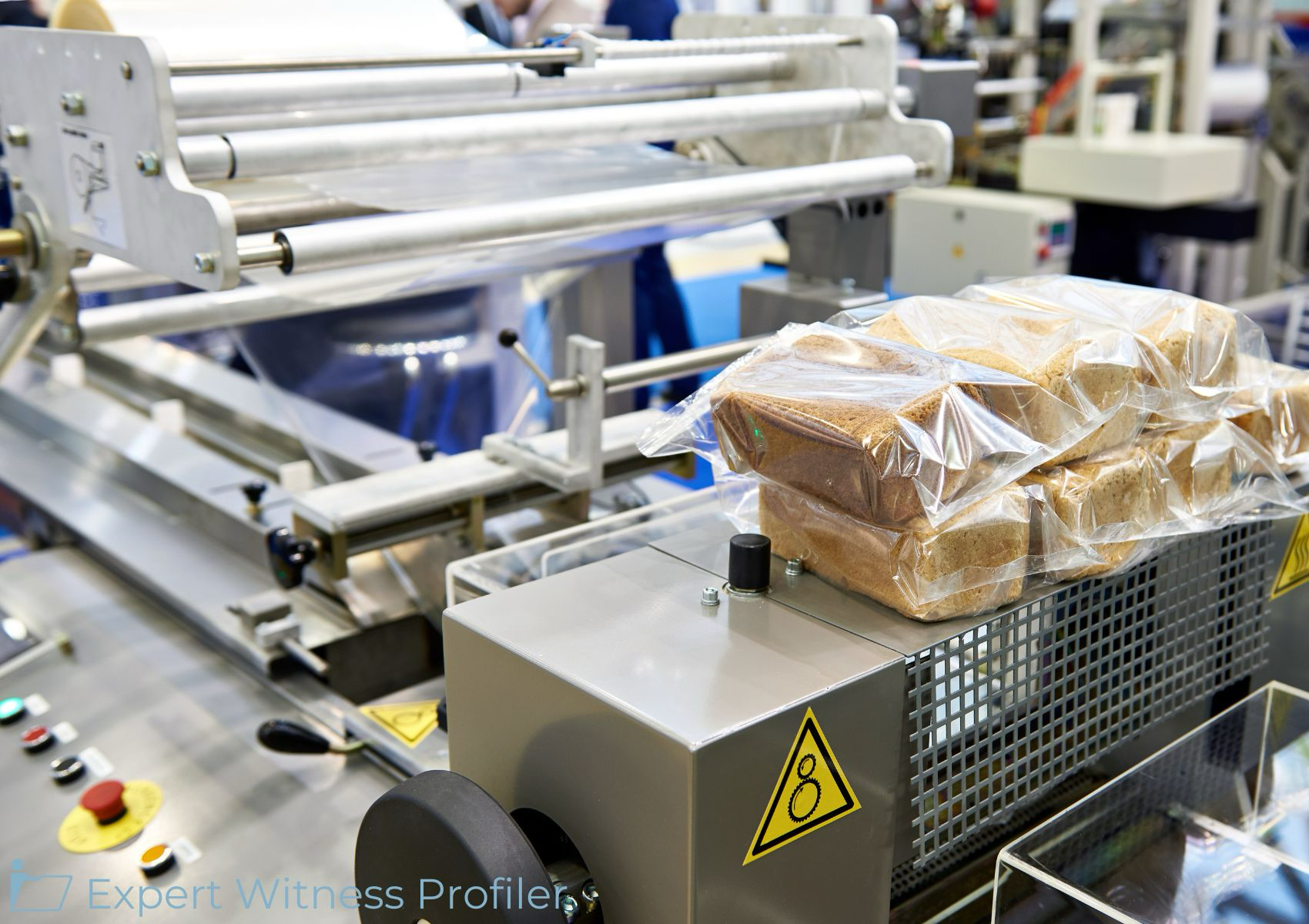
    This case arises out of Delta’s delayed donut wrapping system. In late 2021, Bon Appetit Danish, Inc. and Bon Appetit Specialty Snacks, LLC (collectively, “Bon Appetit”) and Delta Systems and Automation, LLC’s (“Delta”) entered into a set of three contracts for Delta to manufacture packaging systems for Bon Appetit’s baked goods.

    But the donut packaging system failed to launch. After further testing failed to resolve the performance issue, Bon Appetit terminated all three contacts on April 14, 2023.

    Bon Appetit sued Delta over a contract dispute involving Overwrapping Systems, claiming $6,214,505 in labor costs as direct damages resulting from Delta’s alleged breach. Bon Appetit’s expert, Joseph Wheat, testified that these labor costs were directly caused by Delta’s failure to deliver properly functioning systems.

    Delta countered, arguing that the labor costs were consequential damages, barred by the Limitation of Liability provision, because they stemmed from Bon Appetit’s internal plan to use the Overwrapping Systems.

    Delta moved to exclude Wheat’s testimony, asserting that the labor costs were derivative losses arising from circumstances that are particular to the contract or to the parties.

    Additionally, Bon Appetit sought to introduce Lyle Rogalla as an expert to testify about the norms, customs, and practices, of the baked goods overwrapping industry. 

    Delta opposed, arguing that Rogalla was unqualified to testify specifically about donut overwrapping systems and that his opinions were unreliable under Rule 702.

    Accounting Expert Witness

    Joseph Wheat, CPA/ABV, CFF, is a Senior Vice President at J.S. Held, a global consulting firm specializing in a wide variety of forensic analysis.

    A Certified Public Accountant licensed to practice in California since 1993, Wheat has over 20 years of experience testifying as an expert witness on economic damages issues in both federal and state court matters.

    Wheat has performed numerous business valuation related to marital
    dissolutions, tax and estate matters and partnership disputes.

    Get the full story on challenges to Joseph Wheat’s expert opinions and testimony with an in-depth Challenge Study.  

    Packaging Expert Witness

    Lyle Rogalla has led the development of advanced packaging and food processing equipment, delivering innovative, high-value solutions that optimize production processes and reduce costs for clients ranging from small businesses to Fortune 100 companies.

    His portfolio is enriched by 29 patents, encompassing both utility and design, for industrial and commercial applications. He has collaborated with over 100 machine manufacturers to deliver extensive automation and equipment solutions tailored to the clients’ specific needs.

    Want to know more about the challenges Lyle Rogalla has faced? Get the full details with our Challenge Study report.

    Discussion by the Court

    A. Motion to Exclude Damages Opinions of Joseph Wheat

    The Court considered Delta’s motion to exclude the opinion of Bon Appetit’s expert, Wheat, who attributed $6,214,505 in labor costs to Delta’s alleged breach of contract.

    The core issue was whether these costs were direct damages, which may be recoverable, or consequential damages, barred by the the Limitation of Liability provision. Direct damages (also called general damages) flow “directly and necessarily from a breach of contract, or that are a natural result of a breach.”

    Consequential damages (also called special damages) are “secondary or derivative losses arising from circumstances that are particular to the contract or to the parties.”

    In this case, Bon Appetit’s labor costs are considered consequential damages since they stem from Bon Appetit’s unique plan to use the Overwrapping Systems to streamline production and eliminate certain employee positions, a point Bon Appetit will argue through Wheat’s evidence of the system’s added efficiency.

    The Court excluded Wheat’s opinion concerning Bon Appetit’s labor costs pertaining to consequential damages.

    B. Motion to Exclude Expert Opinions of Lyle Rogalla

    Delta moved to exclude the opinion of Bon Appetit’s expert, Rogalla, arguing that he lacked the necessary qualifications to opine on donut overwrapping systems and that his methodology was unreliable under Daubert and Rule 702 due to an alleged lack of supporting facts or data.

    The Court disagreed. It found that Rogalla was qualified to testify based on his decades of experience with “solutions for complex automation and packaging needs . . . with emphasis in the food industry,” including “packaging and process automation, the preparation of specifications for the machines and the goods handled by the machines, testing, and modifying the machines and specifications to address both process quality and efficiency.”

    Insofar as the Donut System diverged from Rogalla’s experience with other food packaging systems, the Court held that it concerned the weight of his testimony, not its admissibility. 

    The Court also found that Rogalla had relied on a sufficient factual basis, including the Complaint, contract documents, Delta’s website, and federal regulations. Challenges to the depth or nature of that evidence, the Court concluded, were issues of credibility and weight, appropriate for cross-examination, not grounds for exclusion.

    Held

    • The Court granted Delta’s Daubert motion to exclude Joseph Wheat’s opinions.
    • The Court denied Delta’s Daubert motion to exclude the testimony of Lyle Rogalla.

    Key Takeaways:

    • Not all foreseeable damages are direct damages, as consequential damages may be “foreseeable and proximately caused by the breach of a contract.” 
    • An expert might draw a conclusion from a set of observations based on extensive and specialized experience.

    Case Details:

    Case Caption: Bon Appetit Danish, Inc. v. Delta Sys. & Automation LLC
    Docket Number: 2:23cv04305
    Court Name: United States District Court for the Central District of California
    Order Date: March 17, 2025
  • Urology Expert’s Opinion on Reusing Single-Use Catheters Admitted

    Urology Expert’s Opinion on Reusing Single-Use Catheters Admitted

    Plaintiffs are the wheelchair-bound current or former inmates of the New York State Department of Corrections and Community Supervision (“DOCCS”) who must self-catheterize themselves multiple times per day in order to urinate. Plaintiffs claimed that they experienced violation of their federal civil rights, and discrimination on the basis of their disabilities.

    Urologist Ezekiel Young, M.D., opined that the DOCCS’ policy of requiring inmates to re-use single-use catheters fell well-below the accepted standard of care.

    However, DOCCS relied entirely on the expert report of Gabriel Haas, M.D. According to Haas, “the United Kingdom National Health Service Trust Guidelines currently state that catheters may be re-used up to a week and provide instruction how to re-use catheters.”

    Plaintiff contended that the Court should preclude Haas’s opinion as unreliable, under Daubert and Rule 702.

    Urology Expert Witness

    Gabriel Haas, M.D., is a physician licensed to practice medicine in the state of New York. He is board certified by the American Board of Urology.

    Haas is employed as Professor and Chairman of the Department of Urology of SUNY Upstate Medical University in Syracuse, New York. He has held this position for 10 years.

    He has worked as a clinical urologist for 15 years.

    Want to know more about the challenges Gabriel Haas has faced? Get the full details with our Challenge Study report.  

    Discussion by the Court

    Plaintiffs contended that they were entitled to summary judgment since the opinion of their medical expert, Young, that re-using single use catheters violated the standard of care, is essentially undisputed inasmuch as the contrary opinion of Haas is unreliable.

    The Court found that there is a triable issue of fact precluding summary judgment, due to the disagreement between the opinions of Young and Haas regarding the propriety of re-using single-use catheters. In particular, Young opined that such catheters should never be re-used, while Haas indicated that they may safely be re-used.

    Plaintiffs contended that Haas’ entire opinion should be precluded as unreliable, since it is partially based on a mistaken reading of one of its supporting documents, “the United Kingdom National Health Service Trust Guidelines.”

    However, the Court found that Plaintiffs’ objection goes to the weight, and not the admissibility, of Haas’ report.

    Contrary to both Young’s opinion that it was clearly improper to require Plaintiffs’ to re-use single use catheters and Plaintiffs’ assertion that such re-use caused their urinary tract infections, Haas indicated that such catheters may be safely re-used, and that urinary tract infections are not necessarily caused by such re-use. Moreover, neither Young’s expert report nor his supporting declaration opined that Plaintiffs were given and/or injured by improperly-sized catheters.

    The Court found that Plaintiffs’ motion for partial summary judgment must be denied since there is a triable issue of fact concerning the standard of care.

    Held

    The Court denied the Plaintiff’s request to preclude Gabriel Haas’ expert report.

    Key Takeaway:

    The Court held that Haas’ overall opinion is not unreliable just because it is partially based on a reading of one of its supporting documents, “the United Kingdom National Health Service Trust Guidelines.” Haas indicated that single use catheters may be safely re-used, and that urinary tract infections are not necessarily caused by such re-use. 

    Case Details:

    Case Caption: Sharif v. Fischer
    Docket Number: 6:05cv6504
    Court Name: United States District Court, New York Western
    Order Date: April 28, 2025
  • Economic Damages Expert’s Reliance on Medical Opinions is Appropriate

    Economic Damages Expert’s Reliance on Medical Opinions is Appropriate

    This case stems from a vehicle collision that happened in July 2022 in Gallup, New Mexico.

    The Plaintiff, Jimmy Woodall claimed the crash caused severe and disabling injuries, including physical and emotional pain, permanent impairment, and reduced enjoyment of life. He sought compensation for medical costs, lost wages, and long-term care.

    Woodall retained an expert, Mr. Justin Blok, MBA, CFE, CLP, to provide an opinion regarding Woodall’s lost earning potential, the present value of his life care plan, and other pecuniary matters. Blok relied on Todd Capielano‘s life care plan in determining Woodall’s alternative earnings and damages. Capielano, in turn, relied on the opinions of Woodall’s treating physicians, to form his own assessment of the costs Woodall was likely to face. Defendants challenged Blok’s qualifications, reasoning, and methodology, as well as his reliance on the opinions of Woodall’s treating physicians vis a vis Capielano’s life care plan.

    Economic Damages Expert Witness

    Justin Blok is a Certified Licensing Professional and Certified Fraud Examiner. He serves as a Partner at Whitley Penn LLP. He is also a Managing Director in its Forensic, Litigation & Valuation Services practice.

    Blok specializes in economic, accounting, valuation, and strategy issues related to intellectual property, complex commercial disputes, and general business transactions. He has testified in private arbitration, Federal and State Courts.

    Blok is consistently named to the IAM Patent 1000 list of top patent experts. He has lectured on damages topics at several universities. These include the University of Houston Law Center, Baylor University School of Law, and South Texas College of Law.

    Want to know more about the challenges Justin Blok has faced? Get the full details with our Challenge Study report.  

    Discussion by the Court

    Qualifications

    Blok has an undergraduate degree in risk management and finance, a master’s degree in business administration, and a master’s degree in accounting—all financial and business-related credentials—and he has been called as an expert to discuss financial matters.

    While Defendants argued that Blok is not a physician and is not qualified to diagnose Woodall’s conditions, the Court held that Blok will not opine on whether Woodall can work, nor will he opine on the causation of Woodall’s injuries. He therefore does not need to have a medical background. To the extent his valuations may rely on medical opinions regarding the work Woodall is capable of doing, such reliance is appropriate and typical for economists.

    Methodology

    The Defendants claimed that Blok’s projections were flawed because they included the full financial ramifications of Woodall’s medical conditions without accounting for the fact that Defendants can be held liable only for the portion attributable to the vehicle collision.

    The Court disagreed. It explained that these kinds of critiques go to the weight of the testimony, not its admissibility. Questions about the assumptions underlying an expert’s economic projections are best addressed through cross-examination, not exclusion.

    As for the concern about jury confusion, the Court noted that jurors would already be tasked with deciding how much of the Plaintiff’s current condition was caused by the collision. That same reasoning would naturally extend to financial damages.

    Finally, the Court emphasized that if Blok performed his calculations assuming a certain fraction of the expenses were attributable to Defendants, he might have overstepped his role and strayed into medical territory. By presenting neutral calculations and leaving the apportionment to the jury, Blok stayed within proper bounds. The Court concluded that the Defendants could challenge his assumptions during cross-examination and denied the motion to exclude his testimony.

    Held

    The Court denied the Defendants’ motion to exclude the opinions of Justin Blok.

    Key Takeaway:

    The alleged shortcomings in the underlying medical opinions used to create the life care plan and, in turn, the economic projections by Blok are properly addressed on cross-examination, not by excluding Block as an expert entirely.

    Please refer to the blog previously published about this case:

    Life Care Planning Expert’s Testimony on Future Medical Care Needs Admitted

    Case Details:

    Case Caption: Woodall v. W. Express, Inc.
    Docket Number:
    1:23cv862
    Court Name: United States District Court for the District of New Mexico
    Order Date: April 25, 2025
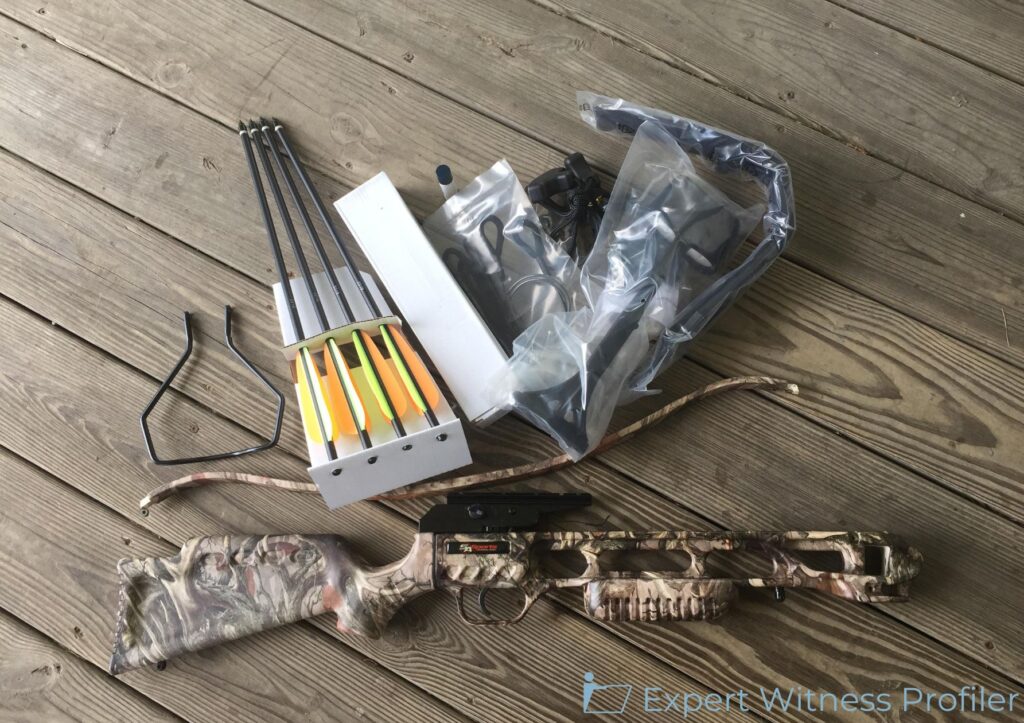
  • Engineering Expert Qualified to Opine on Crossbow Malfunction

    Engineering Expert Qualified to Opine on Crossbow Malfunction

    Scott and Melanie Campbell (“Plaintiffs”) brought this case against Ravin Crossbows, LLC and Velocity Outdoor Inc. (collectively, “Defendants”). This case arises from personal injuries sustained by Plaintiff Scott Campbell (“Scott”), an experienced hunter.

    On November 9, 2022, Scott was hunting from a ladder stand using a Ravin 10 Crossbow, manufactured by Ravin Crossbows. He attempted to shoot a deer, but the arrow fell a few feet away, and he fell from the stand, sustaining injuries. Scott had successfully used this crossbow multiple times before and understood its instructions and warnings.

    Scott’s injuries included a displaced intraarticular fracture of the distal radius with significant comminution of the dorsal and volar cortex. He also had signs of post-traumatic acute carpal tunnel syndrome.

    Plaintiffs’ expert, Craig Clauser, an engineering expert, opined that the incident was a result of a derailment of a bowstring on the crossbow. In other words, Clauser believed that the accident happened because the bowstring came out of the groove at the end of the cam. Plaintiffs’ theory of liability hinges upon Clauser’s expert testimony.

    Defendants filed a motion to exclude the testimony of Craig Clauser under Daubert, challenging his qualifications and the reliability of his opinions.

    Engineering Expert Witness

    Craig David Clauser is a metallurgist and materials engineer by training. As part of his work experience, Clauser was responsible for employee safety and training and failure analysis investigation which is relevant to the instant matter. Clauser is also a member of various professional societies and has contributed to the ASM Handbook on Failure Analysis and Prevention.

    Want to know more about the challenges Craig Clauser has faced? Get the full details with our Challenge Study report.  

    Discussion by the Court

    A. Qualifications

    Defendants argued that Clauser should be excluded because he lacks the practical experience within the hunting industry necessary to make a reliable opinion about liability and causation. The Court disagreed.

    Clauser, after all, possesses skill or knowledge greater than the average layman in determining engineering issues. He need not have academic training in hunting to have an expert opinion on matters related to engineering.

    Defendants may prefer Clauser to be an expert in hunting and crossbows, but the law does not require that.

    B. Reasoning and Methodology

    1. Causation and Liability

    Defendants argued that Craig Clauser’s opinions lacked sound methodology, were speculative, and failed to meet reliability requirements, specifically pointing to his lack of mathematical calculations, drawings, or diagrams to test the reliability of his reasonable alternative designs.

    The Court found that Clauser’s opinions on causation and liability were reliable. His conclusions were based on a detailed, independent review of the physical crossbow and evidence like the broken arrow shaft as well as the “witness marks” left on the shaft of the crossbow as the arrow traveled up the crossbow, which the Court deemed a generally accepted and reliable method in engineering analysis, supported by “good grounds” and not mere speculation.

    2. Proposed Alternative Designs

    Defendants contended that Craig Clauser’s proposed alternative designs were speculative and unreliable because he did not conduct testing, calculations, or provide a concrete design for them, arguing this lack of rigorous methodology made his opinions inadmissible.

    The Court evaluated the reliability of each proposed design separately. Regarding the cam with increased groove depth, the Court held that this opinion was reliable. The Court determined it was based on Clauser’s engineering expertise and detailed analysis of the physical crossbow involved in the incident, including microscopic examination and analysis of witness marks, which provided “sound reasoning and good faith grounds” despite the absence of testing on a modified component.

    In contrast, the Court held that the opinion regarding cam shields or removable guards was unreliable. This proposal was deemed speculative by the Court, lacking any basis in testing, analysis of feasibility or potential dangers or evidence of existing designs on the market. A cam shield might have helped reduce the risk of injury but there is nothing to show that it would be a reasonable alternative design to the Ravin 10.

    C. Assistance to the Trier of Fact

    Defendants argued that Craig Clauser’s testimony should be excluded because he performed no testing or analysis to determine the root cause of the incident and failed to test his alternative designs, contending that this lack of empirical work meant his testimony would not provide relevant information to assist the jury.

    The Court found that Clauser’s opinions will assist the trier of fact.

    The Court’s reasoning was that Clauser’s testimony pertains directly to the alleged injuries Scott Campbell suffered, the potential causation, and the issue of liability. His specialized knowledge is relevant to determining the nature and extent of Scott’s alleged injuries in relation to the crossbow incident.

    Held

    The Court granted in part and denied in part Defendants’ motion to limit the testimony of expert Craig Clauser.

    Key Takeaway:

    A cam shield might have helped reduce the risk of injury but there is nothing to show that it would be a reasonable alternative design to the Ravin 10. Additionally, there is no evidence that a cam shield exists on any current or past crossbow on the market, and Clauser did not prepare or present an actual design with a cam shield.

    Thus, it is apparent to the Court that Clauser’s opinion that a cam shield or removable guard is a reasonable alternative design lacks the requisite reliability for it to be admissible under Daubert.

    Case Details

    Case Caption: Campbell v. Ravin Crossbows, LLC
    Docket Number: 3:23cv1862 
    Court Name: United States District Court for the District of New Jersey
    Order Date: April 29, 2025