A district judge in New York held that the report of a intellectual property expert witness spoke to straightforward areas of the law where juries did not require assistance.
Plaintiff Medical Depot, Inc. and Defendant Med Way US, Inc. are both manufacturers of medical products, including specially designed medical air mattresses. Medical Depot, Inc. began selling various air mattress models using the descriptors “Med-Aire” and “Med Aire” in 2007. Plaintiff contended that its use of the terms “Med-Aire” and “Med Aire” since 2007 was substantial enough to merit trademark protections, while Defendant argued the opposite.
Defendant alleged that it began selling air mattress medical products using the name “MEDAIR” as early as April 1, 2019. On December 10, 2019, Defendant filed United States Trademark Application Ser. No. 88/721,827, which matured into Registration No. 6,116,976, which covered use of the MEDAIR mark for International Class 10 medical products, namely “air mattresses with pump, for medical purposes.”
Plaintiff argued that Defendant’s use of the MEDAIR mark infringed on Plaintiff’s unregistered “Med-Aire” mark, which Plaintiff argues had gained trademark protection despite its lack of registration with the USPTO. Plaintiff also brought claims for unfair competition and the cancellation of Registration No. 6,116,976.
Motion to exclude
During the course of this action, Plaintiff retained Jeremy N. Sheff to produce the Sheff Report and to provide testimony in regard to the subject matter of the Sheff Report if called to do so during pretrial proceedings.
The Sheff Report purported to opine as to three issues:
The first is whether [Medical Depot]’s marketing and sales of products under its claimed MED-AIRE trademark establish “use in commerce” under the Lanham Act sufficient to establish priority of right as of July 13, 2018. This is the date currently claimed by Defendant Med Way US, Inc. (“Med Way”) as the date of its first use in commerce of the mark MEDAIR, used on or in connection with the goods and services “air mattresses with pump, for medical purposes” in International Class 10, which is the subject of United States Patent and Trademark Office (USPTO) Trademark Registration No. 6,116,976, Serial No. 88/721,827 (“the ‘976 Registration”).
The second is whether the use by [Medical Depot] of its claimed MED-AIRE trademark on its products and associated sales materials constitutes “use as a mark” or “trademark use” under the Lanham Act as interpreted by the federal courts and the USPTO.
The third is whether alternative presentations of [Medical Depot]’s claimed MEDAIRE trademark both with and without a hyphen and with or without an intervening space defeat its claim to priority.
Defendant argued that the Sheff Report is “a legal brief masquerading as an expert report” and moved to exclude the same. Plaintiff argued that any exclusions made to Sheff’s report or testimony should correspondingly apply to Defendant’s expert, Francis Duffin.
Intellectual Property Expert Witnesses
Jeremy N. Sheff is a tenured Professor of Law at St. John’s University School of Law, where he also serves as the Founding Faculty Director of the St. John’s Intellectual Property Law Center. Sheff has taught Trademark Law and other courses at St. John’s University School of Law since 2008. He conducted doctrinal, theoretical, and empirical research on intellectual property law, with a particular focus on trademark law.
Francis Duffin is a Partner in the Corporate Department and Chair of the Trademark Practice Group at Wiggin and Dana LLP. He has extensive experience in domestic and international trademark law and in trade name and domain name matters, stemming from his foundation as a Trademark Examining Attorney with the U.S. Patent and Trademark Office.
Defendant challenged only those portions of the Sheff Report and related testimony that: “(a) opine on what constitutes the relevant law and the significance of such law, (b) apply such supposed relevant law to the facts, (c) proffer legal opinions, (d) propound legal conclusions, and (e) offer expert testimony directed to the matters of consumer psychology, marketing, and the commercial impression purportedly created by the Med-Aire phrase on the relevant consuming public of medical air mattress products.”
Med Way US, Inc. characterized those categories of disputed topics as encompassing the entirety of the Sheff Report—noting, for example, that “Sheff admitted at the outset of his report that he was retained solely to opine on the ultimate legal issues in this case”—rendering the Defendant’s challenge as one against the Sheff Report as a whole.
The Defendant argued that Sheff usurped the role of the factfinder and of the Court in his expert report because his testimony as an expert on trademark usage under the Lanham Act concerned a subject that “juries (and factfinders) simply do not require expert assistance to competently assess.” The Defendant contended that the Sheff Report spoke to straightforward areas of the law where juries did not require assistance.
In other words, the Court excluded the Sheff report because it solely concerned “matters which a jury is capable of understanding and deciding without the expert’s help.”
Sheff’s Testimony
Defendants argued that, in addition to barring the Sheff Report, the Court should preclude Sheff from testifying as to the same questions raised in the Sheff Report. Because the Court found that the subject matter of the Sheff Report solely concerned “lay matters which a jury is capable of understanding and deciding without the expert’s help,” the Court correspondingly found that Sheff may not testify to the same issues raised in the Sheff Report at trial.
The Duffin Report
Plaintiff argued that if the Court excludes Sheff’s testimony and the Sheff Report, the Court should also exclude the corresponding testimony by Defendant’s rebuttal expert, Francis Duffin (“Duffin”). Duffin’s testimony was offered solely to rebut Sheff’s testimony.
Defendant contended in response that the Court should preclude Plaintiff from seeking exclusion of the Duffin Report because Plaintiff first raised this argument in its opposition papers and failed to file a motion in limine to exclude the report by the Court’s November 2, 2023 deadline.
Federal Rule of Civil Procedure 26 defines rebuttal expert testimony as testimony ‘intended solely to contradict or rebut evidence on the same subject matter identified [in the expert testimony offered] by another party.’ ‘[T]he [rebuttal] expert’s testimony should be to ‘explain, repel, counteract or disprove evidence’ presented by the expert to whom he or she is responding.
The Court held that Duffin’s rebuttal report “must also be excluded as irrelevant,” as its sole relevance at trial was to rebut now-excluded expert testimony. That Plaintiff did not file a motion in limine to exclude the Duffin Report does not change this outcome.
Held
The Court excluded the Sheff Report and any testimony by Sheff at trial concerning the subject matters of the Sheff Report. In light of the exclusion of the Sheff Report and related testimony, the Duffin Report is likewise excluded as irrelevant.
Key Takeaways:
While the expert can make factual conclusions that embrace an ultimate issue that the fact-finder is yet to decide, the expert cannot give testimony stating ultimate legal conclusions.
An untrained layman is perfectly qualified to assess the strength or distinctiveness of a mark and/or the likelihood of consumer confusion, both of which the Court evaluates from the perspective of the consuming public.
Defendant hired rebuttal expert Francis Duffin to explain, repel, counteract or disprove evidence’ presented by Jeremy Sheff. In other words, Duffin Report would have no basis for admission without Sheff.
This is a case under New York’s Debtor & Creditor law to set aside a February 2019 transfer of the “Halston” and “Halston Heritage” trademarks to Defendants. Comfortex, a garment manufacturer based in Hong Kong alleged that Xcel had used its domination over House of Halston (“HOH”) and its wholly owned subsidiaries (defined below as the “Halston Entities”) to obtain the trademarks for $9 million when the Halston Entities were insolvent and fair consideration would have been $21 million or more.
On July 6, 2018, Xcel obtained an appraisal of the trademarks prepared by Consensus Securities LLC. By August 4, 2018, the Halston Entities owed the Bank of HaPoalim, an Israeli bank, approximately $5.5 million dollars. On October 9, 2018, Xcel and the Halston Entities signed a letter of intent to transfer the “Halston” and “Halston Heritage” trademarks to Xcel for $11 million dollars. Consensus provided a second appraisal of the trademarks to Xcel on November 18, 2018.
At some time before January 2019, Xcel asked Consensus to prepare a fairness opinion to determine an appropriate purchase price for the “Halston” and “Halston Heritage” trademarks. On January 23, 2019, Consensus Valuation Benchmarking and Analytical Services had presented its findings (the “Consensus Report”). The Consensus Report provided a $17,170,000 low value estimation, $21,655,000 middle value estimation, and $29,088,000 high value estimation. On October 31, 2022, Xcel served an expert report prepared by Andrew Jassin. Jassin provided an expert opinion on the elements of a fair market valuation of a trademark and whether the Consensus Report had included a fair market valuation of the “Halston” and “Halston Heritage” trademarks.
Plaintiff Comfortex Company Limited filed a motion pursuant to Federal Rules of Evidence 403 and 702, to exclude the opinion testimony and expert report of Andrew Jassin.
Management Consulting Expert Witness
Andrew V. Jassin is founder and managing director of the Jassin Consulting Group, a management consulting firm providing strategy development and implementation services exclusively to the fiber, textile, apparel and home furnishings industries and related supply chain companies.
In 1989 he formed the Marketing Management Group, Inc. (“MMG”), a consulting firm which helped fashion and retail businesses function effectively and provided independent expert counsel to top management on issues related to brand management, licensing, marketing and product evaluation. Jassin became one of the most influential and respected advisors in the fashion industries.
Jassin opined that the Consensus Report was not a fair market valuation because it was prepared for Xcel, a buyer, when “fair market valuations are created for the benefit of the seller not for the buyer.” Specifically, Jassin stated a fair market valuation would contain 14 different factors, as he defined them.
Moreover, Jassin’s report did not include any financial estimates about the value of the trademarks.
Jassin failed to review the July 6, 2018 and November 21, 2018 appraisals conducted by Consensus
Here, Jassin’s conclusion that the Consensus Report did not include a fair market valuation of the “Halston” and “H by Halston” trademarks was based, in part, on the Report’s failure to include a discussion of the 14 factors that Jassin contended were required to qualify as a fair market value report. As Comfortex pointed out, the Consensus Report explicitly referred to and incorporated prior appraisals prepared by Consensus on July 6 and November 21, 2018. It was undisputed that Jassin did not review the appraisals, both of which were produced in discovery and were available to the Defendants.
The Defendants argued that Comfortex failed to explain why the July 6 and November 21, 2018 appraisals would affect Jassin’s methodology.
But Comfortex noted that the appraisals included a recitation of the 14 factors Jassin opined were necessary for a fair market value report. Defendants never disputed this point. In other words, Jassin did not review directly relevant parts of the record, which rendered his opinion unreliable.
Because Jassin did not review relevant parts of the record, the Court found Jassin’s expert report was based on data that was “simply inadequate to support the conclusions reached,” such that Jassin lacked good grounds for his opinion that the Consensus Report was not a fair market value report.
Jassin did not offer an opinion as to the value of the trademarks
Comfortex argued that the report should be excluded under Rule 403 because it did not offer an opinion as to the value of the trademarks, and thus had no probative force. However, because Jassin’s expert report did not meet the requirements of Rule 702, the Court need not analyze whether it should also be excluded pursuant to Rule 403.
Held
The Court granted Comfortex’s motion to exclude Andrew Jassin’s expert report.
Key Takeaways:
Inadequate Data: When an expert opinion is based on data or a methodology that are simply inadequate to support the conclusions reached, Daubert and Rule 702 mandate the exclusion of that unreliable opinion testimony.
Maker’s Mark entered into a Licensing Agreement with Spalding Group gransting an exclusive license to use its trademarks to create and sell cigars seasoned with its bourbon (the “Licensed Cigars”). After renewing the agreement a few times, in 2013, Maker’s Mark notified Spalding that it was terminating the license effective December 31, 2015. Spalding Group had until June 28, 2016, to dispose of its remaining inventory of Licensed Cigars.
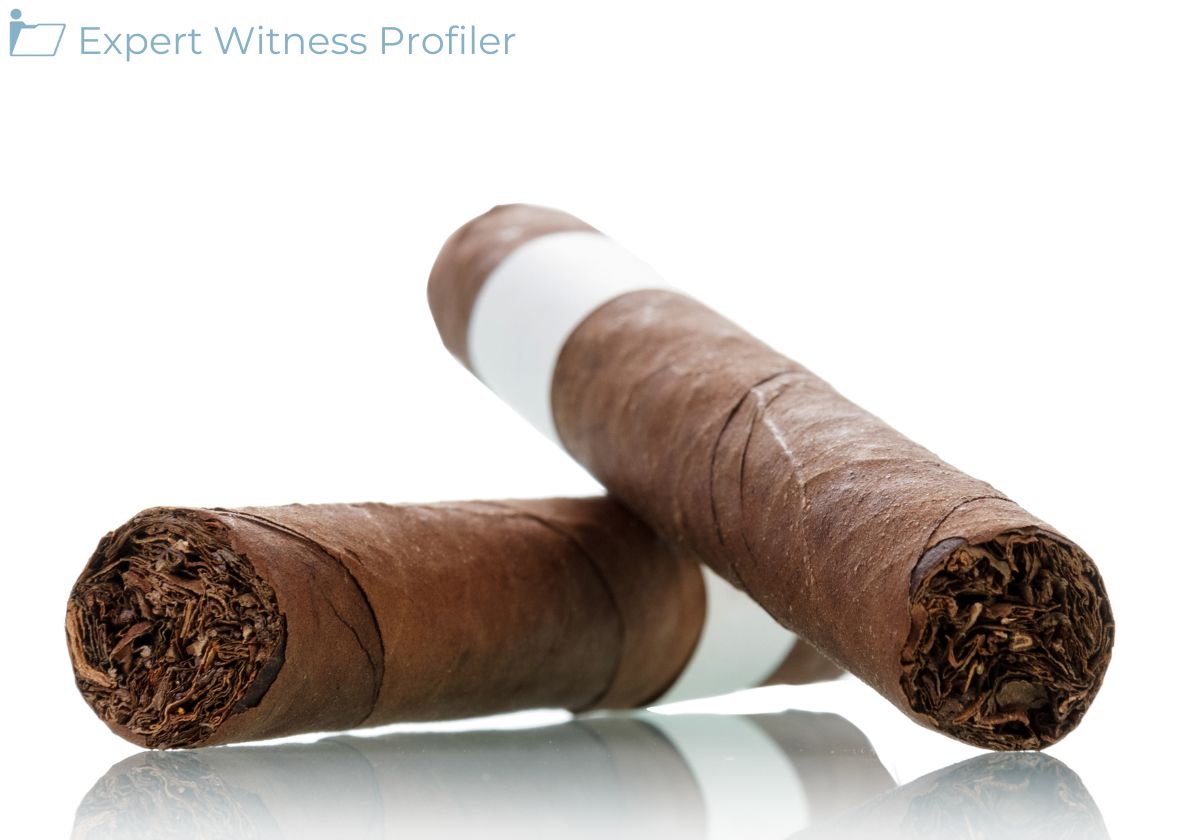
Following the termination of the license, Spalding Group began selling a cigar also seasoned with Maker’s Mark bourbon (the “Bourbon Cigar”). Maker’s Mark alleged the packaging of the Bourbon Cigar was intentionally designed to “evoke an association by customers between [t]he Bourbon Cigar on the one hand and Maker’s Mark and the prior Licensed Cigars on the other.”
Maker’s Mark further claimed Spalding Group advertised the Bourbon Cigar in a variety of ways to associate it with Maker’s Mark and the Licensed Cigars, despite Maker’s Mark’s demand that Spalding Group cease and desist.
Maker’s Mark brought this action against Defendants, asserting claims of trademark infringement; false designations, descriptions, and representations; and trademark dilution in violation of the Lanham Act.
It also brought breach of contract, trademark infringement, and false designation and unfair competition claims under Kentucky common law.
Defendants filed a counterclaim alleging various state law claims related to the licensing agreement and seeking to cancel some of Maker’s Mark’s trademark registrations.
To support its trademark infringement claims, Maker’s Mark retained Ran Kivetz (“Dr. Kivetz”), a professor at Columbia University Business School with experience in consumer psychology and surveys. Dr. Kivetz conducted a survey to estimate the likelihood that consumers would mistake the Bourbon Cigars for a Maker’s Mark product.
To rebut Maker’s Mark’s trademark dilution claims, Defendants retained Hal Poret (“Poret”), a public opinion researcher with a master’s degree in mathematics and a law degree from Harvard Law School. Poret conducted surveys to evaluate whether the words “Marker’s Mark” and the red wax design are famous. Defendants later asked Poret to review Kivetz’s likelihood-of-confusion survey and conduct his own.
Neither party challenged the qualifications of the other’s expert; they each argued that the opposing party’s expert’s likelihood-of-confusion surveys were unreliable. Because the challenges were similar, the Court addressed both Daubert challenges together.
Maker’s Mark also retained Michael A. Einhorn (“Dr. Einhorn”) to calculate Defendants’ profits that may be recoverable under 15 U.S.C. § 1117(a). Defendants moved to exclude Einhorn’s testimony regarding the deductions and resulting net profits calculation; they did not challenge his gross profits or royalties calculations, contending that Einhorn was unqualified to calculate Defendants’ deductions and that his testimony was unreliable.
Survey Research Expert Witness
Hal Poret (“Poret”) is a public opinion researcher with a master’s degree in mathematics and a law degree from Harvard Law School. Since 2004, Poret has personally designed, supervised, and implemented over 350 consumer surveys concerning consumer perception, opinion, and behavior, including surveys relating to false advertising, claim substantiation, and trademark/trade dress matters. He has personally designed numerous studies that have been admitted as evidence in legal proceedings and has testified as an expert in over 50 proceedings before U.S. District Courts, the Trademark Trial and Appeal Board, and NAD.
Marketing Expert Witness
Ran Kivetz is the Philip H. Geier Professor of Marketing at Columbia University Business School. He earned a Ph.D. in Business from Stanford University, Graduate School of Business; a Master’s degree in Psychology from the Stanford University Psychology Department; and a Bachelor’s degree from Tel Aviv University with majors in Economics and Psychology. His field of expertise encompasses consumer psychology and behavior; survey methods; marketing management; behavioral economics; human judgment, perception, and decision making; consumer and sales incentives; and branding. Professor Kivetz’s research has won many prestigious awards, including multiple “Best Paper” awards, being a recipient of the New York Times annual “Best Idea” award, and being ranked as the third most prolific scholar in his field during 1982–2006.
Economic Damages Expert Witness
Michael A. Einhorn has a Bachelor of Arts in Economics from Dartmouth College (summa cum laude) and a Ph.D. in Economics from Yale University. Since receiving his Ph.D. in 1981, he has worked as a Member of Technical Staff at Bell Telephone Laboratories, an economist at the United States Department of Justice (Antitrust Division), and a staff economist at Broadcast Music Inc., a collection agency that licenses performance rights in music to major broadcasters, including television networks, local stations, cable companies, and radio stations. He has worked as a testifying expert since 2001. He is also a former professor of economics at Rutgers University (Newark), where he taught courses on macroeconomics, microeconomics, industrial organization, and corporate finance. He is the author of Media, Technology and Copyright: Integrating Law and Economics (2004), which applies economic reasoning to a number of issues in American copyright law with regard to media, entertainment, and technology.
Discussion by the Court
With regard to Defendants’ motion to exclude certain testimony and opinions of Ran Kivetz, the Court analysed Kivetz’s likelihood-of-confusion survey in depth.
Kivetz’s survey was divided into a test group and a control group. The test group participants saw three-dimensional, 360-degree viewable graphics of Defendants’ Bourbon Cigars, first the box, then an individual cigar. The control group participants saw three-dimensional, 360-degree viewable graphics of the box, then an individual cigar, all with the words “Seasoned with Maker’s Mark” on the cigar band replaced with “Seasoned with Bourbon” and the red wax-dipped caps replaced with red plastic caps. Participants could manipulate the images until they were ready, then they proceeded to answer question sets about the product’s source, affiliation, and sponsorship. The first question set was on the product’s source and was open-ended, with participants instructed to write what company they think made the product in a text box below the question (the “source question”), followed by other open-ended questions asking participants to explain their answers. At the beginning of the survey, participants read instructions not to guess and that “don’t know” was an acceptable answer that they could select or type. The other questions asked participants to name companies, products, or brands that the participants thought were affiliated with or sponsored the cigars. Each of those questions had an explicit “don’t know” option, except the open-ended questions asking participants to explain their answers if they provided one. Throughout the survey, an image of the single cigar, either the test or control version depending on the group, remained on the page for participants to view. This image was of the front of the cigar, was not rotatable, and displayed only half of the cigar band, with the test group cigar displaying the words “Seasoned” and “Maker’s,” while “with” and “Mark” on the band and the “ted’s” on the red seal were cut off. Poret conducted likelihood-of-confusion surveys intended to rebut Kivetz’s survey, and it replicated it in all but three ways. First, the participants could view the images, which Poret took from Kivetz’s report, from several angles of the side, top, and bottom, but not a 360-degree view. Second, Poret removed the image of the single cigar from the question pages. Third, Poret provided an express “don’t know” option to the otherwise open-ended source question.
Both the parties filed motions to exclude based on how the opposing party’s expert used images in his likelihood-of-confusion survey and whether it accurately simulated marketplace conditions.
Defendants argued that repeatedly showing participants the single cigar turned Kivetz’s survey into a “reading test,” where they would answer based on the words “Seasoned” and “Maker’s” visible in the repeated image instead of the Ted’s Cigars branding they saw on the cigar box or the branding that was not visible on the single cigar because of the angle. Kivetz’s survey was accused of creating demand effects, or suggesting a “correct” answer to the participants, by leaving an image of the single cigar for participants to view as they answered questions.
Maker’s Mark responded that Poret’s first likelihood-of-confusion survey was an unreliable “memory test” where participants were not continually exposed to the product while they evaluated it like they would have been in the marketplace. Maker’s Mark demanded exclusion of Poret’s survey since the memory test was based on blurry images from limited angles that did not show “Maker’s Mark.”
The Court held that such challenges amounted to little more than professional disagreement about methodology, which concerned the weight and not the admissibility of the surveys considering neither Maker’s Mark nor Defendants cited any authority suggesting either method was uniformly unreliable and instead each cited articles supporting its expert’s method, which indicated that the disagreement existed within the field and the choice was within the expert’s discretion.
Further, the parties’ more specific concerns about the images appeared unfounded. Defendants argued that 33% of Kivetz’s respondents wrote that “Seasoned Maker’s” produced the cigar because it was all that was visible on the individual cigar image, which showed that Kivetz’s survey inflated the level of confusion. Kivetz, however, did not include the “Seasoned Maker’s” responses as evidence of confusion in his calculations. Maker’s Mark argued that because Poret’s survey did not use 360-degree viewable images, participants could not see the words “Maker’s Mark,” but participants could rotate the individual cigar and see “Maker’s” in one image then “er’s Mark” in the next. Defendants similarly asserted that Kivetz’s survey was flawed because no Ted’s Cigars branding was visible in the single cigar image which remained on the page during the survey, but Maker’s Mark’s name was not visible on the cigar either, only “Seasoned” and “Maker’s”. Moreover, before entering the question portion, participants examined the cigar box and single cigar from 360 degrees for at least 30 seconds each until indicating that they could clearly see the images. Respondents who could not clearly see the image were removed from the survey. Accordingly, the Court found that none of these concerns warranted exclusion and the parties were allowed to explain to the factfinder how each expert used images and whether, in their views, those images accurately replicated marketplace conditions and produced accurate results.
One of the other reasons the parties moved to exclude the other’s likelihood-of-confusion surveys was whether or not the initial source question included a “don’t know” answer option. Defendants insisted on the unreliability of Kivetz’s survey because it did not include a “don’t know” answer option for the source question like it did for the other questions. Maker’s Mark conversely argued that an explicit “don’t know” option was inappropriate for an open-ended question, so Poret’s survey, which had an explicit “don’t know” option, artificially increased the number of participants who selected it, thus erroneously reducing the net confusion rate.
The Court noted that Diamond’s article appeared to be discussing a “don’t know” option in the context of closed-ended questions, so Poret’s survey may have been less accurate, but his choice did not mean the entire survey was so informally designed and conducted that it failed key tests of professionalism and reliability. Henceforth, the Court refused to exclude not only Kivetz’s likelihood-of-confusion survey but also Poret’s rebuttal survey.
Poret conducted a second likelihood-of-confusion survey that tested whether the red wax seal itself and not the “Seasoned with Maker’s Mark” label on the Bourbon Cigars was likely to cause confusion. The second survey again replicated the Kivetz Survey with some exceptions: the images were viewable from several angles but not 360 degrees, and the control cigars and the test cigars kept the “Seasoned with Maker’s Mark” band instead of a “Seasoned with Bourbon” band. Maker’s Mark contended that the survey should be excluded because controls must not be infringing and because the survey results could not explain whether participants were confused by the band or the wax seal. The purpose of avoiding infringing or allegedly infringing controls was to be able to tell whether any reported confusion was the result of actual confusion or the flawed control and the fact that the parties highly disputed whether the use of “Maker’s Mark” on the cigar band was likely to cause confusion made it all the more crucial. Defendants did not adequately respond to this concern with Poret’s survey, noting that “Maker’s Mark” on the cigar band may have been non-infringing or a fair use, actively ignoring the fact that even an allegedly infringing element was problematic in the process besides waiving the fair use defense. They cited only Poret’s explanation that his purpose was to isolate the red wax element. The Court noted that Defendants did not carry their burden to prove that Poret’s wax confusion survey was reliable.
Coming to Defendants’ motion to exclude certain opinions and testimony of Michael A. Einhorn, it was noted that Einhorn submitted a report and two supplemental reports in which he calculated Defendants’ gross revenue and deducted Defendants’ costs to arrive at their net profits from the sale of the Bourbon Cigar, besides calculating what royalties would have been due under the licensing agreement. Defendants targeted Einhorn’s testimony regarding the deductions and resulting net profits calculation instead of his gross profits or royalties calculations. Defendants stated that Einhorn was no expert in cost accounting and highlighted his lack of relevant experience in accounting.
The Court, citing Mannino v. Int’l Mfg. Co., 650 F.2d 846, 851 (6th Cir. 1981), held that Einhorn met the minimal qualifications requirement based on his Ph.D. in economics from Yale University as well as decades of experience calculating damages in intellectual property cases. Even though much of his experience has been related to copyright, trademark damages estimations were well-represented on his resume.
When Defendant argued that Einhorn was not qualified to perform the specific calculations in this case, which involved determining which of Defendants’ costs should be deducted from the gross profits to reach the net profits, the Court noted that Einhorn has been admitted to testify regarding essentially the same calculation in copyright cases. The Court deemed Einhorn qualified to express opinions regarding Defendants’ net profits.
Defendants objected to Einhorn’s use of the “incremental approach” in his calculations as opposed to their expert’s use of the “full absorption” approach. The incremental approach subtracts only direct production costs from a Defendant’s gross profits, while the full absorption approach also subtracts the proportion of overhead costs attributable to the product.
While some courts have adopted one method or the other, the Sixth Circuit appears to have not. In a patent case, the Sixth Circuit declined to adopt a uniform rule about whether overhead costs should be deducted from profits because it depends on the facts of each case. The Court observed that trademark remedies authority suggested that the incremental approach is an acceptable method. The Court declined Defendant’s request to exclude Einhorn’s testimony on that basis.
Defendants moved to seal their motion to exclude Einhorn and the attached Exhibits 1-5, 8, and Maker’s Mark moved to seal its response to the motion and Exhibit 1, which included Einhorn’s report and supplemental reports. The documents contained Defendants’ profit margins, sales data, and other financial information. The Court denied the motions filed by both parties.
Held
The Court issued the following rulings:
1. Defendants’ motion to exclude certain testimony and opinions of Ran Kivetz was denied.
2. Plaintiff’s motion to exclude certain expert testimony of Hal Poret was granted in part and denied in part.
3. Defendants’ motion to exclude certain opinions and testimony of Michael A. Einhorn was denied.
4. Defendants’ motion for leave to file under seal was denied.
5. Plaintiff’s motion for leave to file under seal was denied.
The Court has not arrived on an outcome for this case since the remaining issues involved in this case still await resolution.
Key Takeaways:
The Court emphasized that challenges to expert testimony often revolve around methodological differences rather than the admissibility of the evidence itself. Disagreements within the field are common and do not necessarily render expert testimony unreliable.
Regarding the use of images in likelihood-of-confusion surveys, concerns about methodology and the simulation of marketplace conditions were raised by both parties. However, the Court determined that these concerns did not warrant exclusion of the surveys, allowing the parties to present their arguments about the validity of the methodology to the factfinder.
The absence of a “don’t know” option in certain survey questions was debated, with one party arguing that its inclusion artificially affected the results. The Court noted that the survey in question did not fail key tests of professionalism and reliability and refused to exclude the surveys based solely on this issue.
Expert qualifications were also scrutinized, particularly regarding calculations of net profits. Despite challenges to the expert’s qualifications and methodology, the Court deemed the expert sufficiently qualified based on relevant experience and education.
Differences in calculation methods, such as the incremental approach versus the full absorption approach, were considered by the Court. While some courts may have preferences for certain methods, the Court in this case declined to adopt a uniform rule, emphasizing that the appropriateness of a method depends on the specific circumstances of each case.
Case Details:
Case Caption:
Maker’s Mark Distillery, Pbc V. Spalding Group, Inc. Et Al
Plaintiffs, Lincare Holdings Inc.’s and Lincare Licensing Inc.’s (collectively “Lincare”) are national health care companies that provide patients “with top quality treatments and durable medical equipment.” Plaintiffs’ “portfolio includes healthcare goods and services offered in connection with the trademarks LINCARE, mdINR, CONVACARE, AMERICAN HOMEPATIENT, PREFERRED HOMECARE, and the trade name SPECIALIZED MEDICAL SERVICES.” Defendant Doxo, Inc. (“Doxo”) runs an all-inone bill pay service that allows users to pay bills to over 120,000 billers using Doxo’s website. Doxo, although unaffiliated with Plaintiffs, included Plaintiffs as billers that can be paid through Doxo’s website. Doxo’s biller pages for Plaintiffs included the use of Plaintiffs’ trademarks and trade name. Plaintiffs initiated this action against Doxo on October 13, 2022, asserting claims for trademark and service mark infringement in violation of Section 32 of the Lanham Act (Count 1); false representation and false designation of origin in violation of Section 43(a) of the Lanham Act (Count 2); unfair competition in violation of the Florida Deceptive and Unfair Trade Practices Act (“FDUTPA”) (Count 3); trademark infringement, trade name infringement, and unfair competition under Florida common law (Count 4); and tortious interference with business relationships (Count 5).
Doxo accused Lincare of attempting to use several forms of inadmissible evidence as a result of which Doxo sought to exclude (1) Lincare’s various call logs prepared by its customer support agents, which constituted unreliable, inadmissible, and often multilayered hearsay, (2) all evidence of, or testimony relating to, cease and desist letters sent to Doxo by third-party billers, as well as any third-party complaints or disputes that involve marks not at issue here and were not fully adjudicated as well as (3) Sarah Butler’s testimony regarding Lincare’s trademarks other than LINCARE.
Survey Research Expert Witness
Sarah Butler is a highly esteemed expert in survey research and sampling, boasting over 20 years of experience in designing and executing intricate consulting projects for clients involved in litigation, arbitration, regulatory proceedings, and business strategy. Her expertise extends to advising prominent brands such as Apple, Walmart, Toyota, and Gatorade. Notably, her research and testimony have been widely recognized and accepted in both state and federal courts, including bench and jury trials, as well as by regulatory bodies like the ITC and the Copyright Board, along with arbitration venues.
Discussion by the Court
First, Doxo argued that the Court should exclude Lincare’s various call logs prepared by its customer support agents since the call logs were neither recordings nor verbatim transcriptions of actual words spoken by Lincare’s customers. Instead, they reflected the employees’ characterizations of the conversation, biased by the employees’ express instructions from their superiors to uncover evidence of confusion in support of this case.
The Court observed that the call logs/notes consisted of two layers of statements: (1) the notes written by Plaintiffs’ customer representatives, for which the customer representatives are the declarants; and (2) the statements of Plaintiffs’ customers made to and recorded by the customer representatives, for which the customers are the declarants. Under Federal Rule of Evidence 805, “hearsay within hearsay is not excluded by the rule against hearsay if each part of the combined statements conforms with an exception to the rule.” Thus, both layers of double hearsay must satisfy a hearsay exception to be admissible. Alternatively, there would be no hearsay within hearsay problem if the customers’ statements recorded within the notes did not constitute hearsay.
The Court agreed with Plaintiffs that the customers’ statements to Plaintiffs’ customer representatives were not hearsay or were subject to the state of mind exception to hearsay.
Next, Doxo argued that the evidence of cease and desist letters sent to Doxo by third-party billers, as well as any third-party complaints or disputes that involved marks not at issue here and were not fully adjudicated were irrelevant because “documents specific to one trademark are largely irrelevant to a claim for infringement of an entirely separate mark.” Additionally, Doxo maintained that mere complaints by third parties about alleged infringement were not relevant to the willfulness of Doxo’s infringement.
The Court held that the letters were relevant to Doxo’s intent, bad faith, and willfulness in using Plaintiffs’ trademarks since the cease-and-desist letters and other third-party disputes put Doxo on notice that other businesses believed that Doxo’s use of their trademarks on its website infringed their trademarks. But — as Plaintiffs tell it — Doxo continued to prominently use various businesses’ trademarks, including Plaintiffs’ trademarks, on its website in the same way despite this notice.
Finally, Doxo contended that Plaintiffs’ survey expert, Sarah Butler, should not have been able to offer opinions regarding Plaintiffs’ trademarks besides the LINCARE mark. It emphasized that Butler’s survey only involved the LINCARE mark and, thus, her opinion stated in her report that there was “no reason to believe [that her] conclusions as to confusion would differ for” Plaintiffs’ other marks should not have been admissible. The Court held that Doxo neglected addressing the Federal Rules of Evidence in support of this section of its Motion. Instead, Doxo cited law regarding expert reports and at least one case deciding a Daubert motion rather than a motion in limine.
It was worth noting that Doxo had previously filed a Daubert motion targeting Butler’s testimony. When Butler had described the consumer confusion survey she conducted for the LINCARE mark, Doxo had argued that her opinions lacked reliable methodology. Doxo alleged that Butler’s survey consisted of numerous flaws concerning the survey population, the marketplace conditions, the control group, and the allegedly vague questions asked. The Court denied Doxo’s Daubert motion after acknowledging that Butler’s methodology in conducting her survey was reliable enough for it to be presented to the jury.
The Court determined that to the extent Doxo could be interpreted as raising a challenge to the admissibility of Butler’s opinion under the Federal Rules of Evidence, that challenge likewise failed. Butler’s opinion regarding these trademarks was held to be relevant to the trademark infringement claims and exclusion under Rule 403 was unwarranted. Doxo was free to cross-examine Butler and raise arguments at trial about the weight to be accorded to her opinions.
Held
The Court denied the Defendant’s motions in limine to exclude Lincare’s unreliable call log, evidence regarding third-party disputes, and Sarah Butler’s testimony regarding Lincare’s trademarks other than LINCARE.
The Court has not arrived on an outcome for this case since the remaining issues involved in this case still await resolution.
Key Takeaways:
Regardless of the challenges to Sarah Butler’s methodology in a Daubert motion, the Court ultimately deemed her survey reliable enough for presentation to the jury, emphasizing the importance of demonstrating methodological soundness in expert opinions. Additionally, arguments regarding the scope of expert opinions were addressed, with the Court dismissing Doxo’s contention that Butler should only offer opinions on the LINCARE mark as unsupported by relevant legal standards. The Court emphasized the importance of applying the Federal Rules of Evidence and relevant legal standards in evaluating the admissibility and scope of expert testimony to ensure consistency and fairness across cases. Vigorous cross-examination — rather than exclusion — was advocated as the proper means of challenging Butler’s opinions