Tag: Train

  • Law Enforcement Expert Was Allowed to Opine on Ride-Along Policies

    Law Enforcement Expert Was Allowed to Opine on Ride-Along Policies

    Zailey Hess sued former Hammond police officer Jamie Garcia, alleging that he sexually assaulted and harassed her during a ride-along for her criminal justice class in violation of the Fourteenth Amendment’s Equal Protection and Due Process Clauses.

    Garcia filed a motion to exclude the testimony of Hess’ expert witness, Dan Kender.

    Law Enforcement Expert Witness

    Daniel R. Kender worked as a Hammond police officer for 28 years, including as a patrol officer, evidence technician, traffic crash investigator, accident reconstructionist, field training officer (including educating ride-along participants), law enforcement instructor, and police sergeant.

    Over that time, he participated in various law enforcement training. He holds a bachelor’s degree in computer information systems and a master’s degree in cybersecurity and digital forensics. Kender is an assistant professor of computer science, though he has worked privately in crash reconstruction since 2000—first for another business, and for himself since 2008.

    Get the full story on challenges to Daniel Kender’s expert opinions and testimony with an in-depth Challenge Study.

    Discussion by the Court

    Garcia asked the Court to exclude all of Kender’s prospective testimony, arguing that he (1) may not testify to a witness’ credibility, (2) isn’t needed or qualified to testify on whether Garcia’s ride-along conduct was inappropriate based on Hammond’s policies or a seatbelt’s functionality, and (3) isn’t qualified to testify on sexual grooming or the behavior of a victim of sexual assault or harassment.

    A. Opinion on the Believability of Hess’ Accusations

    Kender reviewed Hess’ recollections of their ride-alongs with Garcia and opined that her accusations appeared genuine because fabricated accounts tend to be more exaggerated, while Garcia’s recollections struck him as inconsistent.

    Garcia said that Kender lacked the requisite qualifications in psychology or human behavior to reach this opinion and added that his credibility opinion cannot help the jury.

    The latter is what prevents him from being an expert here. Qualifications aside, and those remain in doubt, an opinion witness cannot sift through the testimony of others, tell the jury whom to believe, or otherwise argue the implication of seeming inconsistencies. The jury alone performs the job of assessing the credibility of witnesses, and it needs no help. Kender acknowledged that this takes no expertise beyond the common sense of each juror.

    B. Opinions on the Propriety of Garcia’s Conduct under Hammond Police Department Ride-Along Policies and Training

    Kender’s report described the purposes and procedures of a ride-along with the Hammond Police Department. He described the ride-along program as fostering positive police-community relations and educating the public on police functions.

    Based on his prior work as a field training officer and experience leading educational ride-alongs, he opined about the training Hammond law enforcement officers receive and the objectives they acknowledge to guide their ride-alongs with members of the public.

    Jurors may have early impressions about ride-alongs, or either heard of them or even participated in one, and perhaps have early impressions about their goals for both the public and police agency; but Kender would offer something specialized to understand their dynamics, objectives, and the training that goes into making sure that police officers handle them safely. He has the credentials to speak to these issues, and his method of offering these opinions grows out of his training, his training of others, and the policies in place at the Hammond Police Department.

    Beyond this scope of testimony and the context it provides the jury, the jury truly needs no help. Nor is there anything particularly expert about anything else.

    C. Opinions on the Behavior of a Victim of Sexual Misconduct and on Sexual Grooming Behavior

    Kender sought to opine that Hess’ account of Garcia’s ride-along conduct was consistent with sexual grooming by predatory child molesters. He stated that he based this opinion on his training and experience as a police officer, his review of the record, and a 2017 article about grooming behaviors by predatory child molesters.

    Garcia argued that Kender lacked the necessary qualifications to testify about grooming behavior or a victim’s common reactions to sexual assault. He said that Kender merely read transcripts rather than interviewing or observing any witnesses, and that his opinion lacked a scientific method.

    Analysis

    Kender worked as a police officer for 28 years. His curriculum vitae reflects fairly standard training at the Indiana Law Enforcement Academy and at the Northwest Indiana Law Enforcement Training Center, and it seems over the years he developed particular focuses in crash investigation, forensics (including computer forensics), and training of officers. None of this screams out expertise in sexual grooming. That said, he testified that he worked traffic part of the time, but also worked patrol involving cases of child molesting, sexual battery, and rape. He received some training on sexual grooming at the academy, and he later served as a field training officer and evidence technician when he “handled a lot more of [these] cases then.”

    While Kender hasn’t specialized professionally in sex crimes or psychology, the Court held that he may speak to patterns of sexual grooming insofar as his training and experience take him.

    Garcia also criticized Kender’s method, except that Kender outlines specific signs or dynamics of sexual grooming (something well beyond his say-so); and he thereby provided a roadmap for his application of these and his decision-making toward an opinion, and decision-making not unlike what law enforcement officers often would make in the field.

    Aspects of grooming may be intuitive to some jurors, and jurors will need no help understanding that much of the alleged behavior would be not just unprofessional but unreasonable by a police officer to commit; but other aspects about grooming or a victim’s sometimes-less-than-intuitive reactions to sexual assault will be invariably foreign to them, so this opinion about grooming will aid in their understanding of its markers and the constitutional impropriety of such behavior during a ride-along.

    Held

    The Court granted in part and denied in part Jamie Garcia’s motion to exclude Daniel Kender’s opinions.

    Key Takeaway

    Kender offered something by way of specialized knowledge to understand the objectives and training associated specifically with ride-alongs. The jury gets to decide whether Garcia’s conduct violated the Constitution with the aid of that context, but without need of more.

    For instance, jurors understand driving safety and the importance of having two hands on a steering wheel (or not). Jurors can assess whether physical contact or sexualized conversations between an officer and minor passenger (or with a sex worker) are discriminatory rather than serve any legitimate government objective.

    Case Details:

    Case Caption: Hess V. Garcia
    Docket Number: 3:21cv101
    Court Name: United States District Court, Indiana Northern
    Order Date: March 13, 2026
  • Law Enforcement Expert Was Allowed to Opine on the Deputies’ Conduct

    Law Enforcement Expert Was Allowed to Opine on the Deputies’ Conduct

    On May 21, 2022, Defendants Deputies Montana Arceo and Brandon Avalos contacted Mr. Lyric Leeyn Cline at an ARCO gas station in Tacoma, Washington, after observing a vehicle they believed matched one involved in recent criminal incidents.

    Cline fled on foot, the deputies pursued him, and a struggle followed during which the deputies used physical force, including strikes, before other officers arrived and Cline was handcuffed and transported for medical evaluation.

    Cline brought claims for excessive force against Deputies Arceo and Avalos and for failure to intercede against Deputy Avalos.

    Defendants retained Mr. Chris M. Nielsen, a retired SWAT officer and police trainer, to offer opinions on police practices and use-of-force. In general, Nielsen opined that the decision to contact and pursue Cline, the types and levels of force used, and the provision of medical care were consistent with generally accepted police training and Pierce County Sheriff’s Department policies.

    Law Enforcement Expert Witness

    Chris M. Nielsen has approximately thirty-one thousand hours of training and operational experience in patrol-level operations, tactics, supervisory, instructional, and leadership experience. He retired from active law enforcement in December, 2024.

    He has an Associate of Arts degree from Bellevue College, a Bachelor of Arts in psychology from the University of Washington (cum laude, Phi Beta Kappa), a Master of Arts degree in political science from the Maxwell School of Citizenship and Public Affairs at Syracuse University and a Juris Doctor degree from the Syracuse University College of Law (cum laude).

    Want to know more about the challenges Chris Nielsen has faced? Get the full details with our Challenge Study report.

    Discussion by the Court

    A. Reliability and Methodology

    Plaintiff challenged Nielsen’s methodology on the grounds that he relied on a limited factual record, did not review Avalos’s deposition before issuing his report or testifying, did not interview percipient witnesses, and did not supplement his opinions after additional discovery. Plaintiff cited portions of Avalos’s testimony and argued that those statements, together with the absence of certain videos from Nielsen’s review, undermine his conclusions.

    However, Nielsen reviewed department policies, training materials, reports, medical records, and video, and applied his law enforcement experience to assess the deputies’ conduct under generally accepted police standards and Pierce County policies. That is an accepted, experience-based methodology for police practices experts under Rule 702

    B. Use of Video Evidence

    Plaintiff argued that Nielsen’s testimony will not assist the jury because body-worn camera videos depict the encounter and that his descriptions of the footage risk confusing or misleading the jury.

    Defendants did not offer Nielsen as a video analyst. They offered him to explain police training, use-of-force frameworks, pursuit and Taser policies, and how officers are trained to assess flight, resistance, and threat. These subjects concern professional standards and decision-making processes outside typical juror experience and fall within Rule 702(a).

    The Court, however, enforced certain limits at trial. Nielsen may not narrate the videos or opine on purely factual questions such as where Cline’s hands were at a given moment or whether he in fact assumed a fighting stance. Jurors can reach those factual conclusions. He may testify about generally accepted police practices, relevant policies and training, how officers are taught to assess risk and select force options, and whether the deputies’ decisions were consistent with those standards, assuming specified facts.

    C. Legal Conclusions

    Plaintiff contended that Nielsen’s opinions that the deputies’ conduct was “necessary,” “appropriate,” and “consistent with training and policy” effectively stated that the force was objectively reasonable under the Fourth Amendment.

    Consistent with these principles, Nielsen may not testify that the deputies’ conduct was or was not objectively reasonable, constitutional, or similarly lawful. He may describe policies, training, and generally accepted police practices and state, in professional terms, whether particular actions were consistent with or departed from those standards, based on stated assumptions.

    D. Bias and Litigation History

    Plaintiff noted that Nielsen has testified exclusively for Law Enforcement Defendants in use-of-force cases and cites his compensation as evidence of bias and unreliability.

    However, the Court held that such matters may be explored on cross-examination and left to the jury in assessing what weight to give his testimony.

    Held

    The Court denied Plaintiff’s motion to exclude the testimony of Chris M. Nielsen.

    Key Takeaway

    Bias affects credibility and weight, not admissibility under Rule 702. Basically, Nielsen’s litigation history and compensation do not show that his methodology is unreliable or that his opinions lack a factual foundation. 

    Case Details:

    Case Caption: Cline V. Arceo
    Docket Number: 3:24cv5309
    Court Name: United States District Court, Washington Western
    Order Date: February 02, 2026
  • Railroad Expert’s Failure-to-Warn Testimony Admitted

    Railroad Expert’s Failure-to-Warn Testimony Admitted

    This action arises from a train derailment in Lund, Utah on July 15, 2021, in which Plaintiffs Larry Keatley, Wirgil Rask, and Matthew Lindley (collectively, “Plaintiffs”), were operating the train as Defendant’s employees.

    Plaintiffs asserted a claim against Defendant under the Federal Employers’ Liability Act and alleged that the Plaintiffs’ injuries were due to the negligence of the Defendant UPR in failing to provide Plaintiffs with safe tools and equipment and a safe place to work.

    Defendants sought to exclude the entire testimony of Plaintiffs’ expert witness, Alan Pagels. Defendant also sought to exclude the portion of Plaintiffs’ expert witness Charles Culver‘s testimony that relates to his opinion on Defendant’s failure to stop or slow the train.

    Railroad Expert Witnesses

    Alan Pagels is a practicing railroad safety consultant with 45 years of railroad industry experience, of which he served 8 years and 5 months with the Federal Railroad Administration (FRA) as a Track Safety Inspector and Specialist – Rail Integrity.

    Discover more cases with Alan Pagels as an expert witness by ordering his comprehensive Expert Witness Profile report.

    Charles L. Culver is an expert in train handling and railroad operations in federal and district courts throughout the United States.

    He been certified as a designated supervisor of locomotive engineers, a freight conductor, and a locomotive engineer and has been qualified as an instructor of Operating Rules, Safety Rules, and Air Brake and Train Handling Rules applicable to trainmen and engineers through his training with Union Pacific Railroad.

    Want to know more about the challenges Charles Culver has faced? Get the full details with our Challenge Study report.

    Discussion by the Court

    Alan Pagels

    Pagels is set to testify to “issues of liability and causation involved in the subject incident, including but not limited to track conditions where the subject incident occurred.”

    According to Pagels, Defendant failed to comply with 49 C.F.R. § 213.33, the regulation prescribing appropriate drainage for roadbeds. Moreover, Defendant also did not comply with FRA Track Safety Standards and its own standards for conducting special inspections for severe weather, despite the weather alerts issued by the National Weather Service.

    Analysis

    The Court held that Pagels’ testimony is admissible to the extent that it relates to Plaintiffs’ claims that Defendant negligently placed the track and failed to warn Plaintiffs as to the risk of flooding and derailment at the derailment track location.

    Pagels can testify to the general requirements for waterflow set forth by the FRA and whether the geographic location posed an unreasonable risk of flooding to the extent that such testimony relates to Plaintiffs’ allegation that Defendant knew or should have known the track location was subject to flooding. Pagels’ testimony regarding Defendant’s failure to comply with FRA Track Safety Standards and Defendant’s internal standards for conducting special inspections for severe weather is only admissible to the extent that it relates to Defendant’s failure to warn of imminent flooding or the risk of derailment.

    Moreover, he may testify that Defendant is “responsible for determining where its crews operate trains and is responsible for ensuring its crews have a safe place to work” to the extent it relates to Plaintiffs’ claim of negligent track placement or failure to warn.

    However, Pagels may not testify to the specific requirements of 49 C.F.R. § 213.33 and Defendant’s alleged failure to comply with such requirements, as negligence per se was not alleged in the operative complaint.

    Similarly, Pagels may not testify to Defendant’s alleged failure to maintain adequate track drainage, nor may Pagels opine as to Defendant’s ability to design, construct, and maintain track in compliance with Defendant’s internal engineering standards.

    Charles Culver

    In his report, Culver opined:

    • Plaintiffs were performing their duties according to railroad rules and “were not at fault in this incident;”
    • The train crew was not warned of “conditions ahead” and had “no reason to anticipate the track conditions they would encounter;”
    • The train’s configuration “increased the dangers associated with emergency braking under the conditions.”

    The Court held that Culver’s testimony, however, all appears to relate to Defendant’s affirmative defense of Plaintiffs’ comparative negligence and is therefore relevant. Culver may testify to whether Plaintiffs performed their duties in compliance with railroad rules and whether they were warned as to the conditions ahead of them or had reason to anticipate track difficulties.

    Held

    The Court granted in part and denied in part the Defendant’s motion to exclude the testimony of Plaintiffs’ expert Alan Pagels and limit the testimony of Plaintiffs’ expert Charles Culver.

    While Culver’s testimony will not be excluded, Pagels may not testify about the Defendant’s failure to maintain adequate track drainage; and Defendant’s ability to design, construct, and maintain track in compliance with Defendant’s engineering standards.

    Key Takeaway

    An expert’s testimony does not need to directly relate to the ultimate issue that the trier of fact is to resolve; the testimony only needs to be relevant to evaluating a factual matter. However, the expert testimony must still be “sufficiently tied to the facts of the case that it will aid the jury in resolving a factual dispute.”

    Doubts as to “whether an expert’s testimony will be useful [to the trier of fact] should generally be resolved in favor of admissibility.”

    Case Details:

    Case Caption: Keatley V. Union Pacific Railroad Company
    Docket Number: 8:21cv455
    Court Name: United States District Court, Nebraska
    Order Date: January 02, 2026
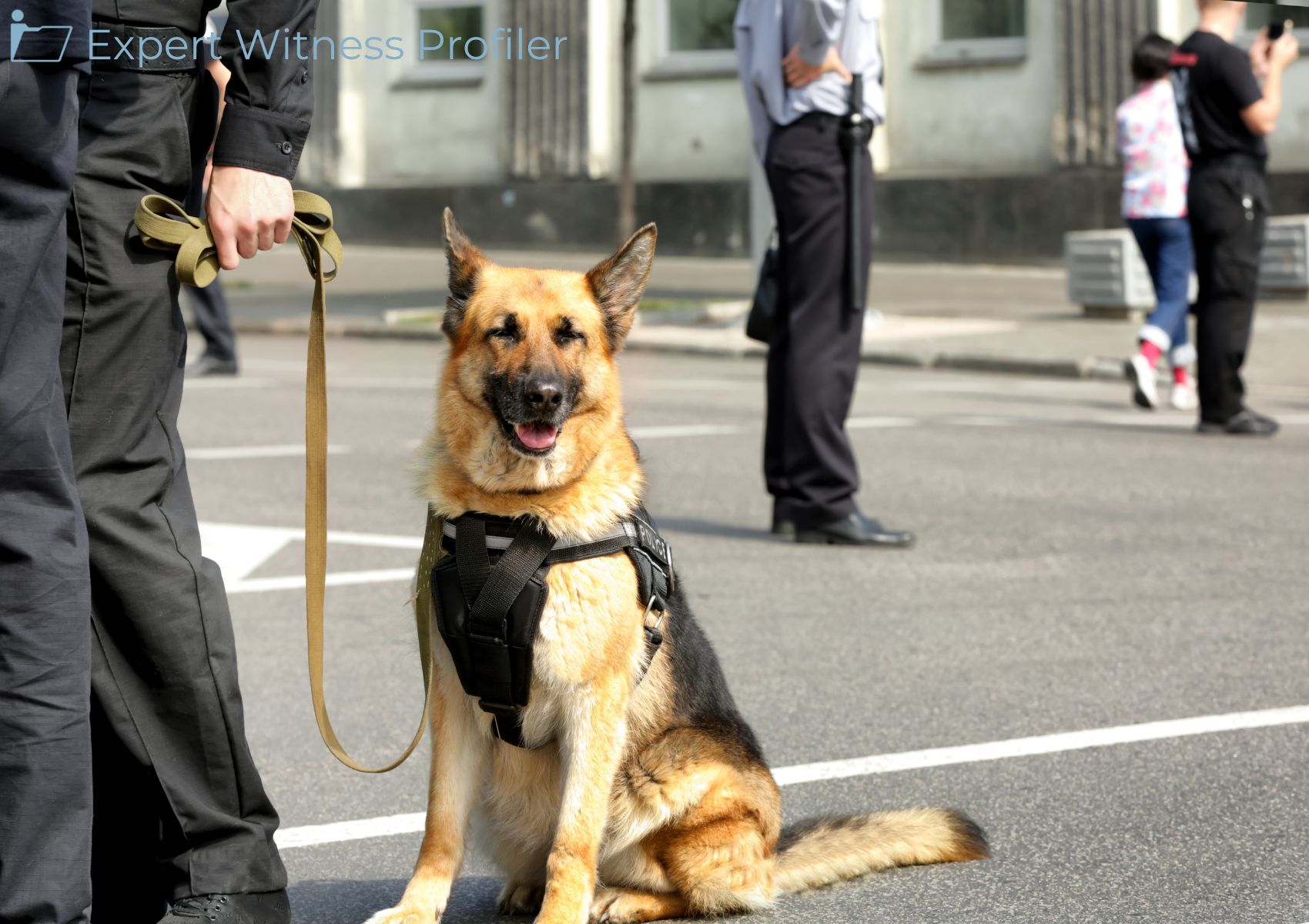
  • Law Enforcement Expert Was Allowed to Opine on the Standard Practices Involving Police Canines

    Law Enforcement Expert Was Allowed to Opine on the Standard Practices Involving Police Canines

    In this excessive force case involving a police canine, Plaintiff Herman Evans (“Evans”) filed a motion to exclude the opinion of The City of Lynchburg’s (“City”) expert witness—Jeffrey T. Barrett (“Barrett”).

    Barrett offered four opinions (although the confines of those opinions are not as clearly defined as they should be). First, he reviewed the training records for Officer Reed and the canine Knox—the police officer and canine accused of using excessive force against Evans—and will opine that they received sufficient training. Second, he generally opined on acceptable use of force procedures involving police canines, including the Lynchburg Police Department’s use of force directives. Third, he opined on Evans’ behavior, concluding that he “agrees with the assessments made by Officer Reed about Evans being under the influence of drugs and alcohol.” And fourth, he opined that based on the facts of this case Reed’s decision to employ the canine Knox against Evans was a reasonable use of force.

    Law Enforcement Expert Witness

    Jeffrey Todd Barrett is a retired police officer, having served 31 years as a canine handler. For the last 22 years of his law enforcement career, Barrett trained other law enforcement officers on handling police canines. Barrett has 1,920 hours of canine training, having attended at least sixteen advanced courses on handling police canines. Barrett also served as an instructor for canine handlers, providing trainings for the Federal Bureau of Investigation; the Secret Service; Customs and Border Patrol; and the U.S. Army and Marine Corps. He has served as an expert witness in at least three other cases and co-authored the book, Canines in the Courtroom.

    Discover more cases with Jeffrey Barrett as an expert witness by ordering his comprehensive Expert Witness Profile report.

    Discussion by the Court

    Evans sought to exclude Barrett’s opinions, arguing they: (1) are outside the scope of Barrett’s expertise, (2) are legal conclusions; and (3) are not derived from reliable principles or methods.

    Generally, these arguments collide with Barrett’s experience and education—including decades as a law enforcement officer and canine handler and numerous, specialized trainings in handling police canines. Barrett has also trained other law enforcement officers—including FBI agents–on handling police canines and has written a book on police canines.

    Analysis

    The Court held that Barrett’s testimony about the standards and procedures for training and using police canines appeared to be both reliable and relevant—the two hallmarks of any Daubert inquiry.

    Barrett is also free to apply his expertise—i.e., knowledge about how canines should be trained, handled, and employed in the field—to the facts of this case and is free to opine on whether Officer Reed deviated from standard police practices.

    However, Barrett will not be allowed to opine on whether Officer Reed used excessive force in violation of the Constitution as that crosses the line from offering an opinion on the ultimate issue to offering an impermissible legal conclusion.

    Barrett will also be precluded from offering expert testimony on Evans’ behavior. Barrett purported to “agree with the assessments made by Officer Reed about Evans being under the influence of drugs and alcohol.” However, Barrett provided no basis for reaching that opinion. He does not purport to be an expert in toxicology or in any behavioral science. He also was not present on the date of the incident to personally observe Evans’ behavior. Rather, Barrett appeared to be parroting Officer Reed’s view of the facts. The jury can compare Officer Reed’s and Evans’ testimony, review any additional evidence (including if there is shoulder camera footage), and make a factual determination about Evans’ behavior without any assistance from Barrett.

    Barrett’s attempt to pile on when he was not a firsthand witness to Evans’ behavior crossed the Daubert line and will not assist the jury in any meaningful way. Accordingly, the Court excluded that proffered testimony.

    Held

    The Court granted in part and denied in part Evans’ motion to exclude the opinion of The City of Lynchburg’s expert witness—Jeffrey T. Barrett.

    Key Takeaway

    An expert can testify to the ultimate issue so long as there is an adequate foundation. The line between a permissible opinion on an ultimate issue and an impermissible legal conclusion is not always easy to discern. In this case, however, Barrett will not be allowed to opine on whether Officer Reed used excessive force in violation of the Constitution as that crosses the line from offering an opinion on the ultimate issue to offering an impermissible legal conclusion. 

    Case Details:

    Case Caption: Evans V. The City Of Lynchburg
    Docket Number: 6:24cv19
    Court Name: United States District Court, Virginia Western
    Order Date: December 19, 2025
  • Police Practices Expert’s Testimony on Eyewitness Identifications Admitted

    Police Practices Expert’s Testimony on Eyewitness Identifications Admitted

    This litigation arises from Plaintiff Raymond Flanks’ (“Plaintiff”) wrongful conviction for first-degree murder in 1985. Plaintiff alleged that the Orleans Parish District Attorney’s Office (“OPDA”) secured his wrongful conviction in violation of his constitutional rights by withholding material exculpatory evidence.

    Plaintiff retained William Brooks as an expert in police policy and practices. Brooks makes three primary conclusions in his expert report:

    (1) In 1983, New Orleans Police Department (“NOPD”) did not have adequate written policies regarding photo arrays;

    (2) In 1983, NOPD had inadequate training and supervision, which created a risk of suggestive identification procedures that could lead to a mistaken identification and possibly a wrongful conviction; and

    (3) The identification procedure that Dillmann used in this case had two significant problems: Dillmann steered Mrs. Carnesi to identify Plaintiff and Dillmann used inappropriate “fillers” in the photo array he showed Mrs. Carnesi.

    The City Defendants contended that Brooks’ testimony should be excluded for four reasons: (1) Brooks’ opinions are outside the area of his expertise; (2) Brooks’ testimony will mislead the jury and confuse the issues; (3) Brooks’ opinions on NOPD’s policy on identification procedures are not based on any reliable methodology; and (4) expert testimony is not needed to establish that police should not tell witness who to pick in a lineup.

    Police Practices Expert Witness

    William G. Brooks III is a former Chief of Police of the Norwood Police Department in Norwood, Massachusetts. He began his career as a Patrolman from 1977 to 1985; served as a Detective Sergeant from 1985 to 2000; served as Deputy Chief of Police from 2000 to 2012; and served as Chief of Police from 2012 until he retired in 2024. He has a bachelor’s degree in criminal justice from Stonehill College and a master’s degree in criminal justice from Western New England College.

    Brooks is a state-certified instructor on eyewitness identification; he authored a model policy on eyewitness identification for the Massachusetts Chiefs of Police Association; he has been appointed to study and develop best practices for eyewitness identifications by the Supreme Judicial Court of Massachusetts and by the United States Court of Appeals for the Third Circuit; and he has lectured about eyewitness identification procedures to numerous law enforcement agencies, law schools, bar associations, and other professional groups.

    Get the full story on challenges to William Brooks’ expert opinions and testimony with an in-depth Challenge Study.

    Discussion by the Court

    A. Whether Brooks’ Opinions are Within the Area of His Expertise

    The Court found that Brooks is qualified to testify as an expert on eyewitness identifications.

    The City Defendants asserted that Brooks’ opinions were outside the area of his expertise because during the relevant time period, 1983, he was a patrolman with no training or experience in identification procedures, policy development, or running a police department. Brooks became a Detective Sergeant in 1985, where he “supervised a team of Detectives.” Therefore, he had some supervisory experience in the 1980s.

    Moreover, the fact that he was not overseeing a police department until the 2000s did not render him unqualified. The expert report cited two widely used reference books from 1956 and 1965 to support the assertion that “eyewitness identification issues became a prominent topic in the law enforcement community” by “the mid-twentieth century.” He also discussed two U.S. Supreme Court decisions from 1968 and 1977, which discussed the risks related to misidentifications. Brooks stated that certain witness identification “principles would have been known to police departments in the 1980s,” but he also acknowledges that some of the present-day best practices he cites were not all “widely used by police departments in 1983.” Therefore, Brooks opinions appear to be based both on his experience and his review of reference materials from the relevant time period.

    Additionally, the City Defendants suggested that Brooks’ expertise did not extend to the impact of suggestive identification procedures on a witness, as Brooks did not have a background in psychology or any other scientific discipline. However, he did not opine about specific psychological impacts for which scientific qualifications would be necessary. Therefore, the proposed testimony is within the area of Brooks’ expertise.

    B. Whether Brooks’ Testimony Will Mislead the Jury or Confuse the Issues

    The City Defendants argued that Brooks’ testimony will mislead the jury and confuse the issues because it references best-practices that were not all widely used by police departments in 1983.

    To the extent Brooks cited some best-practices that were not widely used in 1983, the City Defendants was free to cross-examine Brooks on this issue. It is not a basis for outright exclusion of his testimony.

    The City Defendants also contended that Brooks’ discussion regarding use of inappropriate “fillers” in photo arrays will not assist the jury in determining whether Dillmann told Mrs. Carnesi which photograph to pick and whether that statement caused her to falsely identify Plaintiff as the murderer. If the jury concluded that Dillmann did not explicitly tell Mrs. Carnesi whom to pick from the photo array, Brooks’ opinion that Dillmann used at least two inappropriate “fillers” in the photo array remains relevant to Plaintiff’s argument that the photo array was suggestive.

    C. Whether Brooks’ Opinions are Based on a Reliable Methodology

    Next, the City Defendants asserted that Brooks’ opinions on NOPD’s policy on identification procedures are not based on any reliable methodology.

    Brooks’ report cited an Eyewitness Identification Model Policy. Additionally, Brooks relied on his own experience running a police department and designing training curriculum. According to the City Defendants, Brooks’ opinion that formal training on identification procedures was needed was contradicted by Brooks’ own experience. The fact that Brooks did not receive formal training on identification procedures when he began his career can be raised on cross-examination, but it does not provide a basis for exclusion of the proposed testimony.

    The City Defendants also contended that Brooks’ analysis on NOPD’s policy is equally unreliable and based entirely on his own opinion about how officers might read into the absence of an express prohibition on suggestive techniques in photographic identification procedures.

    Brooks reviewed NOPD policy, which included a specific rule against suggestive behavior for lineups but did not include a specific rule for photo arrays. Brooks opined that “by including a specific rule against suggestive behavior for one type of identification procedure and omitting that rule for the other, an officer could easily infer that making the rule apply only to lineups was intentional.”

    He appeared to base this opinion both on his experience and on the Eyewitness Identification Model Policy. To the extent the City Defendants believe this opinion is unsubstantiated, that issue is better left to cross-examination.

    D. Whether Expert Testimony is Needed

    Fourth, the City Defendants contended that the jury does not need an expert to say that police should not tell witness who to pick in a lineup. The City Defendants pointed out that Dillmann readily acknowledged such action was improper. The City Defendants contended that a jury instruction on this topic is sufficient. This argument oversimplified the issues identified in Brooks’ expert report. Brooks explained why he believed the procedure used in this case was suggestive. These issues are not common knowledge, and Brooks’ testimony will assist the jury in this case.

    Held

    The Court denied City Defendants’ motion to exclude the testimony of William Brooks.

    Key Takeaway

    Brooks is qualified to discuss the effect of suggestive identification procedures on a witness because that effect is inherently a part of studying, lecturing about, and developing model practices for, eyewitness identifications. Brooks also discussed ways that officers can ensure identification procedures are not suggestive.

    Please refer to the blog previously published about this case:

    Vocational Evaluation Expert Allowed to Opine on Lost Earning Capacity

    Legal Expert Was Barred From Opining on Good Time Credits

    Case Details:

    Case Caption: Flanks V. City Of New Orleans
    Docket Number: 2:23cv6897
    Court Name: United States District Court, Louisiana Eastern
    Order Date: December 01, 2025

  • Sales Expert Was Allowed to Opine on the Failure of the Swing Scaffolding System

    Sales Expert Was Allowed to Opine on the Failure of the Swing Scaffolding System

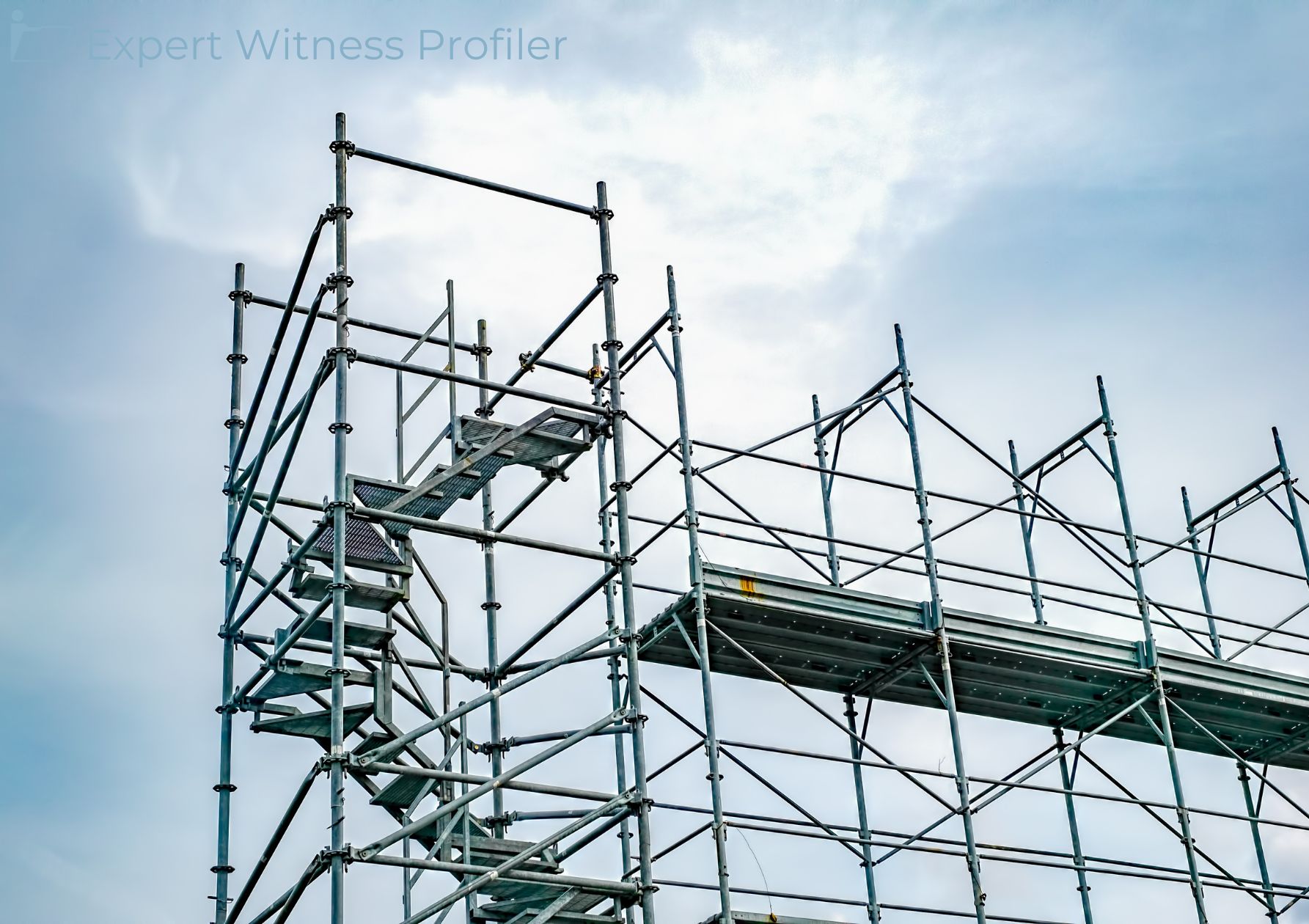
    This personal injury suit began at a construction site at Ochsner’s Lafayette General Medical Center. Charles’ employer, FL Crane & Sons, Inc. (“FL Crane”), was hired to install “z-girts, insulation, and stucco” on the Project building. To work on the building’s side, FL Crane procured swing scaffolding from Max Access. The scaffolding system they used was called the “Rolling Roof Rig.”

    On May 16, 2022, while Charles was working atop the Rolling Roof Rig at the Project, other workers lifted three porta potties for cleaning. Inadvertently, the porta potties, while being hoisted up, caught the tieback line that secured the scaffolding system. This entanglement caused the scaffolding system to collapse, severing Charles’ right arm in the process.

    Max Access argued that (1) Plaintiffs’ proffered witness, Brant Lacombe is not a qualified witness and (2) even if he is, his opinions did not satisfy Rule 702.

    Sales Expert Witness

    Brant Lacombe has fifteen years of experience as a swing scaffolding salesperson in addition to his designation as an OSHA-competent trainer who teaches employees how to use swing scaffoldings.

    Want to know more about the challenges Brant Lacombe has faced? Get the full details with our Challenge Study report

    Discussion by the Court

    1. Expert’s Qualification

    Here, it is undisputed that Lacombe is not an expert by way of education—his college degree is in criminal justice, not engineering.

    Ordinarily, Lacombe’s experience as a salesperson would be deemed too far removed from the scope of his testimony—why a scaffolding system, like the one he sold, failed. 

    Lacombe’s duties as a salesperson included not only sales, but also assisting crews with rigging to ensure the “job get[s] done.” Lacombe first said that he performed such tasks “plenty of times in [his] career,” but later states, “it wasn’t [his] primary function” and only did so “a handful of times over [his] career.”

    Max Access also asserted that Lacombe’s OSHA-related training was inadequate. Specifically, they argued that his initial OSHA 10 training was from “years ago” and he only had one other employer-administered two-to-three-day class.

    Given his experience with assisting crews in rigging swing scaffolds and his OSHA competency, the Court is unconvinced by Max Access’ arguments that Lacombe is not qualified as an expert.

    2. Expert’s Opinions

    a. Lacombe’s First Opinion

    Lacombe’s first opinion is that:

    Max Access, LLC had an obligation to properly assemble the swing stage scaffolding and rigging. Proper assembly requires insertion of the codder pins through the beam splice as well as the hole in the beam tube. The purpose of inserting the codder pins through the beam and the beam tube is to prevent the connection from being separated.

    As Max Access pointed out, however, this statement is not an opinion. Max Access agreed it had the above-stated obligation. Nevertheless, Plaintiffs argued that this testimony is necessary to show “why Max Access was obligated to set up the swing stages.” But Plaintiffs made no showing, let alone a showing by a preponderance of the evidence, on how this will assist the factfinder in “understand[ing] the evidence or determin[ing] a fact in issue.” 

    Thus, the Court concluded Lacombe cannot proffer his first opinion as it failed to meet Rule 702(a)’s requirement that the opinion “help the trier of fact to understand the evidence or determine a fact in issue.” 

    b. Lacombe’s Second Opinion

    Lacombe’s second opinion is that:

    The swing scaffolding failed because the roof rigging separated at the beam and the beam tube. Photos taken of the beam splice on the 5th floor show that the pin was inserted through the beam splice. Photos of the back beam on the 11th floor show that the holes in the beam had not been torn or damaged. This shows that the back beam was not secured with the pins. The pins went through the beam but not the beam tube.

    Again, the parties did not dispute the facts stated in Lacombe’s opinion. And Plaintiffs conceded that “the jury is capable of understanding the concept.” Nevertheless, they argued that the opinion will “aid the jury’s understanding of important parts” of the case. The Court agreed. Lacombe relied on his experience in the swing scaffolding industry to determine and the photographs taken post-accident—showing the beam holes were not “torn or damaged”—to suggest the pins did not penetrate the beam, only the splice tube.

    As such, the Court found Lacombe’s second opinion complied with Rule 702‘s strict requirements.

    c. Lacombe’s Third Opinion

    Lacombe’s third opinion is that:

    OSHA certified training for swing scaffolding does not address specific types of swing scaffolding. There are differences in design in the type of scaffolding that require different assembly. For instance, Spider does not use the exact same design as Sky Climber. One can thus be certified as a competent person but still have to follow manufacturing guidelines and may be unfamiliar with the scaffolding design. Due to differences in design, competent persons assembling and inspecting scaffolding must follow the manufacturer’s warning to ensure proper assembly and safety of the swing stage.

    The crux of why Plaintiffs proffered this testimony is to show that Charles’ employer, FL Crane, had a competent person on site per OSHA regulations and that inadequate warnings led to the accident. This Court’s ruling on Defendant Sky Climber, LLC’s motion for summary judgment, however, found, as a matter of law, that FL Crane did not have a competent person on site. Accordingly, the Court found this argument is moot.

    Held

    The Court granted in part and denied in part Max Access’ Rule 702 motion concerning Brant Lacombe.

    Key Takeaway:

    Lacombe relied on his experience in the swing scaffolding industry to determine and the photographs taken post-accident—showing the beam holes were not “torn or damaged”—to suggest the pins did not penetrate the beam, only the splice tube. 

    This represented “a reliable application” of a “reliable principle” to “sufficient facts” of the case and will “help the trier of fact to understand the evidence or determine a fact in issue”—namely, why the swing scaffolding system failed the way it did. 

    Case Details:

    Case Caption: Craft Et Al V. Max Access LLC Et Al
    Docket Number: 6:22cv5899
    Court Name: United States District Court, Louisiana Western
    Order Date: September 30, 2025
  • Law Enforcement Expert’s Testimony on the Officers’ Tactics Admitted

    Law Enforcement Expert’s Testimony on the Officers’ Tactics Admitted

    Plaintiffs Michael Gomez (“Gomez”), Joseph Lowe (“Lowe”), Ian Joi, and Alejandro Baez and Josephine Cartagena, as co-representatives of the Estate of Jayden Baez (“Baez”) (collectively, “Plaintiffs”) filed an Amended Complaint against Defendants Scott Koffinas (“Koffinas”), Ramy Yacoub (“Yacoub”), and Chris A. Blackmon (collectively, “Defendants”).

    Plaintiffs alleged that Defendants Koffinas and Yacoub—members of the Osceola County Sheriff’s Department (“OCSD”)—exhibited “excessive and unreasonable force” in responding to Plaintiffs’ suspected petty theft at a Target store in Kissimmee, Florida.

    To support their allegations, Plaintiffs offered the expert testimony of Jeronimo “Jerry” Rodriguez (“Rodriguez”), a law enforcement practices expert. Defendants filed a motion to exclude certain portions of Rodriguez’s testimony, specifically, his opinions on the OCSD officers’ tactical approach to apprehend Plaintiffs. 

    Law Enforcement Expert Witness

    Jeronimo “Jerry” Rodriguez spent 26 years with the Los Angeles Police Department, retiring in 2013 at the rank of Captain.

    For years Rodriguez consulted and guided municipalities on high profile police-involved incidents as a member of the agency. However, in retiring as a Law Enforcement Expert in 2021, he has been recruited to work on high-profile and sensitive cases.

    Rodriguez is a graduate of the FBI National Academy Class 234 and holds a master’s degree in Leadership from St. Mary College of California, as well as a bachelor’s degree in Business Management.

    Want to know more about the challenges Jeronimo Rodriguez has faced? Get the full details with our Challenge Study report

    Discussion by the Court

    Reliability

    Defendants first argued that the Court should exclude certain portions of Rodriguez’s testimony because the lack of a national standard for apprehending subjects makes his criticisms of the officers’ tactics unreliable. 

    As shown in his expert reports, depositions, and curriculum vitae, Rodriguez used his law enforcement experience and knowledge, and training in police practices, to evaluate the facts of the instant case and form his opinions. Therefore, the Court found Rodriguez’s methodology sufficiently reliable. 

    Therefore, the lack of an express national standard did not make Rodriguez’s testimony unreliable. Defendants cited no authority for this proposition, nor is the Court aware of any.

    Assistance to the Trier of Fact

    Defendants next contended that Rodriguez’s inability to cite to a national standard rendered his testimony unhelpful to the jury, noting that it would risk misleading jurors into confusing his criticisms with constitutional norms.

    The Court held that Rodriguez’s testimony is relevant and would be helpful to the jury. Specifically, his testimony would help the jury understand why a score of deputies, using a vehicle blocking maneuver, found it necessary to shoot 31 times into a vehicle containing four shoplifting suspects, killing Baez and injuring the other Plaintiffs. Moreover, the lack of an express national standard for police practices did not diminish the testimony’s helpfulness. There is no risk that jurors will confuse his opinions with constitutional norms. While Rodriguez’s testimony embraces an ultimate issue, it did not tell the jury what result to reach—the jury will decide how much credibility to give his opinions when making that determination.

    Held

    The Court denied the Defendants’ motion to exclude portions of Rodriguez’s opinion testimony except for the portion of the Defendants’ motion that sought to exclude Rodriguez’s testimony regarding the officers’ use of a vehicle block to practice their training, which was denied as moot.

    Key Takeaway:

    Defendants’ arguments regarding the unhelpfulness of Rodriguez’s testimony are simply meritless. The necessary and appropriate use of force by law enforcement is beyond the understanding of an average lay person and would therefore assist a jury. 

    Case Details:

    Case Caption: Gomez Et Al V. Koffinas Et Al
    Docket Number: 6:23cv1824
    Court Name: United States District Court, Florida Middle
    Order Date: October 09, 2025
  • Obstetrics and Gynecology Expert’s Opinion Regarding the Common Knowledge of Pelvic Surgeons Admitted

    Obstetrics and Gynecology Expert’s Opinion Regarding the Common Knowledge of Pelvic Surgeons Admitted

    Connie Thacker is one of tens of thousands of individuals who have filed suit against Ethicon for injuries after treatment with Ethicon’s pelvic mesh devices.

    Plaintiff Connie Thacker filed a motion asking the Court to preclude defense expert Dr. John R. Wagner from offering testimony on certain subjects.

    Obstetrics and Gynecology Expert Witness

    Dr. John Raymond Wagner is board-certified in obstetrics and gynecology with a subspecialty board certification in pelvic floor medicine and reconstructive surgery.

    He is a 1987-graduate of The Icahn School of Medicine at Mount Sinai in New York. While at Icahn, he was honored with the Alan F. Guttmacher Award as well as membership into the Alpha Omega Alpha Honor Medical Society.

    Want to know more about the challenges John R. Wagner has faced? Get the full details with our Challenge Study report

    Discussion by the Court

    Wagner’s testimony that certain risks of the Prolift and TVT-S devices are widely known by other surgeons

    Thacker argued that Wagner’s testimony that certain risks of the Prolift and TVT-S devices are widely known by other surgeons was unreliable.

    The parties anticipated that Wagner will testify that certain risks involved with using the Prolift and TVT-S devices were commonly known by other surgeons in his field (and thus did not need to be included in Ethicon’s product warnings).

    While Thacker acknowledged that Wagner may properly opine on such risks as he understands them, she contended that he went too far by opining on what risks were commonly known by other surgeons. More specifically, Thacker argued that Wagner cannot testify as to what was commonly known by other surgeons because “Wagner did not conduct any empirical research or interview other physicians to verify the veracity of his opinion.”

    Ultimately, the Court rejected Thacker’s argument and found that Wagner’s testimony that certain risks of the Prolift and TVT-S are widely known by other surgeons is reliable.

    Wagner’s opinion regarding the common knowledge of pelvic surgeons was reliable because it was based on his medical training to become a pelvic surgeon—which is the same training regimen he represents is common to every pelvic surgeon. This training, along with his review of relevant medical literature, provided “appropriate validation,” for Wagner’s opinion concerning the common knowledge of pelvic surgeons and rendered his testimony reliable.

    Wagner’s testimony regarding the properties of the mesh used in the TVT-S and Prolift

    Thacker next argued that Wagner’s testimony regarding the properties of the mesh used in Ethicon’s devices was unreliable. Specifically, Thacker took issue with the reliability of Wagner’s opinion that the mesh involved “is a safe and effective material.” Thacker suggested that this opinion was unreliable because Wagner lacked the appropriate qualifications to form such an opinion: namely, she took issue with his lack of training in biomedical engineering, pathology, epidemiology, or medical device design.

    The Court found that Wagner’s testimony regarding the properties of the mesh used in Ethicon’s devices was reliable due to Wagner’s “extensive clinical experience, combined with his review of peer-reviewed literature, qualifies [him] to opine on mesh’s reaction to and effect on the human body.”

    Held

    The Court denied the Plaintiff’s motion to exclude or limit the testimony of defense expert John Wagner.

    Key Takeaway:

    Wagner is more than qualified to opine on mesh’s reaction to and effect on the human body considering his extensive clinical experience, combined with his review of peer-reviewed literature. Wagner’s opinion regarding the common knowledge of pelvic surgeons is also reliable because it is based on his medical training to become a pelvic surgeon—which is the same training regimen he represents is common to every pelvic surgeon. 

    Please refer to the blogs previously published about this case:

    Urogynecology Expert Witness Testimony about inadequate risk disclosure admitted in medical device product liability action

    Obstetrics and Gynecology Expert’s Testimony on Mesh Porosity and Stiffness Admitted

    Urogynecology Expert’s Opinion on Continuum of Care Admitted

    Case Details:

    Case Caption: Thacker V. Ethicon Inc.
    Docket Number: 5:20cv50
    Court Name: United States District Court, Kentucky Eastern
    Order Date: July 08, 2025
  • Economics Expert’s Lack of Specialized Credentials Did Not Provide a Basis for Exclusion

    Economics Expert’s Lack of Specialized Credentials Did Not Provide a Basis for Exclusion

    Plaintiff Michael Ruiz (“Ruiz”) is suing his former employer, Defendant Magellan Financial & Insurance Services (“Magellan”), under the theory that his alleged demotion and subsequent termination were due to his race and national origin and that he was also subjected to a hostile work environment.

    Ruiz retained an expert, Michael J. Stokes (“Stokes”) of Beta Business Consulting LLC (“Beta”), to calculate the net present value of his lost wages and benefits. Magellan, however, filed a motion to exclude the expert testimony of Stokes.

    Economics Expert Witness

    Michael J. Stokes earned an MBA from the Isenberg School of Management at the University of Massachusetts Amherst with a focus in entrepreneurship. He has been employed as a litigation-related economic expert for 6 years at Beta Consulting.

    Want to know more about the challenges Michael J. Stokes has faced? Get the full details with our Challenge Study report

    Discussion by the Court

    Qualifications

    Magellan argued that Stokes is unqualified because “his financial or accounting training concerned issues related to capital and corporate investment, and no other topics” and “he has no other certifications or licenses, and no publication history.”

    Analysis

    The Court held that Stokes is qualified to offer opinions about the net present value of Ruiz’s purportedly lost wages and benefits. First, Stokes’ opinions are “within the reasonable confines of his subject area.” Stokes holds an MBA from the University of Massachusetts, where he took classes on management, supply-chain management, entrepreneurship, finance, and basic economics. 

    As for the “finance and accounting” portion of his studies, Stokes studied “[a]nything from investment to just looking at capital investment, corporate investment.” These areas of study appear to encompass the opinions set forth in the report. Although Magellan may be correct that Stokes’ credentials are not highly specialized, the absence of specialization goes to the weight of Stokes’ testimony and did not provide a basis for exclusion.

    Second, Stokes’ experience also forms part of the basis for his qualification to testify as an expert. Stokes is an “economic analyst” for Beta, where he has worked since 2018, and is now the full owner of the company. Before assuming ownership, Stokes was trained by the founder and previous owner, Larry Stokes (his father), who has a Ph.D. in economics.  In addition to being trained and advised by his father, Stokes “occasionally reviews” trainings from the National Association of Forensic Economics (“NAFE”), a standards-setting association for forensic economists of which he is a member. 

    Relevance

    Magellan next argued that Stokes’ testimony is not relevant because it does not consider the relevant factors in an economic damages calculation “such as back pay or mitigation” and only “seeks to estimate what [Ruiz] might have earned from Magellan had he not been terminated.”

    Analysis

    Stokes’ report purported to calculate the net present value—$3,729,078—of the wages and benefits Ruiz would have earned had he remained employed by Magellan until his retirement. Although this figure likely overstated Ruiz’s economic damages, as it made no attempt to account for offsets and mitigation, it was still at least one piece of the puzzle.

    Magellan contended that even if relevant, Stokes’ testimony would be confusing, misleading, and/or prejudicial because Ruiz “claimed that Stokes’ calculation represents his damages.” In essence, Magellan argued that a jury would be confused by the difference between Stokes’ economic earnings projection and “economic damages,” which are calculated by incorporating a variety of figures, including mitigation. The problem with this argument is that although Ruiz has at times during this case appeared to characterize the report as showing his economic “damages,” the report itself did not purport to calculate Ruiz’s litigation damages and Stokes did not suggest as much in his deposition. In fact, he clearly stated the opposite.

    Moreover, Ruiz clarified in his response brief that the report did not purport to establish his damages and will simply “be helpful to the jury to determine [Ruiz’s] damages.”

    As a result, the Court will not categorically exclude Stokes’ opinions before trial based on Rule 403.

    Reliability

    Magellan’s final argument for exclusion is that “Stokes’ opinion is not reliable because it did not comply with his own assumptions.” Specifically, Magellan contended that Stokes “assumed that generally an employee’s earnings peak mid-career, and then ‘tend to’ decline toward the end of the employee’s working life.” The opinion that Stokes offered, however, assumed that [Ruiz’s] earnings would continue to increase through the end of his working life.

    Analysis

    The Court held that Magellan’s reliability-based arguments did not provide a basis for exclusion because the report is based on clear and accessible data, including Ruiz’s responses to a questionnaire, Ruiz’s W-2s from 2018-2023, publicly available government data, and scholarly research—all of which Stokes disclosed throughout the report. 

    In each section of the report, Stokes also explained his methodological approach. By disclosing his methodology and the data on which his analysis relies, Stokes’ calculations may be retested, refined, and challenged. This ability to be tested—also known as falsifiability—is a hallmark of the scientific method and a factor that courts may consider in testing for reliability.

    Additionally, the Court is sufficiently convinced that Stokes’ methods are “generally accepted in the scientific community.” The record indicated that Stokes devised his methods in compliance with NAFE, a professional standards-setting organization for forensic economists.

    Magellan argued that Stokes’ approach is unreliable because he failed to adhere to his own assumption by not lowering Ruiz’s projected wages closer to retirement. However, Stokes merely stated that a late-career decrease in earnings “often tends” to occur but that this tendency “is affected by a worker’s age, sex and level of educational attainment.” Given these caveats and qualifications, there was nothing inherently contradictory and unreliable in Stokes’ decision to assume that Ruiz’s earnings would not decrease over time. 

    For the same reasons, exclusion is not warranted based on Magellan’s contention that Stokes relied on other “unreliable assumptions.” As an initial matter, Stokes’ decision to use industry averages of similarly situated persons to quantify Ruiz’s projected health and retirement benefits, instead of basing the calculation on Ruiz’s actual health and retirement benefits, is not clearly unreliable. Magellan offered no authority suggesting that such an assumption is per se unreliable.

    Held

    The Court denied Magellan’s motion to exclude the testimony of Plaintiff’s expert Michael J. Stokes.

    Key Takeaway:

    Although an expert’s “failure to follow his own general practice” is a methodological flaw that may provide a basis for exclusion, the Court is not persuaded that Stokes engaged in such a failure here. Stokes merely stated that a late-career decrease in earnings “often tends” to occur but that this tendency “is affected by a worker’s age, sex and level of educational attainment.”

    Case Details:

    Case Caption: Ruiz V. Magellan Financial & Insurance Services
    Docket Number: 2:23cv2090
    Court Name: United States District Court, Arizona
    Order Date: July 10, 2025
  • Transportation Engineering Expert May Testify Only About the Standard of Care Required of a Train Operator

    Transportation Engineering Expert May Testify Only About the Standard of Care Required of a Train Operator

    On January 4, 2023, 74-year-old Bonnie Thurston, accompanied by her grandchildren, Hailey and Roger Thurston, was riding a WMATA Metrorail train to Reagan National Airport. The train halted before reaching the station platform. Without any announcement of arrival or door opening, Thurston, observing the platform, stood up without holding onto any train supports. The train then moved forward to fully berth at the station, causing Thurston to fall and suffer injuries to her left femur and hip.

    The central liability questions are: (1) whether the train operator was obligated to announce the train’s intended movement for re-berthing, thus warning passengers to secure themselves, and (2) whether such an announcement was, in fact, made.

    Thurston subsequently filed a negligence lawsuit against WMATA on May 17, 2024. Following the conclusion of discovery, WMATA moved to exclude Thurston’s liability expert, Dr. Carl Berkowitz. WMATA contends that Berkowitz’s testimony should be barred due to his alleged failure to establish a national standard of care and the perceived lack of factual basis for his opinions.

    Transportation Engineering Expert Witness

    Carl Berkowitz, PE, Ph.D., AICP, a transportation and traffic engineering expert, has been providing litigation consultation since 1997. His 49 years of experience make him a highly sought-after advisor, particularly at the outset of potential litigation. He offers impartial evaluations that can significantly influence the course of a case. By assessing the technical strengths and weaknesses, he helps clients determine the feasibility of legal action. Berkowitz’s extensive background and experience enable him to provide valuable contributions at every stage of litigation.

    Get the full story on challenges to Carl M. Berkowitz’s expert opinions and testimony with an in-depth Challenge Study. 

    Discussion by the Court

    WMATA sought to exclude expert testimony from Berkowitz, arguing he failed to establish a national standard of care. Thurston countered, asserting that Virginia’s established standard for common carriers, not a national standard, was applicable. She further argued that, even if a national standard were relevant, Berkowitz’s testimony satisfied it.

    The Court emphasized that Virginia law does not recognize a national standard of care in common carrier tort cases. Instead, Virginia mandates that common carriers exercise “the highest degree of practical care” for passenger safety. Therefore, the Court deemed Berkowitz’s ability to articulate a national standard irrelevant. His expertise was sufficient to explain to the jury what constitutes “the highest degree of practical care” under Virginia law.

    Furthermore, the Court reiterated the established Virginia principle that a party cannot unilaterally define its own standard of care through internal rules. Consequently, Berkowitz was prohibited from referencing WMATA’s Standard Operating Procedures (SOPs) during his direct examination.

    In Murphy v. United States, 383 Fed. Appx. 326, 335 (2010), it was held that procedure manuals cannot be introduced to show standard of care.

    Analysis

    The Court determined that Berkowitz’s opinions are primarily grounded in his extensive experience within the transit industry. This experience includes his employment with various transit authorities, his participation in transit-related committees, and his sustained involvement in the public transportation community. He also gathers information through discussions with industry professionals and his review of transit system standard operating procedures and training manuals.

    Based on this expertise, Berkowitz is qualified to testify regarding the appropriate standard of care for a train operator who must re-berth a train that has partially stopped within a station platform. However, the Court found that Berkowitz lacks sufficient foundation to testify about other areas covered in his expert report, such as falling mechanics, jerk rates, system failures, and national standards of care. Therefore, he is precluded from offering opinions on these topics.

    Furthermore, Berkowitz is prohibited from presenting factual conclusions about the specific incident in question. This restriction is to avoid encroaching on the jury’s role as the fact-finder.

    Held

    The Court granted in part and denied in part the Defendant WMATA’s motion to exclude Plaintiff’s liability expert. Dr. Carl Berkowitz may testify only about the standard of care required of a train operator who needs to reposition or “re-berth” a train that has come to a stop partially within a station platform.

    Key Takeaway:

    The Court ruled that Virginia law dictates the “highest degree of practical care” rather than a national standard, and that the expert’s experience qualified him to testify on this standard specifically regarding re-berthing procedures. However, the expert was restricted from referencing WMATA’s internal procedures or testifying on other matters outside his specific expertise, ensuring he stayed within his qualified area and did not encroach on the jury’s role. Ultimately, the Court allowed the expert to testify narrowly on the standard of care for re-berthing, while excluding his testimony on other topics.

    Case Details:

    Case Caption: Thurston V. Washington Metropolitan Area Transit Authority
    Docket Number: 1:24cv832
    Court: United States District Court, Virginia Eastern
    Order Date: March 14, 2025