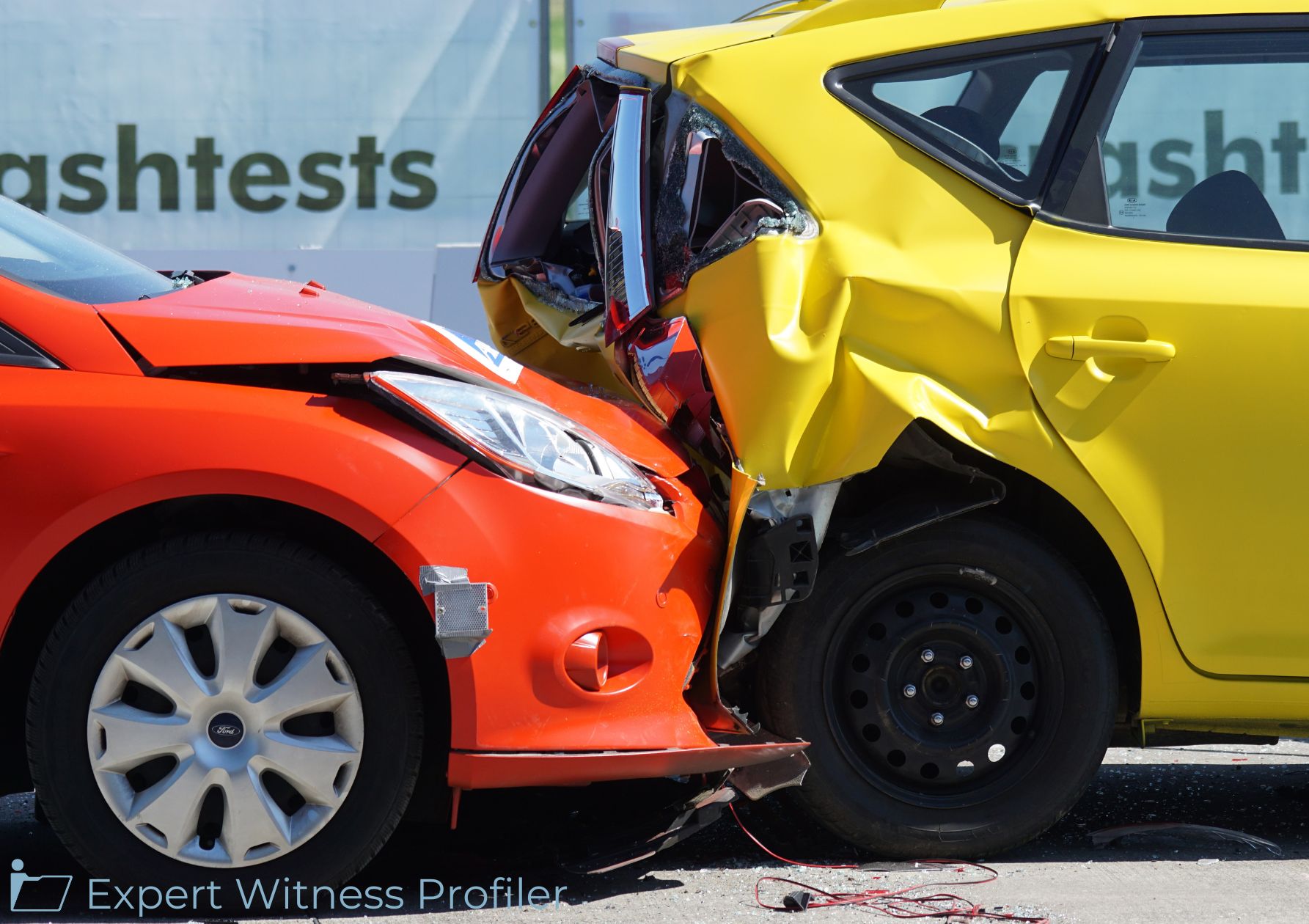
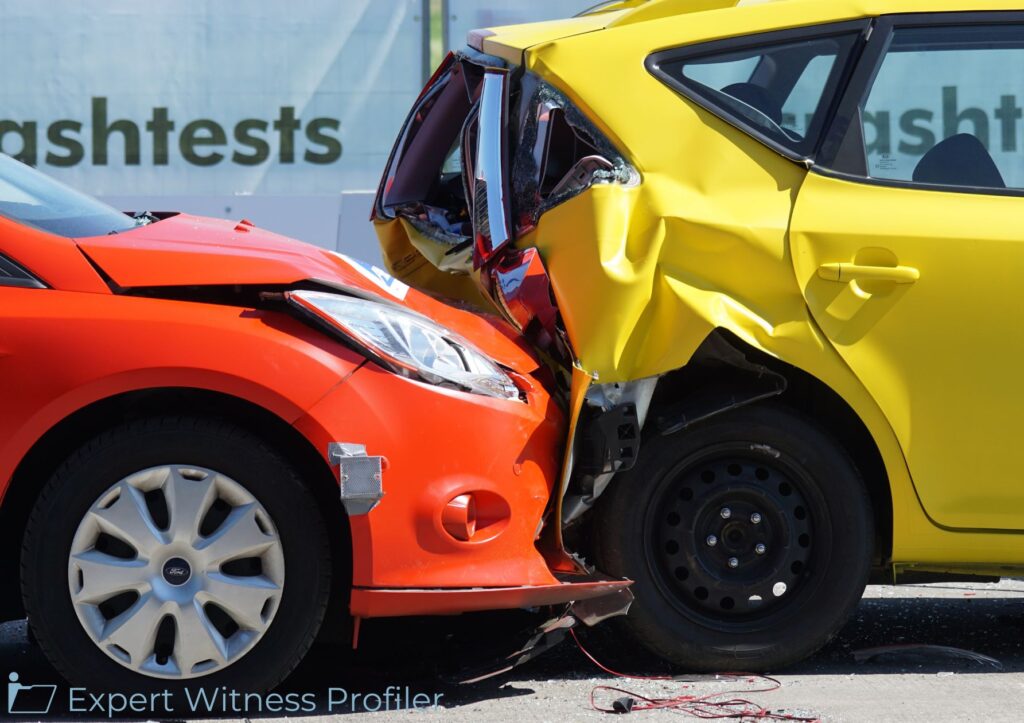
On September 30, 2021 at approximately 4:14 p.m., Defendant Marcus D. Jethrow, was operating a 2021 Volvo 760 tractor-trailer owned by Defendant Keep Trucking, LLC (Defendant Keep Trucking) traveling northbound on US 61 Hwy in Marion County, Missouri. At the same time, Keith Triplett (decedent) was operating a 1988 International Harvester grain hauler traveling east on County Road 338 in the process of crossing US 61 Hwy. The vehicles collided, and Triplett died as a result.
Triplett’s wife asserted claims of negligence in hiring, training, supervising, retaining, and entrusting Jethrow against Defendant Keep Trucking.
Plaintiffs asked the Court to exclude the testimony of the Defendants’ retained accident reconstruction expert witness, Kevin T. Johnson, for both Rule 26(a)(2)(B) and Daubert reasons.
Accident Reconstruction Expert Witness
Kevin Turner Johnson is accredited by A.C.T.A.R., the Accreditation Commission for Traffic Accident Reconstruction, testifies as an expert witness, and trains others in the accident reconstruction community. His 10 years of law enforcement experience, which included over 500 collisions investigated on-scene, lends additional perspective to collision analysis and police investigations.
First, Plaintiffs alleged that Johnson performed an avoidability calculation of what would have occurred if Jethrow had been traveling at exactly the posted speed limit of 65 m.p.h. and then suppressed it, not complying with required disclosures in Rule 26(a)(2)(B).
Johnson analyzed multiple data points to reach his conclusions in this case which would include but are not limited to: physical evidence on the roadway, damage patterns, distances traveled, electronic data from the vehicle showing speeds and braking, and the video of the collision and the event prior thereto.
Johnson’s report contained his analysis of available data and after performing accident reconstruction calculations, determined that Defendant Jethrow’s speed did not cause the accident. Plaintiffs presented no evidence that Johnson or Defendants suppressed anything here or that they did not comply with required disclosures in Rule 26(a)(2)(B). Therefore, the Court refused to exclude his opinion on Plaintiffs’ first point of argument.
Plaintiffs also took issue with the perception-response time analysis done and the traffic standards applied. Johnson focused his reconstruction analysis on a moment in time that the decedent was a hazard — i.e. when he was in the median failing to yield. Plaintiffs’ expert, meanwhile, focused his reconstruction analysis on a ten second window prior to the collision. Just because these analyses are different, the Court held that challenges to the factual basis of Johnson’s testimony go to credibility and the weight of the testimony which are subjects that may be raised during cross-examination.
Held
The Court denied Plaintiff’s motion to exclude the testimony of Defendants’ expert Kevin Johnson.
Key Takeaway
Challenges to the factual basis of Johnson’s testimony go to the credibility of the testimony, not the admissibility, and it is up to the opposing party to examine the factual basis for the opinion in cross-examination. Only if the expert’s opinion is so fundamentally unsupported that it can offer no assistance to the jury must such testimony be excluded.
Case Details:
Case Caption:
Triplett V. Keep Trucking, LLC
Docket Number:
2:25cv1
Court Name:
United States District Court for the Eastern District of Missouri, Northern Division
This case arises from a single, momentary sideswipe on Interstate 95 in which the rightfront tire of the U-Haul truck driven by Corey Hayes-Goode contacted the left-rear corner of Rigoberto Lagunas-Antunez’s GMC van.
The Court dismissed Plaintiffs’ claims against U-Haul that were brought under a design defect theory (the “design defect claims”), but denied the motion as to Plaintiffs’ claims against U-Haul under a failure-to-warn theory, as well as to the Estate of Rigoberto’s wrongful death claim against U-Haul. All of Plaintiffs’ claims against Defendant Hayes-Goode remained.
Human Factors Expert Witness
Ruston M. Hunt holds a B.S. and M.S. in Industrial Engineering and a Ph.D. in Mechanical Engineering from the University of Illinois, where he also taught and conducted applied research on human error and electro-mechanical systems. With over 40 years of experience in human factors engineering, he has led extensive research and development projects for major government agencies and Fortune 500 companies, focusing on operator support systems and human-system interfaces. Hunt has served as a faculty member and administrator at leading institutions, where he taught and developed programs in human factors and systems engineering.
Daniel M. Wolfe has a Bachelor of Science Degree in Engineering and a Doctor of Philosophy degree in Electrical and Electrical and Computer Engineering.
He is a member of the Society of Automotive Engineers, the National Association of Accident Reconstruction Experts, and the Optical Society of America. He is certified by the Society of Automotive Engineers to access and interpret Heavy Vehicle Event Data Recorders in commercial vehicles and is certified as a BOSCH Crash Data Retrieval technician.
Steven T. Kean has over 25 years of experience in traffic crash investigation and reconstruction, including more than 1,000 crash investigations. He has served as an Accident Reconstruction Team member since 2001 and as Team Leader since 2008, and he holds full accreditation as a Traffic Accident Reconstructionist from ACTAR.
Kean’s extensive specialized training—spanning advanced crash reconstruction, event data recorder analysis, heavy vehicle investigations, and human factors—demonstrates his comprehensive expertise in evaluating vehicle dynamics and driver behavior. He has been qualified and testified as an expert in multiple state courts, taught advanced crash reconstruction courses to law enforcement and legal professionals, and is an active member of leading professional organizations, including the National Association of Professional Accident Reconstruction Specialists and the Society of Automotive Engineers.
Brooks Rugemer has over 30 years of experience in trucking safety, driver training, risk management, and accident investigation, including 12 years as a tractor-trailer operator with 1.4 million accident-free miles. He has hired and trained over 5,000 CDL drivers and is intimately familiar with FMCSRs, OSHA regulations, and accepted transportation safety practices.
U-Haul provided that Hunt opined as to the location of the van relative to the Subject Truck at the time of the accident, that the Subject Truck was defective and unreasonably dangerous due to lacking certain technologies, and that U-Haul allegedly failed to provide adequate warnings and training to inexperienced renters.
On review of Hunt’s voluminous report, these opinions primarily involve (1) the Subject Truck being unreasonably dangerous and defective because “insufficient warnings and instructions were provided to renters” and because “it lacked a blind spot detection and warning system,” (2) the dangers of failing to “explicitly train” renters on the proper adjustment of the Subject Truck’s side view mirrors; and (3) the accident-prevention effect that blind-spot detection technologies “likely” would have had in this case, had they been installed on the Subject Truck.
Because Plaintiffs’ design defect claims are no longer viable, Hunt’s opinions that the Subject Truck was defective and unreasonably dangerous due to an alleged design defect are not relevant.
B. Motion to Exclude Expert Daniel Wolfe
Wolfe testified as to the Subject Truck’s alleged design defects and alternative technologies that allegedly could have prevented the instant accident.
As the proposed design-engineering expert, Wolfe’s testimony is relevant only with regard to the now-dismissed design defect claims. Therefore, pursuant to Federal Rule of Evidence 401, the Court granted U-Haul’s motion to exclude the testimony of expert Wolfe.
C. Motion to Exclude Expert Steven Kean
U-Haul took issue with two specific opinions proffered by Kean in his deposition: Plaintiffs’ van was in the Subject Truck’s blind spot prior to the accident, and the van was traveling faster than the Subject Truck at impact.
According to Plaintiffs, Kean’s testimony will “offer critical insight that will help the jury understand the sequence of events and the physical evidence underlying this collision.”
Because the Court can foresee the potential relevance of an accident reconstructionist’s testimony to Plaintiffs’ remaining claims, the Court denied without prejudice U-Haul’s motion to exclude the testimony of expert Steven Kean at this juncture, subject to a Daubert hearing at the appropriate time in the proceedings to ascertain the reliability of his proffered testimony.
D. Motion to Exclude Expert Brooks Rugemer
U-Haul provided that Rugemer’s testimony concerned the countermeasures that U-Haul should have taken in order to prevent the instant accident, such as giving additional training and safety information to inexperienced drivers of rental trucks.
According to Plaintiffs, Rugemer will “explain to the jury how commercial transportation companies manage blind spot and mirror adjustment risks, what reasonable industry practices exist to mitigate foreseeable lane-change collisions, and how U-Haul’s rental procedures fell short of those well-established standards.”
Because the Court can foresee the potential relevance of a commercial safety expert’s testimony to Plaintiffs’ remaining claims, the Court denied without prejudice U-Haul’s motion to exclude the testimony of expert Brooks Rugemer at this juncture, subject to a Daubert hearing at the appropriate time in the proceedings to ascertain the reliability of his proffered testimony.
Held
The Court granted U-Haul’s motions to exclude the testimony of Ruston Hunt and Daniel Wolfe.
The Court denied without prejudice U-Haul’s motions to exclude the testimony of Steven Kean and Brooks Rugemer.
Key Takeaway
Evidence is relevant if it has any tendency to make a fact more or less probable than it would be without the evidence, and the fact is of consequence in determining the action.
Plaintiff Douglas Looney, Evergreen’s employee, was standing behind a vacuum truck to wash its interior when a chunk of ash flew out, injuring him.
Defendant intended to present the expert testimony of Jason Henthorn at trial. Plaintiffs asked the Court to exclude Henthorn’s testimony pursuant to Federal Rule of Evidence 702.
Industrial Hygiene Expert Witness
Jason E. Henthorn has a bachelor’s degree in industrial hygiene. He also has experience creating and maintaining work safety programs, training employees on workplace safety, and investigating workplace accidents.
The first opinion that Plaintiffs attacked is that “Looney placed himself in an area of increased risk when he positioned himself in between the half door and the truck’s debris body.” Plaintiffs argued that this opinion should be excluded because it is not based on “any identifiable hazard analysis” and because Henthorn never explained his methodology in reaching this conclusion.
During his deposition, Henthorn testified he had experience with vacuum trucks similar to the one involved in Looney’s accident. Henthorn also suggested there were “materials in the operator’s manual of the truck” and “stickers or placards on the truck” alerting employees to the danger of standing behind the truck.
Because Henthorn’s experience is sufficient to render the opinion reliable and helpful to a jury, the Court will not exclude this opinion.
B. Opinion 2
Henthorn’s second opinion is that Defendant “possessed policies and procedures, including the Vacuum Truck Safety Program, which originated in 2019 and had been revised a number of times.” As Plaintiff’s pointed out, this is simply a factual statement.
Still, the Court decided that Henthorn’s perspective would be helpful to the jury; his experience will allow him to explain whether these policies and procedures apply to the work Looney was doing when he was injured.
C. Opinion 3
The third opinion at issue is that Defendant “did not possess knowledge of a dangerous condition or practice involving its vacuum trucks.” Plaintiffs argued that this opinion “is pure speculation.”
The Court agreed. As Plaintiffs pointed out, “in his deposition, Henthorn could not identify the field supervisor who ordered Looney and his crew to decontaminate the vacuum truck on the day in question.”
Further, Defendant’s own report on Looney’s accident contradicted Henthorn’s conclusion that Defendant lacked knowledge.
D. Opinion 4
Henthorn’s fourth opinion is that “the struck-by hazard of falling debris should have been obvious and apparent to Looney as he relocated himself during his work due to the ash not coming out of the truck as he had previously experienced.”
During his deposition, Henthorn acknowledged that he had no experience with the type of material in the truck Looney was cleaning. He testified that he did not know what type of ash was in the truck, nor how long the ash had been sitting in the truck before Looney began cleaning it, but he explained that both the type of ash and the amount of time it had been sitting would affect its density. Given Henthorn’s lack of knowledge about the material in the truck, the Court held that he cannot reliably testify whether the hazard of falling debris should have been obvious to Looney.
E. Opinion 5
Finally, Henthorn opined that Defendant “did not violate a specific industry standard which caused Looney’s incident.”
Henthorn’s experience in industrial hygiene made him qualified to explain which industry standards may or may not apply to a particular work activity and whether certain employer conduct violates an industry standard. In his deposition, he discussed specific industry standards and explained why, in his view, they did not apply on the day of the accident. As a result, the Court admitted this opinion.
Held
The Court granted in part and denied in part Plaintiffs’ motion to exclude the testimony of Jason Henthorn under Federal Rule of Evidence 702.
Key Takeaway
Some expert opinions are only reliable when supported by scientific testing. Henthorn’s conclusion that Looney placed himself in an area of increased risk is one such opinion.
Case Details:
Case Caption:
Looney V. North American Services Group, LLC
Docket Number:
3:24cv467
Court Name:
United States District Court, West Virginia Southern
Plaintiff Sun State Ford initiated this action for monetary, declaratory, and injunctive relief on September 8, 2023. Defendant Ford Motor Company is a manufacturer and distributor of Ford brand vehicles, and Plaintiff is a constituent franchise dealer. This case arises from Defendant’s alleged breach of oral contracts, perpetration of unfair business dealings, and other unlawful practices.
Defendant filed a Daubertmotion seeking to exclude the testimony of Plaintiff’s expert, Joseph Roesner.
Automotive Expert Witness
Joseph F. Roesner possesses a B.A. in business administration and history from the Marymount College of Kansas and an MBA from the University of Arizona.
Roesner has over 35 years of experience in the retail automotive industry and has conducted analyses and studies of hundreds of new motor vehicle dealerships of various line-makes, including Ford.
Roesner was retained to determine whether the sale of “new retail Ford light and medium trucks by Rush Truck” impacted new retail Ford sales of Sun State Ford from October 2019 through 2024.
Roesner was told to accept two assumptions in forming his opinions: (1) Sun State Ford was told that Rush Truck would only be serving the commercial truck market and would not be competing for retail sales, and (2) to assume that “as a matter of law,” Rush Truck should not have made new retail Ford sales, and such sales should have been made by other licensed Ford dealerships.” He outlined two primary opinions. First, he opined that during the relevant time, “Sun State’s sales of new retail Ford vehicles sold by Rush Truck . . . would have at a minimum been 86 vehicles.” Second, he opined that the percentage of new retail Ford vehicles sold by Rush Truck during the relevant period is inconsistent with a dealership only serving the commercial vehicle market.
The Defendant argued that Roesner’s lost sales opinion is irrelevant and unhelpful because he did not convert the raw numbers or lost sales into damages. The Defendant also claimed that the opinions are unhelpful and unreliable because Roesner accepts assumptions from Plaintiff’s counsel that contradict the pleaded allegations and the testimony of Plaintiff’s main witness and therefore do not align with the facts of the case. Lastly, the Defendant asserted that the Plaintiff’s methodology is unreliable, because “some unknown number of what [Roesner] considered to be ‘retail’ sales could have been commercial sales.”
A. Calculation of Damages
The Plaintiff’s calculation of damages was not provided until August 28, 2025, after discovery closed on July 31, 2025, and after the Defendant filed its Daubert Motion. Furthermore, Roesner did not provide an opinion on the damages suffered by the Plaintiff. Since the Plaintiff failed to disclose its damages calculation until after discovery closed, making such evidence inadmissible, Roesner’s estimate of the sales allegedly lost to Rush Truck is unhelpful. Knowing the number of light-duty and medium-duty trucks sold by Rush Truck that should have been sold by the Plaintiff does not assist the jury in calculating damages. In short, nothing in Roesner’s report addresses the types of damages the Plaintiff identified in its Rule 26 disclosure.
Accordingly, the Court excluded Roesner’s opinions regarding the number of new retail Ford vehicles sold by Rush Truck during the relevant period.
B. Assumptions and Methodology
Roesner was asked by Plaintiff’s counsel to assume that Rush Truck would only serve the commercial truck market and would not compete with Plaintiff for retail sales, and to further assume that, as a matter of law, such retail sales should have been made to other licensed Ford dealerships.
Roesner’s assumption that Rush Truck was prohibited from selling any retail vehicles conflicts with the evidence. The question is whether this inconsistency between the assumptions and the facts renders Roesner’s opinion about Rush Truck’s retail sales, and thus those lost by the Plaintiff, inadmissible. The same issue applied to Roesner’s claim that the percentage of new retail Ford vehicles sold by Rush from 2019 to 2024 is inconsistent with a commercial truck seller.
Roesner’s reliance on these assumptions undermines his methodology. That is, Roesner’s method for counting the sales that the Plaintiff “lost” to Rush Truck does not consider that Rush was allowed to make retail sales incidental to their heavy-duty truck and fleet customers. This is because he was instructed to assume that Rush Truck was prohibited from making any retail sales.
Roesner’s opinion on lost sales suffers from a similar flaw. He relied on the assumption that retail sales made by Rush Truck should have been made by other licensed Ford dealerships. This assumption overlooks the fact that Rush Truck was allowed to make retail sales incidental to its heavy-truck and commercial customers.
Held
The Court granted the Defendant’s Daubert motion to exclude Joseph Roesner’s opinions.
Key Takeaway
Roesner did not specify the data or analysis supporting his conclusion that if Rush’s retail sales were impermissible, they would have been captured by Plaintiff.
Because Roesner’s reliance on assumptions provided by Plaintiff’s counsel weakens his methodology for calculating “lost” retail sales and his characterization of Rush Truck as operating inconsistently with commercial sales, the Court excluded these opinions as unreliable.
This subrogation action arises from a fire that occurred on April 10, 2022, involving a dump truck owned by Boggs Transport, Inc. (“Boggs”) and insured by Plaintiff Amerisure Insurance Company (“Amerisure”).
The fire began in a parked dump truck identified as Truck No. 863 at Boggs’s facility in Pageland, South Carolina, and spread to four adjacent trucks, resulting in damage to five vehicles. At the time of the fire, Truck No. 863 had been upfitted with a tarping system manufactured and installed by Defendant and Third-Party Plaintiff Ox Bodies, Inc. (“Ox Bodies”). Amerisure, as subrogee of Boggs, initiated this action asserting claims against Ox Bodies arising from the alleged origin and cause of the fire. Ox Bodies denied liability and disputed both the location of the fire’s origin and the mechanism by which the fire ignited.
In support of its claims, Amerisure designated two expert witnesses. Kenny A. McClure, P.E., M.S.M.E., CFEI, is offered as an expert in fire origin. McClure opined that the fire originated along the driver’s side of Truck No. 863, in the area of the battery compartment and associated electrical components mounted along the frame rail. Kevin R. Davis, P.E., is offered as an expert in fire causation. Davis opined that the fire was caused by an electrical failure associated with components of the tarping system, including a relay or controller installed as part of the Ox Bodies upfit.
Ox Bodies filed a motion to exclude the testimony of both of Amerisure’s experts pursuant to Federal Rule of Evidence 702.
Fire Investigation Expert Witnesses
Kenny A. McClure, P.E., M.S.M.E., CFEI holds an Associate of Applied Science in mechanical engineering technology, a Bachelor of Science in engineering technology, a Master of Science in mechanical engineering, and designations as a licensed professional engineer, a certified fire explosion investigator, a certified fire vehicle investigator, and a certified fire and explosion investigator.
Kevin Ray Davis, P.E. holds a Bachelor of Science in Electrical Engineering, is a licensed professional engineer, and maintains professional certifications in fire and explosion investigation and vehicle fire investigation. He has also worked for more than fifteen years as a consulting engineer investigating fires and electrical failures.
Defendant primarily argued that McClure’s testimony is unreliable because his defined origin area is allegedly inconsistent with Defendant’s expert’s electrical arcing theory.
Defendant framed the issue as a logical dilemma: if McClure’s origin area excluded the arcing location identified by Defendant’s expert, then McClure allegedly failed to consider an obvious alternative ignition source. Conversely, Defendant argued that if McClure’s origin area included that location, the opinion is unnecessary because both parties’ experts would be describing the same origin area. The Court did not find this argument persuasive because it conflates the geographic scope of an origin determination with the identification of a specific ignition source.
To begin with, McClure is offered as an origin expert, not a causation expert. His opinions concerned the location of the fire’s origin within Truck No. 863, not the specific mechanism of ignition. That distinction frames the Court’s Rule 702 analysis.
Fire investigators commonly identify an area of origin rather than a single ignition point when the available physical evidence does not permit greater precision. McClure applied this methodology here, concluding that the fire originated “along the driver’s side of Truck 863 in the area where the battery compartment, conductors, and electrical components are mounted along the frame rail.” That conclusion was based on his examination of burn patterns, fire dynamics, and electrical artifacts observed during the investigation. The record reflected that McClure employed the systematic fire-investigation methodology described in NFPA 921. Ox Bodies did not challenge the reliability of that methodology itself. Accordingly, the Court concluded that McClure’s origin analysis rests on a reliable investigative methodology consistent with Rule 702.
2. Defendant’s Relay-Knowledge Argument
Ox Bodies also argued that McClure’s opinion is speculative because he did not account for the post-fire location or condition of certain tarping-system relays.
The Court concluded that this argument improperly conflates origin analysis with ignition-source or causation analysis.
Under NFPA 921’s scientific method, investigators commonly determine the fire’s area of origin before identifying the specific ignition source. An investigator’s inability to determine the precise ignition mechanism does not invalidate the origin determination so long as the origin analysis is based on observed fire patterns, electrical artifacts, and other physical evidence.
Here, McClure’s testimony concerns the area where the fire began, not the precise electrical component that initiated it. Defendant’s criticisms regarding relay locations, therefore, go to the weight of the testimony rather than its admissibility.
3. Helpfulness to the Jury
Ox Bodies also contended that McClure’s origin opinion is so broad that it amounts to common knowledge and is unhelpful to the jury. The Court disagreed. Although the identified origin area is not confined to a single component, the opinion rests on specialized interpretation of burn patterns, electrical artifacts, and fire dynamics beyond the experience of lay jurors. Interpreting burn patterns, electrical damage, arc mapping artifacts, and other indicators of fire progression requires specialized training and experience. Jurors lack the technical background to interpret such evidence reliably without expert assistance.
Accordingly, the Court found that McClure’s origin opinions are grounded in accepted fire-investigation principles and satisfy Rule 702.
Kevin Davis
1. Reliability of Davis’ Methodology
Ox Bodies first argued that Davis’ opinions violated accepted fire-investigation methodology because he did not determine ignition temperature, quantify the duration of any electrical fault, or conduct testing to replicate the proposed ignition mechanism.
The Court agreed that portions of Davis’ analysis lack sufficient methodological support. Davis did not perform testing to confirm that the specific relay installed on Truck No. 863 could produce sufficient heat to ignite surrounding materials. Nor did he quantify the ignition temperature or duration necessary to produce ignition under the conditions present in the vehicle. Davis also relied in part on exemplar relay testing and recall information involving different relay configurations and applications.
Here, the record does not contain sufficient evidence connecting the exemplar relay testing or recall materials to the specific relay installed in Truck No. 863. Without testing, analysis, or other evidence showing that the relay in question was capable of generating sufficient heat to ignite the surrounding materials under the conditions present in the truck, the Court concluded that the methodology supporting Davis’ specific ignition-source opinion is insufficient under Rule 702.
2. Application of the Methodology to the Facts
The Court nevertheless found that Davis’ testimony is not wholly inadmissible. Davis’s report also included engineering analysis concerning the truck’s electrical system, including the condition of the wiring harness, the lack of circuit protection in portions of the tarp-system wiring, and the potential for energized conductors to create ignition sources within the electrical system.
These opinions are grounded in Davis’s inspection of the physical evidence and his application of electrical engineering principles to it. Such testimony may assist the jury in understanding the electrical mechanisms that could have produced a fire in the relevant portion of the vehicle.
Accordingly, Davis may testify regarding electrical fire mechanisms, wiring damage, circuit protection, and the potential for energized conductors to act as ignition sources within the electrical system of Truck No. 863. However, Davis may not opine that a specific relay or tarping-system component installed on Truck No. 863 was the ignition source of the fire.
This limited exclusion reflects the Court’s obligation under Rule 702 to ensure that expert testimony rests on a reliable foundation while permitting otherwise admissible technical testimony that may assist the trier of fact.
To the extent Davis discussed the circuit breaker during his deposition testimony, the Court found that those statements elaborate on the electrical-fault theory disclosed in his report and are not a new expert opinion requiring exclusion under Rule 26.
Held
The Court denied Defendant and Third-Party Plaintiff Ox Bodies, Inc.’s motion to exclude the testimony of Kenny A. McClure, P.E., M.S.M.E., CFEI.
The Court granted in part and denied in part Defendant and Third-Party Plaintiff Ox Bodies, Inc.’s motion to exclude the testimony of K.R. Davis, P.E.
Key Takeaway
Even assuming McClure’s origin area overlaps with the location proposed by Defendant’s expert, the testimony remains relevant and helpful because McClure explains the fire patterns, burn damage, and electrical artifacts that confine the fire’s origin to a particular structural portion of the vehicle. Such analysis assists the jury in understanding the physical evidence and does not become inadmissible simply because the parties’ experts may partially overlap in their conclusions.
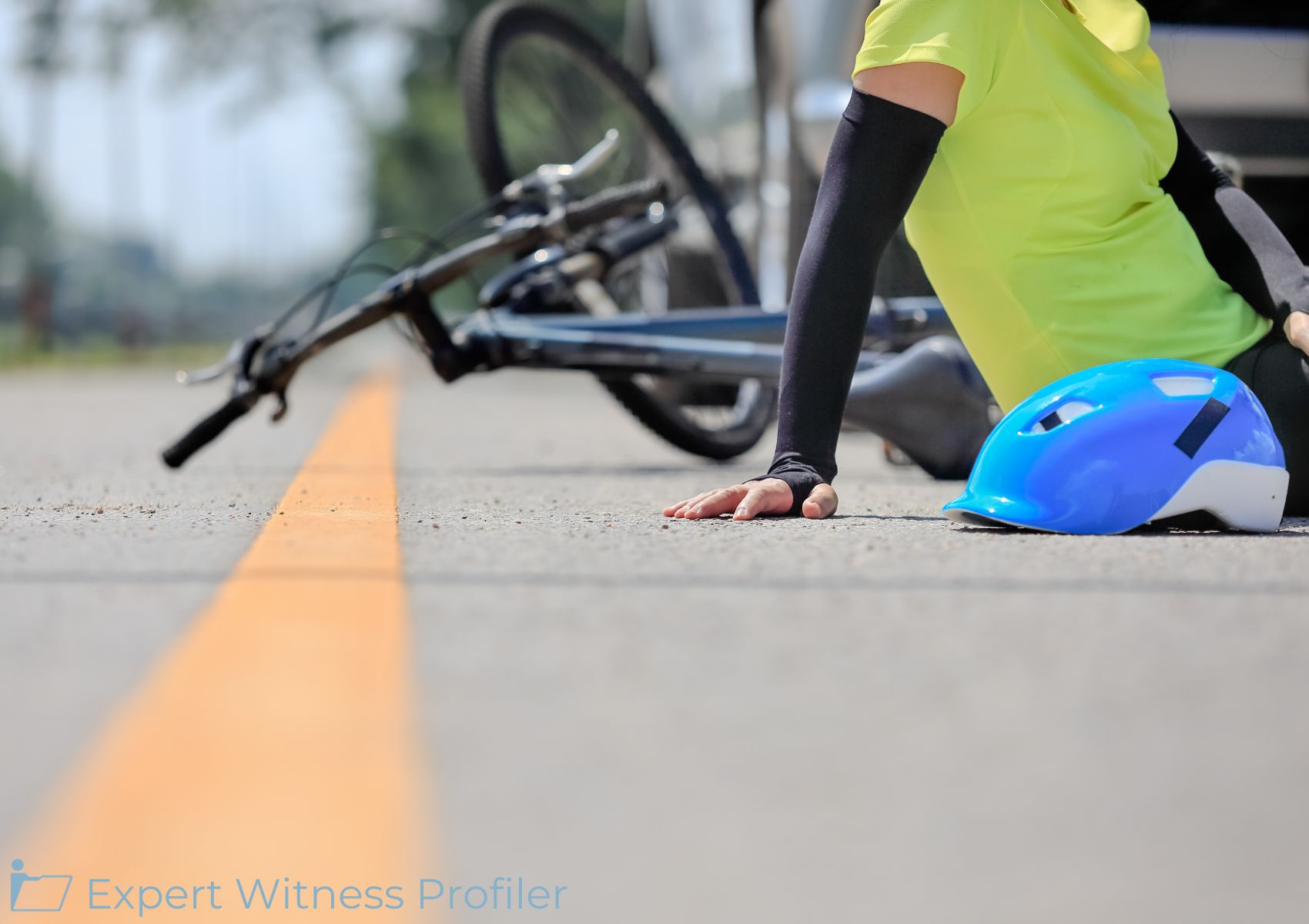
This case arises out of injuries sustained by Brandon Jensen on his bicycle when he collided with a semi-truck who made a left turn through his lane of travel. The semi-truck was driven by Defendant Michael Beale. Beale was working for Crete Carrier at the time of the accident.
To begin with, Defendants Michael Beale and Crete Carrier Corporation (Crete Carrier) filed three motions in limine concerning the testimony of the Plaintiffs’ accident reconstruction expert, Dr. Jay Przybyla.
First, Defendants Michael Beale and Crete Carrier Corporation (Crete Carrier) filed a motion to exclude seven videos relied on by Przybyla in his rebuttal report that show semi-truck trailers turning into the Crete Carrier terminal. Second, the Defendants filed a motion to exclude Przybyla’s opinions about the time required for Plaintiff Jensen to stop his bicycle. Finally, the Defendants filed a motion exclude Przybyla’s reconstruction simulations on the ground that he made improper assumptions about truck weight.
Transportation Engineering Expert Witness
Jay J. Przybyla, Ph.D., P.E. is a licensed professional engineer and managing engineer at Focus Forensics with experience, education, and training in the fields of civil engineering, forensic engineering, and transportation safety. He also holds a Master’s and Ph.D. in transportation engineering from the University of Utah and a Bachelor’s in civil engineering from Brigham Young University.
The Court questioned Przybyla outside the presence of the jury on the morning of November 12, 2025. The Court cautioned the witness to avoid opining on the credibility of Beale’s testimony or the propriety of Beale’s choices, but the Court found that the methodology for his accident reconstruction analysis was otherwise reliable. To be clear, uncertainties about bicycle stopping time or the assumptions about truck weight that Przybyla used to model his simulations went to the weight of the evidence rather than its admissibility.
Moreover, the Court found that the seven videos showing Crete Carrier trucks turning into the terminal were used in rebuttal to opinions from the Defendants’ accident reconstruction expert and were admissible for illustrative purposes. The Defendants’ concerns that the trucks were different makes and models and had different loads could be addressed during cross examination.
Held
The Court denied the Defendants’ motion in limine to exclude seven videos relied on by Jay Przybyla.
The Court denied the Defendants’ motion in limine to exclude Jay Przybyla’s opinions on the time required for Plaintiff Brandon Jensen to stop.
The Court denied the Defendants’ motion in limine to exclude Jay Przybyla’s reconstruction simulations.
Key Takeaway:
Uncertainties about bicycle stopping time or the assumptions about truck weight that Przybyla used to model his simulations could be adequately examined during cross examination.
Case Details:
Case Caption:
Jensen V. Crete Carrier Corporation
Docket Number:
1:23cv105
Court Name:
United States District Court for the District of Utah, Northern Division
This case arises from a fatal automobile accident that occurred on September 22, 2017. Blake Haddox was traveling southbound on a motorcycle as Defendant Nicholas Roshon Moore drove a semi-truck in a northbound lane and turned left across traffic. The two collided, and Haddox died as a result.
Defendants Central Freightlines, Inc. and Nicholas Roshon Moore (collectively, “Defendants”) filed a motion to strike Plaintiffs’ expert Lewis J. Grill, a motion in limine with respect to anticipated testimony by Grill and a motion to strike his supplemental expert report.
Defendants argued that Grill is not qualified to provide expert testimony in this case, and that his opinions are neither relevant nor reliable.
His proffered testimony relates to “four overarching areas” that include: (1) “general trucking industry customs, practices, and standards”; (2) the “operating performance” of Moore; (3) CFL’s “management practices”; and (4) “accident preventability from a commercial trucking industry standpoint.”
Trucking Expert Witness
Lewis Joseph Grill has extensive experience as a commercial truck driver, training instructor, training program director, safety director, and trucking consultant.
He is licensed as a commercial driver and has logged approximately 2 million miles driving tractor-trailers in the United States, Canada, Mexico, and Central America. Grill has published books and articles and spoken on the subject of commercial trucking, in general, and driver standards, in particular.
Plaintiffs provided Defendants with Grill’s original expert report by the applicable deadline. In accordance with an Amended Scheduling Order, Defendants timely filed a Daubert motion, requesting the Court strike Grill’s expert testimony. Over two months later, on December 4, 2020—well after the deadline to exchange expert reports had passed—Plaintiffs provided Defendants with a supplemental report prepared by Grill. Defendants filed a motion to strike Grill’s supplemental report as untimely.
The Court understood Defendants’ position. However, a review of the supplemental report indicated that the main change is the addition of two new opinions. These new opinions are apparently offered as a result of information gleaned from the deposition of Defendant Central Freightlines, Inc.’s Corporate Representative Thomas Weeks, taken September 16, 2020. Plaintiffs provided notice in their October 2020 response to Defendants’ motion to strike that Grill had “not had a reasonable opportunity to review the transcript and update his opinions accordingly.”
Grill also does not appear to have substantively changed his opinions in any meaningful way. At the time Defendants received the supplemental report, trial was scheduled for April 19, 2021. Defendants still had over four months to review the supplemental report and prepare for trial. Further, on March 9, 2021, the Court struck the scheduling order due to the Covid pandemic and the Court’s excess criminal case load. The Court acknowledged the importance of scheduling order deadlines and complying with the Court’s orders and procedures. However, the Court cannot ascertain any prejudice Defendants suffered as a result of the delayed supplemental report. Defendants have not requested leave to take Grill’s deposition out of time; nor have they filed a rebuttal report.
B. Motion to Strike Grill’s Testimony
I. Grill is qualified to testify about general trucking industry customs, practices and standards
Defendants argued that Grill is unqualified because “none of Grill’s background and experience concerns issues to be determined in this matter.” Defendants asserted that Grill is not an expert in matters of “accident reconstruction, traffic signals or human factors.” However, Defendants never contended that Grill is unqualified as an expert in the areas of general trucking industry customs, practices, and standards.
Plaintiffs responded that Grill is qualified as an expert in the field of commercial trucking based on his experience as a commercial truck driver, training instructor, training program director, safety director, and trucking consultant. Plaintiffs also contended that Grill has been qualified in numerous cases as an expert. The Court found that Grill has decades of experience and involvement in the trucking industry. Therefore, he possessed the necessary training, experience, knowledge and skill to testify in the areas of general trucking industry customs, practices and standards.
II. Some of Grill’s proffered testimony is relevant and reliable
Defendants contended that Grill’s testimony will not aid the jury because the jury can make a liability determination in this case without the aid of an expert witness.
As an initial matter, although not specifically raised by Defendants, the Court had concerns about representations in Grill’s report. It appeared Grill held opinions that elevated the standard of care applicable to commercial truck drivers. For example, Grill states, “in my opinion, the performance standards to accomplish this standard of care are much different for truck drivers than operators of smaller vehicles.” The Court will instruct the jury as to the proper standard of care. Therefore, Grill is prohibited from testifying about any opinion he holds concerning the standard of care applicable to commercial truck drivers.
Further, Plaintiffs proposed Grill will provide opinions “regarding the hiring, retention and safety management of Central.” However, the Court already granted Defendant CFL summary judgment as to Plaintiffs’ negligent hiring, retention, supervision and training claims.
Moreover, the Court found Grill’s proffered testimony about the accident and Moore’s actions leading up to the accident conclusory without underlying factual support.
Defendants specifically challenged Grill’s opinion that the accident was avoidable or preventable. The Court similarly found this opinion an impermissible conclusion. Any testimony that Moore violated law, regulations, procedures, or policies are likewise impermissible legal conclusions.
Grill’s report provided that “Moore, because of failing to perceive a hazard in time, and failing to make proper safety decisions when he ultimately chose risk over safety by intruding into the approaching traffic stream, caused this collision.” However, causation is an issue of fact for the jury.
Held
The Court denied the Defendants’ motion to strike Plaintiffs’ expert Lew Grill.
The Court granted in part and denied in part the Defendants’ motion in limine with respect to anticipated testimony by Plaintiffs’ expert Lew Grill. Grill is prohibited from testifying about the topics identified by the Court in this order. Any other concerns possessed by Defendants may be addressed by a contemporaneous objection at trial or through cross-examination.
The Court denied the Defendants’ motion to strike Lew Grill’s supplemental report.
Key Takeaway:
Grill’s knowledge, skill and experience in the trucking industry will help the jury understand the evidence and determine the factual issues of this case.
However, much of Grill’s proffered testimony was excluded because it reached unsupported conclusions and invaded the province of the jury. The jury is more than capable of reaching their own conclusions as to the ultimate issues in this case.
In July 2019, Plaintiff Amy Kessler was driving her car on Interstate 90 when she was rear-ended by a semitruck owned by Defendant McFarland Truck Lines, Inc. that, at the time, was being operated by Defendant Archie Gross within the scope of his employment with McFarland. As a result of the injuries she sustained in the collision, Kessler sued Gross and McFarland.
Kessler offered several opinions from her trucking expert, Walter Guntharp. With its motion to exclude, McFarland challenged those of Guntharp’s opinions that fell within the following three categories: accident causation, trucking industry hiring standards, and Gross’s driving history.
Trucking Expert Witness
Walter A. Guntharp has worked as a truck driver and a truck-driving instructor, and he has held multiple positions relating to safety in the trucking industry over the course of nearly fifty years.
Guntharp opined from his review of dashboard camera video capturing the incident that the accident was caused by Gross’s aggressive driving and failure to respond properly to the traffic conflicts produced by the construction zone. McFarland contended that Guntharp’s causation opinions must be excluded because he is not qualified as an accident reconstructionist and, even if he were, his causation opinions are not helpful to the trier of fact.
Although Guntharp is qualified to provide expert opinions on whether, in the lead up to the accident, Gross was driving in accordance with accepted industry safety standards, it did not follow that Guntharp also has sufficient expertise to opine on what caused Gross to collide with Kessler.
Even aside from Guntharp’s lack of expertise in accident reconstruction, the Court did not believe that his opinions on the cause of the accident would be helpful to the jury. In arriving at his conclusion that Gross’s unsafe driving was the cause of the crash, Guntharp relied mainly on the dashboard camera video of the accident. That same video will presumably be viewed by the jury. And Kessler will be free to offer Guntharp’s testimony about how Gross’s actions fell short of driving standards. But whether Gross’s substandard driving caused him to rear-end Kessler’s vehicle is a question better left solely to the jury. The jury is fully capable of considering the video footage in light of Guntharp’s testimony as to the applicable safe truck driving standards and determining causation for itself.
B. Trucking Industry Hiring and Retention Standards
To demonstrate that McFarland was negligent in hiring and retaining Gross as a truck driver, Kessler has offered several opinions from Guntharp about hiring standards in the trucking industry. McFarland challenged Guntharp’s qualifications to offer these opinions. Further, McFarland contended that Guntharp’s opinions on hiring and retention practices in the trucking industry are unreliable.
The Court concluded that Guntharp’s long experience in the trucking industry qualifies him to testify as to the industry’s practices for hiring and retaining truck drivers.
In attacking Guntharp’s methodology, McFarland focuses on his claim “that the standard in the trucking industry for hiring and retaining truck drivers is the ‘rule of three’: reasonably prudent motor carriers do not permit someone to drive a commercial motor vehicle if he has a combination of three or more moving violations and accidents in a three-year period.” McFarland contended that Guntharp’s assertion that the trucking industry adheres to a “rule of three” in hiring drivers is ipse dixit that lacks support from any reliable studies or data. The Court disagreed that Guntharp’s “rule of three” opinion is unsupported ipse dixit. Rather, Guntharp explained that his opinion is based on his years of experience in the trucking industry, as well as his review of the hiring and retention policies of thousands of trucking companies.
Finally, McFarland asserted that Guntharp’s “rule of three” is undermined by the data on which he relies. It highlighted how some of the trucking company policies that Guntharp reviewed do not automatically disqualify a driver whose preceding three-year record includes any combination of three moving violations and accidents but instead consider the seriousness of the accident or violation. However, that Guntharp’s “rule” might not be ironclad speaks to the correctness of his conclusions rather than the reliability of his methodology.
C. Gross’ Driving History
The final category of opinions that McFarland sought to exclude are Guntharp’s commentary on Gross’s prior accident history. Based on his review of Gross’s record of accidents and traffic violations, Guntharp opined that “Gross could not safely operate a commercial motor vehicle because of a lack of caution and attention while driving” and “routinely operated his truck in an aggressive manner that jeopardized the safety of others.” Kessler made no effort to defend these opinions. And the Court agreed that Guntharp’s characterization of Gross as an unsafe driver is pure ipse dixit. Rather than explain how the circumstances of each individual incident demonstrate Gross’s carelessness or aggressiveness, Guntharp seems simply to conclude that because Gross was involved in multiple preventable accidents and received multiple citations, he must have been an inattentive and overly aggressive driver.
Held
The Court granted in part and denied in part McFarland’s motion to exclude certain opinions of Kessler’s expert Walter Guntharp.
Key Takeaway:
The Court found that Guntharp is qualified to opine on driver hiring and retention practices in the trucking industry and employed a reliable terminology in concluding that trucking companies generally abide by a “rule of three” in considering a prospective driver’s history.
On March 12, 2021, Linda Maraldo was waiting at a red light in her 2017 Chevrolet Sonic. Behind her, Cynthia O’Hara was operating a United States Postal Service (“USPS”) box truck. When the light turned green, O’Hara took her foot off the brake, causing the truck to move forward and collide with Maraldo’s vehicle. Maraldo claims to have suffered neck and back pain as a result.
Expert Opinion
Government expert Dr. Jennifer Yaek conducted accident reconstruction and biomechanical analyses of the rear-end collision between Maraldo’s vehicle and the USPS box truck.
In preparing her expert report, Yaek reviewed several sources of information, including: (1) information about the accident, (2) eight photographs of the vehicles involved in the crash and the site of the crash, (3) repair and maintenance records for both vehicles, and (4) Maraldo’s medical records.
Yaek’s assessment of vehicle damage was solely based on the documents and photographs supplied by the government, as she did not conduct a physical inspection of either vehicle.
1. Accident Reconstruction Analysis
Yaek’s accident reconstruction analysis led her to conclude that the maximum change in velocity, or delta-V, of Maraldo’s vehicle was approximately 5 miles per hour, that the closing/impact speed of the USPS truck was approximately 6-6.5 miles per hour, and that the principal direction of force applied to Maraldo’s vehicle was 6 o’clock “with 12 o’clock being straight ahead on the vehicle.”
Yaek’s crush analysis began with calculating how much force acted on the rear of Maraldo’s vehicle and, similarly, on the front of the USPS truck. To calculate the force that acted on the rear of Maraldo’s vehicle, Yaek used photos of the vehicle’s “undeformed rear bumper and publicly available, peer-reviewed engineering and scientific literature.”
Yaek next used the Crash Investigation Sampling System from the National Highway Traffic Safety Administration to evaluate her delta-V calculation relative to the delta-V values in two other accidents where a vehicle rear-ended a Chevy Sonic.
2. Biomechanical Analysis
Yaek’s biomechanical analysis led her to conclude that the accident “did not provide sufficient forces to cause motion of Maraldo’s cervical or lumbar spine beyond the physiological range of motion, and would most likely not provide the type or magnitude of loading consistent with mechanisms for acute spinal injury beyond transient spinal strain.”
Yaek used the laws of physics to determine that Maraldo would have moved initially rearward and then rebound forward during the collision. She compared the loads that Maraldo’s spine would have experienced during the accident to “injury tolerances” and “loading experienced in physical tasks and activities of daily living.”
Yaek further drew on biomechanical and peer-reviewed studies in finding that Maraldo’s accident could not have resulted in disc herniation, protrusion, or bulging absent damage to adjacent bony structures.
Daubert Motion
Maraldo contended that Yaek’s accident reconstruction opinions are unreliable and based on speculation. Specifically, Maraldo asserted that Yaek did not perform a crush analysis and instead based her conclusions on a limited review of only one photograph of each vehicle. Furthermore, Maraldo argues that Yaek lacked crucial information regarding the distance traveled by the USPS truck until impact, the speed of the USPS truck, the starting positions of the vehicles pre-impact, or the resting positions of the vehicles post-impact.
Accident Reconstruction ExpertWitness
Jennifer L. Yaek has more than 25 years of extensive experience in accident reconstruction, vehicle dynamics, and data analysis.
She received her Master’s degree and PhD in biomechanical engineering with a concentration in impact biomechanics and has provided expertise in human injury tolerance, occupant kinematics, and rigid body dynamics associated with transportation related impacts, inter alia, since 2012.
In addition, Yaek has co-authored numerous publications, including a 2020 article on rear impact.
First, Yaek’s crush analysis consisted of three parts: (1) calculating how much force acted on the rear of Maraldo’s vehicle, (2) calculating how much force acted on the front of the USPS truck, and (3) calculating the total crush that both vehicles dissipated. In performing the crush analysis, Yaek reviewed multiple photos of both vehicles and relied on “publicly available, peer-reviewed engineering and scientific literature” as well as the laws of physics.
The Court concluded that Maraldo did not adequately support her contention that a physical inspection of the vehicles was required for Yaek’s analysis. Specifically, Maraldo did not clarify the necessity of a physical inspection, the additional insights Yaek would have gained, or the specific information Yaek overlooked by not conducting one. This failure to provide a clear explanation weakened Maraldo’s position.
In conducting her accident reconstruction analysis, Yaek reviewed a traffic crash report from Michigan, a USPS accident investigation worksheet, and the deposition testimonies of both Linda Maraldo and Cynthia O’Hara. Notably, Maraldo does not contest the foundation of Yaek’s delta-V calculation and principal direction of force determination. Consequently, the Court finds no apparent issues with Yaek’s accident reconstruction analysis that would render her opinions inadmissible. Furthermore, Maraldo argues that Yaek’s report lacked the expected level of intellectual rigor for an accident reconstruction expert.
Yaek compared the current accident to two other rear-end collisions involving Chevy Sonics to evaluate her delta-V calculation against other delta-V calculations, utilizing details and calculations sourced from the National Highway Traffic Safety Administration’s Crash Investigation Sampling System. However, Maraldo has not provided any explanation as to why this sampling system is unreliable such that Yaek should have confirmed the details of the accidents in the system herself.
B.Challenges to the Biomechanics Opinions
Maraldo argues that Yaek’s biomechanical analysis is grounded on an unreliable accident reconstruction analysis and is unsupported by the literature that Yaek cited in her report.
Maraldo claims that the peer-reviewed literature that Yaek cites does not address injury tolerance and the effect of forces on an aged spine like Maraldo’s.
First, as discussed above, Yaek performed a reliable accident reconstruction analysis. To perform her biomechanical analysis, Yaek applied her delta-V calculation, principal direction of force determination, and the circumstances of the collision to describe how Maraldo’s body would have moved during the collision.
Yaek also compared the forces that Maraldo’s neck and back would have experienced during the accident to the forces that one’s neck and back might experience in accidents of similar or greater severity and in activities of daily living.
The Court finds that this analysis and the resulting opinions are reliable.
Second, Maraldo’s criticisms of the literature that Yaek cites are immaterial to any of the Daubert factors. At best, Maraldo’s critiques of the literature go to the weight of Yaek’s opinion, not its admissibility.
Held
Because Dr. Jennifer Yaek’s opinions meet the admissibility standards of Federal Rule of Evidence 702, the Court will not exclude them. The the Court, therefore, denied Maraldo’s motion to exclude the government’s expert opinions and testimony.
Key Takeaway:
The Court affirmed Yaek’s methodologies, including her crush analysis, delta-V calculations, and comparisons to similar accidents and reliance on biomechanical studies, despite the Plaintiff’s challenges regarding the lack of physical inspection and the cited literature. The Court determined that the Plaintiff’s criticisms primarily went to the weight, not the admissibility, of the expert’s opinions.
This lawsuit arises out of the designation of Sassine Avenue as a “no truck route.” Plaintiff, Kirk Thomas, engages in various agricultural and commercial pursuits, many of which involve the use of his property. Consequently, commercial vehicles commonly travel to and from Thomas’s property.
Plaintiffs Thomas and KT Trucking and Cattle, LLC, asserted that the only safe way for a commercial vehicle to access Thomas’s property is via Sassine Avenue in Port Arthur, Texas. Port Arthur, however, has designated Sassine Avenue as a “no truck route,” which prohibits large commercial vehicles from using Sassine Avenue to enter Thomas’s property.
On March 15, 2024, Plaintiffs designated Raegan Droddy as a testifying expert. Plaintiffs anticipated that Droddy’s testimony would demonstrate that Sassine Avenue provides the only means for commercial vehicles to access Thomas’s property safely.
Defendants maintained that Droddy should be struck as an expert because he is not qualified to opine on the matters contained in his report. Alternatively, Defendants asserted that Droddy’s report was unreliable because it was based on insufficient facts and data. Therefore, Defendants asked this Court to strike Droddy as an expert.
Safety Expert Witness
Raegan Droddy is a retired Texas State Trooper with approximately 24 years of experience working for the Texas Department of Public Safety (“DPS”).
For 13 of his 24 years of experience, Droddy worked in the Commercial Vehicle Enforcement Service. Droddy also served as a crash scene investigator and taught multiple classes on Texas traffic laws and basic crash Investigations. Droddy currently owns and operates Droddy DOT Safety Consulting, Inc., where he conducts safety assessments and audits, provides safety presentations for trucking companies, and reviews company policies, procedures, shipping papers, driver qualifications, and crash paperwork.
Defendants contended that Droddy was not qualified to testify as an expert on the subject matter contained in his report because he did not have the requisite experience, education, or knowledge. Defendants asserted that Droddy’s report consisted of “numerous engineering opinions regarding the safety and availability of access to Thomas’s property.” Droddy did not have an engineering degree. Consequently, Defendants claimed that Droddy is not qualified to testify on the engineering opinions contained in his expert report.
Plaintiffs successfully neutralized Defendants’ concerns regarding Droddy’s qualifications in one broad-sweeping stroke. Droddy’s report did not contain opinions that require him to have an engineering degree. Droddy bases his report on his knowledge and experience that he acquired during 24 years of service with the DPS. Droddy’s report focused on basic measurements, observations, and data. Droddy’s report then analyzed those facts under the purview of his specialized knowledge of commercial vehicles, traffic regulations, and highway safety hazards. Droddy did not attempt to opine on the structural integrity of the road, nor does he attempt to apply complex mathematical formulas beyond his training and expertise. At its core, Droddy’s report opined on matters of traffic safety, not matters of engineering. Moreover, an engineering degree is not required to evaluate the safety of certain vehicular maneuvers.
Furthermore, the Court held that Plaintiffs have met their burden of demonstrating, by a preponderance of the evidence, that Droddy is qualified to testify on matters of traffic safety and commercial vehicles. Droddy has extensive education regarding commercial vehicles, including his attendance at the Commercial Vehicle Crash Inspection School as recently as 2023. Consequently, in light of Droddy’s extensive experience with commercial vehicles, commercial crash scene investigations, and highway law enforcement, the Court concluded that Droddy is qualified to testify on matters of traffic safety.
Droddy’s Reliability
Droddy discussed safety issues associated with commercial vehicles utilizing different roads to access Thomas’s property. As a result, the Court must evaluate whether Droddy’s report is predicated on sufficient facts and data. In his report, Droddy relied on his personal observations of Spur 93 and Sassine Avenue, the measurement of a KT Trucking vehicle, the width of the proposed access point on Spur 93, the relevant speed limits and traffic signals, photographs of Thomas’s property, online maps, and the Texas Department of Transportation and Safety’s most recent average daily traffic count for Spur 93. A review of Droddy’s report demonstrated that he methodically gathered facts to form the basis of his opinion. Additionally, Droddy’s report outlines the interplay between various facts and states the impact of those interactions on the safety of certain vehicular maneuvers. Accordingly, the analytical gap between the facts Droddy gathered and the conclusions he reached is narrow. Therefore, Plaintiffs have established that Droddy’s report is substantiated by sufficient facts and data.
Defendants, however, contended that Droddy’s report was unreliable because Droddy admitted that he was unsure whether he reviewed a map of Port Arthur’s “no truck” routes and that he did not review its zoning ordinances. Defendants also emphasize that Droddy failed to interview anyone besides Thomas when gathering facts and data.
The Court held that Droddy’s lack of consideration of certain documents and sources did not render his opinion unreliable.
Held
The Court denied the Defendants’ motion to strike Plaintiffs’ expert Raegan Droddy.
Key Takeaway:
Droddy is qualified to testify on matters of traffic safety considering his extensive experience with commercial vehicles, commercial crash scene investigations, and highway law enforcement.
Droddy’s report outlines the interplay between various facts and states the impact of those interactions on the safety of certain vehicular maneuvers. Accordingly, the analytical gap between the facts Droddy gathered and the conclusions he reached is narrow. The Court held that Droddy’s lack of consideration of certain documents and sources did not render his opinion unreliable.
Case Details:
Case Caption:
Thomas V. City Of Port Arthur, Texas
Docket Number:
1:23cv282
Court:
United States District Court for the Eastern District of Texas