Sarah Budd alleged that SkyWest (Defendant) discriminated against Budd by subjecting her to a sexually hostile work environment during her employment at SkyWest’s Dallas-Fort Worth International Airport facility and retaliating against her for reporting the harassment. Budd claimed that SkyWest placed her on indefinite administrative leave as retaliation.
In response, the Equal Employment Opportunity Commission (“EEOC”) filed a motion to exclude Dr. Steven H. Berger‘s anticipated opinion testimony, which challenged the Plaintiffs’ expert Dr. Kristin W. Samuelson‘s diagnoses and the results of her assessment of Budd using the Minnesota Multiphasic Personality Inventory—Third Edition (MMPI-3).
Psychiatry Expert Witness
Steven H. Berger is a graduate of the University of Michigan Medical School (1972). He has been licensed as a physician in Nevada since 2004, in California since 1999, and in 6 other states. He is board certified in General Psychiatry (1978) and Forensic Psychiatry (1985, 1998, 2005, 2013, 2019). He is a Clinical Professor of Psychiatry, University of Nevada, Reno, School of Medicine. He is a member of the American Psychiatric Association (1975) and has been a Distinguished Life Fellow since 2009. He is a member of the American Medical Association (1974) and the American Academy of Psychiatry and the Law (1985). He served as the Chairman of the Ethics Committee of the Michigan Psychiatric Society (1989-1994) and the Indiana Psychiatric Society (2001-2017).
A. Berger has received no specialized training on PTSD
Berger opined that Samuelson’s diagnosis of Budd suffering from Post-Traumatic Stress Disorder (PTSD) was incorrect. The EEOC contended that this opinion should be excluded, arguing that Berger was unqualified to render it and that it was irrelevant and unreliable. The Court held that Berger’s opinion and related testimony were inadmissible. He lacked the qualifications to critique Samuelson’s performance of the psychological assessments that support her diagnosis because he has never performed them himself, he is not qualified to read or interpret their resulting data, he has received no specialized training on PTSD, and he has never written on the topic.
The Court also deemed Berger’s opinion unreliable. His purported “common-sense” approach to interpreting the Diagnostic and Statistical Manual of Mental Disorders, Fifth Edition, did not meet the reliability standards required by Rule 702.
Furthermore, Berger claimed that the MMPI-3 assessment that Samuelson administered to Budd indicated that she over-reported some symptoms. The EEOC argued that this opinion did not occur to Berger, but to his colleague, Dr. Sarah Hall, to whom he provided Samuelson’s data. While SkyWest claimed Berger offered an independent analysis of Hall’s findings on the MMPI-3, the Court, once again, found this opinion inadmissible. It was unreliable, and rests on Berger’s common sense and life experience rather than an independent analysis of Hall’s findings. Moreover, the Court decided that Berger—who had never administered the MMPI-3 and was unable to read its test data—is unqualified both to opine on Budd’s MMPI-3 assessment and to independently analyze Hall’s MMPI-3 findings.
B. Berger draws impermissible legal conclusions
Berger stated that Budd failed to mitigate her symptoms and that her litigation stress was not compensable. The EEOC contended that Berger made impermissible conclusions of fact and law, while SkyWest argued that his testimony would help the jury understand the evidence. The Court determined these opinions were inadmissible as well. Berger was unqualified to offer legal conclusions, and his reliance on common sense and life experience rendered his opinions unreliable.
Held
The Court granted the EEOC’s motion to exclude Defendant’s expert witness, Steven H. Berger.
Key Takeaway:
Berger has received no specialized training on PTSD, and he has never written on the topic. Certain opinions offered by Berger rest on what he acknowledges are his common sense and life experience, and Hall’s findings, which he did not independently analyze. The Court did not admit his testimony.
Case Details:
Case Caption:
Equal Employment Opportunity Commission V. Skywest Airlines Inc
Docket Number:
3:22cv1807
Court:
United States District Court for the Northern District of Texas, Dallas Division
Plaintiff, MacNair, owned the immovable property located at 526-528 Belleville Street, New Orleans, Louisiana 70114 which she insured through Chubb. MacNair lived on one side of her home and rented out the other side. On August 29, 2021, Hurricane Ida caused severe damage to MacNair’s property including the roof, all elevations and all rooms in the interior. MacNair immediately reported the claim to Chubb.
Chubb, through its agents, sent adjuster, Mike Weaver (hereinafter referred to as “Weaver”), to the property to inspect the home for damages. Weaver took photos of MacNair’s property during his inspection. Despite the open and obvious damages, Weaver’s estimate totaled $13,988.97 (RCV) and $13,048.27 (ACV). After the $5,820.00 deductible, the amount for repairs totaled $7,228.27. As part of his adjustment of MacNair’s claim, Weaver eventually issued a report and estimate. Nonetheless, Chubb refused to reinspect the property, despite MacNair’s numerous requests.
Plaintiff alleged she continued to contact Chubb and Minuteman; eventually, she and the tenant moved out. She retained an attorney in November 2021 and sought a reinspection, among other things. Believing her home to be quickly deteriorating, despite a tarp on the roof, Plaintiff hired 911 Restoration to perform gutting and water mitigation services at the home. 911 Restoration took some 116 photographs of the damages before commencing work. Between December 22, 2021, and March 9, 2022, 911 Restoration performed mitigation and gutting services.
MacNair invoked appraisal. Chubb responded through its attorney that it would participate in appraisal, but after the appraisers conducted a joint inspection in May 2022, Chubb withdrew from the appraisal process and requested MacNair’s examination under oath. MacNair filed her petition for damages against Chubb on January 9, 2023.
Both parties later filed motions to exclude each other’s expert testimony.
Industrial Hygiene Expert Witness
George F. Coto is a Senior Industrial Hygienist at EFI Global, Inc. Coto’s expertise is water and mold damage assessment, asbestos investigation and management, environmental site assessments, and industrial hygiene assessments.
He holds a Bachelor of Science in Environmental Science with a Minor in Chemistry from McNeese State University. Coto has worked as an environmental consultant for the past twenty-two (22) years, conducting environmental and personnel exposure assessments for state governments, insurance carriers, and private industry.
Jeremy Belk has been a Louisiana-licensed adjuster since 2005. He has completed adjustments and appraisals for carriers, clients, and attorneys since 2005 in the state of Louisiana as well as other states. Since 2017 Belk has worked daily claims for various carriers, both residential and commercial. He is I.I.C.R.C. WTR certified (#70143683). He has also completed adjustments for various third-party administrators and carriers during this period in the states of Arkansas, Colorado, Georgia, Florida, Illinois, Indiana, Minnesota, Mississippi, Nebraska, North Carolina, South Carolina, Tennessee, Texas, and Utah. These included fires, floods, hail, tornadoes, and hurricanes claims.
Plaintiff filed a motion to exclude the testimony of George Coto, an expert witness to be called by Defendant Chubb European Group, SE. In response, Defendant submitted a motion to exclude the testimony of Jeremy Belk, an expert witness to be called by Plaintiff. Both parties subsequently filed responses opposing each other’s motions.
A. Plaintiff’s Motion to Exclude George Coto
The purpose of Coto’s Report, produced in January 2024, is “to determine if the assessment and remediation conducted [by 911 Restoration] was reasonable and appropriate according to industry guidelines and standards and would support the work performed by 911 Restoration at the residence.”
Plaintiff contended Coto’s testimony should be excluded as unreliable. She asserted Chubb limited Coto’s access to relevant information to obtain a skewed report by not providing him with their own independent adjuster’s report and the 132 photographs he had produced, as well as other information Coto admitted would have been relevant, such as interviews with witnesses who had first-hand knowledge of the damages.
Plaintiff also asserted Chubb was given information that 911 Restoration had performed its mitigation work based solely on the inspection and the photographs of Glenn Willis, which she asserted was not true. Plaintiff next asserted that Coto had omitted a reference to wind-driven rain resulting from hurricane and tropical storms in his definition of Category 3 water infiltration. Thus, she contended that Coto’s report makes it appear that such infiltration can occur only from flooding due to rising water from rivers and streams and seawater or groundwater, when it can also arise from wind-driven rain.
The Court held that Plaintiff’s challenge to the admissibility of Coto’s report and testimony is based on her belief that Coto should have considered other evidence and failed to do so, suggesting he may have been restricted intentionally by Chubb. The Court believed that her concerns regarding the evidence upon which Coto’s opinions are based can be addressed through cross-examination and the presentation of countervailing expert testimony.
B. Defendant’s Motion to Exclude Jeremy Belk
According to Defendant, one year after Hurricane Ida had struck New Orleans, after Plaintiff had devised architectural plans to convert her double to a single, and after she had gutted the property, Plaintiff’s attorney contacted Jeremy Belk, a claims adjuster, to inspect the property and “to review the documents they sent [him] and give an assessment on the damages and write an estimate to go back as a single and a double.”
Belk’s inspection occurred in November of 2022, according to Defendant, and his report, dated December 18, 2023, provides an estimate to convert the property to a single, which had already commenced, and an estimate to return it to a double. Belk’s report necessarily included total interior renovations of the property because it had already been gutted to the studs. Both estimates were of replacement costs rather than actual cash value, as required under the policy. Nothing in Belk’s report, Chubb asserted, attempted to connect the rebuild to damage from the hurricane.
Defendant asserted that Belk’s opinions are unreliable, not based on a reliable methodology, and will not assist the jury. Defendant argued that the estimates are only of replacement value and do not account for depreciation and that Belk’s opinions as to converting the property to a single are based on what others told him, mainly Plaintiff.
The Court held that Defendant’s assertions of unreliability in Belk’s methodology are more properly attacks on the weight to give his opinions, based as they are on evidence and materials provided by others. The Court also held that Belk’s testimony as an adjuster is not scientific in nature. In other words, Belk’s testimony is related to his area of expertise.
Held
The Court denied Plaintiff’s motion to exclude Defendant’s industrial hygiene expert witness George Coto.
The Court also denied Defendant’s motion to exclude Plaintiff’s appraisal and valuation expert witness, Jeremy Belk.
Key Takeaway:
So long as the expert’s testimony is restricted to his area of expertise, “questions relating to the bases and sources of an expert’s opinion affect the weight to be assigned to that opinion rather than its admissibility and should be left for the jury’s consideration.”
Plaintiff’s concerns regarding the evidence upon which Coto’s opinions are based can be addressed through cross-examination and the presentation of countervailing expert testimony.
Case Details:
Case Caption:
Macnair V. Chubb European Group Se
Docket Number:
2:23cv761
Court:
United States District Court for the Eastern District of Louisiana
In 1955, Congress created the Indian Health Service (IHS) to govern tribal healthcare. The IHS, now a sub-agency within the U.S. Department of Health and Human Services (HHS), continues to govern tribal healthcare today. Indeed, the IHS is the “principal federal health care provider and health advocate for Indian people, and its goal is to raise their health status to the highest possible level.” First, IHS funds and operates healthcare facilities—such as hospitals and clinics—which provide direct care to American Indians. Second, IHS separately funds Contract Health Service (CHS) Programs, which operate as a referral safety net such that, if an American Indian seeks a healthcare service that is unavailable at their direct-care IHS tribal facility, CHS Programs may refer that American Indian to a non-IHS healthcare facility.
Central to this case, in 2003, Congress passed the Medicare Prescription Drug, Improvement, and Modernization Act which authorized HHS to demand no more than Medicarelike rates (MLRs) from hospitals that provide services to tribes under a CHS Program, including those CHS Programs which tribes themselves orchestrate.
The Tribe retained ClaimInformatics—a healthcare “payment integrity firm” based in Connecticut to identify which of the Tribe’s claims were eligible for MLRs, and to “reprice” those eligible claims to determine if Blue Cross Blue Shield of Michigan (BCBSM) applied MLRs and, if not, how much the Tribe overpaid.
On September 16, 2023, the Tribe produced the “Preliminary Expert Report of ClaimInformatics/Dawn Cornelis.” The Report noted that ClaimInformatics “repriced a total of 6,6641 claims” out of the 93,104 claims produced by BCBSM at that time. On November 6, 2023, BCBSM filed a Daubert motion seeking to exclude Cornelis’ proffered expert testimony about MLR and ClaimInformatics’ MLR repricing in this case.
Data Science Expert Witness
Dawn Cornelis created her own healthcare claim audit and recovery business—Claim Recovery Services. Claim Recovery Services closed nearly twenty years later in 2010, and Cornelis worked the next seven years in various payment integrity roles. In 2017, Cornelis cofounded ClaimInformatics and helped develop a payment integrity software known as “Claim Intelligence” which was used by ClaimInformatics to process and audit the Tribes claims with BCBSM in this case.
BCBSM argued that (1) Cornelis lacked the training, education, and experience to testify as a MLR and re-pricing expert at trial under Federal Rule of Evidence 702, and (2) even if qualified, Cornelis’ expert testimony would be unreliable because the testimony merely “parrots” or “bootstraps” the calculations and conclusions of Linda Myrick.
Qualifications
BCBSM argued that Cornelis has no formal education in healthcare, insurance, tribal welfare, or any other study which would enable her to testify as an expert in MLR or MLR repricing.
This Court, however, does not discount Cornelis’ substantial knowledge and experience related to healthcare insurance claim processing and auditing, generally. Yet, it held that despite Cornelis’ knowledge, training, and experiencing in processing and auditing healthcare insurance claims, generally, she does not have comparable knowledge, training, and experience in auditing tribal healthcare claims involving MLR, specifically. Also, Cornelis had no experience with MLR repricing in this specific case.
As further proof of her lack of experience, Cornelis herself expressly denied her MLR repricing expertise on three separate occasions, noting that she only knows enough “to be dangerous.”
To sum it up, Cornelis lacked the education, training, and experience to offer expert opinions on MLR repricing, both generally and as specifically applied to the Tribe’s claims with BCBSM.
Reliability
Even if Cornelis was qualified based on her training, education, and experience, her proffered opinion about BCBSM’s rates and the Tribe’s MLR repricing would be unreliable because this testimony does not concern her opinion. It would instead only concern Linda Myrick’s opinion.
However thin the line may be between permissible reliance and impermissible “parroting,” Cornelis crossed it here. According to the Court, Cornelis conceded that all MLR re-pricing was conducted solely by Linda Myrick. Although Cornelis testified that she independently assured the accuracy of some CMS pricing tables which Myrick may have relied on when comparing the rates BCBSM charged the Tribe to the applicable MLRs, nothing suggested that Cornelis independently evaluated Myrick’s re-pricing calculations.
The Court held that this testimony is just as unreliable under Daubert as it is unfairly prejudicial under Rule 403. If Cornelis was permitted to testify about Myrick’s re-pricing calculations and conclusions, BCBSM would have no meaningful opportunity for cross-examination. The Tribe has indicated it will not call Myrick as an expert witness.
In response to BCBSM’s meritorious motion to exclude Cornelis’s testimony, the Tribe attempted to bolster Cornelis’s qualifications and reliability by producing her “Declaration,” dated November 15, 2023—notably executed after the Parties’ Daubert deadlines and nearly one month after Cornelis’s deposition. To the extent Cornelis’s declaration contradicts her prior deposition testimony, the Court held that her declaration will be stricken and will not be considered when analyzing the propriety of her expert testimony at trial.
Held
The Court granted the Defendant’s motion to exclude Dawn Cornelis’s proffered expert testimony on Medicare-like Rate repricing.
Key Takeaway:
The law governing expert testimony distinguishes between permissible reliance and impermissible “parroting.” True, an expert may rely on the opinions and conclusions of other experts when forming their own independent conclusions throughout their own independent investigation. But an expert may not simply “parrot,” “echo,” “regurgitate,” or “bootstrap” the opinion or conclusion of another expert without any independent evaluation or analysis.
Case Details:
Case Caption:
Saginaw Chippewa Indian Tribe Of Michigan Et Al V. Blue Cross Blue Shield Of Michigan
Docket Number:
1:16cv10317
Court:
United States District Court for the Eastern District of Michigan, Northern Division
In this alleged fraudulent transfer case, Plaintiff Shuler Drilling Company, LLC (“Shuler”) obtained a judgment in the Western District of Arkansas against Southern Management, a company wholly owned by the Disiere Defendants. After some contentious, post-judgment discovery disputes in Arkansas, Shuler brought the present action under the Texas Uniform Fraudulent Transfer Act (“TUFTA”) against the Disiere Defendants alleging that two asset transfers were fraudulent. According to Shuler, these concealed transfers were made after Shuler obtained a judgment against Southern Management with funds that could and should have paid the judgment. Instead, Shuler alleged that the Disiere Defendants intended to make these transfers so that Southern Management would be unable to pay the judgment against it.
Shuler’s forensic accounting expert witness, Larry Kanter, served two expert reports in 2022 and 2024. The Disiere Defendants move to exclude all Kanter’s expert opinions in his reports, eight opinions in total, as unreliable and irrelevant.
Accounting Expert Witness
Larry Kanter is a CPA with more than 25 years of combined Big 4 and international consulting firm experience. He was a Partner at PwC, EY and was a Managing Director at Alvarez and Marsal. He has served in leadership and testifying expert roles in numerous large, complex engagements involving GAAP, internal control, damage quantification and fraud/forensic investigative issues. Kanter was among the first forensic CPAs to integrate data analytic processes into his practice.
The Disiere Defendants contended that opinion number 1 in Kanter’s 2024 expert report and opinion number six in his 2022 expert report are unreliable and irrelevant because they relied on self-created law. The Court held that these two opinions help assist the trier of fact in understanding the evidence and determining facts in issue. Specifically, they both assist the trier of fact in understanding how the general ledgers are analyzed and reconciling detailed financial statements with those ledgers, which are facts that go to ultimate issues in this case.
Moreover, the Disiere Defendants did not argue that these opinions were inaccurate. Instead, they contended that they are unreliable because Kanter sought to insert his own legal standards instead of those required by TUFTA and controlling precedent. But as Shuler aptly noted, the purpose of these opinions is not to offer legal conclusions on the elements required by TUFTA. And a plain reading of these expert opinions showed that a legal conclusion simply does not exist nor does Kanter ask the jury to disregard precedent.
The Disiere Defendants also objected that the remaining opinions in these two reports are irrelevant. But upon careful review, these opinions are entirely relevant because they assist the factfinder in determining whether the Disiere Defendants’ financial documents are misleading and contradictory. As Kanter repeatedly testified at deposition, these opinions explain how certain financial documents are misleading and cannot be reconciled with the general ledger.
The Court held that testimony regarding misleading financial records, undercapitalization of Southern Management, and contradictory statements by Disiere has the tendency to make the ultimate issue—whether the Disiere Defendants fraudulently transferred assets in order to evade Shuler’s judgment against Southern Management—more probable than it would be without this testimony.
Held
The Court denied the Disiere Defendants’ motion to exclude testimony of expert Larry Kanter.
Key Takeaway:
Expert testimony is relevant if it assists the trier of fact in understanding the evidence or determining a fact in issue. Opinion number 1 in Kanter’s 2024 expert report and opinion number six in his 2022 expert report assist the trier of fact in understanding how the general ledgers are analyzed and reconciling detailed financial statements with those ledgers. The remaining opinions are just as relevant because they assist the factfinder in determining whether the Disiere Defendants’ financial documents are misleading and contradictory.
Case Details:
Case Caption:
Shuler Drilling Company Inc V. Disiere Partners Llc, Et Al
Southern Oil of Louisiana, LLC filed a complaint seeking to recover damages from, among others, Alliance Offshore and the M/V MR CADE after the M/V MR CADE allided with Southern Oil’s fixed, charted offshore oil platform located in Main Pass Block 45 (the “Corvus platform”) on December 2, 2021. The allision resulted in the Corvus platform being shut-in from December 2, 2021 until March 20, 2022 during repairs.
Southern Oil’s petroleum engineer expert Whitney Louis Belanger, Jr. issued an expert report on June 13, 2022, concluding that Southern Oil’s economic losses from the allision (i.e., deferred production and damage to the reservoir), was $216,511, which discounted at 10% per annum resulted in the present value, as of December 1, 2021, at $227,468. Belanger issued a supplemental report on May 31, 2024, opining that Southern Oil’s economic loss is $4,346,175, which discounted at 10% per annum, resulted in the present value, as of December 1, 2021, at $2,428,804. Belanger’s supplemental opinion noted a decline in production beginning in December 2022, which he opined was not caused by a variety of factors and then attributed the decline to the December 2021 allision for which repairs were completed in March 2022.
Alliance filed a motion to exclude Belanger’s supplemental report and testimony related to same under Federal Rule of Evidence 702.
Petroleum Engineering Expert Witness
Whitney Louis Belanger, Jr. is a highly experienced petroleum engineer with a distinguished career in the oil and gas industry. He holds a Bachelor of Science in Petroleum Engineering from Louisiana State University and an MBA from the A.B. Freeman School of Business at Tulane University. He is also a licensed Professional Petroleum Engineer in Louisiana.
Alliance argued that Belanger’s opinions are unreliable because he failed to explain the methodology supporting his May 31, 2024 conclusion that the 9.24% decrease in production that began in December 2022, over a year after the allision, was caused by the allision and fails to identify any causal link between same.
Specifically, Alliance disputed the suggestion that the December 2022 downturn in production resulted from the December 2021 allision. Alliance does not appear, however, to dispute the methodology employed by Belanger, or the conclusion reached in his initial report using that same methodology.
Belanger’s initial report explained that he estimated future cash flows for two scenarios, pre- and post-allision, to determine the “present value” of the economic loss on December 1, 2021. He based the pre-allision cash flow on the long-term decline trend in production of 6% per annum since 2014, which trend he identified by reviewing daily records of production provided by Southern Oil. Belanger based the post-allision cash flow calculations on (1) actual production volumes for December 2021 through May 2022 followed by (2) volumes forecasted based on a predicted steep decline in production through October 2022 followed by the long-term decline trend of 6% per annum.
Belanger’s supplemental report again based his pre-allision cash flow projection on the long-term decline trend in production of 6% per annum. For the post-allision calculation, he again used a two-step approach, first using actual production volumes, this time for the December 2021-March 2024 period, followed by forecasted volumes.
The Court held that Alliance’s objection to Belanger’s conclusion that the December 2022 decline in production relates to the 2021 allision is appropriate for cross-examination.
Held
The Court denied the motion to exclude or limit Whitney Louis Belanger’ s testimony.
Key Takeaway:
Challenges to the inputs used by an expert rather than his methodology are fodder for cross-examination instead of grounds for exclusion. Alliance’s objection to Belanger’s conclusion does not, however, implicate the reliability of his no incident/incident approach to calculating economic loss and thus does not affect the admissibility of his testimony. Alliance will have ample opportunity to explore those conclusions on cross examination and to present countervailing evidence to demonstrate that the decline is due to other causes and thus not compensable damages in this case.
Case Details:
Case Caption:
Southern Oil Of Louisiana Llc V. Alliance Offshore, L.L.C. Et Al
This case concerns the operation of the Jefferson Parish Landfill in Waggaman, Louisiana (the “JPLF”), and the resulting odors emitted from the JPLF between July 1, 2017, and December 31, 2019 (the “relevant time period”). Plaintiffs, who are Jefferson Parish residents, filed several individual lawsuits that were consolidated into a mass action, Addison v. Louisiana Regional Landfill Co., which contains over 500 individual Plaintiffs.
The Defendants asserted several “alternative source arguments,” including that: (1) Plaintiffs’ alleged damages were sustained in whole or in part as a result of intervening or superseding causes, including noxious odors originating from sources other than the JPLF; and (2) Plaintiffs’ claims are barred or diminished to the extent their injuries were caused by their own comparative fault or the comparative fault of third parties or sources of odors for which the Defendants are not responsible.
The Defendants offered Michael Corn, P.E., as an expert in emissions rates, fate and effect analysis, and non-landfill odors and emissions sources.
The Plaintiffs sought to exclude Corn’s testimony under Rules 401, 403, and 702, insofar as Corn’s testimony is not relevant, is unreliable, and will not assist the trier of fact, and has the potential to confuse the issues and mislead the jury.
Environmental Engineering Expert Witness
Michael Corn has over 50 years of experience as an environmental and water resources engineer and environmental consultant, working in industrial and government-operated facilities, like the non-landfill emissions sources.
Corn has conducted or supervised other engineers and scientists in developing air emissions estimates, air permitting, air modeling, and Toxics Release Inventory reporting.
The subject of Corn’s testimony may be relevant under Rule 401
The Defendants contended that Corn’s testimony supports their alternative source arguments and is directly relevant to the causation element of Plaintiffs’ claims.
On July 17, 2024, the Court issued its Order and Reasons determining, in relevant part, that “evidence related to Defendants’ alternative source arguments is relevant under Rule 401, as ‘any potential alternative theories of causation go directly toward a key underlying issue’ in this case.” Because Corn’s proposed testimony is relevant to the Defendants’ alternative source arguments, the Court will not exclude Corn’s testimony under Rule 401.
Corn’s testimony will be excluded under Rules 702 and 403
Corn expressed four distinct opinions based on his findings:
First, given that the weather data collected do not show a preferential wind direction, it is my opinion that no one source (i.e., the Landfill) could have impacted all [Trial Plaintiffs] at all times.
Second, emissions from the alternative odor sources, permitted or not, resulted in odors in areas that the [Trial Plaintiffs] lived and traveled through.
Third, the proximity of the receptor to sources released at or near ground level is more likely to impact a receptor.
Fourth, given the variable wind direction in the area and the plaintiffs’ close proximity to many known odor sources, he opined that the [Trial Plaintiffs] are more likely than not subjected to multiple different pollutants released from the industrial facilities
Plaintiffs argued Corn’s testimony should be excluded under Rule 702 because his opinions are “matters of common knowledge,” which “ordinary jurors” can ascertain from their own experience without “special expertise or training,” and thus will not assist the trier of fact.
A. Non-Facility Emissions Sources
Corn supports Opinion No. 2 in part by his finding that localized emissions from the Sewer System generated odors that likely impacted the Trial Plaintiffs “resid[ing] nearby.” The Court held that Corn provides no analysis of the extent of the impact of this one event or how long the impact would have lasted. Corn’s documentation of this one incident report does not support his finding that localized emissions from the Sewer System generated odors that likely impacted the Trial Plaintiffs.
Corn supports Opinion No. 2 by pointing to the “the large expanse of wetlands and forested wetlands that surround the local areas,” which he says “presents a significant likely alternative emissions source to the [Trial Plaintiffs] at their residences and the areas [through which] they travel.” The Court held that Corn’s finding, which is based purely on his speculation with no data relevant to the specific wetlands at issue, does not provide sufficient support for Opinion No. 2. His speculation does not support his finding that localized emissions from the Wetlands generated odors that likely impacted the Trial Plaintiffs.
B. Facility Emissions Sources
Corn based Opinion No. 2 in part by his finding that several “industrial and municipal facilities . . . more likely than not” emitted odiferous pollutants in quantities sufficient to “impact[] the individual [Trial Plaintiffs] at their residence[s].”
The Court held that to the extent Corn relies on LDEQ Incident Reports of emissions events outside the 30-month relevant time period (i.e., July 1, 2017, through December 31, 2019), his findings on those facilities are excludable under Rule 401 because they are irrelevant to the issue of whether an alternative source of odors impacted the Trial Plaintiffs during the relevant time period.
1. Cornerstone Chemical Complex
Corn supported Opinion No. 2 in part by his finding that several operating facilities within the Cornerstone Complex generated emissions that likely impacted the Trial Plaintiffs.
The Court held that Corn does not explain the significance of the emissions rates reported therein of other pollutants or explain how the data is relevant to his finding that operating facilities in the Cornerstone Complex generated odors that could have been detected by the Trial Plaintiffs, effectively nullifying any probative value they may have.
a.The Acrylonitrile Plant
Corn based Opinion No. 2 in part by his finding that the Acrylonitrile Facility is a potential alternative source of odors that may have impacted the Trial Plaintiffs.
The Court held that assumptions based on emissions events that occurred outside the relevant time period are irrelevant to the issue of whether the Acrylonitrile Plant impacted the Trial Plaintiffs during the relevant time period. Because the basis of Corn’s finding on the Acrylonitrile Plant is unreliable and irrelevant, it does not support Opinion No. 2.
b. The Urea and Melamine Plant
Corn supports Opinion No. 2 in part by his finding that the Urea and Melamine Plant is an alternative source of odors that “might have” impacted the Trial Plaintiffs.
The Court held that Corn’s documentation of the facility’s air permit, the two incident reports during the relevant time period, the several incident reports that occurred outside the relevant time period, and the Facebook video does not support his finding that emissions from the Urea and Melamine Plant generated odors that likely impacted the Trial Plaintiffs.
c.The Sulfuric Acid Regeneration Plant
Corn supports Opinion No. 2 in part by his finding that the Sulfuric Acid Regeneration Plant (the “Regeneration Plant”) is an alternative source of “regularly occurring” emissions that “likely” impacted nearby Trial Plaintiffs.
Summarizing Corn’s evidence to support his finding that the Regeneration Plant “likely” impacted the Trial Plaintiffs during the relevant period, the Court found there was one odor complaint during the 30-month relevant time period, documented in the LDEQ Incident Report dated December 13, 2018. The other two LDEQ Incident Reports and the two Cornerstone Letters cited in the Corn Report concern releases from the facility for which there were no related odor complaints. Corn failed to provide evidence or opinion supporting his finding that the isolated incident, which was the subject of the odor complaint “likely” affected the Trial Plaintiffs.
d. The Utilities Plant/Site Services
Corn based Opinion No. 2 in part by his finding that the Utilities Plant “was a source of likely odors in Jefferson Parish.”
The Court held that the finding was unreliable because it was based on the unfounded and speculative extrapolation of three isolated incidents of de minimis releases during the 30-month relevant time period.
e. The Dyno Nobel Ammonia Plant
Corn bases Opinion No. 2 in part by his finding that the Dyno Nobel Ammonia Plant is an alternative source of odors that “likely” impacted some of the Trial Plaintiffs.
The Court held that Corn’s documentation of the facility’s air permit, TRI Reports, two incident reports from the relevant time period, and the Facebook video does not support his finding that emissions from the Dyno Nobel Ammonia Plant generated odors that likely impacted the Trial Plaintiffs.
f. The Roehm America Plant
Corn based Opinion No. 2 in part by his finding that the Roehm America Plant is an alternative source of odors that may have impacted the Trial Plaintiffs.
The Court held that Corn’s documentation of the facility’s air permit, TRI Reports, and the one incident report during the relevant time period does not support his finding that emissions from the Roehm America Plant generated odors that likely impacted the Trial Plaintiffs.
g. The Kemira Chemicals Plant
With respect to the Kemira Chemicals Plant located within the Cornerstone Complex, Corn represents the Kemira Chemicals Plant has a Title V Permit and presents information related to the facility’s Title V Permit for the relevant time period in Table 19 of the Corn Report.
The Court held that inferring the types and quantities of pollutants emitted by a facility from the facility’s air permit is unreliable. Accordingly, the basis of any purported finding of Corn on the Kemira Chemicals Plant is unreliable and does not support Opinion No. 2. Corn’s documentation of the facility’s air permit does not support his finding emissions from the Kemira Chemicals Plant generated odors that likely impacted the Trial Plaintiffs.
2. The ARTCO Facility
Corn supported Opinion No. 2 in part by his finding that the ARTCO Facility is an alternative source of odors that “likely impacted nearby [Trial Plaintiffs].”
The Court held that Corn does not describe the duration of this event nor how the odor travelled. To the extent that Corn’s finding on the ARTCO Facility is based on the unfounded and speculative extrapolation of one isolated incident of a de minimis release during the 30-month relevant time period, the finding is unreliable.
3. The IMTT Facility
Corn supported Opinion No. 2 in part by his finding that the IMTT Facility is an alternative source of odors that “might have” had an impact on the Trial Plaintiffs.
The Court held that Corn’s documentation of the facility’s air permit and one incident report from outside the relevant time period does not support his finding that emissions from the IMTT Facility generated odors that might have impacted the Trial Plaintiffs.
4. The Harahan Waste Treatment Plant
Corn based Opinion No. 2 in part by his finding that the Harahan WTP is an alternative source of odors that “likely” had an impact on the Trial Plaintiffs.
The Court held that Corn bases his vague conclusion on two isolated complaints of sewage intrusion onto individuals’ properties during the relevant time period, rather than any widespread complaint of noxious odors in the air.
5. The ADM Grain Facility
Corn supported Opinion No. 2 in part by his finding that the ADM Grain Facility is an alternative source of odors that “might have” had an impact on the Trial Plaintiffs.
The Court held that Corn’s documentation of the facility’s air permit and incident reports from outside the relevant period does not support his finding that the ADM Grain Facility generated odors that might have impacted on the Trial Plaintiffs.
6.The Cargill Westwego Marine Terminal
Corn supports Opinion No. 2 in part by his finding that Cargill is an alternative source of odors that “might have” had an impact on the Trial Plaintiffs.
The Court held that Corn’s documentation of the facility’s air permit and four incident reports during the relevant time period does not support his finding that emissions from Cargill generated odors that might have impacted the Trial Plaintiffs.
7.Kirby Inland Marine
Corn supported Opinion No. 2 in part by his finding that Kirby Inland Marine is an alternative source of odors that “likely” impacted Trial Plaintiffs.
The Court held that assumptions based on emissions events that occurred outside the relevant time period are irrelevant to the issue of whether emissions from Kirby Inland Marine impacted the Trial Plaintiffs during the relevant time period. Further, to the extent that Corn’s finding on Kirby Inland Marine is based on the unfounded and speculative extrapolation of one isolated incident of a de minimis release during the 30-month relevant time period, the finding is unreliable.
8. The Composing Facility
Corn supported Opinion No. 2 in part by his finding that “odor emissions (ammonia, hydrogen sulfide, etc.) during composting are practically unavoidable,” thus “numerous unpermitted air emissions events” associated with the Composting Facility that occurred “before the relevant time period . . . illustrate the impacts the facility might have [had] on [the Trial Plaintiffs] during the relevant time period.”
The Court held that Corn’s documentation of the facility’s incident reports from outside the relevant time period does not support his finding that emissions from the Composting Facility generated odors that might have impacted the Trial Plaintiffs.
9. Non-landfill operations at the River Birch Landfill
Corn supported Opinion No. 2 in part by his finding that non-landfill operations at the River Birch Landfill constituted alternative sources of odors that might have impacted the Trial Plaintiffs.
The Court held that Corn’s documentation of the facility’s air permit and one incident report during the relevant time period does not support his finding that emissions from River Birch generated odors that might have impacted the Trial Plaintiffs.
Held
The Court granted Plaintiffs’ motion in limine to exclude the testimony of Michael Corn.
Key Takeaway:
Rule 702 charges the Court as “gate-keeper” with the responsibility of conducting a preliminary assessment into whether the reasoning and methodology underlying expert testimony is scientifically valid and reliable. As set forth above, the proponent of expert testimony must prove by a preponderance of the evidence that the testimony is reliable. Having conducted a comprehensive review of Opinion No. 2 and the relevant reliance documents, the Court finds that the Defendants have not satisfied their burden of proving Corn’s testimony is reliable by a preponderance of the evidence. Corn’s opinion is peppered with his statements that the emissions sources “may have” or “might have” impacted the Trial Plaintiffs, or at the very best “likely” did so.
Plaintiff, Mostafa Natour was injured in a car accident with a United States Postal Services delivery truck. Natour received medical treatment that consisted of imaging studies, chiropractic care, epidural injections, and pain management care. He sought to recover, among other things, his past medical expenses. Natour retained Alex Cruz, M.D. of Abacus Analytics as an expert on causation as well as the reasonableness and necessity of Natour’s medical expenses.
The Government argued that Cruz’s testimony about the reasonableness of Natour’s medical expenses should be excluded because: (1) Cruz did not employ valid reasoning or methodology and thus offered an unreliable opinion; and (2) Cruz is unqualified.
Orthopedic Surgery Expert Witness
Dr. Alex Cruz is a distinguished orthopedic surgeon specializing in spine surgery, with extensive training and recognition in his field. He earned his MD at the University of South Florida, followed by an orthopedic surgical residency and a spine fellowship at Baylor College of Medicine and University of Wisconsin, respectively. Favored for his conservative, patientfocused approach, Cruz excels in performing minimally invasive procedures for a range of spine conditions. His work has earned him significant recognition, and he holds memberships in the North American Spine Society and the American Academy of Orthopedic Surgeons.
Cruz testified that he did not utilize his own personal knowledge and experience when determining the reasonable cost of Natour’s medical care. Cruz instead relied solely upon the value generated by the Abacus Analytics website.
To begin with, Cruz’s methodology for determining the reasonable cost of Natour’s medical expenses was very simple: he typed in the CPT code and zip code, and the database generated a range of values. He then used that output in his report. He does not know how the figure was determined. Neither does he know anything about the underlying data. Cruz disregarded his own experience, even when it conflicted with the information that the database was giving him. He cannot explain how the Abacus Analytics website determines the “UCR” value of medical services. At his deposition, he did not “recall how it’s done” or know how the website aggregated the data from the various “industry standard databases.” The Court held that Cruz did not know much about the data within the industry standard databases or the differences between them.
He stated that his opinions relied on the Abacus Analytics website because he would “rather have [the UCR values] from an objective source” and did not “want to give . . . whatever [he thought was] correct . . . based on [his] own experiences.” Cruz stated that he never tried to make his own determination as to what the usual, customary and reasonable value was. The Court held that Cruz did not compare Natour’s charges to the amounts Cruz charges in his own medical practice or the amounts paid by the various private insurers with whom he works.
In conclusion, Cruz’s expert opinions are not based on reliable data and are not the product of reliable principles and methods.
Held
The Court granted Defendant’s motion to exclude Plaintiff’s retained expert Dr. Alex Cruz.
Key Takeaway:
In the context of medical billing, courts have held that an expert’s testimony about the reasonableness of medical expenses may be admitted when the expert utilized reliable databases and explained the methodology for determining the value of the medical care provided. Cruz, however, cannot explain how the Abacus Analytics website determines the “UCR” value of medical services. Cruz did not employ valid reasoning or methodology and thus offered an unreliable opinion.
A district judge in North Carolina refused to exclude the accounting expert witness’ calculations of the Defendants’ revenues and profits earned in connection with their sales.
Plaintiff and Defendants sell heat transfer systems to industrial customers. In 2016, Plaintiff sued Defendants for trade secret misappropriation, breach of contract, unfair competition, and patent claims. That litigation terminated with a 2018 settlement agreement. According to that agreement, Defendants assigned to Plaintiff patents related to the design of a first-generation Fluid Tracing System (“FTS”) product and pledged specifically to “remove all reference to the [FTS] on its web pages and advertisements and cease all use of any materials referencing the [FTS].” Defendants also agreed not to sell products into the Sulphur field for an exclusionary period of three years, with exceptions granted for four contracts allegedly in place at the time the settlement agreement was executed (i.e., the “excepted contracts”).
Following the settlement, Defendants developed a new heat transfer product, FTS Generation 2 (“Gen. 2”). As required under the settlement agreement, Defendants amended their marketing materials to remove references to the first-generation FTS. Nonetheless, some of Defendants’ post-settlement marketing materials continued to depict FTS Gen. 1. Following the development of FTS Gen. 2, Defendants disseminated a chart indicating that the second-generation product performs better than FTS Gen. 1. Purporting to avail themselves of the excepted contracts provision of the 2018 settlement agreement, Defendants also sold their Gen. 2 product into the Sulphur field.
Plaintiff again sued Defendants in 2021, raising claims of false advertising and false designation of origin under the Lanham Act; racketeering under RICO; common law fraud, civil conspiracy, and breach of contract; and unfair and deceptive trade practices under North Carolina Law.
Expert Testimony
Plaintiff retained Glenn Newman as an expert to calculate the revenues and profits earned by Defendants in connection with their sales into the Sulphur field and sales of FTS Gen. 2 products after the effective date of the settlement agreement. Defendants offered Carson Hannah, an employee of QMax Industries, LLC, to opine on tests he designed and performed in 2019 (before Plaintiff instituted this litigation) showing that Defendants’ Gen. 2 product performs better than the Gen. 1 product for which Plaintiff holds the patent. Each party moves to exclude the other’s expert under Federal Rule of Evidence 702.
Accounting Expert Witness
Glenn Newman, a forensic accountant, has provided a variety of financial consulting and accounting services to attorneys, insurance companies, governmental agencies and public and private corporations since 1980. Newman has served as a Neutral and Special Master and has held numerous leadership positions with the American Institute of CPAs.
Defendants moved to exclude Newman’s testimony as unreliable because he failed to establish a causal link between his damages calculations and Defendants’ alleged wrongdoing. Plaintiff contended that Hannah’s report has not “been subjected to peer review and publication,” and is not falsifiable because Hannah failed to record the amount of heat-transfer compound used.
Defendants’ Motion to Exclude Newman
They argued that a damages expert must establish causation by tracing ill-gotten gains to wrongdoing alleged in the complaint. Defendants contended that for an expert report to be admissible to prove disgorgement of profits under the Lanham Act, the expert must do more than assume a correlation between the alleged wrongdoing and the profits; the expert must instead examine causation between the alleged wrongdoing and the estimate of damages.
The Court held that the Plaintiffs retained Newman to opine on merely damages; not causation.
Defendants argued that an expert’s opinion as to damages must be causally related to the alleged harm. Assuming (as the Defendants might) that the jury accepts Plaintiff’s contention that the parties are direct competitors in a two-supplier market, the Court held that Newman’s disgorgement analysis is “causally related to the alleged harm.”
Defendants added that the astronomical amount of profits Newman contended the Defendants owe intensified the unreliability of Newman’s opinion. The Court held that the Defendants’ objection concerned the weight accorded to Newman’s testimony, not its admissibility.
Defendants argued that Newman’s report was unreliable because it did not apportion damages amounts to each of Plaintiff’s claims. According to the Defendant, an expert’s “failure to apportion the disgorgement of profits as to each claim renders his opinion unreliable because there is no way for the factfinder to differentiate which profits are attributable to which claims.”
The Court recognized the merit of Defendants’ claim that Newman’s disgorgement analysis had the potential to mislead a jury, citing the Plaintiff’s lack of entitlement to a disgorgement remedy on all their claims. The Court will address this issue if it materializes at trial. However, the Court denied Defendants’ motion to exclude.
Plaintiff’s Motion to Exclude Hannah
Defendants offered Hannah, a QMax employee, to opine regarding a test that he performed to compare the performance of the Gen. 1 and Gen. 2 FTS products.
Hannah only had to provide a disclosure stating “the subject matter on which [he] is expected to present evidence” and “a summary of the facts and opinions to which [he] is expected to testify” because he is a Rule 26(a)(2)(C) witness.
Plaintiff moved to exclude Hannah on the basis that his conclusions “were not based on sufficient facts or data and were not the product of reliable principles and methods.”
In 2019, before Plaintiff brought this suit, Hannah conducted a test apparently showing that Defendants’ Gen. 2 FTS product performed between 5% and 15% better (in terms of heat transfer) than the Gen. 1 FTS product. Hannah’s Rule 26(a)(2)(C) report did not contain any data from this test. When he conducted this test, Hannah failed to record the total amount of heat-transfer compound used to connect the FTS products to their respective process pipes, which could affect the performance of the FTS products. Hannah admitted that, based on his 26(a)(2)(C) report alone, it would be impossible to evaluate or recreate his analysis.
Since Hannah’s report did not contain the data on which he based his conclusion, Plaintiff contended that “Hannah’s opinions are based on no facts or data—nevermind sufficient ones—and must therefore be excluded.”
The Court held that the spreadsheets produced by Defendants in response to Plaintiff’s discovery requests, which apparently contain the data underlying the 2019 tests belied the Plaintiff’s contention that no such data existed.
Also, the Court held that “vigorous cross-examination” and “presentation of contrary evidence” at trial instead of the Court’s gatekeeping function should address the the reliability of Hannah’s conclusions.
Held
The Court denied the parties’ motions to exclude. The Court held that the parties’ critiques were not without merit, but they ultimately concerned the weight, not the admissibility, of the relevant testimony.
Key Takeaways:
As per Daubert, that district court reliability assessments should focus “solely on principles and methodology, not on the conclusions that they generate” when Defendants added that the astronomical amount of profits Newman contended the Defendants owe intensified the unreliability of Newman’s opinion.
Peer review and publication—while one indicator of reliability—is hardly a requirement for admissibility under Daubert‘s gloss on Rule 702.
Case Details:
Case Caption:
Controls Southeast, Inc. V. Qmax Industries, Inc. Et Al
Docket Number:
3:21cv302
Court Name:
United States District Court, North Carolina Western
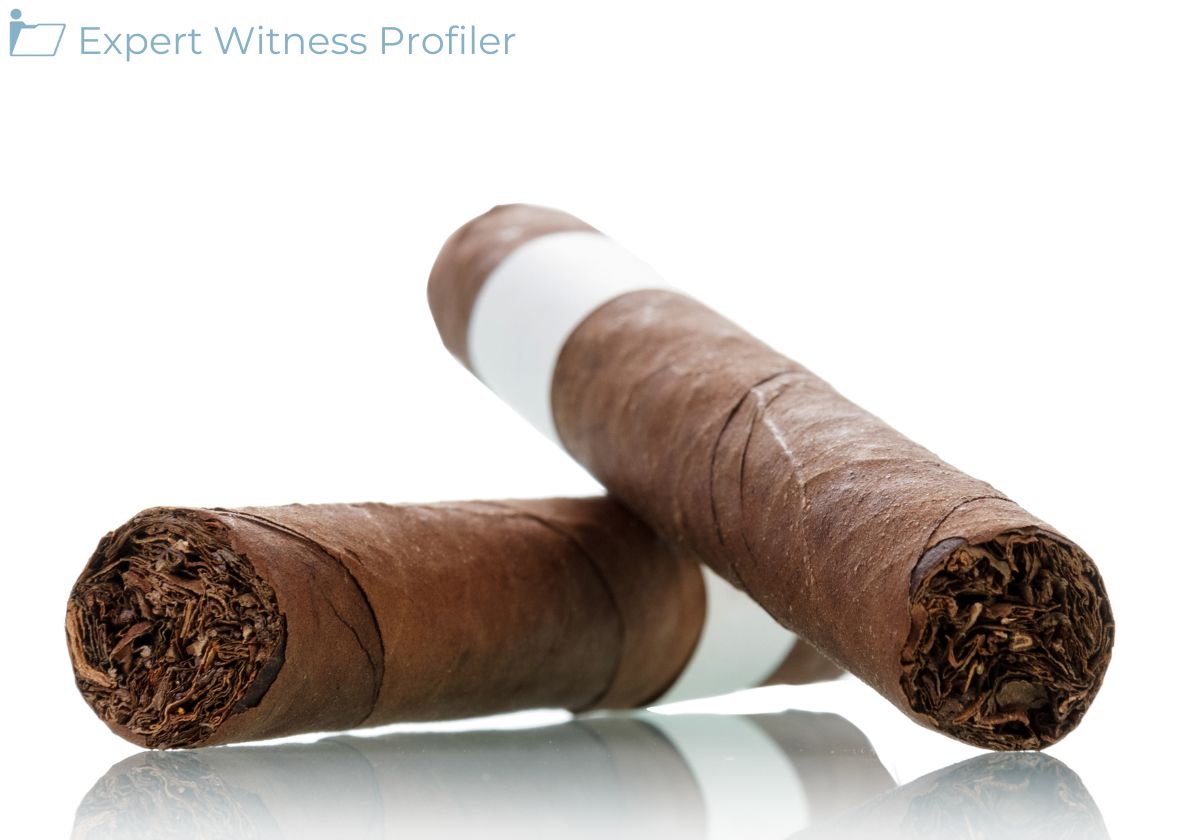
Maker’s Mark entered into a Licensing Agreement with Spalding Group gransting an exclusive license to use its trademarks to create and sell cigars seasoned with its bourbon (the “Licensed Cigars”). After renewing the agreement a few times, in 2013, Maker’s Mark notified Spalding that it was terminating the license effective December 31, 2015. Spalding Group had until June 28, 2016, to dispose of its remaining inventory of Licensed Cigars.
Following the termination of the license, Spalding Group began selling a cigar also seasoned with Maker’s Mark bourbon (the “Bourbon Cigar”). Maker’s Mark alleged the packaging of the Bourbon Cigar was intentionally designed to “evoke an association by customers between [t]he Bourbon Cigar on the one hand and Maker’s Mark and the prior Licensed Cigars on the other.”
Maker’s Mark further claimed Spalding Group advertised the Bourbon Cigar in a variety of ways to associate it with Maker’s Mark and the Licensed Cigars, despite Maker’s Mark’s demand that Spalding Group cease and desist.
Maker’s Mark brought this action against Defendants, asserting claims of trademark infringement; false designations, descriptions, and representations; and trademark dilution in violation of the Lanham Act.
It also brought breach of contract, trademark infringement, and false designation and unfair competition claims under Kentucky common law.
Defendants filed a counterclaim alleging various state law claims related to the licensing agreement and seeking to cancel some of Maker’s Mark’s trademark registrations.
To support its trademark infringement claims, Maker’s Mark retained Ran Kivetz (“Dr. Kivetz”), a professor at Columbia University Business School with experience in consumer psychology and surveys. Dr. Kivetz conducted a survey to estimate the likelihood that consumers would mistake the Bourbon Cigars for a Maker’s Mark product.
To rebut Maker’s Mark’s trademark dilution claims, Defendants retained Hal Poret (“Poret”), a public opinion researcher with a master’s degree in mathematics and a law degree from Harvard Law School. Poret conducted surveys to evaluate whether the words “Marker’s Mark” and the red wax design are famous. Defendants later asked Poret to review Kivetz’s likelihood-of-confusion survey and conduct his own.
Neither party challenged the qualifications of the other’s expert; they each argued that the opposing party’s expert’s likelihood-of-confusion surveys were unreliable. Because the challenges were similar, the Court addressed both Daubert challenges together.
Maker’s Mark also retained Michael A. Einhorn (“Dr. Einhorn”) to calculate Defendants’ profits that may be recoverable under 15 U.S.C. § 1117(a). Defendants moved to exclude Einhorn’s testimony regarding the deductions and resulting net profits calculation; they did not challenge his gross profits or royalties calculations, contending that Einhorn was unqualified to calculate Defendants’ deductions and that his testimony was unreliable.
Survey Research Expert Witness
Hal Poret (“Poret”) is a public opinion researcher with a master’s degree in mathematics and a law degree from Harvard Law School. Since 2004, Poret has personally designed, supervised, and implemented over 350 consumer surveys concerning consumer perception, opinion, and behavior, including surveys relating to false advertising, claim substantiation, and trademark/trade dress matters. He has personally designed numerous studies that have been admitted as evidence in legal proceedings and has testified as an expert in over 50 proceedings before U.S. District Courts, the Trademark Trial and Appeal Board, and NAD.
Marketing Expert Witness
Ran Kivetz is the Philip H. Geier Professor of Marketing at Columbia University Business School. He earned a Ph.D. in Business from Stanford University, Graduate School of Business; a Master’s degree in Psychology from the Stanford University Psychology Department; and a Bachelor’s degree from Tel Aviv University with majors in Economics and Psychology. His field of expertise encompasses consumer psychology and behavior; survey methods; marketing management; behavioral economics; human judgment, perception, and decision making; consumer and sales incentives; and branding. Professor Kivetz’s research has won many prestigious awards, including multiple “Best Paper” awards, being a recipient of the New York Times annual “Best Idea” award, and being ranked as the third most prolific scholar in his field during 1982–2006.
Economic Damages Expert Witness
Michael A. Einhorn has a Bachelor of Arts in Economics from Dartmouth College (summa cum laude) and a Ph.D. in Economics from Yale University. Since receiving his Ph.D. in 1981, he has worked as a Member of Technical Staff at Bell Telephone Laboratories, an economist at the United States Department of Justice (Antitrust Division), and a staff economist at Broadcast Music Inc., a collection agency that licenses performance rights in music to major broadcasters, including television networks, local stations, cable companies, and radio stations. He has worked as a testifying expert since 2001. He is also a former professor of economics at Rutgers University (Newark), where he taught courses on macroeconomics, microeconomics, industrial organization, and corporate finance. He is the author of Media, Technology and Copyright: Integrating Law and Economics (2004), which applies economic reasoning to a number of issues in American copyright law with regard to media, entertainment, and technology.
Discussion by the Court
With regard to Defendants’ motion to exclude certain testimony and opinions of Ran Kivetz, the Court analysed Kivetz’s likelihood-of-confusion survey in depth.
Kivetz’s survey was divided into a test group and a control group. The test group participants saw three-dimensional, 360-degree viewable graphics of Defendants’ Bourbon Cigars, first the box, then an individual cigar. The control group participants saw three-dimensional, 360-degree viewable graphics of the box, then an individual cigar, all with the words “Seasoned with Maker’s Mark” on the cigar band replaced with “Seasoned with Bourbon” and the red wax-dipped caps replaced with red plastic caps. Participants could manipulate the images until they were ready, then they proceeded to answer question sets about the product’s source, affiliation, and sponsorship. The first question set was on the product’s source and was open-ended, with participants instructed to write what company they think made the product in a text box below the question (the “source question”), followed by other open-ended questions asking participants to explain their answers. At the beginning of the survey, participants read instructions not to guess and that “don’t know” was an acceptable answer that they could select or type. The other questions asked participants to name companies, products, or brands that the participants thought were affiliated with or sponsored the cigars. Each of those questions had an explicit “don’t know” option, except the open-ended questions asking participants to explain their answers if they provided one. Throughout the survey, an image of the single cigar, either the test or control version depending on the group, remained on the page for participants to view. This image was of the front of the cigar, was not rotatable, and displayed only half of the cigar band, with the test group cigar displaying the words “Seasoned” and “Maker’s,” while “with” and “Mark” on the band and the “ted’s” on the red seal were cut off. Poret conducted likelihood-of-confusion surveys intended to rebut Kivetz’s survey, and it replicated it in all but three ways. First, the participants could view the images, which Poret took from Kivetz’s report, from several angles of the side, top, and bottom, but not a 360-degree view. Second, Poret removed the image of the single cigar from the question pages. Third, Poret provided an express “don’t know” option to the otherwise open-ended source question.
Both the parties filed motions to exclude based on how the opposing party’s expert used images in his likelihood-of-confusion survey and whether it accurately simulated marketplace conditions.
Defendants argued that repeatedly showing participants the single cigar turned Kivetz’s survey into a “reading test,” where they would answer based on the words “Seasoned” and “Maker’s” visible in the repeated image instead of the Ted’s Cigars branding they saw on the cigar box or the branding that was not visible on the single cigar because of the angle. Kivetz’s survey was accused of creating demand effects, or suggesting a “correct” answer to the participants, by leaving an image of the single cigar for participants to view as they answered questions.
Maker’s Mark responded that Poret’s first likelihood-of-confusion survey was an unreliable “memory test” where participants were not continually exposed to the product while they evaluated it like they would have been in the marketplace. Maker’s Mark demanded exclusion of Poret’s survey since the memory test was based on blurry images from limited angles that did not show “Maker’s Mark.”
The Court held that such challenges amounted to little more than professional disagreement about methodology, which concerned the weight and not the admissibility of the surveys considering neither Maker’s Mark nor Defendants cited any authority suggesting either method was uniformly unreliable and instead each cited articles supporting its expert’s method, which indicated that the disagreement existed within the field and the choice was within the expert’s discretion.
Further, the parties’ more specific concerns about the images appeared unfounded. Defendants argued that 33% of Kivetz’s respondents wrote that “Seasoned Maker’s” produced the cigar because it was all that was visible on the individual cigar image, which showed that Kivetz’s survey inflated the level of confusion. Kivetz, however, did not include the “Seasoned Maker’s” responses as evidence of confusion in his calculations. Maker’s Mark argued that because Poret’s survey did not use 360-degree viewable images, participants could not see the words “Maker’s Mark,” but participants could rotate the individual cigar and see “Maker’s” in one image then “er’s Mark” in the next. Defendants similarly asserted that Kivetz’s survey was flawed because no Ted’s Cigars branding was visible in the single cigar image which remained on the page during the survey, but Maker’s Mark’s name was not visible on the cigar either, only “Seasoned” and “Maker’s”. Moreover, before entering the question portion, participants examined the cigar box and single cigar from 360 degrees for at least 30 seconds each until indicating that they could clearly see the images. Respondents who could not clearly see the image were removed from the survey. Accordingly, the Court found that none of these concerns warranted exclusion and the parties were allowed to explain to the factfinder how each expert used images and whether, in their views, those images accurately replicated marketplace conditions and produced accurate results.
One of the other reasons the parties moved to exclude the other’s likelihood-of-confusion surveys was whether or not the initial source question included a “don’t know” answer option. Defendants insisted on the unreliability of Kivetz’s survey because it did not include a “don’t know” answer option for the source question like it did for the other questions. Maker’s Mark conversely argued that an explicit “don’t know” option was inappropriate for an open-ended question, so Poret’s survey, which had an explicit “don’t know” option, artificially increased the number of participants who selected it, thus erroneously reducing the net confusion rate.
The Court noted that Diamond’s article appeared to be discussing a “don’t know” option in the context of closed-ended questions, so Poret’s survey may have been less accurate, but his choice did not mean the entire survey was so informally designed and conducted that it failed key tests of professionalism and reliability. Henceforth, the Court refused to exclude not only Kivetz’s likelihood-of-confusion survey but also Poret’s rebuttal survey.
Poret conducted a second likelihood-of-confusion survey that tested whether the red wax seal itself and not the “Seasoned with Maker’s Mark” label on the Bourbon Cigars was likely to cause confusion. The second survey again replicated the Kivetz Survey with some exceptions: the images were viewable from several angles but not 360 degrees, and the control cigars and the test cigars kept the “Seasoned with Maker’s Mark” band instead of a “Seasoned with Bourbon” band. Maker’s Mark contended that the survey should be excluded because controls must not be infringing and because the survey results could not explain whether participants were confused by the band or the wax seal. The purpose of avoiding infringing or allegedly infringing controls was to be able to tell whether any reported confusion was the result of actual confusion or the flawed control and the fact that the parties highly disputed whether the use of “Maker’s Mark” on the cigar band was likely to cause confusion made it all the more crucial. Defendants did not adequately respond to this concern with Poret’s survey, noting that “Maker’s Mark” on the cigar band may have been non-infringing or a fair use, actively ignoring the fact that even an allegedly infringing element was problematic in the process besides waiving the fair use defense. They cited only Poret’s explanation that his purpose was to isolate the red wax element. The Court noted that Defendants did not carry their burden to prove that Poret’s wax confusion survey was reliable.
Coming to Defendants’ motion to exclude certain opinions and testimony of Michael A. Einhorn, it was noted that Einhorn submitted a report and two supplemental reports in which he calculated Defendants’ gross revenue and deducted Defendants’ costs to arrive at their net profits from the sale of the Bourbon Cigar, besides calculating what royalties would have been due under the licensing agreement. Defendants targeted Einhorn’s testimony regarding the deductions and resulting net profits calculation instead of his gross profits or royalties calculations. Defendants stated that Einhorn was no expert in cost accounting and highlighted his lack of relevant experience in accounting.
The Court, citing Mannino v. Int’l Mfg. Co., 650 F.2d 846, 851 (6th Cir. 1981), held that Einhorn met the minimal qualifications requirement based on his Ph.D. in economics from Yale University as well as decades of experience calculating damages in intellectual property cases. Even though much of his experience has been related to copyright, trademark damages estimations were well-represented on his resume.
When Defendant argued that Einhorn was not qualified to perform the specific calculations in this case, which involved determining which of Defendants’ costs should be deducted from the gross profits to reach the net profits, the Court noted that Einhorn has been admitted to testify regarding essentially the same calculation in copyright cases. The Court deemed Einhorn qualified to express opinions regarding Defendants’ net profits.
Defendants objected to Einhorn’s use of the “incremental approach” in his calculations as opposed to their expert’s use of the “full absorption” approach. The incremental approach subtracts only direct production costs from a Defendant’s gross profits, while the full absorption approach also subtracts the proportion of overhead costs attributable to the product.
While some courts have adopted one method or the other, the Sixth Circuit appears to have not. In a patent case, the Sixth Circuit declined to adopt a uniform rule about whether overhead costs should be deducted from profits because it depends on the facts of each case. The Court observed that trademark remedies authority suggested that the incremental approach is an acceptable method. The Court declined Defendant’s request to exclude Einhorn’s testimony on that basis.
Defendants moved to seal their motion to exclude Einhorn and the attached Exhibits 1-5, 8, and Maker’s Mark moved to seal its response to the motion and Exhibit 1, which included Einhorn’s report and supplemental reports. The documents contained Defendants’ profit margins, sales data, and other financial information. The Court denied the motions filed by both parties.
Held
The Court issued the following rulings:
1. Defendants’ motion to exclude certain testimony and opinions of Ran Kivetz was denied.
2. Plaintiff’s motion to exclude certain expert testimony of Hal Poret was granted in part and denied in part.
3. Defendants’ motion to exclude certain opinions and testimony of Michael A. Einhorn was denied.
4. Defendants’ motion for leave to file under seal was denied.
5. Plaintiff’s motion for leave to file under seal was denied.
The Court has not arrived on an outcome for this case since the remaining issues involved in this case still await resolution.
Key Takeaways:
The Court emphasized that challenges to expert testimony often revolve around methodological differences rather than the admissibility of the evidence itself. Disagreements within the field are common and do not necessarily render expert testimony unreliable.
Regarding the use of images in likelihood-of-confusion surveys, concerns about methodology and the simulation of marketplace conditions were raised by both parties. However, the Court determined that these concerns did not warrant exclusion of the surveys, allowing the parties to present their arguments about the validity of the methodology to the factfinder.
The absence of a “don’t know” option in certain survey questions was debated, with one party arguing that its inclusion artificially affected the results. The Court noted that the survey in question did not fail key tests of professionalism and reliability and refused to exclude the surveys based solely on this issue.
Expert qualifications were also scrutinized, particularly regarding calculations of net profits. Despite challenges to the expert’s qualifications and methodology, the Court deemed the expert sufficiently qualified based on relevant experience and education.
Differences in calculation methods, such as the incremental approach versus the full absorption approach, were considered by the Court. While some courts may have preferences for certain methods, the Court in this case declined to adopt a uniform rule, emphasizing that the appropriateness of a method depends on the specific circumstances of each case.
Case Details:
Case Caption:
Maker’s Mark Distillery, Pbc V. Spalding Group, Inc. Et Al
In an underinsured motorist (“UIM”) bad faith action stemming from a car accident, Todd Cope presented at the emergency room after his vehicle was rear-ended on November 6, 2013, citing complaints of occipital headache, pain behind his right eye, and cervical spine pain. Medical records at that time indicated no acute traumatic injuries to the skull, brain, cervical, or thoracic spine. Cope was discharged without medication and advised self-care. Subsequently, a lumbar MRI conducted two months post-accident revealed a disc herniation at L5-S1.
Before the accident, in March 2011, Cope experienced a back injury from a fall through a flight of stairs. This incident caused low back pain radiating down his extremities. A lumbar spine MRI in May 2011 showed disc bulges at L4-5 and L5-S1. Even two years later, in April 2013, Cope continued treatment for low back and right leg pain attributed to the 2011 fall.
Within this UIM bad faith action, Todd Cope disclosed several medical providers as non-retained expert witnesses, including Dr. Bryan Castro, his former treating spine surgeon, and Dr. Roberta Anderson-Oeser, his treating physical medicine and rehabilitation physician. Additionally, Cope disclosed Aubrey Corwin as a life care planning “expert” and Brad Levin as an insurance standard-of-care expert. Auto-Owners Insurance Company seeks to exclude opinions they deem improperly disclosed, unsupported, unreliable, or unhelpful.
Life Care Planning Expert Witness
Aubrey A. Corwin M.S., L.P.C., C.R.C., C.LC.P. is a vocational rehabilitation and life care planning expert. She testifies as an expert in cases involving both loss of earning capacity and life care planning nationwide. She is a Licensed Professional Counselor (LPC); a Certified Rehabilitation Counselor (CRC); a Certified Life Care Planner (CLCP); and a former Certified Guidance Counselor. She is past Co-Chair of the Forensic Section of the International Association of Rehabilitation Professionals (IARP) and past Forensic Representative to the IARP International Board of Directors. She is also a member of the American Board of Vocational Experts (ABVE).
Insurance Law Expert Witness
Bradley A. Levin focuses his practice on tort and commercial litigation, especially insurance bad faith and insurance coverage disputes. He has significant litigation and trial experience.
Levin received his undergraduate degree from Stanford University, with distinction, where he was elected Phi Beta Kappa. He graduated from the University of California, Hastings College of Law, and served as editor-in-chief of the Hastings Constitutional Law Quarterly.
In addition to teaching legal writing and research at Hastings College of Law, Levin has lectured frequently in the areas of insurance coverage and bad faith law. He is licensed to practice in California and Colorado. He is a member of the Denver, Colorado and American Bar Associations.
Discussion by the Court
The Defendant sought to prevent Castro and Anderson-Oeser from presenting causation opinions during the trial. Both doctors were non-retained experts who had not submitted formal expert reports. The Defendant argued that their opinions on causation lacked reliability for various reasons. Proving injury causation necessitates demonstrating both general and specific causation. “Specific causation” pertains to whether a particular incident directly caused the specific injury, while “General causation” concerns whether the incident could theoretically lead to the type of injury suffered.
According to the ruling in Hollander v. Sandoz Pharmaceuticals Corp. (289 F.3d 1193, 10th Cir. 2002), general causation could be established through means like epidemiological evidence. The Court highlighted that an expert was not obligated to reference published studies to reliably conclude that a specific object caused a particular illness.
In the Defendant’s Motion, it was outlined that based on the Plaintiff’s Rule 26(a)(2) expert disclosures, Castro intended to testify about several key points:
Cope’s persistent back and leg pain, attributing it to a substantial herniation on the right side at L5-S1, asserting it was caused by the November 6, 2013, collision.
Denial that Cope suffered any disc herniation due to a 2011 worker’s compensation fall at any spinal level.
Confirmation that Cope underwent a corrective surgery on May 8, 2014, not for impingement but explicitly linked to the November 6, 2013, crash.
Affirmation that subsequent surgeries, including a revision on November 19, 2015, were deemed necessary and reasonable consequences of the November 6, 2013, collision.
Assertion that Cope’s symptoms preceding the specific collision did not necessitate a subsequent lumbar MRI and that the pain experienced was notably distinct.
Examination and reference to all physical therapy records preceding the collision and all records pertinent to Cope’s 2011 worker’s compensation claim, encompassing impairment ratings and work restrictions.
Expressing the potential for the third herniation to self-heal but highlighting the possibility of future fusion surgery if self-healing doesn’t occur.
Affirmation of the reasonableness of bills for services rendered by Castro.
The Defendant sought to prevent Castro from expressing opinions on causation related to whether the car accident caused the Plaintiff’s reported injuries or pain, specifically disputing Castro’s assertion that the accident led to the disc herniation or the subsequent lumbar surgeries he performed.
Initially, the Defendant argued that Castro’s statement didn’t constitute a causation opinion as it didn’t assert that the accident was more likely than not the cause of the Plaintiff’s current symptoms, pointing to a June 02, 2017 statement in Plaintiff’s medical records. The Defendant further contended that Castro’s language was too vague and incomplete to be considered a definitive opinion on causation, especially concerning the surgeries he conducted in 2014 and 2015.
The Defendant stressed that the medical records by Castro contained no explicit causation opinions, highlighting a supposed violation of Rule 26 disclosure requirements. The Plaintiff, however, argued that any such violation was harmless since the Defendant had elicited opinions from Castro during a deposition in 2018 before the expert disclosure deadline. The Plaintiff also contended that the Defendant’s objection was based on Castro not being paid to document his causation opinions expressed during the 2018 deposition.
Ultimately, despite Castro discussing causation in his deposition testimony, the Court ruled that his deposition didn’t suffice as an expert report as required by Rule 26. The Court emphasized that even for retained experts who usually submit expert reports, deposition testimony couldn’t substitute for Rule 26’s explicit disclosure requirements. Consequently, the Court decided to preclude Castro from offering causation opinions during the trial.
The Court emphasized that based on the absence of general or specific causation opinions from Castro, Rule 26(a)(2) doesn’t permit curing deficient expert reports through subsequent deposition testimony. With the accident having occurred over a decade ago and the litigation spanning several years, the Court noted the ample time available for the Plaintiff to disclose an expert report containing Castro’s causation opinions.
In line with the rule’s requirements, the Court outlined that a treating physician who previously provided a causation opinion during treatment (in compliance with specific standards) without submitting a formal report could only testify to the historical fact that such an opinion was part of the treatment. However, the physician couldn’t testify that this remains their current opinion, emphasizing the need for strict compliance with the Federal Rules. Consequently, the Court granted this part of the Motion, precluding Castro from offering causation opinions during the trial.
Nevertheless, the Court acknowledged the existence of a statement in Plaintiff’s medical records that could potentially be construed as a causation opinion formed during treatment by Castro. Thus, while barring Castro from presenting this as a current opinion under oath, the Court allowed Plaintiff to present this fact at trial. Castro could testify solely to the historical aspect that this opinion was part of the treatment, adhering to the Court’s directive.
Given this ruling, the Court instructed the parties to submit proposed instructions for the jury at trial, aiming to clarify in simple terms the distinction drawn by the Court regarding Castro’s testimony about the historical treatment-based opinion versus a current opinion.
The Defendant requested the Court to prevent Anderson-Oeser from testifying about the necessity of a future spinal fusion resulting from the injuries sustained in the accident. In response, the Plaintiff didn’t address the Defendant’s causation arguments regarding Anderson-Oeser, except to assert that the Defendant hadn’t specified which causation opinions it aimed to exclude, focusing solely on the future surgery opinion. Plaintiff did not argue that any failure to properly disclose Anderson-Oeser’s causation opinions was harmless or substantially justified.
The Court deemed Plaintiff’s argument disingenuous, emphasizing that the Defendant’s intention was clear—to exclude Anderson-Oeser’s testimony regarding the accident’s role in necessitating future spinal fusion. Similar to Castro, Anderson-Oeser, a non-retained treating physician who hadn’t submitted an expert report, was the subject of this exclusion request. The Defendant highlighted that Anderson-Oeser endorsed a statement in a letter, prepared for litigation and drafted by Corwin’s office staff, stating, “Cope will likely require a lumbar spine fusion at L5-S1 at some point.” The Defendant contended that Anderson-Oeser aimed to testify regarding the future surgery recommendation outlined in Corwin’s report/letter. However, the Defendant argued that this evidence should be excluded as the recommendation in the letter lacked any opinion regarding whether the accident caused the necessity for this future surgery.
The Plaintiff, however, clarified that Castro’s testimony would focus on the standard of care for third herniations, asserting that the typical practice doesn’t involve a third laminectomy but leans towards spinal fusion. Plaintiff argued that both doctors were qualified to discuss the clinical standards pertaining to the type of surgery and the conditions influencing the decision-making process for surgery, such as pain tolerance and neurological deficits.
Plaintiff contended that there was no obligation to present expert testimony specifically establishing the probability of future surgery to seek damages for such potential procedures. However, Plaintiff failed to acknowledge that neither Castro nor Anderson-Oeser’s medical records contained any prognosis or explicit recommendations for future surgery. Additionally, Plaintiff didn’t address the concerns raised by the Defendant regarding Rule 26 and Rule 37 compliance.
Consequently, the Court granted the Defendant’s motion, barring Anderson-Oeser from presenting any causation opinions and from testifying about the necessity of a spinal fusion resulting from the injuries sustained by the Plaintiff in the accident.
The Court determined that Castro and Anderson-Oeser’s opinions regarding the Plaintiff’s future medical treatment and potential surgery were not derived from their observations, actions, or reasons during their treatment of the Plaintiff. Instead, the Court noted that these opinions seemed to be shaped primarily due to the existence of the lawsuit.
Given that the opinions sought to be introduced through Castro and Anderson-Oeser concerned potential future treatments and associated medical costs, the Court held that Rule 26(a)(2)(B) necessitated an expert report—which neither physician had prepared.
Consequently, the Court precluded Castro from testifying on several points: 1) the assertion regarding the standard of care for third herniations favoring spinal fusion over a third laminectomy; 2) opinions about the Plaintiff’s potential future surgery needs based on factors like pain tolerance and future neurological deficits; and 3) any testimony related to clinical standards governing the type of surgery and factors influencing the Plaintiff’s future decisions about surgery, as proposed through Castro and Anderson-Oeser.
The Defendant had requested the Court to prevent Castro from testifying about the Plaintiff’s pre-accident physical therapy and medical treatments stemming from a 2011 workers’ compensation fall. After deliberation, the Court granted this aspect of the Motion.
The Court noted that Castro commenced treating the Plaintiff on March 21, 2014—four months subsequent to the accident and three years following the Plaintiff’s fall down a flight of stairs. As Castro hadn’t administered the physical therapy or medical treatment associated with the earlier fall, the Court excluded Castro from offering any testimony regarding those pre-accident treatments.
The Defendant had sought to exclude Anderson-Oeser’s opinion predicting the necessity of a future spinal fusion resulting from the injuries sustained in the accident. The Defendant reiterated that this opinion, akin to her causation opinion, was inadmissible due to Plaintiff designating her as a non-retained expert without a formal report under Rule 26. The Defendant emphasized that Anderson-Oeser’s opinion pertained not to her direct treatment but rather to potential future treatment for the Plaintiff, which she wouldn’t perform as she wasn’t a surgeon. Additionally, the Defendant argued that Anderson-Oeser’s qualification as a non-spine surgeon rendered her unqualified to opine on hypothetical future lumbar spinal fusion surgeries.
However, since the Court had previously excluded Anderson-Oeser’s opinions about the Plaintiff’s future spine surgeries and medical treatment, the Court denied this aspect of the Defendant’s Motion as moot.
The Defendant argued that the Plaintiff hadn’t disclosed any retained expert or report addressing the reasonableness of his medical bills. Instead, Plaintiff’s disclosures indicated the intent to rely on testimony from non-retained treating physicians on this matter. However, the Court excluded the opinions of Plaintiff’s non-retained treating physicians concerning the reasonableness and necessity of his medical bills.
The Defendant moved to exclude testimony regarding surgery-related treatments in Aubrey Corwin’s May 2021 life care plan, arguing that Corwin failed to reliably apply her stated methodology in forming opinions about the cost of future surgical treatment and related care.
In response, the Plaintiff acknowledged that introducing expert testimony indicating the need for future surgical care was necessary to seek future surgical costs. However, as the Court had excluded the testimonies of Castro and Anderson-Oeser regarding future surgery, and the Plaintiff hadn’t disclosed any other experts to testify about his future surgical needs, the Court granted the Defendant’s motion. Consequently, the Court excluded Corwin’s opinions regarding future medical expenses for surgical treatment and related care.
The Defendant moved to exclude attorney Bradley Levin’s opinions, contending that they lacked an objective basis and were solely derived from his experience. In response, the Plaintiff highlighted that Levin’s opinions were rooted in ten insurance industry standards outlined in his report, several of which were based on direct language of the Colorado Unfair Competition-Deceptive Claims Practices Act.
After reviewing Levin’s report, the Court acknowledged the Defendant’s contention that Levin could have more precisely linked his opinions to the specific standards purportedly violated by the Defendant. However, the Court noted that Levin explicitly stated in his opinion that the Defendant had contravened relevant portions of Colorado’s Unfair Competition-Deceptive Claims Practices Act. Levin also cited Regulation 5-1-14 promulgated by the Colorado Division of Insurance. The Court concluded that while the Defendant’s arguments might challenge the strength of Levin’s opinions, they did not render his opinions inadmissible. As a result, the Court denied the Defendant’s motion, allowing Levin’s opinions to stand, but stated that the Defendant could address these concerns during cross-examination.
Held
Defendant Auto-Owners Insurance Company’s Omnibus Motion to Exclude Certain Opinions of Dr. Bryan Castro, Dr. Roberta Anderson-Oeser, Aubrey Corwin and Bradley Levin was granted in part and denied in part by the Court.
The Court has not arrived on an outcome for this case since the remaining issues involved in this case still await resolution.
Key Takeaway
In a legal dispute over an underinsured motorist (“UIM”) claim, various motions were filed by the Defendant seeking to exclude certain expert testimonies and opinions from the trial. The Defendant aimed to preclude causation opinions from non-retained experts, Dr. Bryan Castro and Dr. Roberta Anderson-Oeser, alleging lack of reliability, improper disclosure, and absence of expert reports. Despite some arguments put forth by the Plaintiff, the Court precluded Castro from providing causation opinions, emphasizing the inadequacy of deposition testimony as a substitute for the required expert report under Rule 26.
The Court highlighted strict adherence to the Federal Rules and barred Castro and Anderson-Oeser from testifying on future surgical needs. This ruling stemmed from their opinions not being formed during treatment but apparently due to the ongoing litigation.
Additionally, the Court excluded discussions on pre-accident medical treatments and future surgical needs as neither expert had prepared an expert report as mandated by Rule 26. Despite the absence of specific expert reports, the Court allowed some opinions rooted in Colorado law from attorney Bradley Levin, indicating that the Defendant breached certain sections of the Colorado Unfair Competition-Deceptive Claims Practices Act.
In a similar vein, Aubrey Corwin’s opinions regarding future medical expenses for surgical treatment were excluded due to the lack of supporting expert testimony after the Court had previously precluded discussions on future surgery from other witnesses.
Overall, the Court enforced strict compliance with expert disclosure rules, precluding opinions lacking proper reports while permitting those supported by established legal standards. The Defendant’s objections and challenges were taken into account, but the Court emphasized the distinction between admissibility and weight of opinions, allowing certain expert testimonies to proceed while offering the opportunity to contest their strength during cross-examination.