Tag: User

  • Mechanical Engineering Expert Allowed to Opine on Clear Warnings

    Mechanical Engineering Expert Allowed to Opine on Clear Warnings

    This lawsuit arises out of the death of Timothy L. Stringer (“Stringer”) resulting from a May 15, 2021, explosion on an offshore oil and gas production platform owned by Fieldwood Energy LLC (“Fieldwood”).

     At the time of the accident, Stringer was working on the platform and, along with another employee, was performing a pressure integrity test on a well. To perform this test, Stringer was provided with a Crystal XP2i Digital Test Gauge (“Crystal Gauge”) to monitor the internal pressure on the pipe casing. Ametek, Inc. is the manufacturer of the Crystal Gauge, and Robin Instrument & Specialty, LLC (“Robin”) distributed it to Stringer’s employer. 

    Stringer’s spouse and children alleged that Ametek and Robin failed to warn users like Stringer of the foreseeable misuse that the Crystal Gauge could be set to read in either PSI or Bar and of the dangers associated with misinterpreting or mixing up the units of pressure.

    Ametek, joined by Robin, argued that Plaintiffs’ expert, Glenn Gleason (“Gleason”), is unqualified and that his report and testimony are speculative and unreliable.

    Mechanical Engineering Expert Witness

    Glenn H. Gleason is a licensed Professional Engineer with a Ph.D., Master of Science, and Bachelor of Science in Mechanical Engineering. During his academic career, Gleason claims that he became proficient with different types of physical mechanisms and instruments commonly used to measure pressure. 

    Gleason also served as a consultant at an engineering firm where he conducted “mechanical system and equipment failure analysis” and tested mechanical relief valves, pressure vessels, and the use of pneumatic and hydraulic equipment requiring the monitoring of pressure gauges.

    Want to know more about the challenges Glenn Gleason has faced? Get the full details with our Challenge Study report.

    Discussion by the Court

    The Court found that Gleason is qualified to serve as an expert in this matter due to his educational and professional experience. Any doubts as to Gleason’s qualifications are suitable for cross-examination, but these doubts do not warrant exclusion.

    The Court next turned to Gleason’s methodology in reaching his proffered opinion. In his report, Gleason opined that Ametek could and should have: (i) presented clear warnings accompanying pressure units so consumers can disable unused unit systems on the gauges; and (ii) limited available unit systems through factory default settings on gauges that would be used in industries that only use PSI.

    Gleason based his opinion on investigations of the incident conducted by other engineering firms, the market in which the Crystal Gauge was sold (where PSI was the sole unit of measure), deposition testimony stating that Ametek disabled all other units besides Bar in the Chinese market, the Crystal Gauge’s operation manual, and a physical inspection of the Crystal Gauge itself. All told, these factual bases are sufficient for this Court to find that Gleason’s report is not so speculative as to warrant exclusion.

    Doubts about an expert’s qualifications or the factual basis for their testimony generally concerns the weight of the evidence, not its admissibility. As a result, doubts regarding Gleason’s qualifications or the factual basis for his opinions are best left to a jury, not this Court. 

    Held

    The Court denied Defendants’ Daubert motion to exclude the testimony of Glenn Gleason.

    Key Takeaway

    An expert may base an opinion on facts or data in the case that the expert has been made aware of or personally observed. If experts in the particular field would reasonably rely on those kinds of facts or data in forming an opinion on the subject, they need not be admissible for the opinion to be admitted.

    Case Details:

    Case Caption: Stringer V. Robin Instrument & Specialty, LLC
    Docket Number: 6:23cv415
    Court Name: United States District Court for the Western District of Louisiana, Lafayette Division
    Order Date: February 20, 2026
  • Computer Science Expert’s Testimony on the Value of Data Admitted

    Computer Science Expert’s Testimony on the Value of Data Admitted

    This class action lawsuit arises out of Amazon’s practice of using smart-speaker technology (“Alexa”) to surreptitiously: (a) intercept; (b) eavesdrop; (c) record; (d) disclose; or (e) use millions of Americans’ voices and communications, all without their knowledge or consent. Such conduct blatantly violates Washington’s wiretapping law, which applies nationwide to Plaintiffs and all members of the Class.

    Defendants here, Amazon.com, Inc. and Amazon.com Services LLC (collectively, “Amazon” or “Defendants”), are therefore liable as a result of their egregious violations of the State Wiretapping laws – and are also liable for their violations of the Washington Consumer Protection Act (“CPA”), the Electronic Communications Privacy Act of 1986 (“Federal Wiretap Act”), and the Stored Communications Act of 1986 (“SCA”). Plaintiffs Kaeli Garner, Jodi Brust, Diane McNealy, Michael McNealy, Ricky Babani, Jeffrey Hoyt, Lorlie Tesoriero, Ronald Johnson, Selena Johnson and Caron Watkins (collectively, “Plaintiffs”) brought this action individually, and on behalf of a Class of similarly situated individuals, to redress those violations of law.

    Amazon filed a motion to exclude the testimony of Plaintiffs’ expert Jonathan Hochman. Defendants sought to exclude Hochman’s testimony that (a) a large collection of utterances or speech data has value and can be utilized for various purposes, (b) each individual user’s data has discrete value in and of itself, and (c) Amazon could have programmed Alexa to record only the voices of registered users.

    Computer Science Expert Witness

    Jonathan E. Hochman, PhD. has 35 years of experience in software product development, internet technology, online marketing, and cybersecurity. He is a Yale University graduate with four degrees in computer science. He currently teaches classes on computer privacy and is conducting research related to computer security, privacy, and distributed computing.

    Between stints as a student, Hochman founded companies aimed at assisting clients with internet marketing and internet security, developing secure and private user authentication options, and integrating systems to maximize data capture and efficiency. He has also served as an expert regarding online data collection practices, software development, marketing, e-commerce, and internet security. His most recent article and research involve the tension between maintaining large data repositories for machine learning and safe-guarding individual privacy.

    Fortify your strategy by reviewing a Challenge Study detailing grounds for excluding Jonathan Hochman’s expert testimony.

    Discussion by the Court

    A. Knowledge and Expertise

    Amazon argued that Hochman’s admitted expertise in amassing, handling, using, and analyzing data is not transferrable to this case because his experiences involved types of data other than voice data. The distinction is unexplained and is unclear in this context. The challenged testimony is being offered to show the ways in which large quantities of data are used to train and improve products (such as the Alexa device), to explain the means by which Amazon and other market participants value the data they use for such purposes, and to provide a basis for the jury to conclude that consumers have been injured by Amazon’s collection of the data. Whether that data is in the form of a key stroke or an utterance is not dispositive of the relevant legal analysis.

    Amazon also argued that Hochman lacks training and/or experience in economics and is therefore unable to assign a value to the data Amazon collects and uses. Hochman has not, however, offered an opinion regarding the actual value of the voice recordings at issue, either individually or en masse.

    Finally, Amazon objected to the opinions set forth in Section D.i. of Mr. Hochman’s report, namely that “it is technologically feasible for products to not record a voice that is not registered or recognized.” This opinion is based on Hochman’s interpretation of internal Amazon documents, his understanding of how Apple’s Siri virtual assistant works, and his work experiences with internet user authentication and identification through voice prints. The fact that he has not developed or created a voice print authentication system does not prevent him from opining that such a thing exists.

    B. Helpfulness

    Amazon argued that (1) proof that voice data has value to Amazon is insufficient to prove that Alexa customers were injured by Amazon’s taking of the data and (2) even if the collection and use of the data caused injury, Hochman has not proposed a damages model capable of measuring or calculating damages in the absence of individualized proof.

    Amazon does not dispute that it has a need for and values the voice recording data it collects. Before Alexa was capable of collecting the necessary utterances — i.e., before the product was fully deployed and in homes across the country — Amazon paid people to generate and contribute their audio data. Once Alexa became operational, however, Amazon opted to take, store, and use the utterances recorded by the system rather than pay users for that privilege. A reasonable fact finder could conclude that Amazon’s allegedly unfair acts deprived Alexa users of the opportunity to sell their voice data, thereby giving rise to an “injury to property” commensurate with the value of the taken data.

    While the collected data undoubtedly has a higher value to Amazon than it does to individual Alexa users, Hochman’s testimony is sufficient to allow the fact finder to conclude that, had Amazon not simply taken the voice recordings, a mutually agreeable price for the data could have been reached and the users were deprived of that value.

    Moreover, Hochman offers at least two common methods for establishing the value of the voice data Amazon took and used for its own purposes without compensation, namely (a) the fair market value of individual utterances or monthly subscriptions for the data and (b) the costs Amazon is incurring or has incurred to acquire non-Alexa voice recordings. 

    C. Regurgitation of Documents

    Amazon asserted that “most of Opinions 3 and 4” consisted of nothing more than quotations from Amazon’s documents and/or that the quoted documents require no expertise to understand and apply in this case.

    Amazon made no attempt to explain why Hochman should be precluded from relying on Amazon’s documents to support his opinions that the utterances Amazon has collected, individually and as a collective, have value.

    Held

    The Court denied the Defendants’ Daubert motion to exclude the testimony of Jonathan Hochman.

    Key Takeaway

    Hochman used his experience, education, and selected resources (including Amazon’s documents) to define the terms of art used in this litigation, to explain how Alexa works and improves with both positive and negative training data, to show why the data Amazon has been collecting has value, and to identify various choices Amazon made in furtherance of its efforts to collect voice data regardless of user privacy interests.

    Case Details:

    Case Caption: Garner V. Amazon.Com, Inc.
    Docket Number: 2:21cv750
    Court Name: United States District Court for the Western District of Washington
    Order Date: January 05, 2026
  • Human Factors Expert’s Testimony on Dark Patterns Excluded

    Human Factors Expert’s Testimony on Dark Patterns Excluded

    The Federal Trade Commission contended that Amazon tricked, coerced, and manipulated consumers into subscribing to Amazon Prime. According to the FTC, this was accomplished by failing to disclose the material terms of the subscription clearly and conspicuously and by failing to obtain the consumers’ informed consent before enrolling them. The FTC also alleged that Amazon did not provide simple mechanisms for subscribers to cancel their Prime memberships. The FTC sued Amazon.com, Inc. and three of the company’s executives, Neil Lindsay, Russell Grandinetti, and Jamil Ghani.

    Defendants’ expert Craig Rosenberg‘s opening report addresses the FTC’s allegation that Amazon used deceptive practices known as “dark patterns” in user interface design to drive unintended Prime membership.

    Rosenberg’s opening report makes several findings. He stated that there is ambiguity in the definition of the term “dark patterns,” it is difficult to measure clarity in user experience design and subjective evaluations are insufficient to measure this clarity, Amazon’s initiatives to enhance clarity demonstrate a commitment to data-driven user experience refinement, Amazon uses empirical evidence to inform design decisions, there are alternative (non-user experience design) explanations for declines in Prime membership subscriptions following clarity-centered changes, and the absence of objective standards for clarity risks penalizing legitimate business practices. 

    The FTC filed a motion to exclude Rosenberg’s testimony on three grounds. First, it said that his methods are unexplained and unreliable. Second, it said that he is not qualified to testify on the subject of his opinions. And third, it said that his testimony is irrelevant and confusing.

    Human Factors Expert Witness

    Craig S. Rosenberg, Ph.D., is a consultant who provides advanced engineering services for a wide array of companies. He has a Master of Science and Ph.D. from the University of Washington in Human Factors, a multidisciplinary field that studies how people interact with machines, technology, and their environment. 

    Want to know more about the challenges Craig Rosenberg has faced? Get the full details with our Challenge Study report.

    Discussion by the Court

    Rosenberg’s opening report, rebuttal report, and deposition testimony all indicate the primary source of his expert opinions is his experience, training, and education as a human factors engineer. However, Rosenberg’s inability to articulate how his education, training, and experience have led him to his conclusions shows that these conclusions are not the product of a reliable method; therefore, the Court held that his testimony is inadmissible.

    Amazon said Rosenberg’s “references to the ‘totality’ of his experiences are not evasions, but acknowledgments that his expert conclusions stem from integrated professional judgment based on decades of interface design.” Even so, Rosenberg must explain how his decades of experience inform his expert conclusions. By his own admission, he cannot do so.

    Held

    The Court granted Plaintiff FTC’s Rule 702 motion to exclude the testimony of Defendants’ expert Craig Rosenberg.

    Key Takeaway:

    Liberally construing Rule 702 in favor of admissibility, Rosenberg’s opinion does not show how his experience informs his conclusions. He draws no methodological nexus between his conclusions and his experience, education, and training, other than to say his conclusions are based on his experience, education, and training. This circular reasoning is insufficiently reliable.

    Please refer to the blog previously published about this case:

    Marketing Expert Employed Techniques Widely Accepted in Market Research Community

    Case Details:

    Case Caption: Federal Trade Commission V. Amazon.Com, Inc., Et Al.
    Docket Number: 2:23cv932
    Court Name: United States District Court, Washington Western
    Order Date: August 11, 2025
  • Mechanical Engineering Expert’s Testimony on Unicender Design Shortcomings Excluded

    Mechanical Engineering Expert’s Testimony on Unicender Design Shortcomings Excluded

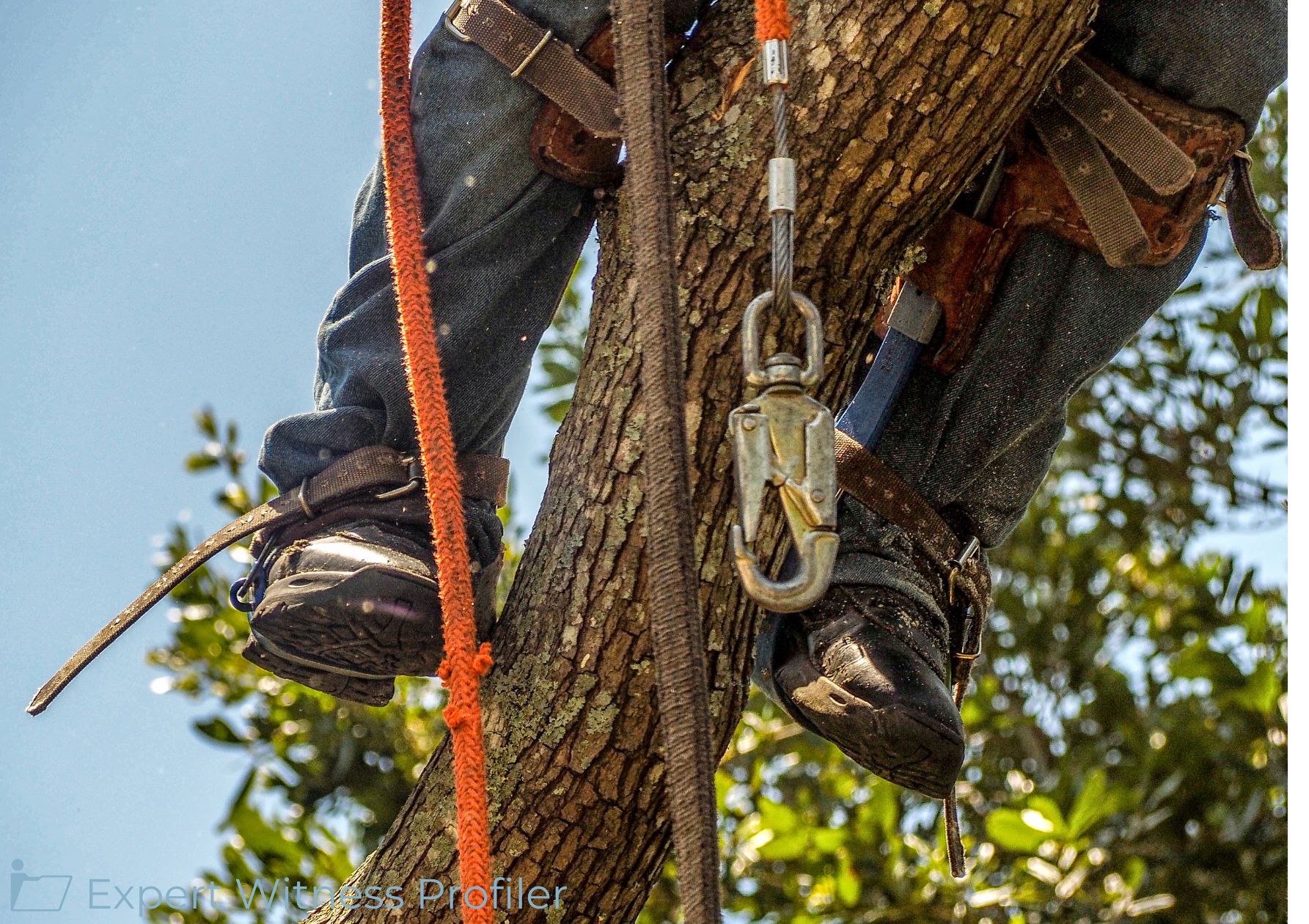
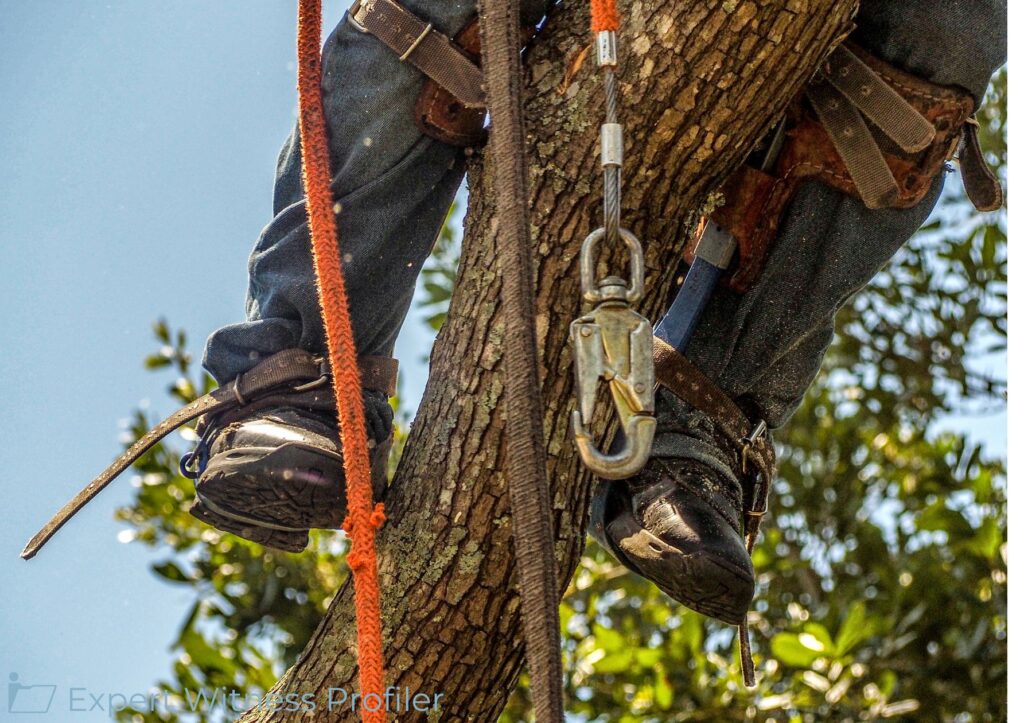
    Plaintiff George Land (“Land”) initiated a lawsuit against Rock Exotica, LLC, following a catastrophic fall while using the Unicender, a climbing device manufactured by the company. Land, an experienced arborist with two decades of experience, contended that the Unicender was defectively designed, which led to his accident. He alleged that during his ascent using the device in a double rope technique, it failed to operate as expected after he was struck by a falling tree section.

    To support his claims, Land designated Dr. James Glancey, a licensed professional engineer, as his expert witness. Glancey was expected to testify about the design and safety features of the Unicender, arguing that a guard could have prevented the injuries Land sustained during his fall. However, Glancey’s testing methods raised significant concerns, particularly as he did not replicate the conditions under which Land used the device. Instead, he conducted load tests using a single rope technique and failed to provide supportive evidence regarding the proposed guard’s efficacy, leading to questions about the reliability of his testimony.

    In response, Rock Exotica filed a motion to exclude Glancey’s testimony under the Daubert standard, asserting it was not based on sufficient data or reliable methods.

    Mechanical Engineering Expert Witness

    Dr. James Glancey holds a Ph.D. in mechanical engineering from the University of California, Davis and is a licensed professional engineer with over 20 years of experience in the field. Furthermore, he has published more than 50 engineering articles and has served as an expert in over 200 product-related matters.

    Get the full story on challenges to James Glancey’s expert opinions and testimony with an in-depth Challenge Study. 

    Discussion by the Court

    Dr. James Glancey was expected to opine on the design and safety features of the Unicender, arguing that the lack of a guard could be considered a design defect contributing to Land’s injuries during his climbing accident.

    A. Glancey is Unqualified

    Rock Exotica challenged Glancey’s qualifications, noting that although he has extensive experience in mechanical design, he has never worked in the arborist industry. The defense emphasized that Glancey has never designed or studied arborist climbing devices, stating:

    • He compared the guard to helmets or chisels with shields but could not identify any climbing tools with similar safety features.
    • His familiarity with safety mechanisms in other contexts does not translate directly to the climber’s needs or the functionality of the Unicender.
    • Furthermore, while he has a robust background in engineering, his lack of direct experience with the particular use case and context of the Unicender significantly undermines his credibility.

    B. Glancey’s Opinions are Unreliable

    1. Untested and Unengineered Concepts

    Glancey proposed that a guard could prevent the injuries sustained by Land. However, his testimony lacked the reliability required by the Court.

    a) No Prototypes or Drawings

    Glancey did not produce any design drawings or prototypes related to the guard or alternative safety mechanisms. He failed to demonstrate a clear understanding of how such a guard would be integrated or function in the context of the Unicender.

    b) Lack of Testing

    He conducted tests using a single rope technique and failed to test the device under the double rope technique, which was used by Land at the time of the accident. This omission leaves his conclusions unsubstantiated and speculative.

    2. Failure to Establish Causation and Feasibility

    Rock Exotica argued that Glancey’s opinions did not establish a reliable causal link between the alleged design defect and Land’s injuries.

    a) No Evidence of Impact on Safety

    Glancey did not provide data or analysis demonstrating how the proposed guard could have altered the outcome of the incident. He acknowledged that his design concepts were theoretical at best and did not address how they would consistently prevent accidents in real-world scenarios.

    b) Inability to Quantify Risks

    The expert failed to conduct a comprehensive risk analysis or evaluate how the guard might interact with the conditions that led to Land’s fall. Without empirical assessments or data-driven insights, his conclusions cannot be considered valid under Daubert.

    Analysis

    The Court held that Glancey is qualified to opine about design defects in the Unicender. His mechanical-engineering background and familiarity with product testing show that he possesses specialized knowledge to analyze how a climbing device functions under various loads.

    The Court concluded that Glancey’s opinions were inadequate to support Land’s claims in this case. His failure to generate testable and reliable alternative designs, lack of empirical evidence for his assertions, and inability to connect his proposed modifications to safety improvements rendered his testimony speculative.

    The Court found that without supporting documentation or design specifications, Glancey could not meet the burden of proof established under Daubert, leading to the exclusion of his testimony and summary judgment in favor of Rock Exotica.

    Glancey’s expertise allowed him to assert that Rock Exotica’s engineering and testing procedures were less structured compared to other manufacturers and his testimony established a duty to manufacture products safely. However, the Court ruled that there’s nothing to tie that failure to the harm that Land suffered.

    Held

    The Court granted Rock Exotica’s motion to exclude Plaintiff’s mechanical engineering expert witness, Dr. James Glancey’s opinions concerning
    the ability of a Unicender device to support certain amounts of weight and an alternative design for the Unicender. The motion was otherwise denied as moot.

    Key Takeaway:

    In this case, Land hangs his hat on Glancey’s testimony to create factual disputes. However, Glancey did not produce a design prototype or any
    drawings of a guard, nor did he run tests with the Unicender and a guard. Basically, engineering experts routinely rely on conceptual alternatives to highlight potential design shortcomings. Expert testimony about alternative designs requires more than an inventive mind. It requires real science.

    Case Details:

    Case Caption: Land V. Case Rock Exotica, LLC
    Docket Number: 2:23cv4627
    Court Name: United States District Court for the Eastern District of Pennsylvania
    Order Date: April 16, 2025