Tag: Vaccine

  • Public Health Expert Not Allowed to Opine on N95 Respirators

    Public Health Expert Not Allowed to Opine on N95 Respirators

    Plaintiff Shonna Hunter brought a religious discrimination claim against her former employer Defendant PeaceHealth.

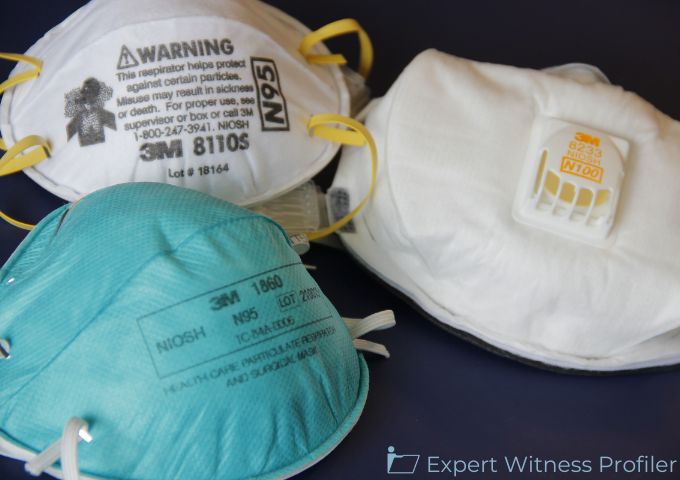
    Plaintiff offered the expert testimony of Dr. Michael J. Mina, MD, Ph.D., who opined that PeaceHealth could have accommodated Plaintiff with N95 respirator and “regular testing” in lieu of vaccination.

    PeaceHealth filed a motion to strike Mina’s testimony as irrelevant and unreliable under Daubert and Federal Rule of Evidence 702.
    Public Health Expert Witness

    Dr. Michael J. Mina, MD, Ph.D. is a physician-scientist and public health expert with extensive expertise in vaccine and infectious disease immunology, vaccinology, epidemiology, infectious disease dynamics, and diagnostics.

    Get the full story on challenges to Michael Mina’s expert opinions and testimony with an in-depth Challenge Study.

    Discussion by the Court

    1. Mina’s testimony is not relevant

    Mina opined that PeaceHealth could have accommodated Plaintiff with an N95 respirator and “regular testing” because she would have posed a “markedly lower risk of infecting others” than a vaccinated individual.

    On reviewing Mina’s documents, the Court found that Mina made scant cross-reference to scientific or medical sources.

    Moreover, with few exceptions, Mina’s sources were not available in August 2021. The undue hardship analysis is confined to the information available to the employer when it made its undue hardship decision. 

    To the extent that Mina’s opinion is based on scientific or medical sources that were unavailable to PeaceHealth when it made its undue hardship decision in August 2021, the Court held that any part of Mina’s opinion that is not based on scientific or medical data that was available in August 2021 is irrelevant and inadmissible under Daubert and Rule 702.

    2Mina’s testimony is not reliable

    a. Mina’s opinion is not supported by the relevant sources

    Mina contended that, in August 2021, PeaceHealth knew or should have known that N95 respirators and “regular testing”—not vaccination—”were the best tools available” to stop viral spread.

    Mina’s first source, “The Barnstable County Outbreak Report” (“Outbreak Report”), is a CDC report that describes a “significant COVID transmission that occurred during the summer of 2021 in one Massachusetts town related to large public gatherings.” Mina ignored the authors’ warning that “data from this report are insufficient to draw conclusions about the effectiveness of COVID-19 vaccines against SARS-CoV-2, including the Delta variant, during this outbreak.” And the Report nowhere discusses masking and testing or any other mitigation method as an alternative to vaccination. For these reasons, the Court and others have determined that testimony as to vaccine efficacy based on this report is unreliable and have excluded such testimony in prior similar cases.

    Mina’s second and third sources are CDC COVID-19 guidance documents from late July 2021: a slide deck (July 29, 2021) and a CDC article (July 30, 2021).

    Though the July 29 CDC report (slide deck) included emerging data about breakthrough infections, it also contained data that showed that breakthrough cases were less contagious.

    And the July 30 CDC report concluded that Delta “increased the urgency to expand vaccination coverage.” Not one of Mina’s sources recommended N95 respirators and “regular testing” in lieu of vaccination to control COVID-19, even after the appearance of Delta and the increase in breakthrough infections. Instead, masking was recommended only as an adjunct to vaccination. The Court concluded that the three timeframe-relevant CDC sources on which Mina relied did not support his opinion.

    b. Mina’s opinion is not supported by the August 2021 scientific consensus

    Mina agreed that the August 2021 data showed that vaccines, unlike other mitigation methods, were effective in preventing severe illness and death from SARS-CoV-2. Mina disputed vaccine efficacy only as to transmission. He opined that the “scientific data available to PeaceHealth . . . clearly indicated that N95 masking and regular testing,” not vaccination, “were the best tools available to protect the unvaccinated from becoming infected with and transmitting COVID Delta and later Omicron.”

    In August 2021, professional medical and public health organizations and government agencies also recommended vaccine mandates for healthcare workers. Finally, in 2021, when Mina was still a professor at the Harvard School of Public Health, he also appeared to have supported vaccine mandates.

    In sum, the August 2021 scientific consensus provided no support for Mina’s opinion that PeaceHealth could have accommodated Plaintiff and hundreds of other employees with N95 respirators and “regular testing” in lieu of vaccination without increasing the health and safety risks to its employees and to its patient population.

    Further, Mina failed to address the practical shortcomings of using N95 respirators and “regular testing.” He did not meaningfully address the common-sense observation that respirators do not work if they are not worn properly and continuously and that employees need to remove them to eat or drink and would likely even remove them to ease discomfort—events that could happen repeatedly during a single eight-hour shift.

    Held

     The Court granted PeaceHealth’s motion to strike Dr. Michael Mina’s testimony.

    Key Takeaway

    Mina’s opinion is not the product of reliable scientific methodology. An expert must show the court that they have used reliable methodology based on facts and data to reach their conclusions.

    “Cherry-picking” facts and data, as Mina has done, undermines principles of the scientific method and is a quintessential example of applying methodologies (valid or otherwise) in an unreliable fashion.

    Case Details:

    Case Caption: Hunter V. Peacehealth
    Docket Number: 6:22cv187
    Court Name: United States District Court for the District of Oregon
    Order Date: May 31, 2026
  • Nursing Expert’s Infection Preventionist Testimony Excluded

    Nursing Expert’s Infection Preventionist Testimony Excluded

    Plaintiffs Elizabeth Combs, Thomas Johnston, Kimberly Herechberger and Michelle Boltz brought religious discrimination claims against their former employer PeaceHealth for failure to accommodate their religious beliefs in opposition to COVID-19 vaccination.

    In addition to bringing a religious discrimination claim, Boltz brought a disability discrimination claim against PeaceHealth for failure to accommodate her disability under the ADA and Oregon law.

    Defendant filed a motion to strike the testimony of Plaintiffs’ expert witness, Rose Walker Patterson, because she is “unqualified to render the opinions in her reports” and because her opinions are unreliable and irrelevant.

    Nursing Expert Witness

    Rose Walker Patterson is a Registered Nurse with a master’s degree in nursing administration—not epidemiology, virology, or infectious disease—who earned a certificate in infection control and prevention from the Certification Board of Infection Control and Epidemiology.

    From April 2017 through October 2022, Patterson worked as the Infection Preventionist and Employee Health nurse for Sky Lakes Medical Center (“SLMC”), a small, rural hospital in Klamath Falls, Oregon. Patterson was part of a committee that developed a “playbook planning for the pandemic” with which she was “heavily involved.” 

    Want to know more about the challenges Rose Walker-Patterson has faced? Get the full details with our Challenge Study report.

    Discussion by the Court

    A. Patterson is Qualified to Offer Infection Preventionist Testimony

    PeaceHealth contended that Patterson is not qualified to offer expert testimony because she lacked relevant education, training, and experience.

    Patterson is not a medical doctor and has no advanced education or training in epidemiology or in infectious diseases or any other medical field. Further, she has no research experience or publications related to COVID-19. And she has never taught at a college or university.

    Patterson, however, testified that in her role as nurse infection preventionist, she helped develop the weekly testing program at SLMC for employees with approved accommodations.

    Accordingly, the Court concluded that although Patterson is not qualified to offer scientific or medical opinion, she is qualified to offer expert testimony based on her knowledge and experience as a nurse infection preventionist at SLMC during the pandemic.

    B. Patterson’s Opinions are not Reliable

    First, Patterson’s opinions are not based on sufficient facts or data because (1) she based her opinions on an incorrect understanding of the Oregon Health Authority (“OHA”) Rule requiring all Oregon healthcare providers and staff to either be fully vaccinated against COVID-19 by September 30, 2021, absent medical or religious exception, or to “undergo COVID-19 testing at least weekly” and (2) she provided no documentation or data to support the work she claims to have done at SLMC.

    Patterson also provided no documentation for the program she claimed to have developed or implemented, and she provided no data about the clinical variables or outcomes of that program.

    The Court concluded that Patterson’s testimony is not based on sufficient facts and data because Patterson’s opinions rely on her misunderstanding of the OHA Rule and because Patterson failed to provide any underlying documentation or data to support her testimony.

    Second, Patterson’s opinions are not reliable because, in addition to failing to provide documentation and data, she also did not use reliable principles and methods to produce her opinions. In fact, Patterson did not produce her opinions at all.

    The Court concluded that Patterson did not conduct her own research, she did not undertake an independent analysis of the facts and data, and she did not author significant parts of her own Reports. Patterson’s opinions not only lacked factual basis; they also are not the product of reliable principles and methods.

    2. Patterson’s Opinions are not Relevant

    Even if Patterson’s testimony were reliable, it is not relevant. Patterson lacked the relevant facts and data to compare SLMC to PeaceHealth. Patterson testified generally about the differences between the two healthcare employers.

    She also testified that she lacked the relevant facts and data to compare PeaceHealth to SLMC. Importantly, the undue hardship standard at issue requires that an employer, when making an accommodation decision, consider the facts before them at the time the decision is made.

    Held

    The Court granted the Defendant’s motion to strike the testimony of Rose Walker-Patterson.

    Key Takeaway

    Recalling facts, data, and policy from memory without underlying documentation or data is insufficient to support expert testimony. Basically, Patterson’s testimony is neither reliable nor relevant. Patterson’s testimony is not based on sufficient facts or data, is not the product of reliable principles and methods, and failed to reflect a reliable application of the principles and methods to the facts of the case.

    Case Details:

    Case Caption: Combs V. Peacehealth
    Docket Number: 6:23cv1486
    Court Name: United States District Court for the District of Oregon
    Order Date: March 17, 2026
  • Infectious Disease Expert’s Testimony on Vaccine Hesitancy Admitted

    Infectious Disease Expert’s Testimony on Vaccine Hesitancy Admitted

    This case arises out of Plaintiff Cheyanne Dixson’s 2022 termination as a police officer with the Issaquah Police Department after Defendant, the City of Issaquah, determined it could not accommodate Plaintiff’s religious exemption to vaccination against SARS-CoV-2, an employment requirement implemented by Defendant during the COVID-19 pandemic. Dixon was a patrol officer in the City’s Police Department.

    Defendant produced the expert report of John Lynch, M.D., a board-certified physician in infectious disease. Lynch’s proffered testimony includes background information on the COVID-19 pandemic and the development of the first COVID-19 vaccines. Plaintiff filed a motion to exclude all testimony by Lynch.

    Infectious Disease Expert Witness

    John B. Lynch is a board-certified physician in infectious disease. He currently works as an Associate Medical Director of Harborview Medical Center and a Professor of Medicine at the University of Washington (UW) and actively practices medicine as an infectious disease clinician.

    His work at Harborview included serving as the medical director for the occupational health program, and he also served on the Board of Directors of the Infectious Diseases Society of America from 2019 to 2022. 

    Lynch earned his Doctor of Medicine (“MD”) from the UW School of Medicine in 2002 and his Master’s in Public Health (“MPH”) in epidemiology and global health from the UW School of Public Health in 2011.

    Want to know more about the challenges John Lynch has faced? Get the full details with our Challenge Study report

    Discussion by the Court

    Plaintiff asserted that Lynch is not qualified to opine as an expert except on the “efficacy of [CV-19] vaccines,” that his opinions are irrelevant and unreliable, and that his testimony and report will confuse the issues and should be excluded.

    A. Rule 702 Challenge

    1. Lynch’s Qualifications

    The Court held that Lynch is abundantly qualified by both experience and training to render the opinions he offered. Plaintiff has not produced evidence to negate these qualifications.

    2. Relevance of Opinions

    Defendant offered Lynch’s testimony in support of its “undue hardship” defense to Plaintiff’s claim, under the Washington Law Against Discrimination, that Defendant discriminated against her by failing to accommodate her sincerely held religious belief.

    To prevail on its undue hardship defense, Defendant will need to establish that the accommodation sought by Plaintiff—here, remaining unvaccinated and fulfilling her usual job duties but submitting to twice-weekly COVID-19 tests, masking during work hours while in the presence of others, and eating her meals in her car, outdoors, or off site—would result in “substantial increased costs in relation to the conduct of [Defendant’s] particular business.”

    Plaintiff repeatedly asserted that information about vaccines and safety risks is irrelevant but does not explain how the health-and safety-related cost Plaintiff’s unvaccinated status imposed on Defendant can be evaluated without this information. 

     The one argument that Plaintiff presented as to why these topics are irrelevant—”because the Plaintiff was exempt from the vaccine requirement . . . .” —would appear to foreclose any consideration of health risks or other intrinsic “costs” of waiving an employment requirement for an objecting employee. But it is hard to see how an undue burden defense could ever be adjudicated without information about the purpose and value of the employment requirement from which a Plaintiff is exempt or seeking exemption.

    3. Reliability of Opinions

    Lynch explained in his declaration that his opinions were formed based on knowledge gained in “decades of working in clinical infectious diseases, infectious disease research, public health, and epidemiology,” the medical studies and public health data he cited in his declaration and report, his review of over a dozen documents from this case, and a visit to the Issaquah Police Department.

    Though Defendant provided extensive case law on medical expert testimony in its response, Plaintiff offered no reply. Accordingly, the Court found that Lynch’s opinions have “a reliable basis in the knowledge and experience of the relevant discipline.”

    Further, where the particular facts of the case are relevant to Lynch’s opinions, he considered them with specificity. For example, he considers Plaintiff’s work duties, the settings in which she worked, and the people with whom she interacted in her role as a police officer. 

    4. Plaintiff’s Other Arguments

    Repeatedly, in support of her arguments on both relevance and reliability, Plaintiff argued for exclusion based not on opinions Lynch has offered but opinions he has not offered, mostly related to Plaintiff’s preferred framing of “the key issue” in this case: how could masking and testing be safe and effective from October to February and then unsafe or ineffective starting February 16, 2022.

    Plaintiff also faults Lynch for not being able to precisely quantify “the residual risk of acquisition and transmission” by an unvaccinated person with Plaintiff’s accommodations and not opining on the actual incidence of breakthrough infections among Defendant’s employees or Defendant’s reliance on recommendations by the Centers for Disease Control and Prevention.

    Assuming for the sake of argument that these “missing” opinions are relevant and otherwise admissible, the Court held that their absence is a subject for cross-examination, not a basis for exclusion of Lynch’s testimony under Rule 702.

    B. Rule 403 Challenge

    5. Testimony on Vaccine Development and Approval

    Plaintiff objected to Lynch testifying about the development and Federal Drug Administration (“FDA”) approval of vaccines on the grounds that such testimony is both irrelevant and prejudicial, contending that “the introduction of these facts is more likely to prejudice the trier of fact by implying that [Plaintiff] contests vaccines and FDA approval and/or importance or efficacy. This is simply not true and the inclusion is prejudicial.”

    As to the relevance of these issues, the Court agreed with Defendant that “[t]his data provides relevant background information about options available to the City and others to control the spread of COVID-19 in the workplace in late 2021 and early 2022.”

    As to any potential undue prejudice, Plaintiff explained neither how facts about vaccine history and development imply anything at all about Plaintiff’s personal opinions, nor how such an implication could be prejudicial when the very basis of this case arises out of Plaintiff’s religious objection to a workplace vaccination requirement.

    6. Opinions on Vaccine Hesitancy and Misinformation

    Plaintiff also objected to a section of Lynch’s report entitled “Vaccine Hesitancy and Misinformation,” on the grounds that it “is likely to be more prejudicial than beneficial to the inquiry.” Besides this assertion, however, Plaintiff offered no argument on this topic.

    According to the Court, this alone is a sufficient basis to reject Plaintiff’s unreasoned request for exclusion.

    The Court noted, moreover, that most of the opinions Lynch offered in the challenged section are directly responsive either to specific statements in Plaintiff’s complaint or to arguments advanced by Plaintiff during this litigation.

    7. Purported Opinion Regarding Temporary Accommodation

    Finally, Plaintiff argued that Lynch’s purported opinion that Defendant should not have accommodated Plaintiff even temporarily “will likely confuse the trier of fact, not assist them.” The Court need not consider the likelihood of confusion because Plaintiff presented no evidence that Lynch has ever expressed this opinion.

    The other testimony cited by Plaintiff arose from a question about why Defendant would have accommodated her; Lynch responded that he was neither a human resources person nor involved in the conversations. Lynch tried to discern the rationale by reading the documents with which he was presented and responded that accommodating Plaintiff was a policy decision by human resources. Nowhere in the referenced material did he opine that Defendant should not have accommodated Plaintiff.

    These exchanges, viewed along with their mischaracterization here by Plaintiff’s counsel (who also deposed Lynch), create the impression that counsel, not having solicited the deposition testimony she wanted from Lynch, decided to distort his testimony beyond recognition. The Court will give counsel the benefit of the doubt and assume that this was an honest mistake rather than a willful misrepresentation.

    Held

    The Court denied the Plaintiff’s motion to exclude the opinions of Defendant’s expert John Lynch.

    Key Takeaway:

    In ignoring the applicable standards, Plaintiff presented no clear argument that Lynch’s experience did not support his conclusions (and the Court finds that it does); that his reasoning is circular, speculative, or otherwise flawed (and the Court finds that it is not); or that his reasoning is not adequately explained (and the Court finds that is is).

    Lynch explained in his declaration that his opinions were formed based on knowledge gained in “decades of working in clinical infectious diseases, infectious disease research, public health, and epidemiology,” the medical studies and public health data he cites in his declaration and report, his review of over a dozen documents from this case, and a visit to the Issaquah Police Department. This is clearly consistent with the types of sources typically relied on by medical professionals.

    Case Details:

    Case Caption: Rosa V. City Of Issaquah Et Al
    Docket Number: 2:24cv1673
    Court Name: United States District Court for the Western District of Washington
    Order Date: September 15, 2025
  • Epidemiology Expert’s Testimony Consisted of Unreliable Recitations of Scientific Studies

    Epidemiology Expert’s Testimony Consisted of Unreliable Recitations of Scientific Studies

    Plaintiff Leroy Jerome Richardson, III, a basketball referee, has sued his former employer, NBA Services Corp. and the National Basketball Association (together, the “NBA”) after his request for a religious exemption from its requirement that all NBA referees be vaccinated against COVID-19 during the 2021-22 season was denied. 

    The NBA filed a motion to exclude the testimony of the Plaintiff’s expert, Dr. Harvey Risch.

    Epidemiology Expert Witness

    Harvey A. Risch is a practicing epidemiologist with more than 40 years of research and teaching experience. He is a Professor Emeritus of Epidemiology at Yale School of Public Health.

    The majority of his career has focused on cancer and its causation. In May 2020, he published a paper on early treatment of high-risk COVID-19 outpatients. Since that time, he has co-authored other papers on COVID-19, which he describes as focusing on early outpatient management.

    Get the full story on challenges to Harvey Risch’s expert opinions and testimony with an in-depth Challenge Study. 

    Discussion by the Court

    Risch believes that the spread of infection is inevitable and post-infection natural immunity is a public good. He believes that the pandemic should not have been managed by tracking infection but rather by tracking deaths, hospitalization, and the incidence of serious long-term syndromes caused by infection. Accordingly, he asserts, governments, businesses and schools should not have mandated vaccination to prevent the spread of infection.

    Insofar as the NBA is concerned, Risch observed that by December 2021, the NBA had added a booster dose requirement to its mandate. Nonetheless, NBA referees and players, almost all of whom were vaccinated, caught COVID-19 during the 2021-22 season. Risch concluded that, given the small number of NBA staff seeking a religious exemption, even if all had gotten COVID-19, the infection burden would have been less than the breakthrough infection burden among the vaccinated referees.

    Relevance

    The NBA argued that many of Risch’s opinions are irrelevant. According to the NBA, the issue for the jury will be whether it reasonably relied on health authority guidance for the 2021-22 season and has carried its burden to show that allowing exemptions to its vaccination policy would have imposed an undue hardship. Accordingly, the NBA sought to strike Risch’s disagreements with the advice given by government agencies regarding COVID-19 and the data presented by government health authorities. For instance, Risch took issue with whether the government data was accurate and argued that the government should have focused more on issues such as post-infection natural immunity or developed incentives for vaccination.

    Although Risch is offered as a witness on the issue of undue hardship, he did not offer any opinion on the negative impact that game postponement, rescheduling, and cancellation would have on the NBA and those involved in NBA games. Nor did he dispute that the Omicron variant of the COVID-19 virus was considered even more transmittable than prior variants. His disagreements with public health management of the pandemic are irrelevant to the particular issues that created hardship for the NBA and the reasonableness of the NBA’s reliance on its experts in 2021 and 2022.

    The NBA sought to strike as well those opinions which relied on studies published after the 2021-22 season as irrelevant to the NBA’s determination by December 2021 to insist that its referees be vaccinated.

    Although Risch indicated that he is relying on later studies only to confirm his opinion, without those later studies it is unclear whether Risch had any reliable basis in the fall of 2021 for a different opinion than the one offered by the NBA’s medical consultants. The Court held that citing those later studies would only create confusion at best.

    Legal Conclusion

    The NBA additionally sought to exclude Risch’s report to the extent it offered legal conclusions. As an example of such inadmissible testimony, the NBA pointed to Risch’s opinion that allowing Richardson to work without a vaccination did not constitute an undue hardship when measured against the Equal Employment Opportunity Commission (“EEOC”) guidelines.

    The NBA is correct that the Plaintiff’s expert cannot offer such opinions to the jury. In opposition to this motion, Richardson agreed that Risch cannot testify to the legal conclusions in his report.

    Reliability

    The NBA explained that Risch has rejected nearly all of the studies that were available during the 2021-22 season and has relied instead on a 2024 “pre-print” study — i.e., a study that is shared publicly but not peer-reviewed — to conclude that vaccinations were not as effective as they were believed to be through 2022.

    The NBA also contended that Risch has selectively pointed to passages in studies to reach conclusions different from what the authors of the study concluded, and has done so without an adequate explanation. 

    In opposing this motion, Richardson pointed to only three studies that he argued are relevant and provide appropriate support for Risch’s opinion: Madewell, Puhach and the pre-print Riemersma.

    While Madewell acknowledged that COVID-19 vaccines became less effective in reducing the spread of new variants, Risch distorted Madewell to cite it for the proposition that vaccines had “lost most of their ability” to suppress the spread of infection. Puhach was not published until March 2023 and therefore would not have been available to the NBA when it made its decision to no longer permit unvaccinated referees to work.

    Finally, Riemersma, according to Risch, indicated that those infected during the period in which the Delta variant was prominent, had “similar” viral loads whether or not they had been vaccinated. That is an accurate description of Riemersma. But this study, which was not peer reviewed, does not undercut the advice the NBA’s experts provided to it, much less the recommendations of the Centers for Disease Control and Prevention (“CDC”). It does not take issue with the data showing that vaccination reduced the risk of infection.

    In sum, the Court ruled that Risch’s opinions should also be excluded because they were not reliable.

    Rule 403

    Finally, the NBA argued that the report must also be stricken pursuant to Rule 403.

    Risch’s analysis created a substantial risk of confusing and misleading the factfinder. In deciding whether the NBA has carried its burden of showing that an accommodation of Richardson would have created an undue hardship, jurors must focus on what the relevant scientific community and the NBA understood of the COVID-19 virus and the efficacy of vaccines and testing in the 2021-22 season, particularly during the late fall of 2021.

    The Court held that Risch’s criticism of public health authorities’ recommendations in the midst of a pandemic, especially when based on a few hand-picked studies that post-date the period in which the NBA made its decision, has limited to no probative value.

    Held

    The Court granted the Defendants’ motion to exclude the testimony of the Plaintiff’s expert, Dr. Harvey Risch.

    Key Takeaway:

    While cross-examination is an appropriate method for demonstrating the limitations in an expert’s analysis, before that analysis may be admitted at trial, its proponent must still show that it is sufficiently reliable to pass muster under Rule 702 and Daubert. This Richardson has not done.

    Admission of Risch’s testimony risks misleading and confusing the jury as to the relevant standard for determining undue hardship and the relevant evidence on which to base its verdict.

    Case Details:

    Case Caption: Richardson V. The National Basketball Association Et Al
    Docket Number: 1:23cv6926
    Court Name: United States District Court, New York Southern
    Order Date: August 18, 2025
  • Epidemiology Expert’s Opinion on Religious Objection to COVID-19 Vaccine Excluded

    Epidemiology Expert’s Opinion on Religious Objection to COVID-19 Vaccine Excluded

    Kevin McCormick has sued his former employer, the Chicago Transit Authority. During the COVID-19 pandemic, the CTA established a policy requiring its employees to be vaccinated against the virus. McCormick sought a religious-based exemption from the requirement. The CTA concluded that McCormick had not shown that his request for an exemption was actually religion-based and denied his request. When McCormick still declined to be vaccinated, the CTA terminated his employment. This lawsuit followed.

    Both parties have named an expert to give opinion testimony at trial, and each has asked the Court to prevent the other’s expert from testifying.

    Biology Expert Witness

    Pamela Acker has an undergraduate degree in biology, earned in 2004, and while an undergraduate she was involved in genomics research on a particular topic for a year.

    She pursued a master’s degree in biology at The Catholic University of America from 2010 through 2012 and was awarded that degree in 2012. During various periods while at Catholic University, Acker worked as a research assistant, a teaching assistant, and an adjunct instructor. 

    Acker taught high school biology for about six years and developed curricula for a homeschool co-op and for a Catholic homeschool organization for about three years. 

    Want to know more about the challenges Pamela Acker has faced? Get the full details with our Challenge Study report

    Epidemiology Expert Witness

    Mark A. Roberts is an epidemiologist who has worked for a little over fifty years in public health, occupational medicine, and academia. He has a master’s degree in education; a master’s of public health in epidemiology and biostatistics; a doctorate in epidemiology and biostatics; and he is a medical doctor. Roberts served as the State Epidemiologist for the State of Oklahoma. He has published numerous articles, books, and other materials in the field of epidemiology, he has taught graduate-level courses; and has been qualified to render expert testimony in a number of court cases. In addition, since the outset of the COVID- 19 pandemic, Roberts has consulted with about two dozen companies, organizations, agencies, law firms, and others regarding responses to issues related to COVID-19.

    Get the full story on challenges to Mark Roberts’ expert opinions and testimony with an in-depth Challenge Study.

    Discussion by the Court

    Plaintiff’s Witness Pamela Acker

    Acker intended to render opinions that: (1) aborted fetal cell lines were used in the development of the COVID-19 vaccine, and provided a detailed description of how they were purportedly used; (2) McCormick, as a practicing Roman Catholic, had a legitimate religious-based objection to the vaccine due to the use of aborted fetal cell lines (along with a detailed description of why this is so); (3) contentions that other medications that McCormick uses or has used similarly involved use of aborted fetal cell lines are inaccurate, along with an explanation of why; (4) the COVID-19 vaccine causes physical harm to vaccinees, and the vaccine does not prevent infection; and (5) McCormick’s proposed alternative to vaccination—wearing a facemask and keeping a distance from others—was an adequate alternative.

    The CTA contended that Acker’s opinions should be barred because she is not sufficiently qualified by education, training, or experience to give expert testimony on any of the points in question, and because her opinions regarding the religious legitimacy of McCormick’s beliefs will not assist the jury in determining any fact in issue.

    Analysis

    Acker is not qualified to render opinion testimony at a trial regarding the basis or legitimacy of McCormick’s claimed religious beliefs regarding the COVID-19 vaccine or vaccines generally. She does not identify any more training or expertise in the field of Catholic doctrine or theology than the average Catholic generally, or at least no more than the average person who attended a Catholic university and, perhaps, took the undergraduate theology courses typically required at such universities for persons not majoring in theology. The Court has no doubt that Acker has read a lot about Catholic teaching, including as it applies to vaccines, but that—even together with the rest of her background—does not give her any specialized knowledge within the meaning of Rule 702 that qualifies her to render opinions on these topics. 

    Qualifications aside, any opinion by Acker on the sincerity of McCormick’s religious beliefs or whether those beliefs actually motivated his objection to getting vaccinated would amount to an opinion regarding his state of mind, which is generally an inappropriate topic for “expert” or other opinion testimony.

    On the particular topics regarding which she proposes to opine—how the COVID-19 vaccine is made; how other vaccines are made; the effectiveness and effect of the vaccine; and the adequacy of McCormick’s proposed alternative to vaccination—the record is sufficiently clear that Acker derives her claimed expertise (and, it appears, her opinions) simply from compiling and reading material produced by others.

    Defendant’s Witness Mark Roberts

    Roberts’ report stated that he has “reached the overarching opinion that there is no objective, scientific evidence supporting McCormick’s claim of a religious exemption from the [CTA’s] COVID-19 vaccination requirements for its employees.”

    To begin with, McCormick did not challenge Roberts’ scientific or medical qualifications or expertise. The Court concluded that he is qualified to render opinion testimony in the fields in which he has worked and taught.

    McCormick asserted a claim under Title VII for failure to accommodate his religious beliefs. To prevail, he must establish that: (1) he had a belief or practice that was religious in nature and conflicted with an employment requirement; (2) he called this belief or practice to the CTA’s attention; and (3) his religious belief or practice was the basis for his discharge.

    If McCormick establishes these elements, then the burden shifts to the CTA to show that it could not accommodate McCormick’s religious belief or practice without undue hardship.

    Analysis

    Let us focus on Roberts’ broader opinion that “there is no objective, scientific evidence supporting McCormick’s claim of a religious exemption” to the vaccination requirement. As McCormick pointed out, religious beliefs or practices do not need to be supported by scientific or objective evidence. The Court agreed and ruled that Roberts may not offer this opinion at trial.

    First, his testimony about the prevalence and community spread of COVID-19 during the relevant time period and the consistency of the CTA’s vaccination mandate with CDC and OSHA guidance was held to be relevant and admissible on the question of undue hardship. Second, the same is true regarding the safety risk posed by McCormick’s noncompliance with the vaccination mandate. 

    The Court also declined to exclude Roberts’ testimony regarding how and to what extent fetal cell lines were used in the development and testing of the vaccine. After all, the CTA is entitled to challenge McCormick’s contention that his opposition to getting vaccinated was not actually religious-based.

    However, Roberts may not render opinions or conclusions regarding the “consistency” or inconsistency of McCormick’s views or practices. On that point, which essentially amounts to an inference or conclusion to be drawn from other evidence (including testimony that Roberts will render), Roberts has no specialized expertise that exceeds that of a jury. 

    Held

    The Court granted the Defendant’s motion to bar Plaintiff’s expert witness Pamela Acker and partially granted but largely denied the Plaintiff’s motion to bar Defendant’s expert witness Dr. Mark A. Roberts.

    Key Takeaway:

    Given her biology background, Acker no doubt has a greater degree of understanding of these materials than the average person. But simply compiling, reading, and rendering opinions and conclusion reached by others who themselves may have the required specialized training or experience—which is all that Acker’s expert disclosure reflects she has done—does not qualify one to testify as an expert under Rule 702.

    Case Details:

    Case Caption: McCormick V. Chicago Transit Authority
    Docket Number: 1:23cv1998
    Court Name: United States District Court, Illinois Northern
    Order Date: August 04, 2025
  • Epidemiology Expert’s Opinions about the Risk of Breakthrough Infections Excluded

    Epidemiology Expert’s Opinions about the Risk of Breakthrough Infections Excluded

    Washington Governor Jay Inslee issued Proclamation 21-14 (“the Proclamation”), which required state employees to be fully vaccinated by October 18, 2021, to continue employment with the state. The Proclamation carved out an exception to the vaccination requirement for employees who were entitled to disability related accommodations or accommodations related to a sincerely held religious belief under relevant anti-discrimination laws, including Title VII and the Washington Law Against Discrimination (“WLAD”).

    This litigation concerns a number of Plaintiffs who requested religious accommodations from the Washington State Department of Fish and Wildlife (“WDFW”).

    While the Plaintiffs were initially granted religious accommodations, they were informed in late September of 2021 that “no reasonable accommodation” could be found because their jobs “must at times be done in the physical presence of others.” The Plaintiffs were subsequently terminated in November of 2021.

    Defendants filed a motion to exclude the expert opinion of Dr. Harvey Risch as well as those of Lisa Brock and John Cary.

    Epidemiology Expert Witness

    Harvey Risch is a practicing epidemiologist with more than 40 years of research and teaching experience. He is a Professor Emeritus of Epidemiology at Yale School of Public Health.

    Get the full story on challenges to Harvey Risch’s expert opinions and testimony with an in-depth Challenge Study. 

    Human Resources Expert Witness

    Lisa Brock has worked in human resources (“HR”) for over forty years. She spent the majority of her career in healthcare. Most recently, she worked as the HR director at Overlake Medical Center and Clinics.

    Want to know more about the challenges Lisa Brock has faced? Get the full details with our Challenge Study report.

    Vocational Rehabilitation Expert Witness

    John R. Cary is a certified rehabilitation counselor (CRC) and disability management specialist (CDMS) with over 19 years of experience in providing rehabilitation counseling and case management services to individuals facing socio-economic and psychosocial challenges, multiple morbidities, and language barriers. 

    Discover more cases with John Cary as an expert witness by ordering his comprehensive Expert Witness Profile report.

    Discussion by the Court

    Harvey Risch

    Risch submitted two expert reports—one on the efficacy of COVID-19 vaccines and vaccine mandates and one rebuttal report. 

    In the rebuttal report, Risch opined that the vaccine mandate failed to recognize that “post infection natural immunity” is as good as if not better than vaccination.

    Defendants objected to Risch’s opinions on the efficacy of COVID-19 vaccines, the role of natural immunity, and the Proclamation.

    Relevancy

    To begin with, Defendants maintain that “Risch’s opinions on the efficacy of COVID-19 vaccines, the role of natural immunity, and the Proclamation should be excluded for lack of relevancy,” as they will not assist the trier of fact in understanding “a fact in issue.”

    The Court concluded that Risch’s testimony about the efficacy of COVID-19 vaccines, the role of natural immunity, and the governor’s Proclamation requiring vaccination will be excluded for lack of relevance.

    Facial challenges to the Proclamation have been rejected and the vaccine mandate itself is not at issue in this litigation—only how WDWF applied it to its employees.  Accordingly, the Court held that testimony about the efficacy of the Governor’s vaccine mandate will not aid the “trier of fact to understand the evidence or to determine a fact in issue.”

    Moreover, Defendants argued that his opinions based on “information available after WDWF made accommodation decisions regarding Plaintiffs” must be excluded as not relevant.

    Besides, Defendants added that judging an employer’s undue hardship decision based on knowledge and information developed after the fact would hold that employer to an impossible standard. Risch asserted that WDFW cannot establish undue hardship because “the cumulative hardship would not have been inordinate compared to the larger breakthrough infection burden from the vaccinated staff.”

    Likewise, the Court excluded Risch’s conclusions about whether Defendants provided a reasonable accommodation or established undue hardship.

    Reliability

    Defendants argued that Risch’s opinions are not the product of reliable principles and methods because he does not state “what method of analysis he applies to any of the data he includes in his report.”

    As to Risch’s opinions about the risk of breakthrough infections, Defendants argued that he “fails to compare apples to apples.”

    In determining the number of WDWF employees who could have been expected to have breakthrough infections, Risch used CDC figure of 4.3%. The 4.3% figure represented the total number of vaccinated breakthrough cases by the total number of vaccinated people from April 2021 to December 2021: 5,988,636 divided by 139,768,554. 

    The Court held that not only were Risch’s calculations incorrect, but Risch offered no information or analysis comparing the job duties and responsibilities of the hypothetical employees who would suffer a breakthrough infection with those of the unvaccinated employees. For example, it is unknown whether any of these hypothetical employees teleworked full-time or otherwise interacted with co-workers or the public.

    Thus, even if there were hypothetical employees who suffered breakthrough infections, it impossible to evaluate whether those hypothetical employees would have, or would not have, posed a greater risk than the unvaccinated Plaintiffs in this case.

    Furthermore, the Court determined that Risch’s opinion about the 4.3% figure—that it “is also likely a very large undercount” is unreliable, as Risch does not cite any peer reviewed evidence or statistical analysis that suggests that the CDC figure is an undercount or account for whether CDC itself corrected for the factors Dr. Risch opines resulted in the undercount. 

    Lisa Brock

    In her report, Brock included a step-by-step best practices guide published by the Society for Human Resources Management (SHRM) on handling requests exemptions to a vaccine requirement. She testified that her professional opinion in the report is based on her experience as a “practitioner of human resources,” and specifically the experience she gained as an “HR practitioner during the time of the proclamation and the COVID vaccine.” 

    Defendants asserted that “despite her failure to engage in a comprehensive review of any Plaintiff’s accommodation process, Brock made several unsupported factual conclusions regarding WDFW’s accommodation process and also made impermissible legal conclusions.”

    The Court held that Brock relied on her personal experience and a paucity of documents to evaluate WDFW’s accommodations process. This extremely limited evidence did not “provide a complete picture of relevant events”—indeed, Brock did not review any documents specific to more than half of the Plaintiffs going to trial and did not review the accommodations policies that WDFW had in place. 

    The Court excluded Brock’s report because she offered opinions without a full understanding or knowledge of the facts of this case.

    John Cary

    On January 31, 2025—the final day of discovery—Plaintiffs submitted an expert rebuttal report from John Cary. The rebuttal deadline had been extended at the Parties request to January 14, 2025. 

    Rule 37 forbids the use of Cary’s expert report unless Plaintiffs are able to show that the failure was substantially justified or harmless. Plaintiffs could have requested leave from the Court for late supplementation but did not. Plaintiffs could have notified Defendants and the Court during the discovery hearing on January 30, 2025, but did not. Accordingly, the Court excluded Cary’s expert report.

    Held

    The Court granted the Defendants’ motions to exclude the opinions of Dr. Harvey Risch, Lisa Brock and John Cary.

    Key Takeaway:

    • The Court held that Risch did not base his critiques of the CDC’s methods in widely accepted scientific methods of analysis—and failed to explain the analytical method he is using.
    • Brock relied on her personal experience and a paucity of documents to evaluate WDFW’s accommodations process. Accordingly, because Brock’s testimony lacks support from sufficient facts or data and fails to sufficiently specify the method by which she reached her conclusions, the testimony does not satisfy the Daubert standard.

    Case Details:

    Case Caption: Shirley Et Al V. Washington State Department Of Fish And Wildlife Et Al
    Docket Number: 3:23cv5077
    Court Name: United States District Court, Washington Western
    Order Date: May 13, 2025