Tag: Vehicle

  • Human Factors Expert Not Allowed to Opine on Warning Cues

    Human Factors Expert Not Allowed to Opine on Warning Cues

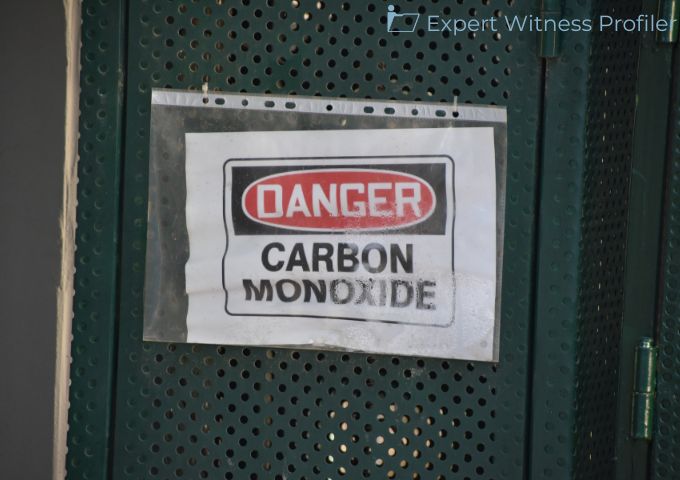
    This dispute arises from the death of 88-year-old Ronald Fronckowiak (the “Decedent”) by carbon monoxide toxicity. Specifically, on the evening of February 22, 2022, Rebecca Jaeger, age 72, drove the Decedent in his 2017 Kia Sorento from the hospital-where he was being treated for a dislocated shoulder and confusion-to the couple’s rental home in Spring Hill, Florida.

    Jaeger exited the vehicle, assisted the Decedent out of the vehicle, and they both proceeded inside with the key fob, which was ultimately left on the kitchen table. Tragically, they left the car running in the enclosed single-car garage.

    The next morning, officers from the Hernando County Sheriff’s Office performed a wellness check on the couple after the Decedent’s family had not made contact with him. Decedent was found deceased in the room next to the garage, and it was later determined that he died from carbon monoxide toxicity.

    The 2017 Kia Sorento is designed with keyless ignition technology, but does not include an automatic shutoff feature. More broadly, 83% of 2017 model year vehicles were found to not offer an automatic shutoff feature, and 91% did not include this as a standard feature.

    Defendant Kia America, Inc. filed a motion to exclude the testimony of Plaintiffs’ expert witnesses Peter A. Hancock and David J. Bizzak.
    Human Factors Expert Witness 

    Peter Adrian Hancock has served as a past president of the Human Factors and Ergonomics Society and other professional organizations. His work includes decades of research, publication, and application of HF/E principles to real-world systems, including transportation systems and human interaction with vehicle technologies.

    Get the full story on challenges to Peter Hancock’s expert opinions and testimony with an in-depth Challenge Study.

    Mechanical Engineering Expert Witness

    David John Bizzak is a Professional Engineer (P.E.) and holds a Ph.D. in Mechanical Engineering. Furthermore, he is also a Certified Fire and Explosion Investigator (C.F.E.I.) and Certified Vehicle Fire Investigator (C.V.F.I.). Bizzak has decades of experience investigating and analyzing automotive systems and other product designs for safety hazards, defects, and failure modes.

    Want to know more about the challenges David Bizzak has faced? Get the full details with our Challenge Study report.

    Discussion by the Court

    Peter Hancock

    According to Hancock, the vehicle appeared to have provided insufficient cues as to its continuing, activated status. However, the Court held that such opinions are not directly relevant to the design defect analysis at hand.

    Hancock also opined that there was an “absence of effective, explicitly designed status warning cues.” This opinion, however, is conclusory and unsupported by any articulable methodology.

    David Bizzak

    Similarly, although Bizzak provided more relevant opinions in his report, these do not necessarily signify that the vehicle failed to perform as safely as expected or was unreasonably dangerous.

    According to Bizzak, the subject Kia Sorento was defective by virtue of the fact that it was not equipped with features necessary to guard against carbon monoxide poisoning resulting from an operator inadvertently failing to turn off the ignition before exiting the vehicle.

    However, the Court concluded that the key opinion provided in Bizzak’s report that addressed the alleged design defect was conclusory, as no discernable methodology was provided.

    Held

    Accordingly, the Court granted-in-part Defendant Kia’s motion to exclude the testimony of Peter A. Hancock and David J. Bizzak.

    Key Takeaway

    Importantly, neither Daubert nor Federal Rule of Evidence 702 requires a trial judge to admit opinion evidence that is connected to existing data only by the ipse dixit of the expert. Instead, the judge is free to conclude that there is simply too great an analytical gap between the data and the opinion proffered.

    Case Details:

    Case Caption: Fronckowiak V. Kia America, Inc.
    Docket Number: 8:24cv863
    Court Name: United States District Court, Florida Middle
    Order Date: April 15, 2026
  • Automotive Mechanics Expert Witness’ Testimony Rejected Because it is Based Solely on her Experience

    Automotive Mechanics Expert Witness’ Testimony Rejected Because it is Based Solely on her Experience

    On December 31, 2021, Plaintiffs and Defendant entered a Stock Purchase Agreement (SPA) whereby Plaintiffs purchased all the issued and outstanding shares of 411 Flash Corporation (“Company”) from Defendant. Plaintiffs alleged Defendant breached Section 4.09 of the SPA because the repairs made to these vehicles went beyond “ordinary, routine maintenance and repairs” and they were “material in nature or cost,” all within the meaning of Section 4.09.

    In support of this claim, Plaintiffs engaged an expert witness, Alyssa Nieto, whom they disclosed as a “mechanics expert.” Nieto opined that the vehicles “were not in good operating condition and in need of substantial, material repair, well beyond that which could be considered ordinary or routine that should have been communicated.”

    In Section 4.09 of the Purchase Agreement, Defendant agreed, represented, and warranted that the “vehicles and other items of tangible personal property of the Company” were “structurally sound,” “in good operating condition and repair,” and “adequate for the uses to which they are being put.” Additionally, Defendant represented that “none of” the vehicles were “in need of maintenance or repairs except for ordinary, routine maintenance and repairs that are not material in nature or cost.” Despite his representations, the Company spent a total of $33,000 in repairs made to 13 vehicles transferred at the closing.

    However, Defendant argued Nieto’s testimony must be excluded under Fed. R. Evid. 702 “because her general experience managing an auto body repair shop does not qualify her to opine on specific issues of automobile mechanics,” and he further argued her opinions would not be helpful to the factfinder.

    Automotive Mechanics Expert Witness

    Alyssa Nieto graduated high school from Colorado Academy in Denver, Colorado, in 2014. She began her career in the automotive industry in December 2016 as a receptionist at Community Auto Repair Shop. In 2017, the owner decided to open a second location. From 2017 to 2020, she mentored under the owner/proprietor and the lead technicians, working her way from receptionist to Service Advisor. She eventually earned her role as Service Manager, where she oversaw the day-to-day operations of both locations.

    Get the full story on challenges to Alyssa Nieto’s expert opinions and testimony with an in-depth Challenge Study. 

    Discussion by the Court

    In its own review of her report, the Court disagreed over the reliability of any methodology Nieto might have employed. Throughout her report, Nieto failed to “explain how [her] experience led to the conclusion reached, why that experience is a sufficient basis for the opinion, and how that experience is reliably applied to the facts.”

    For example, Nieto opined that “[m]ost of the repairs detailed in this Report could have been prevented if the vehicles had been serviced pursuant to their factory maintenance schedule.” Here she did identify the specific factory maintenance schedule for transmission service for three of the vehicles, and then opined, “[i]f the transmissions had been serviced with fresh fluid on their regular maintenance schedule (at 60,000 miles), there would not have been metal in the fluid and could have potentially prevented internal transmission failure.” However, she did not explain her methodology supporting this opinion.

    Held

    In conclusion, the Court granted Defendant’s motion in limine to exclude expert testimony from Alyssa Nieto.

    Key Takeaway:

    Nieto has failed to demonstrate her opinion is based on any methodology that renders her opinions reliable under Rule 702. Federal courts routinely exclude as unreliable expert opinions that are based solely on the expert’s experience and which lack any methodology.

    Case Details:

    Case Caption: Harriman Et Al V. Smart
    Docket Number: 1:22cv1883
    Court: United States District Court, Colorado
    Order Date: August 22, 2024