Plaintiff Geoffrey Long brought this action against Defendants Power Technique North America LLC (“Power Technique”) and United Rentals (North America, Inc.) (“United Rentals”), asserting claims for strict products liability, negligent products liability, and breach of warranty. Long alleged that he sustained life-altering injuries, including significant injuries to his cervical spine, when an access door of a portable air compressor fell on him while he was inspecting the machine in the course of his employment as a General Foreman at a job site in New Jersey.
Craig David Clauser is an engineer with over fifty years of experience in industrial safety, machinery safeguarding, failure analysis of mechanical and structural devices, and accident investigation. He has particular expertise in metallurgical engineering and materials science, and safety engineering.
Clauser concluded that the incident and Long’s injury occurred because the subject air compressor was a “defectively designed product.” Specifically, he opined that “the design did not address the hazard of a gas spring failure allowing a door to drop and strike a user.”
i. Insufficient Facts or Data
Defendants first argued that Clauser’s testimony should be excluded insofar as it rests on insufficient facts or data, specifically an “assumption” that the gas strut failed. Defendants contended that Clauser’s testimony should be excluded in its entirety because it depends on Long’s eyewitness testimony that the gas strut failed. Long correctly responded that such reliance is permissible.
Clauser was unable to inspect the gas strut at issue, which Defendants’ own expert opined had likely been discarded, and instead inspected the machine with new gas struts installed. He paired that inspection with reliance on Long’s testimony that the door fell on him after the gas strut had failed. The Court found that reliance on this evidence is sufficient. Any challenges to the credibility of Long’s testimony that the gas strut failed are better left with the jury, not the judge.
Defendants also argued that Long’s eyewitness testimony is an insufficient fact to support Clauser’s conclusions because Clauser, in relying on that fact, “performed no analysis into why the gas struts did not need to be replaced until February 2025 by United Rentals.”
Long responded, and the Court agreed, that Defendants misconstrued Clauser’s testimony. At his deposition, Clauser stated: “I don’t know that they weren’t replaced, and I did not really put any analysis into that.” That is not the same as Clauser admitting that “he performed no analysis into why the gas struts were not replaced until February 2025.”
Finally, Defendants argued that Long’s eyewitness testimony is insufficient because Clauser did not rule out alternative explanations. According to the Court, where alternative explanations conflict with eyewitness testimony, an expert may rely on the eyewitness account.
ii. Reliable Principles and Methods
Defendants challenged Clauser’s alternative-design opinions on the ground that he proposed those alternatives without “testing, data analysis, or calculations,” and instead merely “showed a picture of the two alternatives without any diagrams.”
But the absence of testing, standing alone, does not render an alternative-design opinion unreliable per se. Here, Clauser’s opinion concerning the formation and necessity of alternative designs rests on his substantial experience, his personal inspection of the compressor, his review of the record, and his application of the Order of Precedence or Safety Hierarchy.
Accordingly, the Court held that any lack of testing goes to the weight of Clauser’s opinion, not its admissibility.
Defendants separately argued that Clauser’s methodology in providing alternative designs is insufficient because he did not independently test the lifespan of a gas strut. But Clauser’s report made it clear that he relied on the testimony of Mark MacInnis, Power Technique’s former Vice President of Engineering for its Portable Power and Flow Division, regarding the lifespan of the struts. MacInnis testified that it would be unlikely “if there was anyone in the globe who knew more about this product than me.” Clauser’s reliance on that testimony was considered permissible.
Finally, Defendants faulted Clauser because they averred that no manufacturer had implemented his proposed alternative design. But Defendants did not meaningfully explain how that fact rendered Clauser’s methodology unreliable and cited no authority imposing a categorical requirement that an expert demonstrate industry use of the precise alternative design he proposed.
iii. Warnings or Instructions Testimony
Defendants also challenged Clauser’s warning opinion that Power Technique should have warned that “air springs were susceptible to unexpected failure” and that users should not rely on them as the sole means of support. Defendants contended that this opinion is improper because Clauser did not know the failure rate of the gas struts at issue, “did not know of any really sudden failure of a gas strut,” and again asserted that Clauser does not know that a gas strut failed in the subject accident.
These arguments do not warrant exclusion of his testimony. As discussed above, Clauser relied on Long’s eyewitness testimony in concluding that a gas strut failed, and such reliance is permissible.
Defendants next argued that Clauser’s opinion that Power Technique “could have provided instruction to the owner and maintainer of the compressor that the air springs, which Mr. MacInnis stated are inexpensive, should be replaced at a frequency that prevents end of life failures in service” is based on unsupported conjecture and speculation. The record does not support that characterization. Clauser acknowledged that the lifespan of a gas strut depends on the strut’s usage and the environment in which it is used. But that does not make replacement-frequency information unknowable or speculative.
Defendants further faulted Clauser for not identifying similar replacement schedules for gas struts across other industries and for not relying on specific industry standards governing regular replacement of gas struts. But the absence of industry standards or comparable replacement schedules did not, by itself, require exclusion.
Held
The Court denied Defendants’ motions to exclude the testimony of Craig D. Clauser.
Key Takeaway
Clauser relied on his personal inspection of the compressor, his review of the record, and his decades of experience in engineering, safety engineering, machinery safeguarding, failure analysis, and accident investigation. Defendants’ criticisms of the factual basis for his warning opinion may go to its weight, but they do not render the opinion inadmissible.
Case Details:
Case Caption:
Geoffrey L. Long v. United Rentals N. Am., Inc.
Docket Number:
2:25cv4432
Court Name:
United States District Court, Pennsylvania Eastern
Kyle and Annaleah Justice raised claims of negligence and strict liability against Defendants Bestway (USA), Inc. and Rural King under the Missouri Wrongful Death Statute. Plaintiffs’ claims arose from the drowning death of their minor daughter, E.M.J., in an above-ground pool on August 3, 2019.
Plaintiffs designated Dianna Sullivan as an expert regard the impact of the death on Plaintiffs’ mental health; Peggy Shibata as an expert regarding the pool’s safety and design; and Dr. John Fletemeyer as an expert in aquatics.
Bestway (USA), Inc. filed motions to exclude the opinions of Sullivan, Shibata and Fletemeyer.
Mental Health Expert Witness
Dianna Sullivan graduated from Nova Southeastern University with a Master’s degree in Psychology. She has been in public and private practice for 35 years. Her areas of specialty are family, marital, anxiety, depression, adjustment disorders, grief, bereavement, and chemical dependency.
Peggy Shibata holds a bachelor’s degree in mechanical engineering as well as master’s degrees in both mechanical and biomedical engineering. Shibata specializes in mechanical engineering and biomechanics, with particular expertise in accident reconstruction, rigid body dynamics, computational modeling and analysis, human injury tolerance, and injury analyses associated with transportation, recreational activities and equipment, and falls.
John Fletemeyer has a bachelor’s degree in anthropology and physical education from Ball State University. He holds post-graduate degrees from the University of Wisconsin and the University of Cape Town in South Africa. He has a doctoral degree from Florida International University with an emphasis on coastal science and education. Fletemeyer has “been continuously involved in aquatics for the past 50 years and [has] several professional certifications” related to lifeguarding, first aid, and water rescue. He is currently the executive director of the Aquatic Law Institute and the Aquatic Law Symposium Program.
Sullivan, a Licensed Mental Health Counselor (“LMHC”), conducted phone interviews with Plaintiffs Kyle and Annaleah Justice “to evaluate the psychological process and circumstances that will help [her] understand the duration[,] severity and of [sic] symptoms (if any), to arrive at a diagnosis (if any), and to provide an expert opinion about the grief and bereavement process experienced by the family of the deceased . . . .”
According to Sullivan, both Kyle and Annaleah Justice suffered from Post traumatic stress syndrome (“PTSD”), Major depressive disorder (“MDD”) and complicated grief and bereavement syndrome as a result of the sudden and tragic death of their daughter. Annaleah Justice was also diagnosed with an anxiety disorder.
Bestway USA challenged the admissibility of Sullivan’s opinions because she did not perform any formal diagnostic tests on Plaintiffs before arriving at her conclusions.
Bestway USA asserted that Sullivan’s testimony is about Plaintiffs’ grief and bereavement, a form of damages that is specifically precluded under Missouri’s wrongful death statute. To sum it up, Sullivan’s opinions are not the result of reliable principles or methods and would not be helpful to the jury.
Analysis
The Court found that Sullivan “followed the same procedures that [she] use[s] in [her] practice when conducting an intake” and she specifically followed the “Shea (1998) protocol.” Sullivan did not rely on the Plaintiffs’ previous mental health records because, as she explained, there were none. The report she has produced applies her analysis of Plaintiffs’ symptoms to the diagnostic criteria provided by the DSM-5, a procedure that further supports the finding that she used a reliable methodology to form her opinions in this case. Moreover, Sullivan’s testimony is relevant and admissible for the jury to assess “the reasonable value of the services, consortium, companionship, [and] comfort” that resulted from Plaintiffs’ loss of their daughter.
Bestway USA argued that Sullivan’s opinions did not address the loss of companionship, comfort, counsel, and support and instead focus explicitly on grief and bereavement. The Court will not take such a limited view of the overall value of Sullivan’s opinions in assisting the jury. However, Sullivan will be required to express her opinions within the context of the damages permitted by the statute and may not expressly testify regarding grief or bereavement.
The Shibata Motion
Shibata planned to testify to the following:
Opinions 1-6
1. According to the recorded statements, police investigation, and medical findings, 31-month-old [E.M.J.] was found face down in the subject Bestway above ground pool after apparently using the nylon strap and side of the pool to climb into the water.
2. The nylon strap and climbability of the subject pool wall resulted in [E.M.J.] gaining access to the pool water.
3. Access to filled pools by small children leading to drowning is a well-known hazard in the pool industry as evidenced by standards and guidelines related to pool barriers and publications authored by the safety community related to preventing child drownings.
4. The circumferential horizontal strap on the subject pool creates a foothold, reducing the vertical distance to the top of the pool, and making the pool wall noncompliant withthe requirements for a conforming barrier.
5. The subject pool design is defective and unreasonably dangerous due to the climbability of the pool wall.
6. The instructions provided in the subject pool’s owner’s manual do not clearly inform the user that the pool wall is not a conforming barrier and that a separate conforming barrier other than the pool wall must be provided by the user.
Opinions 10-15
10. Bestway (USA) failed to perform any hazard identification for the subject pool design, prior to, or after, the sale of the subject pool.
11. Bestway (USA) failed to perform any risk assessment for the subject pool design, prior to, or after, the sale of the subject pool.
12. Bestway (USA) failed to perform any testing to identify potential design defects related to the climbability of the subject pool wall prior to, or after, the sale of the subject pool.
13. In the subject pool owner’s manual, Bestway (USA) failed to properly and explicitly instruct the Justice family and other users that since the nylon strap can be used as a foothold, an additional barrier to the subject pool is required.
14. Bestway (USA), through the language provided in the owner’s manual, gave the Justice family a false sense of security and implied to them that they did not need to construct an additional barrier surrounding the subject pool because the pool wall itself could be a barrier.
15. Bestway (USA) knew, or should have known, that the pool wall was not a proper barrier because of the nylon strap foothold.
Analysis
Bestway offered several arguments why Shibata’s opinions should be excluded, including that they are “not based on sufficient facts or data, . . . do not have a reliable basis in accepted principles and methods, nor has she applied those principals to the specific facts of this case, . . . and would not serve to help the jury reach a decision in this matter.”
As an initial matter, because the Court has granted summary judgment for Bestway USA as to Plaintiffs’ negligence claims, some of Shibata’s opinions are no longer relevant.
In particular, opinions relating to Bestway USA’s duty and breach are no longer at issue. Shibata’s Opinions 3, 10, 11, 12, and 15 relate directly to the issue of Bestway USA’s alleged duty or knowledge of the pool’s potential dangers. Because Plaintiffs will no longer need to establish these elements of negligence, these opinions will no longer be helpful to the jury and could mislead the jury as to Bestway USA’s duties.
Opinion 1
The Court held that Opinion 1 is inadmissible because it is a simple statement of fact that does not require expert testimony.
Testimony from witnesses at the scene and the conclusions in the Warren County Sheriff’s Report can establish the facts included in Shibata’s Opinion 1 without her testimony. While Shibata may testify regarding her reliance on those statements and perhaps the conclusions in the Report in forming her conclusions, she cannot testify to them in the form of opinion.
Opinion 2
Plaintiffs have failed to establish by the preponderance of the evidence that Shibata’s Opinion 2—that the nylon strap and the climbability of the pool wall resulted in E.M.J. gaining access to the pool—is based on sufficient facts and data and is the result of a reliable application of a methodology. Shibata is an expert in engineering, biomechanics, product safety, and accident reconstruction, among other topics related to human factors. To form this opinion, Shibata appeared to have relied on the testimony of other witnesses, the police and incident reports following E.M.J.’s death, E.M.J.’s medical records, and reports from saferproducts.gov indicating other instances of toddlers climbing into or attempting to climb into other similarly designed pools.
She did not testify that these are the types of facts and data she would generally rely upon to form opinions about biomechanics, engineering, product safety, accident reconstruction, or human factors analysis. While she stated that she “employed the scientific method as a framework,” Plaintiffs have not come forward with any other evidence of how Shibata applied the scientific method to the issues of this case.
Shibita evaluated E.M.J.’s climbing abilities using only her intuitive understanding of children’s general climbing abilities, and she has been unable to identify a scientific methodology she used to arrive at her conclusion.
Opinion 5
The Court held that Opinion 5 is admissible because Shibata has an expertise in engineering and is offering her engineering opinion regarding the safety of the pool’s design. She is also an expert in product safety generally and can testify using this experience that this pool’s design, specifically as it relates to the nylon support strap, is unreasonably dangerous. Shibata reviewed relevant safety standards regarding above-ground pools and has concluded that the nylon support strap makes the pool’s wall climbable and therefore ineffective as the sole barrier preventing young children from entering the pool.
Opinions 4, 6 and 13
The Court held that Opinion 4 pertains to whether the nylon strap constitutes a foothold and therefore makes the pool wall a non-conforming barrier. Opinions 6 and 13 are substantially the same in that they both state that the pool’s owner’s manual failed to inform consumers that the pool wall included a foothold via the nylon support strap, thus making it a non-conforming barrier and requiring the consumer to construct an additional barrier around the pool to make it safe.
Plaintiffs have met their burden to establish that that Opinions 4, 6, and 13 are admissible. According to the Court, Shibata has extensive experience in the field of product safety analysis. As stated above, in assessing whether the pool’s wall was a conforming barrier or whether the nylon support strap created a foothold, Shibata read several sets of pool safety standards and determined that the measurements of the pool and pictures of the nylon support strap indicate that the nylon support strap was a foothold and therefore the pool’s wall was not a conforming barrier.
Opinion 14
The Court held that Opinion 14 about the pool’s warnings that gave Plaintiff’s a “false sense of security and implied to them that they did not need to construct an additional barrier” will be excluded because it is directly contradicted by other testimony.
Shibata, during her deposition, was confronted with Justice’s deposition testimony where he testified that he and Flake had discussed putting an additional fence around the pool. She admits that she had previously reviewed this testimony and that Justice, in this testimony, described a desire to put an additional barrier around the pool. Shibata did not explain how she could have reliably arrived at her conclusion that Justice had a “false sense of security . . . they that did not need to construct an additional barrier” when he testified to his intention to construct such a barrier. Additionally, there is no evidence in the record that Justice or the Flakes read the pool’s warnings.
The Fletemeyer Motion
Fletemeyer offered the following opinions:
Opinions 1-6
[1.] The fatal drowning of [E.M.J.] was preventable.
[2.] The proximate cause of this fatal drowning was the nylon support strap surrounding the pool’s perimeter. Being only 14.5 inches from the ground, it conveniently provided [E.M.J.] with a foot hold allowing her to climb over the pool’s edge and into the water[.]
[3.] If not for the nylon strap, a toddler of [E.M.J.]’s size and age wouldn’t have been able to gain access into the pool and drown.
Considering that Kyle Justice, the father of the victim, had earlier removed the ladder from the pool, this was the only possible way the victim entered the pool.
[4.] Detective Jeff Doerr observed a child’s footprint near the nylon strap. He concluded that the footprint likely belonged to [E.M.J.] and that the nylon strap was how she managed to get into the pool.
[5.] Without the ladder and without the nylon strap. It would not have been possible for [E.M.J.] to climb over the edge of the pool and drown.
Consequently, any allegation by the defense that the victim entered the pool differently is not supported by the facts.
[6.] The nylon support strap circling the pool represents a serious design flaw responsible for making the pool inherently dangerous especially to young children the victim’s age.
Opinions 7-9
[7.] The fact that there has been similar fatal drownings and near drownings prior to this one where children used the nylon strap as a foot support, this indicates a wanton and conscious disregard for the safety of this product by its manufacturer.
[8.] There are none of the contributing events mentioned earlier in this report that would indicate that this was a passive drowning event. As such, my opinion is that this was an active drowning and consequently, [E.M.J.] experience [sic] horrific pain and suffering before becoming unconscious, progressing from clinical death to biological death.
[9.] Kyle Justice, the father, states in his deposition . . . that earlier he had removed the ladder from the pool. Consequently, he reasonably believed that the pool was safe.
Analysis
Bestway USA argued that Fletemeyer’s opinions should be excluded because they are not based on sufficient facts or data, are not the result of a reliable application of a methodology to the facts, and would not help the jury. Bestway USA stated that Fletemeyer failed to personally conduct an investigation into the scene of the drowning, and therefore does not base his opinions on sufficient facts or data.
Opinion 7
The Court held that Fletemeyer’s Opinion 7, that the pool’s manufacturer acted with wanton and conscious disregard for the safety of the pool, will be excluded because it is no longer relevant to the issues in this case. As stated above, the Court has already granted summary judgment in favor on Bestway USA on the issue of Bestway USA’s alleged negligence and as to punitive damages. Because this opinion relates specifically to the issue of Bestway USA’s knowledge of the pool’s danger—and thus to punitive damages—it will be excluded.
Opinion 1
The Court held that Opinion 1 will be excluded because it is simply not helpful to the jury. While it is likely true that this tragic drowning was preventable, nothing about this opinion will help the jury to decide an issue in this case.
Opinions 2 and 6
The Court held that Fletemeyer’s Opinions 2 and 6 will be excluded. In Opinion 2, Fletemeyer intended to testify that the pool’s nylon support strap was the “proximate cause” of E.M.J.’s death. Similarly, in Opinion 6, Fletemeyer intended to testify that the inclusion of the nylon support strap in the pool’s design renders the design defective. Fletemeyer is an expert in drowning, not pool design or human factors. He has no expertise that permits him to form opinions regarding the design of the pool or the ability of E.M.J. to enter the pool via the nylon support strap.
Additionally, Opinion 6 can also be excluded because it is unnecessarily cumulative. Shibata, an engineering and product safety expert, intended to testify regarding the pool’s design and the nylon support strap and its potential as a foothold. Having Fletemeyer provide essentially the same testimony would be unnecessarily cumulative, especially given that he lacks the necessary expertise to render such an opinion.
Opinions 3 and 5
The Court held that Opinions 3 and 5 are essentially the same opinions and will both be excluded because they are outside of the realm of Fletemeyer’s expertise. In them, Fletemeyer has concluded that the pool’s nylon support strap acted as a foothold by which E.M.J. was able to access the pool, and that this was the only way E.M.J. could have accessed the pool while the ladder was removed.
As already stated, Fletemeyer does not have any special training or experience related to accident reconstruction or human factors that would permit him to arrive at this conclusion. It appears that Fletemeyer arrived at these conclusions by simple inference based on the Warren County Sheriff’s Report and Justice’s deposition testimony. Such testimony will not be helpful to the jury because the jury could also make the same inference when confronted with the Report and Justice’s testimony.
Opinion 4
The Court held that opinion 4 will be excluded because it is not an opinion but is instead a statement of facts that can be established by other means. Again, what is contained the Warren County Sheriff’s Report and the opinion of Detective Doerr is not a matter for opinion testimony.
Opinion 9
The Court held that Opinion 9 will be excluded for two separate reasons. First, like Opinion 4, the first sentence of Opinion 9 regarding what Justice testified to will be excluded because it is simply a statement of fact that requires no expert opinion. Second, whether Justice believed the pool was safe after removing the pool’s ladder is not relevant to the remaining issue in this case. Only two of Plaintiffs’ claims remain against Bestway USA: strict liability design defect and strict liability failure to warn. Justice’s subjective belief regarding the pool’s safety after he removed the ladder is not relevant to either of these claims and will not help the jury to decide any remaining issues. The Court excluded Fletemeyer from testifying to his Opinion 9.
Opinion 8
Plaintiffs have established by the preponderance of the evidence the relevance and reliability of Fletemeyer’s Opinion 8, so the Court denied Bestway USA’s Motion as to this opinion. Fletemeyer is qualified through his extensive experience to testify regarding drowning events and the physiological process of drowning. Fletemeyer arrived at his conclusion through analysis of the drowning event and by consulting his previous, extensive study of the drowning process, a field in which he has published extensively.
Held
The Court denied the Defendant Bestway USA’s motion to exclude the opinions of Dianna Sullivan.
The Court granted in part and denied in part the Defendant Bestway USA’s motion to exclude the opinions of Peggy Shibata.
The Court granted in part and denied in part the Defendant Bestway USA’s motion to exclude the opinions of John Fletemeyer, PhD.
Key Takeaway:
Despite her extensive experience in the field of product safety analysis, Shibata’s opinions about the pool’s warnings was excluded because it was directly contradicted by other testimony. Moreover, Fletemeyer intended to testify that the inclusion of the nylon support strap in the pool’s design renders the design defective. The Court held that Fletemeyer is an expert in drowning, not pool design or human factors. Having Fletemeyer provide essentially the same testimony as Shibata would be unnecessarily cumulative.
Please refer to the blogs previously published about this case:
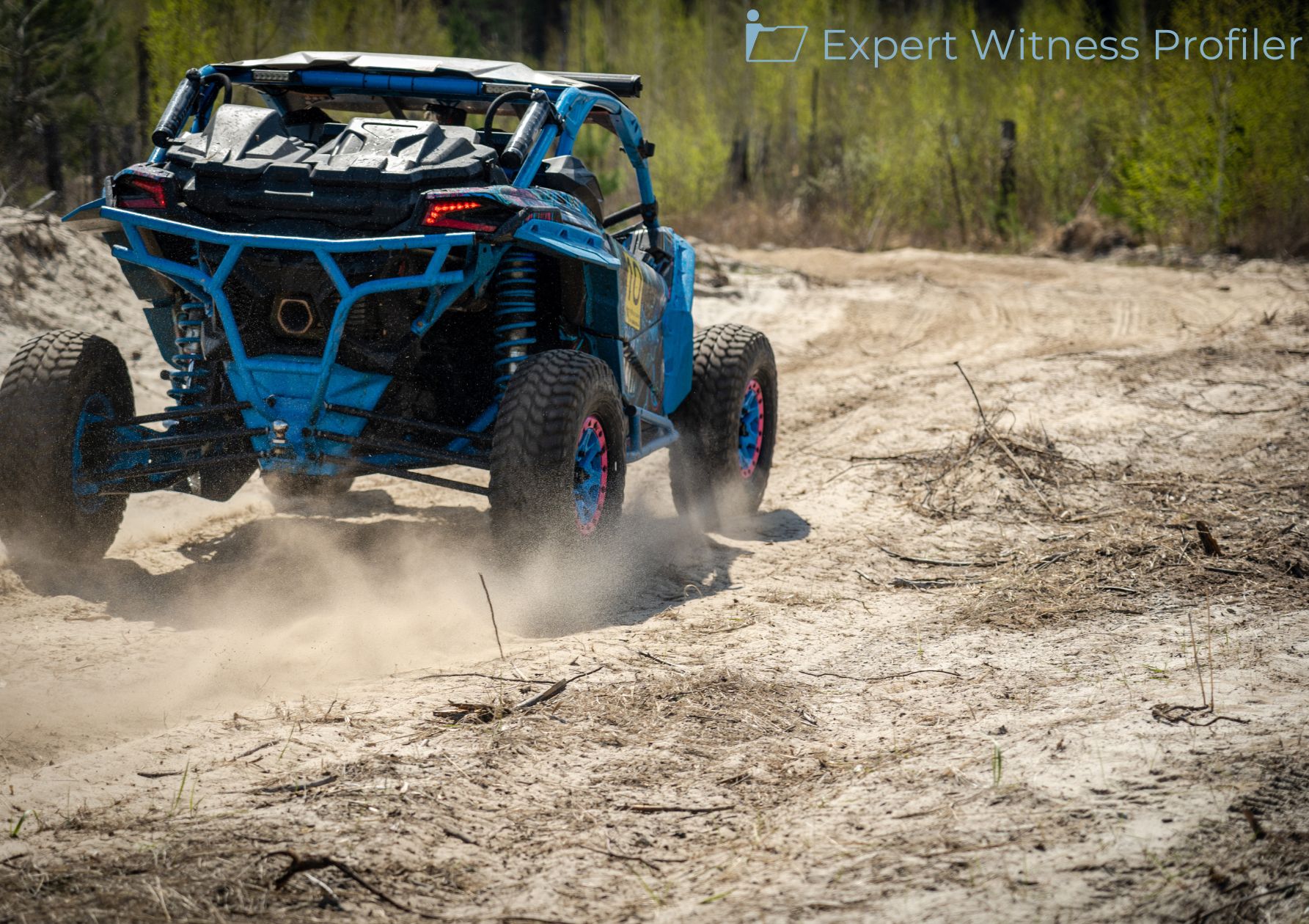
Stephen J. Ratcliffe has brought a lawsuit against BRP, the manufacturer, and Tidd’s Sport Shop, Inc. (Tidd’s), the dealer, of a 2019 Can-Am Maverick X3, a utility terrain vehicle (UTV), asserting negligence and strict liability claims arising out of an incident in which Ratcliffe’s UTV rolled onto its side and crushed his arm. The Plaintiff is pursuing design defect and failure-to-warn theories of recovery. During discovery, by report dated September 8, 2022, Ratcliffe designated Dr. Robert J. Nobilini, a professional engineer, as an expert witness.
BRP U.S., Inc. (BRP) filed a motion in limine to exclude the engineering opinions of Nobilini on the ground that they violate the constraints of Federal Rule of Evidence 702 and the caselaw implementing Daubert and Kumho.
Of Nobilini’s thirteen discrete opinions, BRP specifically focuses on his conclusions that “(i) humans—like Plaintiff—have a natural protective response to extend one’s hand/arm during a UTV rollover; (ii) BRP’s warnings were inadequate or ineffective to prevent the natural protective response; and (iii) the lack of an adequate restraint system to prevent the occupant’s arm from leaving the roll cage during a rollover made the Subject Vehicle unreasonably dangerous for its intended use.”
BRP’s motion includes many catchphrases for expert disqualification. (“unreliable and unscientific opinion testimony,” “no presumption of admissibility,” “untested and demonstrably false,” “inapplicable research studies and misleading, irrelevant and anecdotal videos, rather than testing or literature”). However, when analyzed, the crux of its argument against Nobilini’s testimony is that it is unreliable because he failed to test his opinions about alternative designs. BRP rejected Nobilini’s analogy to the response in a trip-and-fall and describes the analogy as a “classic apples to oranges comparison.”
Biomechanical Engineering Expert Witness
Robert J. Nobilini performs mechanical and biomechanical engineering investigations and analyses of accidents. He offers expert testimony related to slip, trip and fall accidents, automobile accidents, industrial accidents, sports and amusement related accidents, and the safety and failure of products. He is a member of numerous professional societies, including the American Society of Mechanical Engineers, the American Society of Biomechanics, and the Society of Automotive Engineers.
The Court noted that BRP has, rightly, not questioned Nobilini’s qualifications as a professional engineer. After all, Nobilini is well-qualified as a mechanical engineer with a concentration in biomechanics.
The Court found BRP correct in its assertion that Nobilini does not refer to any studies that corroborate his view that a person would naturally extend an arm to break a fall specifically during a UTV rollover. Nevertheless, the Court does not view Nobilini’s proposed testimony as his own ipse dixit. Instead, Nobilini based his biomechanical opinion on three studies of the biomechanics of what people typically do when they are falling from a standing position.
Further, Nobilini viewed twenty-six YouTube videos in which the occupants put their arms out in all-terrain vehicle rollovers and a safety video by Polaris Industries, a BRP competitor, in which the Polaris representative confirmed that “[s]ometimes the natural response is to put your hand out, like you’re falling.” Nobilini also reviewed after-market products, including arm and wrist restraints, designed to restrain users of such vehicles from extending their arms outside the roll cage in the event of a rollover.
The Court held that Nobilini has presented a reliable basis for his conclusions that Ratcliffe’s rollover accident was analogous to a fall, and, according to academic studies of the biomechanical response to falling, that a person’s natural response is to extend his or her arm to break a fall. Further, based on cumulative evidence, Nobilini articulates a reasonable basis for his opinions that the UTV industry generally was aware of the risk presented by this natural human response, that BRP specifically was aware of this risk, and that the UTV industry had developed safety features to mitigate this risk.
Held
The Court has concluded that Robert Nobilini’s proposed testimony meets the requisite “threshold of reliability,” and therefore it “should be presented to a jury and ‘tested by the adversary process—[by] competing expert testimony and active cross examination.’”
Therefore, the Court dismissed without prejudice Defendant BRP’s motion in limine to exclude the opinions of Robert J. Nobilini.
Key Takeaway:
BRP averred that “at its core, all of Nobilini’s opinions flow from one untested and demonstrably false premise—that belted and restrained vehicle occupants instinctively reach out in rollovers.” BRP pointed out that Nobilini has “never done a scientific study of this question” and asserted that his opinion “runs counter to published literature directly on point.”
However, Nobilini articulates a reasonable basis for his opinions that the UTV industry generally was aware of the risk presented by this natural human response, that BRP specifically was aware of this risk, and that the UTV industry had developed safety features to mitigate this risk.
Case Details:
Case Caption:
Ratcliffe v. BRP United States, Inc.
Docket Number:
1:20cv234
Court:
United States District Court for the District of Maine
Stephen Ratcliffe has brought a lawsuit against BRP, the manufacturer, and Tidd’s Sport Shop, Inc. (Tidd’s), the dealer, of a 2019 Can-Am Maverick X3, a utility terrain vehicle (UTV), asserting negligence and strict liability claims arising out of an incident in which Ratcliffe’s Maverick X3 rolled onto its side and crushed his arm. The Plaintiff is pursuing design defect and failure-to-warn theories of recovery.
Ratcliffe designated Dr. David R. Lenorovitz, a human factors and warnings expert, as a Plaintiff expert.
Lenorovitz opined that the subject vehicle was not only defectively designed but also that the BRP-provided warnings were inadequate, insufficient, or inconsistent.
BRP objected to what it characterizes as Lenorovitz’s “ancillary opinions.” Specifically, BRP described these opinions as “(i) criticizing the lack of clarity on if and how the vehicle-handling could be affected by occupancy load placement; and (ii) claiming that the Subject Vehicle’s 3-point seat belts are insufficient.”
BRP contrasts these with what it describes as Lenorovitz’s “core opinions,” which include:
the warning to keep your hands inside the vehicle was ineffective to prevent a supposed reactive arm movement to brace oneself during a rollover;
the instruction to firmly grip the steering wheel conflicts with the instruction to “brace for impact;” and
the warnings in the Operator’s Guide and on-product warnings to “never do jumps, slides/skids (drifts), or doughnut type ‘tricks’ or ‘maneuvers” conflicts with BRP’s action of “engag[ing] the services of professional drivers and celebrity brand ambassadors that graphically perform. . . such maneuvers in widely accessible on-line video clips and advertising promotions.”
BRP argued that Lenorovitz “conducts no case-specific testing, has no meaningful experience with side-by-sides, and ignores any evidence that does not support his narrative.”
Human Factors Expert Witness
David R. Lenorovitz obtained both an M.S. and PhD in Human Factors Engineering within the Industrial Engineering Department of the State University of New York at Buffalo in 1972 and 1975, respectively. He is board certified in human factors / ergonomics by the Board of Certification in Professional Ergonomics (BCPE). Since January of 2005, he has engaged in providing professional ergonomic consulting and forensic human factors services through my own consulting company, LENPRO Services, Inc.
Ratcliffe assured BRP that he does not intend to introduce Lenorovitz’s ancillary opinions on the Maverick X3’s handling or seatbelts at trial.
The Court noted that BRP has not questioned Lenorovitz’s qualifications as a human factors and warnings expert. Lenorovitz is well-qualified as a human factors and warnings expert.
In his report, Lenorovitz details the data and information he reviewed, including the transcripts of multiple depositions, his inspection of the actual Can-Am Maverick X3 in this case, his reference to American National Standards Institute (ANSI) standards, thirteen published articles, the documents and materials about the Can-Am Maverick X3 that were supplied to Ratcliffe, including the 2019 Operator’s Guide, his analysis of the “hazard control hierarchy” in this case, the sufficiency of the warnings, and his conclusions about deficiencies. From the Court’s perspective, Lenorovitz has satisfied his obligation to demonstrate that his expert opinions rest “on a reliable foundation” and are “relevant to the task at hand.”
In summary, the Court rejected BRP’s Daubert/Kumho challenge to the expert testimony of Lenorovitz as the Plaintiff’s ergonomics, human factors, and warnings expert. The Court concluded that Lenorovitz’s proposed testimony met the requisite “threshold of reliability,” and therefore it “should be presented to a jury and ‘tested by the adversary process—by competing expert testimony and active cross examination.”
In doing so, the Court has considered the 2023 amendments to Rule of Evidence 702 and makes this determination in accordance with the requirements of Rule 104(a).
Held
The Court grants Defendant BRP’ motion to the extent that it seeks to exclude so much of David Lenorovitz’s opinion testimony that constitutes ancillary opinions. The Court otherwise dismisses BRP’s motion in limine without prejudice.
Key Takeaway:
BRP complained that Lenorovitz did no testing. However, as the Plaintiff’s expert in ergonomics, human factors, and warnings, the Court concluded that Lenorovitz’s proposed testimony met the requisite “threshold of reliability.” In his report, Lenorovitz details the data and information he reviewed.