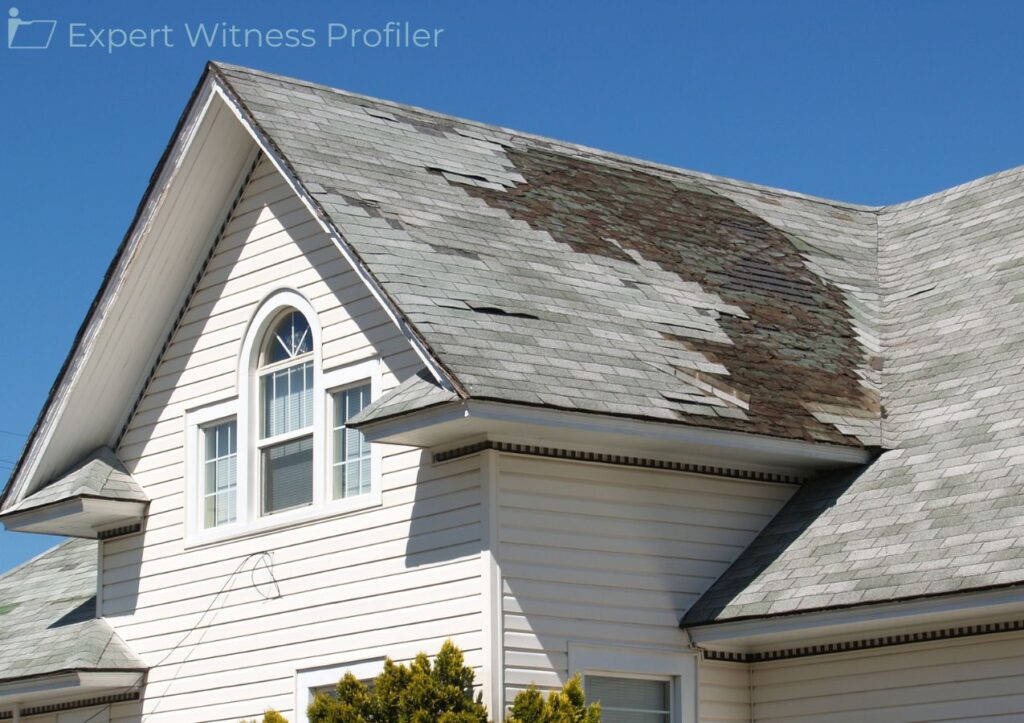
Tag: Wind

  • Engineering Expert Allowed to Opine on Fenestrations

    Engineering Expert Allowed to Opine on Fenestrations

    This case arises from an insurance policy and its alleged breach. Riva’s luxury high-rise condominium development sustained damage from Hurricane Ian.

    The issue Steadfast raised with the Court now is how Riva’s expert arrived at his estimate. Riva hired Dr. Anurag Jain, an engineer, to inspect the property. Dr. Jain and his team investigated the property over the course of multiple days, focusing on the roofs, windows, door systems, interiors, and exteriors of the building. But they didn’t knock on every door. Instead, Jain focused on the interiors and fenestrations (windows and glass doors) in 43 of 161 condominium units, capturing 27% of the total. The units he inspected were selected in accordance with the “qualitative” sampling methods outlined in the American Society of Civil Engineers’ (“ASCE”) guidelines. In his report, Jain explains that this choice was meant “to cover a sufficiently large sample of units and windows and doors across the buildings and various exposures with multiple units on each floor and each stack of the buildings.”

    At bottom, rather than inspect every unit—a time-consuming and expensive process—Jain determined the level of damage in the building by analyzing the losses observed in the sample. Since he suggested replacing or repairing a specific percentage of windows and sliding glass doors in the sample, he applied the same percentage to all windows and glass doors across the building. Put simply, he extrapolated.

    Motion to Exclude

    Steadfast looked at Jain’s report and saw a house of cards. In its view, his opinions are unreliable for two main reasons. First, the damage could have been caused by Hurricane Irma in 2017, which Jain did not sufficiently rule out. Second, Steadfast claimed that the math is broken—arguing that extrapolation is a clumsy shortcut that will force it to pay for repairing perfectly good windows. To keep the jury from hearing a word of it, Steadfast sought to exclude Jain’s testimony.
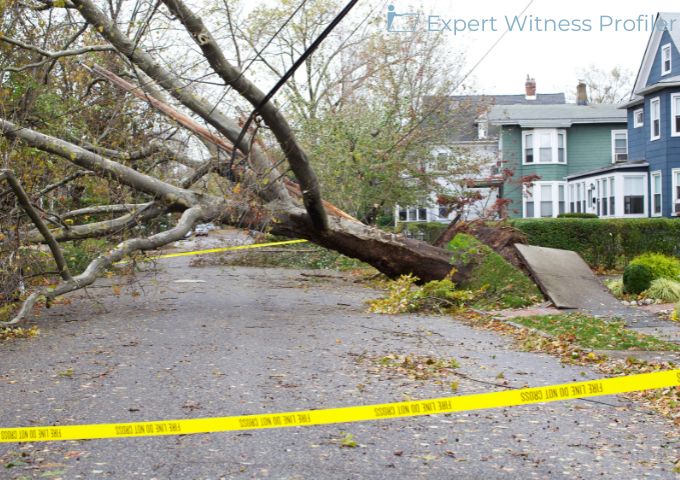
    Engineering Expert Witness

    Dr. Anurag Jain has investigated more than 3,000 hurricane-damaged buildings, including losses from Hurricane Ian, and has testified in depositions and trials involving wind-related structural damage.

    He holds a Ph.D. in structural engineering (wind engineering emphasis) and a master’s degree in structural engineering from Johns Hopkins University, as well as a Bachelor of Technology in civil engineering from Banaras Hindu University.

    Get the full story on challenges to Anurag Jain’s expert opinions and testimony with an in-depth Challenge Study.

    Discussion by the Court

    A. Hurricane Irma

    Steadfast’s argument that Jain did not rule out alternative causes of the property damage is this: because he opined that the “duration” of Hurricane Ian’s high winds caused the damage, he should have also calculated whether the duration of Hurricane Irma, from 2017, could have caused the same damage.

    The problem with this argument is straightforward—Jain did consider Irma. He testified that Riva’s property was designed to withstand Hurricane Ian, but the duration of the strong winds caused the building to succumb to its pressure.

    But Jain didn’t just throw up his hands because the data was sparse. He checked the available pre-Ian documents—including a 2021 Condition Survey Report, which was entirely silent on any window or door damage. To an engineer, that silence made perfect sense: Irma simply lacked the muscle to inflict similar destruction.

    Analysis

    Steadfast protests that Jain did not see any reported damage to the windows and doors because that is not what the 2021 Condition Survey was looking for. According to Steadfast, the survey only inspected the exterior of the property, and since the interior was never examined, the report could not have identified any fenestration damage. Apparently, this was corroborated by the survey company, who testified that the 2021 assessment did not include an inspection of the buildings’ interiors. While that may certainly weaken Jain’s opinions, it did not change the reliability analysis here.

    The narrow question at this stage is simply whether Jain adequately grappled with obvious alternative explanations. He did. In his professional judgment, if Hurricane Irma had actually caused building-wide damage, the inspecting engineers would have written it down. Steadfast insists this is a total misreading of the 2021 Condition Survey. But that kind of disagreement goes to the credibility of his conclusion, not the reliability of his threshold method. If Steadfast wants to convince a jury that the report’s silence means something else entirely, it is welcome to try. That is exactly what cross-examination is for.

    B. Extrapolation

    Next up, Steadfast challenged Jain’s reliance on statistics instead of personally inspecting each unit to determine the percentage of damaged fenestrations. Basically, Steadfast argued that “extrapolating findings from only 27% of units to the entire 161-unit complex is not scientifically valid under accepted engineering Daubert principles.”

    Look at how Jain actually did the math. He didn’t invent a number out of whole cloth; he recorded the exact percentage of damage he saw in his sample and let those real-world findings dictate the building-wide projections. For example, he found that 24% of the sliding glass doors observed in the North Building had panel framing joint rotation, a bent or impacted frame, or water penetration through the joints.

    Because those specific flaws signal broken internal sealants and compromised framing, he concluded that 24% of the sliding glass doors in the North Building need to be replaced. The math is not a black box—it is the product of simple statistics. And Jain’s sampling focus is identical to his extrapolation subject: sliding glass doors, single-hung windows, and fixed windows divided by building and categorized by the type of damage each sustained. A reasonable jury does not have to accept Jain’s conclusions as true, but his math is not unreliable.

    Jain staggered the units he inspected across 19 stories, based on each unit’s location within each building. He did this “to cover a sufficiently large sample of units and windows and doors across the buildings and various exposures with multiple units on each floor and each stack of the buildings.” The ASCE guidelines support precisely this type of extrapolation. 

    Held

    In conclusion, the Court denied Steadfast Insurance Company’s motion in limine to exclude the testimony of Dr. Anurag Jain.

    Key Takeaway

    The Court’s job under Daubert is to screen an expert’s methodology, not to decide which side has the more persuasive argument or to declare who is ultimately correct.

    Case Details:

    Case Caption: Riva Del Lago Condominium Association, Inc. V. Steadfast Insurance Company
    Docket Number: 2:24cv1056
    Court Name: United States District Court, Florida Middle
    Order Date: June 14, 2026
  • Insurance Adjuster Expert Witness Properly Justified the Inclusion of OSHA Compliance Costs 

    Insurance Adjuster Expert Witness Properly Justified the Inclusion of OSHA Compliance Costs 

    The present case involves an insurance coverage dispute between an East Texas church, Plaintiff Christian Heritage School c/o Youth With a Mission, and its insurance company, Central Mutual Insurance Company. Between  May 1, 2020, to May 1, 2022, Defendant insured Plaintiff’s property, which consisted of a twenty-one building campus in Tyler, Texas. The dispute arises from alleged storm-related damage with a date of loss on April 5, 2022.

    Pursuant to Federal Rule of Civil Procedure 26(a)(2), Plaintiff retained insurance adjuster expert witness, Duane Smith. Smith was supposed to testify about his inspection, investigation, and observations of the property damaged by a hail and wind event on April 5, 2022. His designation also indicated that he would testify to the reasonable costs to repair and/or replace the property that was damaged by the hail and wind event reported to have occurred on April 5, 2022. 

    Smith’s report included a discussion of his qualifications and experience, the materials he reviewed, his findings, and relevant weather information. Based on this information, he included line items for the property with the estimated costs to repair and/or replace the property.

    Defendant moved to exclude Smith from offering opinion testimony on the timing and cause of the claimed damages to the campus, the necessity of replacing roofs rather than repair, and the cost of Occupational Safety and Health Administration (‘OSHA’) compliance and upcharges in his estimate. 

    Insurance Adjuster Expert Witness

    Insurance Adjuster Expert Witness

    Darrell Duane Smith has been a licensed public insurance adjuster since 2016. With approximately 19 years of experience as an independent insurance adjuster, he has managed numerous commercial and residential insurance claims.

    Through these experiences, Smith has adjusted hundreds of wind and hail events, water damage, and fire damage claims during his career, including both commercial and residential claims.

    Want to know more about the challenges Duane Smith has faced? Get the full details with our Challenge Study report.  

    Discussion by the Court

    I. Methodology Regarding Causation and Replacement

    Defendant’s Arguments

    Defendant argued that Smith’s own weather data showed no hailfall at the campus and that he conducted no testing. Defendant claimed that Smith provided no weather data indicating that wind or hailfall occurred on the campus on April 5, 2022 and that he failed to consider all information to exclude other potential causes of damage to the campus, such as pre-existing damage or post date of loss damages.

    Plaintiff’s Counter-Argument

    Plaintiff pointed out that Smith examined storm data from May 3, 2017, to April 5, 2022, to assess other potential storms but concluded that “the distinctive size, shape, and pattern of the hail damage conclusively established the April 5, 2022 hailstorm as the cause of damage.” Plaintiff also cited to Smith’s report where he concluded this same fact and explained, based upon coloration of old hail damage (discolored, grey, or whited out), versus the characteristics of hail damage that appeared to be “fresh” and consistent in size and shape with the April 5, 2022 storm. Smith also assessed the storm created openings for the roof and water damage, which was consistent with the April 5, 2022 storm due to lack of “long-term” aging.” 

    Plaintiff argues that Defendant’s arguments went to the weight of Smith’s opinions, not the admissibility of them.

    Causation

    Smith reviewed weather information from the National Oceanic Atmospheric Administration (“NOAA”) in order to determine which storms, if any, other than April 5, 2022 storm, affected the property. His search covered the period from May 3, 2017, to April 5, 2022, which he provided rules out any other possible date of loss.

    Moreover, Smith testified that when he inspected the property in 2023, he was able to distinguish between old and new damage based upon the repairs that already took place and the fact that the marks seemed to be “fresh” because they were not discolored, old, grey, or turning white like might be expected with aging. 

    Similarly, Smith opined that water damage observed at the property did not exhibit signs of long-term aging, or indicate a long-term ongoing issue nor are there signs of historical repairs at the affected locations. He stated that he considered alternative causes of loss, including foot traffic, wear and tear, and deterioration and concluded that no evidence consistent with these causes of damage was found.

    Replacement Versus Repair

    As to the necessity of replacement versus repair, Smith explained how he based his conclusions on his own inspection and experience. Smith line itemed the inspection damage in his expert report. He explained how upon inspection, he observed a significant number of unsealed tabs consistent with high wind, as well as hail damage to shingles and metal roofing. He stated that, based upon the damage he observed, it wouldn’t have been feasible to try to conduct repairs because the damage to the roofs was too widespread.  This is the basis of his opinion recommending replacement.

    The Court found that Smith’s report and testimony explained how he determined, based upon his experience, inspection, and review of the weather data, that the April 5, 2022 storm caused the damage. This included observations regarding prior storms from the weather data, the condition of the damage upon inspection as it relates to characteristics of time and wear, and the possibility of damage from post-date storms which he found occurred not in the relevant area and were several miles away. It was held that this evidence demonstrated that Smith examined other potential causes, thereby rendering his methodology and opinions reliable for purposes of determining admissibility under Daubert and Rule 702.

    The Court held that the Defendant may have identified weaknesses in Smith’s opinions, but it does not render them ipse dixit merely because Defendant disagrees with his conclusion. The credibility of Smith’s opinions remained a matter for the jury to consider.

    II. OSHA Compliance

    Defendant argued that Smith included Kevin Dandridge’s incomplete estimate for OSHA safety protocols and procedures in his estimate, making it unreliable. Dandridge was retained to testify about to the proper OSHA safety protocol and procedures.

    The Court held that Smith’s reliance on Dandridge’s OSHA compliance costs was not atypical. The Court, in a separate order, held that Dandridge’s testimony in this regard is permissible. As Dandridge himself explained, these opinions can be reconciled. To the extent the reliance is flawed, or Dandridge’s opinions are based upon a weak foundation, then, again, that remains a matter for cross examination.

    III. 20% Inflation Adjustment

    Lastly, Defendant argued that Smith included a 20% blanket inflation adjustment without providing a sufficient methodology.

    According to the Court, had Smith simply added a blanket 20% inflation adjustment without explanation, then such a methodology would be unreliable. However, Smith has explained his reasoning for this adjustment. As he testified to this point, “because all the major suppliers are sending out demand surge notices and informing all the contractors that due to the supply and demand, that all the materials have went up at least 20 percent, if not more.” 

    Smith further explained his experience with typical surge pricing due to storm demand having been involved with hurricanes. 

    Held

    The Court denied the Defendant’s motion to strike the expert testimony of Plaintiff’s insurance adjuster expert witness, Duane Smith.

    Key Takeaways:

    • According to Rule 703, an expert may also rely upon the opinion of another expert, as long as the other expert opinion upon which the expert bases an opinion or inference are of a type reasonably relied upon by experts in the particular field in forming opinions or inferences upon the subject. In conclusion, Smith’s reliance on Dandridge’s OSHA compliance costs was not atypical.
    • Defendant may have pointed out weaknesses in Smith’s opinions, but it does not render them ipse dixit merely because Defendant disagrees with his conclusion. This is simply a matter of credibility of the expert, which the jury can properly consider. 
    • Smith’s testimony explained how he determined, based upon his experience, inspection, and review of the weather data, that the April 5, 2022 storm caused damage to the property. This included observations regarding prior storms from the weather data, the condition of the damage upon inspection as it relates to characteristics of time and wear, and the possibility of damage from post-date storms which he found occurred not in the relevant area and were several miles away. This evidence demonstrates that Smith examined other potential causes, thereby rendering his methodology and opinions reliable.

    Case Details:

    Case caption: Christian Heritage School c/o Youth With A Mission v. Central Mutual Insurance Company
    Docket Number: 6:24cv45
    Court: United States District Court for the Eastern District of Texas, Tyler Division
    Date: February 6, 2025
  • Court Refuses to Exclude Meteorology Expert Witness’ Conclusion about Wind Damage

    Court Refuses to Exclude Meteorology Expert Witness’ Conclusion about Wind Damage

    A district judge in Nevada admitted the testimony of an expert meteorologist despite lack of certain tests or calculations.

    In 2003, the Mindens purchased a new high-end custom home in Henderson, Nevada, where they have resided since then. They maintained an active insurance policy over the property through Allstate. A sudden storm hit the property on or around September 1, 2019, which Allstate determined to be the “time of loss.” The property sustained substantial damage to the roof, exposing the underlying roof membrane or felt.

    This dispute stems from Plaintiffs’ deprivation of certain insurance coverage benefits guaranteed to them by Allstate, as Allstate has acted in bad faith and refused to honor the terms of Plaintiffs’ insurance policy. The Mindens’ home suffered hundreds of thousands of dollars in damage, for which Allstate paid the Mindens a mere $2,887.56. After over a year and a half of litigation, Allstate admitted that in its view, it owed the Mindens an additional $29,506.79, about ten times what it initially paid and likely over twenty times less what it actually owes.

    Plaintiffs argued that Allstate’s wind and roof damage expert, Timothy Marshall should be excluded from testifying under Daubert because he reached his conclusion that no wind damage occurred to the Mindens’ roof based on an inspection, review of submitted photographs, and weather information, but he did not test the roof tiles in a wind machine and did not perform wind pressure calculations. 

    Meteorology Expert Witness

    Timothy P. Marshall, P.E., M.S., is a Forensic Engineer and a Meteorologist for Haag Engineering Co. in Dallas, Texas. He has been with Haag since 1983, and has inspected tens of thousands of homes and building for damage from hail, wind, and other issues.

    Marshall is a member of the American Association of Wind Engineering, American Meteorology Society, American Society of Civil Engineers, International Conference of Building Officials, National Weather Association, and the Southern Building Code Congress International. He earned a Master of Science in Atmospheric Science from Texas Tech University in 1980, and a Master of Science in Civil Engineering from Texas Tech University in 1983. 

    Marshall is a widely published author, writing and contributing to more than 100 articles, technical papers, and damage surveys.

    Get the full story on challenges to Timothy Marshall’s expert opinions and testimony with an in-depth Challenge Study. 

    Discussion by the Court

    Plaintiff’s Arguement

    The Plaintiffs demanded exclusion of Marshall’s testimony due to the inaccuracy of his conclusion about wind damage.

    Plaintiff argued that Marshall chose not to do a wind machine test or wind pressure calculations. Marshall explained that he chose not to conduct the wind machine tests or make wind pressure calculations because it was unnecessary to do so as he had already concluded that there was no wind damage. The Court held that his reasoning was based on his inspection of the roof, review of photographs and weather research, and application of his knowledge and experience about wind damage to roofs.

    Lastly, the Plaintiffs argued that the exclusion of one wind data point showed that Marshall is biased. The Court held that they failed to provide any authority to explain why the exclusion of one data point made Marshall’s methodology unreliable or showed that he is biased.

    Held

    The Court denied Plaintiffs’ motions in limine to exclude Allstate’s expert Timothy Marshall.

    Key Takeaway:

    The key takeaway is that under Daubert, courts scrutinize the reliability of an expert’s methodology and principles. They do this rather than dissecting the accuracy of their specific conclusions.

    Criticisms about an expert’s judgment, potential biases, or failure to consider particular information or testing are for the jury to weigh through cross-examination. These are not grounds for excluding the expert’s testimony altogether.

    In the previous article, we discussed the wind speed opinions of the Plaintiff’s forensic engineering expert witness.

    Case Details:

    Case Caption: Minden v. Allstate Prop. & Cas. Ins. Co.
    Docket Number: 2:21cv151
    Court: United States District Court, Nevada
    Order Date: June 11, 2024
  • Wind Speed Opinions of Forensic Engineering Expert Witness Admitted

    Wind Speed Opinions of Forensic Engineering Expert Witness Admitted

    This case involves an insurance claim regarding a damaged roof on the Minden residence. Plaintiffs, Michael and Theresa Minden (“Plaintiffs”), purchased a newly-constructed home in 2003 in Nevada. Allstate’s policy of insurance insured the property.

    In September 2019, a wind event occurred resulting in damage to the roof of Plaintiffs’ home but Plaintiffs waited until November 2019 to report this damage to Allstate.

    Plaintiffs alleged that several roof tiles were cracked, exposing the underlying roof felt and that since the time of loss, water penetrated their roof tiles and further damaged the underlying felt and the inside of the Property. This case focused on the cause and manner of the damage to Plaintiffs’ roof, and Allstate’s homeowners’ insurance policy language, which stipulated that it covered these damages only if caused by a singular “occurrence,” and not through regular wear and tear. Allstate, after a thorough evaluation of Plaintiffs’ claim, made the determination that Plaintiffs’ roof damage was the result of faulty installation and subsequently years of wear and tear, and compensated Plaintiffs for the eight (8) roof tiles deemed damaged by a singular wind event. Plaintiffs disagreed with this assessment, and the present suit followed.

    Plaintiff’s expert, Marcor G. Platt, examined Plaintiff’s roof on August 13, 2021 and August 24, 2021. The Defendant alleged that the roof Platt inspected, however, was not the same roof that was on the house in September 2019 when the claim was made. Plaintiffs had almost entirely replaced their roof in October of 2020, almost an entire year before Platt’s site investigations.

    Defendant Allstate Property and Casualty Insurance Company moved to strike the Plaintiffs’ expert witness, Marcor G. Platt. Allstate also filed a duplicate motion in limine to exclude Platt from testifying at trial.

    Forensic Engineering Expert Witness

    Marcor G. Platt has over twelve years engineering and project management experience in the fields of residential, commercial, and industrial building structural design and retrofit, electrical transmission line structural design, and forensic engineering and expert witnessing.

    His forensic engineering experience includes investigating roof failures, wall failures, foundation damage, corrosion, ancillary structure damage, and other miscellaneous damage resulting from hail, wind, snow, tornado, hurricane, lightning, volcano, tropical storm, vehicle impact, or other natural or man-made forces. His expert witness experience includes testifying at depositions and trials regarding project management, structural failures, structural adequacy, structural damage, property compliance with building codes, and other subjects.

    Efficiently evaluate if investing further resources into vetting Marcor G. Platt is merited based on the findings in our Preliminary Screening Report. 

    Discussion by the Court

    Federal Rule of Evidence 702 governed the admissibility of Platt’s opinions. To be admissible, expert testimony must be both relevant and reliable.

    Expert opinion testimony is relevant if the knowledge underlying it has a valid connection to the pertinent inquiry. It is reliable if the knowledge underlying it has a reliable basis in the knowledge and experience of the relevant discipline

    Opinions Based on Relevant Facts and Data

    Allstate also argued that a roofing company had moved the tiles Platt took for testing from their original locations during the roof replacement in 2020. It added that any displaced tiles Platt observed in 2021 were unrelated to the wind event in 2019 because the roof was replaced in 2020. Allstate argued that Platt’s opinions were based on other experts’ reports and interviews, so his “opinions were nothing more than a comparison of the evidence provided by others.”

    Relying on Others’ Reports

    Platt interviewed the Mindens, the contractor who replaced the roof, and a neighbor who experienced wind damage to her roof. The Court found that Platt reviewed documentation, photographs, and reports prepared by others. Platt also conducted two site visits to the Minden residence, conducted weather research, removed tile samples and sent them to a lab for testing, and performed calculations regarding maximum probable wind speed and how that may have impacted the tiles on the roof.

    Moreover, Allstate had not suggested that experts in Platt’s field would not have relied on interviews, photographs, or other secondhand sources that Platt relied on.

    Allstate’s expert likewise did not view the roof before its replacement and similarly relied on photographs of the old roof and information provided by the Mindens. After all, experts in the field would rely on the same or similar materials as Platt did, and Allstate has not shown otherwise.

    Replacement Roof

    When the roof was replaced, the roofer used the original tiles as if they were not damaged. Platt opined that the tiles he sent for testing were the original roof tiles, not replacements. Consequently, the jury could find that the testing performed on those tiles would be consistent with testing done on the original roof tiles.

    The Court could determine whether the tested tiles were original tiles, whether they were in a different location after the roof replacement, and how the tiles were stored or transported to the testing site through cross-examination.

    Displaced Tiles in 2021

    Platt observed displaced and cracked roof tiles during his site visits in 2021. Platt did not feel that the 2019 event displaced the tiles he observed. Rather, he noted that, like the original tiles, the current roof tiles “were susceptible to displacement under the windspeeds which occur at the property.”

    The Court held that this information was relevant to the question of whether wind gusts at the proper speed could displace roof tiles. Moreover, Allstate had not explained why that conclusion was not reliable.

    Unreliable

    Allstate argued that errors in Platt’s report made his opinions unreliable. Specifically, Platt misstated the date of a rainstorm that caused water intrusion into the Mindens’ home after the September 2019 wind event. Allstate also contended that Platt’s testimony about the weather data regarding wind speeds was unsupported.

    The Mindens argued that Platt had explained the source of his wind speed opinion.

    Date of Rainstorm

    In his initial report, Platt stated that Minden told him that there were “torrential rains” in September 2019 that caused water infiltration to the house. At his deposition, Platt acknowledged that was an error and the rainstorms with water intrusion were in November and December 2019. The Court noted that Allstate did not explain what significance the date of the rainstorm had to Platt’s opinions, which were not about water intrusion from a rainstorm.

    Wind Speed

    In his initial report, Platt stated that he reviewed historical weather data from 2013 to 2021 for Clark County and the City of Henderson. Platt stated that according to the National Oceanic and Atmospheric Administration’s (NOAA) Storm Event Database, “four events with wind gusts between 50 and 62 knots were reported within 4 miles of the property from July 2018 to July 2021” and that “[n]no gusts over 62 knots were recorded within four miles of the property from July 2003 to July 2021.” He also stated that, according to NOAA’s Storm Prediction Center, 62 mile per hour gusts were reported at the Henderson Executive Airport, and on September 1, 2019, “winds with gusts exceeding 75 mph crossed the southeastern Las Vegas valley and Henderson.”

    Although Allstate contended that there was no support for Platt’s statement regarding the 75 mph wind gusts, Platt cited the source for this data point. Allstate’s expert noted the same information as Platt, which was that on September 1, 2019, wind gusts “exceeded 75 mph across the southeast side of the Las Vegas valley including the city of Henderson.”

    Supplemental Report

    Allstate sought to exclude Platt’s supplemental report because it referred to wind events on dates unrelated to the September 2019 storm that allegedly damaged the Mindens’ roof. Allstate contended the supplemental report consisted of dates and wind speeds that were not close to the date of the loss or to the alleged threshold rating of the roof tiles. It also argued that Platt had no support for his opinion of a maximum probable windspeed of 70 mph.

    The Court held that the supplemental report referenced additional weather research Platt obtained from NOAA Local Climatological stations, as well as Platt’s explanation for why Allstate’s expert’s reliance on another source, the Weather Underground website, was unreliable.

    The Court saw no reason to exclude his opinion on this basis, as he was cataloguing additional data and responding to data provided in another expert’s report.

    As for Platt’s opinion on the maximum probable windspeed in the supplemental report, Platt explained the basis for his wind speed opinions in his original report, along with the support for those conclusions, and supplemented that analysis in his second report.

    Held

    The Court denied the motions to exclude the testimony of Marcor G. Platt because the arguments Allstate raised were matters for cross- examination and were not bases to strike Platt’s testimony.

    Key Takeaways:

    1. Relying on Others’ Reports: When Allstate argued that Platt’s opinions were based on other experts’ reports and interviews, the Court held that experts can rely on hearsay in forming their opinions so long as the underlying facts or data are of a type experts reasonably rely upon in the particular field in forming opinions or inferences upon the subject.
    2. Reliability: Platt explained the basis for his opinions in his original report, along with the support for those conclusions, and supplemented that analysis in his second report. The Court held that Platt relied upon relevant facts and data to form his conclusions.
    3. Supplemental Report: Cataloguing additional data and responding to data provided in another expert’s report is no basis to exclude an expert’s testimony.

    Case Details:

    Case Caption: Minden Et Al V. Allstate Property And Casualty Insurance Company
    Docket Number: 2:21cv151
    Court: United States District Court, Nevada
    Order Date: April 04, 2024