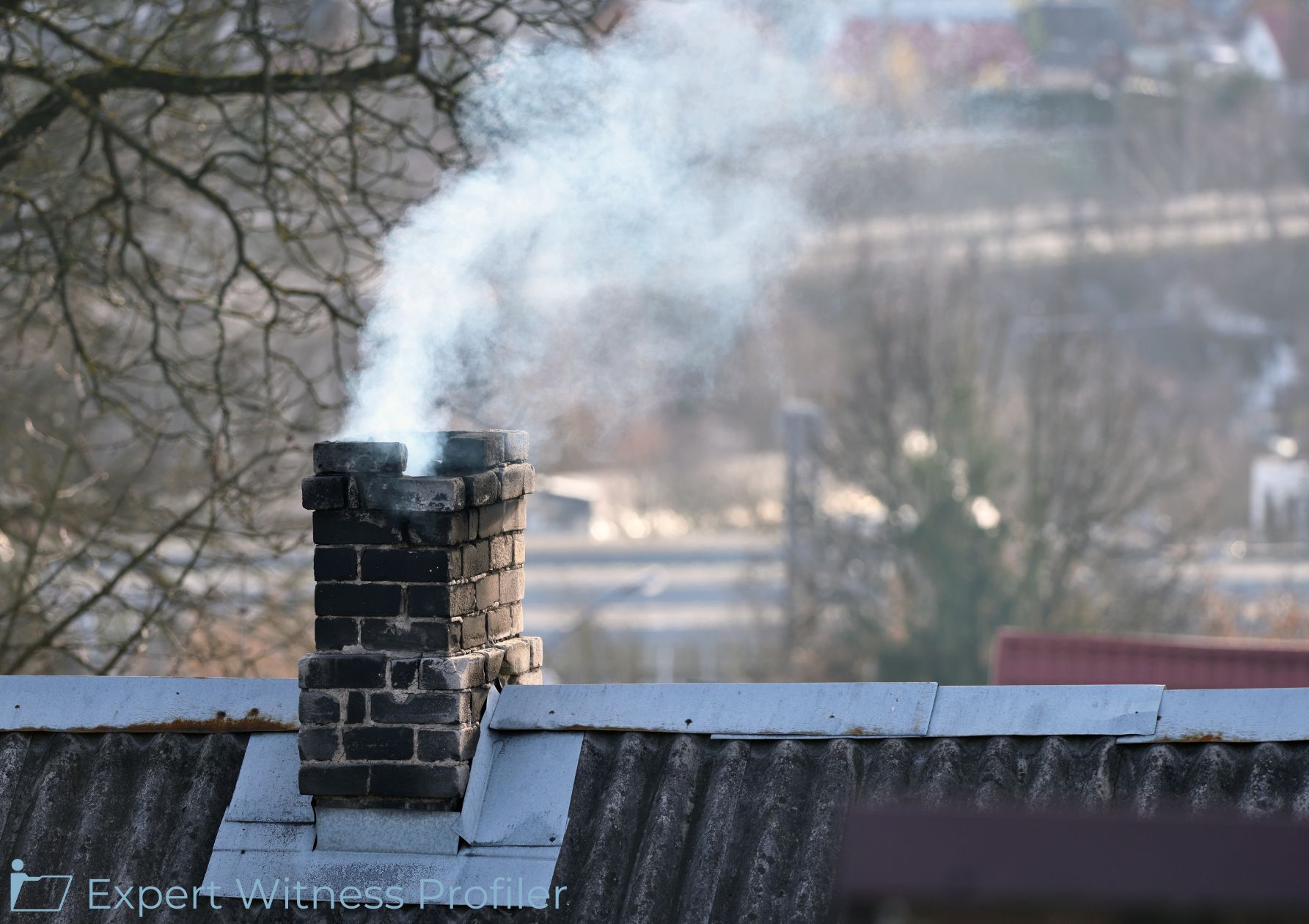
Plaintiff Haverford Square Properties, LLC owned a building in Philadelphia insured by Defendant Trisura Specialty Insurance Company (“the Property”). The Property’s chimney collapsed and Defendant refused to pay Plaintiff’s full claim. Plaintiff then sued Defendant for breach of contract.
During the litigation, Plaintiff consulted an expert, Tim Sass, who concluded that all of Plaintiff’s claimed loss was caused by the bricks that fell during the chimney collapse.
Defendant disagreed and filed a motion to preclude this expert’s testimony, arguing that his conclusions do not satisfy the minimum reliability requirements set forth in Federal Rule of Evidence 702.
Structural Engineering Expert Witness
Timothy Sass, MSCE, PE is a structural engineer with over thirty years of experience in residential and commercial construction.
Discussion by the Court
Sass concluded that the force of the impact from the falling chimney bricks pushed the rear wall out of plumb, cracking multiple joists and creating the risk of collapse. Sass never visited the Property to conduct an in-person inspection, but reviewed photographs, insurance letters, and other documents to form an opinion about the cause of the damage.
1. Sufficient Facts or Data
First, Defendant argued that Sass relied on insufficient facts and data because he was retained three years after the reported loss and after the Property had been fully demolished, so he never actually visited the Property for an inspection. The fact that Sass never visited the Property did not necessarily render his testimony unreliable.
Second, Defendant argued that Sass used a single photograph of cracked joists at the Property to reach his conclusions and was unable to identify other photographs he used in his review. This is a mischaracterization. Sass’ report stated that he reviewed several documents to inform his opinion, including the complaint in this action, the City of Philadelphia Department of Licenses and Inspections (“L&I”) Notice and Order, an abatement work invoice, a collapse letter, the deposition transcript of Defendant’s representative, the insurance denial letter, Defendant’s expert report, and “photographs.”
Third, Defendant argued that Sass’ report is based on the erroneous belief that L&I inspected the Property prior to the date of loss. Defendant is correct that, in his deposition testimony, Sass often referenced his mistaken belief that L&I inspected the Property prior to the date of loss and did not observe any damage to the rear wall. Sass cited this mistaken belief as one basis for his conclusion that the damage to that wall occurred because of the subsequent chimney collapse. But that is not the only piece of information upon which Sass formed his opinion. Indeed, every time he made this point about L&I, it was preceded by or following an explanation of the other facts and principles he relied upon to reach his conclusion.
The Court concluded that Sass’ reliance on one erroneous piece of information did not render the rest of the facts and data informing his opinion unreliable.
2. Reliable Principles and Methods
Defendant also criticized Sass’ principles and methodology by arguing that he failed to consider crucial pieces of information: (1) the effect of the removal of mural stabilization braces from the Property prior to the loss; (2) the pre-loss photographs of the joists that Sass concluded were cracked due to the chimney collapse; and (3) L&I’s finding in its Order that the rear wall was damaged and in danger of collapse.
Plaintiff conceded that Sass did not consider the effect of the removal of mural stabilization braces from the Property when issuing his report. But Sass testified at his deposition that this piece of information would not change his analysis of the cause of the damage to the rear wall in any way.
Again, Defendant is incorrect that Sass failed to consider pre-loss photographs of the cracked joist. He testified to reviewing and considering several pre-loss photographs. Defendant is also incorrect that Sass failed to consider L&I’s finding in its Order that the rear wall was damaged and in danger of collapse or mention that finding in his report. Sass testified that he reviewed both the L&I Notice and Order before drafting his report and did not explicitly mention the Order because, in his view, the Order and Notice say essentially the same thing.
The Court found that Defendant’s criticisms of Sass’ methodology were not disqualifying under Rule 702. Defendant is not saying that Sass failed to articulate any methodology used to render his opinion.
Rather, Defendant’s criticisms amount to disputes about whether Sass overlooked certain pieces of information that he should have considered. These criticisms are more probative of “the weight the opinion should be afforded, rather than the reliability” of Sass’ testimony.
3. Reliable Application of Principles and Methods
Defendant’s most fundamental criticism of Sass is that his conclusions do not stem from a reliable application of principles and methods to the facts of this case. Defendant argued that Sass’ conclusion that the chimney collapse caused the damage to the rear wall is “directed from an incomplete understanding of a single photograph, subsequently extrapolated into a final ‘opinion’ through speculation and conjecture.”
In both his report and deposition, Sass explained how he reached his conclusion that the chimney collapse caused the damage to the Property. He explained that the cracks in the floor joists were not oxidized, meaning they were likely fresh, which was consistent with a more recent cause of damage, like the falling masonry. Sass also explained that the location of the cracks supports his conclusion because they were located near the center of the span. The center is “the most highly stressed part of the joists,” so that is where he would expect to see damage from a chimney collapse. Sass also explained that the Property’s older building date supported his conclusions.
The Court found that these explanations helped Sass “bridge the gap” between his conclusions and his methods. Sass can describe to a jury what information he reviewed and explain how that information led him to his opinion about the cause of the damage to the Property.
Held
The Court denied Defendant’s motion to preclude the testimony of Tim Sass because his conclusions meet the minimum reliability requirements of Rule 702.
Key Takeaway
An expert need not physically inspect or examine the subject of his or her testimony and may use second-hand materials and experience to draw reasonable inferences.
Case Details:
| Case Caption: | Haverford Square Properties, LLC V. Trisura Specialty Insurance Company |
| Docket Number: | 2:23cv1847 |
| Court Name: | United States District Court, Pennsylvania Eastern |
| Order Date: | January 23, 2026 |