Meadowbrook Shopping Plaza, LLC purchased a building at 3895 Metro Drive (“the Building”) in 1995. Around 2018, Mr. Khaldoun Abaji approached Meadowbrook about utilizing the Building for his business, a store called Kids Avenue. Abaji and Meadowbrook came to an oral agreement where Abaji paid Meadowbrook $800 a month for the space.
The parties agreed that Abaji stored his merchandise inside the Building but did not re-open his storefront before the events giving rise to this lawsuit. Additionally, the parties seemed to agree that the Building did not have electricity or gas throughout his tenancy. Less clear is whether Abaji could, or planned to, operate his storefront in the Building.
The events giving rise to this lawsuit began on December 13, 2021, when the Building was vandalized. Nationwide was Meadowbrook’s insurer at this time, so Meadowbrook submitted a claim for the damage. Nationwide determined that the damage totaled $132,586; however, it denied Meadowbrook’s claim because, in its view, the vacancy exclusion applied.
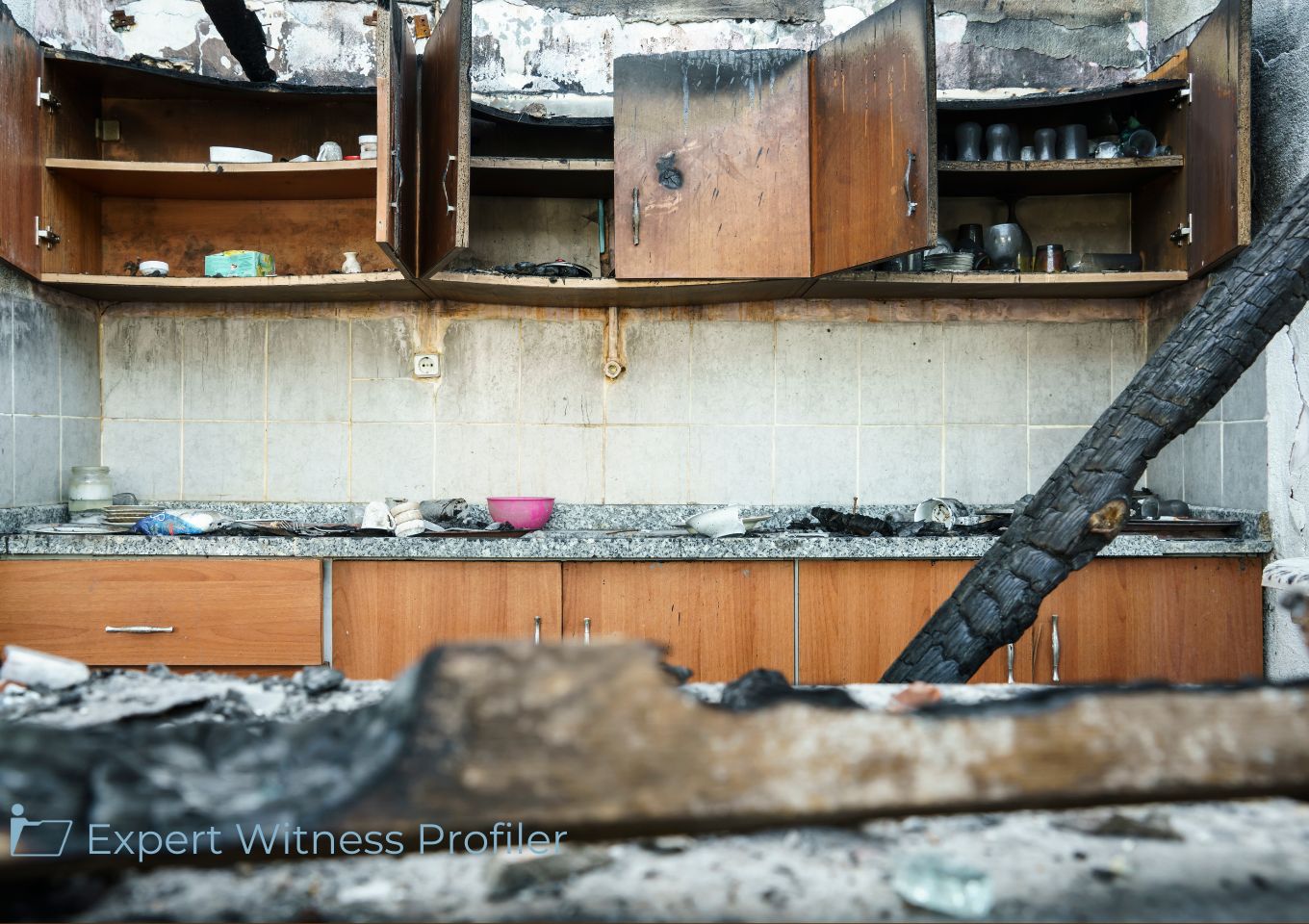
The second event precipitating the lawsuit occurred on July 1, 2023, when the Building caught on fire. There was no indication that the sprinkler system was on when the Jackson Fire Department arrived.
Again, Meadowbrook filed a claim with Nationwide. And, again, Nationwide denied the claim. This time, Nationwide explained that denial was appropriate because the Building did not maintain an automatic sprinkler system in complete working order at the time of the fire. Meadowbrook then filed this suit against Nationwide for denying its claims. Its causes of action include breach of contract and bad faith denial of insurance benefits.
Richard Jones has over 23 years of experience in the field of investigations for both the public and the private sectors. He also has prior service and training with local fire districts and the Louisiana Office of State Fire Marshal, specializing in the field of fire and explosion investigations.
Jones has completed numerous courses related to fire and explosion investigations sponsored by the National Fire Academy, Maine State Police, the International Association of Arson Investigators, and other local organizations. He earned a degree in Fire Science from Columbia Southern University and is an experienced lecturer on fire and explosion investigations.
Adam Bomar is a Nationwide fire loss investigator. He is currently a Fire Lieutenant and Deputy Fire Marshall with the Mountain Brook Fire Department in Mountain Brook, Alabama. He is also currently the Operations Manager and Fire Investigator with Crain & Associates, Inc. in Birmingham, Alabama.
Richard Jones, who has been designated as an expert in forensic fire investigations, visited the scene after the fire. He noticed that the “post indicator valve” which supplied water to the sprinkler system was in the “shut” position. Adam Bomar, a Nationwide fire loss investigator, also visited the scene and noticed rust on the wrench that operated the post indicator valve. This led Bomar to opine that the valve had not been turned on for an extended period.
Meadowbrook did not challenge the qualifications of either Jones or Bomar. Instead, it argued that parts of their testimony should be excluded as either irrelevant or unreliable
Meadowbrook first argued that Jones’ testimony should be struck as a legal conclusion. It then asserted that the International Existing Building Code, which Jones relied on in forming his opinion, is irrelevant because the insurance policy at the heart of this case did not require Meadowbrook to follow this Code. Finally, Meadowbrook maintained that Bomar should be excluded from testifying to statements he heard from an unnamed Jackson Fire Department officer because such statements are unreliable hearsay.
A. The Court Denies the Motion to Exclude Jones’ Entire Testimony
The Court disagreed that Jones’ testimony “is nothing more than a legal conclusion” which is why his entire testimony will not be struck. Meadowbrook is free to object at trial should his opinions veer outside the scope of expert testimony.
B. Jones May Testify to the International Existing Building Code
Meadowbrook challenged the International Existing Building Code referenced in Jones’s report.
The City of Jackson adopted the 2018 edition of this Code in 2020. Meadowbrook maintained that any testimony related to this Code should be excluded because Nationwide’s policy did not require it to follow the Code. Nationwide responded that Meadowbrook’s disagreement relates to the weight of Jones’s testimony, but not its admissibility. The Court agreed.
According to Jones, the City of Jackson adopted the Code, which requires certain changes to the use of a structure be submitted for approval. Meadowbrook has not yet rebutted this premise, which will be for the jury to decide. Meadowbrook is free to cross-examine Jones on his report and his assertions relating to the Code. Ultimately, the jury is free to decide what weight—if any—to give Jones’s testimony. The Court denied Meadowbrook’s motion on this ground.
C. Bomar May Not Rely Upon Statements from an Unidentified Officer
Finally, Meadowbrook sought to exclude the purported assertion by an unnamed Jackson Fire Department officer that it is not the Department’s policy to shut off the post indicator valve at the scene of a fire. It asserted that any opinion and testimony made in reliance on this statement should be excluded because it is wholly unreliable.
Nationwide responded that Bomar, as an expert, may rely on hearsay in forming the basis of his opinion so long as other experts in his field would do so.
The parties agreed that Bomar did not record the name of the Jackson Fire Department officer who allegedly made this statement. Neither party has learned this officer’s name through the course of the litigation.
The statement made by the unidentified Jackson Fire Department officer, if offered to prove that the Department would not have turned the post indicator valve off, is textbook hearsay. Nationwide has failed to show that some exception applies to this rank hearsay. The Court held that incorporating the testimony into Bomar’s report does not transform the statement to one which the jury can receive.
Held
The Court granted in part and denied in part Meadowbrook’s motion in limine to exclude certain expert testimony by Richard W. Jones, Jr. and Adam Bomar.
Key Takeaway:
Question relating to the bases and sources of an expert’s opinion affect the weight to be assigned that opinion rather than its admissibility and should be left for the jury’s consideration.
Daubert’s “gatekeeping function” requires the Court to examine the relevancy and reliability of all proffered expert testimony.
Case Details:
Case Caption:
Meadowbrook Shopping Plaza, Llc V. Nationwide Assurance Company
Docket Number:
3:23cv3093
Court:
United States District Court, Mississippi Southern
On March 12, 2019, a fire broke out at a Forest River manufacturing facility. American Home Assurance Company, a subrogee of Forest River, says a lithium-ion battery from a Makita power drill is to blame. American sued both Makita Corporation of America and Makita U.S.A., Inc. under Indiana’s Product Liability Act. The two companies (called Makita today for short) sought to exclude testimony from two of American’s opinion witnesses, Michael Eskra and Fred Hackett, under Federal Rule of Evidence 702 and Daubert v. Merrell Dow Pharms., Inc., 509 U.S. 579, 113 S. Ct. 2786, 125 L. Ed. 2d 469 (1993).
Chemical Engineering Expert Witness
Michael Eskra has more than 43 years of experience in the battery industry. He earned a bachelor of science in chemical process engineering at the University of Wisconsin and later a master’s in engineering management at the Milwaukee School of Engineering. Early in his career, he worked as a process engineer in battery manufacturing plants, a manager of advanced battery engineering, and then a program manager.
He later ran a research and development company that developed batteries. Since 1996, he has owned Eskra Technical Products, Inc., which develops battery products and conducts battery failure investigations. He has published over 300 papers and articles. He is a member of various professional organizations, including the American Institute of Chemical Engineers, the National Association of Fire Investigators, the International Association of Arson Investigators, and the National Association of Subrogation Professionals. Makita focuses its attack on his methodology rather than cogently questions his credentials, so the court turns to his method.
Fred Hackett was a firefighter from 1977-1978 and then from 1982-1998. He was a lead arson investigator and documentation officer for the Pike Township Fire Department. For about eleven years before his retirement in 1998, he conducted technical investigations of commercial and residential fires and gas explosions. For five overlapping years during this time, he also was a fire and explosion investigator for Wolf Technical Services, Inc. In 1995, he became president of Midwest Forensics—a position he still holds today.
In both 2003 and 2008, he was certified as a fire and explosion investigator through the National Association of Fire Investigators. He has attended numerous conferences on fire investigations for the better part of 40 years, as well as served as an instructor at times, including on CT imaging and analysis for the past 15 years and state certifications for firefighters studying fire origin and cause for the past 34 years. He has received fire and arson training over the years too.
Michael Eskra is American’s proposed battery expert. He presents two opinions: that the fire at Forest River was most probably caused by a Makita power tool battery’s failure, and that the poor design of its battery management system caused its failure when its cell became unstable under normal intended use. He views the damage to this cell to be inconsistent with fire attack, and instead consistent with internal damage and thus a source of the fire.
Eskra inspected battery cells from the Forest River site to determine whether a battery cell caused the fire. He started his work in July 2019 (about four months after the fire). During the July 2019 inspection, Eskra worked with Fred Hackett (the insurer’s area of origin witness) to review about 80 cell artifacts.
Rounded ends are indicative of a fire attack as opposed to a fire’s cause
As one feature, he looked for “bulbous ends, so if it had bulbous ends, he set them aside.” When pressed to quantify the degree of bulbous or rounded ends (at the cell’s negative end), Eskra admitted he could not do so, nor had he performed any testing to quantify whether a cell was “rounded enough.” At the time he prepared his report and testified in deposition, he had not authored any peer-reviewed articles on this theory of rounded ends being indicative of a fire attack as opposed to a fire’s cause.
Eskra has never tested the elongation of the cell’s crimp
Eskra looked for longitudinal stretching or elongation of the cell’s crimp. He explained that, when gas gets generated during heating over time, the crimp softens and elongates. In this event, according to him, it “tends to be more that it was a slow heating process, a longer heating process, so it would be heat-attacked.” Even this feature he struggled to specify, merely saying external heat “tends to move it a little bit”—but even then “almost all cells will vary” and even “in causal cells it may move” too. To date, he has never measured this elongation to know how much or tested this feature to confirm his theory; and, at the time of his report, he had not published his theory for peer review.
Eskra admitted that he had not performed any testing to validate his theory of the jellyroll being pushed to the negative or vented ends
Eskra says cells with bulbous negative ends or elongated crimps should then be evaluated by x-ray. He selected 20 cells for further analysis. Fred Hackett completed the x-rays at a different location, and Eskra thereafter observed the films through Skype. Eskra never obtained the x-rays and never preserved them.
In his method, Eskra looked for differences in the active material or “jellyroll” within the cylinder of the battery. The jellyroll is the core of the battery cell—”layers of cathode, separator and anode [are] wrapped together to form a spirally-wound ‘jellyroll’.” His report offers exemplar x-rays (not from this case) of his focus at this step—in particular, he looks for large gaseous pockets at the negative ends that will eliminate the cells as causal; and, contrastingly, the jellyroll remains pushed toward the negative and positive ends that will identify potential causal candidates.
Eskra admitted that he had not performed any testing to validate his theory of the jellyroll being pushed to the negative or vented ends .
Eskra reexamined rounding and elongation, and the venting of pressure inside the cell that contributed to these features
Nothing seems to memorialize Eskra’s selection process at this stage, but he narrowed the number of candidates from 20 cells to four (two cylindrical cell pairs) using his method.
Of curiosity to him, each of the cell pairs had one cell that had a rounded negative end and elongated crimp, which to him exhibited signs of external heating, whereas the paired cell did not. He ordered CT scans of the two cell pairs (someone else conducted them), and he received the scans (and preserved these).
At this stage, he reexamined rounding and elongation, and the venting of pressure inside the cell that contributed to these features.
Eskra concluded that the damage to the cell was internal in nature and should be considered as a probable source of ignition of the fire
Eskra acted as a sort of tracker or hunter. He examined the cell to determine whether it showed signs of venting at multiple points and, if so, which one occurred first.
Eskra started by finding the venting point, then beginning at the opposite end worked his way through the axial plane moving longitudinally to look for intact jellyroll.
Venting would not inform whether a cell caused the fire, but inform the locations where he needed to examine. With a causal cell, chaos within the jellyroll will have occurred before the gas pressure vents, including melting or cutting or additional shorting.
Using the first CT scan, Eskra determined that this cell pair was damaged by external events based on his examination of rounding, elongation, and jellyroll analysis. Using the second CT scan, he determined that one cell—what he describes as the lower or bowed cell—was fire-attacked because of “a large gas bubble appearing in the lower left longitudinal section.” For the other top cell, he found no evidence of the “same distortion or gas generation and shoving of the jellyroll materials.”
Eskra thus focused more heavily on this top cell of the second pair. He used a longitudinal image of this cell to say the negative end of the cell appeared “fairly normal” and the spacing between the jellyroll and the can at the negative end was “slightly tighter” than a healthy cell. Without having x-rayed all the other cells, he then offered a prediction—that this would be the “opposite of what would be seen on all the other cells if they were all x-rayed.” In short, he eliminated all the other cells as causal because they showed signs of physical rounding and venting.
Eskra’s theory has not been generally accepted in the relevant scientific community
The Court held that Eskra has never tested his theory—not once—though it could be tested. Indeed, he has had decades to do so. His theory has never been published. His theory has not been generally accepted in the relevant scientific community, much less accepted by peer review at this point.
American has the burden to demonstrate its proposed expert’s reliability. At first, American says Eskra employed a methodology similar to that described in C. Mikolajczak, A Scientific Methodology for Investigation of a Lithium Ion Battery Failure, a 2007 paper by Exponent Failure Analysis Associates, a reputable firm well-known to the court. Eskra agreed his method has never been peer-reviewed, though he too equated his method to that of Exponent. The Court held that it turned out to be a poor defense of Eskra’s method because he deviated in material ways from it. His method marginally overlaps the Exponent method at best. Exponent mentions the importance of x-rays and CT scans certainly, but it speaks little of negative end rounding, crimp elongation, or the particular jellyroll dynamics that Eskra offers to support his causation theory, and Exponent directs rather key investigative steps that Eskra just skipped.
Eskra offers only subjective judgments throughout his opinion
Without a tested or generally accepted model, the Court held that Eskra cannot offer an objective criterion for an elongated crimp either, calling a “a little bit” of movement enough to classify a cell “fire-attacked” and eliminate it from consideration as a cause. But this elongated crimp also proves troublingly variable and subject to his mere say-so for interpretation, for he concedes that “almost all cells will vary” and even “in causal cells it may move” too. He can’t offer a measurement, much less even a “specific description” of how much rounding would typically demonstrate a fire-attacked cell versus a causal cell.
American, as the proponent of this opinion, never once explains why such subjective imprecise criteria—which may show one thing or indeed the opposite thing—can reliably support his winnowing of 80 candidate cells to only 20 cells for x-ray analysis.
Eskra’s method gets worse at the x-ray stage because he preserved none of his work. He claims to have examined images of 20 selected cells, but he cannot produce any x-rays. Of course, he reviewed these images through Skype with another fire investigator, but no one else seems to have retained any x-rays either.
Even giving Eskra the benefit of the doubt that x-ray analysis through Skype could qualify as such a close examination of a cell’s internal features (e.g., gas pockets, jellyroll movement, and the like), he offers nothing but his say-so today about what could be seen back then. He never videotaped the down-selection process; he created no notes or other documentation from his review of x-rays; his report replicated no x-ray images; and no one preserved the x-ray images.
Eskra’s experience without a reliable, testable methodology is not sufficient
Eskra winnowed 80 cells down to 4 cells (two 2-cell pairs, with only one cell of each pair of real interest to him). So by this point, 95 percent of his process occurred under unreliable circumstances—untested or unverifiable as it was. Exponent’s method may offer something testable and repeatable, whereas Eskra’s method did no such thing. He may be experienced, and he may have done better in other cases, but “experience without [a] reliable, testable methodology is not sufficient.”
Exponent explains the critical steps of recovering physical evidence, reconstructing that evidence, and then examining that evidence in a way that preserves the chain of custody for further analysis. Indeed, the scientific method anticipates that an expert will similarly document her work, and then preserve it for others to review or replicate should that prove necessary.
Eskra deviated from the Exponent method in a critical way when he concluded that the lack of external damage to this cell and the good condition of the jellyroll at the negative end made this cell the probable cause of the fire, albeit by saying this would be “the opposite of what would be seen on all the other cells if [they] were all x-rayed.”
Exponent says, to determine the cause of a battery failure, “it is generally necessary to open a damaged battery pack, extract and examine the remains of the cells, the battery protection printed circuit board(s) (PCBs), and any fuses or thermal cut-off devices.”
To say Eskra “primarily employed the same methodology” or “completed virtually all steps” as Exponent are bold overstatements
Exponent recommended gathering information about the battery cells, which “can generally be collected from the end user’s description of the background of the device and the events of the incident, as well as from the incident site.”
Eskra collected no information from Forest River about the use of these battery cells. He didn’t know their state of charge. He didn’t know where the batteries had been found, or whether they were even in the area of the fire’s origin.
Exponent recommended “thoroughly document[ing] the condition of the [battery] system upon receipt, both for establishing the chain-of-custody and to provide clues as to the root cause of the incident,” including “damage patterns such as soot deposits, regions of charring, and evidence of melting” . The Court held that Eskra failed to do this—he never photographed each cell he visually examined or took notes that would show his observations of individual cells. They reflect a fundamental failure to conform his method to the one he says he tried to use.
Fred Hackett
Fred Hackett is American’s proposed fire origin expert. He opined that the fire originated within Forest River’s tool crib—more particularly, at or near the southeast end of the tool crib, following the failure of a lithium-ion battery.
Hackett was retained to determine the fire’s origin and cause on March 13, 2019—the day after the fire. He and his associate completed an initial “scene size-up” on March 14 and 15. On March 14, Hackett interviewed the plant manager (David Whisler). At some point, he also interviewed the tool crib manager (Lanny Kistler). Hackett collected information from the Elkhart Fire Department, which responded to the fire.
In preparation for his opinion, Hackett considered a great deal of information. He reviewed the deposition of Larry Shaffer who first saw the fire, overview photographs of the building, a video taken inside the building during the fire, physical damage to a desk located in the tool crib, and burn patterns on a filing cabinet.
Hackett’s opinion contravenes the NFPA 921
Makita advanced several arguments to exclude Hackett’s opinion. First, the company says his opinion contravenes the National Fire Protection Association Guide for Fire and Explosion Investigations (commonly called NFPA 921). NFPA 921 is “a comprehensive, peer-reviewed, and detailed guide for fire investigation, and [courts] have held that its methodology is reliable for purposes of Rule 702.”
NFPA 921 identifies traditional sources of information to use in determining a fire’s origin—witness statements, electronic data, burn patterns, fire dynamics, and (under the latest 2017 edition) arc mapping, though the extent of melting here prevented every investigator from arc mapping.
The Court found that Hackett relied on burn patterns on the filing cabinet directly west of the desk that showed directional fire traveling from east to west. Moreover, Hackett relied on multiple sources of information to reach his opinion, in accordance with NFPA 921. He also explained how these sources led to his conclusion.
There also seems to be a disconnect between the parties as to whether Hackett reviewed the deposition testimony of six eyewitnesses to the fire in preparing his report or sometime afterwards.
Makita argued that Hackett’s billing records identify a different date for reviewing these depositions (a month after issuing his report). Hackett testified to the clerical error in his bill. Because Hackett offered a logical explanation for the billing error, the Court held that it is a credibility question—one of weight, not admissibility.
Hackett’s reliance on the first observer in helping to pinpoint the fire’s origin was inappropriate
As such, this motion devolves into whether Hackett afforded a particular eyewitness too much weight or not enough weight, and such points are designed for crossexamination rather than a pretrial attack on his method. To this point, under NFPA 921, a fire investigator in the field may evaluate the quality of the information shared by an eyewitness, assessing with common sense the person’s knowledge and any potential bias.
In addition, Hackett relied on testimony from Larry Shaffer—the first person to see the fire. Shaffer said he saw the fire at or near the southeast corner of the tool crib, what he described as a fire about one foot tall and two feet wide. He saw the fire nowhere else. Cannisters began exploding, and he exclaimed the fire’s presence to his fellow employees. Hackett also relied on statements made by David Whisler (the plant manager) during an interview with the Elkhart Fire Department’s investigator and a few days later to Hackett’s associate that the fire appeared near the door of the tool crib. Hackett additionally used screenshots of a video taken by an unnamed eyewitness in the early stages of the fire.
Makita marshals testimony from the other eyewitnesses, but each seem to have seen the fire later in time and in a different location. The Court held that it cannot be said on this record, much less under the NFPA 921 method, that Hackett’s reliance on the first observer in helping to pinpoint the fire’s origin was inappropriate, or that his reliance on early statements from the plant manager soon after the event rather than years later in deposition was inappropriate.
Makita largely argued that Hackett chose his data poorly.
Hackett incorrectly assumed the tool crib was constructed of a porous metal cage material
The Court’s review of other information offered by Makita illustrates that the company’s concern focuses on Hackett’s selection of and weight placed on data, not that his opinion is bereft of a legitimate industry-recognized methodology or factual footing.
In another area, Makita simply has its facts wrong. The company argues that Hackett incorrectly assumed the tool crib was constructed of a porous metal cage material, suggesting he did this so he could claim, in some “tortured effort,” that the fire witnesses saw outside the tool crib was actually inside the crib. The company represents that Hackett was forced to admit that the tool crib’s walls were solid. These are gross misstatements of Hackett’s testimony, and the Court will not entertain them.
Hackett’s opinion was reached based on an expectation bias and later reinforced by a confirmation bias framed with cherry-picked facts
Makita next argued that Hackett’s opinion was reached based on an expectation bias and later reinforced by a confirmation bias framed with cherry-picked facts. This is an argument that Makita may offer the jury if the company thinks it compelling. Makita offered no evidence on this record that Hackett fell prey to an early expectation bias—a preconceived idea of the fire’s origin—or a confirmation bias—merely selecting data to confirm this idea.
Hackett used a negative corpus method, which has long been abandoned by the fire science community
Makita also complained that Hackett used a negative corpus method, which has long been abandoned by the fire science community. The Court held that although Hackett used a process of elimination in reaching his conclusion, he had supporting evidence for eliminating certain potential ignition sources.
Hackett developed nine hypotheses as to possible ignition sources. For eight, all save a hypothesis that lithium-ion batteries started the fire, he ruled them out as ignition sources and explained why, including by relying on witness testimony and the examination of artifacts.
Hackett has the expertise, factual analysis, and industry-recognized method to explain why he eliminated certain potential causes of the fire; whether the jury will credit these explanations or find them flimsy, only the jury can say. The Court held that it is still is a far cry from saying a lithium-ion battery caused the fire.
Hackett confessesed he has no expertise in batteries, and no expertise in distinguishing batteries that have caused a fire from those that have been attacked by one. He repeatedly admitted he must defer to Eskra as to causation.
Hackett proposes merely to parrot Eskra
The Court held that Hackett isn’t merely relying on another expert’s opinion, but proposing to repeat it—worse yet without a factual understanding of the circumstances, any supporting testing or analysis, or a credentialed basis for offering the opinion. This makes his opinion unreliable.
Moreover, the record is devoid of any experience Hackett has developed with fires originating from lithium-ion battery failures or the dynamics of such fires (much less a Makita-designed cell or comparable tool manufacturer), and that burden rests on American.
American suggests that Hackett adds independent research to Eskra’s findings, but American cites only two YouTube videos—both of lithium-ion powered scooters, with no information about the circumstances of those fires or the design of those lithium-ion batteries.
Hackett lacks pertinent expertise
Hackett may say a smoldering fire was unlikely the cause and that a “rapid-ignition sequence of events” makes more sense, but he cannot say this fire originated from a lithium-ion battery. He also may say this fire appears to have been violent, explosive, and immediate in nature (and explain why based on this fire’s dynamics and site or witness evidence), but again he cannot say this fire originated from a lithium-ion battery.
The Court held that not only does he lack pertinent expertise, but he has not done the testing or even examined the battery cells to validate this opinion.
To sum it up, the Court held that Hackett’s opinion would not aid the jury to decide an issue of consequence—a question of fit and would instead invite the jury to speculate that because a lithium-ion battery can cause a fire that it must have done so here.
The Court held that Hackett can offer his opinion about the fire’s area of origin and its related dynamics, as well as explain why certain potential sources of ignition should be eliminated, but he cannot speak to the ultimate cause of the fire.
Held
The Court granted the motion to exclude American’s expert Michael Eskra’s opinions.
The Court granted in part and denied in part the motion to exclude American’s expert Fred Hackett’s opinions.
Key Takeaway:
Application of the Amended Rule 702
A witness may testify in the form of an expert opinion when (1) the witness is “qualified as an expert by knowledge, skill, expertise, training, or education;” (2) the testimony is “based on sufficient facts or data;” (3) the testimony is “the product of reliable principles and methods;” and (4) the opinion “reflects a reliable application of the principles and methods to the facts of the case” in such a way that the testimony will “help the trier of fact to understand the evidence or to determine a fact in issue.” The proponent of expert testimony must establish its admissibility by a preponderance of the evidence.
In other words, the rule has been amended to clarify and emphasize that expert testimony may not be admitted unless the proponent demonstrates to the court that it is more likely than not that the proffered testimony meets the admissibility requirements set forth in the rule.
American has the burden to demonstrate its proposed expert’s reliability. However, American has failed to discharge its burden. For instance, when American said Eskra employed a methodology similar to that described in a 2007 paper by Exponent Failure Analysis Associates, it turned out to be a poor defense of Eskra’s method because he deviated in material ways from it.
Moreover, American suggests that Hackett adds independent research to Eskra’s findings, but American cites only two YouTube videos—both of lithium-ion powered scooters, with no information about the circumstances of those fires or the design of those lithium-ion batteries. One could hardly call seconds of two YouTube videos independent or sufficient evidence to render a causation opinion, given Hackett’s ready admissions that he is not the person with expertise to ask.
Case Details:
Case Caption:
American Home Assurance Company V. Makita Corporation Et Al
This matter arises from a July 30, 2022, lightning strike in Water Valley, Mississippi, which caused a fire and ultimately the destruction of a warehouse and its contents, including automotive components owned by the Plaintiff Kodaco and stored in the warehouse.
Kodaco claims “approximately $3,500,000.00 worth of business property” was stored at the subject warehouse, which was owned and operated by the Defendant Warehouse 72, at the time the warehouse burned. The Plaintiff alleged claims against the Defendants for breach of contract, negligence, breach of bailment, and negligent misrepresentation.
The parties have filed competing motions seeking to exclude or limit the testimony of experts in the areas of fire origin and cause investigation and fire protection engineering— the Plaintiff seeks to exclude or limit certain opinions of Neil Wu‘s testimony and the Defendants seek to exclude testimony expected to be offered by Phillip Keena. Both motions sought primarily to ensure that the opposing expert witness does not offer impermissible legal conclusions.
The Plaintiff objected to certain testimony and conclusions in Wu’s deposition and expert report that the Plaintiff characterized as impermissible legal conclusions. The Defendants have agreed that “Wu does not intend to offer any ‘legal opinions’ and Defendants do not intend to elicit such testimony” at trial.
The Defendants argued that Keena’s proffered testimony and conclusions veer into the realm of legal conclusions; they further argued that his testimony did not go far enough into the standards a reasonably prudent warehouser would have implemented under similar circumstances as those existing in this case. As is the case with the Defendants’ expert, the Plaintiff conceded that Keena will not offer legal conclusions at trial.
Fire Investigation Expert Witnesses
Neil Wu is a Principal at SRE and the founder of the firm. He holds a Bachelor of Science and a Master of Science degree in Fire Protection Engineering, both from the University of Maryland. He is a registered professional engineer in 14 states, including the District of Columbia. Wu is a member of the International Association of Arson Investigators (IAAI), National Association of Fire Investigators (NAFI), National Fire Protection Association (NFPA), Society of Fire Protection Engineers (SFPE), and has served on multiple technical committees.
Philip Keena holds two degrees relevant to the issue at hand, an associate degree in Fire Administration and a bachelor’s degree in Fire Protection and Safety Engineering Technology. The International Association of Arson Investigators (IAAI) has also certified him as a fire investigator, and he has been a firefighter for thirty-one years. He currently works for Rimkus, a forensic engineering company.
First, the Court holds that the concessions each party has made regarding their expert’s testimony largely renders the competing motions to exclude as moot. Both experts are highly qualified and the Court finds their knowledge will help the trier of fact to understand the evidence or to determine a fact in issue in this case, and that their testimony satisfies both Rule 702 and Daubert v. Merrell Dow Pharmaceuticals, Inc., 509 U.S. 579, 113 S. Ct. 2786, 125 L. Ed. 2d 469 (1993). Moreover, any arguments for exclusion of testimony, particularly in light of the parties’ concessions, go to the “weight to be assigned that opinion rather than its admissibility and should be left for the jury’s consideration.”
Further, the Court is confident that it can protect against the possibility of objectionable expert testimony at trial without resorting to a blanket ban on all testimony by either side’s expert witness.
Finally, and most crucially given the parties’ primary objections, the Court notes it is axiomatic that “experts cannot ‘render conclusions of law’ or provide opinions on legal issues.” Accordingly, neither Wu nor Keena will be permitted to offer legal conclusions at trial and counsel will not seek to elicit any such testimony. The Court does note, however, that while experts cannot offer conclusions of law, “an opinion is not objectionable just because it embraces an ultimate issue.”
The parties may offer timely objections to any such testimony at trial. The Court therefore granted each party’s motion to exclude to the extent each motion seeks to prohibit testimony that constitutes a legal conclusion; to the extent that either motion seeks further limitations on testimony, that request is denied at the present juncture. The parties may offer timely objections at trial to any testimony they deem objectionable.
Held
The parties’ competing motions to exclude expert testimony of Defendant’s expert Neil Wu and Plaintiff’s expert Philip Keena is granted in part.
Key Takeaway:
Ideally, testimony and conclusions should not veer into the realm of legal conclusions. The Court does note, however, that while experts cannot offer conclusions of law, “an opinion is not objectionable just because it embraces an ultimate issue.”
Case Details:
Case Caption:
Kodaco Co., Ltd. V. Valley Tool, Inc. Et Al
Docket Number:
3:23cv211
Court:
United States District Court, Mississippi Northern
On the evening of July 30, 2022, lightning struck WareHouse’s property at 121 Industrial Park Drive causing a fire at the warehouse.
Shilla Industrial Co., Ltd. (“Plaintiff”) is a South Korean corporation that manufactures automobile parts and maintains suppliers in Mississippi and other southern states. Shilla alleges “approximately $5,000,000.00 worth of business property” was stored at WareHouse 72’s Water Valley property when a lightning strike caused it to burn down.
WareHouse 72, LLC (“WareHouse”) is a domestic warehousing entity created under Mississippi law by Sasha Hyde (26%), Frank Hyde, Jr. (24%), Michelle Washington (26%), and Cayce Washington (24%).
The parties signed a Warehouse Agreement and it included a clause under a section entitled “Insurance,” which stated, “Warehouse 72 does not cover damage in the event of an act of God while in our possession. Tornado, wind, Hurricane, Flooding, Fire from lightning strike, Earthquake etc.”
Plaintiff pursued claims under contract, tort, and common law against six Defendants.
Shilla retained Phillip Keena—a retired firefighter—to offer opinions regarding (1) the origin and cause of the fire, and (2) the applicability of certain codes.
Defendants contended that Keena’s offered report went beyond those opinions, however, into the realms of legal conclusions and judgments regarding parties’ responsibilities under contracts and other writings.
Defendant sought to exclude Keena, to ensure Keena does not provide impermissible legal conclusions.
Fire Investigation Expert Witness
Philip Keena holds two degrees relevant to the issue at hand, an associate degree in Fire Administration and a bachelor’s degree in Fire Protection and Safety Engineering Technology. The International Association of Arson Investigators (IAAI) has also certified him as a fire investigator, and he has been a firefighter for thirty-one years. He currently works for Rimkus, a forensic engineering company.
The Court finds his knowledge will be helpful to the trier of fact to understand the evidence or to determine a fact in issue in this case, and his testimony satisfies both Rule 702 and Daubert V. Merrell Dow Pharmaceuticals, 509 U.S. 579 (1993). Accordingly, the Court finds Plaintiff’s expert is qualified to testify as to the matters outlined in his amended expert report, and any arguments for exclusion of testimony, go to the “weight to be assigned that opinion rather than its admissibility and should be left for the jury’s consideration.”
However, Keena will not be permitted to offer legal conclusions at trial and counsel will not seek to elicit any such testimony. The Court does note, however, that while experts cannot offer conclusions of law, “an opinion is not objectionable just because it embraces an ultimate issue.”
The Court thus granted Defendants’ motion to exclude to the extent it sought to prohibit testimony constituting a legal conclusion.
Held
The Court granted in part and denied in part the Defendants’ motion to exclude the Plaintiff’s expert, Phillip Keena.
Key Takeaway:
The Court also notes it is axiomatic that “experts cannot ‘render conclusions of law’ or provide opinions on legal issues.” Keena will not be permitted to offer legal conclusions at trial and counsel will not seek to elicit any such testimony. The Court does note, however, that while experts cannot offer conclusions of law, “an opinion is not objectionable just because it embraces an ultimate issue.”
In conclusion, the Court is confident it can protect against the possibility of objectionable expert testimony at trial without resorting to a blanket ban on all expert testimony.
Case Details:
Case Caption:
Shilla Industrial Co., Ltd. V. Warehouse 72, L.L.C. Et Al
Docket Number:
3:23cv138
Court:
United States District Court, Mississippi Northern
On June 21, 2022, a fire occurred at a residence in Perry Hall, Baltimore County, Maryland owned by Betina Fletcher (“the subject property”). Fletcher had a home insurance policy with USAA, which had been insuring the subject property for “about [seventeen] years.”
In 2019, Chase Remodeling, then known as Insulators Home Exteriors, installed new exterior ground fault circuit interrupter (“GFCI”) outlets on the subject property. Robert Chase, the company’s owner, testified that while his team changed the outlet receptable, they did not install new wiring. Chase also admitted that no electrician was present when installing the GFCI outlet.
The morning of the fire, Fletcher hired Jordan Kunkel, the owner and sole employee of Pro Rinse, to power wash the exterior of the subject property. Kunkel testified that he did not take any precautions before power washing the subject property, and despite knowing that most homes have exterior electrical outlets, he did not check whether the subject property had any exterior electrical outlets.
John Tobias, an electrical engineer hired by Defendant, concluded that the GFCI outlet had been incorrectly installed at the time of the fire, making it susceptible to the elements. Although the chlorine solution that Kunkel sprayed onto the subject property likely contributed to the ignition, Tobias opined that the fire would not have occurred had the outlet been properly installed, that the outlet had likely already been “subject to years of moisture intrusion” since its 2019 installation, and that it likely would have eventually caught fire on its own.
Plaintiff filed a motion to preclude the testimony of John Tobias.
Fire Investigation Expert Witness
John Tobias received his Ph.D. in Electrical Engineering from the New Jersey Institute of Technology in 2002, his M.Sc. in Electrical Engineering from the University of Maryland in 1992, and his B.Sc. in Physics from Seton Hall University in 1987. He is a Licensed Professional Engineer in the State of New Jersey, a Certified Designer/Inspector and executive board member with the Lightning Protection Institute, and a Certified Fire and Explosion Investigator with the National Association of Fire Investigators.
Tobias made the following four conclusions in his report:
a. The subject exterior receptacle cannot be ruled out as the point of origin of the fire at the loss location.
b. The subject exterior receptacle was incorrectly installed, defeating the weatherproof properties of its cover and enclosure.
c. Correct installation of the exterior receptacle would prevented [sic] the fire.
d. Incorrect installation of the subject exterior receptacle defeated the fire/heat containment properties of it’s [sic] cover and electrical box assemblies.
Plaintiff argued that Tobias’ opinions should be excluded from trial because (1) his theories are based on the use of an incorrect exemplar outlet and (2) his opinions that the outlet cover was improperly installed and the outlet box was not installed at all are based on unreliable methods. Plaintiff further argued that Tobias’ opinion regarding whether the GFCI outlet failed to “trip” should not be admitted both because Defendant failed to disclose it in an expert report, as required by Fed. R. Civ. P. 26(a), and because it does not pass muster under Daubert. Finally, Plaintiff asserted that Tobias’ opinions, even if reliable, should not be admitted because they would confuse the jury.
Tobias stated in his report that, after examining the burned remnants, he determined the GFCI outlet receptable to be a Hubbell TAYMAC cover. For purposes of testing, Tobias used a Hubbell TAYMAC MR420C model.
The Court held that there is no indication in the record that Tobias’ use of the MR420C rendered his methodology, based on established National Electrical Manufacturers Association (“NEMA”) standards, was unreliable. To the extent Tobias’ conclusions are less credible for having used a different model as an exemplar, the mismatch more properly goes to the weight of the evidence, and not whether it is admissible.
According to Tobias, a properly installed Hubbell TAYMAC cover is rated a “NEMA 3R enclosure ” and is thus “waterproof.” Tobias testified that his use of the term “waterproof” in his report should be more properly understood as “watertight.” Any bearing Tobias’ use of the term “waterproof” instead of “watertight” has on the validity of his conclusions is a matter for the trier of fact to decide; it is not grounds for exclusion.
The Court found Tobias’ opinion that the outlet cover was improperly installed to be based on reliable methods and principles. Also, the probative value of the challenged opinions is significant in that it tends to make it more probable that the proximate cause of the fire was not Pro Rinse’s power washing but rather faulty installation of the exterior outlet.
Tobias’ Opinion Regarding Absence of Electrical Box
In his report, Tobias determined that the at-issue GFCI outlet was not properly installed in an electrical box that would have contained a fire ignited within it. Plaintiff argues that Tobias should be precluded from testifying at trial that an electrical box was not installed because it is based on speculation and use of an incorrect exemplar. Plaintiff also contends that Tobias failed to test his theory that the fire would have been contained had there been an electrical box.
Tobias concluded that no electrical box was present because (1) there was no electrical box recovered from the fire and (2) an electrical box could not attach to the exemplar Hubbell TAYMAC MR420C cover using the type of long wood screws recovered from the fire. The Court finds that Tobias’ opinions adequately and reliably rule out the possibility that that any remains of an electronical box were either consumed by the fire or washed away in fire suppression efforts.
Finally, Plaintiff took issue with Tobias basing his opinions on testing of “an incorrectly identified exemplar receptacle.” But, as explained supra, Tobias nonetheless asserts that testing an exemplar of the same model as the at-issue GFCI outlet would not have changed his conclusions given the similarities between the two models. Tobias’ use of a different model goes to the weight of his testimony, not its admissibility.
Tobias’ GFCI Tripping Opinion
Defendant stated in its opposition brief that the GFCI outlet at issue in this case failed to “trip”—that is, cut power when moisture is detected and causes a short circuit. Plaintiff casts these statements as new opinions not previously disclosed in Tobias’s report or reflected in his deposition testimony and, on this basis, asks that they be excluded.
Upon review of Tobias’s new affidavit and his prior report and deposition testimony, the Court finds that his new statements regarding the GFCI outlet’s failure to trip to be related, to some extent, to opinions detailed in his report and discussed at his deposition. At the same time, references in Tobias’s affidavit to GFCI’s failure to trip and cut power upon detection of moisture or a short circuit do not appear in Tobias’s report. Although the Court agrees with Plaintiff that the disclosure of new expert opinions at this late stage would provide ample grounds for exclusion under Rule 37(c)(1), the question of whether and extent to which Tobias’s affidavit presents new opinions is not adequately briefed for this Court to grant relief.
The Court will deny Plaintiff’s pending motion but provide an opportunity for Plaintiff to file a separate motion under Fed. R. Civ. P. 37(c)(1) seeking exclusion of any opinions offered in Tobias’s affidavit that it contends were not timely disclosed.
Held
The Court denied Plaintiff’s motion to preclude the testimony of John Tobias.
Key Takeaway:
Even where an expert opinion or expert testimony is premised on sound methodology, the district court retains discretion to exclude it where its probative value is substantially outweighed by the risk of misleading or confusing the jury. Here, the probative value of the challenged opinions is significant in that it tends to make it more probable that the proximate cause of the fire was not Pro Rinse’s power washing but rather faulty installation of the exterior outlet. The Court does not find the probative value of Tobias’ testimony to be substantially outweighed by any risk of confusing or misleading the jury. Further, the Court does not find, under Fed. R. Evid. 403, that the probative value of Tobias’s opinions regarding the absence of an electrical box to be substantially outweighed by any risk of misleading or confusing the jury.
Case Details:
Case Caption:
USAA Casualty Insurance Company V. Pro Rinse Power Wash, Llc
On October 15, 2015, the Plaintiff ignited a brand new Bath & Body Works 3-wick candle and left it burning on her kitchen counter while she put her son to bed. Within 30 minutes, she asserted that the entire liquid wax pool inside the candle jar caught fire, resulting in a phenomenon known as a “flashover.” While attempting to extinguish the candle, she sustained burns from hot wax. She testified that less than 30 minutes elapsed from the moment she lit the candle until it was extinguished.
The product in question, a 3-wick scented candle titled “Eucalyptus Spearmint Stress Relief,” consists of approximately 90% soy wax and 10% fragrance oil. Alene Candles produced this specific candle for BBW in January 2015 at Alene’s Ohio factory, which opened in 2012. The incident candle belonged to a batch of around 5,000 candles mixed and manufactured at the same time.
The central dispute in this case revolved around whether the Plaintiff’s own misuse (leaving the candle burning unattended for nearly 12 hours) or some sort of manufacturing defect involving how the candle wax and oil were mixed caused the incident. Plaintiff’s expert John J. Golder expressed the opinion that the candle was insufficiently mixed at Alene’s Ohio facility, resulting in “hot pockets” of unmixed fragrance oil, i.e., excess oil in certain locations of the candle, which then enabled the candle to suddenly flashover within just 30 minutes of use.
The Plaintiff also hired David Xu to varnish her “hot pocket” theory with a scientifically sounding explanation. The Defendant, Bath & Body Works, LLC filed motions to exclude the reports and testimonies of Golder and Xu for not meeting the Rule 702 and Daubert standards.
Fire Investigation Expert Witness
John J. Golder is a former law enforcement officer of the U.S. Bureau of Alcohol, Tobacco, Firearms and Explosives (“ATF”). Golder is a well-regarded expert concerning fire investigations and forensics, with over 30 years of experience in the field and a master’s degree in forensic science from the University of New Haven.
Back in 1991, he taught an undergraduate course in Fire Science Chemistry at the University of New Haven. The course included an examination of the chemical requirements for combustion, the chemistry of fuels and explosive mixtures, the various methods of stopping combustion and an analysis of the properties affecting fire behavior.
Material Science Expert Witness
David Xu has served as the principal engineer in Berkeley Engineering And Research, Inc. He used to specialize in chemical, materials and mechanical engineering.
Xu received his bachelor’s, master’s and doctoral degrees at UC Berkeley.
Discussion by the Court
Qualifications
Golder intended to testify that the “evidence showed the flashovers were caused by the failure to obtain a proper homogenous mix of wax and fragrant oil” and “it was especially dangerous to have a non-homogenous mix of base wax and fragrant oil because 3-wick candles had a greater Heat Release Rate.” The Court found both opinions were within Golder’s realm of expertise and supported by sufficient data as required by Rule 702.
It found Golder was qualified to opine on the cause of the flashover in this matter, including that a non-homogenous mix of fragrant oil and wax in a candle could lead to flashovers such as the one experienced by Plaintiff.
It also found that Golder’s opinions were based on (1) his extensive experience investigating fires, (2) his own testing of three Bath & Body Works (“BBW”) candles, and (3) deposition testimony and other experts’ scientific tests in the case, which he was permitted to rely on under Rule 703. The Court held that Golder’s opinions met the reliability test set forth by the Supreme Court in Daubert.
Golder demonstrated a reasonably sound basis for forming his opinions and any significant questions concerning the correctness of Golder’s opinions were the province of the jury.
When Golder testified that BBW only performed subjective visual inspection to confirm that there was a homogenous mix throughout the candle, the Court held that Golder lacked the necessary qualifications to opine on candle manufacturing and design. As Golder insisted on a constant percentage of fragrance oil mixed homogenously throughout, the Court excluded his testimony regarding the the proper procedure for mixing candles, or about the improperly mixed candle at issue.
Reliance on DepositionTestimony
The Court allowed Golder to rely on the depositions of Thomas Donnelly, Stephen Smith, John English, and Andy Fernandez, but did not permit him to simply parrot their testimony on the stand as the jury was capable of reviewing and weighing that testimony themselves. For example, Golder highlighted Stephen Smith’s testimony comparing the candle mixture to a cake batter in which you could get spots of flour and sugar, if you do not mix everything correctly. The Court held that not only did it summarize testimony the jury could hear and consider themselves, but it also fell outside the scope of Golder’s expertise while discussing proper candle manufacturing and design.
To sum it up, the Court allowed Golder to testify that the failure to obtain a proper homogenous mix of wax and fragrant oil caused the flashovers and a non-homogenous mix of base wax and fragrant oil was especially dangerous. Golder could rely on the testing of David Xu as long he offered opinions only within the scope of his expertise and avoided parroting the testimony of other witnesses.
Held
The Court granted in part and denied in part the Defendant’s motion to exclude the expert opinions of John Golder and David Xu.
Key Takeaways:
Qualification: The Court observed that Golder was qualified to opine on the cause of the flashover in this matter considering his extensive experience investigating fires. However, Golder lacked the qualifications to opine on candle manufacturing and design. The Court rejected Golder’s insistence on a homogenous mix throughout the candle.
Reliability: Golder demonstrated a reasonably sound basis for forming his opinions considering his extensive experience investigating fires, his own testing of three Bath & Body Works (“BBW”) candles, and reliance on deposition testimony and other experts’ scientific tests in the case.
Parroting Deposition Testimony: The Court did not permit Golder to simply parrot deposition testimony on the stand as the jury was capable of reviewing and weighing that testimony themselves.
The case arose from a fire at an apartment building in Potsdam, New York, allegedly caused by a defective attic exhaust/ventilation fan manufactured by Defendant, Broan Nutone LLC. Country Mutual, representing the Plaintiff, claimed the fan was defective in both manufacturing and design, citing New York law on strict product liability and identifying manufacturing and design defects.
The Court, citing Reynolds-Sitzer v. Eisai, Inc, 586 F. Supp. 3d 123 (N.D.N.Y. 2022), highlighted three recognized product defects under New York law: manufacturing, design, and warning defects. For a manufacturing defect claim, the Plaintiff needed to establish the defect’s existence at the product’s release, a causal link to the injury, and resulting damages. In the case of a design defect claim, the burden involved proving the product’s inherent danger, the feasibility of a safer design, and the defective design’s substantial role in causing the injury.
Country Mutual filed two motions in limine seeking to exclude certain expert testimonies from Broan’s experts, James Smolka and Dennis Scardino, which Broan countered with a motion in limine aimed at preventing Country Mutual from presenting or referencing other incidents involving exhaust fans as evidence.
Fire Investigation Expert Witnesses
James C. Smolka P.E., CFEI is a Senior Consultant for Engineering Systems Inc. (ESi). Mr. Smolka has over 20 years of experience in Electrical Engineering, particular in the field of Electrical Power Engineering and Instrumentation and Controls (I&C) Engineering. He is a certified fire and explosion investigator.
Dennis J. Scardino P.E., CFI, CFEI, CFII, CVFI is a Professional Engineer in Mechanical Engineering, with 35 years of fire/explosion analysis experience. He is a seasoned expert qualified in forensic failure analysis and fire origin and cause. With experience spanning State and Federal Courts across the Southeastern United States, he specialized in evaluating failure, fire, and explosion origins since 1981. His professional history involved aiding insurance companies, adjusting firms, law practices, various private and public entities, and individuals in assessing and addressing failure and fire-related incidents.
Discussion by the Court
Country Mutual’s first motion sought to preclude Broan’s experts, James Smolka (“Smolka”) and Dennis Scardino (“Scardino”), from providing certain testimony at trial. Country Mutual contested the conclusion presented by Broan’s experts, James Smolka and Dennis Scardino, regarding the fire’s cause—a phenomenon termed Long-Term, Low-Temperature Ignition of Wood (LTLTIW). This phenomenon occurs when prolonged heat exposure causes wood to char, reducing its ignition temperature and potentially leading to self-ignition. Country Mutual sought to prevent these experts from testifying about LTLTIW, citing its alleged lack of scientific proof, unpredictability, and absence of testing, dubbing its application to the case as unreliable.
Broan countered by asserting that LTLTIW was a scientifically established phenomenon documented by fire investigators over several decades. They emphasized Scardino’s personal observations of LTLTIW in multiple instances during his lengthy tenure as a fire investigator. Broan maintained that Smolka and Scardino appropriately applied LTLTIW to the case’s specifics, concluding that this phenomenon caused the fire in question.
In Daubert v. Merrell Dow Pharmaceuticals, Inc., the Supreme Court set forth a list of factors, in addition to the criteria set forth in Rule 702, that bear on the determination of reliability. The factors outlined in Daubert include: whether a theory or technique has been or can be tested, “whether the theory or technique has been subjected to peer review and publication,” the technique’s “known or potential rate of error” and “the existence and maintenance of standards controlling the technique’s operation,” and whether a particular technique or theory has gained general acceptance in the relevant scientific community. Importantly, the factors outlined in Daubert do not constitute a “definitive checklist or test.” Rather, the inquiry envisioned by Rule 702 is a flexible one, and the gatekeeping inquiry must be tied to the facts of a particular case.
The Court found that the opinions of James Smolka and Dennis Scardino were sufficiently reliable under Daubert after thoroughly reviewing their joint report and denied Country Mutual’s first motion in limine to exclude them from providing certain testimony at trial.
Country Mutual filed a second motion in limine to preclude the testimony of experts James Smolka and Dennis Scardino, seeking to prevent them from presenting overlapping or duplicative testimony. They argued that allowing such overlapping testimony could prejudice the jury by conveying that multiple experts had independently reached the same conclusion, potentially impacting the weight of their testimony. Additionally, Country Mutual contended that permitting cumulative testimony would unnecessarily consume the court’s and jury’s time.
In response, Broan countered that their expert disclosures delineated the specific areas in which Smolka and Scardino would testify. They highlighted that during the experts’ depositions, Country Mutual had the opportunity to clarify which opinions each expert would present at trial. Broan further argued that the determination of cumulative testimony should be made during the trial phase, rather than pretrial.
While expert testimony might be admissible, Federal Rule of Evidence 403 allows for its exclusion if its probative value is substantially outweighed by risks of unfair prejudice, confusion, misleading the jury, undue delay, wastefulness, or needlessly presenting redundant evidence.
Upon review, the Court ruled to restrict Smolka and Scardino from presenting overlapping testimony during the trial, allowing them to testify only on aspects where their testimonies did not duplicate each other. Consequently, the Court granted Plaintiff’s second motion in limine, permitting the experts to testify to the extent that their testimonies did not overlap or duplicate each other’s.
The Court granted Broan’s motion in limine, barring Country Mutual from presenting or referencing other incidents involving exhaust fans as evidence. This decision stemmed from Country Mutual’s failure to establish substantial similarity between the prior incidents and the present case. Specifically, Country Mutual could not demonstrate that the previous incidents involved the exhaust fan at issue in this case or a sufficiently comparable scenario to the one in question here. Therefore, the Court deemed the prior incidents inadmissible due to the lack of similarity.
Held
The Court denied Plaintiff’s first motion in limine, having found Smolka and Scardino’s testimony sufficiently reliable as per the Daubert standards but barred them from presenting cumulative testimony by granting the Plaintiff’s second motion in limine. The Court also granted Defendant’s motion to preclude Plaintiff from referring to or offering into evidence other incidents involving exhaust fans.
Both the parties reached an settlement shortly after this ruling and the case was subsequently dismissed.
Key Takeaways:
The Court denied Country Mutual’s motion to preclude Broan’s experts, James Smolka and Dennis Scardino, from testifying about the phenomenon of Long-Term, Low-Temperature Ignition of Wood (LTLTIW). The Court found that based on a review of the experts’ joint report, their opinions regarding LTLTIW were sufficiently reliable to be admissible under Rule 702 and Daubert. However, the Court granted Country Mutual’s motion to preclude cumulative testimony from Smolka and Scardino. The experts will be permitted to testify but their testimony cannot be duplicative. This ruling was made under Rule 403, which allows Courts to exclude admissible expert testimony if its probative value is substantially outweighed by wasting time or needlessly presenting cumulative evidence. Additionally, the Court precluded Country Mutual from introducing evidence or making any reference to prior incidents involving exhaust fans. The Court found that Country Mutual failed to demonstrate that any alleged prior incidents were substantially similar to the incident at issue involving the Broan exhaust fan. Therefore, evidence regarding other exhaust fan incidents was deemed irrelevant and inadmissible.
This case involved a dispute between Republic Services of Indiana Limited Partnership (Republic) and Coe Heating & Air Conditioning, Inc. (Coe). Republic sued Coe alleging that Coe’s installation of Space-Ray heaters caused a fire that completely destroyed one of Republic’s structures.
Republic owned and operated a waste management facility in Fort Wayne, Indiana. The Operations Building at the Facility is divided into four section—one for office spaces and three for maintenance operations. The section where Republic alleges the fire started is known as “Building 1.” Building 1 was referred to as the “Paint Bay” or “Paint Room” as 17-19 containers were painted daily using Sheboygan Blue Enamel Paint. Over time, blue paint dust accumulated inside and covered Building 1. The building’s old heaters would clog and malfunction due to the paint dust.
In early 2019, Republic contacted HVAC companies, including Coe, for quotes on new heaters. A Coe salesman inspected the facility and recommended Republic purchase three Space-Ray infrared gas tube heaters. Coe provided a quote, Republic accepted, and Coe installed the new heaters in January 2019. Shortly after, paint operations resumed and the heaters began accumulating blue paint dust.
In March 2019, just six weeks after installation, flames broke out in Building 1. The entire operations building was at a total loss. The next day, certified fire investigator James Foster was hired to investigate. Foster interviewed witnesses who said all work in Building 1 ended by 4pm the day of the fire, and the only things left on were the heaters which were set to run overnight—likely at 70 degrees (F)—as the overnight low was 28 degrees (F) on the night of the fire.
Foster collected debris samples from inside the Space-Ray heaters. Testing by forensic scientist Sharee Wells found the samples tested positive for xylene, a flammable solvent also found in the Sheboygan Paint. Foster conducted multiple inspections, both individually and jointly with Coe’s expert. Foster took over 1,000 photos and considered burn patterns, interviews, lab results and expert opinions in developing his origin and cause analysis.
Foster concluded the cause and origin of the fire was a direct result of the open infrared tube heaters in the area where painting and other procedures were performed.
Coe filed a Daubert motion seeking to exclude the testimony of Republic’s expert fire investigator, James Foster. Coe argued Foster was unqualified and presented unreliable testimony.
Fire Investigation Expert Witness
James P. Foster is a Certified Fire Investigator (“CFI”), a Certified Fire and Explosion Investigator (“CFEI”), and a Certified Vehicle Fire Investigator (“CVFI”). Foster holds certifications from several governing associations in fire investigation and has been involved in over 2000 fire investigations, authoring more than 1400 cause and origin reports. He was the chief investigator with the Madison County Indiana Fire Investigation task force.
As a prior State of Indiana certified fire instructor, he has instructed courses throughout the state related to fire service topics and certification courses related to fire, investigations, firefighter, EMS, and hazardous materials. Foster has performed fire origin and cause investigations, interviews, and interrogations of suspects and witnesses and has testified in criminal cases involving law enforcement activities. He has given depositions and court testimony in findings and technical related issues as an expert witness.
Discussions by the Court
First, Coe contended Foster lacked qualifications to rule out electrical causes since he was not an electrical engineer. The Court found this argument unpersuasive. It stated experts can qualify through skill and experience, not just academic credentials. The Court detailed Foster’s extensive credentials, including forty-four years as a fire investigator, over 2000 fire investigations conducted, authorship of over 1400 cause and origin reports, and decades as an instructor teaching fire investigation courses. Foster also completed training on electrical systems to help determine fire origins. The Court held Foster’s long experience as an investigator qualified him to determine the origin and cause of the fire, even if electrical components were involved. An expert need not have a narrow specialization like electrical engineering to offer admissible opinions.
Second, Coe challenged the reliability of Foster’s methods for determining the fire’s origin and cause. But the Court found Foster complied with National Fire Protection Association’s Guide for Fire and Explosion Investigations (“NFPA 921”) standards, which courts have recognized as a reliable methodology. Foster used a systematic investigative approach, interviewing witnesses, examining the scene multiple times, collecting over thousand photos, obtaining debris samples, and shipping them for laboratory testing. He analyzed burn patterns and considered electrical causes before ruling them out. Foster evaluated other expert opinions and developed, tested, and eliminated various hypothesis before reaching final conclusions. This process reliably linked the data Foster collected to his opinions.
Coe argued Foster’s conclusions contradicted other experts, including Laurel V. Mason, who disputed the fire could originate with the heaters or involve ignition of the paint. But the Court stated the fact that just because Foster reached different conclusions, it did not make his methods unreliable. Competing expert opinions go to the weight of the evidence, not admissibility. As long as an expert reliably applies a valid methodology to the facts, as Foster did, disagreements over the conclusions affect credibility, not admissibility.
The Court recognized Coe pointed out potential flaws in Foster’s analysis, such as questionable reliance on burn patterns in a destroyed building and dismissing electrical causes without electrical expertise. But the Court stated its role as gatekeeper was not to decide which expert was more correct. The jury would hear competing expert opinions at trial and assess their weight and credibility. The purpose of the Daubert inquiry was to vet the methodology, not judge the soundness of conclusions. Since Foster used reliable principles and methods, weaknesses in his opinions properly went to weight, not admissibility.
Held
The Court denied Coe’s motion because Foster was qualified and reliably applied an accepted investigative methodology. The Court emphasized Coe could challenge Foster’s conclusions through cross-examination at trial. But alleged flaws in his opinions did not warrant exclusion, given his compliance with NFPA 921 standards and extensive factual data supporting his analysis.
The Court has not arrived on an outcome for this case since the remaining issues involved in this case still await resolution.
Key Takeaways:
This case highlights several important principles regarding expert witness testimony under Daubert:
Experts can qualify through practical skill and experience, not just academic credentials. Foster’s decades of fire investigation experience sufficed, despite lack of electrical engineering degrees.
The purpose of Daubert is to vet methodology, not judge the soundness of expert conclusions. Disagreements over an expert’s opinions generally go to credibility and weight, not admissibility.
Courts should not determine which expert is “more correct” at the Daubert stage. The jury assesses competing expert testimony at trial.
Minor flaws or inconsistencies in an expert’s analysis, such as typos in a report, affect weight not admissibility. These are fodder for cross-examination.
Applying a reliable methodology like NFPA 921 shows adequate expert methodology under Daubert, even if parties dispute the conclusions.
Experts can form opinions based on observations, experience and inferential reasoning. Testing and peer-reviewed publication is not necessary in all fields.
Opposing experts critiquing an expert’s opinions does not alone render the testimony unreliable under Daubert. Competing views create issues of credibility and weight for the jury to resolve.
Overall, this case shows courts should focus on an expert’s methodology, qualifications and factual basis at the Daubert phase, not resolving battles between experts with competing conclusions. The jury’s role is to weigh expert opinions at trial.
In October 2019, Plaintiffs Anthony Azzinaro and Kathryn Lindsay were severely injured when their recreational vehicle (RV) caught fire after a blowout of the front passenger-side tire. The RV fire occurred while they were driving on a freeway in Cochise County, Arizona. Azzinaro and Lindsay filed a lawsuit against Shyft Group Inc. and Shyft Group USA Inc., the companies that designed and manufactured the chassis of their RV.
The Plaintiffs alleged that the fuel fill line on the RV was “unprotected,” and when the tire blew out, it knocked the fuel fill line loose from the fuel tank. This caused gasoline to leak out rapidly and ignite, resulting in the fire that injured Azzinaro and Lindsay. Their complaint included two claims against the Defendants: (1) strict product liability for a design defect regarding the unprotected fuel line, and (2) negligence in designing the chassis including the placement of the fuel fill line.
The case was filed in Arizona state court but removed to federal court based on diversity jurisdiction. During discovery, the Defendants retained Henry Miller as an expert witness on the reasonableness of the Plaintiffs’ claimed medical expenses. Miller produced a report opining that the full “hospital charges” billed for Azzinaro’s and Lindsay’s medical treatment were not a reasonable measure of the value of those services.
Dr. Miller’s opinion emphasized that the charges listed by hospitals for their services were not indicative of the reasonable or actual value of those services. He supported this view by pointing out that hospitals generally did not anticipate receiving the full amount of their listed charges from patients who did not have health insurance coverage and Valleywise Medical Center was no exception.
The Plaintiffs filed a motion to preclude Miller’s testimony on grounds that it violated Arizona’s collateral source rule and was irrelevant and unreliable. The collateral source rule prohibits reducing a tortfeasor’s liability based on compensation received by the Plaintiff from independent sources such as insurance. The Plaintiffs argued Miller’s opinions about lower negotiated rates improperly relied on the existence of their insurance coverage. The Plaintiff also filed a motion to preclude certain testimony of Defendant’s expert, James J. Keough, Jr. on issues such as the design of a recreational vehicle (RV), issues concerning fuel spillage, and the history of prior repairs. The Defendants, in turn, filed a motion seeking to prevent certain testimony from the Plaintiffs’ expert, Mark V. Sutherland determining the cause and origin of an RV fire at the center of the case.
Product Defects and Healthcare Finance Expert Witness
Henry Miller has over 50 years of experience as a healthcare consultant and researcher specializing in healthcare finance, public policy, regulatory analysis, and strategic planning. He has a PhD in Accounting and Economics from the University of Illinois and an MBA from the City College of New York. Miller has conducted studies on healthcare costs and health insurance for the Medicare program, over 40 health insurers, and several state Medicaid programs. Currently, Miller is the Managing Director of Health Analytics at Berkeley Research Group.
Miller has designed hospital, physician, and pharmaceutical payment systems for 7 state Medicaid programs and over 30 health plans. He has provided expert testimony to Congress, state legislatures, and in court cases regarding reasonable medical costs, provider payments, network management, and other healthcare finance topics.
Miller has directed evaluations of federal health programs for HHS agencies including the Health Resources and Services Administration, National Center for Health Statistics, and Agency for Healthcare Research and Quality. He has worked extensively with Blue Cross Blue Shield plans and advised over 50 health plans on issues like network management, reimbursement approaches, Medicare Advantage, and strategic planning.
Miller served on the Medicare committee overseeing development of the physician fee schedule. He assisted CMS on projects related to the Medicare hospital outpatient prospective payment system and inpatient DRG system. Miller also directed studies on improving access to care for disadvantaged populations and evaluating health data systems for the Maryland Health Care Commission.
In summary, Miller has decades of experience researching, analyzing, and advising on complex healthcare finance and policy issues for government, health plans, and providers. His qualifications as an expert are firmly established based on his education, research, public testimony, and consulting work at the federal and state level.
James Keough possesses extensive expertise in the field of specialty vehicle engineering, design, development, analysis, and testing. His specialization encompasses a wide range of specialty vehicles, including recreational vehicles (such as Class A, Class B, Class C, fifth wheels, travel trailers, toy haulers, and truck campers), as well as ambulances, terminal trucks, buses, and street sweepers. With a remarkable 29 years of experience in this domain, including 17 years in engineering management, Keough has a track record of leadership in developing RV chassis and terminal truck designs, emphasizing critical aspects like weight distribution, structural analysis, compliance with regulations, and rigorous testing. He has successfully implemented advanced techniques like finite element analysis and accelerated durability testing across five different specialty vehicle manufacturers. Keough also boasts expertise in the development of slide-out systems, spanning cable, hydraulic, and gear-driven mechanisms, including full-body slide systems. Additionally, his experience extends to ensuring compliance with the Federal Motor Vehicle Safety Standards (FMVSS) and testing for specialty vehicle applications. He has worked on legal matters related to the Magnuson-Moss Warranty Act and the Song-Beverly Act, particularly in the context of California Lemon Law cases, encompassing both automotive and specialty vehicle applications, including Texas and Florida Lemon Law matters. Keough has also contributed his knowledge and skills to cases involving Patent and Trade Dress matters.
Mark Sutherland is a licensed Professional Engineer in both Texas and Oklahoma, with a degree in electrical engineering from the University of Texas at Austin. He holds certifications as a Certified Fire and Explosion Investigator, Certified Vehicle Fire Investigator, and Certified Fire Investigator Instructor. He obtained his requisite certification in 2002 through the National Association of Fire Investigators and the National Fire Protection Association. Sutherland serves as the president of Sans Peur Inc. d/b/a Expert Forensic Engineers, an engineering and technical services firm located in Brownwood, Texas. His extensive background encompasses electrical engineering, including design, development, marketing, and troubleshooting, dating back to 1983. Since 2002, he has specialized in forensic engineering, particularly in the fields of fire and explosion investigation, electrical faults, and failures, having conducted over 1,400 investigations.
Discussions by the Court
The Court first examined the collateral source rule. This rule prohibits reducing a Defendant’s liability based on compensation the Plaintiff receives from independent sources like insurance. Both parties agreed that reasonable medical expenses should be based on the fair market value of the services, defined as the price a willing buyer and seller would agree to.
The Plaintiffs contended Miller’s opinions about discounts and negotiated rates violated the collateral source rule. However, the Court found the negotiated rates were highly relevant to determining fair market value. Although the collateral source rule prevented the jury from considering the Plaintiffs’ specific insurance coverage and write-offs, it did not make negotiated rates irrelevant.
The Court could not conclude that evidence of negotiated rates was inadmissible. The negotiated rate was the price the provider agreed to accept. This was relevant to the reasonableness analysis. No authority said the collateral source rule required excluding rate evidence.
The Court would allow Miller’s testimony about negotiated rates. But it would instruct the jury not to consider the Plaintiffs’ insurance coverage or write-offs. The Defendants were liable for the full reasonable value of medical services, not just the Plaintiffs’ out-of-pocket costs.
Next, the Court examined the relevance and reliability of Miller’s specific opinions. It found his opinions about hospital accounting principles and unregulated charges were relevant to determining fair market value. The link between these factors and the price a hospital would accept was clear.
Dr. Miller’s testimony concerning GAAP (Generally Accepted Accounting Principles) and the accounting methods hospitals used to anticipate payments for healthcare services, along with his assertion that hospital charges were unregulated and not necessarily tied to the hospital’s actual costs, held relevance in the fact-finder’s task of determining the fair market value of medical expenses. This encompassed the reasonable price a hospital would agree to accept for its medical services. By shedding light on these aspects, Dr. Miller helped establish a clear connection between these factors and the price that a hospital would consider acceptable.
The court also rejected the plaintiffs’ argument that Miller’s testimony about charges being unrelated to costs was unfairly prejudicial. The connection between costs and acceptable price was apparent. The court would instruct the jury on the proper legal standard.
However, the Court agreed with the Plaintiffs that Miller’s comparison of Valleywise’s rates to two other hospitals for unrelated conditions was problematic. This limited sample was not sufficiently relevant and reliable. So the Court precluded Miller’s opinions in that specific section of his report.
In conclusion, the Court denied most of the Plaintiffs’ motion to preclude Miller’s testimony. His opinions about negotiated rates and industry practices would help the jury evaluate reasonable medical expenses. But the Court precluded the rate comparison analysis and would instruct against considering specifics of the Plaintiffs’ insurance and write-offs.
The Plaintiffs filed a motion to preclude certain testimony of the Defendant’s expert, James J. Keough, Jr. The Plaintiffs argued Keough’s conclusions regarding the RV design, fuel spillage, and prior repairs were not reliable under Rule 702.
The Court first examined whether Keough’s reports showed he relied on sufficient facts and data. The Court found the reports identified numerous materials Keough reviewed, including engineering drawings, industry standards, case materials, prior insurance claims, and his multiple inspections. Keough also described his extensive experience in RV design. Read together, the reports adequately described the facts, data, and experience underlying Keough’s opinions.
Next, the Court addressed whether Keough’s methodology was reliable. The Court found that even where not explicitly stated, Keough’s methodology of relying on the facts, data, and his experience was apparent and sufficiently reliable. The Court noted that at trial, the Plaintiffs could challenge the weight of Keough’s opinions, but his methodology satisfied Rule 702.
The Court also rejected the Plaintiffs’ argument that Keough’s testimony was irrelevant or unduly prejudicial under Rule 403. The Court found Keough’s opinions about the fuel tank design and safety were clearly relevant to determining the fuel spill cause. His views on modifications made to the tires and structure of the Subject RV after its manufacture-some resulting from prior damage to the Subject RV-were relevant and admissible to potentially explain the accident sequence or resulting damage.
Additionally, the Court stated that evidence of Fleetwood’s role as RV manufacturer was relevant to comparative fault issues. The Plaintiffs did not seek to exclude evidence regarding Fleetwood. Thus, the Court found Keough’s testimony would not be unfairly prejudicial overall.
In conclusion, the Court denied the motion to preclude Keough’s testimony. His proposed opinions were supported by sufficient facts, data, and experience. He applied a reliable methodology based on his technical expertise. While the Plaintiffs could contest the weight and conclusions of Keough’s testimony at trial, it was admissible under the standards set forth in Daubert and Rule 702.
Therefore, the Court rejected the Plaintiffs’ core argument that Keough’s opinions lacked an adequate foundation and methodology. It found his testimony regarding the RV design, fuel spillage, and prior repairs would assist the fact-finder, with the veracity of his conclusions subject to challenge by the Plaintiffs. The Court emphasized that vigorous cross-examination, rather than exclusion, was the appropriate method to address shaky but admissible expert testimony.
The Defendants filed a motion to preclude certain testimony of the Plaintiffs’ expert, Mark Sutherland, regarding the cause and origin of the RV fire. The Defendants argued Sutherland’s testimony lacked reliability under Rule 702 by failing to use proper methodology and rely on adequate testing or data.
First, the Court examined the Defendants’ argument that Sutherland should be limited to testifying about fire cause and origin, not “accident reconstruction.” The Court found Sutherland had to consider accident facts and evidence to reliably determine how the fire started. Examining fire cause and origin in a vacuum would undermine credibility. The facts and data Sutherland cited were within his expertise to comprehend.
Next, the Court reviewed the Defendants’ challenge to reliability of Sutherland’s first fuel opinion. The Court noted Sutherland’s opinion went beyond the snippets quoted by Defendants and relied on multiple accident facts. The Court found Defendants could challenge Sutherland’s conclusions on cross-examination, but his first fuel opinion was sufficiently reliable.
The Court then addressed the Defendants’ argument that Sutherland failed to properly test hypotheses for the ignition source under NFPA 921 standards. The Court reviewed how Sutherland identified and eliminated other possible sources based on the facts, settling on sparks from the blown tire. Sutherland thereby followed NFPA 921 methodology.
Overall, the Court was not convinced Sutherland used an improper methodology or lacked a reliable basis for his opinions. The Court emphasized that disagreements over an expert’s conclusions do not render the testimony inadmissible. Vigorous cross-examination was the appropriate method to challenge shaky but admissible expert opinions.
In conclusion, the Court denied the motion to preclude Sutherland’s testimony. His experience regarding vehicle fires qualified him as an expert. The facts and data underlying his opinions were adequate. And his methodology reliably applied his expertise to the case evidence. The Defendants could contest Sutherland’s conclusions, but his testimony met Rule 702 standards.
Therefore, the Court rejected the core argument that Sutherland’s opinions were methodologically unreliable. It found his cause and origin testimony was properly grounded in the facts and his technical knowledge. Mere disagreement with an expert’s conclusions does not warrant exclusion under Daubert.
Held
The Court precluded one small portion of Miller’s proposed expert testimony but otherwise denied the Plaintiffs’ motion. Miller would be allowed to testify that normal negotiated rates between hospitals and insurers, rather than full undiscounted charges, are the best evidence of reasonable medical expenses. This was directly relevant to the jury’s evaluation of damages. However, the jury could not make any inference about the specifics of the Plaintiffs’ medical coverage or net out-of-pocket costs resulting from insurance adjustments.
The Court held that the opinions presented by Keough were indeed relevant, particularly with regard to the design and safety of the fuel tank location, as this directly pertained to determining the cause of a fuel spill in an accident. Additionally, Keough’s opinions regarding modifications made to the RV’s tires and structure after its manufacture, especially those related to prior damage, were deemed admissible because they may provided valuable information in describing the accident or potentially contributing to it or the resulting damage. The Court denied the Plaintiff’s motion to preclude the testimony of James J. Keough, Jr.
The Court denied the Defendant’s motion to limit the testimony of Mark V. Sutherland since the Court had not been convinced by the Defendants that Sutherland employed an improper methodology, which warranted the exclusion of his testimony as unreliable under Rule 702. The Court aligned with the Plaintiffs in the belief that mere disagreement by the Defendants, or their own expert, with Sutherland’s conclusions does not render those conclusions inadmissible. Instead, the Defendants were permitted to cross-examine Sutherland’s opinions.
The Court has not arrived on an outcome for this case since the remaining issues involved in this case still await resolution.
Key Takeaways
This case demonstrates how Courts apply reliability and relevance standards to determine admissibility of expert opinions under Daubert and Rule 702. The Court allowed most of the defense expert’s proposed testimony because it would aid the jury in evaluating reasonable medical expenses. Testimony about factors influencing negotiated rates between hospitals and insurers met the rules’ relevance test. The expert’s long industry experience analyzing hospital billing provided a reliable methodology foundation.
However, the Court precluded one portion of the proposed testimony comparing the Plaintiff’s hospital’s rates to others. This limited sample lacked sufficient relevance to the case facts. And the arbitrary, narrow methodology failed to meet reliability standards. This illustrates how even qualified experts cannot introduce opinions connecting loosely to the facts or lacking a sound methodology.
Overall, the Court emphasized tailoring the testimony to the needs of the case while excluding unreliable or irrelevant portions. Expert opinions must assist the trier of fact rather than confuse or distract. This case also highlights the need for careful jury instructions explaining the proper and improper uses of expert testimony when exclusions are limited. Qualified, relevant expert opinions can be presented, but within defined legal parameters.
The Court further held that the testimony does not warrant exclusion normally if the methodology the testimony is premised on is fundamentally sound but however the opposing party is free to contest the veracity and weight of the testimony through cross examination.
This case arose from a December 31, 2015 fire at an apartment complex in Everett, Washington that caused significant damage. The fire originated in the bedroom of Mark Davis, who died in the fire. At the time, Davis had an HP laptop in his room that contained a lithium-ion battery. Philadelphia Indemnity Insurance Company (Plaintiff), the insurer of the apartment complex, filed a subrogation lawsuit against HP (Defendant), alleging the fire was caused by an internal failure of the laptop battery pack. Plaintiff asserted claims of negligence and strict product liability under Washington law.
Plaintiff retained two expert witnesses who opined that the fire was caused by the laptop battery having an internal short circuit, which then ignited surrounding combustible materials. Defendant filed motions to exclude the testimony of both experts under Daubert, as well as a motion for summary judgment.
Fire Origin And Cause Determination Expert Witness
Michael D. Eskra has over 30 years of experience in the energy, power source, and battery industries. He is the owner of Eskra Technical Products, Inc., which provides consulting services related to batteries and power systems. Eskra has worked extensively with various battery chemistries including lithium-ion, lithium polymer, nickel metal hydride, and lead acid batteries. He has been involved in battery technology development, manufacturing, testing, and failure analysis. Eskra previously held senior executive and technical management roles at companies such as Electro Energy, Inc., Johnson Controls, and General Motors. He has managed large government and commercial battery technology contracts and research programs. Eskra has over 300 published papers and articles and 5 U.S. patents related to batteries and materials. He obtained his undergraduate degree in Chemical Process Engineering. Eskra has received certification as a Fire and Explosion Investigator, Fire Instructor, Vehicle Fire Investigator, and Project Management Professional. He is a member of professional organizations including the Society of Automotive Engineers, the National Association of Fire Investigators, and the International Association of Arson Investigators.
Ken Rice is a Senior Fire Investigator at Jensen Hughes retained by Plaintiff to investigate the December 31 fire and determine its cause.
Discussion by the Court
Defendant Hewlett-Packard filed two motions to exclude expert testimony under Daubert along with a motion for summary judgment in this case. The first motion sought to exclude certain opinions of Plaintiff’s expert Michael D. Eskra.
Eskra’s testimony was divided into three main categories: (1) general background explanations of how lithium-ion batteries function; (2) his analysis of physical evidence from the actual fire scene; and (3) testing he conducted on exemplar laptop batteries. The Court found categories (1) and (2) to be sufficiently reliable and denied Defendant’s motion as to testimony in those areas. For example, Eskra could testify generally that lithium-ion batteries can experience thermal runaway events under certain conditions that can lead to fires. He could also testify about his analysis of CT scans taken of the recovered battery cells from the scene and his conclusion that one cell appeared to have an internal short circuit.
However, the Court granted Defendant’s motion to exclude all of Eskra’s testimony in the third category related to his exemplar testing. Eskra had tested batteries from a different manufacturer than those in the HP laptop at issue. The Court held that this failure to test batteries matching the actual products rendered his methodology and any defect identified at the conclusions drawn from the testing unreliable. The Court explained that in a manufacturing defect case, the exemplar product used for testing must be sufficiently similar to the actual product. Otherwise, the testing cannot produce relevant evidence regarding the specific product at issue. Here, testing a different manufacturer’s batteries could not reliably indicate whether the HP laptop battery had a particular defect.
The second motion sought to exclude certain opinions of Plaintiff’s fire investigation expert Ken Rice. Rice applied National Fire Protection Association’s Guide for Fire and Explosion Investigations (“NFPA 921”) methodology in examining the fire scene evidence and determining the fire originated on the bed and was caused by the laptop. Defendant argued Rice deviated from NFPA 921 guidelines in multiple ways, rendering his testimony unreliable.
The Court granted Defendant’s motion only as to Rice’s opinion that an internal failure of the laptop battery specifically caused the fire. The Court found Rice was unqualified to conclusively opine on the intricate workings of lithium-ion batteries and draw conclusions such as the fire being caused by an internal failure of the Laptop’s battery pack. However, the Court otherwise denied Defendant’s motion. It held Rice reliably followed NFPA 921 in reaching his conclusions about the fire’s area of origin and the laptop being a potential cause and alluded to the Defendant’s failure to to show that Mr. Rice’s methodology was so flawed as to be unreliable. Even where Rice may have emphasized some evidence over other conflicting evidence, the Court held this went to the weight and credibility of Rice’s conclusions rather than their admissibility.
In summary, Defendant prevailed only in part on its Daubert motions. Eskra’s opinions based on testing of exemplar batteries from another manufacturer were excluded, as was Rice’s independent conclusion about the specific mechanism of battery failure. But both experts were still permitted to testify as to matters within their expertise, including the origin of the fire on the bed and the laptop being a potential fire cause based on scene evidence. The Court found that while imperfect, the experts’ methodologies on these core points were sufficiently reliable under Daubert standards to pass the threshold for admissibility.
On summary judgment, the Court dismissed Plaintiff’s negligence claim after Plaintiff conceded that Washington law did not permit a claim for negligence in a product liability action. But it otherwise denied summary judgment. The Court held that despite deficiencies in Plaintiff’s expert opinions, enough evidence remained through Rice’s testimony to allow a reasonable jury to find the fire was indeed caused by the laptop.
Held
The Court has granted in part and denied in part the Daubert Motion filed regarding the testimony of Michael D. Eskra. Similarly, the Court admitted Ken Rice’s testimony in part. Additionally, the Summary Judgment Motion filed by the Defendant has also been granted in part and denied in part by the Court. Importantly, as a result of these rulings, the Court has chosen to dismiss the Plaintiff’s negligence claim from the case. This means that the Plaintiff’s allegation related to negligence will not proceed further in this legal matter. Since the remaining issues are yet to be resolved, this case still awaits an outcome.
Key Takeaways:
The case also shows that experts must employ reliable testing methodology tied to the actual products at issue. Eskra’s testing of exemplar batteries from another manufacturer bore no relevance to whether the HP battery had a defect. His opinions based on that flawed testing were excluded.
Additionally, the Court emphasized that minor deviations from recommended investigative guidelines like NFPA 921 relate to weight rather than admissibility. The expert still must reliably apply the overall investigative methodology. Disputes over the interpretation of evidence are left to the jury.
In sum, this case reinforces that experts must stay within their qualifications, tie their analysis directly to the items involved in the incident, and demonstrate reliable methodology overall. While some opinions may be excluded, experts can still testify to relevant matters within their expertise if they demonstrate methodological reliability. Robust cross-examination remains the primary tool for attacking shaky but admissible expert testimony.