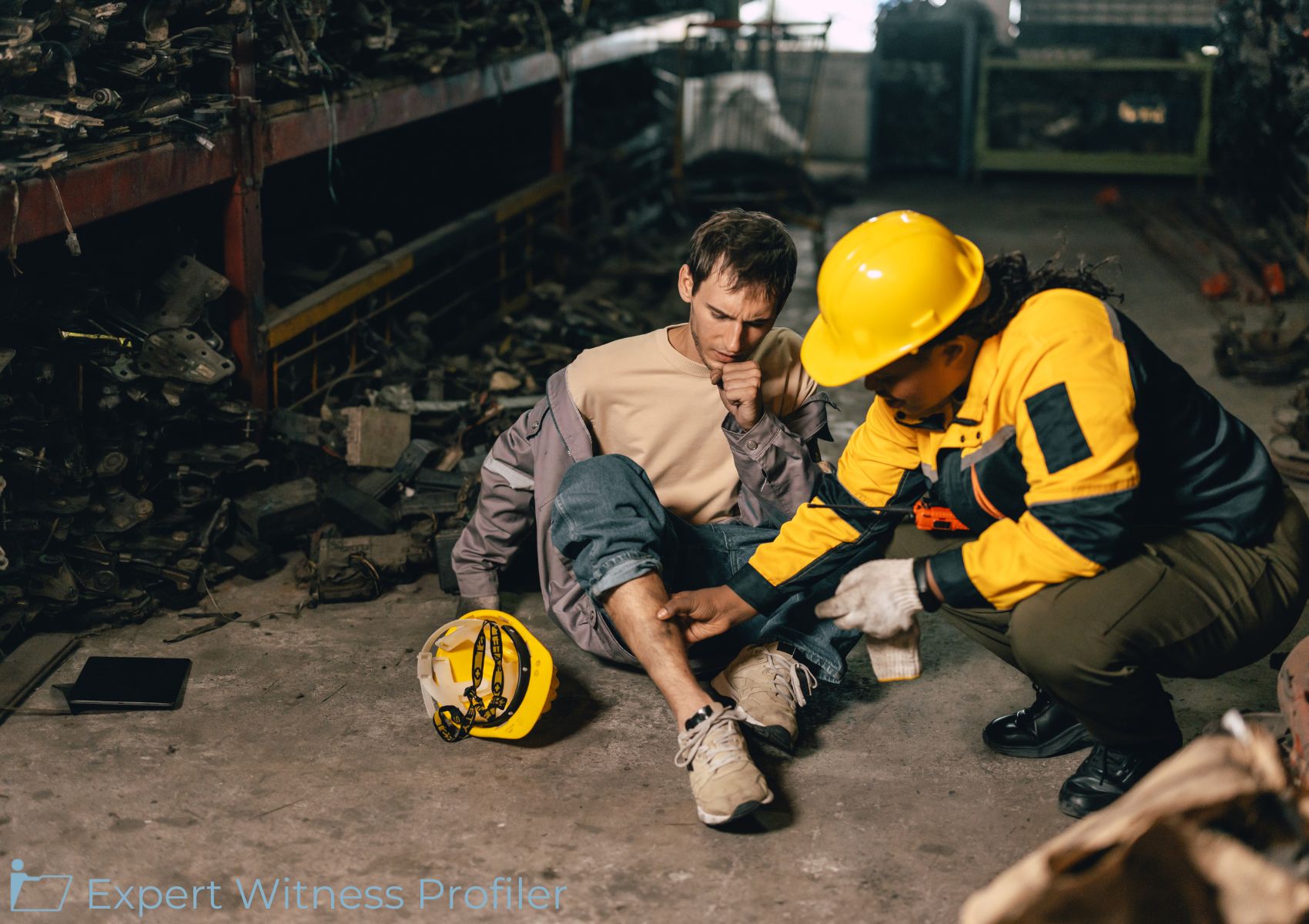
Olivia Hernandez and her nephew, Hector Ontiveros, Jr., were working at a pillow manufacturing plant owned and operated by Comfort Revolution Manufacturing of Mississippi, LLC, when Olivia was injured by a “molding pillow carousel” manufactured, sold, and installed by Defendant.
Hector heard a scream while working on the same assembly line as his aunt Olivia’s head was caught in a pinch point at the demolding area after she attempted to remove a pillow that fell from the mold onto the floor. This unfortunately crushed Olivia’s head, but she was eventually removed from the machine. Olivia later succumbed to her injuries at the hospital.
Defendants designated Dr. Steven R. Arndt as an expert in human factors, requesting that he “assist in the investigation and understanding of the human factors issues associated with the subject incident.” Plaintiffs designated Mark R. Cannon “to perform an analysis and evaluation of the causal factors which allowed Hernandez to become entrapped, and critique and evaluate Cannon’s responsibility as the designer and installer of the production line.”
Both parties sought to strike and exclude the other party’s expert witness.
Human Factors Expert Witness
Steven Robert Arndt is a human factors scientist with advanced degrees in industrial engineering- human factors specialization (MSIE and PhD) from the University of Wisconsin. Arndt is a consultant with substantial experience in the investigation and prevention of accidents and injuries related to consumer products, warning labels, instructions, training, industrial and occupational settings, and transportation related systems.
Mark Russell Cannon has over 25 years’ experience in forensic engineering and investigates a wide variety of mechanical and safety issues, including workplace injuries involving machinery, machinery failures and consumer product failures.
The Court is of the opinion that Cannon’s testimony and opinions should be excluded because his report relied heavily on an incorrect OSHA standard.
Cannon used the 42-inch guardrail height requirement found in OSHA 1910.29(b)(1) to show “Cannon violated OSHA regulations when they installed the ~34-inch barrier.” He also cited other organizational codes requiring a 42-inch-high railing which have no bearing on the case sub judice.
The Court found that this information was irrelevant for this case’s purposes, and while Cannon did not rely solely on this information, it is foundational to his entire expert report. Plaintiffs argued that Cannon “opined and testified that the standard shows the logic behind a 42-inch height as opposed to the 34-inch height utilized by Cannon USA in its design” and “his opinions were not asserting that the design was unsafe or unreasonably dangerous solely because of an alleged violation or failure to comply with the OSHA standard” These arguments are unconvincing because at several instances, Cannon’s report reads, “[Defendant] violated OSHA regulations.”
Steven R. Arndt
Defendant claimed that Arndt’s opinions were necessary to combat the mischaracterization of safety codes put forth by Plaintiffs’ expert, Cannon, and that his testimony was essential to refute Plaintiffs’ expert’s erroneous interpretation of code and regulatory requirements. While the Court took issue with this characterization of Arndt’s testimony, it would not upset a party’s reason for proffering an expert witness.
Therefore, because Cannon was excluded—along with the testimony Defendants specifically claimed they were using Arndt to combat—the Court struck Arndt’s testimony and opinions regarding any rebuttal against Cannon for the purpose of trial. More specifically, the Court struck the “Rebuttal” section of his expert report and any testimonial reference to it. Additionally, the Court did not permit Arndt to testify to conclusions of law or tell the jury what conclusion it should reach in this matter.
Held
The Court granted in part and denied in part Plaintiffs’ Daubert motion to exclude or limit the testimony of Steven Arndt.
The Court granted Defendant’s motion seeking to exclude Plaintiffs’ expert Mark Cannon.
Key Takeaway
An expert may never render “conclusions of law,” opine “on legal issues,” or “tell the jury what result to reach.”
Case Details:
Case Caption:
Nolazco V. Cannon USA, Inc.
Docket Number:
1:24cv12
Court Name:
United States District Court, Mississippi Northern
This matter arises out of an insurance claim filed by Plaintiffs, Grayson Smith and Savannah Smith, related to a tree impact that caused damage to their property located at 2811 Pebblewood Drive, Valdosta, Georgia 31602 on August 30, 2023.
Auto-Owners retained expert Brent Boyd, a forensic engineer, to analyze the damage to the property. Plaintiffs’ arguments largely center on reliability. They argued that Boyd spent too little time conducting his inspection, employed a flawed and haphazard methodology, and did not adequately consider the findings of other engineers.
Forensic Engineering Expert Witness
Brent A. Boyd is a licensed engineer who received his engineering degree from the University of Alabama in 2010. He has inspected numerous properties affected by tree impacts and conducted evaluations of the damage thereto, including whether the structure had laterally shifted.
Boyd determined that there was tree impact damage to the rear and left elevations of the property, specifically the rear sunroom and adjacent living room, which included shifting isolated portions of framing elements in that area.
i. Experience and Qualifications
Plaintiffs took issue with the fact Boyd had been licensed for less than four years at the time of the inspection at issue. They also stated that nearly all of his professional time is spent “looking at damaged roofs for insurance companies” and he was retained by Defendant 918 times.
The Plaintiffs argued that Boyd lacked the necessary qualifications, noting that he did not hold a graduate degree, has never presented outside his own company, and has not published any work in the field of engineering.
Firstly, the Court was unpersuaded that four years is too short a time to be qualified. Boyd’s degree and licensure indicated sufficient qualifications. If, as Plaintiffs maintained, their experts are better experienced than Boyd, that information is properly put before the jury at trial, not the Court in a motion to exclude. Secondly, Boyd has experience conducting evaluations of properties affected by tree impacts, like the instant case, including assessing whether the structure had laterally shifted, meaning a foundational issue related to racking. Third, and finally, the fact Boyd has worked for Defendant 918 times cuts against Plaintiffs’ arguments. 918 claim evaluations are a significant amount of experience. If even a minority of those claims considered the issue of racking, Boyd would still be qualified to testify.
ii. Reliability
Plaintiffs stated that Boyd was present at their property for about ninety minutes and never agreed to return for a more detailed inspection. Defendant noted that Boyd’s time spent at Plaintiffs’ property allowed him to inspect “all walls under the main area of impact” and publish a 73-page, peer-reviewed engineering report.
Plaintiffs also argued that choosing which studs to measure by conducting a visual inspection is a “haphazard sampling” and “not a thorough, scientific approach,” which left “the vast majority of walls unmeasured and uninspected in any meaningful way.” This argument goes to the comprehensiveness of Boyd’s inspection, not its reliability.
Plaintiffs’ critique of Boyd’s methodology focuses on his use of his bubble level. They argued that using a one-foot bubble level on a nine-foot wall, not insisting the bubble be centered between the level’s marked lines to declare a stud to be plumb, and his own data rendered his expert opinion unreliable.
Defendants responded that it is not about the length of the level, but rather ensuring “the engineer uses it in accordance with proper scientific procedures.” The Court declared that Boyd’s choice of level is not disqualifying, particularly given his assertion he used it in compliance with proper scientific procedures.
Plaintiffs argued that Boyd did not adequately consider the findings of other engineers because his findings disagreed with the reports of Plaintiffs’ experts and he did not re-evaluate Plaintiffs’ property after reading the disagreeing reports.
At trial over a contested matter such as this one, experts are bound to disagree. Existence of disagreement neither disqualifies an expert nor renders him unreliable. And a refusal to change his findings or return to the property following the receipt of a disagreeing report did not render Boyd’s original findings unreliable.
Held
The Court denied Plaintiffs’ motion to exclude the testimony of Brent A. Boyd.
Key Takeaway
An expert’s method need not be perfect, nor must he apply it perfectly. That is, a minor flaw in an expert’s reasoning or slight modification of an otherwise reliable method will not render an expert’s opinion per se inadmissible.
Plaintiff Matthew Hartley sued Defendants Sunbelt Rental Inc. and Custom Equipment LLC to recover for personal injuries he sustained during a jobsite incident on June 14, 2021.
Plaintiff alleged that on June 14, 2021, he “attempted to move a Sunbelt Rentals Hy-Brid Lift HB-1030 down a ramp when suddenly and without warning it began to rapidly roll down the slope of the ramp despite no effort on his part to power the lift forward.” He further alleged that the lift, which was manufactured by Custom Equipment, LLC, “rolled uncontrollably into a concrete wall at a rapid rate of speed” causing “debilitating physical injuries” and a variety of economic and noneconomic harms.
Plaintiff retained Craig Sylvester, a forensic engineering expert, to determine the “root cause” of the accident. According to Sylvester, “the root cause of the incident on June 14, 2021 was a mis-wired emergency stop button, as well as the placement of one or both of the parking brake levers at the rear of the machine in an intermediate position.”
Defendant Custom Equipment filed a motion to strike certain expert opinions and limit testimony of disclosed expert Craig Sylvester.
Forensic Engineering Expert Witness
Craig A. Sylvester is a former U.S. Navy mustang officer and licensed mechanical engineer with more than 25 years of experience as an operator, maintainer, designer, and inspector of industrial equipment around the world. Sylvester’s expertise in industrial systems is built on his early work performing component-level repairs as an electronics technician, along with formal education in manufacturing and mechanical engineering, and naval architecture.
Defendant requested the Court “exclude the portions of Sylvester’s opinions that are untimely, speculative and unhelpful to the jury.”
Defendant argued that exclusion is warranted because Sylvester’s: (1) supplemental opinions on electromagnetic braking assistance, back emf braking assistance, and arc suppression circuits are untimely and unhelpful to the jury; (2) opinions on the intermediate position of the brake levers are speculative; (3) opinions on the parking brake’s holding torque are unhelpful to the jury; and (4) opinions that the pre-start inspection checklist failed to adhere to the ANSI A92.22 standards are unhelpful to the jury.
Plaintiff contended, and Defendant accepted, that “Sylvester has no intention of testifying that the HB 1030 should have included ‘electromagnetic,’ ‘back emf’ or an ‘arc suppression circuit’ at the time of trial.” The Court thus found these admissibility questions to be moot. Plaintiff also stated that Sylvester “will not be testifying regarding [the holding torque] document” and that the “[ANSI A92.22] standards, which were adopted after the manufacture and sale of the HB 1030, would not apply to [the unit at issue.]” As Defendant did not challenge the admissibility of testimony by Sylvester that “industry standards would include a pre-start inspection of the braking system as a matter of common sense and industry standards” nor do they otherwise challenge Plaintiff’s concessions on these issues, the Court likewise found these admissibility questions moot.
Court’s Decision
The Court concluded that Sylvester’s opinions on the intermediate position of the brake levers “both rests on a reliable foundation and is relevant to the task at hand.”
As for relevancy, the Court found that Sylvester’s opinions on the intermediate position of the brake levers will “assist the trier of fact” to determine the root cause of the June 14, 2021 incident. As the root cause of the incident is “a fact in issue,” Sylvester’s testimony satisfied the standard for relevancy. The Court also concluded that Sylvester reviewed numerous sources of information, utilized reliable principles and methods of forensic engineering, and reliably applied said principles and methods to the facts of the case.
The Court noted that Sylvester “considered seven categories of evidence in reaching his conclusion, only one of which was a document generated during the course of BN Builders investigation, which occurred shortly after the incident in question.” As a result, the Court declined to exclude Sylvester’s testimony on the brake levers as “speculative.”
Held
The Court denied the Defendant Custom Equipment LLC’s motion to exclude the testimony of Plaintiff’s expert Craig Sylvester.
Key Takeaway:
The Court noted that while Defendant raised various other arguments for exclusion, none of these arguments provided a proper basis for exclusion, as they all speak to issues of fact-finding, not gatekeeping.
For example, Defendant’s disagreement with Sylvester’s exclusion of other possible explanations for the accident and his reasons for doing so do not render his opinions inadmissible—they merely make it more likely that the trier of fact will view Sylvester’s conclusions about the root cause of the accident less credible.
Because the Court must act as “a gatekeeper, not a fact finder,” it cannot exclude portions of Sylvester’s testimony for any of these fact-finding based reasons.
This case arose from a dispute between homeowners and their insurer over coverage. Plaintiffs, Jessi Shetler and Richard Shetler filed a claim with Defendant, Clear Blue Specialty Insurance Company, their insurer, for the windstorm’s damage to their roof and the interior of their home.
Plaintiffs brought the instant first-party action sounding in breach of contract due to Defendant’s denial of all roofing system damages and undervaluation of the Plaintiff’s insurance claim.
Plaintiffs’ expert, forensic engineer Sonny Gulati, opined that Plaintiffs’ roof and interior “suffered significant storm related and widespread damage” such that the roof needs to be completely replaced and the interior repaired. However, the Defendants filed a Daubert motion to exclude the testimony of Gulati.
Forensic Engineering Expert Witness
Sunil Sonny Gulati has over 30 years’ experience in conducting structural/geotechnical investigations including sinkhole evaluations, ground penetrating radar (GPR) testing and analysis, geotechnical design, environmental consulting, construction materials testing, supervision, and roadway construction project management.
Basically, Gulati opined that Plaintiffs’ roof and interior “suffered significant storm related and widespread damage” such that the roof needs to be completely replaced and the interior repaired.
In forming this opinion, Gulati reviewed weather data, calculated wind forces, inspected the property, interviewed Plaintiff Richard Shetler, and reviewed documentation including prior evaluations, photos, and a wind history report.
Defendants argued that Gulati’s methodology is unreliable and his testimony unhelpful because he leaned too heavily on Richard Shetler’s interview to determine that the windstorm caused the damage to Plaintiffs’ home.
The Court disagreed because Gulati evaluated data, inspected the home himself, and made calculations of the same type that courts regularly find sufficiently reliable. Any weaknesses in his evaluation, such as overreliance on a biased homeowner, are better addressed through cross-examination, not exclusion, as the jury is best equipped to make credibility determinations. To sum up, Gulati’s methodology is sufficiently reliable to put before a jury, and his testimony will be helpful for the same reasons.
Held
The Court denied the Defendant’s Daubert motion to exclude the testimony of Sonny Gulati.
Key Takeaway:
Experts and their opinions need not be perfect to be admissible, and “it is not the role of the district court to make ultimate conclusions as to the persuasiveness of the proffered evidence.” In other words, forensic experts who rely on weather data, engineering formulas, home inspections, and their own knowledge and experience are sufficiently reliable.
Case Details:
Case Caption:
Shetler Et Al V. Clear Blue Specialty Insurance Company
Docket Number:
6:24cv272
Court Name:
United States District Court for the Middle District of Florida, Orlando Division
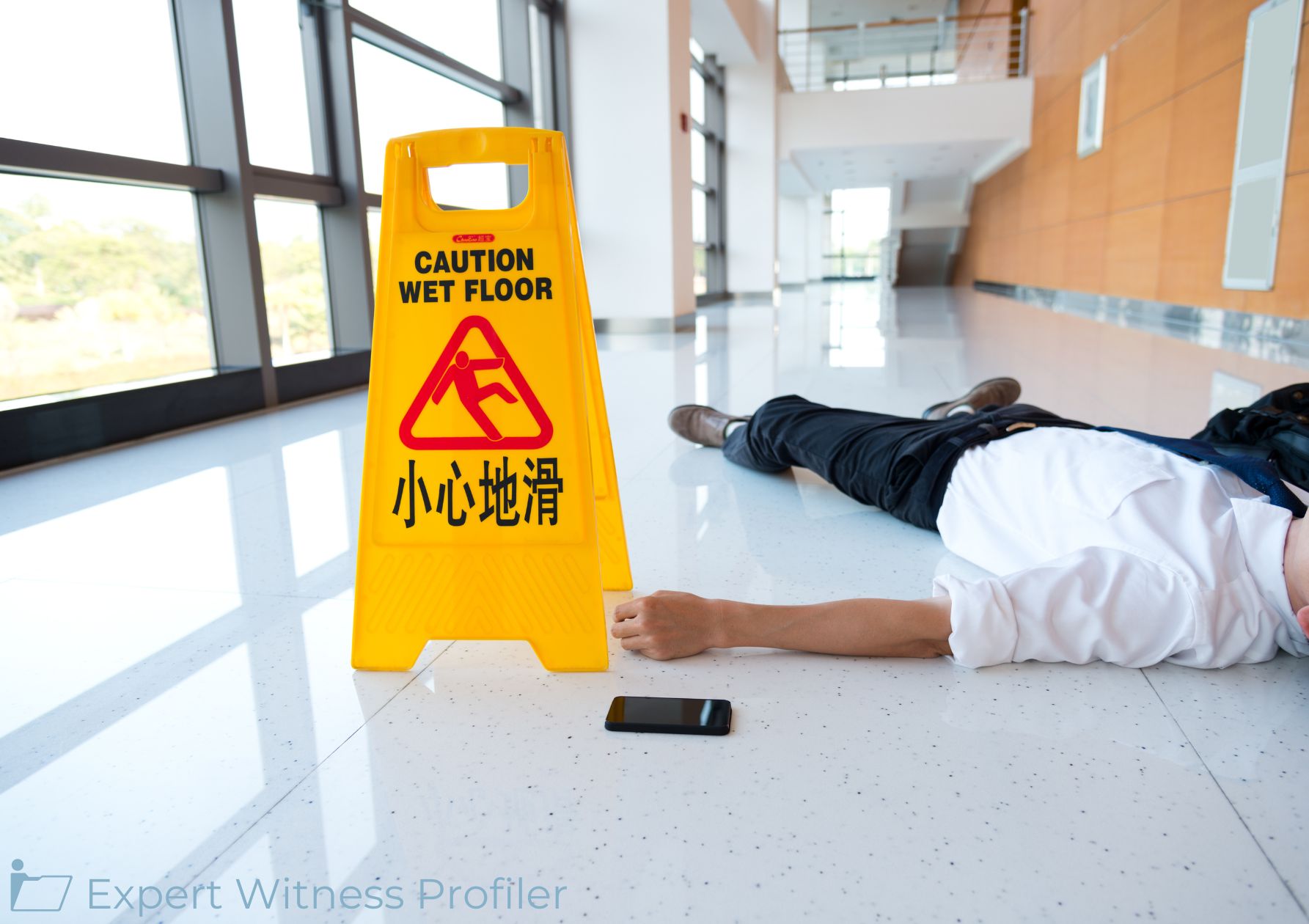
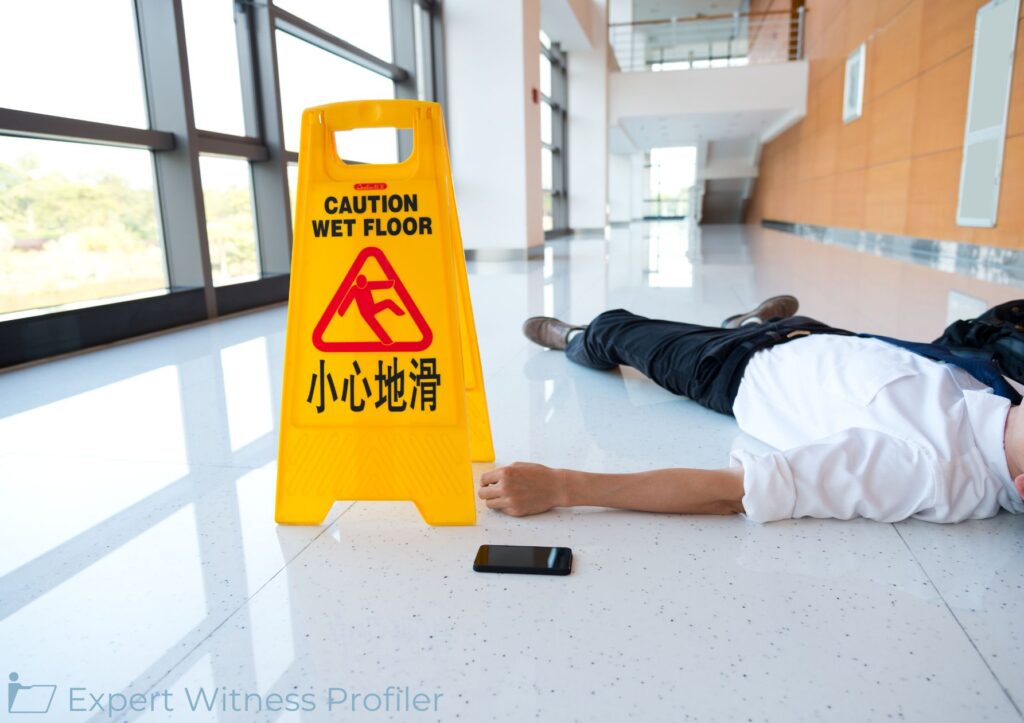
Plaintiff Hui Wang brought suit against Omni Hotels Management seeking damages from a fall she suffered on September 25, 2018, in the lobby of the Omni New Haven Hotel at Yale. Wang alleged that she fell due to “water that had accumulated on the floor” and that Omni was negligent in allowing that water to accumulate and in failing to warn her about the slipping hazard.
Omni sought to preclude the admission of Douglas A. Fisher, a forensic engineering expert retained by the Plaintiff with more than 35 years of experience. Omni also sought to preclude Plaintiff’s expert, Dr. Brad J. Yoo, from offering opinions about the permanency of Wang’s injuries.
Forensic Engineering Expert Witness
Douglas A. Fisher is a forensic engineering expert with more than 35 years of diversified engineering experience in the fields of forensic evaluations, building design, and construction administration.
Brad Joonschik Yoo, MD is a board-certified orthopaedic trauma surgeon and Associate Professor of Orthopaedic Surgery and Rehabilitation. He specializes in treating severe fractures, post-fracture complications, as well as deformities and arthritis of the lower extremity.
Yoo graduated cum laude from Cornell University. He obtained his medical degree from New York Medical College where he first found his passion for orthopaedics. Next came a residency in Baltimore, MD at the University of Maryland Medical Center, the R. Adams Cowley Shock Trauma Center, and the Johns Hopkins Hospital. He then spent a fellowship year specializing in orthopaedic trauma at the University of Washington Harborview Medical Center in Seattle.
Fisher relied on his knowledge of the relative slipperiness of flooring materials under different conditions and industry standards for mitigating slipping risks. Fisher then applied this background to the video he saw and drew conclusions on that basis. In so doing, he relied on the coefficient of friction, “a numeric value that represents the amount of friction between two objects” as determined by a tribometer, as well as the American National Standards Institute guidelines for commercial entrance matting.
Omni sought to preclude three of Fisher’s opinions: (1) his “opinions regarding the cause of Plaintiff’s fall,” (2) his opinions regarding the proper placement of the floor mats in the Hotel lobby, and (3) his opinions regarding the characteristics of the Hotel flooring.
As to each, Omni raised essentially three challenges: (1) as it would be offered as an exhibit, Fisher’s export report contains inadmissible hearsay, (2) Fisher’s opinions are not based on sufficiently reliable methodologies, and (3) Fisher’s opinions are not likely to be helpful to the jury.
First, Omni objected to Fisher’s opinion that “‘Wang was caused to slip, fall, and become injured due to moisture on an exposed area of the marble tile flooring.’”
Omni also objected to Fisher’s further opinions that “‘[t]he Omni hotel failed to maintain the subject area in a safe condition,’” and “‘Omni failed to inspect the floor in order to prevent a hazardous and dangerous condition.’”
Analysis
The Court concluded that two of Fisher’s three opinions are admissible. In essence, Omni argued that determining what happened when Wang fell is so straightforward a task that a jury can review the video of her fall and other evidence and reach a conclusion as to the issues in dispute without the assistance of an expert. However, even if a jury could review the video and reach its own conclusions as to both (1) the cause of Wang’s fall and (2) whether the floor was maintained in a safe condition, the Court concluded that Fisher’s expertise as an engineer will assist the jury in that task and that these two opinions are based on sufficiently reliable methods and data to be admissible.
To the contrary, Fisher applied no particular expert methodologies to conclude that “Omni failed to inspect the floor in order to prevent a hazardous and dangerous condition.” Instead, the Court held that Fisher merely summarized testimony in the record from Omni employees and found that Omni’s employees perhaps could not have seen the front lobby well enough to look for liquid on the floor and may have failed to examine the lobby frequently on the day in question.
As for the issue of hearsay contained within his report, Plaintiff’s counsel indicated that he would have no issue redacting portions of Fisher’s report that contained hearsay. Because the Parties may be in agreement on a path forward regarding alleged hearsay in Fisher’s report, the Court need not resolve whether each potentially inadmissible statement in Fisher’s report meets Rule 703‘s standard.
Omni’s motion to preclude the permanency opinion of Yoo
Omni sought to preclude Yoo from offering opinions about the permanency of Wang’s injuries. Yoo last treated Wang in 2019 but only formulated his opinion as to the permanency of her disability in 2022 through his review of years-old medical records.
But Wang sought to offer Yoo to testify regarding a probable current disability. Yoo’s permanency opinion—formed separately from his treatment of Wang and on the basis of years-old information—cannot constitute the opinion of a doctor treating Wang, and, instead, would require a separate expert designation. Yoo conceded that because his opinion as to permanency was based on information at least five years old, he “did not know if Wang has any disability currently.”
As a result, the Court concluded that Yoo’s opinions as to permanency must be excluded and granted Omni’s motion to exclude this opinion from Yoo’s testimony.
Held
The Court granted in part and denied in part Omni’s motion to preclude the testimony of Douglas A. Fisher.
The Court granted Omni’s motion to preclude the permanency opinion of Dr. Brad J. Yoo.
Key Takeaway:
While expert testimony regarding the mechanics of a fall and industry safety standards and their supporting reasoning is more likely than not to help the jury resolve material issues in dispute, Fisher applied no particular expert methodologies to conclude that “Omni failed to inspect the floor in order to prevent a hazardous and dangerous condition.” The Court held that these conclusions are based on straightforward review of the evidence without application of particular “scientific, technical, or other specialized knowledge,” and therefore allowing Fisher to testify on this issue would impermissibly usurp the role of the jury.
This is an insurance coverage dispute. Defendant Church Mutual Insurance Company (“Church Mutual”) insured Plaintiffs’ property. Hail damaged the property’s roof. The parties dispute whether the damage falls within Plaintiffs’ insurance policy, which precludes coverage for cosmetic damage.
Plaintiffs sought to exclude the expert testimony of Christine Conner, Mark Kubena, and Ronald Dutton on the grounds that they applied an extracontractual definition of “functional damage,” which, according to Plaintiffs, made their opinions unreliable and irrelevant. Plaintiffs also filed a motion to exclude Dutton’s supplemental expert report.
Forensic Engineering Expert Witness
Christine E. Conner has 10 years of engineering experience, including design, evaluation, inspection, and repair of residential and commercial buildings and other structures, with over 5 years of engineering training and forensic engineering experience in cause and origin failure analysis for structural damage; structural failures, construction deficiencies, roof damage, wind/hail damage, water intrusion, settlement, flooring failures, construction deficiencies, cladding and window failures, foundation damage, flood, surge and wind damage analysis, and preparation of technical reports with findings.
Mark Kubena is an engineer with expertise in the area of property damage causation and the determination of the appropriate scope of repairs for property damage.
Ronald J. Dutton has over 40 years of metallic-coated steel experience with which he provides technical services for product development, failure analysis, and product training for the metal construction industry. He has served in various trade organizations, including the National Coil Coating Association (NCCA) and the Zinc Aluminum Coaters Association (ZAC), and holds BS and MS degrees from Drexel University and Lehigh University.
The Court found that Conner, Dutton, and Kubena’s expert reports do not rely on extracontractual definitions of functional and cosmetic damage. They instead explained how the roof lacked certain types of functional damage. Thus, the expert reports opined that the roof had not been functionally damaged because its service life had not been reduced.
Basically, Church Mutual’s expert reports would help the jury determine whether the policy limitation applies. And they do not confuse the trier of fact by applying a different definition of functional/cosmetic damages. The Court declared these reports admissible.
B. Dutton’s Supplemental Report Is Inadmissible
Dutton’s supplemental disclosure is a three-page summary of a laboratory report that evaluated the hail damage to the Plaintiffs’ roof. Dutton stated that the lab report supports the conclusions from his original report and demonstrates that there is no evidence that the hail diminished the performance of the roof.
The Court found that Dutton’s report is not supplemental because it goes beyond filling the “interstices of an incomplete report” and instead introduces new laboratory testing results and new opinions.
Church Mutual offered a compelling explanation for the tardiness. Dutton did not receive the lab results until after submitting his initial expert report. Moreover, the testimony was important because it provided lab results that helped explain why the roof damage is cosmetic instead of functional.
Even though there is a compelling reason for the delay and the testimony is important, the Court will not admit it because Plaintiffs did not have time to produce rebuttal reports after Dutton disclosed the samples used in his supplemental report one week before the discovery deadline.
Held
The Court granted in part and denied in part the Plaintiffs’ motion.
Key Takeaways:
None of the experts relied on an extracontractual definition of cosmetic or functional damage to reach their conclusions.
Even though Dutton states that his supplemental findings support his original conclusions, they still offer new opinions, because they analyze new laboratory test results.
Case Details:
Case Caption:
Cleburne Training & Fitness Inc Et Al V. Church Mutual Insurance Company
This case arises from a fire that occurred on Plaintiff’s Insured’s property, for which Plaintiff alleges the following alternative claims against Defendant: (1) strict product liability; (2) negligence (resulting from product defects); (3) breach of implied warranty of merchantability; and (4) breach of implied warranty of fitness.
The most probable ignition source of the fire was the failure of the exhaust fan motor. The existence of lint shows that the fire originated from inside the subject fan rather than outside the fan.
The thermal cutoff (“TCO”) in the subject fan did not work as designed or intended in that it failed to shut off the motor to prevent the arcing and overheating from occurring.
Allstate designated Robert Longseth, PE, a forensic engineer with experience investigating both electrical and mechanical systems, as an expert in this case. On December 29, 2023, Longseth prepared an expert report regarding the cause of the fire. Broan-Nutone sought to exclude at trial the opinions of Longseth regarding whether the TCO in the fan was defective.
Forensic Engineering Expert Witness
Robert Longseth, PE has over 17 years as a Forensic Engineer and has been involved in over 1000 investigations both in electrical and mechanical systems. Longseth is a registered Professional Engineer in 12 states.
He is a Board-Certified Engineering Diplomat in Forensic Engineering, through the National Academy of Forensic Engineers, a Certified Fire Investigator, through the International Association of Arson Investigators, and a Certified Fire and Explosion Investigator through the National Association of Fire Investigators.
Initially, Broan-Nutone’s motion to exclude fails to clearly state which part of Rule 702 it relies on. Instead, the motion challenges Longseth’s conclusions about the TCO and the fire’s cause, specifically his reliance on a 2014 article. The Court interprets this challenge as questioning whether Longseth’s opinion regarding the TCO and its role in the fire is based on “sufficient facts or data,” as mandated by Rule 702(b).
The article at issue is “Ventilation Fan Fires: Overheated Windings Lead to Failed Thermal Limit Switch,” published in the journal Fire Technology in 2014. The article describes a “recent increase in the occurrence of ventilation fan fires.” The focus of the paper is two models of Jakel motors that were manufactured between 2000 and 2003 and were designed for ventilation in small rooms, such as laundry rooms and bathrooms.
Longseth’s expert report states that “the lead to the thermal cut out was bent significantly as part of its installation.” The report then states that, “while the model number of the specific motor was not the same as the below article the evidence is consistent with [the article’s] finding.”
Broan-Nutone’s Arguments
Broan-Nutone raises the point that the fans and TCOs discussed in the article may not be the same as the particular fan and TCO at issue in this litigation. Longseth counters, acknowledging that the model number of the motor involved in this case was not the same as the model numbers in the article but asserts that the evidence is “consistent with the findings of [the article].” Ultimately, the Court finds no issue with Longseth’s use of the article in reaching his expert opinions.
Secondly, Broan-Nutone contends that the 2014 article’s reference to TCO installation standards is irrelevant. They argue that 2014 standards are not pertinent and that there’s no evidence about manufacturing and design knowledge relevant to the 2005 fan. However, documents Allstate obtained through supplemental discovery directly contradict this. As Allstate explains, Underwriters Laboratories industry standard notices from 1999-2003, possessed by Broan-Nutone by September 2003, state the same TCO lead bending standard (no closer than three millimeters from the thermal-link seal) as the 2014 article Longseth cites. Consequently, the Court finds Longseth relied on sufficient facts and data and will deny Broan-Nutone’s motion to exclude.
Held
The Court denied the Defendant Broan-Nutone, LLC’s motion to exclude Plaintiff’s expert Robert Longseth.
Key Takeaway:
The Court found that Longseth’s reliance on a 2014 article about ventilation fan fires, despite differences in motor model numbers, was permissible as the evidence was consistent. Furthermore, the Court rejected Broan-Nutone’s argument that 2014 standards were irrelevant, noting that supplemental discovery revealed identical TCO installation standards were in place and known to Broan-Nutone as early as 2003, supporting Longseth’s conclusions and demonstrating sufficient factual basis for his opinion under Federal Rule of Evidence 702(b).
SFR Services, LLC (“SFR”) sued American Coastal Insurance Company (“ACIC”) for breach of an insurance policy (the “Policy”) based on ACIC’s failure to provide coverage and remit payment for damage sustained by Steamboat Bend Condominium Association, Inc. (“Steamboat Bend”) during Hurricane Irma. SFR is the assignee of Steamboat Bend’s rights under the Policy.
Plaintiff’s expert Grant Renne conducted a virtual inspection assisted by Durant Saint-Hilaire, a certified roofing inspector who was on-site during the inspection. Renne’s methodology complied with standard practices and used data from the National Oceanic and Atmospheric Administration (NOAA) and the National Weather Service (NWS). Renne’s report stated that his methodology was “based on ASTM E2713-18 (Standard Guide to Forensic Engineering), ASTM E1188-11 (Standard Practice for the Collection and Preservation of Information and Physical Items by a Technical Investigator), and E620-18 (Standard Practice for Reporting Opinions of Scientific or Technical Experts).” Renne prepared his report through “visual inspection of readily observable surfaces, collection of digital evidence, and rotation of roof tiles to determine attachment integrity.”
Renne testified that he excluded from his analysis areas of prior repairs and areas of prior destructive testing. Renne’s report ultimately concluded that Hurricane Irma caused the damage.
ACIC argued that the report should be excluded because Renne’s inspection was done virtually and that Saint-Hilaire, the certified roofing inspector who was on-site during the inspection, did not possess the necessary qualifications. ACIC also argued that Renne’s report was based on insufficient facts and data because he did not interview unit owners and residents or review repair records related to the property, in contravention of the ASCE, ASTM, and his own report. ACIC’s final argument in favor of exclusion is that, because destructive testing was already done prior to Renne’s inspection, Renne’s conclusions were unreliable.
ForensicEngineering Expert Witness
Grant Renne has been a Registered Professional Engineer since 1990, completed over 6,000 property damage investigations throughout his career, and participated in over 400 cases.
Renne’s conclusion that Hurricane Irma caused the damage is based on his review of the buildings, velocity pressure calculations based on the American Society of Civil Engineers (ASCE) 7-10 formula, and historic NOAA weather data.
Renne’s Reliance on Virtual Evidence Does not Inherently Bar his Testimony
At the onset, the Court rejected ACIC’s arguments regarding the virtual nature of the inspection and the destructive testing. An expert’s reliance on virtual evidence does not inherently bar his testimony.
Also, Saint-Hilaire possessed the technical qualifications required to participate in the on-site investigation. Renne testified that he never performed destructive testing, as the ASTM does not allow for destructive testing because the investigation cannot be repeated, tested, or verified. The fact that destructive testing was performed prior to Renne’s investigation did not render his investigation unreliable.
Renne’s Failure to Interview Involved Parties did not make his Report Unreliable
The Court rejected ACIC’s argument that Renne’s failure to interview these involved parties made his report unreliable. ASCE 30-14 stated that it only needs to be done “whenever possible,” not in all circumstances. However, the Court recognizes that Renne’s report is somewhat confusing, as he stated “[t]he following list of standard practices [were] performed” and then lists that “an interview with the property owner may be conducted either on site or via telephone.” Thus, the Court held that any discrepancies between Renne’s report and testimony should be addressed on cross-examination at trial. It goes to his credibility, not the admissibility of his testimony.
Although Renne’s Review of the Repairs was Less than Thorough, that Alone does not Garner Exclusion of his Report
At the crux of ACIC’s issue with Renne’s report is his failure to review repair records from repairs made by Steamboat Bend, despite his review of repair documents related to repairs made by SFR.
ACIC also argued that Renne should not have excluded the areas of repair and deemed it contaminated evidence “unworthy of consideration in the formulation of his opinion.”
Renne testified that he relied on ASCE 30-14. ASCE 30-14 requires inspectors to “obtain and analyze any written documentation for alterations and repairs.” Renne’s report details that “areas of pre-loss repairs and/or post-loss mitigation [were] reviewed.”
Indeed, Renne testified that he reviewed SFR’s repair records and visually reviewed repairs during his investigation. The Court concluded that, although Renne’s review of the repairs was less than thorough, that alone does not garner exclusion of his report as there was “adequate evidence that had not been repaired for him to formulate his opinion.”
Held
The Court denied the Daubert motion to exclude the testimony of Grant Renne without prejudice. ACIC may renew the motion as a motion in limine closer to trial.
Key Takeaway:
Renne’s report is not the model for clarity, yet “experts and their opinions need not be perfect to be admissible.” Renne’s application of his methodology is not so unreliable that the Court should exclude it out of hand. ACIC’s issues with Renne’s report can be used during cross-examination to potentially decrease the weight and credibility the jury gives to his opinion.
Case Details:
Case Caption:
SFR Services, Llc V. American Coastal Insurance Company
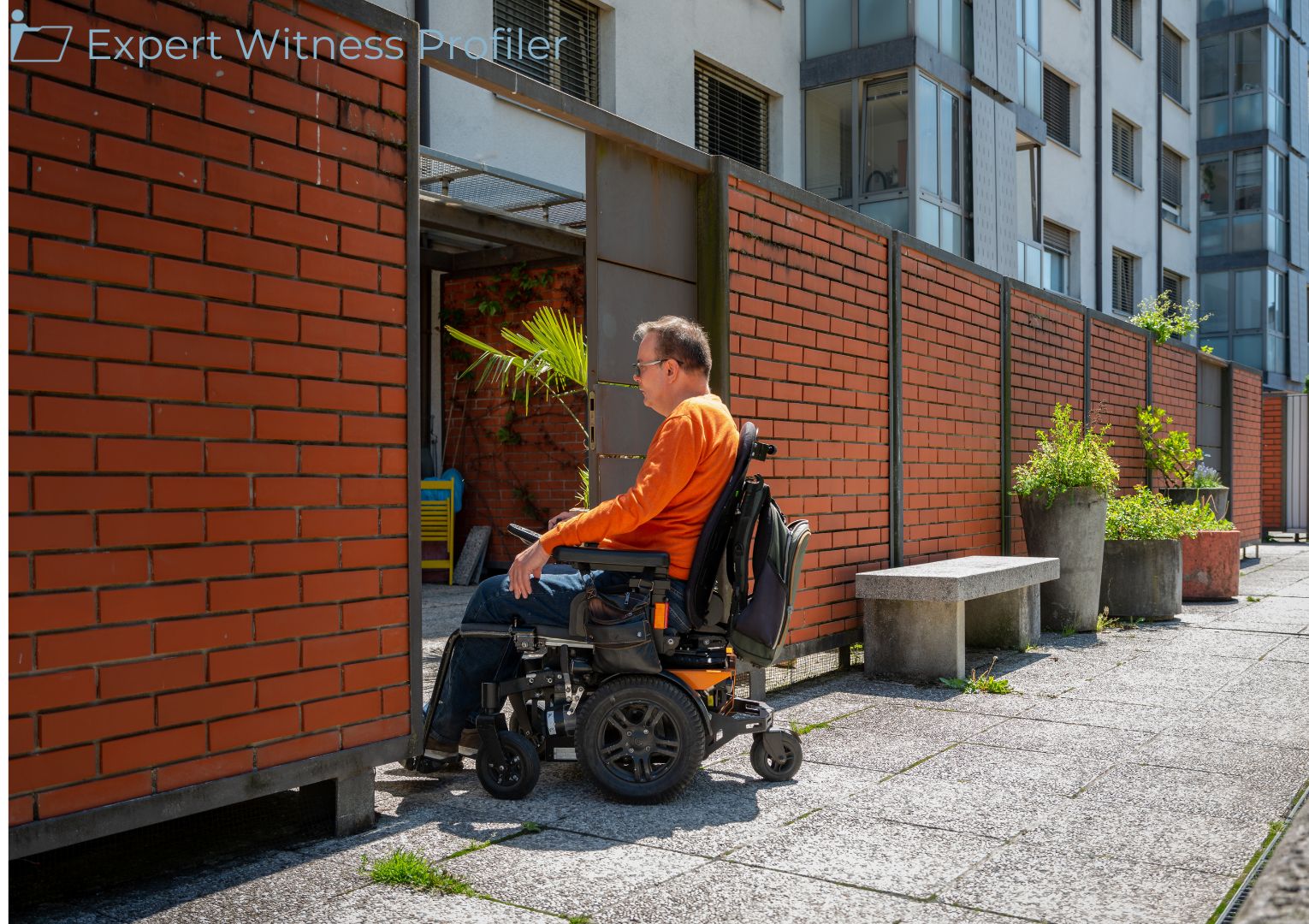
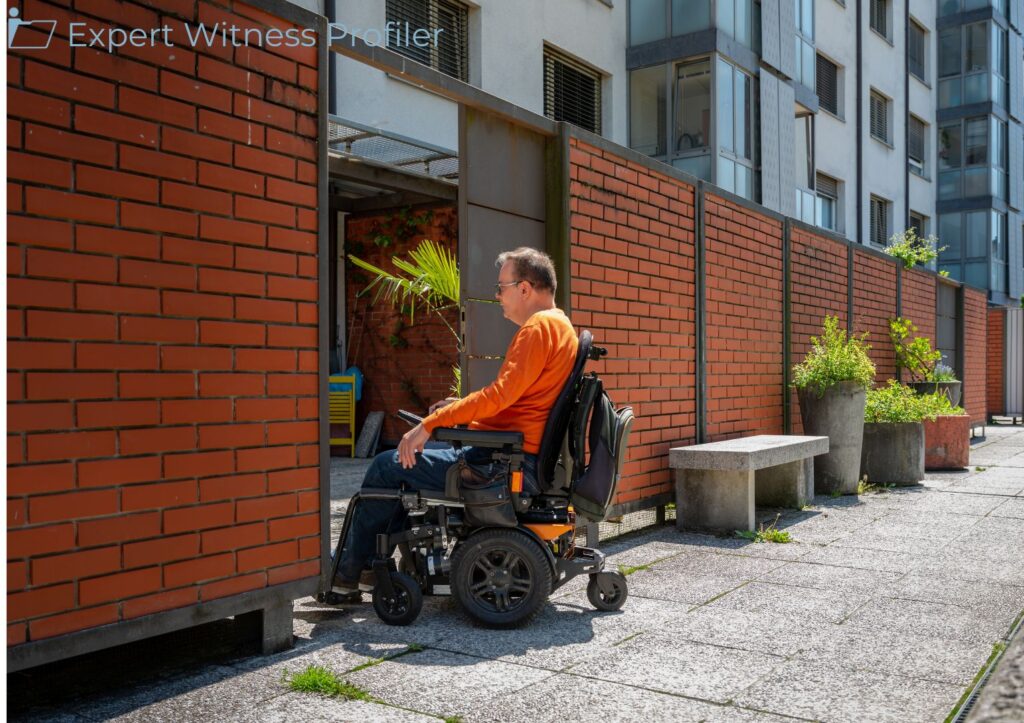
It all started when Lewis Youngman fell from his motorized wheelchair while driving on the entry gangway of the Defendant’s cruise ship, Mariner of the Seas. Youngman alleged that, as a result of Defendant’s negligence, a certain portion of the gangway was impermissibly steep, uneven, and mis-leveled. Consequently, Youngman argues, the uneven flooring caused his wheelchair to tip over. This alleged negligence then resulted in severe injuries.
Defendant sought to strike some of this expert testimony from Plaintiff’s expert witness, Frank Fore, and Plaintiff’s hybrid witnesses, Timothy Carter, M.D., and Mark Fulton, M.D. As to Fore (an engineer), Defendant sought to strike his opinion that Plaintiff would not have been ejected from his motorized wheelchair were it not for the impermissibly steep incline of the gangway. Additionally, Defendant sought to strike Fore’s testimony that, had one of Defendant’s crewmembers more appropriately assisted Plaintiff, in accordance with Defendant’s own internal policies, Plaintiff’s incident would not have occurred.
Further, Defendant sought to strike Plaintiff’s treating physicians, Carter and Fulton, for Plaintiff’s allegedly insufficient pretrial disclosure. Alternatively, if the Court deems Plaintiff’s disclosures to be sufficient, Defendant moved to strike certain testimony from Carter on reliability grounds.
Forensic Engineering Expert Witness
Frank A. Fore is a forensic engineer, his specialties include vessel dynamics, kinematics, and accident reconstruction; occupant and pedestrian biomechanical dynamics, kinematics and injury analysis, tribology and the engineering of interacting moving surfaces, including the study of the co-efficient of friction, lubrication, and wear.
Mark Fulton is a Board-Certified Diplomat by the American Board of Neurological Surgery and is a fellow American Association of Neurological Surgeons, who specializes in both complex spinal and intracranial surgery. He received his medical degree from University of Utah School of Medicine and served both a Residency program and a Surgical Critical Care Fellowship at the Ohio State University Hospitals.
Timothy D. Carter is a Board-Certified Diplomat by the American Board of Neurology, who specializes in neurology, internal medicine, and clinical neurophysiology. He received his medical degree from University of Florida School of Medicine and completed a year of internal medicine residency at the University of Virginia affiliated programs. His neurology residency and clinical neurophysiology fellowship were completed at the Medical University of South Carolina where he was also Chief Resident.
“Plaintiff would not have been ejected and injured had his mobility scooter not abruptly tipped over on the gangway’s steep slope … or if the Gangway and Transition Plate had not exceed[ed] the mandatory maximum slope requirements as set forth in the Americans with Disabilities Act and the Florida Building Code, inter alia.”
Defendant argued that this conclusion is inadmissible because Fore did not engage in sufficient—or indeed any—testing before reaching this conclusion. Specifically, Defendant avers that Fore had no information regarding the make or model of Plaintiff’s motorized wheelchair (which Fore mistakenly referred to as a mobility scooter throughout his report); did not know how much the wheelchair weighed; did not know how much Plaintiff weighed; did not know how many wheels the wheelchair had; did not consider, or even know, the speed at which the wheelchair was traveling; and lacked understanding of other important details before drawing his conclusion. Defendant also pointed out that Fore did no experiments or other tests before arriving at his conclusion.
Fore made no effort to gather pertinent facts before concluding that the slope of the gangway was the cause of Plaintiff’s injury
The Court held that Fore’s conclusion is borne almost entirely of “anecdotal experience or speculation.” Fore offered no awareness of any facts specific to Plaintiff’s situation, let alone that he considered those facts in his opinion. Specifically, Fore’s opinion is untethered to critical facts such as the speed at which Plaintiff was traveling, the assistive device in which Plaintiff was traveling, the weight at which Plaintiff was traveling, or other details which would be necessary to render a reliable, non-speculative methodology. To the contrary, Fore’s opinion is based entirely on the theory that the gangway appeared to him to be improperly sloped, juxtaposed against videos of other people ostensibly falling on the gangway. The Court “concluded that there is simply too great an analytical gap between the data and the opinion proffered.”
However, Plaintiff missed the operative purpose for which this testimony was offered: “Defendant’s conformity to industry safety standards.” Here, Defendant has wisely opted not to challenge the portion of Fore’s testimony that opines on whether the gangway conforms with industry standards. Given Fore’s stated experience and training, plus his review of the basics of the record in the case, the Court held that this conclusion does fall within the Daubert reliability standard.
The Court held that Fore’s opinion rests too strongly upon speculation, such that it is unreliable under Daubert and its progeny. And because Fore’s speculation-laden testimony that the allegedly improperly-sloped gangway was the but-for cause of Plaintiff’s injuries lacked legal reliability, the Court granted Defendant’s motion to strike that portion of Fore’s testimony.
However, the Court refused to strike Fore’s testimony that “certain building codes and guidelines or regulations were arguably applicable to the subject gangway and that any alleged deficiencies with the subject gangway may have contributed to Plaintiff’s incident.”
Fore may not, however, testify that Plaintiff’s “mobility scooter would not have tipped over” had Defendant complied with its policy
Defendant sought to strike the portion of Fore’s report that Plaintiff’s “mobility scooter would not have tipped over had an RCCL crewmember assisted [Plaintiff] as required by RCCL internal policies ….”
The Court decided that Fore may testify as to whether, in his opinion, Defendant complied with its own internal policies. Indeed, courts have held that it is not a legal conclusion to analyze a party’s actions against its internal policies, and to determine whether the party complied with those policies.
The Court held that Fore may not, however, testify that Plaintiff’s “mobility scooter would not have tipped over” had Defendant complied with its policy. This testimony certainly rings again of an ultimate legal conclusion; i.e., that Defendant’s alleged failure to comply with its policy was the but-for cause of Plaintiff’s injuries. Thus, this portion of Fore’s anticipated testimony is inadmissible as it is purely a legal conclusion.
Challenges as to the Disclosure of Mark Fulton and Timothy D. Carter
Mark Fulton and Timothy D. Carter are hybrid witnesses pursuant to Federal Rule of Civil Procedure 26(a)(2)(C). Both are treating physicians of the Plaintiff, who will offer opinions within their areas of expertise, as disclosed below, but who need not provide a written report.
In addition to no reports being disclosed, Defendant argued that Plaintiff’s description of the testimony was also vague. That description is as follows:
“The Plaintiff’s medical condition related to the injuries that the Plaintiff sustained as alleged in the Complaint, including Plaintiff’s current medical symptoms, past and future medical and surgical condition and treatment, injury causation, aggravation of injuries and preexisting conditions due to the subject incident, diagnosis, prognosis, permanency, disability, and impairment, … the reasonableness of the costs and necessity of the medical care and treatment that was performed on the Plaintiff and the nature and estimated cost of future necessary medical and treatment for the Plaintiff.”
While the Court doubted whether the disclosure’s description is sufficient, the Court readily found that the ample time to depose the expert witnesses cured any ostensible prejudice.
Challenges as to Carter’s Anticipated Testimony
Defendant lodged substantive challenges to Carter’s proffered testimony.
Carter is a neurologist who has been treating Plaintiff since 2017. In 2019, Carter seemed to indicate that Plaintiff was experiencing neurological issues, and in 2021 essentially reaffirmed Plaintiff’s 2019 condition. On August 21, 2022, Plaintiff experienced his fall, and on September 7, 2022, underwent neck surgery. Eight months after Plaintiff’s fall, in May 2023 (and again in June 2023), Plaintiff had a visit with Carter. At that point, Carter seemed to notice marked differences in Plaintiff, including significant declines in his “mental and cognitive status,” his “speech and language,” his “attention and concentration,” and other mental faculties. Now, Carter seeks to testify that “more likely than not … the confluence of events together [i.e., Plaintiff’s fall and subsequent surgery] certainly contributed to some degree of deterioration.”
Defendant argued that Carter’s causation opinions should be excluded because Carter relied too heavily on temporal proximity and failed to rule out other factors causing Plaintiff’s neurological demise. Specifically, Defendant argued that Plaintiff, per Carter, was beginning to experience decline before Plaintiff’s fall; that imaging showed Plaintiff’s brain was already losing size and blood flow; that Carter failed to rule out that Plaintiff’s recurring urinary tract infections, as well as opioid and cannabis use, contributed to Plaintiff’s cognitive decline; that Carter could not determine that Plaintiff’s cerebral fluid issues were caused by the fall; and that Carter could not connect Plaintiff’s bowel and bladder incontinence to the fall.
Defendant’s Unpersuasive Challenges to Carter’s Opinions are Meritless
Carter bases his findings on a years-long relationship with Plaintiff, myriad neurological testing over those years, unchallenged qualifications in neurology, Plaintiff’s accident and surgery, and observations based on those years of visiting with Plaintiff to conclude that “the confluence of events together certainly contributed to some degree of deterioration.”
The Court held that it suffices to pass muster under Daubert, regardless of whether Carter directly ruled out every other cause of Plaintiff’s sudden neurological decline, or in part considered temporal proximity.
And to the extent that Defendant challenged the certainty of Carter’s findings (i.e., that “the confluence of events” contributed to “some degree of deterioration”), the Court decided that the Defendant is entitled to draw out Carter’s certainty before the jury via cross-examination. But such an argument goes to the weight, not the admissibility, of Carter’s testimony.
Held
The Court granted Defendant’s motion to strike Frank Fore’s testimony that the allegedly improper gangway slope was the primary or but-for cause of Plaintiff’s injury (or in other words the accident would not have happened but for the slope).
The Court denied Defendant’s motion to strike Fore’s testimony that Defendant failed to comply with its internal policies.
The Court granted Defendant’s motion to strike Fore’s testimony that Defendant’s failure to comply with its internal policies is the primary or but-for cause of Plaintiff’s injuries (or in other words the accident would not have happened had Defendant followed its internal policies).
The Court held that any deficiency in Plaintiff’s disclosures of Mark Fulton and Timothy Carter will be cured so long as Plaintiff makes Fulton and Carter available for deposition within twenty days of this Order.
The Court denied Defendant’s substantive motion to strike the testimony of Carter.
Key Takeaways:
Defendant persuasively challenged the reliability of the methodology Fore employed to go a step further to conclude that the ostensibly-improper gangway was the but-for cause of Plaintiff’s injurious ejection. An ultimate causation opinion goes a great deal further than simply an opinion that industry standards were not followed. A causation opinion must be supported by greater analysis and investigation.
Fore’s testimony that “certain building codes and guidelines or regulations were arguably applicable to the subject gangway and that any alleged deficiencies with the subject gangway may have contributed to Plaintiff’s incident” certainly falls within his expertise and experience. And the work he undertook to reach that more limited opinion is sufficient for Daubert purposes.
This matter asrises from a slip and fall incident that occurred on May 10, 2020, at the Smith’s grocery store located at 7130 North Durango Drive in Las Vegas, Nevada. Plaintiff, Sierra Golia-Huffman alleged that she slipped and fell on liquid in the floral department while holding her child. Smith’s has produced surveillance footage indicating that (1) Plaintiff walked through the area of incident twice within one minute, the first time being without any incident; (2) Plaintiff was carrying flowers she had just taken from a pot of water on her second time through the area, thereafter slipping and falling; and (3) Plaintiff got up and left the area of incident without letting any employees of Smith’s know that she suffered an incident and without showing any signs of distress.
Smith’s filed motions to exclude the testimony and opinions of Golia-Huffman’s retained forensic engineering and safety expert, Dr. Frank Perez and spine surgeon, William Muir, for a variety of reasons.
Forensic Engineering Expert Witness
Frank A. Perez has a doctorate in mechanical engineering and since 1995 has worked as a forensic engineer in mechanical engineering, accident reconstruction, human factors, and safety. He has previously testified in atleast 300 depositions and at least 100 trials as an expert witness.
William S. Muir, MDis Board-Certified with the American Board of Orthopedic Surgeons & fellowship trained Pain Management Expert for 30 years. He graduated from Brigham Young University with honors after he completed a graduate program at Stanford University in physical therapy. He practiced physical therapy in Las Vegas for several years prior to attending medical school at the University of Nevada School of Medicine.
Smith’s argued that Perez’s opinions on the conditions of the Smith’s floral department floor should be excluded as unhelpful to the trier of fact because Perez tested and inspected the floor two years after Golia-Huffman’s incident, and because it is “common knowledge that water causes a floor to become slippery.
The Court held that Golia-Huffman sued Smith’s for negligence, based on the floral department floor being wet. So, Perez’s opinions regarding the slipperiness of the floral department floor when wet are pertinent to the negligence inquiry and helpful to the trier of fact. Also, Smith’s did not contend that anything changed in its floral department between Golia-Huffman’s incident and Perez’s examination.
Based on Speculation and Omitting Key Details
Smith’s argued that Perez’s opinions are based on speculation, not objective evidence, and because Perez omits important details from his analysis.
Smith listed a variety of Perez’s opinions that it argued “were not actually based on evidence,” as well as several issues it claimed Perez had omitted.
The Court held that the alleged problems with Perez’s report that Smith’s raises are more properly addressed during cross-examination.
Retail Standard of Care
Smith’s argued that “Perez is not qualified to discuss any type of retail standard of care that should have been exercised by [Smith’s] or its employees or agents” because he does not have any qualifications “regarding retail safety standards or standards regarding inspections of retail establishments, physical sweeping of stores, or experience with floral departments.”
The Court held that Perez’s extensive experience in premises liability cases, as well as his review of the evidence in this case, qualify him to testify as to his opinions on the retail standard of care Smith’s should have used.
Improper Rebuttal Testimony
Smith’s argued that in his third supplemental report, Perez includes opinions that are not proper rebuttal testimony and must be excluded because Perez should have included them in his initial report. These are Perez’s opinions on “the manner in which the water may have fallen on the ground” and his “opinions as to where the water came from that [Golia-Huffman] slipped on.”
In the parties’ third joint stipulation to extend discovery, the parties stated that they did not seek to extend the expert disclosure deadline, but instead “plan[ned] to work together to allow all experts to prepare proper supplemental disclosures.” The Court held that since Perez is responding to new evidence that was not available to him at the time of his initial disclosure, his supplemental reports are not excluded for offering opinions that should have been disclosed in his initial report.
William Muir
Smith’s moved to exclude medical expert Dr. William Muir’s testimony as untimely and lacking foundation. They argued that Muir’s reports are untimely because in his second supplemental report, he reviewed documents that were over two years old, but he did not explain why he included these documents in the second supplemental report instead of in his initial report. Smith’s acknowledged that the parties said they would work together to allow their experts to properly supplement their reports, but Smith’s did not consider a two-year delay a proper supplement. Smith’s also argued that several of Muir’s opinions are flawed because they lack foundation.
The Court held that the disclosures were timely per the parties’ agreed upon extension of the deadlines and refused to exclude Muir’s testimony for lack of foundation, as this goes to impeachment and may be addressed by Smith’s on cross-examination.
Held
The Court denied Smith’s motions to exclude the testimony and opinions of Golia-Huffman’s retained forensic engineering and safety expert, Dr. Frank Perez and spine surgeon, William Muir.
Key Takeaways:
Perez’s opinions regarding the slipperiness of the floral department floor when wet are pertinent to the negligence inquiry and helpful to the trier of fact.
Perez’s extensive experience in premises liability cases, as well as his review of the evidence in this case, qualify him to testify as to his opinions on the retail standard of care Smith’s should have used.
Case Details:
Case Caption:
Golia-Huffman V. Smith’s Food & Drug Centers, Inc.
Docket Number:
2:21cv1260
Court:
United States District Court for the District of Nevada