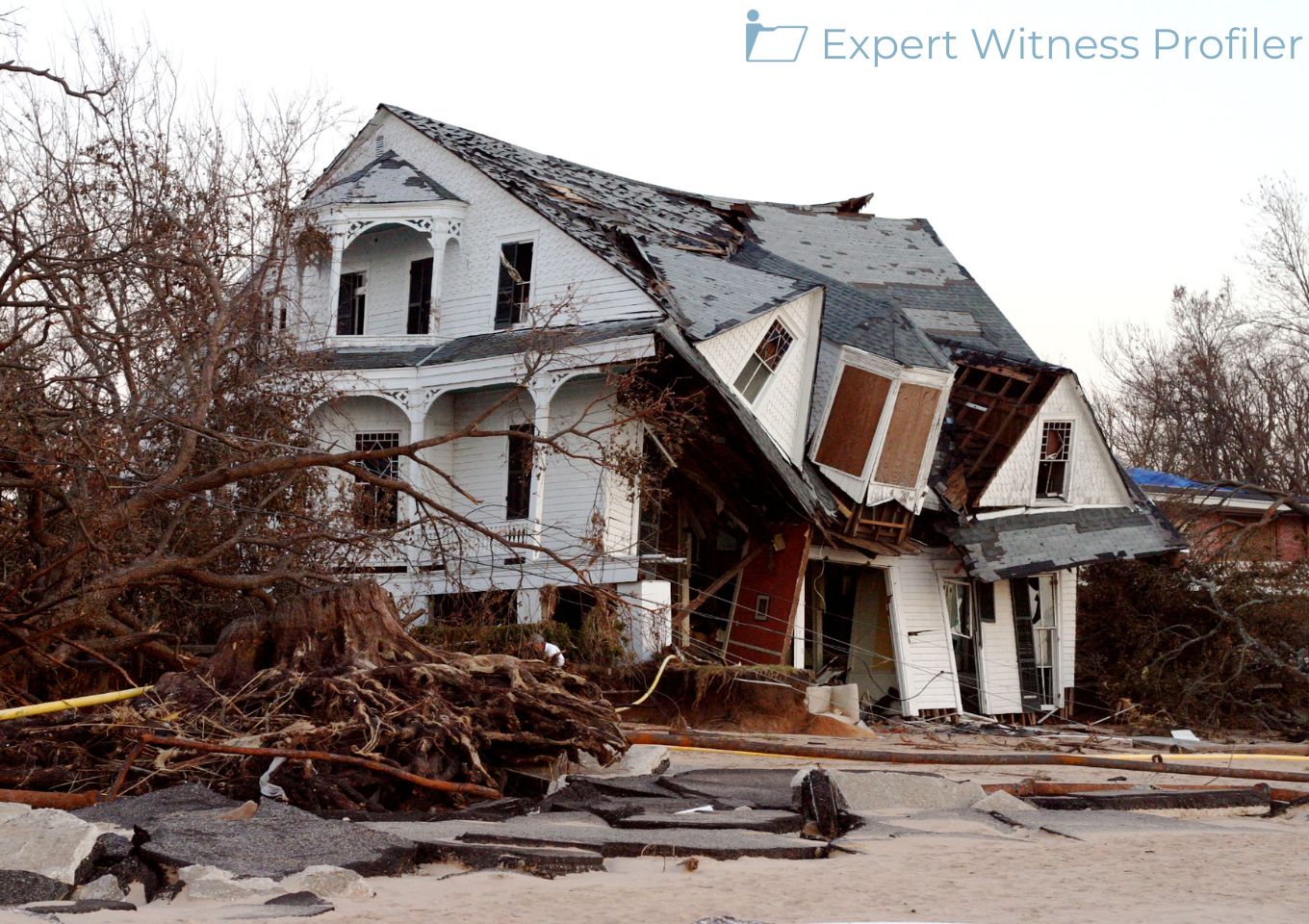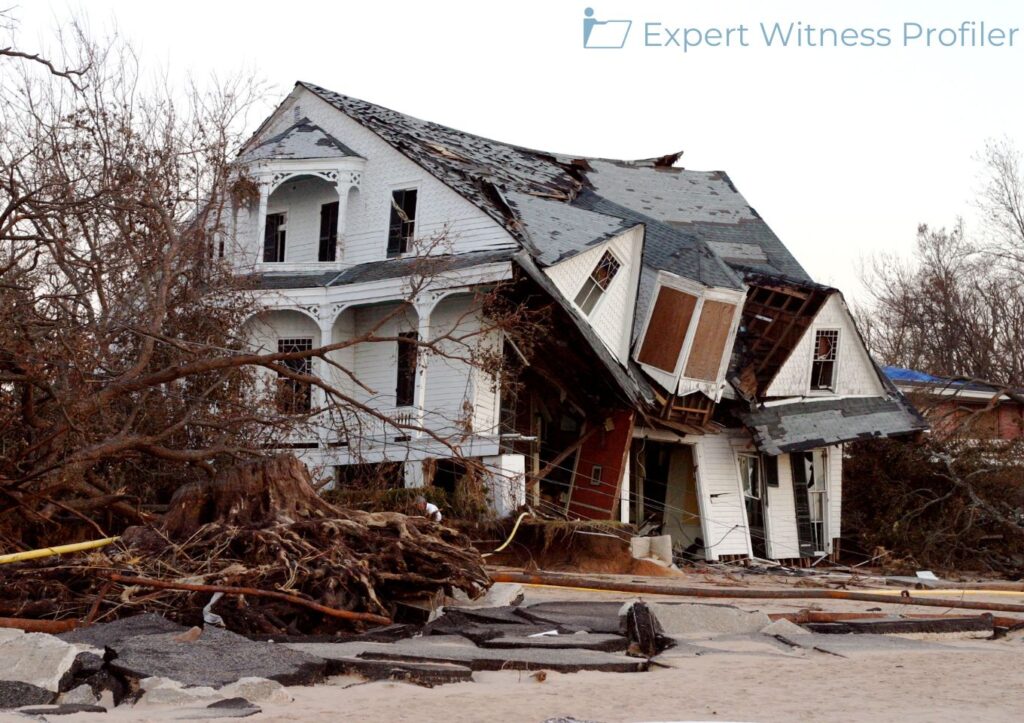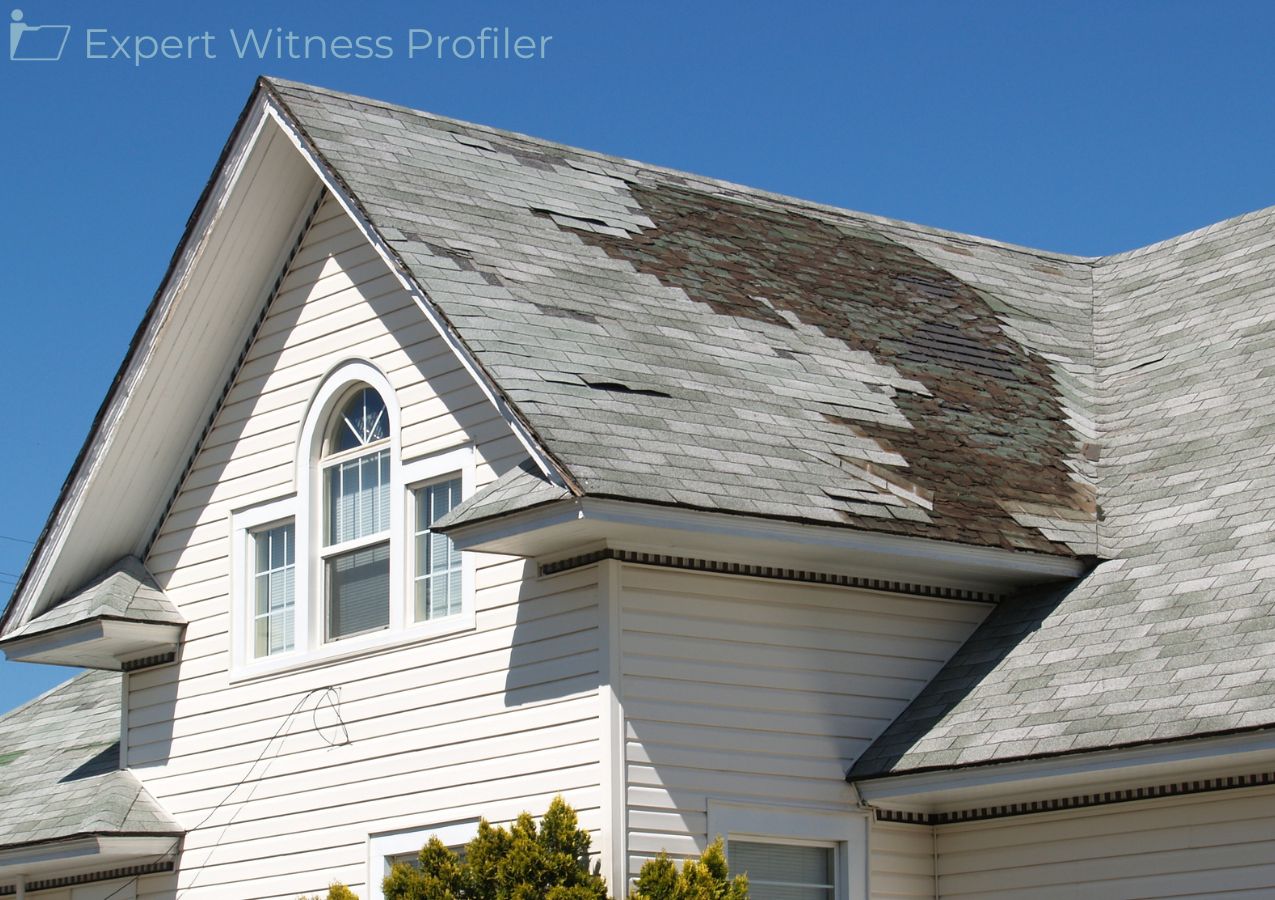
This case involves an insurance claim regarding a damaged roof on the Minden residence. Plaintiffs, Michael and Theresa Minden (“Plaintiffs”), purchased a newly-constructed home in 2003 in Nevada. Allstate’s policy of insurance insured the property.
In September 2019, a wind event occurred resulting in damage to the roof of Plaintiffs’ home but Plaintiffs waited until November 2019 to report this damage to Allstate.
Plaintiffs alleged that several roof tiles were cracked, exposing the underlying roof felt and that since the time of loss, water penetrated their roof tiles and further damaged the underlying felt and the inside of the Property. This case focused on the cause and manner of the damage to Plaintiffs’ roof, and Allstate’s homeowners’ insurance policy language, which stipulated that it covered these damages only if caused by a singular “occurrence,” and not through regular wear and tear. Allstate, after a thorough evaluation of Plaintiffs’ claim, made the determination that Plaintiffs’ roof damage was the result of faulty installation and subsequently years of wear and tear, and compensated Plaintiffs for the eight (8) roof tiles deemed damaged by a singular wind event. Plaintiffs disagreed with this assessment, and the present suit followed.
Plaintiff’s expert, Marcor G. Platt, examined Plaintiff’s roof on August 13, 2021 and August 24, 2021. The Defendant alleged that the roof Platt inspected, however, was not the same roof that was on the house in September 2019 when the claim was made. Plaintiffs had almost entirely replaced their roof in October of 2020, almost an entire year before Platt’s site investigations.
Defendant Allstate Property and Casualty Insurance Company moved to strike the Plaintiffs’ expert witness, Marcor G. Platt. Allstate also filed a duplicate motion in limine to exclude Platt from testifying at trial.
Forensic Engineering Expert Witness
Marcor G. Platt has over twelve years engineering and project management experience in the fields of residential, commercial, and industrial building structural design and retrofit, electrical transmission line structural design, and forensic engineering and expert witnessing.
His forensic engineering experience includes investigating roof failures, wall failures, foundation damage, corrosion, ancillary structure damage, and other miscellaneous damage resulting from hail, wind, snow, tornado, hurricane, lightning, volcano, tropical storm, vehicle impact, or other natural or man-made forces. His expert witness experience includes testifying at depositions and trials regarding project management, structural failures, structural adequacy, structural damage, property compliance with building codes, and other subjects.
Discussion by the Court
Federal Rule of Evidence 702 governed the admissibility of Platt’s opinions. To be admissible, expert testimony must be both relevant and reliable.
Expert opinion testimony is relevant if the knowledge underlying it has a valid connection to the pertinent inquiry. It is reliable if the knowledge underlying it has a reliable basis in the knowledge and experience of the relevant discipline
Opinions Based on Relevant Facts and Data
Allstate also argued that a roofing company had moved the tiles Platt took for testing from their original locations during the roof replacement in 2020. It added that any displaced tiles Platt observed in 2021 were unrelated to the wind event in 2019 because the roof was replaced in 2020. Allstate argued that Platt’s opinions were based on other experts’ reports and interviews, so his “opinions were nothing more than a comparison of the evidence provided by others.”
Relying on Others’ Reports
Platt interviewed the Mindens, the contractor who replaced the roof, and a neighbor who experienced wind damage to her roof. The Court found that Platt reviewed documentation, photographs, and reports prepared by others. Platt also conducted two site visits to the Minden residence, conducted weather research, removed tile samples and sent them to a lab for testing, and performed calculations regarding maximum probable wind speed and how that may have impacted the tiles on the roof.
Moreover, Allstate had not suggested that experts in Platt’s field would not have relied on interviews, photographs, or other secondhand sources that Platt relied on.
Allstate’s expert likewise did not view the roof before its replacement and similarly relied on photographs of the old roof and information provided by the Mindens. After all, experts in the field would rely on the same or similar materials as Platt did, and Allstate has not shown otherwise.
Replacement Roof
When the roof was replaced, the roofer used the original tiles as if they were not damaged. Platt opined that the tiles he sent for testing were the original roof tiles, not replacements. Consequently, the jury could find that the testing performed on those tiles would be consistent with testing done on the original roof tiles.
The Court could determine whether the tested tiles were original tiles, whether they were in a different location after the roof replacement, and how the tiles were stored or transported to the testing site through cross-examination.
Displaced Tiles in 2021
Platt observed displaced and cracked roof tiles during his site visits in 2021. Platt did not feel that the 2019 event displaced the tiles he observed. Rather, he noted that, like the original tiles, the current roof tiles “were susceptible to displacement under the windspeeds which occur at the property.”
The Court held that this information was relevant to the question of whether wind gusts at the proper speed could displace roof tiles. Moreover, Allstate had not explained why that conclusion was not reliable.
Unreliable
Allstate argued that errors in Platt’s report made his opinions unreliable. Specifically, Platt misstated the date of a rainstorm that caused water intrusion into the Mindens’ home after the September 2019 wind event. Allstate also contended that Platt’s testimony about the weather data regarding wind speeds was unsupported.
The Mindens argued that Platt had explained the source of his wind speed opinion.
Date of Rainstorm
In his initial report, Platt stated that Minden told him that there were “torrential rains” in September 2019 that caused water infiltration to the house. At his deposition, Platt acknowledged that was an error and the rainstorms with water intrusion were in November and December 2019. The Court noted that Allstate did not explain what significance the date of the rainstorm had to Platt’s opinions, which were not about water intrusion from a rainstorm.
Wind Speed
In his initial report, Platt stated that he reviewed historical weather data from 2013 to 2021 for Clark County and the City of Henderson. Platt stated that according to the National Oceanic and Atmospheric Administration’s (NOAA) Storm Event Database, “four events with wind gusts between 50 and 62 knots were reported within 4 miles of the property from July 2018 to July 2021” and that “[n]no gusts over 62 knots were recorded within four miles of the property from July 2003 to July 2021.” He also stated that, according to NOAA’s Storm Prediction Center, 62 mile per hour gusts were reported at the Henderson Executive Airport, and on September 1, 2019, “winds with gusts exceeding 75 mph crossed the southeastern Las Vegas valley and Henderson.”
Although Allstate contended that there was no support for Platt’s statement regarding the 75 mph wind gusts, Platt cited the source for this data point. Allstate’s expert noted the same information as Platt, which was that on September 1, 2019, wind gusts “exceeded 75 mph across the southeast side of the Las Vegas valley including the city of Henderson.”
Supplemental Report
Allstate sought to exclude Platt’s supplemental report because it referred to wind events on dates unrelated to the September 2019 storm that allegedly damaged the Mindens’ roof. Allstate contended the supplemental report consisted of dates and wind speeds that were not close to the date of the loss or to the alleged threshold rating of the roof tiles. It also argued that Platt had no support for his opinion of a maximum probable windspeed of 70 mph.
The Court held that the supplemental report referenced additional weather research Platt obtained from NOAA Local Climatological stations, as well as Platt’s explanation for why Allstate’s expert’s reliance on another source, the Weather Underground website, was unreliable.
The Court saw no reason to exclude his opinion on this basis, as he was cataloguing additional data and responding to data provided in another expert’s report.
As for Platt’s opinion on the maximum probable windspeed in the supplemental report, Platt explained the basis for his wind speed opinions in his original report, along with the support for those conclusions, and supplemented that analysis in his second report.
Held
The Court denied the motions to exclude the testimony of Marcor G. Platt because the arguments Allstate raised were matters for cross- examination and were not bases to strike Platt’s testimony.
Key Takeaways:
- Relying on Others’ Reports: When Allstate argued that Platt’s opinions were based on other experts’ reports and interviews, the Court held that experts can rely on hearsay in forming their opinions so long as the underlying facts or data are of a type experts reasonably rely upon in the particular field in forming opinions or inferences upon the subject.
- Reliability: Platt explained the basis for his opinions in his original report, along with the support for those conclusions, and supplemented that analysis in his second report. The Court held that Platt relied upon relevant facts and data to form his conclusions.
- Supplemental Report: Cataloguing additional data and responding to data provided in another expert’s report is no basis to exclude an expert’s testimony.
Case Details:
| Case Caption: | Minden Et Al V. Allstate Property And Casualty Insurance Company |
| Docket Number: | 2:21cv151 |
| Court: | United States District Court, Nevada |
| Order Date: | April 04, 2024 |