Category: Insurance Expert Witness

  • Insurance Expert Witness’ Ultimate Conclusions about the Defendant’s Conduct  Rejected

    Insurance Expert Witness’ Ultimate Conclusions about the Defendant’s Conduct Rejected

    This matter arises out of a motor vehicle accident (“MVA”) on May 15, 2017, in Denver, Colorado. Plaintiff, Richard Marion Jr was driving a vehicle registered in the State of Nebraska and insured by American Family under a Nebraska family car policy and Umbrella policy (“Policy”) issued to Plaintiff’s parents, Richard and Angela Marion. Marion filed a claim against the tortfeasor and received American Family’s consent to settle with the tortfeasor’s insurance carrier for policy limits of $100,000.00. Plaintiff also sought underinsured motorist benefits (“UIM”) under his Policy.

    American Family evaluated the information received from Plaintiff and initially offered Plaintiff $60,000.00, followed by two additional offers of $70,000.00 and $80,000.00. Plaintiff did not respond to American Family’s offer of $80,000.00 and instead filed this action. He sought UIM benefits under two policies, a Nebraska family car policy with UIM coverage limits of $250,000.00, and an umbrella policy with UIM coverage limits of $1,000,000.00. Plaintiff asserted claims for: (1) breach of contract and/or determination of benefits owed; (2) common law bad faith under Colorado law; and (3) statutory bad faith.

    In support of his claims against American Family, Plaintiff disclosed Lorraine Berns as his retained liability expert, along with her affirmative expert report. Defendant American Family Mutual Insurance Company filed a motion to limit the testimony Plaintiff’s expert, Lorraine Berns, pursuant to Rule 702 and Rule 403.

    Insurance Expert Witness

    Lorraine Berns provides insurance consulting and expert witness testimony in the area of insurance bad faith/good faith claims-handling practices based upon insurance claims industry standards. She has worked in the insurance industry since 1991 and has been a consultant and expert witness in this field since 2006. She also provides consulting services to attorneys in the areas of settlement strategies, pre-litigation strategies, investigations, negotiations, and claims handling industry standards.

    Discover more cases with Lorraine Berns as an expert witness by ordering her comprehensive Expert Witness Profile report.

    Discussion by the Court

    Opinions that Defendant Unreasonably Delayed Benefits

    Defendant argued that Berns’ opinions that it unreasonably delayed benefits to Plaintiff are legal conclusions and therefore improper expert opinion that should be excluded from trial. Plaintiff responded that he had no intention of asking Berns to usurp the role of the jurors. Instead, Plaintiff explained that he intended to question Berns about her background in automobile insurance claim handling; the facts and data she reviewed; her knowledge of insurance industry standards applicable to the handling of UIM claims; her observations / conclusions as to whether the insurer’s claim handling evidenced compliance with industry standards.

    Under Federal Rule of Evidence 704(a), an expert’s opinion is not inadmissible simply because it embraces an ultimate issue to be determined by the trier of fact. The Court concluded that Berns may offer testimony articulating what she believes to be the relevant industry standards, and explaining—factually—how Defendant’s conduct did or did not comport with those standards. However, the Court excluded Berns’ opinions that Defendant’s conduct was unreasonable or insufficient as a matter of law, or was in violation of any statute.

    Opinions Concerning Defendant’s Motives or State of Mind

    Defendant argued that Berns’ “speculative opinions regarding American Family’s motives or state of mind during the handling of Plaintiff’s claim are impermissible and should be precluded from trial.” Defendant added that such opinions concerning Defendant’s motivation or state of mind regarding policy limits are not based on any personal knowledge or personally observed facts or data.

    The Court granted in part and denied in part this portion of the motion. The Court granted the Motion to the extent that Plaintiff may not elicit testimony regarding Defendant’s motives or state of mind because such testimony would constitute speculation. However, the Court denied the Motion to the extent Berns is permitted to testify about facts from which the jury could infer intent, as such testimony is proper expert testimony.

    Opinions Regarding Nebraska Law

    Defendant argued that Berns is not qualified to render opinions regarding Nebraska’s Unfair Claims Settlement Practices Act. Defendant emphasized that Berns has not worked in the insurance industry in Nebraska, has not evaluated a Nebraska claim, and is not familiar with Nebraska law. Additionally, Defendant argued that opinions regarding American Family improperly or incorrectly applying Nebraska law (in other words, saying that Defendant should have applied Colorado law) to Plaintiff’s claims are also impermissible expert opinion that usurp the function of this Court.

    The Court granted the motion to the extent that Berns was precluded from offering opinions on Nebraska’s Unfair Claims Settlement Practices Act. However, the motion was denied to the extent that Berns may offer opinions concerning whether Defendant’s offers of compromise complied with the applicable insurance industry standards.

    Held

    The Court granted in part and denied in part the Defendant American Family Mutual Insurance Company’s motion to limit the testimony Plaintiff’s Expert, Lorraine Berns.

    Key Takeaways:

    • The Court excluded Berns’ opinions that Defendant’s conduct was unreasonable or insufficient as a matter of law, or was in violation of any statute. She was unqualified to offer such opinions as a matter of legal expertise and such ultimate conclusions would not be helpful to the jury and would improperly intrude on its fact-finding function.
    • Only the Court will determine what law applies to the remaining claims in this case, and Berns may not offer opinions concerning which state’s law Defendant should have applied.

    Case Details:

    Case Caption: Marion V. American Family Mutual Insurance Company, S.I.
    Docket Number: 1:22cv1330
    Court: United States District Court, Colorado
    Order Date: July 12, 2024
  • Insurance Expert Witness’ Opinions About Considering Ten Years’ Worth of Medical Records Rejected

    Insurance Expert Witness’ Opinions About Considering Ten Years’ Worth of Medical Records Rejected

    A district judge in Georgia barred certain opinions of an life insurance industry expert because no authority, underwriting or otherwise, was cited in support of such opinions.

    This case is about whether Pacific Life was entitled to rescind two life insurance policies and deny claims for benefits under them when it learned during the contestable claim period that Jimmie Long (“Mr. Long”) made material misrepresentations about his history of, and treatment for, abusing alcohol. Plaintiff Ronald Blalock (“Plaintiff”) owned, and was the beneficiary under, both policies. The policies were issued in January 2022, approximately four months before Long died in a car accident. Seven days after Long’s death, his insurance producer submitted claims for the benefits provided for in the policies. In accordance with the policies’ terms, Pacific Life conducted a contestable claim investigation—a routine action taken when an insured dies within two years of a policy’s issuance—to determine if the benefits were payable.

    Long’s medical records and Pacific Life’s investigation revealed that Long made material misrepresentations in his applications for insurance coverage. Pacific Life accordingly decided to rescind the policies and deny Plaintiff’s claims. Apparently dissatisfied with Pacific Life’s decisions, Plaintiff commenced this lawsuit. Plaintiff asserted claims for breach of contract and bad faith failure to pay benefits against Pacific Life.

    Plaintiff identified Vera Dolan as an expert witness to support his
    claims. Plaintiff asked Dolan to investigate two issues. He asked her to investigate Pacific Life’s contestable claim review of the two policies to determine if the review was fair, reasonable, and consistent with the standard of care. He also asked Dolan “to investigate the denial of claim payment to Long’s policies beneficiary, Ronald Blalock.”

    Insurance Expert Witness

    Vera Dolan has been involved in the life insurance industry as an underwriter for over 41 years, since 1982.  She is one of the leading mortality experts in the life insurance industry. She writes underwriting manuals and policy and procedure manuals for life and health insurance companies.

    Get the full story on challenges to Vera Dolan’s expert opinions and testimony with an in-depth Challenge Study. 

    Discussion by the Court

    Dolan, addressed the question of whether the medical records warranted Pacific Life’s finding of material “alcohol abuse” and concluded that “Long’s underwriting profile was not consistent with the profile of an alcohol abuser as defined by Pacific Life’s underwriting guidance.”

    Dolan opined that “Pacific Life is falsely stating that reviewing ten years of medical records at time of claim is fair and justified, when only five years of the most contemporaneous medical records were reviewed at time of issue without any finding of alcohol abuse.” Pacific Life argued that Dolan’s opinion was based on “speculation” and “unreliable principles and methods.”

    The Court held that Dolan cited no authority, underwriting or otherwise, supporting this opinion. Dolan did not dispute that it was appropriate to ask Long about his medical history for the ten years preceding his application for insurance. Nor did she dispute that Pacific Life could appropriately rely on the truthfulness of the information Long provided when it issued the Policies.

    When Long died within the contestable period, the only means available to confirm the accuracy of that information was to request records from the providers who saw Long during that ten-year period.

    Held

    The Court excluded Dolan’s opinion regarding the consideration of ten years’ worth of medical records. Her other opinions were limited pursuant to the parties’ consent.

    Key Takeaway:

    Vera Dolan argued that Pacific Life’s practice of reviewing ten years of medical records at the time of claim, despite only reviewing five years at the time of policy issuance, was not fair or justified​. She added that Long’s underwriting profile was not consistent with the profile of an alcohol abuser as defined by Pacific Life’s underwriting guidance. The Court, however, rejected her opinion regarding the consideration of ten years’ worth of medical records.

    Case Details:

    Case Caption: Blalock V. Pacific Life Insurance Company
    Docket Number: 5:23cv14
    Court: United States District Court, Georgia Middle
    Order Date: July 09, 2024
  • Insurance Expert Witness’ Report on Bad Faith Deemed Inadmissible

    Insurance Expert Witness’ Report on Bad Faith Deemed Inadmissible

    A district judge in Texas refused to admit the insurance expert witness’ bad faith report because it failed to explain how exactly the Defendant violated the generally accepted adjusting standards.

    On February 17, 2021, a Texas winter storm damaged a commercial building owned by Barron. Century insured that building under a surplus lines renewal policy. Barron filed a claim with Century for damages to the metal roof of the insured building. Immediately after the storm, Barron began emergency repairs to the metal roof of the building. Barron also repaired damage to the interior of the building and the domestic plumbing.

    On March 5, 2021, a field adjuster inspected the building on Century’s behalf. On June 16, 2021, Century sent a letter to Barron that adopted its field adjuster’s net replacement cost of less than $4,000 and claimed that damage to the metal roof, domestic plumbing lines, and the interior of the building was excluded from coverage. Century identified “freeze damages to the domestic plumbing lines” as the cause of damage to the building’s interior. Further, Century stated that the indentations in the roof resulted from activities excluded from coverage under the policy exclusions. 

    Motions to exclude

    Barron designated Phil Spotts as an expert to testify regarding damages and bad faith. Spotts inspected the damaged building on October 6, 2021. Spotts prepared his final estimate on December 6, 2021, relying on both his inspection and “additional information that was provided by the insured.” His estimate of the replacement cost value of the roof totaled $370,020.81. Spotts also rendered an opinion on whether Century’s claim investigation and adjustment were conducted in bad faith. Additionally, Barron designated Joshua Reeves as an expert to testify regarding causation. Reeves conducted two on-site inspections of the damaged building on November 10, 2022 and November 23, 2022. Reeves opined that the damages to the metal panels that comprised the roof of Barron’s building were damages by environmental forces from the February 2021 winter storm. Century sought to exclude Spotts and Reeves’ expert reports. 

    Insurance Expert Witness

    Philip N. Spotts is the founding member of The Mission Risk Consulting Group, LLC, having opened Mission Adjusting and Risk Management, LLC in 1993.  He has over 40 years’ experience in handling or managing a wide variety of property and casualty claims, including commercial and residential property, national catastrophe, auto liability, general liability, and governmental liability.

    He has several industry designations granted by the Insurance Institute of America, including Chartered Property and Casualty Underwriter, Associate in Risk Management, and Associate in Claims.  

    Fortify your strategy by reviewing a Challenge Study detailing grounds for excluding Philip Spotts’ expert testimony. 

    Engineering Expert Witness

    Joshua G. Reeves is a licensed Professional Engineer employed by Neches Engineers, an engineering firm located in Beaumont, Texas. He is a Licensed Professional Engineer in Texas and a Certified Texas Department of Insurance Windstorm Inspector. He has designed thirteen metal roofs for private commercial and industrial clients.

    Want to know more about the challenges Joshua Reeves’ has faced? Get the full details with our Challenge Study report. 

    Discussion by the Court

    Phil Spotts

    Regarding bad faith, Spotts concluded that the Century claim investigation and adjustment “fell below generally accepted adjusting standards and involved an unreasonable and sub-standard investigation” based on his experience. Spotts also concluded that the Century estimate used as a basis for the claim payment was “underpriced” and “under scoped.”

    Century challenged (1) Spotts’ qualifications as both a damage and bad faith expert and (2) the reliability of his report.

    At the hearing, the parties agreed that expert reports on damages were unnecessary in light of the appointed umpire’s forthcoming appraisal of the damage to Barron’s property, which was binding on both parties pursuant to the appraisal provisions of the policy. Accordingly, Century’s instant Motion to Exclude was denied as moot with respect to Spotts’ expert report on damages. Additionally, to the extent Barron sought to offer Spotts as an expert on causation, Century’s instant Motion to Exclude was granted because Barron had not formally designated Spotts as an expert on causation. The Court considered Spotts’ qualifications, the relevance of his report, and the reliability of his methodology regarding only his bad faith report. 

    Spotts is Qualified to Serve as an Expert

    Spotts stated that he had been licensed “on an All-Lines basis to supervise and adjust claims” involving “tens of thousands of residential and commercial structures due to a diverse number of causes” and that he “possessed over 40,000 hours of claims-related experience.”

    The Court found that Spotts had demonstrated sufficient qualifications to serve as a bad faith expert.

    Spotts’ Expert Report is Relevant to the Issues Presented in this Case

    Century contended in conclusory fashion that Spotts’ damage report was not relevant but failed to specifically explain how the report lacked relevance to the issues presented in this case.

    The Court found that Spotts’ opinions on bad faith were relevant to Barron’s breach of contract, statutory bad faith, and Prompt Payment of Claims Act claims. The parties’ dispute over whether Century properly adjusted Barron’s claim in good faith was central to the resolution of all three claims.

    Spotts’ Expert Report Failed to Demonstrate Reliance on Reliable Methodology

    Century contended that Spotts’ report on bad faith was not reliable because it “was not supported by any evidence” and failed to cite to “any Texas law, statute, policy provision, or any other standard that would apply to this claim.”

    When Spotts claimed that the Century claim investigation and adjustment fell below generally accepted adjusting standards and involved an unreasonable and sub-standard investigation, he identified two sources for the standards on which he relied in his report. First, he cited “long standing claims standards” identified in a book entitled “The Claims Environment” by James J. Markham but the Court found that Spotts’ conclusory statement on Century’s claim investigation and adjustment amounted to him stating “it is so.” In other words, Spotts did not explain how Century’s behavior failed to meet the vague standards of insurance adjusting he cited.

    The second source on which Spotts based his conclusions was the “National Association of Insurance Commissioners Unfair Claims Settlement Practices Act” (“NAIC Act”), attached to his report as an addendum. The Court held that while the NAIC Act provided standards for proper adjustment and investigation of claims, Spotts failed to explain which specific sections of the NAIC Act he relied on in reaching his conclusions. Moreover, Spotts did not reference any specific sections of the NAIC Act at all in his expert report. Spotts’ general reference to the entire NAIC Act without reference to any specific provisions was insufficient to demonstrate a reliable methodology because he did not describe what specific standards were violated.

    Joshua G. Reeves

    In developing his report, Reeves relied on the inspections he conducted as well as various documents such as the International Building Code and International Existing Building Code.

    It should be noted that Century challenged only the reliability of Reeves’ report. The Court held that Reeves was qualified to serve as an expert in this case and that Reeves’ expert report was relevant to Barron’s claims since Barron must show that the February 2021 winter storm caused the alleged damage to the metal roof of the building.

    Reeves’ Expert Report is Based on Reliable Engineering Methodology

    In his report, Reeves identified four potential causes for the damage to the metal roof of Barron’s building: “foundation settlement, faulty construction materials, poor methods of construction, excessive live loads such as wind, show, ice, or seismic.” Reeves determined that the first three causes were not applicable based on the Neches Engineering analysis of (1) the presence of foundation settlement, (2) the structural integrity of the original roof panels, and (3) whether the building’s construction complied with the 1988 Uniform Building Code, which was the governing design criteria when Barron’s building was constructed. After describing his analysis and conclusions on the first three potential causes of the damage, Reeves concluded that the damages “are directly linked to excessive loads: either mechanical or environmental loads.”

    Reeves’ conclusion was based on a flawed process of elimination

    Century contended that Reeves’ conclusion “was based on a flawed process of elimination.” It added that Reeves’ opinions on these potential causes amounted to “it is so” opinions, which made them unreliable. The Court disagreed because Reeves relied on both his own inspection of Barron’s building, relevant building codes, weather data, reports from other adjusters that examined the property, and documents containing information regarding the specific roof panels used. Reeves then analyzed each potential cause and reached a specific conclusion on each one, excluding three and concluding that the fourth was the cause of damage to Barron’s property. 

    The Court disagreed with Century that Reeves’ opinions regarding whether mechanical loads caused the damage to Barron’s property were based on insufficient information because Reeves inspected the damaged roof panels during his two on-site inspections of the damaged property and analyzed whether the damage was consistent with footsteps.

    Century’s arguments attacking the information on which Reeves relied pertained to the weight of the evidence

    The Court held that Century’s arguments attacking the information on which Reeves relied pertained to the weight of the evidence, not its admissibility such as when Century made no attempt to explain why the meteorological data or environmental load calculations Reeves used in his report were incorrect.

    Held

    The Court granted Defendant Century Surety Company’s motion to exclude Plaintiff’s witnesses Spotts and Reeves with respect to Phil Spotts’ expert report on bad faith; denied it as moot with respect to Spotts’ expert report on damages; and denied it with respect to Joshua Reeves’ expert report on causation.

    To the extent Plaintiff Larry Barron sought to offer Spotts as an expert on causation, the Court granted Century’s instant motion to exclude Plaintiff’s Witnesses Spotts and Reeves.

    Key Takeaways:

    • Phil Spotts identified two sources for the standards on which he relies in his report. He cited “long standing claims standards” identified in a book entitled “The Claims Environment” by James J. Markham and the National Association of Insurance Commissioners Unfair Claims Settlement Practices Act. The Court held that there is “too great an analytical gap between the data and the opinion proffered” to render these standards a sufficiently reliable methodology for determining whether Century’s claim investigation and adjustment were conducted in bad faith.
    • Determining whether an expert report is reliable is the product of a three-part analysis: (1) whether “the testimony is based on sufficient facts or data”; (2) whether “the testimony is the product of reliable principles and methods”; and (3) whether “the expert has reliably applied the principles and methods to the facts of the case.” Joshua Reeves’ testimony was the product of engineering analysis based on Reeves’ personal observations and inspections.

    Case Details:

    Case Caption: Barron V. Century Surety Company
    Docket Number: 1:22cv144
    Court: United States District Court, Texas Eastern
    Order Date:  April 23, 2024

  • Insurance Expert Witness’ Testimony Interpreting Contract Language Rejected

    Insurance Expert Witness’ Testimony Interpreting Contract Language Rejected

    A district judge in Indiana held that it did not require an insurance litigation expert’s assistance to interpret contract language considering no party in this case appeared to dispute the actual language of the policy.

    Plaintiff Brenda Marie Stephens is a real-estate appraiser and is the President of Plaintiff Accent Consulting Group (collectively, “Ms. Stephens”). Ms. Stephens demanded that Defendant Great American Assurance Company (“Great American”) provide legal representation for her under an insurance policy (the “Policy”) it issued related to a professional disciplinary hearing and Great American refused. After Ms. Stephens successfully defended herself in the hearing, incurring legal costs, she and Accent Consulting initiated this litigation against Great American. With leave of Court, Great American filed a counterclaim against Ms. Stephens and Accent Consulting, alleging that Ms. Stephens’ insurance application contained a misrepresentation — specifically, that she was not subject to any complaint, investigation, or disciplinary hearing even though she was.

    The parties filed Cross-Motions for Summary Judgment. In Great American’s Cross-Motion for Summary Judgment, it requested that the Court strike the expert testimony of Ms. Stephens’ expert, Professor William Warfel.

    Insurance Expert Witness

    William Warfel is a professor of insurance and risk management at Indiana State University where he teaches classes such as Property/Liability Insurance, Health Insurance, Life Insurance, Introduction to Risk and Insurance, Commercial Liability Insurance, and Insurance Seminar.

    Get the full story on challenges to William Warfel’s expert opinions and testimony with an in-depth Challenge Study.

    Discussion by the Court

    Great American argued that Warfel’s expert opinion was not a “fact.” Great American further argued that the expert opinion was “not relevant, reliable, appropriate or admissible” under Federal Rule of Evidence 702 and Daubert v. Merrell Dow Pharmaceuticals, Inc., 509 U.S. 579 (1993). 

    Great American argued that Warfel was not “qualified” to offer expert opinions on real estate appraisal disciplinary actions and “merely attempted to  explain the legal effect of” the Policy.

    The Court observed that Ms. Stephens did not file any response to Great American’s Cross Motion for Summary Judgment, which contained the motion to strike the expert testimony. Well after the deadline, Ms. Stephens filed an unauthorized “sur-reply.”  The sur-reply did not address the motion to strike expert testimony and instead argued that Great American had not demonstrated prejudice from allegedly late notice of her insurance claim.

    The Court held that Warfel’s expert opinion is largely a rehashing of Ms. Stephens’ arguments. For example, Warfel opined that “the trigger of coverage issue must be evaluated within the context of the insuring agreement,” that “the underlying claim against [Ms.] Stephens became ripe once The Office of the Indiana Attorney General filed its original Formal Complaint against her,” and that “an expectation that an insured must report to the carrier all Consumer Complaints against the insured is entirely unreasonable.”

    The Court did not require Warfel’s opinion since no party in this case appeared to dispute the actual language of the policy, and the interpretation of a contract is a question of law for the Court.

    Held

    The Court granted Great American’s motion to strike the expert opinion of Professor William Warfel as well as Great American’s cross-motion for summary judgment.

    The policy was rescinded and Great American was ordered to return $1,109.00 in premiums to Accent Consulting Group, Inc.

    Key Takeaway:

    The Court, citing Delta Mining Corp. v. Big Rivers Elec. Corp., 18 F.3d 1398, held that “Absent any need to clarify or define terms of art, science or trade, expert opinion testimony to interpret contract language is inadmissible.” In other words, the Court may not resort to extrinsic evidence unless terms are ambiguous.

    Case Details:

    Case Caption: Accent Consulting Group, Incorporated Et Al V. Great American Assurance Company
    Docket Number: 1:22cv1767
    Court Name: United States District Court, Indiana Southern
    Order Date: May 20, 2024

  • Insurance Expert Witness Barred from Testifying as to which Party is at Fault

    Insurance Expert Witness Barred from Testifying as to which Party is at Fault

    This case involves an accumulator universal life insurance policy purchased by Dr. Herbert Wiegand in 2000 when he was 82 years old. The insured was his second wife, Jean Wiegand (nee Walters), who was 80 years old at the time. The policy had a face value (death benefit) of $1.4 million and a maturity date of June 12, 2020. The original owner of the policy was an LLC Dr. Wiegand set up for the benefit of his children from his prior marriage. Dr. Wiegand paid an initial premium which guaranteed coverage for five years. The policy carried a cash value, which fluctuated as a function of interest the policy earned, less the ongoing cost to maintain the insurance policy.

    Breach of Contract Claim

    Dr. Wiegand died in 2002, approximately two years after purchasing the policy. After Dr. Wiegand’s death, the Policy’s ownership transferred to his revocable trust which he set up for the benefit of all of his children. Plaintiffs are two of Dr. Wiegand’s adult children who serve as trustees of the trust.

    Dr. Wiegand’s initial premium payment kept the policy in force for 16 years after purchase until 2016 with no subsequent premiums being paid. Ms. Weigand, however, lived past her 100th birthday until November of 2020, surviving the policy’s maturity date by more than four months. Plaintiffs had no knowledge of Ms. Wiegand’s health condition or status from which they could have assessed whether to maintain or surrender the Policy. 

    They raised a breach of contract claim based on New York Life’s alleged failure to send them annual statements at their attorney’s address instead of the original address listed on the policy—the residence of Dr. Wiegand and Ms. Wiegand, the insured. Plaintiffs claimed their damages were equal to the cash value of the policy as it existed in 2012—four years prior to the policy lapse. They asserted that they would have exercised their option to surrender the policy for a cash disbursement had New York Life sent them annual statements at their attorney’s address.

    Plaintiffs moved to exclude Defendant’s expert, Charles W. Bowden from testifying under Rule 702 and Daubert standards because his report allegedly lacked relevant expert opinions bearing on the ultimate factual issue in this case.

    Insurance Expert Witness

    Charles W. Bowden has more than 40 years of experience as an independent life, health and disability insurance agent/ broker. He holds two insurance industry recognized certifications, Chartered Life Underwriter (CLU) and his Chartered Financial Consultant (ChFC). His specialties and experience include business continuity planning, using all forms of business life and disability insurance. He has extensive experience in Whole Life, Universal Life and Variable Life in the Business Markets selling COLI, Business Continuity Planning. Group Term Life Insurance and Group Disability and all types of group Health care coverage.

    In addition to his practice in estate and business continuity planning, Charlie is a Qualified Continuing Education Instructor, and assists other licensed insurance professionals to keep current with the ever-changing structure of the insurance and investment marketplace using financial and estate planning strategies. Charlie uses his extensive experience to provide expert testimony in legal matters brought to courts around the country and he is a frequent radio guest. Charlie is a member of the South Jersey Chapter of The Society for Financial Service Professionals, as well as a past member of their Board of Directors.

    Discussion by the Court

    Bowden offered opinions on the following three topics:

    1. Why was the life insurance policy able to continue from 2000, the effective date of the policy without continuing premium payments?
    2. Why was the policy initially held in the Family LLC and subsequently moved to the revocable trust?
    3. What are the administrative issues that allowed the policy to lapse prior to the death of the insured?

    Plaintiffs argued that Bowden’s conclusions were merely recaps of factual points discussed in his report, his opinions were lay opinions, and it set out an opinion that was irrelevant in a breach of contract case. Further, Plaintiffs argued that Bowden’s opinions were in reality legal argument, which was not appropriate. Defendants argued that Bowden’s opinions were proper as industry standards could provide assistance to the fact finders.

    Industry practices or standards may be relevant in insurance cases, and the Eighth Circuit has upheld the admission of opinion testimony addressing whether an insurance company handled a claim properly under industry standards.

    The Court allowed Bowden to explain industry standards regarding policy updates and the like but barred him from giving his legal opinion as to which party was at fault.

    Held

    The Court granted in part and denied in part Plaintiff’s motion to exclude the testimony of Defendant’s expert, Charles W. Bowden.

    Key Takeaway:

    1. Legal Conclusion: Considering an expert “may not intrude on the Court’s role to instruct the jury as to the law and testify to a legal conclusion,” the Court did not allow Bowden to give his legal opinion as to which party was “at fault.”
    2. Relevance of Industry practices or standards in insurance cases: The Eighth Circuit has upheld the admission of opinion testimony addressing whether an insurance company handled a claim properly under industry standards.

    Case Details:

    Case Caption: Wiegand Et Al V. New York Life Insurance & Annuity Corporation Et Al
    Docket Number: 4:22cv188
    Court: United States District Court, Missouri Eastern
    Order Date: March 26, 2024
  • Insurance Expert Witness’ Testimony on Legal Parameters for Bad Faith Excluded

    Insurance Expert Witness’ Testimony on Legal Parameters for Bad Faith Excluded

    This case arises out of a dispute over three separate, consecutive, nonrenewable Short Term Medical (“STM”) insurance plans underwritten by Defendant American Financial Security Life Insurance Company (“AFSLIC” or “American”). The type of STM insurance (also referred to as “short term limited duration insurance” or “STLDI”) at issue here is relatively new, first being authorized by changes to federal regulations in 2018 that expanded access to STM plans.

    The insurance contracts at issue consist of a Group Short Term Medical Insurance Policy and three Certificates of Insurance issued thereunder to Susan Hanlon as insured and Nile Hanlon as an eligible covered dependent.

    Plaintiffs asserted AFSLIC acted in bad faith because its third-party administrator: (a) closed several medical providers’ claims related to the treatment of Hanlon’s diverticulitis due to the providers’ failure to respond to multiple written requests for medical records; and (b) denied other providers’ claims based upon the Certificates’ preexisting condition exclusion. To support their position, Plaintiffs retained Susie Sullivan as a purported “bad faith” insurance claims handling expert.

    Defendant filed a motion to exclude the testimony of Plaintiffs’ proposed expert, Susie Sullivan citing the Rule 702 standards.

    Insurance Expert Witness

    Susie Sullivan worked for the Oklahoma Department of Insurance from 1965 to 1995. From 1982 until 1995, she served as Assistant Insurance Commissioner in charge of Claims and Consumer Protection. Her duties consisted of reviewing disputed claims and evaluating claims handling practices of insurance companies licensed to transact business in the State of Oklahoma, scheduling market conduct examinations on insurance companies when she saw a pattern and practice of wrongful claims handling and conducting claims hearings to resolve coverage and liability issues through alternative dispute resolution and negotiated compliance problems.

    Discussion by the Court

    First, the Defendant challenged Sullivan’s qualifications. It contended that her qualifications did not encompass short-term medical insurance, short-term medical insurance claims handling, or industry standards relating to the same.

    Defendant also argued that her “proffered opinion testimony was inadmissible because it was replete with thinly veiled legal conclusions and improper attempts to usurp the role of the Court.”

    Qualifications

    The Court held that this matter undoubtedly involved insurance claims submitted under a short-term medical insurance plan. Despite Sullivan lacking deep expertise on short-term medical insurance, it was not clear why such expertise was necessary here.

    Defendant did not purport that investigation and claims handling for short-term insurance differed materially from investigation and claims handling in other insurance contexts. Nor did it allege that distinctive industry standards applied for investigating and handling claims under a short-term insurance plan.

    Legal Conclusions

    It is clear that while an expert may opine on the ultimate issue of fact, she may not give testimony stating ultimate legal conclusions based on those facts.

    With these principles in mind, the Court excluded: (1) expert testimony on the legal parameters for bad faith under Oklahoma law, and (2) expert testimony artfully characterizing Defendant’s conduct with terms of legal significance. More specifically, Sullivan was not permitted “to opine regarding the duties an insurer owes to an insured, what conduct is reasonable by an insurer, whether Defendant’s actions were taken in good faith or in bad faith, whether Defendant’s investigation of Plaintiffs’ insurance claims was adequately thorough, whether Defendant’s conduct was reasonable, what courts have held regarding the duty of good faith and fair dealing, or what she otherwise believes the law to be.”

    The Court barred Sullivan from discussing the  Oklahoma Unfair Claims Settlement Practices Act (OUCSPA) or whether Defendant violated it. 

    The Court held that the OUCSPA did not establish standards of care or standards of conduct for measuring whether an insurer violated its duty of good faith and fair dealing. Nor did it function as an appropriate guide for a jury to determine bad faith.

    The Court, however, permitted Sullivan to testify as to “the custom and practice of the industry in investigating and handling of claims” and “the considerations involved in evaluating an insured’s claim, based on industry custom and practice and/or her own experience.”

    Held

    The Court granted in part and denied in part the Defendant’s Motion to Exclude the Testimony of the Plaintiffs’ Proposed Expert Susie Sullivan.

    The Court administratively terminated this action on March 18, 2024 without prejudice to the rights of the parties.

    Key Takeaways:

    1. Qualifications: Despite Insurance Expert Witness Sullivan’s lack of deep expertise on short-term medical insurance, Defendant did not purport that investigation and claims handling for short-term insurance differed materially from investigation and claims handling in other insurance contexts.
    2. Legal Conclusions: It is clear that while an expert may opine on the ultimate issue of fact, they may not give testimony stating ultimate legal conclusions based on those facts.

    Case Details:

    Case Caption: Hanlon Et Al V. American Financial Security Life Insurance Company Et Al
    Docket Number: 5:22cv798
    Court: United States District Court, Oklahoma Western
    Order Date: February 15, 2024
  • Insurance Expert Witness with Commercial and Residential Construction Experience Deemed Qualified to Present Observations of Plaintiff’s Property

    Insurance Expert Witness with Commercial and Residential Construction Experience Deemed Qualified to Present Observations of Plaintiff’s Property

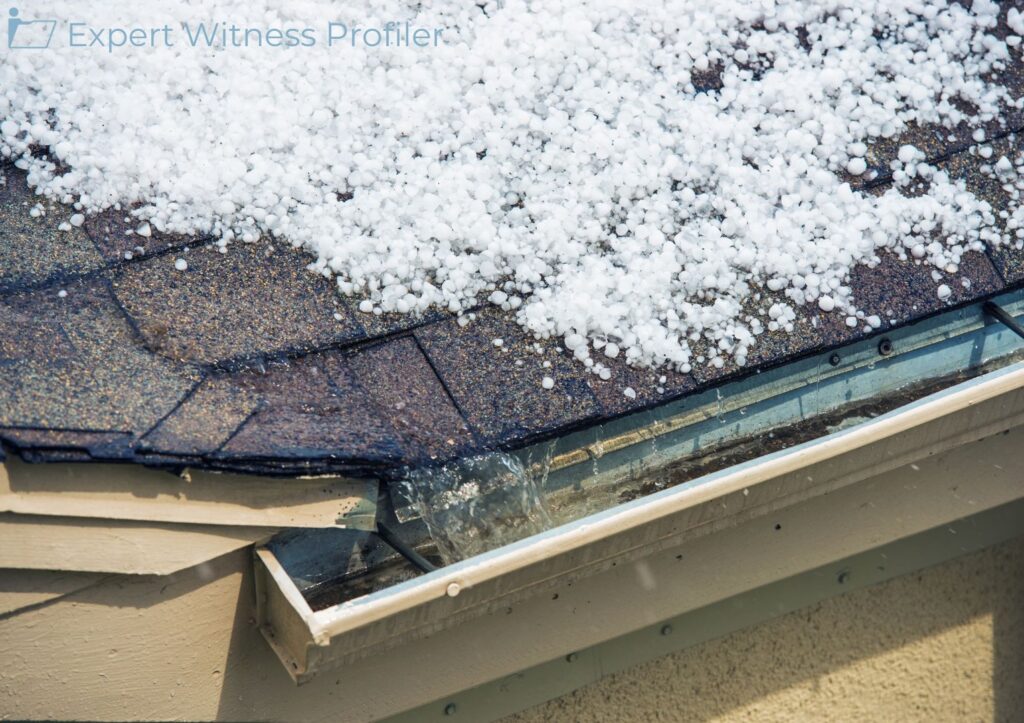
    The case arises out of a claim for total replacement of a concrete tile roof due to hail damage under a businessowners insurance policy for a dental office at 550 24th Ave. SW in Norman (the “Property”). The hailstorm occurred on
    April 28, 2021.

    Defendant filed a Daubert motion to strike and exclude certain opinions and testimony of Fred Lupfer, a public adjuster engaged by Plaintiff as an expert witness. Defendant specifically objected to the following three opinions expressed by Lupfer: (1) opinions regarding the methodology and findings of Daniel Hillner, an engineer retained by Defendant who inspected Plaintiff’s property during claims handling; (2) opinions regarding the sufficiency of the claims handling in this case; and (3) opinions on questions of law and legal interpretation of the subject insurance contract in this case (Policy).

    Insurance Expert Witness

    Fred Lupfer is a licensed public adjuster in Texas with decades of commercial and residential construction experience. He has held a HAAG Commercial Roofing Certification since 2019, and has been a certified property appraiser and umpire since 2018. Starting a young age and throughout his life, he has been in and round the construction industry in a variety of ways. Some of those ways include project management, budgeting, estimating, contract negotiating, supervision, working with engineers and architects, and scheduling of subcontractors. He has also physically worked as a part of a crew in almost every aspect of construction from, framing, plumbing, electrical, concrete placement and finishing, roofing, sheetrock, and painting. The projects he has been involved with have varied from multimillion-dollar commercial buildings to residential remodels, including the building of multiple personal residents.

    Discussion by the Court

    The Defendant had asserted that Lupfer was not qualified to provide opinions regarding Hillner’s methodology as Lupfer lacked a engineering license and no engineer had supported his conclusions. It was specifically argued that Lupfer could not determine how an engineer would incorporate weather data into his assessment of storm damage, nor had the technical training to discredit Hillner’s opinion based on his speculation and conjecture that Hillner did not consider wind. After reviewing the submissions from both parties and considering Lupfer’s experience as a public adjuster, the Court concluded that Lupfer was indeed qualified to review, assess, and express opinions on Hillner’s report. Additionally, the Court noted that the majority of Hillner’s report did not seem to rely on specialized engineering knowledge. Any objections from the Defendants regarding Lupfer’s opinions were deemed to pertain to the weight, not the admissibility, of those opinions. It was further determined that Defendants could thoroughly question Lupfer during cross-examination regarding any alleged deficiencies in his opinions. Despite Defendant’s contention that Lupfer’s opinions might be improper credibility opinions, the Court found that Lupfer’s opinions were not improper credibility opinions but rather typical opinions offered by an opposing expert.

    Defendant also asserted that Lupfer was not qualified to opine on the sufficiency of Defendant’s claims handling. In its response, Plaintiff states that it did not intend to solicit any opinions from Lupfer concerning the handling of Plaintiff’s claim and that Lupfer would not critique Defendant’s claim handling. The Court, therefore, deemed that portion of Defendant’s Daubert motion moot.

    Plaintiff, however, stated in its response that Lupfer would be presenting opinions concerning the substantive information and documentation upon which Defendant and its adjuster relied in the context of his expertise followed by his own observations of Plaintiff’s property. The Court deemed Lupfer sufficiently qualified with decades of commercial and residential construction experience to his credit. The Court, once again, held that the objections raised by the Defendant called into question the weight of Lupfer’s opinions, instead of its admissibility. Defendants were presented with ample opportunity to thoroughly question Lupfer regarding any alleged deficiencies in his opinions during cross-examination.

    The Defendant had asserted that any opinions on questions of law or the legal interpretation of the Policy invaded the province of the jury and that such testimony would not be helpful. It was specifically stated by the Defendant that they were not moving to exclude Lupfer’s testimony regarding what he believed damaged the Property or which standards applied to the determination of hail damage. However, objections were raised to any testimony by Lupfer concerning what constituted “direct physical loss” under the policy.

    The Court reviewed Lupfer’s expert report and the parties’ submissions before determining that Lupfer did not appear to be offering prohibited legal opinions. It was noted that Lupfer did not opine on whether Defendant breached the Policy, that the damage must be covered by the Policy, or that Defendant’s actions were unreasonable. The jury was tasked with determining whether that loss/damage was covered by the Policy.

    Held

    The Court denied Defendant’s Daubert motion to exclude certain opinions of Plaintiff’s Expert Fred Lupfer.

    The Court has not arrived on an outcome for this case since the remaining issues involved in this case still await resolution.

    Key Takeaways:

    The case underscores the importance of ensuring that expert witnesses possess the requisite qualifications and relevant experience to offer opinions on the matter at hand. In this instance, the Court carefully assessed Lupfer’s qualifications, ultimately deeming him qualified based on his extensive background as a public adjuster and decades of experience in commercial and residential construction. Additionally, it was crucial for expert witnesses to confine their testimony within the bounds of their expertise and avoid delving into areas requiring legal interpretation or exceeding their qualifications. Lupfer’s testimony was scrutinized to ensure it remained within the scope of his expertise and did not venture into areas of legal interpretation. The Court also emphasized the importance of expert opinions being grounded in factual observations rather than legal conclusions or subjective judgments. Lupfer’s opinions were deemed acceptable as they were based on his observations of the property and the substantive information and documentation provided. Furthermore, the Court underscored the necessity of providing the opposing party with ample opportunity to cross-examine the expert witness to challenge their opinions and highlight any perceived deficiencies. In conclusion, while expert testimony is invaluable in legal proceedings, it must be carefully evaluated to ensure relevance, reliability, and adherence to the expert’s qualifications and the scope of their expertise.

    Case Details:

    Case Caption: Oklahoma Dental Properties Llc V. Ace Property And Casualty Insurance Company
    Docket Number: 5:22cv815
    Court: United States District Court, Oklahoma Western
    Citation: 2024 U.S. Dist. LEXIS 24666
    Order Date: January 29, 2024