Plaintiff Rickie Russell, Jr. (“Russell) alleged that, on August 13, 2021, Terry Delmer Prater (“Prater”) crashed an 18-wheeler truck into Russell’s roadside work crew Russell claimed he was pinned between two vehicles and suffered serious injuries as a result of that motor vehicle collision. Russell brought suit against Defendants Prater and Big V Feeds, Inc. for the injuries he sustained.
As part of their defense, Defendants retained Vishal Patel, M.D. to offer expert testimony. Russell filed a motion to exclude Dr. Patel’s testimony because: 1) Patel lacks proper qualifications as an expert; and 2) his methodology is unreliable.
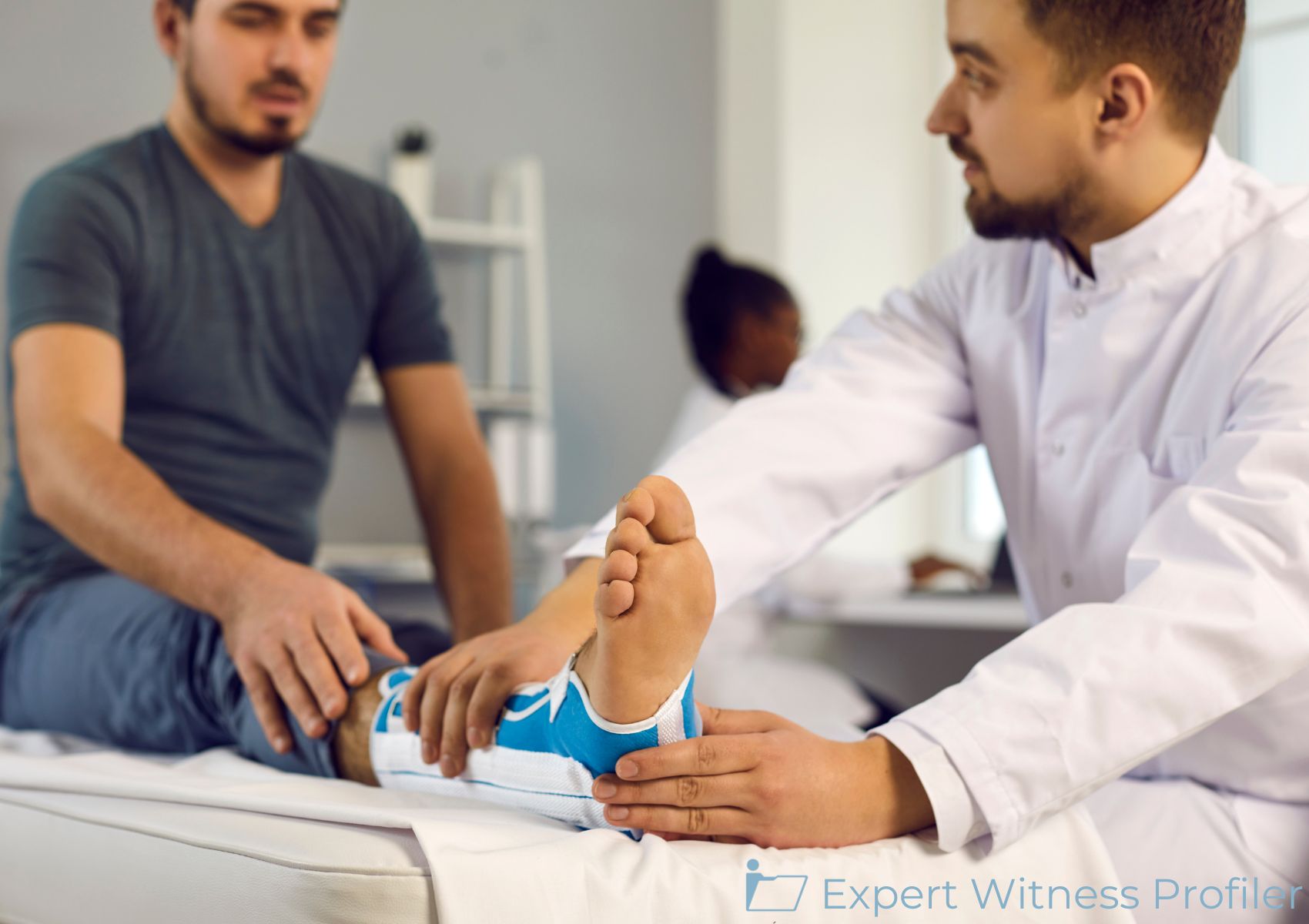
Orthopedic Surgery Expert Witness
Vishal Patel has been board certified by the American Board of Orthopaedic Surgery since 2015, a Fellow of the American Academy of Orthopaedic Surgeons since 2019, and an attending spine surgeon for over ten years. Patel’s medical practice is devoted to orthopedic surgery, and he maintains a full, unrestricted license to practice medicine.
Patel has sufficient qualifications to serve as an expert
First, Russell argued that Patel lacked the requisite qualifications to serve as an expert in the present case because he “has never physically examined Russell, listened to his complaints, and would not even recognize Russell if he was standing across the hall from him.”
Russell seemed to contend that because Patel did not treat Russell, Patel is not qualified to serve as a retained expert physician. However, that cannot be the case. To hold otherwise would be to exclude all retained expert physicians.
After reviewing Patel’s curriculum vitae, the Court was satisfied with his education, training and experience to qualify him to offer his opinion on Russell’s alleged personal orthopedic injuries and the reasonableness and necessity of Russell’s medical treatment.
Patel’s methodology is reliable
After reviewing Patel’s expert report, the Court found that his methodology is reliable.
The Court held that Patel identified the medical records for Russell that he reviewed and then summarized those records in detail in his report. Thereafter, he applied his education, training, experience, and knowledge of the medical facts within the medical records to reach his opinions regarding Russell’s personal orthopedic injuries and necessity of medical treatment in reasonable medical probability. Therefore, Patel has sufficiently described his methodology and has adequately supported his opinions such that his methodology is reliable.
Additionally, Russell argued that Patel’s methodology was not reliable because “[a] diagnosis typically involves a physician physically examining a patient, to which there is no argument that Patel did not examine Russell.” The Court held that a retained expert physician’s role is to “examine a patient’s medical files and reach a conclusion about the diagnosis.”
Held
The Court denied Plaintiff’s motion to exclude the testimony of Vishal Patel.
Key Takeaway:
Russell argued that Patel lacked the requisite qualifications to serve as an expert in the present case because he “has never physically examined Russell, listened to his complaints, and would not even recognize Russell if he was standing across the hall from him.” The Court held that a retained expert physician’s role is to “examine a patient’s medical files and reach a conclusion about the diagnosis.”
Plaintiff, a long-time employee of Chevron, filed his First Amended Complaint on August 22, 2023 and alleged that Chevron’s Pascagoula Refinery had been marred by racism and sexism, that his contributions to the company exceeded his compensation, and that “discriminatory practices have prevented him from being promoted.”
The issue before the Court is whether the expert witness report for Plaintiff’s damages expert should be stricken. On July 19, 2024, Plaintiff designated Charles Baum as a damages expert and provided Defendant with a copy of Baum’s expert report.
Defendant argued that Baum’s report ran afoul of Fed. R. Civ. P. 26(a)(2)(B)(ii) as the report “failed to identify all the documents upon which Baum relied in forming his expert opinions.” Specifically, Defendant contended that the following documents relied upon by Plaintiff’s expert were not clearly identified in the expert report nor were they produced by Plaintiff: (i) Income tax statement for [Plaintiff] for 2023 (ii) Chevron employee savings investment plan (January 1, 2014) (iii) Chevron employment benefits for [Plaintiff] (various dates).
Economics Expert Witness
Charles L. Baum II is a professor of economics and finance at Middle Tennessee State University. Moreover, he has a Ph.D. in economics from the University of North Carolina at Chapel Hill. In addition, he holds both a B.A. in political science and a B.A. in economics from Wake Forest University.
Regarding the “Income Tax Statement for [Plaintiff] for 2023,” Defendant claimed that Plaintiff has not produced any tax-related records for 2023.
The Court held that Defendant should not be obligated to engage in guesswork as to which document may (or may not) be the “Income Tax Statement for [Plaintiff] for 2023” relied upon in Baum’s expert report. Nor should the Court. Accordingly, the Court found that the document identified as “Income Tax Statement for [Plaintiff] for 2023” was not properly disclosed in Baum’s expert report.
Chevron employee savings investment plan (January 1, 2014)” and “Chevron employment benefits for [Plaintiff] (various dates)
As to the other documents, Defendant asserted that Plaintiff has not produced any employee savings investment plan dated January 1, 2024, nor any documents related to “employment benefits” for any date.
It is Plaintiff’s obligation under Fed. R. Civ. P. 26(a)(2)(B)(ii) to disclose “the facts or data considered by” Baum in forming his opinion. Plaintiff has not convinced the Court that he provided Defendant with the documents titled “Income tax statement for [Plaintiff] for 2023,” “Chevron employee savings investment plan (January 1, 2014),” or “Chevron employment benefits for [Plaintiff] (various dates)” as relied upon in Baum’s expert report.
Authority to Strike
Under Rule 37(c)(1), a party who fails to provide information required by Rule 26(a) “is not allowed to use that information or witness to supply evidence on a motion, at a hearing, or at trial, unless the failure was substantially justified or is harmless.”
Turning to the first factor, and as noted above, Plaintiff does not explicitly dispute whether he provided the documents at issue that were relied upon in Baum’s expert report. Rather, he contends that Defendant either possessed the documents at issue or that it was obligated to produce them. Plaintiff ignores the mandates of Fed. R. Civ. P. 26(a)(2)(B)(ii) which demands that he provide the documents relied upon in Baum’s written report. This factor weighs in favor of exclusion.
As for the second factor, Baum’s testimony is certainly important. Baum is the only expert designated by Plaintiff to support any evaluation of damages in this matter. This factor weighs against exclusion.
As for the third factor, Defendant contends that, without an adequate report, it has been prejudiced. Specifically, Defendant argues that it has been prevented from “adequate[ly] prepar[ing] for its expert designation, which is due August 20, 2024.” This factor slightly favors exclusion, but, as discussed below, any such prejudice can be cured. Finally, the Court may cure any prejudice to Defendant by allowing Plaintiff to supplement Baum’s report and by granting an extension of Defendant’s expert designation deadline.
On balance, the Court found that striking Baum’s report is too harsh a remedy under the circumstances.
Held
In conclusion, the Court granted in part and denied in part the Defendant Chevron U.S.A., Inc.’s motion to strike the report of Plaintiff’s expert economist, Charles Baum.
Key Takeaway:
First, the mere fact that the information relied upon in the report is public information does not absolve Plaintiff from disclosing it.
Second, Plaintiff ignored the mandates of Fed. R. Civ. P. 26(a)(2)(B)(ii) which demanded that he provide the documents relied upon in Baum’s written report.
Case Caption:
Harness V. Chevron U.S.A., Inc.
Docket Number:
1:23cv210
Court:
United States District Court, Mississippi Southern
Plaintiff Rickie Russell, Jr. (“Russell) alleged that, on August 13, 2021, Terry Delmer Prater (“Prater”) crashed an 18-wheeler truck into Russell’s roadside work crew Russell claimed he was pinned between two vehicles and suffered serious injuries as a result of that motor vehicle collision. Russell brought suit against Defendants Prater and Big V Feeds, Inc. for the injuries he sustained.
As part of their defense, Defendants retained Randolph Evans, M.D. (“Dr. Evans”) to offer expert testimony. On July 15, 2024, Russell filed his motion to exclude Randolph Evans.
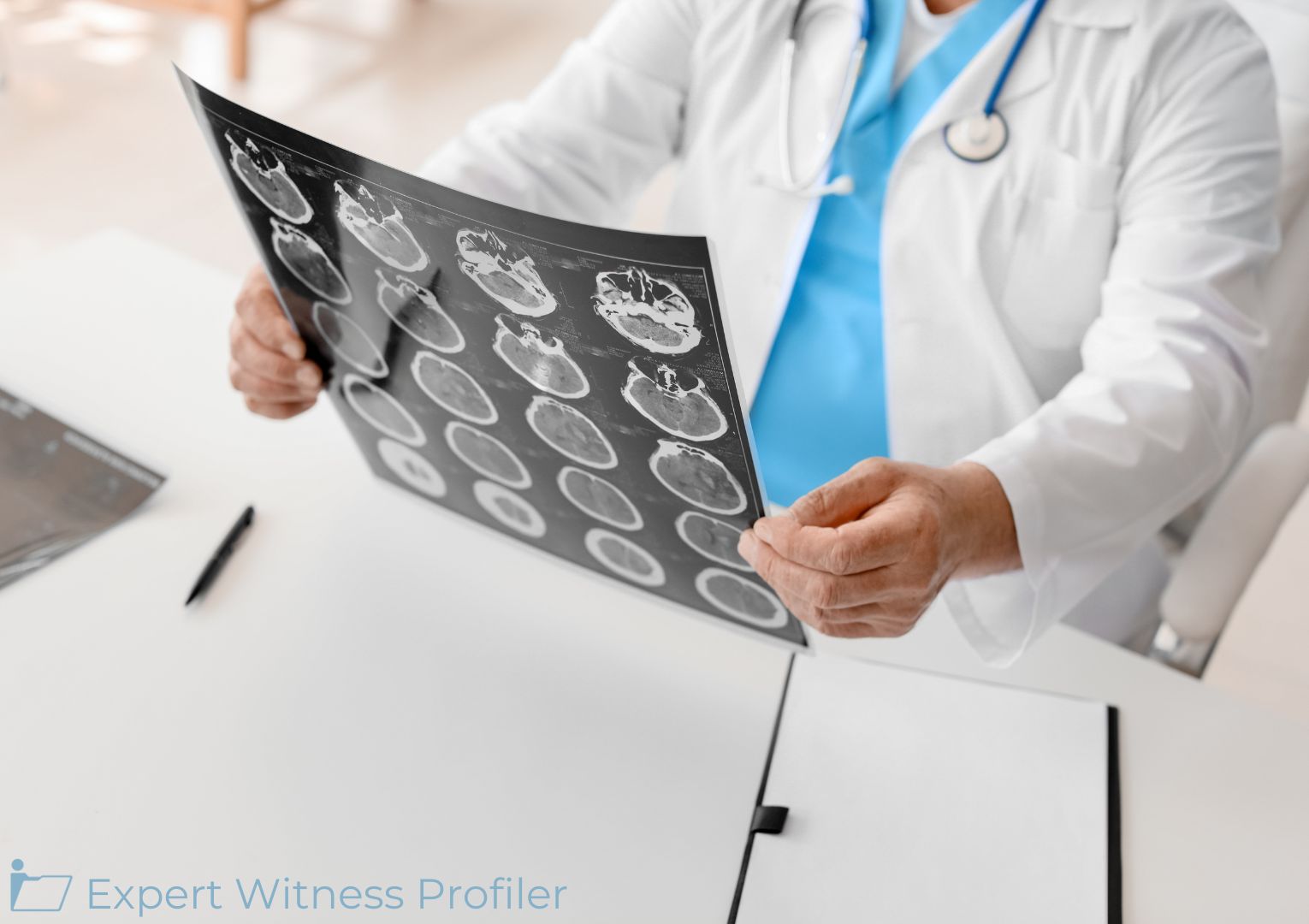
Neurology Expert Witness
Randolph W. Evans, MD received his B.A. from Rice University in 1974 and M.D. from Baylor College of Medicine in 1978. Evans completed his internship and residency in Neurology at Baylor College of Medicine in 1982. He is board certified in Neurology and subspecialty certified in Headache Medicine and a fellow of the American Academy of Neurology, the American Headache Society, and the Texas Neurological Society.
Evans has sufficient qualifications to serve as an expert
First, Russell argued that Evans lacked the requisite qualifications to serve as an expert in the present case because he “has never physically examined Russell, listened to his complaints, and would not even recognize Russell if he was standing across the hall from him.” Further, Russell argued that the medical records Russell produced are “the best evidence of [his] condition after the crash.”
After reviewing Evans’ curriculum vitae, the Court was satisfied with Evans’s education, training and experience to qualify him to offer his opinion on Russell’s alleged traumatic brain injury and the reasonableness and necessity of Russell’s medical treatment.
Evans’ methodology is reliable
Russell next argued that Evans “has provided zero methodology to support how he came to his conclusion” and that there is a “significant analytical gap in Evans’ approach.”
Evans identified the medical records for Russell that he reviewed and then summarized those records in detail in his report. Thereafter, he applied his education, training, experience, and knowledge of the medical facts within the medical records to reach his opinions regarding the potential presence of a mild traumatic brain injury in reasonable medical probability. He cited the Glasgow Coma Scale and various other medical publications in support of his opinions.
Held
The Court denied Plaintiff’s motion to exclude the testimony of Randolph Evans.
Key Takeaway:
The role of district courts at this juncture is to ensure relevance and reliability, not accuracy. Evans applied his education, training, experience, and knowledge of the medical facts within the medical records to reach his opinions regarding the potential presence of a mild traumatic brain injury in reasonable medical probability.
This case arises from a claim for wind/hail damage that allegedly occurred on or around December 5, 2021. The damage occurred to Plaintiffs’ property located at 16207 E. 47th Place, Tulsa, Oklahoma. State Farm inspected the home twice and found minor hail damage. State Farm did not observe any hail damage to the roof itself. According to State Farm, the minor hail damage observed did not exceed the deductible; therefore, no payment was issued.
Plaintiff designated R. Sean Wiley as a construction and insurance industry expert to testify regarding his assessment of hail and wind damage to Plaintiffs’ roof and the estimated replacement cost.
Defendant sought an order barring Plaintiff from calling Wiley as an expert witness on the grounds that his opinions were unreliable and inadmissible under Rule 702.
Insurance Expert Witness
Randy (Sean) Wiley is the President of JW Construction Management Inc. and works as insurance appraisal and umpire in insurance claims. He also works as a construction consultant for insurance carriers.
The Court held that Wiley is qualified to provide expert opinions in the areas of his proposed testimony.
Reliability and Relevance
Defendant challenged Wiley’s expert opinions as speculative solely because Defendant believed Wiley was first retained after an “historic Father’s Day storm struck Plaintiffs’ neighborhood” in June 2023. Based on this belief, Defendant assumed “Wiley’s ‘multiple inspections’ likely occurred after the Father’s Day storm,” and Defendant faulted Wiley for failing to address that storm “or provide an explanation of how he links all of the alleged damage he reports to the 2021/2022 storms” underlying Plaintiffs’ insurance claim.
Plaintiff stated that “Wiley first inspected the Bales’ home on June 3, 2022, more than a year before the Father’s Day storm” and provided a one-page affidavit from Wiley so stating. Wiley also stated that his report “discusses damage that was present during my June 3, 2022 inspection.”
The Court found that Defendant’s criticism of Wiley’s opinions was unfounded.
Defendant attempted to avoid this conclusion by attacking Wiley’s affidavit as an untimely supplemental report. Defendant argued at length that Rule 26(a) required Wiley to provide a complete statement of his opinions and their basis in his original report and that his affidavit is a supplemental disclosure that should be disregarded.
Rule 26
The Court held that Wiley’s affidavit served only to correct Defendant’s factual error. Apparently, Defendant elected not to depose Wiley but assumed facts regarding his work based on certain deposition testimony of Bales. But for Defendant’s error, Wiley’s affidavit would have been unnecessary. The affidavit consisted of four simple sentences identifying the dates of Wiley’s inspections and stating that he personally observed the damage discussed in his report. Except the first date, which became material solely because of Defendant’s motion, Wiley’s original report contained the same information. Plaintiffs’ new “disclosure” was not made because they “learn[ed] that in some material respect [Wiley’s report] is incomplete or incorrect.”
Held
The Court denied Defendant’s Daubert motion to exclude the testimony of Plaintiffs’ expert R. Sean Wiley.
Key Takeaway:
Defendant made an incorrect factual assumption concerning the timing of Wiley’s first inspection. With that mistake corrected, Defendant had no substantial basis to challenge the reliability of Wiley’s opinions regarding the storm damage and the cost of necessary repairs.
Case Details:
Case Caption:
Bales Et Al V. State Farm Fire And Casualty Company
On July 12, 2019, Plaintiff Karen Morgan went shopping for her son at Defendant’s Dick’s Sporting Goods (“DSG”) store in Gaithersburg, Maryland. As she walked through the store, she stopped to look at a display of women’s clothing. After she stooped down to look at the clothes on the bottom shelf, she felt a sudden pain on the top of her head. When she looked around, she saw a sign laying on the ground beside her. The sign was a large but lightweight object. Morgan did not notice the sign before the incident and she does not know why it fell. No one saw the sign fall but a DSG employee heard a loud bang around the time it happened. Plaintiffs alleged that they were injured after Morgan was struck by the sign.
DSG filed a motion to exclude evidence from Plaintiffs’ liability expert, Jerry Birnbach, because his opinions are unreliable and speculative.
Architectural Design Expert Witness
Jerry Birnbach has bachelor of science degrees in architectural technology and architecture, and is a member of a number of professional organizations. He has experience as a quality control engineer, as a director of store planning, maintenance, and new store construction, and as an executive in charge of store design, display design, and retail safety.
To begin with, Birnbach is a “retail safety expert.” Birnbach’s opinions are not based on any particular scientific theory that can be tested. And they are not based on a methodology subjected to the rigors of peer review and publication. Instead, his opinions are based on his experience. When considering whether an opinion based on an expert’s experience is reliable, courts consider whether the expert has explained “how [his] experience leads to the conclusion reached, why [his] experience is a sufficient basis for the opinion, and how [his] experience is reliably applied to the facts.”
The Court held that Birnbach’s opinions would not be helpful to a jury because they are not based on any specialized knowledge. Laypeople know that signs should not fall on customers’ heads while they are shopping in a store. They know that objects placed in high places can fall down if not properly secured. And they know that falling objects can cause injury. They do not need an expert to tell them these things.
Held
The Court granted DSG’s motion to exclude evidence from Plaintiffs’ liability expert, Jerry Birnbach.
Key Takeaway:
Because Birnbach’s opinions would not help the jury, their admission would be improper under Rule 702. The Court excluded Birnbach’s opinions because they did not require specialized knowledge and were opinions a layperson could form, and would thus not be helpful to a jury.
Case Details:
Case Caption:
Morgan Et Al V. Dick Sporting Goods, Inc.
Docket Number:
8:22cv1633
Court:
United States District Court for the District of Maryland
This action arises out of an alleged October 22, 2016 arrest and subsequent criminal prosecution of Plaintiff, which concluded with Plaintiff’s conviction for misdemeanor battery upon Officer Ermeri.
On October 20, 2020, Plaintiff Richard John Lucibella (“Lucibella”) filed a nine-count complaint in state court against Officer Richard Ermeri (“Ermeri”), Officer Savino (“Savino”), and the Town of Ocean Ridge (“the Town”).
Defendants filed a motion to strike a supplemental report provided by Fishkind, arguing that Plaintiff cannot establish substantial justification for the untimely disclosure, that the disclosure constitutes unfair surprise, and that the disclosure is inherently harmful.
Defendants also filed a Daubert motion to exclude testimony and opinions of Plaintiff’s purported expert witness, Henry Hank Fishkind. The crux of the motion to exclude Fishkind’s opinion testimony contended that he did not have the qualifications and experience necessary to render expert opinions on health care economics and that his methodology is neither reliable nor helpful to the jury.
Economics Expert Witness
Henry Hank Fishkind is widely regarded as one of Florida’s premier economists and financial advisors. Fishkind’s career began in the public sector where he worked as an economist and associate professor at the University of Florida. In 1980, Fishkind became the associate director for programs at the University of Florida’s Bureau of Economic and Business Research. During his tenure at the university, Fishkind served from 1979-1981 on the governor’s economic advisory board. He began his career as a private sector consultant when he became president of M.G. Lewis Econometrics in Winter Park, Florida. In 1988, Fishkind formed Fishkind & Associates, Inc. as a full service economic and financial consulting firm.
He has a Ph.D. in economics with specialties in Urban and Regional Economics and in Econometrics.
Defendants’ Motion To Strike Plaintiff’s Untimely Expert Disclosure
The Court held that Fishkind was justified in providing the late-disclosed November Report because he did not have the necessary information, which was disclosed by Defendants after Fishkind’s initial report disclosure.
The remainder of Fishkind’s November Report consisted of information that district courts in the Southern District of Florida have deemed admissible routinely.
Fishkind informed Defendants in his deposition that he would need to produce a supplemental report, and Fishkind’s tardy disclosure was justified based on the aforementioned difficulties with obtaining information, documents, and deposition testimony.
The Court found that the untimely disclosure of Fishkind’s November Report was substantially justified, harmless, and that Defendants are not unfairly prejudiced by the untimely disclosure—thereby satisfying Rule 37‘s admissibility standard.
Defendant’s Motion To Exclude The Testimony And Opinions Of Hank Fishkind
Qualifications
Defendants argued that Fishkind is not qualified to testify with respect to the subject-matter proffered by Plaintiff. The Court disagreed. Fishkind reviewed thousands of pages of financial and other records in this case.
While Defendants argued that Fishkind lacked the qualifications and experience necessary to render opinions about health care economics, the Eleventh Circuit has allowed expert testimony in similar situations.
Reliability and Helpfulness
Fishkind used a “before and after” methodology to quantify Lucibella’s economic damages.
In calculating economic damages using the “before and after” method, Fishkind measured other factors such as economic considerations, regulatory changes, and Centers for Medicare & Medicaid Services policy changes, all of which could have explained the deterioration of the financial performance of Lucibella’s business outside of the impacts stemming from alleged wrongful acts. Fishkind’s report also supplied methodology explaining how he calculated the deterioration in risk rating of Lucibella’s business.
The Court found that most of the facts and/or data that Fishkind relied upon in calculating economic damages are the kind of information that economic experts would reasonably rely on in their field of expertise and in accordance with Federal Rule of Evidence 703.
The Court, however, held that Fishkind’s report contains two specific opinions that are not rooted in well-established and reliable methodology and are therefore inadmissible. Fishkind merely relied on Lucibella’s own statements, never quantified the impact of Lucibella’s defense on the management of his business, and never quantified the amount of time that Lucibella devoted to his defense.
Finally, as it relates to the remaining claims in this matter—excessive force (Count II) and unlawful search of property (Count VII)—the Court found a sufficient nexus between the alleged acts from the date of the subject incident, the State of Florida disqualifying Lucibella from employment with State-licensed healthcare providers and the State’s Medicaid Program, and Fishkind’s economic calculations.
Held
The Court granted in part and denied in part the Defendant’s Daubert motion to exclude testimony and opinions of Plaintiff’s purported expert witness Hank Fishkind.
Key Takeaway:
Fishkind’s expert report utilized metrics such as (1) risk rating impact and (2) reduction in growth rate to quantify his “before and after” methodology. The Court found Fishkind’s reasoning and usage of the “before and after” methodology sufficient to withstand Daubert scrutiny.
In calculating economic damages using the “before and after” method, Fishkind reviewed tax returns for Lucibella’s umbrella company along with detailed profit/loss statements for the underlying businesses. Additionally, Fishkind analyzed financial documents from 2012 to 2020 related to Lucibella’s businesses.
Fishkind’s damages opinion that relies upon the economic impact of the State’s disqualification is admissible—provided that sufficient facts are adduced and found at trial to support the existence of the alleged acts, the disqualification of Lucibella’s business, and causation that connects them.
This case stems from a tire blowout that occurred while Plaintiff Kenneth Harris was at work driving his employer’s truck, which was outfitted with tires manufactured by Defendant Michelin North America. That tire blowout caused Harris’s truck to flip multiple times, resulting in injuries to his “neck, back, hip, arm, elbow, and head.”
Causation is a central issue. The parties disagree about what—and who—caused the blowout. Harris contended that the blowout was caused by a manufacturing defect attributable to MNA.
To support his theory, Harris relies on expected testimony from expert Brian Darr, who in his report presented three possible theories to explain the tire blowout: (1) the “Trapped Air” theory, positing that the blowout was caused by air trapped between the belts of the tire, which could only be caused by a manufacturing defect (2) the “Open Inner Liner Splice” theory, positing that an open inner-liner splice caused the blowout, and that the tire must have left the manufacturing facility with the open splice and (3) the “Thin Inner Liner” theory, positing that the tire’s inner liner was too thin when it left the manufacturing facility, which caused Harris’s accident. MNA argued that Brian Darr’s proposed testimony did not satisfy Daubert and Federal Rule of Evidence 702.
MNA also filed a Motion for Summary Judgment, which argued Harris has failed to point to sufficient evidence, expert or otherwise, “to create a fact issue regarding any claim asserted against MNA.”
Mechanical Engineering Expert Witness
Brian Darr has over 25 years of extensive experience with tires including failure analysis, design, development, manufacturing, quality investigation, race tire preparation, and testing of tires at numerous testing facilities. He worked in a tire manufacturing facility as a plant technical engineer where he investigated quality related issues, and in a Research & Development (R & D) center where he designed, developed, tested, and analyzed tires. Darr has visited numerous tire production plants such as Goodyear, Bridgestone, Michelin, and Continental tire.
Darr is a graduate of The Ohio State University with a Bachelor of Science Degree in Mechanical Engineering.
The Court held a hearing on April 30, 2024, where Darr testified regarding his three theories. At that hearing, Harris withdrew Darr’s Thin Inner Liner theory (theory number three), and the Court ordered supplemental briefing on Darr’s remaining Trapped Air and Open Inner Liner theories. The parties filed their supplemental briefs and Darr submitted a supplemental report. However, in response to Harris’s supplemental filings, MNA filed its Objection and Motion to Strike Darr’s Second Report, arguing that Darr had impermissibly updated his sources and expert theories.
Finally, on June 26, 2024, the Court held a hearing regarding Darr’s testimony and the status of the case, which all parties attended through counsel. All currently pending motions have been thoroughly briefed and discussed; they are ripe for adjudication. The central motion at this juncture is MNA’s Motion to Exclude Brian Darr under Daubert and Rule of Evidence 702, because MNA’s Motion for Summary Judgment rests on an argument regarding Harris’s expert evidence.
The Parties’ Motions to File Supplemental Briefs are Granted, and Defendant’s Motion to Exclude the Expert Testimony of Brian Darr is Granted in Part and Denied in Part
Defendant MNA’s Motion to Strike is granted as to Darr’s Open Inner Liner Splice theory because Plaintiff Harris has failed to establish this theory’s reliability
The Court held that the Open Inner Liner Splice theory fails the fourth Daubert factor—general acceptance within the relevant scientific community. This is because Darr failed to sufficiently consider or rule out that a prior impact, rather than a manufacturing defect, might have caused the opening in the tire’s inner liner over time.
Darr invoked the process of elimination to reach his conclusion that a manufacturing defect caused the open inner-liner splice. Thus, because he “determined that the open inner liner splice was not as a result of impact or over deflection,” “a manufacturing defect [w]as the only possible explanation for why there was an open inner liner splice.” But there is a problem with Darr’s premise that excludes an impact as a possible cause of the splice.
Here, there is evidence of a prior impact, specifically a “V” shaped area on the tire carcass. Darr summarily discounted this as evidence of a possible impact because the “V” shaped area “is not consistent with real-world impact testing results so as to be considered evidence of an actual impact that could cause an inner liner splice to open.” The real-world impact test Darr cited to support this conclusion, however, is a single impact-analysis study at odds with the consensus of experts within the tire industry.
Darr, in other words, ruled out and failed to otherwise consider an impact as a possible cause of the open inner-liner splice based on this lone eight-tire study that runs against the expert consensus.
Darr’s Trapped Air theory, on the other hand, fares better for Harris because Darr sufficiently explained the basis for the theory
Darr cited the existence of trapped air in the subject vehicle’s companion tires, compared the “trapped air in the subject tires to peer reviewed documents containing images of trapped air,” and examined the structure and wear patterns of the tires to conclude that the subject tire contained trapped air. The Court found this analysis sufficiently reliable.
Defendant MNA’s Motion for Summary Judgment and Motion to Strike the Declaration and Second Supplemental Report of Brian Darr are Moot
Because MNA’s motion for summary judgment invokes the asserted insufficiency of Harris’ expert evidence, the Motion was effectively declared moot in light of this order. The Court cannot parse the motion to determine which portions of it remain at issue. The Court, however, allowed MNA to file an amended motion within thirty (30) days of the date of this order, if desired. Likewise, Defendant MNA’s objection to post hearing evidence and motion to strike declaration and second supplemental report of Brian Darr were also declared moot. As discussed at the June 26 hearing, the Court held that MNA may redepose Darr for up to three hours via videoconference regarding any of Darr’s Trapped Air Theory sources or conclusions that MNA feels were improperly used in Darr’s supplemental report.
Held
The Court granted in part and denied in part the Defendant MNA’s motion to exclude the testimony of Brian Darr.
Key Takeaways:
Darr should’ve considered that a potential impact might cause the open inner-liner splice over time, or he should have further explained why an impact could not the type of blow out seen here. Instead, he dismissed a potential impact as a possible cause based on a lone study at odds with the industry-expert consensus. The Court held that his failure to further engage with a potential impact as a possible cause required, at a minimum, more discussion.
Defendant MNA contended that the trapped air theory did not meet the requisite standard because the subject tire was missing a steel band, trapped air could develop over time, and the published literature contradicted Darr’s theories. The Court held that these arguments did not carry the day because Darr’s report pointed to evidence sufficient to credit his trapped air theory at that stage.
In this alleged fraudulent transfer case, Plaintiff Shuler Drilling Company, LLC (“Shuler”) obtained a judgment in the Western District of Arkansas against Southern Management, a company wholly owned by the Disiere Defendants. After some contentious, post-judgment discovery disputes in Arkansas, Shuler brought the present action under the Texas Uniform Fraudulent Transfer Act (“TUFTA”) against the Disiere Defendants alleging that two asset transfers were fraudulent. According to Shuler, these concealed transfers were made after Shuler obtained a judgment against Southern Management with funds that could and should have paid the judgment. Instead, Shuler alleged that the Disiere Defendants intended to make these transfers so that Southern Management would be unable to pay the judgment against it.
Shuler’s forensic accounting expert witness, Larry Kanter, served two expert reports in 2022 and 2024. The Disiere Defendants move to exclude all Kanter’s expert opinions in his reports, eight opinions in total, as unreliable and irrelevant.
Accounting Expert Witness
Larry Kanter is a CPA with more than 25 years of combined Big 4 and international consulting firm experience. He was a Partner at PwC, EY and was a Managing Director at Alvarez and Marsal. He has served in leadership and testifying expert roles in numerous large, complex engagements involving GAAP, internal control, damage quantification and fraud/forensic investigative issues. Kanter was among the first forensic CPAs to integrate data analytic processes into his practice.
The Disiere Defendants contended that opinion number 1 in Kanter’s 2024 expert report and opinion number six in his 2022 expert report are unreliable and irrelevant because they relied on self-created law. The Court held that these two opinions help assist the trier of fact in understanding the evidence and determining facts in issue. Specifically, they both assist the trier of fact in understanding how the general ledgers are analyzed and reconciling detailed financial statements with those ledgers, which are facts that go to ultimate issues in this case.
Moreover, the Disiere Defendants did not argue that these opinions were inaccurate. Instead, they contended that they are unreliable because Kanter sought to insert his own legal standards instead of those required by TUFTA and controlling precedent. But as Shuler aptly noted, the purpose of these opinions is not to offer legal conclusions on the elements required by TUFTA. And a plain reading of these expert opinions showed that a legal conclusion simply does not exist nor does Kanter ask the jury to disregard precedent.
The Disiere Defendants also objected that the remaining opinions in these two reports are irrelevant. But upon careful review, these opinions are entirely relevant because they assist the factfinder in determining whether the Disiere Defendants’ financial documents are misleading and contradictory. As Kanter repeatedly testified at deposition, these opinions explain how certain financial documents are misleading and cannot be reconciled with the general ledger.
The Court held that testimony regarding misleading financial records, undercapitalization of Southern Management, and contradictory statements by Disiere has the tendency to make the ultimate issue—whether the Disiere Defendants fraudulently transferred assets in order to evade Shuler’s judgment against Southern Management—more probable than it would be without this testimony.
Held
The Court denied the Disiere Defendants’ motion to exclude testimony of expert Larry Kanter.
Key Takeaway:
Expert testimony is relevant if it assists the trier of fact in understanding the evidence or determining a fact in issue. Opinion number 1 in Kanter’s 2024 expert report and opinion number six in his 2022 expert report assist the trier of fact in understanding how the general ledgers are analyzed and reconciling detailed financial statements with those ledgers. The remaining opinions are just as relevant because they assist the factfinder in determining whether the Disiere Defendants’ financial documents are misleading and contradictory.
Case Details:
Case Caption:
Shuler Drilling Company Inc V. Disiere Partners Llc, Et Al
In a white-collar criminal case where Defendants were charged with conspiracy to commit securities fraud and wire fraud in a pump-and-dump scheme through a publicly traded company, Defendants Paul Spivak and Olga Smirnova filed a motion to exclude the testimony of Peter Melley under Rule 16 of the Federal Rules of Criminal Procedure. Melley is an expert the United States proffered.
The disclosure contains a paragraph stating that the United States “anticipates that Melley will provide summary testimony regarding trading in U.S. Lighting Group, Inc. . . . , including USLG’s publicly reported trading prices and volumes, USLG blue sheet data, USLG press releases, online promotional campaign materials, and transfer share records that have been produced in discovery.”
Criminal Law Expert Witness
Peter Melley serves as the Director of the Criminal Prosecution Assistance Group the Financial Industry Regulatory Authority (also known as FINRA). He assists in investigations and the preparation of criminal indictments pertaining to securities fraud, money laundering, tax evasion, and other white-collar crimes for the Offices of the United States Attorney, Federal Bureau of Investigation, Internal Revenue Service, U.S. Postal Inspection Service, and local district attorney’s offices throughout the nation.
The Court held that of the 17 bullet points summarizing Melley’s testimony, the first 11 and last 2 are definitions and provide helpful background for the jury. These bullets provide sufficient notice of the opinions and testimony the United States intends to elicit from Melley on these subjects.
The remaining 4 bullet points focus on pump-and-dump schemes and have greater consequence for this trial. While the first is akin to to the 13 just discussed and more or less defines pump-and-dump schemes, the other three bullets do not identify any basis for the opinions stated on these topics. Nor does the disclosure do so elsewhere. Rule 16 requires disclosure of the bases for opinions to allow for adequate pretrial preparation and evaluation of whether to file a motion under Rule 104 challenging the reliability or methodology of an expert’s opinions under Rule 702. The Court held that the Melley disclosure fails to comply with the Rule 16 requirements with respect to these three bullets.
As for the paragraph mentioned earlier which discloses that Melley will provide summary testimony regarding USLG trading, the United States recently provided the summary charts and graphics referenced in that paragraph, which provides notice of the summary testimony regarding which Melley will testify.
But even with these charts and graphics, the Court held that the disclosure fails to state what opinions Melley has or will offer about the USLG trading data.
Remedy
Rule 16(d)(2) allows the Court to fashion an appropriate remedy, which could permit additional discovery or inspection, grant a continuance, exclude the evidence, or “enter any other order that is just under the circumstances.” Under the Rule, the Court has broad discretion.
Defendants sought exclusion of Melley’s testimony, specifically asking that “the Court exclude Melley’s testimony and prohibit the Government from offering him as an expert at trial.” While the United States argues that a less severe sanction is proper “such as requiring the government to amend its disclosure,” it acknowledges that at this point in time, on the eve of trial, “the government’s ability to cure any alleged defects in its disclosure” is “virtually eliminated.”
The Court considered a lesser remedy, including further disclosure and discovery. But there is no time before trial to allow Defendants to prepare to meet such testimony, which might take weeks or longer. Under the circumstances, limiting expert opinion in these few areas balances prejudice to the parties and the requirements of the new Rule 16 expert disclosure regime.
Held
The Court granted in part and denied in part the Defendants’ motion to exclude the testimony of Peter Melley.
Key Takeaway:
Effective December 1, 2022, Rule 16(a)(1)(G) mandates that the United States make an expert disclosure that includes as relevant here, first, “a complete statement of all opinions that the government will elicit from the witness,” and, second, “the bases and reasons for” the opinions. The advisory committee note to the amendment makes clear that the first requirement does not require a verbatim recitation of an expert’s anticipated testimony.
This amendment was based on Civil Rule 26(a)(2) and largely, but not entirely, imported from civil practice involving expert disclosures. One important aspect of expert practice in civil cases not included in the amendment to Rule 16 is the self-executing sanction of exclusion for failure to make the required disclosures. Instead, Rule 16(d)(2) gives the Court discretion to fashion an appropriate remedy under the circumstances.
Easter filed a claim with UNUM, the issuer of his long-term disability insurance policy, asserting he was disabled since December 21, 2019 and unable to continue practicing dentistry. UNUM initially determined he was totally disabled pursuant to the policy and started to pay him benefits. But his claim was later closed after UNUM determined that neither [an] injury or sickness restricted his ability to perform the material and substantial duties of his regular occupation. Easter disagreed and this breach-of-contract action followed.
Easter’s only remaining disability theory is anxiety. The theory is advanced by a Dr. Delaney, and as Easter himself puts it, “the posture repeatedly assumed by dentists can cause pain which then increases [Easter]’s anxiety symptoms which then cause[] his tremors and tics.” Easter asserts that this results in his total disability under the policy, and he is thus entitled to the policy benefits.
UNUM filed a Daubert motion to exclude any testimony by Dr. John Lawrence Merritt and Easter agreed to the exclusion of Merritt’s testimony except as to two topics: Merritt’s observation of Easter’s “shakiness/motor tics” and “as to the ergonomic challenges faced by dentists which has bearing on the symptoms suffered by [Easter].”
Physical Medicine & Rehabilitation Expert Witness
John Lawrence Merritt has over 40 years of experience as clinician, teacher and researcher, and as an expert witness in complex, high profile cases for spinal cord injury, brain injury, catastrophic injuries; plaintiff and defense. His expertise lies in developing & reviewing Life Care Plans. He is board certified in brain injury medicine, spinal cord injury medicine, physical medicine and rehabilitation, and in internal medicine.
Regarding Merritt’s testimony as to any shakiness/motor tics he personally observed during his December 4, 2023, examination of Easter, the Court held that this portion of Merritt’s testimony is being offered only for what he observed when he examined Easter—namely, that he observed Easter’s alleged tics/shakiness. And “a physician’s observation of a patient’s injury during treatment is permissible lay testimony (assuming it is otherwise admissible).”
Thus, none of UNUM’s Daubert arguments apply to or prevent Merritt from testifying as to what he saw while examining Easter. There is no need for Merritt to be a psychiatrist or to have supporting and contemporaneous medical records to recount what he observed. Nor are UNUM’s cited social security cases analyzing whether administrative law judges “improperly discounted the opinions of” doctors applicable to Merritt’s anticipated testimony.
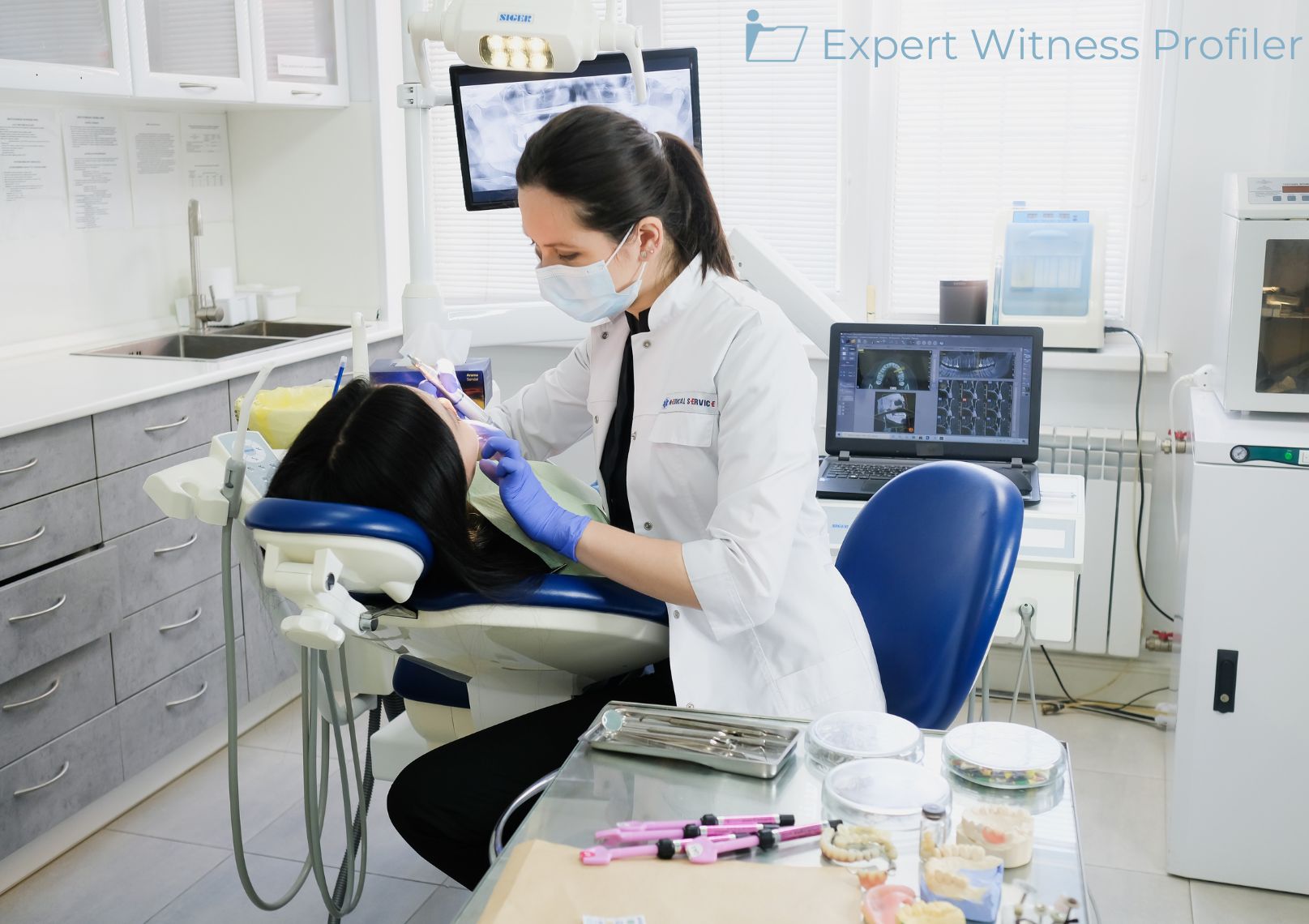
Ergonomics of a dental practice
Plaintiff sought to have Merritt testify as an expert witness “regarding the issue of dental ergonomics and its effect on [Easter]’s condition.” UNUM contended that this portion of Merritt’s proffered testimony failed Daubert’s three-prong test.
Merritt lacks the qualification to speak on dentistry ergonomics
For the first prong, Easter never identified Merritt as an ergonomics expert or explained how his various board certifications in brain injury medicine, spinal cord injury medicine, physical medicine and rehabilitation, and in internal medicine make Merritt qualified to speak on ergonomics.
The Court found that Easter failed to establish Merritt’s qualification to speak on dentistry ergonomics.
Merritt’s reliability is not established
As to the second prong, Easter sought to establish Merritt’s reliability by pointing out that “his report attached citations to a number of articles pertaining to the physical loads on dentists,” including one apparent peer-reviewed article authored by Merritt himself in 1987.
The Court held that the citation of the articles alone fails to establish that Merritt is qualified or that his methodology is reliable.
Furthermore, Easter’s brief and Merritt’s report only illustrate his ergonomic conclusions. Neither discuss any principles, methodologies, or ideas advanced in the articles or otherwise, much less how they were applied by Merritt to reach an ergonomic conclusion on Easter.
Merritt’s proffered testimony does not help the trier of fact
Merritt sought “to testify regarding the issue of dental ergonomics and its effect on [Easter]’s condition.” But as Easter himself admitted, he “retained John Merritt, M.D. to determine whether there was a physical basis for his disability” and Merritt concluded “that Plaintiff suffers from a persistent motor tic disorder on the movement disorder spectrum that in the nature of a neurological disorder,” a theory that Easter himself states he withdraws.
Easter’s current theory “maintains that the shakiness/motor tics are a physical manifestation of a psychiatric condition which Dr. Delaney can speak to.” The Court held that Easter failed to establish by a preponderance of the evidence that Merritt’s testimony would be helpful to the trier of fact, especially considering that his theory has been withdrawn and another proposed.
Held
The Court granted in part and denied in part Defendant’s Daubert motion to exclude the expert testimony of Dr. John Lawrence Merritt.
Key Takeaway:
Easter essentially asked the Court to find Merritt reliable solely based on his conclusions, something the Eleventh Circuit has made clear it cannot do. For Merritt to be found reliable, there must be “some rational connection between the methodology and the opinion—something that explains how the application of the methodology permits the conclusion(s) reached.” Easter, in this case, failed to offer the required application or rational connection.