Delilah Diaz was stopped at the U.S.-Mexico border with over 54 pounds of methamphetamine hidden in her vehicle. She was charged with importing methamphetamine and she claimed not to know that the drugs were hidden in the car. To rebut Diaz’s claim, the Government planned to call Homeland Security Investigations Special Agent Andrew Flood as an expert witness to testify that drug traffickers generally do not entrust large quantities of drugs to people who are unaware they are transporting them.
Rule 704(b) provides that “in a criminal case, an expert witness must not state an opinion about whether the Defendant did or did not have a mental state or condition that constitutes an element of the crime charged or of a defense.”
Discussion by the Court
Federal Rule of Evidence 704(a) sets out a general rule that “an opinion is not objectionable just because it embraces an ultimate issue.”
Rule 704(b) in criminal trials aims to prevent expert witnesses from directly stating their opinions about a Defendant’s mental state. This rule is crucial because it ensures that the jury independently evaluates and decides on the Defendant’s mental state, a central issue in the trial. By maintaining this separation, the rule upholds the jury’s primary responsibility to assess evidence and make determinations regarding the Defendant’s state of mind.
The Court held that Agent Flood’s testimony did not violate Rule 704(b) because Agent Flood did not express an opinion about whether Diaz herself knowingly transported methamphetamine. Instead, he testified about the knowledge of most drug couriers. That opinion does not necessarily describe Diaz’s mental state.
Diaz argued that Agent Flood functionally stated an opinion about whether she knowingly transported drugs when he opined that most couriers know that they are transporting drugs. The Court stated that an opinion about most couriers is not an opinion about all couriers.
Agent Flood asserted that Diaz was part of a group of persons that may or may not have a particular mental state. The ultimate issue of Diaz’s mental state was thus left to the jury’s judgment.
The Court agreed with Diaz that Agent Flood could not testify in absolute terms about whether all couriers knowingly transported drugs. But, insofar as Agent Flood planned to testify only that most couriers know they are transporting drugs, the Court concluded that his testimony was admissible.
Held
Agent Flood’s opinion that “most people” in a group have a particular mental state is not an opinion about “the Defendant” and thus did not violate Rule 704(b). Because Agent Flood did not opine about whether Diaz knowingly transported methamphetamine, the Court concluded that the testimony did not violate Rule 704(b).
Key Takeaway:
Rule 704(b) applies only to opinions about the Defendant. Because Agent Flood did not express an opinion about whether Diaz herself knowingly transported methamphetamine, his testimony did not violate Rule 704(b). Agent Flood instead testified about the knowledge of most drug couriers.
Pamela Ahmed has a history of back problems dating back to a traffic accident in approximately 1988. By 2020, Ahmed had a litany of “bad orthopedic issues,” leading her doctor to deem her an “orthopedic disaster.”
She began to experience significant hip arthritis, and her doctor diagnosed her with end-stage osteoarthritis. Ahmed underwent a right total hip arthroplasty on November 4, 2020, during which her doctor implanted her with a Pinnacle Altrx polyethylene liner, Pinnacle cup, and Biolox ceramic femoral head.
On February 25, 2021, Ahmed reported to her doctor that her hip was popping and that she had fallen. Ahmed underwent a revision hip arthroplasty in March 2021, and received a new femoral head and acetabular liner. On March 19, 2021, Ahmed underwent an additional surgery as a result of an infection. In June and August 2021, Ahmed experienced two incidences of hip dislocation.
Ahmed filed this lawsuit alleging that she was injured when her polyethylene hip implant (the Pinnacle Altrx) became dislocated. She retained two expert witnesses Richard Edwards and Dr. Kenneth Sands.
Defendants have since moved to exclude all opinions of Plaintiff’s expert, Edwards, and Plaintiff’s rebuttal expert, Sands.
Materials Science Expert Witness
Richard Edwards held a Bachelor’s degree in materials science and engineering and had studied in a mechanical engineering graduate program. He had extensive experience conducting failure analyses on various materials, including medical device implants and hip replacement systems. Edwards had analyzed plastics, including polyethylene used in the hip implant liner. He examined the failed hip implant components, reviewed relevant literature, and conducted non-destructive testing. However, he had not previously analyzed a polyethylene hip implant liner prior to this product liability case.
Dr. Kenneth Sands M.D. is an orthopedic surgery expert witness from Florida. He is certified by the American Board of Orthopaedic Surgery. Dr. Sands completed his BS in 1992 from Duke University. He completed his MD in 1996 from Tulane University School of Medicine. He also completed his residencies in 2002 from SUNY Downstate Health Sciences University. Currently, Dr. Sands is an Orthopedist at Melbourne Regional Medical Center.
The Court held that Edwards’ design defect opinions are generally reliable, but he may not testify as to alternative design theory.
1. Edwards Is Qualified to Testify as an Expert Regarding the Hip Implant
The Court held that Defendants’ attempts to narrow the subject matter about which Edwards must be qualified to testify are unavailing. His mechanical engineering background and decades of experience conducting failure analyses, including of medical devices and of hip implants specifically, meant that this subject matter was “sufficiently within his expertise.”
2.Edwards’ Design Defect Opinions are Generally Reliable, but he may not Testify as to Alternative Design Theory
Defendants argued that Edwards’ design defect opinions should be excluded because they are not the product of objective scientific testing or methodology. The Court found that Edwards’ design defect opinions are scientifically reliable despite his lack of destructive testing of the incident product. Defendants also attacked Edwards’ opinions as unscientific resting on a “selective and incomplete review of the literature.” Yet, Edwards’ report cited the 25 sources that he reviewed while investigating the product failure, including a variety of academic papers and published industry reports. Defendants argued that that Edwards’ conclusions amounted to “unauthorized conclusions from limited data” because “none of the papers he considered actually concluded that the Pinnacle hip replacement device or any component parts (including the Altryx liner at issue) were defective. The Court held that Edwards’ literature review was part of a wider technical process, which also included examining and measuring the Hip Implant’s ball and liner; conducting an infrared spectrograph of the liner material; and creating a replica to better visualize some of the liner’s characteristics.
3.Edwards may not Reliably Testify as to Alternative Design Theory
Edwards’ expert report consisted of multiple alternative design proposals. The Court disagreed as to Edwards’ ability to testify regarding a theoretical alternative design when applicable case law suggests that the failure to test a proposed alternative design or cite another’s testing of the design is fatal to the admissibility of said testimony.
4.Edwards’ Manufacturing Defect Opinions are not Impermissible Ipse Dixit
According to Defendants, Edwards’ manufacturing defect opinions are pure ipse dixit, “based on speculation, conjecture and inference, rather than reliable principles and methods.” The Court held that while Edwards may not reliably testify as to alternative design theory, his defect opinions are “the product of reliable principles and methods” and reflect “a reliable application of the principles and methods to the facts of the case.” Like many (if not most) scientists, Edwards did not have direct evidence of a manufacturing or design flaw in the Hip Implant but instead employed inductive reasoning to reach the hypothesis that the product was defective in either manufacturing or design.
5.Edwards’ Non-Medical Causation Opinions Are Not Excludable
Defendants also asked that the Court exclude Edwards’ causation opinions because he is not qualified to offer medical causation opinions, and even if he were qualified to offer medical causation opinions, “his opinions would still be inadmissible because he failed to meaningfully account for far more likely factors and causes of Ahmed’s alleged injuries.” Edwards concluded that the Hip Implant malfunctioned because the locking mechanism between the Altrx liner and Pinnacle cup was inadequate to hold the liner in place after impingement occurred. The Court held that this is a product defect opinion from a materials scientist and engineer with over forty years’ experience in failure analysis of various materials. It is not a medical causation opinion. And, as explained infra, an expert opinion regarding medical causation is not necessary under the facts/allegations of this case.
6.Opinions that Edwards Revealed for the First Time at his Deposition May Come In
Edwards discussed at his deposition the following that were not included in his expert report: (1) his opinion that “the plastic in the liner is too deformable,” and (2) a free body diagram to calculate the forces exerted on the Hip Implant. As to both, the Court cannot see how Defendants’ objections hold water. For Rule 26(a)(2)(B) experts, the party’s duty to supplement extends to both to information in that expert’s report and information given during the expert’s deposition. The Court held that no supplementation was needed for merely explaining an opinion that Edwards already detailed in his report. Rule 26(e) envisions supplementation when a party’s discovery disclosures happen to be defective in some way so that the disclosure was incorrect and incomplete, and therefore, misleading. To conclude, Plaintiff had no duty to supplement Edwards’ expert report.
Kenneth Sands
The Court held that Sands may not testify in Plaintiff’s case-in-chief to establish medical causation. He may only testify to rebut the Defendant’s expert. Nonetheless, as discussed infra, expert medical causation testimony is not necessary in this case because the Record does not reveal a genuine dispute that the Hip Implant’s failure caused Plaintiff’s injuries — only whether there was a defect in the Hip Implant that caused it to fail. The Plaintiff tendered Edwards’ testimony in aid of the latter purpose.
1.Sands Reliably “Ruled In” Defect as a Cause of Ahmed’s Injuries
Sands based his opinion that the cause of the failed Hip Implant was multifactorial on his review of Ahmed’s medical records, depositions of relevant parties, medical case reports, Edwards’ expert report, and his own experience with total hip arthroplasty.
Defendants attacked Sands’ reliance on case reports as impermissible because “they are not the kind of scientific materials on which experts would rely outside the courtroom.”
The Court held that Sands’ rebuttal report cannot properly and did not prove causation — that’s Edwards’ job. All the same, given that the Court already held supra that Edwards’ design defect opinions were generally reliable, Sands was allowed to rule on them in support of his refusal to rule out the Hip Implant itself as a major contributing factor for Ahmed’s failed total hip replacement.
2. Sands Did Not “Rule Out” Any of the Three Variable as Potential Causes for the Hip Implant’s Failure and Was Not Obligated to Do So
An expert’s differential diagnosis testimony is unreliable when it fails to sufficiently explain why other potential causes have been ruled out. Yet a differential diagnosis is not an absolute requirement to survive a Daubert challenge.
The Court held that Sands did not conduct a differential diagnosis in this case and was not required to do so.
Both Sands and Defendants’ expert Barrington agreed that a successful arthroplasty necessitated the alignment of three variables: the surgeon, the implant, and patient-specific factors. Sands did not rule out any of these as potential causes; rather, his detailed concerns with respect to each factor undergird his conclusion that Ahmed’s failed total hip replacement was multifactorial. Nor did he find that all possible causes were causes.
Held
The Court granted Defendants’ motion to exclude opinions of Richard Edwards to the extent that Edwards was prohibited from testifying as to any alternative design for the Hip Implant but denied it as to every other respect.
The Court denied Defendants’ motion to exclude opinions of Kenneth Sands.
Key Takeaways:
Rebuttal experts can address the same subject matter as opposing experts and arrive at contradicting conclusions, provided they directly respond to the opposing expert’s opinions.
Experts may rely on case reports to support their opinions, acknowledging the limitations of such reports and using them in conjunction with other evidence.
A formal differential diagnosis is not always required for expert testimony on causation to be admissible.
Expert qualifications are assessed liberally, with experience in a related field qualifying an expert to testify on specific issues.
Alternative design theories must undergo testing or validation to be admissible as expert testimony.
Opinions first disclosed during an expert’s deposition may be admissible if they do not materially differ from the expert’s report and are disclosed before the pretrial deadline.
Case Details:
Case Caption:
Ahmed v. Johnson & Johnson Healthcare Sys.
Docket Number:
1:22cv190
Court:
United States District Court for the Southern District of Alabama
This case stems from a very minor rear-end motor vehicle accident on March 26, 2021, which resulted in slight bumper damage to Plaintiffs’ truck. Defendant Ryan Transport employed Defendant Cummings and was under dispatch for Defendant Lenk Express at the time of the subject accident.
To begin with, Plaintiffs retained and identified Linda Day to testify, in essence, that Defendant Cummings did not follow trucking industry standards in the operation of his vehicle and that Defendants Lenk Express and Ryan Transport did not follow trucking industry standards in their training of Defendant Cummings.
Linda Day has been involved in various aspects of the transportation and warehousing industry since 1984. She has a master’s degree in Organizational Management with a specialization in Leadership. She has 30 years of experience working in various positions within the transportation industry.
First, the Court held that a jury does not need to be told by an expert witness that a driver should look for traffic or not follow too closely and jurors do not need an expert to tell them that by failing to stop and rear-ending the Plaintiffs that Defendant Cummins was not observing the standard of care required by the driver of a motor vehicle on Georgia’s public road.
Second, the Court added that her opinions consist of abstract propositions applicable to any accident but just not applicable to the particular facts of this case other than the fact that the accident happened, which is undisputed. Her opinions rely solely on the information contained in the police report for the subject accident. She has no opinions on the particular facts involved in the subject accident or why Defendant Cummings failed to stop.
Held
The Court granted Defendants’ motion to exclude the opinions of Plaintiffs’ expert Linda Day under Federal Rule of Evidence 702.
Key Takeaway:
The Court found that Linda Day’s opinions consisted of abstract propositions and were based on facts contained in the police report for the subject accident.
A district judge in California limited the testimony of the Defendant’s substantial similarity expert witness as he lacked the requisite qualifications to express his opinions regarding Polynesian, Oceanic, or Hawaiian mythology, folklore, history, religion, or culture.
Plaintiff Buck Goodday Woodall filed a copyright infringement case against Defendant The Walt Disney Company, Buena Vista Home Entertainment Inc et al. The present case involves allegations of copyright infringement and misappropriation of trade secrets between Plaintiff’s “Bucky” and Defendants’ animated film Moana.
The Defendants disclosed expert Jeff Rovin as their “substantial similarity expert.” Plaintiff filed a motion to exclude Rovin’s testimony on Daubertgrounds. Plaintiff aimed to prevent Defendants’ expert, Jeff Rovin, from presenting testimony and opinions, arguing two primary grounds. Firstly, Plaintiff contended that Rovin’s “prior art” methodology was unreliable and had been dismissed by Ninth Circuit Courts, asserting its inapplicability to copyright cases. Secondly, Plaintiff argued that Rovin lacked the qualifications to provide opinions on “Oceanic mythology, folklore, religion, culture, and/or history.”
Art and Humanities Expert Witness
Jeff Rovin has written numerous histories on heroic and fantasy films, including works such as Of Mice and Mickey (1975), The Fabulous Fantasy Films (1977), From the Land Beyond Beyond (1977), The Fantasy Almanac (1979), The Encyclopedia of Monsters (1989), The Illustrated Encyclopedia of Cartoon Animals (1991), and Adventure Heroes (1995). During his career, he wrote, edited, and created many comic book characters, several of whom were teenagers like The Dark Avenger, Wulf, and Vicki P.I. He also served as a testifying and consulting expert in numerous intellectual property claims.
Defense expert Rovin’s initial and rebuttal reports cited various other works. Plaintiff sought to exclude both reports entirely, arguing that Rovin’s opinions relied on an unreliable “prior art” methodology rejected by Courts within and beyond that Circuit.
Rovin clarified the methodology he employed in applying the extrinsic test for substantial similarity. The Court found that he did not utilize a “prior art” approach but instead referenced other works to support his opinion that the alleged similarities identified by Plaintiff included elements not protected under copyright.
Additionally, the Court held that merely referencing prior works within the same genre does not automatically render an expert’s opinion unreliable or inadmissible. Plaintiff also contested Rovin’s identification of different genres in his reports but Defendants countered that these genres were defined by Plaintiff’s own expert. Even if there were differences in how the experts defined relevant genres, this does not justify excluding Rovin’s reports and testimony under Daubert standards.
Furthermore, if Rovin’s reports referenced works outside the relevant genres, this would affect the weight of his opinion, not its admissibility. Plaintiff further argued that Rovin’s references to other “prior art” could mislead the fact-finder into believing certain scenes were familiar stock scenes when they were not. But this concern also pertained to the weight of Rovin’s testimony, not its admissibility.
The Court concluded that Rovin’s methodology did not involve a “prior art” approach, thus refuting Plaintiff’s assertion that his opinions and testimony were unreliable and inadmissible. Consequently, the Court rejected Plaintiff’s motion to exclude Rovin’s testimony and opinions based on reliability concerns.
B. Expert’s Qualifications
Plaintiff had also sought to exclude Rovin’s opinions and testimony, arguing he lacked the requisite qualifications to discuss “Oceanic mythology, folklore, religion, culture, and/or history.”
Defense counsel had disclosed that they specifically designated Rovin “as their substantial similarity expert.” Therefore, the Court prohibited Rovin from offering expert opinions or testimony concerning Polynesian, Oceanic, or Hawaiian mythology, folklore, history, religion, or culture.
Held
The Court ruled as follows:
The Plaintiff’s motion to exclude opinions and testimony from defense expert Rovin, arguing his opinion was unreliable, was denied.
Plaintiff’s motion to exclude expert testimony or opinions from defense expert Rovin regarding Polynesian, Oceanic, or Hawaiian mythology, folklore, history, religion, or culture was granted.
Key Takeaway:
The Court rejected Plaintiff’s argument that employing “prior art” approach rendered Jeff Rovin’s opinions unreliable, stating that referencing works within the same genre does not inherently undermine an expert’s credibility. The Court held that Rovin did not use a “prior art” methodology, but instead referenced other works in opining that the alleged similarities in the parties’ works identified by Plaintiff include unprotectable elements.
As Rovin was designated solely as a substantial similarity expert, the Court granted Plaintiff’s motion to preclude him from providing opinions or testimony on Polynesian, Oceanic, or Hawaiian subjects.
Case Details:
Case Caption:
Buck G. Woodall V. The Walt Disney Company
Docket number:
2:20cv3772
Court:
United States District Court, California Central (Western Division – Los Angeles)
Plaintiff, Jamaal Nelson applied for housing with Younger Developments in Texas around February 2023. He alleged he was denied housing on February 7, 2023 because Defendant’s consumer credit report reported Plaintiff as “Deceased” on a Capital One tradeline and this happened because Defendant failed to investigate the alleged inaccuracy. He added that due to his being denied housing in Texas he had to take a lower paying job in Florida where he paid higher rent. Against Defendant, Plaintiff pursued claims for (1) violation of the Fair Credit Reporting Act (“FCRA”) for failure to assure maximum possible accuracy and (2) violation of the FCRA for failure to investigate.
Defendant Experian Information Solutions, Inc. filed a motion to exclude the testimony of Plaintiff’s expert Douglas A. Hollon.
Credit Reporting Expert Witness
Douglas A. Hollon is currently the President and Owner of Credit Experts of North Texas, LLC. He began his career in the consumer reporting industry in 2005 as a Dispute Agent with Experian Information Solutions, Inc. Initially, he helped consumers with their mail or telephone disputes of items listed on their consumer file. Hollon was later promoted to Consumer Affairs Special Services (CASS), now known as Experian Consumer Affairs (ECA). In ECA, he handled escalated credit report disputes.
In addition to his dispute training, he received specialized training involving fraud (identity theft) disputes and mixed file disputes.
The Court has reviewed Hollon’s report in its entirety. Hollon’s principal conclusion is that that Defendant “failed to follow reasonable procedures to assure maximum possibly accuracy” and that if Defendant “had reasonable procedures to assure maximum possible accuracy, it would have verified a deceased notation reported by a data furnisher before storing the information on an [individual’s] file.”
Hollon never explains the factual materials on which he bases his conclusion
After a careful review of the parties’ briefing and Hollon’s expert report, the Court excluded Hollon’s testimony as to whether Defendant’s credit accuracy procedures are reasonable. As to the conclusion that it is not reasonable for Defendant to rely on data furnishers, the Court found that Hollon did not articulate concrete factual materials or sources on which he based his conclusion.
At best, Hollon attempted to rely on his prior experience working for Defendant to reach his conclusions. For example, Hollon alleged that while he worked for Defendant, he observed that Defendant prioritized “costs of doing business . . . over doing what was right.”
The Court held that Hollon never explained concretely, however, how such financial incentives were relevant to his conclusion that Defendant failed to follow reasonable procedures to assure maximum possible accuracy.
Hollon also claimed Defendant’s dispute resolution system is “biased,” “cost driven,” and that his conclusion is supported by “[his] own personal experience.” The Court, once again, noted that Hollon never explained the factual materials on which he based his conclusion that it is unreasonable for Defendant to rely on Data Furnishers.
Hollon also opined about the economic difficulties consumers faced due to “misreporting on a credit report.” Further, in a declaration submitted with Plaintiff’s opposition to Defendant’s motion, Hollon attempted to explain why he was qualified to opine on the psychological impact of inaccuracies in a credit report. The Court, however, excluded Hollon’s testimony as to Plaintiff’s non-emotional and emotional damages.
The Court found that Hollon is qualified to speak, in general terms and as found relevant at trial, about the sort of damages that are typically caused by errors on credit reports.
Held
The Court granted in part and denied in part the motion to exclude the testimony of Plaintiff’s expert Douglas A. Hollon.
Key Takeaway:
Hollon’s testified about whether Defendant’s credit accuracy procedures are reasonable. He also opined about the economic difficulties consumers faced due to “misreporting on a credit report.” After a careful review of the parties’ briefing and Hollon’s expert report, the Court excluded Hollon’s testimony as to whether Defendant’s credit accuracy procedures are reasonable.
The Court, however, excluded Hollon’s testimony as to Plaintiff’s non-emotional and emotional damages.
The Court found that Hollon is qualified to speak, in general terms and as found relevant at trial, about the sort of damages that are typically caused by errors on credit reports.
A district judge in Pennsylvania limited the Transportation Safety Expert’s testimony about the Defendant’s failure to review safety and compliance data.
Defendant Gateway Freight Systems, Inc., on behalf of Defendant Tempel Steel, retained Defendant Foxway Transportation, Inc. to transport a shipment of Tempel’s product from Tempel’s Canadian location to two locations in Pennsylvania.
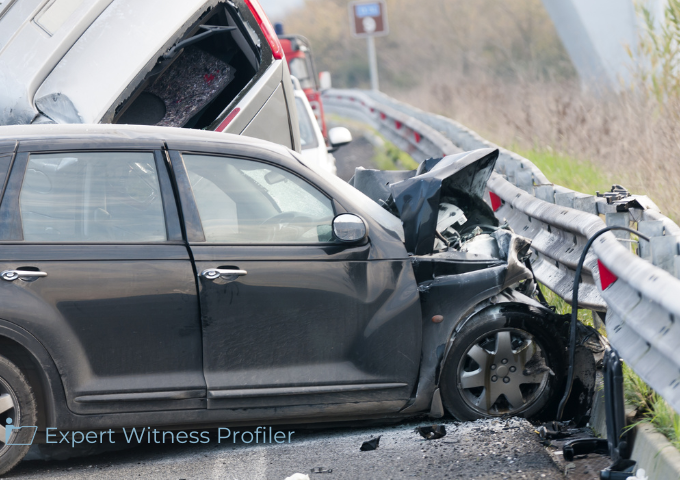
On October 20, 2019, Darlene L. Allen was driving her Mitsubishi Mirage on SR-17 in Tioga County, New York, when she hit a deer. At the time of the accident, Allen had her minor children T.G.A. and Z.D.A. as passengers in the rear seats. Volodymyr Frolyak, an employee of Foxway driving a Foxway-owned Freightliner, was traveling behind Allen and collided with her Mitsubishi. As a result of these accidents, Allen’s children, T.G.A. and Z.D.A. tragically lost their lives.
Plaintiff Robert C. Allen, co-administrator of the estates of T.G.A and Z.D.A, disclosed Kenneth Lacey for the first time attempting to support his partial motion for summary judgment concerning claims of direct negligence, including negligent entrustment, against Gateway.
According to the Report, Plaintiff engaged Lacey to specifically determine the following:
Did Foxway’s programs comply with both Federal and State regulations and were otherwise consistent with the transportation industry safety, operational, and compliance program and practice standards
If the motor carriers’ programs safety, compliance programs were deficient did these failures contribute, or otherwise directly result in this crash
Did Gateway fail to properly screen, entrust and supervise any party moving product on its behalf
Where there were failures by Gateway to properly screen and supervise motor carriers’ and did these failures contribute, or otherwise directly result in this crash
Defendant Gateway filed a motion to exclude Kenneth Lacey’s opinion as per the grounds of Rule 702 and the Daubert standard.
Transportation Safety Expert Witness
Kenneth Lacey is a safety and operational consultant at KJL Safety and Claims Services LLC, Collegeville, PA.
As a safety consultant, his job entails working with transportation companies of varying degrees of sizes having commercial motor vehicles operating on highways within the United States and Canada, to establish and improve their safety programs and overall safety performance.
He had been retained in this case as a transportation safety expert witness to use his education, experience, and expertise with Motor Carriers, Transportation Brokerage, and Transportation Logistics operations and services, his previous experience as the person responsible for negotiating and education, experience, and expertise with the application of the Federal Motor Carrier Safety Regulations (“FMCSRs”), Uniform Commercial Drivers Manual (“UCDM”) and Safe Commercial Motor Vehicle Operations.
Kenneth Lacey criticized Gateway for neglecting to ensure Foxway’s compliance with safety regulations. He pointed out that Gateway didn’t conduct adequate checks on Foxway’s safety record, including crashes and violations. Despite entrusting Foxway with numerous shipments, Gateway didn’t follow customary vetting procedures. Lacey highlighted that Frolyak, the driver, had previous speeding violations unknown to Gateway. He faulted Gateway for not utilizing monitoring services like Carrier 411, which could have alerted them to to crashes, moving violations, and disqualified driver violations involving Foxway. Lacey recommended Gateway should have implemented a corrective plan or terminated Foxway’s services due to their history of crashes and violations. He concluded that Gateway’s failure to review safety and compliance data directly caused the crash.
A. Qualification
Defendant Gateway argued that Lacey lacked the qualifications to testify on liability, causation, or negligence, especially regarding brokers.
The Court held that Lacey’s background as a safety and operational consultant in both motor carriers and brokerages qualified him. The Court asserted that Lacey’s broader experience in the transportation industry met the Third Circuit’s criteria for expertise. Gateway’s argument was that extensive experience in the transportation industry regarding driver safety, training, and compliance initiatives was insufficient unless Lacey had worked with brokers specifically. Put into the context of the facts of this case, an individual in such a role at Foxway, a motor carrier, would necessarily have experience regarding the practices and customs of Gateway, a broker, in the selection of motor carriers.
B. Reliability
Gateway argued that Lacey, despite possessing requisite qualifications, offered opinions which were unclear, conclusory, speculative, and unreliable, thereby warranting exclusion.
In his report, Lacey refrained from determining whether specific safety rules were violated in causing the crash, a point Gateway emphasized as a flaw in his methodology. Allen countered that Lacey’s expertise in brokerage industry standards justified his testimony, even without identifying statutory violations. The Court acknowledged the relevance of industry practices in determining negligence standards but upheld the requirement to avoid interpreting statutes.
However, the Court shared Gateway’s concern about Lacey’s methodology, considering the disconnect between Lacey’s methodology—which included identifying violations—and his conclusion—which did not mention any such violations—rendered those conclusions unreliable. For instance, Lacey suggested that Foxway “likely had to reduce its insurance due to being denied loads from shippers actually checking Foxway’s safety rating and refusing to use them.” The Court held that there was nothing in Lacey’s report to support this logical leap. Moreover, Lacey did not explain why, even if Gateway had been more closely monitoring Foxway, it would have been inappropriate for Gateway to continue to retain Foxway to deliver shipments. Lacey did not offer any context for any of the prior Foxway violations or accidents.
Ultimately, the Court found that Lacey’s report lacked specificity and failed to demonstrate how Gateway’s actions directly caused the crash.
C. Fit
Gateway argued that Lacey’s opinion should be excluded because it is unduly prejudicial and not tied to the facts of the case.
The Court focused on the only possibly admissible opinion from Lacey, which stated that it is consistent with industry standards for brokers to continually monitor the safety records of motor carriers. The Court found that Lacey’s opinion that it is common practice in the transportation industry to continually monitor safety records using third-party vendors, safety scores, and other sources is plainly relevant, and helpful to a jury tasked with determining what Gateway should have known about Foxway’s safety record.
Held:
The Court granted Gateway’s motion to exclude Kenneth Lacey, except as to his opinion that industry standards imposed upon Gateway a continuing obligation to conduct ongoing “safety and compliance data reviews.”
Key Takeaway:
Defendant’s motion to exclude Lacey was partially granted, allowing his testimony only with regard to the industry standard of ongoing safety and compliance reviews, which was deemed crucial for assessing Gateway’s obligations regarding Foxway’s safety record. Thus, while recognizing Lacey’s qualifications, the Court concluded that his broader assertions lacked the necessary specificity and evidentiary support to be admissible in their entirety
Case Details:
Case Caption:
Allen V. Foxway Transportation, Inc. Et Al
Docket Number:
4:21cv156
Court:
United States District Court, Pennsylvania Middle (Williamsport)
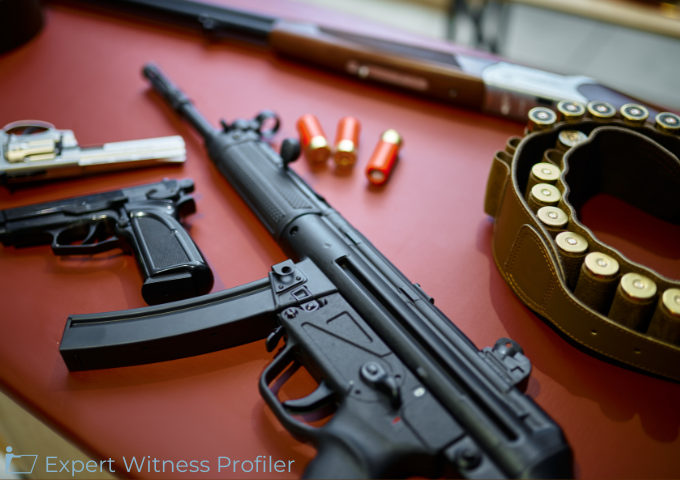
The Grand Jury charged Defendants Ariel Petersen, Ivan James, and John Williams with multiple firearms offenses and other crimes. The charges specified the illegal use of a Glock 40 caliber pistol, an Olympic Arms MFR AR rifle, and a Romarm WASR-10 AK rifle.
Defendants contested the reliability of expert testimony the United States intended to adduce at trial from proffered firearms and toolmark expert witnesses Kevin Rippman and Major Wells. They requested the Court to restrict the experts’ testimony on firearms examination and comparison, arguing that the science of firearm toolmark examination did not meet the reliability standards set by the Supreme Court in Daubert.
The Court granted the Defendants’ request for an evidentiary hearing to gather evidence on the reliability of the proffered opinions. The United States presented testimony from firearms and toolmark expert witnesses Todd Weller, Kevin Rippman, and Major Wells. The United States also introduced multiple studies purporting to show the reliability of firearms toolmark examination.
Firearms and Toolmark Expert Witnesses
Todd Weller
Todd Weller has been certified as a firearm and toolmark examiner by the American Federation of Toolmark Examiners (AFTE) since 2008, and he has received extensive academic and specialized training in this field. Although he did not conduct testing on the firearms in question in this case and was not included on the United States’ trial witness list, Weller effectively explained the theory, practice, and procedures involved in firearms toolmark examination.
Major Wells is an ATF firearm and toolmark examiner currently based at the ATF lab in Washington, D.C., but previously based in the ATF Atlanta lab.
Discussion by the Court
Todd Weller’s Testimony
Todd Weller challenged the Defendants’ reliance on the 2008 and 2009 National Research Council (NRC) reports, noting these reports explicitly disclaimed aiming for admissibility of firearm toolmark examination science in trials. He explained the concept of class, subclass, and individual characteristics in firearm examination, emphasizing how each level helps analysts assess evidence. As an examiner progresses through these characteristics, the ability to include or exclude a specific firearm as the source of toolmarks on bullets or shell casings becomes clearer.
He detailed the process of firearms toolmark examination. Weller discussed the accepted standards and theory of firearm toolmark examination as outlined by the AFTE, the certifying body for firearm toolmark examiners. He emphasized that the AFTE requires examiners to establish “sufficient agreement” before declaring a same-source identification, defining significant agreement based on comparisons of individual characteristics.
He elaborated on the testability and error rate of firearm toolmark examination, citing “black box studies” as the most relevant for assessing reliability and accuracy. These studies gauge the process’s ability to yield consistent results using known matches and non-matches. Published in peer-reviewed journals, these studies indicate an error rate consistently below 2%, albeit potentially higher than field work due to deliberate constraints like consecutively manufactured firearms and steel bullets.
Weller highlighted the widespread use of firearm and toolmark identification globally, noting over 200 labs in the United States and numerous others internationally. He underscored that independent accrediting bodies certify all labs, with the AFTE fulfilling this role in the United States.
During cross-examination, Weller acknowledged the absence of definitive, objective criteria for determining identification. Despite numerical methods like Consecutively Matching Striations (CMS), which count matching marks, he stressed that the Pattern Matching method ultimately relies on subjective judgment based on objective criteria like striae patterns.
Kevin Rippman’s Testimony
Kevin Rippman testified that he followed the same procedure outlined by Todd Weller. He effectively explained the process of inspecting marks, comparing known samples with unknown ones against the evidence, and having another ATF examiner independently verify his findings. While aware of the CMS method, like Todd Weller, he employed Pattern Matching to reach conclusions. Pattern Matching is recognized as a valid methodology in firearm toolmark examination. During cross-examination, he acknowledged Pattern Matching involves a subjective element, but maintained that the final subjective determination relied on the objective observations made by the examiner through microscopic analysis of the samples.
Major Wells Testimony
Major Wells examined two firearms in this case: an Olympic Arms MFR AR rifle mentioned in Counts Nine, Twelve, and Thirteen, and a Romarm WASR-10 AK rifle cited in Count Nine. He affirmed he followed the same process outlined by Todd Weller and utilized by Kevin Rippman. Following his analysis, another examiner independently reviewed his work and reached the same conclusion. Wells described the use of a comparison microscope, enabling simultaneous examination of two items (bullets or casings) under identical lighting and magnification conditions.
He stated he employed the CMS method during his examination but did not document the number of matching striae. His conclusions were based on the “standard” or Pattern Matching method. Despite not recording the number of matching striae, another examiner independently replicated his findings. He acknowledged that achieving a “100% match” is not feasible in their field, emphasizing their approach focuses on identifying “sufficient agreement.” He defined this as an evidentiary sample surpassing the similarity of the best-known non-match and demonstrating significant alignment with the best-known match, aligning with the AFTE’s definition.
Court’s Findings
Following an evaluation of witness credibility, a review of submissions from both parties and an examination of the evidence presented during the hearing, it was determined that the United States’ presentation of the science of firearm toolmark examination met Daubert‘s reliability standards:
The witnesses had convincingly demonstrated that firearm toolmark examination science consisted of a testable hypothesis. This hypothesis posited that toolmarks on an item of known origin could be compared to toolmarks on an item of unknown origin to arrive at a conclusion about its provenance.
Firearm toolmark analysis had been subjected to peer review, with the theory reviewed through rigorous studies published in peer-reviewed journals. Individual conclusions in laboratory settings had undergone secondary, independent testing to either corroborate or dispel the original findings.
The error rate identified in academic studies closely mirroring fieldwork had been low, typically ranging between 0% and 2%. Real-world error rates were likely even lower due to intentional challenges placed before examiners during studies and additional safeguards in operational laboratories. Despite being subject to cross-examination, they considered these rates sufficiently low to demonstrate reliability.
Evidence presented by the United States demonstrated that the field of firearm toolmark examination maintained rigorous standards governing testing processes and techniques, overseen and certified by the AFTE.
The widespread use of firearm toolmark examination both domestically and internationally, alongside the general acceptance among professional peers, had underscored its credibility and validity.
The Pattern Matching technique employed by Messrs. Rippman and Wells had been validated through testing as reliable.
Neither the Defendants nor the United States had presented evidence on the non-judicial uses of firearm and toolmark examination, rendering this factor neutral in the assessment.
Held
The Court allowed the testimony of firearms and toolmark expert witnesses Todd Weller, Kevin Rippman, and Major Wells.
Key Takeaway:
The Court allowed the testimony of firearms and toolmark expert witnesses Todd Weller, Kevin Rippman, and Major Wells based on its findings that their scientific reasoning met the reliability standards under Daubert. This decision was supported by the scientific basis, peer review, low error rates, adherence to standards, widespread acceptance, and reliability of specific techniques presented in the case.
Case Details:
Case Caption:
United States of America v. Ivan James, Kai James, Joh Williams, Malachi Benjamin, Jahkiebo Joseph, Ariel Petersen
Plaintiff, Alex Mundy, a former graduate student at the University of Wisconsin—Madison, filed this lawsuit against the Board of Regents of the Universities of Wisconsin (the Board of Regents) alleging illegal retaliation in violation of the Rehabilitation Act. Mundy claimed the Board of Regents retaliated against her by refusing to award her a coursework master’s degree because she filed a previous lawsuit alleging Professor Cameron Currie deprived her of a master’s research degree in bacteriology because of her disability in violation of the Rehabilitation Act.
In her first case, Mundy supported her claim for damages with vocational expert Kevin Schutz, who provided a report in July 2021. Schutz did not update his 2021 report for this case. The Board of Regents moves to exclude his testimony as inadmissible under Federal Rule of Evidence 702.
Vocational Rehabilitation Expert Witness
Kevin Schutz has worked for Professional Rehabilitation Services for over 35 years, where he currently works as a vocational rehabilitation counselor. He also has a master’s degree in rehabilitation psychology.
In his report, Schutz opined that Mundy would be able to earn approximately an additional $20,000 per year if she had a master’s degree in bacteriology. Schutz explained that this estimate is based on a comparison of the average pay of life scientists in the Madison labor market to the average pay of public health and social service workers.
He stated that these estimates were based on 2019 data from the Wisconsin Department of Workforce Development, and that, at the time Schutz interviewed Mundy to prepare his report, Mundy was earning $54,000 annually working as an associate project coordinator at a clinic research company, which put her in the middle of the pay range for public health and social service workers. Schutz also opined that Mundy could remediate her lost earning capacity by going back to school to earn the master’s degree, which would reduce her earning by $50,000 to $100,000 over the year or two year that it would take her to complete the degree.
The Court held that there were fundamental problems with how Schutz applied the general method in his report despite there being nothing inherently unreliable about the method that Schutz used to evaluate the earning gap that Mundy suffered without a bacteriology master’s degree.
Schutz concluded that her earning potential without the completed bacteriology degree was $50,000 to $60,000 per year, but with the degree it would have been $70,000 to $80,000 per year, resulting in annual lost earnings of $20,000.
Schutz’s analysis was severely flawed
The Court found several flaws wth Schutz’s analysis. To start, Schutz framed his analysis by citing “Examples of options available to Mundy with a completed Bachelor of Science degree in bacteriology would be positions found in life science and social science environments.” But Mundy was pursing a master’s degree in bacteriology. And she already had a master’s degree in pubic health. So it’s not clear that Schulz had properly identified Mundy’s qualifications and identified the proper comparator positions.
Next it’s not clear what positions Schutz thought would be available to Mundy with her completed bacteriology degree. Schutz provided the “the average pay to life scientists in the Madison labor market,” but he did not explain what positions were included in reaching that average. “Life scientist” could refer to a wide range of jobs, from that of a routine laboratory technician with a technical degree to high-level research requiring an advanced degree. It is impossible to assess whether it is reasonable to compare Mundy’s earning potential with a master’s degree in bacteriology to the average life scientist salary without knowing if the jobs included in that average are ones that Mundy might be able to get.
Schutz’s analysis of Mundy’s earning potential without the bacteriology master’s degree had similar problems. Schutz begins by saying that Mundy’s employment options without the bacteriology degree “would revolve around employment in public health and social service types of environments,” presumably because she already had a master’s degree in public health. But the example salaries that Schutz provided were for a “health education specialist,” “community and social service specialists,” “administrative assistant types of positions,” and “administrative or social/human service types of positions.”
Schutz’s 2024 deposition
Schutz testified that he stood by his original opinion that Mundy has a $20,000 annual earning gap without the bacteriology degree, and he opined that he believes the earning gap will last for the remainder of Mundy’s career.
Schutz’s deposition testimony is that Mundy, over the course of three years of work in her profession, has remediated any impairment in her earning potential. Perhaps Mundy endured some loss of earnings over the course of the last three years, but Schutz provided no opinion on that. Perhaps inflation played a role in the increase in Mundy’s salary, but Shutz provided no opinion on that either. In other words, Schutz’s own testimony earlier in his deposition contradicted his conclusion.
Held
The Court concluded that Schutz’s conclusion that Mundy will endure a permanent impairment of her earning potential of $20,000 per year is a mere conclusion without supporting analysis. The Court excluded the testimony of Kevin Schutz.
Key Takeaway:
Alex Mundy supported her claim for damages with vocational expert Kevin Schutz, who provided a report in July 2021. The Court found several flaws wth Schutz’s analysis. For instance, Schulz had not properly identified Mundy’s qualifications or the proper comparator positions. Besides, Schutz’s own testimony earlier in his deposition contradicted his conclusion about Mundy’s $20,000 annual earning gap.
Case Details:
Case Caption:
Mundy, Alex V. Board Of Regents For The University Of Wisconsin System
Docket Number:
3:22cv561
Court:
United States District Court for the Western District of Wisconsin
Plaintiffs, ECB USA, Inc. and Atlantic Ventures Corp. accused Savencia and Zausner, together with other persons and entities, of commiting a series of tortious acts, including, but not limited to, looting the assets of Schratter Foods Incorporated (“Schratter”), then fraudulently inducing Plaintiffs into executing an agreement to purchase all of Schratter’s shares (the “Stock Purchase Agreement”).
One of the key issues in this case is whether, prior to Schratter’s sale, Defendants secretly “stripped” Schratter’s Chief Executive Officer (“CEO”) Alain Voss (“Voss”) of certain of his powers and duties as CEO and then “lied” to Plaintiffs’ by holding “Voss out as Schratter’s trusted, knowledgeable, and effective chief, for the purpose of persuading [Plaintiffs’] representatives to accept Voss as a fiduciary and to partner with him to purchase Schratter.”
Defendants hired Alan Lee to analyze the due diligence conducted by Plaintiffs in connection with Plaintiffs’ purchase of Schratter Foods Inc.(“Schratter”)—and to provide opinions related to that due diligence process.
Plaintiffs filed a Daubert motion to exclude Lee’s opinions and testimony because they are not relevant to the action.
In his report, Lee provided three main opinions:
“Due Diligence is a tailored process that varies in scope based on the facts and circumstances of a specific transaction and is designed to identify and mitigate relevant risks to a prudent acquirer.”
“The Plaintiffs’ due diligence of the Schratter acquisition, supported by multiple experienced, independent financial and legal advisors was appropriate and adequate for the circumstances.”
“The Plaintiffs completed the acquisition of Schratter after thoroughly evaluating the financial, business, and commercial risks identified during due diligence and either mitigated or accepted these risks when acquiring Schratter.”
Mergers & Acquisitions Expert Witness
Alan Lee has been advising private-business owners as well as public-corporation senior management for more than 30 years in the areas of M&A, corporate finance, succession planning, monetization of ownership interests. Previously, he was an audit partner and regional managing partner at PwC.
He is a certified public accountant and a member of the Illinois Society of CPAs and the ESOP Association.
The Court held that Defendants did very little to explain exactly how are Lee’s opinions said to be relevant to Defendants’ defenses in this regard. Lee’s proffered opinions did not really address that subject matter. Lee’s report did not mention breach of contract claims, nor did it specifically address Defendants’ disclosure (or lack thereof) of the details of Voss’ role or of the June 30 Stock Purchase Agreement.
Instead, the meat of Lee’s opinions are about how the due diligence Plaintiffs conducted “was appropriate and adequate for the circumstances.”
So far as the Court can tell, only one paragraph in Lee’s opinion—paragraph 68—explicitly touches on the subject of the data room in any detail. But even in that paragraph, Lee simply discusses—at a very high level—how Defendants put certain financial statements and Schratter Board documents in the data room, and how the parties’ “[letter of intent regarding the sale] was not a guarantee that every document requested would necessarily be provided within the compressed due diligence window (nor does that usually happen).”
The Court held that Lee’s opinions do not speak to any of the particular documents or facts at issue regarding the breach of contract theory. Nor do they seem intended to be used to do so.
The Court held that Defendants never clearly pointed to certain fraud allegations in the case and then explained why aspects of Lee’s testimony actually speak to one or more elements of those claims (or would otherwise help the jury assess the claims). In other words, Defendants failed to cogently explain how any of this type of due diligence work, or Plaintiffs’ identification of any particular “red flags,” relate to any of the elements of a fraud claim in Florida, or to any particular live allegations of fraud.
Held
The Court granted Plaintiffs’ motion to exclude Lee’s opinions and testimony.
Key Takeaway:
The meat of Lee’s opinions are about how the due diligence Plaintiffs conducted “was appropriate and adequate for the circumstances.” The Court held that Lee’s report did not mention breach of contract claims, nor did it specifically address Defendants’ disclosure (or lack thereof) of the details of Voss’ role or of the June 30 Stock Purchase Agreement.
A district judge in Kentucky found the testimony of preventive medicine expert reliable while ruling on the Plaintiffs’ state law tort claims.
Plaintiffs Mark and Deborah Brackett (the “Bracketts”) and Doug Coomer (“Coomer”) (collectively “Plaintiffs”) own properties in Clementsville, Kentucky. Defendant Columbia Gulf Transmission, LLC own a natural gas compressor station (the “Compressor Station”) adjacent to Plaintiffs’ properties.
Plaintiffs alleged that since early September 2019, the Compressor Station has been emitting intolerable noise like “jet engines taking off” and exhaust odors that make breathing painful and cause headaches, and because of those conditions they have been distressed and unable to enjoy their properties.
Plaintiffs’ state law tort claims are also based on the odors and pollutants allegedly emanating from the Compressor Station. They have disclosed Dr. Erin Haynes (“Dr. Haynes”) as an expert who has analyzed air quality data collected by a monitor inside the Bracketts’ home from April 2022 to October 2022. Defendants sought to exclude Haynes’ testimony based on lack of compliance with Fed. R. Civ. P. 26(a)(2)(B), relevance, and reliability.
Preventive Medicine Expert Witness
Erin N. Haynes, DrPH, MSis the Kurt W. Deuschle Professor of Preventive Medicine and Environmental Health and Chair of the Department of Epidemiology and Environmental Health. She is a community-engaged environmental health scientist who has forged multidisciplinary research teams to investigate community-identified exposure issues. Her research expertise is pediatric manganese exposure but is also working to address community concerns about potential exposures related to oil and gas, hazardous waste incineration, and landfills.
Haynes received a Master of Science in Toxicology from the University of Cincinnati and a Doctorate in Public Health in Environmental Health Science from the University of Michigan School of Public Health.
Defendants contended that Haynes’ testimony should be excluded because her report did not include a list of cases in which she has testified in the last four years nor her compensation for this case. Plaintiffs admitted that Haynes’ report did not contain statements about prior testimony or compensation, but they explained that they did not include them because Haynes has not testified in the past four years and she will not be compensated for her testimony in this case.
Plaintiffs explained that they did not disclose that Haynes has not testified in the past four years and that she is not being compensated because there was no need to disclose information that did not exist.
The Court held that this choice was understandable and did not prejudice Defendants.
Relevance
To begin with, Haynes’ report explained that the Bracketts installed an air quality monitor in their home, which summarized the air quality data, listed the detected levels of volatile organic compounds (“VOCs”), and noted which levels “exceeded the level of concern.”
Haynes determined that the VOC levels “would have likely been detected by the human nose/smell” and that they “could also result in headache, dizziness, and eye, nose, and throat irritation.”
Defendants argued that Haynes’ testimony should be excluded because VOCs can be caused by many items, including household products and appliances, so Haynes’ testimony is not helpful to the jury because it does not explain the origin of the VOCs inside the Bracketts’ home. The Court held that Defendants’ argument challenged the weight of Haynes’ testimony rather than its relevance. Haynes’ testimony will explain and analyze the air quality in the Bracketts’ home, which indisputably relates to their pollution and odor claims. The Court held that just because her testimony may not prove other aspects of Plaintiffs’ claims, it does not constitute a valid basis to exclude it as irrelevant.
Reliability
Defendants attacked Haynes’ methodology by noting that she did not visit the Compressor Station or Plaintiffs’ properties, set up the air quality monitor, or collect the data. The Court held that none of these concerns require exclusion.
Moreover, Defendants contended that Haynes’ reliance on the air quality monitor was inappropriate because she did not appear to be familiar with it, whether it is accurate, or whether the Bracketts operated it properly. Haynes’ report, however, explained what the monitor was, how it measured VOCs, and where the Bracketts installed it.
Held
The Court denied Defendants’ motion to exclude Plaintiffs’ Expert Erin Haynes.
Key Takeaway:
Because Haynes’ report adequately explained what the air quality monitor was, how it measured VOCs, and where the Bracketts installed it, the Court found that the expert report was sufficiently reliable. Also, it was relevant as far as the air quality in the Bracketts’ home was concerned.