Blog

  • Pathology Expert Witness’ Testimony Excluded Due to Rampant Plagiarism

    Pathology Expert Witness’ Testimony Excluded Due to Rampant Plagiarism

    A district judge barred Harvard pathologist from testifying because his report was merely a wholesale adoption of International Agency for Research on Cancer’s (“IARC”) findings under the guise of his own expertise.

    In this toxic tort case that is part of a suite of companion cases, more than sixty Plaintiffs allege that Defendant Lockheed Martin Corporation’s weapons manufacturing facility in Orlando gave off toxic chemicals that contaminated the surrounding air, soil, and groundwater, which caused Plaintiffs to suffer various injuries.

    The Court decided (1) that this is a McClain category two case requiring a full Daubert analysis; and (2) to take general and specific causation up on the full scientific record.

    In support of their resulting strict liability, negligence, nuisance, and other claims, Plaintiffs have marshalled various doctors to opine on general causation— that is, whether each chemical at issue is able to cause the types of injuries at issue.

    Lockheed moved to exclude to exclude one such doctor, Dr. Dipak Panigrahy on the grounds that he lacked a reliable methodology, largely because he had plagiarized significant portions of his report from the International Agency for Research on Cancer’s (“IARC”) Monographs publications (and the sources IARC cited).

    Pathology Expert Witness

    Dr. Dipak Panigrahy, M.D. is an Assistant Professor of Pathology at Harvard Medical School. Panigrahy was accepted into medical school at Boston University at age 17. He graduated from the combined BA/MD program at Boston University Medical School and earned his M.D. degree in 1994.

    In 2015, he was awarded the American Society of Investigative Pathology (ASIP) Cotran Early Investigator Award and a Young Investigator Award at the 14th International Conference on Bioactive Lipids in Cancer, Inflammation, and Related Diseases in Budapest, Hungary. Since 2015, he has held a Visiting Professorship at Khon Kaen University in Thailand. He has chaired over ten symposiums and given over 70 invited lectures at various local, national, and international meetings over the past decade.

    Discussion by the Court

    Panigrahy’s report indicated a lack of intellectual rigor that one would expect from any expert

    The Court observed that Panigrahy extensively plagiarized his report. And his deposition made the plagiarism appear deliberate, as he repeatedly “outright refused to acknowledge the long swaths of his report that quoted other work verbatim without any quotation marks at all—instead stubbornly insisting that he cited over 1,100 references, as if that resolved the attribution issue.” The plagiarism was so ubiquitous throughout the report that it was frankly overwhelming to try to make heads or tails of just what is Panigrahy’s own work—a task that neither he nor Plaintiffs’ counsel even attempted to tackle.

    If neither Panigrahy nor Plaintiffs’ counsel nor the Court can parse out exactly what is his own analysis based on his own expertise, the Court cannot expect the jury to do so. The district judge noted that the expert’s “report is – put plainly – a mess” and it simply could not put it in front of a jury.

    Plagiarism by itself does not necessarily warrant exclusion of an expert per se, as it typically bears on credibility rather than reliability. But when the plagiarism is so blatant that it represents deliberate lack of candor, it may cause the report to be unreliable enough to justify exclusion.

    Because the report indicated a lack of intellectual rigor that one would expect from any expert, the plagiarism itself was sufficient reason for exclusion in this case.

    Panigrahy’s report lifted a great deal of its analysis from IARC in particular

    But the plagiarism here reflected even deeper methodological problems because the report lifted a great deal of its analysis from IARC in particular.

    Research agencies like IARC are, understandably, focused on protecting public health and recommending protective standards, rather than evaluating causation from an expert standpoint in the litigation context.

    IARC determines qualitatively whether substances are carcinogenic to humans; its descriptors have “no quantitative significance” such as more likely than not. Troublingly, Panigrahy did not grasp this crucial distinction between IARC’s classifications and the general causation preponderance standard.

    Panigrahy copied lengthy paragraphs from IARC verbatim but conveniently left out sentences in which IARC urged caution about the limitations of its findings

    The Court held that Panigrahy did not just lift from IARC without alteration. Rather, several times, he copied lengthy paragraphs from IARC verbatim but conveniently left out sentences in which IARC urged caution about the limitations of its findings, misleadingly presenting the science as more definitive than it actually is. Selectively copying to overstate the science made Panigrahy’s methodology even less reliable.

    Moreover, since Panigrahy did not use quotation marks around the passages he lifted from the IARC, it would be nearly impossible to find every instance in his 500-page report where he went beyond IARC’s standards by omitting its cautionary language. As a result, the Court cannot identify reliable sections.

    In sum, the rampant plagiarism in Panigrahy’s report led the Court to conclude that his general causation methodology as a whole was too unreliable to present to a jury.

    Held

    The Court granted Lockheed’s motion to exclude the testimony of general causation expert Dr. Dipak Panigrahy.

    Key Takeaway:

    Plagiarism by an expert does not automatically lead to exclusion; it primarily affects credibility. However, when plagiarism is blatant and suggests a deliberate lack of candor, it can also impact the reliability of the expert’s report and testimony. The Court held that Panigrahy did not just lift from IARC without alteration. Rather, several times, he copied lengthy paragraphs from IARC verbatim but omitted cautionary statements regarding the limitations of its findings. This selective copying misrepresented the science as more definitive than it actually is, further undermining the reliability of his methodology.

    Case Details:

    Case Caption: Henderson Et Al V. Lockheed Martin Corporation Et Al
    Docket Number: 6:21cv1363
    Court Name: United States District Court, Florida Middle
    Order Date: March 18,2024
  • Podiatry Expert Witness’ Testimony Based on a Meaningful Connection between her Experience and the Cause of Injury Admitted

    Podiatry Expert Witness’ Testimony Based on a Meaningful Connection between her Experience and the Cause of Injury Admitted

    Florida Southern District Court decided that a podiatry expert witness’ causation theory with regard to severe burns was admissible after she compared and contrasted the Plaintiff’s health before and after the incident.

    This is a negligence action in admiralty for damages the Plaintiff suffered while vacationing aboard the Explorer of The Seas on May 14, 2022. The Plaintiff alleged that on May 14, 2022, he sustained severe burns on the soles of his feet while standing on the ship’s heated pool deck. The Plaintiff sought treatment on board, and medical staff diagnosed him with second-degree burns. The Plaintiff’s expert witness and treating podiatrist, Dr. Julia Shauger, evaluated the Plaintiff on May 25, 2022, upon his return home and diagnosed the Plaintiff with third-degree burns to the “entire surface plantar feet.” Shauger also stated that the Plaintiff’s diabetes and neuropathy were complicating factors. 

    Defendant sought to exclude Shauger’s opinion on three grounds: (1) she provided speculative opinions and testimony about the costs of future care; (2) her opinions on causation were unreliable; and (3) Shauger’s expert disclosure was deficient under Federal Rule of Civil Procedure 26(a)(2).

    Podiatry Expert Witness

    Julia Shauger, DPM is a board-certified podiatric physician and surgeon with
    nearly 30 years of experience and specialties in cryoskin, laser fungal toenails, and minimally invasive surgery. Shauger earned her Bachelor of Science in Biology from St. Xavier University before attending the prestigious William M. Scholl College of Podiatric Medicine in Chicago, IL., where she graduated with a Doctorate of Podiatric Medicine in 1993, followed by postgraduate training in podiatric primary care, orthopedics, and surgical medicine.
    Shauger maintains membership with several leading organizations in her
    field, including the American Podiatric Medical Association, the American
    Podiatric Women’s Association, and the American Academy of Podiatric Sports Medicine. She is licensed to practice in both Illinois and Indiana, and speaks three languages: English, French and Spanish.

    Discussion by the Court

    Shauger could only speculate as to the costs of a future procedure of which the Plaintiff is not currently a candidate

    Defendant challenged the reliability and helpfulness of Shauger’s testimony. First, Defendant contended Shauger “could only speculate . . . as to the costs of a future procedure of which the Plaintiff is not currently a candidate.” Shauger referred to her medical procedure codes that estimated the cost of laser oblation, if necessary to treat the Plaintiff’s burned feet, somewhere between $138 to $142 per foot with another roughly $5,000 to $20,000 in hospital costs. Defendant believed this was too speculative to satisfy Daubert.

    The Plaintiff has been a patient of Shauger since October 2022 for fungal infections, ingrown toenails, and diabetes affecting his feet. Shauger stated that before the alleged incident, the Plaintiff did not have burns, blisters, lesions, or injuries to either foot. 

    Moreover, based on the Plaintiff’s injury and her records, she was sure that the Plaintiff’s description of the injury was consistent with the burn injuries she observed on May 25, 2022. Lastly, any nerve damage the Plaintiff sustained was caused by the alleged incident. 

    Shauger added, “The codes I would bill are really negligible.” In reaching her medical conclusion, she looked at her medical notes only. Moreover, she stated that ensuring the Plaintiff always stays protected would rule out the need for procedure.

    The Court held that even though Shauger could not state “how long or how much future treatment is going to cost,” but she did provide an estimate that built a meaningful connection between her experience and the cause of injury.

    Shauger’s medical opinions were unreliable because she did not consult any other of the Plaintiff’s medical records or any of the depositions in this case

    Second, the Plaintiff contended that Shauger’s medical opinions were unreliable because she did not consult “any other of the Plaintiff’s medical records or any of the depositions in this case.” Shauger ultimately opined that ship’s heated pool deck caused the Plaintiff’s burns by comparing the Plaintiff’s visits before the alleged incident and afterward. 

    Defendant contended that since Shauger did not consult shipboard medical records, the Plaintiff’s medical records, or any of the other depositions taken to form a proper causation theory, Rule 702(b) of the Federal Rules of Evidence disqualified her testimony. They challenged her opinion for failure to consult medical documents other than her own notes.

    Defendant relied upon Morrow v. Brenntag Mid-South, Inc. from the Middle District of Florida. Id.; 505 F. Supp. 3d 1287, 1291 (M.D. Fla. 2020)There, the Court held the expert doctor “formed an opinion on medical causation without reviewing any of the prior treatment providers’ records; indeed he was unaware Morrow even underwent conservative treatment with [another doctor].”

    The Plaintiff, however, distinguished Morrow from the facts here because the treating physician in Morrow had not reviewed the Plaintiff’s pre-incident medical records. The Court found weight in this distinction. Shauger had evaluated the Plaintiff less than a month before the incident for an ingrown toenail and had seen him within days after the incident.

    She testified at her deposition that the Plaintiff had feeling on his soles before the incident and had no lesions, burns, injuries, or blisters on either foot. Moreover, this Court has stated that future determinations do not need to be airtight.

    Defendant contends Shauger did not comply with Rule 26(a)(2) by providing details regarding her “qualifications, education/training, and professional experience

    If the Court were to find that Shauger’s disclosure was pursuant to Rule 26(a)(2)(B),  Shauger should be excluded because there was no written report, proper CV, fee schedule, or testimonial history provided with the disclosure as listed. If the Court were to give the Plaintiff the benefit of the doubt, Shauger could be considered to have been disclosed by the Plaintiff as a non-retained expert, treating physician, which would make Shauger’s disclosure subject to Rule 26(a)(2)(C) disclosure requirements.

    Defendant’s argument appeared to boil down to the Plaintiff not meeting the requirements of a Rule 26(a)(2)(C) non-retained expert. Defendant added that the Plaintiff provided no summary of facts and instead included “an ineffective list of broad, proposed opinions.”

    A treating physician/non-retained expert complies with Rule 26(a)(2)(C) when she provides “the subject matter and a summary of facts and opinion as to which [she] [is] expected to testify.” Disclosure under Rule 26(a)(2)(c) follows a much more flexible standard than the required reporting in Rule 26(a)(2)(B) required for retained expert witnesses. 

    Shauger provided thirty-eight pages of medical reports concerning the Plaintiff before and after the alleged incident as Plaintiff’s treating physician. Additionally, the Plaintiff satisfied the “subject matter” prong of Rule 26(a)(2)(C) by describing Shauger’s background and explaining that she will provide testimony concerning “Plaintiff’s shipboard injury, the unreasonably hot ship’s deck as the case of his injury.”

    Shauger based her theory of causation on her own examinations of the Plaintiff as his treating physician. Her medical reports would have ostensibly been made to evaluate and treat the Plaintiff—and not for pursuing litigation. As the Plaintiff’s podiatrist, Shuager concluded that the Plaintiff had third-degree burns and loss of mobility were likely caused from an extremely hot heating deck.

    The Court found that the Plaintiff complied with the disclosure requirements of Rule 26(a)(2)(C).

    Held

    The Court denied the Defendant’s Daubert Motion to Strike the Testimony of Julia Shauger, M.D.

    Key Takeaways:

    • Logical Conclusion: Shauger testified at her deposition that the Plaintiff had feeling on his soles before the incident and had no lesions, burns, injuries, or blisters on either foot. An expert comparing and contrasting a the Plaintiff’s health before and after the incident is fine, so long as the expert reaches a logical conclusion. These facts and the before-and-after reports would be reliable information helpful to a jury.
    • Absolute Certainty: Shauger could not state “how long or how much future treatment is going to cost,” but she did provide an estimate that built a meaningful connection between her experience and the cause of injury. “Absolute certainty” is not the aim of reliable expert testimony.
    • Disclosure Requirements: Disclosure under Rule 26(a)(2)(c) follows a much more flexible standard than the required reporting in Rule 26(a)(2)(B) required for retained expert witnesses.

    Case Details:

    Case Caption: Larocco v. Royal Caribbean Cruises
    Docket Number: 1:23cv20777
    Court: United States District Court, Florida Southern
    Order Date: March 04, 2024
  • Management Consulting Expert Witness’ Opinions on Market Valuation of a Trademark Excluded

    Management Consulting Expert Witness’ Opinions on Market Valuation of a Trademark Excluded

    This is a case under New York’s Debtor & Creditor law to set aside a February 2019 transfer of the “Halston” and “Halston Heritage” trademarks to Defendants. Comfortex, a garment manufacturer based in Hong Kong alleged that Xcel had used its domination over House of Halston (“HOH”) and its wholly owned subsidiaries (defined below as the “Halston Entities”) to obtain the trademarks for $9 million when the Halston Entities were insolvent and fair consideration would have been $21 million or more.

    On July 6, 2018, Xcel obtained an appraisal of the trademarks prepared by Consensus Securities LLC. By August 4, 2018, the Halston Entities owed the Bank of HaPoalim, an Israeli bank, approximately $5.5 million dollars. On October 9, 2018, Xcel and the Halston Entities signed a letter of intent to transfer the “Halston” and “Halston Heritage” trademarks to Xcel for $11 million dollars. Consensus provided a second appraisal of the trademarks to Xcel on November 18, 2018.

    At some time before January 2019, Xcel asked Consensus to prepare a fairness opinion to determine an appropriate purchase price for the “Halston” and “Halston Heritage” trademarks. On January 23, 2019, Consensus Valuation Benchmarking and Analytical Services had presented its findings (the “Consensus Report”). The Consensus Report provided a $17,170,000 low value estimation, $21,655,000 middle value estimation, and $29,088,000 high value estimation. On October 31, 2022, Xcel served an expert report prepared by Andrew Jassin. Jassin provided an expert opinion on the elements of a fair market valuation of a trademark and whether the Consensus Report had included a fair market valuation of the “Halston” and “Halston Heritage” trademarks.

    Plaintiff Comfortex Company Limited filed a motion pursuant to Federal Rules of Evidence 403 and 702, to exclude the opinion testimony and expert report of Andrew Jassin.

    Management Consulting Expert Witness

    Andrew V. Jassin is founder and managing director of the Jassin Consulting Group, a management consulting firm providing strategy development and implementation services exclusively to the fiber, textile, apparel and home furnishings industries and related supply chain companies.

    In 1989 he formed the Marketing Management Group, Inc. (“MMG”), a consulting firm which helped fashion and retail businesses function effectively and provided independent expert counsel to top management on issues related to brand management, licensing, marketing and product evaluation. Jassin became one of the most influential and respected advisors in the fashion industries.

    To learn about other cases where Andrew V. Jassin has been involved as an expert witness, order an Expert Witness Profile report.

    Discussion by the Court

    Jassin opined that the Consensus Report was not a fair market valuation because it was prepared for Xcel, a buyer, when “fair market valuations are created for the benefit of the seller not for the buyer.” Specifically, Jassin stated a fair market valuation would contain 14 different factors, as he defined them.

    Moreover, Jassin’s report did not include any financial estimates about the value of the trademarks.

    Jassin failed to review the July 6, 2018 and November 21, 2018 appraisals conducted by Consensus

    Here, Jassin’s conclusion that the Consensus Report did not include a fair market valuation of the “Halston” and “H by Halston” trademarks was based, in part, on the Report’s failure to include a discussion of the 14 factors that Jassin contended were required to qualify as a fair market value report. As Comfortex pointed out, the Consensus Report explicitly referred to and incorporated prior appraisals prepared by Consensus on July 6 and November 21, 2018. It was undisputed that Jassin did not review the appraisals, both of which were produced in discovery and were available to the Defendants. 

    The Defendants argued that Comfortex failed to explain why the July 6 and November 21, 2018 appraisals would affect Jassin’s methodology.

    But Comfortex noted that the appraisals included a recitation of the 14 factors Jassin opined were necessary for a fair market value report. Defendants never disputed this point. In other words, Jassin did not review directly relevant parts of the record, which rendered his opinion unreliable.

    Because Jassin did not review relevant parts of the record, the Court found Jassin’s expert report was based on data that was “simply inadequate to support the conclusions reached,” such that Jassin lacked good grounds for his opinion that the Consensus Report was not a fair market value report.

    Jassin did not offer an opinion as to the value of the trademarks

    Comfortex argued that the report should be excluded under Rule 403 because it did not offer an opinion as to the value of the trademarks, and thus had no probative force. However, because Jassin’s expert report did not meet the requirements of Rule 702, the Court need not analyze whether it should also be excluded pursuant to Rule 403.

    Held

    The Court granted Comfortex’s motion to exclude Andrew Jassin’s expert report.

    Key Takeaways:

    Inadequate Data: When an expert opinion is based on data or a methodology that are simply inadequate to support the conclusions reached, Daubert and Rule 702 mandate the exclusion of that unreliable opinion testimony.

    Case Details:

    Case Caption: Comfortex Co., Ltd. v. Xcel Brands, Inc.
    Docket Number: 1:21cv7326
    Court: United States District Court, New York Southern
    Order Date:  March 25, 2024
  • Testimony of Mechanical Engineering Expert Witnesses Held to be Based on Thorough Review and Adequate Testing of the Product

    Testimony of Mechanical Engineering Expert Witnesses Held to be Based on Thorough Review and Adequate Testing of the Product

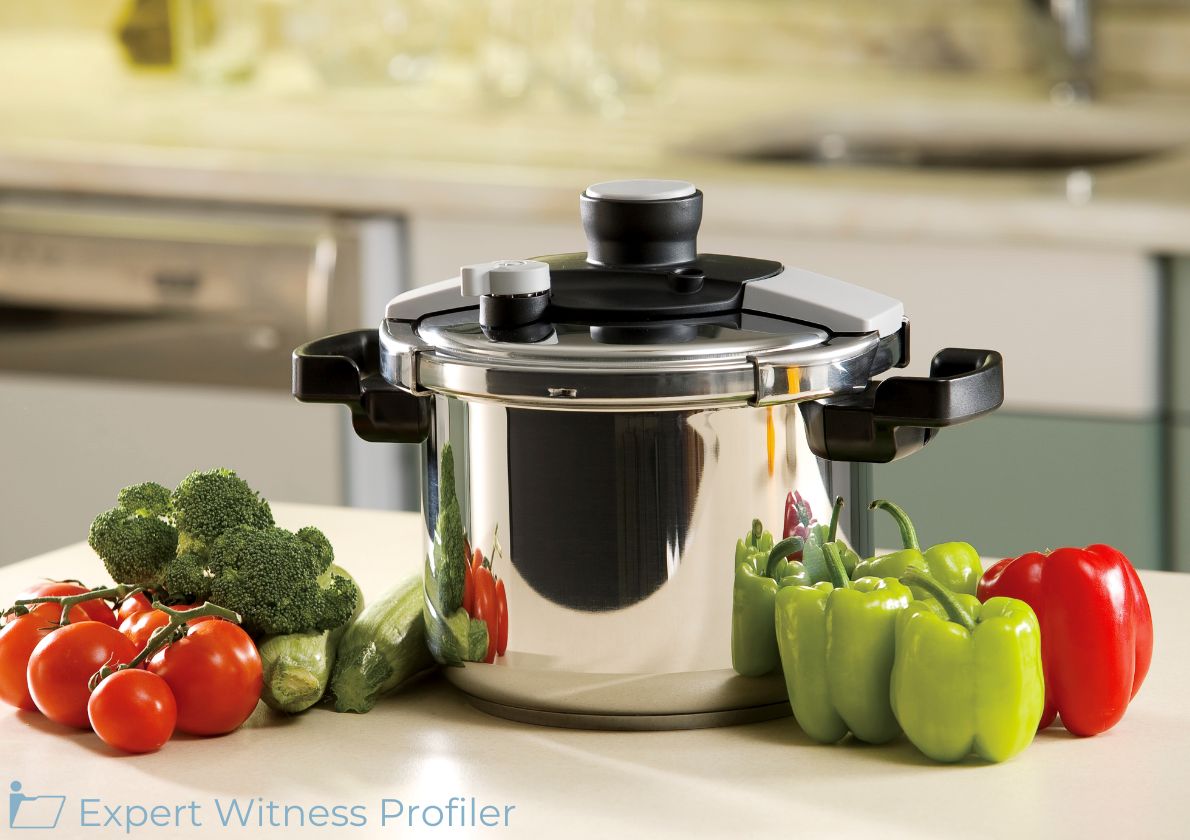
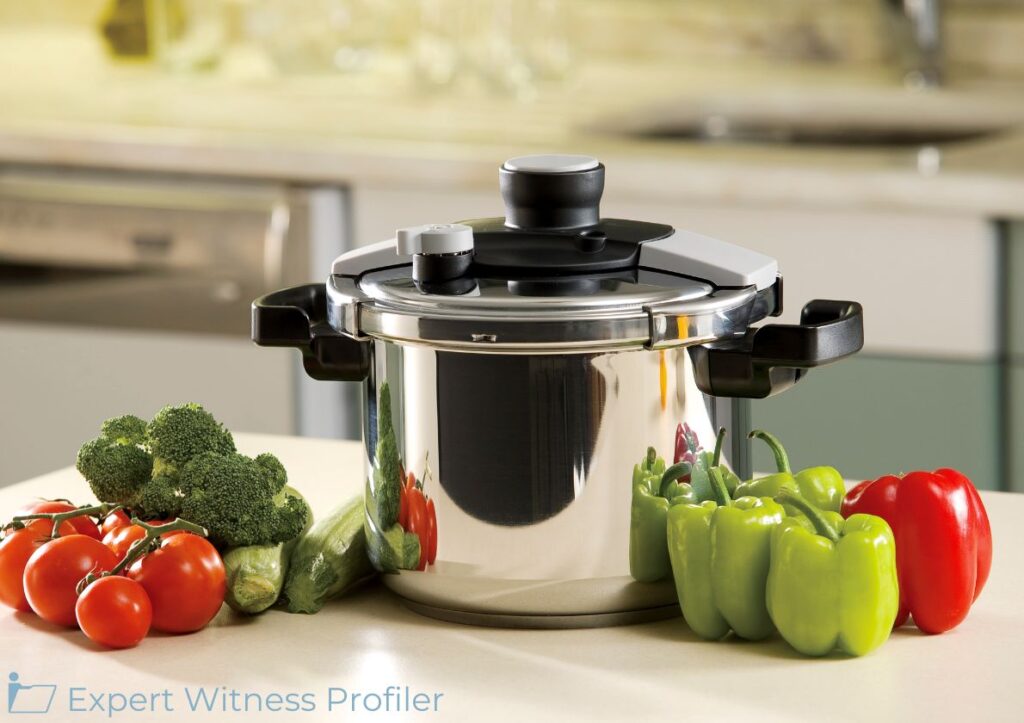
    Plaintiff India Smith (“Plaintiff”) filed this product liability lawsuit against Tabletops Unlimited, Inc. d/b/a TTU’s (“TTU”) on August 1, 2022. Plaintiff sought to recover damages from an August 24, 2020 incident in which she sustained burns on her chest, upper abdomen, and legs after her Pressure Cooker ejected hot contents on her when she tried to open the device after cooking. The subject cooker was a Phillippe Richard 6-Quart Stovetop Pressure Cooker, Model Number YPC-1301, marketed, imported, distributed and sold by Defendant Tabletops.

    Smith alleged that her Pressure Cooker contained a manufacturing and/or design defect that allowed the lid to be removed before the Pressure Cooker de-pressurized.

    Motion to strike and exclude

    Plaintiff retained Dr. David Rondinone, Ph.D., P.E. and Derek King, M.S., P.E., of Berkeley Engineering and Research (“BEAR”) in Berkeley, California. They testified that the subject pressure cooker was defectively manufactured and designed. The defective manufacture allowed for misalignment of the lid handle in a way that reduced the effectiveness of the lid interlock, part of which was incorporated into the lid handle. Moreover, the pressure cooker was also defectively designed in that it was not equipped with a baffle or screen to prevent food material in the cooker from potentially clogging the float valve for the lid interlock.

    They also insisted that Tabletops’ lack of risk assessment contributed to the failure experienced during Smith’s incident.

    Tabletops filed a motion to strike and exclude the testimony of both experts under Rule 702 due to the unreliability of the principles and methods of their testing that formed the basis of their opinions.

    TTU also asserted that Rondinone and King’s reports should be stricken and excluded because their reports failed to meet the requirements of Federal Rule of Civil Procedure 26(a)(2)(B). In addition, TTU maintained that Rondinone and King should not be permitted to supplement their expert report or to correct their report after receiving TTU’s expert disclosures prior to the deadline for rebuttal disclosures.

    Mechanical Engineering Expert Witnesses

    David Rondinone holds an M.S. degree and a Ph.D. degree in Mechanical Engineering from the University of California, Berkeley, majoring in material behavior and design and minoring in structures and dynamics and electronic controls. He also holds a B.S. degree in Engineering Physics and a B.A. degree in Astrophysics from the University of California, Berkeley. From 1993 to the present, he has worked as a Mechanical Engineering Consultant, and is a principal of Berkeley Engineering And Research, Inc. (referred to herein as “BEAR”). He has worked for more than 30 years in the areas of failure analysis, design, and risk assessment of consumer and industrial equipment, including pressure cookers.

    Derek King holds an M.S. degree in Electrical Engineering from Ohio University, and a B.S. degree in Mechanical Engineering from the University of California, Berkeley. He is also a registered professional engineer in the State of California. From 2009 to the present, he has worked as an engineer for Berkeley Engineering and Research in the areas of failure analysis, design, and risk assessment of consumer and industrial equipment, including pressure cookers.

    Discussion by the Court

    Rondinone and King’s Opinions are Admissible under 702

    The Court held that both Rondinone and King are qualified engineers with experience in the analysis of pressure cookers.

    The record demonstrated that Smith’s experts reviewed the subject pressure cooker and an exemplar cooker and performed testing based on their review. Having examined the record in this case, the parties’ arguments, and the controlling authorities, this Court concluded that Rondinone and King’s opinions and anticipated testimony regarding the interlock feature were admissible.

    To the extent TTU claimed that Smith failed to disclose sufficient detail regarding the testing to make these opinions and the anticipated testimony admissible, the Court rejected that argument.

    Further, the Court concluded that Smith’s expert opinions and testimony on clogging were reliable and relevant based on the experts’ prior experience with pressure cookers and clogging events and the facts of this case, including but not limited to Smith’s deposition testimony and TTU’s statements and warnings. TTU argued that this issue “had no relationship to causation in this matter and was merely fault finding.” The Court rejected TTU’s arguments that these opinions and this proposed testimony were irrelevant or inadmissible, given the facts of this case and TTU’s anticipated arguments regarding what it contended was Smith’s alleged “misuse of the product.” The Court also acknowledged that the parties disputed any purported misuse by Smith.

    The parties disputed the facts and circumstances surrounding the issue of TTU not conducting a proper risk assessment, which is why the Court took this portion of TTU’s Daubert motion against both experts under advisement.

    Plaintiff Has Met Her Disclosure And Supplementation Burdens Under The Federal Rules Of Civil Procedure

    TTU contended that, if Smith’s experts relied on any information contained in Exhibits G, H, I, and M in her response to the Daubert motion, those exhibits were not identified in the expert reports. Further, TTU claimed that Smith failed to disclose her experts’ prior testing of other pressure cookers as a basis for their opinions in their reports. For these reasons, TTU sought to strike Rondinone and King’s reports and to exclude them as experts.

    Smith maintained that Exhibit G was a user manual for one of TTU’s own pressure cookers and that Exhibit M was the deposition transcript of TTU’s own corporate designee from a prior case. Smith also maintained that Exhibits H and I were user manuals for other types of pressure cookers and that these documents were publicly available documents that Smith located online for use in defending against TTU’s Daubert motion.

    TTU filed a separate motion to strike Exhibits G, H, I, and M from Smith’s response in opposition to TTU’s initial motion to strike which was denied by the Court.

    The Court observed that Rondinone’s report stated in pertinent part under “Qualifications” that “he has worked for more than 30 years in the areas of failure analysis, design, and risk assessment of consumer and industrial equipment, including pressure cookers.” As to King, the report under “Qualifications” states that “from 2009 to the present, he has worked as an engineer. . . in the areas of failure analysis, design, and risk assessment of consumer and industrial equipment, including pressure cookers.” The Court held that Smith’s experts sufficiently disclosed their prior experience with pressure cookers as a basis for their opinions.

    The Court declared that there was no requirement for a supplemental report.

    Held

    The Court denied, in part, and took under advisement, in part, Tabletops’ motion to strike and exclude David Rondinone and Derek King’s proposed expert opinions and testimony. The Court also denied Tabletops’ motion to strike Smith’s Exhibits G, H, I, and M to her response to Tabletops’ motion to strike and exclude David Rondinone and Derek King.

    Key Takeaways:

    • Admissibility of Opinions under Rule 702: The Court deemed Rondinone and King’s opinions regarding the interlock feature admissible, considering their qualifications as engineers and their thorough review and testing of the subject pressure cooker.
    • Fulfillment of Disclosure and Supplementation Burdens: The Court ruled that Smith met her disclosure and supplementation burdens under the Federal Rules of Civil Procedure, despite TTU’s contentions regarding Rondinone and King’s reliance on certain exhibits and failure to disclose their prior testing of pressure cookers.
    • Reliability and Relevance of Expert Opinions on Clogging: The Court concluded that Smith’s expert opinions and testimony on clogging were reliable and relevant, based on the experts’ extensive experience with pressure cookers and clogging events.

    Case Details:

    Case Caption: Smith V. Tabletops Unlimited Inc
    Docket Number: 3:22cv198
    Citation: 2024 U.S. Dist. LEXIS 68051
    Order Date: April 15, 2024
  • Product Defect Expert Witness’ Testimony Regarding Vehicle and Equipment Recalls Limited

    Product Defect Expert Witness’ Testimony Regarding Vehicle and Equipment Recalls Limited

    Plaintiffs, Kevin and Vivian Hoog sought monetary damages following a fire, which they linked to a defective NDR 1292 gas absorption refrigerator (the “Refrigerator”) manufactured by Dometic. The Plaintiffs had the Refrigerator installed as original equipment in Plaintiffs’ 2007 RV, which Plaintiffs purchased from a private party around October 26, 2011.

    Dometic initiated recalls of select models of its gas absorption refrigerators through the National Highway Traffic Safety Administration (“NHTSA”) in 2006 and 2008. Plaintiffs’ Refrigerator model was not among the select models. Plaintiffs alleged, however, that the NDR 1292 refrigerators shared common design defects with the recalled models and that Dometic was aware “that these model refrigerators continued to fail and cause fires.”

    They also added that Dometic had an ongoing duty to disclose known defects and to conduct recall and retrofit campaigns of its gas absorption refrigerators in a timely manner. 

    Plaintiffs offered Allan J. Kam, an attorney who formerly worked for NHTSA, to testify about the policies, procedures, and processes regarding vehicle and equipment recalls. Dometic filed a motion to exclude Kam’s proposed testimony under Rule 702 and Daubert v. Merrell Dow Pharmaceuticals (92-102), 509 U.S. 579 (1993). Dometic asserted that Kam’s opinions were not relevant and would not help the trier of fact to understand the evidence or to determine a fact in issue.

    Product Defect Expert Witness

    Allan J. Kam holds the degree of Juris Doctor With Honors from The George Washington University Law School. On April 30, 2000, he retired from the National Highway Traffic Safety Administration (“NHTSA” or “the agency”), United States Department of Transportation (“DOT”), after more than twenty-five years of service as an attorney in the NHTSA Office of the Chief Counsel’s Litigation and Enforcement Division. He received numerous NHTSA and DOT performance awards.

    He has had broad experience with complex NHTSA safety defect and standards compliance investigations, including those resulting in the largest recalls in NHTSA’s history.

    Discussion by the Court

    Dometic did not challenge Kam’s qualifications. Rather, Dometic’s arguments were directed at the reliability and relevance of Kam’s proposed expert testimony.

    Kam’s opinions were generally relevant and helpful

    Dometic asserted that Kam’s opinions lacked relevance because Plaintiffs’ Refrigerator model was not among the select models, and Kam did not opine whether Dometic violated any of its statutory recall obligations or whether it failed to conduct the recalls in a timely, inclusive, or effective manner. Kam confirmed in his deposition that he did not “conduct that kind of review.” Dometic asserted that the opinions that Kam did offer were not tied to any factual dispute in that case.

    Dometic conceded in its motion for partial summary judgment that it had assumed a post-sale duty by instituting and conducting the recalls, and that law required it to exercise reasonable care in conducting the recalls. Whether Dometic breached its post-sale duty of care was for the jury to determine.

    The Court concluded that Kam’s proposed testimony was sufficiently tied to the facts of the case and would aid the jury in resolving whether Dometic breached its post-sale duty of care. Contrary to Dometic’s argument, it was improper for Kam to simply state that Dometic violated federal regulations or provisions of the Safety Act. That would have been a mere legal conclusion that would not have assisted the trier of fact in understanding an issue in the case. The Court, however, allowed Kam to testify based on his experience, skills, and education about his understanding of NHTSA’s standards or practices with respect to recall or retrofit campaigns.

    Kam did not offer ultimate legal conclusions on the requirements of the Safety Act

    Dometic asserted that Kam’s “attempts” to explain the requirements under “the Safety Act (albeit sometimes incorrectly)” were not helpful to the jury, and that the Court should have excluded that testimony under Daubert because expert witnesses may not give opinions on a question of law.

    The Court reviewed Kam’s expert report and concluded that he did not offer ultimate legal conclusions on the requirements of the Safety Act. Rather, Kam’s opinions were the product of his personal knowledge and 25 years of experience as a NHTSA enforcement attorney and concerned specialized matters of NHTSA agency practice that a typical juror would not fully understand without expert assistance.

    Kam’s statement in his report that NHTSA “did not make findings of ‘no defect’” was not likely to mislead or confuse the jury

    Dometic contended that Kam’s opinions would confuse or mislead the jury “into believing that a safety defect still exists in the recalled refrigerators simply because NHTSA did not make a finding of ‘no defect.’” Kam did not opine that a safety defect still exists in the recalled refrigerators, nor did he opine that Dometic’s defect reports were inaccurate or misleading. Rather, he stated that NHTSA “did not make findings of ‘no defect’” and “did not ordinarily evaluate the truth, accuracy, or completeness of statements made in a Part 573 report.”  The Court believes that a jury is capable of understanding Kam’s testimony and that a jury can make their own decision about whether  Kam’s opinions are credible.

    Kam’s proposed testimony that NHTSA did not approve or scrutinize the merits of Dometic’s remedy pursuant to the recalls was not reliable or relevant, and the Court excluded it

    The Court found that Kam’s opinions concerning the safety remedy provided as part of the recalls and whether NHTSA approved of the remedy were not relevant or reliable. It was undisputed that Plaintiffs’ Refrigerator was not included in the recalls. Consequently, the safety remedy provided pursuant to the recalls was not included in Plaintiffs’ Refrigerator. Further, it did not appear that Dometic is asserting that NHTSA approved of its safety remedy.

    Kam conceded that he could not “say with certainty” that NHTSA did not scrutinize Dometic’s remedy, and he confirmed that he did not speak to anyone at NHTSA regarding Dometic’s recalls.

    Kam’s opinion that NHTSA did not scrutinize or approve of Dometic’s remedy appeared to be based on what Kam describes as NHTSA’s ordinary or typical procedure when there has been no preceding defect investigation. In other words, it was not based on facts that would enable Kam to accurately conclude that NHTSA did not approve or scrutinize Dometic’s remedy.

    Kam’s testimony concerning Dometic’s completion rates for the recalls is reliable and relevant

    Dometic asserted that Kam’s opinion that Dometic’s completion rates for the recalls were well below average was not relevant and was unreliable. Plaintiffs asserted that Kam had the specialized knowledge and expertise to conclude that a recall completion rate of less than 50 percent was low.

    Upon review, the Court found that Dometic’s criticisms of Kam’s testimony regarding the recall completion rates concerned the weight of his testimony as opposed to its admissibility.

    Held

    The Court granted in part and denied in part Defendant Dometic Corporation’s motion to exclude expert declaration of Allan Kam.

    Key Takeaways:

    • Legal Conclusions: To ensure testimony is helpful, an expert may not state legal conclusions drawn by applying the law to the facts, but an expert may refer to the law in expressing his or her opinion. Kam did not offer ultimate legal conclusions but provided insights based on his experience, relevant for understanding NHTSA’s standards.
    • Sufficient Factual Basis: Witnesses that rely on experience must explain how that experience leads to the conclusion and why that experience is a sufficient basis for the opinion. Kam’s opinion that NHTSA did not scrutinize or approve of Dometic’s remedy appeared to be based on what Kam describes as NHTSA’s ordinary or typical procedure when there has been no preceding defect investigation.
    • Relevance: Relevant expert testimony must logically advance a material aspect of the case and aid the jury in resolving a factual dispute. The Court concluded that Kam’s proposed testimony would help determine whether Dometic breached its post-sale duty of care.

    Case Details:

    Case Caption: Hoog Et Al V. Dometic Corporation
    Docket Number: 5:20cv272
    Court: United States District Court, Oklahoma Western
    Order Date: March 22, 2024

  • Corporate Law Expert Witness’ Opinions on Ordinary Corporate Behavior Excluded

    Corporate Law Expert Witness’ Opinions on Ordinary Corporate Behavior Excluded

    Plaintiffs, ECB USA, Inc. and Atlantic Ventures Corp. accused Savencia and Zausner, together with other persons and entities, of commiting a series of tortious acts, including, but not limited to, looting the assets of Schratter Foods Incorporated (“Schratter”), then fraudulently inducing Plaintiffs into executing an agreement to purchase all of Schratter’s shares (the “Stock Purchase Agreement”).

    Knowing that the ECB representatives had no experience with cheese and dairy products and were not eligible to work in the United States, Savencia and Zausner, along with other co-conspirators, induced the ECB Representatives to enter a fiduciary relationship with Voss, and then induced Plaintiffs to partner with Voss in the purchase of Schratter. The ECB Representatives, and ultimately Plaintiffs, put their trust and confidence in Voss, who, in turn, colluded with Zausner, Savencia and other co-conspirators in the commission of frauds and other tortious acts.

    A key issue in the case is whether, prior to Schratter’s sale, Defendants secretly “stripped” Schratter’s Chief Executive Officer (“CEO”) Alain Voss (“Voss”) of certain of his powers and duties as CEO and then “lied” to Plaintiffs’ by holding “Voss out as Schratter’s trusted, knowledgeable, and effective chief, for the purpose of persuading [Plaintiffs’] representatives to accept Voss as a fiduciary and to partner with him to purchase Schratter.

    Plaintiffs hired Jonathan Macey to provide “opinions on corporate governance and ordinary and customary corporate behavior.” Defendants filed a Daubert motion to exclude Macey’s opinions and testimony because his opinions were unreliable and did not “fit” the facts of the case.

    Corporate Law Expert Witness

    Jonathan R. Macey is Sam Harris Professor of Corporate Law, Corporate Finance, and Securities Law at Yale University and Professor in the Yale School of Management. Professor Macey earned his B.A. cum laude from Harvard in 1977, and his J.D. from Yale Law School in 1982, where he was Article and Book Review editor of The Yale Law Journal.  In 1996, Professor Macey received a Ph.D. honoris causa from the Stockholm School of Economics. 

    Professor Macey has taught at major universities throughout the world, including Bocconi University (Milan), the University of Tokyo; the University of Toronto; the University of Turin, the University of Amsterdam Department of Finance, and the Stockholm School of Economics, Department of Law. He also has been Professor of Law at the University of Chicago (1990) and Visiting Professor of Law at Harvard Law School (1999). In 1998, he received the D.P. Jacobs prize for the most significant paper in volume 6 of the Journal of Financial Intermediation for his paper (co-authored with Maureen O’Hara), “The Law & Economics of Best Execution.”

    Get insight into every aspect of Jonathan R. Macey’s challenged expert witness experience – from direct testimony exclusions to affidavits supporting key motions – all covered in our Challenge Study. 

    Discussion by the Court

    Macey provided two principal opinions in his report:

    1. Based on commonly understood conceptions on the role of the CEO in business organizations such as [Schratter], Alain Voss was not actually the CEO of Schratter during the period beginning June 30, 2014 and continuing through December 31, 2014, as the term ‘CEO’ is universally understood in business. During the foregoing period Voss was the CEO of Schratter in name only, without the usual responsibilities, authority, and duties associated with that position.”
    2.  Analysis of the quality of management of the company being acquired (the target company) is a critical consideration in making a corporate acquisition where the acquisition is being done with management in place. An inevitable implication of this analysis is that the identity of a company’s CEO should be fully and accurately disclosed, including, but not limited to, in the governing documents of the target company. To the extent that a selling entity makes disclosures about the quality of management, such disclosures should be accurate.”

    Plaintiffs alleged that: (1) prior to mid-2014, Voss was the CEO of Schratter and held certain duties commensurate with that role; (2) but in June 2014, Defendants secretly “stripp[ed]” Voss of those duties, and gave those duties to another executive at Schratter (J.M. Wild, or “Wild”), who became the “de facto” CEO, such that Voss was thereafter the CEO “in name only”; and (3) yet Defendants did not tell Plaintiffs this before the Schratter deal closed, and instead communicated that Voss was a trusted, effective CEO.

    Macey’s opinions as to Voss’ role at Schratter did not meet the fit requirement

    Corporate Law Expert Witness Macey explained his view as to why “based on commonly understood conceptions of the role of the CEO . . . [Voss] was not actually the CEO” as of Schratter’s sale. Here, although Macey acknowledged that “different CEOs focus on different issues and adjust their duties to address the specific needs of particular firms,” he opined that there were “features of the job of CEO that could be generalized across firms.” He discussed only some of those features and opined that at the time of the sale, Voss’ role did not include these particular features. As a result, Macey opined that Voss then “was the CEO of the company in name only” and “did not have the powers of the president and CEO and did not manage the business of Schratter.”

    However, it is not relevant (and thus, the jury will not benefit from hearing testimony about) what CEOs at other companies “generally” do.

    In order to assess these issues, the jury will need to answer related questions such as: (1) What duties did Voss have prior to early-to-mid 2014 in his role as CEO?; (2) Was he “stripped” of some or all of those duties thereafter, with the duties being given to Wild, such that Voss became the “CEO” in “name only”?; (3) What statements or disclosures did Defendants make to Plaintiffs about Voss’ role in the relevant time period, and did Defendants make any misrepresentations or omit important facts on these subjects? 

    These are factual questions regarding events that either did or did not occur in the past regarding Schratter’s sale, and which are not particularly technical or complex. The Court held that assessing whether these events occurred and how that relates to the instant claims did not necessitate reliance on expertise beyond the ken of a typical lay juror.

    Macey will have nothing relevant or admissible to say about how “Voss was portrayed”

    Macey opined that analysis of the quality of management of the company being acquired is a critical consideration in making a corporate acquisition” such that “the identity of a company’s CEO should be accurately reflected in the governing documents of the firm.” He cited published articles for the proposition that “CEO quality” is “often critical to the success of an acquisition.”

    The relevant allegations are not about what “often” happens with regard to acquisitions involving other entities, such as those in the private equity realm. The allegations are that these particular Plaintiffs highly valued the fact that a successful, competent CEO was in place at Schratter (due to their lack of experience in the relevant field) and that this allegedly “created an opportunity for Defendants to fraudulently induce Plaintiffs” to follow through with the acquisition to their detriment.

    The Court held that it was relevant to determine what impact the assertions allegedly made by Defendants had on Plaintiff, all of which relate to the actual transaction at issue in this case. Henceforth, Macey will have nothing relevant or admissible to say about how “Voss was portrayed” or whether it was “highly unlikely” that Plaintiffs would have bought Schratter had they known the “true facts” about Voss’ role.

    Held

    The Court granted Defendant’s motion to exclude the opinions and testimony of Plaintiff’s Corporate Law Expert Witness Jonathan Macey.

    Key Takeaways:

    1. No Specialized Knowledge Needed For The Jury: The jury needed to answer factual questions regarding events that either did or did not occur in the past regarding Schratter’s sale, and which are not particularly technical or complex. Thus, assessing whether these events occurred and how that relates to the instant claims did not necessitate reliance on expertise beyond the ken of a typical lay juror which is why Jonathan Macey’s opinions as to Voss’ role at Schratter did not meet the fit requirement.
    2. Lack of Relevance: Macey could not shed light on the impact the assertions allegedly made by Defendants had on Plaintiff, all of which relate to the actual transaction at issue in this case.

    Case Details:

    Case Caption: Ecb Usa, Inc. Et Al V. Savencia, S.A. Et Al
    Docket Number: 1:19cv731
    Court: United States District Court, Delaware
    Order Date: March 22, 2024
  • Film and Movie Production Expert Witness’ Opinion Assists Court by Clarifying Article’s Factual Elements

    Film and Movie Production Expert Witness’ Opinion Assists Court by Clarifying Article’s Factual Elements

    Plaintiffs Shosh Yonay and Yuval Yonay (collectively “Plaintiffs”) are the widow and son of Ehud Yonay (“Yonay”), the author of a magazine article “Top Guns” (the “Article”) published in California Magazine on April 21, 1983. The Article is an account of the experiences of F-14 pilots and radio intercept officers as they undergo training at the Navy’s Fighter Weapons School (known as “Top Gun”). After the Article’s publication, Defendant Paramount Pictures Corporation (“Defendant”) and Yonay executed an Assignment of Rights, dated May 18, 1983, assigning to Defendant the motion picture rights to the Article. The Assignment of Rights also required Defendant to credit Yonay on the film of any motion picture photoplay that is produced under the Assignment of Rights and substantially based upon or adapted from the Article or any version or adaptation thereof.

    In 1986, Defendant released the motion picture “Top Gun” (the “Original Film”). Yonay received a “suggested by” credit. The story follows fictional characters Pete (“Maverick”) Mitchell and Nick (“Goose”) Bradshaw as they train at the Top Gun Naval Fighter Weapons School.

    On January 23, 2018, after Yonay’s death, Plaintiffs sent Defendant a Notice of Termination (“Notice”) terminating Defendant’s rights to the Article pursuant to 17 U.S.C. § 203(a), effective January 24, 2020. On May 27, 2022, Defendant released the sequel to the Original Film, “Top Gun: Maverick” (the “Sequel”) without crediting Yonay. The film grossed $1.496 billion worldwide, making it the second-highest-grossing film of 2022. It also won Best Film from the National Board of Review and was also named one of the top-ten films of 2022 by the American Film Institute.

    Plaintiffs commenced this action on June 6, 2022, and pursued claims of breach of contract, declaratory relief, and copyright infringement against the Defendants.

    Motions to exclude

    Plaintiffs alleged that Defendant breached the Assignment of Rights by not crediting Yonay in the Sequel. They also alleged that the Sequel infringed Plaintiffs’ copyright because “key elements” in the Sequel were substantially similar to the Article. Plaintiffs also sought a declaration that the Sequel was a “derivative” of the Article and that Defendant “did not have any rights to make, exploit, or distribute” the Sequel.

    Plaintiffs relied on the expert testimony of Henry Bean to support their contention that the Article and Sequel were substantially similar. Defendant relied on the expert testimony of Andrew Craig and James McDonald to support its contention that the two works were not substantially similar. The parties moved to exclude the testimony of their respective expert witnesses pursuant to Rule 702 of the Federal Rules of Evidence.

    Film and Movie Production Expert Witnesses

    Henry Bean has significant teaching experience relating to writing, including writing for the motion picture and television industries. He is a former adjunct professor at Columbia University’s graduate film school and New York University’s Tisch School of the Arts. He has been been writing as a writer of novels, stories and of theatrical film and television productions for the past five decades.

    James McDonald is a story analyst and consultant on screenwriting and writer-credit issues for motion pictures. He holds a Bachelor of Arts in Communications from Stanford University and an M.F.A. in Directing for Film & TV from the UCLA Film School. Over the last five decades, he has worked for every major studio and several other studios and production companies. In that time, he has read and analyzed more than 10,000 submissions for feature film development. He spent two years as vice president in charge of development for an independent production company. As a producer, with partners, he put three feature film projects into development at studios and production companies.

    Get the full story on challenges to James McDonald’s expert opinions and testimony with an in-depth Challenge Study.

    Aviation Expert Witness

    Andrew Craig is a Commanding Officer in the Navy Reserve, as well as a former Top Gun instructor. In January 2022, he qualified as the Navy Reserve’s first Commanding Officer of the Virtual Adversary Replication Modeling and Intelligence Translation Team (VARMITT). VARMITT analyzes intelligence collected on threat countries and replicates the behaviors of their pilots during large scale simulation exercises.

    In his civilian life, he holds an FAA Airline Transport Rating and is a 737NG pilot for Delta Air Lines, flying international and domestic routes.

    Discussion by the Court

    Plaintiff’s Expert Henry Bean

    Henry Bean opined that there were numerous similarities between the Article and the Sequel. However, the Court observed that Bean failed to filter out the elements of the Article and Sequel that were not protected by copyright law (i.e., facts), which rendered his opinions unhelpful and inadmissible.

    Therefore, Bean’s opinions were also unhelpful to the extent he provided a subjective, rather than objective, comparison of the Article and Sequel.

    To sum it up, subjective comparison of two works — referred to as the “intrinsic test” – is done with “no expert assistance. For example, when comparing the dialogue in the Sequel to that in the Article, Bean cited excerpts from the Article and wrote: “Those exact words may not have appeared in [the Original Film or the Sequel], yet one felt them informing a lot of the dizzying and dazzling aerial footage of both films, especially in the Sequel . . . .”

    Moreover, Bean admitted that his report did not identify a single instance in which any of the words or spoken language appearing in the Article also appeared in Maverick.

    To conclude, the Court held that Bean’s opinions were unhelpful and did not meet the standards for admissibility set forth in Rule 702.

    Defendant’s Expert Andrew Craig

    Craig expressed two main opinions about the accuracy of the Article. First, he opined that Yonay factually and accurately described the Top Gun program, including: (a) “training that TOPGUN students received,” (b) the “personalities and characteristics of TOPGUN students and graduates,” (c) the “process of becoming a TOPGUN instructor” and “the instructors’ limited combat experience,” (d) the “camaraderie and close connections that formed at TOPGUN,” (e) the “social life at TOPGUN,” (f) the “occasional tension between Navy leadership and TOPGUN instructors.” Second, he opined that the Article accurately and factually described the experience of flying a fighter jet, mechanical components and characteristics of fighter jets, and physics concepts that applied to fighter jets.

    Craig also referenced facts that were confirmed to him by other naval aviators, and facts that he learned from viewing historical photographs and conducting research in the Navy’s Archives. Plaintiffs took issue with these references, arguing that Craig’s reports should be excluded because they contained hearsay.

    Plaintiffs claimed infringement of a journalistic Article describing a highly-specialized, elite Navy training program about which few members of the military, let alone civilians, had personal knowledge. Craig’s opinions would assist the Court by clarifying the factual elements of the Article by filtering out any substantial similarity analysis between the Article and Top Gun: Maverick (“Maverick”).

    Plaintiffs also contended that Craig’s opinions were unhelpful, and that Craig was not qualified to opine on literary similarities between the Article and Sequel. The Court was unpersuaded by these arguments. As an initial matter, Craig did not opine on literary similarities; rather, he opined on the factual elements of the Article as historical facts. The Court refused to exclude his opinions because they helped the Court filter out the unprotected, factual elements of the Article and Sequel to assess whether they were substantially similar.

    Defendant’s Rebuttal Expert James McDonald

    Plaintiffs and Defendant each sought summary judgment on all three of Plaintiffs’ claims: copyright infringement, declaratory relief, and breach of contract. The Court affirmed Defendant’s entitlement to summary judgment on Plaintiffs Shosh Yonay and Yuval Yonay’s (collectively, “Plaintiffs”) claims for breach of contract, declaratory relief, and copyright infringement.

    As a matter of fact, the Court did not rely on James McDonald’s rebuttal expert report or testimony in ruling on the parties’ cross-motions for summary judgment.

    Held

    To conclude, the Court granted the Defendant’s motion to exclude the testimony of Plaintiff’s expert Henry Bean but denied the Plaintiff’s motion to exclude the testimony of Defendant’s expert Andrew Craig. Moreover, the Court declared the Plaintiff’s motion to exclude the expert report and testimony of James McDonald moot.

    The Court entered the final decision on April 5, 2024, ruling in favor of the Defendants.

    Key Takeaways:

    1. Subjective Comparison: The Court held that Bean’s opinions were also unhelpful to the extent he provided a subjective, rather than objective, comparison of the Article and Sequel. Subjective comparison of two works — referred to as the “intrinsic test” – is done with “no expert assistance.
    2. Helpfulness: Expert Andrew Craig viewed historical photographs and conducted research in the Navy’s Archives. He opined on the factual elements of the Article as historical facts which helped the Court filter out the unprotected, factual elements of the Article and Sequel to assess whether they were substantially similar.
    3. Copyright Infringement: Henry Bean himself admitted that his report did not identify a single instance in which any of the words or spoken language appearing in the Article also appeared in Maverick. It did not help the Court in filtering out elements of the Article and Sequel that copyright law protected.

    Case Details:

    Case Caption: Shosh Yonay Et Al V. Paramount Pictures Corporation Et Al
    Docket Number: 2:22cv3846
    Court: United States District Court, California Central
    Order Date: April 5, 2024
  • Premises Liability Expert Witness’ Testimony Limited due to being based on Observable Contents

    Premises Liability Expert Witness’ Testimony Limited due to being based on Observable Contents

    In May 2021, Plaintiff Drew Krantz visited Adrien Crastes’ apartment at Lewisburg in Pennsylvania. The Defendant, Market Street Investment Corporation, Inc owned the premises. Krantz and others decided to install a window air conditioning unit in Crastes’ window. But when Krantz tried to open the window, the windowpane broke and fell on his wrist, causing the injury which prompted this lawsuit.

    Market Street’s motion in limine sought to preclude the testimony of Brian Krason, one of Krantz’s expert witnesses, on four matters. First, Market Street moved to preclude Krason’s testimony on medical causation, as Krason’s lack of any medical expertise made him unqualified to offer medical testimony about Krantz’s injuries. Krantz agreed and stated that he had never intended to offer any such expert testimony from Krason in the first place. Therefore, Market Street’s motion in limine was granted as to Krason’s testimony on medical causation. Market Street’s motion in limine also moved “to preclude Krason from offering opinions and/or testimony regarding tempered safety glass; adequacy of inspections; [and] the condition of the subject window.”

    The Court decided not to hold a Daubert hearing because there was a full record before the Court on these issues including Brian Krason’s expert report and deposition. Krason provided sufficient responses in his deposition testimony for this Court to rule upon each of the contested issues presented by these motions in limine.

    Premises Liability Expert Witness

    Brian Krason specializes in safety and management across various sectors, including residential, hospitality, and retail. His areas of expertise encompass accident and safety management, premises liability with a focus on slip and fall incidents, fall prevention, property management, workplace safety, hotel security, and hotel administration.

    Krason has experience in the construction management of small projects including window replacements, he was a member of the Institute of Real Estate Management for more than ten years, and he has worked closely with many building inspectors in his capacity as a property manager. Krason has put his inspection expertise to non-judicial uses during his long career.

    Discussion by the Court

    Adequacy of Keystone COG’s Inspection

    Krason stated that Defendants failed to properly inspect the window where Krantz was injured and recklessly disregarded safety of the tenants and guests. Krason accused Scott Stieler and Market Street Investments Corporation of violating common and acceptable industry standards and good practices by believing that the COG inspection was a thorough property inspection.

    The Court found that Krason’s opinion was simply based on a quotation from Keystone COG’s website, and on the contents of the International Property Maintenance Code (IPMC) inspection checklist which may or may not have been used by Keystone COG.

    The Court concluded that simply reading Keystone COG’s website and inspection checklist requires no specialized knowledge.

    Therefore, the Court deemed Krason’s testimony that Keystone COG’s inspection did not ensure that the windows were free of safety hazards inadmissible. Of course, this did not prevent Krason from testifying about the frequency or intensity of inspections required for safe property management based on his own experience in the industry; it merely prevented him from rendering an expert opinion as to the thoroughness and contents of Keystone COG’s inspection specifically because this opinion was based almost solely upon the clearly observable contents of its website and the IPMC inspection checklist.

    Tempered Safety Glass

    Krason opined that tempered glass is the industry standard for property managers. But because an industry standard describes generally accepted
    requirements, personal experience alone cannot reliably demonstrate it.

    Krason being a qualified and experienced expert did not justify his expert testimony that installing tempered safety glass is a “best practice”
    in the property management industry.

    Krason admitted that he was not aware of “any building codes anywhere that required tempered safety glass in apartment buildings;” that he had no “sense for how many apartment units used tempered safety glass versus how many didn’t.”

    Conceding that he was aware of no source opining on the merits of float glass or tempered safety glass at all, Krason contended that he had nevertheless supported his opinion with industry standards, but stated: “[t]he only standard would be that they [the windows] have to be safe.” The Court held that the conclusory “standard” neither required technical knowledge nor assisted the fact-finder. The issue in need of support was not whether windows must be safe; it was what conditions rendered them safe. Krason skipped the important step: explaining the basis on which he concluded that tempered safety glass was the industry standard for property managers.

    Condition of Windows

    Market Street contested the following conclusion in Krason’s report: “The window at 220 South 7th Street, Lewisburg exhibited signs of inadequate maintenance, including dry rotting framing and allowed the dangerous condition to exist causing Krantz’s injury.”

    Krason delivered no explanation of his experience inspecting windows or of how he applied that experience to determine that this window was unsafe because it was improperly. However, Krason’s deposition testimony filled these gaps, demonstrating his relevant experience, the non-judicial contexts in which he had evaluated the safety of residential windows, and his explanation as to how improper maintenance contributed to the accident.

    Although Market Street contended that Krason had not applied any methodology in its brief, Market Street did not otherwise explicitly object to Krason’s methodology for evaluating the condition of the window.

    Unsafe Condition

    First, Market Street objected that because Krason had equivocated on his views during his deposition, he had unreliably applied his methodology for inspecting the condition of windows to the facts of this case. Specifically, Krason testified several times that he had seen “what appeared to be rot” on the window frame. Krason also “guesstimated” that the gap caused by rot in the window corners was about an eighth of an inch, which “meant that the glass could then move and shimmy,” creating a dangerous condition.

    Whether or not the gap was caused by rot, and whether or not Krason’s “guesstimation” as to the gap’s size was slightly too large or small, the Court noted that his testimony was the same; allowing the gap to persist created an unsafe condition.

    Photographs of the Window

    When Market Street alleged that Krason did not know when or by whom the photographs of the window were taken. The Court noted that the photographs were obviously taken after the accident and before the window was repaired; they showed that the glass was still broken. The Court held that Market Street’s objections were without merit.

    Prior Expert Witness Testimony

    Federal Rule of Civil Procedure 26(a)(2)(B)(v) provides that an expert witness’s report “must contain . . . a list of all other cases in which, during the previous 4 years, the witness testified as an expert at trial or by deposition.”

    In his deposition, Krason directly stated that he did not have a list of cases in which he has testified, despite testifying “10 to 20 times” at trial and “25, 30” times in depositions. Krason also claimed that he had not testified in the last five years due to COVID. However, Krason made no statement in his expert report indicating that he had not testified in any cases within the last four years.

    The Court held that Krantz must either provide a list of the matters in which Krason has testified within the last four years, or else certify to Market Street that he has not testified in any matters within the last four years. If Krantz fails to do so, the Cour may exclude Krason’s testimony in full.

    Held

    The Court granted in part and denied in part Market Street Investment Corporation, Inc.’s motion in limine to exclude Brian Krason’s testimony.

    Key Takeaways:

    1. Personal Experience: No matter how qualified and experienced expert an expert may be, his personal experience still does not justify expert testimony if it only speaks to the expert’s own practice.
    2. Equivocations: The Court held that Krason’s minor equivocations over the rot and size of the gap did not render that testimony unreliable in any event. The evidentiary requirement of reliability is lower than the merits standard of correctness.
    3. Specialized Knowledge: Simply reading Keystone COG’s website and inspection checklist requires no specialized knowledge. Laymen or property management experts are equally competent to make these observations, and therefore admitting them as expert testimony has the potential of misleading the jury.

    Case Details:

    Case Caption: Krantz V. Steiler
    Docket Number: 4:21cv1217
    Court: United States District Court, Pennsylvania Middle
    Order Date: April 05, 2024
  • Legal Assertions made by Aviation Expert Witness Rejected Despite his Experience as a Pilot

    Legal Assertions made by Aviation Expert Witness Rejected Despite his Experience as a Pilot

    On June 24, 2023, at approximately 3:08 PM, Colter Bay Rangers were notified “of an illegally landed helicopter at the base of Moran Creek in Moran Bay.” According to the probable cause statement, Rangers G’Sell and Cardenas responded and found “a Eurocopter Helicopter (N708SD) . . . [with] two individuals outside the helicopter.” After contacting the Defendant, the Rangers informed him that he had landed within Grand Teton National Park.

    Peter Smith, pilot in command of the white Eurocopter (N708SD) aircraft determined that he landed the flight to avoid further exposure to high-risk weather conditions.

    Defendant was charged with two separate violations of the Code of Federal Regulations under 36 C.F.R. 2.17 for operating an aircraft on lands/waters other than designated areas and failure to comply with Federal Aviation Administration [FAA] regulations (i.e. having physical possession of a pilot certificate or making it readily accessible in the aircraft).

    On October 16, 2023, Defendant filed his notice of intent to offer the expert testimony of Mark Warren, (Designation), “an airline pilot flying for American Airlines”.

    On the other hand, the government sought to preclude any testimony or evidence presented regarding Warren’s statements “related to legal assertions or analysis of domestic law and providing testimony related to the credibility or veracity of any party or to vouch for the credibility of . . . Defendant or any witness.”

    Aviation Expert Witness

    Mark Warren is currently an airline pilot flying for American Airlines. During his tenure with American Airlines’ predecessor, Mark Warren served as Flight Operations Regulatory Compliance officer.

    Warren has over 45 years of experience as a general aviation pilot flying the Colorado Rockies and other mountain regions in the United States.

    Start your due diligence on Mark Warren quickly and affordably by first reviewing key insights in our Preliminary Screening Report.  

    Discussion by the Court

    The government pointed to the expert witness Notice provided by Defendant for Warren, the statements within the Notice focused on bolstering Defendant’s version of facts, dictated how the Court should interpret FAA regulations in relation to Defendant’s version of facts, and highlighted the lack of proper disclosure of expert opinions or reports. To sum it up,the government argued that the Court should not permit any testimony offered regarding FAA regulations based on the role the Court holds in judicial proceedings.

    Defendant asserted that Warren had an extensive background in FAA regulations. Defendant argued that there was no basis for limiting Warren’s testimony since he will only be “stating [what FAA regulations] exist and what they are.”

    The Court noted that Warren was not present in the Park when Rangers contacted Defendant, nor was he in the aircraft when Defendant flew his helicopter on June 24, 2023.

    The Court agreed when the government stated that the insufficiency of Defendant’s disclosure was apparent on the face of [the expert witness] Notice—it contained few details of Warren’s opinions to be elicited, no facts [or] data relied upon, and it was devoid of the principles and methods used to reach the undisclosed conclusions.  In other words, the Notice was lacking and failed to provide adherence to Rule 16(b)(1)(C).

    The Court noted that if the conclusory statements in the Notice were indicative of Warren’s testimony, then his testimony would be improper.

    The Court limited Warren’s testimony to the hypothetical scenario, his expertise as a pilot. It did not allow him to testify about the application of the FAA regulations in this case. The Court also did not permit him to testify about facts he had not witnessed.

    Held

    The Court granted in part and denied in part the testimony of Mark Warren.

    Key Takeaways:

    1. Insufficiency of Disclosure: The Court agreed when the government stated that the insufficiency of Defendant’s disclosure was apparent on the face of [the expert witness] Notice—it contained few details of Warren’s opinions to be elicited, no facts [or] data relied upon, and it was devoid of the principles and methods used to reach the undisclosed conclusions.  In other words, the Notice was lacking and failed to provide adherence to Rule 16(b)(1)(C). It was insufficient to have put the government on notice of what the witness would testify to, the opinions he held, and whether such were the product of true expertise and reliable application of principles used in the field.
    2. Legal Assertions: It is not an expert’s role to tell the Court what federal regulations apply, or how they are interpreted, rather that is the role of the Court.

    Case Details:

    Case Caption: USA V. Smith
    Docket Number: L:23po382
    Court: United States District Court for the District of Wyoming
    Order Date: April 03, 2024

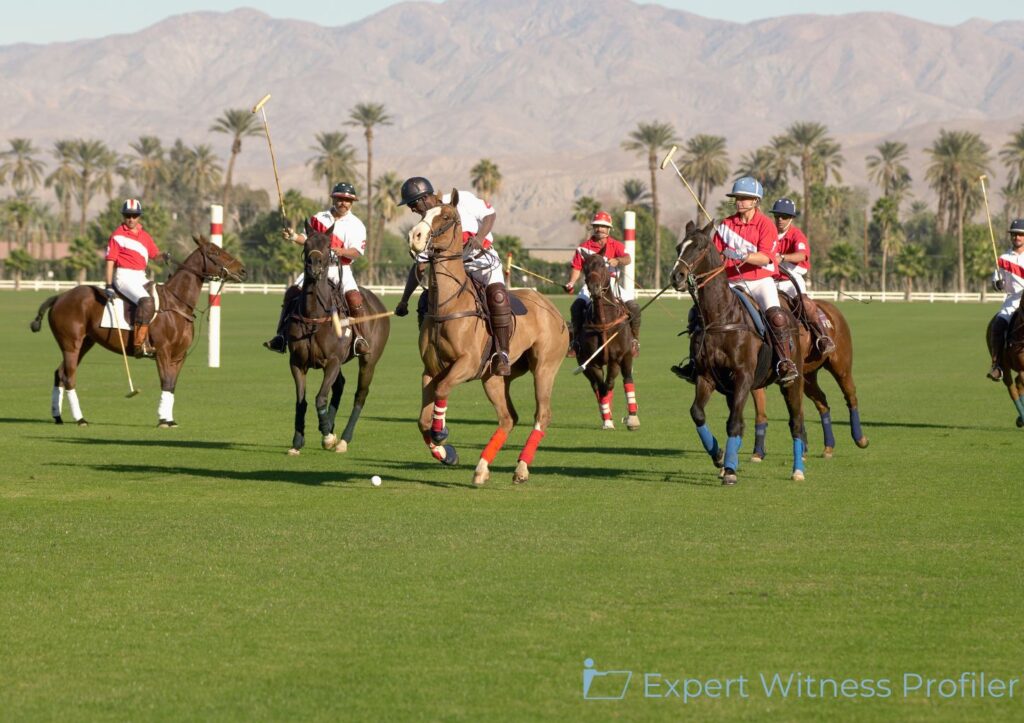
  • Veterinary Expert Witness’ Testimony about Equine Cloning and its Role in the Polo Industry Admitted

    Veterinary Expert Witness’ Testimony about Equine Cloning and its Role in the Polo Industry Admitted

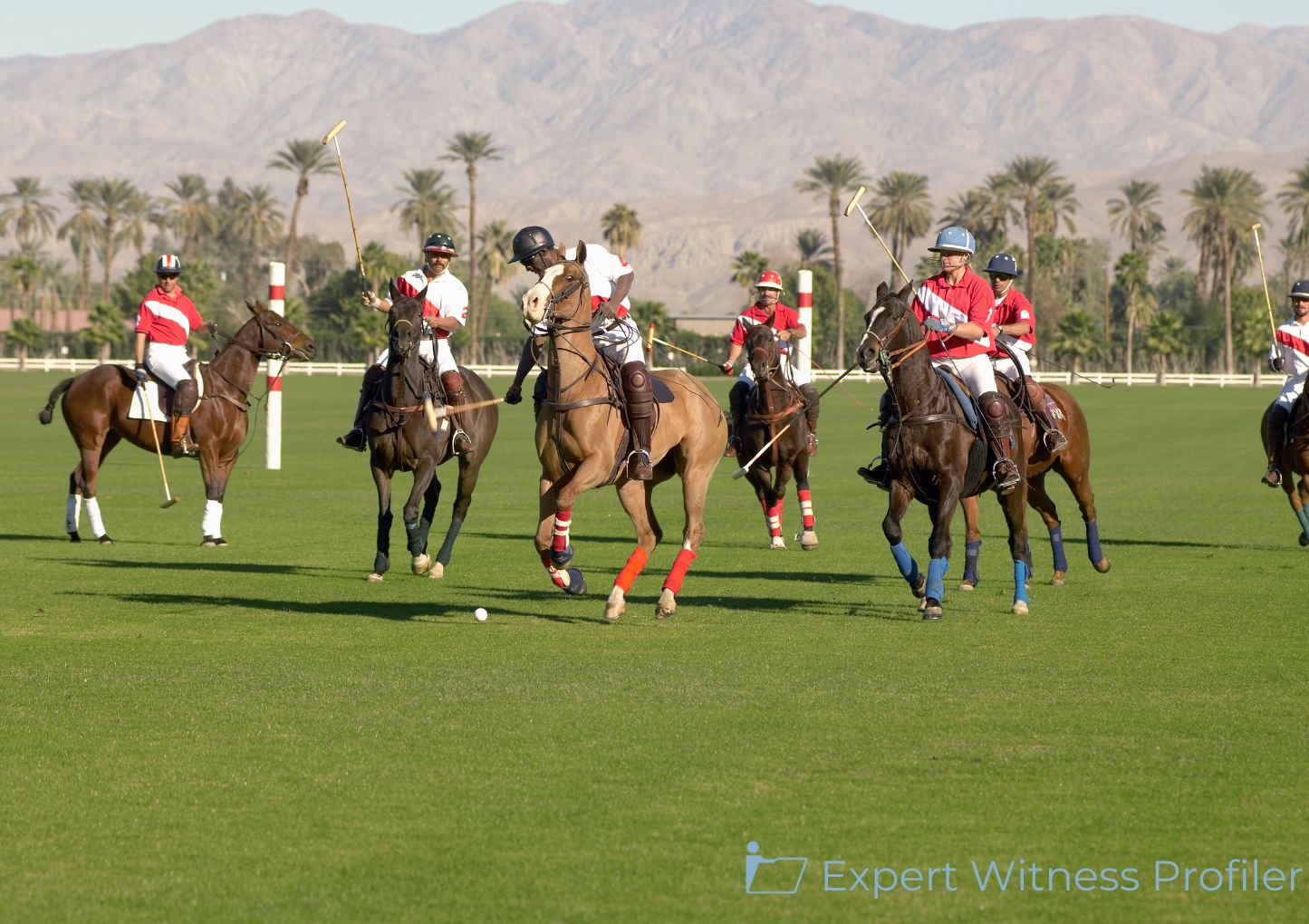
    This case concerned the unauthorized creation and sale of clones of Plaintiff La Dolfina S.A., LLC and Adolfo Cambiaso’s most important asset: their best and most famous horse, Dolfina Cuartetera (“Cuartetera”). This horse represented the development and foundation of Plaintiffs’ most competitive polo bloodlines and champion horses. Defendant D. Alan Meeker (“Meeker”), Crestview Farm, LLC (“Farm”), and Crestview Genetics, LLC (“Genetics”) (collectively “Defendants”) unilaterally sold, without authorization, clones of Cuartetera to Andrey Borodin, a Russian billionaire in exile and the owner of a polo team, Park Place Polo, that competed directly with Plaintiffs. Defendants had asserted a right to unilaterally make and sell these clones under an agreement from 2009.

    The parties’ rights and obligations are governed by a series of agreements, which have been the subject of extensive briefing in this action.

    Defendants filed a motion to exclude altogether the testimony of one of Plaintiffs’ proposed retained expert witnesses—Dr. Scott Swerdlin—and two of Plaintiffs’ proposed non-retained expert witnesses—Robert Jornayvaz and Santiago Ballester.

    Veterinary Expert Witness

    Scott Swerdlin is the president of Palm Beach Equine Clinic, the largest Sport Horse practice in the United States, with over 40 veterinarians and 80 staff and technicians. He has been in equine veterinary practice for more than 40 years.

    Sports And Recreation Expert Witnesses

    Robert P. Jornayvaz III has been a polo player, polo sponsor, and breeder of high goal polo horses in association with La Dolfina. Jornayvaz has won the U.S. Polo Open twice, won the U.S. Polo Triple Crown in 2017, has been in the Open finals 6 times, and is a 5-time winner of the US Gold Cup, with his team Valiente. Other achievements include winning the Sotogrande Gold Cup and the Spanish Triple Crown, as well as winning the San Jorge Open and the Jockey Club Open (30+ goals). Moreover, he is also a founder of the World Polo League, the only 26-goal polo in the world outside of Argentina. Jornayvaz also has extensive experience in breeding the world’s best polo horses, as well as race horses in both the US and Argentina.

    Efficiently evaluate if investing further resources into vetting Robert P. Jornayvaz III is merited based on the findings in our Preliminary Screening Report. 

    Santiago Ballester is the current President of the Argentine Association of Polo Pony Breeders (AACCP). He has extensive knowledge and experience concerning the sport of polo, polo horse breeding and cloning.

    Discussion by the Court

    Dr. Scott Swerdlin

    Defendants argued that Swerdlin’s proposed testimony was irrelevant to any material aspect of Plaintiffs’ case, unreliable, and threatened to confuse/mislead jurors.

    The Swerdlin Report purported to answer the following seven questions:

    1. What are clones?;
    2. What is the process of equine cloning?;
    3. Why are clones produced in the polo industry?;
    4. What are the qualities that make a specific polo pony clone unique and valuable?;
    5. What is genetic expression?;
    6. Why are pony clones used to produce embryos “F1”?; and
    7. What is the accepted business relationship between a cloning service company and their client?

    The Court held that Swerdlin’s testimony provided helpful context in the field of equine cloning and its role in the polo industry—areas in which most laypeople lacked any understanding. Moreover, equine cloning and its role in professional polo served as the subject matter underlying the parties’ disputed contractual/business arrangements. As to Swerdlin’s qualifications, because he was an equine veterinarian with more than four decades of experience, the Court found him to be sufficiently qualified to speak on the remaining subjects set forth in his Report.

     Robert Jornayvaz

    Plaintiffs offered Robert Jornayvaz as a non-retained expert in the field of polo and polo breeding, identifying the following six topics of testimony as narrowed during the March 12, 2024, hearing: (i) Firstly, horses and their unique genetics were of critical importance to the sport of polo; (ii) Secondly, Cuartetera was unique as one of the best polo horses in the history of the sport and also as the parent of prized clone and non-clone foals, including uniquely, both mares and stallions; (iii) Additionally, unauthorized sales of Cuartetera clones constituted a loss of control of the unique genetics of Cuartetera; (iv) Furthermore, losing control over such genetics would result in irreparable harm; (v) Moreover, sale of clones was distinct from sale of babies of cloned horses; and (vi) Lastly, Cambiaso and La Dolfina stood to suffer damages as detailed in Plaintiffs’ Rule 26(a)(1)(A)(iii) damages disclosure.

    Request for wholesale exclusion

    Defendants sought wholesale exclusion of Jornayvaz’s testimony, arguing that much of it would have been unhelpful to the trier of fact; Jornayvaz was not qualified to testify on financial matters undergirding his damage-related opinions; his proffered testimony risked prejudicing the jury against Defendants, because Jornayvaz operated as an “unnamed party” or “de facto Plaintiff”; and Jornayvaz’s testimony exceeded the scope of non-retained experts under Fed. R. Civ. P. 26(a)(2)(C), because it was partially based on information he had obtained in the course of his involvement in this litigation.

    Denial of request for wholesale exclusion

    First, given Jornayvaz’s extensive experience in the specialized field of professional polo and high goal polo horse breeding—both as an athlete and as a businessman in the industry—the Court found that he was qualified to opine on the proposed topics. Second, the Court found that his specialized testimony in the somewhat esoteric field of professional polo would have been helpful to the jury within the meaning of Rule 702. As clarified during the March 12, 2024, hearing, Plaintiffs did not seek monetary damages in any of their claims: only equitable relief. Accordingly, testimony concerning the irreparable harm that allegedly befell Plaintiffs as a result of losing control of their horses’ genetic material would have been helpful to laypersons, along with testimony providing context for the industry underlying the parties’ business relationship.

    Third, the Court was unconvinced by Defendants’ claim that Jornayvaz was worthy of exclusion as a de facto “unnamed party” with an interest in the outcome of this litigation. In their briefs and at the hearing, neither party could identify any authority supporting the notion that a proposed expert with a commercially aligned incentive/stake or a preexisting business relationship with a party in a proceeding could not serve as an expert. And lastly, for the reasons stated by Plaintiffs, the Court found that the bases for Jornayvaz’s proffered testimony qualified him as a “hybrid” witness not subject to the expert report requirement of Fed. R. Civ. P. 26(a)(2)(B).

    The Court had held that Jornayvaz had formed his opinions both on (a) his multiple years of training and experience in the polo and equine cloning industries and (b) information produced in the course of discovery in this matter.

    Moreover, the Court saw no reason to invoke the extraordinary remedy of exclusion under Federal Rule of Evidence 403.

    Santiago Ballester

    Lastly, Defendants sought to exclude the testimony of Santiago Ballester, the President of the Argentine Association of Polo Pony Breeders (AACCP), among other roles. At the March 12, 2024, hearing, the parties clarified that Plaintiff had withdrawn seven of the ten topics on which Plaintiffs had sought Ballester’s testimony. Following the hearing, the Court had ordered the parties to confer regarding the potential for a stipulation covering the remaining topics, i.e., topics (i)-(iii) in Plaintiffs’ Fifth Amended Rule 26 Disclosures. The Court had reserved ruling on Defendants’ request to exclude Ballester pending the parties’ response to the Court’s forthcoming Order.

    Consequently, the parties indicated they had reached an agreement concerning Santiago Ballester. Plaintiffs agreed to call Ballester as a fact witness under FRE 701 on the following three subject areas, as previously narrowed: (i) the uniqueness of the Argentine Polo Pony Breed; (ii) the regulation and control of the breeding of polo ponies including horse pedigree registration; (iii) the registration of Cuartetera and clones of Cuartetera with the AACCP and the Argentine Rural Association. The Court accepted the parties’ arrangement concerning Ballester’s testimony on March 26, 2024.

    Held

    To sum it up, the Court denied the Defendant’s motion to exclude the testimony of Scott Swerdlin and Robert Jornayvaz. Moreover, the Court accepted the parties’ arrangement, according to which Santiago Ballester will serve as a fact witness, and his testimony will be narrowed.

    Key Takeaways:

    1. Dr. Scott Swerdlin’s Testimony:
      • Defendants contested the relevance and reliability of Swerdlin’s proposed testimony.
      • The Swerdlin Report aimed to address critical questions regarding equine cloning and its significance in the polo industry.
      • The Court deemed Swerdlin’s testimony valuable for providing context in a specialized field where laypeople typically lack understanding.
      • Despite challenges, Swerdlin’s extensive experience as an equine veterinarian qualified him to speak on the relevant subjects.
    2. Robert Jornayvaz’s Testimony:
      • Plaintiffs presented Jornayvaz as an expert in polo and polo breeding, focusing on six narrowed topics.
      • Defendants sought to exclude Jornayvaz’s testimony, arguing it would be unhelpful, improperly influenced, and beyond the scope of expert testimony rules.
      • However, the Court disagreed with Defendants, acknowledging Jornayvaz’s expertise, the relevance of his testimony, and the lack of grounds for his exclusion.
      • Therefore, Jornayvaz’s opinions were considered valid, derived from his extensive experience.

    Case Details:

    Case Caption: La Dolfina S.A. Llc Et Al V. Meeker Et Al
    Docket Number: 9:20cv82231
    Citation: United States District Court, Florida Southern
    Order Date: March 12, 2024