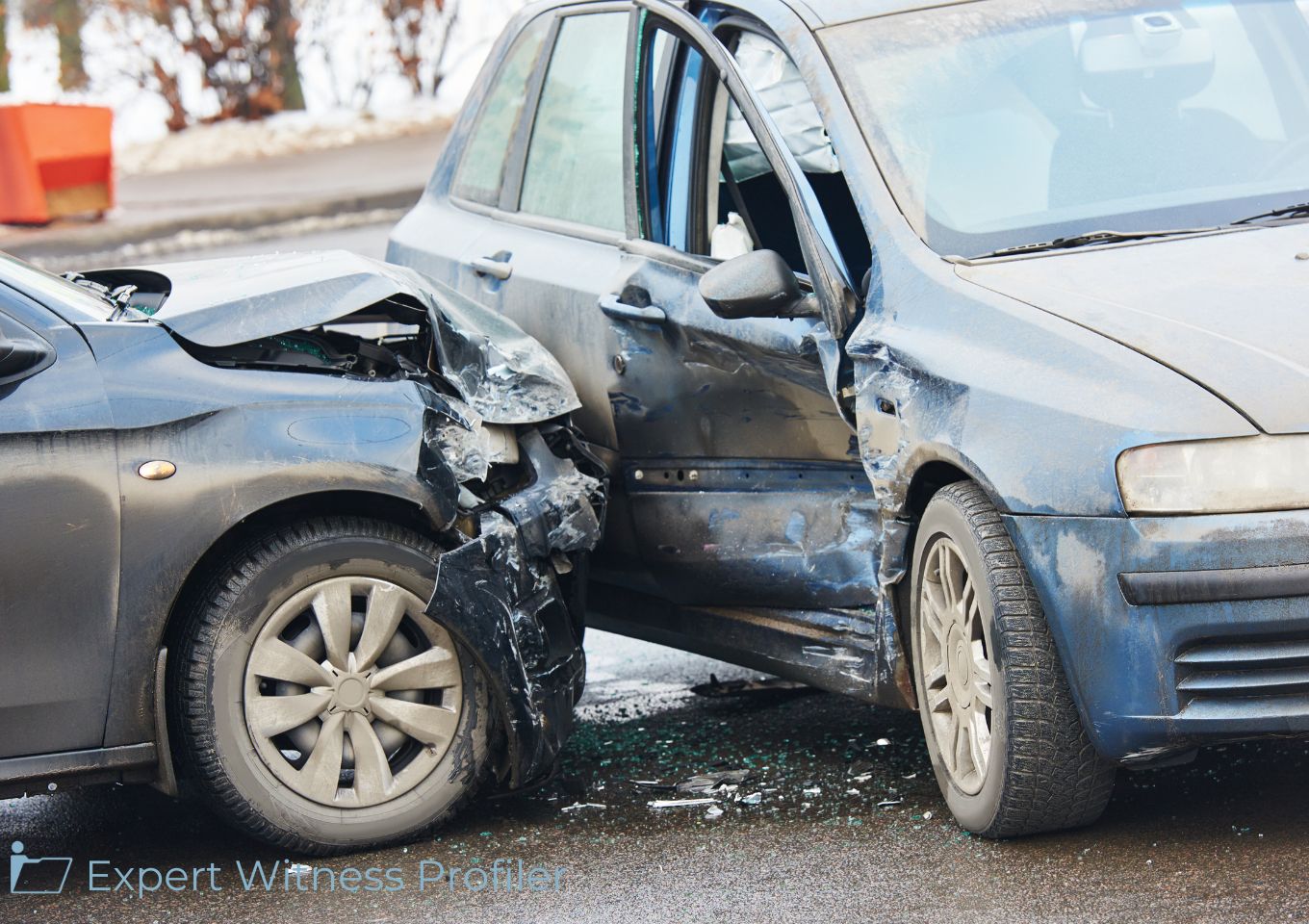
Vincent McKinney’s death on April 15, 2021, at a U-Haul construction site led to a lawsuit, filed by his surviving spouse and next kin Alberta Louise Perry, Plaintiff, with Jenkins & Stiles, LLC, a construction company and the general contractor for the site, being the Defendant. Despite some disputed facts, parties agreed that McKinney, who was delivering cargo to the construction site, specifically five bundles of insulated panels, met his demise when the cargo, being unloaded by Curtis Kennedy, a forklift operator and jobsite superintendent for the Defendant, fell off the trailer and onto McKinney. McKinney lost his life on the scene.
According to Kennedy, he directed McKinney to complete the unstrapping of the load so that Kennedy could initiate the removal of the cargo from the trailer using a forklift. Kennedy asserted that McKinney had removed all the straps before the offloading began, although he wasn’t entirely certain. Kennedy testified that, based on McKinney’s body language, he believed McKinney knew he was approaching with the forklift. As Kennedy commenced offloading the cargo, the bundles fell off the forklift and landed on McKinney, who was still positioned next to the trailer.
Shortly after the incident, an investigator named Michael Johnson (“Johnson”), representing the Tennessee Occupational Safety and Health Administration (“TOSHA”), arrived at the scene. Johnson conducted interviews with several witnesses, including Robert Hutton (“Hutton”), who was then an employee of Chattanooga Fire, LLC. During his statement to the TOSHA investigator, Hutton mentioned that, before the incident, Kennedy had already unloaded some cargo, as he saw it stacked nearby. Hutton reported hearing someone say, “Curtis your [sic] clear, Go”. Following that, he heard a crash and observed McKinney under the cargo. Hutton explicitly stated, “Everyone was clear, Curtis had a good visual of the work area. I didn’t see anything that appeared to be unsafe”. Unfortunately, Hutton passed away on August 3, 2022.
As part of its expert disclosures, the Defendant identified Charles A. Eroh, P.E. Among several other conclusions, Eroh asserted that McKinney bore responsibility for the incident. This was attributed to his departure from the safe area at the driver’s side truck fender and entering the fall zone. Eroh claimed that McKinney was fully aware of ongoing offloading activities and had verbally communicated with Kennedy to proceed with the unloading.
The Plaintiff contested Eroh’s conclusion under Rule 702 of the Federal Rules of Evidence and Daubert v. Merrell Dow Pharmaceuticals, Inc. The challenge asserted that Eroh’s determination that McKinney bore responsibility would not assist the jury since it was the jury’s role to make that determination. Additionally, the Plaintiff argued that Eroh should not be allowed to testify about McKinney’s state of mind. The Plaintiff further contended that Eroh should be prevented from referencing Hutton’s statement. In response, the Defendant generally argued that Eroh’s opinion was based on reasonable inferences drawn from his accident investigation and that he had the right to rely on the evidence he considered.
Engineering Expert Witness
Charles A. Eroh is a professional engineer who works as a Principal Consultant at Rimkus Consulting Group. He is expected to testify within a reasonable degree of professional certainty in the field of commercial machinery operation and construction site safety. Charles Eroh will offer testimony on issues such as training and certification of forklift operators and construction site workers, industry standards in forklift operations and construction site procedures, industry standards of equipment maintenance, forklift operating capabilities, and service, maintenance, inspection and troubleshooting for type of forklift used on April 15, 2021, and post-accident inspections to determine cause.
Discussions by the Court
Federal Rule of Evidence 702 required judges to ensure the relevance and reliability of any scientific testimony or evidence. The Court’s gatekeeping function, as established in Daubert v. Merrell Dow Pharmaceuticals, Inc., mandated that scientific testimony or evidence, including that based on specialized knowledge, be both relevant and reliable. The party offering the expert testimony bore the burden of proving admissibility, and district Courts had leeway in determining the reliability of expert testimony, with decisions subject to review for an abuse of discretion. The Court applied the current version of Rule 702, effective December 1, 2023, which clarified the preponderance standard for reliability-based requirements.
According to the Plaintiff, Eroh’s opinion that McKinney bore responsibility for the incident was deemed unhelpful to the jury, as it was the jury’s role to determine such issues. Although Eroh may have based his opinion on reasonable inferences drawn from his accident investigation, including a review of the TOSHA report, Hutton’s written statement, Kennedy’s deposition, and other relevant information, the Court agreed that it constituted a legal conclusion. The Court cited Asbury v. MNT, Inc., No. CIV. 12-252 KG/RHS, 2014 WL 6914235, (D. N.M. Apr. 22, 2014), which struck an expert’s opinion as an impermissible legal conclusion. The Court further highlighted that experts were not permitted to render legal conclusions, as explained in United States v. Melcher, 672 F. App’x 547, 552 (6th Cir. 2016), when he defines the governing legal standard or applies the standard to the facts of the case. Legal conclusions were considered unhelpful to the jury since they instructed the jury on the verdict to reach. Accordingly, the Court ruled that Eroh’s opinion assigning responsibility to McKinney for the incident was not admissible.
The Plaintiff also contested Eroh’s conclusion asserting that McKinney “was fully aware of ongoing offloading activities and had verbally communicated with Kennedy to proceed with the unloading”. Plaintiff argued that determining whether McKinney was fully aware was beyond Eroh’s expertise as he could not “read minds”. Eroh based this opinion on Hutton’s written statement, and Plaintiff contended that it was improper to rely on Hutton’s statement due to its inadmissible hearsay nature. The Plaintiff asserted that allowing the introduction of inadmissible hearsay through an expert’s opinion would be extraordinarily prejudicial.
The Defendant responded by asserting that an “expert may rely on hearsay testimony”. Given that they retained Eroh to “inspect the accident site and determine the cause of the accident”, the Defendant argued that Eroh was permitted “to reference the witness statement in discussing his opinions and bases for them”. The defense contended that not only did Eroh rely on Hutton’s statement, but he also drew from various sources, including the TOSHA report, Kennedy’s deposition, his site inspection, and the photographs and videos captured by the Knox County Sheriff’s Office.
The Plaintiff also mentioned a video recording taken by Attorney Graham Thompson on April 19, 2023, which included Hutton’s statements. However, according to the Defendant, Eroh reviewed this video after authoring his report, and “it did not form the basis of the opinions Eroh expressed in his written report”. The Defendant further stated that “Eroh testified in his deposition that although he reviewed that video, he did not remember what was said in it, and he believed it was similar to what was contained in Hutton’s written statement”. Since Eroh did not rely on the video recording, the Court did not address it.
In reviewing the parties’ arguments, two issues were identified: (1) whether Eroh was allowed to rely on Hutton’s statement in forming his opinion, and (2) whether Eroh was permitted to express opinions about McKinney’s state of mind. Regarding the issue of Eroh’s opinion about McKinney’s state of mind, specifically that McKinney “was fully aware of ongoing offloading activities”, the Court ruled that Eroh was not allowed to opine at trial about McKinney’s state of mind. The Court cited the principle that “an expert may not offer an opinion on someone else’s subjective beliefs or feelings”. The Court highlighted that experts can rely on a witness’s testimony but may not opine on someone’s thoughts. Consequently, the Court did not need to address the first issue in the context of the Plaintiff’s motion. The Court noted that the admissibility of Hutton’s statement was being contested through motions in limine filed by both Plaintiff and Defendant.
Held
The Court granted in part and denied in part Plaintiff’s Motion to Exclude or Limit the Testimony of Charles A. Eroh and Any Undisclosed Opinion Testimony by Defendant Jenkins & Stiles. Eroh was not allowed to testify that McKinney bears responsibility for the incident, nor was he permitted to provide testimony about McKinney’s subjective beliefs. The Court has not arrived on an outcome for this case since the remaining issues involved in this case still await resolution.
Key Takeaways
The expert testimony in this case played a crucial role in determining liability for the tragic incident at a U-Haul construction site, where a cargo unloading operation led to the death of Vincent McKinney. Charles A. Eroh, P.E., identified by the Defendant as an expert, asserted that McKinney bore responsibility for the incident, citing his departure from a designated safe area and entering the fall zone. However, the Court, applying Rule 702 of the Federal Rules of Evidence, ruled that Eroh’s opinion assigning responsibility was inadmissible as it amounted to a legal conclusion. The Court emphasized that experts cannot render legal conclusions, particularly those instructing the jury on the verdict to reach. Additionally, the Court held that Eroh’s opinion on McKinney’s state of mind, specifically regarding awareness of ongoing offloading activities, was not admissible, as experts cannot offer opinions on subjective beliefs or feelings. The admissibility of witness statements, including Hutton’s, was contested due to hearsay concerns, with the Court emphasizing the importance of avoiding the introduction of inadmissible evidence through expert opinions. Overall, the Court’s rulings underscored the need for expert testimony to adhere to legal standards, focusing on admissible evidence and avoiding impermissible legal conclusions or opinions on subjective states of mind.
In March 2022, Defendants Edition Modern and Denis De La Mésière faced a lawsuit filed by Plaintiffs Jean Royère SAS and Jelena Markovic. Edition Modern, a small business, operated with approximately three full-time employees, including both owners and a few part-time workers. Denis De La Mésière, one of the owners, possessed over 40 years of experience in the furniture industry and immigrated to the United States from France in 1987. Since 2015, Edition Modern had been marketing and selling furniture inspired by Jean Royere, alongside pieces influenced by other modern French designers and items designed by Mésière himself. The Defendants countered by asserting that the Plaintiffs lacked copyright registrations for the works claimed in the case. The works in question comprised lighting products and furniture pieces, all categorized as useful articles, requiring Plaintiffs to demonstrate their separable features capable of existing independently from the utilitarian aspects of the articles.
The Plaintiff Jean Royère SAS and Jelena Markovic filed a motion to exclude testimony of the Defendants’ expert Charles Vranian. The Defendants Edition Modern and Denis de la Meisière had also filed a motion to exclude testimony of the Plaintiffs’ expert Paul Hatch.
Industrial Design Expert Witness
Paul Hatch has over 25 years of experience in product and industrial design. He is currently pursuing his Ph.D. in Learning Sciences from the University of Illinois at Chicago, where he also works as an adjunct faculty member. Hatch also earned a Bachelor’s degree with honors in Design for Industry from the University of Northumbria in the UK. His educational background includes Diploma in general art and design as well. Hatch has served as a CEO of TEAMS Design USA. Hatch has designed numerous furniture pieces across a diverse array of materials and manufacturing methods, including chairs, shelves, cabinets, tables and more.
Management Consulting Expert Witness
Charles J. Vranian has over 35 years of experience in the furniture industry, including 26 years at the renowned furniture company Herman Miller. He holds a Bachelor’s degree in Economics from Michigan State University and completed MBA coursework at Wayne State University. Vranian’s currently serves as a Founder and President of Vranian Business Development LLC, where he focuses on consulting, M&A projects, and patent disputes.Through his extensive work in the furniture industry, including in senior positions at a leading furniture design company, Vranian has developed expertise related to furniture design, development, manufacturing, and intellectual property issues.
Discussions by the Court
The Defendants contended that Paul Hatch, despite having experience in “product design” and “industrial design,” lacked a background in “sculptural” or “purely artistic” design. The claim suggested that Hatch’s assessment of works of art was irrelevant to the case, as he evaluated the “merit” of unrelated artworks to form opinions on the “sculptural features” and “aesthetic qualities” of the designs in question. The assertion emphasized that Hatch’s opinions hinged on an inexpert analysis, including references to certain “visual elements” explored by “many artists” without proper qualification or justification. The argument concluded that Hatch’s improper comparison of artworks and industrial designs should lead to the exclusion of his testimony by the Court.
However, the Court disagreed, citing Rule 702, which allowed expertise based on knowledge, skill, experience, training, or education. The Court emphasized a broad interpretation of expert qualifications and found Hatch’s over twenty-five years of professional experience in furniture and product design sufficient to testify on design-related issues. The Court dismissed the argument that Hatch’s industrial background disqualified him from addressing artistic questions, stating that no binding case law mandated the exclusion of his testimony on that basis.
Plaintiffs filed a motion to exclude Defendants’ Supplement to Rebuttal Expert Report of Charles Vranian, citing untimeliness and prejudice. According to Federal Rule of Civil Procedure 26(a), expert reports had to be disclosed by a specified deadline in the pretrial schedule. Failure to do so may result in exclusion unless the failure was justified or harmless under Rule 37(c)(1). Courts considered factors such as prejudice, the opposing party’s ability to remedy it, trial disruption likelihood, and bad faith or willfulness in determining harmlessness. The burden of proving harmlessness lay with the party facing sanctions. Courts possessed wide latitude in issuing sanctions under Rule 37(c)(1).
In this case, the Court-established pretrial schedule mandated initial expert disclosures by April 28, 2023, rebuttal expert disclosures by May 19, 2023, and set the expert discovery cut-off date for June 2, 2023. Following Plaintiffs’ service of the Expert Report of Paul Hatch on April 28, 2023, Defendants provided their Rebuttal Expert Report of Charles Vranian on May 19, 2023. Plaintiffs deposed Vranian on June 1, 2023. After both parties submitted motions for summary judgment on June 23, 2023, Defendants served a Supplement to Rebuttal Expert Report of Charles Vranian on June 27, 2023.
The Court determined that Defendants’ late submission of supplemental report did not comply with Rule 26(e)(1) and was prejudicial. Rule 26(e) allowed supplementation for correcting inaccuracies or filling gaps with information unavailable during the initial disclosure. The supplemental report, containing over fifty substantive revisions to Vranian’s original report, did not rely on previously unavailable information. The Court rejected Defendants’ characterization of the revisions as “clarifications,” deeming them an attempt to fortify Vranian’s opinions. This was considered inappropriate supplementation. The Court emphasized that the revisions aimed at strengthening opinions were improper. Moreover, Defendants submitted the supplemental report after the expert discovery period closed, without warning and without providing Plaintiffs the opportunity to depose Vranian regarding the changes. Consequently, the Court struck Defendants’ Supplement to Rebuttal Expert Report of Charles Vranian.
Plaintiffs sought the Court’s exclusion of Vranian’s testimony concerning copyright protection, contending that he did not apply the correct legal standard established in Star Athletica, L.L.C. v. Varsity Brands, Inc., 580 U.S. 405, 137 S. Ct. 1002, 197 L. Ed. 2d 354 (2017). Additionally, Plaintiffs argued that Vranian lacked the necessary background and experience to qualify as an expert on this specific topic.
In 2017, the Supreme Court in the case of Star Athletica, L.L.C. v. Varsity Brands, Inc. established a two-part test for determining copyright protection concerning elements incorporated into the design of a useful article. The statute provides that a “pictorial, graphic, or sculptural featur[e]” incorporated into the “design of a useful article” is eligible for copyright protection if it is (1) identified separately from the utilitarian aspects and (2) capable of existing independently of those utilitarian aspects. Meeting the first criterion was relatively straightforward, requiring the recognition of a two- or three-dimensional element with pictorial, graphic, or sculptural qualities within the useful article. However, the second criterion, independent existence, was more challenging. It necessitated a determination that the identified feature could exist distinctly from the utilitarian functions of the article.
In essence, a component of a useful article’s design could obtain copyright protection if, when isolated from the article, it could be considered a pictorial, graphic, or sculptural work independently or when placed within another tangible medium.
During Vranian’s deposition, he explicitly stated his disagreement with the legal standards established in Star Athletica regarding copyright protection. Despite repeated questioning about the test for copyrightability, Vranian consistently expressed his disagreement with the established standards. The Plaintiff argued that instead of applying the correct legal standard, Vranian formulated his own tests for copyrightability. One such test was based on the “Furniture Customer Buying Process” outlined in his original report. Vranian suggested that when an interior designer is involved, the primary selection driver is the function of the pieces, and the design is intentionally holistic. He asserted that the selected piece’s elements are inseparable, constituting component parts of an overall holistic design for the client.
The Plaintiff objected strongly to Vranian’s creation of multiple ad hoc tests for copyright protection. Vranian devised various unconventional tests, including the “slight-modification test,” which suggested that copyright protection wouldn’t apply even if modifications allowed for separate imagining of the article’s features as a standalone sculptural work. He also introduced the “difficult-to-see-on-a-dark-floor test,” proposing that products not visible on a dark floor were ineligible for copyright protection. Furthermore, he introduced the “seating-and-table-product test,” excluding seating and table products from copyright protection based solely on his subjective experience that function precedes form for such items. Vranian also proposed the “fundamental-geometric-shape test,” stating that copyright protection wouldn’t extend to design features comprising basic shapes. Finally, he suggested the “furniture-pieces-with-useful-functions test,” asserting that furniture pieces, due to their functional nature, weren’t eligible for copyright protection, disregarding the potential separability of certain design features as sculptural works in their own right.
Vranian’s “supplement” was found to showcase numerous revisions attempting to align with the test established in Star Athletica. However, this highlighted his evident failure to adhere to the correct legal standard. Among the 57 substantial revisions made to the original report, about thirty replaced earlier conclusions regarding copyrightability, which Vranian had evidently misconstrued, with new language and analyses that mimicked and attempted to apply the legal standards delineated in Star Athletica.
The Court concurred with Plaintiffs, determining that Vranian lacked the qualifications to provide expert testimony on design issues. His background primarily involved business development roles. While he worked at Ford Motor Company in accounting and finance for ten years, and later spent twenty-six years at Herman Miller in product management and marketing roles, he never specifically served as a product designer. Although his general background at a furniture company made him qualified to speak on less design-intensive matters, the Court found that specific knowledge and experience in product design were essential for analyses under Star Athletica. Vranian’s demonstrated inability to correctly apply the key Star Athletica standard, as well as his reliance on an unsupported functionality test, indicated his lack of qualification. Additionally, the Court expressed concerns about the risk of juror confusion due to the improper legal tests underlying Vranian’s opinions on separability and independent existence.
Held
The Court denied Defendants’ Motion to Exclude the testimony of Plaintiffs’ expert Paul Hatch. However, Plaintiffs’ Motion to Exclude the testimony of Defendants’ expert Charles Vranian was granted in part. Vranian’s opinions on separability and independent existence were excluded, along with his supplemental report in its entirety. The Court allowed Vranian’s testimony solely on the issue of originality, with further limitations restricting it to the opinions contained in his original expert report. The Court has not arrived on an outcome for this case since the remaining issues involved in this case still await resolution.
Key Takeaways
In the legal proceedings between Plaintiffs Jean Royère SAS and Jelena Markovic and Defendants Edition Modern and Denis De La Mésière, the expert testimony played a crucial role. Plaintiffs relied on the expertise of Paul Hatch, whose extensive background in product and industrial design was deemed sufficient by the Court, rejecting the Defendants’ motion to exclude his testimony. However, Defendants faced challenges with their expert, Charles Vranian. The Court limited Vranian’s testimony, excluding his opinions on separability and independent existence, citing his lack of specific qualifications and failure to apply the correct legal standard. The Court also struck Defendants’ late-filed supplemental report for Vranian, emphasizing the importance of timely and proper disclosure in adherence to the legal procedures. These decisions underscored the significance of expert witnesses in intellectual property cases and the need for their qualifications and methodologies to align with legal standards.
This case involved a lawsuit filed by the Plaintiff Daniel G. Mann against Defendant Quiktrip Corporation for negligence related to a slip and fall incident. On July 20, 2022, the Plaintiff initiated legal proceedings by filing a Petition in the Circuit Court of St. Louis County. The complaint alleged common law negligence against Quiktrip in connection to an incident on February 17, 2021, when Mann fell on a Quiktrip property in Maryland Heights, Missouri. Subsequently, on October 4, 2022, Quiktrip exercised its right to remove the case to the federal Court, citing diversity jurisdiction under 28 U.S.C. § 1441. Following this, on December 14, 2022, the Plaintiff filed a Consent Motion for Leave to File a First Amended Complaint, which was granted by the Court. In accordance with the granted motion, Plaintiff’s First Amended Complaint focused on a single cause of action, asserting negligence against Quiktrip. The basis for this claim was rooted in premises liability, specifically related to the Plaintiff’s fall on February 17, 2021.
Quiktrip initiated a motion to exclude the expert report, testimony, and opinions of the Plaintiff’s designated expert, Christopher E. Janson, a Certified Safety Professional with over thirty years of experience in safety, intended to provide a safety analysis to determine if there were conditions deemed defective or unreasonably dangerous.
In his report, Janson outlined several general opinions:
1. On the morning of February 17, 2021, QuikTrip employee Tommy Burrow attempted to clear snow and ice from the exterior steps and sidewalk and put down ice melt on the morning of the incident before 8:15 am.
2. QuikTrip had established policies and procedures for maintaining outdoor areas, including inspecting them for snow and ice conditions.
3. QuikTrip’s policies and procedures seemed to align with recognized standards for identifying and controlling slip and fall hazards.
4. Surveillance video footage for the relevant day did not show a QuikTrip employee inspecting the steps in question for at least one hour before Mann’s fall, despite documentation suggesting otherwise.
5. QuikTrip allegedly failed to adhere to its policies and procedures by not ensuring the inspection of the steps and associated landings.
6. If QuikTrip had performed the required upkeep walks as per its policies and procedures, Mann’s fall could have been prevented.
7. Mann’s fall was attributed to the unreasonably dangerous condition of the steps as maintained by QuikTrip.
Quiktrip presented two main arguments for the exclusion of Janson’s report, testimony, and opinions. Firstly, Quiktrip contended that Janson’s opinions lacked reliability in their principles and methods. Quiktrip asserted that the initial four opinions are factual statements, while the remaining three opinions did not possess a scientific or technical basis and would not provide the jury with insights beyond their own evaluation of the evidence. Quiktrip supported this argument by referencing the case Hall v. Target Corp., 8:22-cv-0914-KKM-AAS (M.D. Fla. July 21, 2023) where the Court excluded a majority of Janson’s opinions, deeming them speculative, not grounded in proper methodology, and surpassing industry standards. Secondly, Quiktrip argued for the exclusion of Janson’s opinions on the basis that they encroach upon the jury’s role and are generally speculative. Quiktrip maintained that the opinions in question are inadmissible as the jury can adequately weigh the evidence without the assistance of an expert.
The Plaintiff contended that Quiktrip’s motion to exclude expert testimony under Federal Rule of Evidence 702 should be denied, emphasizing that the admission of such testimony is permissive. In response to Quiktrip’s assertion that Janson’s opinions lacked reliable scientific principles and methods, the Plaintiff argued that the first four opinions were based on Janson’s knowledge, information, and experience applied to the case’s evidence, without directly addressing the reliability issue. Additionally, the Plaintiff argued that Janson’s remaining opinions were appropriate as they would assist the jury in understanding Quiktrip’s policies and procedures, particularly the alleged violations. The Plaintiff pointed to conflicting testimony from Quiktrip’s employees, suggesting confusion about the policies, and asserts that experts are permitted to testify on policy violations. Finally, the Plaintiff contended that Janson’s testimony, even if addressing the ultimate issue in the case, should be allowed as it aids the jury in its deliberations. The Plaintiff also contended that rules, standards, or training materials of a Corporate Defendant were invariably admissible. However, the Court emphasized that the admissibility of Janson’s testimony concerning those procedures was not necessarily influenced by the admissibility of such corporate documents.
Safety Expert Witness
Christopher E. Janson has over 30 years of experience as a safety professional. He holds a Bachelor of Science degree in Industrial Science from Truman State University and a Master of Science degree in Industrial Safety Management from the University of Central Missouri. Janson is a Certified Safety Professional (CSP). He is currently the Principal of Haines, Janson & Associates, LLC, which provides forensic and safety consulting services to attorneys, industry and insurance companies.
Discussions by the Court
The Court determines that the Plaintiff has not successfully demonstrated, by a preponderance of the evidence, the admissibility of Janson’s expert opinions. The Court’s assessment is that Janson’s opinions either consist of straightforward statements of fact, speculative conclusions lacking proper methodological support, or are otherwise deemed irrelevant and, consequently, not beneficial to the jury.
The Court deemed Janson’s opinions 1, 2, and 4 as mere statements of fact, making them impermissible as expert opinions. The determination of whether Burrow cleared the steps and applied snow melt, as well as Quiktrip’s policies and procedures for upkeep walks, could be established through other admissible evidence or by the policies and procedures themselves. The surveillance video itself provided insights into whether a Quiktrip employee inspected the area before the Plaintiff’s fall. The Court noted that the facts in question, including Burrow’s actions, Quiktrip’s policies, and the content of surveillance video footage, did not require expert testimony to be established. Drawing a parallel to the Hall case, the Court asserted that, akin to that precedent, Janson’s opinions concerning these factual matters should be excluded.
The Court found that the Plaintiff’s attempt to draw parallels between Janson’s opinions and those permitted in the Hall case was not persuasive. In Hall, Janson’s testimony was limited to statements such as “wet floors can be a slip and fall hazard” and “while walking, pedestrians look towards their objective, not directly in front of their feet, unless something draws their attention to that area.” These opinions were deemed acceptable as they pertained to industry standards of care. However, the Court noted that Janson’s report in the present case lacked similar opinions, and the Plaintiff did not successfully demonstrated how the opinions in Hall were comparable to those in question. As the Plaintiff has not established, by a preponderance of evidence, that these opinions did indeed necessitate Janson’s expert testimony, Opinions 1, 2, and 4 were deemed to be excluded.
The Court acknowledges that Opinion 3, though potentially an opinion, lacked demonstrated relevance to the issues in the case. While it is considered appropriate for a safety expert to testify on recognized standards for identifying and controlling slip and fall hazards, the Court concluded that whether Quiktrip’s policies and procedures met such standards did not have a bearing on the company’s potential liability in this negligence action. Consequently, the Court deemed the opinion inadmissible, subject to reconsideration.
The Court determined that Opinion 5 was not the type of opinion necessitating expert testimony. The jury was deemed capable of evaluating the presented evidence and deciding whether Quiktrip adhered to its own policies and procedures regarding the inspection of the steps. The Plaintiff’s argument suggesting the need for an expert due to alleged confusion in Quiktrip’s policies was deemed unconvincing. The Court asserted that the conflicting deposition testimony cited by the Plaintiff was evidence that could be presented directly to the jury, requiring no expert assistance for evaluation, as it did not involve scientific or technical knowledge. Similar to the discussion on Opinion 3, the Court was not persuaded that the issue of whether Quiktrip violated its upkeep walk procedures was relevant to the ultimate issue in the case. Consequently, Janson’s Opinion 5 was also excluded.
The Court concluded that Opinions 6 and 7 were speculative, lacking an explanation of the principles or methodology used by Janson to formulate them. Janson’s report failed to elucidate any scientific or technical basis for his opinion that a proper upkeep walk would have prevented the Plaintiff’s fall, as well as the assertion that the fall was caused by an unreasonably dangerous condition of the steps. The Plaintiff had not presented evidence demonstrating that Janson employed recognized principles or methodologies to derive these speculative conclusions. Consequently, as the Plaintiff had not established by a preponderance of evidence that Janson’s opinions relied on reliable principles and methods, Opinions 6 and 7 were also excluded.
Held
The Court granted Quiktrip Corporation’s Motion to Exclude the Expert Report, Testimony, and Opinions of Christopher E. Janson. The Court has not arrived on an outcome for this case since the remaining issues involved in this case still await resolution.
Key Takeaways
The Court found that Janson’s opinions lacked reliability, with some being considered as simple statements of fact that did not require expert testimony. Additionally, opinions deemed speculative and lacking a clear scientific or technical basis were excluded. The Court emphasized that Janson’s opinions failed to provide insights beyond what the jury could determine through available evidence, and some were deemed irrelevant to the issues in the case. Ultimately, the Court ruled that Janson’s entire report, testimony, and opinions would be excluded, granting Quiktrip’s motion in this regard. This decision underscores the importance of establishing the relevance, reliability, and necessity of expert opinions in legal proceedings to ensure their admissibility.
This legal scenario revolves around a dispute between newspaper carriers, Bextermueller News Distributors, Inc., and Tom Richards, and the Defendants, Lee Enterprises, Inc., Lee Enterprises Missouri, Inc., Pulitzer, Inc., St. Louis Post-Dispatch, LLC. The carriers had agreements granting them exclusive rights to deliver St. Louis Post-Dispatch newspapers in specified geographic areas. Allegedly, the Defendants breached these agreements by implementing an electronic delivery system of the Post-Dispatch, impacting the carriers’ revenue and customer relationships.
The Plaintiffs claimed damages for breach of contract and breach of implied covenant of good faith and fair dealing. They engaged Melissa Gragg, a Certified Valuation Analyst, to quantify their lost revenue due to the Defendants’ actions. Gragg’s methodology involved assessing the number of digital-only subscribers within the carriers’ assigned routes from 2017 to 2023 and calculating the lost revenue by multiplying this number with the fee that Defendants are required to pay to Plaintiffs for each newspaper they delivered.
Defendants moved to exclude Gragg’s testimony, arguing that her calculations were flawed. They contested the notion that Plaintiffs were entitled to fees for every digital subscriber within their territories, stating that not all digital subscribers would have been print subscribers for which Plaintiffs would have received fees. Defendants claimed Gragg’s calculations were based on an incorrect premise, rendering her testimony irrelevant and unreliable.
In response, the Plaintiffs argued that according to their agreements, they were entitled to fees for deliveries within their designated areas, regardless of the delivery method or subscriber type. The Plaintiff-Carriers argued that Melissa Gragg’s calculations were in accordance with Missouri contract damages law. They contended that her calculations showcased the breach committed by the Defendants, specifically emphasizing the breach of the contractual obligation to abstain from establishing an alternative delivery system.
The crux of the dispute lay in whether Gragg’s damage calculations adhered to legal principles. Defendants contested the premise that Plaintiffs could claim fees for all digital subscribers within their territories. The Court held oral arguments to resolve this issue, considering the relevance and reliability of Gragg’s testimony in light of Missouri’s contract damages law.
Valuation Expert Witness
Melissa Gragg specializes in business valuations and provides expert witness testimony for litigation purposes. Her expertise spans diverse areas such as marital dissolution, shareholder disputes, commercial litigation, business interruption claims, personal damage calculations, and lost profits assessments. In cases involving divorcing spouses, she calculates maintenance, aids in understanding tax implications and cash flow, and traces separate assets. Gragg also contributes to fraud investigations for privately-held companies, government entities, and municipalities, lending her expertise to uncover fraudulent activities in these contexts.
Discussion by the Court
The admissibility of Gragg’s damages testimony hinged on whether her opinions were founded on a mistaken legal premise. Consequently, the Court’s analysis commenced with a review of the permissible damages under Missouri law for the claims presented, namely, breach of contract and breach of the implied covenant of good faith and fair dealing.
According to Missouri law, damages for breach of contract are restricted to compensating for the loss of the contract’s benefits. The primary objective is to restore the wronged party to the position they would have occupied had the contract been fulfilled. This principle was articulated in the case of Randy Kinder Excavating, Inc. v. J.A. Manning Constr. Co., Inc., 899 F.3d 511, 520 (8th Cir. 2018).
Actual damages aimed to compensate for the direct loss or injury resulting from the wrongful act.
Consequential damages encompassed those reasonably foreseeable damages caused directly by the breach, including those that could have been contemplated by the Defendant at the time of the agreement.
Benefit-of-the-bargain damages, also known as lost profits damages, refer to the net profits the Plaintiff would have gained had the contract not been breached. These damages aimed to put the Plaintiff in the financial position they would have occupied had the contract been fulfilled as agreed upon.
The Plaintiffs contended that Melissa Gragg’s calculations represented their benefit-of-the-bargain or lost profit damages. They argued that according to the Agreements granting them exclusive distribution rights within their designated territories, every digital-only subscriber in those areas constituted lost revenue for the Plaintiffs. Their stance was irrespective of whether these digital subscribers would have ever opted for a print newspaper subscription.
Emphasizing that the Agreements made no exception for digital deliveries, the Plaintiffs asserted their entitlement to a fee for all deliveries within their exclusive territories. They highlighted Gragg’s assumption in her report that deliveries to subscribers within these territories warranted fees for the Plaintiffs, as stipulated in their agreements.
The Plaintiffs’ argument emphasized that the interest of digital customers in the printed version was immaterial to their claim for fees. They maintained that the Agreements explicitly entitled them to compensation for deliveries occurring within their exclusive territories, regardless of the customers’ preferences for print or digital versions.
The Court considered the Plaintiffs’ argument that, according to their interpretation, the Agreements mandated the Defendants to pay a fee for every delivery within their designated territories, regardless of the method or deliverer. In this scenario, if the Defendants commenced digital deliveries within these territories, the Plaintiffs could claim that the Agreements required compensation for all deliveries, including digital ones made by the Defendants.
Under this interpretation, if the Defendants refused payment for these digital deliveries, the number of digital subscriptions multiplied by the applicable delivery fee could represent the lost profits the Plaintiffs would have gained if the contract hadn’t been breached. Awarding damages equivalent to these fees would align with the objective of placing the Plaintiffs in the position they would have been in if the contract had been fulfilled.
However, the Court noted that the Plaintiffs hadn’t directed attention to any specific provision in the Agreements explicitly entitling them to fees for every delivery in their territories, irrespective of the deliverer or method. The Agreements stated the Defendants were required to pay the Plaintiff-carriers a fee “for each… copy of the St. Louis Post-Dispatch… delivered to home delivery subscribers by the Carrier.” This language didn’t encompass digital deliveries, and the breach alleged by the Plaintiffs wasn’t centered on the Defendants’ failure to pay for deliveries within the territories as stipulated in the Agreements.
The Court highlighted that Gragg’s opinion, seemingly based on the presumption that the Agreements entitled Plaintiffs to fees for every digital delivery, lacked support from the Agreements’ language. As a result, the opinion was fundamentally unsupported and couldn’t provide assistance to the jury.
The Defendants contended that Melissa Gragg’s approach to damages contradicted the legal principle governing breach of contract damages, which aims to restore the wronged party to the position they would have held if the contract had been fulfilled. Specifically, in cases seeking lost profits as damages, the goal is to quantify the net profits the wronged party would have gained had the contract not been breached.
The Court agreed with this legal principle and found Gragg’s damages calculations inconsistent with it. The Court highlighted a significant flaw in Gragg’s approach: she didn’t attempt to ascertain how many digital subscribers represented revenue that the Plaintiffs would have acquired in the absence of a digital-only delivery system. Gragg acknowledged during her deposition, a fact seemingly undisputed by the Plaintiffs, that some digital-only subscribers might have had no inclination toward a print newspaper and would never have become print subscribers even without a digital-only option. Consequently, the revenue that the Plaintiffs would have gained from these subscribers in the absence of the breach was effectively $0.
The Court noted that Gragg’s calculations failed to address or account for these subscribers who would not have contributed any revenue if the breach hadn’t occurred. Despite the potential inclusion of such subscribers in her calculations, Gragg didn’t make an effort to differentiate or adjust for these cases where revenue wouldn’t have materialized. Instead, she incorporated them into her calculations without distinction.
The Defendants argued that Melissa Gragg’s approach to calculating damages contradicted the legal principle dictating that a Plaintiff could only seek damages resulting directly from the alleged breach of contract. The Court agreed with this argument, emphasizing that under Missouri law, the purpose of breach of contract damages is to restore the wronged party to the position they would have held if the contract had been fulfilled. In cases seeking lost profits damages, the focus is on the net profits the wronged party would have gained had the breach not occurred.
The Court identified a critical flaw in Gragg’s methodology: it didn’t address the determination of how many digital subscribers would have contributed revenue to the Plaintiffs in the absence of a digital-only delivery system. Acknowledging this flaw, Gragg, as indicated in her deposition, acknowledged that some digital-only subscribers might have had no inclination toward a print newspaper and wouldn’t have subscribed in any circumstances.
The Court highlighted that Gragg’s calculations failed to account for or differentiate these subscribers who would not have generated any revenue if the breach hadn’t occurred. Despite this, Gragg included them in her calculations without accounting for the zero revenue they would have contributed, contrary to Missouri law on breach of contract damages.
During oral arguments, the Court posed a hypothetical scenario to Plaintiffs’ counsel, illustrating that under Gragg’s approach, damages would include fees from households that would never have subscribed to print deliveries, placing the carriers in a better financial position than if no breach had occurred. This approach contradicted Missouri’s contract law, which prohibits placing the wronged party in a more advantageous position than if the breach had not occurred.
Consequently, the Court concluded that Gragg’s method of calculating lost revenue lacked relevance and reliability under Missouri law. Her calculations didn’t analyze the actual revenue lost due to the alleged breach, incorporating fees that would never have been realized even without the breach. Thus, her opinion was deemed irrelevant and unreliable for assisting the jury and was consequently excluded.
The Court found that the cases cited by the Plaintiffs did not alter its conclusion. Despite Plaintiffs heavily relying on Machine Maintenance Equipment Co. v. Cooper Industries, Inc., 634 F. Supp. 367 (E.D. Mo. 1986), the Court clarified that this case reinforced the general principles it had previously relied upon. It reiterated that damages resulting from a breach of contract or breach of the duty of good faith must be those directly resulting from the breach and should aim to place the non-breaching party in the position they would have been in if the breach had not occurred. However, the cited case did not lend support to Gragg’s method of calculating lost revenue.
Furthermore, the other cases referenced by the Plaintiffs during oral arguments discussed the general principles relevant to the implied covenant of good faith and fair dealing. These cases highlighted that the implied covenant prevents a contracting party from denying the other party the expected benefits of the contract. However, in the context of the present motion, the Court established that there was no dispute regarding the deprivation of the expected benefit of the Agreements for the Plaintiffs – namely, the exclusive right to distribute the newspaper within their designated territories. Nevertheless, these cases did not offer support for the specific method used by Gragg in calculating lost revenue.
Held
The Court, after detailed consideration, concluded that the Plaintiffs failed to meet the burden of demonstrating the admissibility of Melissa Gragg’s testimony under Rule 702. Consequently, the Court granted Defendants’ motion to exclude her testimony from the case.
It’s important to note that while the Court made this decision regarding Gragg’s testimony, it hasn’t reached a final decision on the overall outcome of the case. Several other issues in this legal matter remain pending and await resolution by the Court.
Key Takeaways
The admissibility of expert testimony in breach of contract cases relies on its alignment with legal principles governing damages. Damages sought should directly result from the breach and aim to place the wronged party in the financial position they would have occupied if the contract had been fulfilled. Missouri law categorizes breach of contract damages into various types, including actual, consequential, and benefit-of-the-bargain damages. Lost profits, a subset of benefit-of-the-bargain damages, aim to represent the net profits the Plaintiff would have gained if the contract hadn’t been breached. Expert calculations should align with the actual loss caused by the breach. Flawed methodologies that include damages from sources unrelated to the breach’s impact lack reliability under the law. Expert opinions should align with explicit provisions within the contract, and claims for damages must align with contractual entitlements. If expert opinions include calculations or assumptions unrelated to breach-caused damages, they might be deemed irrelevant and unreliable, leading to exclusion. Cited cases should directly support or substantiate the methodology used by the expert in calculating damages. In cases involving the breach of the implied covenant of good faith and fair dealing, the focus should center on whether the breach deprived the party of expected contractual benefits. The burden of proof lies with the party presenting expert testimony to demonstrate its admissibility and alignment with legal principles. If expert testimony fails to meet these standards, it may be excluded from consideration in the case.
This case arose from a fire at the vacant home of Richard F. Vetter and Bryan Miner (collectively, “Plaintiffs”) on March 9, 2021. The Plaintiffs were renovating their home and had applied Varathane Classic Wood Stain, manufactured by Defendant Rust-Oleum Corporation, to their wood floors. After applying the stain, they left the applicators saturated in the product at the home. A fire then occurred, which Plaintiffs alleged was caused by the spontaneous combustion of the applicators soaked with Varathane. In response, the Defendant, for the purpose of the pending motions, does not contest the Plaintiffs’ claim that the rags caught fire spontaneously.
Following the incident, the Burlington County Fire Marshal conducted an investigation and concluded that the probable ignition sequence involved the spontaneous combustion of stain-soaked rags and rollers, leading to the ignition of available combustible material in the area and resulting in a self-sustaining fire. All wood stains, including Varathane, are composed of drying oils, semi-drying oils, and drying agents to properly cure the product. These substances undergo oxidation while they cure, or dry, releasing heat. The presence of drying agents accelerates oxidation. If the heat generated during this process is unable to escape, there exists a potential risk of spontaneous combustion.
The Varathane wood stain label featured a warning about the risk of spontaneous combustion, along with instructions on how to prevent such incidents. The front of the product label included a prominent warning stating that the liquid and vapor are combustible, with potential harm if swallowed. The back panel contained a specific caution outlined in red, emphasizing the danger of spontaneous combustion for items like rags and steel wool if improperly discarded. The warning instructed users to place such materials in a sealed, water-filled, metal container immediately after use. Additionally, disposal guidelines were provided, advising users to dispose of contaminated absorbent, container, and unused contents in compliance with local, state, and federal regulations.
As a result of the fire incident, the Plaintiffs initiated legal action by asserting claims against the Defendant. These claims included strict liability, negligence, and breach of implied warranty. The basis for all these claims was the alleged failure to provide adequate warnings and a design defect related to spontaneous combustion. More specifically, the Plaintiffs contended that the Varathane label did not contain sufficient warning regarding the risk of spontaneous combustion. Furthermore, they argued that Varathane should have been designed to eliminate any potential risk of spontaneous combustion.
The Plaintiffs enlisted the services of engineering expert Jennifer Morningstar, who authored reports examining the involvement of Varathane in the fire that occurred at the Plaintiffs’ home in March 2021. Morningstar underwent a deposition on January 10, 2023.
In her report, Morningstar provided an explanation of the spontaneous combustion process and the role of drying oils and agents in that process. She specifically discussed the drying oils present in the Defendant’s wood stain product. Morningstar’s opinion highlighted the hazard of spontaneous combustion in oil-based wood stains due to the curing reaction of the drying oils. She recommended eliminating this hazard by excluding drying oils and agents from the product. Morningstar pointed out that wood stains, including those sold by the Defendant, could use water as a carrying medium for pigment instead of oil, categorizing them as waterborne, water-based, or acrylic. According to her, stains in this category, lacking drying oils and agents, did not pose the hazard of spontaneous combustion associated with their use.
In formulating her opinion, Morningstar relied on a report from the National Fire Protection Association and several studies discussing waterborne coating wood stains, among other documents. Her ultimate opinion, as outlined in her report, asserted that Rust-Oleum’s Varathane Classic Penetrating Wood Stain was defectively designed because a reasonably safer design, in the form of a waterborne substitute product, existed. Morningstar contended that this alternative product would have prevented harm without substantially impairing the reasonably anticipated or intended function of Varathane. She emphasized the clear safety benefits of altering the design, outweighing any potential disadvantages associated with the proposed alternative design, including any diminished usefulness. This opinion was reiterated in her rebuttal report, where she explained that the presence of water in waterborne wood stains is what eliminates the spontaneous combustion hazard from these substances.
Defendant moved for summary judgment, arguing the claims were preempted by federal law and that its warnings were adequate. Defendant also moved to preclude testimony from Plaintiffs’ expert Jennifer Morningstar. Plaintiffs cross-moved for partial summary judgment on the affirmative defenses.
Chemical Engineering Expert Witness
Jennifer Morningstar, a professional engineer licensed in 2017 and Certified Fire and Explosion Investigator. She is President and Senior Consulting Engineer of Warren Forensics, where she performs specialized consulting related to property loss and unintentional injuries resulting from industrial accidents, fire, and explosions. Morningstar has an undergraduate degree in chemical engineering from Virginia Polytechnic Institute and State University, as well as a Masters of Business Administration from the University of South Carolina. As an expert witness, Morningstar has been deposed several times in litigation matters. She also has experience, as a chemical engineer, working on the production of chemical products involving polymer and polymerization, though not specifically involving wood stains. She also has general experience with drying oils and additives.
Discussions by the Court
The Defendant filed a motion to preclude Morningstar from offering testimony, asserting that she lacked the qualifications to provide opinions on oil-based or water-based wood stains. The motion contended that Morningstar’s testimony was not grounded in reliable methodologies.
The admissibility of expert witness testimony in this case was governed by Federal Rule of Evidence 702 and the Daubert standard, which outlines three factors: the expert’s qualifications, the reliability of their methodology, and whether the testimony is pertinent to the matters at issue in the case. Citing, In re Paoli R.R. Yard PCB Litig. (In Re Paoli I), 35 F.3d 717, 741-43 (3d Cir. 1994), the Third Circuit emphasized the preference for admitting evidence sure to be of potential assistance to the trier of fact, but maintained the obligation to ensure reliability. Rule 702 was recently amended to require a demonstration from the proponent that the proffered testimony is more likely than not to meet admissibility requirements.
The Defendant contested the qualifications and reliability of Morningstar, focusing on the first two factors in the Daubert analysis. The Court, henceforth, limited its analysis to these aspects. Regarding Morningstar’s qualifications, the Defendant argued that she was not qualified to express opinions on oil-based wood stains. In contrast, the Plaintiffs asserted that Morningstar, being a chemical engineer, was well-qualified to provide opinions on various aspects, including the spontaneous combustion phenomenon, the composition of the Defendant’s product, its chemical propensity for hazards, a review of spontaneous combustion events related to such products, and the feasibility of an alternative, safer design for wood finishes. The Court sided with the Plaintiffs, agreeing with Morningstar’s qualifications in this context.
The Court, in evaluating the qualifications for an expert, emphasized a liberal approach, acknowledging that a broad range of knowledge, skills, and training could qualify an individual. The Third Circuit had previously expressed satisfaction with generalized qualifications. The Court deemed it an abuse of discretion to exclude testimony merely based on the expert not being considered the best qualified or lacking specific specialization. Despite the Defendant’s argument that Morningstar lacked a postgraduate degree and specific experience with wood stains, the Court did not narrowly interpret the requisite experience for qualifying as an expert in this case.
Morningstar possessed a chemical engineering degree, held a professional engineering license, and was certified as a fire and explosion investigator. With a background and experience that included serving as an expert witness in other lawsuits, she had specifically provided expertise in two cases concerning the involvement of wood stains in house fires. Given her qualifications and expertise, the Court determined that Morningstar was certainly qualified to express opinions on topics such as the process of spontaneous combustion, the role of drying agents in that process, the presence of drying agents in wood stains, and the existence of alternative products in the market. The Court held that these subjects fell within the scope of her background as a chemical engineer and fire and explosion investigator.
The Court noted that the strengths and weaknesses of an expert’s qualifications are typically considered in evaluating the weight of their testimony rather than its admissibility, citing Holbrook v. Lykes Bros. S.S. Co., 80 F.3d 777, 782 (3d Cir. 1996). Morningstar’s opinion in this case included the assertion that there was already an alternative product available on the market. The Court concluded that in Morningstar’s case, no such issues concerning the practicality of the recommended safety features and their familiarity with the relevant safety standards were present, as she opined that the water-based wood stain, already on the market, served as a viable alternative to the oil-based wood stain.
In assessing the reliability of Morningstar’s opinion, the Court applied the standard that when an expert testifies to scientific knowledge, their opinions must be grounded in scientific methods rather than subjective belief or unsupported speculation. The expert should have sound grounds for their belief. The Court considered the following factors to determine the reliability of expert opinions. These factors include whether the method involves a testable hypothesis, has undergone peer review, has a known or potential rate of error, maintains standards, is generally accepted, relates to established reliable methods, reflects the qualifications of the expert, and has non-judicial applications.
Courts possess considerable discretion in determining the reliability of expert opinions, as highlighted in Betterbox Commc’ns Ltd. v. BB Techs., Inc., 300 F.3d 325, 329 (3d Cir. 2002). In cases involving defective design, the Court typically considers various factors to assess reliability. These factors include federal design and performance standards, standards established by independent organizations, relevant literature, evidence of industry practice, product design and accident history, illustrative charts and diagrams, data from scientific testing, the feasibility of suggested modifications, and the risk-utility of such modifications.
The Plaintiffs contended that certain considerations in assessing reliability have limited relevance in this case. Morningstar’s opinion asserted that an existing product on the market was comparable to and safer than Varathane, without proposing new modifications. Therefore, factors such as the feasibility of suggested modifications and the risk-utility of those suggested modifications were deemed not particularly useful in this context.
The Defendant’s representation of Morningstar’s overall opinion is deemed inaccurate by the Court. Morningstar opined that Varathane’s risks could be mitigated with the existence of a safer design. While she did not explicitly mention the Consumer Product Safety Commission (CPSC) or its lack of cautionary labels for spontaneous combustion risk, the Court did not consider this omission as detrimental to the reliability of her opinion. Morningstar’s focus was not on mandating label identification of spontaneous combustion risk for Varathane. Instead, she asserted that the risk was reduced in water-based wood stains, an existing market product. Morningstar relied on the Safety Hierarchy, a standard she considered universally known, to support her opinion that the risk presented by oil-based wood stains could be eliminated. Additionally, she referred to literature, fire incident reports, and data to discuss the frequency of fires involving oil-based wood stains. Morningstar also delved into the distinctions in product design and substances between oil- and water-based wood stains.
The absence of any testing conducted by Morningstar does not automatically cast doubt on the reliability of her opinion, according to the Court, citing In re Rail Freight Fuel Surcharge Antitrust Litig., 292 F. Supp. 3d. 14, 76-77 (D.D.C. 2017), that rejected similar arguments, the Court stated that challenges related to the absence of certain analyses do not qualify as Daubert arguments, as they do not inherently question the reliability of the work performed by the expert. Overall, the Plaintiffs successfully demonstrated that it was more likely than not that Morningstar’s testimony met the admissibility requirements under Rule 702. The Court expressed confidence in the ability of the Defendant’s counsel to conduct vigorous cross-examination, present contrary evidence, and provide careful instructions on the burden of proof, allowing a jury to determine the weight afforded to Morningstar’s opinion. However, the Court agreed that Morningstar could not testify to the defective design of the product as it constituted an impermissible legal conclusion at the time of trial.
The Defendant filed a motion for summary judgment, asserting that State Farm-which it argues to be the real party in interest—having twice previously litigated this issue unsuccessfully, is now collaterally estopped from contesting the preemption of its warnings claim by the Federal Hazardous Substances Act (FHSA), that Plaintiffs’ claim is preempted by the FHSA, and that the Varathane label provides sufficient warning under the FHSA. Additionally, the Defendant argued that the Plaintiffs lacked necessary expert testimony to support their design defect claim, and even if Morningstar’s testimony was admitted, it would not satisfy the burden to establish a design defect. In response, the Plaintiffs filed a cross-motion for summary judgment on their failure-to-warn claim, contending that the FHSA does not preempt their claims. The Court determined that summary judgment was appropriate for Plaintiffs’ failure-to-warn claim but denied summary judgment for Plaintiffs’ defective design claim.
The Defendant asserted that the Plaintiffs’ failure-to-warn claim is both expressly and impliedly preempted by the Federal Hazardous Substances Act (FHSA). In response, the Plaintiffs filed a cross-motion seeking summary judgment on any affirmative defense asserting preemption or limitation by the FHSA. The Court aligned with the Defendant’s position, in line with the consensus of many other federal Courts, and concluded that the Plaintiffs’ claim was preempted by the FHSA.
Held
The Court granted in part and denied in part Rust-Oleum’s motion to preclude Plaintiff’s Expert Jennifer Morningstar’s testimony. The Court granted in part and denied in part Rust-Oleum’s motion for summary judgment, granting judgment on the failure-to-warn claim but denied summary judgment as to Plaintiffs’ defective design claim. The Court denied Plaintiffs’ cross-motion for partial summary judgment. The Court has not arrived on an outcome for this case since the remaining issues involved in this case still await resolution.
Key Takeaways
In a legal case involving a fire allegedly caused by a wood stain product, the admissibility of expert testimony played a crucial role. The Court, guided by Federal Rule of Evidence 702 and the Daubert standard, assessed the qualifications and reliability of the engineering expert, Jennifer Morningstar. Despite the Defendant’s challenges to Morningstar’s qualifications, emphasizing her lack of postgraduate degree and specific experience with wood stains, the Court adopted a liberal approach in evaluating qualifications. Morningstar’s chemical engineering degree, professional engineering license, certification as a fire and explosion investigator, and prior experience as an expert witness in similar cases were deemed sufficient. The Court emphasized that the strengths and weaknesses of an expert’s qualifications are factors for weighing testimony, not excluding it.
Regarding the reliability of Morningstar’s opinion, the Court applied factors such as testability, peer review, error rate, standards, general acceptance, relationship to established methods, expert qualifications, and non-judicial uses. Morningstar’s reliance on existing market products as alternatives and her focus on eliminating risks rather than proposing modifications influenced the Court’s assessment. The Court acknowledged Morningstar’s use of established standards like the Safety Hierarchy and her reference to literature, fire incident reports, and data in forming her opinions. The absence of testing conducted by Morningstar was not deemed a decisive factor against reliability.
Ultimately, the Court found that Morningstar’s testimony met the admissibility requirements under Rule 702. The Court expressed confidence in the adversarial process, emphasizing the role of vigorous cross-examination, presentation of contrary evidence, and careful jury instructions in assessing the weight of Morningstar’s opinions. However, the Court ruled that Morningstar could not testify to the defective design of the product as it constituted an impermissible legal conclusion.
This is a claim for damages under Article 17 and Article 21 of the Montreal Convention concerning an incident that occurred on February 11, 2022, during a JetBlue international flight from Orlando, Florida, to Montego Bay, Jamaica. The Plaintiff Julian Buonomo (“Buonomo”) sustained serious injuries when hot water spilled on his right arm and flank. He filed a suit against Defendant JetBlue Airways Corporation (“JetBlue”) under the Montreal Convention, alleging the incident resulted in first and second-degree burns, scarring, and other permanent injuries.
Two expert witnesses were challenged in the case. JetBlue moved to strike Plaintiff’s expert Kathleen Lord-Jones, while Buonomo moved to strike Defendant’s expert Nicholas Namias.
The Defendant’s Motion aims to exclude three opinions presented by Plaintiff’s expert, Lord-Jones:
1. The assertion that Flight Attendant Cruz did not adequately secure and lock the lid in the “closed” position on the hot beverage server while it was positioned on the beverage cart next to Buonomo’s seat. Alternatively, it was suggested that she failed to place the lid on the server altogether. According to Lord-Jones, these actions were deemed unreasonable in light of industry-wide safety practices, resulting in the creation of a hazardous condition and compromising the health and safety of Buonomo.
2. According to Lord-Jones, JetBlue failed to adopt, implement, and train its flight attendants on Best Practices and Adopted Industry Standards related to the placement of unsecured items on top of a beverage cart during a turbulence event. It was asserted that this failure created a dangerous condition deviating from the standard of care, posing a risk to Buonomo’s personal safety.
3. Lord-Jones contended that Flight Attendant Cruz failed to adhere to her First Aid safety procedures for burn treatment during the flight. Specifically, she provided ice to Buonomo to apply on his burns after the hot water incident, a deviation from the standard of care. This failure was argued to have compromised Buonomo’s health, wellbeing, and overall care.
The Defendant’s expert witness, Namias, provided an opinion on the reasonableness and appropriateness of the care given to the Plaintiff after the incident, including JetBlue’s initial provision of ice for the burn. The Plaintiff filed a Motion seeking to exclude Namias’ opinion, citing three grounds: (1) his testimony lacked a sufficient basis in facts or data; (2) he failed to employ a reliable methodology and did not apply methods reliably to the case’s facts; and (3) the opinion would have had a prejudicial effect on the jury, with reference to Federal Rule of Evidence 403.
Flight Attendant Expert Witness
Kathleen Lord-Jones has over 24 years of experience as a certified flight attendant and is known as an expert in aviation cabin safety and survivability. She obtained her Bachelor of Science degree in Kinesiology from the University of Colorado. Lord-Jones was trained and worked as a flight attendant at American Airlines for 24 years, starting in 1987. She graduated from the American Airlines Flight Attendant Academy that same year. Additionally, she served as the National Safety Coordinator for the Association of Professional Flight Attendants for 10 years, providing recommendations to the National Transportation Safety Board and the Federal Aviation Administration during formal accident investigations. She specializes in aircraft accident investigation, cabin safety, survivability, and security. Currently, Lord-Jones works as an Associate for Robson Forensic, Inc.
Surgery Expert Witness
Dr. Nicholas Namias obtained his medical degree at the University of Medicine and Dentistry, Rutgers Medical School. He finished his general surgery residency program at Jackson Memorial Hospital associated with the University of Miami. After that, Namias remained at Jackson Memorial to complete fellowships focused on surgical critical care and trauma, based out of the hospital’s Ryder Trauma Center. He then completed his M.B.A. from the University of Miami, School of Business. His areas of expertise include trauma, surgical critical care, and burn treatment. Presently, he holds the Robert Zeppa Chair in Surgery at the University of Miami. He is also the Director of the Ryder Trauma Center and also serves as a Professor of Anesthesiology at the University of Miami, Miller School of Medicine.
Discussions by the Court
The Court first addressed Lord-Jones’s qualifications and then evaluated the reliability and helpfulness of the three opinions presented.
According to Plaintiff, Lord-Jones had “impeccable” qualifications, having obtained her college degree from the University of Colorado and receiving training as a flight attendant from American Airlines, where she worked for 24 years. The Court agreed with Plaintiff, stating that Lord-Jones was sufficiently qualified to offer the three challenged opinions, which involved an analysis of the carafe in question, flight attendant training policies, and in-flight first aid safety procedures. The Court noted that the qualifications standard is not overly stringent, and objections to the level of expertise pertain to credibility and weight rather than admissibility.
The Defendant raised objections to Lord-Jones’s demonstration, which aimed to simulate the accident involving a hot beverage server on February 11, 2022. Plaintiff responded by explaining that Lord-Jones considered various factors in the demonstration, such as the height of an average beverage cart, the server, and the estimated impact of turbulence based on Flight Attendant Neida Cruz’s testimony. Lord-Jones conducted the demonstration by dropping the beverage server three times in the on/off position and three times in the closed position. The findings indicated that the lid came off when dropped in the on/off position, while it remained secure when dropped in the closed position.
The Court had previously determined that Lord-Jones was adequately qualified to conduct the demonstration. Contrary to the Defendant’s suggestion, it was not necessary for Lord-Jones to possess expertise in product defect testing. Her industry experience, coupled with her role in offering expertise to the National Transportation Safety Board and the Federal Aviation Administration, was deemed sufficient. The Court emphasized that her experience did not need to precisely align with the specific matter at hand.
JetBlue raised objections to Lord-Jones’s methodology, characterizing the experiment as resembling a fourth-grade science project. The Defendant argued that Lord-Jones lacked a technical or scientific background in the relevant area. Additionally, the Defendant contended that her experiment was not reproducible or retestable, making it impossible to recreate. The Defendant expressed concerns about the absence of recorded data, loose and imprecise measurements, and Lord-Jones’s failure to accurately replicate the accident, criticizing her for haphazardly tossing the carafe around her lawn during the experiment.
In contrast, the Plaintiff asserted that Lord-Jones’s opinion was reliable, being grounded in “an abundance of evidence in this case that she reviewed, cites in her expert report, and relied upon in forming this opinion”. The Plaintiff contended that Lord-Jones examined the exemplar carafe, photos of the carafe, and the care and handling instructions detailing the various positions of the carafe top. Furthermore, Lord-Jones, having worked with similar hot beverage servers as a flight attendant, brought her experience into the analysis. According to the Plaintiff, the demonstration conducted by Lord-Jones served to affirm what the evidence and her experience had already established: that the carafe’s top would have remained secure if properly fastened when falling from the beverage cart.
The Court concurred that Lord-Jones’s methodology was reliable, emphasizing that this was not a case where the experiment deviated significantly from real-world conditions. The nature of the experiment did not involve “hard science” but instead constituted an expert offering non-scientific, experience-based testimony. The Court assessed whether her preparation aligned with what others in the field would recognize as acceptable, considering Lord-Jones’s substantial practical experience. Notably, the Defendant’s expert agreed with certain aspects of Lord-Jones’s findings.
Lord-Jones’s report indicated that the results were consistent with her past experience and training with hot beverage servers, as well as with the manufacturer’s literature and JetBlue Corporate Representative Melendez’s testimony. The Court acknowledged that objections to the study’s inadequacies were more appropriately seen as challenges to the evidence’s weight rather than its admissibility.
JetBlue argued that Lord-Jones’s second opinion was unreliable and took issue with Lord-Jones’s statement regarding the best practices of the International Transport Association, asserting that Flight Attendant Cruz had adhered to JetBlue’s policy, which did not mandate placing anything on the floor. However, the Plaintiff countered that Lord-Jones’s observation did not pertain to Flight Attendant Cruz’s failure to comply with company policies; rather, her opinion focused on JetBlue lacking proper policies. Lord-Jones’s recommendations were rooted in industry best practices, not solely JetBlue’s internal policies. The Court acknowledged that this testimony would be valuable to the fact finder in understanding industry policies concerning the placement of unsecured items on beverage carts during turbulence. Citing Webb, the Court also noted that this information was beyond the understanding of the average layperson.
The expert in this case, Lord-Jones, cited both the International Transport Association guidelines on catering and equipment checks during turbulence and JetBlue’s Flight Attendant Manual. Lord-Jones applied these guidelines to Flight Attendant Cruz’s statements, concluding that, based on her knowledge, training, and experience, the safest practice was to remove items, particularly those with hot liquids, from the top of the cart during turbulence. Lord-Jones further stated that relocating these items to a safer place, either inside the cart or on the aircraft floor if possible, would eliminate or reduce the chances of spills or impacts on passengers. Failure to take these precautions created a “dangerous condition” for Buonomo. The Court noted that Lord-Jones’s opinions did not rely on a “trust-me-I’m-a-flight-attendant methodology,” as argued by the Defendant.
Finally, JetBlue contended that Lord-Jones’s opinion on the use of ice for burns was unnecessary for an expert witness. However, the Court disagreed, stating that Lord-Jones’s testimony, drawn from her over two decades of experience as a flight attendant, provided insights into Flight Attendant Cruz’s alleged failure to follow training or consult the in-flight manual, which explicitly advises against using ice for certain burns. The Court emphasized that the opinion did not need to be strictly “scientific,” as Daubert and Rule 702 allow for the application of scientific, technical, or specialized expertise to aid the trier of fact in understanding evidence and determining fact issues. While acknowledging the need for reliability in evidence, the Court highlighted that for nonscientific expert testimony, the trial judge must have considerable leeway in deciding in a particular case how to go about determining whether particular expert testimony is reliable. Lord-Jones’s conclusion that the flight attendants were not properly trained, based on their actions following the burn, was rooted in her consideration of the accident and the relevant section of the JetBlue’s Flight Attendant Manual. The Court found this testimony helpful and met the Daubert reliability requirement.
Nicholas Namias expressed the opinion that the medical care provided to the Plaintiff, including the initial use of ice to cool the burn, was reasonable and appropriate. In his assessment, based on a review of medical records and photographs of Buonomo, he indicated that concerns regarding cooling applied primarily to large burns where there might be a risk of inducing hypothermia. Namias concluded that in this case, cooling served to slow the burning process without causing harm. Additionally, he stated that Plaintiff’s wounds had progressed as expected, offering opinions on potential future medical care. The Court addressed Namias’ opinion concerning the qualifications, reliability, and helpfulness criteria as outlined in the Daubert standard.
As an initial point, the Defendant highlighted the qualifications and experience of its expert, Nicholas Namias, in treating burn patients. According to information from Namias’ report, he outlined his extensive training and experience, including four years of medical school, five years of surgical residency, a two-year trauma and critical care fellowship, and over 20 years of practice specializing in burns, spanning from 1996 to 2016.
The Plaintiff appears to question Namias’ qualifications only in relation to his lack of experience treating burn patients with ice and his absence of firsthand application of ice to burns in non-medical situations. In the Reply, the Plaintiff cites excerpts from Namias’ deposition where he acknowledges that there is no point in applying ice to burns once the patient arrives at the hospital because the burning process is already completed. Despite providing this testimony, the Plaintiff’s argument is countered by Namias’ own statement that there would be no planned treatment involving repetitive applications of ice every several hours over a course of days. The conclusion is drawn that a doctor would generally lack experience applying ice to burn victims at the hospital due to the completed nature of the burning process. The Court emphasized that Namias is more than minimally qualified to provide opinions on the appropriate care for treating burns, given his 20 years of experience in the field. It noted that objections to the level of his expertise would pertain to credibility and weight rather than admissibility.
The core of the Plaintiff’s argument revolves around the reliability of Namias’ testimony. The Plaintiff contested Namias’ opinion, citing the absence of references to treatises or other supporting materials and his lack of knowledge concerning the care provided by JetBlue to the Plaintiff. Buonomo asserted that the expert failed to provide a methodology for arriving at the conclusion that JetBlue’s care was appropriate, characterizing it as speculative. The Plaintiff contended that if a witness relies primarily on experience, they must explain how that experience leads to the conclusion, justify why it is a sufficient basis for the opinion, and demonstrate how that experience is reliably applied to the facts, quoting Fed. R. Evid. 702, advisory committee’s notes to 2000 amendment.
In this case, although Namias’ report did not explicitly detail his methodology, it is reasonable to infer that his approach involved applying his knowledge and experience in treating burn patients to the case documents he reviewed. The Court noted that the lack of specific methodology details was overcome by analyzing the expert’s experience and training. Similarly, Adams v. Lab. Corp. of Am., 760 F.3d 1322, 1330 (11th Cir. 2014) , emphasized that a physician’s extensive and relevant experience contributes to the reliability of their methodology. Namias, described as an experienced-based expert medical professional with two decades of practice treating burn patients, was deemed to have a reliable methodology. The argument that Namias failed to evaluate the facts or data before forming his opinion was countered by the assertion that he reviewed the medical records and photographs of the Plaintiff’s injuries, discussed the lingering effects of the burn in detail, and applied his medical knowledge to the presented facts.
The Plaintiff raised concerns about Namias not relying on studies in his report and the books mentioned in his deposition covering burns generally, not specifically the treatment of burns with ice. In response, Namias testified that there are limited textbooks specifically on burns, mentioning one authoritative textbook on burns and another on trauma that discusses burns. The Plaintiff did not provide authoritative texts on the precise area of study—treating burns with ice—to support its argument. Namias supported his position by stating that there would be no big randomized control trial of treating a burn with ice, and his report emphasized that concerns in the burn literature over cooling burns primarily applied to large burns. The Court noted that Plaintiff’s argument failed, and it highlighted that there is no inherent requirement for a medical expert to reference independent studies supporting their conclusion.
The Plaintiff argued that Namias’ report and deposition lacked an explanation for why his experience as a doctor led to his conclusion or why it was a sufficient basis for his opinion. The Plaintiff emphasized a particular statement made by the expert, highlighting the expert’s assertion that their conclusion was reached “anecdotally.” The statement in question by the expert was: “If you have a small burn and can get immediate cooling to stop the burn, anecdotally that would be helpful”.
Upon reviewing the expert’s report and deposition transcript, the Court found that it was evident that Namias’ ultimate conclusion was not solely or predominantly derived from anecdotal experience. Instead, his extensive experience with burn victims served as a foundation from which he reasonably formed an opinion on the initial use of ice to cool the Plaintiff’s burn. The Court noted that Namias was not obligated to personally examine the Plaintiff for his expert opinion to be considered reliable.
While the Plaintiff briefly challenged the helpfulness of the expert’s testimony in its Reply, the Court addressed the issue. Rule 702(a) of the Federal Rules of Evidence mandates that an expert’s opinion must assist the trier of fact in making a factual determination to be admissible. The Court cited Daubert, stating that expert testimony not related to any issue in the case is not relevant and, therefore, not helpful. The Court emphasized that for expert testimony to be considered helpful, it must go beyond the lay jurors’ common knowledge. In its Reply, the Plaintiff argued that “Namias’ purported opinion is unsubstantiated and unspecific,” rendering it unhelpful to the trier of fact. However, the Court concluded that Namias’ opinion would, at a minimum, assist the jury in evaluating the flight attendant’s treatment of the burn and the resulting scarring, as the treatment of burns falls outside the realm of lay jurors’ common knowledge.
Buonomo asserted that the “incompleteness” of the expert’s analysis posed a risk of misleading the jury and prejudicing the Plaintiff. The argument contended that Namias’ analysis lacked a reliable foundation and was not based on the facts of the case. In response, the Defendant characterized this argument as “boilerplate” and a mere “repackaging” of the Plaintiff’s objections to the expert’s methodology.
A district Court had the authority to exclude relevant evidence under Rule 403 if its probative value was significantly outweighed by the risk of unfair prejudice, confusion of the issues, or misleading the jury. The Court was advised to exercise this authority cautiously, sparingly invoking Rule 403 as an extraordinary remedy. The general guideline was to favor admissibility, as Rule 403’s primary purpose was to exclude evidence with minimal or cumulative probative force, introduced solely for its prejudicial impact. Buonomo did not succeed in demonstrating how the probative value of Namias’ analysis was significantly outweighed by the danger of unfair prejudice or confusion of the issues. The Court had previously determined that the expert was experienced, reliable, and grounded his analysis in the facts of the case. As a result, Rule 403’s designation as an “extraordinary remedy” was deemed inapplicable in this instance.
Held
The Court denied both parties’ Daubert motions to strike expert testimony. The Court found Plaintiff’s expert Kathleen Lord-Jones and Defendant’s expert Nicholas Namias were qualified to give opinions based on their respective experience. Their methodologies were sufficiently reliable and their testimony would assist the jury. The Court has not arrived on an outcome for this case since the remaining issues involved in this case still await resolution.
Key Takeaways
The Court evaluated challenges to expert testimony in a case involving a spill incident on a JetBlue flight, resulting in the Plaintiff sustaining burns. The Plaintiff’s expert, Kathleen Lord-Jones, faced objections from JetBlue, while the Defendant’s expert, Nicholas Namias, was contested by the Plaintiff. Lord-Jones offered opinions on the flight attendant’s actions, adherence to safety practices, and burn treatment protocols. The Court affirmed Lord-Jones’s qualifications, acknowledging her extensive experience, and deemed her simulation experiment reliable, emphasizing her practical expertise. Namias, an expert in burn treatment, faced challenges related to his qualifications and methodology. The Court upheld Namias’ qualifications, noting his significant experience. Despite the lack of detailed methodology in his report, the Court inferred a reliable approach based on his extensive experience. Namias’ opinion on the reasonableness of medical care was considered admissible, and objections were viewed as matters of weight, not admissibility. Overall, the Court highlighted the importance of experience in assessing expert testimony and emphasized the admissibility of nonscientific expert opinions that assist the trier of fact.
This case arose from a motor vehicle accident on Interstate 55 in Scott County, Missouri. Plaintiffs Benjamin Behel, David Wallace, and Joye Wallace filed a lawsuit against Defendants Berney Wescott, Heritage Transport LLC, Bobby James, and Tracy Reynolds for damages sustained in the accident.
Behel was driving southbound in the right lane with an attached trailer. Wescott was driving a semi-tractor trailer behind Behel in the same lane. James was driving behind Wescott in the same lane. At some point, Wescott’s vehicle struck the rear of Behel’s trailer. James then veered into the left lane to avoid a collision. Wescott’s vehicle jackknifed, causing his trailer to swing into the left lane and collide with James’ vehicle. This forced James’ vehicle into the median where he collided with Behel, whose vehicle had moved into the median after being struck by Wescott.
Plaintiffs designated William Hampton as an expert witness to analyze the accident. Hampton prepared a report with opinions to which Defendants objected. Defendants Bobby Lynn James and Tracy Lonny Reynolds filed a motion to exclude the opinions and testimony of Plaintiffs’ expert William Hampton while Defendants Heritage Transport, LLC, and Berney P. Wescott filed a motion to limit the testimony of Hampton.
Accident Reconstruction Expert Witness
William E. Hampton is an expert in accident investigation and reconstruction, particularly in motor vehicle and commercial trucking accidents. Through his company W.E. Hampton & Associates, Inc., where he serves as President, Hampton provides accident reconstruction services and evaluates commercial motor carrier compliance, inspection, and safety matters, including the hiring and retention of truck drivers. He has experience investigating the causes of trucking accidents and assessing whether commercial trucking companies and their drivers violated regulations or safety standards.
Discussions by the Court
In Opinion 6, Hampton presented an opinion, asserting that Berney Wescott operated his vehicle as a distracted driver. This distraction allegedly stemmed from playing a college football game on his phone and looking to the rear of his vehicle for an extended period. According to Hampton, Wescott’s diverted attention led him to approach the Behel vehicle closely. Defendants Wescott and Heritage Transport, LLC, objected to this opinion, contending that it should be excluded. They argued that the opinion lacked sufficient factual foundation and was based solely on Hampton’s speculation. Specifically, the Defendants claimed that there was insufficient evidence for Hampton to conclusively assert that Wescott’s act of listening to a football game on his cell phone was a direct cause or contributor to the crash.
Upon a thorough examination of Hampton’s Opinion Number 6 and his deposition, it is evident that his conclusion regarding Wescott being a distracted driver stemmed from considering the totality of circumstances, rather than attributing it solely to one factor, such as listening to a football game. Despite the Defendants’ objection, which seemed to misinterpret Hampton’s stance by asserting that he concluded Wescott was a distracted driver solely due to the football game, the Court found that Hampton did not make such a specific assertion. Consequently, the Defendants’ argument was deemed unfounded, leading to the denial of their request to exclude this portion of Hampton’s opinion.
In Opinion 12, Hampton stated that Bobby James was following the Wescott vehicle too closely, violating the standards outlined in the Commercial Motor Vehicle Driver Manual and industry norms. According to Hampton, James did not have adequate time and distance to avoid the vehicles of Wescott and Behel. Defendants James and Reynolds opposed this conclusion, arguing that it lacked sufficient factual basis. The essence of the Defendants’ argument boiled down to the assertion that, had the Wescott trailer not jackknifed, the collision would not have occurred. They contended that this fundamental premise justified the exclusion of Hampton’s conclusion.
Contrary to the Defendants’ position, the Plaintiffs assert that the central issue in the case revolves around whether the James vehicle was following the Wescott vehicle too closely before the events that caused injury to the Plaintiffs. They argue that if James had maintained an appropriate distance from Wescott, he would have had sufficient space to either come to a stop or execute an evasive maneuver, thereby preventing the collision with the Wescott tanker. The Plaintiffs support this argument by referencing Hampton’s report, where he suggests that, instead of following the Behel vehicle at a four-second interval, James should have maintained a minimum of seven seconds or a distance of 735 feet at their speed of 72 miles per hour. According to Hampton, if James had followed the Wescott vehicle at a safe distance, he could have avoided the crash by bringing his vehicle to a complete stop within 514 feet.
The Plaintiffs, along with Hampton, appear to argue either that (1) James should have maintained a greater distance from Wescott when he was in the right lane to prevent a rear-end collision with the Wescott trailer, or (2) James should have kept a greater distance from Wescott even while in the left lane to avoid a collision with the jackknifed Wescott trailer. If the contention is the former, this argument is deemed unsuccessful because James did manage to avoid colliding with Wescott when he successfully maneuvered into the left lane. The collision occurred only after James had transitioned into the left lane, at which point Wescott’s vehicle jackknifed, leading to the subsequent collision. Therefore, it is illogical to assert that James needed more following distance to swerve into the left lane and avoid rear-ending the Wescott trailer, as he had already done so.
If, on the other hand, their argument is the latter, it similarly lacks coherence. The requirement for maintaining a sufficient distance between vehicles is relevant in the context of following. However, once James maneuvered into the left lane, he ceased to be “following” Wescott; instead, he occupied the left lane while Behel and Wescott were in the right lane. In this scenario, Plaintiffs and Hampton would be advocating for a standard where, after moving into the left lane, James still had an obligation to maintain a significant distance behind the Wescott and Behel vehicles, even though those vehicles were not in his lane. Such a framework would imply that any vehicle within a distance less than 514 feet behind Wescott or Behel in either lane would be considered in violation, including a vehicle that had never been in the right lane or one lawfully attempting to pass. These scenarios conflict with both legal driving practices and common sense. The Court cannot fault James for driving in a lane where he had every right to be. Consequently, the Court remains unconvinced by Hampton’s conclusion that James was following the Wescott and Behel vehicles too closely.
Furthermore, Hampton’s conclusion is deemed unsupported and misleading, as a reasonable listener would likely infer from it that James’ following distance was a but-for cause of his collision with the Wescott trailer. However, as previously highlighted, James did not collide with Wescott’s trailer due to his following distance; instead, the collision occurred because he was in the left lane when Wescott’s vehicle jackknifed. The Court finds particular merit in the analysis presented in the Defendants’ briefing, emphasizing that James successfully changed lanes to the left and was in no different position than if he had been driving in the left lane all along. Consequently, Hampton should not be permitted to testify that being in the right lane, as opposed to the left lane, led to James following too closely, as in either scenario, James would have been in the left lane when the Wescott trailer jackknifed and collided with his semi.
Considering the aforementioned factors, the Court determines that Hampton’s conclusion stating, “Bobby James was following the Wescott vehicle too closely…and did not have the time and distance to avoid the Wescott and Behel vehicles,” lacks fundamental support to the extent that it provides no meaningful assistance to the fact-finder. The Court concludes that the probative value of such a conclusion is “substantially outweighed by a danger of…misleading the jury,” as per Federal Rule of Evidence 403. Consequently, the Court grants the Defendants’ request to exclude this specific portion of Hampton’s testimony.
In Opinion 13, Hampton stated, “The Federal Motor Carrier Safety Administration’s (FMCSA) Guide to Improving Highway Safety illustrates the unsafe actions of Berney Wescott, and Bobby James contributed to the causation of this crash, and defined the crash as preventable.” Defendants Wescott and Heritage argued for the exclusion of this opinion based on the phrase “contributed to the causation of this crash.” James and Reynolds, on the other hand, disputed Hampton’s conclusion that the FMCSA’s Guide to Improving Highway Safety defined the crash as preventable.
Defendants Wescott and Heritage argued for the exclusion of a portion of Hampton’s testimony, asserting that it constituted an impermissible legal conclusion. They contended that expert witnesses should not decide legal questions. The Court acknowledged the general principle that expert witnesses should not offer legal conclusions but emphasized that expert testimony is admissible if it is reliable and assists the jury in understanding the evidence or deciding a fact in issue. The Court cited the standard set by the Eighth Circuit,Archer Daniels Midland Co. v. Aon Risk Servs., 356 F.3d 850, 858 (8th Cir. 2004), stating that expert testimony can only be excluded if it is “so fundamentally unsupported that it can offer no assistance to the jury.” In this case, the Court found that Hampton’s opinion was fact-based, derived from an evaluation of the case’s facts, and not a mere statement of legal conclusion. As such, the Court denied the Defendants’ request to exclude this portion of Hampton’s testimony.
Defendants James and Reynolds argued for the exclusion of a specific portion of Hampton’s testimony concerning James. They contended that Hampton failed to adequately establish a connection between his conclusion and James’ conduct, a point uncontested by the Plaintiffs in their briefing.
Hampton, in his report, referenced the FMCSA’s Guide, stating that an accident where one vehicle rear-ends another is deemed preventable if the driver failed to adhere to safe following distances, maintain control of their vehicle, monitor traffic conditions, and assess whether the vehicle ahead is slowing down. After listing these criteria, Hampton concluded that “Wescott failed to follow these safe operating procedures, which were the causation of this crash.” However, James’ name was notably absent from Hampton’s discussion on preventability. Nowhere in the report or deposition did Hampton explicitly state that James also failed to follow these safe operating procedures. The Defendants highlighted this omission, noting that Hampton did not assert that James failed to follow the specified procedures in his report, nor did he provide an explanation of how James might have failed to do so. Instead, James’ name was included in the summary of opinions without further clarification.
Furthermore, the assertion that James could have prevented the accident is deemed inaccurate, especially considering Hampton’s deposition acknowledgment that he cannot dismiss the possibility that James might not have collided with the Wescott vehicle had it not been jackknifed.
Given the lack of a valid rationale supporting the conclusion that James’ actions could have prevented the crash, the Court has decided to exclude this specific portion of Hampton’s testimony concerning James.
In Opinion 11, Hampton stated, “Berney Wescott violated several regulations and statutes from the Federal Motor Carrier Safety Regulations and the State of Missouri, which led to the causation of this crash.”
Defendants Heritage and Wescott sought the exclusion of Hampton’s Opinion 11, arguing against the use of the word “causation.” The Court rejected their argument and consequently denied their request to exclude Hampton’s Opinion Number 11.
In the process of preparing his report, Hampton utilized a computer animation of the crash created by DKG Global, Inc. Defendants Wescott and Heritage expressed concerns about the animation, stating that it illustrates the accident sequence and includes “what if” scenarios depicting alternative outcomes under different circumstances. These Defendants asserted that Hampton might seek to use this animation as a demonstrative aid during the trial. They argued for Hampton’s exclusion from using the animation at trial, citing reasons such as a perceived lack of foundation and Hampton’s non-involvement in the creation of the animation.
The concerns raised by the Defendants regarding the use of the animation may or may not be valid, but their request is deemed premature. Plaintiffs themselves acknowledged that the determination of whether to use the animation at trial has not been finalized. The Court emphasized that if, at a later stage, it becomes evident that Plaintiffs intend to introduce the animation into evidence or present it as a demonstrative aid for the trier of fact, the Defendants can renew their objection. However, as of now, the objection is considered premature, and the Court has not granted the Defendants’ motion to exclude on this ground.
Held
The Court granted the motion filed by Defendants Bobby Lynn James and Tracy Lonny Reynolds to exclude the opinions and testimony of Plaintiffs’ expert William Hampton.
In contrast, the Court denied the motion in limine submitted by Defendants Heritage Transport, LLC, and Berney P. Wescott to limit the testimony of Hampton.
The Court finally ruled in favor of Defendants Bobby Lynn James and Tracy Lonny Reynolds and against Defendants/Cross-claimants Berney P. Wescott and Heritage Transport, LLC after the Court found that the Plaintiffs and Cross-claimants failed to provide sufficient, probative evidence which would permit a fact finder to rule in their favor.
Key Takeaways
In the legal proceedings, expert testimony provided by William Hampton has been a subject of contention, particularly regarding his opinions on the behavior of the involved parties in a vehicular collision. Hampton’s Opinion Number 6, which suggested that Berney Wescott operated his vehicle as a distracted driver, was challenged by Defendants who argued for its exclusion, asserting a lack of factual foundation and reliance on speculation. However, the Court found that Hampton’s conclusion was based on a comprehensive assessment of the circumstances, refuting the Defendants’ claim of a singular focus on the football game distraction. In contrast, Hampton’s Opinion 12, implicating Bobby James for following too closely, faced successful opposition from Defendants who argued that the crash would not have occurred if the Wescott trailer had not jackknifed. The Court ruled in favor of the Defendants, excluding this portion of Hampton’s testimony due to its lack of fundamental support and potential to mislead the jury. Furthermore, Hampton’s Opinion 13, involving the FMCSA’s Guide to Improving Highway Safety, faced objections for consisting of legal conclusions, but the Court rejected the exclusion request, considering Hampton’s opinion as fact-based and not fundamentally unsupported. The Court’s decisions highlight the importance of a nuanced evaluation of expert testimony, addressing concerns of foundation, coherence, and misleading implications.
This lawsuit originated from the damage Hurricane Laura caused to First United Pentecostal Church of DeRidder (FUPC), a church in DeRidder, Louisiana, on August 27, 2020. Throughout the relevant period, the church was insured under a policy issued by Church Mutual Insurance Company (Church Mutual). Following the storm, FUPC engaged in a contract with Plaintiff Alex Howard, operating as ServiceMaster by Howard (ServiceMaster-Howard), a company based out of Alabama. The contract involved emergency cleaning, water mitigation, and restoration services. ServiceMaster-Howard subsequently filed a lawsuit against FUPC in this Court, asserting that both FUPC and Church Mutual had sanctioned the work but failed to settle the invoices. In response, FUPC filed cross-claims against Church Mutual, citing the latter’s alleged failure to promptly and adequately reimburse FUPC for losses covered under the insurance policy.
The case went through the Court’s Streamlined Settlement Process for first-party insurance claims from Hurricanes Laura and Delta, but did not resolve. It was originally set for a jury trial in April 2023, but the Court granted Church Mutual’s motion to continue the trial to allow more time for discovery. The new trial date was set for November 2023.
FUPC timely designated Keith Meranto as an expert witness, specifying him as a general contractor. The designation indicated that Meranto would testify in alignment with his report and expertise, encompassing Hurricane damage to the First United Church and Family Life Center, including reconstruction costs. The attached report featured a two-paragraph narrative and provided estimates for the rebuilding of both the church and Family Life Center.
On October 4, 2023, FUPC submitted supplemental discovery responses, which included the December 2022 contract between FUPC and Meranto Construction for the reconstruction and renovation of the church. Additionally, payment applications and invoices from December 2022 onward for the ongoing project were provided. The contract referred to a “Budgetary Schedule of Values” and an “attached schematic proposal,” outlining the scope of the church’s remodeling project. These documents, along with associated design plans, were only disclosed to Church Mutual on October 9, 2023. Meranto’s estimate for the entire project amounted to $3.7 million, whereas the estimate for hurricane repairs provided by the Plaintiff’s public adjuster was $1.5 million. On October 10, Meranto underwent deposition, during which he affirmed that he did not provide any opinions on causation. He also acknowledged that his involvement with the church extended beyond hurricane damage, and he could not distinguish between hurricane repair work and other renovations in his estimate.
Church Mutual filed a motion seeking the exclusion of all expert opinion evidence from Meranto, contending that his original report failed to establish his expertise in accordance with Rule 26(b)(2), Federal Rule of Evidence 702, and Daubert v. Merrell Dow Pharmaceuticals, Inc., 509 U.S. 579 (1993). The argument also asserted that Meranto’s opinions lacked relevance to the ongoing litigation. In response, the Plaintiff opposed the motion, asserting that Meranto was qualified to provide an estimate of repair costs and had cooperated to the best of his abilities in supplying documents to the defense counsel.
Construction Expert Witness
Keith Meranto has over 14 years of experience in construction and project management roles. He currently serves as the Owner/Construction Manager of Meranto Construction. Meranto has an extensive expertise in various areas including general contracting, project management, quantity take-offs, and design-build projects.
Discussions by the Court
Under the Federal Rules of Civil Procedure, a party is required to disclose the identity of any expert witness intended for trial, accompanied by a written report prepared and signed by the witness, as outlined in Fed. R. Civ. P. 26(a)(2)(B). This report is mandated to include a comprehensive statement of all opinions the witness would express, along with the basis and reasons for those opinions, as specified in Rule 26(a)(2)(B)(i). The rule does not restrict an expert’s testimony to merely reading the report; rather, it anticipated that the expert would supplement, elaborate upon, and explain the report in oral testimony, quoting Thompson v. Doane Pet Care Co., 470 F.3d 1201, 1203 (6th Cir. 2006). However, the Court held that a complete report is required to provide the substance of the testimony the expert intended to offer along with the reasons supporting it, citing Rule 26 Advisory Committee Note, 1983 Amendments. These requirements aimed to prevent unfair surprise. Consequently, an expert who failed to provide a report in compliance with Rule 26(a) should not have been allowed to testify unless such failure was deemed harmless, citing Fed. R. Civ. P. 37(c)(1).
The trial Court, following Daubert and Kumho Tire, acts as a gatekeeper in assessing the relevance and reliability of expert testimony. Federal Rule of Evidence 702 outlines three criteria for evaluating expert challenges: 1) expert qualifications; 2) relevance of proposed testimony; and 3) reliability of principles and methodology. The proponent bears the burden of proving admissibility. The Court has wide discretion, with rejection of expert testimony being the exception. The Court’s gatekeeping role doesn’t replace the jury but complements the traditional adversarial system. Cross-examination and presentation of contrary evidence are the primary means to address admissible but shaky expert evidence.
Church Mutual Insurance Company alleged that Meranto’s report for the first United Pentecostal Church in Deridder failed to meet the mandatory requirements outlined in Rule 26(a). The report, consisting of a mere two-paragraph narrative, was notably lacking in crucial details. It briefly mentioned Meranto Construction being summoned by Pastor Lewis to assess damage sustained by the church and gym due to a hurricane, without specifying the nature of the damage or its cause, be it from hurricanes Laura or Delta, pre-existing issues, or wear and tear. Additionally, the report did not elucidate the methodology used to ascertain the cause of the damage, the rationale behind the budgetary figures, the materials earmarked for use, or the involvement of vendors and subcontractors in supplying materials and labor. Furthermore, it omitted crucial aspects such as contracts or bids acquired from vendors/subcontractors forming the pricing foundation, the scope of renovations or upgrades planned, necessary work mandated by codes or ordinances, and the specifics of the permitting application submitted for a project of this scale.
Meranto’s testimony during the proceedings underscored his clear lack of opinion regarding the property’s extent of hurricane damage. He emphasized that his work’s scope was solely defined by the tasks requested by his client, FUPC, disregarding any considerations related to damage assessment. Notably, he explicitly stated: firstly, his absence of an opinion on the magnitude of hurricane damage; secondly, the disparity between his contracted budget and the actual cost required for hurricane repairs; thirdly, FUPC’s specific requests for upgrades and remodeling distinct from hurricane-related fixes; fourthly, his inability to provide an estimated budget exclusively dedicated to hurricane repairs; and finally, his lack of awareness regarding the allocation within his budget for ordinance and code compliance, despite acknowledging that these expenses exceeded $100,000, reaching the policy sub-limit of $100,000.
The Court observed that Meranto’s report, though brief, left no question about his qualifications as a contractor or his proficiency in cost estimation. However, both his report and testimony indicated that his estimate lacked credibility as a measure of repair costs for covered damages. Consequently, there was a significant risk that it could confuse or mislead the jury. The Plaintiff was advised to rely instead on the repair cost estimate from its public adjuster and invoices for completed work that could be directly linked to the damages.
Held
The Court granted Church Mutual’s motion in limine and barred Keith Meranto from offering any expert testimony in the case. The Court has not arrived on an outcome for this case since the remaining issues involved in this case still await resolution.
Key Takeaways
Firstly, adherence to Rule 26(a) is paramount, demanding comprehensive reports from expert witnesses to prevent unexpected revelations during trial. Secondly, courts assume the role of gatekeepers, evaluating the relevance, reliability, and admissibility of expert testimony as per Federal Rule of Evidence 702, emphasizing expert qualifications, relevance, and methodological reliability. The burden of proving admissibility rests with the proponent, allowing courts wide discretion while maintaining the exceptionality of rejecting such testimony. This gatekeeping role serves to complement the adversarial system, enabling cross-examination and contrary evidence presentation to counterbalance uncertain expert evidence. Mandatory report requirements necessitate detailed opinions, methodologies, and supporting reasons, crucial in avoiding jury confusion or misinterpretation. Highlighting an expert’s limitations and scope prevents misconceptions about testimony credibility. In cases involving repair estimates, reliance on credible assessments directly linked to damages, such as those from public adjusters or invoices tied to damages, is advisable. Ultimately, ensuring clarity, relevance, and direct applicability of expert testimony to the case’s factual context helps prevent potential confusion or misleading interpretations for the jury.
Plaintiff Jorge Martins brought a products liability action against Defendants, The Sherwin-Williams Company (Sherwin-Williams) and Anixter Inc.The Plaintiff, a welder and mechanic employed at a power plant, suffered significant injuries, including the loss of his right eye, when a can of aerosol spray-paint primer exploded in his face while he was painting a fabricated steel piece. The Plaintiff initiated legal proceedings against Sherwin-Williams, the paint can manufacturer, and Anixter, Inc., the distributor, asserting claims of strict products liability, negligence, and breach of implied warranty. The Plaintiff contended that the paint can was defectively designed or manufactured and lacked adequate warnings. In response, Sherwin-Williams argued that the Plaintiff had mistreated the can by striking it against a table.
The Plaintiff engaged Dale Cagwin as an expert engineer to provide insights on both design defect and failure-to-warn aspects of the case. Cagwin advanced the “failure-by-shaking” theory, asserting that the can’s dangerous and unreasonable design, characterized by a necked-in design and the use of double-reduced steel, led to its failure when shaken, ultimately causing the Plaintiff’s injury. According to Cagwin, the can’s design, considering the can’s circumference gradually narrows prior to its connection to the top and bottom portions of the can, increased its vulnerability to explosion during shaking, resulting in the harm suffered by the Plaintiff. Cagwin supported his opinion by referencing a 2011 report by Michael Fox (the “Fox report”), which concluded that cans made of single-reduced steel exhibited greater resistance to rupturing when dropped compared to those made of double-reduced steel.
Furthermore, Cagwin expressed the opinion that the warning label on the paint can was inadequate and failed to prevent the Plaintiff’s injury. According to him, the deficient warning label rendered the can defective and unreasonably dangerous, constituting an additional factor contributing to the Plaintiff’s injuries.
Defendants moved to exclude Cagwin’s testimony on the grounds that he was unqualified and his opinions were unreliable.
Civil Engineering Expert Witness
Dale J. Cagwin holds an Associate of Applied Science degree in Civil Engineering from Mohawk Valley Community College. Cagwin specializes in areas such as fire protection engineering, heating, ventilation, and air conditioning (“HVAC systems”), plumbing systems, wastewater treatment, compressed air systems, and industrial process systems. Cagwin is currently an Associate at Robson Forensic, Inc. and Fournier Robson & Associates, LLC. In this role, he provides investigations, analysis, reports, and testimony regarding failures and accidents involving mechanical systems and products. He also works to technically assist contractors and owners related to HVAC, plumbing, water treatment, and wastewater treatment systems.
Discussions by the Court
The Defendants contended that Cagwin lacked the qualifications to offer opinions on the issues outlined in his report. They argued that his academic and professional background, with a degree in civil engineering rather than mechanical engineering, did not align with the pertinent aspects of aerosol can design. The Defendants further asserted that Cagwin’s expertise in HVAC, plumbing, and fire protection was irrelevant to the design of aerosol cans as consumer products. Additionally, the Defendants highlighted Cagwin’s absence of educational and professional experience in the realm of warning labels on consumer products.
The Plaintiff responded by asserting that the Defendants were subjecting Cagwin to an “overly narrow test of his own qualifications.” The Plaintiff urged the Court to evaluate whether Cagwin’s “general engineering experience” was sufficient to qualify him to testify in a field where he may lack extensive direct experience. Additionally, the Plaintiff contended that the fact that Cagwin had not personally designed a spray-paint can should impact the weight rather than the admissibility of his testimony. The Plaintiff argued that Defendants had the opportunity to cross-examine Cagwin during the trial to scrutinize the extent of his qualifications.
The Plaintiff failed to address and counter the main point of the Defendants’ argument, which centered on the perceived lack of relevance between Cagwin’s educational and professional backgrounds and the subject matter he intended to testify about. The Plaintiff incorrectly asserted that the deficiencies in Cagwin’s experience only affected the weight of his testimony, not its admissibility. However, the Court noted that determining whether a witness possesses the necessary qualifications to testify on the subject matter in question is a matter of admissibility, not weight, as established in Hilaire v. DeWalt Indus. Tool Co., 54 F. Supp. 3d 223 (E.D.N.Y. 2014).
The assertion is made that Cagwin lacked the necessary qualifications to testify about the design of spray-paint cans. This conclusion is drawn from an examination of Cagwin’s overall experience and knowledge, considering both education and employment history. Notably, Cagwin acknowledged during his deposition that the design of aerosol cans fall within the realm of mechanical engineering, a field different from his degree in civil engineering. The absence of specific education is considered, but typically such gaps should be compensated by relevant professional or practical experience, which appears to be lacking in this case. The argument questions how Cagwin’s expertise in the broad category of “pressure vessels” qualifies him to opine on spray-paint can design, and the Plaintiff’s brief is criticized for not establishing the analogy between purported “pressure vessels” like vacuum cleaners, tires, and blimps and the aerosol can in question. Furthermore, during his deposition, Cagwin reportedly admitted that the pressure vessels he listed were structurally distinct from the aerosol can at issue in this case.
The argument contends that Cagwin is not qualified to testify about the adequacy of the label on the relevant spray-paint can. Aside from his admission during deposition that he lacks expertise in evaluating the sufficiency of consumer product warning labels, Cagwin’s lack of formal education or training specifically related to warning labels is highlighted. His only professional experience with warning labels is noted to be associated with his employment at a gas heat equipment company, where he explained hazards to employees responsible for designing the products’ warning labels. This experience is deemed too distant from warning labels to meet the “specialized knowledge” criteria set by Rule 702 and Daubert. The Plaintiff’s counterargument, stating the Plaintiff’s awareness of indicated dangers on the label, is deemed insufficient. Consequently, it is concluded by the Court that Cagwin lacks the necessary “scientific, technical, or otherwise specialized knowledge” required to serve as an expert witness, particularly in regards to both the design and labeling of spray-paint cans, under Rule 702(a) and Daubert.
Defendants argue that Cagwin’s “failure-by-shaking” theory lacks support as it relies solely on the Fox report, which they contend is irrelevant as it did not address shaking paint cans, particularly their explosion. They also highlight Cagwin’s failure to test his theory and his inability to elucidate why his suggested alternative design—a straight-walled can made from single-reduced steel—would be safer. In response, the Plaintiff contends that Cagwin drew upon other scientific literature, specifically the report by Robert L. Grunes (the “Grunes report”)(mentioned during his deposition but not in his official report), which allegedly investigated five spray-paint cans that exploded when shaken. The Plaintiff also cites instances where Courts opted not to exclude experts who did not conduct tests on their proposed alternative designs.
The Court emphasizes the requirement that an expert’s opinion must be substantiated by adequate facts and data, typically from peer-reviewed reports, as outlined in Daubert. Both parties acknowledge that Cagwin primarily relied on the Fox report. The Court determines that the Fox report is irrelevant and insufficient to support Cagwin’s “failure-by-shaking” theory. The Fox report specifically tested the impact of dropping and mechanical abuse on double- and single-reduced steel cans, not the routine effects of shaking steel cans. The Court deems it unreasonable for Cagwin to extrapolate results from a test that imposed extreme, artificial pressure on steel cans to support his theory about routinely shaking cans. Furthermore, Cagwin admitted during deposition that the Fox report did not replicate the failure-by-shaking scenario described by the Plaintiff. The Plaintiff’s main counterargument regarding the Fox report being peer-reviewed is dismissed, as peer review of an irrelevant study does not render it, or Cagwin’s reliance on it, sufficient to support his opinion on an entirely different theory.
The Plaintiff contends that Cagwin relied on the Grunes report, but the Court notes that this report was not identified in Cagwin’s expert report and was raised for the first time during his deposition. Regardless of the untimely disclosure, the Court finds the Grunes report unpersuasive and unreliable. This report, arising from Rust-Oleum Corporation’s pre-litigation correspondence with its supplier, lacked peer review and did not involve scientific testing. Instead, it collected consumer anecdotes reporting aerosol can failure from routine shaking. Given the report’s adversarial nature, absence of scientific testing, and lack of peer review, the Court deems it unreasonable for Cagwin to extrapolate from these anecdotes and conclude that necked-in cans are more prone to exploding from shaking.
The Court emphasizes that in situations where an expert’s theory lacks widespread support, as in this case, the expert should undertake independent testing, such as recreating the accident, to substantiate the theory, citing the Toomey v. Millercoors LLC, 86 F. Supp. 3d 202 (E.D.N.Y. 2015) case. The Court notes that the Fox and Grunes reports are the only third-party scientific literature Cagwin allegedly relied upon to support his “failure-by-shaking” theory. Based on this, the Court concludes that Cagwin’s theory lacks broad support, and therefore, he should have conducted his own testing to either confirm or refute his theory.
In a design-defect case like the present one, the Court notes that an expert bears a special responsibility to present an alternative design and demonstrate, typically through testing, that the proposed alternative would have been safer for the user in the specific accident under consideration. Referring to the Hilaire case, the Court emphasizes that the core of an expert’s report in such cases should involve a comparison of the utility and cost of the product’s design against alternative designs, a comparison that is typically substantiated by testing of the proposed alternative design. Cagwin’s efforts in the design-defect opinion were deemed incomplete. While he asserts that a straight-walled can made of single-reduced steel would likely have averted the Plaintiff’s injury, he falls short in substantiating this claim with evidence, including any testing. The Court emphasizes that Cagwin did not provide proof, even though he acknowledged possessing the capability to do so, to establish that his suggested alternative design would have been safer for the Plaintiff’s use. Consequently, the Court deems Cagwin’s alternative design theory entirely unsupported.
Defendants contend that Cagwin’s application of his warning label methodology to the case is flawed. They argue that although he stated warning labels should highlight non-obvious risks, he testified that the risk faced by the Plaintiff (can bursting from striking it against a table) was obvious. Additionally, Defendants find Cagwin’s opinion regarding the efficacy of additional warnings nonsensical, as the Plaintiff denies striking the can, and Cagwin’s causation theory does not involve such an action. Furthermore, Defendants highlight the Plaintiff’s inability to recall reading the warning label, leading them to assert that Cagwin’s claim that a different label could have prevented the accident is speculative. Notably, the Plaintiff’s brief does not address or counter the Defendants’ arguments on Cagwin’s warning label-related opinions, effectively conceding the Defendants’ points.
The Court underscores that an expert witness must consistently apply their methodology to the available facts and data. Cagwin, in this instance, did not meet this requirement. While his stated methodology involved including non-obvious risks on the paint can’s label, he failed to elucidate how this additional warning language would have prevented the Plaintiff’s injury, thus lacking a coherent theory of causation. Notably, Cagwin contradicted his own position by testifying that the addition of a warning label in this case was “immaterial.” This assertion is supported by the fact that the Plaintiff cannot recall reading the can’s label.
Held
The Court granted Defendants’ motion to exclude Dale Cagwin’s testimony and report for lack of qualifications and reliability. The Court has not arrived on an outcome for this case since the remaining issues involved in this case still await resolution.
Key Takeaways
This case illustrates several important requirements for expert witness testimony to be admissible under Federal Rule of Evidence 702 and Daubert. First, the expert must be properly qualified through education, training, and/or experience specifically related to the issues on which they intend to opine. Generalized expertise is not always sufficient especially coupled with the lack of professional and practical experience. Second, the methodologies and facts relied upon by the expert must sufficiently support their opinions and bear a logical connection to the issues in the case. An expert cannot extrapolate opinions on entirely different issues from unrelated research or data.
Additionally, in product liability design defect cases, experts have a special duty to present an alternative feasible design and show through testing that it would have prevented the accident. Speculative testimony that additional warnings could have made a difference is also unreliable when there is no evidence they would have been read or heeded.
In excluding the engineer’s testimony in this case, the Court scrutinized his qualifications, methodology and reliance on unrelated research, failure to test alternative designs, and speculative opinions regarding causation. This serves as a guidepost for the detailed analysis required to determine if purported expert opinions meet admissibility standards under Rule 702 and Daubert. Careful vetting of expert methodology and logic is necessary to ensure reliability and aid the fact-finder.
This case involved a personal injury lawsuit filed by Plaintiff, Morgan Fitch against her employer, Defendant, BNSF Railway Company (BNSF), under the Federal Employers’ Liability Act (FELA). On February 28, 2020, the Plaintiff was fulfilling her duties as a conductor for the Defendant, engaged in the transportation of a train from Minot, North Dakota to Rugby, North Dakota. While in the locomotive cab with a three-person train crew, the train suddenly initiated an emergency stop without any prior warning. The abrupt force of the stop resulted in the Plaintiff being thrown forward into the locomotive’s nose, leading to injuries in her right arm and shoulder. Additionally, throughout the litigation process, the Plaintiff asserted that she had sustained neurological and cognitive injuries, including a traumatic brain injury.
Fitch filed motions to exclude the expert testimony of three defense witnesses that BNSF disclosed: Melissa Castro, a neuropsychologist; Frederick Strobl, a neurologist; and Steven Moen, an orthopedic surgeon. Fitch argued in her motions and cited the supplemental report of her own expert, Dr. Steven David Lockman, that the methodology and reasoning underlying the defense experts’ testimony was not scientifically valid.
Neuropsychology Expert Witness
Dr. Melissa Castro is a clinical neuropsychologist with expertise in areas such as concussion, traumatic brain injury, post-traumatic stress disorder, mild cognitive impairment, dementia, and cross-cultural assessments. She is board certified by the American Board of Clinical Neuropsychology and licensed to practice in Minnesota and Wisconsin. Her educational background includes a doctorate in psychology from the Ponce School of Medicine and Health Sciences and a bachelor’s degree in psychology from Concordia University. Castro currently serves as a clinical neuropsychologist at the Minneapolis Clinic of Neurology.
Neurology Expert Witness
Dr. Frederick Thomas Strobl is a medical doctor with specialized expertise in the field of neurology. His educational background includes a bachelor’s degree in electronics engineering from the University of Minnesota as well as a medical degree from the University of Minnesota Medical School. Strobl completed his residency training in neurology at the University of Minnesota Hospitals, followed by a fellowship at Mayo Clinic. He is licensed to practice medicine in Minnesota and is board certified in neurology by the American Academy of Neurology as well as in electromyography by the American Board of Electrodiagnostic Medicine. Strobl is the co-founder and former Chairman and CEO of CNS, Inc., known for creating Breathe Right Nasal Strips. He currently serves as a mentor, presenter and keynote speaker for the Med Tech Accelerator program, an alliance between Mayo Clinic and Arizona State University. Additionally, Strobl hosts the podcast Brain Health Minute, covering various neurology topics.
Orthopedic Surgery Expert Witness
Dr. Steven A. Moen earned his Bachelor of Arts in Chemistry from Saint Olaf College. He went on to earn his Doctor of Medicine from the University of Minnesota School of Medicine, followed by a General Surgery internship at the University of Minnesota. Moen completed his Orthopaedic Residency Program at the University of Minnesota and is licensed to practice in Minnesota. He is also a Board Certified Orthopedic Surgeon. He has been practicing as an Orthopedic Surgeon at Twin Cities Orthopedics in Edina, Minnesota since 1998.
Discussions by the Court
Rule 702 of the Federal Rules of Evidence outlines criteria for expert testimony admissibility. The rule requires the trial judge to serve as a “gatekeeper,” admitting expert testimony if it is both relevant and reliable. The judge has broad discretion in assessing reliability. Credibility and weight of expert testimony are left to the trier of fact. Only fundamentally unsupported expert opinions may be excluded. Parties may present scientifically valid expert opinions that assist the jury, with Daubert emphasizing a preliminary assessment of scientific validity. Courts encourage liberal admission of expert testimony, and the traditional means of challenging evidence include cross-examination and presenting contrary evidence. District Courts are cautioned against weighing competing expert opinions, leaving such decisions to the jury when opinions are within a reasonable range of expert disagreement.
BNSF engaged Castro, a clinical neuropsychologist, to conduct a Rule 35 medical examination of Fitch. Castro’s conclusions consistently expressed skepticism regarding the severity of Fitch’s brain injury, contending that its impact on her life would be minimal. These conclusions were founded on three scientifically unsound premises: (1) an assertion that Fitch was deliberately exaggerating her injuries for personal gain, based on specific test results (namely symptom validity tests (SVTs) and performance function tests (PFTs)); (2) a claim that Fitch did not meet the Diagnostic and Statistical Manual of Mental Disorders, Fifth Edition (DSM-5) diagnostic criteria for post-traumatic stress disorder (PTSD); and (3) an argument that Fitch should have already recovered from her brain injury. The Plaintiff argues that Castro’s expert opinions were derived from information that was incorrect, inaccurate, incomplete, and incompetent. As a result, the Plaintiff asserted that Castro’s trial testimony would be unreliable and invalid under Rule 702 and should be excluded.
The Court, having thoroughly examined the parties’ submissions, determined that Castro is an experienced, qualified, and competent board-certified neuropsychologist. The record showed that Castro conducted a comprehensive examination and interview of the Plaintiff, administered relevant tests, and thoroughly reviewed the Plaintiff’s medical records before formulating her conclusions. The Court found that Castro’s methodology and reasoning were scientifically valid and applicable to the facts of the case. Consequently, the Court concluded that Castro’s expert testimony was both relevant and reliable, aligning with Rule 702 of the Federal Rules of Evidence.
BNSF enlisted Strobl, a board-certified neurologist, to conduct a Rule 35 medical examination of Fitch. Strobl’s conclusions consistently downplayed the severity of Fitch’s alleged brain injury, asserting that she suffered no injury and that the effects would have no lasting impact. The Plaintiff argued that Strobl’s conclusions were rooted in two scientifically unsound premises: (1) minimizing Fitch’s injury based on information from the Cleveland Clinic website, the injury not being recognized in the emergency department, and the absence of physical evidence of trauma at the time of the incident; and (2) interpreting specific test results ( namely Electromyography(EMG)) to ostensibly rule out a brachial plexus injury. The Plaintiff contended that Strobl’s conclusions were not merely a difference of opinion but rather stemmed from unreliable and invalid information, and therefore, advocated for the exclusion of Strobl’s testimony in the case.
The Court, having reviewed the matter, determined that Strobl was an experienced, qualified, and competent board-certified neurologist. Strobl’s opinions were based on a thorough examination of the Plaintiff and an assessment of her medical history from records. The Court concluded that the methodology and reasoning behind Strobl’s testimony were scientifically valid and applicable to the case’s facts. Consequently, the Court found Strobl’s expert testimony to be relevant, reliable, and in accordance with Rule 702 of the Federal Rules of Evidence.
BNSF engaged Moen, a board-certified orthopedic surgeon, to conduct a Rule 35 medical examination of Fitch. Moen concluded that Fitch had a soft-tissue injury to her right shoulder and did not suffer a specific brachial plexus injury. He based this conclusion on an April 2020 Electromyography (EMG) that he characterized as “essentially normal.” Moen asserted that brachial plexus injuries typically result from birth trauma or major trauma, such scenarios were inconsistent with Fitch’s emergency room examination where no swelling, bruising, or bony abnormalities were noted. The Plaintiff argued that Moen’s reasoning was logically flawed as it incorrectly assumed that the April 2020 EMG ruled out the possibility of a brachial plexus injury. Consequently, the Plaintiff asserted that Moen’s conclusions were fundamentally flawed, unreliable, and invalid, advocating for his exclusion from testifying regarding Fitch’s brachial plexus injury.
Upon examination, the Court determined that Moen was an experienced, qualified, and competent board-certified orthopedic surgeon. Moen conducted an examination of the Plaintiff and assessed her medical history from records. The Court concluded that the methodology and reasoning behind Moen’s testimony were scientifically valid and applicable to the case’s facts. As a result, the Court found Moen’s expert testimony to be relevant, reliable, and in accordance with Rule 702 of the Federal Rules of Evidence.
Therefore, the Plaintiff’s motions sought the Court’s evaluation of competing expert opinions, a matter pertaining to the weight assigned by the factfinder rather than the admissibility of such testimony. The Court emphasized the appropriate approach to challenge expert opinions through robust cross-examination and the presentation of conflicting evidence, rather than wholesale exclusion at trial, citing precedent Olson v. Ford Motor Co., 411 F. Supp. 2d 1137, 1145 (D.N.D. 2006). The Court refused to overstep the jury’s role in determining credibility and the weight to be given to the evidence.
Held
The Court denied the Plaintiff’s motions to exclude the testimony of defense medical experts, Melissa Castro, Frederick Strobl, and Steven Moen. The Court found they were qualified experts whose methodology and reasoning was scientifically valid. It would be up to the jury to determine how much weight to give their testimony. The Court has not arrived on an outcome for this case since the remaining issues involved in this case still await resolution.
Key Takeaways
The expert witness testimony in this case relates to the standards for admissibility under Rule 702. The Court serves as a “gatekeeper” in assessing whether expert opinions are relevant and reliable. However, Courts give broad discretion to trial judges on determinations of reliability. Once expert testimony passes the reliability threshold, issues of credibility and weighing competing testimony fall to the trier of fact, usually the jury. Wholesale exclusion of expert opinions is meant to be the exception rather than the norm. Courts should not examine whether the expert’s conclusions are necessarily correct or which theory among competing ones has superior merit. Rather, as long as qualified experts have utilized scientifically valid reasoning that assists the trier of fact, exclusion is unwarranted even if some disagreement exists. Here, despite variances in conclusions reached, the Court found that all three defense experts proffered relevant and sufficiently reliable testimony based on examination of the Plaintiff and her records along with application of sound methodology. With liberal admission standards favoring allowing expert testimony, the Court denied motions to exclude these witnesses. The jury will now decide what weight to afford each expert opinion at trial during its deliberations. Vigorous cross-examination provides the appropriate tool for addressing shaky expert testimony rather than exclusion.