Blog

  • Physician’s expert testimony must stay within the ‘reasonable confines’ of their practice area; Court limits the testimony of Internal Medicine Expert Witness regarding the spread of COVID-19

    Physician’s expert testimony must stay within the ‘reasonable confines’ of their practice area; Court limits the testimony of Internal Medicine Expert Witness regarding the spread of COVID-19

    In the case brought by Plaintiff Leonard Roberts against Defendants Philadelphia Express Trust, Hapag-Lloyd USA, LLC, and Marine Transport Management, Leonard Roberts had alleged that he contracted COVID-19 while working as a longshoreman on a vessel with an individual who had tested positive for COVID-19. His Amended Complaint included claims for fraudulent concealment under Georgia law and negligence under Section 905(b) of the Longshore and Harbor Workers’ Compensation Act (“LHWCA”)

    The Court partially granted Defendants’ motion, dismissing Plaintiff’s fraud allegations and the alternative claim for negligence. The Court also determined that the duty to intervene was not violated, nor was it triggered simply because the Defendant failed to remove the infected person from the vessel or isolate them. However, the Court did not dismiss Plaintiff’s Section 905(b) claim for breach of the turnover duty, which comprises the “duty of safe condition” and the “duty to warn.” Claims related to these duties are typically subject to an “open and obvious” defense, which means that hazards should be observable and physical, affecting a specific work area or component of a ship. The Court was unable to determine as a matter of law that the individual allegedly infected with COVID-19 on the vessel constituted an “open and obvious” hazard. Typically, open and obvious hazards are physical and observable risks that affect a specific work area or component of a ship, like an unprotected walkway. 

    During the discovery phase, Defendants identified Dr. Mitchell Adam Blass as a retained expert witness who would provide expert testimony at trial. Blass, an internal medicine and infectious disease doctor, expressed his expert opinion in a written report. He opined that, within a reasonable degree of medical probability, Plaintiff did not contract COVID-19 from his actions working on board the vessel PHILADELPHIA EXPRESS on July 11-12, 2020. Blass also suggested that Plaintiff could have contracted COVID-19 from various other sources, including contact with his girlfriend, who had COVID and worked as a waitress at the time. 

    In response, Plaintiff moved to exclude Blass’ opinions. The basis for this motion was twofold: first, it was argued that Blass’ report did not meet the requirements of Federal Rule of Civil Procedure 26(a)(2), and alternatively, it was contended that his opinions should be excluded under Federal Rule of Evidence 702, Daubert v. Merrell Dow Pharmaceuticals, Inc, and its progeny. 

    Internal Medicine Expert Witness 

    Mitchell Adam Blass, M.D., completed his Bachelor of Science in Biology from Emory University and then graduated with his medical degree from Emory University School of Medicine. He is board certified in both internal medicine and infectious disease. He completed an internal medicine residency at Emory University Affiliated Hospitals. He was employed as a Hospital Epidemiologist at Saint Joseph Hospital of Emory university for six years.

    Discussions by the Court 

    Before turning to the substance of Blass’ opinions, Plaintiff had initially challenged the completeness of Defendants’ expert disclosures under Rule 26. Plaintiff had argued that Blass’ report did not adequately explain the bases and reasons for his opinions and failed to disclose the facts and data he considered when forming them. Specifically, Plaintiff objected to the report for not including a reference to “data of COVID-19’s incubation time” and for lacking a reference to information from the Center for Disease Control (“CDC”) website, which Blass testified he relied on to formulate his opinions. Plaintiff contended that these deficiencies had hindered their ability to prepare for an effective cross-examination of Blass during his deposition, and therefore, some sanction under Rule 37 was warranted. 

    However, the Court had conceded that despite the shortcomings in Blass’ report regarding the identification of the basis and reasons for his opinions, as well as the facts and data considered, sanctions under Rule 37 were not warranted. 

    Even though Blass’ report was found to be deficient under Rule 26, Defendants had successfully demonstrated that the deficiency was harmless. They had pointed out that one of the factors the Court considered in determining whether a Rule 26 violation was substantially justified or harmless was “the surprise to the party against whom the evidence would be offered.” Defendants had argued that Plaintiff could not have been surprised by their expert’s reliance on CDC guidance, as they had referenced the same guidance in their communications with Plaintiff before Blass’ deposition. Additionally, the transcript of Blass’ deposition showed that Plaintiff’s counsel had conducted a thorough cross-examination. Therefore, Defendants had shown that, despite the report’s deficiencies, Plaintiff was not surprised by Blass’ reliance on CDC guidance and COVID-19 incubation time, and even if there had been surprise, no harm had resulted from it. 

    Furthermore, Plaintiff’s counsel had the ability to address any limited surprise by requesting more specific disclosures, seeking a discovery extension, or attempting to resolve the dispute in other ways, but they had not taken these steps. This lack of action weighed against any exclusionary measures under Rule 37. 

    Because Defendants had successfully demonstrated that any deficiency in Blass’ report was harmless under Rule 37, the Court had denied Plaintiff’s request to exclude his testimony based on a Rule 26 violation. 

    Plaintiff had challenged Blass’ testimony on three grounds. First, Plaintiff had argued that Blass was not qualified to testify about the spread of COVID-19. Blass had opined that, within a reasonable degree of medical probability, Plaintiff did not contract COVID from his actions working on the vessel and that Plaintiff could have contracted COVID from various other sources. Plaintiff had contended that Blass lacked the qualifications to provide these opinions because Blass had testified that contact tracing was “outside of the scope” of his practice. 

    Blass, however, was a licensed physician with over 20 years of experience and was board certified in both internal medicine and infectious disease. He had worked as a Hospital Epidemiologist at Saint Joseph Hospital of Emory University for six years and had started studying COVID in the first quarter of 2020. Blass had extensive experience, having cared for a substantial number of COVID patients on a daily basis for over two years. The Court had explained that having a medical degree alone does not automatically qualify a physician to testify about any medical issue; the physician’s expert testimony must stay within the reasonable confines of their practice area. In this case, the Court found that Blass’ opinions were within the reasonable confines of his experience as an epidemiologist and infectious disease physician, making him qualified to offer them. Any concerns about the difficulties of contact tracing were considered matters that affected the weight of his testimony rather than its admissibility. 

    Plaintiff had further challenged Blass’ methodology. Plaintiff objected to Blass relying on his experience in patient care to form his conclusions and criticized his opinions for being based on a limited subset of material that wouldn’t reliably support his expert opinions regarding where Plaintiff contracted COVID-19. Plaintiff pointed out that Blass lacked detailed knowledge of the ship’s layout and hadn’t taken any measurements. Additionally, Blass hadn’t reviewed the medical records of the crew member who had COVID or Plaintiff’s girlfriend, which left gaps in his understanding of the situation. Plaintiff also highlighted that Blass didn’t have information about his living arrangements with his girlfriend. 

    In response, Defendants argued that Blass had reviewed deposition transcripts that provided him with sufficient facts to support his opinions. They contended that Blass’ extensive experience as an infectious disease physician, when applied to the facts of the case, was sufficiently reliable for his opinion that Plaintiff did not contract COVID from his actions on the vessel. 

    However, Defendants had not met their burden in laying a sufficient foundation for Blass’ second opinion, which suggested that Plaintiff could have contracted COVID from various other sources. The Court excluded this second opinion as unreliable. 

    As for Blass’ remaining opinion, Plaintiff argued that Blass’ testimony about the ways in which a person can, or, more importantly, cannot contract COVID-19 wouldn’t be helpful to the jury but the Court begged to differ considering Blass’ testimony delved into areas beyond the understanding of the average layperson. The Court determined that this opinion was relevant to Defendants’ defense against Plaintiff’s remaining claim and was not subject to exclusion under the helpfulness requirement. 

    Held 

    Plaintiff’s motion to exclude the testimony of Dr. Mitchell Adam Blass was granted in part and denied in part by the Court. The Court has not arrived on an outcome for this case since the remaining issues involved in this case still await resolution. 

    Key takeaways:

    • This case demonstrates the importance of ensuring expert disclosures and reports comply fully with Rule 26. Deficiencies can still provide grounds to attack expert opinions unless proved to be justifiably harmless. Parties have the ability to cure any limited surprise by requesting more specific disclosures, seeking a discovery extension, or otherwise attempting to resolve this dispute 
    • The decision also illustrates how courts serve a gatekeeping role under Daubert in assessing the admissibility of expert opinions. Qualifications alone do not suffice. Parties must also establish the reliability of the expert’s principles and methods. When expertise is the primary basis, as with Blass, experts must explain precisely how their experience supports their conclusions. Opinions unsupported by sufficient methodology may be excluded. 
    • Additionally, the Court excluded one opinion as unreliable even while allowing another admissible opinion by the same expert. This shows the Daubert requirements apply on an opinion-by-opinion basis. Admissibility of one opinion does not guarantee admissibility of all opinions by the same expert. 
    • Lastly, the Court rejected a challenge that the expert testimony would not assist the jury. As the Court discussed, testimony need only address matters beyond ordinary lay knowledge to have relevance and be helpful.  
    • In summary, this case serves as a guide for properly admitting expert opinions under the Federal Rules of Evidence and Daubert standards. Compliance with Rule 26, establishing reliable methodology, and basic relevance are key to admissibility. 

  • Damages cannot be awarded for speculative losses; Court limits testimony on lost wages and lost earning capacity of the Plaintiff 

    Damages cannot be awarded for speculative losses; Court limits testimony on lost wages and lost earning capacity of the Plaintiff 

    Plaintiff John Doe, who was referred to by a pseudonym by the Court, brought an action against the Trustees of Dartmouth College (“Dartmouth”) alleging that Dartmouth had violated Title IX of the Education Amendments of 1972 and had breached a contract by expelling him from Dartmouth’s Geisel School of Medicine. This expulsion followed Dartmouth’s determination that he had sexually assaulted another medical student. Doe had been a fourth-year medical student at Geisel, and Dartmouth had subjected him to an internal disciplinary proceeding in response to allegations made by his former roommate, Sam Smith. Smith had alleged that Doe had performed oral sex on him without his consent. Following this proceeding, Dartmouth concluded that Doe had indeed sexually assaulted Smith, leading to Doe’s expulsion from Geisel. Subsequently, Doe initiated this legal action seeking injunctive and monetary relief. He contended that Dartmouth’s disciplinary procedure had failed to adhere to the requirements of Title IX, as well as Dartmouth’s own policies, constituting a breach of contract. 

    The Court had considered Dartmouth’s motion to exclude Doe’s expert, Cyndi J. Livermore, on matters related to lost wages and lost earning capacity, as per Federal Rule of Evidence 702, Daubert v. Merrell Dow Pharmaceuticals, Inc, and its progeny.  

    Livermore’s report had analyzed the lost wages and lost earning capacity incurred by Doe due to his expulsion, considering two potential career paths: internal medicine and cardiology. Her ultimate determination was that Doe had already suffered damages amounting to at least $429,000 (in the case of pursuing internal medicine) and up to $784,000 (if he had pursued cardiology). She also concluded that Doe’s future lost earnings would have ranged from $1.52 million (as a practitioner of internal medicine) to $3.97 million (as a cardiologist). In arriving at these figures, Livermore had considered several factors, including: (1) an estimation of Doe’s remaining work life; (2) Doe’s anticipated life expectancy; (3) the probability of employment in each career path; and (4) Doe’s projected earnings for each career path had he not been expelled. To determine his projected earnings but-for his expulsion, Livermore had factored in: (a) Doe’s earnings prior to his expulsion from Dartmouth; (b) the probability, expectancy, and reasonability of future earnings; and (c) future growth. Additionally, Livermore had taken into account Doe’s post-expulsion income and projections of actual or mitigated earnings. 

    Business Valuation Expert Witness 

    Cyndi Livermore is a Vice President at Management Planning Inc. She has performed hundreds of business valuations ranging from pre-revenue start-up to $1B revenue pre-IPO companies, and across many industries, including: Agribusiness, Automotive, Banking, Construction, Family Offices, Precision Machinery, Real Estate Holding. Cyndi J. Livermore successfully earned her Bachelor of Science degree in Business Administration from DeVry University, followed by the attainment of her Master of Business Administration (M.B.A.) from the Southern Methodist University – Cox School of Business. Livermore was the director of ComStock Advisors, a provider of professional services in the area of business valuation, litigation support services, and management consulting prior to joining Management Planning Inc. 

    Discussions by the Court 

    Dartmouth had initially argued that Livermore lacked the necessary expertise to testify as an expert regarding Doe’s lost wages and lost earning capacity. Dartmouth contended that her specialization in business valuation rendered her unqualified to provide opinions on these matters, especially in the context of a medical student’s interrupted education. Additionally, Dartmouth emphasized that Livermore had never testified as an expert in cases involving medical students or doctors’ lost wages or earning capacity. However, the Court found Dartmouth’s argument unconvincing. Livermore, an economist with more than a decade of experience in financial analysis, held both a bachelor’s and a master’s degree in business administration. At the time of preparing her report, she served as the director of ComStock Advisors, a firm specializing in business valuation, litigation support, and management consulting. While Livermore acknowledged her primary focus on business valuation, she testified that she possessed substantial experience in conducting financial valuations of primary care physicians and cardiologists. Furthermore, she had previous experience in performing lost wages and lost earning capacity analyses. The fact that Livermore had not previously undertaken such an analysis for someone in Doe’s precise situation did not render her unqualified considering an expert need not be a preeminent practitioner in the relevant field to possess sufficient knowledge. 

     
    Dartmouth had contended that Livermore’s expert opinion regarding Doe’s lost future earnings wouldn’t be beneficial to the jury in determining a fact in issue, as Doe was seeking equitable relief in the form of reinstatement at Geisel, making Livermore’s opinion on lost earning capacity immaterial. Dartmouth argued that if Doe succeeded at trial, he would return to Geisel and regain his ability to earn a doctor’s income, and if he failed, he would have no basis for recovering damages related to lost earning capacity. However, the Court disagreed with Dartmouth’s argument. Doe had brought claims against Dartmouth based on contract and Title IX, seeking both injunctive relief in the form of reinstatement and monetary damages. Typically, Courts do not order equitable relief in Title IX or contract-related cases when monetary damages would suffice to compensate the Plaintiff. As highlighted in Doe’s objection, the Court had the discretion to decide not to grant the injunctive relief sought even if he prevailed on one or more of his claims. Consequently, evidence concerning Doe’s lost earning capacity would indeed assist the jury in comprehending the evidence and determining a relevant fact in the case. 

     
    Dartmouth had argued that Livermore’s expert opinion lacked a reliable methodology because, during her deposition, she had acknowledged that a comprehensive damages analysis should include a “skills analysis” (examining the range of jobs suited to an individual’s transferable skills and talents) as well as a “labor market analysis” (evaluating the available job opportunities and earning potential for individuals with Doe’s skills). Additionally, Dartmouth raised concerns about Livermore’s failure to consider the potential for bonuses, stock options, or promotions in Doe’s current job. 

    Upon reviewing Livermore’s report, the Court concluded that her methodology was indeed reliable in forming her conclusions. In her assessment of Doe’s lost wages and earning capacity, Livermore began by considering factors such as Doe’s remaining life expectancy and the portion of that life expectancy during which he would be expected to work. She also factored in Doe’s probability of employment, which encompassed his present employment, the likelihood of him completing his medical degree if his expulsion were reversed, the chances of degree completion if his expulsion were not reversed, and the probability of Doe securing a residency if he completed his degree. Moreover, Livermore took into account projections of Doe’s future earnings in specific medical professions based on published data. She further applied a discount to calculate the present value of future earnings and estimated annual inflation-based raises. 

    The Court agreed with Doe, emphasizing that Dartmouth’s objections pertained more to the factual inputs used in Livermore’s analysis rather than the reliability of her methodology. Dartmouth’s contentions, particularly those related to alternative job opportunities for Doe and the potential for promotions, stock options, or bonuses in his current position, were deemed suitable for cross-examination rather than grounds for excluding Livermore’s testimony. 

    Dartmouth had argued that Livermore’s opinions regarding Doe’s lost wages and lost earning capacity as a cardiologist were not aligned with the facts of the case and should not be presented to the jury. The Court concurred with Dartmouth on this matter. Doe’s complaint explicitly indicated his intention to pursue a career as a primary care physician, with no mention of considering a career in cardiology. Additionally, during his deposition, Doe confirmed his plan to become a primary care physician upon completing his medical degree. 

    Under New Hampshire law, which applied to Doe’s breach of contract claims, damages cannot be awarded for “speculative losses”, as was held in Miami Subs Corp. v. Murray Family Trust & Kenneth Dash Partnership. The remedies available in private Title IX actions paralleled those found in traditional contract claims. Rather than compensating for speculative losses, contract damages were designed to restore the prevailing party to the position they would have been in had the contract been performed. In this case, Doe’s expressed intent was to pursue a career as a primary care physician if allowed to complete his medical degree. Consequently, Livermore’s opinions concerning Doe’s lost wages and earning capacity as a cardiologist were deemed irrelevant, not assisting the jury in determining a fact in issue, and not grounded in the factual circumstances of the case. 

    Held 

    Dartmouth’s motion to exclude Cyndi Livermore’s testimony was granted in part and denied in part. Specifically, it was granted to the extent that it sought to exclude testimony related to Doe’s lost wages and lost earning capacity as a cardiologist. However, the motion was otherwise denied. 

    The Court has not arrived on an outcome for this case since the remaining issues involved in this case still await resolution. 

    Key Takeaways 

    This case demonstrates how Courts serve as gatekeepers regarding expert witness testimony under Daubert and Rule 702. When expert testimony is challenged, the Court must assess the witness’s qualifications, the relevance of their testimony, and the reliability of their methodology. Here, the Court found the Plaintiff’s expert was qualified to testify about lost earnings despite lacking direct experience with similar cases on account of her significant experience conducting financial valuations in the exact same industry.  

    However, the Court agreed part of the expert’s testimony regarding speculative lost earnings as a cardiologist was irrelevant. This demonstrates that experts cannot testify about damages that are too speculative based on the facts of the case. Experts must tailor their testimony to the circumstances at hand. The Court also assessed the reliability of the expert’s methodology under Daubert’s flexible test. The Court found her methodology reliable amidst objections about the factual inputs she used. This shows that mere disagreement about an expert’s assumptions is fodder for cross-examination rather than exclusion. 

  • Court limits testimony of Marketing Expert Witness citing lack of experience analyzing consumer confusion from either a legal or marketing perspective in trademark infringement suit

    Court limits testimony of Marketing Expert Witness citing lack of experience analyzing consumer confusion from either a legal or marketing perspective in trademark infringement suit

    In the case involving Plaintiff Blue Bottle Coffee, LLC and Defendants Southern Technologies, LLC and Hui Chuan Liao, the Plaintiff, a coffee business, filed a lawsuit in August 2021 and an amended complaint in November 2021. The dispute centered on alleged trademark infringement and unfair competition claims. The Plaintiff held multiple registered trademarks, including two solely consisting of a shade of blue, Pantone 2995 C, and asserted trade dress in its product packaging.

    Defendants, who began using the name “Blue Brew” in 2017, were accused of selling coffee-related products with packaging and branding that closely resembled the Plaintiff’s, including the use of a similar shade of blue and the word “blue.”

    On April 7, 2023, the Plaintiff served three expert reports from Jeffrey S. Andrien, Norman Broadhurst; and Jill Morton. Jill Morton provided testimony regarding branding and the use of color in the case. On May 22, 2023, updated versions of these reports were provided to the Defendants. Jill Morton was deposed by the Defendants on July 20, 2023. Subsequently, on August 11, 2023, the Defendants filed a Daubert motion to exclude Jill Morton’s testimony challenging the reliability and relevance of each of Morton’s three conclusions and her corresponding analyses: (A) the color blue as a source-identifying attribute of Plaintiff’s brand, (B) the color blue that the parties used in connection with their brands was “similar or nearly identical”; and (C) the combined effect of the color blue and the word “blue” on Defendants’ products would cause consumer confusion with Plaintiff’s products.

    Marketing Expert Witness

    Jill Morton is the CEO of Colorcom, a consulting firm that “specializes in helping companies understand how to use color most effectively.” Morton received a Bachelor of Fine Arts from the University of California, Santa Barbara, where she also completed a fifth year of study in the Graduate School of Education. She also received a Master of Fine Arts in design from the University of Hawaii. As a color consultant, Morton leverages her extensive technical and professional knowledge about color to provide guidance on a diverse range of projects. Her expertise encompasses aspects such as the psychological impact of color, creative color combinations, harmonious color choices, visual ergonomics, and staying current with marketing trends. Morton applies these critical factors to offer successful solutions for her global clientele.

    Discussions by the Court 

    Jill Morton had a degree in Art Education and an MFA in design, along with over twenty years of experience as a “brand identity expert.” She had also taught courses on color at universities and colleges for over 20 years, including a graduate-level course on the psychological and physiological effects of color. The Court found her qualified to provide testimony regarding Plaintiff’s use of the color blue as a source-identifier, emphasizing the broad conception of expert qualifications under Rule 702.

    Defendants had argued that Morton’s qualifications were unreliable because she wasn’t a licensed psychologist or a scientist and hadn’t published peer-reviewed papers. However, Morton clarified that she referred to herself as a “color consultant” and only discussed psychology in the context of how it related to branding and consumer behavior, drawing from her extensive marketing experience. The Court agreed that her expertise was rooted in her marketing experience, and any questions about her qualifications went to the weight of her testimony, not its admissibility.

    Defendants also contested the reliability of Morton’s testimony because she didn’t conduct consumer surveys or interview Blue Bottle employees about their advertising strategies. Morton defended her opinion, stating that she relied on her experience advising brands on color and consumer associations. The Court agreed that the absence of surveys or interviews impacted the weight of her testimony but didn’t render it inadmissible.

    To prevail in a trademark infringement claim, the claimant needed to demonstrate the validity of their mark, which could be through federal registration, a suggestive mark, or secondary meaning in the market. Morton’s discussion about the functionality of blue in branding was relevant to the trademark infringement inquiry, as it related to the validity of the marks.

    Morton proceeded to assert that the shade of blue used by the Defendants on their packaging, Pantone 305 C, was “nearly identical” to the Blue Bottle Blue Marks, Pantone 2995 C. She emphasized her expertise in both Pantone and CMYK colors, backed by 20 years of experience in understanding how consumers perceive these color systems.

    To facilitate the jury’s evaluation of these color similarities, Morton conducted a Pantone color analysis. Pantone, a company and system for classifying colors, formulates mixing formulas for various shades. Morton provided a breakdown of the color ingredients for Pantone 2995 C (Blue Bottle Blue) and Pantone 305 C (Defendants’ blue) based on the Pantone Color Guide. She explained that these colors contained varying proportions of Pantone Pro Blue and Pantone Transparent White, which determined the degree of lightness for each shade.

    While Pantone 2995 C (Blue Bottle Blue) had a relatively small percentage of Pantone Ref Blue, Morton pointed out that it shared identical ingredients with Pantone 305 C (Defendants’ Blue) in terms of Pantone Pro Blue and Pantone Transparent White. Consequently, Morton concluded that the shades of blue were “similar or nearly identical.”

    Morton had also conducted a CMYK analysis, which is a color formula system for printing materials. It involves using varying percentages of cyan, magenta, yellow, and black to create specific shades of color. In her analysis, Morton compared the CMYK formulas for Plaintiff’s and Defendants’ shades of blue, using a Pantone guide called “Color Bridge by Pantone.” She found that both colors predominantly consisted of cyan, with only minimal amounts of other colors. Additionally, Morton analyzed two unrelated shades of blue, contrasting them with the Plaintiff’s and Defendants’ colors, noting that they contained more magenta and black.

    Defendants had primarily questioned the reliability of Morton’s CMYK analysis, contending that Plaintiff provided no evidence to establish the peer-reviewed or previously accepted nature of her particular CMYK analysis methodology. Morton had clarified that she used the CMYK analysis to translate and confirm the Pantone color composition and similarities she observed. Her approach didn’t involve mathematical analysis but consisted of commentary regarding the CMYK breakdown of four different shades of blue, including those of the Plaintiff and Defendants, all based on Pantone formulas.

    The Court held that in certain fields, Morton’s extensive experience was considered a primary basis for reliable expert testimony, citing Lucido v. Nestle Purina Petcare Co. Her analyses were conducted based on two decades of practical experience with these techniques, aimed at explaining why the two colors might appear similar to the human eye. Given the relatively specialized nature of color’s role in branding, her experience and method explanation were deemed adequate. Any concerns about the reliability of Morton’s analysis could be addressed through cross-examination.

    Morton had stated that she conducted the two color analyses with the purpose of assisting the jury in evaluating the similarities between the marks, as the “Similarity of marks” is a relevant factor in establishing the likelihood of confusion, one of eight factors considered in trademark infringement cases.

    Defendants had argued that there was no need for a “framework” for jurors to compare two colors, as the differences between Plaintiff’s BLUE BOTTLE BLUE Marks and the colors used by Defendants were obvious, and one didn’t need to be a “color psychologist” for such a comparison. Morton herself acknowledged that jurors who had passed some color vision test could perform the color comparison just as well as she could. However, the Court recognized that Morton’s testimony went beyond a mere side-by-side comparison. She delved into the ingredient breakdown of the two Pantone colors, especially considering Plaintiff’s trademark registrations specifically claimed Pantone 2995 C. Morton translated the Pantone ingredients into ink makeups for printing, aiming to provide a nuanced perspective on color and its components as seen from a professional color consultant.

    While jurors could assess color similarity on their own, the Court found that Morton’s expertise could be useful in providing a framework for color interpretation and offering insights into the similarities between Plaintiff’s and Defendants’ shades of blue. Therefore, the Court concluded that Morton was permitted to provide this framework and analyze color similarities based on her experience as a color consultant.

    Morton also relied on Blue Bottle’s longstanding use of its marks and the combined effect of the BLUE BREW brand’s use of a similar color and the word “blue” in its name to argue that there was a likelihood of consumer confusion. Defendants challenged her lack of experience analyzing actual instances of consumer confusion from either a legal or marketing perspective. The Court agreed with Defendants, stating that her testimony wouldn’t assist the trier of fact, as it was essentially a side-by-side comparison, and her determination usurped the role of the jury as factfinders.

    Held

    In conclusion, the Court granted the motion to exclude Morton’s testimony regarding the likelihood of confusion between Plaintiff’s and Defendants’ products but allowed her testimony in all other respects.

    Key Takeaways:

    This case illustrates several important considerations for expert witness testimony under the Daubert standard. First, reliability hinges on the expert’s qualifications and experience in their discipline. The Court found Morton qualified to testify about color and branding given her extensive background, though unqualified on consumer psychology. Second, helpfulness to the jury is key for relevance. Morton’s color analyses assisted the jury in evaluating trademark validity and similarity, but her opinion on consumer confusion usurped their role.  

    Third, methodology matters, especially for scientific testimony. Morton’s color analyses using standard systems were sufficiently reliable from her experience, but her “consumer confusion” analysis lacked sound methodology. Fourth, ultimate legal issues are off limits. Though experts can embrace ultimate factual issues like similarity, they cannot give opinions telling the jury the legal result to reach. Fifth, if in doubt, exclude under Rule 403. Expert opinions with weak methodology risk confusing or misleading jurors. 

    In summary, Daubert requires a flexible inquiry, but proponents must show experts are qualified, use reliable methodology, and provide opinions helpful to the jury without invading its role or confusing the issues. This helps ensure expertise reliably informs while preserving the jury’s fact-finding function. 

  • Expert’s opinion need not rely on admissible evidence to be admissible; Court deems a motion to bar forensic accounting expert witness premature

    Expert’s opinion need not rely on admissible evidence to be admissible; Court deems a motion to bar forensic accounting expert witness premature

    Justin Guy, a former employee of Absopure where he worked as a driver transporting products within the state of Michigan, had filed a collective action lawsuit on behalf of himself and 25 opt-in Plaintiffs, alleging that Absopure violated the Fair Labor Standards Act (FLSA) by not paying overtime for hours worked in excess of 40 per week. Throughout the litigation, Absopure contended that its drivers, including some of the Plaintiffs, were exempt from FLSA’s overtime provisions under the Motor Carrier Act (MCA) exemption.

    One of the key points of contention in the case was whether the “small vehicle exception” to the MCA exemption applicable to the Plaintiffs. This exception would entitle them to overtime pay if they drove trucks weighing less than 10,001 pounds, regardless of the MCA exemption.

    The parties had ongoing disputes related to discovery, particularly concerning the weight of the vehicles driven by the Plaintiffs and the hours worked by them. Following a Court order, Absopure was required to furnish Plaintiff with information it possessed relevant to the topics of Absopure’s discovery requests to Plaintiff , while the Plaintiffs were instructed to respond with any agreements or disagreements they might have with the information furnished by Absopure.

    Absopure had submitted an interrogatory to the Plaintiffs requesting that they identify each day they drove a vehicle weighing 10,000 pounds or less and each day they drove a vehicle weighing 10,001 pounds or more during the relevant time period. As per the Court’s order, Absopure provided a statement and additional information about the weights of vehicles it claimed were driven by the Plaintiffs. Plaintiffs’ counsel reported that they were conferring with opt-in Plaintiffs regarding their vehicle usage. Subsequently, the Plaintiffs provided Absopure with a summary chart detailing the estimated number of times that 18 opt-in Plaintiffs had driven vehicles weighing 10,000 pounds or less. Notably, only five of those 18 Plaintiffs had submitted declarations stating the number of times they drove small vehicles and similar declarations for the remaining 13 Plaintiffs on the chart were missing.

    The parties also disputed the number of hours worked by the Plaintiffs. Plaintiffs initially provided Absopure with a chart estimating the daily start and end times for 22 Plaintiffs, although this chart was not sworn to by any of the Plaintiffs. Additionally, Plaintiffs’ expert, Martin K. Williams, calculated the Plaintiffs’ asserted damages based in part on his review of this estimated hours-worked chart.

    Absopure had submitted a motion in limine seeking several specific actions from the Court. These requests included, first, the request to prohibit the Plaintiffs from offering any testimony or evidence related to the small vehicle exception to the Motor Carrier Act (MCA) as a sanction under Federal Rule of Civil Procedure 37 due to the Plaintiffs’ failure to respond to Absopure’s interrogatories.

    Additionally, Absopure asked the Court to exclude from evidence the Plaintiffs’ estimated hours-worked chart, which had been attached as Exhibit A to the Plaintiffs’ third supplemental initial disclosures. Absopure had argued that this chart consisted of inadmissible hearsay and hence warranted exclusion.

    Finally, Absopure also requested the Court to exclude the testimony of the Plaintiffs’ proffered damages expert, Martin Williams.

    However, after Absopure filed its motion, the Plaintiffs subsequently provided Absopure with sworn declarations from 19 Plaintiffs, which contained estimates of the hours they had worked.

    Forensic Accounting Expert Witness

    Martin K. Williams, CPA/CFF, CFE is a twenty-two year Certified Public Accountant and sixteen-year seasoned forensic accountant/expert witness. He specializes in economic damages and lost profits in cases pertaining to breach of contract, shareholder disputes, personal injury and marital dissolution. He holds a Bachelor’s and Master’s degree in Business Administration from University of Miami Herbert Business School.

    Discussions by the Court

    The Court first addressed Absopure’s request to prohibit Plaintiffs from presenting any evidence or testimony related to the small vehicle exception to the MCA exemption as a sanction under Rule 37. The Court recognized that the small vehicle exception was highly relevant to the parties’ claims and defenses. The Court also acknowledged that Plaintiffs failed to adequately respond to Absopure’s interrogatory asking them to specify which vehicles under 10,000 pounds they drove. However, the Court determined that imposing sanctions at this stage would be premature if Plaintiffs promptly supplemented their discovery responses as required.  

    Instead of imposing sanctions immediately, the Court ordered Plaintiffs to produce for every Plaintiff for whom recovery is sought, a declaration, affidavit, or sworn testimony by October 31, 2023 specifying the number of times the Plaintiffs drove vehicles under 10,000 pounds. The Court stated that reasonable estimates could be used if Plaintiffs attested exact numbers were unknown. The Court warned that any Plaintiff who failed to timely provide the required sworn statement without showing good cause would be barred from presenting evidence or testimony regarding the small vehicle exception. This potential sanction would apply unless there was some other evidentiary basis for establishing a Plaintiff’s invocation of the exception. 

    Next, the Court addressed the admissibility of Plaintiffs’ estimated hours-worked chart attached to their supplemental disclosures. The Court agreed with Absopure that the chart constituted inadmissible hearsay under Rule 801, noting that Plaintiffs did not dispute this characterization or indicate an intent to admit the chart into evidence. Because the chart was hearsay and did not fall under any recognized hearsay exception, the Court ruled the chart inadmissible as evidence at trial. However, the Court stated Plaintiffs could potentially use the chart as a demonstrative exhibit to illustrate evidence properly admitted at trial. If Plaintiffs wished to use the chart for this limited purpose, the Court instructed them to file a motion setting forth the proposed use and supporting authority. 

    Absopure had argued that Plaintiffs’ expert, Martin Williams, should not be allowed to testify because his expert report summarizing his likely testimony regarding Plaintiffs’ damages relied on their inadmissible hours-worked chart and was based on what they considered “pure speculation.” The Court had agreed with Absopure to some extent, noting that Martin Williams’ intended testimony would lack a proper evidentiary basis at trial.

    Plaintiffs had correctly asserted that, according to Federal Rules of Evidence 703, an expert’s opinion did not necessarily need to rely on admissible evidence to be admissible. However, the Courts had discretion under the Federal Rules of Evidence to exclude expert opinion testimony if it was based entirely on speculation. In this case, the expert report of Martin Williams had generated calculations based on (i) the expert’s review of the estimated hours-worked chart and (ii) assumed workdays ranging from 9 to 12 hours. The report had calculated Plaintiffs’ “total unpaid overtime premiums and liquidated damages” based on this estimated hours-worked chart.

    The Court had emphasized that expert testimony must have an evidentiary basis to be considered sufficiently reliable and not speculative. Therefore, the Court had determined that it should wait to see what evidence would be presented at trial. If evidence establishing a factual basis was presented, the expert’s testimony might be deemed reliable. At that point, it was considered premature to bar him from testifying.

    Held

    The Court granted in part and denied in part Defendant Absopure Water Company, LLC’s motion to exclude Plaintiffs from presenting at trial 1) any testimony or evidence related to the Small Vehicle Exception to the Motor Carrier Act, 2) Exhibit A to their Third Supplemental Initial Disclosures consisting of Plaintiffs’ estimated hours-worked chart, and 3) the purported expert testimony of Martin Williams.

    The Court has not arrived on an outcome for this case since the remaining issues involved in this case still await resolution.

    Key Takeaways:

    • Expert opinions must have a reliable factual basis to be admissible. If the facts underlying the opinion are too speculative or unreliable, the testimony must be excluded.
    • According to Federal Rules of Evidence 703, an expert’s opinion need not rely on admissible evidence to be admissible. An expert may base an opinion on facts or data in the case that the expert has been made aware of or personally observed. If experts in the particular field would reasonably rely on those kinds of facts or data in forming an opinion on the subject, they need not be admissible for the opinion to be admitted.
    • Because the expert’s testimony must have an evidentiary basis to take it out of the realm of speculative testimony and render it sufficiently reliable, the Court must await what evidence is presented at trial. If evidence is presented that establishes a factual basis, the expert’s testimony may well be reliable.
  • Experts are not obligated to present invoices, statements and documents in support of their testimony; Court refuses to exclude the testimony of Finance Expert Witness

    Experts are not obligated to present invoices, statements and documents in support of their testimony; Court refuses to exclude the testimony of Finance Expert Witness

    Plaintiffs Rearden LLC and MOVA LLC (collectively “Rearden”) sued Defendants The Walt Disney Company and related entities Walt Disney Motion Pictures Group, Inc.; Walt Disney Pictures; Buena Vista Home Entertainment, Inc.; Marvel Studios LLC; Mandeville Films, Inc.; Infinity Productions LLC; and Assembled Productions II LLC (collectively “Disney”) for contributory copyright infringement, vicarious copyright infringement, and trademark infringement.  

    The record-breaking success of Disney’s Beauty and the Beast was expressly attributed to a unique Oscar-winning visual effects (“VFX”) technology called MOVA Contour Reality Capture. MOVA was used to do the facial capture of the Beast, the romantic hero at the emotional center of the film. Everyone, from the director to the actors, acknowledged how crucial a role MOVA played in grasping every human subtlety of the beast’s facial performance. 

    Plaintiff, Rearden accused Disney of stealing its patented and copyright-protected MOVA Contour technology. Between February 2013 and March 2017, Disney contracted with DD3 to use the patented MOVA Contour system and copyrighted Contour Program for availing facial performance capture services. This included capturing actor Dan Stevens’ performance as the Beast character in Disney’s projects. Rearden alleged that Digital Domain 3.0 (“DD3”) directly infringed on Rearden’s copyright to its MOVA Contour Reality Capture program (“MOVA”). Rearden claimed Disney contracted with DD3 to use MOVA to create the character Beast in the 2017 film Beauty and the Beast without authorization.   

    Disney moved for summary judgment on all of Rearden’s claims related to Beauty and the Beast. Disney intended to offer expert testimony from Robert Wunderlich on apportionment of profits and damages. Rearden tried to prevent Wunderlich from testifying about Disney’s net income after taxes for “Beauty and the Beast” and Disney’s income taxes linked to the film, calculated based on federal corporate tax rates for each relevant year. 

    Finance Expert Witness 

    Robert Wunderlich is an experienced expert witness who has testified in over 150 cases. He has obtained his B.A. from Columbia University. He has a PhD in chemical physics from Harvard University and a MBA in finance from UCLA Anderson School of Management. Robert Wunderlich is currently the Principal and Co-Founder of Discovery Economics, Inc. and he is also the Lecturer of Corporate Finance at the University of California, Los Angeles, School of Law. He has worked for over 25 years in economic, financial, and accounting analysis, including as a senior manager at the consulting firm Deloitte and Touche LLP. 

    Discussions by the Court 

    Rearden moved to exclude portions of Disney expert Robert Wunderlich’s expert report and testimony. The Court applied the Federal Rules of Evidence 702 and Daubert standards in assessing admissibility of expert testimony. Under these standards, the proponent of expert testimony has the burden to establish its reliability and relevance. The Court serves as a gatekeeper, ensuring expert opinions have a valid connection to the issues in the case and a reliable factual basis. The focus is on the soundness of the methodology rather than the correctness of the conclusions.   

    In his opening expert report, Wunderlich provided a chart that calculated Disney’s net income after taxes for “Beauty and the Beast,” excluding consumer products and music. He stated that these figures were obtained from Disney’s “SAP accounting system,” where revenue and expenses were recorded in a general ledger. These records were subject to regular audits by PricewaterhouseCoopers (“PwC”) to verify internal controls. Additionally, Wunderlich noted that revenues were audited by various guilds, and production costs were audited by production incentive authorities in different locations. 

    During his deposition, Wunderlich testified that the numbers in the chart came from Disney’s system, although he did not have access to the underlying data for certain calculations and expense breakdowns. Rearden contested the substantiation of Wunderlich’s expert report, arguing that he did not independently verify specific financial figures. In response, Disney maintained that Wunderlich had explained his reasoning, reviewed documents from the SAP accounting system, and interviewed Disney employees. 

    The key question revolved around whether Wunderlich had relied on the type of facts or data that experts in his field typically use. It appeared to the Court that he had met this standard, and there was no requirement for him to independently validate the figures. The First Circuit rejected arguments against admissibility that sought detailed supporting data, citing the principle that an expert’s factual basis goes to the testimony’s credibility, not its admissibility. This view aligned with the Ninth Circuit’s stance that it was the opposing party’s responsibility to examine the factual basis during cross-examination as was held in International Adhesive Coating v. Bolton Emerson

    Wunderlich calculated Disney’s income taxes for “Beauty and the Beast” each year using federal corporate tax rates. He defended this approach by stating that it was appropriate since the film’s tax liability wouldn’t be influenced by Disney’s overall corporate losses or gains. Rearden disputed the relevance of this tax deduction, arguing it was against the law, while Disney countered that the real dispute was over Disney’s internal tax accounting methodology. 

    Both parties acknowledged that Disney could only deduct the taxes it actually paid. Wunderlich explained the method he used to determine Disney’s actual tax payments related to the film and why he considered it reasonable. Rearden’s objection centered on the belief that Disney, as a corporation, paid only one tax rate. 

    Rearden contended that the exclusion of Wunderlich’s opinions in eight previous cases was relevant to the reliability of his expert report and testimony in this case. However, as there was no indication that the opinions rejected in those prior cases were the same as the one Wunderlich presented here, this argument was deemed irrelevant. 

    Held 

    The Court denied Rearden’s motion to exclude Robert Wunderlich’s expert testimony. The Court has not arrived on an outcome for this case since the remaining issues involved in this case still await resolution.   

    Key Takeaways:

    This case illustrates several important principles regarding admissibility of expert witness testimony.

    • Experts are not required to independently verify or provide documentation for the facts and data they rely on, as long as it is the type reasonably relied upon in their field. The accuracy of the underlying information goes to credibility, not admissibility.  
    • Disagreements with an expert’s facts or conclusions are issues for cross-examination, not exclusion. The court serves a gatekeeping role focused on methodology, not conclusions. As long as the expert explains their reasoning and relies on sound methodology, exclusion is unwarranted.  
    • An expert’s exclusion in other cases does not automatically render their testimony inadmissible in a different case with different issues. The analysis depends on the specific opinions offered and issues in the instant case. 
    • Framing disagreements with an expert’s factual assumptions as a Daubert challenge usually fails. Methodological soundness is key, not accuracy of underlying facts. The appropriate way to contest shaky assumptions is through cross-examination and presentation of contrary evidence at trial. 
  • Experts cannot base their methods on personal experience unless it is proved to be a sufficient basis; Court excludes expert testimony on the cost of developing alleged trade secrets 

    Experts cannot base their methods on personal experience unless it is proved to be a sufficient basis; Court excludes expert testimony on the cost of developing alleged trade secrets 

    This case was between Larada Sciences (the Plaintiff) and Pediatric Hair Solutions (PHS – the Defendant) in the United States District Court for the District of Utah. Larada manufactures devices that use heated air to treat head lice and licenses the devices to head lice treatment clinics. In 2015, Larada and PHS entered into license agreements allowing PHS to use Larada devices at PHS clinics. In 2017, the parties disagreed about payments and Larada terminated the agreements, then sued PHS for trademark infringement and other claims.  

    During the litigation, Larada designated two experts – Jon Beck to testify about the design, technical and engineering challenges faced by Larada in developing the devices, and Matt Germane to testify about the value of Larada’s alleged trade secrets. PHS named James Rice, an engineer, as a rebuttal expert to estimate the cost to develop Larada’s alleged trade secrets. Rice prepared a report with extensive time and cost estimates for the alleged trade secrets.  

    Larada moved to exclude Rice’s testimony, arguing his methods were unreliable. At his deposition, Rice testified his estimates were based on personal experience but he did not explain how his experience led to the conclusions he derived. Rice’s deposition testimony brought to light various inconsistencies in his report especially with regard to the time estimates. He acknowledged a wild variation in estimates was likely but was not able to come up with a reliable explanation as to why. 

    Mechanical Engineering Expert Witness 

    Dr. James G. Rice has over 35 years of experience in mechanical engineering and computational methods. He holds a Ph.D. in Mechanical Engineering from Virginia Polytechnic Institute and State University (1978), an M.S. in Mechanical Engineering from Virginia Polytechnic Institute and State University (1973), and a B.S. in Mechanical Engineering from Old Dominion University (1972). His areas of expertise include computational methods, heat transfer, thermodynamics, fluid dynamics, combustion, solid mechanics, mechanical design, and CAE/CAD software. Rice has extensive experience as an expert witness in patent litigation involving issues in mechanical engineering. Rice currently serves as the President of MechExpert. 

    Discussions by the Court 

    The Court began by explaining the legal standard for evaluating expert testimony under Rule 702 of the Federal Rules of Evidence. The Court stated it must act as a “gatekeeper” to ensure expert testimony is relevant and reliable. Evaluating expert testimony typically involves two steps – assessing if the expert is qualified based on knowledge, skill, experience, training or education, and assessing if the expert’s opinion is reliable by examining the reasoning and methodology. The party offering the expert bears the burden to show the testimony is based on reliable principles reliably applied to the facts.  

    The Court is not required to admit opinion evidence connected to existing data only by the ipse dixit of the expert especially if there is simply too great an analytical gap between the data and the opinion proffered. 

    First, Rice examined Larada’s “proprietary program for the microprocessor algorithm.” He estimated that it would take one to two engineers with minimal experience a combined forty hours to develop a microprocessor algorithm, and he concluded that this trade secret had a value of $5,000. However, during his deposition, Rice provided an estimate that totaled 160-180 hours, a difference of at least 120 hours. 

    Second, Rice assessed the “method, process, and design that Larada had developed and applied for effectively fast thermal control response in a high-discharge heated air device.” He estimated it would take two or three engineers with minimal experience 240 hours combined to develop this program, resulting in a value of $30,000. In his report, Rice estimated it would take 240 hours to develop this method, but during his deposition, he testified that it would take at most ninety hours to complete two out of the three necessary tasks, and he was noncommittal about the third task, stating it depended on its difficulty. 

    Third, Rice analyzed “Larada’s specified selection and method of utilization for blower-related components as applied for the purpose of precise volumetric delivery and flow control.” He estimated that two engineers with minimal experience would need 320 hours combined to create this program, resulting in a $40,000 value. He further explained the tasks involved in assembling and testing necessary components and developing the required software program. 

    Fourth, Rice concluded that it would take two engineers with minimal experience eighty hours combined “to identify a suitable blower/heater with the required output, noise, and electrical characteristics.” He assigned a value of $10,000 to this alleged trade secret, and he confirmed this estimate during his deposition. 

    Fifth, Rice estimated that it would take an engineer with minimal experience twenty hours “to identify a hose with the required flexibility, diameter, and length for its intended purpose,” resulting in a $2,500 value. Rice confirmed this time estimate during his deposition. 

    Finally, Rice explained that it would take a more experienced engineer 80 hours to design the multi-nozzle tip and 70 hours to test it in a trial and error process, totaling 150 hours and resulting in a value of $37,500.  

    Rice replied that his personal experience informed the method he applied to estimate how long each project would take when asked about the same. 

    Turning to this case, the Court addressed Larada’s argument that Rice’s method for valuing alleged trade secrets was unreliable. The Court skipped assessing Rice’s qualifications and focused only on the reliability of his methodology. The Court explained Rice testified his method was based on personal experience. An expert can rely solely on experience, but must explain how the experience leads to the conclusions and is reliably applied to the facts.  

    The Court provided two primary reasons why PHS did not show Rice’s experience-based opinion was reliable. First, Rice did not explain how his experience informed his specific opinions. He did not identify comparable projects or explain why his experience provided a reliable estimate. The Court could not simply take his word for it. Second, Rice’s deposition testimony was inconsistent with his report, suggesting he did not reliably apply his experience. For one alleged trade secret, his deposition estimate was 120 hours higher than his report. For another, he gave a concrete estimate in his report but was noncommittal when deposed.  

    The Court rejected PHS’ argument that inconsistencies only went to credibility and could be addressed on cross-examination. The Court must make an initial reliability determination before the jury weighs credibility. Here, the Court could not conclude Rice’s opinions were sufficiently reliable. The Court acknowledged Rice’s qualifications, but this was not enough absent an explanation of how his experience led to his conclusions. There was too great an analytical gap between the data and opinions. 

    Held  

    The Court found PHS did not meet its burden to show Rice’s opinions about the value of the alleged trade secrets were reliable. Thus, the opinions were excluded and Larada’s motion to exclude was granted. The Court has not arrived on an outcome for this case since the remaining issues involved in this case still await resolution. 

    Key Takeaways 

    This case illustrates several important points about expert witness testimony under Rule 702 of the Federal Rules of Evidence. First, the Court serves a gatekeeping function to ensure expert opinions are relevant and reliable before going to the jury. Second, when an expert relies solely on experience, they must thoroughly explain how their experience leads to their conclusions in the case. It is not enough to merely cite qualifications without connecting the dots. Third, consistency matters. Deposition testimony that conflicts with the expert report may indicate unreliable application of experience. Fourth, not all defects disqualify an expert. But here the inconsistencies were significant enough to find a lack of reliability. Fifth, the proponent of the expert bears the burden to prove admissibility. The Court does not have to take the expert’s word for it. And finally, there may be too great an analytical gap between the data and opinions offered, warranting exclusion. The takeaway is that qualification alone does not suffice – methodology matters when applying experience to reach opinions. 

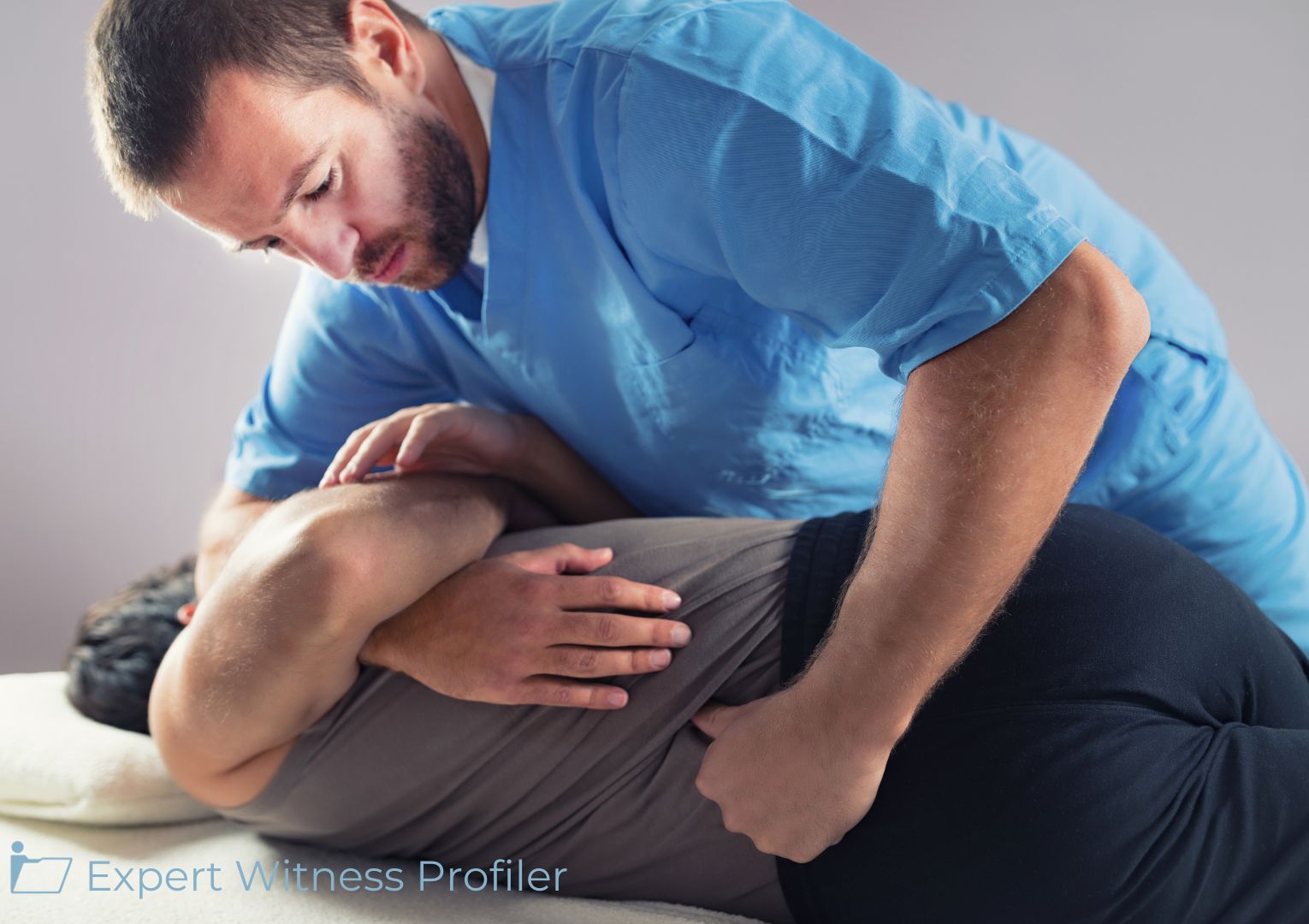
  • Experts are free to rely upon the opinions of other experts; Court limits the testimony of the Chiropractic Expert Witness on account of drawing impermissible conclusions 

    Experts are free to rely upon the opinions of other experts; Court limits the testimony of the Chiropractic Expert Witness on account of drawing impermissible conclusions 

    This case arises from a stroke allegedly caused by a chiropractic adjustment performed by Dr. Frederick Stinner. In February 2015, Justin Brutosky began experiencing chronic back, neck, and head pain. To treat these issues, he periodically saw Stinner, a chiropractor at Madison Avenue Chiropractic Center. From early 2015 to September 17, 2018, Stinner performed 39 chiropractic cervical manipulation procedures on Justin. Though a cervical manipulation procedure is a non-invasive one, it does carry risks, including cervical artery dissection that can lead to stroke.  

    On September 17, 2018, Stinner performed another cervical manipulation on Justin. Within weeks, the 37-year-old Justin suffered an embolic stroke resulting from a cervical artery dissection in the same area of his neck where Stinner had performed the procedure. At the time, Stinner was aware Justin had a family history of stroke but did not know cervical manipulation could cause artery dissection and stroke. As such, he never informed Justin of these risks or suggested alternative treatments. 

    On September 29, 2020, Justin and his wife Suzana filed suit against Stinner for professional negligence and against Madison Avenue Chiropractic Group for vicarious liability. Suzana also brought a loss of consortium claim against all Defendants.  

    Defendant filed successive motions to bar the testimony of Plaintiff’s expert witnesses- Santosh B. Murthy and  Eric G. Chesloff while the Plaintiff responded by filing a motion for partial summary judgment. 

    Medical Expert Witnesses

    Dr. Santosh Murthy is an Associate Professor of Neurology at Weill Cornell Medical College and serves as the Associate Chief of the Division of Neurocritical Care at New York-Presbyterian Hospital/Weill Cornell. He earned his medical degree from Bangalore Medical College in India and completed his Neurology residency at Baylor College of Medicine. Murthy has a fellowship in Neurocritical Care from the Johns Hopkins University School of Medicine and holds a Masters in Public Health from the University of Texas. He is board certified in Neurology, has authored numerous publications, and received various awards and scholarships in his field.

    Dr. Eric Chesloff is a licensed chiropractor in Pennsylvania. He earned his Doctor of Chiropractic degree from the Pennsylvania College of Chiropractic. He also holds a Doctor of Higher Science Education degree from Walden University and a Master of Science degree in Chemistry from Indiana State University. Chesloff has nearly 40 years of experience in private chiropractic practice.

    Discussions by the Court 

    The Court first considered Stinner’s motion to exclude the testimony of Santosh Murthy. Stinner argued that Murthy, a neurologist, could not testify because he is not a chiropractor. He contended New Jersey’s Medical Care Access and Responsibility and Patients First Act (Patients First Act) requires experts to have the same specialty as the Defendant. The Patients First Act used to provide that an expert had to have the same type of practice and possess the same credentials as the Defendant health care provider, unless waived by the Court. However, the Court found that the same-specialty rule only applied if the party against whom or on whose behalf the testimony was offered was a specialist or subspecialist recognized by the American Board of Medical Specialties or the American Osteopathic Association, and the care or treatment at issue involved that same specialty or subspecialty. Stinner had failed to show that he, being a chiropractor, fell within the category of medical practitioners covered by the Patients First Act. In fact, neither the American Board of Medical Specialties nor the American Osteopathic Association recognized a chiropractic specialty or subspecialty. Stinner did not raise any further arguments in support of his motion to bar Murthy’s testimony, and as a result, the motion was denied. 

    The Court next examined Stinner’s motion to exclude the testimony of Eric Chesloff. Chesloff is a chiropractor with nearly 40 years of experience. Stinner argued his conclusions improperly relied on other experts’ findings, lacked specificity about the September 17, 2018 procedure. Stinner also pointed to his failure to provide a detailed explanation of his opinion instead of offering a mere conclusion, which was a violation of New Jersey’s net opinion rule. 

    The Court upheld eight factors which are crucial in assessing the reliability of the expert testimony: 

    • Whether the method had a testable hypothesis. 
    • If the method has undergone peer review. 
    • The known or potential rate of error. 
    • The existence and maintenance of standards controlling the technique’s operation. 
    • Whether the method is generally accepted. 
    • The relationship of the technique to established reliable methods. 
    • The qualifications of the expert witness testifying based on the methodology. 
    • The non-judicial uses of the method. 

    After the District Court establishes that the testimony of the expert is based on “good grounds”, it is advisable to subject its validity to the adversary process, involving competing expert testimony and thorough cross-examination instead of excluding it from the scrutiny of jurors due to concerns about their ability to comprehend its intricacies or grasp its complexities. 

    The Court affirmed the reliability of Chesloff’s testimony due to his 40 years of extensive experience. Chesloff had examined pleadings, depositions, interrogatories, photographs, various medical records, and other documents, drafted a report, and opined that the standard chiropractic manipulative procedure was unlikely to cause vascular deficits, but applying excessive force during chiropractic manipulation increased the risk of harm, including arterial dissection. Stinner sought to exclude this testimony, but failed to provide a valid basis under Daubert for doing so. 

    Stinner’s argument that Chesloff improperly relied on the opinions of other medical practitioners was unfounded. There was no precedent or case law indicating that an expert couldn’t partially rely on the opinions of other experts and medical practitioners. Courts in the district routinely held that experts could consult a mix of objective data and subjective analysis from other experts to create an admissible report, citing I.B.E.W. Local Union 380 Pension Fund v. Buck Consultants. Furthermore, Chesloff’s lack of knowledge regarding the underlying facts went to the weight accorded to his report and testimony, rather than its admissibility. 

    Chesloff’s testimony was allowed by the Court to help the jury understand three key points: (a) the chiropractic standard of care, (b) the potential harm resulting from failure to adhere to this standard, including arterial dissection and stroke, and (c) the likelihood that Stinner had deviated from the standard of care by using excessive force. The Court deemed testimony from a chiropractor regarding the chiropractic standard of care relevant to the case and therefore permissible. 

    However, the Court ruled that Chesloff’s conclusions about Stinner’s September 17, 2018 cervical manipulation violating the standard of care and directly causing Justin’s arterial dissection and stroke were impermissible. The Court cited an analytical gap between the manipulation and these conclusions, asserting that they were based primarily on Chesloff’s personal assertions rather than concrete factual evidence. Chesloff’s report relied heavily on his lack of awareness regarding any other “medical predisposition that [Justin] may have had for cervical artery dissection and stroke.” 

    In summary, the Court allowed Chesloff’s testimony concerning the chiropractic standard of care, the consequences of non-compliance, and the likelihood of Stinner deviating from the standard of care. However, the Court found Chesloff’s testimony asserting that Stinner had indeed violated the standard of care on September 17, 2018, and caused Justin’s stroke to be inadmissible. As a result, the Court granted Stinner’s motion to bar Chesloff’s testimony in part and denied it in part. 

    In the case at hand, to establish a claim for negligence based on a lack of informed consent, the Plaintiff needed to prove four key elements: 

    • The physician’s failure to meet the reasonably-prudent-patient standard for disclosure. 
    • The occurrence of the undisclosed risk, leading to harm for the Plaintiff. 
    • The decision not to consent to the operation or surgical procedure by a reasonable person under the circumstances, had they been adequately informed. 
    • The operation or surgical procedure being a proximate cause of the Plaintiff’s injuries. 

    It was uncertain whether the Plaintiffs had sought summary judgment on all four elements of their claim for negligence based on a lack of informed consent. The Court determined that summary judgment was appropriate for the first element but had to be denied for the remaining elements. 

    Held 

    The Court denied Stinner’s motion to bar the expert testimony of Santosh B. Murthy. The Court after considering Stinner’s motion to bar the expert testimony of Eric Chesloff, granted this motion in part and denied it in part. Chesloff was permitted to testify regarding the chiropractic standard of care, the consequences of failing to comply with it, and the likelihood of Stinner had deviating from the standard of care. However, Chesloff was not allowed to testify that Stinner had, in fact, violated the standard of care on September 17, 2018, and caused Justin Brutosky’s stroke. Lastly, the Court addressed Plaintiffs’ motion for partial summary judgment. The Court granted this motion with regard to Stinner’s failure to comply with the reasonably prudent patient standard for disclosure. However, the Court denied the motion as it pertained to the remaining elements of Plaintiffs’ claim for professional negligence based on a lack of informed consent. 

    The Court has not arrived on an outcome for this case since the remaining issues involved in this case still await resolution. 

    Key Takeaways  

    This case demonstrates several important considerations for expert witness testimony. First, experts can rely on a mix of objective data and other experts’ analyses, as Chesloff permissibly did. Second, while experts can testify to causation generally, Courts may exclude opinions with too great an analytical gap between the facts and conclusions. Moreover, compliance with the applicable legal standards determines admissibility, including requirements for reliability, fit, and factual support. Here, the Court conducted a robust analysis of these standards. Finally, appropriate expert testimony should aid the factfinder on the disputed issues without invading its role to make ultimate determinations. 

  • Evidence of Causation Necessary to Support Damages Theory; Court Limits Clashing Expert Testimony on Economic Damages

    Evidence of Causation Necessary to Support Damages Theory; Court Limits Clashing Expert Testimony on Economic Damages

    This copyright infringement case was brought by JBrick, LLC (“JBrick”) against Chazak Kinder, Inc., Chazak Distribution, Inc., Marav USA LLC, and Yaacov Schwartz (collectively “Defendants”) in the United States District Court for the Eastern District of New York. JBrick alleged that the Defendants infringed on their copyright for a lego model of the Second Holy Temple by creating and selling a similar product.  

    JBrick was established in 2014 by Yitzchok and Channie Kasowitz with the goal of creating Jewish-themed custom lego sets, one of which was an accurately scaled lego model of the Second Holy Temple. In November 2018, Kasowitz displayed JBrick’s completed Second Holy Temple model at a convention where he met Defendant Schwartz. Shortly thereafter, Defendants began selling a model that JBrick alleged was nearly identical to their copyrighted Second Holy Temple model. 

    In May 2021, JBrick filed a complaint against the Defendants for copyright infringement. On April 25, 2022, Plaintiff filed its second amended complaint. On August 19, 2022, the parties completed expert discovery. JBrick hired a damages expert, Michael D. Pakter, to calculate the actual damages suffered by JBrick and any profits earned by the Defendants that were attributable to the alleged infringement. The Defendants retained their own rebuttal expert on damages, Trevor McClain-Duer.  Plaintiff moved to exclude certain of McClain-Duer’s opinions and testimony in response.

    After discovery concluded, the Defendants filed a motion to strike the expert opinions of Pakter. Specifically, Defendants had raised several objections to Pakter’s opinions. These objections included his assertion that Plaintiff would have sold an equal number of the copyrighted set as Defendants sold of the accused product, his claim that damages should encompass the Temple Mount Product and the unsold inventory of the Temple Mount Product, his evaluation of Defendants’ profits from the allegedly infringing product, and his suggestion that “JBrick can recover both its lost profits and a disgorgement of Defendants’ profits.” During that time, Plaintiff had maintained that Pakter’s opinions were grounded in “complex but transparent calculations” designed to help the jury comprehend the financial aspects underpinning the damages asserted in the case. 

    Accounting Expert Witnesses 

    Michael D. Pakter is a certified public accountant, registered and licensed in the State of Illinois, with over 40 years of experience in accounting and forensic accounting. He holds a Bachelor of Commerce and a Bachelor of Accountancy from Witwatersrand University, in South Africa. The American Institute of Certified Public Accountants has recognized him as “Certified in Financial Forensics” and as a “Chartered Global Management Accountant.” He has earned several other certifications including as a “Certified Valuation Analyst” and “Master Analyst in Financial Forensics” from the National Association of Certified Valuators and Analysts, and as a “Certified Insolvency and Restructuring Advisor” from the Association of Insolvency and Restructuring Advisors. Michael Pakter has over 20 years of experience in determining economic damages and performing business valuations. He is currently the Managing Member of Gould & Pakter Associates, LLC (“G&P”). He was retained on account of his extensive accounting experience to opine about the Plaintiff’s damages assuming Defendants’ liability. 

    Trevor McClain-Duer is a certified public accountant, registered and licensed in the State of Illinois. He holds a Bachelor of Business Administration from the University of Notre Dame and a Master’s Degree in Accounting from Ohio State University. He is a Chartered Financial Analyst with over 15 years of experience in valuation and determining economic damages. He is currently the Director of Valuation at Caliber Advisors, Inc., an expert valuation and economic consulting firm.  

    Discussions by the Court 

     The Court first examined Pakter’s qualifications and found he had significant accounting and damages calculation experience to serve as an expert on economic damages. Turning to the reliability of Pakter’s opinions, the Court addressed four disputed aspects of his testimony. 

    First, it denied striking Pakter’s opinion that JBrick would have sold an equivalent number of temple models as Defendants, despite the price difference between the products. Pakter had suggested that, assuming the Defendants’ liability, one possible method for calculating actual damages was to consider “JBrick’s lost profits for its Holy Temple product.” This calculation involved assuming that Plaintiff would have made all or various fractions of the infringing sales that Defendants had made. However, the Defendants had raised objections to this calculation, deeming it speculative. They pointed out a significant disparity in the sale price between the two products, with Plaintiff’s Second Holy Temple Product priced at $613 compared to the Defendants’ allegedly infringing product priced at $60. 

    Nonetheless, it was argued that nothing indicated that Pakter’s conclusion, which suggested that Plaintiff would have sold an equal number of its Second Holy Temple Product as Defendants, was so unrealistic or contradictory as to imply bad faith on his part. 

    Second, Plaintiff contended that its Second Holy Temple Product and a second product known as the “Temple Mount Product” were “directly related.” Consequently, they argued that Pakter could factor in the lost sales of the Temple Mount Product when calculating Plaintiff’s damages. The Temple Mount Product was designed to complement and enhance the educational value of the Second Holy Temple Product. Court determined that while such a damages theory was not inconceivable, the Plaintiff had failed to provide credible evidence of a clear relationship between the sales of the two products absent evidence of lost customers or canceled orders for the Temple Mount Product as a direct result of the alleged infringement. 

    Third, Defendants argued that Pakter’s calculation of their profits was not reliable. They pointed out that his use of a “per unit cost” figure and his failure to account for the total loss of 300 products donated by Defendants to charity were issues of concern. In response, the Plaintiff had maintained that Pakter’s methodology was indeed reliable. According to the Plaintiff, the core of the dispute between the parties revolved around whether profits and costs should be calculated on a per-unit bought-and-sold basis or based on all products manufactured at one time and the decisions made by the Defendants regarding the disposition of those products. Court held that the Defendants showed no authority proving Pakter’s approach was unreliable. At most, the parties disagreed on the appropriate profit analysis, weighing on Pakter’s credibility rather than admissibility. The Court ruled the jury should resolve this battle of the experts. 

    Fourth, Defendants argued that Pakter had inappropriately opined that the Plaintiff should be entitled to profits from Chazak’s downstream distributors. Furthermore, the Defendants had contended that Pakter’s opinion was based on the premise that the Plaintiff could not only recover for Chazak’s alleged infringement but also claim downstream profits resulting from the same alleged infringement of a single product. 

    However, the Court had determined that in cases where two or more individuals were involved in or contributed to a single infringement, they were all jointly and severally liable. In such instances, within a single infringement action, only a single set of statutory damages could be considered. This was because the Copyright Act allowed for only a single recovery for a single sale, and the Court’s decision addressed the issue of multiple parties and liability in the context of copyright infringement. 

    Plaintiff had sought the exclusion of specific opinions and testimony from McClain-Duer. Their basis for this exclusion request rested on the assertion that McClain-Duer lacked the qualifications to provide expert opinions on three key aspects: (i) the size of the market for JBrick’s Second Holy Temple Product; (ii) “price-point comparisons” related to the Second Holy Temple Product; and (iii) JBrick’s manufacturing capabilities. 

    In response to this request, the Defendants had argued that McClain-Duer was functioning as a rebuttal expert. His role was primarily focused on identifying deficiencies in Pakter’s report, specifically highlighting the Plaintiff’s failure to establish, using competent evidence, the size of the market for the Second Holy Temple Product and the manufacturing capabilities of JBrick. This dispute had centered on the qualifications and role of McClain-Duer in the case. 

    The Court found McClain-Duer qualified as an expert on economic damages but lacking in foundation to opine on the size of the market for JBrick’s product or its manufacturing capabilities. McClain-Duer was capable of identifying deficiencies in Pakter’s report. However, he was not qualified to go further and provide an opinion based on research indicating that lego branded sets from popular movies and TV shows sold for significantly less, indicating an insufficiently large market for the Temple product. Similarly, while McClain-Duer could point out that Pakter’s calculations assumed that the Plaintiff could have produced and sold over 15 times the number of sets he actually sold during the same time period, he lacked the qualifications to opine that the Plaintiff did not have the product manufacturing capabilities or capacity to manage such a significant increase in sales. This was because McClain-Duer did not possess the necessary expertise in the field more closely aligned with this opinion, which would be industrial engineering. 

    Therefore, the Court struck McClain-Duer’s testimony regarding the potential market for JBrick’s temple model, comparisons to other lego prices, and JBrick’s ability to meet higher production levels. It found these opinions exceeded McClain-Duer’s economic damages expertise and amounted to advocacy without qualification.  

    Court excluded the portions of Duer-McClain’s report and testimony purporting to describe the size of the market for JBrick’s Second Holy Temple Product, “price-point comparisons” related to the Second Holy Temple Product, and JBrick’s manufacturing capabilities. 

    Held 

    The Court granted in part and denied in part the Defendants’ motion to strike the opinions of Michael Pakter, and granted the Plaintiff’s motion to strike certain opinions and testimony of Trevor McClain-Duer.  The Court has not arrived on an outcome for this case since the remaining issues involved in this case still await resolution. 

    Key Takeaways 

    This case demonstrates the importance of scrutinizing the scope and reliability of expert witness testimony through Daubert motions. The Court served a gatekeeping role to restrict expert opinions to only what the witness was qualified to offer and exclude speculative or unsupported theories. 

    For Pakter, most of his damages calculations passed muster as grounded in reasonable methodology for the jury to assess. However, his assumption of losses on a non-infringed product went too far without evidence of causation. This highlights how courts will strike expansive expert opinions that lack factual support in the record.  

    Meanwhile, for McClain-Duer, his opinions on the size of the market for the Second Holy Temple Product and manufacturing capability of the Plaintiff required demonstration of expertise in the field more closely aligned to such opinions. This shows how rebuttal experts cannot provide opinions that go beyond the scope of their own expertise. 

    In summary, this case reinforces the principles that expert testimony must stay within the witness’s area of specialized knowledge and have a reliable factual basis.

  • Modifications to an expert report are allowed as long as there are no additions or substantive changes whatsoever; Court limits the testimony of both parties’ experts regarding the customs brokerage industry 

    Modifications to an expert report are allowed as long as there are no additions or substantive changes whatsoever; Court limits the testimony of both parties’ experts regarding the customs brokerage industry 

    This case involves a dispute between JAS Supply, Inc. (“Plaintiff”) and Radiant Customs Services, Inc. and Radiant Global Logistics, Inc. (“Defendants”) regarding the importation of alcohol wipes from foreign manufacturers. In 2020, Plaintiff contracted with Defendants to assist with importing alcohol wipes into the United States for the first time. Defendant Radiant Global Logistics provided freight forwarding services, while its related company Radiant Customs Services provided customs broker services to ensure compliance with customs regulations.  

    Plaintiff successfully imported 15 of 19 containers, but the final 4 were detained and eventually refused by U.S. Customs and Border Protection (“CBP”) due to missing information required by the FDA about the originating manufacturer. Plaintiff alleged that Defendants’ misconduct led to the damages from the refused products. Both sides retained experts on importation and customs brokerage industries – Plaintiff retained Kelli R. Thompson and Defendants retained Cameron W. Roberts. The parties filed motions to exclude each other’s expert testimony.  

    Customs Expert Witnesses 

    Kelli Thompson is a highly experienced Customs and International Trade Advisor with a diverse background. She is a licensed customs broker and certified customs specialist with extensive private sector and public sector experience in various areas of customs and trade, including classification, valuation, rules of origin, free trade agreements, drawback, and intellectual property rights. She also served for nearly seven years with U.S. Customs and Border Protection, rising from Import Specialist to Supervisory Import Specialist. 

    She founded her own trade consulting firm, which has catered to a wide range of clients, from small start-ups to large Fortune 500 companies. Kelli Thompson has a Master’s degree in Business Management from North Park University (2001-2003) and a Bachelor’s degree in Health Promotion & Education from the University of Cincinnati (1994-1999). 

    Cameron Roberts, a partner at Roberts & Kehagiaras LLP in Long Beach, California, brings over three decades of expertise in international trade to his practice. His focus areas encompass customs law, export compliance, domestic and international transportation law, maritime law, and trade and insurance matters. Cameron is an active member of various customs, international trade, and legal associations. He has served as President of the Foreign Trade Association and the Harbor Transportation Club. 

    In addition to his legal career, Mr. Roberts serves as an adjunct professor at California State University, Long Beach. He is a frequent presenter and author on topics within his practice areas. His qualifications include being a licensed customs broker since 1989 and having prior experience as a transportation executive. 

    Cameron holds a B.A. degree in political science and international relations from California State University, Long Beach, and has earned his J.D. degree from the Seattle University School of Law. He is recognized as an expert witness in both State and Federal courts, and he is admitted to practice in California and Washington. Cameron is also qualified to appear before the Court of International Trade and the Federal Maritime Commission. 

    Discussions by the Court 

    The Court first set forth the legal standard for expert testimony under Federal Rule of Evidence 702, which requires expert opinion to be both relevant and reliable. The Court acted as a gatekeeper to evaluate admissibility of expert opinions. General qualifications of both experts were not disputed and the focus was on assessing the reliability and relevance of the expert testimony.  

    The Plaintiff sought to limit Cameron Roberts’ anticipated testimony related to the COVID pandemic, arguing that he lacked the qualifications and that his testimony would lack relevance and reliability. The Defendants intended for Roberts to provide insights into “the pandemic’s effects on the import industry” and how it specifically impacted individuals involved in the case and their ability to work. The Plaintiff’s main contention was that Roberts did not possess relevant education or specialized knowledge about the COVID pandemic, particularly in areas like medicine or public health. However, it’s important to note that Roberts did not claim to be a pandemic expert in those fields. Instead, his opinions were rooted in his expertise in the customs brokerage industry, shaped by his observations and personal experiences during the pandemic. 

    The Plaintiff did not appear to dispute Roberts’ general industry expertise, which formed the basis of his opinions. As such, Roberts was considered qualified to offer expert insights into the relevant industries during the pandemic based on his personal knowledge, experience, and observations during that time. 

    The Plaintiff attempted to challenge the reliability and relevance of Roberts’ opinions as they applied to the specific facts of the case. They pointed out that Roberts’ opinions were often based on facts that were either in dispute or about which he had limited personal knowledge. However, it was clarified that this argument primarily called in question the weight and credibility of Roberts’ opinion testimony, rather than its reliability or relevance. 

    The Defendants’ primary argument for excluding Thompson as an expert was based on the assertion that her disclosed affirmative report contained numerous improper legal conclusions. Thompson had made numerous legal conclusions within her testimony, specifically regarding whether the Defendants’ conduct constituted negligence, whether they breached a fiduciary duty, or otherwise violated federal regulations. She even made express credibility determinations.  Similarly, the Plaintiff contended that Roberts’ anticipated testimony was improper because it extensively included inadmissible legal opinions on contested issues. For instance, he had defined gross negligence, mistake of fact, and inadvertence based on case law that was irrelevant to the facts of the specific case. Ultimately, he had arrived at a legal conclusion, stating that the Radiant Defendants were not grossly negligent but had committed a mistake of fact. He found that the Radiant Defendants’ belief that they had submitted the appropriate paperwork was reasonable. The Court concurred that such testimony would not be admissible. 

    Consequently, the Court partially granted the Plaintiff’s motion to limit Roberts’ testimony and partially granted the Defendants’ motion to exclude Thompson’s testimony. The Court’s order stipulated that neither expert would be allowed to offer testimony during the trial that purported to provide impermissible legal conclusions or interpretations. 

     
    Court assessed the dispute regarding whether Thompson should be disqualified as an expert due to the form of her report. Defendants argued that her conclusions were based on a skewed version of the factual record consisting of “regurgitated facts” provided by the Plaintiff’s counsel. They contended that within her report, Thompson made improper determinations on the credibility and culpability of lay witnesses, and these issues, coupled with the alleged formulation of her opinions as legal conclusions, led them to seek her disqualification as an expert witness. 

    Concerning the formulation of her opinions in her report, it was noted that Thompson’s written report, as disclosed to the Defendants, wouldn’t be admitted into evidence since it would be redundant with the testimony she would provide at trial. The Court emphasized that objections to the form of her testimony could be raised during the trial, but disqualifying her as an expert wasn’t warranted. Instead, traditional means such as cross-examination, presenting opposing evidence, and instructing the jury on the burden of proof were deemed appropriate for challenging her testimony. 

    Plaintiff recognized that Thompson’s opinions regarding the credibility of lay witnesses were improper and had shown a willingness to address and correct this issue. However, there was one statement challenged by the Defendants that Thompson had not rectified, and the Court determined it to be improper. Specifically, the Court ruled that Thompson could not provide opinions on the state of mind or understanding of other potential witnesses. The Court prohibited Thompson from opining on the credibility or culpability of lay witnesses. 

    Regarding the potentially inadmissible formulations of Thompson’s opinions, it was argued that these issues were curable. Plaintiff provided revised language to address the alleged improper conclusions, demonstrating how they could be presented as admissible opinions without altering their substance. Defendants contested this amended report, claiming it was an untimely supplement. However, the Court noted that it could excuse the untimeliness if it found the disclosure error to be harmless. Furthermore, it highlighted that even without the modified report, Thompson could still provide admissible opinions within the scope of her original disclosure. 

    The Court’s role was to determine whether Thompson was qualified to offer relevant and reliable testimony. Since there were no challenges to the experts’ general qualifications, and given that both parties had dueling expert testimonies on the same subject matter, the Court believed the intended dueling testimony would be relevant and reliable as long as it was presented appropriately and in an admissible form at trial. 

    Held 

    The Court granted the motions only to the extent of excluding improper legal conclusions and credibility opinions. It denied excluding the experts themselves. The Court found Roberts qualified to opine on the pandemic’s industry impact from his experience. The Court held Thompson’s opinions could be presented in an admissible manner, finding her report did not warrant blanket exclusion. With improper opinions excluded, the Court found both experts could offer helpful industry testimony. 

    The Court has not arrived on an outcome for this case since the remaining issues involved in this case still await resolution. 

    Key Takeaways:

    – Experts can testify to industry practices and standards based on their qualifications and experience in the field. However, experts cannot offer legal conclusions or interpretations.  

    – Minor deficiencies in an expert report do not always warrant blanket exclusion of the expert. Their opinions can still be presented in admissible form through testimony.  

    – While experts cannot opine on lay witness credibility, they can otherwise testify to the reasonableness of parties’ actions based on industry standards and their expertise. 

    – Untimely supplementation of an expert report may be excused when it does not substantively alter the opinions and causes no prejudice. 

    In summary, the Court set a high bar for exclusion of otherwise qualified experts. Their opinions must be screened for legal conclusions, but as long as their testimony assists the factfinder and clearance requirements are met, exclusion is disfavored. 

  • Court held that the original intent of the expert report does not serve as sufficient grounds for its exclusion but nevertheless rejected some of food safety expert’s conclusions which were not based on his expertise 

    Court held that the original intent of the expert report does not serve as sufficient grounds for its exclusion but nevertheless rejected some of food safety expert’s conclusions which were not based on his expertise 

    This product liability case involved a dispute between Mountain Country Foods (MCF) and Great West-Teeuwissen (Great West) regarding pet treats that MCF manufactured using mechanically deboned beef (MDB) purchased from Great West.  

    On March 27, 2017, the FDA issued a notice regarding a possible link between hyperthyroidism in dogs and products containing animal gullets that had not been completely cleared of thyroid glands. The notice made two suggestions to manufacturers to ensure their products did not contain thyroid hormones. 

    First, the notice recommended avoiding the use of livestock gullets as a way to guarantee the absence of thyroid in pet food. Second, it advised suppliers and manufacturers to ensure the complete removal of thyroid glands from gullets used in pet food production. Suppliers were encouraged to verify the thorough removal of thyroid glands from gullets before supplying them to manufacturers, and manufacturers were advised to assess their suppliers’ practices carefully to ensure they received raw materials and ingredients devoid of thyroid hormone-secreting tissue. 
     

    The treats were recalled in March 2018 due to potentially elevated levels of thyroid hormone by JM Smucker Company (Smuckers). On March 22, 2018, Smuckers issued a recall for dog treats that it had bought from MCF due to potential elevated levels of thyroid hormones in the products. MCF credited Smuckers $1,311,211.14 to compensate for the damages resulting from the recall. 
     

    MCF sued Great West alleging it was liable for damages caused by the product recall.  

    Great West disclosed John N. Schultz, a food safety expert, to provide expert testimony. Schultz had previously submitted two investigation reports to Great West’s insurer in February, 2020 and July, 2022. These reports were based on Schultz’s review of documents and deposition transcripts.  

    Schultz arrived at the following conclusions based on his investigation determining whether [Great West] knowingly sold MDB containing gullet meat with the thyroid gland still intact to [MCF] and subsequently listed them on his February 03, 2020 report as follows: 

    1. It was the expert opinion of John Schultz, Senior Food Safety Rimkus Consultant, that there had been no proof presented by MCF that the MDB shipped to MCF after the March 2017 FDA announcement by [Great West] contained thyroid glands. 

    2. All the MDB shipped by [Great West] to MCF was received and accepted for use as animal by-products for the manufacture of pet food. 

    3. Gullets were removed from the MDB and sold for pharmaceutical purposes. 

    In January 2021, MCF sued Great West. On June 9, 2022, Great West disclosed Schultz as an expert. On July 14, 2022, Schultz submitted an updated report based on his review of additional documents disclosed during the litigation and transcripts of deposition testimony wherein he presented the following conclusions: 

    1. Milo’s Kitchen Pet Treats recall announcement read: a voluntary recall of shipments of dog treats relating to the possibility of elevated levels of thyroid hormone. “Limited Shipments of Two Varieties of Milo’s Kitchen Dog Treats Voluntarily Recalled Due to Potentially Elevated Levels of Thyroid Hormone”, per the company’s announcement March 22, 2018: 

    a. ‘Potential elevations’ is the term that indicates that it may have been due to this issue. If the raw materials or finished pet products were not analyzed there is no definitive proof the raw materials came from [Great West]. MDB may have been traced back to Mountain Country Foods, but no definite proof that [Great West] product had elevated thyroid hormone or that the raw material contained any thyroid material. 

    2. Revised specifications for MDB were completed on April 18, 2018, and approved to be sent out to raw material suppliers by Brian Ford. 

    3. The FDA published a notice on March 27, 2017, stating that thyroid hormone elevated amounts in dogs that became sick were possibly due to possible elevated thyroid hormone levels. “The source of thyroid hormones is likely the use of gullets from which the thyroid glands were not completely removed before adding to pet food or treats.” 

    4. As part of the FDA notice discussed in #3, “Manufacturers can carefully assess their suppliers’ practices and take steps to ensure that they are receiving raw materials and ingredients that do not contain thyroid hormone secreting tissue.” The responsibility ultimately was the responsibility of MCF and all testing of raw materials was the sole responsibility and cost of the manufacturing facility, MCF, not the raw material producing company [Great West]. 

    5. No chemical analysis was completed on raw materials to confirm that any of the raw material, MDB, supplied by [Great West] to MCF contained the thyroid hormone. 

    a. There were several important pieces of information that needed to be addressed 

    i. The percentage (%) of the gullet that may contain a portion of the thyroid gland 

    ii. What amounts, percentage, of the total ground pet product was gullet meat 

    6. It had been discussed that [Great West] did not conduct a “complete breakdown cleaning” of equipment between the processing or gullet meat and MDB not containing gullet meat. Whole gullets were never used, per Douglas Haycock for MDB products. The standard in the meat industry was as long as processing the same species of animal, a complete breakdown cleaning was not mandatory. USDA inspectors were in the plant during the processing and found no apparent violation in the GWB process [sic]. 

     7. It is unclear if any of the MDB from [Great West] was used in any other finished pet products not [sic] that were recalled. 

    8. All MDB does not contain gullet meat. Other companies purchasing the MDB from [Great West] were Nestle, Mars Petcare, Smucker’s, and Simmons. 

    9. By April 2017, all gullet meat was not used in MDB by MW [sic] in their products, it was used for the collection of the cartilage only, and the remaining product was rendered. 

    10. Based on the information in a letter from [Great West] to Simmons on March 13, 2017, it stated that they ‘could not and did not guarantee that 100% of the thyroid gland will be removed in every case’. [sic] Due to the processing of gullet meat ‘residual levels of thyroid gland remaining in the gullet meat when this product is processed’ was possible. 

    MCF filed a motion to exclude the expert testimony of John Schultz that was disclosed in two investigation reports he had previously submitted to Great West’s insurer.  

    Food Safety Expert Witness 

    John Schultz has extensive experience in food safety and quality assurance. He obtained a Bachelor of Science degree in Animal Science with a minor in Chemistry from Auburn University. Schultz was responsible for ensuring that only the highest quality products arrived at the restaurants and retail food outlets, and that they were sold to customers in a Food Safe environment and condition. He oversaw the research and development of new products, from idea creation to the supplier, and ultimately to the store for sale. He established programs and coordinated all restaurant and supplier plant audits for Quality and Food Safety, as well as adherence to specifications. Schultz developed QA/Food Safety Programs that encompassed supplier and company restaurant audits. He also developed various new products for use in restaurants, from idea development to commercialization, and modified existing products to achieve higher quality and lower cost while coordinating efforts with the culinary team. Additionally, he developed Food Safety standards and auditing programs/processes for sauces, condiments, coffee, bakery, and protein suppliers. He is currently a senior consultant with the Rimkus Consulting Group, Inc. 

    Discussions by the Court 

    The Court first addressed MCF’s argument that Schultz’s opinions would not assist the jury. The Court explained that under Rule 702, expert testimony must help the jury understand the evidence or determine a fact at issue. The Court insisted on the expert offering valid expert opinions based on his expertise if called to assess the evidence on record instead of merely reciting factual evidence, citing Graystone Funding Co. v. Network Funding, L.P.. The Court found that many of Schultz’s conclusions were bare recitations of factual evidence he reviewed such as when he stated that MCF accepted the shipments of MD beef shipped by Great West and that Great  West sold the cartilage extracted from the gullets for pharmaceutical purposes. The Court ruled these factual recitations were not proper expert opinions helpful to the jury. The Court also excluded several of Schultz’s conclusions where he interpreted or weighed the evidence, like when he pointed out that MCF did not present any proof that the MDB shipped to them after the March 2017 FDA announcement by [Great West] contained thyroid glands, since he did not use his expertise in food quality and safety to arrive at those opinions. The Court determined the only proper expert opinion was Schultz’s statement about Great West not conducting complete breakdown cleaning of equipment since it was not mandated between the processing of gullet meat and MDB not containing gullet meat. 

    The Court next addressed MCF’s argument that the opinions should be excluded because the reports were originally prepared to determine insurance coverage for Great West’s insurer. The Court found that the original intent did not warrant outright exclusion if the opinions satisfied the rules for admission of expert testimony under the federal rules of evidence. Therefore, it denied the request to exclude Schultz’s surviving opinion on that basis.  

    Finally, MCF asserted that Schultz’s opinions should be excluded because they believe they violate the rule against expert testimony that tells the jury what decision they should make. MCF specifically points to Schultz’s opinion that “The standard in the meat industry is as long as processing the same species of animal, a complete breakdown cleaning is not mandatory” as problematic. But the Court held that since the standard in the meat processing industry for cleaning equipment was not an ultimate issue in this litigation, the legal conclusion Schultz’s opinion intended to proffer was not prohibited since it did not dictate the jury about the conclusions it should reach on MCF’ claims. 

    Held 

    The Court granted the motion to exclude in large part, allowing Schultz to testify only regarding the equipment cleaning standards in the meat processing industry. 

    The Court has not arrived on an outcome for this case since the remaining issues involved in this case still await resolution. 

    Key Takeaways 

    This case illustrates several important principles regarding expert witness testimony. First, it shows that experts cannot simply recite factual evidence or weigh the facts for the jury. To be helpful, expert opinions must add specialized knowledge beyond the jury’s abilities. Second, the case demonstrates that just because a report was originally prepared for a different purpose, like insurance coverage, does not necessarily render it inadmissible. The critical issue is whether the expert opinions satisfy evidentiary standards for relevance and reliability.  

    Third, the case clarifies that experts cannot offer legal conclusions that tell the jury how to decide the ultimate issues. However, opinions regarding industry standards and norms may be permissible if they do not direct the verdict. Finally, the court’s rigorous examination of each opinion underscores the importance of judicial gatekeeping to ensure expert testimony assists the trier of fact rather than merely telling a party’s version of events. Together, these key takeaways emphasize the care courts must exercise to admit only proper expert opinions that will aid the jury based on the expert’s specialized knowledge and experience.