Tag: Consumer

  • Marketing Expert’s Testimony on Consumer Confusion Admitted

    Marketing Expert’s Testimony on Consumer Confusion Admitted

    Defendant Learneo, Inc., a Delaware corporation with a principal place of business in Redwood City, California, operates a website named Course Hero, an online learning platform of course-specific study resources. In particular, this action involves alleged unlawful conduct on Course Hero, where users upload materials, such as study resources, and access materials shared by others.

    Consequently, Plaintiff Post University accused Learneo, Inc. of (1) direct copyright infringement, (2) contributory copyright infringement, (3) vicarious copyright infringement, (4) removal of copyright management information (“CMI”) in violation of the Digital Millennium Copyright Act (“DMCA”), (5) trademark infringement in violation of the Lanham Act, (6) false designation of origin in violation of the Lanham Act, (7) violation of the Connecticut Unfair Trade Practices Act (“CUTPA”), (8) unjust enrichment, and (9) common law unfair competition.

    In support of its claims, Plaintiff retained Dr. Yoram (Jerry) Wind to conduct, analyze, and opine on prospective consumer confusion.

    In response, Defendant filed a motion to exclude the testimony of Wind pursuant to Federal Rules of Evidence 403 and 702

    Marketing Expert Witness

    Yoram (Jerry) Wind, PhD. is the Lauder Professor Emeritus and Professor of Marketing at the Wharton School of the University of Pennsylvania, having taught graduate courses relating to executive development and marketing since 1967, and worked as Director for the SEI Center for Advanced Studies in Management.

    Wind joined the Wharton faculty in January 1967, upon receipt of his doctorate from Stanford University, and was granted Emeritus status in July 2017.

    Want to know more about the challenges Yoram (Jerry) Wind has faced? Get the full details with our Challenge Study report.

    Discussion by the Court

    Defendant filed a motion to exclude Wind’s testimony, asserting that: (1) his surveys were fundamentally flawed as they improperly excluded educators during the screening portion, (2) his surveys were unreliable as they relied on unclear and undefined terms, including “document,” “material,” and “owns,” (3) his initial survey used improperly designed controls, (4) his coding results could not be replicated, (5) his understanding of the definition of CMI was incorrect, and (5) his conclusions are based on an unreliable application of his methodology.

    A. Wind’s Qualifications

    Defendant has not attempted to challenge Wind’s qualifications, nor could it. As part of a career spanning over four decades, Wind has been qualified as a marketing and survey research expert in federal court, where he has conducted and evaluated marketing and consumer research for use in litigation.

    The Court therefore found that Wind is qualified to provide expert testimony on consumer confusion as it relates to Plaintiff’s claims against Defendant.

    B. Reliability of Wind’s Testimony

    1. Defendant’s Allegations that the Surveys Improperly Excluded Educators

    Defendant contended that Wind improperly excluded educators from the surveys, as they are one of Defendant’s only two target demographics. According to Defendant, excluding educators compromises the probative value of the survey because it fails to capture the responses from all potential consumers of Course Hero.

    Here, the purported testing of the wrong universe, as Defendant suggested, did not indicate that the surveys’ probative value is substantially outweighed by the danger of unfair prejudice, confusion of the issues, or misleading the jury.

    Defendant’s sweeping contention that educators must be included in the universe is belied by evidence showing that college educators made up only a fraction of Court Hero’s accountholders in 2021, including statistics that educators make up less than 1% of account holders, and testimony from Defendant’s VP of Marketing stating that “there are a lot more students than there are educators.” Further, Defendant did not seriously dispute Wind’s explanation that it is generally accepted and custom to exclude individuals who works in the same industry as the survey that is being conducted. It is thus appropriate for Defendant to raise its criticisms about the survey’s academia-based exclusion before the jury. 

    2. Defendant’s Allegations of Ambiguous Terms

    Defendant contended that the survey questions using terms like “document,” “material,” and “owns” are ambiguous because almost all of the test stimuli show one document (the Post University material) within another document (the Course Hero webpage), and then ask questions about the “document.”

    Defendant asserted that the use of the terms “document” and “material” interchangeably in Wind’s survey make it impossible to discern whether survey respondents understood “document” or “material” in the question to mean the alleged Post University material (green), the Course Hero webpage (red), or something else entirely.

    However, it would be too wide a stretch for this Court to conclude that the failure to define “document” and “materials,” which are terms that jurors will have necessarily dealt with throughout their lives, would undermine the probative value of the survey.

    Defendant next contended that the term “owns,” as used in Wind’s survey, is improper for being ambiguous and for asking the survey respondents to opine as to a legal question.

    However, the survey did not present respondents with the legal issue of copyright ownership; rather, it asked the respondents to provide their impressions about who they believed had “owned” a document. Thus, the term “owns” bore no resemblance to the spectrum of cases cited by Defendant where exclusion was warranted due to an ambiguous term.

    3. Defendant’s Allegations of Improper Controls

    The Court finds, too, that Defendant’s critiques of Wind’s control stimuli are overstated. Defendant contended that Wind’s initial survey is unreliable as the control stimuli failed to isolate the alleged elements of the Course Hero website underlying any of Plaintiff’s claims, thus making it impossible to determine which elements, if any, contributed to confusion. Further, Defendant argued that Wind’s control stimuli removed an excessive amount of Course Hero website elements and improperly added a sentence, unilaterally drafted by Wind, to the footer of the stimuli, which stated, “Course Hero did not author and does not own this study resource.”

     To be clear, consistent with Defendant’s contention, the absence of an effective control could certainly be a factor that damages the reliability of a survey. No such combinations of major flaws are found here. Thus, while a factfinder may not give Wind’s testimony much weight due to his removal of elements of the Course Hero website and addition of the footer, “neither science nor law mandate the [requested] exclusion” here. 

    4. Defendant’s Allegations of Wind’s Unreliable Coding Methodology

    Defendant identified two theories upon which Wind’s coding methodology is unreliable. First, Defendant argued that Wind’s coding instruction did not provide sufficient guidance to produce reliable results, as Wind was unable to reproduce his coders’ classifications based on his own coding instructions. Specifically, Defendant noted that Wind was only able to match his coders’ classifications four out of fourteen times (28.6%) during a deposition. Second, Defendant argued that Wind failed to properly to isolate the alleged CMI, as his understanding of the definition of CMI was incorrect.

    While it may be that it was impossible for Defendant to question Wind about 2,250 respondents during a deposition, the Court held that the emphasis on ten purported testimonial errors by Wind did not show that the methodology used was completely unreliable. Defendant did not conduct its own survey showing inconsistent results with Wind’s results and failed to show that it is impossible to reproduce Wind’s coding scheme.

    Defendant’s allegation that Wind’s understanding of CMI was overly broad similarly failed to establish that there was unreliable coding methodology. As relevant here, Wind instructed his coders to look for the following categories of information in the “confused” responses to the test stimuli: Course Hero Logo, Course Hero Advertisement, Course Hero Banner Ads, Course Hero Copyright Notice, Course Hero Website / Link, Course Hero Watermark, Course Hero name on document, and Course Hero Other. Thus, Wind’s guidance to his coders is wholly consistent with the plain text of the DMCA, which defines CMI as information “conveyed in connection with” copies of a work, including “other information identifying the work[.]”

    5. Defendant’s Allegations of Wind’s Faulty Conclusions

    First, Defendant argued that Wind’s opinion as to CMI confusion failed to account for background noise in the control stimulus. Specifically, Defendant argued that several of the control stimuli contained the Course Hero footer watermark, which Plaintiff alleges to be false CMI. But that contention did not show that Wind’s findings are “speculative or conjectural or based on assumptions that are so unrealistic and contradictory as to suggest bad faith or to be in essence an apples and oranges comparison.”

    Second, Defendant argued that Wind’s reported measures of trademark confusion are below the level that courts require for experts to opine that there is a likelihood of confusion, i.e., 15%. But Defendant did not offer any binding law for the proposition that an expert must be precluded from testifying if a survey’s overall confusion is less than 15%. 

    Finally, the Court is not persuaded that the Defendant has shown that Wind’s conclusions are unreliable.

    Held

    The Court denied the Defendant’s motion to exclude the testimony of Yoram Jerry Wind.

    Key Takeaways:

    • The fact that a survey used a control that could have been ‘stronger’ or ‘better’ may mean it is entitled to less weight, it does not mean that the survey does not provide relevant information.
    • Defendant showing Wind struggling to make consistent coding determinations as to a handful of responses during a deposition did not meet the threshold to exclude expert testimony: that “there is simply too great an analytical gap between the data and the opinion proffered.”

    Case Details:

    Case Caption: Post University Inc V. Learneo, Inc.
    Docket Number: 3:21cv1242
    Court Name: United States District Court, Connecticut
    Order Date: September 23, 2025
  • Marketing Expert’s Testimony Was Admitted Despite His Lack of Legal Credentials

    Marketing Expert’s Testimony Was Admitted Despite His Lack of Legal Credentials

    X Social Media LLC (“X Social Media”) and X Corp. both use the letter “X” in association with closely related advertising services. Put simply, X Corp. is an online and app-based social-media platform that allows users to create and share a wide range of digital content, including advertisements. X Social Media is an advertising agency that designs and runs social-media advertising campaigns for mass-tort and class-action law firms. 

    This is a case for trademark infringement and related claims concerning the parties’ respective use of the letter “X” in connection with distinct product and service offerings.

    Both parties retained experts to advance their respective theories of the case. Defendant offered (1) marketing scholar Peter Golder and (2) survey practitioner Hal Poret. Professor Golder analyzed the product markets in which the parties operate and opines that reverse confusion is improbable. Poret conducted an Eveready consumer-perception survey to test for the likelihood of reverse confusion and found minimal confusion. 

    Plaintiff offered Professor David J. Franklyn, a trademark-law scholar, to rebut both Golder and Poret. Professor David J. Franklyn disputed Golder’s market-structure analysis and critiques Poret for limiting his survey universe to representatives of law firms and advertising agencies, contending that Poret should also have surveyed the consumers who view Plaintiff’s ads on social media.

    Both parties filed motions to exclude aspects of the opposing experts’ opinions under Daubert and Federal Rule of Evidence 702.

    Marketing Expert Witness

    Professor Peter N. Golder is a Professor of Marketing at the Tuck School of Business at Dartmouth College in Hanover, New Hampshire.

     His background includes a Ph.D. in. marketing from the University of Southern California, decades of academic appointments in marketing, and prior experience providing expert marketing testimony in litigation.

    Want to know more about the challenges Peter Golder has faced? Get the full details with our Challenge Study report.

    Survey Research Expert Witness

    Hal Poret is a public opinion researcher with a master’s degree in mathematics and a law degree from Harvard Law School. Poret has personally designed, supervised, and implemented well over 1,000 surveys regarding the perceptions and opinions of consumers. 

    He has been accepted as an expert in survey research on numerous occasions by U.S. District Courts, the Trademark Trial and Appeal Board, the ITC, the FCC, the FTC, and the National Advertising Division of the Council of Better Business Bureaus (NAD).

    Get the full story on challenges to Hal Poret’s expert opinions and testimony with an in-depth Challenge Study. 

    Intellectual Property Expert Witness

    David Joel Franklyn is currently a law professor at Arizona State University, with an appointment in the Sandra Day O’Connor College of Law. He is also the Executive Director of the McCarthy Institute at ASU Law, which is focused on scholarship and research in intellectual property law, with particular emphasis in the areas of trademark law, branding and consumer perceptions related to brands.

    Franklyn has published extensively on issues relating to intellectual property law and is editor-in-chief and co-author of McCarthy’s Desk Encyclopedia of Intellectual Property Law. Between 2018 and 2021, Franklyn also held a joint appointment at Golden Gate University’s law school and business school. 

    Get the full story on challenges to David Franklyn’s expert opinions and testimony with an in-depth Challenge Study. 

    Discussion by the Court

    The Court discussed the challenged opinions of Professor Golder, Poret, and Professor Franklyn in turn.

    A. Professor Peter Golder

    Defendant retained Golder to analyze the structure of the parties’ product markets, the sophistication of Plaintiffs’ consumers, and the nature of Plaintiffs’ sales process and to “[d]iscuss whether [these] assessments” are “consistent or inconsistent with Plaintiff’s theory of reverse confusion.”

    Plaintiff filed a motion to exclude Golder under Rules 702 and 403, contending that he is unqualified, offers improper legal conclusions, ignores the Eleventh Circuit pattern jury instructions for trademark-infringement cases, disregards evidence of actual confusion, relies on irrelevant third-party marks, and “cherry-picks” facts. 

    1. Summary of Golder’s Opinions

    Golder opined that similar brand names can coexist without consumer confusion when they operate in distinct ‘product categories,’ which he illustrated with third-party examples such as “Delta”—the brand-name of an airline, a faucet company, and a dental insurer.

    He further noted that Defendant’s public SEC filings identify technology companies such as Meta, Alphabet, Microsoft, and TikTok—not advertising agencies like Plaintiff—as competitors.

    He opines that the Plaintiffs’ theory of reverse confusion is “inconsistent with both the documentary record and marketing literature” given the parties’ distinct product categories, the sophistication of Plaintiffs’ customers, and the nature of Plaintiffs’ sales process.

    2. Plaintiff’s Daubert Challenges to Professor Golder

    Plaintiff first argued that Golder is “not qualified as a trademark law expert” because he is neither a “trademark attorney nor former-USPTO commissioner.” However, Defendant has proffered Golder as a marketing expert, not a legal expert. Evaluated in his proffered field, the Court finds him qualified under Rule 702.

    Plaintiff next contended that Golder impermissibly offered legal conclusions, citing his statement that “Plaintiff’s theory of reverse confusion is not consistent with the documentary evidence in this matter or with the marketing literature.” Considered in context, the challenged statements are tied to marketing concepts and record evidence, and Golder expressly disclaimed offering a “legal opinion on confusion.” As a result, the Court rejected Plaintiffs’ argument.

    Plaintiff also sought exclusion because Golder did not consider evidence of actual confusion. Since this matter is set for a bench trial, where concerns about the “jury’s expectations” carry no weight, the Court will evaluate evidence of actual confusion independently and consider Golder’s testimony only for its permissible purpose.

    Plaintiff next challenged as “irrelevant and misleading” Golder’s reliance on third-party brand examples such as Delta, Dove, Morningstar, Pandora, and Tiffany. To the extent Golder’s examples do not correspond perfectly to this case, the Court held that “objections to the inadequacies of a study are more appropriately considered an objection going to the weight of the evidence rather than its admissibility.”

    Finally, Plaintiff argued that Golder “cherry-picked” evidence by declining to evaluate evidence of actual confusion and by emphasizing factors favorable to Defendant. In this case, Golder disclosed the materials he considered and applied recognized marketing principles to the facts of this case. 

    The Court overruled the Plaintiffs’ cherry-picking objection under Rule 702 because it does not establish unreliability.

    B. Hal Poret

    Defendant retained Hal Poret, a consumer-survey expert, “to design and conduct a scientific survey” assessing whether “Defendant’s use of its X mark creates a likelihood of reverse confusion with Plaintiff.”

    Poret did so and concluded that “Defendant’s use of its X mark does not create a likelihood of confusion with Plaintiff.” Plaintiff filed a motion to exclude his testimony, contending that his survey is unreliable because: (1) it lacked a control group; (2) it used the Eveready format rather than Squirt (3) it relied on flawed coding assumptions; and (4) it tested an underinclusive universe. 

    1. Summary of Poret’s Opinions

    Poret conducted an Eveready survey, in which respondents are shown only the senior user’s mark (here, Plaintiffs “X SocialMedia”) and asked questions to assess whether the respondents associate that mark with the junior user’s mark (here, Defendant’s “X”). 

    Poret administered the survey online to 200 respondents who had been screened to ensure they worked for law firms or marketing firms that had used or planned to use social media advertising services—the population he identified as Plaintiffs’ customer base. 

    According to Poret, only 4.0% of respondents provided answers that “suggest reverse confusion” between Plaintiff and Defendant.

    2. Plaintiff’s Daubert Challenges to Poret

    Plaintiff first argued that Poret’s survey is unreliable because it lacked a control group. Plaintiff argued that without a control, the survey cannot distinguish between genuine confusion and background “noise.” Poret acknowledged the omission but explained that controls are most useful where the initial confusion rate is high enough that noise could materially affect the result.  Here, however, “the test group rate of confusion was already so low that it shows a lack of confusion even without taking any potential noise into consideration.” 

    The Court held that the absence of a control group does not render a survey inadmissible under Rule 702. 

    Plaintiff next challenged Poret’s use of the Eveready format, arguing it is inappropriate here because it presumes that Defendant’s mark is top-of-mind. The dispute over whether Eveready or Squirt is more probative here is for the trier of fact to decide; it does not implicate methodological reliability under Rule 702. 

    The Court held that Poret’s survey will not be excluded merely because Plaintiff believes a Squirt survey would be more probative since both Eveready and Squirt formats are accepted in the industry.

    Plaintiff also argued Poret’s coding decisions artificially lowered the measured confusion rate. But Plaintiffs’ objections boil down to the assertion that Poret misused a survey method that “in the abstract, is reliable.” It is well-established that “the identification of such flaws in generally reliable scientific evidence is precisely the role of cross-examination.”

    Finally, Plaintiff argued that the survey universe was underinclusive because it did not include consumers who merely view Plaintiffs’ ads on Facebook and instead exclusively sampled representatives of legal and marketing firms. However, when assessing reverse confusion, limiting the universe to the senior user’s customers is a generally accepted approach.  

    C. David J. Franklyn

    Defendant filed a motion to exclude two categories of Franklyn’s opinions: (1) all of his critiques of Golder, on the grounds that Franklyn is not qualified to offer marketing opinions and, in any event, his critiques lack reliable methods and sufficient factual support; and (2) his opinion that Poret’s survey used an underinclusive universe.

    1. Summary of Franklyn’s Opinions

    a. Critiques of Golder

    Franklyn disputed Golder’s claim that the parties operate in distinct product categories, opining that the parties “operate in highly overlapping product categories and often provide nearly identical services.”

    He criticized Golder’s reliance on third-party brand analogies such as “Delta,” contending that those examples are inapposite because here “the product category of [Defendant] is the brand name of [Plaintiff].”

    b. Critiques of Poret

    Franklyn criticized Poret’s reverse-confusion survey for, among other things, using an “underinclusive universe” that “fails to account for consumers” who encounter the advertisements Plaintiff creates for its law-firm clients. Poret surveyed only “representatives of legal practices and advertising/marketing firm[s],” and Franklyn opined that the perceptions of consumers exposed to Plaintiffs ads may negatively influence the “viability of the advertising services being provided by [Plaintiff].” 

    2. Defendant’s Daubert Challenge to Professor Franklyn’s Critiques of Professor Golder

    Defendant first argued that Franklyn is unqualified to rebut Golder. Franklyn considers himself an expert in “marketing as it relates to trademark law.” But his academic training is in history, philosophy, religion, and law, and his curriculum vitae identified no degrees, work experience, or professional memberships in marketing or advertising disciplines. He has never practiced marketing, has never attended a marketing conference, and did not review the literature on which Golder relied. 

    Accordingly, the Court concluded that Plaintiff has not met its burden under Rule 702 to establish that Franklyn is qualified to rebut Golder’s marketing opinions.

    Setting aside his qualifications, the Court held that Franklyn’s critiques of Golder failed under Rule 702 because they are not based on reliable principles and methods.

    Franklyn admitted that he “didn’t use marketing principles” at all, did not review the marketing literature Golder cited—calling it “mumbo jumbo”—and did not conduct empirical consumer research.

    3. Defendants Daubert Challenge to Franklyn’s Critiques of Poret

    Franklyn contended that Poret’s survey universe was “underinclusive” because it “failed to account for consumers who will encounter [Plaintiff’s] marks in the form of the advertisements that [Plaintiff] produces on behalf of [its] direct clients.”

    The Court found Franklyn’s view that a reverse-confusion survey must include individuals beyond the senior user’s actual customer base is methodologically unsound. The Eleventh Circuit has made clear that the relevant universe in a reverse-confusion case consists of the senior user’s customers. 

    Moreover, Franklyn’s critique that consumers might view advertisements containing Plaintiff’s name and logo is also predicated on a factual assumption that is unsupported by the record—that members of the general public exposed to Plaintiff’s clients’ Facebook ads actually see Plaintiff’s mark. He identifies no example of a consumer-facing advertisement containing Plaintiff’s name or logo.

    Held

    The Court denied the Plaintiff’s motion to exclude the opinions of Peter Golder and Hal Poret but granted the Defendant’s motion to exclude the testimony of David J. Franklyn.

    Key Takeaway:

    Rule 702, however, requires only that an expert be qualified “by knowledge, skill, experience, training, or education” to testify competently “regarding the matters he intends to address.” Nothing in Rule 702 demands experts to have legal credentials. 

    Please refer to the blog previously published about this case:

    Intellectual Property Expert Witness’ Untimely Affirmative Opinions Excluded

    Case Details:

    Case Caption: X Social Media, LLC V. X Corp.
    Docket Number: 6:23cv1903
    Court Name: United States District Court, Florida Middle
    Order Date: September 05, 2025
  • Economics Expert’s Testimony on Prime Enrollments and Cancellations Admitted

    Economics Expert’s Testimony on Prime Enrollments and Cancellations Admitted

    The Federal Trade Commission contended that Amazon tricked, coerced, and manipulated consumers into subscribing to Amazon Prime. According to the FTC, this was accomplished by failing to disclose the material terms of the subscription clearly and conspicuously and by failing to obtain the consumers’ informed consent before enrolling them. The FTC also alleged that Amazon did not provide simple mechanisms for subscribers to cancel their Prime memberships. As a result, the FTC sued Amazon.com, Inc. and three of the company’s executives, Neil Lindsay, Russell Grandinetti, and Jamil Ghani.

    The FTC requested that Dr. Neale Mahoney, Ph.D. provide an expert opinion on (1) “Whether Amazon’s Cancellation Survey provides a reliable basis from which to draw inferences regarding the behavior of its customers”; (2) “The extent to which customers were unintentionally enrolled in Amazon Prime, and how much such consumers paid to Amazon in Prime membership fees during their memberships”; and (3) “The extent to which customers attempted to cancel their Amazon Prime memberships and believed that they had done so but did not in fact complete the cancellation process, as well as how much such customers subsequently paid to Amazon in Prime membership fees.”

    The Defendants filed a motion to exclude Mahoney’s expert testimony. They contended that his testimony on unintentional Prime enrollments and cancellations is neither relevant nor reliable.

    Economics Expert Witness

    Dr. Neale Ashok Mahoney, Ph.D. is a Professor of Economics at Stanford University. He received a Ph.D. and M.A. in Economics from Stanford University. And he has taught economics courses at both Stanford University and the University of Chicago’s Booth School of Business.

    Want to know more about the challenges Neale Mahoney has faced? Get the full details with our Challenge Study report

    Discussion by the Court

    Mahoney’s report offered five opinions: First, Amazon’s Cancellation Survey provided a reliable basis to conclude that a significant number of Prime enrollees unintentionally enrolled in Amazon Prime. Second, unintentional enrollments in Amazon Prime through the at-issue “upsells” led to millions of dollars in harm. Third, a significant number of Prime customers who entered Amazon’s cancellation process did not complete the process and continued to pay Prime subscription fees to Amazon. Fourth, Prime benefit usage patterns showed that a significant number of Prime subscribers exited the cancellation process with the mistaken belief that they had cancelled their Prime subscription. Fifth, Prime subscribers who exited the cancellation process with the mistaken belief that they had cancelled their Prime subscriptions led to millions of dollars in harm. 

    Unintentional Enrollment Harm

    Defendants contended that Mahoney’s report is unreliable because it “assumes that the 99.998 percent of customers who intended to enroll in Prime nevertheless suffered some compensable harm because a very small fraction of other customers enrolled unintentionally.” But this argument is based on the misplaced premise that “[t]he FTC must prove its case by a preponderance of the evidence,” so only the 49 out of 2.7 million customers with a prediction score greater than 50 were likely harmed.

    Defendants next argued that “intent to subscribe is a binary choice; a consumer either meant to sign up or they did not.” Yet Defendants provided no evidence or caselaw to support this conclusory assertion.

    Defendants further criticized Mahoney’s analysis because he assumed “all subscribers who answered [the Amazon Cancellation Survey] by choosing ‘did not intend (DNI)’ are unintentional enrollments.” Even though Defendants have conjured up a hypothetical scenario where a subscriber might have selected DNI when they actually intended to sign up for Prime, that does not make Mahoney’s inference unreasonable.

    Defendants’ final argument is that Mahoney failed to consider the benefits that consumers gained from having a Prime subscription.

    Analysis

    However, Mahoney’s analysis logically advances the FTC’s argument that consumers were harmed by unintentional enrollment in Amazon Prime. This analysis will similarly help the factfinder determine facts that are in dispute. Mahoney also used techniques that enjoy wide acceptance in the field of economics and he shows that he appropriately applied these techniques to facts of this case. As a result, the Court found that the FTC has met its burden to establish by a preponderance of the evidence that Mahoney’s unintentional enrollment analysis is both relevant and reliable. The FTC has also met its burden of showing that Mahoney’s analysis is reliable even though it does not account for any potential benefits that a consumer gained from having a Prime subscription.

    Unintentional Cancellation Harm

    Defendants contended that Mahoney’s unintentional cancellation analysis is flawed too. They fault Mahoney for failing to failing to “separate lawful from unlawful conduct.” But the FTC alleged “all Prime subscriptions involve unlawful conduct as Amazon never had Restore Online Shoppers’ Confidence Act-compliant cancellation.” The hypothetical scenarios envisioned by Defendants did not render Mahoney’s analysis unreliable, nor did they show he cannot separate lawful from unlawful conduct. 

    Defendants’ final argument is that Mahoney’s unintentional cancellation analysis is unreliable because it failed to consider the benefits Prime subscribers received when they failed to cancel their memberships. This argument failed for the same reasons it failed for Mahoney’s unintentional enrollment analysis. The FTC alleged that the fraud was in Prime’s cancellation mechanisms, not the value of Prime. Thus, it was appropriate for Mahoney to include the full value of subscribers’ Prime subscription in his analysis.

    Much like his analysis of harm from unintentional enrollments, Mahoney’s unintentional cancellation analysis logically advances the FTC’s argument that consumers were harmed when they mistakenly believed they cancelled their Amazon Prime subscription. This analysis will also help the factfinder determine facts that are in dispute. Mahoney used techniques that enjoy wide acceptance in the field of economics and he shows that he appropriately applied these technique to the facts of this case. As a result, the Court found the FTC met its burden to establish by a preponderance of the evidence that Mahoney’s unintentional cancellation analysis is both relevant and reliable.

    Held

    The Court denied the Defendants’ motion to exclude Neale Mahoney’s testimony.

    Key Takeaway:

    Mahoney used techniques that enjoy wide acceptance in the field of economics and he showed that he appropriately applied these techniques to facts of this case.

    The Court found that the FTC met its burden to establish by a preponderance of the evidence that Mahoney’s unintentional cancellation and enrollment analyses are both relevant and reliable.

    Case Details:

    Case Caption: Federal Trade Commission V. Amazon.Com, Inc., Et Al.
    Docket Number: 2:23cv932
    Court Name: United States District Court for the Western District of Washington
    Order Date: August 22, 2025
  • Marketing Expert’s Consumer Survey Report Admitted

    Marketing Expert’s Consumer Survey Report Admitted

    Plaintiffs Markus Heitkoetter and Rockwell Trading Services, LLC sued Karl Domm for defamation by implication, defamation (libel), deceptive trade practice, intentional interference with prospective business relations, and abuse of process. Both Defendant and Plaintiffs operate channels on www.youtube.com (“Youtube”) where they publish videos about online trading. 

    Plaintiffs filed a motion to strike the testimony and report of Defendant’s consumer survey expert, Travis Tae Oh, Ph.D.

    Marketing Expert Witness

    Travis Tae Oh holds a Ph.D. and M.Phil in marketing from Columbia University. He is currently a tenure-track faculty in marketing at Yeshiva University.

    His work has been featured in multiple media outlets, such as Vox, The Washington Post, Next Avenue, Stylus. He also regularly writes for Psychology Today. Travis is also a certified wine expert, holding a WSET Diploma. His research primarily examines the underlying psychological processes and meanings of consumer experiences, with a focus on conceptualizing and investigating fun in people’s lives.

    Want to know more about the challenges Travis Tae Oh has faced? Get the full details with our Challenge Study report.

    Discussion by the Court

    Plaintiffs filed a motion to exclude the testimony and consumer survey of Oh, pursuant to Federal Rules of Evidence 702 and 403 on the basis that the consumer survey was “so methodologically flawed” as to render the report and Oh’s testimony unreliable and irrelevant in answering the question of how consumers understood the two allegedly misleading statements made by Plaintiffs.

    Though the Plaintiffs complained that Oh wrote the survey without viewing the Youtube video or the web page in which the two allegedly misleading statements appear, they provided no evidence to support a finding that this would automatically render the survey invalid “according to accepted principles.”

    As for the Plaintiffs’ claim that the universe of participants was overbroad, the Court has held that arguments that the universe of survey participants is over-or under-inclusive is a challenge to a survey’s “methodology and design” and “is precisely the kind of claimed deficiency that goes to the weight of the evidence, not its admissibility.”

    Held

    The Court denied the Plaintiffs’ motion to strike the testimony of Defendant’s expert, Travis Tae Oh, Ph.D.

    Key Takeaway:

    Survey evidence should be admitted as long as it is conducted according to accepted principles and is relevant. Technical inadequacies in a survey, including the format of the questions or the manner in which it was taken, bear on the weight of the evidence, not its admissibility. Follow-on issues of methodology, survey design, reliability, the experience and reputation of the expert, critique of conclusions, and the like go to the weight of the survey rather than its admissibility.

    Case Details:

    Case Caption: Heitkoetter Et Al V. Domm
    Docket Number: 1:22cv368
    Court Name: United States District Court for the Eastern District of California
    Order Date: August 16, 2025
  • Marketing Expert Employed Techniques Widely Accepted in Market Research Community

    Marketing Expert Employed Techniques Widely Accepted in Market Research Community

    The Federal Trade Commission contended that Amazon tricked, coerced, and manipulated consumers into subscribing to Amazon Prime.  According to the FTC, this was accomplished by failing to disclose the material terms of the subscription clearly and conspicuously and by failing to obtain the consumers’ informed consent before enrolling them. The FTC also alleged that Amazon did not provide simple mechanisms for subscribers to cancel their Prime memberships. The FTC sued Amazon.com, Inc. and three of the company’s executives, Neil Lindsay, Russell Grandinetti, and Jamil Ghani.

    Amazon requested that their marketing expert, Ronald T. Wilcox, conduct two surveys: (1) “A survey to assess the extent to which Prime members can locate and complete the desktop version of the Cancellation Flow on Amazon.com as described in the Amended Complaint” (Cancellation Survey); and (2) “A survey to assess the experiences of US consumers with free trials of memberships or subscriptions that automatically turn into paid memberships or subscriptions unless cancelled” (Free Trial Survey).

    Wilcox reported that the Cancellation Survey, designed to assess which Prime members can locate and complete the desktop version of the Cancellation Flow on Amazon.com, shows 99.8% of respondents (529 of 530) located the Cancellation Flow and 96.4% of respondents (511 of 530) paused or ended their Prime membership.

    The Free Trial Survey, designed to assess the extent of U.S. consumers’ experience with free trial memberships or subscriptions, particularly those that automatically turn into paid memberships or subscriptions, found 92.5% of respondents currently pay for at least one of the memberships or subscriptions on the list provided to respondents.

    The FTC, however, filed a motion to exclude these survey results. 

    Marketing Expert Witness

    Ronald T. Wilcox, Ph.D., is a Professor of Business Administration at the University of Virginia’s Darden Graduate School of Business Administration. He conducts research and teaches classes on marketing. His areas of expertise within marketing are branding, consumer behavior, surveys, statistical modeling of consumer choice, and the public policy implications of marketing.

    Get the full story on challenges to Ronald Wilcox’s expert opinions and testimony with an in-depth Challenge Study

    Discussion by the Court

     FTC asserted that the results of the first survey should be excluded for two reasons: (1) Wilcox recruited and sampled only the most technology-savvy, attentive survey takers; and (2) he failed to ensure the respondents were representative of U.S. Amazon Prime members seeking to cancel their memberships. The FTC likewise filed a motion to exclude the results of the second survey because it said nothing about respondents’ understanding of Prime memberships.

    Wilcox’s Surveys

    Cancellation Survey

    The FTC said that testimony about the Cancellation Survey must be excluded because nothing indicated the respondents were representative of U.S. Prime members. In particular, it argued that Wilcox selected only the most tech-savvy, attentive respondents to take this survey, and that he ignored this bias. And the survey must also be excluded, according to the FTC, because Wilcox did not verify that the respondents appropriately represented key demographics.

    The Court agreed that testimony about the Cancellation Survey is admissible because Wilcox used techniques with general acceptance in the market research community.

    The Cancellation Survey was also intended to test whether respondents were able locate the Cancellation Flow and pause or end a Prime membership. This was pertinent to the allegation that Amazon did not provide simple mechanisms for subscribers to cancel their Prime memberships.

    The FTC’s contrary arguments do not dictate a different conclusion. First, it said that the sample group was skewed towards tech-savvy participants.  But this is a critique of the survey’s design and methodology, which goes to weight—not admissibility. Similarly, the FTC’ second argument against Wilcox’s use of attention checks goes to weight because technical unreliability—for example, issues with the format of the questions or how the survey was conducted—goes to the weight afforded a survey, not admissibility. 

    The FTC’s third point, that it is problematic to have a greater percentage of people who have used the Cancellation Flow among the survey respondents than exists in the general population of Prime members, also goes to weight. As does its fourth argument, that Wilcox did not consider relevant socio-demographic information. These third and fourth arguments both go to weight because “[t]he selection of an inappropriate universe generally affects the weight of the resulting survey data, not its admissibility.” 

    Free Trial Survey

    The FTC next claimed the Free Trial survey had to be excluded because it was irrelevant. It objected to this survey on the grounds that it said nothing about Prime membership, and whatever respondents thought about a free trial of a gym membership, streaming service subscription, or other subscription service other than Prime had no bearing on this litigation. In addition, the FTC argued that the survey had to be excluded because Wilcox did not provide any evidence to connect the results of the Free Trial Survey to consumers’ understanding of Prime’s enrollment process.

    Defendants responded that Wilcox’s testimony about this survey is relevant for three reasons. First, the survey concerned the FTC’s allegation that consumers are unaware of Prime’s auto-renewal features. Second, the FTC has repeatedly argued that the context of disclosures matters, and this survey provides context about consumers’ understanding of subscriptions, free trials, and auto-renew features. Third, Defendants’ online consumer behavior expert connected the Free Trials survey to her opinions that many consumers are familiar with free trials and that consumers’ familiarity with free trials suggests they are familiar with free trial enrollment and cancellation.

    The Free Trial Survey is related to the FTC’s argument that Amazon’s strategies “made it unlikely many ordinary consumers would even look for Prime’s material terms, much less notice that Amazon was enrolling them in a Prime free trial or that the Prime free trial automatically renewed as a paying subscription.” This is because Wilcox’s survey purports to show that consumers are generally aware of paid subscriptions’ auto-renewal features. 

    The Court decided that the Free Trial Survey was relevant and admissible because it may aid the trier of fact in determining a fact in issue.

    Held

    The Court denied the Plaintiff FTC’s Rule 702 motion to exclude the testimony of Amazon’s expert, Ronald Wilcox.

    Key Takeaway:

    While the FTC identified a number of purported defects with the Cancellation Survey, precluding Wilcox from testifying about this survey is unwarranted. This evidence “is to be attacked by cross examination, contrary evidence, and attention to the burden of proof, not exclusion.” 

    Case Details:

    Case Caption: Federal Trade Commission V. Amazon.Com, Inc., Et Al.
    Docket Number: 2:23cv932
    Court Name: United States District Court, Washington Western
    Order Date: August 06, 2025
  • Marketing Expert’s Post-Sale Confusion Survey is Admissible 

    Marketing Expert’s Post-Sale Confusion Survey is Admissible 

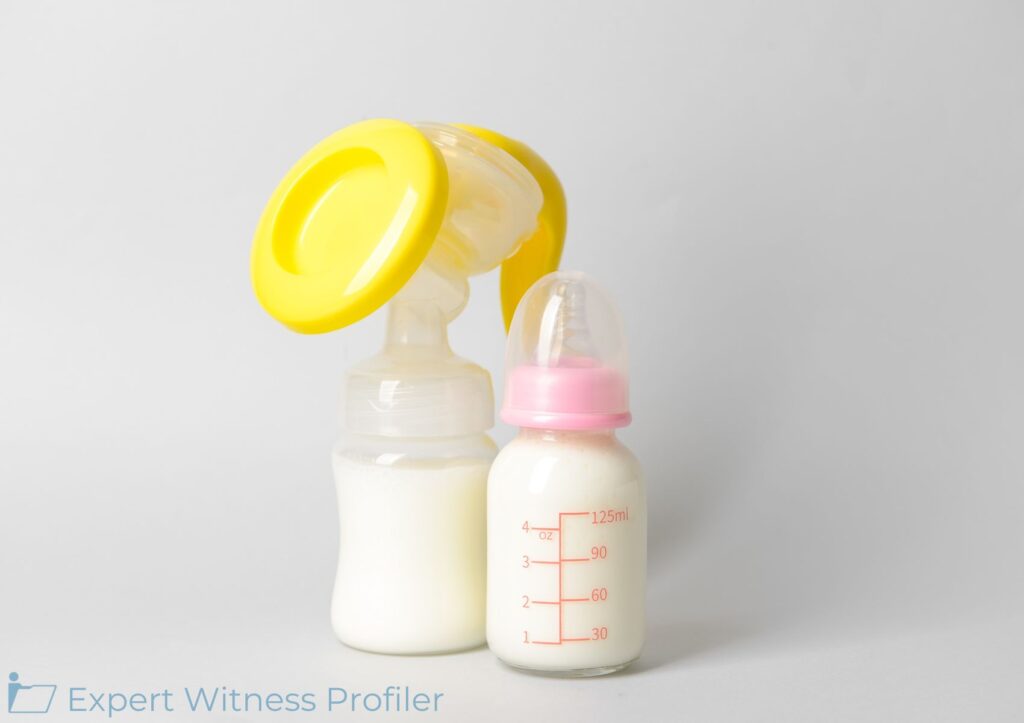
    Think Green Limited (“Think Green”) has taken Medela AG and Medela LLC (“Medela”) to Court, accusing them of infringing on the trade dress rights it holds in its breast pump and misleading consumers through false advertising.

    Rhonda J. Harper, a Think Green expert witness in areas involving marketing, branding, and consumer research, used various analytical methods to conclude that (1) among the relevant universe of consumers, there is a likelihood of confusion that Medela’s pump is sponsored or approved by Think Green due to the allegedly infringing trade dress; and (2) the relevant universe of consumers would likely ascribe secondary meaning to Think Green’s trade dress. Medela filed a motion to exclude Harper’s expert opinions and underlying survey results pursuant to Rule 702 and the Daubert Standard. Medela also sought to strike Harper’s rebuttal declaration. 

    Cynthia Cohen, who Medela proffered as an expert in areas related to psychology and consumer research, reached the following conclusion based on her analytical work: “offering the Medela breast milk collector on the Amazon platform does NOT cause consumer confusion.” Think Green filed a motion to strike this conclusion and the entirety of Cohen’s expert report.

    Think Green also filed a motion to strike portions of the expert report prepared by Medela expert Carsten Faltum

    Marketing Expert Witness

    Rhonda Jane Harper has over 30 years of experience at the highest levels of marketing, research, and branding. She has been the top marketing executive for several Fortune 100 corporations, served as an adjunct marketing professor at two universities, held national and international board positions in leading brand and marketing associations, led a leading global agency division, and founded an organic growth strategic consultancy. Harper has also provided and rebutted hundreds of trademark and trade dress infringement surveys for litigation purposes.

    Want to know more about the challenges Rhonda Harper has faced? Get the full details with our Challenge Study report. 

    Psychology Expert Witness

    Cynthia R. Cohen, Ph.D. is an expert in survey methods. She designed consumer studies for Lanham Act cases and change of venue surveys for trials. Cohen’s education includes psychology degrees at UCLA and USC. Her firm, Verdict Success LLC, specializes in in jury research, trial strategies, and settlement decision-making.

    Want to know more about the challenges Cynthia R. Cohen has faced? Get the full details with our Challenge Study report.

    Life Science Expert Witness

    Carsten Faltum has extensive experience in the life sciences industry, particularly in R&D coupled with several years as an investment manager in venture capital and corporate venture. 

    Discover more cases with Carsten Faltum as an expert witness by ordering his comprehensive Expert Witness Profile report.

    Discussion by the Court

    Rhonda Harper

    Admissibility of Survey Evidence, Generally

    With regard to Harper’s surveys, Medela argued that the data was not analyzed in accordance with accepted statistical principles, nor was the objectivity of the entire process assured.

    Courts generally find consumer survey evidence admissible if a qualified expert testifies that the survey was conducted according to generally accepted principles of survey research. Moreover, survey evidence need not be perfect to be admissible. 

    The Court held that Harper’s surveys did not constitute one of those “rare” situations where fundamental flaws rendered them “completely unhelpful to the trier of fact and therefore inadmissible.”

    Admissibility of Harper’s Survey Evidence

    Control Stimuli in Secondary Meaning and Point-of-Sale Confusion Surveys

    Medela took issue with the control stimuli Harper used in her secondary meaning and point-of-sale confusion surveys. Medela also objected to the pump images that members of both control groups were shown—in other words, the control stimuli. 

    The survey ultimately asked respondents whether or not “the manufacturer or brand of the breast milk pump/collector [they] just reviewed … is sponsored or approved by another manufacturer or brand.” If a respondent answered yes to the “sponsored or approved” inquiry, the respondent was then asked what other manufacturer or brand had sponsored or approved the pump or collector the respondent had just viewed and why the respondent thought so. 

    Medela argued that the control stimuli are “so wildly different” than the test stimuli that Harper’s surveys are unreliable.

    But as Think Green pointed out, it is not imperative that secondary meaning surveys include a control group at all to be considered reliable.  As at least one district court has observed, secondary meaning surveys measure the extent to which consumers associate a particular trade dress with a particular source, and a control group would not necessarily aid in that analysis. Nor is it clear that including a weak control stimulus (even assuming that is a fair characterization of the control stimuli used here) renders a survey “so flawed as to be completely unhelpful to the trier of fact” and therefore inadmissible.

    According to the Court, Medela’s bones of contention provides no basis to strike Harper’s testimony altogether.

    Point-of-Sale Confusion Survey and Marketplace Reflection

    Medela separately complained that Harper’s point-of-sale confusion survey did not reflect how consumers encountered the depicted pumps in the real-world marketplace.

    It argued that the pictures Harper used did not “present[] the full scope of information available to a prospective online purchaser” and were “devoid of a host of further identifying information that consumers would typically encounter by viewing the actual product listing page for these products.”

    A survey need “not replicate the exact purchasing experience of every consumer confronting the pertinent product in the marketplace”; it requires only “reasonable choices based on the expert’s experience and training and on accepted survey techniques.”

    In this Court’s estimation, Medela’s criticisms did not bear on the survey’s admissibility, but on the “evidentiary weight of the survey results”—a question for the jury.

    Control Stimulus in Post-Sale Confusion Survey

    Through a different survey, Harper sought to “determine whether Medela’s breast milk pump/collector is likely to cause post-sale confusion.” Post-sale confusion occurs when a potential customer sees a product bearing the Plaintiff’s trade dress and mistakenly attributes the product to the Plaintiff, thereby influencing his or her buying decision, either positively or negatively.

    To assess the likelihood of post-sale confusion, Harper’s online survey first screened for respondents who purchased a pump in the last year or who would consider purchasing one in the next year. The test group was presented with four images of Medela’s pump, collected from Medela’s online retail product pages, less Medela’s name, design elements, and measurements.

    Medela objected to the images Harper presented to the test group of its pump as well as the control stimuli images.

    The Court held that a survey need not be excluded simply because it failed to use the best available control stimuli.

    Test Stimuli in Post-Sale Confusion Survey

    Medela next criticized the post-sale confusion survey’s test stimuli as failing to “reflect real-world conditions in which consumers are likely to encounter the products.”

    What images Harper should have presented to better depict the “obvious intimate and exposed” nature of using a breast pump, Medela did not say. In any event, whatever Medela’s argument, the Court held that it affected the weight of the evidence—not its admissibility.

    Test Stimulus in Secondary Meaning Survey

    Medela argued that the test stimulus Harper used in her secondary meaning survey was “fundamentally flawed” because it failed to isolate the trade dress.

    To support its assertion that “a secondary meaning test stimulus must isolate the trade dress at issue,” Medela cited Handelman’s Guide to TTAB Practice, Second Edition, § 18.15. However, the quoted portion of Handelman’s Guide specifically directs that “[i]f the image used in the stimulus differs from the mark shown in the application or registration drawing”—as Medela alleges here—”the difference will weigh against the probative value, if any, to be accorded to the survey.” In other words, the Court held that Medela’s own source instructed that the weight to be assigned to the secondary meaning survey is a question for the jury—not one of admissibility.

    Use of Functional Stimuli To Assess Non-Functional Trade Dress

    Medela next argued that Harper’s surveys did not test the asserted trade dress, because the “shield-bulb-base” arrangement featured in the stimuli is functional.

    Because this argument mirrors a central theory of Medela’s summary judgment motion: that Think Green’s asserted trade dress is functional and therefore cannot be protected, the Court will address this argument when it resolves Medela’s motion for summary judgment.

    Net Secondary Meaning Calculation

    Medela argued that Harper’s secondary meaning calculation is “fundamentally flawed” because, in calculating net secondary meaning, she failed to subtract a particular number from the results.

    Harper, however, has laid out her reasons for employing the methodology that she did and, in so doing, amply conveyed that her calculations were a considered choice, not the result of a fatal error or oversight.

    At the end of the day, the two experts analyzed the same data, but came to different conclusions about its meaning. That leaves the Court with a “battle of the experts” situation that is inappropriate for dispensation in a Daubert motion and must be left for the factfinder to resolve.

    Data Supporting Secondary Meaning Opinion

    Medela argued that Harper’s report “fails to substantiate the connection between these data points with its conclusions that these were purportedly successful in connecting Think Green as the source of the trade dress in the minds of relevant consumers.” By “these data points,” Medela appeared to be referencing the entire universe of “sales data, advertising expenditures, awards, social media followers etc. ” in Harper’s report. But Medela did not actually cite to “these data points” or describe them with any degree of specificity. The Court will not guess at them, nor will it develop Medela’s argument for it.

    Admissibility of Harper’s Rebuttal Declaration

    Think Green attached a rebuttal declaration from Harper to its response to Medela’s motion for summary judgment in which Harper responded to Medela’s criticism of her net secondary meaning calculation. Medela filed a motion under Rule 37 to strike this declaration.

    In her short rebuttal declaration, Harper responded to what she described as “mischaracterization” and criticism Medela offered in its summary judgment briefing. More specifically: Harper explained that there are multiple ways of calculating net secondary meaning and why she chose her particular method of calculation. At the conclusion of her rebuttal, Harper performed an alternate method of calculation that “[s]ome sources indicate [is] also appropriate,” which she claims—consistent with her previously expressed opinion—”shows that the trade dress is strong.”

    The Court denied Medela’s motion to strike Harper’s rebuttal declaration because it remained “firmly grounded” in the opinions she expressed in her original expert report. Basically, Harper’s rebuttal declaration is the type of responsive report that is permitted under Rules 26 and 37.

    Cynthia Cohen

    Qualifications

    Medela contended that Cohen’s experience conducting consumer surveys related to trademark disputes is relevant to trade dress disputes, as the methodology between the two topics is largely interchangeable. Medela also cited her publications, speeches, and court appearances as an expert witness concerning consumer surveys.

    According to Think Green, Cohen’s limited prior experience as an expert or witness rendered her unqualified.

    Despite criticizing Cohen for not having “essential” experience, education, or training in marketing, Think Green did not draw any link between “a professional marketing background” and trade dress likelihood of confusion surveys. The Court is not persuaded that an expert who lacks a marketing degree or marketing experience should be automatically precluded from opining on matters of trade dress.

    Methodology

    Think Green argued that Cohen’s likelihood of confusion survey relied on improper methodology. In Cohen’s survey, respondents were shown the stimulus image of Medela’s pump “as it had been displayed on the Amazon platform.”

    With the stimulus picture still available on the screen, respondents were asked open-ended questions meant to assess whether confusion was likely. For example, respondents were asked “if you have an opinion, what company or organization makes or puts out this breast milk collector” and if the respondent had an opinion, whether the respondent “believed that this breast milk collector is affiliated with or sponsored by any other company.”

    Think Green objected to Cohen’s methodology of showing respondents the stimulus picture while the respondents answered the survey questions. According to Think Green, this is “a major flaw” that “departs from typical marketplace conditions.”

    As the Court already explained when denying Medela’s motion to exclude Harper’s expert report, no survey is “foolproof,” and perfection is not required to clear the Daubert bar. Think Green has presented no argument that any flaws in Cohen’s survey create one of the “rare” situations where a survey is so fundamentally flawed “as to be completely unhelpful to the trier of fact and therefor inadmissible.”

    Relevance

    Like Harper’s testimony, the Court held that Cohen’s survey evidence concerning likelihood of confusion will assist the jury in evaluating Think Green’s claim of trade dress infringement.

    Carsten Faltum

    As for Think Green’s motion to strike portions of the expert report prepared by expert Faltum, the Court denied Think Green’s motion to partially strike without prejudice to renewal after Think Green hinted that it may file a more robust motion to strike Faltum’s report before trial.

    Held

    The Court denied Medela’s motion to exclude Rhonda Harper’s expert opinions and underlying survey results as well as Harper’s rebuttal declaration. Think Green’s motion to strike Cynthia Cohen’s report was also denied by the Court.

    Additionally, the Court denied Think Green’s motion to partially strike portions of Carsten Faltum’s report without prejudice to renewal.

    Key Takeaways:

    • A survey need “not replicate the exact purchasing experience of every consumer confronting the pertinent product in the marketplace”; it requires only “reasonable choices based on the expert’s experience and training and on accepted survey techniques.”
    • Courts generally find consumer survey evidence admissible if a qualified expert testifies that the survey was conducted according to generally accepted principles of survey research. Moreover, survey evidence need not be perfect to be admissible. 
    • The notion that Daubert requires particular credentials for an expert witness is radically unsound. Anyone with relevant expertise enabling them to offer responsible opinion testimony helpful to judge or jury may qualify as an expert witness.
    • In a case of dueling experts, it is left to the trier of fact—not the reviewing Court—to decide how to weigh the competing expert testimony.

    Case Details:

    Case Caption: Think Green Limited V. Medela AG Et Al
    Docket Number: 1:21cv5445
    Court Name: United States District Court, Illinois Northern
    Order Date: July 02, 2025
  • Advertising Expert Permitted to Testify on Impact of Coupon Discounts on Consumer Decision-Making

    Advertising Expert Permitted to Testify on Impact of Coupon Discounts on Consumer Decision-Making

    Michaels Stores, Inc. sells arts and crafts and home decor products on its website and in its stores. Plaintiff, Nea Vizcarra, purchased several items from Michaels.com on November 28, 2022.

    Vizcarra said that in purchasing the discounted items, she understood that she was purchasing items that regularly (including before the advertised promotion) retailed at the published “regular” price, that this published price was the market value of the products she was buying, and that she was receiving the items at a comparatively reduced price that was not always available.

    Vizcarra brought this action on behalf of a putative nationwide class of people who “purchased one or more Michaels Products advertised at a discount on Defendant’s website or instore,” as well as on behalf of a similar California subclass. Michaels has moved to dismiss the amended complaint.

    Defendant filed two Daubert motions to exclude certain opinions of Plaintiffs’ two experts: Bruce G. Silverman and Colin B. Weir.

    Advertising Expert Witness

    Bruce G. Silverman is the owner and manager of Silverman Consulting LLC, an advertising and branding firm.

    He has testified as an expert in federal courts in Arizona, California, Delaware, Florida, Illinois and Oregon, in state courts in California and Missouri, at arbitrations, and before the Copyright Royalty Judges of the Library of Congress.

    Silverman served as EVP/Executive Creative Director at three of America’s largest advertising agencies (Ogilvy, Bozell and BBDO), as President/COO of two of the nation’s best independently-owned agencies (Asher/Gould and Wong Doody), and as President/CEO of the principal U.S. unit of the world’s largest media planning and buying shop (Initiative Worldwide).

    Want to know more about the challenges Bruce Silverman has faced? Get the full details with our Challenge Study report. 

    Economics Expert Witness

    Colin B. Weir is President at Economics and Technology, Inc., a research and consulting firm specializing in economics, statistics, regulation and public policy. He conducts economic, statistical, and regulatory research and analysis and often testifies as an expert witness before state and federal courts.

    His experience includes work on a variety of issues, including: “calculating economic harm and damage, and analyzing liquidated damages provisions; lost profits; false claims; diminution in value; merger/antitrust analysis; Early Termination Fees (ETFs); Late Fees; determination of Federal Excise Tax burden; and development of macroeconomic analyses quantifying the economic impact of corporate actions upon the US economy and job markets.”

    Want to know more about the challenges Colin B. Weir has faced? Get the full details with our Challenge Study report. 

    Discussion by the Court

    Opinions of Expert Bruce G. Silverman

    Defendant asked the Court to exclude two sets of Silverman’s opinions: (1) opinions related to whether certain discounts are misleading to reasonable consumers (“Misleading to Consumers Opinions”), and (2) opinions related to whether Defendant’s Coupon Discount practice would be important to a reasonable consumer  (“Michaels-Specific Opinions”).

    Misleading to Consumers Opinions

    Defendant argued that Silverman’s misleading to consumers opinions should be excluded because they opine on ultimate issues of law.

    Since Silverman did not opine on any legal issues, the Court held that there is no reason to exclude his proffered testimony on those grounds.

    Michaels-Specific Opinions

    Defendant argued that Silverman’s Michaels-specific opinions should be excluded because they (1) exceeded the scope of Silverman’s expertise, (2) were not the product of any reliable principles and methods, and (3) invaded the province of the jury. 

    The Defendant specifically challenged whether Silverman’s advertising experience provides a sufficient foundation to offer opinions about Michaels, its customers, or the coupon discount at issue in the case, without having conducted consumer surveys. As an expert, Silverman is permitted to make certain factual assumptions in forming his opinions. Moreover, the Court is persuaded that Silverman’s opinions are adequately grounded in his extensive personal knowledge and experience. The Court also noted that the Defendant had not demonstrated how Silverman’s opinions would invade the province of the jury.

    Opinions of Expert Colin B. Weir

    In his report, Weir opined that it is possible to determine class-wide damages using three damages theories, one of which is a conjoint analysis. Weir “proposes to calculate Price Premium Damages using conjoint analysis (wherein consumers would receive the difference in value between what they paid and the value of what they received that is solely attributable to Defendant’s challenged conduct).”

    The Defendant asked the Court to exclude Weir’s opinions that relied on his conjoint methodology on the grounds that they (1) are novel and unreliable, (2) ignore critical inputs, and (3) fail to properly account for supply-side factors.

    The Court found that the Defendant had not established a basis for excluding Weir’s opinions at that stage of the proceedings. The Defendant’s challenges to Weir’s use of conjoint analysis went to the weight and credibility of his opinions, not their admissibility.

    Held

    The Court denied the Defendant’s motions to exclude certain opinions of Bruce Silverman and Colin Weir without prejudice.

    Key Takeaway:

    Silverman’s opinions are sufficiently grounded in his experience in the advertising industry, and he is permitted to rely on hypotheticals supported by evidence. Moreover, Silverman did not offer opinions on any legal issues. After all, an opinion is not objectionable merely because it embraces an ultimate issue.

    Case Details:

    Case Caption: Vizcarra V. Michaels Stores, Inc.
    Docket Number: 5:23cv468
    Court Name: United States District Court, California Northern
    Order Date: June 02, 2025
  • Marketing Expert’s Consumer Confusion Survey Admitted

    Marketing Expert’s Consumer Confusion Survey Admitted

    Plaintiff Alfwear, Inc. (“Alfwear”) is an outdoor clothing company that sells products under the KÜHL mark. Ibkul is a clothing company specializing in athleisure wear.

    In November 2021, Alfwear initiated this lawsuit against Ibkul, alleging trademark infringement, unfair competition, and dilution. Alfwear, Inc. has alleged that the sales of apparel using the IBKÜL trademark infringed Plaintiff’s rights in its KÜHL trademark.

    Alfwear disclosed that it intended for Rhonda Harper to serve as an expert “regarding research surveys, consumer confusion, and likelihood of confusion. Such evidence may also be offered in support of damages issues in the case.”

    Ibkul disclosed that Krista Holt would “serve as an expert in response to Plaintiff’s Expert Disclosures, including the general subject matter of ‘research surveys, consumer confusion, and likelihood of confusion’ and ‘damages issues,’ including any deductions and apportionment.”

    The parties moved to exclude each other’s expert under Rule 702

    Marketing Expert Witness

    Rhonda J. Harper has over 30 years of experience at the highest levels of marketing, research, and branding. She has been the top marketing executive for several Fortune 100 corporations, served as an adjunct marketing professor at two universities, held national and international board positions in leading brand and marketing associations, led a leading global agency division, and founded an organic growth strategic consultancy. Harper has also provided and rebutted hundreds of trademark and trade dress infringement surveys for litigation purposes.

    Want to know more about the challenges Rhonda Harper has faced? Get the full details with our Challenge Study report. 

    Intellectual Property Expert Witness

    Krista Holt is a Managing Director at Econ One Research, Inc. (“Econ One”). Holt is an active member of the American Bar Association, Intellectual Property Owners Association, International Trademark Association, National Association of Certified Valuators and Analysts and Licensing Executives Society.  She was the Chair of the LES Valuation and Taxation Committee.  Holt is also a Certified Licensing Professional and an Accredited Valuation Analyst, and is an instructor for the Certified Licensing Professional program.

    She has lectured on a variety of intellectual property topics for the American Bar Association, Licensing Executives Society, IPI, DRI, Harvard Law, George Washington Law and various other organizations and universities.

    Get the full story on challenges to Krista Holt’s expert opinions and testimony with an in-depth Challenge Study. 

    Discussion by the Court

    Krista Holt

    Holt was asked by IBKUL to serve as an expert in response to Alfwear’s expert, including the general subject matter of research surveys, consumer confusion, and the likelihood of confusion. Holt was also asked to serve as an expert on damages issues “including any deductions and apportionment.”

    Alfwear contended that portions of Holt’s expert report should be excluded on three bases. First, it argued that Ibkul failed to disclose Holt at the deadline for affirmative experts, so the portions of her report that go beyond the scope of the Harper Report should be excluded. Next, it argued that Holt was not qualified to offer opinions on marketing. Finally, Alfwear argued that Holt used the wrong standard to critique Harper’s methodology. The Court considers each argument in turn.

    Rule 26

    Holt was previously retained by another defendant in a different case to assess the fame of the KÜHL mark (the “Fame Survey”). Holt conducted an online survey of 394 respondents from the general public in 2020, which indicated that consumers do not consider KÜHL to be famous.

    Alfwear argued that two portions of the Holt Report should be excluded for failure to comply with the Rules of Civil Procedure. First, it argued that the Fame Study in the Holt Report should be excluded because Holt was designated as a rebuttal expert on topics that did not include the fame of any of Alfwear’s marks.

    Second, it argued that Holt’s opinions about damages should be excluded because Holt was not timely disclosed as a damages expert and because the Harper Report does not address damages.

    The Court held that the Fame Study is not responsive to the Harper Report and Alfwear does not have the ability to find another expert to conduct a responsive study at this stage in the litigation. Morover, Ibkul’s failure to disclose Holt was prejudicial to Alfwear. The deadline for expert discovery had passed and Alfwear did not have the opportunity to retain a responsive damages expert. In conclusion, the Court held that it would be highly prejudicial to allow this damages testimony into trial without giving Alfwear an opportunity to respond with its own expert.

    Qualifications

    Alfwear next argued that Holt is not qualified to offer an opinion on whether the parties sell in different product categories.

    However, Alfwear did not challenge Holt’s qualifications to offer the other rebuttal opinions presented in her report. Holt’s experience and education qualify her to offer a rebuttal opinion on Harper’s Confusion Survey. Holt has a master’s in business administration and has over ten years of experience in accounting and marketing. Holt has provided survey services in trademark disputes for over fifteen years, including designing and rebutting trademark surveys. She also has also presented on survey design and brand valuation. Accordingly, the Court evaluated Holt’s rebuttal testimony to determine whether it is reliable.

    Critique of Confusion Survey

    Alfwear argued that Holt’s critique of the Confusion Survey should be excluded because Holt used an incorrect standard to evaluate the data.

    Ibkul relied on a supplemental declaration by Holt. The Holt Declaration stated that it sought to “clarify and supplement” the report “in light of Plaintiff’s challenges.”

    Because the Rules prohibit preparing a declaration solely to strengthen and deepen Holt’s existing opinions, the Court has not considered the Holt Declaration or Ibkul’s arguments relying on it.

    As for Holt’s critique of the standard used to evaluate the survey in the Harper Report, the experts’ competing opinions about which standard should be used present the classic battle of the experts and it is up to a jury to evaluate what weight and credibility each expert opinion deserves.

    If Holt’s rebuttal opinion uses an outdated standard, Alfwear may seek to present that information to the jury at trial. However, the Court held that it is not a sufficient basis to exclude Holt’s opinions at this stage.

    Rhonda Harper

    As part of its litigation strategy, Alfwear hired Rhonda Harper to determine whether consumers would confuse the IBKÜL mark with the KÜHL mark. Harper was asked “to conduct a forward likelihood of confusion survey among the relevant population and provide [her] opinions.” Harper utilized a Squirt-style sequential line-up study to evaluate whether consumers would confuse the KÜHL and IBKÜL marks (the “Confusion Survey”).

    The Court first addresses whether the Confusion Survey uses reliable methodology. Then, it turns to whether Harper reliably applied this methodology and addresses Ibkul’s arguments against the Report’s admission.

    Methodology

    The Court held that Harper used an accepted method for measuring consumer confusion in trademark disputes and applied recognized standards as per the Daubert factors. 

    Application

    Confusion Survey Universe

    The Court first considered the Confusion Survey’s universe and whether the sample it considered was representative.

    Ibkul first argued that the Harper Report should be excluded because the relevant universe it surveyed is not accurate.

    The Harper Report states that “the relevant universe was defined as past and potential purchasers of Defendants’ products.”

    Ibkul argued that there should be a far more limited universe, arguing that the survey should be excluded because its respondents are outside Ibkul’s typical shopper, a woman in Florida with an income around $150,000 who is willing to pay around $100 for apparel and shops at golf, tennis, and country clubs.

    The Court held that the consumers represented in the Confusion Survey reasonably approximate Ibkul’s potential customers; therefore, the survey universe is not so broad that the Survey should be excluded.

    Ibkul contended that the survey universe is too broad because it contains individuals interested in athleisure wear, which it argues is a “very general class of products.” However, Ibkul sells athleisure wear.  It does not explain why the survey universe should not consider individuals interested in athleisure wear, which includes its product line. Therefore, the Court held that Ibkul has not shown that the survey is so broad that it does not represent potential Ibkul customers, and the Confusion Survey should not be excluded on this basis.

    Confusion Survey Conditions

    Ibkul challenged the Survey’s use of hang tags without showing the parties’ clothing, arguing that showing only the hang tags fails to recreate marketplace conditions. Ibkul also argued that survey conditions do not match real world condition because IBKÜL is in a different product category than KÜHL. Moreover, Ibkul contended that the Confusion Survey does not accurately reflect market conditions.

    However, the Court held that although Ibkul has pointed out issues with the survey that may diminish its evidentiary value, none of these flaws are so serious and pervasive that the entirety of the Confusion Survey should be excluded.

    Confusion Survey Methodological Errors

    Finally, Ibkul argued that the Confusion Survey’s methodology was unreliable. It argued that the questions included were leading and suggestive, that different control hang tags should have been used, and that there were errors in the report’s calculations.

    However, the Court held that Ibkul has not shown that any survey questions were so leading that the Confusion Survey should be excluded. It did not explain why any questions used in the survey were so leading that they cause serious and pervasive flaws in the Harper Report. Moreover, the survey’s use of a control group provides assurances of its reliability.

    Held

    • The Court granted in part and denied in part Alfwear’s motion to exclude Krista F. Holt’s expert report.
    • The Court denied Ibkul’s motion to exclude testimony and opinions of Plaintiff’s survey expert Rhonda Harper.

    Key Takeaways:

    • Ibkul has introduced criticisms of the Confusion Survey that may ultimately show that the Survey, and Harper’s opinions based on it, have little evidentiary value. But that is a decision for the jury. Ibkul has not established that the Survey has such serious and pervasive flaws that the Court should exclude it altogether. 
    • Alfwear has demonstrated that the Fame Survey and damages calculations should be excluded. It has also established that Holt cannot offer testimony about whether the parties sell in different product categories. 

    Case Details:

    Case Caption: Alfwear V. Ibkul Ubhot
    Docket Number: 2:21cv698
    Court Name: United States District Court for the District of Utah
    Order Date: May 12, 2025
  • Credit Reporting Expert May Not Opine as to Whether the Procedures were Reasonable or Unreasonable

    Credit Reporting Expert May Not Opine as to Whether the Procedures were Reasonable or Unreasonable

    Plaintiff Barbara Cooper alleged that Defendant Milliman, Inc. (“Milliman”) violated the Fair Credit Reporting Act in two ways: first, when
    it issued a report about her medical and prescription history that mixed her with another individual; and second, when it issued a second report wherein Milliman reinserted information it had previously deleted after purportedly reinvestigating Plaintiff’s dispute.

    Milliman principally attributes its repeated errors to a “glitch” with the software that matches information about consumer identity with medical
    record information.

    Milliman’s expert Rebecca Kuehn’s report states she will offer the following opinions:

    A. Milliman’s process for matching consumer records is consistent with industry practice and otherwise reasonable.

    B. Milliman’s procedure for blocking information that was previously removed from a consumer report is consistent with industry practice and reasonable.

    Plaintiff argued that Kuehn is unqualified and her proffered testimony is unreliable. “As such,” Plaintiff contended, “her opinions are nothing more than bare legal conclusions that are pasted on to Milliman’s factual theories.”

    Credit Reporting Expert Witness

    Rebecca Kuehn is an attorney focusing on consumer financial services and consumer protection matters in the Washington, D.C. office of Hudson Cook, LLP.

    She is an expert in the policies, procedures, and practices that consumer reporting agencies (“CRAs”) use to ensure compliance with the Fair Credit Reporting Act (FCRA). She developed this expertise through substantial experience in the industry, advising CRAs, lenders, and other users of credit reports on the development of procedures designed to comply with the FCRA.

    Get the full story on challenges to Rebecca Kuehn’s expert opinions and testimony with an in-depth Challenge Study. 

    Discussion by the Court

    Kuehn’s Expert Qualifications

    Kuehn’s resume shows that Kuehn graduated near the top of her class at George Washington Law School. She served five years at the Federal Trade Commission (FTC), as an Assistant Director, where she was “[p]rimarily
    responsible for the [FCRA] program, leading the Commission’s enforcement, policy, outreach, and rulemaking activities in that area.”

    In addition, Kuehn has served as co-chair of the FCRA Litigation Subcommittee in the American Bar Association, given numerous presentations on the FCRA, authored various publications on the FCRA, and “testified before the U.S. House Committee on Financial Services . . . on behalf of the Consumer Data Industry Association, at a hearing on ‘Consumer Credit Reporting: Assessing Accuracy and Compliance.’”

    When Plaintiff argued that Kuehn is unqualified to opine on industry standards because of any lack of experience as to reporting of medical information, she essentially argued that the FCRA requires specificity as to each area it applies. But the FCRA deals with CRAs in general and whether their procedures are reasonable.

    It requires all CRAs, regardless of industry, to follow or maintain reasonable procedures and nothing in the Act provides separate rules based on the type of information collected and reported. Same goes for Plaintiff’s argument that Kuehn must have direct knowledge about Milliman’s identity matching or software.

    As Plaintiff herself admits, Kuehn has “impressive credentials” at first sight. Even Plaintiff’s own expert has recognized Kuehn’s FCRA qualifications.

    The Court held that Plaintiff’s arguments against Kuehn’s qualifications failed because they concerned the weight of Kuehn’s proffered testimony, not its admissibility.

    Reliability of Methodology

    Kuehn has published numerous works on the FCRA. One publication was at the FTC, which can set guidance as to what procedures are or are not reasonable.

    Her knowledge has been tested at various presentations, in Court, and before Congress. As a result, the Court finds Kuehn possesses the required knowledge and experience to provide reliable testimony that is not merely ipse dixit. Other arguments, like that Kuehn’s opinion is unreliable because of her lack of knowledge about identity matching or Milliman’s software and her excessive reliance on information supplied by Milliman’s corporate representative, as discussed earlier, are unpersuasive because they go to the weight of Kuehn’s testimony, not its admissibility.

    However, Kuehn will be able to testify to compliance or non-compliance with industry customs and standards, but not whether Milliman’s procedures were reasonable or unreasonable. The consensus in the Middle District of Florida is that an FCRA expert cannot testify whether procedures were “reasonable” or “unreasonable.”

    Helpfulness

    An average lay person does not know the industry-standard procedures used by CRAs.

    Therefore, the Court ruled that Kuehn’s testimony could help the jury determine whether Defendant’s procedures were reasonable and if any violation was willful.

    Rule 403

    Kuehn satisfies all three prongs of Daubert and except for the exclusion of witness testimony as to “reasonableness” or “unreasonableness”, the Court finds no undue prejudice from the anticipated testimony.

    Held

    The Court granted in part and denied in part the Plaintiff’s motion to exclude opinion evidence from Rebecca Kuehn.

    Key Takeaways:

    • The reliability of non-scientific expert opinions depends heavily on the knowledge and experience of the expert, not the exactness of the methodology. Evidence of compliance or non-compliance with a custom within a particular industry, though not conclusive, is a factor the trier of fact may consider.
    • While a witness may testify concerning an ultimate issue of fact, the witness may not “tell the jury what result to reach.”

    Case Details:

    Case Caption: Cooper V. Milliman, Inc.
    Docket Number: 2:23cv28
    Court Name: United States District Court, Florida Middle
    Order Date: April 07, 2025
  • Court Admitted Public Relations Expert’s Testimony Describing the Experience of a Wine Consumer

    Court Admitted Public Relations Expert’s Testimony Describing the Experience of a Wine Consumer

    This case examines the compatibility of Ohio’s three-tier liquor control system, established under the Twenty-first Amendment of the United States Constitution, with the Dormant Commerce Clause. The Sixth Circuit has directed the Court to determine, based on the presented facts and evidence, whether the statutes that Plaintiffs’ challenge “(1) ‘can be justified as a public health or safety measure or on some other legitimate nonprotectionist ground,’ and whether (2) their ‘predominant effect’ is ‘the protection of public health or safety,’ rather than ‘protectionism.’”

    In short, Plaintiffs’ constitutional challenge to Ohio’s wine importation laws is before the Court following remand from the Sixth Circuit Court of Appeals.

    Plaintiff Kenneth M. Miller is an Ohio resident and wine collector. His Co-Plaintiff, The House of Glunz, Inc., is an Illinois wine retailer with no permit or license from the Ohio Division of Liquor Control. Defendant Dave Yost serves as Ohio’s Attorney General. The Wholesale Beer & Wine Association of Ohio (“WBWAO”) has intervened as a Defendant. 

    WBWAO sought to have the Court strike the Plaintiffs’ submitted report of Tom Wark. Wark is the Executive Director of the National Association of Wine Retailers.

    Public Relations Expert Witness

    Tom Wark is a highly influential figure in the wine industry, boasting over 25 years of experience in public relations and communications. He is a leading wine blogger, consumer advocate, and industry speaker, and has played a key role in founding the American Wine Blog Awards and the Wine Bloggers Conference. His extensive experience and advocacy have earned him recognition as one of the wine industry’s most inspiring individuals.

    Get the full story on challenges to Tom Wark’s expert opinions and testimony with an in-depth Challenge Study. 

    Discussion by the Court

    The WBWAO sought a ruling that the contents of Wark’s 2021 report
    are inadmissible. In his report, Wark offered “a basic description of the market conditions in which wine consumers and wine retailers interact” as of July 2021. He drew ten “conclusions” on the basis of the recited background facts.

    Wark is qualified to testify as an expert on the retail wine business

    The Wholesale Beer & Wine Association of Ohio (WBWAO) initially challenged Tom Wark’s qualifications to testify as an expert in this case. At the time of his report, Wark had accumulated over thirty years of experience as a public relations consultant within the alcohol industry. Notably, he served as the Executive Director of the National Association of Wine Retailers for thirteen years and published a daily blog focused on the wine business. While Wark’s curriculum vitae lists expertise in areas such as ‘Media Relations,’ ‘Wine Industry Marketing,’ ‘Marketing Communications,’ ‘Alcohol Industry Regulation,’ ‘Writing,’ ‘Association Management,’ ‘Wine Evaluation,’ and ‘Wine Industry Politics,’ the Plaintiffs presented him specifically as ‘an expert in the retail wine business.’ The Court determined that his experience managing an association representing wine retailers sufficiently qualifies him as an expert in that particular area

    Eleven of the fourteen proffered pieces of testimony are admissible

    Paragraphs 10 and 11

    Wark estimates the national wine market offers up to one million wines and explains how state Direct Ship Restrictions limit consumer access. The Court found this testimony on market dynamics relevant and reliable, illustrating the economic impact of such restrictions, and therefore denied WBWAO’s motion to strike.

    Paragraphs 21, 23, and 24

    Wark describes typical wine consumer behavior, highlighting situations where interstate wine purchases are desired and emphasizing the limited wine selection in standard retail settings. The Court deemed this testimony relevant to the effects of state laws on interstate commerce in wine and denied WBWAO’s motion.

    Paragraphs 29 and 30

    Wark discusses the challenges faced by brick-and-mortar wine retailers, particularly regarding the availability of rare and collectible wines. He argues that Direct Ship Restrictions prevent access to these specialty wines, sold by a limited number of retailers. The Court found this testimony reliable and relevant to the case, and thus denied WBWAO’s motion to strike these paragraphs as well.

    Paragraphs 38

    Wark reports that the Wine Institute, the leading authority on U.S. wine production, states that 44 states currently allow shipments from out-of-state wineries to consumers.

    As the first sentence is inadmissible hearsay and the report’s sole reference to the Wine Institute, the second sentence is irrelevant. The Court, therefore, granted WBWAO’s motion to strike paragraph 38.

    Paragraphs 41-44

    Paragraphs 41, 42, and 43 describe the typical process for consumers receiving direct wine shipments from out-of-state retailers in permitted states. The Court found this testimony reliable and relevant, denying WBWAO’s motion to strike. However, paragraph 44, which summarizes findings from a 2003 Federal Trade Commission report and a 2012 Maryland Comptroller study, was deemed inadmissible hearsay and lesser evidence. Those reports, which are included in the record, speak for themselves.

    As those reports are part of the record, the Court granted WBWAO’s motion to strike paragraph 44.

    Paragraph 45

    In paragraph 45, Wark states that

    “there has been no study nor any report ever produced by any law enforcement or any alcohol regulatory body that shows the direct shipment of wine from out-of-state retailers has led to a problem with minors obtaining alcohol in any state. While a limited number of academic and law enforcement studies have shown via coordinated “stings” that minors could be able to obtain alcohol via direct shipment, no study has shown that minors actually use the Internet to obtain alcohol.

    The 2015 National Survey on Drug Use and Health carried out by the Substance Abuse and Mental Health Services Administration looked at how minors obtain alcohol. No minor responding to the national survey cited the Internet as their source of alcohol. In fact, no state has produced any report or evidence that direct shipment of wine from out-of-state wineries or retailers in any way negatively impacts the health and safety of its residents.”

    The third and fourth sentences of paragraph 45 are inadmissible hearsay, as previously established. The remaining sentences, which claim ‘no’ study or report demonstrates adverse effects from direct wine shipments, are also problematic. Wark admitted in his deposition that he only reviewed the limited studies cited in his report, which is insufficient to support such sweeping assertions. Therefore, the Court, exercising its gatekeeping role, excludes these sentences due to a lack of sufficient factual basis.

    Paragraph 54

    In paragraph 54, Wark states that:
    “All wine sold at wine retail stores is in sealed containers and has been
    approved for sale to the public by the Alcohol and Tobacco Tax and Trade Bureau (TTB) and the state alcohol regulatory agency in which the retailer is located. There are no reports of any contaminated or harmful wine sold and shipped from these retailers to consumers.”

    Wark and his proponents have failed to demonstrate that these statements are based on sufficient facts or data for admissibility.

    The Court granted WBWAO’s motion as to paragraph 54.

    In view of the above rulings, the Court saw no reason to strike Wark’s
    deposition testimony from the record.

    Held

    The Court granted in part and denied in part the the WBWAO’s motion to strike Tom Wark’s testimony.

    Key Takeaway:

    The Court meticulously reviewed Wark’s report, admitting testimony that provided relevant and reliable descriptions of market dynamics, consumer behavior, and the experience of a wine retailer. However, the Court exercised its “gatekeeping” function, excluding portions of Wark’s report that relied on inadmissible hearsay or lacked sufficient factual support for broad claims. Ultimately, the Court’s rulings underscored the importance of ensuring expert testimony is grounded in sufficient facts and data, demonstrating a careful balance between allowing relevant expert opinions and protecting against unreliable evidence.

    Case Details:

    Case Caption: Derek Block Et Al V. Canepa Et Al
    Docket Number: 2:20cv3686
    Court: United States District Court, Ohio Southern
    Order Date: March 20, 2025