Tag: Disclosure

  • Accounting Expert Witness’ Testimony About Damages Calculations is Not Fatally Deficient

    Accounting Expert Witness’ Testimony About Damages Calculations is Not Fatally Deficient

    The Plaintiffs sought damages and injunctive relief accusing the Defendants of willfully, intentionally, and calculatedly refusing to provide potable water to residents of the Plaintiffs’ manufactured home communities and a denial of applications by the Plaintiffs Grover Dinwiddie, and Sarina Shannon for municipal water utility services provided to other residents of the City of Oak Grove, Kentucky, in violation of the Equal Protection clause of the Fourteenth Amendment to the United States Constitution.

    Defendants filed a motion to exclude Plaintiffs’ accountant expert Missy DeArk and prevent her from offering expert witness opinion testimony at trial, claiming that her disclosure did not comport with the requirements of Fed. R. Civ. P. 26 and “will result in unfair surprise and prejudice to Defendants because Defendants have no basis for or knowledge of DeArk’s opinion testimony.” Defendants therefore sought the exclusion of the late or undisclosed evidence under Fed. R. Civ. P. 37(c)(1), FRE 702, and Daubert v. Merrell Dow Pharm., Inc., 509 U.S. 579 (1993).

    Accounting Expert Witness

    Melissa Welch DeArk, CPA/CFF, CVA/MAFF is an associate director in Dean Dorton’s litigation support and business valuation groups. Prior to joining the firm in 2008, she was a controller and Chief Financial Officer for more than 16 years with full responsibility for all financial, administrative, and human resource functions for multi-million dollar organizations.

    Get the full story on challenges to Melissa Welch DeArk’s expert opinions and testimony with an in-depth Challenge Study. 

    Discussion by the Court

    Although lacking in details and specifics, the Court does not find Plaintiffs’ expert disclosure to be a total surprise here. Plaintiffs’ disclosure of expert accountant Missy DeArk and the damages calculations about which she will testify is technically deficient under Rule 26, but not fatally so under Rule 37. The damages sought by Plaintiffs were outlined in discovery responses as early as February 2023. According to Plaintiffs’ Response, counsel reached out to defense counsel prior to the expert disclosure deadline and identified DeArk though they did not yet have a written report from her, and “Counsel for Defendants raised no objection and indicated that there were no issues with proceeding without a written report.”

    Counsel for Defendants denies any such representation. It appears that there has been: 1) an honest misunderstanding by counsel; 2) some form of procedural gamesmanship on the part of counsel; or 3) a direct misrepresentation by counsel in these pleadings. Without specific evidence to the contrary, the Court will assume that there has been an honest misunderstanding by counsel. Plaintiffs’ counsel believes there to have been an understanding between the parties regarding disclosure of DeArk without the necessity of producing a report.

    Although Plaintiffs’ counsel would have been well-advised to confirm such an understanding in writing, Subpart (B) of Rule 26(a)(2) does not require a writing and apparently contemplates such agreements regarding disclosures in its very text, “[U]nless otherwise stipulated.” Moreover, Plaintiffs’ failure to provide DeArk’s report can be excused by the Court under Rule 37(c) if, as he has alleged, Plaintiffs’ counsel was under the impression that Defendants’ counsel did not object to proceeding without DeArk’s report.

    Analysis

    When Plaintiffs formally and timely disclosed DeArk in a pleading, they also attached the Curriculum Vitae for DeArk which outlines her employment history and experience; CPA credentials with certifications in financial forensics, valuation analysis; and financial forensics specialty in matrimonial litigation.

    No trial date has been set in this matter, so there is little risk that trial will be disrupted by the Court declining to strike DeArk’s testimony. The Court found that the evidence appears to be important particularly regarding calculation of Plaintiffs’ damages, to the extent that DeArk’s testimony can provide that proof. Also, Plaintiffs have explained that DeArk was disclosed as an expert witness to defense counsel well before the disclosure deadline.

    Held

    The Court exercised its discretion and directed Plaintiffs to supplement their expert disclosure with a written report. In conclusion, the Court denied the Defendants’ motion to strike Plaintiffs’ expert witness Missy DeArk.

    Key Takeaway:

    Plaintiffs’ failure to timely provide DeArk’s written report might warrant the sanction of exclusion if the failure to properly disclose were on the eve of trial, or if the deficient disclosure were in some way intended to sandbag Defendants. However, the Court found that, in this case and at this time, the harsh sanction of exclusion was not appropriate.

    Case Details:

    Case Caption: Plainview Mobile Home Park Et Al V. City Of Oak Grove, Kentucky Et Al
    Docket Number: 5:22cv76
    Court: United States District Court, Kentucky Western
    Order Date: December 19, 2024
  • Insurance Expert Witness’ Estimate Excluded Because Unknown Contractors Collected the Data

    Insurance Expert Witness’ Estimate Excluded Because Unknown Contractors Collected the Data

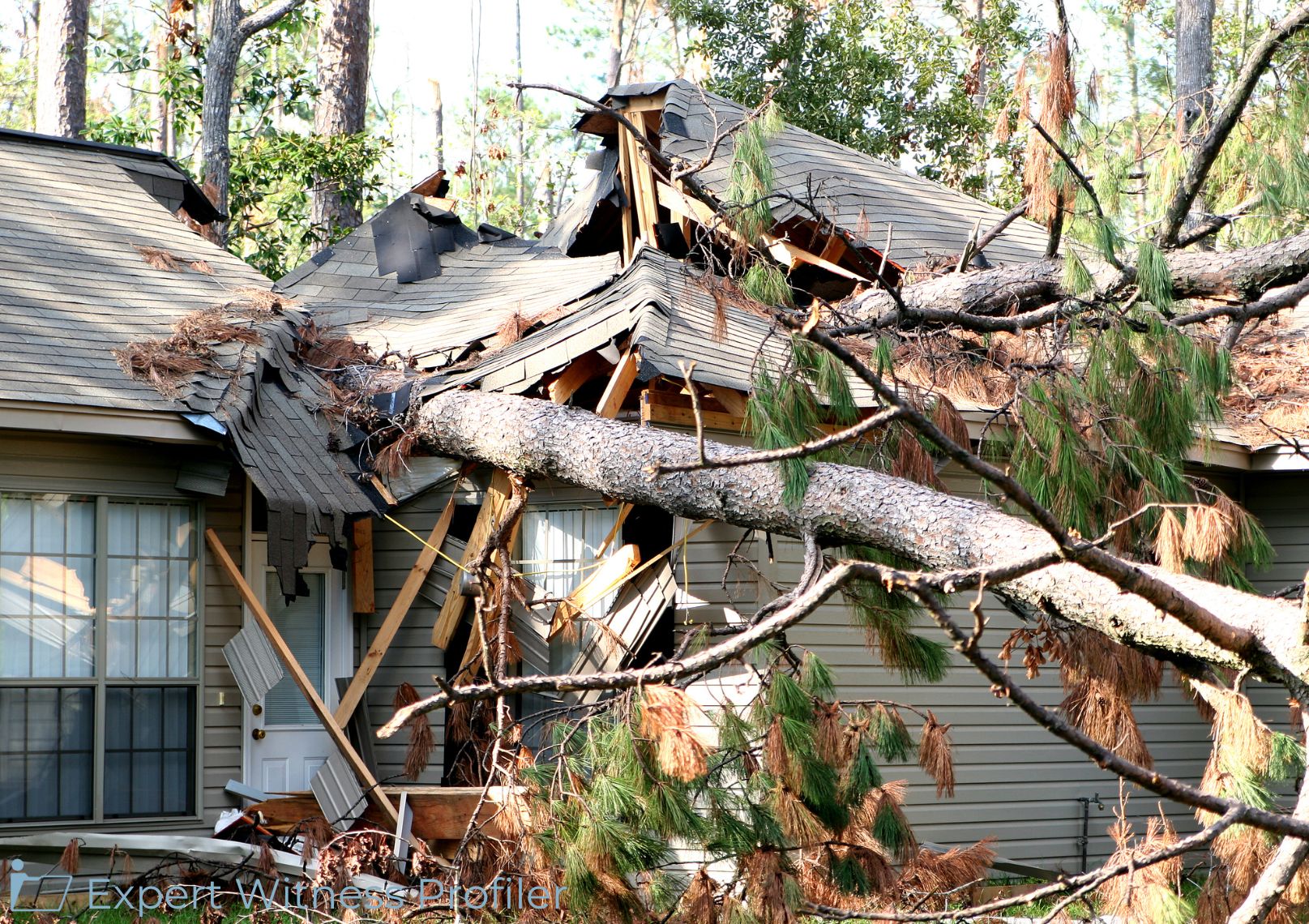
    Plaintiffs Gregory Hebbler and Marion Hebbler contracted with Defendant State Farm Fire and Casualty Company to insure their home located at 6009 Angler Drive, Picayune, Mississippi.

    On August 29, 2021, Hurricane Ida made landfall, purportedly damaging the residence. When Defendant conducted an on-site inspection and estimated the monetary damage caused by Hurricane Ida, it issued no payment because this figure fell below Plaintiffs’ deductible.

    Plaintiffs ultimately designated Rich Lyon as their sole expert witness, referencing a June 7, 2023, Estimate as his report, but they did not attach this Estimate to their designation. On July 1, 2024, almost three months after their expert designation deadline had passed, Plaintiffs submitted a supplemental designation, disclosing Lyon’s Supplemental Report.

    On August 19, 2024, Defendant filed the instant motion to strike Plaintiffs’ expert witness Rich Lyon.

    Insurance Expert Witness

    Rich Lyon is a licensed State of Louisiana Public Insurance Adjuster and Registered Insurance Appraiser. He is the owner and operator of Gulf Coast Adjusting, LLC. Gulf Coast Adjusting, LLC is a Louisiana-licensed and bonded company offering Public Adjusting, Insurance Claims Appraising, Insurance Claims Umpiring and Construction Estimating services throughout the states of Louisiana and Mississippi.

    Get the full story on challenges to Rich Lyon’s expert opinions and testimony with an in-depth Challenge Study. 

    Discussion by the Court

    A. Lyon’s reports

    1. The June 7, 2023, Estimate

    The June 7, 2023, estimate offered by Plaintiffs as Lyon’s initial expert report contains only damage estimates and includes no narrative language, explanations, or opinions as to causation. The Estimate valued the damage to Plaintiffs’ property at $144,661.05, with no amount specified for depreciation. The Estimate is based on a June 5, 2023, inspection that was conducted by an independent contractor hired by Lyon.

    2. The Supplemental Report

    In his supplemental report, Lyon for the first time offered an opinion as to causation, stating that Hurricane Ida caused the damage to Plaintiffs’ residence. This opinion is based upon “on-site inspections of the subject property, interviews with the property owner, . . . documentation provided to [him], [his] extensive work related to hurricanes [and] windstorms, and [his] accumulative experience in the construction and insurance industries gained over the past 25 years.”

    Lyon conducted an inspection of Plaintiffs’ property on June 24, 2024, which resulted in him revising the June 7, 2023, damage estimate downward to $75,707.42, again with no deduction specified for depreciation.

    B. Defendant’s Motions

    Defendant asked the Court to exclude the June 7, 2023, estimate because it was made by unknown independent contractors, such that the Court cannot test the reliability of its factual underpinnings or methodologies. Next, the Court should strike the supplemental report because it is not supplemental, but is in fact a new report, and was produced by Plaintiffs over two and half months after the expert designation deadline.

    1. Defendant’s challenge to the June 7, 2023, Estimate offered as Lyon’s expert report

    Defendant argued that Plaintiffs’ timely June 7, 2023, estimate is unreliable because it offered no causation opinions and because unknown independent contractors collected the data underlying the estimate and did the majority of the work creating it.

    Lyon affirmed under oath that both the inspector and estimators’ identities are protected by nondisclosure agreements, and he would not reveal them. Since Plaintiffs have not identified who conducted the inspection or created the Estimate, neither Defendant nor the Court can test the reliability of the data and methods employed in repairing it. On this record, Plaintiffs cannot meet their burden of showing that the bases and methodologies underlying the estimate are reliable, and the Court therefore rejected the June 7, 2023, estimate.

    2. Lyon’s Supplemental Report offering causation opinions

    Defendant next challenged Lyon’s supplemental report, disclosed after Plaintiffs’ expert designation deadline but prior to the close of discovery.

    It should be noted that Lyon’s supplemental report relies upon information gathered by an unknown independent contractor during the June 7, 2023, inspection, Lyon’s own inspection conducted on June 24, 2024, documentation provided to him, and interviews with Plaintiffs. With the exception of Lyon’s inspection, this information was available to Plaintiffs well before the expert designation deadline of April 9, 2024, and Plaintiffs have not offered any explanation why Lyon could not have conducted his inspection before the deadline. For these reasons, the Court concluded that the supplemental report is not supplemental but is in fact a new expert report, such that it could and should have been disclosed by April 09, 2024.

    Four factor analysis under Rule 37 to determine the proper sanction

    Starting with the fourth factor, the explanation for the failure to comply with the Court’s deadlines, Plaintiffs justify the late disclosure by stating that they paid out-of-pocket to repair their roof in July 2023.

    But Plaintiffs do not explain how the completion of these repairs prevented them from timely disclosing the supplemental report or why, if there was an issue, it could not be resolved in the nine months between the completion of repairs and the designation deadline of April 9, 2024.

    The third factor is the possibility of a continuance. This, according to the Court, weighs in favor of Defendant because the case is scheduled for Pretrial Conference next month and a continuance would only further delay this case, in essence rewarding Plaintiffs for failing to timely disclose the supplemental report without any justifiable explanation.

    The first factor is the importance of the witness’ testimony. Without Lyon, Plaintiffs cannot meet their burden of showing causation and Defendant will be entitled to summary judgment. But even where the expert testimony is significant, “the importance of such proposed testimony cannot singularly override the enforcement of local rules and scheduling orders.”

    Turning to prejudice, Lyon had the benefit of possessing Defendant’s expert report when he prepared the supplemental report, and Defendant’s expert’s ability to prepare his own report was impeded by not having access to Lyon’s supplemental report. Defendant would also be required to expend time and financial resources to prepare a response to Lyon’s new causation opinion, causing further prejudice. On balance, the Court held that this factors weigh in favor of excluding the supplemental report.

    The circumstances of this case warrant striking the Supplemental Report

    Plaintiffs argued that Defendant waived the right to challenge Lyon’s expert designation by failing to file its motion thirty days before the discovery deadline.

    The Court found that Plaintiffs attempted to frame Defendant’s argument as a challenge to the initial expert designation, when in fact Defendant is contending that the supplemental report itself introduces new expert testimony and is therefore not supplemental. This would mean that Defendant would have had to file its challenge to Plaintiffs’ disclosure no later than five days later. It would be unfair to permit Plaintiffs to violate their deadline for disclosing expert reports by almost three months, and then penalize Defendant for failing to file its motion to strike by the deadline because Plaintiffs served the supplemental report mere days before it passed.

    Held

    The Court found that Defendant’s motion to strike should be granted as to Plaintiffs’ expert Rich Lyon, and he will be excluded from testifying at trial. The
    Court also granted Defendant’s motion for summary judgment because Plaintiffs cannot make the requisite showing as to causation. Plaintiffs Gregory Hebbler and Marion Hebbler’s claims were dismissed with prejudice.

    Key Takeaways:

    • The Court excluded June 07, 2023, estimate offered as Lyon’s expert report because unknown independent contractors did the majority of the work creating it as a result of which the Court cannot test the reliability of its factual underpinnings or methodologies.
    • The supplemental report offered by Lyon is not supplemental but is in fact a new expert report, such that it could and should have been disclosed by April 09, 2024. It should be noted that Lyon’s supplemental report relies upon information gathered by an unknown independent contractor during the June 7, 2023, inspection, Lyon’s own inspection conducted on June 24, 2024, documentation provided to him, and interviews with Plaintiffs. With the exception of Lyon’s inspection, this information was available to Plaintiffs well before the expert designation deadline of April 9, 2024, and Plaintiffs have not offered any explanation why Lyon could not have conducted his inspection before the deadline.

        Case Details:

        Case Caption: Hebbler Et Al V. State Farm Fire And Casualty Company
        Docket Number: 1:23cv247
        Court: United States District Court, Mississippi Southern
        Order Date: December 18, 2024
        1. Accident Reconstruction Expert Witness’ Supplemental Report Correcting Mathematical Errors Admitted

          Accident Reconstruction Expert Witness’ Supplemental Report Correcting Mathematical Errors Admitted

          Plaintiff Kimberly Allcorn filed a lawsuit to recover damages for injuries from a collision with a tractor-trailer. Defendant Kay Beach, driving the tractor-trailer, worked for Western Flyer Express, LLC at the time.

          Both vehicles traveled northbound on a four-lane highway with a 65-mph speed limit. Allcorn was in the right lane ahead of Beach, who was in the left lane at 71 mph. As Allcorn changed lanes, moving slower than Beach, the tractor-trailer struck the rear of Allcorn’s vehicle despite applying the brakes.

          There was a fact dispute as to whether Beach, had she been driving the speed limit, could have avoided the collision. On June 10, 2024, Allcorn designated Soan Chau as an accident reconstruction expert witness. Chau’s report concluded that if Beach had driven 65 mph, she could have avoided the crash.

          On July 9, 2024, the Defendants provided the testimony of their own accident reconstruction expert witness, who found errors in Chau’s calculations. It was alleged that Chau’s report misrepresented Beach’s speed as 76 mph instead of 71 mph and claimed that even at 65 mph, the crash would have been unavoidable.

          On August 7, 2024, the Plaintiff submitted a corrected report from Chau. Chau maintained that Beach could have avoided the crash at 65 mph.

          The Defendants requested the Court strike the report, arguing it was untimely and exceeded the scope for revisions. The Plaintiff claimed the report was both proper and timely.

          Accident Reconstruction Expert Witness

          Accident Reconstruction Expert Witness

          Soan Chau is a transportation consultant specializing in vehicular accident analysis, with over 30 years of experience in cases involving passenger vehicles, tractor-trailers, motorcycles, bicycles, and pedestrians. Throughout his career, Chau has analyzed over a thousand cases, contributing expertise in scene preservation, documentation, surveying, reconstruction, simulation, animation, and other transportation-related matters.

          Soan Chau earned a Bachelor of Science in Civil Engineering from the University of Florida in 1993. He further pursued advanced studies at the University of Florida, completing all required coursework for a Master of Science in Traffic Engineering between 1997 and 1999.

          He is also a certified Event Data Recorder (EDR or “black box”) analyst and retriever for both commercial vehicles and passenger cars.

          Want to know more about the challenges Soan Chau has faced? Get the full details with our Challenge Study report.  

          Discussion by the Court

          Federal Rule of Civil Procedure 26(e) requires timely supplementation if a prior disclosure is materially incomplete or incorrect, and the information has not otherwise been provided during discovery. Additionally, under the present Court’s Local Uniform Civil Rule 26(a)(5), such supplementations must be made at appropriate intervals “and in no event later than the discovery deadline established by the case management order.”

          The Court found no merit in the Defendants’ argument that supplementation is only required when based on new information unavailable at the time of the initial disclosure. Instead, Rule 26(e) clearly requires supplementation when a party learns of an error or omission, as occurred here.

          The Defendants also argued that Chau’s supplemental report was unnecessary because their expert had already identified the errors. The Court held that this argument undermined the Defendants’ request for relief. If the corrections were already known, Chau had no obligation to provide them, and his supplemental report would have been gratuitous. However, the Plaintiff did not advance this position.

          The Court concluded that once Chau learned of the errors in his calculations, he had a duty to correct them promptly. Chau complied with this duty by submitting a supplemental report within 30 days, well before the discovery deadline. The Court emphasized that Chau did not offer a new opinion disguised as a supplement. Instead, he corrected mathematical errors in his calculations without altering his opinion.

          The Court found nothing improper in Chau’s actions, as his supplemental report adhered to both the letter and spirit of Rule 26(e).

          Held

          The Court denied the Defendants’ motion to strike the supplemental report of Plaintiff’s accident reconstruction expert witness Soan Chau.

          Key Takeaway:

          The Court admitted Soan Chau’s supplemental report, emphasizing the importance of timely corrections when an expert discovers errors in their calculations. Under Federal Rule of Civil Procedure 26(e), experts are required to correct any material inaccuracies in their disclosures, even if no new information is introduced.

          The Court found that Chau’s corrected report, submitted within the required timeframe, was a necessary and appropriate response to the identified errors. Importantly, the Court noted that Chau’s supplemental report did not offer any new opinions but merely corrected mathematical errors without altering his original conclusions. In conclusion, the Court held that Chau’s actions complied with the letter and spirit of the Rule, denying the Defendants’ motion to strike the report.

          Please refer to the blog previously published about this case:

          Physical Medicine & Rehabilitation Expert Witness’ Testimony Indicating a History of Post-Concussive Syndrome Deemed Speculative

          Case Details:

          Case caption: Allcorn V. Beach Et Al
          Docket Number: 1:23cv121
          Court: United States District Court for the Northern District of Mississippi, Aberdeen Division
          Dated: December 12, 2024
        2. Psychiatry Expert Witness’ Rebuttal Testimony Admitted Despite Claims of Untimely Disclosure

          Psychiatry Expert Witness’ Rebuttal Testimony Admitted Despite Claims of Untimely Disclosure

          Plaintiff Rebecca Leeper filed a Complaint for Damages against the Defendants, the City of Tacoma and Tel Thompson. The case arose from injuries she sustained in a sexual assault on July 17, 2018. In her Complaint, Leeper alleged that the City had prior knowledge of Thompson’s dangerous conduct, including a documented history of confrontational behavior and inappropriate sexualized conduct while working in his Tacoma Police Department uniform. Despite this knowledge, the City allegedly failed to implement reasonable protective or supervisory measures, leading to Leeper’s assault by Thompson. As a result, she claimed to suffer from emotional distress, including depression, anxiety, shame, fear, anger, sadness, embarrassment, and physical health problems such as hypervigilance and irritability.

          Leeper moved to strike two rebuttal expert witnesses designated by the City of Tacoma, Ryan Spurling and Dr. Douglas Robinson. She argued that these witnesses were not offering rebuttal opinions and should have been disclosed earlier. Tacoma responds that no rule requires it to designate a primary expert to address the opponent’s expert expected opinions and evidence, but rather the defense is permitted to wait until after Plaintiff’s expert disclosures to disclose experts to rebut the same subjects.

          Law Enforcement Expert Witness

          Ryan Spurling‘s career in law enforcement has spanned more than 32 years. He has served in the law enforcement community with the Washington State Patrol (WSP), the Mason County Sheriff’s Office (MCSO), and as an expert witness for Use of Force (UOF) and Police practices.

          Get the full story on challenges to Ryan Spurling’s expert opinions and testimony with an in-depth Challenge Study.   

          Psychiatry Expert Witness

          Douglas Perry Robinson is a psychiatrist in Seattle, WA and has over 47 years of experience in the medical field. He graduated from University of Utah in 1976.

          Want to know more about the challenges Douglas Perry Robinson has faced? Get the full details with our Challenge Study report.   

          Discussion by the Court

          The Court found that both Spurling and Robinson met the requirements of Rule 26 as experts “intended solely to contradict or rebut evidence on the same subject matter identified by another party.”

          Furthermore, and in any event, Leeper waited almost four years after the cutoff date for motions related to discovery and more than a year after remand and just weeks before trial to move to strike as untimely experts Tacoma disclosed in 2021. Any prejudice from the allegedly late disclosure could have been ameliorated if she had raised the issue much sooner. 

          Held

          The Court denied the Plaintiffs’ motion to strike Tacoma’s expert witnesses, Ryan Spurling and Dr. Douglas Robinson.

          Key Takeaways:

          The party with the burden of proof on an issue should disclose its expert testimony before the other party is required to disclose an expert to rebut that opinion testimony. Furthermore, and in any event, Leeper waited almost four years after the cutoff date for motions related to discovery and more than a year after remand and just weeks before trial to move to strike as untimely experts Tacoma disclosed in 2021.

          Case Details:

          Case Caption:  Leeper V. City Of Tacoma Et Al
          Docket Number: 3:20cv5467
          Court: United States District Court for the Western District of Washington
          Order Date: December 13, 2024
        3. Education & Schools Expert Witness’ Testimony Excluded Because of its Untimeliness and Insufficiency

          Education & Schools Expert Witness’ Testimony Excluded Because of its Untimeliness and Insufficiency

          In October 2023, Plaintiff Leslie Baldwin sued Kalispell School District #5 and Glacier High School (collectively “the District”) on behalf of her minor son, K.B., alleging that K.B. was sexually assaulted in February 2022 on a bus returning from a school-sanctioned wrestling event.

          The District sought to exclude the testimony of Baldwin’s retained expert, Thom Luedemann, arguing its untimeliness and insufficiency. 

          Education & Schools Expert Witness 

          Thom Luedemann is experienced administrator who has spent many years working in the education management industry. He received his masters in education from the Northern Arizona University.

          Get the full story on challenges to Thom Luedemann’s expert opinions and testimony with an in-depth Challenge Study. 

          Discussion by the Court

          The District pointed out several inadequacies in Baldwin’s expert disclosures, highlighting her counsel’s explicit noncompliance with Rule 26(a)(2)(B).

          The Scheduling Order stated Baldwin’s liability expert disclosures were due by September 13, 2024. On September 12, Baldwin provided the District with her “Notice of Expert Witnesses’ Designation,” noticing an intent to use unidentified treating “Medical and Mental Health Experts” and a single retained expert, Luedemann. Attached to that Designation was Luedemann’s CV. It was not until the District reached out to Baldwin’s counsel about the present motion that, on September 27, Baldwin provided Luedemann’s signed expert report, the contents of which are almost identical to the attorney-prepared Designation.

          The District accurately argued that Luedemann’s disclosure is insufficient because a signed report was not originally provided and neither the Designation nor Luedemann’s CV included the necessary information under Rule 26(a)(2)(B)(i), (ii), (iii), (v), and (vi). The District further claims that any attempt to supplement that disclosure now would be untimely. Baldwin’s response is limited to a single page stating that: (1) she provided the signed report as soon as the failure was noted and (2) she intends to supplement her disclosures following depositions of key witnesses despite the passage of the expert disclosure deadline.

          Failure to Provide a Timely, Signed Report

          Here, there is no dispute that Baldwin’s counsel failed to disclose a signed expert report by the deadline. There are also no facts upon which to find substantial justification. Thus, Baldwin’s only safe harbor is harmlessness. Weighing in Baldwin’s favor is the fact that counsel provided an expert report to the District three weeks later. And the District itself notes that the content of that report was consistent with that included in the attorney-prepared Designation.

          However, the fact that Baldwin’s counsel tried to fix this particular insufficiency is undermined by the fact that counsel knew at the time of the expert disclosure deadline that the expert would need to rely on the depositions of school officials that counsel failed to schedule prior to the deadline. As a result, Baldwin’s counsel knew the initial report was insufficient and supplementation of that report is not necessarily appropriate under Rules 26(e)(2).

          Insufficiency of the September 12 Designation

          Setting aside the absence of a separate report, neither the September 12 Designation nor Luedemann’s CV included the necessary information under Rule 26(a)(2)(B)(i), (ii), (iii), (v), and (vi). Indeed, Baldwin herself conceded that the Designation fails to provide “a complete statement of all opinions” Luedemann intends to give.

          She argued he needed to review the subsequent depositions, her counsel failed to take. Additionally, other than broad statements regarding “review of case notes,” the Designation does not identify “the facts or data considered by” Luedemann in forming his opinions.

          Nor does it identify the relevant exhibits as required by Rule 26(a)(2)(B)(iii). Luedemann’s CV does not list other cases he has been involved with, or state his compensation. Accordingly, the Court held that the September 12 disclosure failed to meet the requirements of Rule 26(a).

          Insufficiency of Luedemann’s Untimely Signed Report

          Finally, the District argued that Luedemann’s September 30 signed report is also deficient under Rule 26(a)(2)(B)(i), (ii), and (iii), and that he is not qualified to opine on K.B.’s emotional harm. 

          All Opinions

          Baldwin herself has stated that supplementation of the expert report is required in light of the September 2024 depositions. And apparently such supplementation has already occurred. The Court held that there is no real dispute that Luedemann’s September 30 report did not fully state his opinions and the basis for them.

          Facts of Data Considered

          In his signed report, Luedemann identifies the information he reviewed in preparing his opinion. Specifically, he stated that he reviewed the pleadings, “school policies on Title IX compliance and student supervision,” “statements from school officials involved,” “relevant federal and state guidelines on student safety and harassment prevention,” and “case notes and personal statements from Leslie Baldwin regarding her son’s experience with Kalispell School District, CPS, and other authorities, providing additional context to systemic issues.”

          The District argued that list is fatally deficient in that it does not include the Title IX investigation report or indicate that Luedemann has reviewed any other Title IX complaints so as to have a basis of comparison. The District is also concerned that Luedemann does not identify any of the underlying documents that would support his conclusions of, inter alia, a “documented hazing culture,” a “broader pattern of mishandling Title IX-related complaints,” and “numerous warning signs” of a “well-known hazing culture.”

          Ultimately, while Luedemann’s failure to consider the Title IX investigation report is fodder for a challenge under the Federal Rules of Evidence or for cross-examination, the Court held that it is not a clear Rule 26 disclosure problem. This may be a serious trial challenge for Baldwin as Luedemann’s failure to consider this central document is likely to fatally undermine his credibility. Although a closer question, the District’s other concerns fall in this same category. The vagueness of Luedemann’s references makes it difficult to determine what specific information he relied on in formulating his opinions.

          Exhibits

          Luedemann does not identify any exhibits he intends to use.

          Emotional Harm

          The District argued that Luedemann is not qualified or at least has not demonstrated his qualification to assess K.B.’s alleged emotional harm. Recognizing his extensive experience as a teacher and with school administration, the Court held that nothing in Luedemann’s CV or report indicated that he has specialized knowledge in juvenile mental health.

          Ultimately, the cumulative inadequacies in Baldwin’s disclosure regarding Luedemann are simply too many. Counsel’s failure to provide a timely and sufficient expert report under Rule 26(a)(2)(B) is therefore neither substantially justified nor harmless. The District’s request to exclude Luedemann as an expert is granted.

          Hybrid Expert Disclosures

          Although not raised by the District, Baldwin also has a serious problem as it relates to her disclosure of the treating physicians in the case. Her Rule 26(a)(2)(C) disclosure merely states:

          “Plaintiff reserved the right to elicit testimony from any and all of Plaintiff’s medical providers as “hybrid” fact/expert witnesses, to testify regarding any and all impressions, opinions and observations developed in the court and scope of their treatment of Plaintiff, as well as the information contained in their records, which have been previously provided to counsel, or which have been requested and will be provided. Plaintiff further reserves the right to elicit testimony of these witnesses for future treatment opinions to which they have already opined or to which they opine in the future in either their medical records and/or deposition testimony.”

          While this disclosure may be benevolently read to state the subject matter of the anticipated testimony, the Court held that it fails to provide a summary of the facts and opinions at issue. More fundamentally, it does not even identify the medical personnel at issue.

          Prior to exclusion, however, the Court will give Baldwin an opportunity to show that her failure was either substantially justified or harmless.

          Held

          The Court granted the District’s motion to exclude Thom Luedemann from testifying based on his inadequate disclosure.

          Key Takeaway:

          Neither the September 12 Designation nor Luedemann’s CV included the necessary information under Rule 26(a)(2)(B)(i), (ii), (iii), (v), and (vi). Indeed, Baldwin herself conceded that the Designation failed to provide “a complete statement of all opinions” Luedemann intended to give.

          Despite his extensive experience as a teacher and with school administration, nothing in Luedemann’s CV or report indicated that he has specialized knowledge in juvenile mental health.

          Case Details:

          Case Caption: Baldwin V. Kalispell School District #5 Et Al
          Docket Number: 9:23cv127
          Court: United States District Court, Montana
          Order Date: December 2, 2024
        4. Pediatrics Expert Witness’ Opinion on Forceps-Assisted Vaginal Delivery Excluded

          Pediatrics Expert Witness’ Opinion on Forceps-Assisted Vaginal Delivery Excluded

          The present case involved a medical malpractice claim filed by Plaintiffs Tyler Grenier and Jenna Grenier, individually, and as the next friend of minor J.A.G., against the Defendant United States of America (“Defendant”). The Plaintiffs alleged medical negligence at Tripler Army Medical Center (“Tripler”) concerning prenatal care and labor provided to Plaintiff Jenna Grenier (“Jenna”) and the delivery of J.A.G. The claims included severe physical injuries sustained by Jenna and J.A.G., negligent infliction of emotional distress on Tyler and Jenna, loss of filial consortium, and Tyler’s loss of spousal consortium.

          In the current motion, the Defendant sought to strike the expert testimony of Ofer Levy, a pediatrics expert witness presented by the Plaintiffs. Defendant argued that Levy’s expert report was filed after the expert report deadline, as a rebuttal report, and that he had not been previously disclosed as an expert.

          The Plaintiffs filed their opposition on August 13, 2024, asserting that Levy’s report was timely because the rebuttal disclosure deadline had been extended to June 10, 2024, the same day his report was disclosed.

          Defendant replied on August 20, 2024, contending that Ofer Levy’s expert report is not a rebuttal report because it did not respond to any new information and it is an entirely new expert witness with new opinions that should have been disclosed by the expert witness disclosure deadline of March 11, 2024. 

          Pediatrics Expert Witness

          Pediatrics Expert Witness

          Ofer Levy is principal investigator, staff physician and the Director of the Precision Vaccines Program at Boston Children’s Hospital, Professor of Pediatrics at Harvard Medical School, and Associate Member of the Broad Institute of MIT and Harvard. 

          After graduating from the Bronx High School of Science and then Yale College (B.S., Molecular Biophysics & Biochemistry), Levy received his MD and PhD degrees from New York University. 

          Want to know more about the challenges Ofer Levy has faced? Get the full details with our Challenge Study report.  

          Discussion by the Court

          Dispute Over the Nature of Ofer Levy’s Report

          The parties agreed that Ofer Levy’s report was filed within the deadline for rebuttal expert reports. However, they disagreed on whether the report qualified as a rebuttal or an initial expert report. The Court determined that the report was an initial expert report, not a proper rebuttal.

          Ofer Levy’s opinion stated that the forceps-assisted vaginal delivery caused the minor Plaintiff’s injuries and that a cesarean section should have been performed instead. He further opined that the perinatal injuries would have been avoided with a cesarean section. This opinion mirrored that of Plaintiffs’ obstetrics and gynecology expert witness, Adam V. Levy, who had similarly concluded that a cesarean delivery would have prevented the injuries.

          The Court found that Ofer Levy’s report went beyond providing a rebuttal. Instead, it sought to reinforce the opinions already expressed by Adam V. Levy. This was impermissible, as it did not respond to new evidence but rather bolstered the original expert report. The Court referenced Parenti v. Cnty. of Monterey, where a purported rebuttal was excluded because it merely reinforced the original expert’s opinions.

          Violation of Federal Rule of Civil Procedure 37(c)(1)

          Under Federal Rule of Civil Procedure 37(c)(1), if a party fails to disclose expert testimony as required, the Court may exclude the testimony unless the failure is substantially justified or harmless. The Court ruled that Ofer Levy’s failure to disclose his expert status and report by the deadline was neither justified nor harmless. Consequently, the Court determined that the appropriate sanction was to strike Levy’s expert testimony and report.

          Factors for Exclusion Sanction

          To decide whether exclusion was appropriate, the Court considered several factors:

          1. The public’s interest in the swift resolution of litigation.
          2. The Court’s need to manage its docket efficiently.
          3. The risk of prejudice to the Defendant.
          4. The public policy favoring the resolution of cases on their merits.
          5. The availability of less severe sanctions.

          The Court found that the first three factors supported exclusion. The untimely disclosure would cause delays, which weighed against the Plaintiffs. The fourth factor was neutral, as striking Levy’s report would not dispose of the case. Finally, the fifth factor supported exclusion because the Plaintiffs could still proceed with their claims and trial without Levy’s testimony. Therefore, the Court decided to strike Levy’s expert report and testimony.

          Held:

          The Court, in light of the aforementioned discussion, granted Defendant’s motion to strike Plaintiff’s pediatrics expert witness Ofer Levy’s expert report and testimony.

          Key Takeaway:

          The Court struck the expert testimony of Ofer Levy because his report, filed after the expert deadline, was deemed an initial expert report rather than a rebuttal. The Court found that Levy’s testimony merely reinforced the opinions of another expert, Adam V. Levy, instead of responding to new evidence. Since Levy’s untimely disclosure was neither substantially justified nor harmless, the Court ruled that his report and testimony should be excluded as a sanction under Federal Rule of Civil Procedure 37(c)(1).

          Please refer to the blogs previously published about this case:

          Case Details:

          Case caption: Grenier Et Al V. United States Of America
          Docket Number: 1:22cv396
          Court: United States District Court for the District of Hawaii
          Dated: November 17, 2024
        5. Court Strikes Structural Engineering Expert Witness’ Testimony on Hurricane Damage Citing Month-Long Disclosure Delay

          Court Strikes Structural Engineering Expert Witness’ Testimony on Hurricane Damage Citing Month-Long Disclosure Delay

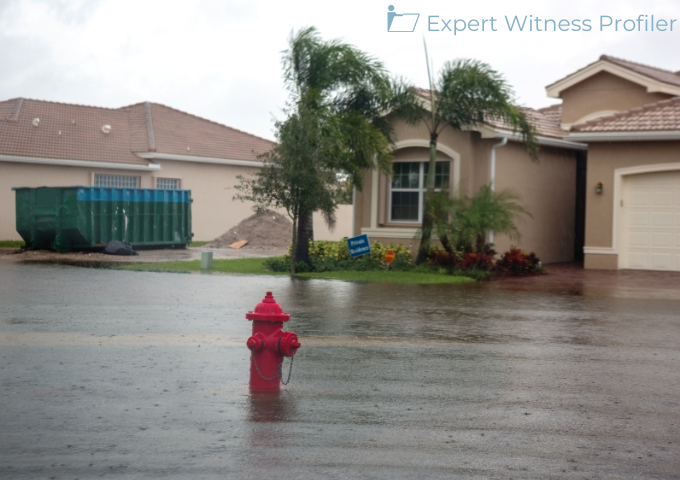
          Philip and Nancy Fairman’s home sustained severe flooding during Hurricane Ian. After the storm, they filed a damage claim with their insurer, Defendant American Strategic Insurance Corp (“ASI”), to seek compensation for the losses. ASI acknowledged coverage but disputed the extent of the damage. When the Fairmans and ASI could not reach a settlement, the Fairmans initiated a lawsuit to pursue their claim further.

          To facilitate discovery, the Court conducted a status conference and issued a scheduling order, requiring both parties to submit their Rule 26 expert disclosures by August 30, 2024. However, ASI failed to disclose its structural engineering expert witness, Brian Lindsey and did not provide the Fairmans with his report until nearly a month later, on September 26, 2024. ASI attributed this delay to an “oversight.”

          In response, the Fairmans filed a motion to strike ASI’s delayed expert disclosure. They also asked the Court to bar ASI from using Lindsey’s report or testimony in dispositive motions. Additionally, they asked that Lindsey be barred from testifying at trial, asserting that ASI’s failure to meet the deadline could adversely affect their case.

          Structural Engineering Expert Witness

          Structural Engineering Expert Witness

          Brian Lindsey, P.E., has over 20 years of forensic experience in cases involving damage assessments of design/construction defects, collapse of structures, vehicle impacts, structural fire damage, water intrusion, foundation movement, snow load failures, site drainage, wind damage, hail damage, exterior wall cladding damage and roofing systems damage.

          Want to know more about the challenges Brian Lindsey has faced? Get the full details with our Challenge Study report.

          Discussion by the Court

          Federal Rule of Civil Procedure 26 governs expert witness disclosures, aiming to prevent surprises in litigation and ensure parties can adequately prepare their cases. The rule mandates that parties disclose the basis of their expert opinions on time. Compliance with Rule 26 is not aspirational; it is mandatory. When a party fails to meet these obligations, Rule 37(c) grants the court discretion to exclude the expert unless the violation was substantially justified or harmless.

          ASI, having violated Rule 26, bore the burden of proving that its noncompliance was either justified or harmless. Substantial justification exists when reasonable minds could differ on the need to comply. Harmlessness, however, involves considering factors such as the element of surprise, the opposing party’s ability to address it, potential disruption to the trial, the evidence’s significance, and the reason for the failure to disclose.

          ASI did not argue that its conduct was substantially justified, nor did it address the factors necessary to establish harmlessness. Instead, ASI attributed the delay in disclosing its expert to an “oversight” and sought leniency, claiming no intentional violation or prejudice to the Fairmans. However, these explanations do not meet the required standard. Courts have consistently held that excuses such as oversight or clerical errors are insufficient to justify noncompliance with Rule 26.

          Consequently, ASI failed to satisfy its burden. The Court held that ASI cannot call Brian Lindsey as a witness or use his report as evidence in motions, hearings, or trial proceedings.

          Held

          The Court granted the Plaintiffs’ motion to strike Defendant American Strategic Insurance Corp.’s Rule 26 expert disclosure as untimely. Further, structural engineering expert witness Brian Lindsey’s report and expert testimony were stricken and excluded from further consideration in the lawsuit.

          Key Takeaways:

          The Court excluded ASI’s structural engineering expert witness, Brian Lindsey, and his report due to ASI’s failure to comply with Federal Rule of Civil Procedure 26, which mandates timely disclosure of expert witnesses to prevent trial surprises and ensure adequate case preparation.

          ASI did not provide substantial justification for its month-long delay nor argued that the delay was harmless. Instead, ASI claimed the missed deadline resulted from an “oversight.” The Court found this explanation insufficient, emphasizing that clerical errors and oversight do not excuse Rule 26 violations. In conclusion, the Court granted the Fairmans’ motion to strike Lindsey’s testimony, barring ASI from using his evidence at any stage of the litigation.

          Case Details:

          Case caption: Fairman v. Am. Strategic Ins. Corp.
          Docket Number: 2:23cv788
          Court: United States District Court for the Middle District of Florida, Fort Myers Division
          Dated: November 13, 2024
        6. Extensive and Complicated Report by Architecture Expert Witness Admitted Despite Claims of Insufficient Disclosure

          Extensive and Complicated Report by Architecture Expert Witness Admitted Despite Claims of Insufficient Disclosure

          In 2015, Defendant/Counter-Plaintiff C70 Builders, Inc. contracted with Plaintiff Mid-South Outlet Shops, LLC c/o Tanger Management, LLC for the construction of the Tanger Outlets Southaven, an open-air mall in Southaven, Mississippi. The Mall opened in November 2015. According to C70, the first design modifications were subsequently installed at several buildings on the Project by C70 pursuant change orders under the Original Contract, and at other buildings by a different contractor retained separately by Tanger (these first modifications were named the “VF Fix”). Beginning in 2019, other agencies and consultants were retained by both Tanger and C70 to help identify the source and propose remedial action for ongoing water intrusion issues. These remediation efforts also included the execution of a second contract in February 2020 between C70 and Tanger for C70 to install additional modified waterproofing designs (the “Pier Replacement Contract”).

          Façade Due Diligence Report

          In August 2021, Tanger retained Jeffrey Mason, and his company, WGI, Inc. (“WGI”), to review all pertinent documents related to the construction for the project including subsequent reviews, repairs and drawings created after the retail buildings were completed. This review was to be done to provide ownership with WGI’s evaluation of these documents and to direct ownership on next steps based on the findings. In connection with this review, WGI was to prepare a written report summarizing its findings of the construction documents, initial construction of the buildings, subsequent reviews, tests, and previous repairs with photographs of representative conditions, an estimate of probable construction costs, and recommendation of how to proceed concerning warranties and deadlines for litigation. WGI generated a “Façade Due Diligence Report” bearing Mason’s name on November 16, 2021 (the “First WGI Report).

          Shortly thereafter, Tanger advanced claims for breach of contract and negligence, alleging that there have been “numerous incidents of defective construction, some of which have caused substantial water infiltration” throughout the Site. According to C70, these allegations are taken almost verbatim from the executive summary of the First WGI Report.

          C70 filed a motion to strike reports and testimony of Jeffrey Mason, the designated expert of Tanger for the reason that his disclosures as an expert witness are insufficient under Rule 26 of the Federal Rules of Civil Procedure and on the basis of “… the prejudicial impact of allowing him to testify without C70 having had an opportunity to depose him prior to the September 13, 2024 deadline for the filing of Daubert and dispositive motions.”

          Architecture Expert Witness

          Jeffrey Mason has extensive experience managing a wide range of architectural projects and the production of construction documentation. His areas of expertise include exterior facade restoration and rehabilitation, several types of construction projects including, but not limited to the following: large mixed-use commercial developments, adaptive re-use projects, historic restoration projects, retail developments, and multi-family developments.

          Get the full story on challenges to Jeffrey Mason’s expert opinions and testimony with an in-depth Challenge Study. 

          Discussion by the Court

          Discovery in this long pending, multi-party construction case has no doubt resulted in extensive and complicated reports of experts.

          The Court held that the rule is quite clear, as Local Rule 26(a)(3) states: Failure to Disclose. If a party fails to make a disclosure required by [Local Rule 26], any other party must move to compel disclosure and for appropriate sanctions under Fed. R. Civ. P. 37(a) …. Challenges as to inadequate disclosure of expert witness(es) must be made no later than thirty days before the discovery deadline or will be deemed waived.

          Moreover, not only is the rule plain, but the reason for its having been adopted in the Northern and Southern District Courts of Mississippi is due to its inherent fairness.  The Court found C70’s counsel’s failure to have addressed the rule in its lengthy recitation of both rule Fed. R. Civ. P. 26 and L.U. Civ. R. 26(a)(3) in its 27-page memorandum or by way of reply brief concerning.

          Whether C70 has waived its challenges to the sufficiency of Tanger’s multiple expert disclosures of Mason under Fed. R. Civ. P. 26 due to its failure to timely raise them

          C70 correctly pointed out that in evaluating whether a violation of Rule 26 is harmless, the Fifth Circuit has held that district courts are to consider: (1) the importance of the evidence; (2) the prejudice to the opposing party of allowing the witness to testify; (3) the possibility for curing such prejudice by granting a continuance; and (4) the explanation, if any, for the party’s failure to comply with the disclosure requirements. C70 insisted that these factors mandate an exclusion of Mason as an expert witness, retained or otherwise. Tanger argued that C70 never made any suggestion that Tanger’s multiple expert disclosures were insufficient under either Fed. R. Civ. P. 26(a) or L.U. Civ. R. 26 until well after the discovery deadline and just two days before the dispositive and Daubert motions deadline. As such, Tanger argued that its challenges to the adequacy of the disclosures have been waived.

          The Court found that C70 has not demonstrated any actual prejudice from any claimed inadequacy of the disclosure of Mason since a denial of its motion to strike based thereon due to its waiver does not make those expert disclosures any more comprehensive or capable of withstanding a Daubert challenge than they actually are. In other words, unless the district judge finds otherwise, Mason, as an expert, will be limited at trial to offering those facts and opinions that have actually been disclosed and which withstand any Daubert challenge.

          Held

          The Court denied Defendant/Counter-Plaintiff C70 Builders, Inc.’s (“C70”) motion to strike reports and testimony of Jeffrey Mason, for insufficient disclosure.

          Key Takeaways:

          • When C70 contented that Tanger’s multiple expert disclosures were insufficient under either Fed. R. Civ. P. 26(a) or L.U. Civ. R. 26, the Court noted C70’s failure to timely raise challenges to the sufficiency of Tanger’s multiple expert disclosures.
          • The Court found that C70 has not demonstrated any actual prejudice from any claimed inadequacy of the disclosure of Mason since a denial of its motion to strike based thereon due to its waiver does not make those expert disclosures any more comprehensive or capable of withstanding a Daubert challenge than they actually are.

          Case Details:

          Case Caption: Mid-South Outlet Shops, Llc V. C70 Builders, Inc.
          Docket Number: 3:21cv256
          Court: United States District Court, Mississippi Northern
          Order Date: November 4, 2024
        7. Testimony of Physical Medicine & Rehabilitation Expert Witness Concerning Plaintiff’s Life Care Plan Is Not Entirely Based on Speculation

          Testimony of Physical Medicine & Rehabilitation Expert Witness Concerning Plaintiff’s Life Care Plan Is Not Entirely Based on Speculation

          Plaintiff Towanda R. Futrell filed this personal injury action on August 28, 2023. The action arises from a motor vehicle accident on Interstate 64 on December 16, 2022, when a tractor-trailer owned by AV Leasing, LLC, leased by Triton Logistics, Inc., and driven by Daniel Cramer, collided with a bus on which Futrell was a passenger. 

          Pursuant to Rule 26(a)(2) of the Federal Rules of Civil Procedure, on May 28, 2024, Futrell disclosed Dallas Lea, II, M.D. (“Dr. Lea”), as an expert witness in the field of orthopedic surgery who may be called to testify at trial. Futrell disclosed that Lea was expected to testify to: (a) Futrell’s injuries, including a broken right ankle, sprained left ankle, broken eye socket, and broken left jaw; (b) Futrell’s ankle surgeries; (c) Futrell’s “extensive physical medicine and rehabilitation”; and (d) his opinion that Futrell’s injuries, medical treatment, hospitalizations, “past and future pain and suffering, past and future medical expenses and medical costs and life care medical costs, and economic or non-economic related damages” are “a proximate cause of Defendant Daniel Cramer’s negligence.” 

          Futrell provided Defendants with a copy of Lea’s curriculum vitae. On or before July 9, 2024, Futrell also provided Defendants with Lea’s expert report-a life care plan for Futrell. The life care plan outlines Futrell’s treatment following the accident, Lea’s opinion that Futrell “will have chronic symptoms and residual disabilities resulting from the accident,” and a table containing Lea’s recommendations for Futrell’s “current and future care needs.” 

          On September 17, 2024, Defendants filed the pending motion in limine to exclude Lea’s opinion because he was not properly designated as an expert in life care planning and the opinions in his life care plan lack the requisite foundation. 

          Lea was not properly designated as an expert in life care planning

          First, the Defendants asserted that Lea was not properly designated as an expert in life care planning. The Defendants noted that Lea was designated as an expert in orthopedic surgery who was expected to testify about Futrell’s injuries, Futrell’s treatment, and his opinion that Futrell’s injuries, treatment, past and future pain and suffering, past and future medical expenses, and life care costs were proximately caused by Defendant Daniel Cramer’s negligence.

          Lea’s opinions lack the proper foundation and are speculative

          Next, Defendants argued that Lea’s opinions lacked the proper foundation and were speculative. Lea never treated Futrell and did not interview her or her treating physicians prior to developing the life care plan. The life care plan was drafted based on Lea’s review of Futrell’s medical records.

          Physical Medicine & Rehabilitation Expert Witness

          Dallas Alexander Lea, II M.D. is an internationally recognized spinal cord injury physician, fellowship-trained, and double-boarded in Physical Medicine and Rehabilitation (PM&R) and Spinal Cord Injury (SCI) Medicine.

          Get the full story on challenges to Dallas Alexander Lea’s expert opinions and testimony with an in-depth Challenge Study. 

          Discussion by the Court

          Errors in the Rule 26(a)(2) disclosure are harmless as Dr. Lea’s CV, life care plan, and deposition clarify his expertise and outline his proposed expert testimony

          Futrell asserted that Defendants were provided with a copy of Lea’s CV, which put them on notice that Lea was a life care planner, board certified in physical medicine and rehabilitation, and Defendants were provided with his life care plan on July 5, 2024. During Lea’s deposition, Futrell’s counsel clarified that the designation of Lea as an orthopedic surgeon was due to a “typographical error.” Lea testified that he was not an orthopedic surgeon, but a specialist in spinal cord injury and in physical medicine and rehabilitation. Lea explained that he would not be testifying about causation or negligence, rather he would testify to Futrell’s “injuries and future care and needs,” and that he was asked to “review records, review the case, and produce a life care plan.” 

          The Court found that Futrell’s failure to identify Lea as an expert to testify about Futrell’s life care plan in the Rule 26(a)(2) disclosure served on May 28, 2024, was harmless. The Rule 26(a)(2) disclosure was inaccurate. Futrell’s explanation for the inaccurate disclosure—that it was a “typographical error”—is less than satisfactory. The inaccuracy also goes beyond simply misstating that Lea is an orthopedic surgeon, by wrongfully disclosing that Lea will testify about the cause of Futrell’s injuries. The disclosure did, however, include Lea’s expected testimony about Plaintiffs future medical care and expected costs over her lifetime. The provision of Lea’s CV and life care plan clarified his expertise and proposed testimony and Defendants were further able to clarify this with his deposition taken September 6, 2024. 

          Lea’s proposed testimony concerning Futrell’s life care plan is based on his medical expertise and will be helpful to a jury

          Defendants also challenged several of the line items in Lea’s life care plan table, specifically house cleaning, ophthalmologist evaluations, an ear, nose, and throat evaluation, yearly visits to her primary care physician, and psychological counseling.

          Defendants argued Lea did not know whether Futrell has familial support to take care of house cleaning or to what extent she has suffered emotional injuries and needs counseling. They concluded that the life care plan is speculative and not tailored to Futrell’s unique needs, and Futrell “provides no indication why Lea’s life care plan is more plausible than other possibilities of what she will require in the future.”

          Lea explained that: (1) Futrell’s chronic symptoms and residual disabilities “were evident” in her medical records (2) the monthly housecleaning expense is for deep cleaning (3) the ophthalmologist evaluation and ear, nose, and throat evaluation were a precaution due to her jaw fracture and broken eye socket (4) the yearly visit to her primary care physician would be in addition to a routine yearly physical and would be necessary for pain management and pain management medications and (5) psychological counseling was included because of the mention of Futrell’s anxiety in the medical record.

          The Court held that Lea reviewed and summarized Futrell’s past treatment, current treatment regimen, and future treatment recommended by her physicians. Lea then developed a life care plan projecting Futrell’s future costs based on this review.  A certain amount of speculation is inherent in a life care plan that projects what will be needed in the future and hinges on future events. Permitting cross-examination regarding the facts and data Lea relied on to arrive at the future costs will allow the fact finder to determine the appropriate weight to assign to Lea’s testimony. 

          Held

          • The Court held that permitting Lea to testify about the life care plan he outlined for Futrell would not disrupt the trial. Lea, however, will not be permitted to testify about the cause of Futrell’s injuries and his testimony will be limited to the opinions outlined in his life care plan.
          • The Court found that Lea is qualified to testify as an expert witness and he is proposing to testify to relevant medical knowledge that will assist the trier of fact in understanding a fact in issue. Nor does the Court find that the probative value of such testimony is substantially outweighed by the danger of unfair prejudice, confusion of the issues, or misleading the jury. The Court found that Defendants’ concerns about the reliability of Lea’s testimony may be properly raised during cross-examination, but they are insufficient to persuade the Court to exclude Lea.

          The Court denied Defendants’ motion in limine to exclude the expert opinions of Dallas Lea, II, M.D.

          Key Takeaways:

          • The Rule 26(a)(2) disclosure was inaccurate. Futrell’s explanation for the inaccurate disclosure—that it was a “typographical error”—is less than satisfactory. The inaccuracy also goes beyond simply misstating that Lea is an orthopedic surgeon, by wrongfully disclosing that Lea will testify about the cause of Futrell’s injuries.
          • A certain amount of speculation is inherent in a life care plan that projects what will be needed in the future and hinges on future events.

          Case Details:

          Case Caption: Futtrell V. Av Leasing, LLC
          Docket Number: 4:23cv118
          Court: United States District Court for the Eastern District of Virginia, Newport News Division

          Order Date: October 25, 2024
        8. Law Enforcement Expert Witness’ Disclosure Held to be Inadequate

          Law Enforcement Expert Witness’ Disclosure Held to be Inadequate

          This case deals with the indictment of Derik Carothers. He is charged with three offenses. At Count One, the grand jury charged him with conspiracy to distribute and possess with intent to distribute a quantity of cocaine base, in the form commonly known as crack, a Schedule II controlled substance. At Count Two, the grand jury charged him with possession of a firearm in furtherance of a drug trafficking crime. And at Count Four, the grand jury charged him with possession of a firearm and ammunition by a convicted felon.

          On October 11, 2024, by email communication, Carothers, through counsel, informed the Government that he intended to call the Chief Technical Officer of PATC Tech (a forensic investigation company), Glenn K. Bard (“Mr. Bard”), as an expert witness with experience in computer and cell phone forensics. 

          As of 2:36 PM on October 15, 2024, the Government had yet to receive Carothers’s expert disclosure of Bard, and thus the Government filed a Motion to Compel. 

          In Carothers’s response to the motion to compel, filed on October 16, 2024, he stated that “PATC informed counsel yesterday that … Bard is now unavailable to testify next week. In lieu of Bard’s testimony, Carothers expects to call Lucas… With respect to Lucas, Carothers provided the government with all of the expert disclosures required by Rule 16 today, October 16, 2024.”

          The Government filed a motion to have Defendant Derik Carothers’s proposed expert, Donald Scott Lucas, excluded pursuant to Federal Rule of Criminal Procedure 16 because Carothers’s notice of expert testimony is (i) untimely and (ii) inadequate.

          Law Enforcement Expert Witness

          Donald Scott Lucas is a Forensic Examiner & Instructor with PATCtech and a retired Pennsylvania State Trooper. He has a background in law enforcement, specifically in regard to digital forensics and computer crimes. He has testified in federal, state and military courts regarding computer investigations and digital forensics on numerous occasions.

          Want to know more about the challenges Donald Scott Lucas has faced? Get the full details with our Challenge Study report. 

          Discussion by the Court

          Regarding disclosure’s statement of opinions that the Defendant will elicit from Lucas, which Rule 16 requires the disclosure of, Carothers only provided the following:

          “Lucas will describe how he analyzed the forensic extractions of the cellular telephones seized in this case and will also describe data that can be recovered from the phones as well as data recovered from the seized phones. Specifically, he will testify about his analysis of the data contained on the phones and the methods he used to obtain any such data. He is expected to testify about the results of his review of the extraction of the phones for relevant images taken by the phones and relevant text messages sent and received by the phones (i.e., texts containing code names for controlled substances as identified by Agent Springmeyer and Josh Martin).”

          Court’s Decision

          The Court found that Carothers’s notice of a new expert and the disclosure of that expert, given three business days before the start of trial, was not provided “sufficiently before trial to provide a fair opportunity for the government to meet the Defendant’s evidence.”

          Further, the Court found that the disclosure lacks “a complete statement of all opinions that the Defendant will elicit form the witness” and “the bases and reasons for them.”

          The Court determined that the appropriate remedy is to grant the Government’s continuance request and order Carothers to re-file a revised disclosure regarding Lucas’ proposed testimony.

          The Court recognized that Bard’s unavailability was not inherently Carothers’s fault. Carothers had not acted intentionally or in bad faith. Moreover, the Court did not find that the Government will be prejudiced by the Court granting its alternative request for a continuance. Indeed, this remedy will permit the Government the time necessary to prepare for Lucas’ testimony, while also avoiding the exclusion of one of Carothers’s two proposed expert witnesses.

          Held

          The Court granted in part and denied in part the Government’s motion to exclude Defendant’s testimony or, in the alternative, for a continuance.

          Key Takeaway:

          The Court found that the disclosure lacks “a complete statement of all opinions that the Defendant will elicit form the witness” and “the bases and reasons for them.” However, the Court did not find that the Government will be prejudiced by the Court granting the alternative request for a continuance because Carothers has not acted intentionally or in bad faith. Indeed, this remedy will permit the Government the time necessary to prepare for Lucas’ testimony, while also avoiding the exclusion of one of Carothers’s two proposed expert witnesses.

          Case Details:

          Case Caption: United States V. Carothers
          Docket Number: 3:20cr31
          Court: United States District Court, Pennsylvania Western
          Order Date: October 18, 2024