Tag: Expert Opinion

  • Urogynecology Expert Witness Testimony about inadequate risk disclosure admitted in medical device product liability action

    Urogynecology Expert Witness Testimony about inadequate risk disclosure admitted in medical device product liability action

    Connie Thacker (Plaintiff) received two surgical mesh devices, Prolift and TVT-Secur, as implants on May 8, 2009. Both devices were manufactured by Ethicon, Inc. and were designed to treat pelvic organ prolapse and stress urinary incontinence in women. Later, Thacker sued, alleging damages resulting from the use of these devices and identified Bruce Rosenzweig as her “Case-Specific Urogynecologist.”

    Ethicon moved to exclude Rosenzweig’s opinion that it did not adequately furnish Thacker’s implanting physician, Dr. James Guiler, with necessary information about Prolift and TVT-Secur. Ethicon also also aimed to bar Rosenzweig from presenting any opinions regarding general causation.

    Urogynecology Expert Witness

    Dr. Bruce Alan Rosenzweig, an Assistant Professor of Obstetrics and Gynecology at Rush University Medical Center and an Attending Physician of Obstetrics and Gynecology at Rush Presbyterian St. Luke Hospital. He earned his M.D. from the University of Michigan. Following medical school, he completed an Obstetrics and Gynecology Residency at Michael Reese Hospital. He pursued a one-year pelvic surgery fellowship at the State University of New York, and subsequently attended a two-year Urogynecology and Urodynamic fellowship at UCLA Harbor General Hospital. Throughout his career, Rosenzweig has performed over a thousand pelvic floor surgical procedures and utilized various synthetic pelvic mesh products. He has conducted over 350 surgeries addressing complications related to synthetic mesh. Rosenzweig possesses expertise and knowledge in the field of the pelvic floor and its reactions to materials and devices. Additionally, he has contributed to the field by inventing and designing products for gynecological applications.

    Discussion by the Court

    Regarding the Defendants’ motion to exclude Rosenzweig’s opinion on whether the Defendants provided sufficient information to Guiler about Prolift and TVT-Secur, the Defendants highlighted specific statements in Rosenzweig’s report. Rosenzweig, based on his examination of Thacker’s medical records, experience, education, and a review of depositions, internal Ethicon documents, and medical literature, expressed two key opinions with a reasonable degree of medical certainty:

    1. Thacker couldn’t make a fully informed medical decision about TVT-S and Prolift mesh implantation because Ethicon did not fully disclose the risks and complications in the Instructions for Use (IFUs), both early and late. The lack of complete disclosure by Ethicon meant that Thacker, and surgeons, including her implanting surgeon, were unaware of these risks. Despite Ethicon having information about these risks before the devices’ launch, it was not fully disclosed. Consequently, Thacker’s implanting surgeon couldn’t convey this information to her for proper consent regarding the risks associated with TVT-S and Prolift devices. This resulted in Thacker being unable to make a fully informed decision about the implantation, and, with a reasonable degree of medical certainty, she suffered injuries that were not disclosed by Ethicon. The inadequate disclosure of these risks was considered a substantial factor and/or cause of Thacker’s injuries.
    1. Thacker’s implanting surgeon, Guiler, couldn’t furnish the necessary and required information to Thacker for informed consent. This inability stemmed from Ethicon’s failure to fully disclose and evaluate the essential information before the launch of the medical devices.

    The Defendants objected to Rosenzweig’s opinions solely on the basis that he should not be allowed to testify regarding Guiler’s state of mind. The objection contended that Rosenzweig lacked insight or expertise into the specific knowledge or state of mind of Guiler. It was emphasized in the objection that there was no challenge to Rosenzweig’s qualifications to express opinions on whether Ethicon adequately disclosed the risks and complications of its products.

    The Court concurred with the Defendants that Rosenzweig should not be allowed to testify about Guiler’s knowledge or state of mind. It was noted that the Plaintiff intended to call Guiler as a witness at the trial, allowing him to testify about his own knowledge and state of mind. The Court clarified that the portion of Rosenzweig’s report in question did not express an opinion on Guiler’s knowledge or state of mind. Instead, it focused on whether Ethicon adequately disclosed the risks and complications of its products to physicians, including Guiler. Rosenzweig’s opinion that Ethicon did not disclose adequately and, consequently, physicians couldn’t adequately inform patients, was deemed permissible. The Court stated that any inconsistency between Rosenzweig’s testimony on Ethicon’s disclosure to Guiler and Guiler’s own testimony could be addressed through cross-examination.

    Regarding Rosenzweig’s opinion on general causation, Ethicon contended that Plaintiff Thacker had not identified Rosenzweig as an expert on general causation. Consequently, Ethicon argued that the Court should bar Rosenzweig from providing testimony on this particular topic.

    The Court rejected the motion, asserting that the Defendants had not provided sufficient evidence to support their claim that Thacker did not appropriately designate Rosenzweig as an expert on general causation.

    This case was initially filed in the United States District Court for the Eastern District of Kentucky, but on July 31, 2012, it was transferred to the Southern District of West Virginia as part of a multidistrict litigation (“MDL”) titled In re: Ethicon, Inc. Pelvic Repair Systems Product Liability Litigation. The MDL Court organized cases into different “Waves,” and Thacker’s case was assigned to “Wave 4”. The pretrial order for Wave 4 mandated that the Plaintiff disclose experts by January 17, 2017, Defendants disclose experts by February 15, 2017, and Daubert motions be filed by April 13, 2017. Additionally, the pretrial order imposed a limit of a maximum of five experts for each side in each case.

    In adherence to the pretrial order issued by the MDL Court, on January 17, 2017, the Plaintiffs’ counsel in the MDL provided defense counsel with a designation and disclosure of general expert witnesses. The disclosure comprised a list of 25 “general retained experts,” which included 13 urogynecologists. Rosenzweig, also a urogynecologist, was among the experts identified in the disclosure.

    The Defendants contended that the expert disclosure made on January 17, 2017, in the MDL did not fulfill the Plaintiff’s responsibility to designate Rosenzweig as a general causation expert in her specific case. They argued that the disclosure could not have outlined the general causation experts Thacker intended to call, as it included 25 doctors, exceeding the MDL Court’s limit of five retained experts per case. According to the Defendants, the Plaintiff Steering Committee (“PSC”) in the MDL identified all general causation experts to be retained across all Wave 4 cases with the January 17, 2017 expert disclosure. Defendants asserted that each individual Plaintiff was then obligated to serve a separate disclosure, specifying the general causation experts retained for their particular case.

    The Defendants did not refer to any order from the MDL Court explicitly outlining the procedure they argued for. The only order highlighted by the Defendants was the Pretrial Order for the Wave 4 cases, which mandated that Plaintiffs disclose their experts by January 17, 2017.

    In instances where the MDL Court issued additional orders concerning Plaintiffs’ expert disclosures, it remains uncertain if such orders would have been applicable to Thacker’s case. This uncertainty arises because, on June 28, 2017, the MDL Court placed Thacker’s case on the “inactive docket” following counsel’s notification of an agreed-upon settlement model. Concurrently, the MDL Court extended all discovery deadlines for Thacker’s case. Thacker’s case remained on the inactive docket within the MDL Court until it was later remanded to the United States District Court for the Eastern District of Kentucky.

    The Defendants failed to provide sufficient evidence to support their claim that Thacker did not appropriately designate Rosenzweig as a general causation expert in accordance with the MDL Court’s requirements. Concerning the disclosure of general causation experts in this Court, the Judge issued the scheduling order. This order established deadlines for Thacker and the Defendants to submit “case-specific expert witness reports” and for the Defendants to “designate general causation experts and testimony developed and existing in” the MDL. However, no deadline was set for Thacker to designate general causation experts. The reason for this omission is unclear, and it is possible that the Judge determined Thacker had already identified general causation experts in the MDL as per that Court’s established procedure. Nevertheless, Thacker did not miss any deadline set by this Court for designating general causation experts.

    Consequently, the Court allowed Rosenzweig to testify as a general causation expert on behalf of Thacker.

    Defendants argued that due to Thacker’s failure to designate Rosenzweig as a general causation expert after the case was remanded, they refrained from filing a Daubert motion challenging the substance of Rosenzweig’s general causation opinions. Although the Defendants had previously filed a motion in the MDL Court to exclude Rosenzweig’s general causation testimony, it seems this issue was addressed during the period when Thacker’s case was on the inactive docket in the MDL. The MDL Court explicitly stated that its Daubert ruling did not apply to Thacker’s case. Consequently, the Court granted the Defendants 30 days to submit a Daubert motion challenging Rosenzweig’s testimony on general causation, adhering to the response and reply times outlined in the Local Rules.

    The Court rejected any vague request by the Defendants to exclude the general causation opinion of any expert not specifically identified by name in their motion. The Court deemed such a request too ambiguous to address and, accordingly, denied it.

    Held

    1) Defendants’ motion in limine to exclude improper testimony from Plaintiff’s expert Bruce Rosenzweig was denied.

    2) Defendants were granted permission to file a motion challenging the substance of Rosenzweig’s general causation opinion. This motion must be filed within 30 days of the entry date of the order, and the response and reply times are to be in accordance with the Local Rules.

    The Court has not arrived on an outcome for this case since the remaining issues involved in this case still await resolution. 

    Key Takeaways

    The Court’s rulings on expert testimony in this case centered on Dr. Rosenzweig’s opinions regarding the adequacy of information provided by Ethicon to both the plaintiff, Thacker, and her implanting surgeon, Dr. Guiler. The Court agreed with the Defendants that Rosenzweig should not testify about Guiler’s state of mind, emphasizing that the focus should remain on Ethicon’s disclosure practices rather than the individual surgeon’s awareness. While permitting Rosenzweig to opine on Ethicon’s inadequate disclosure and its impact on physicians, including Guiler, the Court stressed that any inconsistencies could be addressed through cross-examination during the trial.

    In terms of general causation, the Defendants sought to exclude Rosenzweig’s testimony, arguing that Thacker had not properly identified him as a general causation expert. The Court rejected this motion, citing insufficient evidence from the Defendants. The case’s transfer to a multidistrict litigation (MDL) setting added complexity, with the Defendants challenging the adequacy of Thacker’s expert designation during the MDL proceedings. Despite the Defendants’ contentions regarding the MDL Court’s procedure for expert disclosures, the Court found no evidence to support their claim and allowed Rosenzweig to testify as a general causation expert.

    Case Caption: Thacker V. Ethicon, Inc. Et Al

    Docket Number: 5:20cv50

    Court: United States District Court, Kentucky Eastern

    Citation: 2024 U.S. Dist. LEXIS 4379

    Order Date: January 09, 2024

  • Court precludes the expert from offering an opinion on someone else’s subjective beliefs or feelings

    Court precludes the expert from offering an opinion on someone else’s subjective beliefs or feelings

    Vincent McKinney’s death on April 15, 2021, at a U-Haul construction site led to a lawsuit, filed by his surviving spouse and next kin Alberta Louise Perry, Plaintiff, with Jenkins & Stiles, LLC, a construction company and the general contractor for the site, being the Defendant. Despite some disputed facts, parties agreed that McKinney, who was delivering cargo to the construction site, specifically five bundles of insulated panels, met his demise when the cargo, being unloaded by Curtis Kennedy, a forklift operator and jobsite superintendent for the Defendant, fell off the trailer and onto McKinney. McKinney lost his life on the scene.

    According to Kennedy, he directed McKinney to complete the unstrapping of the load so that Kennedy could initiate the removal of the cargo from the trailer using a forklift. Kennedy asserted that McKinney had removed all the straps before the offloading began, although he wasn’t entirely certain. Kennedy testified that, based on McKinney’s body language, he believed McKinney knew he was approaching with the forklift. As Kennedy commenced offloading the cargo, the bundles fell off the forklift and landed on McKinney, who was still positioned next to the trailer. 

    Shortly after the incident, an investigator named Michael Johnson (“Johnson”), representing the Tennessee Occupational Safety and Health Administration (“TOSHA”), arrived at the scene. Johnson conducted interviews with several witnesses, including Robert Hutton (“Hutton”), who was then an employee of Chattanooga Fire, LLC. During his statement to the TOSHA investigator, Hutton mentioned that, before the incident, Kennedy had already unloaded some cargo, as he saw it stacked nearby. Hutton reported hearing someone say, “Curtis your [sic] clear, Go”. Following that, he heard a crash and observed McKinney under the cargo. Hutton explicitly stated, “Everyone was clear, Curtis had a good visual of the work area. I didn’t see anything that appeared to be unsafe”. Unfortunately, Hutton passed away on August 3, 2022.

    As part of its expert disclosures, the Defendant identified Charles A. Eroh, P.E. Among several other conclusions, Eroh asserted that McKinney bore responsibility for the incident. This was attributed to his departure from the safe area at the driver’s side truck fender and entering the fall zone. Eroh claimed that McKinney was fully aware of ongoing offloading activities and had verbally communicated with Kennedy to proceed with the unloading.

    The Plaintiff contested Eroh’s conclusion under Rule 702 of the Federal Rules of Evidence and Daubert v. Merrell Dow Pharmaceuticals, Inc. The challenge asserted that Eroh’s determination that McKinney bore responsibility would not assist the jury since it was the jury’s role to make that determination. Additionally, the Plaintiff argued that Eroh should not be allowed to testify about McKinney’s state of mind. The Plaintiff further contended that Eroh should be prevented from referencing Hutton’s statement. In response, the Defendant generally argued that Eroh’s opinion was based on reasonable inferences drawn from his accident investigation and that he had the right to rely on the evidence he considered.

    Engineering Expert Witness

    Charles A. Eroh is a professional engineer who works as a Principal Consultant at Rimkus Consulting Group. He is expected to testify within a reasonable degree of professional certainty in the field of commercial machinery operation and construction site safety. Charles Eroh will offer testimony on issues such as training and certification of forklift operators and construction site workers, industry standards in forklift operations and construction site procedures, industry standards of equipment maintenance, forklift operating capabilities, and service, maintenance, inspection and troubleshooting for type of forklift used on April 15, 2021, and post-accident inspections to determine cause.

    Discussions by the Court

    Federal Rule of Evidence 702 required judges to ensure the relevance and reliability of any scientific testimony or evidence. The Court’s gatekeeping function, as established in Daubert v. Merrell Dow Pharmaceuticals, Inc., mandated that scientific testimony or evidence, including that based on specialized knowledge, be both relevant and reliable. The party offering the expert testimony bore the burden of proving admissibility, and district Courts had leeway in determining the reliability of expert testimony, with decisions subject to review for an abuse of discretion. The Court applied the current version of Rule 702, effective December 1, 2023, which clarified the preponderance standard for reliability-based requirements.

    According to the Plaintiff, Eroh’s opinion that McKinney bore responsibility for the incident was deemed unhelpful to the jury, as it was the jury’s role to determine such issues. Although Eroh may have based his opinion on reasonable inferences drawn from his accident investigation, including a review of the TOSHA report, Hutton’s written statement, Kennedy’s deposition, and other relevant information, the Court agreed that it constituted a legal conclusion. The Court cited Asbury v. MNT, Inc., No. CIV. 12-252 KG/RHS, 2014 WL 6914235, (D. N.M. Apr. 22, 2014), which struck an expert’s opinion as an impermissible legal conclusion. The Court further highlighted that experts were not permitted to render legal conclusions, as explained in United States v. Melcher, 672 F. App’x 547, 552 (6th Cir. 2016), when he defines the governing legal standard or applies the standard to the facts of the case. Legal conclusions were considered unhelpful to the jury since they instructed the jury on the verdict to reach. Accordingly, the Court ruled that Eroh’s opinion assigning responsibility to McKinney for the incident was not admissible.

    The Plaintiff also contested Eroh’s conclusion asserting that McKinney “was fully aware of ongoing offloading activities and had verbally communicated with Kennedy to proceed with the unloading”. Plaintiff argued that determining whether McKinney was fully aware was beyond Eroh’s expertise as he could not “read minds”. Eroh based this opinion on Hutton’s written statement, and Plaintiff contended that it was improper to rely on Hutton’s statement due to its inadmissible hearsay nature. The Plaintiff asserted that allowing the introduction of inadmissible hearsay through an expert’s opinion would be extraordinarily prejudicial.

    The Defendant responded by asserting that an “expert may rely on hearsay testimony”. Given that they retained Eroh to “inspect the accident site and determine the cause of the accident”, the Defendant argued that Eroh was permitted “to reference the witness statement in discussing his opinions and bases for them”. The defense contended that not only did Eroh rely on Hutton’s statement, but he also drew from various sources, including the TOSHA report, Kennedy’s deposition, his site inspection, and the photographs and videos captured by the Knox County Sheriff’s Office.

    The Plaintiff also mentioned a video recording taken by Attorney Graham Thompson on April 19, 2023, which included Hutton’s statements. However, according to the Defendant, Eroh reviewed this video after authoring his report, and “it did not form the basis of the opinions Eroh expressed in his written report”. The Defendant further stated that “Eroh testified in his deposition that although he reviewed that video, he did not remember what was said in it, and he believed it was similar to what was contained in Hutton’s written statement”. Since Eroh did not rely on the video recording, the Court did not address it.

    In reviewing the parties’ arguments, two issues were identified: (1) whether Eroh was allowed to rely on Hutton’s statement in forming his opinion, and (2) whether Eroh was permitted to express opinions about McKinney’s state of mind. Regarding the issue of Eroh’s opinion about McKinney’s state of mind, specifically that McKinney “was fully aware of ongoing offloading activities”, the Court ruled that Eroh was not allowed to opine at trial about McKinney’s state of mind. The Court cited the principle that “an expert may not offer an opinion on someone else’s subjective beliefs or feelings”. The Court highlighted that experts can rely on a witness’s testimony but may not opine on someone’s thoughts. Consequently, the Court did not need to address the first issue in the context of the Plaintiff’s motion. The Court noted that the admissibility of Hutton’s statement was being contested through motions in limine filed by both Plaintiff and Defendant.

    Held

    The Court granted in part and denied in part Plaintiff’s Motion to Exclude or Limit the Testimony of Charles A. Eroh and Any Undisclosed Opinion Testimony by Defendant Jenkins & Stiles. Eroh was not allowed to testify that McKinney bears responsibility for the incident, nor was he permitted to provide testimony about McKinney’s subjective beliefs. The Court has not arrived on an outcome for this case since the remaining issues involved in this case still await resolution.

    Key Takeaways

    The expert testimony in this case played a crucial role in determining liability for the tragic incident at a U-Haul construction site, where a cargo unloading operation led to the death of Vincent McKinney. Charles A. Eroh, P.E., identified by the Defendant as an expert, asserted that McKinney bore responsibility for the incident, citing his departure from a designated safe area and entering the fall zone. However, the Court, applying Rule 702 of the Federal Rules of Evidence, ruled that Eroh’s opinion assigning responsibility was inadmissible as it amounted to a legal conclusion. The Court emphasized that experts cannot render legal conclusions, particularly those instructing the jury on the verdict to reach. Additionally, the Court held that Eroh’s opinion on McKinney’s state of mind, specifically regarding awareness of ongoing offloading activities, was not admissible, as experts cannot offer opinions on subjective beliefs or feelings. The admissibility of witness statements, including Hutton’s, was contested due to hearsay concerns, with the Court emphasizing the importance of avoiding the introduction of inadmissible evidence through expert opinions. Overall, the Court’s rulings underscored the need for expert testimony to adhere to legal standards, focusing on admissible evidence and avoiding impermissible legal conclusions or opinions on subjective states of mind.

  • Court limits certain conclusions of Accident Reconstruction Expert Witness deemed “unsupported” and “misleading”

    Court limits certain conclusions of Accident Reconstruction Expert Witness deemed “unsupported” and “misleading”

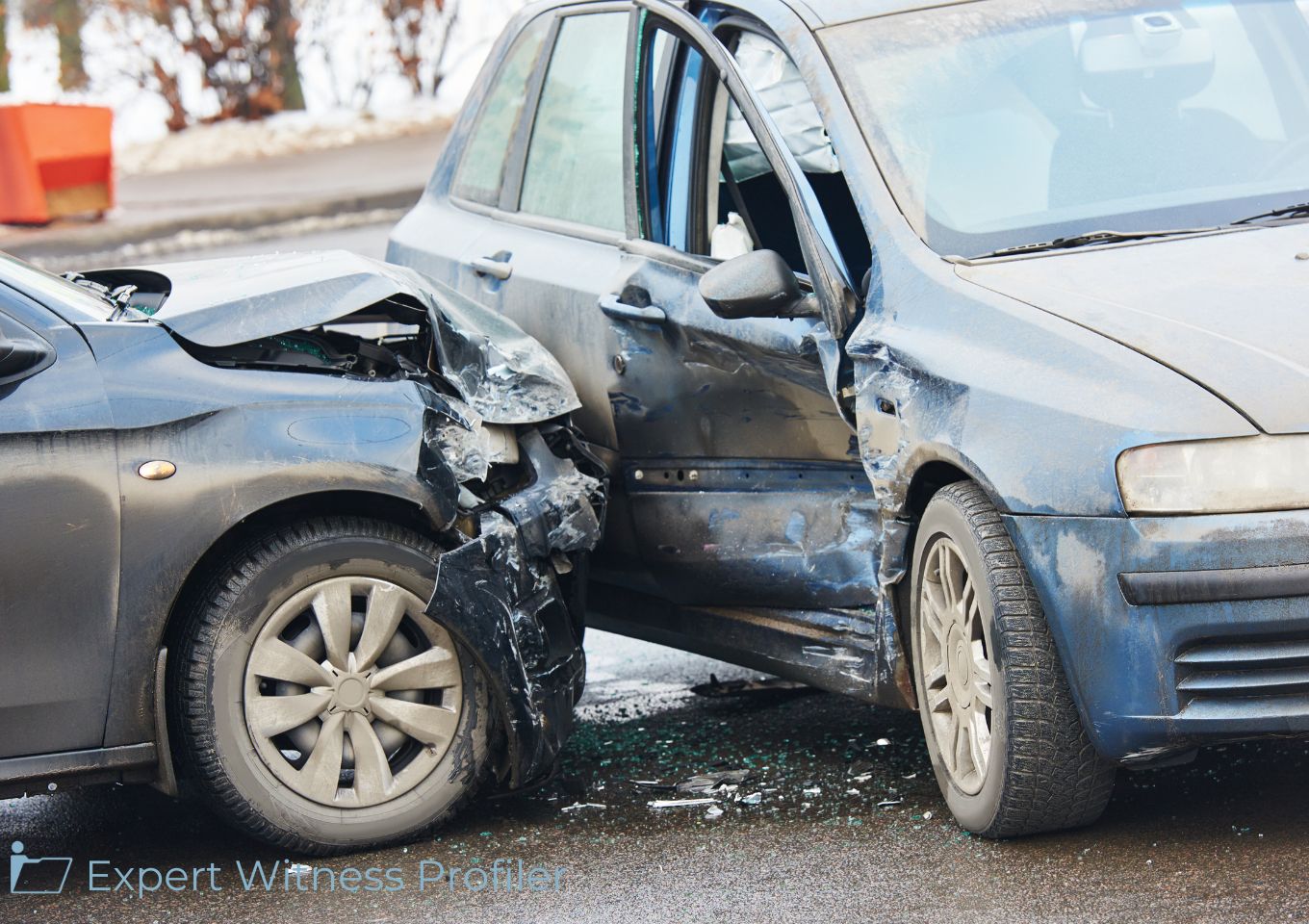
    This case arose from a motor vehicle accident on Interstate 55 in Scott County, Missouri. Plaintiffs Benjamin Behel, David Wallace, and Joye Wallace filed a lawsuit against Defendants Berney Wescott, Heritage Transport LLC, Bobby James, and Tracy Reynolds for damages sustained in the accident. 

    Behel was driving southbound in the right lane with an attached trailer. Wescott was driving a semi-tractor trailer behind Behel in the same lane. James was driving behind Wescott in the same lane. At some point, Wescott’s vehicle struck the rear of Behel’s trailer. James then veered into the left lane to avoid a collision. Wescott’s vehicle jackknifed, causing his trailer to swing into the left lane and collide with James’ vehicle. This forced James’ vehicle into the median where he collided with Behel, whose vehicle had moved into the median after being struck by Wescott.

    Plaintiffs designated William Hampton as an expert witness to analyze the accident. Hampton prepared a report with opinions to which Defendants objected. Defendants Bobby Lynn James and Tracy Lonny Reynolds filed a motion to exclude the opinions and testimony of Plaintiffs’ expert William Hampton while Defendants Heritage Transport, LLC, and Berney P. Wescott filed a motion to limit the testimony of Hampton.

    Accident Reconstruction Expert Witness

    William E. Hampton is an expert in accident investigation and reconstruction, particularly in motor vehicle and commercial trucking accidents. Through his company W.E. Hampton & Associates, Inc., where he serves as President, Hampton provides accident reconstruction services and evaluates commercial motor carrier compliance, inspection, and safety matters, including the hiring and retention of truck drivers. He has experience investigating the causes of trucking accidents and assessing whether commercial trucking companies and their drivers violated regulations or safety standards. 

    Discussions by the Court

    In Opinion 6, Hampton presented an opinion, asserting that Berney Wescott operated his vehicle as a distracted driver. This distraction allegedly stemmed from playing a college football game on his phone and looking to the rear of his vehicle for an extended period. According to Hampton, Wescott’s diverted attention led him to approach the Behel vehicle closely. Defendants Wescott and Heritage Transport, LLC, objected to this opinion, contending that it should be excluded. They argued that the opinion lacked sufficient factual foundation and was based solely on Hampton’s speculation. Specifically, the Defendants claimed that there was insufficient evidence for Hampton to conclusively assert that Wescott’s act of listening to a football game on his cell phone was a direct cause or contributor to the crash.

    Upon a thorough examination of Hampton’s Opinion Number 6 and his deposition, it is evident that his conclusion regarding Wescott being a distracted driver stemmed from considering the totality of circumstances, rather than attributing it solely to one factor, such as listening to a football game. Despite the Defendants’ objection, which seemed to misinterpret Hampton’s stance by asserting that he concluded Wescott was a distracted driver solely due to the football game, the Court found that Hampton did not make such a specific assertion. Consequently, the Defendants’ argument was deemed unfounded, leading to the denial of their request to exclude this portion of Hampton’s opinion.

    In Opinion 12, Hampton stated that Bobby James was following the Wescott vehicle too closely, violating the standards outlined in the Commercial Motor Vehicle Driver Manual and industry norms. According to Hampton, James did not have adequate time and distance to avoid the vehicles of Wescott and Behel. Defendants James and Reynolds opposed this conclusion, arguing that it lacked sufficient factual basis. The essence of the Defendants’ argument boiled down to the assertion that, had the Wescott trailer not jackknifed, the collision would not have occurred. They contended that this fundamental premise justified the exclusion of Hampton’s conclusion.

    Contrary to the Defendants’ position, the Plaintiffs assert that the central issue in the case revolves around whether the James vehicle was following the Wescott vehicle too closely before the events that caused injury to the Plaintiffs. They argue that if James had maintained an appropriate distance from Wescott, he would have had sufficient space to either come to a stop or execute an evasive maneuver, thereby preventing the collision with the Wescott tanker. The Plaintiffs support this argument by referencing Hampton’s report, where he suggests that, instead of following the Behel vehicle at a four-second interval, James should have maintained a minimum of seven seconds or a distance of 735 feet at their speed of 72 miles per hour. According to Hampton, if James had followed the Wescott vehicle at a safe distance, he could have avoided the crash by bringing his vehicle to a complete stop within 514 feet.

    The Plaintiffs, along with Hampton, appear to argue either that (1) James should have maintained a greater distance from Wescott when he was in the right lane to prevent a rear-end collision with the Wescott trailer, or (2) James should have kept a greater distance from Wescott even while in the left lane to avoid a collision with the jackknifed Wescott trailer. If the contention is the former, this argument is deemed unsuccessful because James did manage to avoid colliding with Wescott when he successfully maneuvered into the left lane. The collision occurred only after James had transitioned into the left lane, at which point Wescott’s vehicle jackknifed, leading to the subsequent collision. Therefore, it is illogical to assert that James needed more following distance to swerve into the left lane and avoid rear-ending the Wescott trailer, as he had already done so.

    If, on the other hand, their argument is the latter, it similarly lacks coherence. The requirement for maintaining a sufficient distance between vehicles is relevant in the context of following. However, once James maneuvered into the left lane, he ceased to be “following” Wescott; instead, he occupied the left lane while Behel and Wescott were in the right lane. In this scenario, Plaintiffs and Hampton would be advocating for a standard where, after moving into the left lane, James still had an obligation to maintain a significant distance behind the Wescott and Behel vehicles, even though those vehicles were not in his lane. Such a framework would imply that any vehicle within a distance less than 514 feet behind Wescott or Behel in either lane would be considered in violation, including a vehicle that had never been in the right lane or one lawfully attempting to pass. These scenarios conflict with both legal driving practices and common sense. The Court cannot fault James for driving in a lane where he had every right to be. Consequently, the Court remains unconvinced by Hampton’s conclusion that James was following the Wescott and Behel vehicles too closely.

    Furthermore, Hampton’s conclusion is deemed unsupported and misleading, as a reasonable listener would likely infer from it that James’ following distance was a but-for cause of his collision with the Wescott trailer. However, as previously highlighted, James did not collide with Wescott’s trailer due to his following distance; instead, the collision occurred because he was in the left lane when Wescott’s vehicle jackknifed. The Court finds particular merit in the analysis presented in the Defendants’ briefing, emphasizing that James successfully changed lanes to the left and was in no different position than if he had been driving in the left lane all along. Consequently, Hampton should not be permitted to testify that being in the right lane, as opposed to the left lane, led to James following too closely, as in either scenario, James would have been in the left lane when the Wescott trailer jackknifed and collided with his semi.

    Considering the aforementioned factors, the Court determines that Hampton’s conclusion stating, “Bobby James was following the Wescott vehicle too closely…and did not have the time and distance to avoid the Wescott and Behel vehicles,” lacks fundamental support to the extent that it provides no meaningful assistance to the fact-finder. The Court concludes that the probative value of such a conclusion is “substantially outweighed by a danger of…misleading the jury,” as per Federal Rule of Evidence 403. Consequently, the Court grants the Defendants’ request to exclude this specific portion of Hampton’s testimony.

    In Opinion 13, Hampton stated, “The Federal Motor Carrier Safety Administration’s (FMCSA) Guide to Improving Highway Safety illustrates the unsafe actions of Berney Wescott, and Bobby James contributed to the causation of this crash, and defined the crash as preventable.” Defendants Wescott and Heritage argued for the exclusion of this opinion based on the phrase “contributed to the causation of this crash.” James and Reynolds, on the other hand, disputed Hampton’s conclusion that the FMCSA’s Guide to Improving Highway Safety defined the crash as preventable.

    Defendants Wescott and Heritage argued for the exclusion of a portion of Hampton’s testimony, asserting that it constituted an impermissible legal conclusion. They contended that expert witnesses should not decide legal questions. The Court acknowledged the general principle that expert witnesses should not offer legal conclusions but emphasized that expert testimony is admissible if it is reliable and assists the jury in understanding the evidence or deciding a fact in issue. The Court cited the standard set by the Eighth Circuit, Archer Daniels Midland Co. v. Aon Risk Servs., 356 F.3d 850, 858 (8th Cir. 2004), stating that expert testimony can only be excluded if it is “so fundamentally unsupported that it can offer no assistance to the jury.” In this case, the Court found that Hampton’s opinion was fact-based, derived from an evaluation of the case’s facts, and not a mere statement of legal conclusion. As such, the Court denied the Defendants’ request to exclude this portion of Hampton’s testimony.

    Defendants James and Reynolds argued for the exclusion of a specific portion of Hampton’s testimony concerning James. They contended that Hampton failed to adequately establish a connection between his conclusion and James’ conduct, a point uncontested by the Plaintiffs in their briefing.

    Hampton, in his report, referenced the FMCSA’s Guide, stating that an accident where one vehicle rear-ends another is deemed preventable if the driver failed to adhere to safe following distances, maintain control of their vehicle, monitor traffic conditions, and assess whether the vehicle ahead is slowing down. After listing these criteria, Hampton concluded that “Wescott failed to follow these safe operating procedures, which were the causation of this crash.” However, James’ name was notably absent from Hampton’s discussion on preventability. Nowhere in the report or deposition did Hampton explicitly state that James also failed to follow these safe operating procedures. The Defendants highlighted this omission, noting that Hampton did not assert that James failed to follow the specified procedures in his report, nor did he provide an explanation of how James might have failed to do so. Instead, James’ name was included in the summary of opinions without further clarification.

    Furthermore, the assertion that James could have prevented the accident is deemed inaccurate, especially considering Hampton’s deposition acknowledgment that he cannot dismiss the possibility that James might not have collided with the Wescott vehicle had it not been jackknifed.

    Given the lack of a valid rationale supporting the conclusion that James’ actions could have prevented the crash, the Court has decided to exclude this specific portion of Hampton’s testimony concerning James.

    In Opinion 11, Hampton stated, “Berney Wescott violated several regulations and statutes from the Federal Motor Carrier Safety Regulations and the State of Missouri, which led to the causation of this crash.”

    Defendants Heritage and Wescott sought the exclusion of Hampton’s Opinion 11, arguing against the use of the word “causation.” The Court rejected their argument and consequently denied their request to exclude Hampton’s Opinion Number 11.

    In the process of preparing his report, Hampton utilized a computer animation of the crash created by DKG Global, Inc. Defendants Wescott and Heritage expressed concerns about the animation, stating that it illustrates the accident sequence and includes “what if” scenarios depicting alternative outcomes under different circumstances. These Defendants asserted that Hampton might seek to use this animation as a demonstrative aid during the trial. They argued for Hampton’s exclusion from using the animation at trial, citing reasons such as a perceived lack of foundation and Hampton’s non-involvement in the creation of the animation.

    The concerns raised by the Defendants regarding the use of the animation may or may not be valid, but their request is deemed premature. Plaintiffs themselves acknowledged that the determination of whether to use the animation at trial has not been finalized. The Court emphasized that if, at a later stage, it becomes evident that Plaintiffs intend to introduce the animation into evidence or present it as a demonstrative aid for the trier of fact, the Defendants can renew their objection. However, as of now, the objection is considered premature, and the Court has not granted the Defendants’ motion to exclude on this ground.

    Held

    The Court granted the motion filed by Defendants Bobby Lynn James and Tracy Lonny Reynolds to exclude the opinions and testimony of Plaintiffs’ expert William Hampton.

    In contrast, the Court denied the motion in limine submitted by Defendants Heritage Transport, LLC, and Berney P. Wescott to limit the testimony of Hampton.

    The Court finally ruled in favor of Defendants Bobby Lynn James and Tracy Lonny Reynolds and against Defendants/Cross-claimants Berney P. Wescott and Heritage Transport, LLC after the Court found that the Plaintiffs and Cross-claimants failed to provide sufficient, probative evidence which would permit a fact finder to rule in their favor.

    Key Takeaways

    In the legal proceedings, expert testimony provided by William Hampton has been a subject of contention, particularly regarding his opinions on the behavior of the involved parties in a vehicular collision. Hampton’s Opinion Number 6, which suggested that Berney Wescott operated his vehicle as a distracted driver, was challenged by Defendants who argued for its exclusion, asserting a lack of factual foundation and reliance on speculation. However, the Court found that Hampton’s conclusion was based on a comprehensive assessment of the circumstances, refuting the Defendants’ claim of a singular focus on the football game distraction. In contrast, Hampton’s Opinion 12, implicating Bobby James for following too closely, faced successful opposition from Defendants who argued that the crash would not have occurred if the Wescott trailer had not jackknifed. The Court ruled in favor of the Defendants, excluding this portion of Hampton’s testimony due to its lack of fundamental support and potential to mislead the jury. Furthermore, Hampton’s Opinion 13, involving the FMCSA’s Guide to Improving Highway Safety, faced objections for consisting of legal conclusions, but the Court rejected the exclusion request, considering Hampton’s opinion as fact-based and not fundamentally unsupported. The Court’s decisions highlight the importance of a nuanced evaluation of expert testimony, addressing concerns of foundation, coherence, and misleading implications.

  • Report of Civil  Engineering Expert Witness Rejected for being based on Inadequate Data and Exterior Inspection to assist in any Meaningful Factual Analysis

    Report of Civil  Engineering Expert Witness Rejected for being based on Inadequate Data and Exterior Inspection to assist in any Meaningful Factual Analysis

    This case centered on a disagreement over property insurance coverage between Bliv, Inc., a plastics production and manufacturing company, and their insurer Charter Oak Fire Insurance Company. Specifically, Bliv filed an insurance claim due to purported damage from a wind and hail storm that occurred on or around July 9, 2021(referred to as “the Event”). During the Event, Bliv, Inc (referred to as the “Plaintiff”) held a Commercial Insurance Policy provided by The Charter Oak Fire Insurance Company (referred to as “Charter Oak”). The policy was effective from April, 2021, to February, 2022 (referred to as “the Policy”). The Policy covered a commercial building situated at 1643 Lotsie Blvd. in St. Louis County, Missouri. The roof of the Property consists of a Thermoplastic Polyolefin (TPO) membrane as the primary water-proofing layer, with fiberboard and additional supporting materials directly below it.

    Around July 21, 2021, the Plaintiff informed Charter Oak about the Event and asserted losses and damage to the property. Charter Oak initiated an investigation into the claim, enlisting a professional engineer from The Vertex Companies (referred to as “Vertex”) to inspect the property and identify the cause of the alleged loss and damage. Following three property inspections on August 31, 2021, September 21, 2021, and March 14, 2022, Charter Oak determined that the covered loss and damage to the commercial building, attributable to the Event, did not surpass the $2,500 deductible specified in the Policy. Furthermore, Charter Oak concluded that the claimed loss and damage to both the exterior and interior of the building were not a result of the Event or any other covered cause of loss.

    During the legal proceedings, the Plaintiff identified professional engineer Brian Johnson (referred to as “Johnson”), as a retained expert witness and provided his “Storm Damage Report.” The Plaintiff relied on Johnson to present expert opinions and testimony regarding the alleged causes of the reported exterior and interior damages. Notably, Johnson conducted a roof inspection of the property on May 30, 2023, almost two years after the Event. He did not inspect the interior of the building during his on-site visit, and he did not engage in conversations with the building owner or any other employee of the Plaintiff. Additionally, Johnson did not review maintenance or repair records related to the property. Importantly, he admitted an inability to state with scientific certainty the cause of the alleged damage. Consequently, the Defendant argues that Johnson’s expert report, opinions, and testimony should be excluded because they lack a sufficient factual basis, he did not consistently apply accepted methodologies, and his opinions are characterized as mere speculation and conjecture.

    Brian Craig Johnson holds a Bachelor of Science in Civil Engineering and a Master of Science in Civil Engineering, both from the University of Minnesota. Since becoming a registered Professional Engineer in Civil Engineering in Minnesota in 2004, he has leveraged his background across a range of project engineering and consulting positions. His areas of specialty encompass steel, precast, masonry, and wood construction applications. He gained this well-rounded expertise through roles as a Senior Construction Engineer for Lockheed Martin, as a government contractor. He is currently the Project Director of SRF Consulting Group.

    Federal Rule of Evidence 702 governs the admissibility of expert testimony, requiring the expert to be qualified and the testimony to aid the trier of fact. The proponent must prove its admissibility, and the Court, in its discretion, ensures the testimony is both relevant and reliable. Daubert factors, including testing, error rate, and general acceptance, guide the determination of reliability. The Court serves as a gatekeeper, separating reliable expert opinions from speculation. Disputes about an expert’s factual basis usually pertain to credibility rather than admissibility. Liberalized standards favor the admission of expert testimony, allowing scrutiny through the adversarial process. Exclusion is warranted only if the testimony is fundamentally unsupported and provides no assistance to the jury.

    Johnson’s Storm Damage Report was deemed unreliable as it relied on insufficient data, leading to speculative conclusions. His delayed inspection, conducted almost two years post the Event, lacked an assessment of interior damage and interviews with the owner of the business or any of its employees. Additionally, he failed to review maintenance records or ascertain the property’s condition before, during, or shortly after the Event. This undermined the credibility of his opinions, as he couldn’t reasonably relate his findings to the property’s state during the Event, which made his report inadmissible under Rule 702 and Daubert standards.

    Therefore, Johnson’s opinions regarding the interior of the property lacked any factual basis, let alone sufficient facts or data. His assertions about the cause of the alleged interior damage did not necessitate scientific, technical, or specialized training. The Defendant argued that Johnson’s opinion was mere speculation and conjecture, as he seemingly inferred interior damages solely from reading the Access Restoration Services (“ARS”)estimate and assuming the inclusion of “interior components” indicated Event-related damage. Furthermore, Johnson’s report and opinions, as per his own admission, were not grounded in reliable facts or data, particularly lacking personal observations and supporting evidence for the claimed damage being a result of the Event. Consequently, the Defendant contended that Johnson’s opinions failed to meet Rule 702’s requirement of “sufficient facts or data” and should be excluded from consideration.

    Johnson’s exploration of potential explanations for the claimed damage is criticized for residing in the realm of speculation and conjecture. The lack of personal observations, evidence, or supporting data renders his theories unsupported. Citing Knepfle v. J-Tech Corp., 48 F.4th 1282, 1296 (11th Cir. 2022), the Court emphasized that his purported possibilities or theories lack any iota of support from personal observations, evidence, facts, or data.

    Johnson’s factual conclusions about the alleged damage were heavily reliant on his status as an expert, his examination of photographs from ARS and Vertex, and his claim of deducing the events. Contrary to his belief, the facts and data gathered by ARS, Vertex, and Charter Oak starkly show the inaccuracy of Johnson’s assertion that there were no failed seams or flashings.

    The assertion is made that Johnson’s testimony and Storm Damage Report would not be beneficial to a jury. Citing the standard set in Cole v. Homier Distrib. Co., 599 F.3d 856, 865 (8th Cir. 2010), an expert’s opinion should be excluded if it is fundamentally unsupported and unable to offer assistance to the jury. It is emphasized that an expert must substantiate their opinion, as presenting only an ultimate conclusion without analysis is deemed meaningless.

    Johnson’s report is titled “Storm Damage Report,” implying a predetermined assumption that the building damage resulted from a storm, the very issue under consideration. Moreover, there is a lack of substantive evidence supporting his opinion that the damage was caused by the specific event. Johnson failed to identify any storm-created openings through personal observation, photographs, tests, or observations by any party who personally inspected the building.

    Due to his minimal independent analysis and investigation, Johnson’s ultimate conclusion that the damage was caused by the Event is deemed meaningless and unhelpful to the trier of fact. The opinion lacks fundamental support, rendering it insufficient to provide any assistance to the jury. 

    The Plaintiff contends that weather data suggesting the possible presence of hail on the storm date supports Johnson’s approach in ruling out the possibility of damage from a previous or subsequent storm. However, it is highlighted that Johnson, despite acknowledging the absence of hail punctures or fractures on the roof and finding no evidence of anvil strikes, did not definitively observe such damage. The argument asserts that while Johnson systematically eliminated other potential causes for the damage, his conclusion attributing the damage to the storm remains speculative. This speculation arises from his failure to determine if any damage occurred before or after the storm, prior to his inspection. The Plaintiff argues that Johnson’s opinion regarding hail damage to the roof membrane does not lack a sufficient basis in facts and data to aid the finder of fact. The Plaintiff also contends that the complaints go to the weight of the evidence, not its admissibility.

    Although the Plaintiff is correct in asserting that an expert can rely on information collected by others, the Court aligns with the Defendant’s perspective that total reliance is inadequate to demonstrate Johnson’s opinion would assist the jury in its fact-finding responsibilities. This agreement is reached, considering that Johnson’s report includes only a single photograph. Johnson did not conduct independent testing to support his opinion that the absence of physical damage to the roof membrane does not rule out hail damage. Instead, he based this conclusion on roofing literature, specifically marketing materials from a membrane manufacturer, asserting that fiberboard is more prone to hail impact damage. This reliance on unverified marketing literature is identified as a methodological failure in reaching his conclusions.

    Similarly, Johnson conducted no independent testing regarding the interior of the building. The absence of concrete reasons for Johnson’s conclusion that there must have been interior damage from the storm, solely because it was included in the estimate, is highlighted. Despite Johnson’s high qualifications, the opinion fails to meet the requirements of Daubert and Rule 702. The deficiency in sufficient facts, data, and methodology is emphasized, and it is noted that even vigorous cross-examination regarding Johnson’s credibility cannot overcome these shortcomings. The report, based on an exterior inspection, photographs taken by others, and data deemed too remote in time or substance, is deemed insufficient for meaningful factual analysis.

    The Court reaches the conclusion that Johnson’s opinion fails to assist the trier of fact in understanding the evidence or determining a relevant fact. The opinion lacks a foundation in sufficient facts or data and does not adhere to the necessary reliable principles and methods mandated by Rule 702. Consequently, the Court grants the Defendant’s Daubert Motion to Exclude Expert Reports, Testimony, and Opinions of Brian Johnson. The Court has not arrived on an outcome for this case since the remaining issues involved in this case still await resolution. 

    This case demonstrates the vital gatekeeping function Courts must serve under Daubert to scrutinize the reliability of expert witness testimony. The Court excluded Plaintiff Bliv’s expert, Brian Johnson, because his causation opinion lacked sufficient factual support and objective methodology. Most critically, Johnson grounded his conclusion that a hailstorm caused roof and interior damage almost entirely on third-party photographs, estimates, and marketing materials rather than his own inspection and testing. While qualified experts may reference outside sources, Johnson crossed the line into unreliable speculation by basing his view solely on external findings without verification. Moreover, the Court found his failure to review maintenance records or examine the building’s interior especially problematic given his admission that he observed no exterior hail damage. This inability to rule out alternative explanations undermined the reliability of his testimony under Daubert. Finally, Johnson’s reliance on interior damage estimates was misplaced since he never actually inspected inside the premises. By opining on evidence contradicted by his own limited investigation, his methodology proved unsound. Moving forward, this case demonstrates that expert opinions require thorough factual support and objective testing to clear Daubert’s reliability test. Subjective assumptions or theories fail to assist the trier of fact. Attorneys hoping to leverage expert testimony must ensure opinions rest on demonstrable “good grounds” before trial or risk exclusion.